
Finding the right table for a small kitchen is less about compromise and more about choosing smarter. This guide covers the best small kitchen table ideas 2026 has to offer, from space-saving folds to built-in bench solutions. Each idea is practical, decision-ready, and designed for real homes, not showrooms.
1. Wall-Mounted Drop-Leaf Table for Kitchens Under 100 Square Feet
A drop-leaf table mounted directly to the wall is one of the most efficient solutions for tight kitchen spaces. When folded down, it takes up virtually no floor space. When open, it provides a clean, functional surface for two people. This works best in galley-style kitchens or narrow apartments where a freestanding table would block traffic flow.
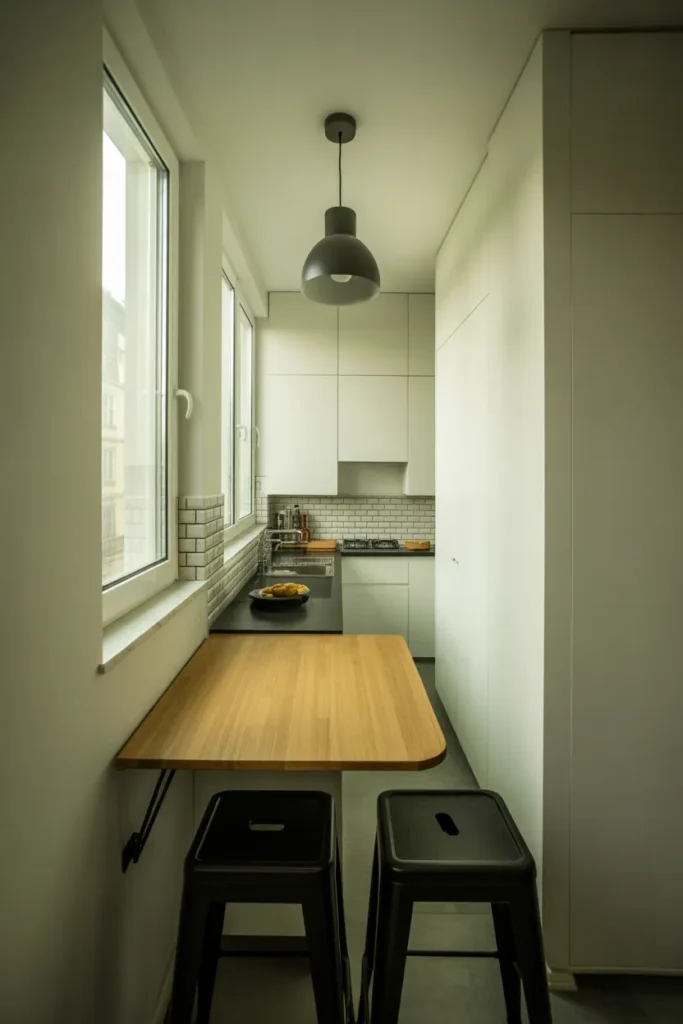
The key advantage here is control. You decide when the table exists in the room. Fold it up after meals and the kitchen feels open again. Mount it at counter height for dual use as a prep surface and dining spot.

A common mistake is installing it too close to appliances. Leave at least 36 inches of clearance on all sides. Also avoid lightweight hollow-core doors as a DIY tabletop substitute since they warp under daily use.
2. Round Pedestal Table That Lets You Squeeze In One More Chair
A round pedestal table removes corner legs, which means seating slides in from any angle. In a small kitchen, this translates directly to better flow and the ability to seat three people where a rectangular four-leg table would only fit two comfortably.
Pedestal bases work especially well in square kitchen nooks. The absence of legs in the corners also makes cleaning easier, which matters in high-use kitchen spaces. For small kitchen layout design, the round shape naturally softens the room and keeps the space from feeling boxy.
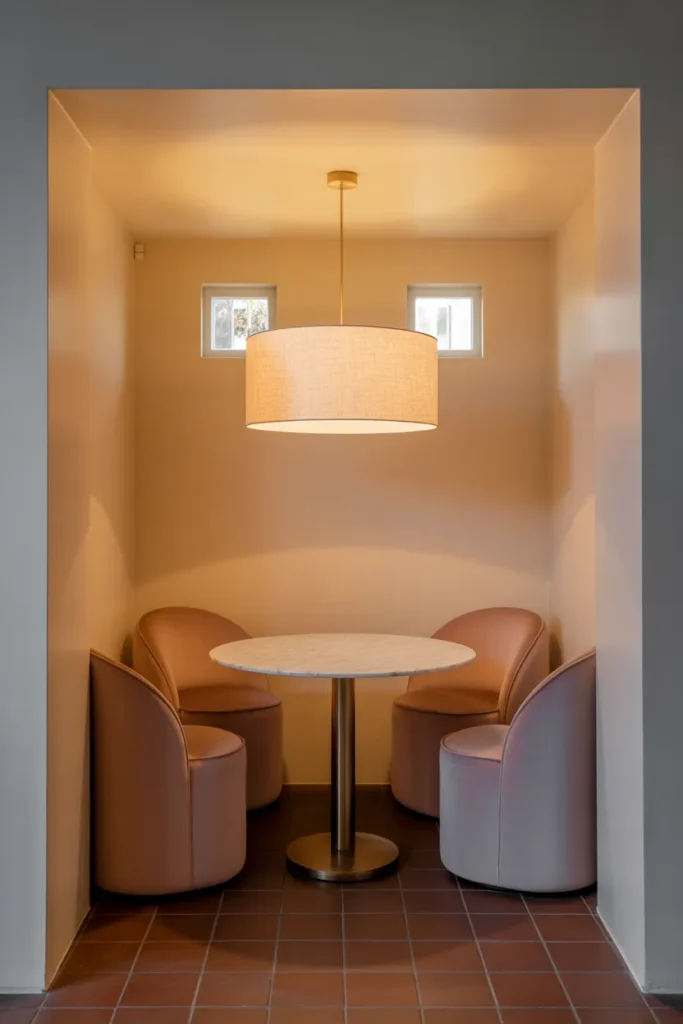
Choose a table diameter between 36 and 42 inches for two to four people. Go smaller and meals feel cramped. Go larger and you start blocking cabinet access or the refrigerator path.
Avoid tables with a wide, flat pedestal base since these become foot obstacles. A tapered single-post base is more practical.
3. Built-In Banquette With Under-Seat Storage Along One Wall
A built-in banquette bench along one kitchen wall does three things at once: it creates dining seating, replaces the need for multiple chairs, and adds hidden storage underneath the seat cushions. For apartments and small homes, this combination is hard to beat.
This layout works best when one wall of the kitchen is underused, typically the wall opposite the cooking zone. The bench runs the length of that wall, a table sits in front of it, and one or two chairs face it from the opposite side. This setup fits more people per square foot than any freestanding table arrangement.
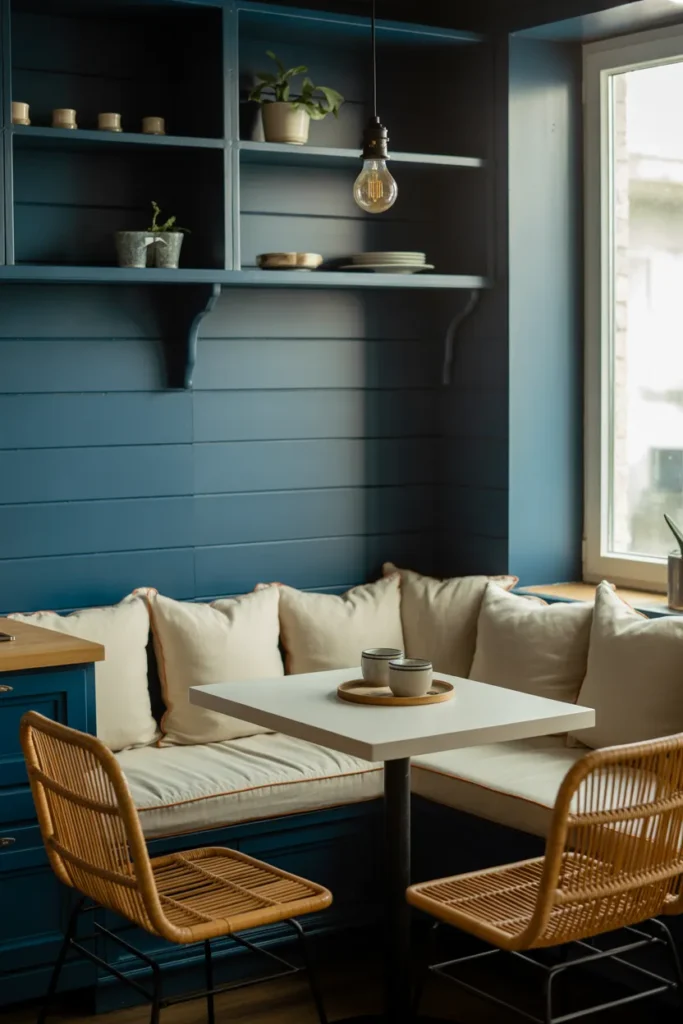
The storage component is worth planning carefully. Lift-top hinged bench seats can store seasonal items, rarely used cookware, or pantry overflow. This is one of the stronger functional kitchen floor plans choices for families who need both dining space and storage.
Do not upholster the bench in light fabrics without a removable, washable cover. Kitchens produce grease and steam and light upholstery shows it quickly.
4. Narrow Console-Style Table That Doubles as a Breakfast Bar
A console or sofa table repurposed as a kitchen dining table works surprisingly well when depth is the problem, not length. Standard console tables run 12 to 15 inches deep, which leaves more floor space in front of and behind them than a traditional dining table would.
Place it along a kitchen wall or beneath a window. Pair it with two or three counter-height stools that tuck fully underneath when not in use. This setup fits comfortably in open kitchen layouts where the dining area bleeds into a living space.
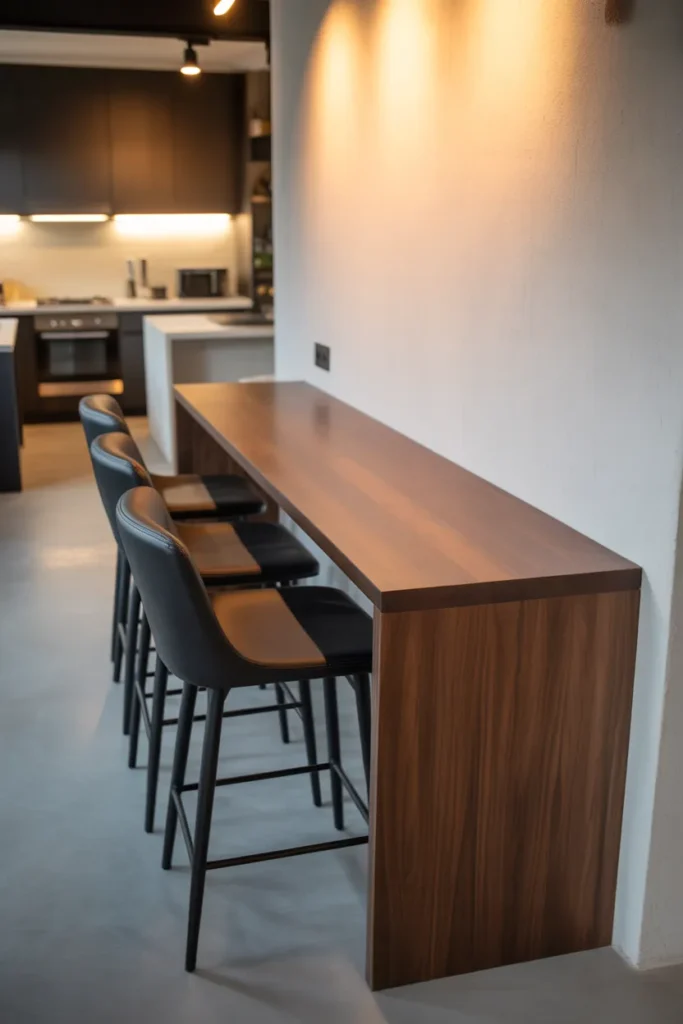
The narrow depth means this is a solution for quick meals and work-from-home mornings, not long family dinners. If you regularly host four or more people for seated meals, this is not your best option. But for one or two people in an urban apartment, it handles daily use well.
Choose stools with footrests at the right height. Stools without footrests at counter height are uncomfortable for most adults after more than 20 minutes.
5. Extendable Table With Leaves That Hides in Plain Sight
An extendable table at its smallest setting functions like a compact two-person table. Pull the leaves out and it seats four to six. For kitchens that serve both daily meals and occasional gatherings, this is the most versatile small kitchen table idea 2026 has normalized in modern homes.
The key is buying a table where the compact form is genuinely small, not just slightly reduced. Look for tables that start at 28 to 32 inches in length when closed. Some extension tables barely shrink and defeat the purpose.
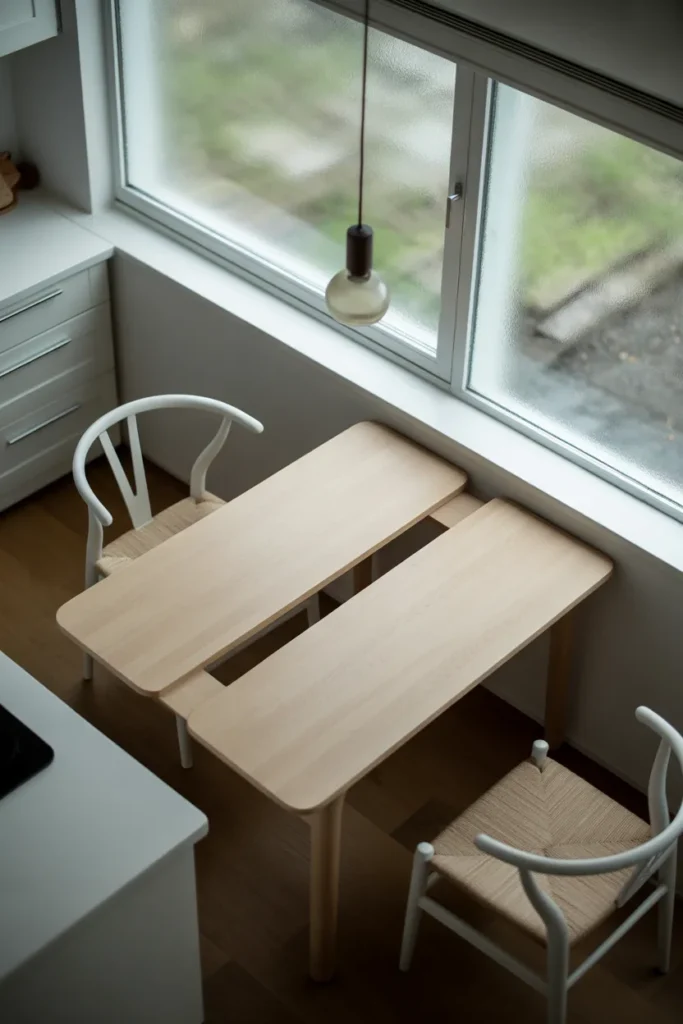
This works best in kitchens with a small dining zone adjacent to an open living area. On normal days the table stays compact. When guests arrive, you extend it into the living space temporarily.
Avoid extension tables with visible seams in the center that collect crumbs and moisture. Look for butterfly-leaf designs where the leaf stores inside the table and deploys without separate storage.
6. Corner Nook Table Built Into an L-Shaped Kitchen Layout
Corner spaces in L-shaped kitchens are frequently wasted. A built-in corner nook table reclaims that dead zone and turns it into the most used spot in the kitchen. Two bench sides meet at the corner, a round or square table sits in the center, and suddenly a previously empty corner seats four people.
This is a strong choice for modern kitchen layout ideas 2026 where the goal is to maximize seating without adding square footage. The corner position also keeps diners out of the main kitchen work triangle, which improves safety and traffic flow during cooking.
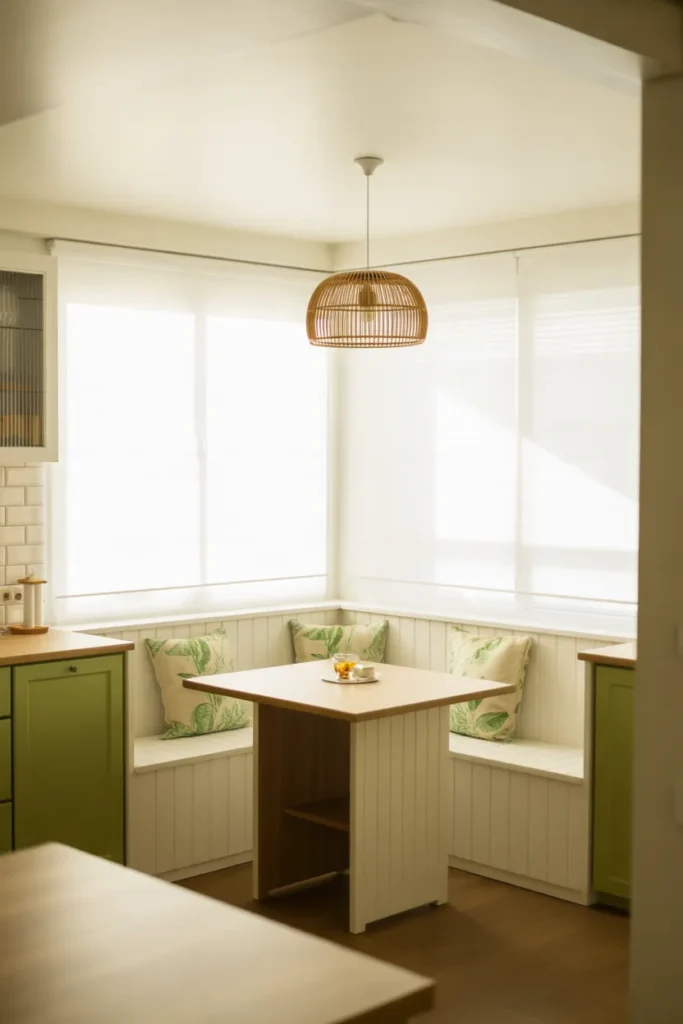
For this to work, the corner must have at least 48 inches of wall space on each side. Less than that and the benches feel cramped. The table should be positioned so someone sitting at the innermost corner can exit without asking others to move.
Avoid placing this nook directly next to the stove. Heat, steam, and splatter make that location uncomfortable and hard to keep clean.
7. Foldable Wall Table in a Multifunctional Kitchen-Office Space
Remote work has made the kitchen table a workspace as much as a dining spot. A wall-mounted foldable table that deploys for meals and collapses for open floor space handles this dual role without permanently committing the kitchen to either function.
This is particularly useful in studio apartments and one-bedroom homes where the kitchen and work zones share the same square footage. Kitchen space planning ideas that account for multiple daily uses are more relevant now than ever.
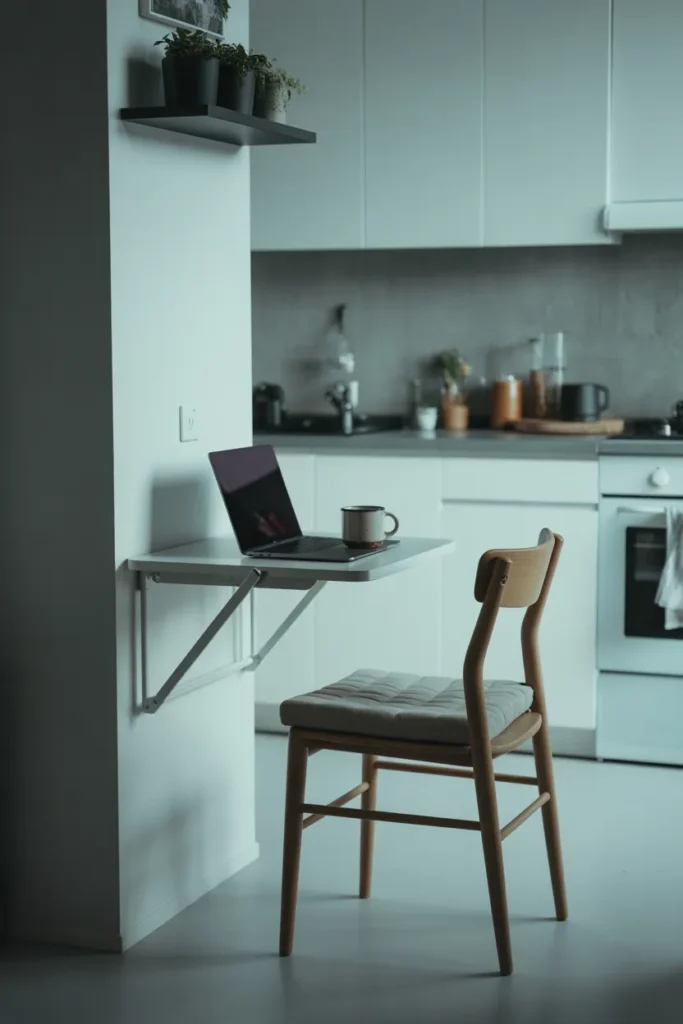
The table should be at a height that works for both eating and working, which is standard dining height at 30 inches, not counter height. Pair it with a chair that has back support since a stool works for meals but not for hours of laptop work.
The wall anchor point matters. Install into studs, not just drywall. A table that wobbles undermines both the dining and working experience.
8. Glass-Top Table That Visually Expands a Dark or Narrow Kitchen
Glass-top tables borrow a well-established principle from interior design: transparent surfaces do not visually occupy space the way solid ones do. In a dark or narrow kitchen, a glass-top table maintains the sightline across the room, making the space feel larger than it is.
This is not just aesthetic. In a small kitchen layout design where the table sits near the entrance or in a passage zone, a glass top prevents the visual blockage that a wood or laminate surface creates. The room stays readable even when the table is in use.
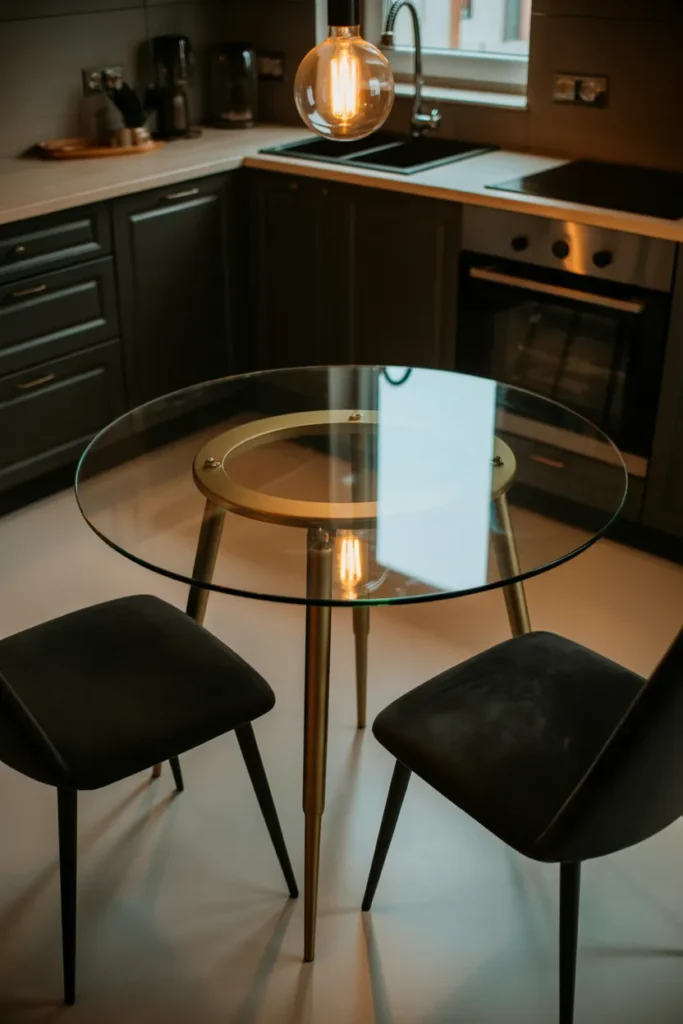
Pair a glass top with a simple metal base to keep the visual weight low. Avoid ornate carved wood bases under glass since they cancel out the lightness the glass provides.
The practical concern is cleaning. Glass shows fingerprints and water spots far more than wood. In a kitchen with children or heavy daily use, plan for frequent wiping. Tempered glass is non-negotiable for safety.
9. Two-Person Bistro Table for Kitchens With Open-Plan Living Zones
A bistro-style table seats two and communicates something specific about a home: it is a space for connection, not just function. In open-plan kitchens where the dining zone flows into a living area, a small bistro table defines the eating space without walling it off.
This is one of the cleanest functional kitchen floor plans choices for couples, single occupants, or anyone who rarely needs to seat more than two at a daily meal. The table itself is usually round, 24 to 30 inches in diameter, and sits at standard dining height with two matching chairs.
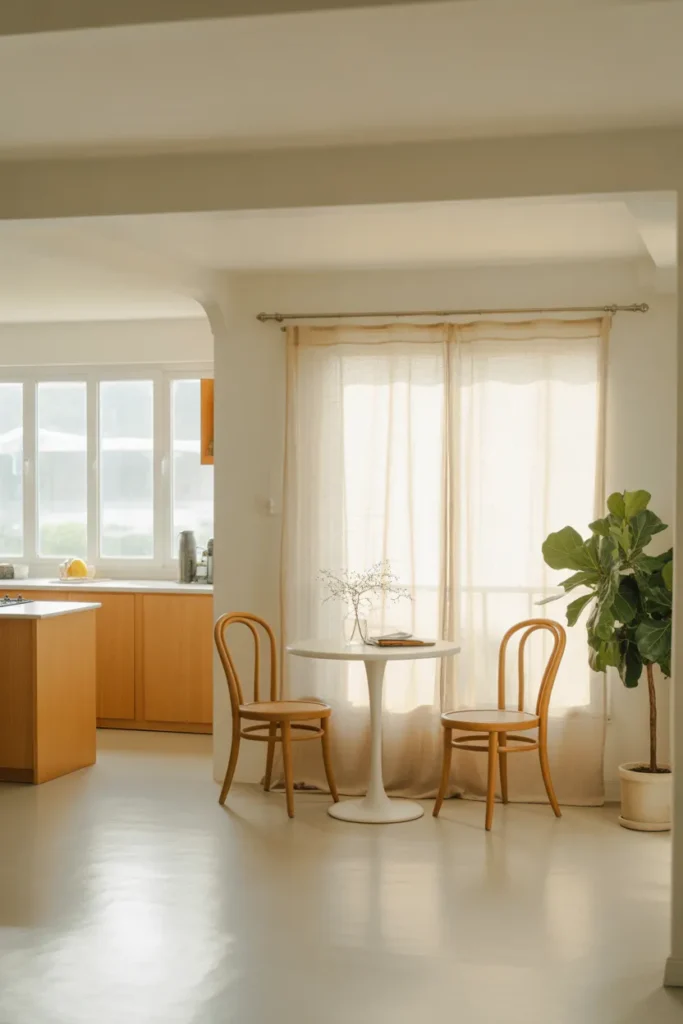
The bistro format also travels well to outdoor kitchens and covered patios if you choose weather-resistant materials. An indoor-outdoor table in rattan, powder-coated steel, or sealed concrete gives the kitchen a relaxed, open feel year-round.
The mistake most people make is buying bistro chairs that are too decorative and impractical. Choose chairs with seats at least 17 inches wide and made of easy-clean materials.
10. Waterfall Island Extension That Replaces the Dining Table Entirely
In kitchens where a separate dining table is simply not possible, a waterfall kitchen island extension solves the problem by making the island itself the dining surface. One end of the island extends slightly or overhangs enough to accommodate two to three counter-height stools. The waterfall refers to the countertop material continuing down one side to the floor for a seamless edge.
This approach works in open kitchen layouts where the kitchen connects to a living room. The island acts as the room divider, the meal prep surface, and the dining table in one piece. It is among the most space-efficient small kitchen table ideas 2026 architects are specifying for new builds and renovations.
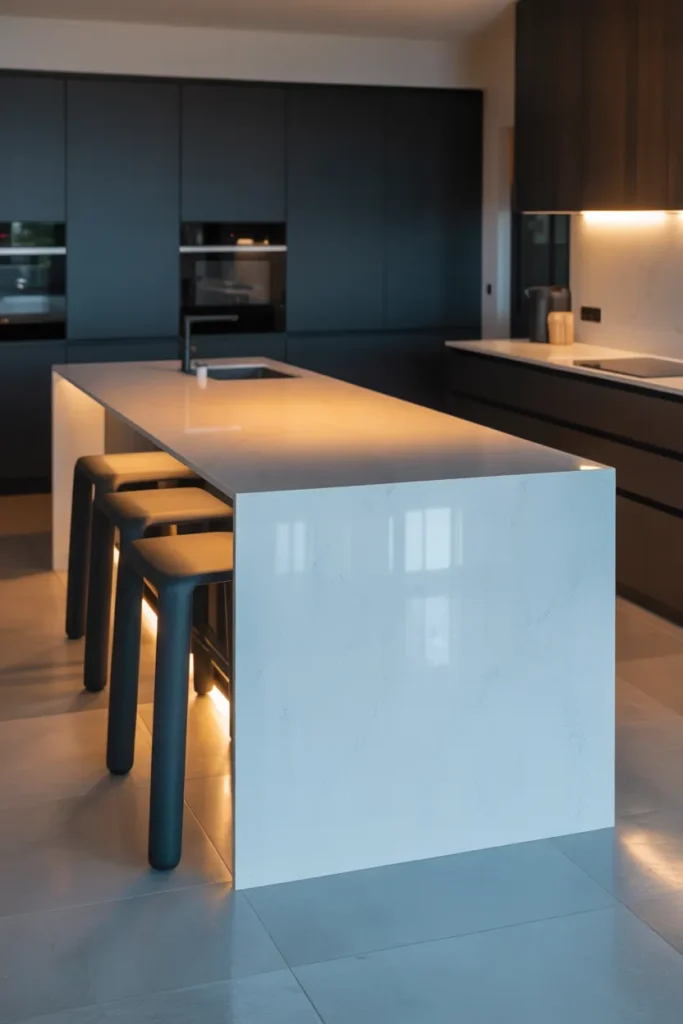
The overhang needs to be at least 12 inches, ideally 15, to allow comfortable knee clearance for seated diners. Less than that and stools cannot slide under, which means diners sit too far from the surface.
Choose stools without backs for this setup. Backed stools work but they visually bulk up the space. Backless stools slide under fully and keep the kitchen looking open from every angle.
Final Thoughts
The right small kitchen table does more than fill a space. It shapes how the kitchen functions every day. Whether you go with a fold-down wall mount, a built-in banquette, or a waterfall island extension, the goal is the same: a setup that fits your layout, supports your daily routine, and feels intentional rather than squeezed in. Save this post if one of these ideas matches your kitchen and come back to it when you are ready to make a decision. There are more layout ideas worth exploring, and the best choice is always the one that fits the way you actually live.