If you have been searching for rustic kitchen ideas 2026 but keep landing on the same generic shiplap-and-mason-jar results, this guide is different. Most rustic kitchen refreshes fail because homeowners mix too many styles without a clear material or color anchor — and this post tells you exactly what works, when to use it, and what to avoid. Below you will find 18 specific, visually distinct rustic kitchen ideas, each explained with enough practical detail to help you make a real design decision for your home.
1. Reclaimed Wood Open Shelving That Makes Small Kitchens Feel Intentional
Open shelving in reclaimed wood is one of the strongest moves in rustic kitchen design for 2026, but only when executed with discipline. The reason it works is that it removes the visual bulk of upper cabinets, making the wall feel taller and the room feel larger. In kitchens under 150 square feet, this single change does more for the sense of space than almost any other intervention.
The key is choosing reclaimed wood with a consistent grain direction and a matte oil or wax finish rather than a glossy sealant. Glossy finishes on reclaimed wood look artificial and undermine the entire point of the material. The shelf depth should be no more than 12 inches so items remain reachable and the shelves do not project too far into the room.
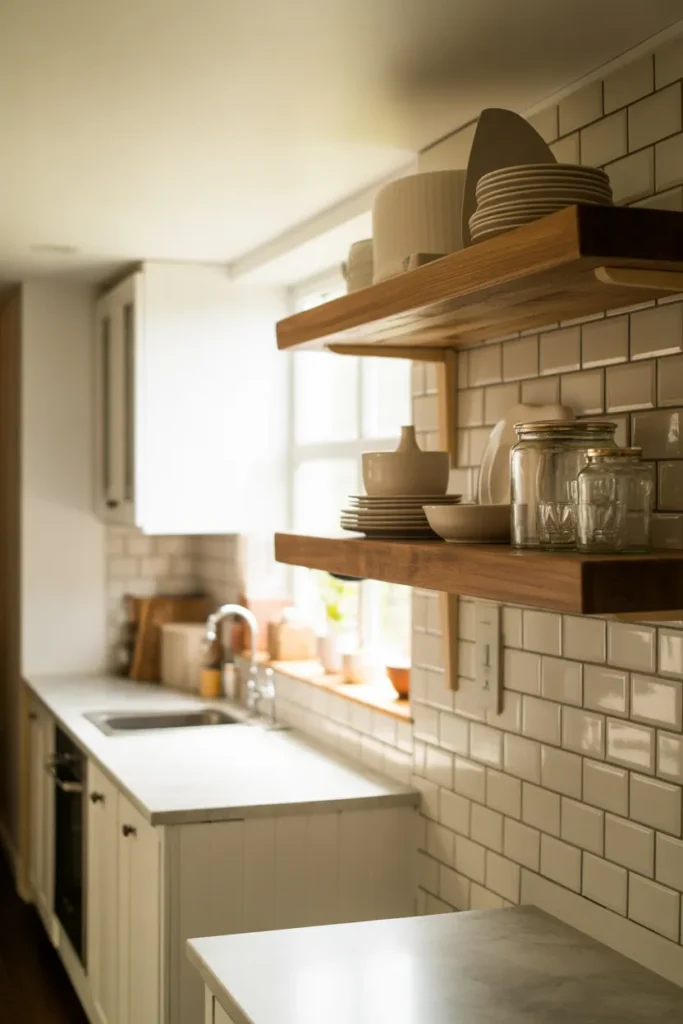
What you place on the shelves matters as much as the shelves themselves. Keep it edited: stacked white or cream ceramic dishes, a few glass jars, a small plant, and one or two wooden objects. The moment you overcrowd open shelving, the rustic look tips into cluttered, which is the opposite of what you are trying to achieve.
Mistake to Avoid: Do not mix reclaimed wood shelves with heavily distressed lower cabinets. Too much raw wood texture in one kitchen creates visual fatigue. Let the shelves be the textural statement and keep everything else cleaner.
2. Dark Moody Farmhouse Kitchen With Black Cabinetry and Warm Wood Accents
The dark farmhouse kitchen is one of the most searched rustic kitchen ideas for 2026, and when done correctly it is one of the most striking. The combination of matte black or near-black cabinetry with warm reclaimed or butcher block wood accents creates a palette that is simultaneously dramatic and grounded — far more sophisticated than the all-white farmhouse kitchens that defined the previous decade.
Use flat-panel or shaker-style cabinet doors in matte black or deep charcoal. Avoid raised-panel doors in dark colors — they create a heavy, furniture-like look that works against the clean rustic aesthetic you are aiming for. Pair the dark cabinetry with a butcher block or live-edge wood island top rather than stone, which keeps the warmth in the palette and prevents the kitchen from reading as industrial rather than rustic.
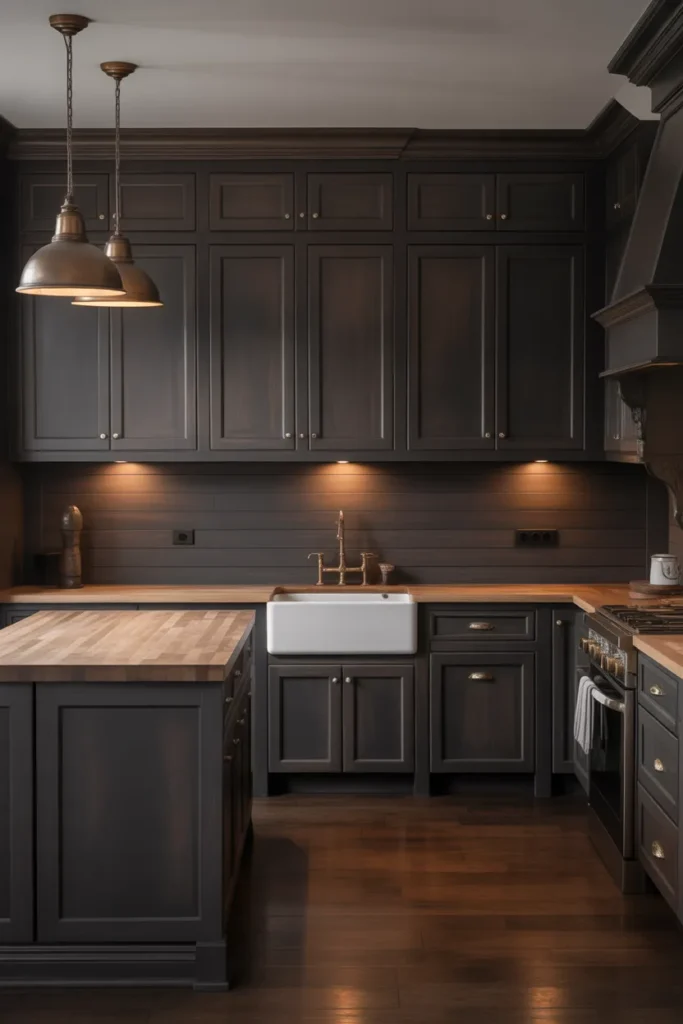
Hardware is critical in this design: use unlacquered brass or aged bronze pulls and knobs, not polished chrome or brushed nickel, which fight the warmth of the wood. A single large farmhouse apron sink in white or aged porcelain provides the necessary contrast against the dark cabinetry without introducing a competing material story.
Best For: Large or medium kitchens in farmhouse, craftsman, or traditional-style American homes. This palette is too heavy for a kitchen under 120 square feet unless the room has very strong natural light from multiple windows.
3. White Shiplap Kitchen Walls That Add Texture Without Overwhelming the Room
Shiplap in a kitchen is a strong rustic detail when confined to a single wall and finished correctly. The most effective application in 2026 is a single shiplap accent wall — typically the wall behind open shelving, behind the range, or along a breakfast nook — painted in warm white or soft cream with a flat or eggshell finish. This adds the texture and character of a rustic kitchen without taking over the entire room.
Horizontal shiplap reads as traditional farmhouse. Vertical shiplap reads as slightly more contemporary and adds the visual impression of height, which is useful in kitchens with standard 8-foot ceilings. In smaller rustic kitchen layouts, vertical shiplap on one wall can make the ceiling feel a full foot higher without any structural work.
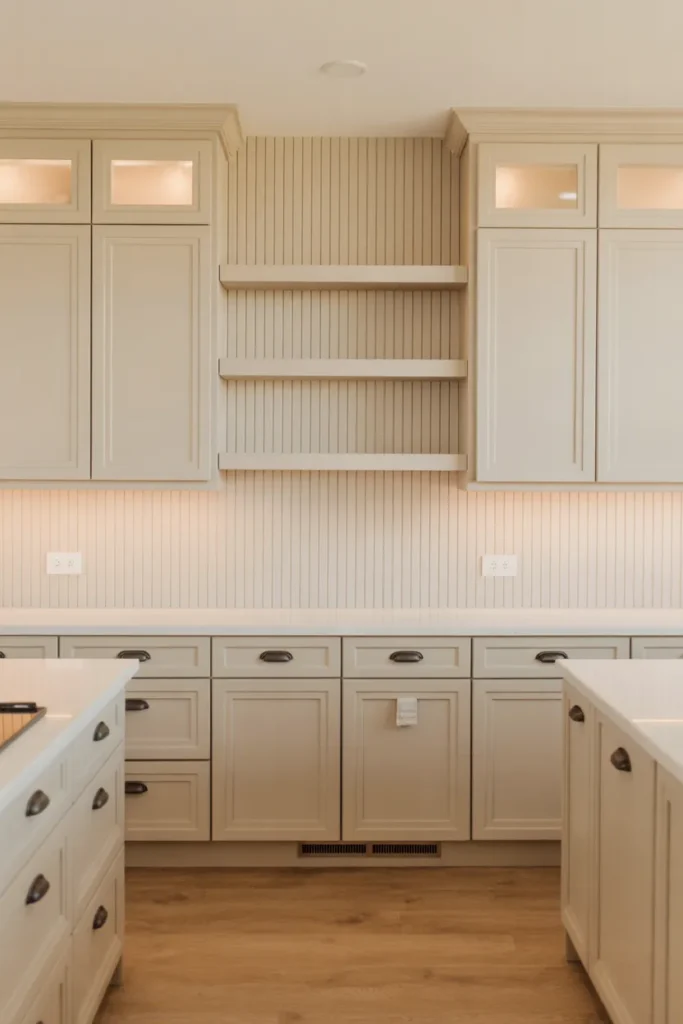
The finish matters enormously. Raw or stained shiplap in a kitchen picks up grease, steam, and moisture far more visibly than painted shiplap. Always use a washable paint finish — eggshell at minimum, semi-gloss if the wall is near the stove or sink. This is the detail most design guides skip and the one that determines whether shiplap looks beautiful or dingy after one year of cooking.
Mistake to Avoid: Do not run shiplap on all four walls of a kitchen. It creates a log-cabin effect rather than an elegant rustic one and makes the space feel enclosed and busy.
4. Butcher Block Countertops That Work in Modern Rustic Kitchens Without Looking Dated
Butcher block countertops are one of the defining materials of rustic kitchen design and one that requires practical decision-making before committing. The version that reads as modern rustic in 2026 is end-grain butcher block in walnut, maple, or white oak — not the low-quality edge-grain pine versions sold at big-box stores, which scratch and stain within months of installation.
End-grain walnut butcher block has a depth and richness that no stone or laminate surface can replicate. It brings immediate warmth to a kitchen that might otherwise feel too clean or too cold — particularly in kitchens that use painted white or grey cabinetry. The dark veining and natural color variation of walnut also conceals everyday wear far better than lighter wood species.
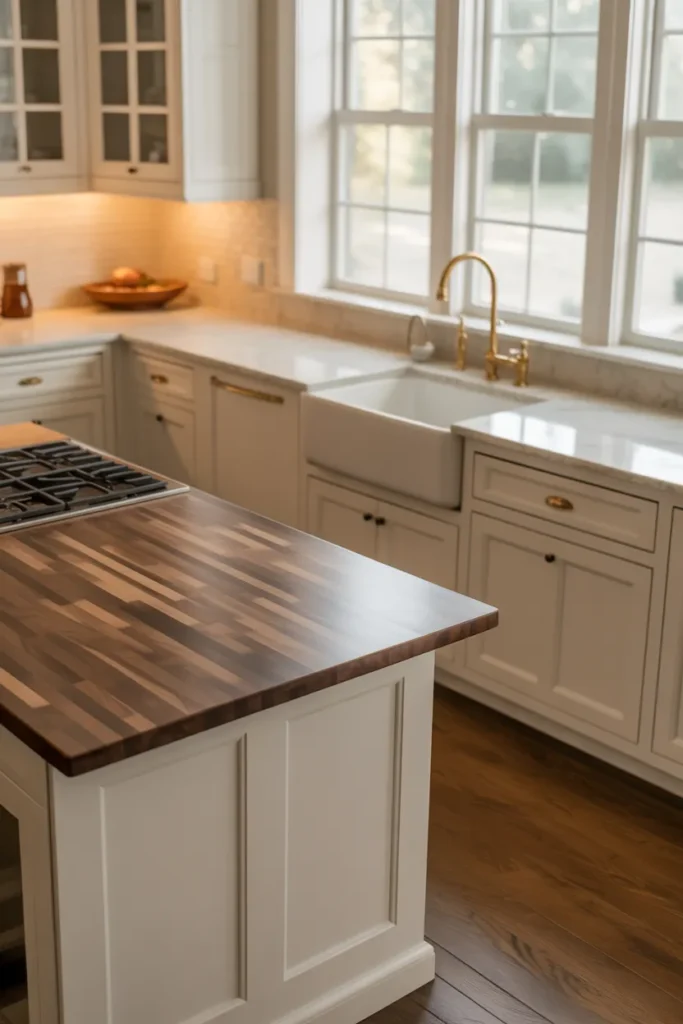
The practical concern with butcher block is maintenance. It requires oiling every three to six months and must be sealed properly at installation. If you are not prepared for that maintenance cycle, use butcher block on the island only and pair it with quartz or stone on the perimeter counters. This hybrid approach is one of the smartest functional decisions in rustic kitchen space planning.
Decision Guidance: Use full butcher block countertops if you cook heavily, value warmth over low maintenance, and have a kitchen that gets consistent care. Use the island-only approach if you want the look but prefer lower-maintenance perimeter surfaces.
5. Exposed Brick Kitchen Wall That Adds Instant Character to New Construction Homes
Exposed brick is one of the most impactful rustic kitchen design moves available because it is irreplaceable — no wallpaper, tile, or paint treatment fully replicates the depth, texture, and warmth of real brick. In 2026, the way it is being used in rustic kitchen ideas has shifted from full-wall coverage to a single architectural moment: behind the range hood, along one wall of an open-plan kitchen, or as the back wall of a built-in breakfast nook.
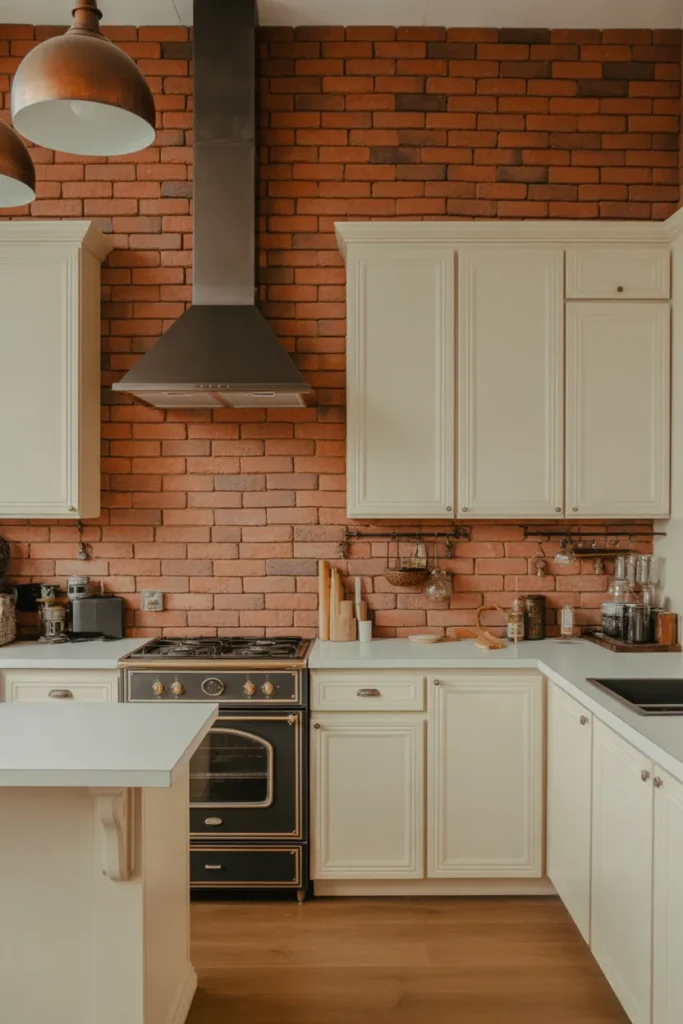
If your home does not have original exposed brick, thin brick veneer panels are a legitimate alternative that installs over drywall without structural work. The key is choosing a warm-toned brick in a sand, terracotta, or weathered red palette rather than a cool grey brick, which reads more industrial than rustic. Mortar color matters as well: cream or off-white mortar keeps the brick warm and traditional; grey mortar cools the palette considerably.
Pair exposed brick with white or cream painted cabinetry — never dark cabinetry directly against brick, which creates a heavy, closed-in look. Allow the brick to be the dominant material statement in the room and keep everything else cleaner and simpler. A single pendant light in aged bronze or black iron above the island is all you need to complete the story.
6. Sage Green Rustic Kitchen Cabinets That Bring Calm and Character Together
Sage green cabinetry is one of the strongest color choices in rustic kitchen ideas 2026 because it sits at the intersection of earthy and refined — warm enough to feel organic and natural, neutral enough to work with almost every other material in a rustic palette. The specific tone that works is a muted, grey-toned sage rather than a bright or yellow-heavy green.
Use sage on the lower cabinets only and keep upper cabinets in warm white or cream. This two-tone approach grounds the kitchen visually and prevents the green from becoming overwhelming in smaller spaces. Pair sage cabinetry with a butcher block or light stone countertop, unlacquered brass or aged iron hardware, and open wood shelves above for a layered, collected look.
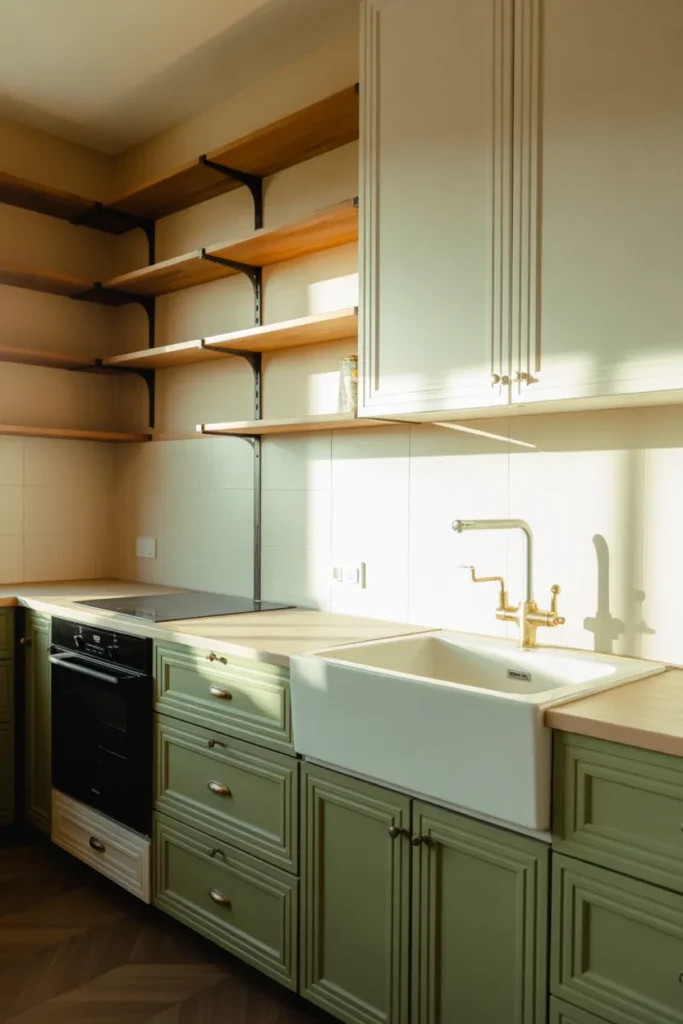
Sage green also photographs exceptionally well in natural morning light, which is why it performs so strongly on Pinterest and in kitchen design content. If you document your home for social media or plan to sell within a few years, sage cabinetry photographs as both current and timeless — a rare combination in kitchen color trends.
Mistake to Avoid: Sage green with stainless steel appliances creates a palette conflict. The cool industrial tone of stainless fights the warmth of the sage. Use panel-ready appliances, black appliances, or appliances in a warm white finish for a cohesive result.
7. Stone Backsplash Kitchen That Adds Texture and Warmth Behind the Range
A natural stone backsplash — specifically stacked ledger stone, tumbled travertine, or honed limestone — is one of the most effective texture elements in rustic kitchen design for 2026. It introduces natural variation, depth, and a tactile quality that ceramic or porcelain tile simply cannot replicate. Used behind the range and continuing to the underside of the range hood, it creates a focal point that anchors the entire kitchen.
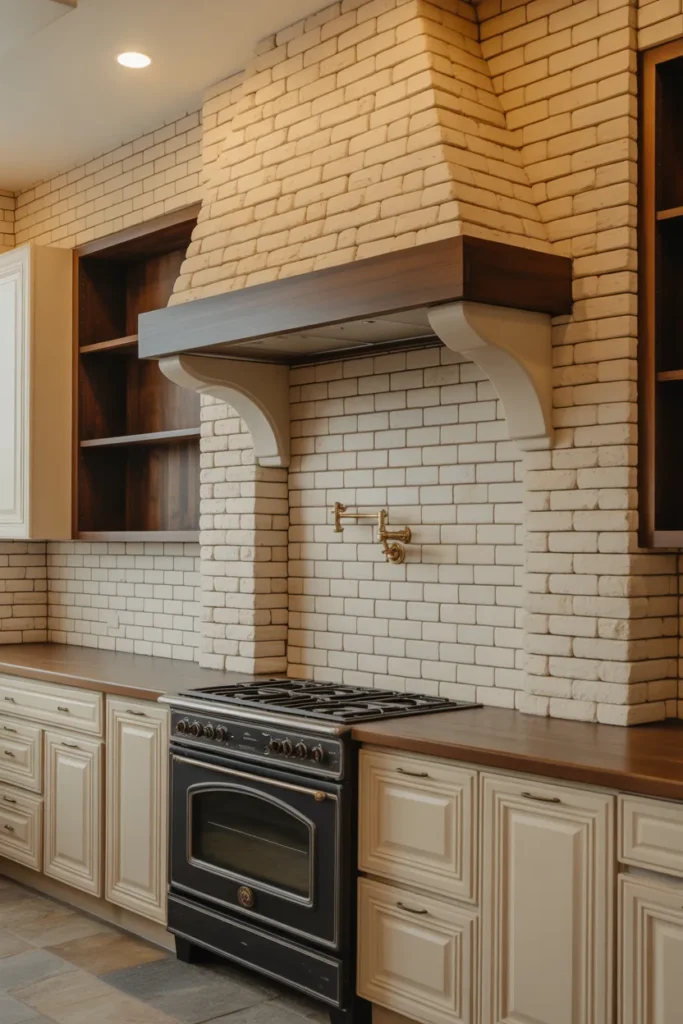
The stone choice determines the mood. Warm ivory or beige travertine creates a Mediterranean rustic atmosphere. Stacked grey and brown ledger stone reads as mountain lodge or cabin. Honed white limestone with grey veining bridges rustic and modern in a way that works well in transitional kitchens that are not fully committed to one aesthetic direction.
Keep the rest of the backsplash in a simple white subway tile or smooth plaster-finish wall to allow the stone to breathe. Extending the stone across all four walls of the kitchen creates an overpowering, cavernous effect. The power of stone is in its concentration — one well-chosen wall or range surround, not a full tile installation.
8. Open-Plan Rustic Kitchen With a Live-Edge Wood Island That Defines the Space
In open-plan homes, the kitchen island serves as the architectural anchor that separates the cooking zone from the living area — and in rustic kitchen design for 2026, the most compelling version of this island uses a live-edge wood slab as the countertop. A live-edge walnut, maple, or oak slab has a presence and individuality that no manufactured surface can replicate.
The live-edge slab works best on an island with simple, clean-lined cabinet bases in matte white, grey, or even matte black. The contrast between the organic, irregular edge of the wood and the clean geometry of the cabinet boxes is what creates the visual tension that makes this design so effective. The slab does not need to be matched or repeated elsewhere in the kitchen — its uniqueness is the point.
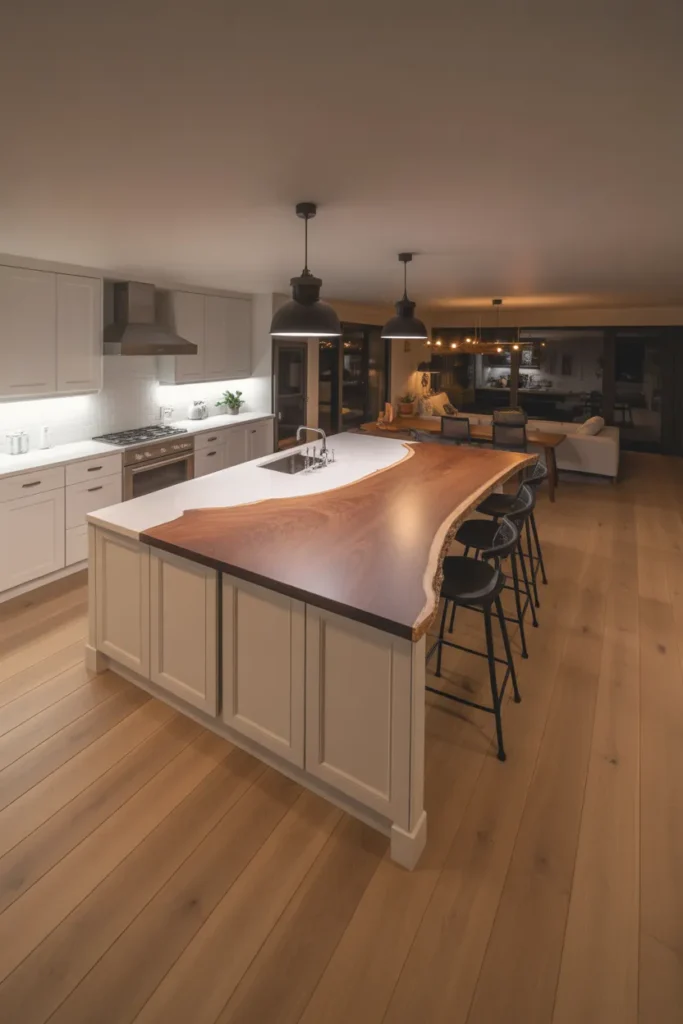
Structurally, live-edge islands require proper support for the overhang and a professional-grade wood finish that handles food prep, spills, and regular cleaning. A penetrating oil finish — food-safe versions in tung or hardening oil — is the appropriate choice. Avoid polyurethane over a live-edge slab, which gives it a plastic appearance that undermines the natural beauty of the material.
Best For: Open-plan kitchens in contemporary, transitional, or modern farmhouse homes where one statement piece is enough to define the rustic character of the entire space.
9. Copper and Wood Rustic Kitchen Accents That Elevate Without Full Renovation
If a full kitchen renovation is not in the plan, introducing copper accents alongside warm wood tones is one of the highest-impact, lowest-cost approaches in rustic kitchen ideas for 2026. Copper faucets, cabinet hardware, pendant lights, and pot racks bring immediate warmth and visual character to an otherwise plain or dated kitchen without touching a single cabinet.
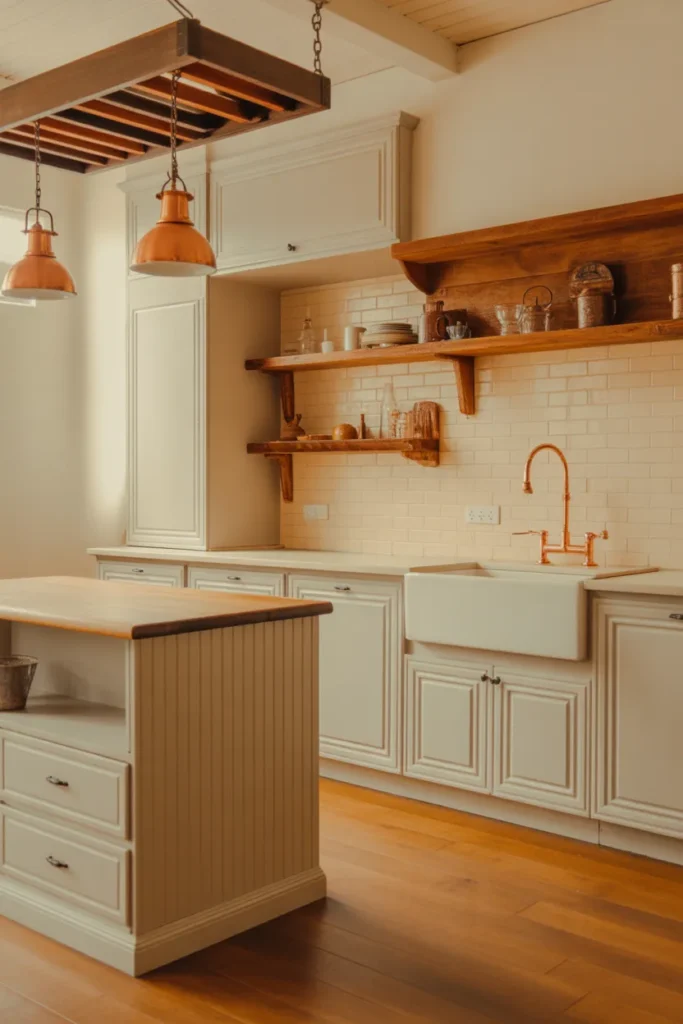
Copper works in this context because it ages gracefully — it develops a patina over time that makes the kitchen feel lived-in and authentic, which is exactly the quality that defines a well-executed rustic kitchen. This is the opposite of chrome or nickel, which shows water spots and scratches visibly and looks worse with age rather than better.
To prevent the copper from looking like a costume, limit it to two or three fixture categories in the kitchen: faucet and handles, pendant lights above the island, and one open pot rack or copper-lined range hood. Introducing copper into every surface — backsplash tiles, appliances, and fixtures simultaneously — makes the kitchen feel themed rather than designed.
10. Vintage-Inspired Rustic Kitchen With Painted Cabinets and Antique Hardware
A painted-cabinet kitchen with intentionally chosen antique or vintage-style hardware is one of the most accessible rustic kitchen ideas for homeowners who want character without a full gut renovation. The key is selecting a historically grounded paint color — dusty blue, aged cream, warm olive, or chalky grey — rather than a trendy or overly bright tone that will feel dated within two years.
Cabinet paint color in the dusty blue or French grey family pairs exceptionally well with antique brass cup pulls, bin pulls, or drop-bail hardware in an aged or unlacquered finish. These hardware styles have a pre-industrial, heirloom quality that immediately reads as intentional and considered rather than generic.
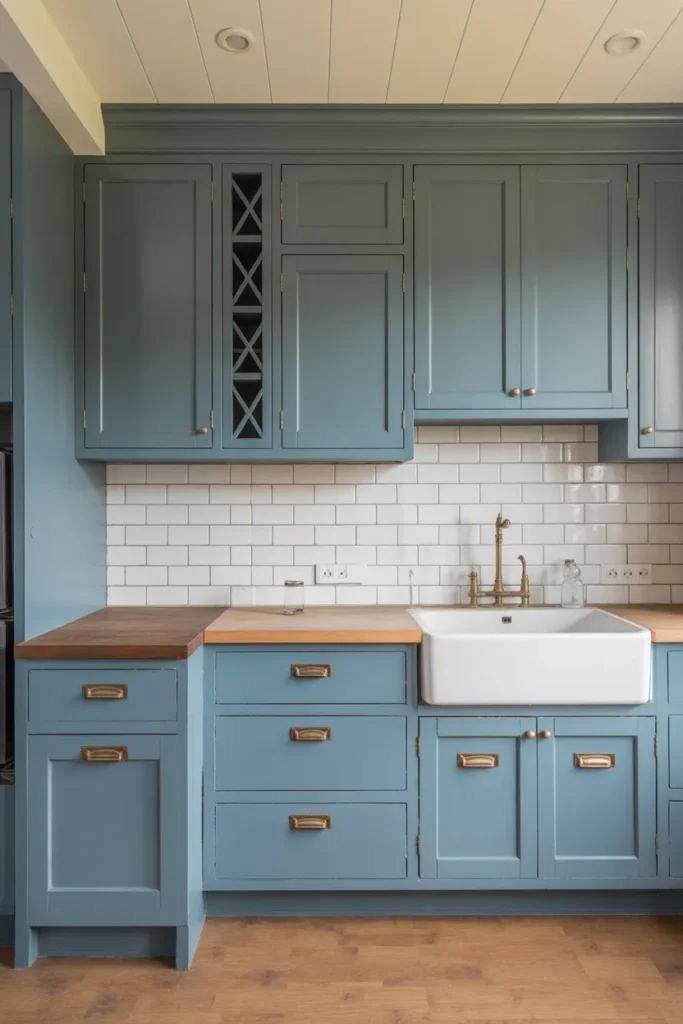
Pair the painted cabinets with a simple white farmhouse sink, open shelving in one section of the kitchen, and a plain white or cream subway tile backsplash. The painting and hardware do the heavy lifting — additional decorative layers are not necessary and often compete with the story you are trying to tell. The restraint of keeping the surrounding elements plain is what allows the cabinet color and hardware to read as a design choice rather than an accident.
Decision Guidance: This approach works best in kitchens where the cabinet boxes are in good structural condition but the doors and hardware are dated. A coat of paint and new hardware is one of the most cost-effective rustic kitchen updates available and requires no contractor for most homeowners.
11. Rustic Galley Kitchen Design That Maximizes a Narrow Space Beautifully
The galley layout — two parallel runs of cabinetry facing each other — is the most efficient kitchen floor plan for narrow spaces and one that benefits enormously from rustic material choices that add warmth and character to what can otherwise feel like a corridor. In 2026, the rustic galley kitchen is one of the most frequently saved rustic kitchen ideas on Pinterest because it solves a real spatial problem while looking genuinely beautiful.
The key to a successful rustic galley is contrast between the two walls. Use open reclaimed wood shelving on one side and full closed cabinetry on the opposite wall. This asymmetry breaks up the tunnel effect that makes galley kitchens feel narrow and repetitive. Keep the open shelving side lighter in color and the closed cabinet side in a slightly deeper tone — warm cream versus soft greige, for example.
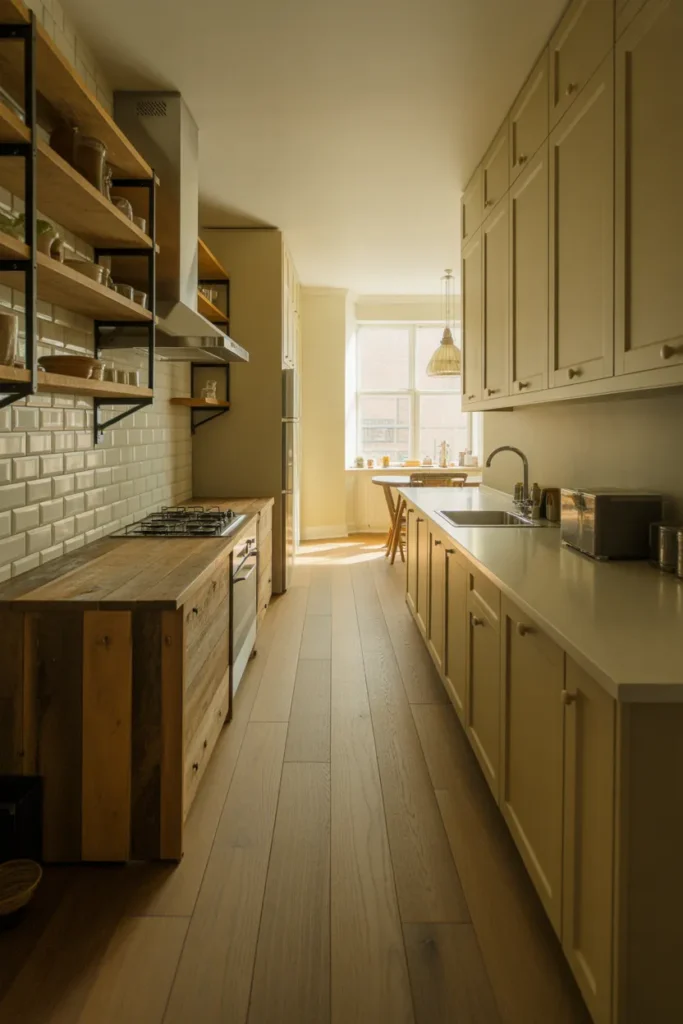
Flooring runs lengthwise down the galley to create a sense of flow and depth. Wide-plank wood or a large-format natural stone tile in a warm beige or grey elongates the space visually. Avoid small mosaic or busy tile patterns in a galley kitchen — they make an already narrow space feel visually compressed and cluttered.
Mistake to Avoid: Do not add an island or kitchen cart to a galley that is less than 7 feet wide. The walkway minimum for a functional galley is 42 inches between facing surfaces, and anything below that creates a kitchen that is frustrating to work in.
12. Rustic U-Shape Kitchen Layout With Apron Sink and Wood Beam Ceiling
The U-shape kitchen layout — three walls of cabinetry forming a continuous work triangle — is the most functional floor plan for serious home cooks, and when paired with rustic materials and an exposed wood beam ceiling, it becomes one of the most visually compelling rustic kitchen ideas for 2026 in larger American homes.
The apron-front farmhouse sink is the anchor of this layout, positioned on the center wall of the U where it becomes the visual and functional focal point. In a U-shape, the sink wall faces into the room, giving it maximum prominence. Choose a single-basin white or aged porcelain apron sink rather than a double basin — a single basin handles large pots and sheet pans far more effectively and reads as more substantial and considered.
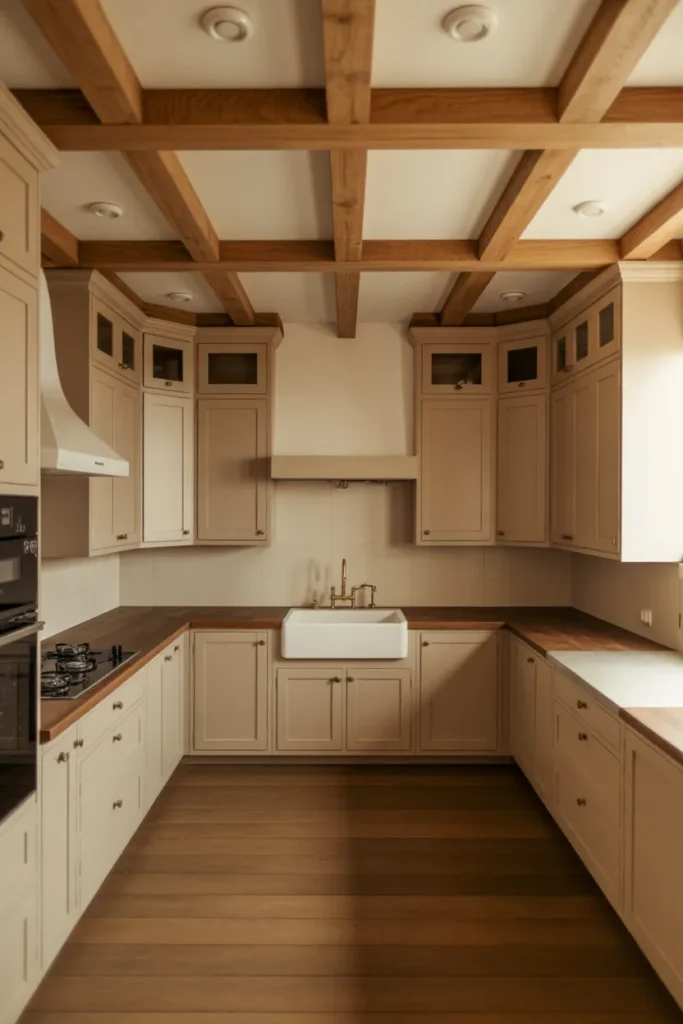
Exposed wood ceiling beams in rough-sawn oak, fir, or pine tie the ceiling into the rustic material story of the cabinetry and countertops below. The beams should run perpendicular to the longest wall of the kitchen for visual continuity. They do not need to be structural — box beams installed over a standard drywall ceiling achieve the same aesthetic result without any structural engineering.
Best For: Kitchens in craftsman bungalows, farmhouses, and suburban homes with open floor plans where the kitchen ceiling is accessible for beam installation. This layout requires a minimum kitchen footprint of 10×10 feet to function comfortably.
13. Rustic Kitchen With Concrete Countertops for an Earthy Industrial Edge
Concrete countertops are one of the most underused options in rustic kitchen design, and in 2026 they are being reconsidered as a material that bridges rustic and industrial in a way that stone and wood do not. Poured-in-place or precast concrete countertops develop a natural variation — slight color differences, hairline stress marks over time — that gives them an organic, aged quality that becomes more interesting rather than less over years of use.
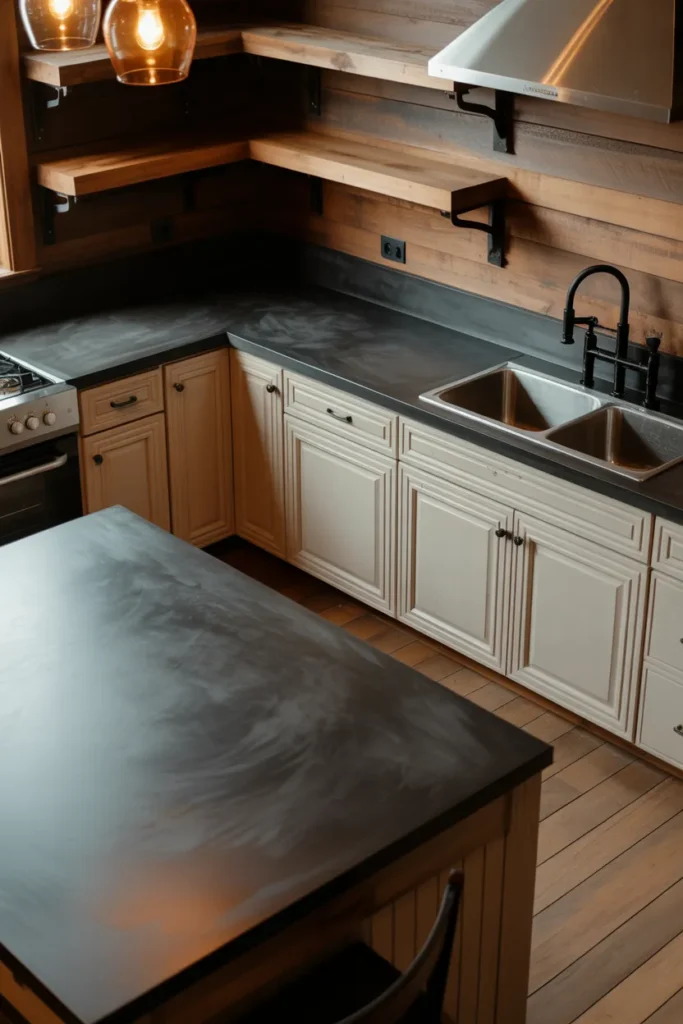
The color range available in concrete countertops is broader than most homeowners realize. Warm charcoal, dusty terracotta, aged cream, and warm slate grey are all achievable through integral pigmentation and are far more interesting in a rustic kitchen than standard grey. A warm charcoal concrete paired with white painted shaker cabinets and reclaimed wood open shelving creates a palette that is simultaneously contemporary and deeply earthy.
Concrete requires sealing at installation and resealing periodically, similar to butcher block. It is also unforgiving of standing water left on the surface for extended periods, which can leave light marks in unsealed areas. In exchange for that maintenance requirement, you get a countertop surface that is genuinely unique — no two poured concrete countertops look exactly the same.
14. Rustic Kitchen Island With Seating That Functions as a Family Hub
A kitchen island with seating is one of the most practically impactful additions to an open-plan or large kitchen, and in rustic kitchen design for 2026, the version that works best is a combination of a wood or painted island base with a contrasting countertop surface, seating on one long side, and enough clearance on all remaining sides to function comfortably.
The island base in a rustic kitchen should feel substantial and furniture-like rather than built-in and institutional. Use shaker-style doors in a color that contrasts with the perimeter cabinets — dark walnut stain against white perimeter cabinets, for example, or a deep navy against sage green. This contrast is what makes the island feel like a deliberate design choice rather than an afterthought.
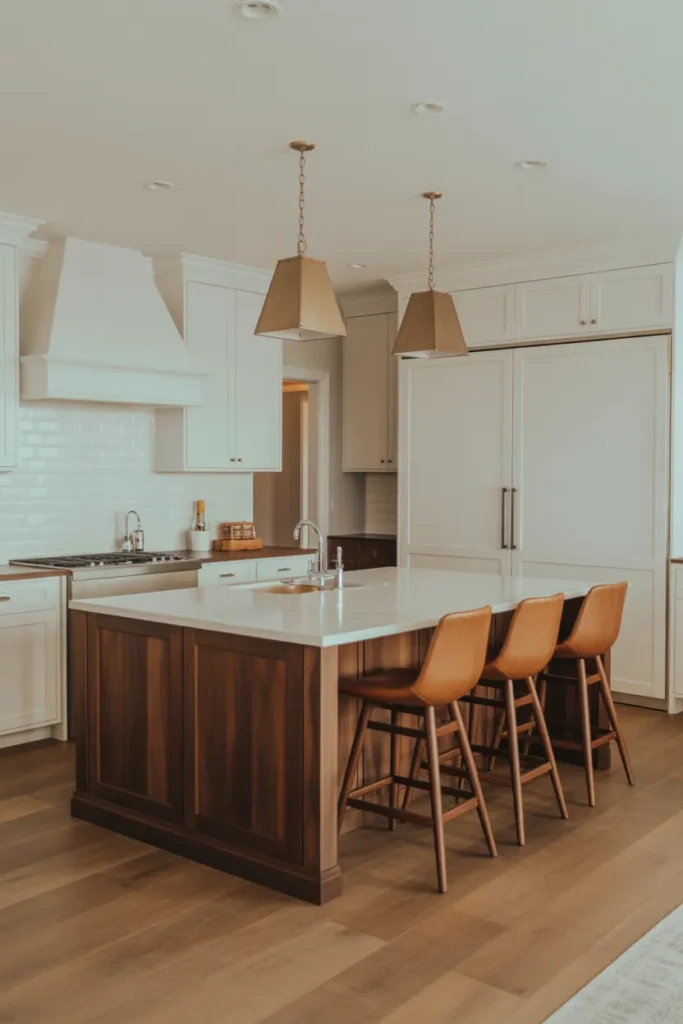
Bar stools or counter stools at the seating side should be in a material that connects to the rustic palette: raw wood seat with black iron legs, woven rattan seat, or a leather-seated wooden stool in cognac or saddle brown. Avoid backless metal stools, which read as industrial and fight the warmth of the rustic materials around them.
Clearance Guidance: Maintain a minimum of 42 inches between the island edge and the perimeter cabinetry on the working side, and at least 36 inches on the seating side. These are the functional minimums for comfortable movement in a working kitchen.
15. Small Rustic Kitchen Design Using Dark Lower Cabinets to Create Depth
In a small rustic kitchen where the square footage limits your design options, using dark lower cabinets paired with light upper cabinets or open shelving is one of the most effective visual strategies available. The dark lower section grounds the room and creates a sense of depth and solidity, while the lighter upper section keeps the room feeling open and prevents the ceiling from pressing down.
The dark cabinet color that reads best in a small rustic kitchen is not black — it is a deeply saturated warm tone like dark forest green, navy, deep olive, or warm espresso. These colors have enough depth to create drama without the harshness of flat black in a small space. They also photograph beautifully with warm lighting, which is why this combination consistently performs well in rustic kitchen ideas on Pinterest.
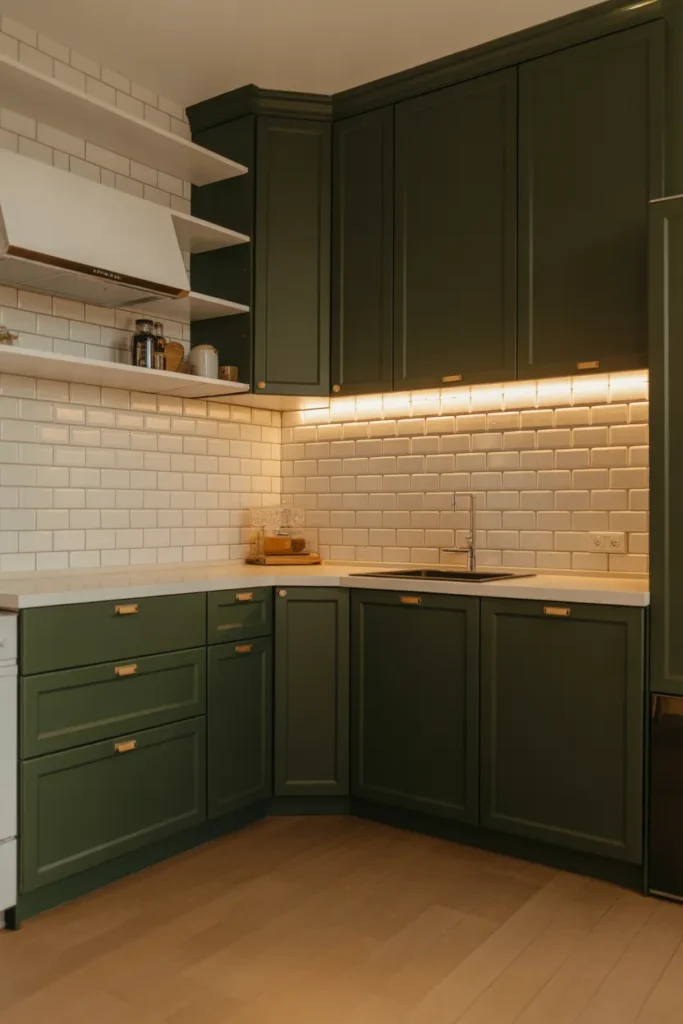
In a small kitchen, every other material must work harder to prevent the dark cabinets from making the space feel smaller. Use a light or white countertop, a simple cream or white backsplash, and warm under-cabinet lighting that throws light directly onto the counter surface. This under-cabinet lighting is not decorative — it is functional and essential in a dark-cabinet small kitchen.
Mistake to Avoid: Do not add a dark floor to a small kitchen with dark lower cabinets. The lower half of the room will disappear into a single dark mass. Use a light or medium-toned wood floor to maintain visual separation between the cabinets and the ground plane.
16. Rustic Kitchen With Terracotta Floor Tile That Anchors the Entire Room
Terracotta floor tile is one of the most historically grounded and visually powerful choices in rustic kitchen design for 2026. It has been used in American and European kitchens for centuries precisely because it performs so well — it is durable, it ages beautifully, and the natural variation in each tile’s color and texture creates a floor that looks more interesting the longer it is lived on.
The pattern you choose determines the mood. Simple square terracotta tiles laid on a straight grid reads as clean and contemporary rustic. Diagonal installation reads as more traditional and Mediterranean. A more complex Saltillo or hand-pressed hexagonal terracotta reads as deeply artisanal and works best in kitchens with other strong handmade elements — hand-thrown ceramic hardware, a cast iron range, or rough-sawn wood beams.
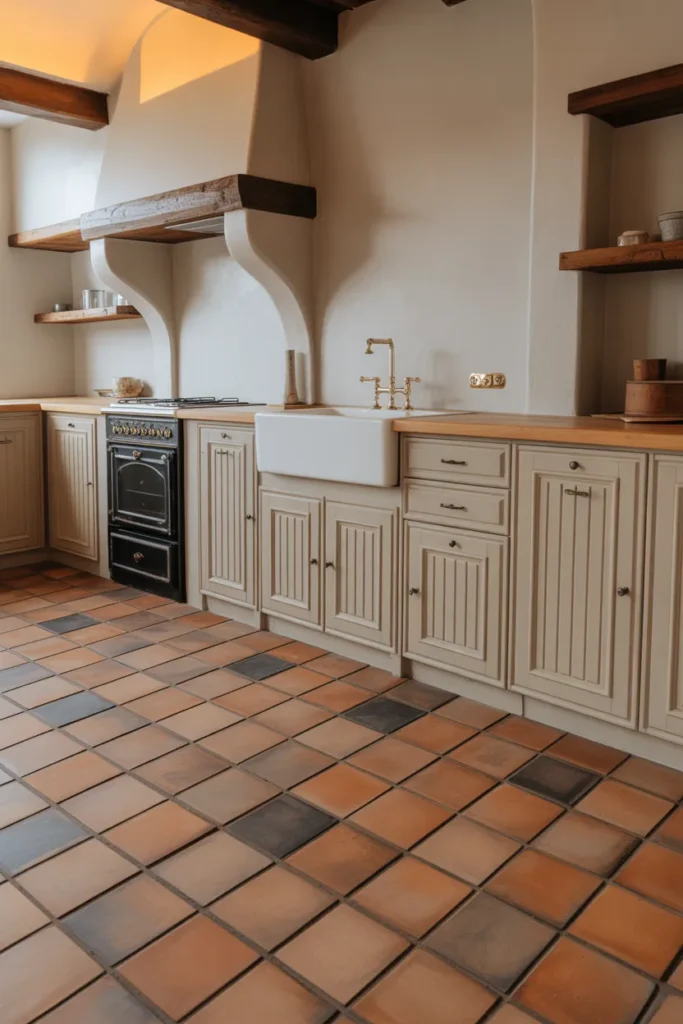
Terracotta pairs naturally with cream, white, sage, and warm green cabinetry. It does not work with cool grey or slate-blue cabinets, which create a palette conflict between the warm floor and the cool wall elements. Keep the entire material story of the kitchen warm — warm wood, warm stone, warm plaster or paint — and let the terracotta floor anchor all of it from the ground up.
Maintenance Note: Unsealed terracotta stains easily from spills and cooking oils. Always use a penetrating sealer at installation and reseal annually. This maintenance step is non-negotiable in a kitchen environment.
17. Rustic Kitchen With Floating Wood Hood as the Architectural Statement Piece
The range hood is one of the most visible and architecturally significant elements in a kitchen, and in rustic kitchen design for 2026, a custom or semi-custom floating wood hood — either in raw oak, stained walnut, or a painted wood finish — is the single detail that most clearly elevates a kitchen from assembled to designed.
A wood hood above the range creates an immediate visual anchor for the entire kitchen. It draws the eye upward, emphasizes ceiling height, and provides a natural material transition between the upper cabinetry and any exposed ceiling beams above. Unlike a metal or plaster hood, a wood hood has warmth and texture that ties directly into the other rustic materials in the room.
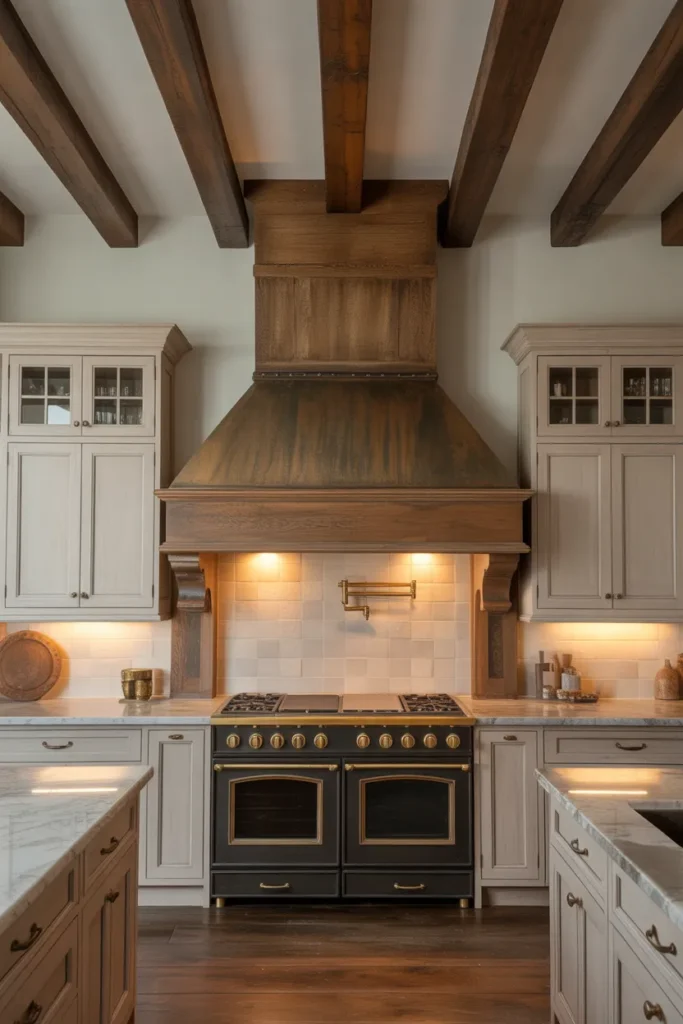
The proportions of the wood hood matter. The hood should extend at least 3 inches beyond the cooking surface on each side and rise at minimum 24 inches from the bottom of the hood to the cooking surface. A hood that is too narrow or too short looks like an afterthought. When in doubt, err on the side of slightly too large — a substantial hood reads as confident and architectural.
Practical Note: Ensure the wood hood houses a functional liner with adequate CFM rating for your cooktop. A decorative wood shell with no internal ventilation is a fire and air quality hazard. Always use a properly rated insert inside the wood structure.
18. Modern Rustic Kitchen That Blends Clean Lines With Raw Materials for 2026
The most relevant direction in rustic kitchen ideas 2026 is not pure farmhouse or cabin aesthetic — it is the modern rustic hybrid that uses clean architectural lines and contemporary cabinet profiles paired with raw, aged, and natural materials. This is the version of rustic kitchen design that works in new construction, renovated modern homes, and any space that is not a traditional farmhouse but still wants warmth and material character.
The cabinet profile is flat-panel, not shaker. The hardware is minimal — small bar pulls or integrated finger-pull channels rather than cup pulls or bin pulls. The clean geometry of the cabinets creates a contemporary backdrop against which the raw materials — live-edge wood, rough stone, hammered metal, or reclaimed wood shelving — stand out with full impact.
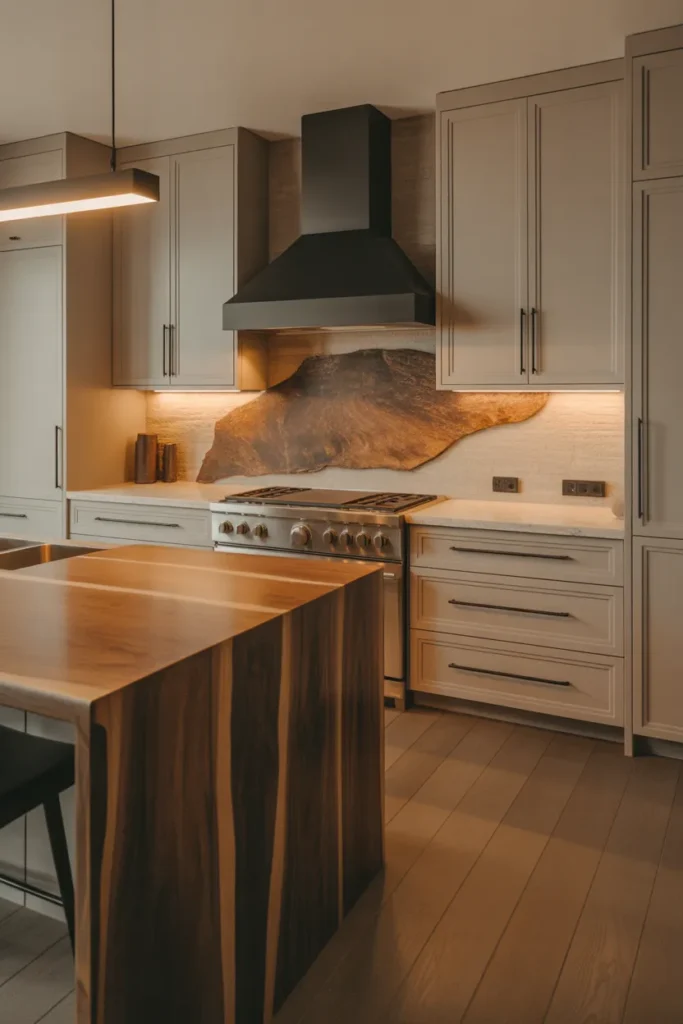
Color palette is warm but restrained: muted warm white cabinets, warm grey or cream stone countertops, and a single statement material — a large-format stone slab backsplash or a live-edge island top. The discipline of using only one visually complex material in an otherwise clean kitchen is what keeps modern rustic from tipping into confusion. One bold natural material is an architectural statement. Three competing ones are a design problem.
Best For: Contemporary or transitional homes built after 2000 where the architecture is clean and modern but the homeowner wants warmth, texture, and material character that standard contemporary kitchens typically lack.
Final Thoughts
These 18 rustic kitchen ideas for 2026 cover every layout type, room size, material combination, and design direction — from a small galley with reclaimed shelving to a large open-plan kitchen with a live-edge island. Each idea was written to help you make a real decision, not just save a pretty picture.
If one of these ideas fits your kitchen, save this post now and come back to it when you are ready to plan your next step — whether that is a paint color, a hardware swap, or a full renovation. Rustic kitchen design works best when it starts with one clear material anchor and builds outward from there.
Save this guide to your Pinterest kitchen board so you have all 18 ideas in one place when you are ready to move forward.