
If you are struggling with a cramped or awkward living room, the right small living room layout tips can change everything without moving a wall or spending a fortune. This guide covers 18 practical, decision-ready layout strategies that work in real apartments, starter homes, and compact spaces across the USA. Each idea is designed to help you choose what fits your specific room, not just what looks good on a screen.
1. Float Your Sofa Away from the Wall to Instantly Open the Room
Most people in small living rooms push every piece of furniture against the wall. It feels logical, but it actually makes the room look more cramped, not less. Pulling your sofa even 6 to 12 inches away from the wall creates visual breathing room and makes the space feel intentionally designed.
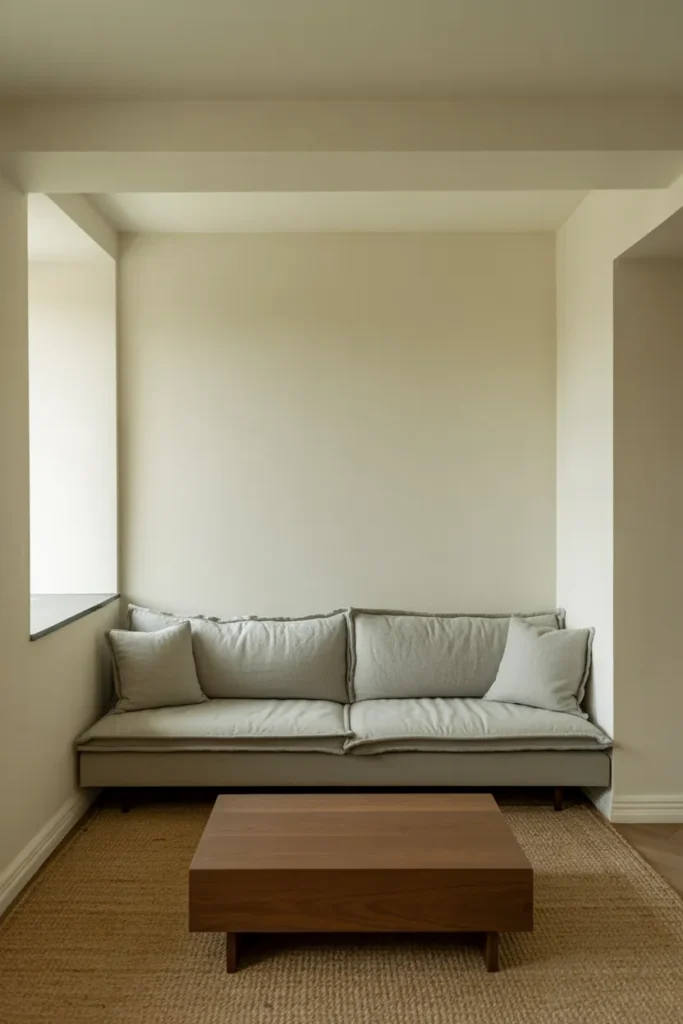
This layout works best in rectangular rooms where you have at least 10 to 12 feet of usable width. The gap behind the sofa also creates a natural pathway, which improves how traffic flows through the space. If your room is under 10 feet wide, skip this and focus on a tighter conversation zone instead.
The mistake to avoid here is floating the sofa without anchoring it. Always place a rug underneath that connects the sofa and coffee table. Without it, the furniture looks like it is drifting and the room feels unfinished.
2. Use a Loveseat Instead of a Full Sofa to Reclaim Floor Space
A standard three-seat sofa in a small living room layout can consume 7 to 8 feet of wall space. Switching to a loveseat or a compact two-seat sofa immediately frees up 18 to 24 inches, which is enough room to add a slim accent chair or a small side console.
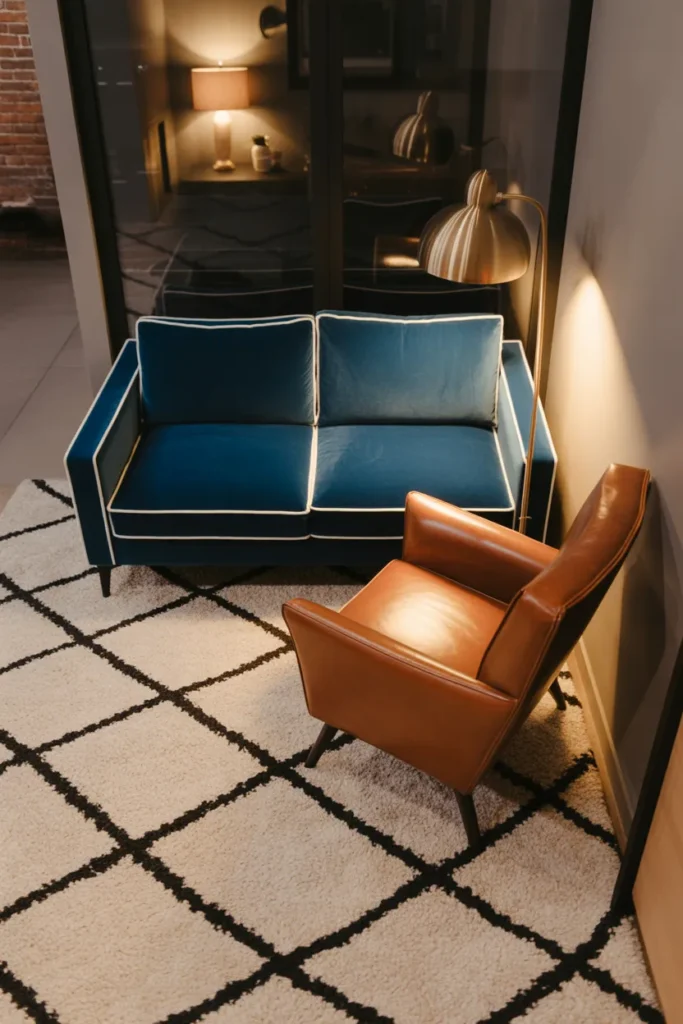
This swap works particularly well in studio apartments and living rooms under 180 square feet. The result is a seating area that still fits two to three people comfortably without dominating the entire room. Pair the loveseat with one or two accent chairs at angles to complete the conversation zone without overcrowding.
Do not make the mistake of choosing a loveseat that is too deep. A seat depth of 34 to 36 inches is ideal for small spaces. Anything deeper starts to eat into your walking clearance, which should be at least 30 to 36 inches around key pathways.
3. Anchor Every Seating Zone with a Properly Sized Area Rug
One of the most overlooked small living room layout tips is rug sizing. A rug that is too small makes furniture look disconnected and the room feel smaller, not larger. The right rug pulls all your pieces together and signals where the living area begins and ends, which matters even more in open-plan spaces.
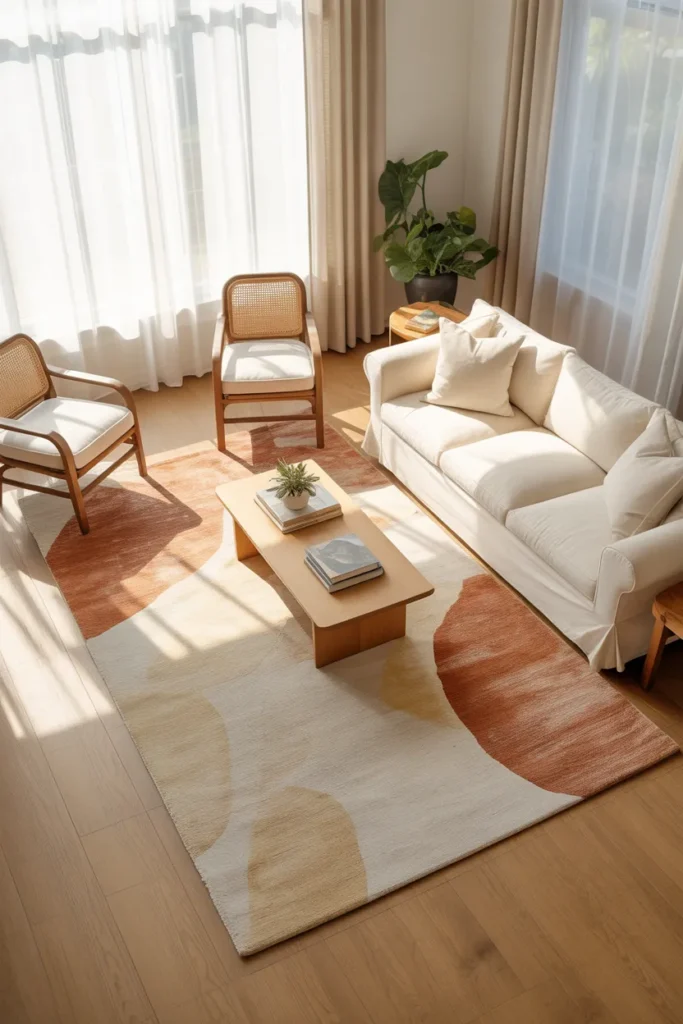
For a small living room, an 8×10 rug is usually the sweet spot. At minimum, the front legs of your sofa and chairs should rest on the rug. If you cannot fit an 8×10, choose a 6×9 and keep all furniture legs on it rather than off it entirely.
The visual trick here is that a rug that extends closer to the walls makes the room feel wider. Light-colored and low-pile rugs reflect more light and are easier to maintain in high-traffic small spaces. Avoid dark, heavy-patterned rugs in rooms with limited natural light.
4. Choose a Glass or Lucite Coffee Table to Keep the Center Open
In small living room layout design, the coffee table sits at the visual center of the entire space. A bulky wooden or upholstered table here blocks sightlines and fills the room with visual weight. A glass or acrylic table solves this without sacrificing function.
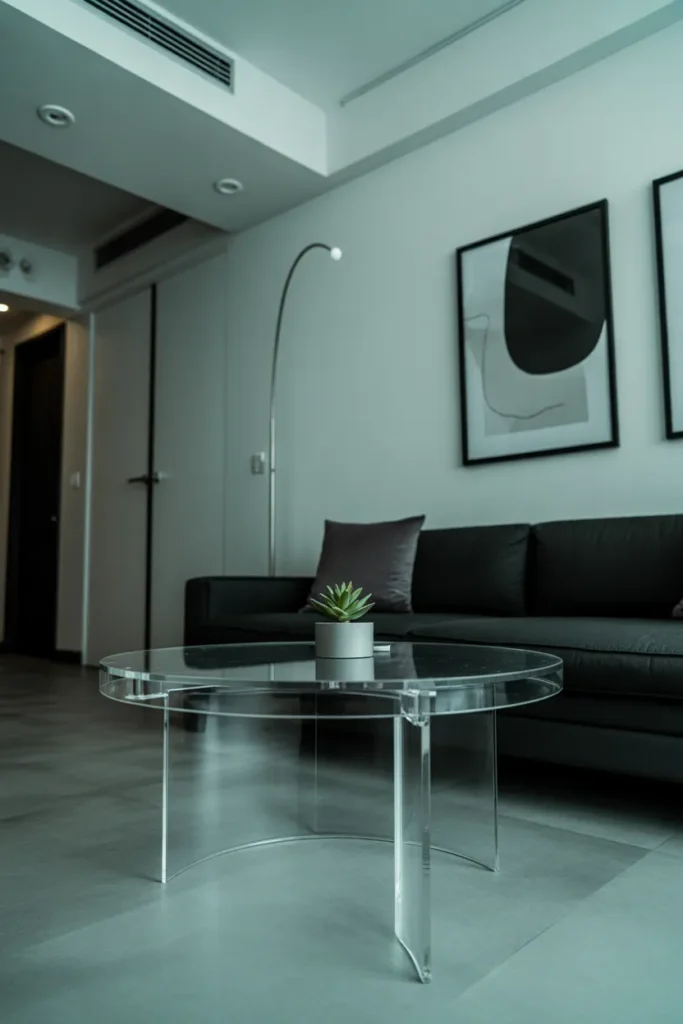
Transparent materials allow the eye to travel through the room uninterrupted, which creates a sense of depth that solid tables simply cannot deliver. This works especially well in rooms where the sofa is large or dark, because the table does not compete visually.
Keep the surface lightly styled. One small tray, a plant, and a candle is enough. The power of this layout choice is in what you do not put on the table, not what you add to it. Avoid nesting tables in this spot unless they are also glass or metal, as stacking visual mass in the center defeats the purpose.
5. Create a Diagonal Layout to Break Up a Boxy Small Room
When a small living room is nearly square, placing all furniture parallel to the walls reinforces the boxy feeling. Angling your sofa or main seating piece at 45 degrees to the corner introduces movement, softens the geometry, and makes the space feel larger than it is.
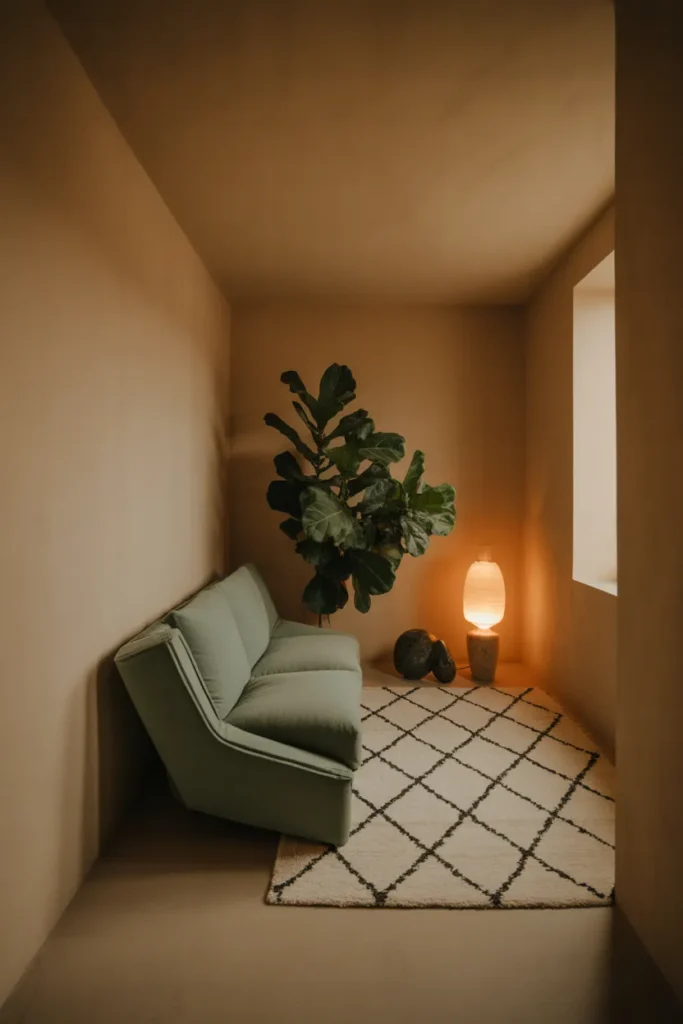
This layout works best in rooms that are between 12×12 and 14×14 feet. The diagonal placement also creates two natural zones: the main seating area in the center and a pathway along the angled back corner, which can hold a tall plant, a floor lamp, or a slim bookshelf.
The main mistake here is angling the furniture without adjusting the rug. The rug should follow the diagonal, not stay parallel to the walls. If your rug fights the direction of the furniture, the whole layout feels accidental rather than deliberate.
6. Use Dual-Purpose Furniture to Eliminate Pieces Without Losing Function
A storage ottoman instead of a coffee table. A sofa bed in place of a regular sofa. A console table that doubles as a desk. In small living room space planning, every piece of furniture should earn its place by doing more than one job.
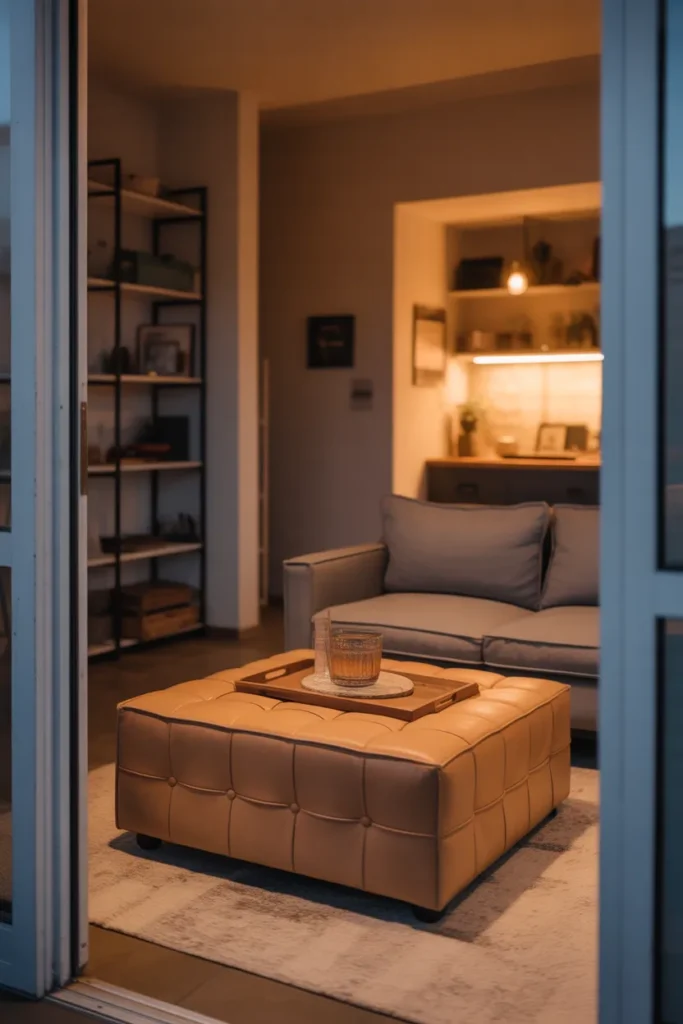
This approach is most valuable in studio apartments and living rooms that also serve as home offices or guest rooms. The goal is not to buy multi-purpose furniture for the sake of it, but to eliminate pieces that only serve one function so you can keep the floor plan open.
When choosing dual-purpose pieces, prioritize ease of use. If a sofa bed takes 20 minutes to convert, you will stop using it. If the storage ottoman requires you to remove everything on top to open it, it becomes clutter instead of storage. Function has to be practical, not just theoretical.
7. Mount Your TV on the Wall to Free the Entire Media Console Footprint
A TV stand or media console in a small living room can take up 4 to 6 feet of floor space and create visual clutter beneath the screen. Wall-mounting the TV eliminates that footprint entirely and gives you options: remove the console completely, replace it with a slim floating shelf, or use that wall for a different layout entirely.
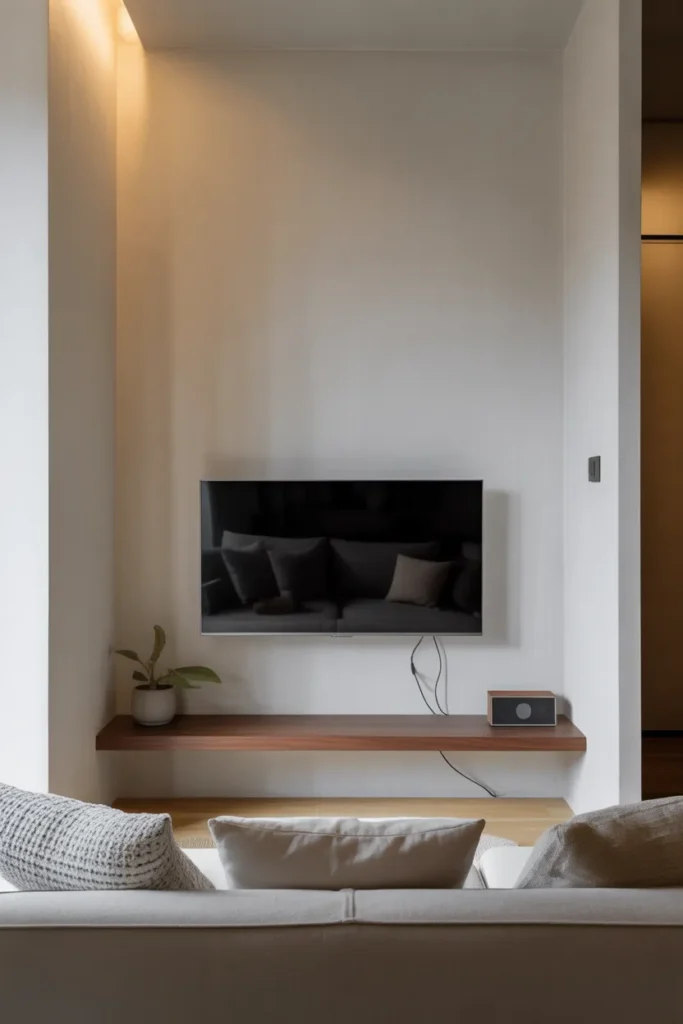
Wall mounting works in nearly every small living room layout, but it is especially effective in narrow rooms where floor space along the main wall is limited. Positioning the TV at the correct height matters too. The center of the screen should sit at seated eye level, typically 42 to 48 inches from the floor, not higher.
The mistake most people make is mounting the TV and leaving all the cords exposed. Use an in-wall cord kit or a cable channel to keep the wall clean. A mounted TV with visible cables still looks unfinished and distracts from the rest of the layout.
8. Define Zones in an Open Plan with Strategic Sofa Placement
In open-plan homes and apartments, the living room often flows directly into the dining area or kitchen. Without walls to define the space, the layout can feel undefined and chaotic. The back of the sofa is one of the most effective tools you have to create a visual boundary between zones.
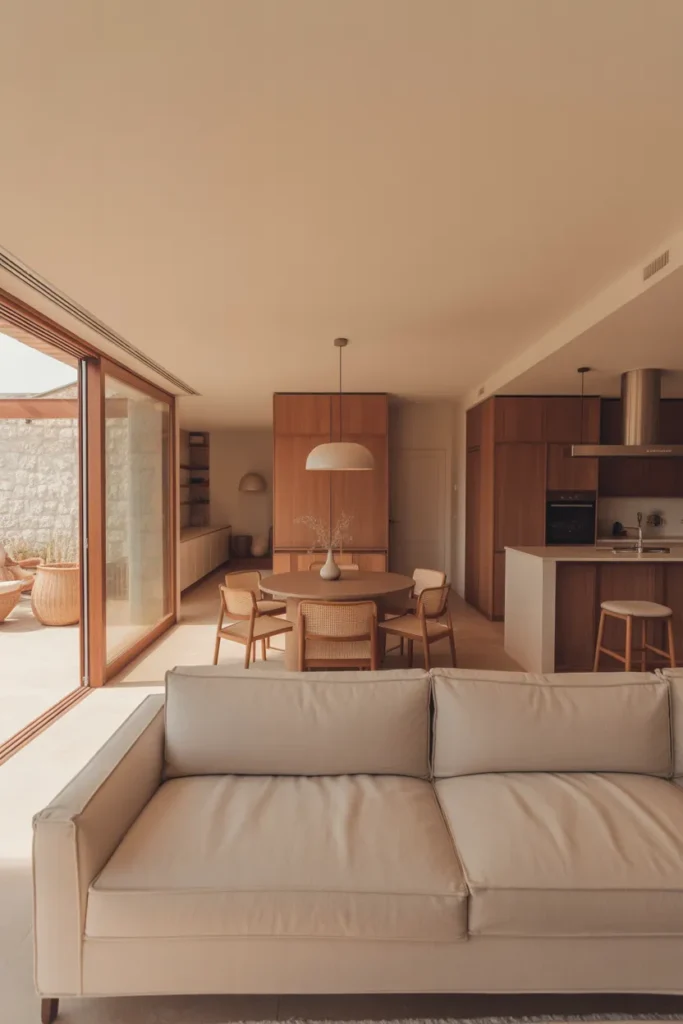
Positioning the sofa so its back faces the dining or kitchen area creates an implied wall. This separates the living zone without blocking light or airflow. It also gives the dining area a defined back, which makes both spaces feel more intentional and complete.
This is one of the most practical small living room layout tips for open-plan spaces because it costs nothing extra and works with furniture you already have. The key is making sure the sofa back is clean and presentable since it becomes a visible element from the adjoining zone. A low-profile sofa under 30 inches tall works best so it does not visually chop the space in half.
9. Go Vertical with Shelving to Draw the Eye Up and Add Storage
When floor space is limited, the answer is almost always to go vertical. Tall bookshelves, floating wall shelves stacked to the ceiling, and vertical storage units add significant storage and display capacity without consuming extra square footage.
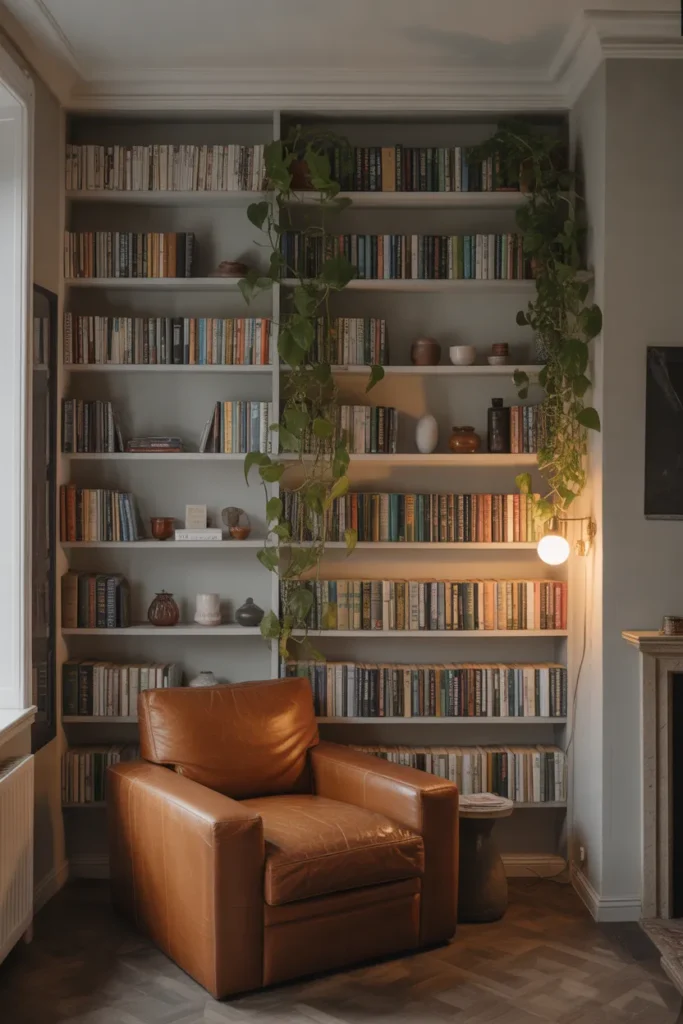
This layout strategy works in any small living room but is particularly effective in rooms with ceilings above 9 feet. The visual effect of tall shelving draws the eye upward, which makes the room feel taller and more spacious. Even in a room with 8-foot ceilings, shelves that run from floor to ceiling reinforce height.
The mistake to avoid is overfilling vertical shelving. Packed shelves look like clutter, not design. Follow the rule of filling about 70 percent of shelf space with books or objects and leaving 30 percent open. Mixing in small plants, framed photos, and decorative objects at varying heights keeps it from looking like a storage room.
10. Choose Leggy Furniture to Let Light Flow Underneath
Furniture with visible legs creates a sense of openness that ground-level pieces simply cannot. When light passes beneath sofas, chairs, and side tables, the floor reads as continuous, which makes the room feel significantly larger. This is one of the easiest and most underused small living room layout ideas.
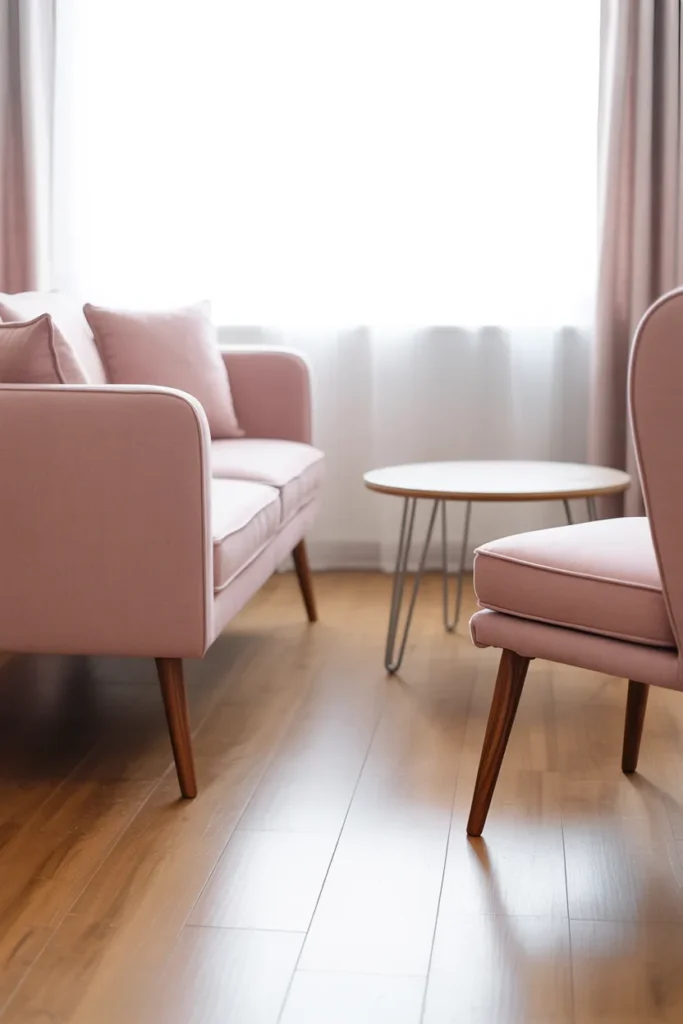
Look for sofas and chairs with legs of at least 5 to 6 inches. Mid-century modern and Scandinavian-style pieces often have this feature built in. The visual trick is that you can see more floor, which registers to the eye as more space even when the room dimensions have not changed.
This approach also makes cleaning easier, which matters in small, high-use spaces. The one situation where leggy furniture does not work well is in rooms with very dark floors, where the gap beneath the furniture can look shadowy rather than airy. In those rooms, pair leggy pieces with lighter rugs to keep the floor reading bright.
11. Use Mirrors Strategically to Double the Visual Depth of a Small Room
A large mirror placed on the right wall can make a small living room feel twice its actual size. The reflection picks up light, bounces it across the room, and creates the visual impression of a second space beyond the wall. This is not a design cliché — it is one of the most effective functional layout tools available.
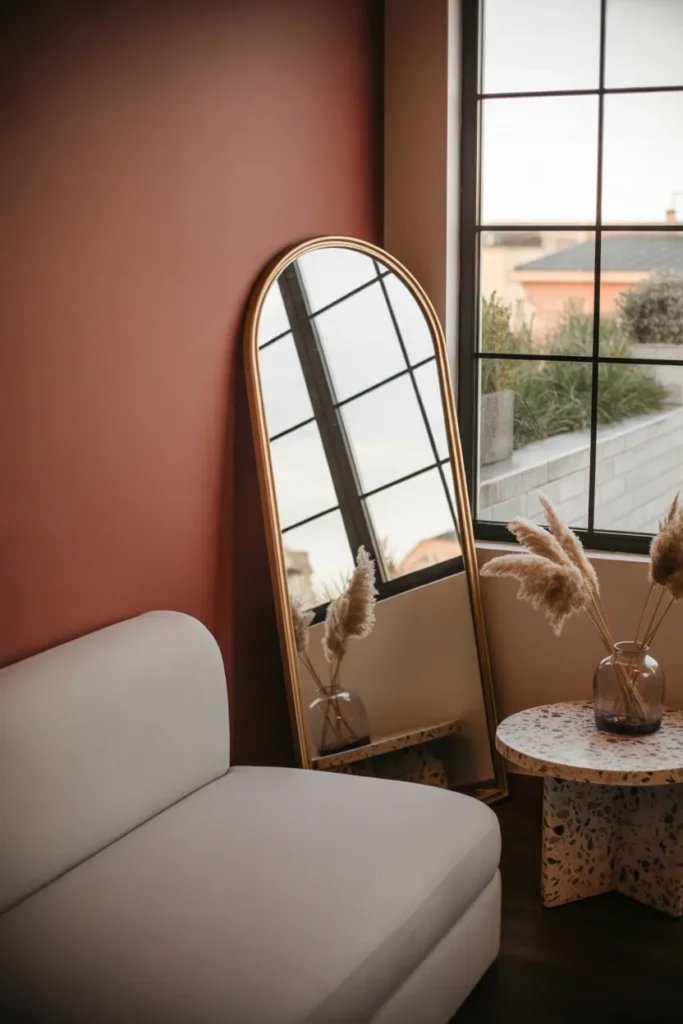
The most effective placement is on a wall perpendicular to or directly across from a window. This reflects natural light back into the room rather than just reflecting the opposite wall. A single large mirror typically outperforms a cluster of small mirrors in terms of spatial impact.
Lean a large mirror against the wall instead of hanging it if your walls are plaster or you want flexibility to change the layout later. Floor-leaning mirrors also create a casual, editorial feel that works well in modern and transitional small living rooms. Avoid placing a mirror directly behind the sofa where it reflects the back of your head at seated height — it reads as unsettling rather than expansive.
12. Keep Window Treatments Light and High to Maximize Natural Light
Heavy drapes that start at the window frame and pool on the floor do two damaging things in a small living room: they block light and they visually lower the ceiling. Mounting curtain rods 4 to 6 inches above the window frame, or even at ceiling height, creates the illusion of taller windows and a taller room.
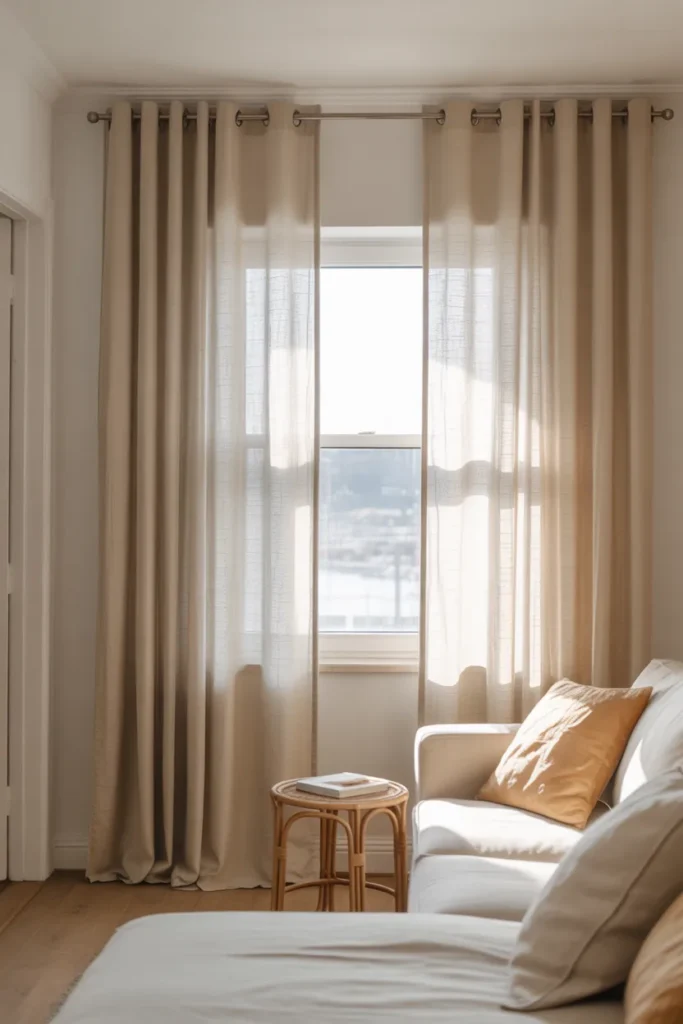
Choose sheer linen, light cotton, or semi-sheer panels in white, ivory, or soft warm tones. These allow light to pass through even when closed, keeping the room bright throughout the day. In a small living room layout, natural light is one of your most valuable assets and treatments should enhance it, not compete with it.
If privacy is a concern, layer a sheer panel behind a thicker curtain rather than replacing sheers with blackout drapes. You get privacy when needed and light when possible. Avoid heavy patterned curtains in small rooms — the visual noise competes with everything else in the space.
13. Create a Focal Point to Give the Room Visual Direction
Every well-designed small living room has one clear focal point that the layout orients around. Without one, the eye wanders and the room feels disorganized. The focal point could be a fireplace, a statement wall, a large piece of art, or a mounted television — but there should be one dominant element that anchors the entire arrangement.
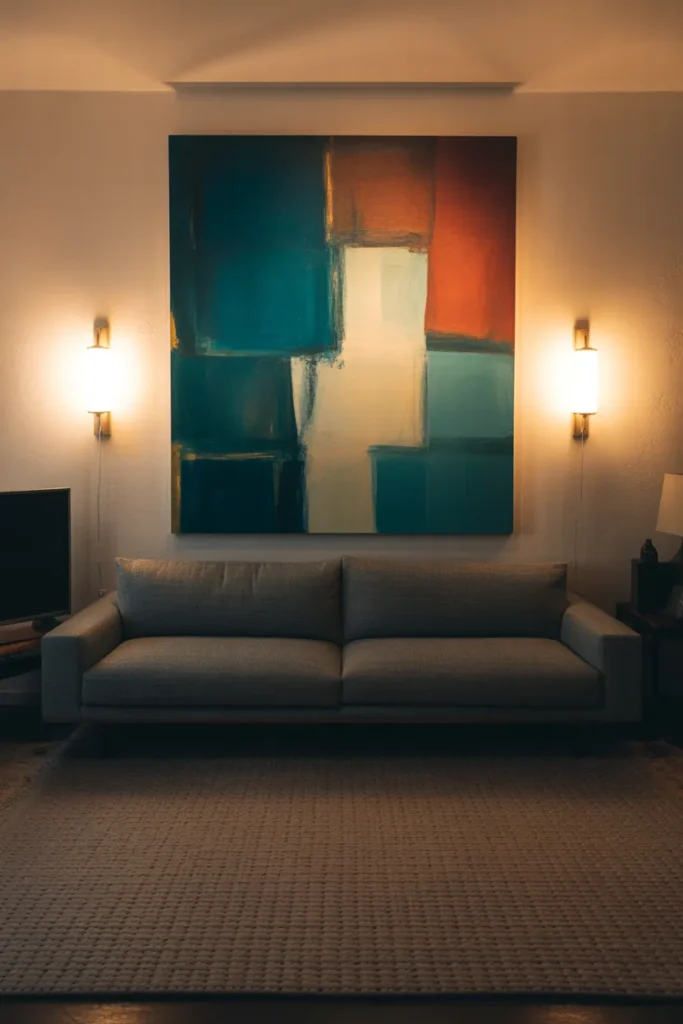
Once you identify or create the focal point, position your primary seating piece facing it. This gives the room immediate clarity and makes layout decisions easier. Secondary seating pieces angle toward the focal point as well, creating a conversation zone that feels cohesive.
In rooms without an architectural focal point like a fireplace, a large piece of art measuring at least 24 by 36 inches works well. Gallery walls also work but require more visual discipline in small spaces. Keep the surrounding area simple so the focal point reads clearly without competing elements.
14. Opt for a Sectional Only When the Room Shape Supports It
A sectional sofa in a small living room is either the best decision or the worst one — it entirely depends on room shape. An L-shaped sectional fits perfectly into a square room or a room with an awkward corner, turning what was wasted space into the primary seating area. But placed in a narrow rectangular room, a sectional blocks pathways and makes the space feel like a furniture showroom.
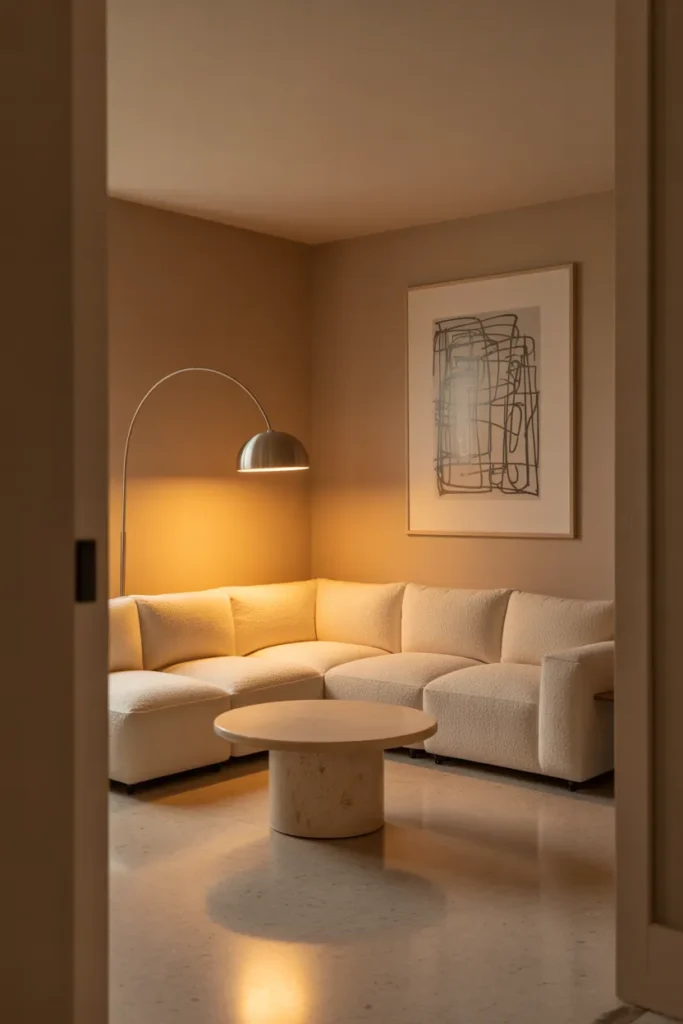
Before choosing a sectional for small living room layout design, measure your room carefully. You need at least 12 feet in both directions to place an L-shaped sectional comfortably with 30 inches of pathway clearance. If one dimension is under 11 feet, a standard sofa is almost always the better functional choice.
When a sectional does work, choose a low-profile model without high arms or thick backs. Tight back cushions (where the back cushion and frame are integrated) keep the silhouette slim. Avoid sectionals with chaise extensions in rooms under 200 square feet — the chaise alone can consume a third of the usable floor area.
15. Use a Console Table Behind the Sofa as a Room Divider and Surface
In open-plan layouts or large studio apartments, a narrow console table placed directly behind the sofa serves multiple purposes. It creates a physical boundary between the living zone and whatever space is behind it, provides a surface for lamps and styling, and adds a layer of visual depth to the seating area without taking up meaningful floor space.
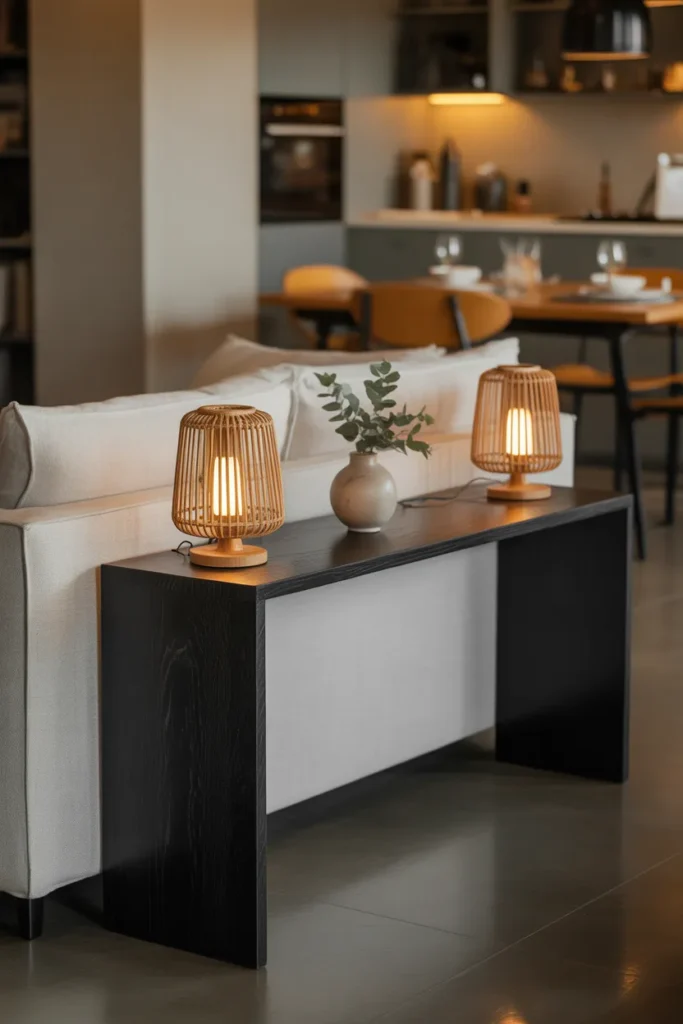
A console table should be close to the height of the sofa back, typically between 28 and 32 inches tall. It should be narrow enough not to create a tripping hazard — 12 to 14 inches deep is ideal. This arrangement works in both open-plan small homes and rooms where the sofa is floating away from the wall.
This is also a smart small living room layout tip for renters who cannot install permanent room dividers. A well-styled console with a lamp on each end looks intentional and architectural. Avoid placing too many objects on the surface — one lamp, one plant, and one small decorative object is usually the limit before it starts to look cluttered.
16. Layer Lighting Across Three Levels to Make a Small Room Feel Larger
A single overhead light in a small living room flattens everything and exposes the room’s boundaries. Layered lighting — combining ambient, task, and accent sources — adds depth, warmth, and dimension that makes the space feel larger and more dynamic even without changing a single piece of furniture.
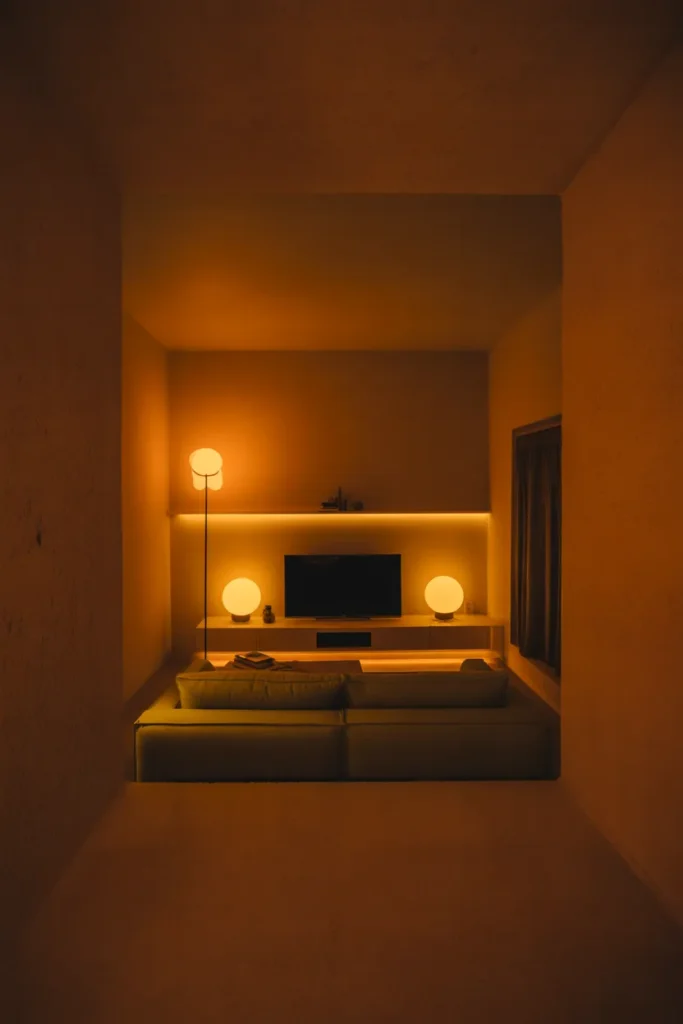
Ambient light comes from overhead sources or large floor lamps. Task lighting serves reading or working areas through directed table or floor lamps. Accent lighting highlights architectural features, plants, or art through picture lights, LED strips, or small directional spotlights. When all three are present and dimmable, you control the mood and perceived size of the room.
For small living room space planning, the placement of floor lamps in corners is particularly effective. A tall floor lamp in a dark corner draws the eye to that spot and makes the room feel wider than it is. Avoid relying on a single central ceiling fixture as your only light source — it is one of the most common reasons small rooms feel smaller than they are.
17. Edit Down to Only the Furniture You Actually Use Every Day
One of the most impactful small living room layout tips has nothing to do with what you add — it is about what you remove. Most small living rooms have at least one or two pieces of furniture that are there out of habit rather than function. An unused side chair, a decorative bench that holds clutter, a third side table — each one costs floor space and visual clarity.
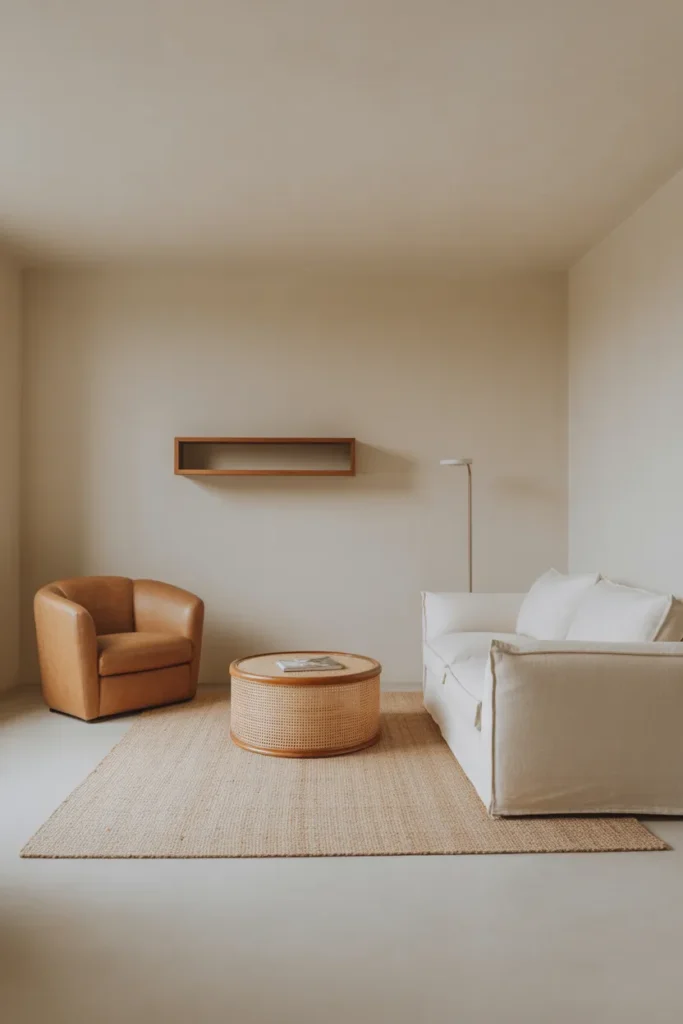
Walk through your current layout and ask honestly which pieces you used in the last two weeks. If a piece has not been used, it is either decorative clutter or something that needs to be repositioned. The goal is a room where every piece serves a daily function for the people who live there.
This editing process is not about minimalism as an aesthetic — it is about functional space planning. A room with five well-chosen pieces that all get used feels better than a room with nine pieces that create obstacles. Once you remove what you do not use, the layout often naturally improves without any additional purchases.
18. Apply the Rule of Functional Zones Even in the Smallest Room
Even a 120-square-foot living room benefits from being divided mentally into at least two functional zones: a seating zone and a secondary zone for reading, working, or display. Defining these zones through rug placement, lighting, and furniture arrangement gives the room structure that makes it feel larger and more livable.
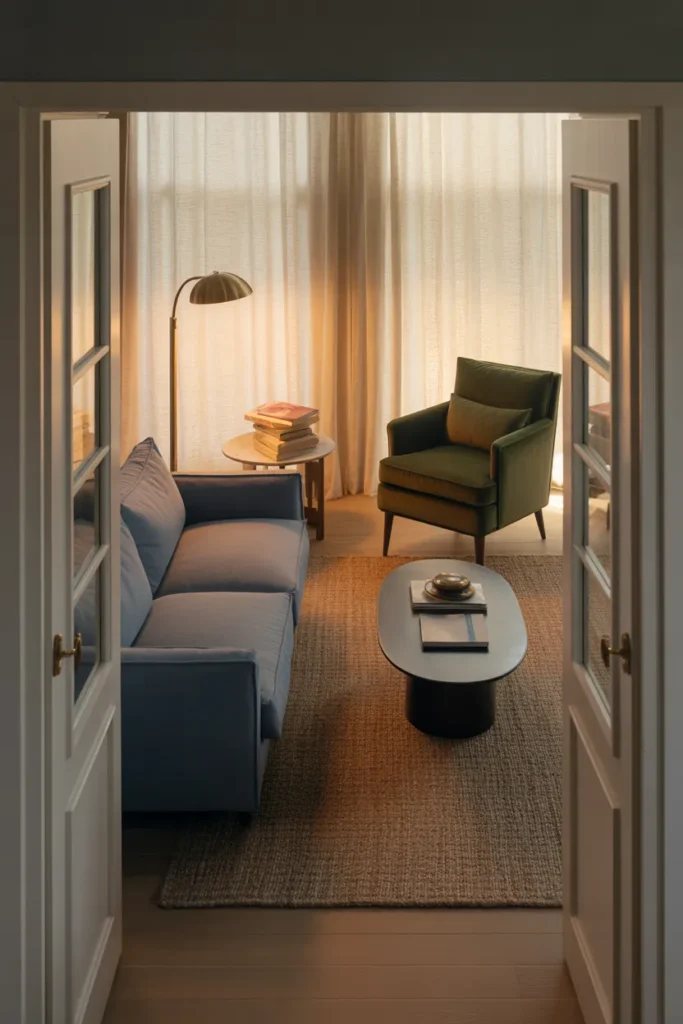
The seating zone centers around your sofa and coffee table. The secondary zone might be a single armchair with a floor lamp and side table in the corner, or a small writing desk against one wall. These zones do not need to be physically separated — they just need to feel intentional.
This is one of the foundational principles of small living room layout design because it shifts the way you think about the space. Instead of asking how to fit everything in, you start asking what you want the room to do and then arrange around those functions. The result is always a more organized, purposeful, and visually calm space.
Final Thoughts
A small living room is not a problem to work around — it is a design challenge with a clear set of solutions. The 18 small living room layout tips in this guide are built around real decisions: what to keep, what to remove, where to position each piece, and why the placement matters. Whether you are working with an open-plan apartment, a narrow rectangular room, or a compact square space, at least several of these strategies apply directly to your situation.
Save this post so you can come back to it as you work through your layout one section at a time. Trying to apply everything at once is the most common mistake in small space planning — take it in stages, measure before you move anything, and let the room tell you what it needs. For more ideas on functional floor plans and small living room layout design, explore posts on open-plan arrangements, small apartment furniture choices, and budget-friendly space planning strategies.