
If you are searching for cozy living room ideas on a budget, you already know the real challenge: making a space feel warm, layered, and intentional without overspending. This guide gives you ten distinct, practical approaches that work across apartment living rooms, small homes, and open-plan spaces — each with clear guidance on what to do, why it works, and what to avoid.
1. Use a Large Area Rug to Anchor the Entire Seating Zone
One of the most overlooked budget upgrades is rug sizing. Most people buy a rug that is too small, which makes the room feel disconnected and unfinished. A large area rug — one that fits under at least the front legs of all your furniture — visually pulls the seating zone together into one cohesive unit.
This works especially well in open-plan living rooms where the living area blends into a dining or kitchen space. The rug becomes the boundary that defines where the cozy zone begins. Without it, the furniture floats and the room loses warmth.
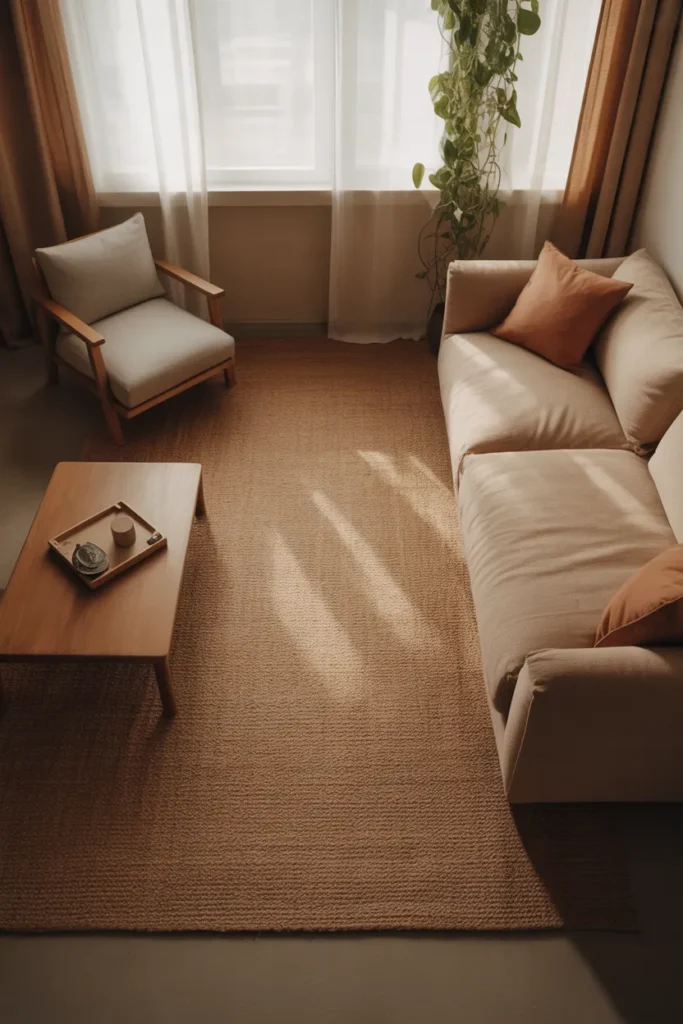

When choosing a rug on a budget, focus on texture over pattern. A low-pile wool blend or a flatweave jute option in a warm neutral adds visual softness without competing with other elements. Avoid very thin synthetic rugs — they flatten quickly and lose their grounding effect within months.
The mistake most people make: going too small to save money. A well-sized rug in a simple design always outperforms a small patterned rug that fails to hold the room together.
2. Layer Throw Pillows and Blankets Using the Three-Texture Rule
Cozy living rooms on a budget almost always share one trait: they layer textiles well. The approach that works consistently is the three-texture rule — pair one smooth fabric such as linen or cotton, one chunky knit or boucle, and one woven or embroidered accent. The combination creates visual depth without requiring expensive furniture.
This works on any sofa, including older or plain ones. The layering draws the eye to texture rather than the furniture itself, which is exactly what you want when working with a limited budget. A sofa that looks tired on its own often transforms completely with the right textile combination.
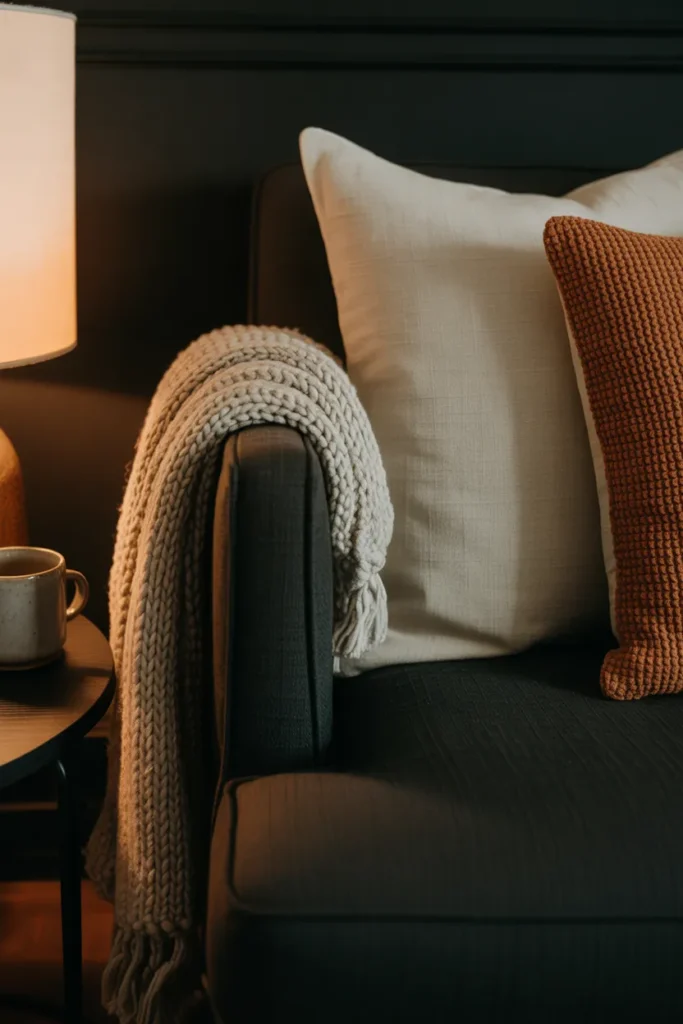
Blankets draped over the arm or folded across a seat cushion add a lived-in, intentional quality that styled rooms share. This is not about clutter — it is about softness and approachability. Keep the color palette tight: two neutrals and one warm accent tone is a reliable formula.
What to avoid: mixing too many colors or patterns across pillows and blankets. Visual noise reads as messy, not cozy. When in doubt, stay within the same color family and vary texture instead.
3. Swap Overhead Lighting for Layered Lamp Light
Overhead lighting is one of the biggest reasons a living room feels harsh instead of cozy. A single ceiling fixture floods the room with flat, even light that removes shadows and warmth. Replacing or supplementing it with layered lamp light — a floor lamp in one corner, a table lamp on a side table, and optionally a small lamp on a shelf — immediately changes the atmosphere.
This is one of the highest-impact, lowest-cost changes you can make. Lamps with warm-toned bulbs in the 2700K range create the soft, amber quality associated with genuinely cozy spaces. This lighting approach works in any size room, from a small studio living area to a larger family room.
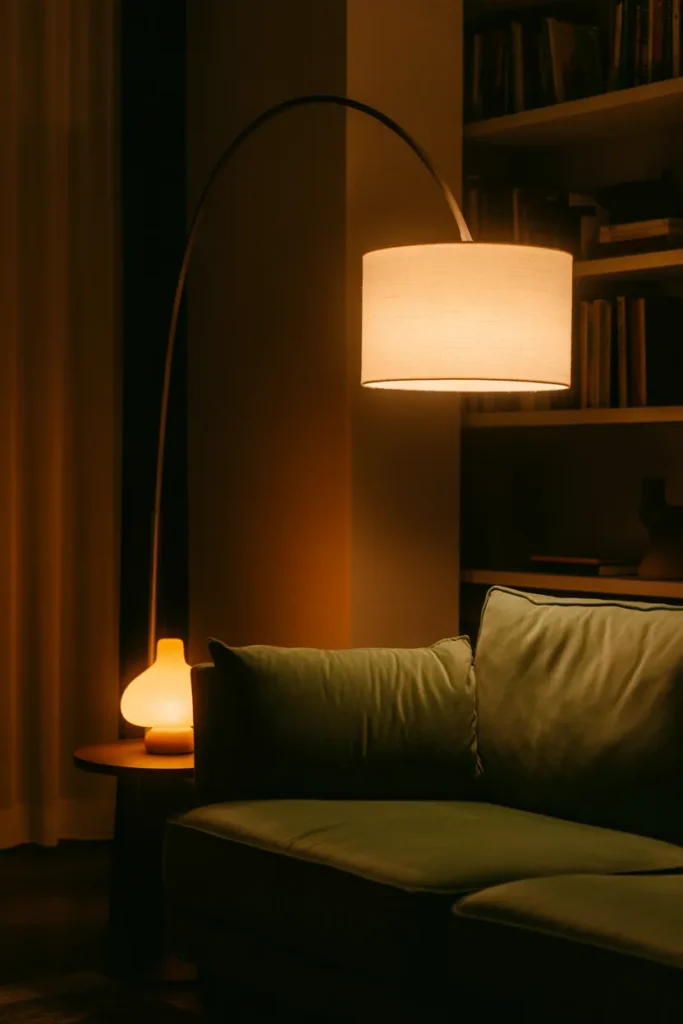
Budget lamps do not need to be expensive to work well. A simple arc floor lamp or a ceramic base table lamp with a linen shade performs the same function as a high-end version. The bulb temperature matters more than the lamp itself.
What to avoid: using daylight or cool-white bulbs in living room lamps. Even a beautiful lamp with the wrong bulb temperature will make the room feel clinical rather than comfortable.
4. Build a Gallery Wall Using Thrifted Frames and Free Printables
Empty walls are one of the clearest signals that a living room is unfinished. A gallery wall solves this without requiring expensive art. The approach that works on a tight budget: collect mismatched thrifted frames in similar finishes — all black, all wood tone, or all white — and fill them with free downloadable prints, botanical sketches, maps, or even personal photos printed at home.
The key to making a thrifted gallery wall look intentional is frame finish consistency. When all the frames share a common finish, the mix of sizes and shapes reads as curated rather than random. This works well on accent walls behind a sofa, on a narrow wall between windows, or flanking a doorway in a smaller living room.
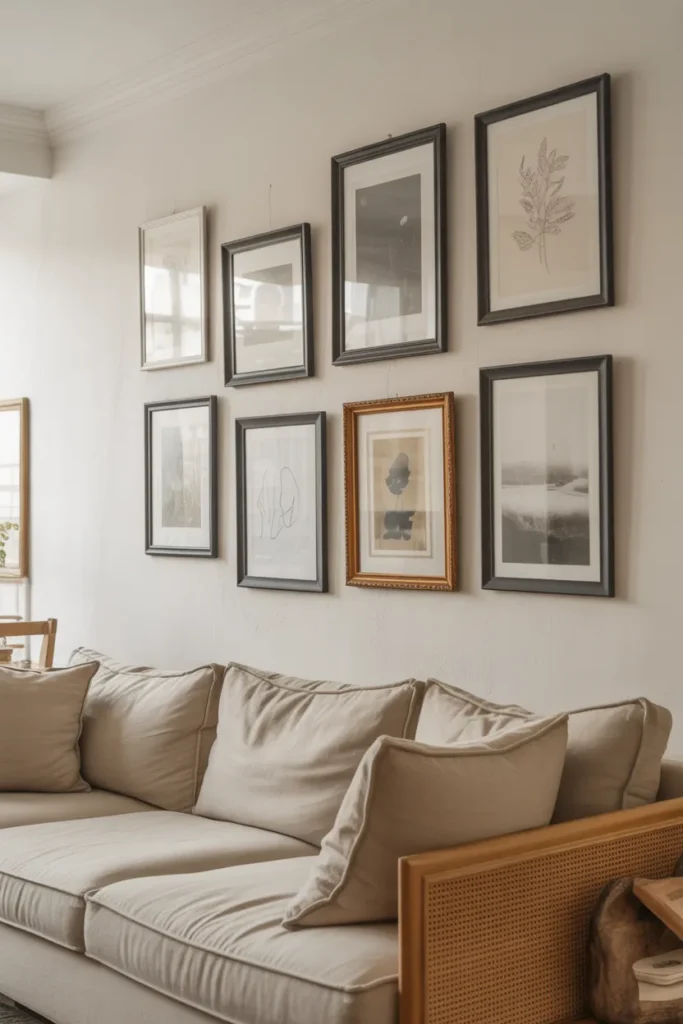
Layout matters more than the individual pieces. Lay your frames on the floor first and find an arrangement you like before putting a single nail in the wall. Keep spacing consistent — roughly two to three inches between frames — for a clean result.
What to avoid: mixing too many frame finishes or hanging pieces that are too small for the wall space. Undersized art on a large wall looks timid and makes the room feel less resolved.
5. Add a Bookshelf or Open Shelving Unit to Create Visual Warmth
Bare walls and empty corners make rooms feel sparse regardless of the furniture inside them. A bookshelf or open shelving unit solves both problems at once — it fills vertical space, adds visual warmth through books and objects, and creates a layered backdrop that makes the whole room feel more lived-in and personal.
This approach works particularly well in small living rooms where floor space is limited. Vertical shelving draws the eye upward and makes ceilings feel taller. In larger rooms, a floor-to-ceiling bookcase creates the kind of architectural presence that makes a space feel complete.
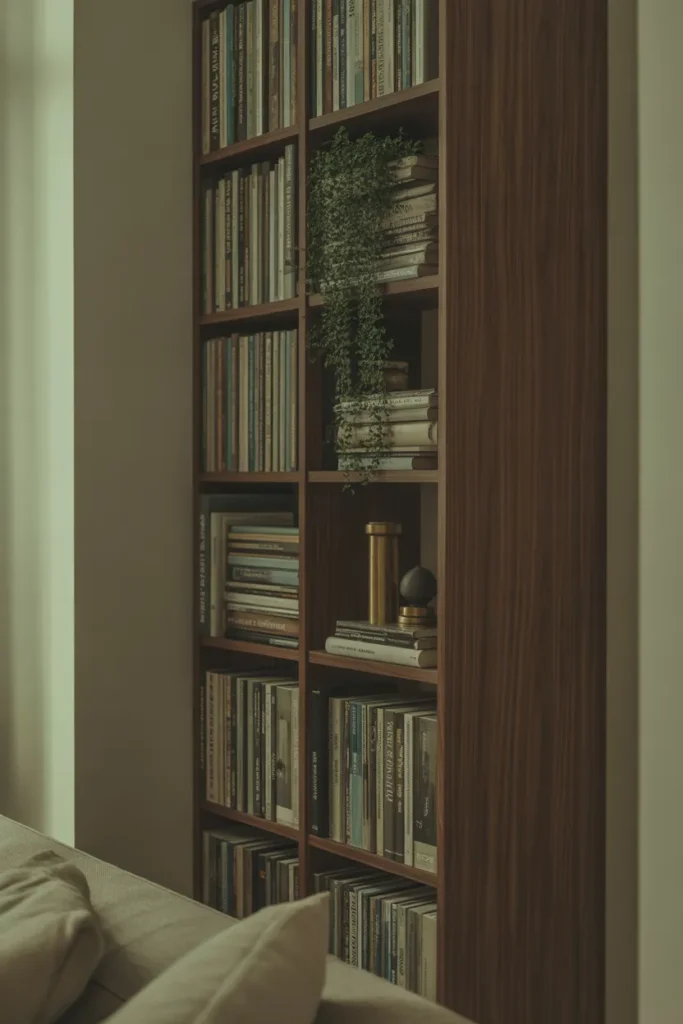
Styling the shelves matters as much as having them. Mix books with small plants, a candle or two, a ceramic object, and one framed photo. Keep roughly sixty percent of the shelf space as books or larger items and forty percent as curated objects. Too many small items reads as clutter.
What to avoid: over-stuffing shelves or leaving them completely empty. Both extremes undermine the effect. The goal is layered, intentional, and slightly imperfect — not minimalist and not maximalist.
6. Use a Dark Accent Wall to Make a Small Room Feel Intentional
A common fear with small living rooms is that dark color will make them feel smaller. In practice, a single dark accent wall — especially behind the sofa — does the opposite. It creates depth, makes the furniture pop, and gives the room a defined focal point that reads as designed rather than default.
Deep shades like slate blue, forest green, charcoal, or warm terracotta work well in small living rooms because they compress that one wall visually while leaving the rest of the room light and open. The contrast between a dark accent wall and lighter side walls makes the space feel more three-dimensional.
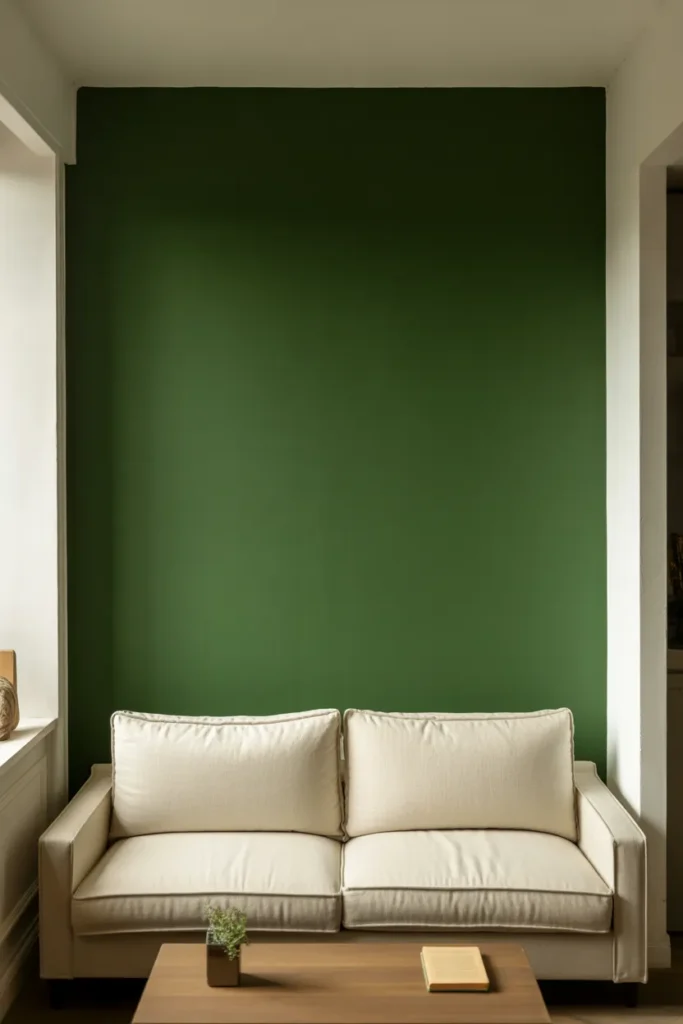
This is one of the most budget-friendly transformations available. A single can of paint covers an accent wall at a fraction of what any furniture upgrade would cost, and the visual impact is immediate and significant.
What to avoid: painting all four walls dark in a room without strong natural light. This works in well-lit, larger rooms but tends to feel heavy in compact spaces without adequate window coverage. Stick to one wall for maximum effect in a small living room.
7. Introduce Plants at Multiple Heights to Add Life and Texture
Plants are one of the most cost-effective ways to make a living room feel alive and layered. The approach that works best on a budget is placing them at multiple heights — a tall floor plant in a corner, a medium plant on a side table or shelf, and a small trailing plant on a higher surface where it can cascade downward.
This vertical variation mimics the layered quality of well-designed interiors without requiring additional furniture. The different heights break up visual monotony and create natural focal points across the room. Even in a very small living room with limited floor space, a wall-mounted planter or a hanging plant can introduce this layered effect.
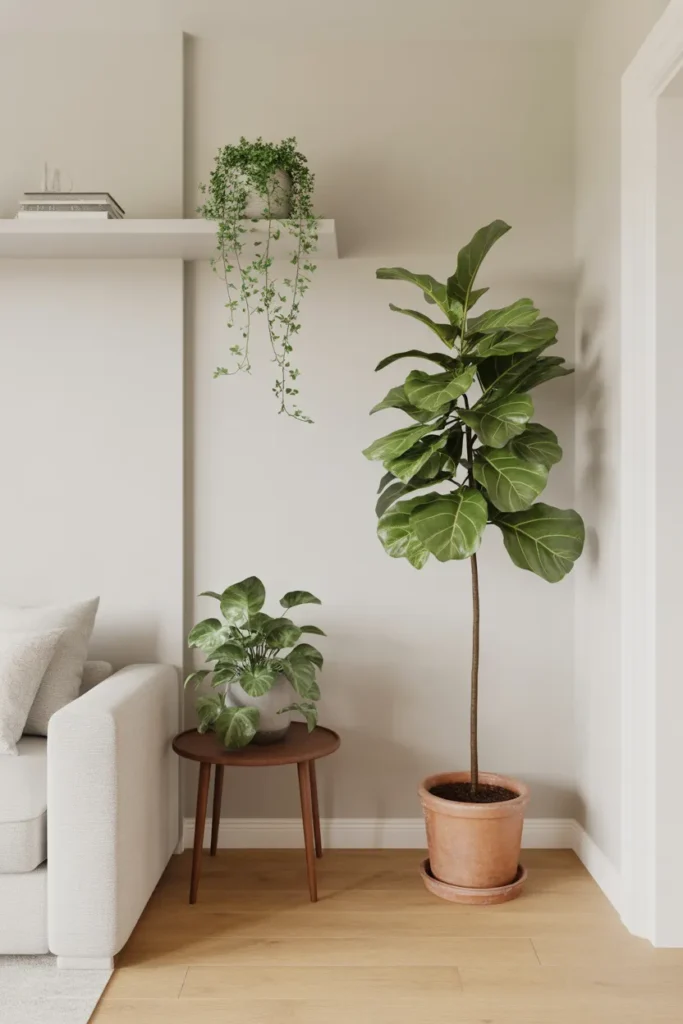
Low-maintenance plants are the practical choice for most households. Pothos, snake plants, ZZ plants, and peace lilies thrive in typical indoor light conditions without demanding significant care. This matters because a thriving plant contributes to the room’s atmosphere; a struggling one works against it.
What to avoid: grouping all plants on one surface at the same height. A cluster of similarly-sized pots on a windowsill reads as a collection rather than a design element. Distribute them intentionally across the room for maximum impact.
8. Rearrange Your Furniture Layout to Face Inward, Not the Walls
Pushing all furniture against the walls is the most common layout mistake in budget living rooms. It feels logical — it seems to create more space — but it actually makes the room feel less cozy and harder to use. Floating the furniture inward, even slightly, creates a more intimate conversational grouping that makes the space feel designed and purposeful.
The standard principle for functional living room space planning is to keep the sofa twelve to eighteen inches away from the wall and orient seating pieces to face each other rather than all face the television. This creates a zone that reads as a destination rather than a passage.
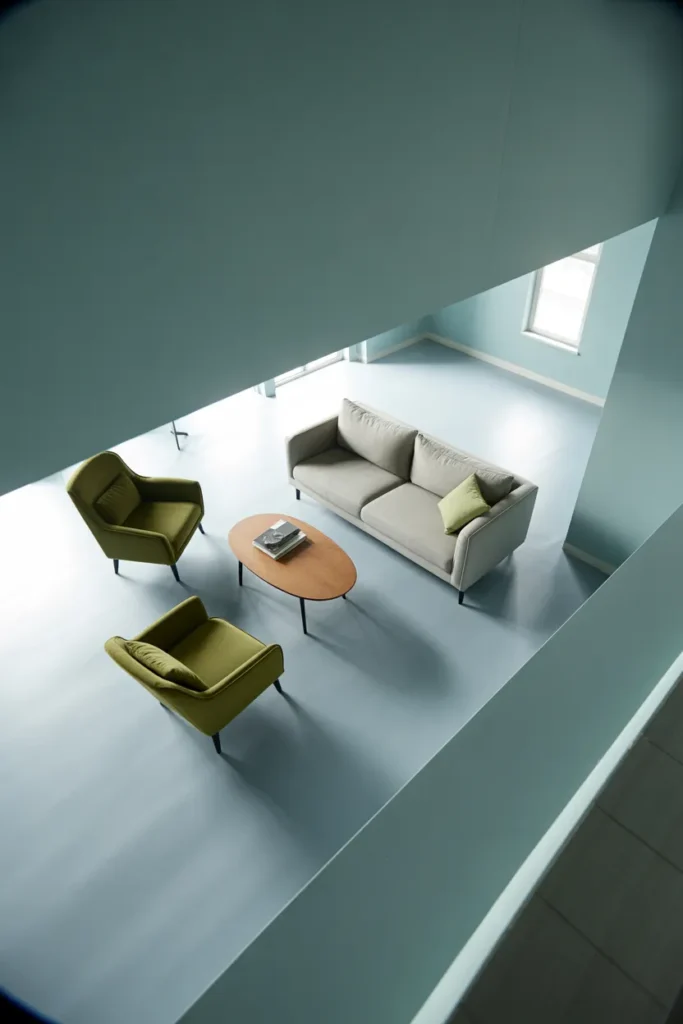
In small living rooms, this can feel counterintuitive. The concern is that floating furniture will shrink the usable floor area. In practice, the opposite is true — a defined seating zone makes the rest of the room feel more open by creating a clear boundary between the living area and the surrounding space.
What to avoid: pushing only the sofa out from the wall while leaving other pieces against it. The floating effect requires the primary seating pieces — sofa and chairs — to move together as a group.
9. Use Curtains Hung High and Wide to Make Any Window Feel Larger
Standard curtains hung at window height make a room feel shorter and the windows feel smaller. Hanging curtains two to four inches below the ceiling and extending the rod twelve to sixteen inches beyond each side of the window frame creates an entirely different effect — the window appears much larger, the ceilings feel taller, and the room gains a soft, finished quality that reads as intentional.
This is one of the most dramatic transformations available at minimal cost. A standard curtain panel hung correctly outperforms an expensive panel hung at window height. The fabric pools of light that result from floor-to-ceiling curtains add a warmth and softness that no other single intervention replicates at this price point.
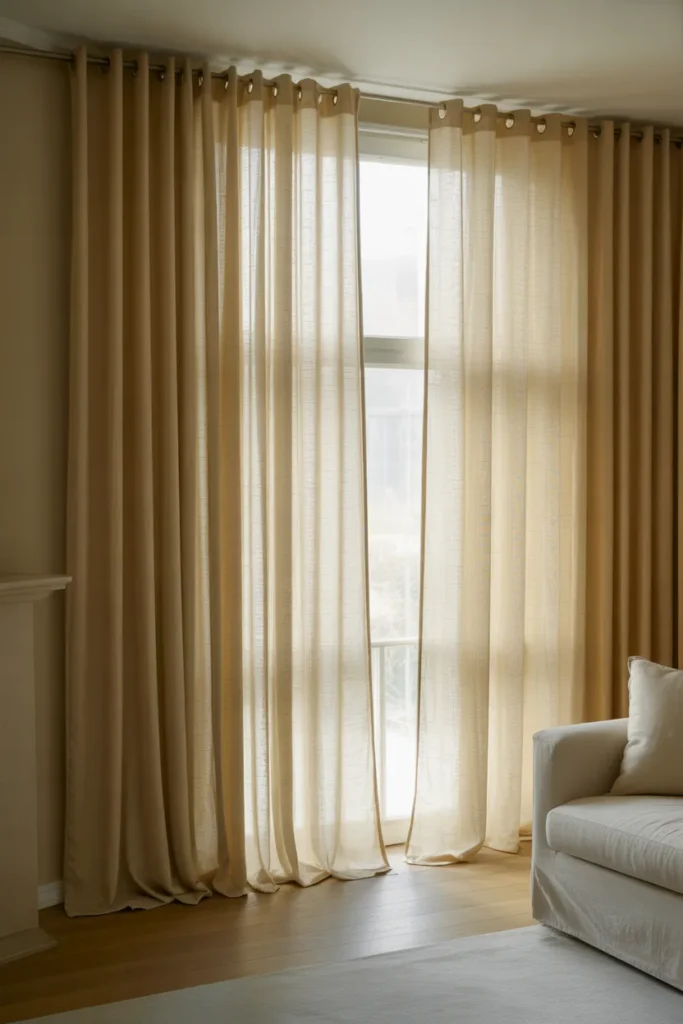
Linen-look curtains in off-white, warm cream, or light gray are the most versatile options for a cozy living room on a budget. They diffuse light beautifully and work across virtually every color palette and style direction.
What to avoid: short curtains that hover above the floor or curtains that are hung directly on the window frame. Both approaches visually compress the room. Floor-length panels, hung high, are the standard that works in every room size and price range.
10. Create a Cozy Corner with a Chair, Lamp, and Small Side Table
A dedicated reading or sitting corner adds enormous warmth to a living room because it creates the impression of a room within a room. The formula is simple: one comfortable chair, one floor or table lamp positioned directly beside it, and a small side table within arm’s reach. Together, these three elements form a self-contained zone that reads as intentional and inviting.
This works particularly well in living rooms that feel overly symmetrical or ones that are large enough to have an unused corner. A corner that would otherwise collect clutter or remain empty becomes one of the most visually interesting parts of the room. It also solves a practical problem: it gives the room a second seating destination outside of the main sofa grouping.
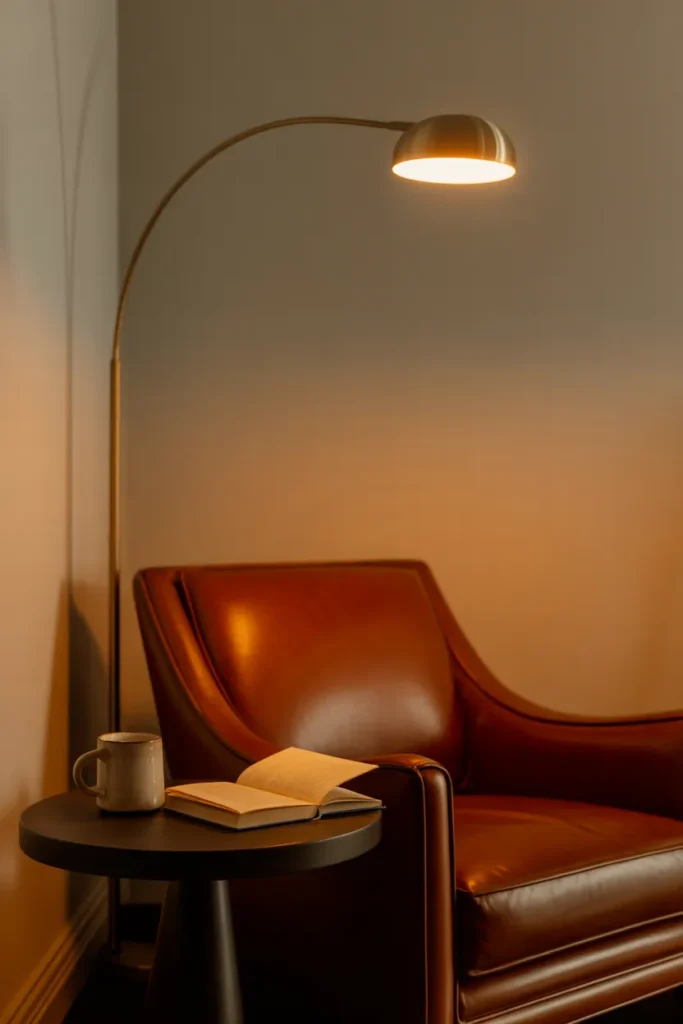
Budget chair options that work well for this purpose include thrifted armchairs reupholstered in a solid fabric, linen slipcover chairs, or rattan accent chairs that add texture without significant cost. The lamp and side table can be minimal — the chair itself carries the visual weight.
What to avoid: placing the chair too far from the lamp or choosing a side table that is too large for the corner. The corner should feel tucked-in and purposeful, not cluttered. Keep the scale tight and the styling simple.
Final Thoughts
Creating a cozy living room on a budget is less about spending more and more about making deliberate choices in the right order. A well-placed rug, the correct lighting temperature, furniture pulled away from the walls, and curtains hung at ceiling height will do more for a room than any single furniture purchase. These are the changes that professional designers apply first because they work at every price point.
If this post gave you a clear direction for your own space, save it to your Pinterest boards so you can come back to it when you are ready to tackle each idea. The most useful design resources are the ones you can reference in the moment — not just read once and forget.
Explore more living room layout ideas, small space design guides, and budget-friendly home updates to keep building a home that feels like yours.