
Most gardens fail the homeowner — not the other way around. If your outdoor space feels like a chore rather than a retreat, the problem is usually a design that was built for looks without any consideration for upkeep. This guide covers 14 practical low-maintenance garden ideas, each chosen for a specific yard condition, lifestyle constraint, and long-term manageability — so you can make a decision that actually sticks.
1. Replace High-Maintenance Lawn With a Gravel and Ornamental Grass Garden
Lawn is the single most labor-intensive element in a residential garden. Mowing, edging, fertilizing, aerating, and overseeding add up to dozens of hours per season. Replacing all or part of it with decomposed granite or pea gravel combined with ornamental grasses eliminates most of that work in one decision.
Ornamental grasses — Karl Foerster, blue oat grass, and switchgrass — require cutting back once per year in late winter. That is it. They handle drought, resist pests, and look strong across all four seasons. The gravel suppresses weeds when laid over landscape fabric and needs only occasional raking to stay neat.
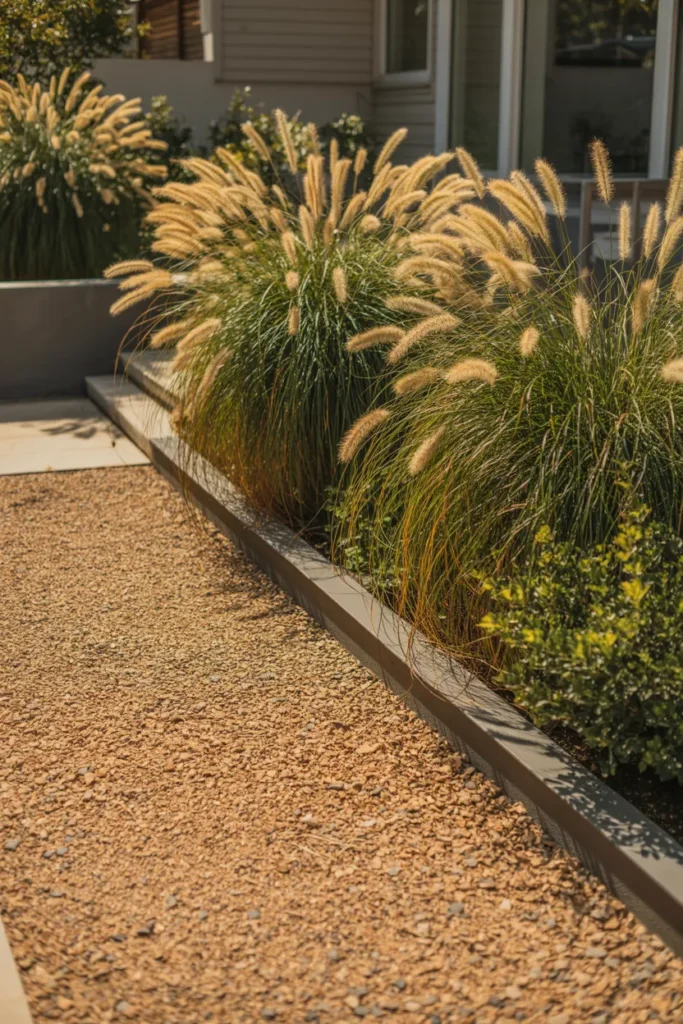

This swap works best in full-sun yards and is one of the most effective low-maintenance garden ideas for homeowners in dry-climate states like Colorado, Arizona, Texas, and California. In wetter climates, gravel paths combined with native groundcovers work better than a full gravel field.
Avoid using white marble chips in this application. They reflect heat at ground level, show debris immediately, and look artificial within a real garden context. Warm-toned decomposed granite or natural pea gravel ages far more gracefully.
2. Native Plant Border That Thrives Without Fertilizer or Irrigation
Native plants are the most underused tool in low-maintenance garden design. Because they evolved in your specific regional climate, they require no supplemental irrigation once established, no fertilizer, no pest control, and no winter protection. A well-designed native border essentially takes care of itself after the first growing season.
For the Northeast and Mid-Atlantic, black-eyed Susan, coneflower, and little bluestem grass are reliable, high-impact choices. For the Pacific Northwest, red flowering currant, sword fern, and Oregon grape. For the Southeast, muhly grass, beautyberry, and native azaleas. Match your plant palette to your USDA hardiness zone and your work is mostly done at the planning stage.
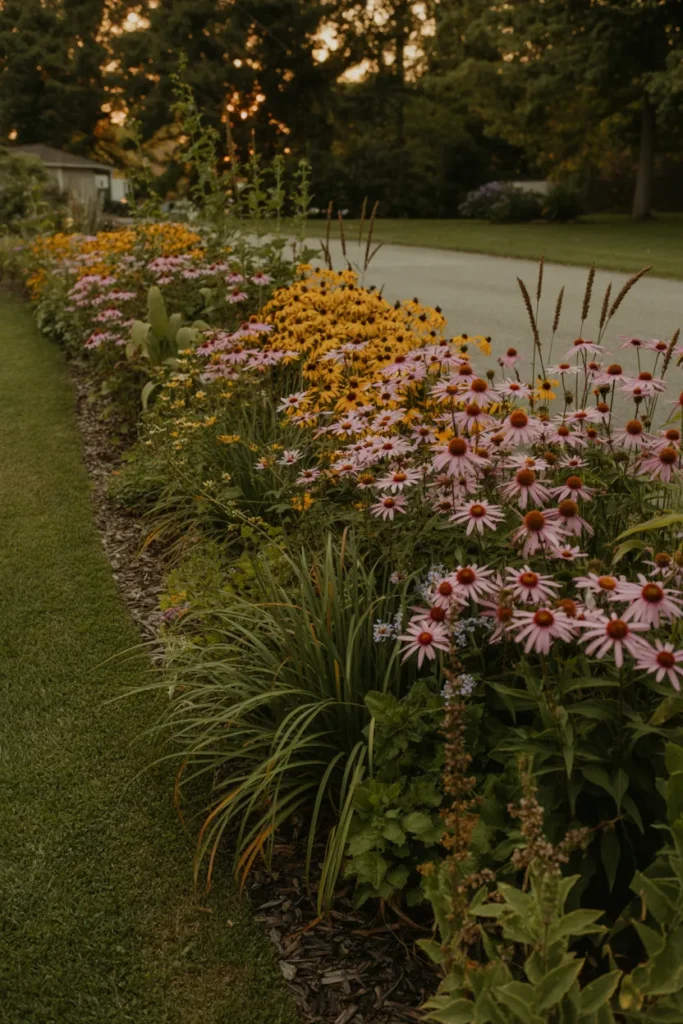
The establishment period — typically the first full growing season — is when native plantings need the most attention. Water consistently during this window, then step back. Trying to help with fertilizer or additional irrigation after year one often does more harm than good by encouraging shallow root development.
Design the border with irregular drifts of three to five plants per species rather than individual specimens. Mass planting reads as intentional rather than randomly collected, and it gives each species enough presence to suppress weeds through canopy coverage.
3. Raised Bed Vegetable Garden That Cuts Weeding by 80 Percent
Ground-level vegetable gardens are weed factories. Raised beds change the equation entirely. When filled with quality soil mix rather than native ground soil, raised beds start weed-free and stay that way far longer — because weed seeds are not already present in the growing medium and surrounding lawn weeds cannot migrate upward easily.
A standard 4-by-8-foot raised bed placed in full sun is manageable in about 15 minutes per week during peak growing season. Irrigation is simplified — a single drip line or soaker hose handles the whole bed. Soil quality is completely within your control, which means better yields with less troubleshooting.
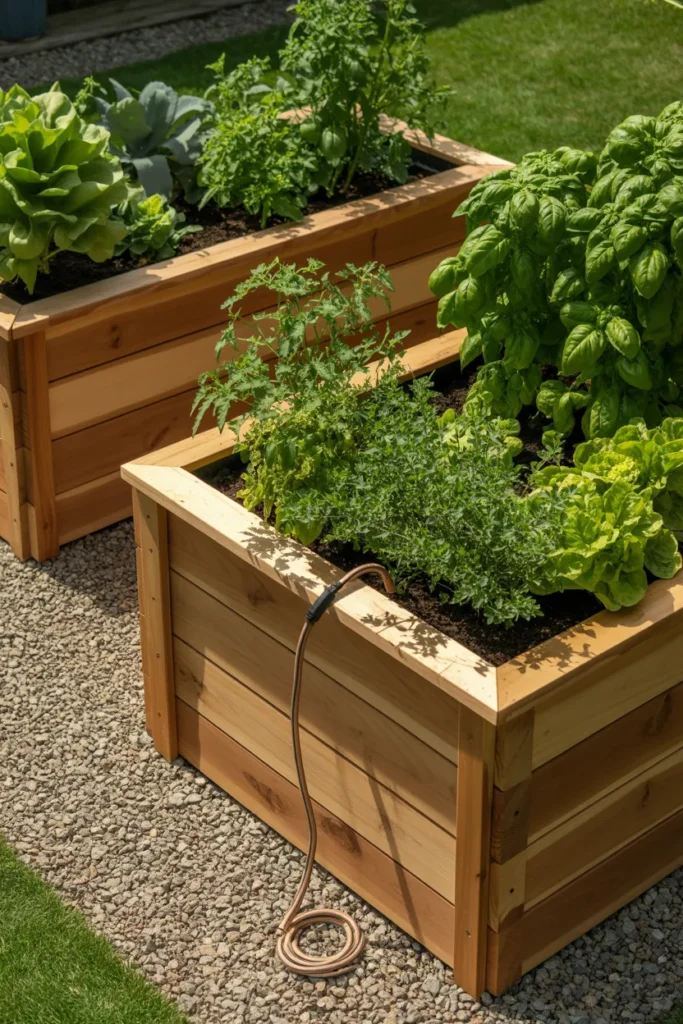
Build beds at a height of 12 to 18 inches for most vegetables. This depth accommodates root crops and eliminates the need to kneel at ground level, which makes maintenance physically easier and significantly faster. Cedar or composite lumber are the two most durable material choices without chemical treatment concerns.
Avoid placing raised beds directly on existing lawn without suppressing the grass beneath first. Lay cardboard or landscape fabric under the bed frame before filling. Grass that is not suppressed will push through the base of the bed within one season.
4. Mulched Shrub Border That Suppresses Weeds All Season
A deep mulch layer — three to four inches — over a planted shrub border is one of the highest-return investments in low-maintenance garden management. It suppresses weed germination, retains soil moisture, moderates soil temperature, and eliminates the need for frequent watering in all but the driest conditions.
Choose shrubs that are naturally compact and do not require annual shaping: dwarf spirea, knockout-type shrubs, and summer-blooming hydrangeas all stay within their footprint without aggressive pruning. One light cleanup cut per year is all they require.
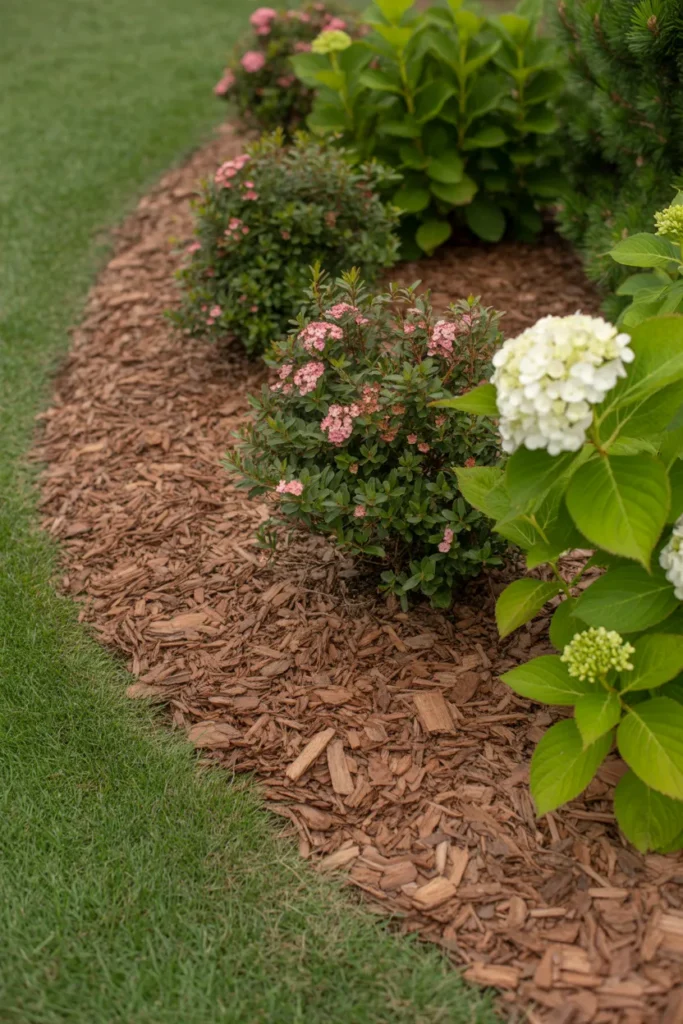
Use shredded hardwood bark or wood chip mulch rather than dyed products. Dyed mulch fades quickly to an unnatural color and contributes nothing to soil health. Shredded hardwood breaks down slowly into the soil, improving structure over time and reducing the frequency of mulch replenishment.
Refresh the mulch layer every two years rather than every season. If the layer is deep enough to begin with, topping up every other year is sufficient to maintain suppression and appearance. Annual mulching is a habit many homeowners adopt unnecessarily.
5. Drought-Tolerant Rock Garden for a Slope or Difficult Grade
Slopes are among the most difficult garden areas to maintain because mowing is hazardous, planting is physically challenging, and erosion constantly undoes whatever work has been done. A rock garden converts that liability into a zero-irrigation, zero-mowing feature that improves with age.
Set larger boulders first to anchor the slope and create planting pockets between them. Fill pockets with a gritty, fast-draining soil mix — half native soil, half coarse sand or pea gravel — and plant drought-tolerant species directly into the pockets. Creeping phlox, sedum, ice plant, and woolly thyme all perform well in this application across multiple American climate zones.
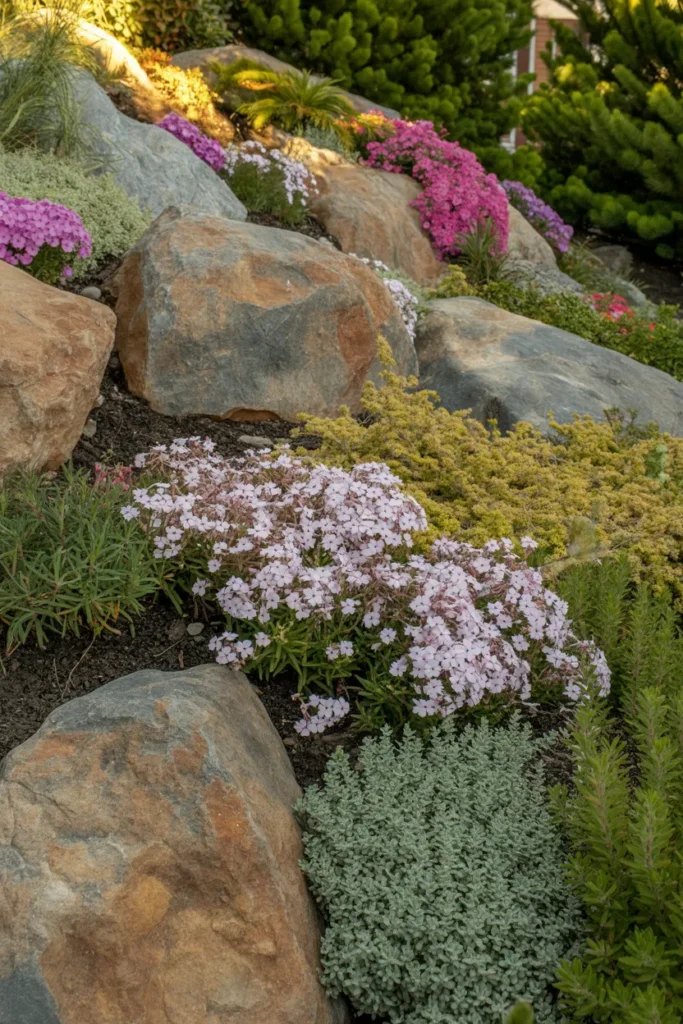
This is one of the most effective low-maintenance garden ideas for homeowners with rocky, dry, or sloped terrain that standard landscaping approaches cannot address. The rock garden works with the site conditions rather than fighting them.
Do not plant this type of garden with standard nursery plants that require regular water. They will decline during the first summer drought and leave gaps that weeds immediately colonize. Source plants specifically labeled as drought-tolerant or xeric.
6. Hardscape-Heavy Patio Garden That Needs No Planting Upkeep
For homeowners who want an outdoor space that genuinely requires no seasonal maintenance, the answer is a garden that is primarily hardscape with planting as an accent rather than a foundation. A patio of large-format pavers or poured concrete with a few containerized plants and a simple privacy screen achieves this completely.
Large-format pavers — 24-by-24 inches or larger — minimize joint lines, which is where weeds establish. Polymeric sand in the joints, activated with water after installation, hardens into a firm surface that resists both weeds and insect colonization. This is a meaningful upgrade over standard joint sand that softens and deteriorates over time.
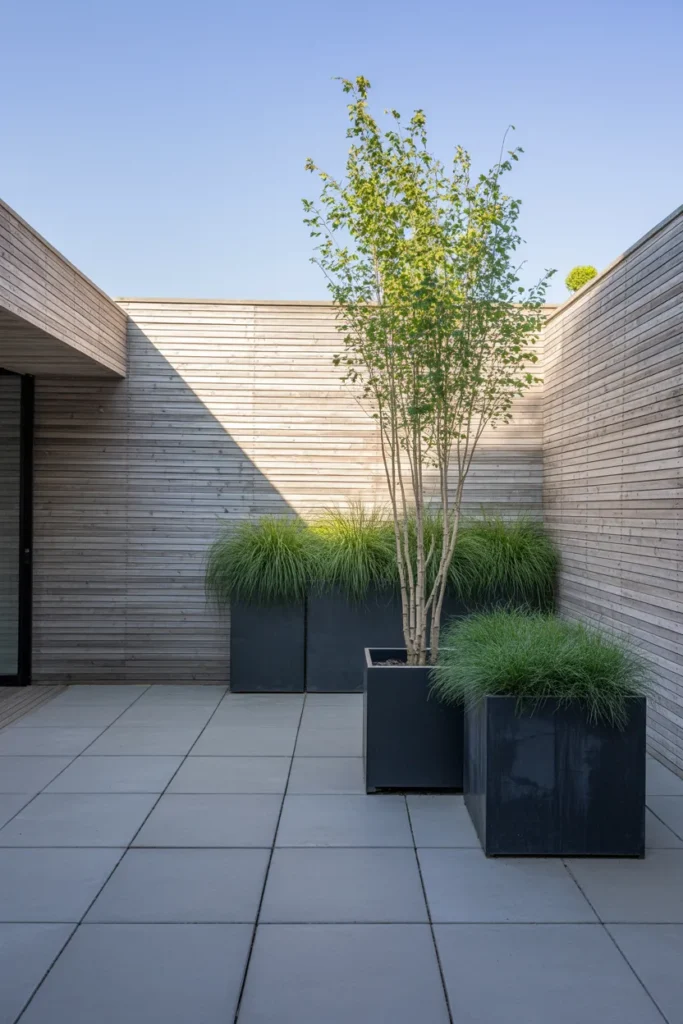
Two or three large containers planted with a single species each — a small ornamental tree, a mass of ornamental grass, or a seasonal succulent arrangement — provide all the living texture the space needs. Container plants are fully controllable: water them when they need it, replace them if they decline, and move them for seasonal variation.
This approach suits urban homeowners, people with limited physical ability, or anyone who travels frequently and cannot maintain a planted garden reliably.
7. Evergreen Foundation Planting That Holds Structure Year-Round
Foundation planting — the shrubs and perennials that frame a home’s base — is often the most visible garden in a residential property and also one of the most neglected. Choosing evergreen, slow-growing species for this area eliminates the need for annual cutting, winter cleanup, and replanting after seasonal color fades.
Dwarf boxwood, inkberry holly, compact yew, and winter gem boxwood all maintain their form and color across all four seasons with only one light shearing per year. They are also deer-resistant in most regions, which removes another maintenance variable.
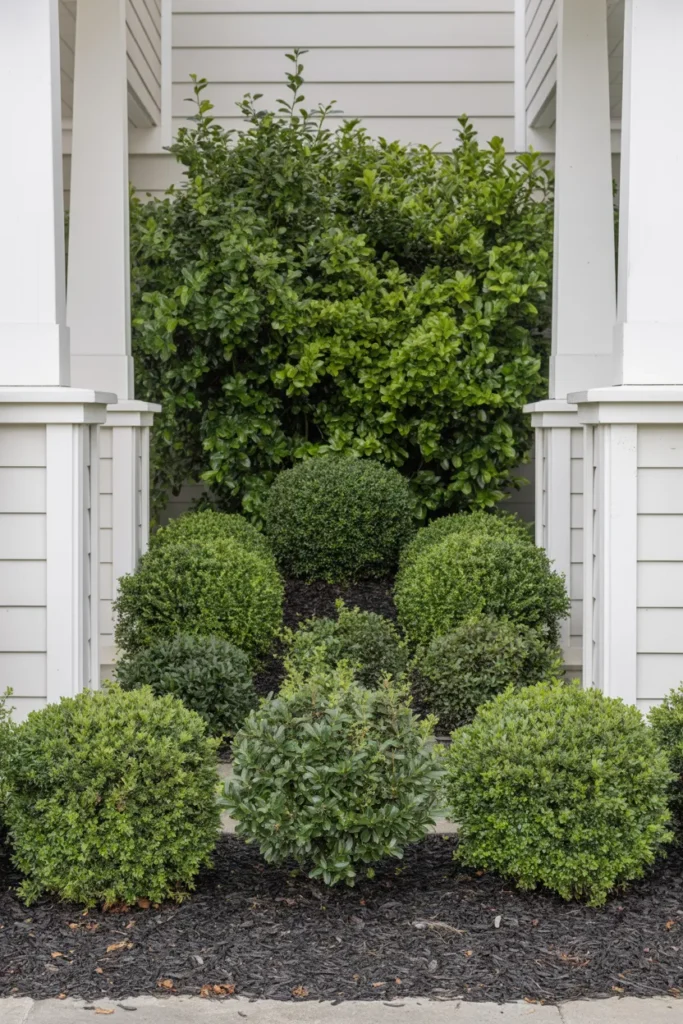
The key design principle is matching the ultimate mature size of the plant to the available space. The most common foundation planting mistake is installing plants that are attractive at 2 feet but reach 8 feet at maturity, requiring constant cutting to stay in bounds. Always plan for the plant’s mature size, not its size at purchase.
Space plants so their mature canopies just touch rather than overlap. This takes patience in the first two or three years but produces a clean, professional result that requires almost no corrective pruning at maturity.
8. Clover Lawn Substitute That Eliminates Fertilizing Entirely
White clover as a full or partial lawn substitute is gaining significant traction as a low-maintenance garden idea because it solves multiple problems at once. Clover fixes atmospheric nitrogen directly into the soil, which means it fertilizes itself — and any surrounding grass — without any intervention. It stays green through mild droughts that would brown out a fescue lawn, and it requires mowing far less frequently.
A pure clover lawn needs mowing only four to six times per season compared to twenty or more times for traditional turf. It tolerates moderate foot traffic, stays low on its own, and attracts pollinators, which improves the broader garden ecosystem.
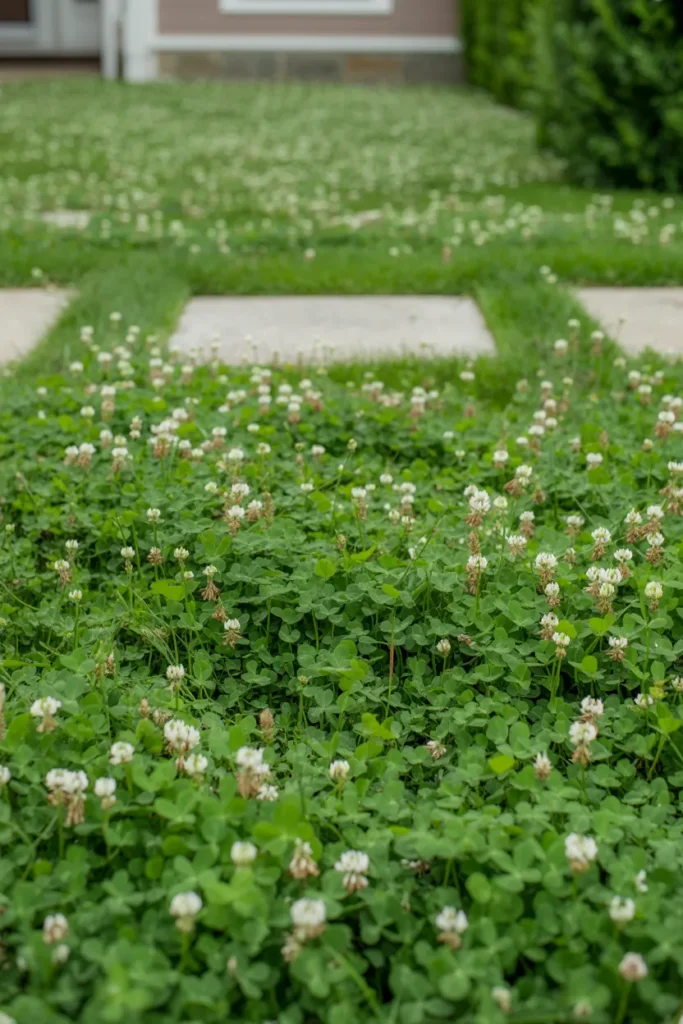
Clover does not perform well in dense shade or in high-compaction areas like sports fields or dog runs. For shaded yards, a low-growing native groundcover like Pennsylvania sedge or creeping Jenny is a better substitute.
Transition an existing lawn to clover gradually rather than all at once. Overseed into thinning turf in early fall and allow the clover to fill in naturally over one to two seasons. This approach avoids the cost and disruption of full lawn removal while achieving the same long-term result.
9. Perennial Garden Designed to Self-Seed and Fill In Over Time
A well-designed perennial border does not stay the same size — it expands. Perennials that self-seed reliably fill gaps, suppress weeds through sheer density, and eliminate the need for replanting or gap-filling with annuals. This is one of the most genuinely effortless low-maintenance garden strategies once the initial planting is established.
Reliable self-seeders that suit most American gardens include black-eyed Susan, purple coneflower, Mexican hat, and Siberian iris. Plant these in large initial groups and allow the seedlings that emerge each spring to fill the spaces between parent plants. Edit rather than weed — remove seedlings that appear in the wrong location, keep the ones that are filling in usefully.
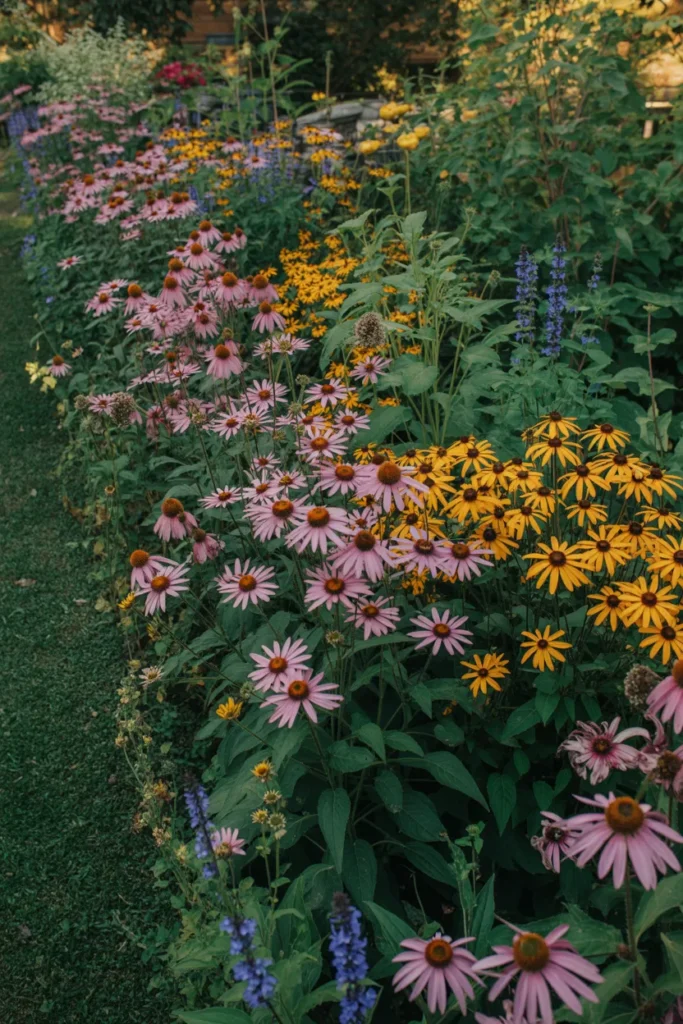
The garden looks full and deliberate within two to three seasons without any additional plant purchases or significant labor. The maintenance rhythm becomes editing and dividing every few years rather than planting and replanting annually.
Design the bed with a clear mowing edge at the front — a steel or aluminum edging strip — so the self-spreading perennials stay contained within the bed boundary rather than migrating into the lawn.
10. Gravel Front Yard With Architectural Succulents for a Dry Climate Garden
In arid and semi-arid American climates — the Southwest, Southern California, and the Rocky Mountain region — a gravel and succulent front yard is the single most practical garden solution available. It eliminates irrigation, mowing, fertilizing, and pest control in one design decision.
Architectural succulents — agave, yucca, aloe, and large-scale echeveria — provide year-round structure and visual interest without any seasonal care. Pair them with low-growing ground-cover succulents like ice plant or delosperma to fill the spaces between larger specimens and complete the weed suppression without relying solely on gravel.
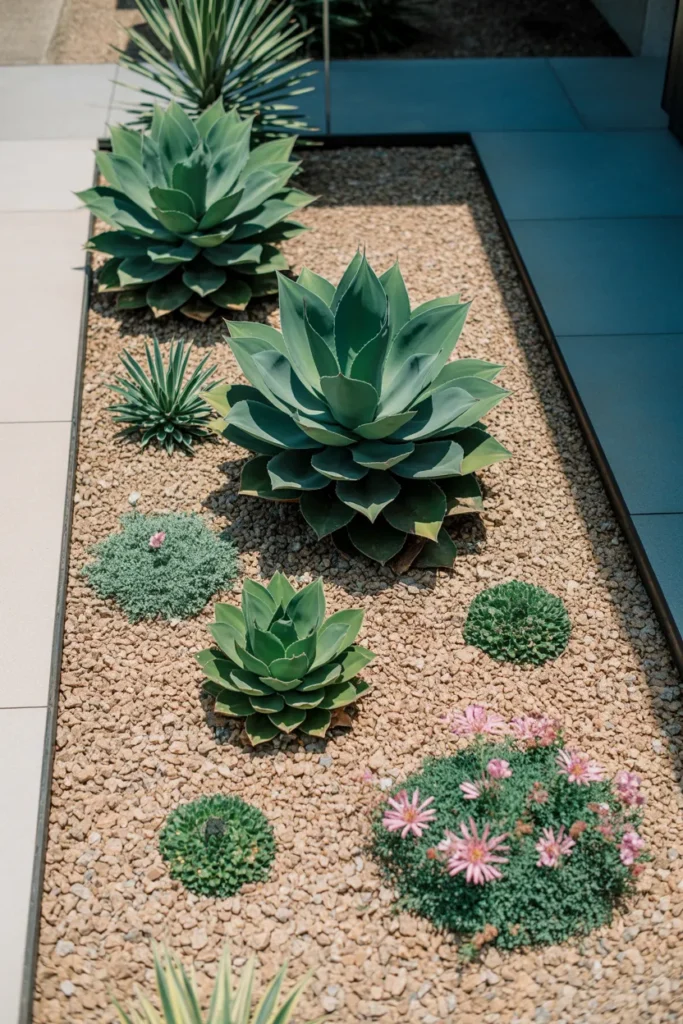
Use a 3-inch layer of crushed granite or pea gravel over landscape fabric, with each plant set through a cut in the fabric. This approach is essentially weed-free for five to seven years before the fabric needs replacement — a maintenance interval that no planted garden can match.
Avoid overcrowding succulents for quick impact. They grow slowly, and overcrowding creates the moisture conditions that cause rot. Space them generously at planting and allow two to three seasons for the design to fill in.
11. Low-Growing Groundcover Garden That Eliminates Bare Soil Permanently
Bare soil is a weed invitation. Any garden area without complete ground coverage will fill with whatever seeds land there first — which is almost never what you planted. A planned groundcover strategy closes those gaps permanently and removes ongoing weeding as a regular task.
Creeping phlox, ajuga, pachysandra, and creeping Jenny all establish quickly, spread reliably, and form dense mats that effectively block light from reaching the soil surface. Each suits different light conditions: pachysandra for deep shade, creeping phlox for full sun, ajuga for partial shade.
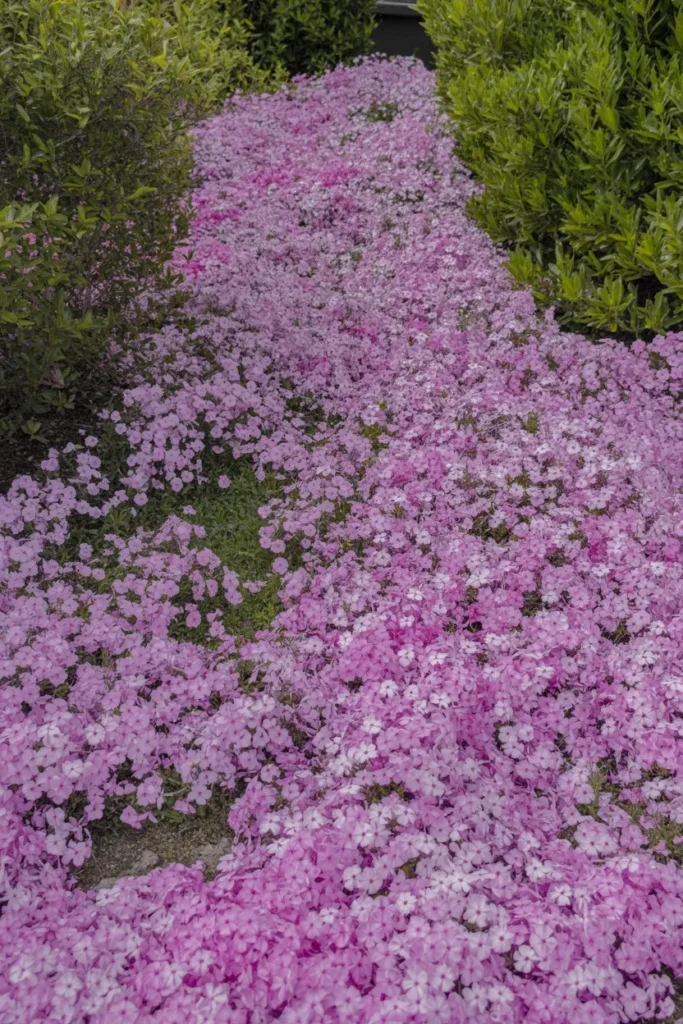
The installation key is density at planting. Space groundcovers at the closer end of the recommended spacing rather than the wider end. The investment in more plants at the start pays back in faster coverage and far fewer weeding hours during establishment.
Once established — typically after one full growing season — groundcover plantings require only one pass per year to trim back edges that have crept beyond their intended boundary. That is the entire maintenance calendar for this garden type.
12. Container Garden on a Paved Patio for Zero Ground Weeding
A patio garden composed entirely of containers sits on a paved surface and eliminates ground weeding as a concept. There is no soil exposed to the elements, no weed seed bank in the ground, and no unpredictable spread of plants beyond their intended position. Everything that grows is in a container you placed deliberately.
The trade-off is watering frequency — containers dry out faster than in-ground planting, particularly in summer heat. A simple drip irrigation system connected to a timer addresses this completely and removes even that maintenance task from the weekly schedule.
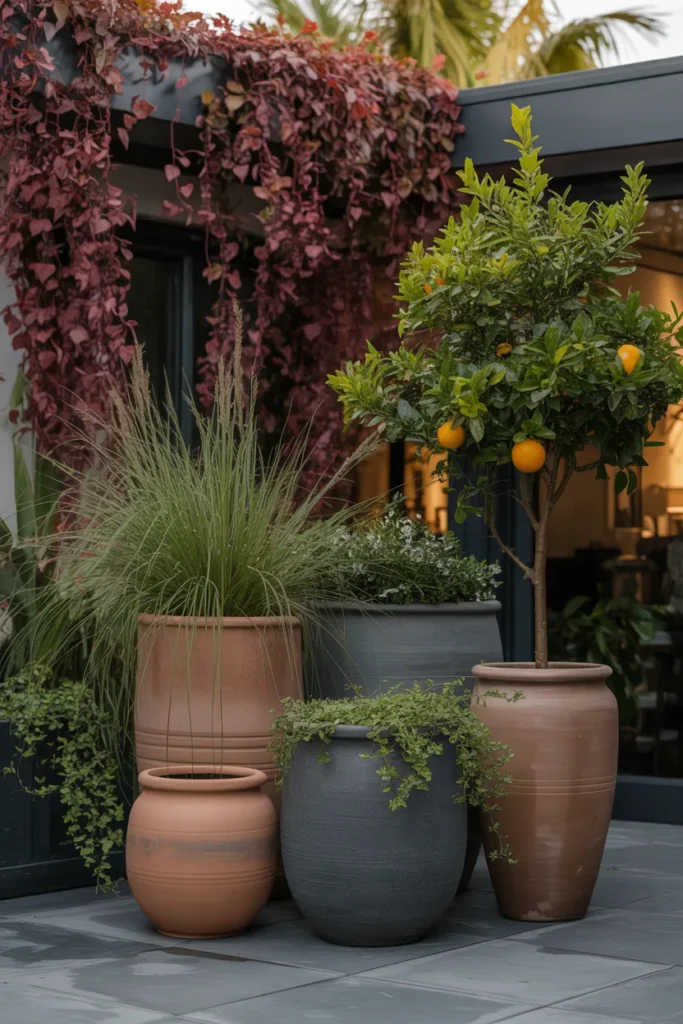
Choose large containers over small ones. A container under 12 inches in diameter dries out in a single hot day and needs daily watering without irrigation. A 24-inch or larger container retains moisture for two to three days and gives plant roots room to establish properly.
Group containers together rather than spacing them across the patio. Clustered containers create humidity around each other through transpiration, reduce individual moisture loss, and read as a cohesive garden composition rather than scattered pots.
13. Rain Garden That Manages Drainage and Requires No Irrigation
A rain garden is a planted depression that captures and absorbs stormwater runoff from roofs, driveways, or compacted lawn areas. It is one of the most functional low-maintenance garden forms available because it is designed to receive water naturally — which means it never needs supplemental irrigation once plants are established.
Position a rain garden at the natural low point of your yard or at the outlet of a downspout. The depression only needs to be 6 to 12 inches deep in most residential situations. Fill it with a mix of native moisture-tolerant plants: cardinal flower, blue flag iris, swamp milkweed, and sedge grasses all perform well in periodic wet conditions and dry out between rain events without issue.
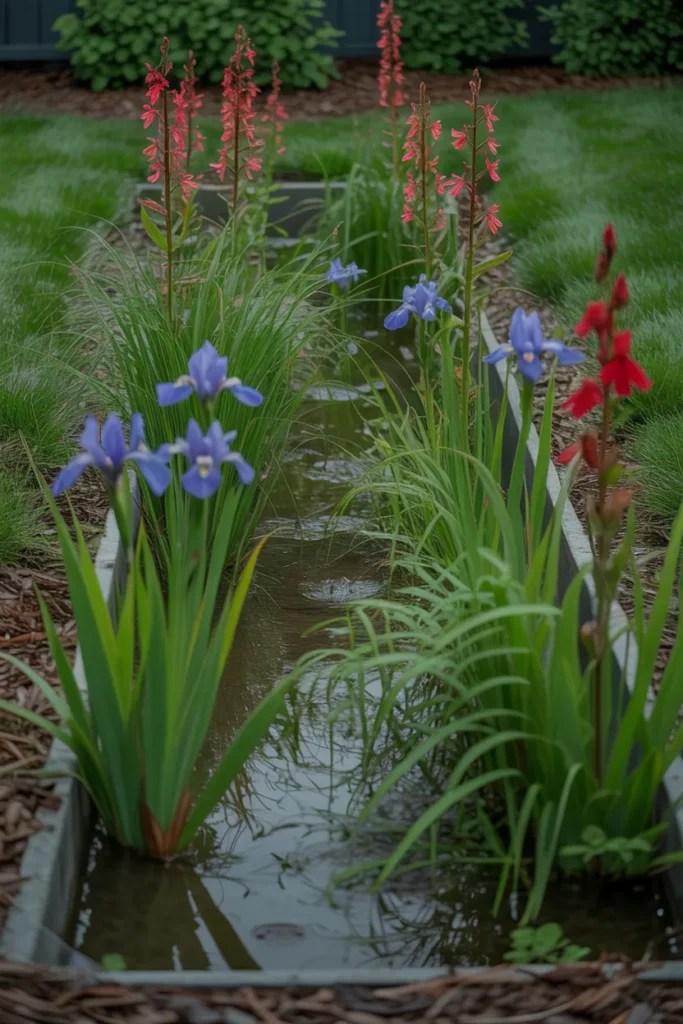
The garden handles your drainage problem structurally while functioning as a wildlife and pollinator habitat. Municipalities in many American cities now offer rebate programs for rain garden installation because they reduce municipal stormwater burden — worth researching before beginning the project.
This design is not appropriate for areas with consistently waterlogged soil that never fully drains between rain events. True standing water for more than 48 hours after rainfall indicates a drainage condition that a rain garden cannot resolve without additional infrastructure.
14. Espalier Fruit Tree on a Fence That Produces Without Taking Up Space
Espalier — the practice of training a tree flat against a fence or wall — is one of the smartest space-efficiency moves in residential garden design. A single espalier apple, pear, or fig tree produces real fruit while occupying less than 12 inches of depth from the fence, requires pruning only twice per year, and turns an otherwise blank fence line into a permanent living feature.
The initial training takes two to three years of guided growth — tying new branches to a wire framework and removing growth that pushes forward or backward. Once the framework is established, the pruning rhythm is simply maintaining it twice yearly: once in late winter and once in midsummer.
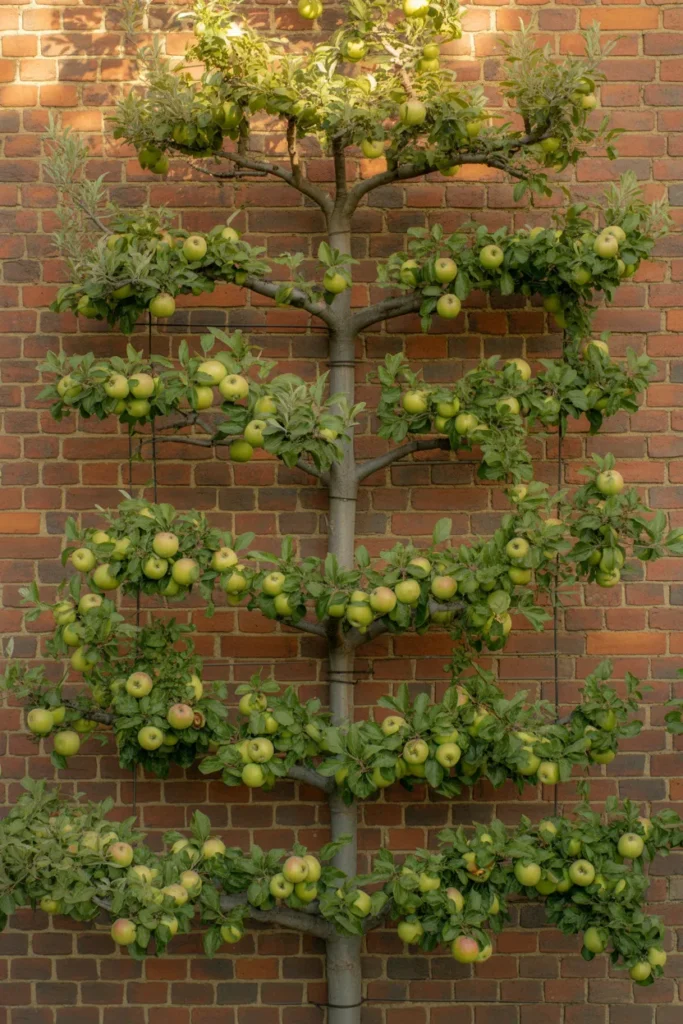
Espalier suits any fence or wall that receives at least six hours of direct sunlight daily. A south-facing or west-facing fence is ideal. East-facing works for less heat-demanding varieties like pears. North-facing will not produce adequately in most American climates.
This is a long-term commitment — an established espalier adds meaningful property value and can live for decades. Plant a grafted tree on dwarfing rootstock to keep growth manageable and fruit production starting within two to three years of planting.
Final Thoughts
The right low-maintenance garden is not the one with the fewest plants — it is the one designed so that each element earns its place without creating ongoing work. Every idea in this list is built on that principle: solve a real problem, choose materials and plants that support themselves, and design for the life you actually live rather than the garden you imagine having time for.
Save this post to your Pinterest boards so you have a practical reference when you are ready to make changes to your outdoor space. Whether you are working with a dry Western yard, a shaded Eastern lot, or a paved urban patio, one of these low-maintenance garden ideas fits your specific situation. Explore more landscape planning and outdoor design content to keep building a yard that works as hard as you do — without demanding the same hours in return.