
Most garden paths fail not because of poor plant choices, but because the layout, material, and scale decisions were made without a clear plan. This guide covers 12 distinct garden path design 2026 approaches — each chosen for a specific yard condition, budget range, and visual goal. You will leave with enough practical knowledge to choose the right path for your exact space.
1. Irregular Flagstone Path Through a Cottage-Style Front Yard
Irregular flagstone is one of the most forgiving path materials available because no two installations look the same, which means minor installation imperfections read as intentional character. The key is keeping joint spacing consistent — between one and two inches — and filling gaps with creeping thyme or Irish moss rather than plain gravel or concrete.
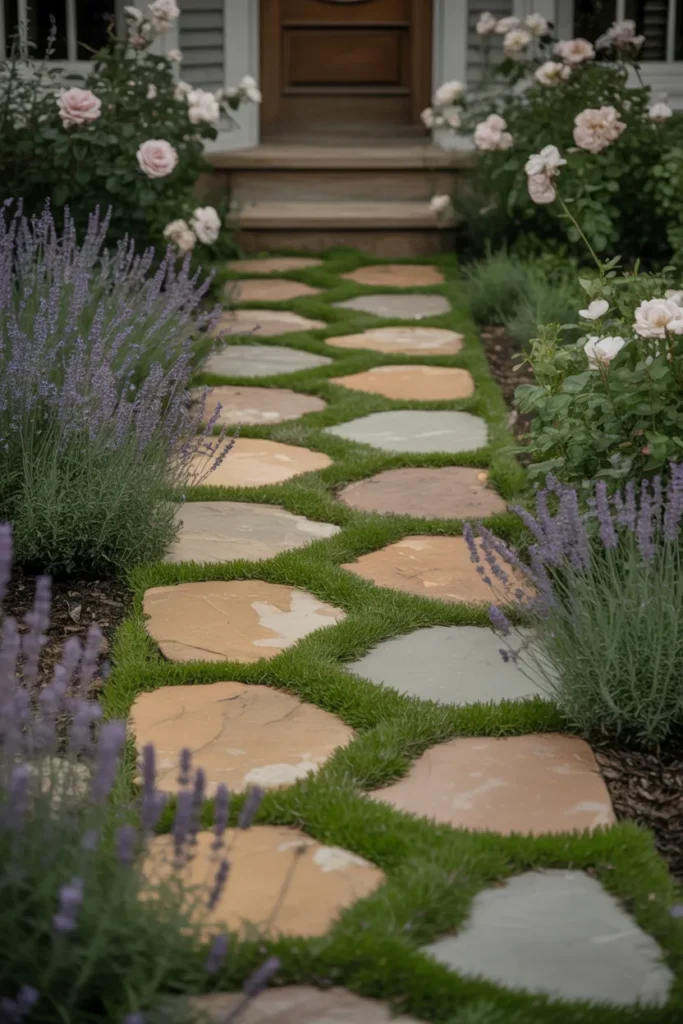
This layout works best in front yards with an existing informal planting style: roses, lavender, ornamental grasses, or mixed perennials. The organic edge of flagstone complements soft plantings in a way that cut pavers never quite do.

The most common mistake is using flagstone that is too thin. Anything under 1.5 inches thick will crack under foot traffic within two to three seasons. Select pieces between 1.5 and 2.5 inches for a path that holds up year after year.
2. Straight Concrete Stepping Stone Path for a Modern Minimalist Backyard
A straight-line path with evenly spaced square or rectangular concrete pavers signals intent and order — which is exactly what a modern minimalist backyard requires. The geometry reinforces the design rather than competing with it, and the maintenance commitment is close to zero once installed.
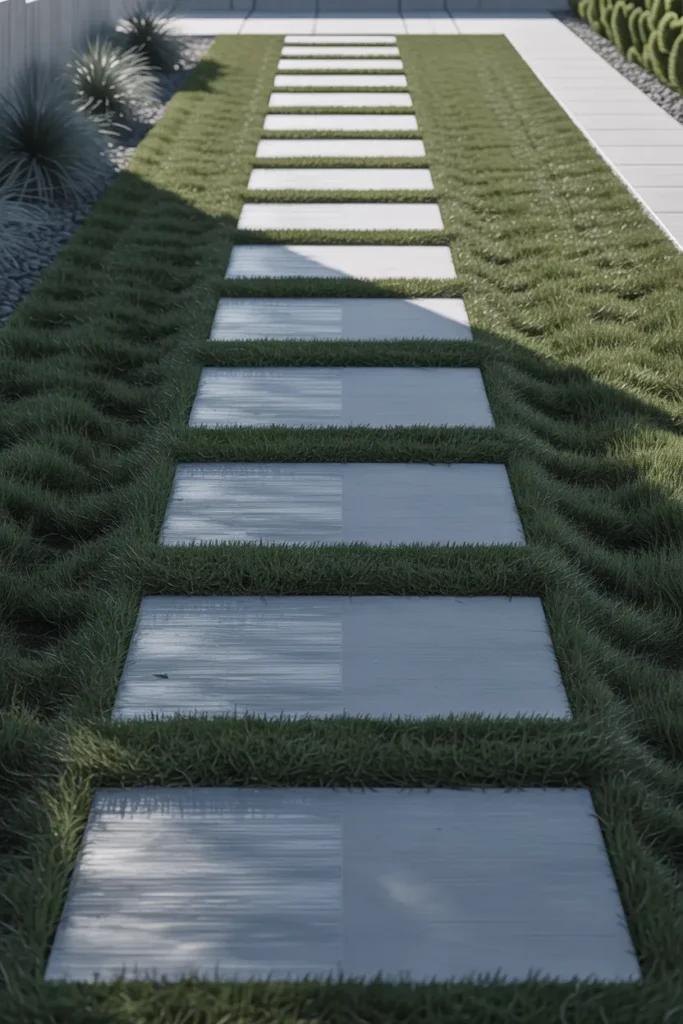
Space the pavers to match a natural walking stride — roughly 18 to 24 inches center to center. Flush-set them at grade rather than raised, so the surrounding lawn or gravel can flow visually around them without interruption.
This is the right choice when your home has clean architectural lines and you want the garden to feel like an extension of the interior rather than a separate rustic space. Avoid this layout in yards with existing curved beds or informal planting — the straight line will look imposed rather than integrated.
3. Curved Gravel Path With Steel Edging Through a Native Plant Garden
Curved garden path design 2026 works particularly well in naturalistic or native plant gardens where the path needs to feel like it belongs in the landscape rather than cutting through it. The curve slows the visual pace and encourages the eye to follow the planting rather than race toward the destination.
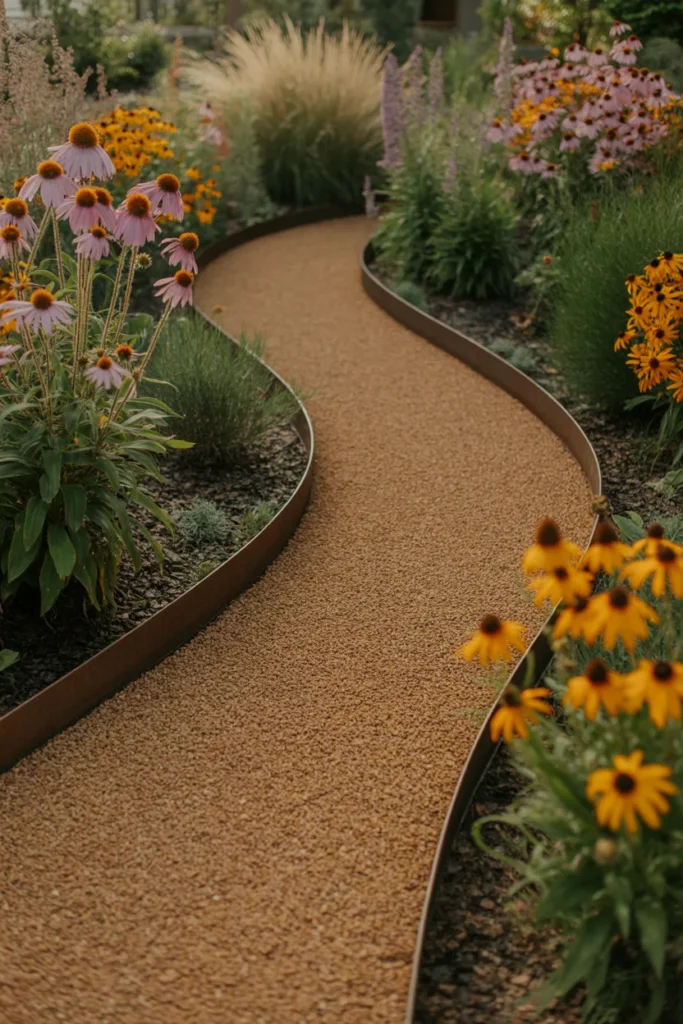
Steel edging is the critical detail here. Without a clean edge, gravel migrates into planting beds within one season and the path loses its definition. A 3-inch steel edge bender, set slightly above grade, keeps everything exactly where it belongs with minimal ongoing maintenance.
Use pea gravel or crushed decomposed granite rather than sharp angular stone. Rounded aggregate is more comfortable underfoot and reads more naturally against organic planting. Avoid white marble chips in a naturalistic garden — the brightness creates visual conflict with the subdued tones of native plants.
4. Brick Herringbone Path Leading to a Back Garden Gate
A herringbone brick pattern is one of the strongest structural choices for a garden path because the interlocking diagonal orientation distributes weight evenly and resists shifting over time. It also adds visual richness without requiring any additional design elements — the pattern does the work.
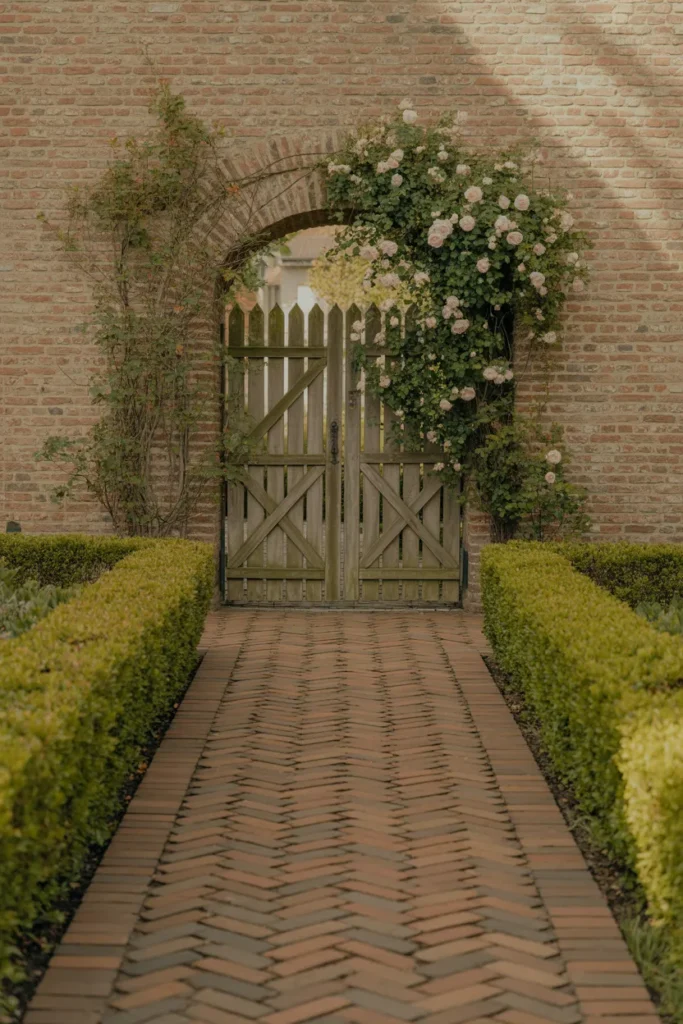
This layout suits traditional, colonial, or craftsman-style homes where brick already appears on the exterior. Running the same brick from the house to the garden creates visual continuity that makes the whole property feel considered and cohesive.
Pay close attention to the border brick course. A single soldier course of brick laid perpendicular around the perimeter locks the field pattern in place and prevents edge creep. Skip this detail and the herringbone will slowly unravel at the edges within a few years.
5. Moss-Covered Stone Slab Path Through a Shaded Woodland Garden
Shade is one of the most underutilized conditions in garden path design. A path of wide, flat stone slabs allowed to develop a natural moss covering transforms a dark side yard or woodland area into one of the most visually compelling spaces on the property.
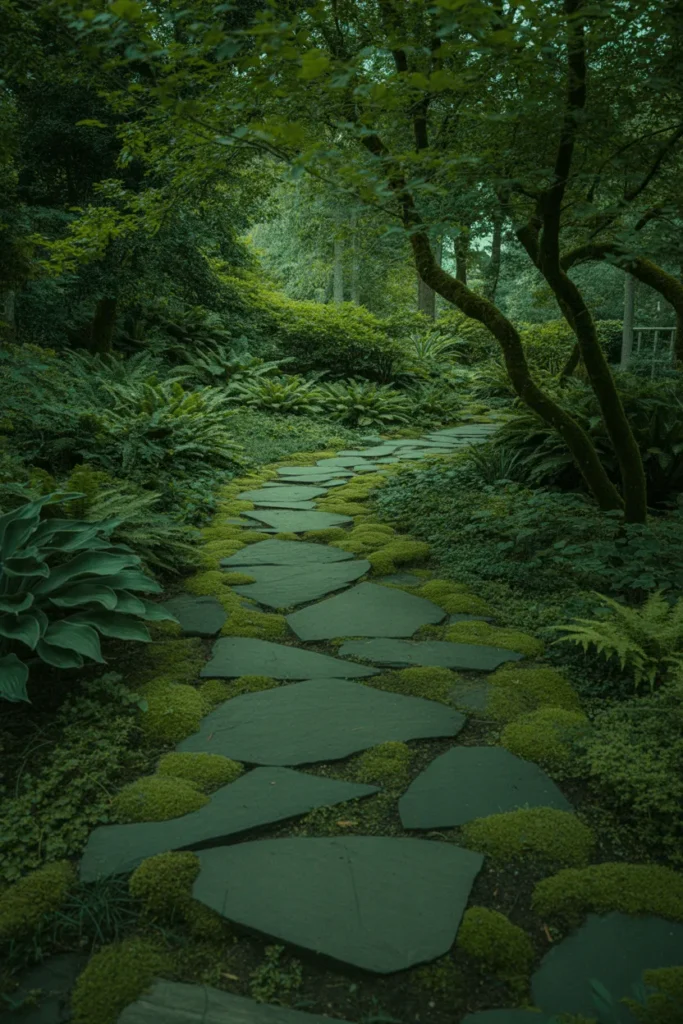
This works in consistently shaded, moderately moist conditions — the Pacific Northwest, the upper Midwest, and the Mid-Atlantic region are all ideal. If your climate is dry or your shade is intermittent, moss will struggle and the stones will simply look weathered rather than intentionally aged.
Do not seal the stones. The whole value of this approach is the organic aging process. Sealed stone repels moisture and prevents moss from establishing, which defeats the purpose entirely.
6. Resin-Bound Gravel Path for a Low-Maintenance Suburban Garden
Resin-bound gravel is one of the most practical garden path materials for homeowners who want a clean, finished look without ongoing weed control or stone migration. The aggregate is mixed with clear resin and laid as a solid, porous surface that drains well and stays in place permanently.
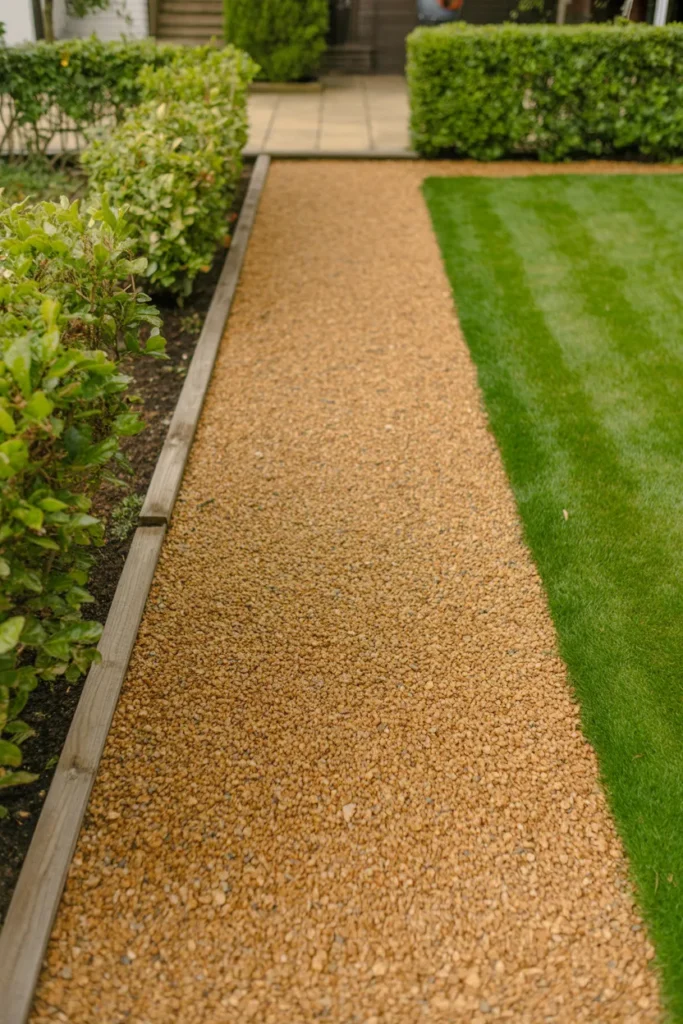
This is the right choice for high-traffic paths in suburban yards, especially in HOA communities where maintained appearance matters. The surface is smooth enough for wheelchairs and strollers while still providing adequate grip in wet conditions.
The one limitation is color range. Resin-bound paths come in natural aggregate tones — tans, greys, and russets — and do not accommodate bold or unusual color choices. If you need the path to be a strong design statement, this material is not the right fit.
7. Mixed Material Path Using Wood Rounds and Pea Gravel
Alternating circular wood cookie rounds set into a pea gravel base creates one of the most visually interesting functional garden path designs available at a low material cost. The contrast of natural wood grain against smooth rounded pebbles works across multiple garden styles — from rustic to Scandinavian-modern.
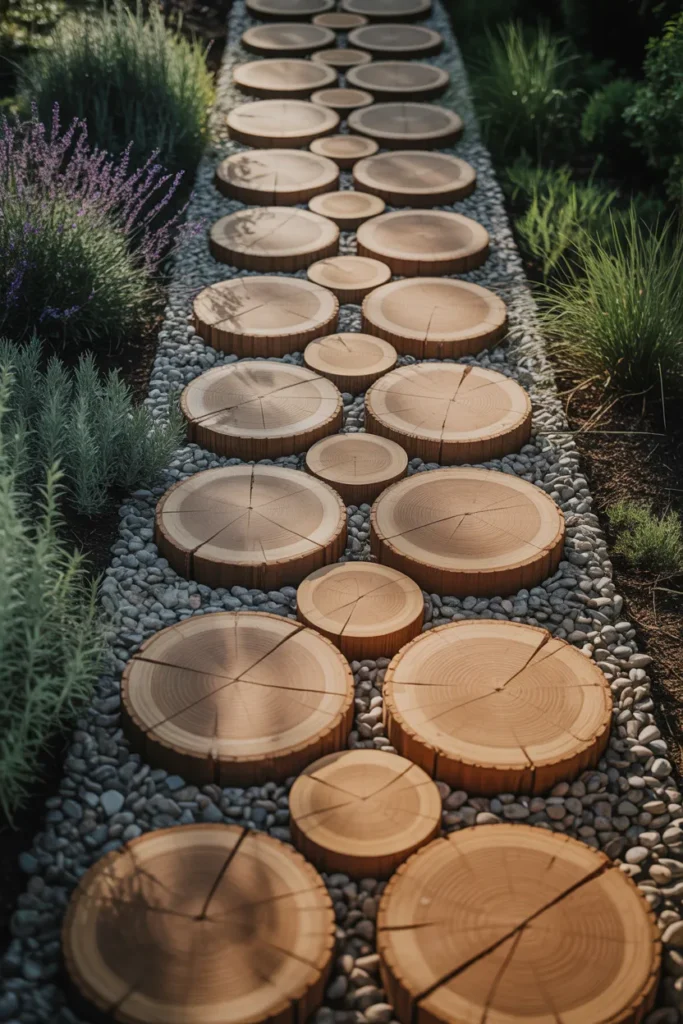
Use slices cut from hardwood logs — black locust and cedar are the most rot-resistant choices. Avoid softwoods like pine, which will degrade within two to three years of ground contact regardless of sealing.
Set each round slightly below the surrounding gravel level so they do not rock underfoot. This is the detail most DIY installations get wrong. A round that shifts even slightly underfoot becomes a safety issue and an annoyance that will eventually cause you to remove the whole path.
8. Long Narrow Side Yard Path With Horizontal Wood Decking Sections
A side yard path is one of the most neglected spaces in residential landscape design, and horizontal wood decking sections — set perpendicular to the direction of travel — are one of the best ways to make it feel intentional. The horizontal lines widen the visual perception of a narrow space in the same way horizontal tile does in a narrow bathroom.
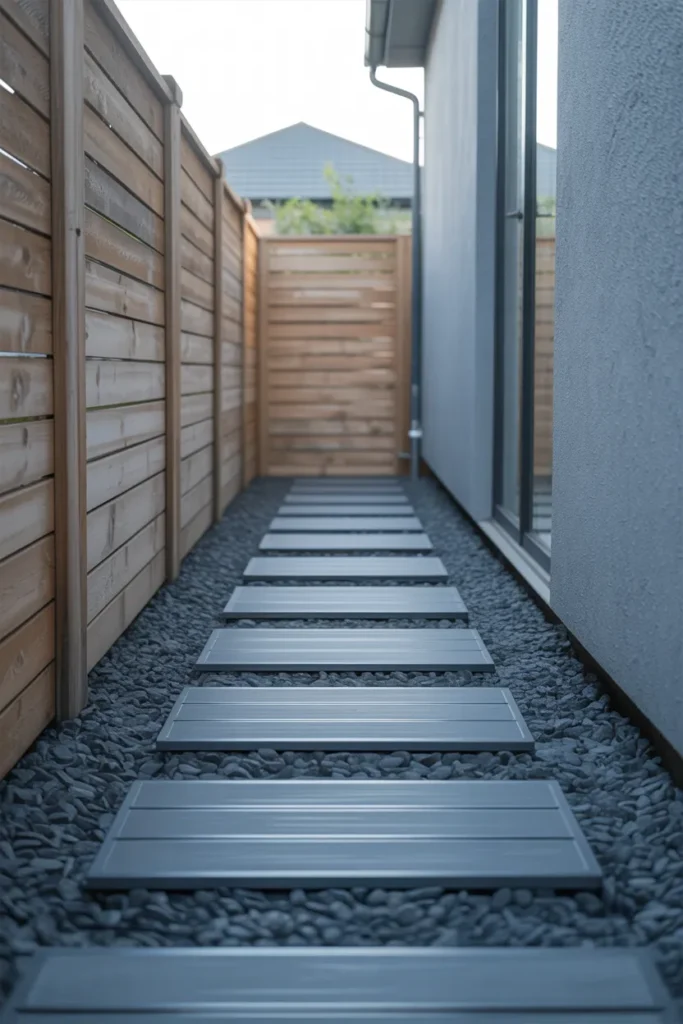
Use composite decking rather than natural wood for ground-level side yard applications. Natural wood in a narrow, shaded side yard stays damp for extended periods and deteriorates quickly. Composite holds its appearance with only occasional cleaning.
Pair the decking sections with a gravel infill between each section rather than planting — maintenance in a narrow side yard is already difficult, and plants in that location will struggle without adequate air circulation.
9. Dry-Laid Limestone Path With Planted Gaps for a Mediterranean Garden
Dry-laid limestone with low herbs planted directly in the gaps is one of the most practical and beautiful garden path ideas for warm, dry American climates — the Southwest, Southern California, and the Gulf Coast in particular. The herbs — thyme, chamomile, and Corsican mint — release fragrance underfoot and thrive in the reflected heat of pale stone.
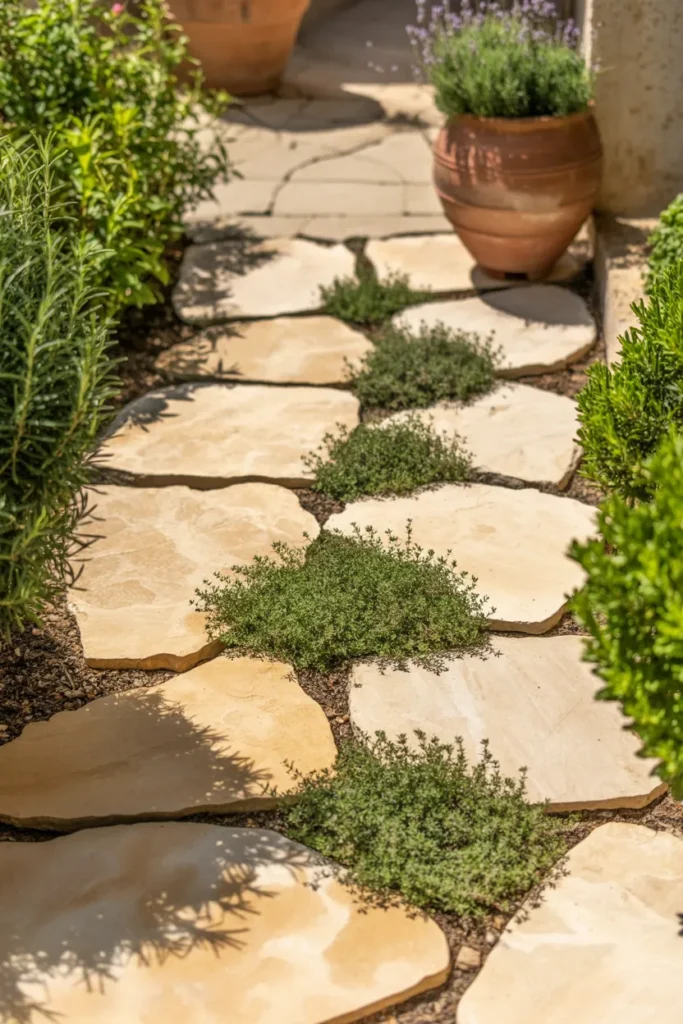
Limestone’s warm cream and buff tones work with Mediterranean plantings — lavender, rosemary, agave, and citrus — in a way that grey concrete or dark basalt never quite achieves. The color temperature of the material matters as much as the form.
This path style does not perform well in cold-wet northern climates. Limestone is porous, and repeated freeze-thaw cycles cause surface spalling within a few seasons. In Zone 5 and below, substitute a harder stone like bluestone or granite.
10. Elevated Boardwalk Path Through a Wet or Rain Garden Area
Gardens with drainage problems or deliberately designed rain garden areas call for a path solution that works with the wet conditions rather than against them. A simple elevated timber or composite boardwalk lifts foot traffic above the moisture level and turns a problem area into one of the most interesting features in the yard.
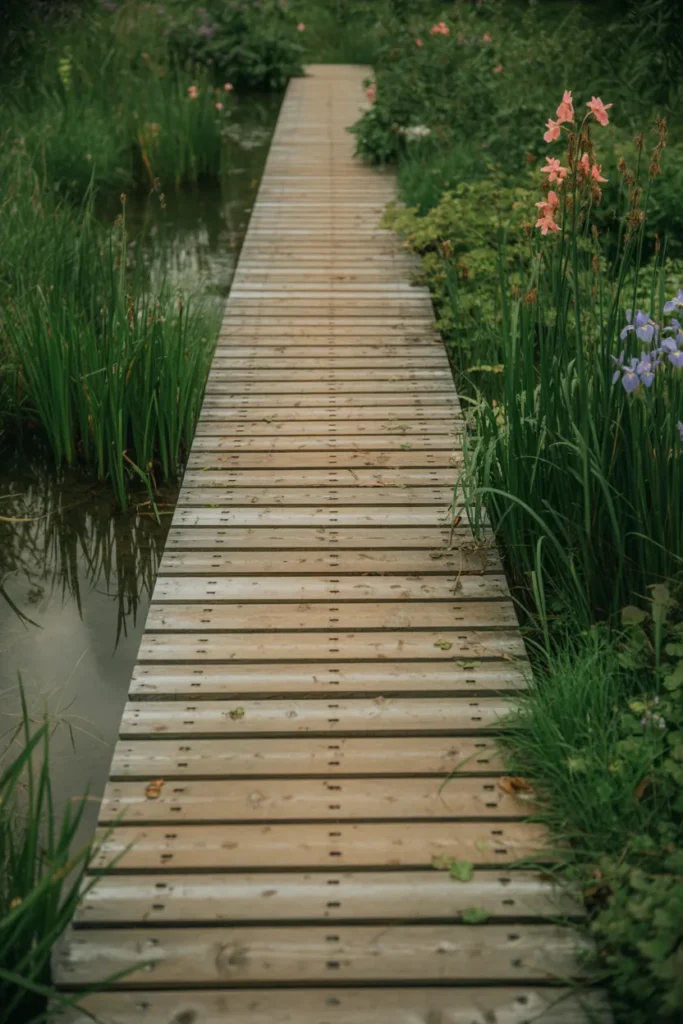
The elevation does not need to be dramatic — two to four inches above grade is enough to keep feet dry during and after rainfall. Use 5/4 decking boards with a quarter-inch gap between each board to allow drainage and prevent surface pooling.
This is also an excellent approach for yards with naturalistic water features, bog gardens, or planted swales. The boardwalk signals that the wet conditions are intentional and managed, which changes the entire reading of the space from neglected to curated.
11. Black Basalt Stepping Stone Path for a Dramatic Luxury Garden
Dark stone paths create a visual contrast that lighter materials cannot achieve — they ground the surrounding planting, make green look more saturated, and read as high-end in a way that tan or grey materials simply do not. Black basalt or dark grey slate stepping stones are among the strongest choices in upscale garden path design 2026.
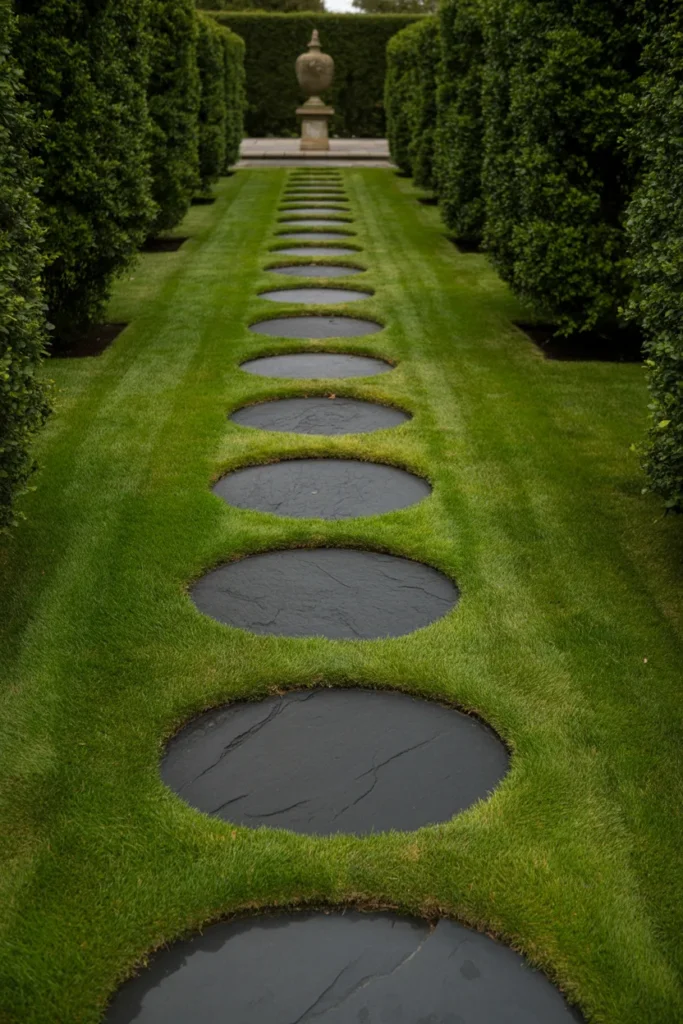
This layout suits formal or luxury garden settings: clipped hedges, topiary, specimen trees, and refined perennial borders. The dark stone reads most powerfully against bright green lawn or light-colored gravel surrounds.
Polished basalt becomes dangerously slippery when wet. Always specify honed or flamed finish for outdoor use. This is a non-negotiable safety requirement, not a stylistic preference.
12. Permeable Paver Path With Grass Joints for an Eco-Conscious Garden
Permeable concrete or natural stone pavers with grass growing in the joints represent one of the most environmentally responsible and visually appealing garden path design approaches gaining momentum in 2026. The surface manages stormwater on-site, reduces heat island effect, and integrates the path visually into the surrounding lawn.
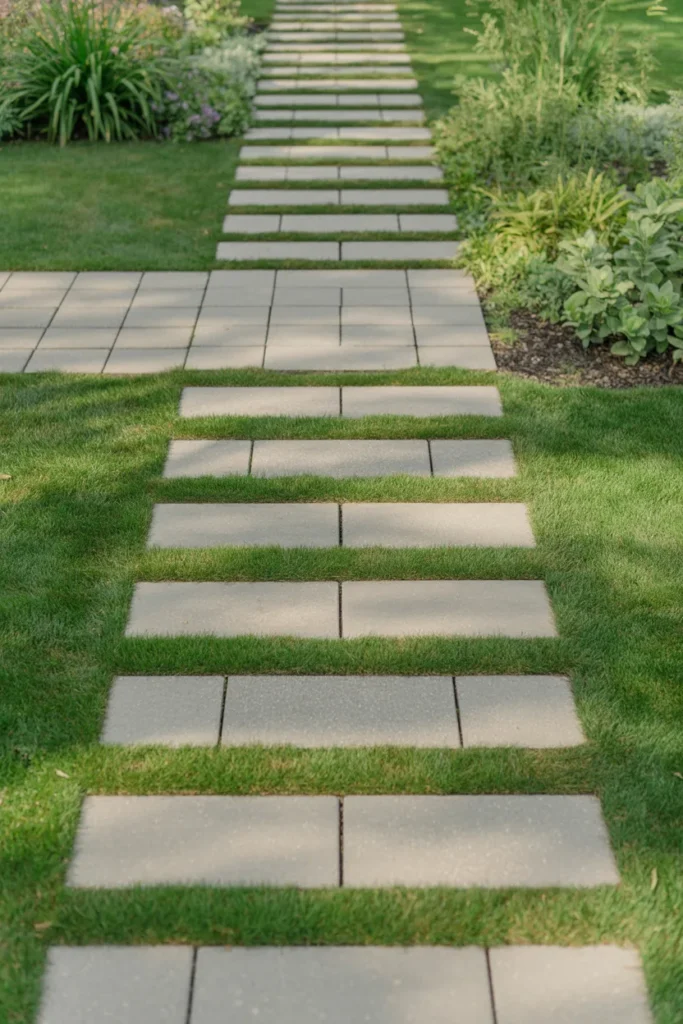
Use pavers with a minimum two-inch joint to allow adequate root space for the grass. Plug or seed with a low-growing, drought-tolerant variety — buffalo grass or fescue — that will not require mowing between the pavers more than once or twice per season.
This is not appropriate for shaded paths where grass will thin and die in the joints, leaving bare soil that turns to mud. For shade, substitute with moss or low creeping jenny in the joints and accept that the surface will look different but still hold together effectively.
Final Thoughts
A well-planned garden path does more than connect two points — it defines how a yard feels to move through and how it reads from inside the house. These 12 garden path design 2026 ideas cover the full range of conditions, climates, and budgets you are likely to encounter.
Save this post to your Pinterest boards so you have a practical reference when your project is ready to move forward. The right path is the one that matches your specific yard condition, home style, and maintenance comfort level — not simply the one that photographs best. Explore more outdoor design and landscape planning ideas to keep building a yard that genuinely works for your home.