
If your outdoor or indoor space feels cluttered and overstimulating, zen garden ideas 2026 offer a practical path to reclaiming calm. This guide covers 16 distinct layouts and design approaches — each with clear explanations of why they work, when to use them, and what mistakes to avoid.
1. Dry Gravel Raked Garden With a Single Stone Focal Point
A raked gravel garden works because it gives the eye one place to land and one texture to follow. The act of raking itself becomes part of the experience — which is why this layout is especially effective for people who want a mindful outdoor ritual, not just a decorative space.
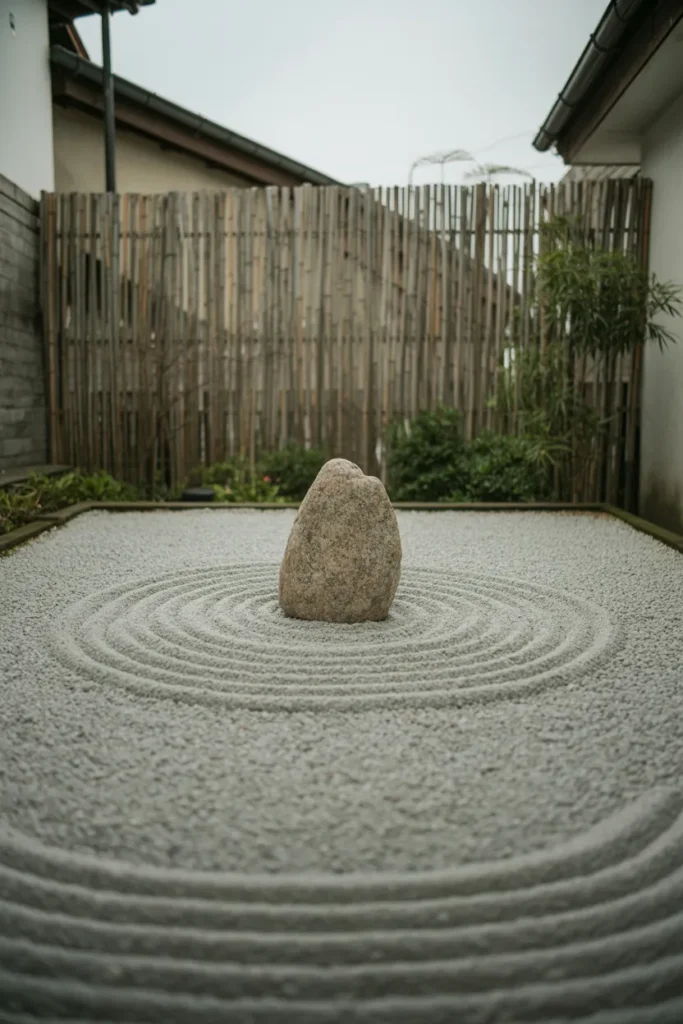
Use this when you have a flat, low-traffic side yard or a dedicated corner that gets consistent light. A single large stone or boulder anchors the design without competing with the gravel pattern.

The most common mistake is using too many stones. More than three disrupts the visual quiet that makes this layout effective. Stick to one dominant stone and let the gravel do the work.
2. Moss and Stone Pathway Through a Narrow Side Yard
Moss thrives in the shaded, narrow spaces most homeowners ignore. A stepping stone path through living moss creates a quiet transition between spaces — practical as a walkway, calming as a visual.
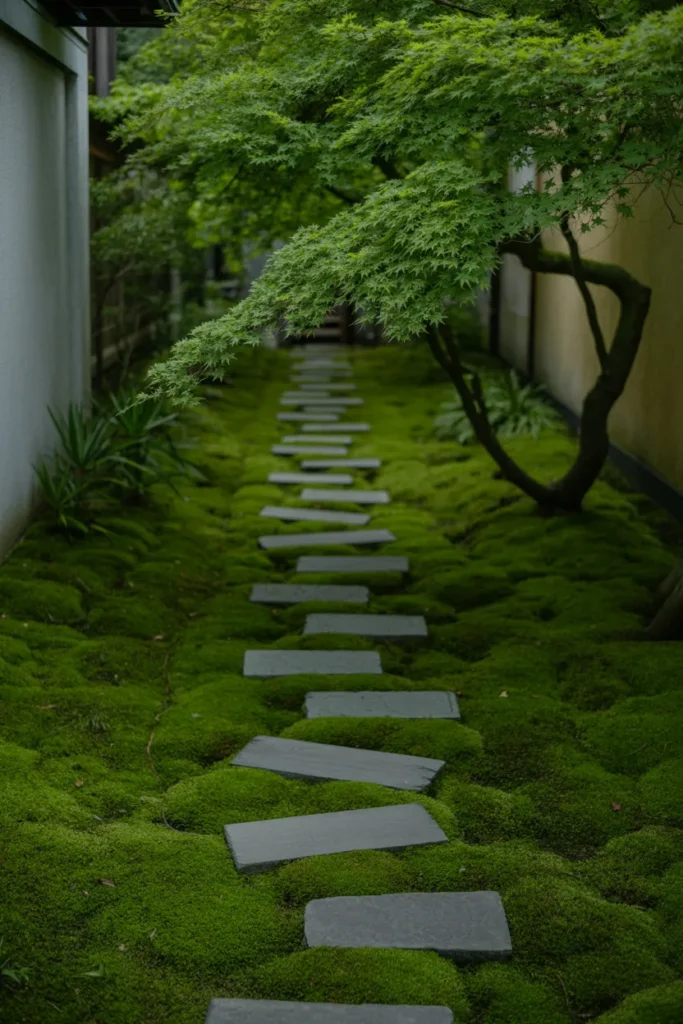
This layout works well in Pacific Northwest climates or any shaded yard that stays moderately moist. Irish or sheet moss both hold up well between stones and require minimal maintenance once established.
Avoid using moss in full-sun areas or high-foot-traffic paths. It bruises easily and turns brown without consistent shade and moisture. For sunny yards, substitute creeping thyme for the same grounded effect.
3. Raised Sand Basin With Bamboo Water Feature
A raised wooden or concrete sand basin with a small bamboo spout adds sound to the sensory experience — which is what separates a good zen garden from a great one. The sound of water hitting sand or stone engages the mind without demanding attention.
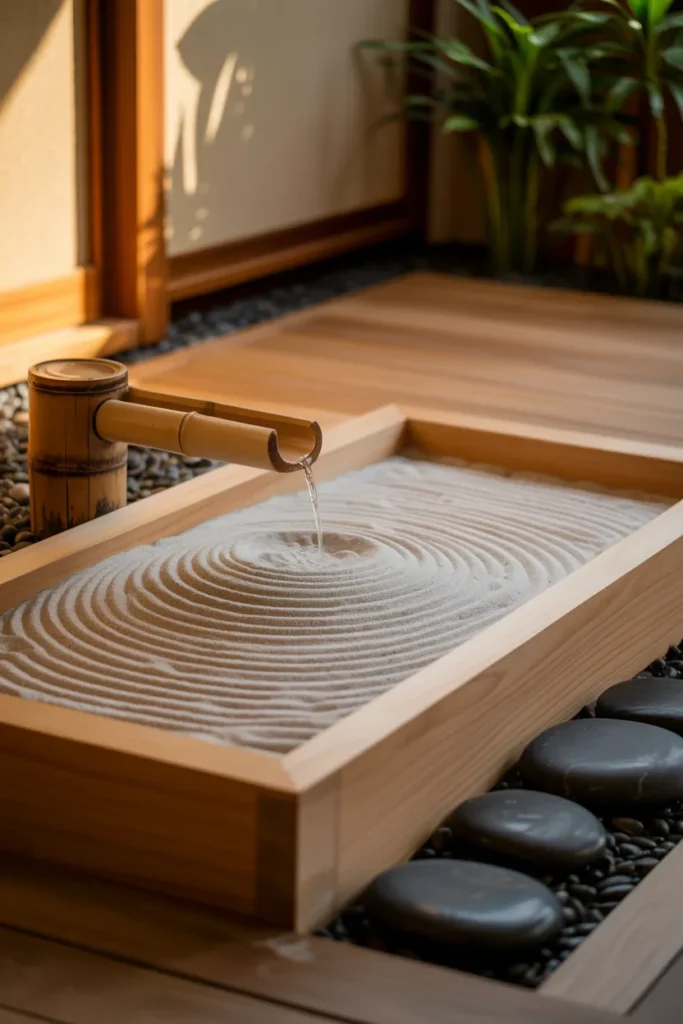
This is a strong choice for covered patios or partially enclosed outdoor rooms where the water element won’t be disrupted by wind or rain. A simple recirculating pump keeps it low-maintenance.
Do not use this layout in an exposed backyard without overhead cover. Wind noise and debris in the sand basin quickly destroy the calm effect this design is built on.
4. Indoor Tabletop Zen Garden for Small Apartments
For apartment dwellers or those without outdoor space, a tabletop zen garden on a desk or console table delivers the same visual stillness at a fraction of the footprint. This is one of the most searched small-space zen garden ideas and for good reason — it works.
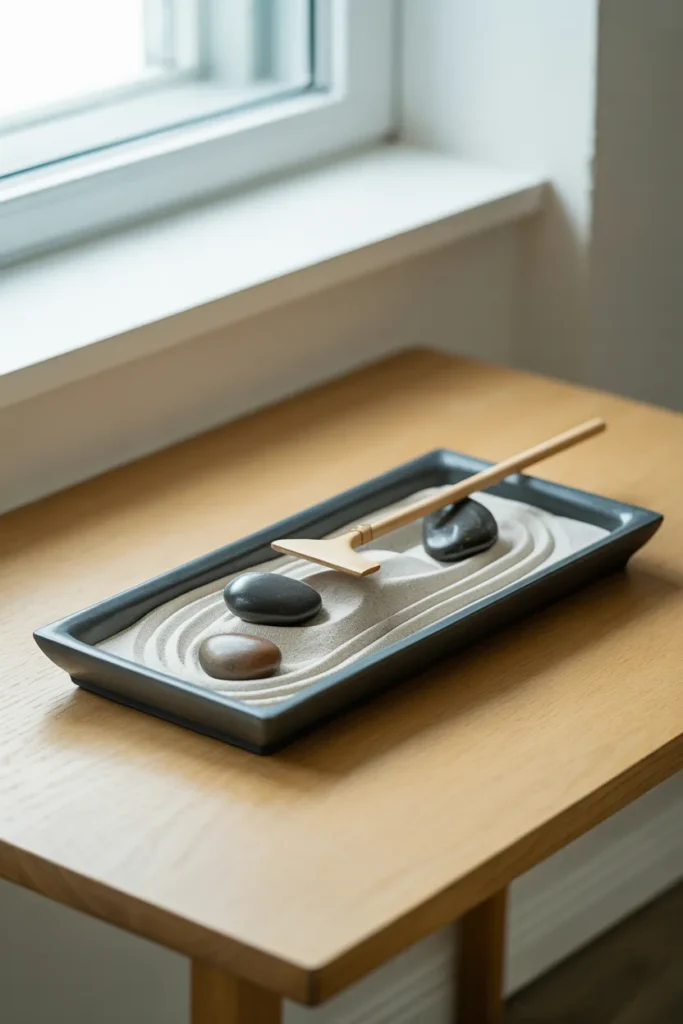
Use a shallow tray (wood, concrete, or ceramic), fine white or tan sand, two or three small stones, and a mini rake. Keep it in a spot you look at regularly — near your work desk or beside a reading chair.
The mistake most people make is adding too many decorative elements. Tiny figurines, shells, and colored stones turn it into a display piece rather than a calming focal point. Restraint is the whole point.
5. Enclosed Courtyard Zen Garden With Gravel and Low Hedges
An enclosed courtyard creates a sense of arrival — you step into calm rather than looking at it from a distance. Low-clipped boxwood or dwarf yew hedges define the boundary without adding visual noise.
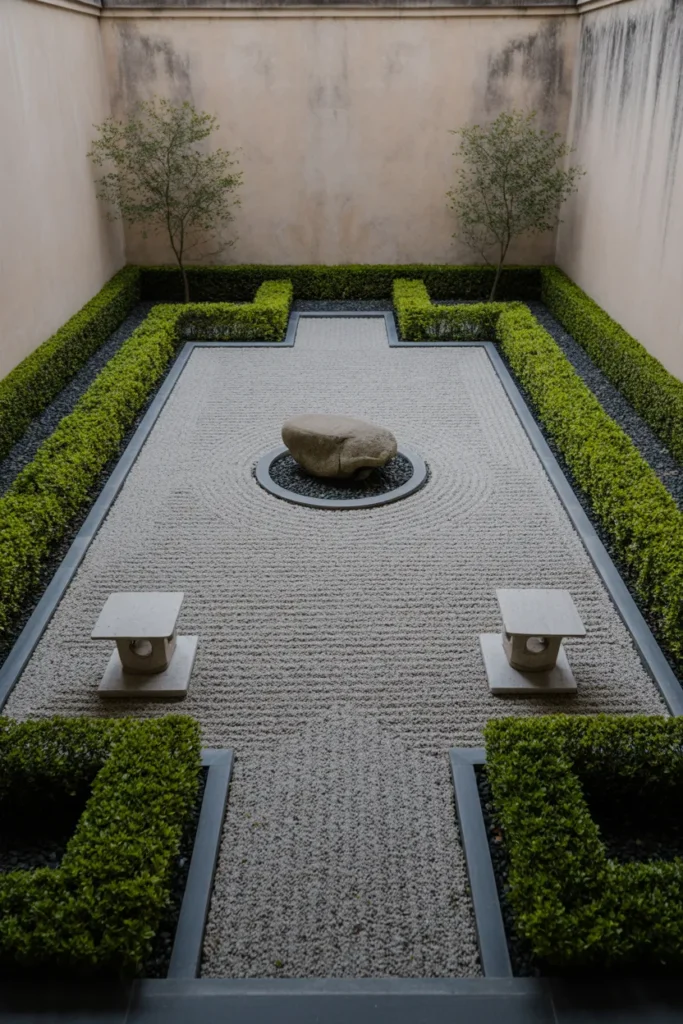
This layout suits homes with an interior courtyard, atrium, or walled side garden. The enclosure is what makes it feel intentional rather than incidental. Without defined edges, the zen effect dissolves into the surrounding landscape.
Avoid tall, dense hedges that block light entirely. The best enclosures let filtered light in while maintaining the sense of separation from the outside world.
6. Minimalist Zen Garden Strip Along a Fence Line
Long, narrow spaces along fences are typically wasted with overgrown shrubs or ignored entirely. A zen garden strip — gravel, two or three upright stones, and a single ornamental grass clump — turns that dead zone into a design feature.
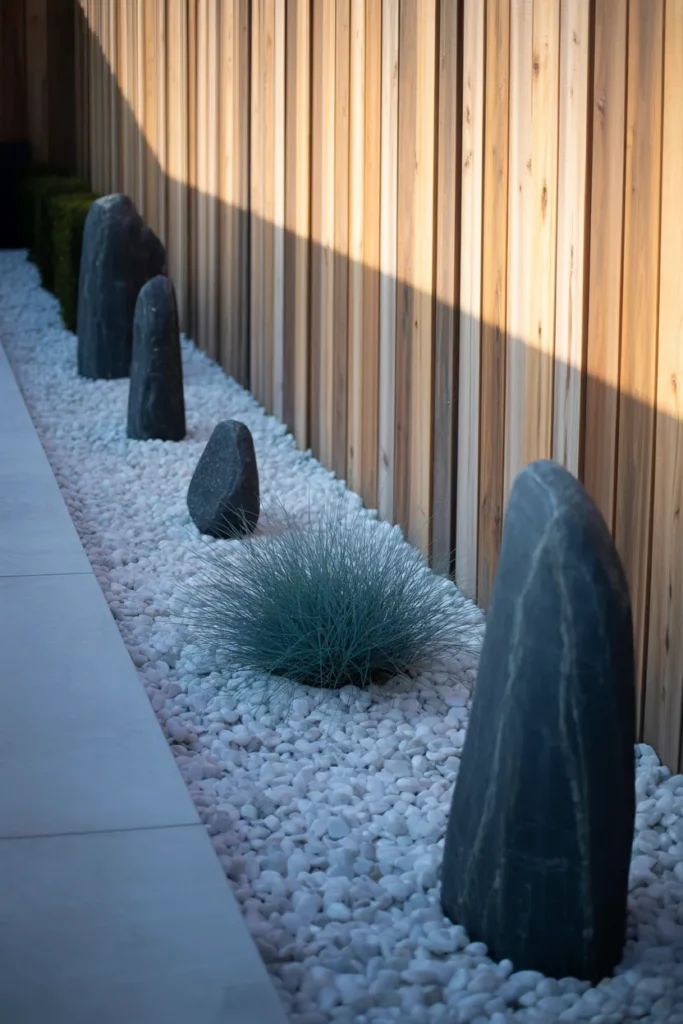
This works especially well along wood privacy fences where the vertical backdrop gives the design a clean frame. Black river pebbles or white marble chips both read well against natural cedar or redwood.
Avoid planting anything with aggressive root systems close to the fence. Ornamental grasses like blue oat grass or feather reed grass stay compact and won’t damage the fence over time.
7. Zen Meditation Corner With a Gravel Circle and Surrounding Plantings
A circular gravel area within a planted garden creates a psychological pause — a place designed specifically for sitting and doing nothing. It signals intent in a way a bench against a wall never quite does.
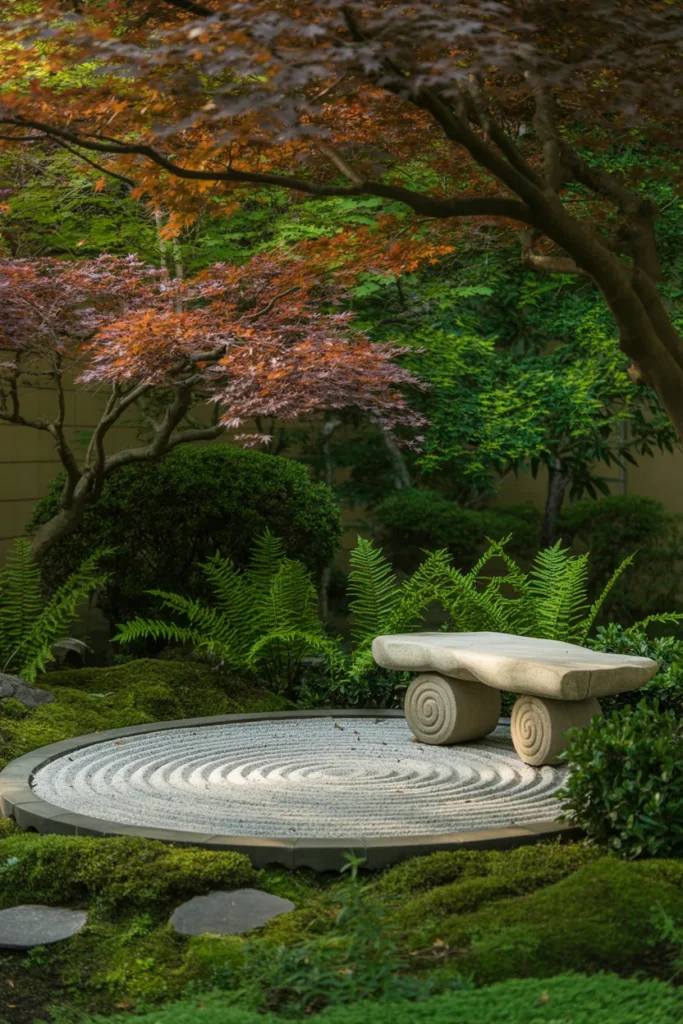
Place this in a garden area that already has some tree or shrub coverage for dappled shade. A simple wooden or stone bench at the edge of the circle completes the function. The surrounding plantings — Japanese forest grass, ferns, or nandina — soften the geometry without competing with it.
The mistake here is centering this in an open, exposed lawn. Without surrounding plants to frame it, the circle just looks like an unfinished patio.
8. Rooftop or Balcony Zen Garden With Container Stones and Gravel Trays
Rooftop and balcony zen garden ideas 2026 are gaining serious traction in urban homes where outdoor square footage is limited but the need for calm is high. Shallow gravel trays combined with potted ornamental trees and a single water bowl create a complete sensory environment in under 50 square feet.
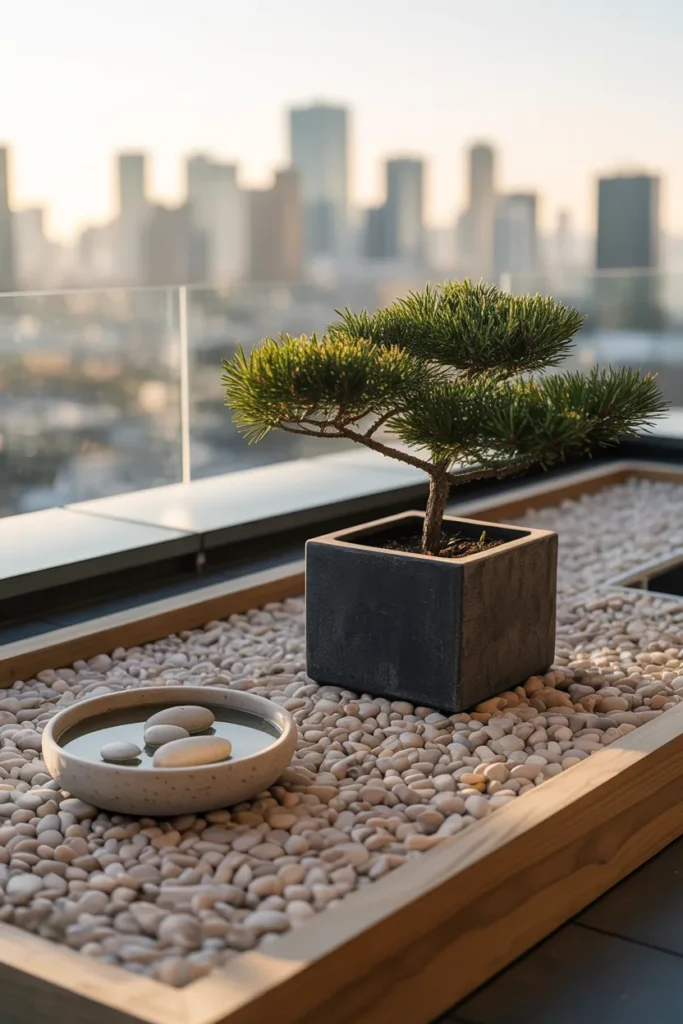
Weight is the primary constraint on rooftops — use lightweight expanded clay pebbles instead of traditional gravel, and choose fiberglass planters over ceramic or concrete.
Position the arrangement so the primary view is from a seated position inside. A zen garden that you look out at through a glass door delivers daily visual calm without requiring you to step outside.
9. Dry Streambed Zen Garden With River Stones and Ornamental Grasses
A dry streambed mimics the path of water without requiring plumbing or maintenance — one of the most functional and visually dynamic approaches to zen garden design. The curved line of rounded river stones naturally draws the eye through the space.
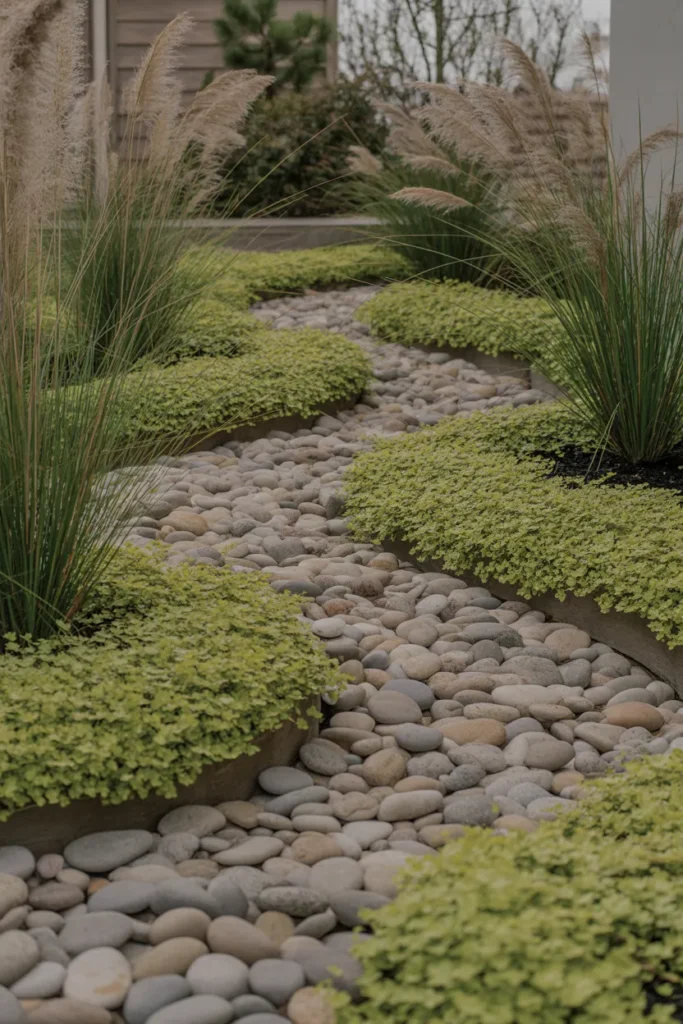
This layout works well in sloped yards or areas that receive occasional rainwater runoff. The streambed serves a real drainage function while looking intentional. In flat yards, create the illusion of flow by varying stone size — larger stones at the source, smaller at the end.
Avoid using angular crushed stone for the streambed itself. Smooth, rounded river rock is essential. Angular gravel reads as construction material, not landscape design.
10. Japanese-Inspired Zen Entry Garden With Lantern and Stepping Stones
The entry garden sets the tone for everything behind it. A stone lantern flanked by stepping stones through low moss or gravel tells visitors — and the homeowner — that this is a considered, intentional space.
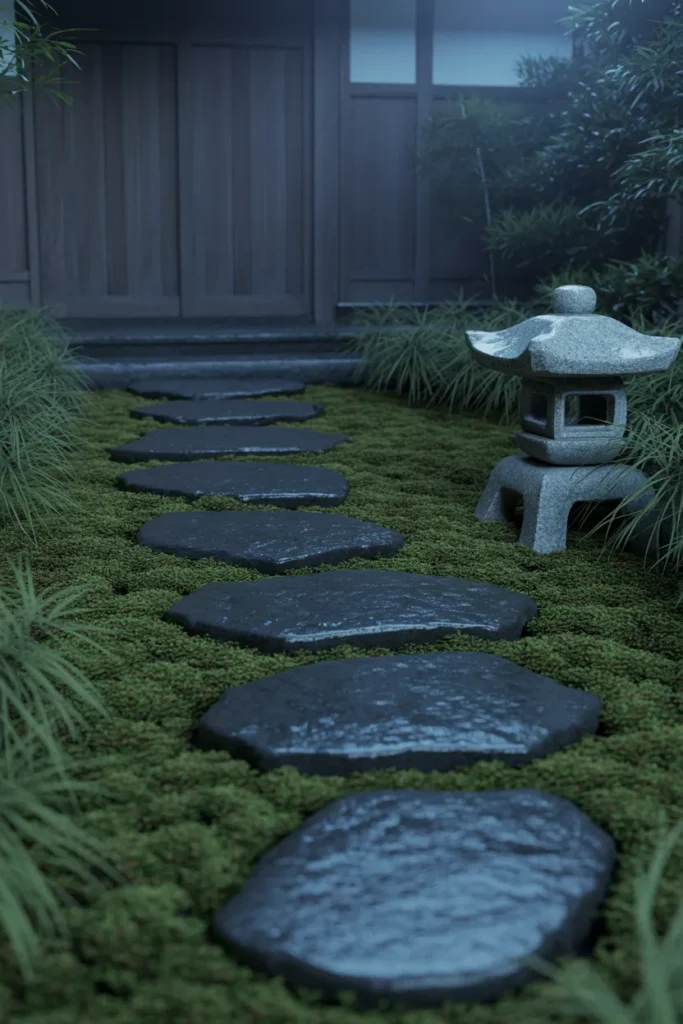
Use this layout in front yards with moderate shade or along the approach to a side gate. A single granite or cast stone lantern at knee height is more effective than a tall one — it anchors rather than dominates.
Avoid symmetrical, formal placement of stones. Zen aesthetics rely on intentional asymmetry — three stones in a loose triangle always reads better than two stones in a straight line.
11. Wabi-Sabi Zen Garden With Weathered Wood and Aged Stone
Wabi-sabi — the Japanese appreciation for imperfection and impermanence — is one of the defining aesthetics of zen garden ideas 2026. This approach uses deliberately aged materials: cracked stepping stones, silver-grey driftwood pieces, and mossy boulders.
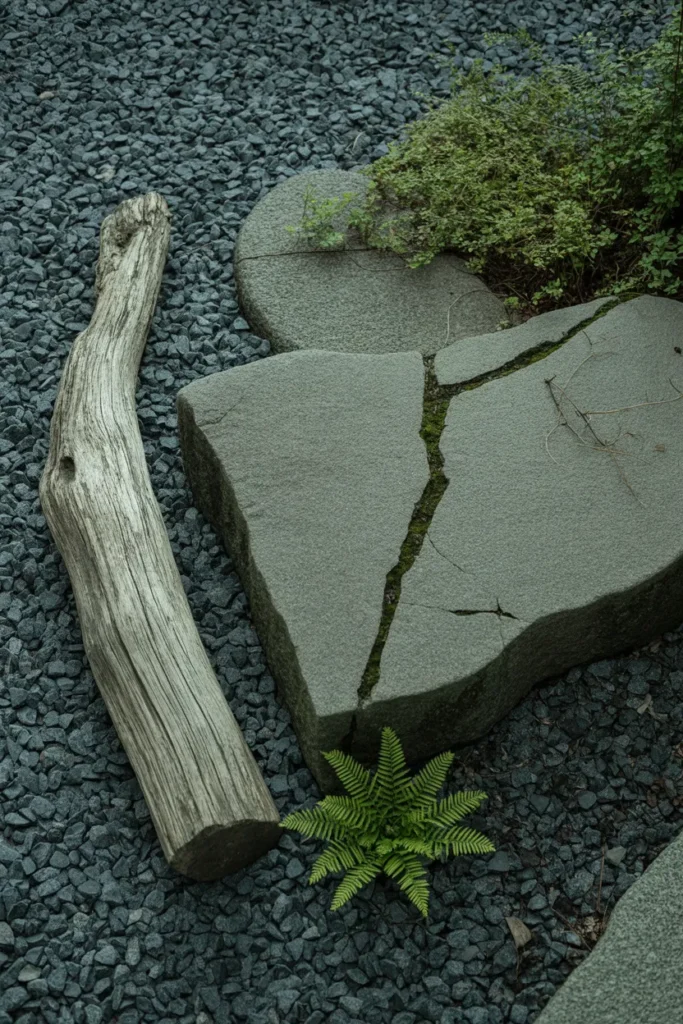
This layout is ideal for gardeners who want a low-effort, naturalistic result. The design actually improves as materials age. There is no “finished” state to maintain, which makes it one of the most stress-free approaches to zen landscaping.
Do not seal or refinish the weathered wood elements. The whole point is allowing natural aging. Polyurethane or paint destroys the wabi-sabi quality entirely.
12. Zen Water Garden With Still Reflecting Pool and Stone Border
A still water feature reflects sky and surrounding plants, effectively doubling the visual space of a small garden. Unlike fountains with active movement, a still pool creates silence — which is often more calming than the sound of running water.
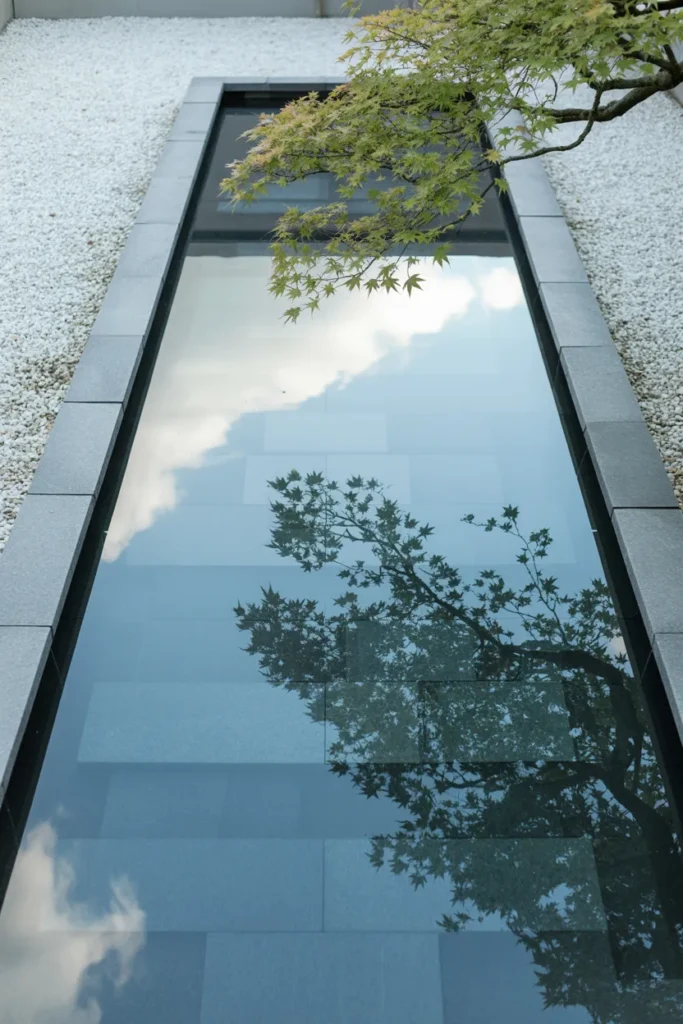
This layout works best in a sheltered spot away from large deciduous trees that drop leaves into the water. A rectangular or square pool with a flat stone coping edge maintains the minimal geometry that zen design requires.
Avoid koi in a true zen reflecting pool. Fish require filtration that creates surface movement and disrupts the mirror effect. This is a design choice, not a fish pond.
13. Shaded Woodland Zen Garden With Ferns and Dark Gravel
Not every yard gets full sun, and a shaded woodland corner is actually the ideal canvas for a particular kind of zen garden — one built entirely from shade-loving plants, dark decomposed granite, and the texture of layered greens.
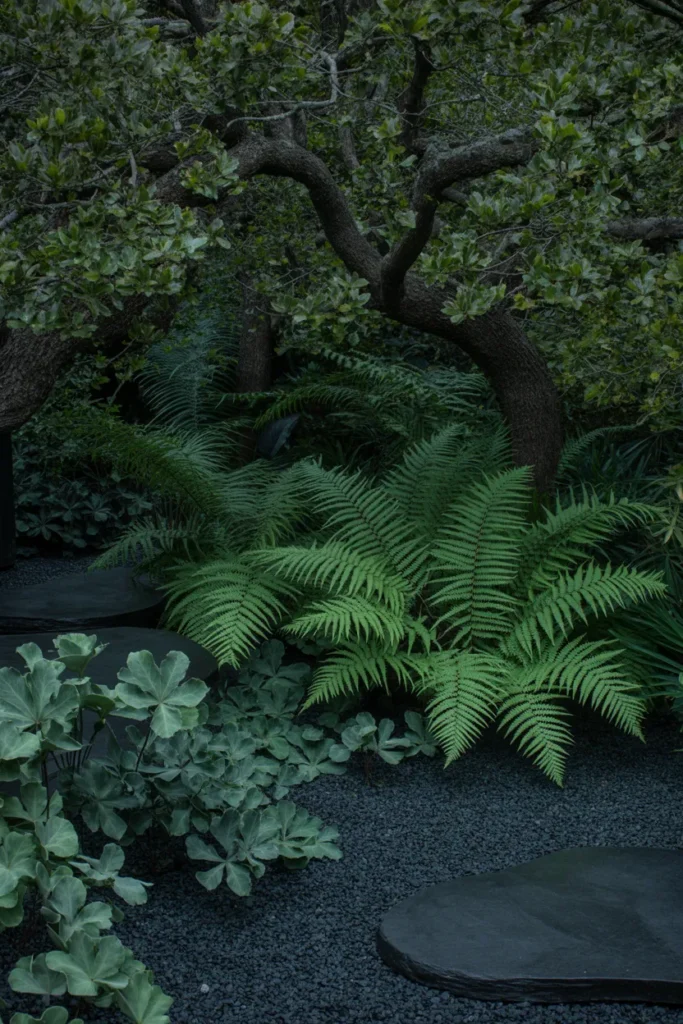
Use this in north-facing yards or beneath established tree canopies. The layering of ostrich ferns, hellebores, and low mondo grass creates depth and texture without color distraction. Dark charcoal or black gravel grounds the palette and keeps the focus on leaf form.
Avoid light-colored gravel in shaded gardens — it creates harsh contrast that reads as unfinished rather than intentional. Dark gravel disappears into the shade in the best possible way.
14. Contemporary Zen Garden With Concrete, Steel, and Ornamental Grass
Modern homes with clean architectural lines call for a contemporary interpretation of zen principles — one that uses industrial materials alongside organic plant material. Poured concrete platforms, cor-ten steel edging, and single-species ornamental grass plantings create a version of zen that feels current rather than traditional.
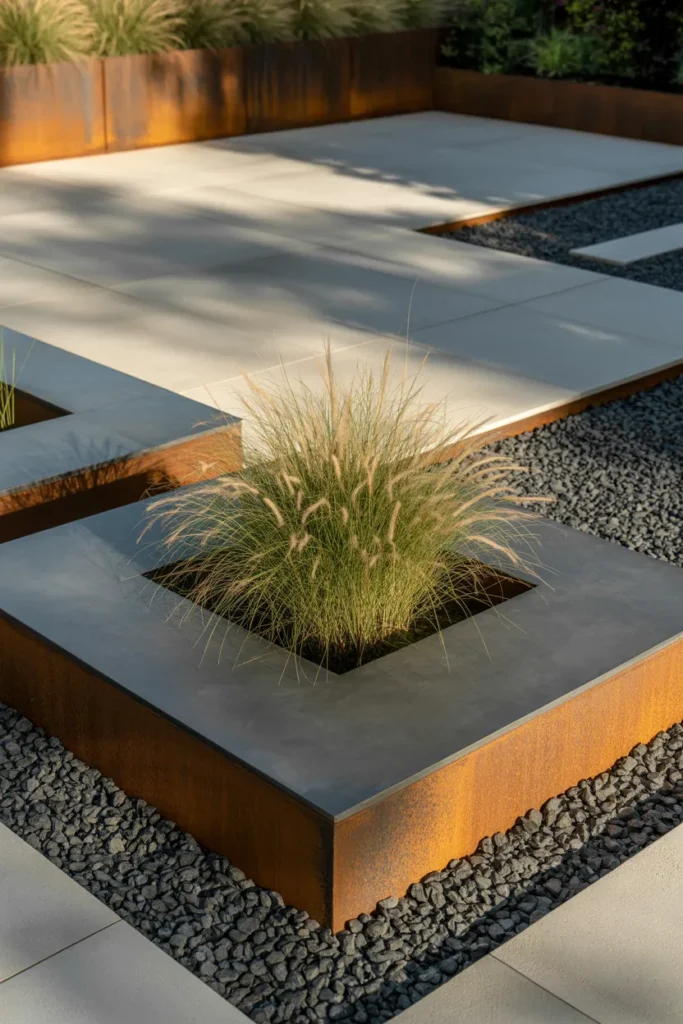
This layout suits new-build homes, mid-century modern renovations, or any home with a strong geometric exterior. The contrast between hard concrete and soft waving grass creates visual tension that still resolves into calm.
Avoid mixing too many hard materials. Concrete plus steel plus stone plus gravel becomes busy. Pick two hard materials maximum and let the grass provide the softness.
15. Zen Courtyard Garden With Espalier Tree and Gravel Frame
An espalier tree — trained flat against a wall — is one of the most space-efficient and visually striking elements in zen garden design. It turns a blank wall into a living sculptural piece while occupying almost no ground footprint.
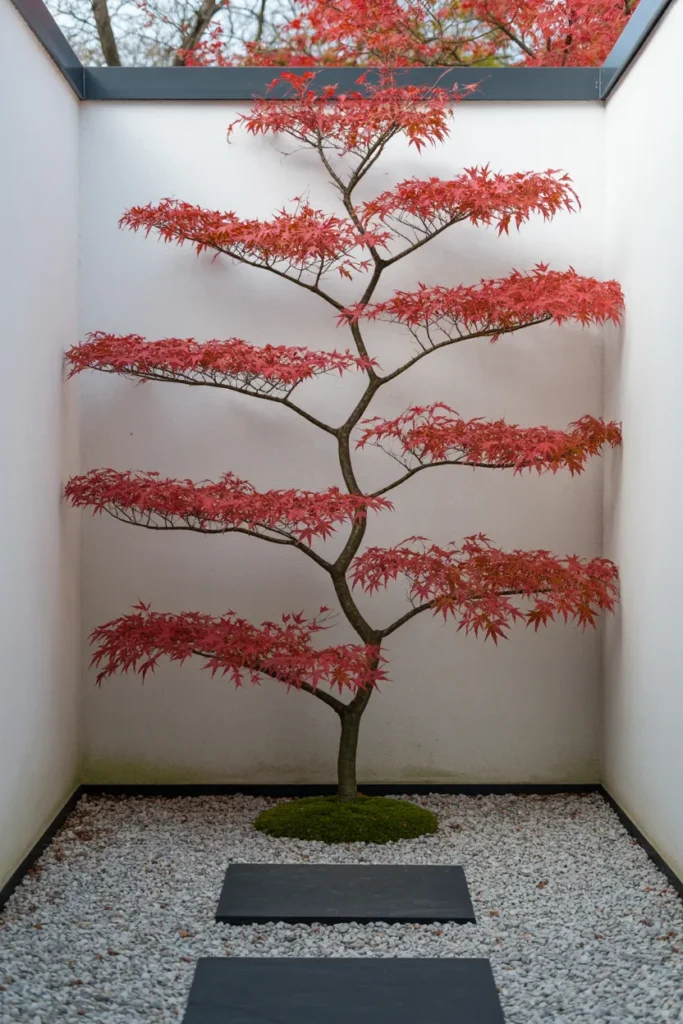
Japanese maple, pyracantha, or fig all espalier well. Train against a light-colored stucco or painted masonry wall for maximum contrast. Surround the base with a simple gravel frame and two flat stones to complete the zen composition.
This takes patience — espalier is a multi-year process. But the payoff is a feature that is genuinely unique to your space and impossible to replicate with any nursery purchase.
16. Night-Lit Zen Garden With Low LED Path Lights and Gravel Glow
A zen garden experienced at night is an entirely different environment — and low LED path lighting makes it accessible year-round. Soft, ground-level light across a gravel surface creates a glow that is calming in a way daytime light rarely achieves.
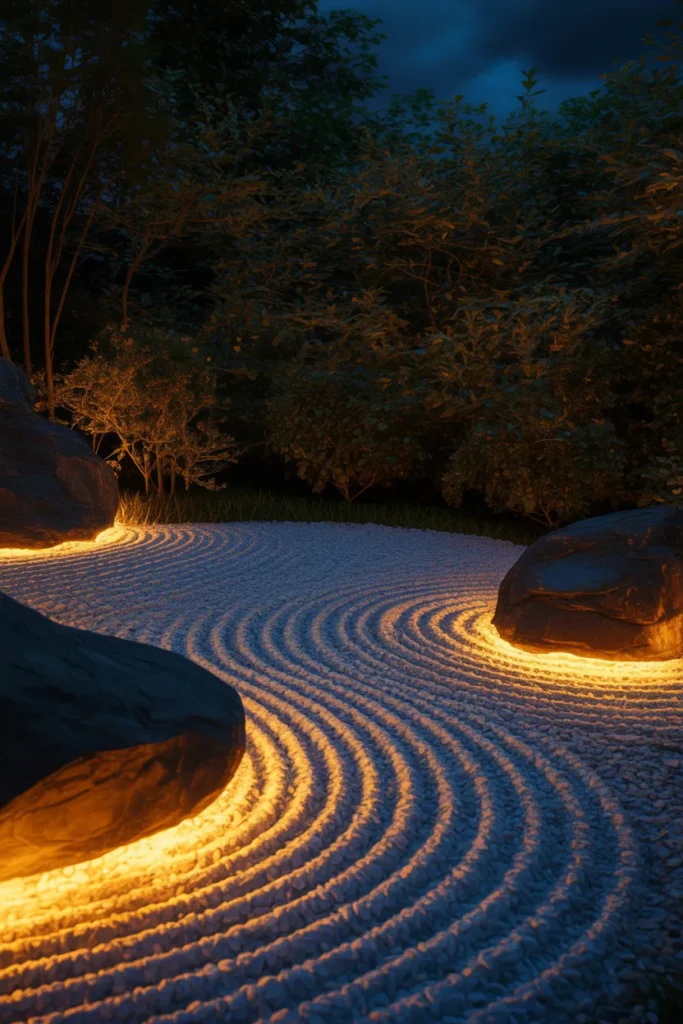
Use warm-temperature LEDs (2700K–3000K) positioned low and aimed across the gravel surface rather than up at plants or structures. This grazing light technique highlights gravel texture and stone form in a way overhead lighting never does.
Avoid solar path lights with blue-white LED output. Cool white light destroys the warmth and tranquility this garden type is designed to create. Hardwired warm LED is worth the investment.
Final Thoughts
These zen garden ideas 2026 cover a wide range of spaces, budgets, and styles — from a $30 tabletop tray to a fully enclosed courtyard transformation. The through-line is the same in every case: restraint, intention, and a clear focal point.
Save this post to your Pinterest boards so you can revisit it when you are ready to plan your space. Whether you are working with a narrow side yard, a shaded corner, or a rooftop balcony, one of these layouts will fit your situation. Explore more outdoor space planning ideas to keep building a home that genuinely supports calm living.