
If you are rethinking your outdoor breakfast patio 2026 setup, you are not alone. Most homeowners struggle with layouts that look good in photos but fail in daily use. This guide breaks down 13 practical patio ideas that solve real problems, from tight spaces to sun glare, so you can build a morning routine spot that works every single day.
1. The Corner L-Shape Patio That Doubles Your Usable Space
An L-shaped layout is one of the most underused configurations for a breakfast patio. It naturally defines two zones without needing dividers: one side for seating, one for a small serving or coffee station. This works especially well on square or corner lots where a straight layout would waste open space.
The key benefit is flow. When you sit at an L-shape, you are never blocking the entry or exit path. Morning routines move faster when you are not navigating around furniture to grab a refill.
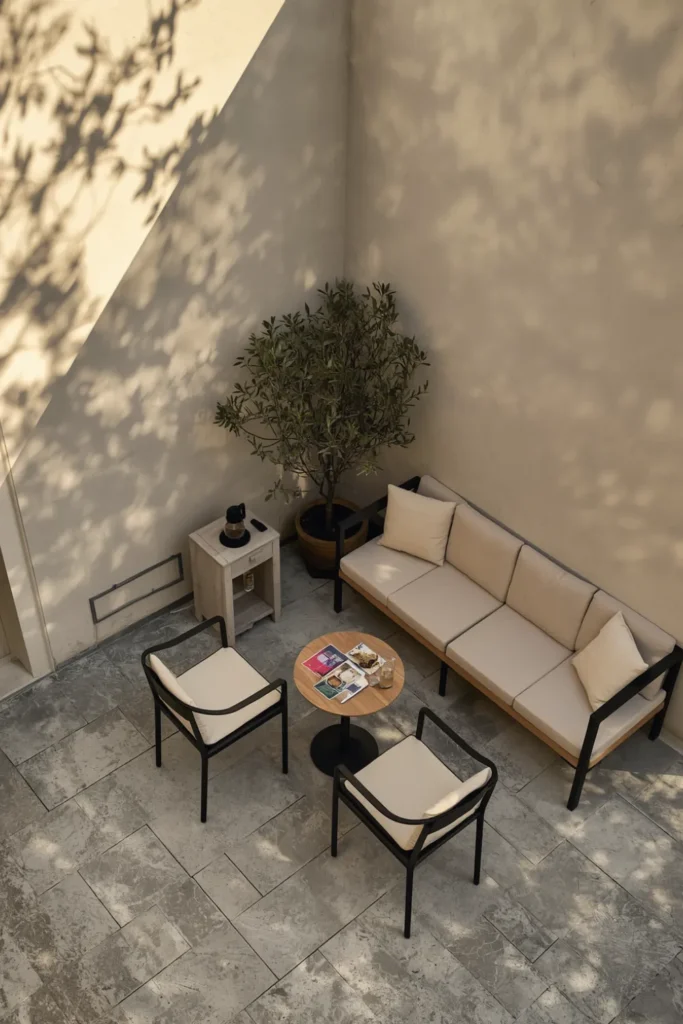

Where this layout fails is when homeowners buy furniture that is too large for the angle. Always measure the interior corner distance before purchasing. A bench along one wall with two chairs along the perpendicular side keeps the layout open and functional.
This setup works best for patios between 120 and 200 square feet. Smaller than that and the L becomes cramped. Larger and it starts to feel disconnected.
2. The Narrow Side Yard Galley Patio Built for Small Homes
Side yards are almost always ignored, but a galley-style breakfast patio turns that dead space into a genuinely functional morning spot. Think of it like a galley kitchen: two parallel elements facing each other within a long, narrow footprint.
One side holds a slim dining bench or wall-mounted fold-down table. The opposite side keeps a narrow plant ledge or railing. The middle stays completely clear for movement. This setup works for side yards as narrow as five feet.
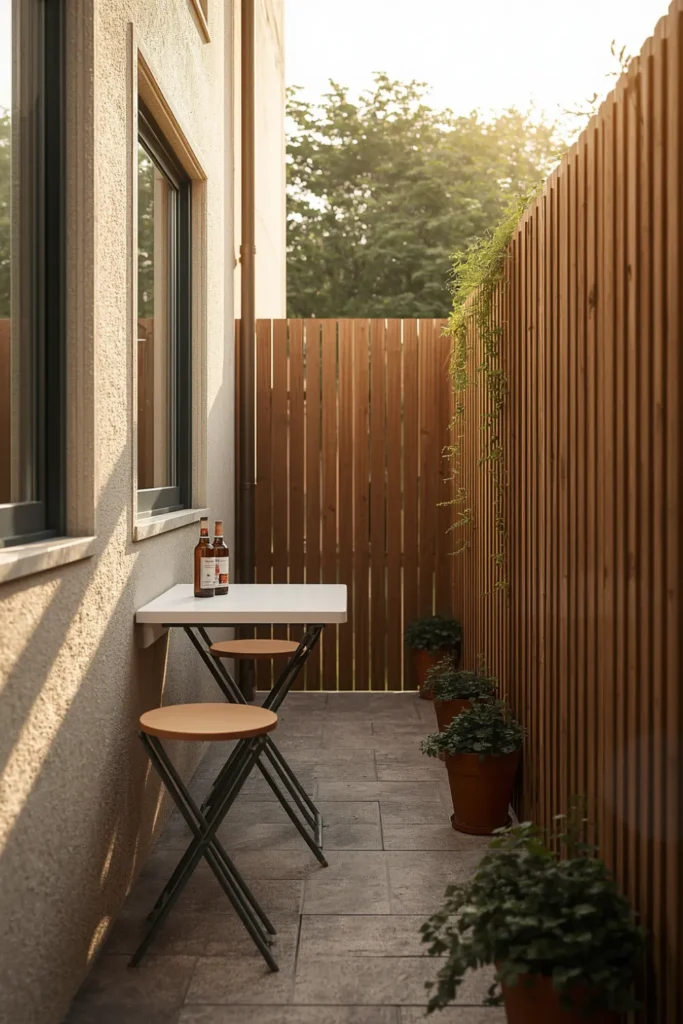
The most common mistake here is adding too many pieces. One table, two seats, and one vertical element is the maximum. Anything beyond that turns a calm breakfast nook into a cluttered corridor.
For privacy, vertical slat fencing along one side blocks neighbor sightlines without reducing light. Cedar slats stained in a warm walnut tone work well against white or light stucco walls.
3. The Open-Plan Patio With a Defined Breakfast Zone
Open-plan outdoor spaces look great but often lack purpose. Adding a clearly defined breakfast zone within a larger patio solves this. You do not need walls or dividers. A change in material underfoot, such as a wooden deck platform within a concrete patio, is enough to signal a separate zone.
This layout works well for larger homes with wide rear patios. The breakfast area typically sits closest to the kitchen door for easy access. A small round table with two to four chairs keeps the zone intimate without feeling isolated from the rest of the space.
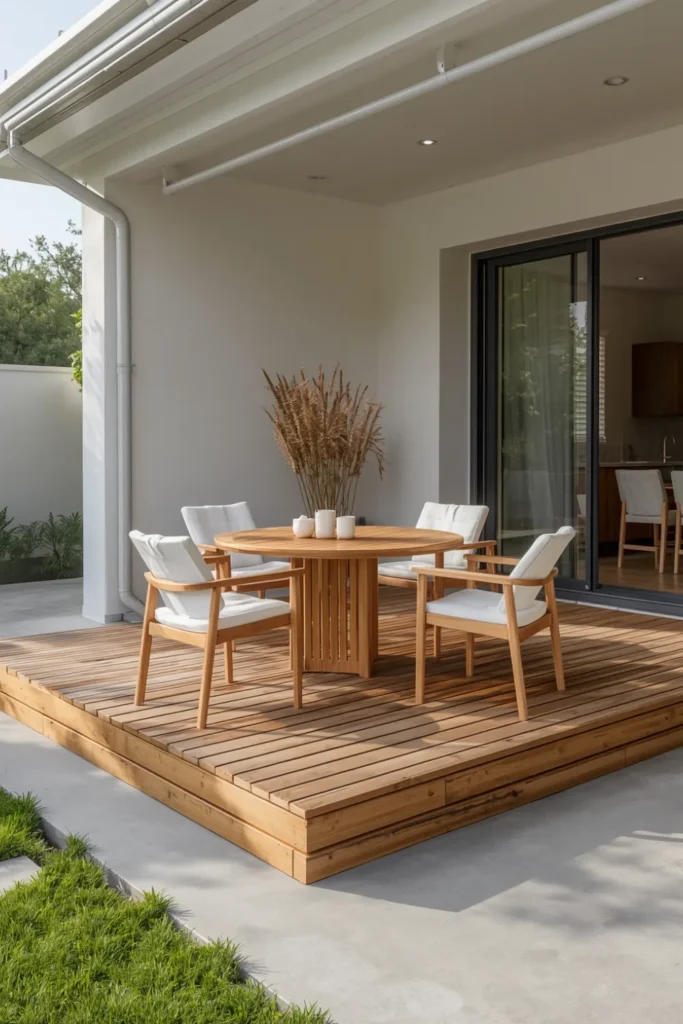
Avoid centering the breakfast area in the middle of the open patio. It ends up feeling stranded. Push it to one edge or corner where it can anchor against a wall, planter, or fence.
Natural shade matters here more than in enclosed spaces. Position the zone on the east-facing side of the patio so morning sun reaches it directly while the rest of the patio stays shaded.
4. The Pergola-Covered Breakfast Patio That Solves the Sun Problem
Direct morning sun is one of the top reasons people stop using their breakfast patio within a few weeks. A pergola solves this without blocking the open-air feel. A louvered pergola goes further by giving you control over exactly how much light comes through at any given time.
Fixed pergolas work best when paired with climbing plants like jasmine or wisteria, which provide natural seasonal shade and add scent. For year-round control, motorized louvers are worth the investment, especially in southern US states where summer sun is intense by 8 AM.
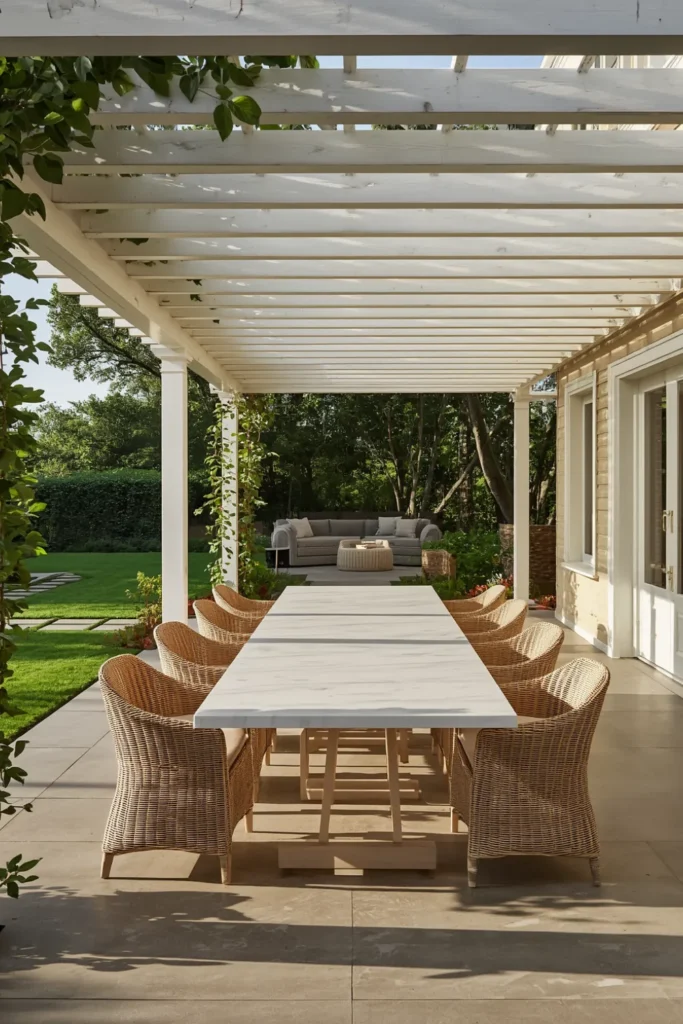
The structure itself becomes the visual anchor of the patio. Keep the furniture underneath simple: a rectangular table in a neutral finish, chairs with thin frames, and no overhead clutter. The pergola does the decorative work.
One mistake to avoid: placing the pergola too close to the house overhang. You end up with a tunnel effect that blocks light entirely. Leave at least three feet of open sky between the house edge and the pergola start.
5. The Compact Bistro Patio Designed for Apartments and Small Decks
Not every outdoor breakfast patio needs square footage. A bistro layout, one small round table and two chairs, is a legitimate design choice that works extremely well on apartment balconies, small decks, and urban townhome patios under 60 square feet.
The success of this layout depends entirely on proportion. The table should be no larger than 24 to 28 inches in diameter. Chairs with open bases, like wire bistro chairs or slim metal cafe chairs, keep the visual weight low so the space does not feel crowded.
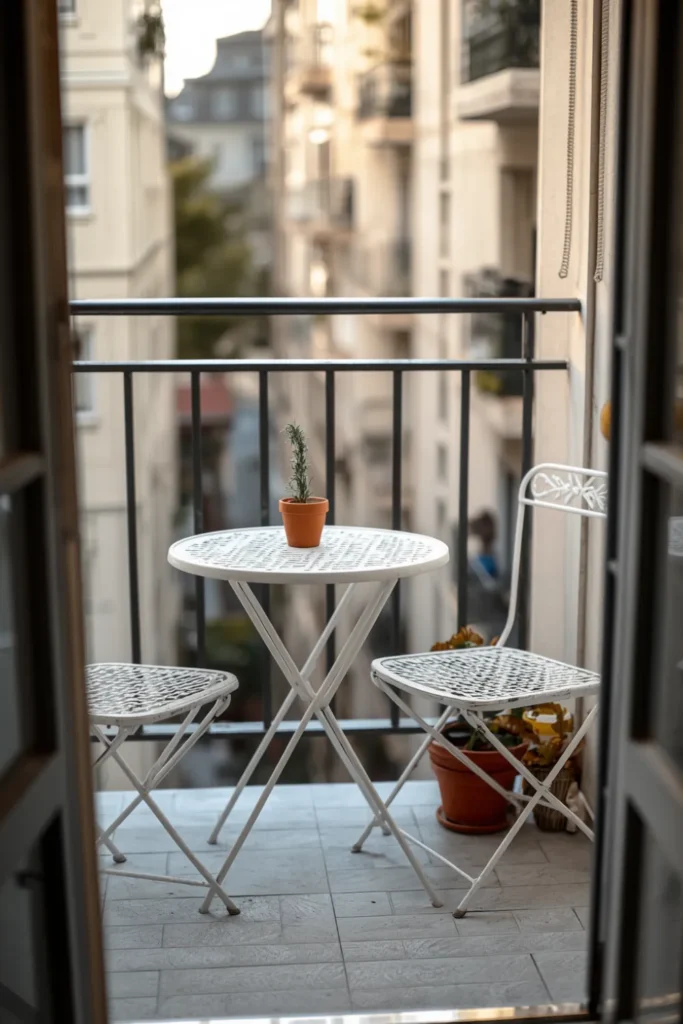
Material choices matter more in small spaces. A white or light stone tabletop reflects morning light and makes the patio feel brighter and larger. A dark table in a small dark corner reads as a furniture store display, not a functional space.
Add one vertical element to give the space height: a small wall-mounted planter, a slim trellis, or a potted tall plant in the corner. Vertical interest makes small patios feel intentional, not afterthought.
6. The U-Shape Layout That Turns a Breakfast Patio Into a Gathering Spot
A U-shaped patio layout is often associated with larger outdoor kitchens, but it works exceptionally well for a breakfast-focused setup when scaled correctly. Two low benches on the sides and a table in the center create a sense of enclosure that feels relaxed and social without being formal.
This layout is best for families or households that eat breakfast together regularly. The U creates natural face-to-face seating, which a straight or corner layout does not. Everyone at the table can see everyone else, and conversation flows more easily.
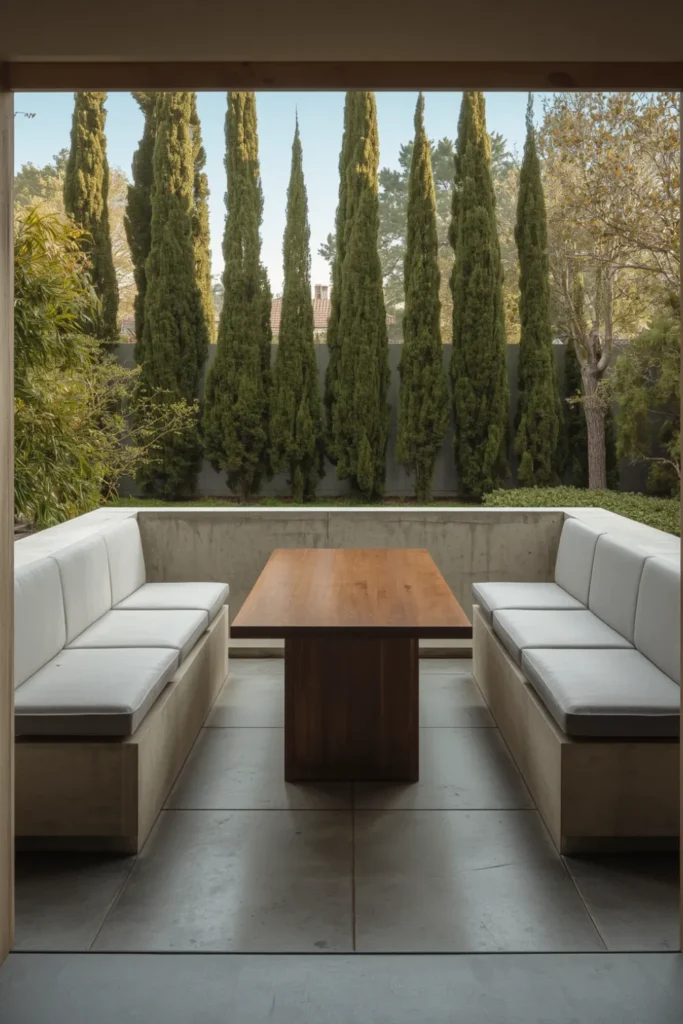
The most important rule for this layout: keep the open end of the U oriented toward the best view or the most light. Closing off the U entirely turns it into a box, which feels claustrophobic in an outdoor setting.
Built-in benches along two sides save significant floor space compared to individual chairs. Add thin outdoor cushions in a solid neutral fabric and keep the table surface clean and uncluttered for a calm morning-ready look.
7. The Raised Deck Breakfast Patio With a View-First Layout
A raised deck patio changes the way you interact with your outdoor space. Sitting even two feet above grade level shifts your sightline, gives a sense of privacy, and makes a standard suburban backyard feel like something more considered. For a breakfast patio specifically, elevation means better airflow and a clearer view of the garden while you eat.
The layout should prioritize the view over the house. Chairs face outward, not toward the wall. The table sits parallel to the deck railing so no seat has its back to the garden. This sounds simple but most people orient furniture toward the house out of habit.
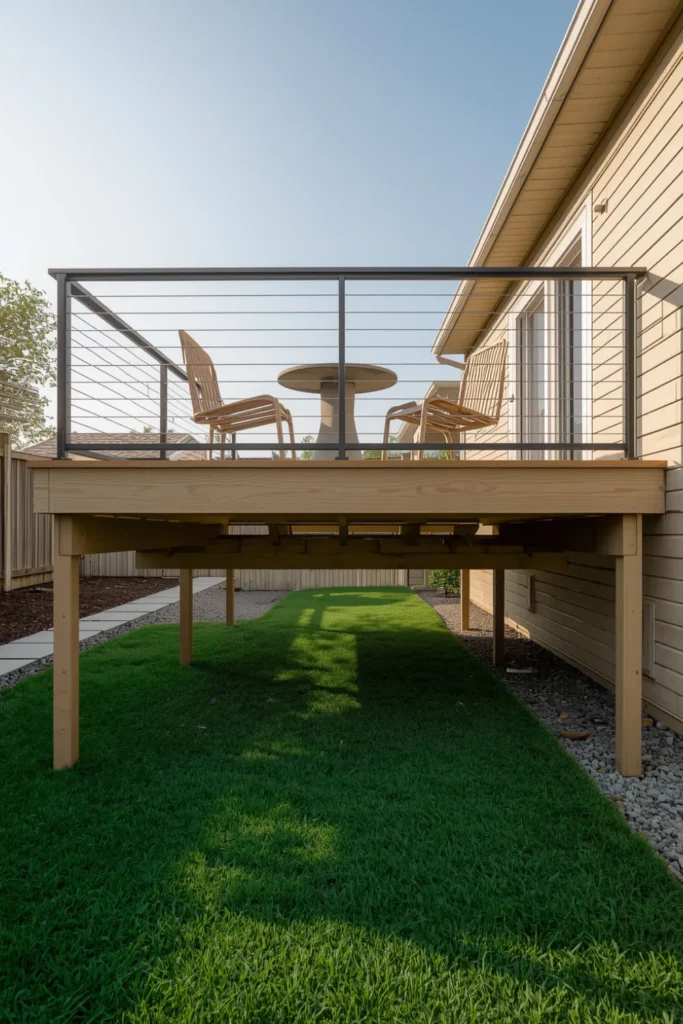
Cable railing or horizontal steel bar railing keeps sightlines completely open. Avoid decorative railing styles with dense spindles, they act like a fence and defeat the purpose of elevation.
Material choice for raised decks matters for maintenance: composite decking in a warm grey or sand tone holds up better than wood in humid climates and requires almost no upkeep, which matters when the space is used daily.
8. The Shaded Courtyard Patio With a Mediterranean Morning Feel
A courtyard layout fully enclosed on three or four sides creates a microclimate that is noticeably cooler and quieter than an open patio. In hot southern US states, this is a genuine functional advantage for outdoor breakfasts from May through September. The walls block wind, reduce direct overhead sun, and bounce ambient light evenly across the space.
The layout works best with a central table and four chairs, keeping the perimeter clear for potted plants and narrow walking paths. A small wall fountain or water feature on one wall adds ambient sound that masks street noise without taking up floor space.
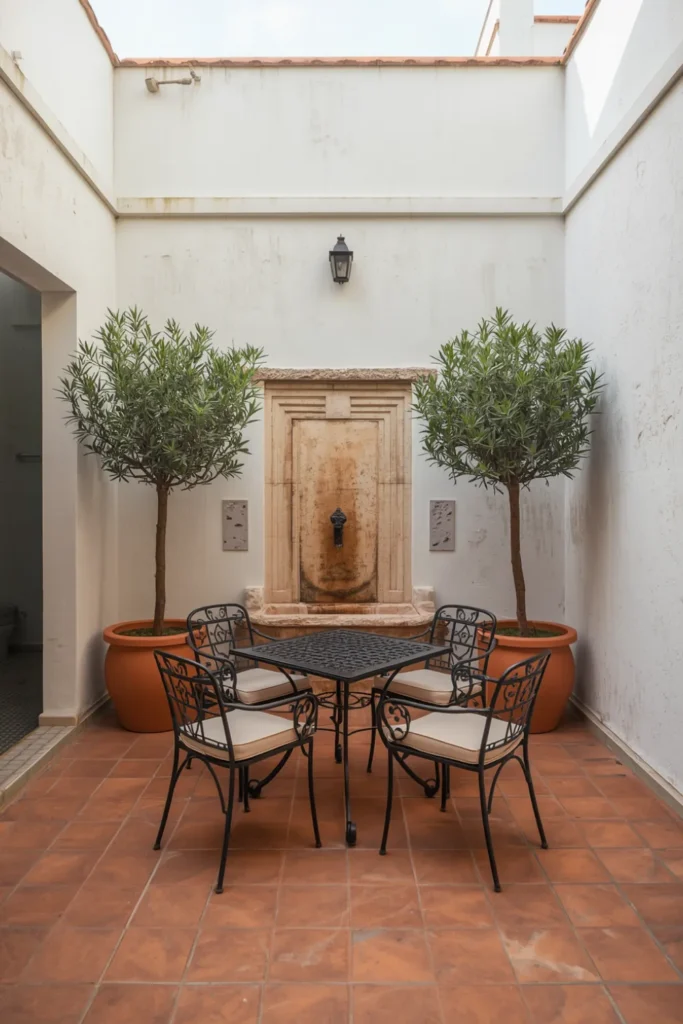
Materials drive the feel here. Terracotta or Saltillo tile flooring, whitewashed stucco walls, and simple wrought iron furniture create the calm courtyard aesthetic without any forced styling. Keep overhead elements minimal since the walls already provide the enclosure.
The common mistake in courtyard layouts is over-planting the perimeter. One or two substantial potted olive trees or citrus plants are enough. Filling every corner with plants makes the space feel like a garden center, not a breakfast spot.
9. The Modern Minimalist Patio With a Monochrome Material Palette
Minimalist outdoor breakfast patios are having a strong design moment in 2026, and the reasoning is practical as much as aesthetic. Fewer materials mean easier cleaning, longer visual relevance, and lower maintenance over time. A monochrome palette, varying shades of one neutral color across all surfaces, reads as intentional and calm rather than bare.
A concrete or large-format porcelain tile floor in light greige, paired with a concrete table and light stone-colored chairs, keeps the palette cohesive. One texture break, a woven rattan seat, a linen cushion, or a wooden cutting board on the table, is enough to prevent the space from feeling sterile.
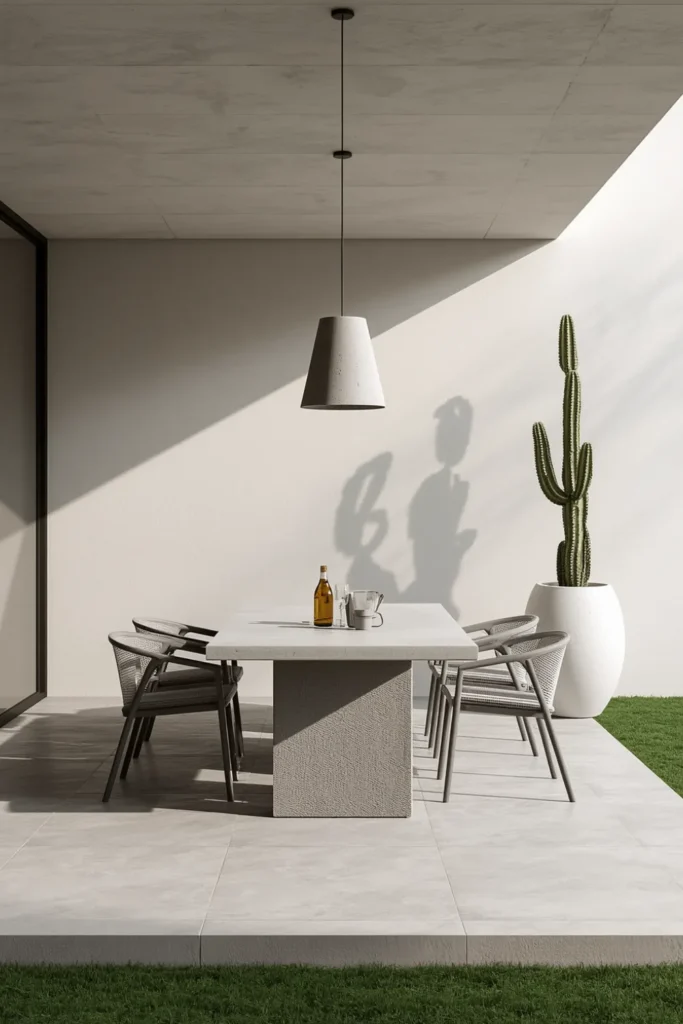
Lighting placement is what separates a well-designed minimalist patio from one that just looks unfinished. A single pendant light centered over the table, or two recessed lights at the edge of the overhead structure, gives the space definition after sunrise.
Greenery is the one non-negotiable accent. One architectural plant, a cactus column, a snake plant in an oversized pot, or a clipped boxwood sphere, anchors the space without breaking the minimal scheme.
10. The Poolside Breakfast Patio Layout That Works Without Getting Wet
Poolside patios are often treated as lounging space only, but a dedicated breakfast zone next to a pool is one of the most enjoyable outdoor setups possible, particularly in warmer US climates. The key is separating the breakfast table from the pool edge by at least six to eight feet. This prevents splash interference and creates a clear functional boundary.
The furniture needs to be outdoor-rated for wet environments without looking like pool furniture. Powder-coated aluminum frames with quick-dry fabric cushions strike the right balance. Avoid teak in this location because constant splash exposure accelerates weathering even with sealed finishes.
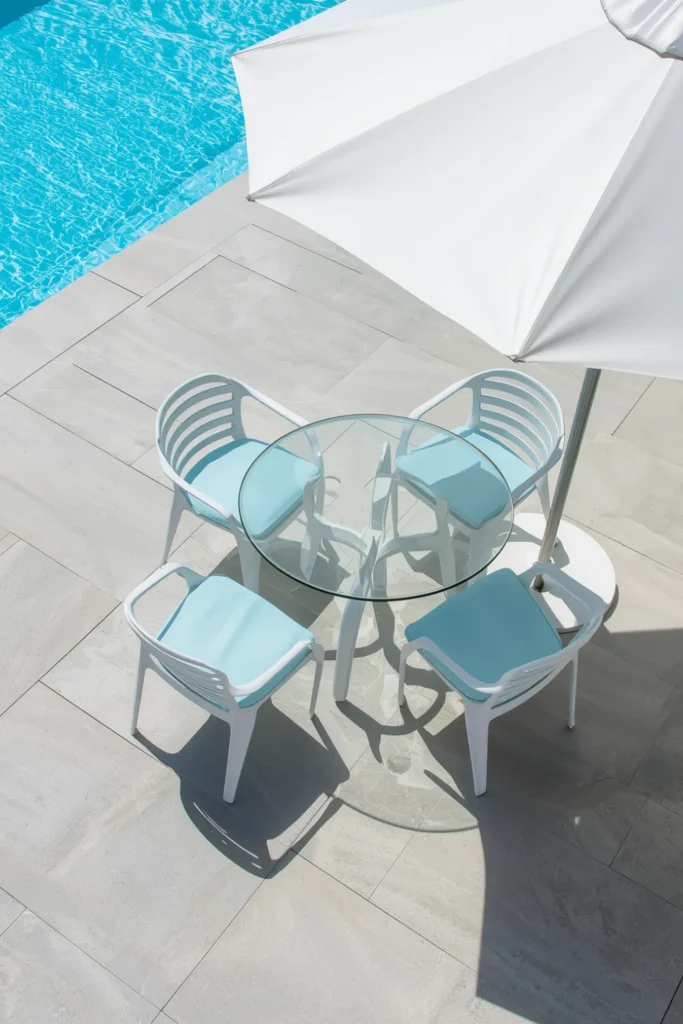
Shade is essential poolside. A large cantilever umbrella positioned on the non-pool side of the table keeps sun off the table while leaving the pool view clear. Avoid a pergola directly poolside as it can block the open feel that makes the location special.
Keep the table surface easy to wipe down. Porcelain, glass, or sealed concrete tops handle sunscreen, citrus juice, and morning condensation without staining.
11. The Garden-Integrated Patio That Feels Like It Grew There
A garden-integrated outdoor breakfast patio does not sit next to the garden, it sits within it. Raised planting beds form the border of the seating area. Stepping stones lead from the house to the table. The patio surface is gravel, decomposed granite, or small pavers with ground cover growing between the joints.
This layout suits homeowners who want the breakfast experience to feel immersive rather than constructed. It works best in mild US climates where morning dew and plant proximity are pleasant rather than a nuisance.
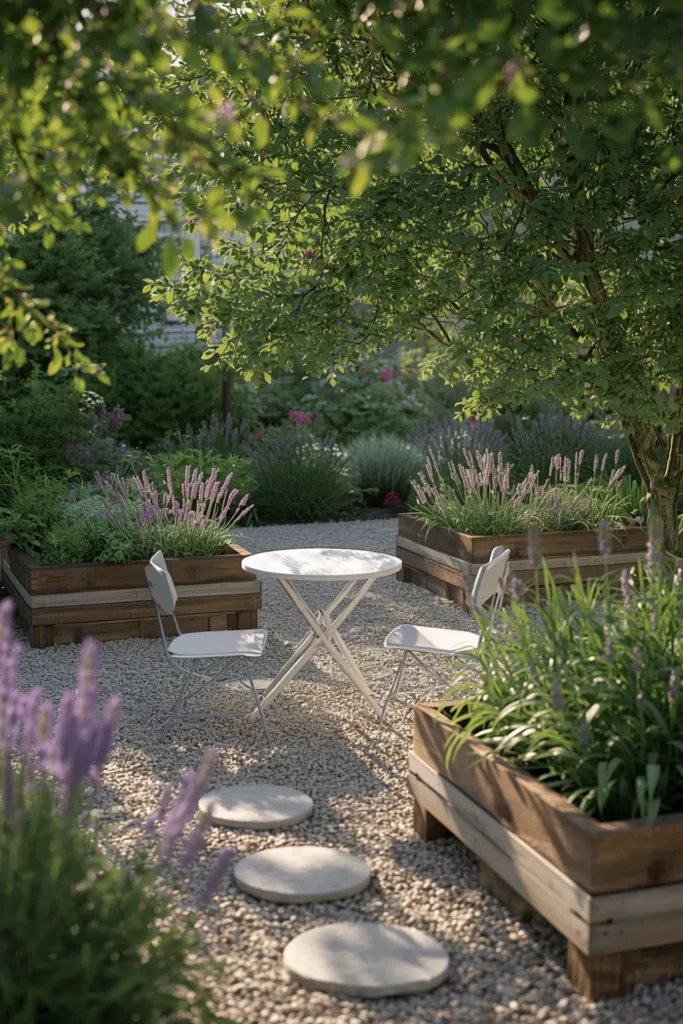
The furniture choice matters. Heavy furniture sinks into gravel and becomes difficult to move. Lightweight aluminum or powder-coated steel chairs with rubber-tipped legs handle loose surfaces without damage. A round or oval table works better than rectangular here because it integrates into organic garden shapes more naturally.
Avoid overhead structures in this layout. A garden-integrated patio loses its character under a pergola or awning. Rely on natural tree canopy or tall ornamental grasses for partial shade. The imperfection of organic shade is part of what makes this layout feel right.
12. The Rooftop Breakfast Patio Layout for Urban Homes and Townhouses
Rooftop patios are the most underutilized space in urban American homes. A well-planned outdoor breakfast patio 2026 on a rooftop gives you unobstructed morning light, cityscape or skyline views, and genuine separation from indoor life. The layout challenge is wind and weight restriction.
Keep furniture low-profile and heavy enough to resist wind. A squat concrete table base with a secured top, or a heavy teak table, handles rooftop gusts better than lightweight aluminum. Chairs with wide bases and some weight to them stay in place without being anchored.
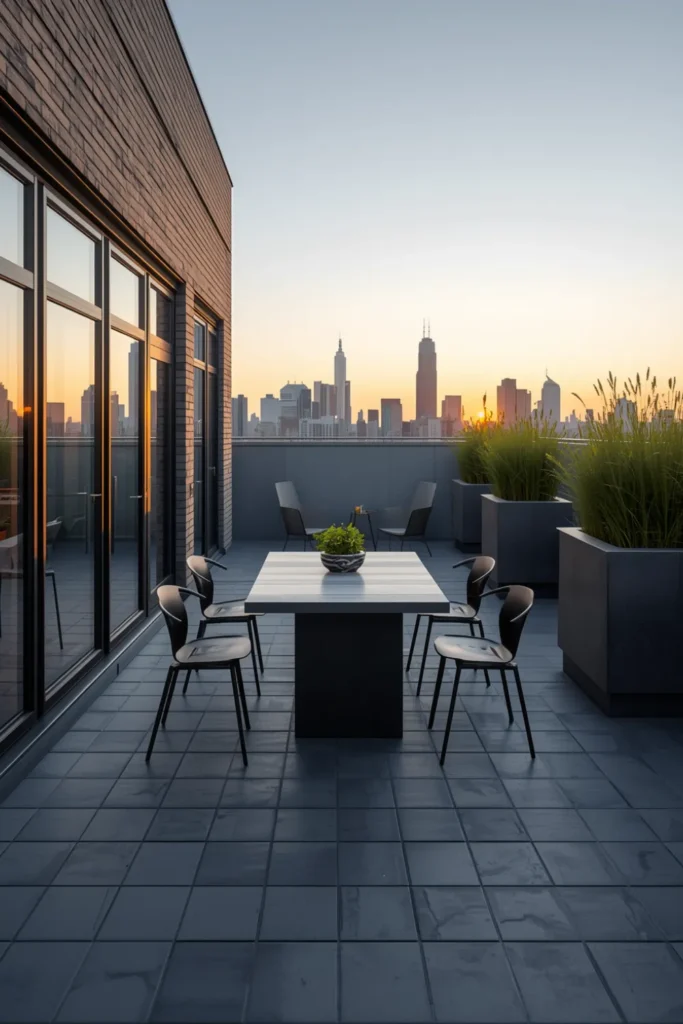
Windbreaks matter. Tempered glass panels on the windward side block gusts without closing off the view. Frosted lower panels add privacy from adjacent buildings while keeping the upper view clear.
The layout should be simple: one table, four chairs, and one or two large planters as anchors. Rooftop spaces tend to feel bigger than they are when looking out, so resist the urge to overfill. Empty deck space on a rooftop reads as intentional design, not neglect.
13. The Covered Screened Patio That Works Through All Four Seasons
A screened outdoor breakfast patio solves the single biggest complaint about outdoor morning dining in the USA: insects. A properly screened enclosure with a solid or translucent roof panel lets you enjoy fresh air and natural light without the frustration of flies, mosquitoes, or wasps interrupting breakfast.
The layout inside a screened patio can be more generous than an open one because weather is no longer a variable. A full dining table with four to six chairs fits comfortably. A small sideboard or outdoor console for coffee equipment and storage adds genuine function.
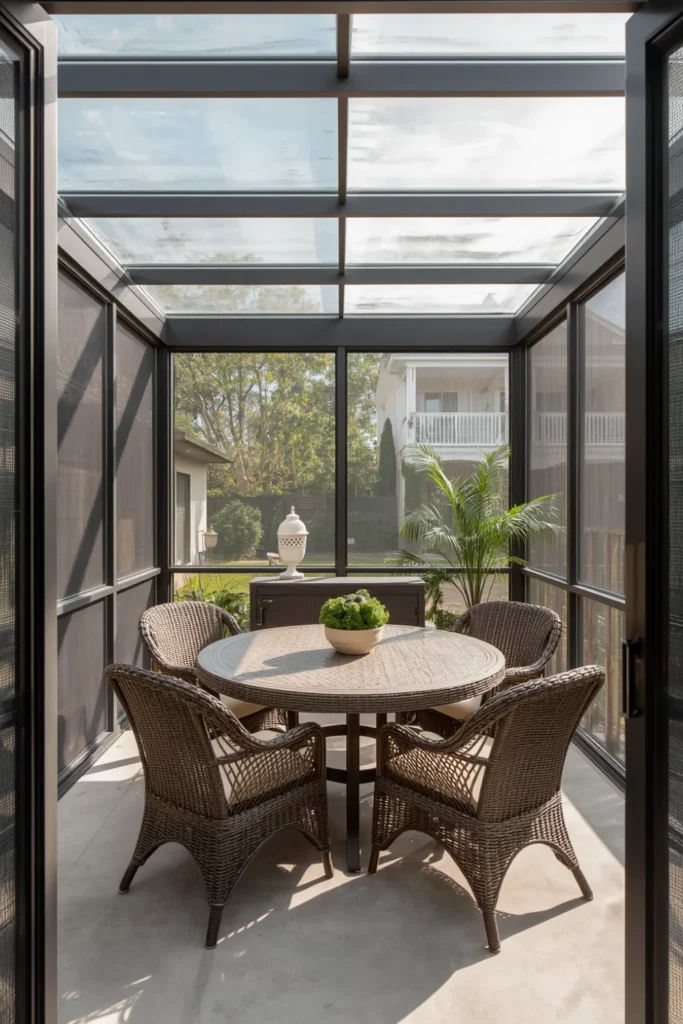
Screen material matters for light quality. Fiberglass mesh in a charcoal tone reduces glare while keeping sightlines clear. Avoid aluminum screen, it oxidizes and degrades the view over time. For the roof panel, a polycarbonate translucent sheet keeps the space bright without direct sun exposure.
This layout is especially practical in the Southeast and Midwest, where humidity and insects make open patios uncomfortable for three to five months of the year. A screened breakfast patio extends the usable outdoor season significantly and adds measurable value to the home.
Final Thoughts
These 13 outdoor breakfast patio layouts cover the full range of real-world conditions: small spaces, hot climates, urban rooftops, insect-prone regions, and open garden settings. Each one is built around a specific problem and a specific solution, not just a visual idea.
If one of these layouts matches your space, save this post now so you can reference it when you are ready to plan or build. The details here, furniture sizing, orientation rules, material choices, and common mistakes, are the kind of guidance that prevents costly do-overs.
Come back when you are ready to explore functional kitchen layout ideas 2026 or small outdoor space planning ideas for the rest of your home exterior.