
A dull or empty patio does not require a full renovation to become a space you actually use. This guide covers the best patio ideas on a budget 2026 — practical, material-specific solutions that work for small backyards, apartment balconies, concrete slabs, and everything in between — so you can make real decisions without overspending.
1. The Gravel Ground Cover That Instantly Upgrades a Bare Concrete or Dirt Patio
Loose gravel is one of the most cost-effective ground treatments available for outdoor spaces. A 2-to-3-inch layer of pea gravel or decomposed granite over a weed barrier transforms a bare dirt or cracked concrete surface into a clean, finished-looking patio base in a single afternoon.
The reason gravel works so well on a budget is drainage. Unlike concrete or pavers, gravel does not pool water, which extends the usable life of any outdoor furniture placed on it. It also requires no professional installation — a level surface, landscape fabric, and edging stakes are all you need.
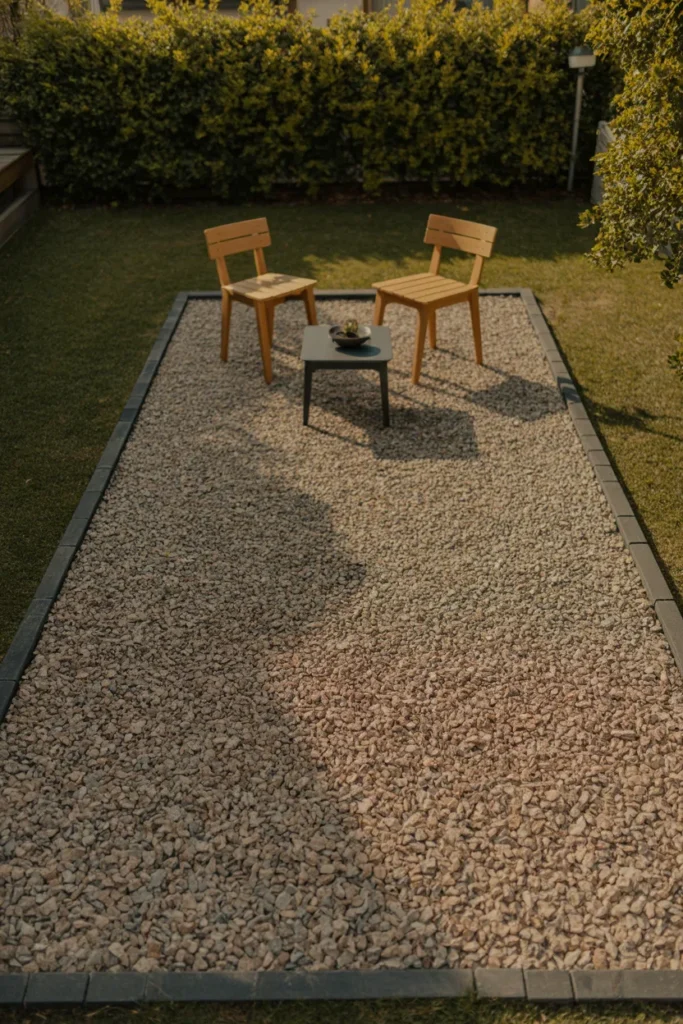

This approach works best on ground-level patios with defined borders. Use metal or stone edging to contain the gravel cleanly; without it, the material migrates into lawn areas and loses its finished appearance within one season.
Avoid fine sand-based gravel on sloped yards — it shifts too easily underfoot. Aim for 3/8-inch crushed stone or pea gravel for stability and comfort.
2. The String Light Canopy That Creates an Outdoor Room Feel Without Structures
Overhead string lights change the perceived boundary of an outdoor space. When lights are strung from one anchor point to another across a patio — house wall to fence post, two wooden poles, or pergola beams — they create a visual ceiling that makes an open yard feel like a defined room.
The transformation happens at dusk. A patio that looks ordinary in daylight becomes a separate destination in the evening, which is when most households actually use outdoor space. This is why string light placement is one of the highest-return budget improvements available for any outdoor area.
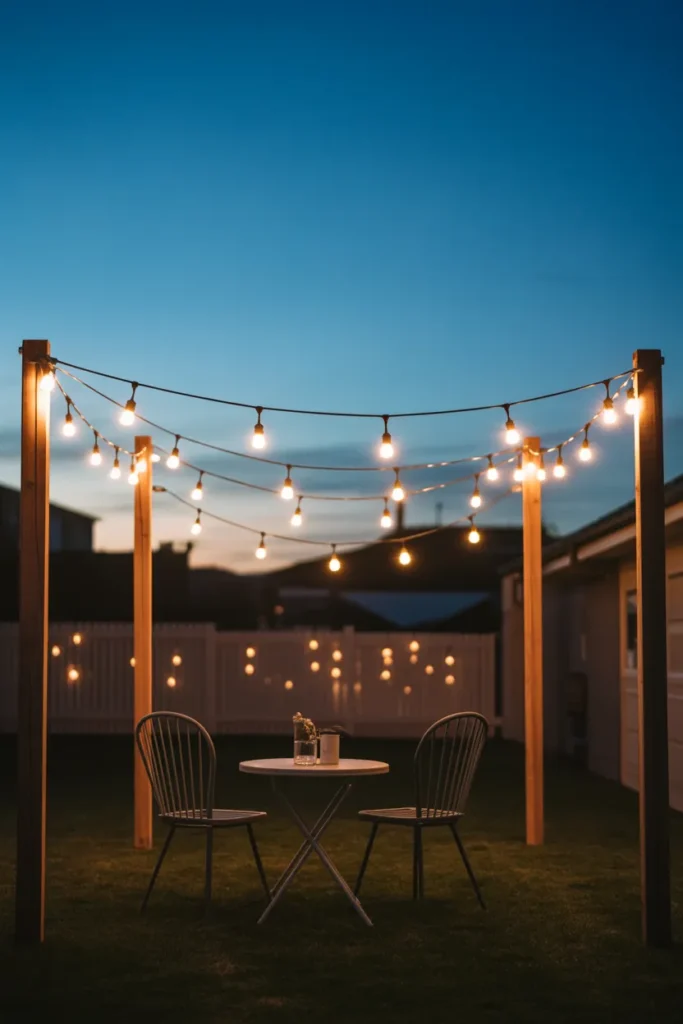
Use weatherproof Edison-style or globe string lights rated for outdoor use. The most common mistake is hanging lights too high — above 10 feet — which reduces the enclosure effect and spreads light too thinly. Keep the canopy between 8 and 10 feet for maximum ambiance and practical illumination.
Anchor to pressure-treated wooden posts if your yard has no existing fence or pergola. Two 4×4 posts set in concrete cost far less than any permanent structure and give you complete control over canopy height and shape.
3. The Concrete Patio Makeover Using Outdoor Rugs and Layered Seating
A plain concrete slab does not need to be replaced — it needs to be layered. An outdoor rug anchors the seating area, defines the zone visually, and introduces color and texture that raw concrete simply cannot provide. Combined with a simple seating arrangement, the rug turns a slab into a purposeful outdoor living room.
Choose a flat-weave or polypropylene rug rated for outdoor use. These dry quickly after rain, resist mold, and hold color through multiple seasons. Size matters more than most people realize — the rug should be large enough that all furniture legs sit on it, not partially off the edge, which makes the arrangement look incomplete.
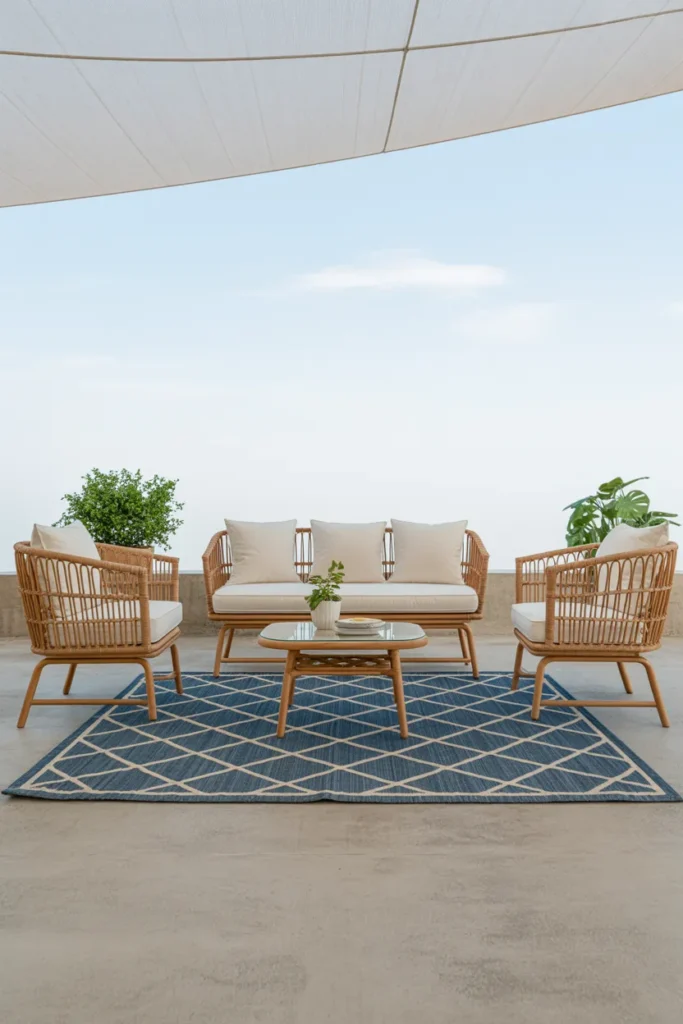
Layer the seating by mixing materials: a loveseat or outdoor sofa as the anchor, two chairs across from it, and a low coffee table centered on the rug. This arrangement mirrors indoor living room logic and makes the patio feel intentionally designed rather than assembled from whatever was available.
Avoid using indoor rugs outdoors. Even in covered patio areas, humidity and indirect moisture destroy natural fiber rugs within one season.
4. The Raised Garden Bed Border That Turns a Patio Edge Into a Living Wall
Adding raised garden beds along one or two edges of a patio creates a natural privacy screen, softens hard surfaces, and adds vertical interest — all without permanent construction. Wooden or galvanized steel raised beds filled with tall ornamental grasses, lavender, or climbing plants deliver the look of a landscaped garden at a fraction of the cost.
The functional benefit is separation. A raised bed along the back edge of a patio creates a visual boundary between your outdoor living space and the rest of the yard. It signals that the patio is a destination, not just a transition area.
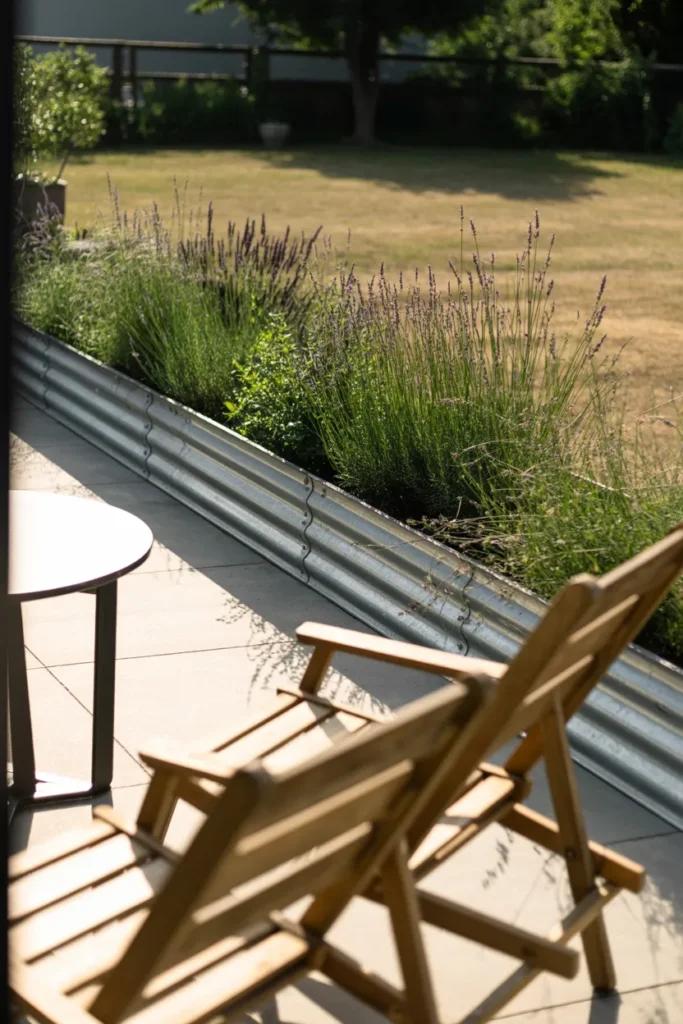
This works particularly well for small patio design on a budget where perimeter space is limited. A single 8-foot raised bed along one edge is enough to anchor the space. Use it along the side with the least privacy — facing a neighbor’s fence or a street view — for maximum return.
Do not fill beds with purely decorative plants if you are budget-conscious. Herbs, tomatoes, and edible plants add beauty and practical value simultaneously.
5. The Pallet Wood Furniture Setup That Delivers Rustic Style at Minimal Cost
Reclaimed or new wooden pallets, properly sanded and sealed, produce functional patio furniture — sofas, coffee tables, and daybeds — at a cost significantly lower than purchased outdoor furniture. The material is widely available, structurally sound for low-profile seating, and easy to work with using basic tools.
The critical step most people skip is sealing. Raw pallet wood absorbs moisture and splinters within one outdoor season if left untreated. Sand all surfaces to 120 grit minimum, then apply two coats of exterior wood sealant or outdoor paint. This alone doubles the lifespan of any pallet piece.
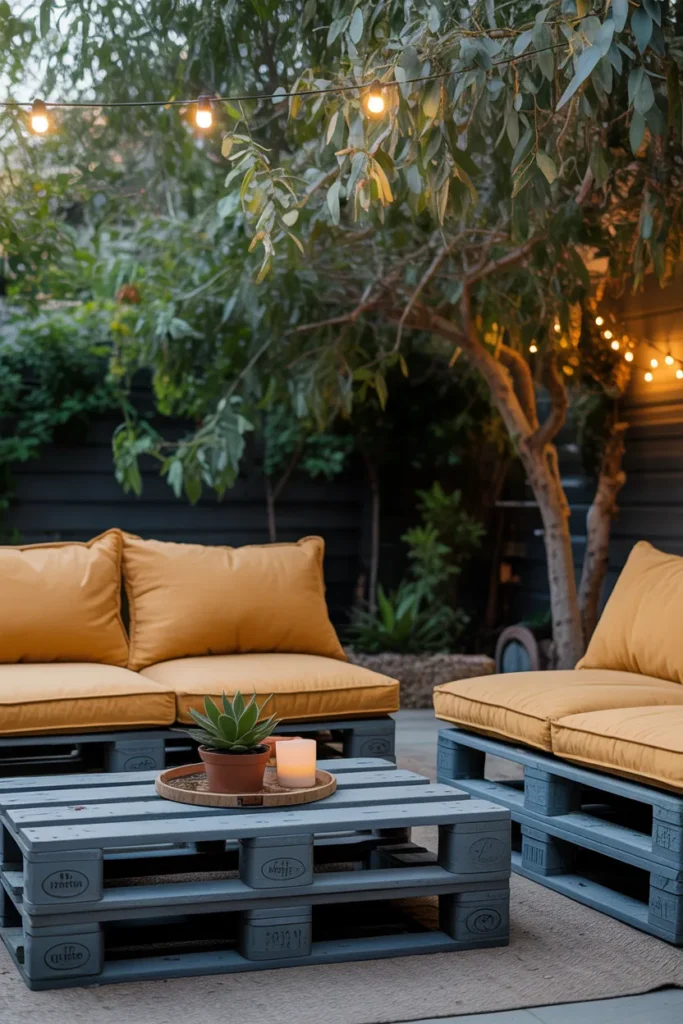
Stack two pallets for the sofa base — one flat for the seat, one upright for the back — and add outdoor foam cushions cut to size. This creates a low-profile sectional that works perfectly for budget outdoor patio seating on both concrete and gravel surfaces.
Avoid pallets marked with MB (methyl bromide treatment) — these are chemically treated and unsafe for home use. Look for pallets marked HT (heat treated) only.
6. The Shade Sail Installation That Solves Sun Exposure Without a Permanent Roof
A shade sail — a tensioned triangular or rectangular canopy fabric mounted between anchor points — is one of the most practical and affordable solutions for patios with full sun exposure. A single sail covers 10 to 16 square feet of patio area, reduces surface temperature by up to 20 degrees, and installs in under two hours.
The geometry of a properly tensioned shade sail is what makes it effective. The fabric must be pulled taut between three or four anchor points at slightly different heights to shed rainwater and resist wind loading. A flat, slack shade sail collects water, sags, and fails within one season.
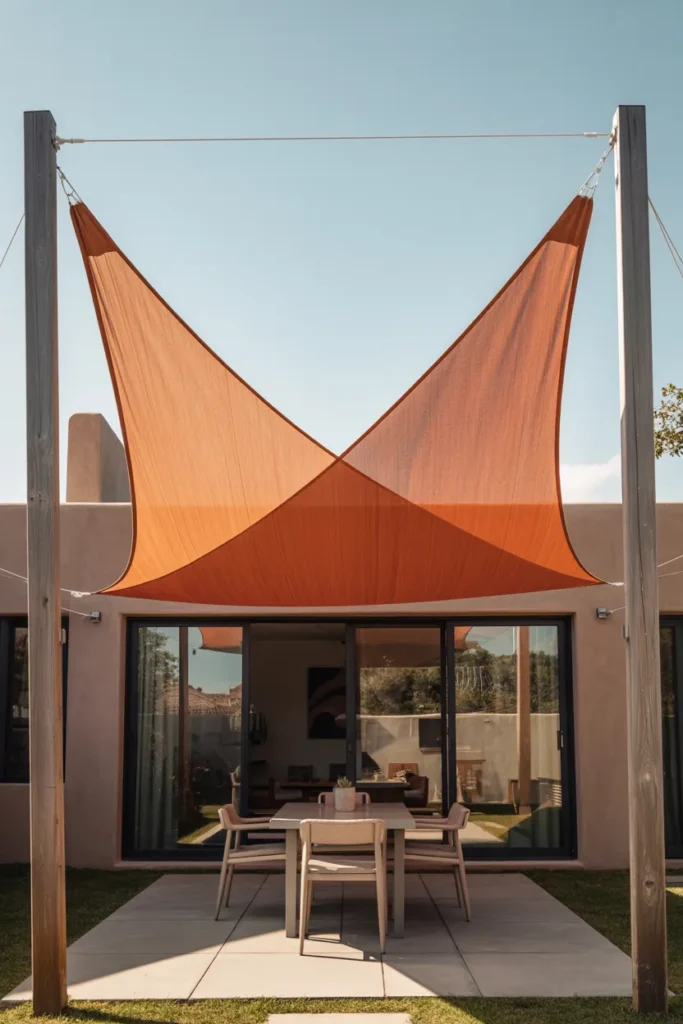
This is especially relevant for affordable patio shade ideas on south-facing and west-facing patios that receive intense afternoon sun. A west-facing patio without shade is often completely unusable between 2 PM and sunset — a shade sail solves this without any construction.
Mount anchors into masonry or into 4×4 posts set in concrete. Do not mount to wood fence panels — they are not engineered for the lateral tension a shade sail exerts.
7. The Container Garden Arrangement That Adds Density Without Digging
A curated collection of potted plants at varying heights creates the density and visual richness of a planted garden without any digging, irrigation systems, or landscaping costs. The key is grouping — not scattering pots randomly — to create clusters that read as a single layered composition.
Group containers in odd numbers: three, five, or seven pots of different heights and diameters. Place the tallest in the back or center, medium-height in the middle tier, and low ground-level plants at the front. This tiered approach works on any size patio, including balconies, and delivers the same visual logic as a professional planting design.
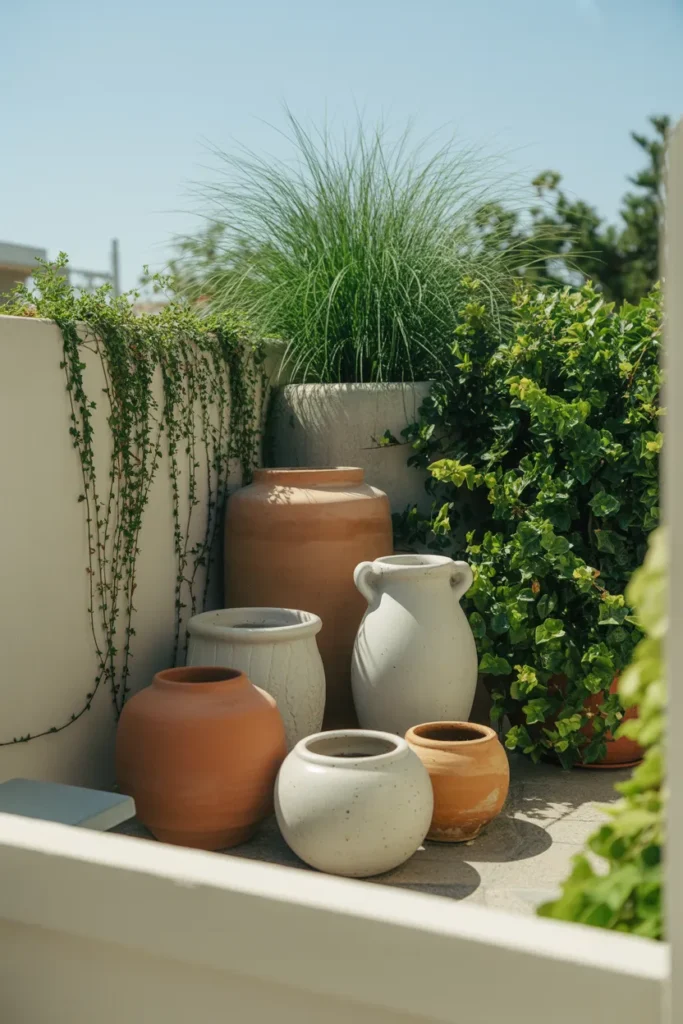
For budget-friendly patio landscaping, focus on plants that perform across multiple seasons: ornamental grasses for texture, trailing sweet potato vine for volume, and a statement succulent or agave for structure. Avoid buying one large pot of a single plant — the layered grouping always outperforms a single specimen.
Terracotta pots are affordable and breathable — ideal for most plants — but crack in freeze-thaw cycles in northern climates. In USDA zones 5 and below, use resin or fiberglass pots that survive winter outdoors.
8. The Folding Bistro Table Setup for Small Patios That Need to Function and Disappear
A folding bistro table and two folding chairs are the most space-efficient outdoor seating solution available for small patios, balconies, and side yards. When folded, the entire setup stores flat against a wall or inside a closet, reclaiming the space instantly.
The bistro format — a small round or square table at 24 to 28 inches in diameter — is calibrated for two people in a compact area. It works for morning coffee, outdoor meals, and reading without overwhelming the footprint of a patio under 60 square feet.
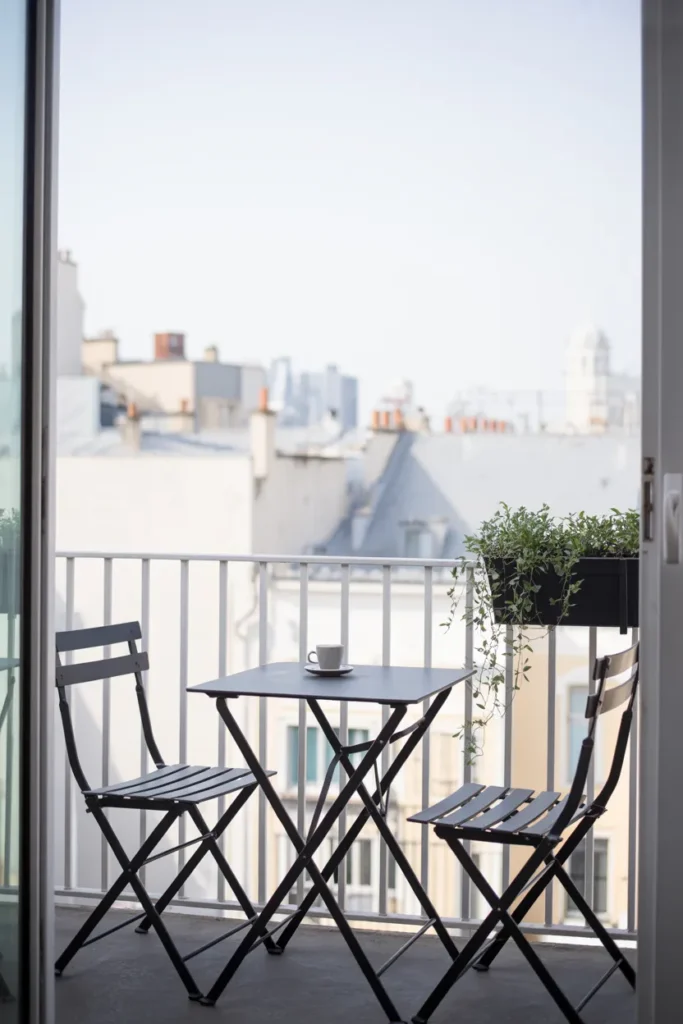
Choose powder-coated steel or aluminum frames for durability. Avoid wood folding furniture in humid climates — joints absorb moisture, swell, and become difficult to fold within one or two seasons. The powder-coat finish also means zero maintenance beyond wiping down.
Position the bistro set against a wall or railing rather than centered in the space. This leaves open circulation and makes a small patio feel larger, not more crowded.
9. The Outdoor Daybed Built from a Simple Platform Base and Weather-Resistant Cushions
An outdoor daybed creates a lounge destination that most patios lack entirely. Built from two or three untreated cedar planks on a simple raised platform — or assembled from stacked pallets with a wide, flat top — a daybed fitted with a thick outdoor cushion becomes the most-used piece of furniture on any patio.
The functional reason daybeds outperform chairs in outdoor relaxation settings is posture. A daybed allows a fully reclined position, which chairs cannot replicate. For patios used primarily for relaxing rather than dining, the daybed delivers significantly more utility per square foot than a table-and-chair set.
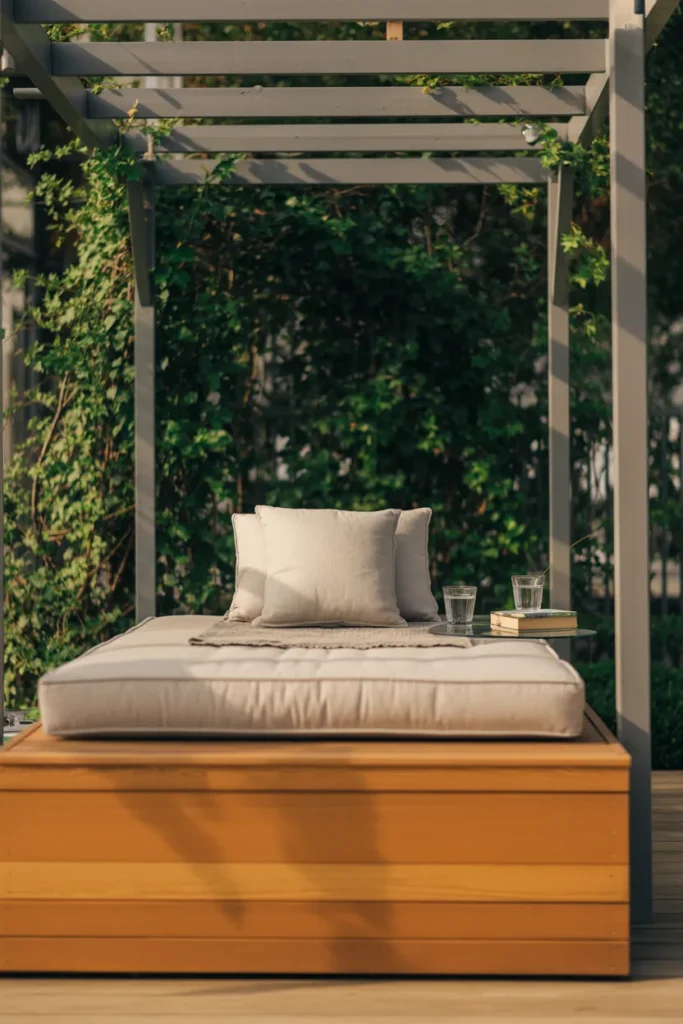
Use a minimum 4-inch outdoor foam cushion wrapped in solution-dyed acrylic fabric. This fabric type resists UV fading and dries within hours of rain — critical for a piece that stays outdoors permanently.
Position under a shade sail, pergola, or large tree. A daybed in direct sun is uncomfortable and deteriorates faster regardless of material quality.
10. The Vertical Privacy Screen Made from Lattice or Bamboo Panels
A freestanding vertical screen made from wood lattice, bamboo panels, or reed fencing creates instant privacy on an exposed patio without permits, concrete footings, or contractor involvement. Panels mount to basic fence posts set in weighted planter bases, making the entire structure portable and adjustable.
Privacy screens are most valuable on patios that face a neighbor’s direct sightline, a street, or a shared alley. Even a single 6-foot panel positioned strategically — between your seating area and the exposure — changes how the patio feels to use. Enclosure, even partial, increases how often people actually choose to sit outside.
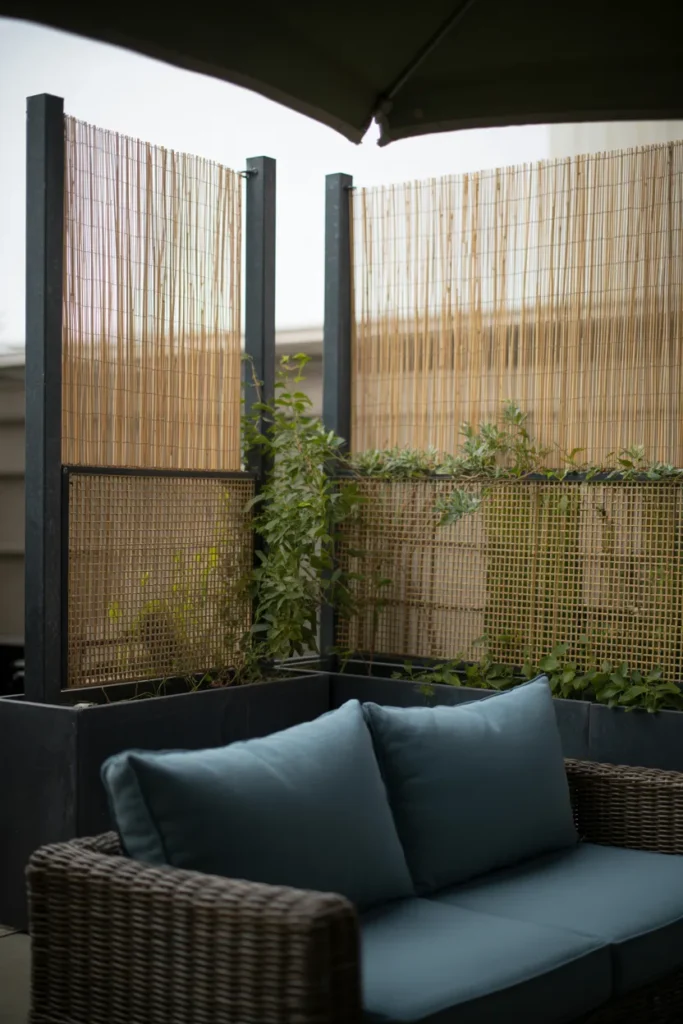
Reed fencing is the most affordable option and softens visually against a garden backdrop. Lattice allows climbing plants to grow through it over time, eventually becoming a living wall that provides both privacy and visual texture. Both options are significantly cheaper than solid board fencing.
Set panels in heavy planter boxes filled with gravel rather than soil if you want to move them seasonally. Soil-filled planters become extremely heavy and difficult to reposition without damaging the panel joints.
11. The DIY Concrete Stepping Stone Path That Defines Zones Within a Larger Patio
A path of stepping stones — either purchased or cast in DIY molds — creates visual structure on a large, undefined outdoor surface. The path defines direction, separates the seating zone from the planting zone, and introduces material contrast that makes the overall space feel designed.
Casting your own stepping stones requires only a bag of concrete mix, a mold (a plastic plant saucer or purpose-made stepping stone mold), and a smooth surface to cure on. A single bag of concrete mix produces four to six stones, enough to establish a clear path across a small yard.
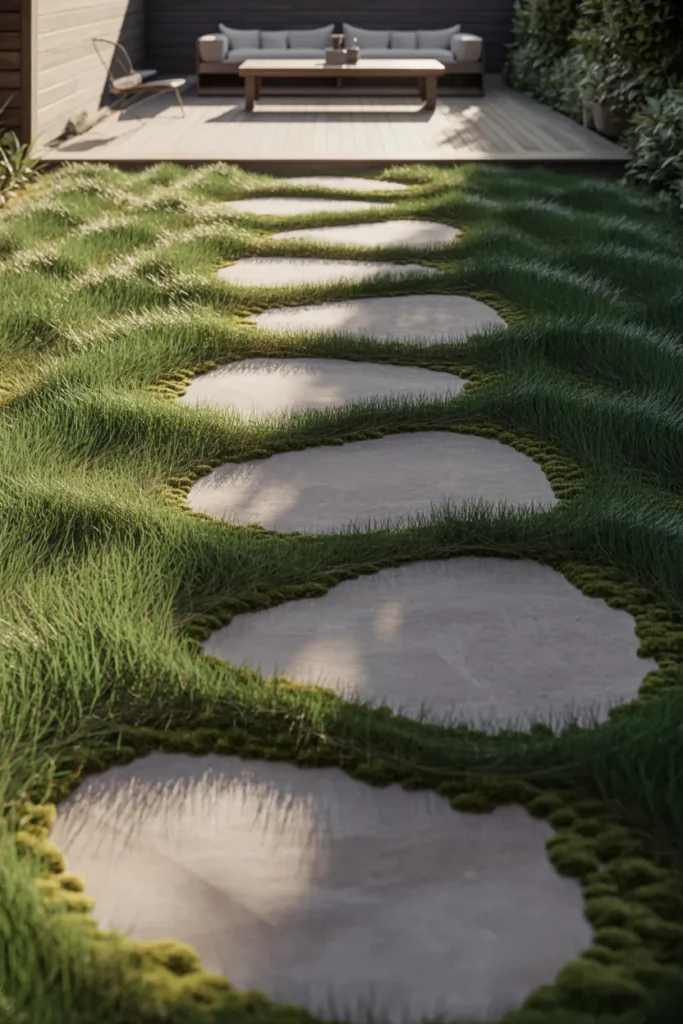
This approach is particularly effective for backyard patio ideas on a budget where the lawn transitions awkwardly into a concrete slab or gravel area. A stepping stone path bridges that transition and creates a clear entrance to the seating zone that reads as intentional landscaping.
Space stones 18 to 24 inches apart — measured center to center — to match a natural walking stride. Stones spaced too far apart force an awkward gait and feel unsafe for older visitors or children.
12. The Pergola-Style Overhead Frame Built from Four Posts and Horizontal Beams
A simple four-post pergola with horizontal beams overhead is the most versatile budget structure for a patio. It provides the framework for string lights, shade fabric, climbing plants, and hanging planters without requiring a full roofed structure. The open-top design also avoids most residential permit requirements in the majority of US counties.
Construction requires four 4×4 posts set in concrete, four horizontal 2×8 beams, and perpendicular 2×4 rafters across the top. The total material cost for a 10×12-foot pergola using pressure-treated lumber is a fraction of any pre-built kit or contractor quote.
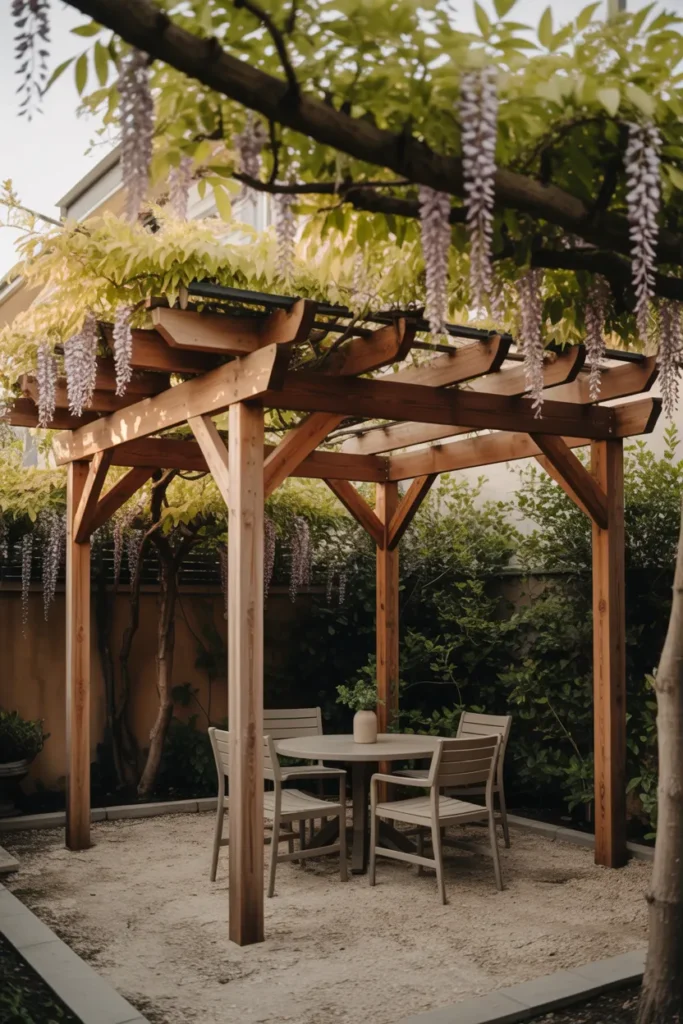
The reason this structure transforms a patio more than any furniture choice is verticality. Most budget patios are one-dimensional — they exist at ground level with no overhead definition. A pergola adds a third dimension that anchors the entire space and makes it feel like a room.
Do not skip the concrete footings. Posts set directly in soil will rot at ground level within three to five years regardless of lumber treatment grade. Use tube-form concrete footings with post bases for a permanent, low-maintenance installation.
13. The Balcony Herb Garden That Adds Function and Greenery to Zero Square Footage
A railing-mounted herb garden uses vertical space that is otherwise completely unused on any balcony or deck. Purpose-built railing planters clip or hook onto standard deck railings and hold three to five herb plants per planter — enough to supply a kitchen with fresh basil, mint, rosemary, and parsley through the growing season.
The functional benefit is dual. The plants add dense, lush greenery that softens the railing and creates a more visually layered balcony. Simultaneously, the herbs are practical — used regularly in cooking, they reduce grocery costs and create a direct connection between the outdoor space and daily household routines.
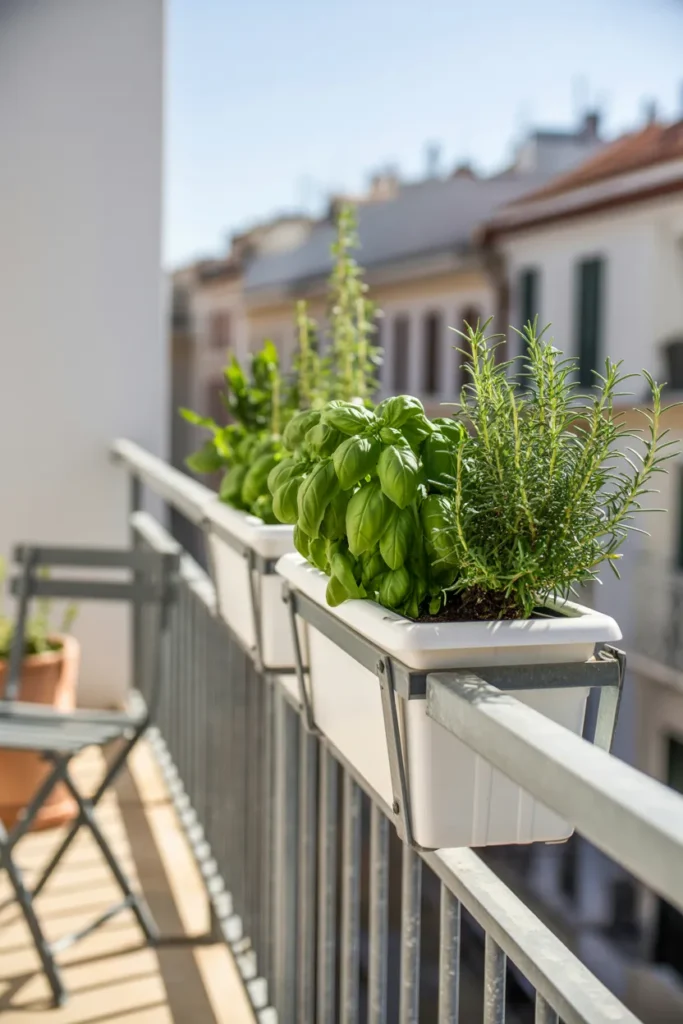
For small outdoor patio ideas on a budget, this is one of the highest-value additions per dollar because it requires no floor space, no permanent installation, and no tools. A railing planter simply lifts off at the end of the season.
Choose herbs matched to your light conditions. Full-sun balconies support basil, rosemary, and thyme. Partial-shade balconies work better with mint, parsley, and chives. Buying herbs planted in the wrong light conditions is the primary reason they fail within two weeks.
14. The Fire Pit Seating Circle That Makes a Backyard Usable Three Seasons
A portable propane or wood-burning fire pit placed at the center of a defined seating circle extends patio use well into fall and creates a natural gathering point that fixed furniture arrangements cannot replicate. The circle format — chairs arranged at equal distance around the fire — is the most socially functional outdoor seating layout because every seat has equal access to warmth and conversation.
The fire pit itself does not need to be expensive to be effective. A simple steel bowl on legs placed on a non-combustible surface — concrete, pavers, or gravel — is sufficient. The investment is in the seating circle: four to six matching or coordinated chairs placed consistently at 3 to 4 feet from the pit edge.
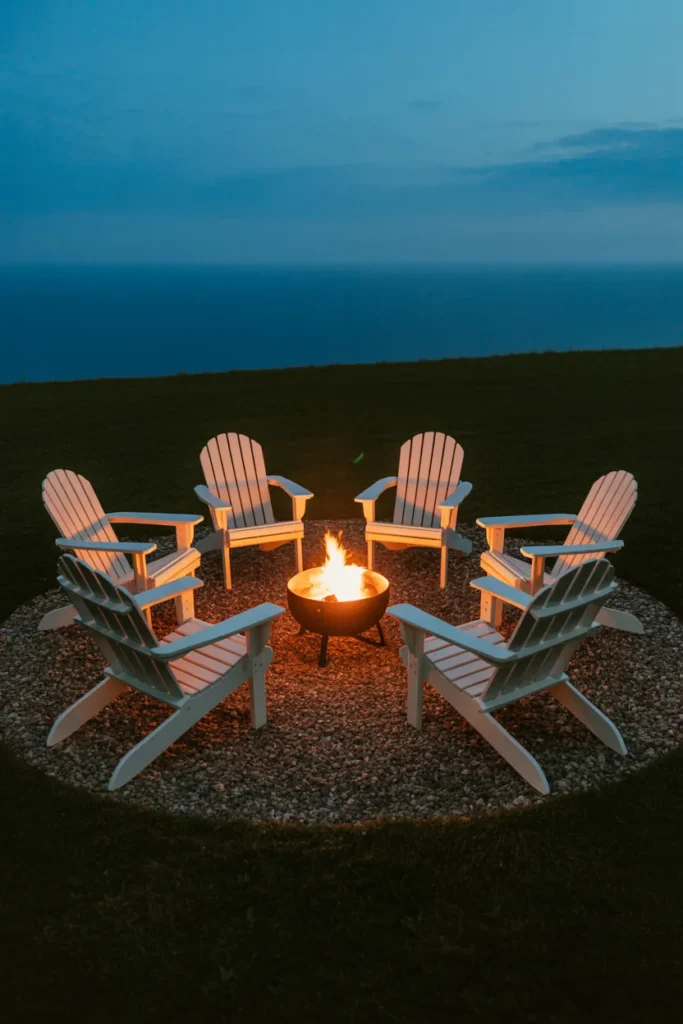
Define the seating zone with a gravel circle or a ring of pavers if the fire pit sits in a lawn area. This creates a clear boundary that looks intentional and prevents the chairs from sinking unevenly into grass over time.
Keep at least 10 feet of clearance between a wood-burning fire pit and any structure, fence, or overhead surface. Propane fire pits are safer for smaller patios and enclosed spaces with limited clearance.
15. The Painted Patio Floor That Transforms a Worn Concrete Slab for Almost Nothing
Exterior concrete paint applied directly to an existing slab is one of the most underused budget patio transformations available. A properly prepared and painted concrete floor changes the entire visual tone of an outdoor space — from tired and institutional to clean, modern, or even pattern-driven with stenciling.
Surface preparation is the step that determines whether the paint lasts two years or ten. The concrete must be clean, free of existing sealant, and etched with muriatic acid solution or a concrete etching product before any paint is applied. Skipping this step results in peeling within the first season regardless of paint quality.
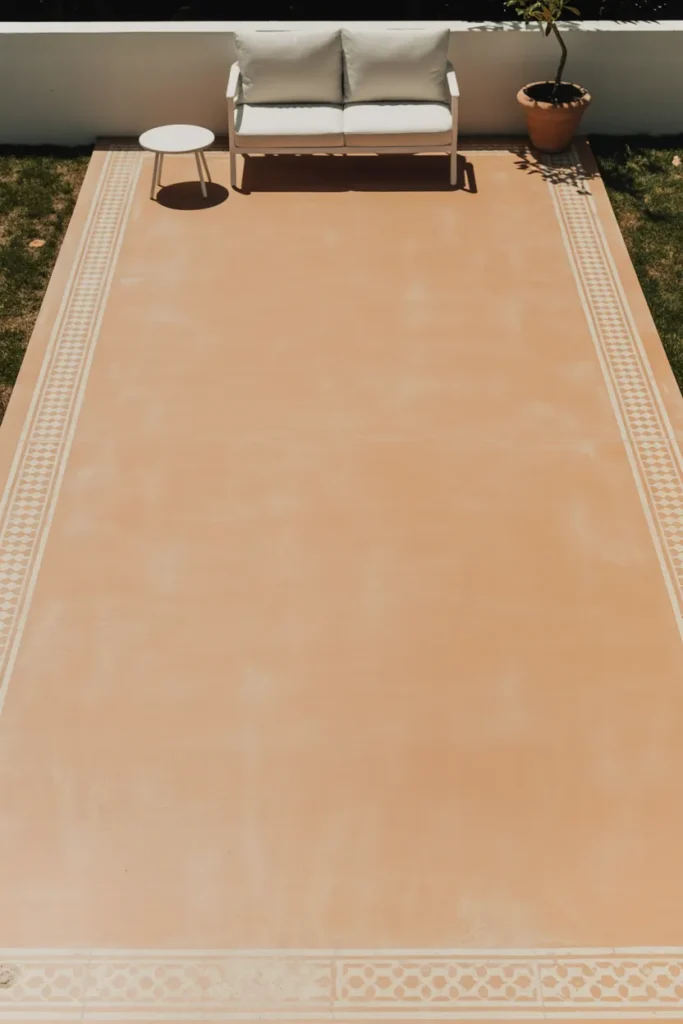
Apply a concrete-specific exterior floor paint in two coats, allowing full cure time between coats. Add a stenciled geometric border or a full-surface pattern using a second color for a custom tile effect that costs a fraction of actual pavers or tile installation.
This works on any horizontal concrete surface — patio slabs, pool decks, basement entryways, and covered porch floors. It does not work on surfaces with active moisture rising from below; check for efflorescence (white salt deposits) before painting, as this indicates subsurface moisture that will break the paint bond.
Conclusion
A well-designed patio does not require a large budget — it requires smart material choices, clear zones, and a few high-return interventions that address the actual problems your space has. The patio ideas on a budget 2026 covered here are designed to be actioned one at a time, building toward a space that works year-round without a single contractor visit.
Save this post to your Pinterest boards so you can return to specific ideas when you are ready to tackle each phase of your patio. The best outdoor spaces are built incrementally — not all at once. If this guide was useful, explore more budget outdoor living and small backyard design ideas to keep improving your space one decision at a time.