
Planning a patio with fire pit in 2026 comes with more decisions than most people expect, from choosing the right pit type for your yard size to figuring out seating distance, safety clearance, and how the fire zone connects to the rest of your outdoor space. This guide gives you 11 layout-specific, decision-ready fire pit patio setups that solve real problems and help you build something that works year after year.
1. The Sunken Fire Pit Patio That Creates a Natural Gathering Bowl
A sunken fire pit patio lowers the seating area 12 to 18 inches below the surrounding grade, which does two things no surface-level layout can replicate: it blocks wind at the exact height where people are sitting, and it creates a natural sense of enclosure that makes the space feel intentional and private without any walls or fencing.
This layout works because the geometry is social by design. When seating wraps around a lowered center fire, everyone faces inward and faces each other. Conversation happens naturally. The sunken edge also acts as a physical boundary that keeps children and pets from wandering too close to the fire without any additional safety barrier needed.
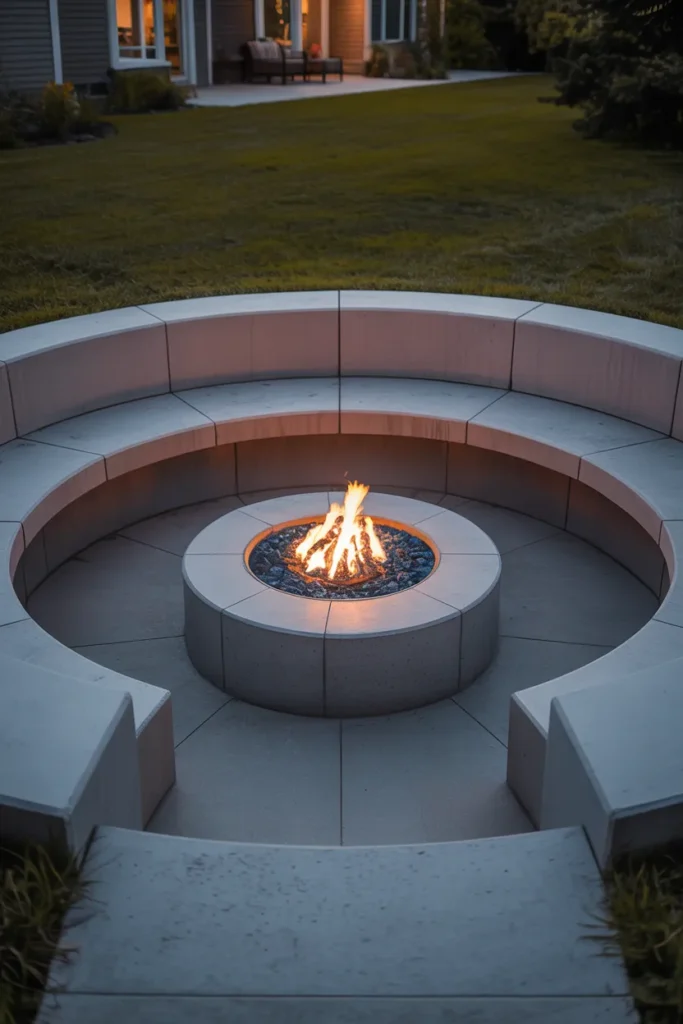

It is best suited for homes with flat or gently sloping backyards where excavation is straightforward. On steeply sloped lots, the engineering cost increases significantly and the layout often does not make sense. If your yard has a natural grade change, consider using that existing drop to create the sunken effect rather than excavating a flat yard.
The critical mistake to avoid is poor drainage planning. A sunken patio that collects water after rain becomes unusable and damages the surrounding hardscape over time. Install a center drain or a gravel base with a perforated drain pipe before any surface material goes down.
2. The Small Backyard Fire Pit Corner That Maximizes a Tight Space
Small backyards do not need large fire features to feel complete. A compact 24 to 30-inch diameter fire pit, either gas or wood-burning, placed in the far corner of a small yard with three low-back chairs arranged in a partial arc creates a fully functional fire pit patio zone without consuming the usable lawn or patio area.
The corner placement is what makes this layout work. Two sides of the space are already defined by the fence or wall, so you only need seating on the open arc facing the fire. This reduces the furniture footprint by roughly a third compared to placing the same setup in the center of the yard, and it gives the rest of the space room to breathe.
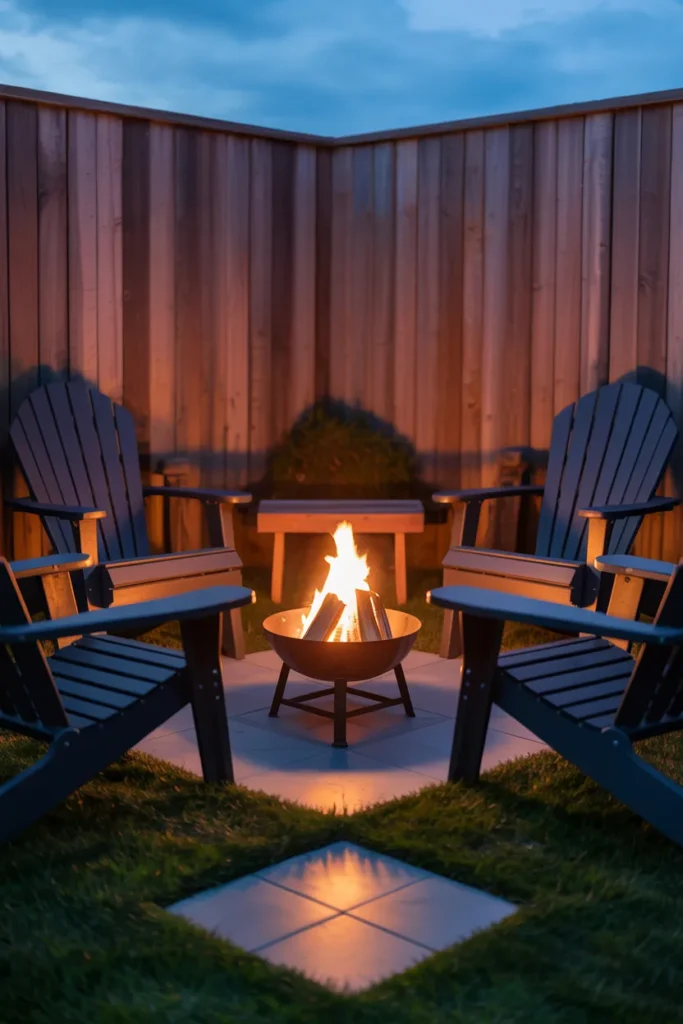
This is the right approach for backyards under 400 square feet, narrow urban lots, and side yards that need a purpose. It also works well as a secondary fire zone on larger properties where the main patio is already established and you want a quieter, separate spot for smaller gatherings.
Keep the fire pit itself small and proportionate. A 48-inch fire table in a 12×15-foot yard overwhelms the space and leaves no comfortable seating distance. Match the diameter of the fire feature to the yard: compact yards need compact fire, and the ambiance is just as effective at a smaller scale.
3. The Circular Paver Patio Built Around a Center Fire Pit
Building the hardscape around the fire pit rather than adding the fire pit to an existing patio produces a completely different result. A circular paver patio with a fire pit at the geometric center creates a layout where the fire is clearly the focal point and every seat around it is equidistant from the heat, which is exactly what makes fire pit seating feel balanced and fair.
The paver circle should extend at least 6 feet from the outer edge of the fire pit in every direction to provide safe seating distance plus comfortable circulation behind the chairs. For a 36-inch fire pit, that means a minimum paver circle of roughly 15 feet in diameter. Smaller than that and the chairs end up too close or people have no path behind the seating.
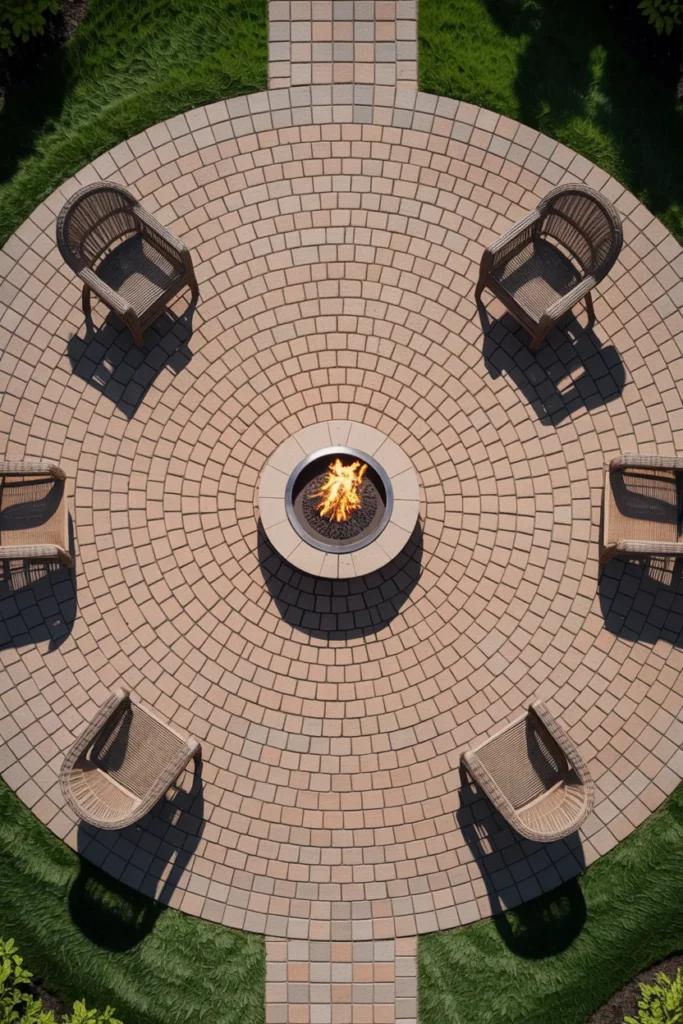
Circular paver layouts also integrate exceptionally well into lawn areas because the round shape reads as a deliberate design element against the rectangular property lines most American backyards follow. It creates contrast and visual interest without requiring any additional landscaping or fencing to frame the space.
Choose paver color and texture that reads well from inside the seating circle at night, since that is when the space gets used most. Light gray or buff-toned pavers reflect the fire glow and keep the surface visible underfoot after dark. Dark pavers absorb light and make the edges of the patio difficult to see.
4. The Linear Fire Pit Trough on a Modern Rectangular Patio
A linear fire trough, a long rectangular burner rather than a round pit, suits a contemporary rectangular patio better than any circular fire feature. The elongated flame runs parallel to the long axis of the patio, which anchors the space visually and allows seating on both long sides simultaneously without anyone sitting at an awkward angle to the fire.
This layout is particularly effective on patios that serve both a dining zone and a lounge zone. The fire trough can act as the dividing element between the two, with the dining table on one end and the lounge seating on the other, unified by the linear flame running between them.
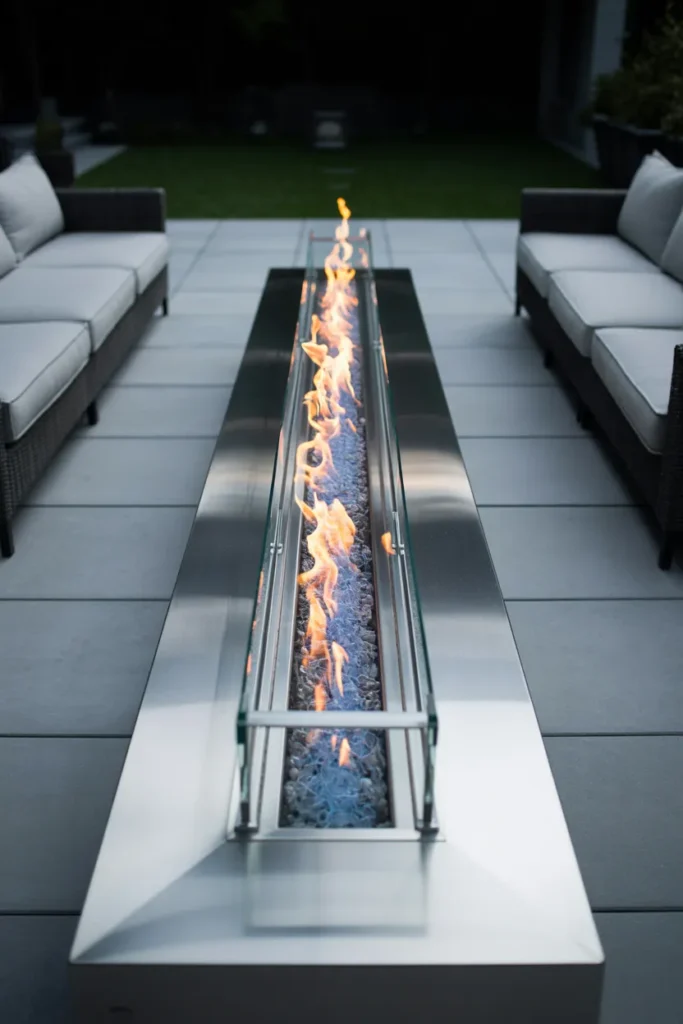
Linear troughs are almost exclusively gas-powered, which is actually an advantage for this format. Gas allows you to control flame height precisely, which matters more in a linear configuration because the flame is visible from a wider angle and at closer range than a round pit. A low, even flame across a 4 to 6-foot trough looks sophisticated and intentional. An uneven or too-high flame on a linear burner looks uncontrolled.
This is a layout and fire feature for modern home styles, clean-line architecture, and patios with strong geometric hardscape. It does not suit cottage, rustic, or naturalistic garden settings where a round stone pit would fit better. Match the fire feature shape to the architectural language of your home and patio.
5. The Covered Patio Fire Pit Setup With Proper Clearance Planning
A fire pit under a covered patio is possible and increasingly popular, but it requires clearances that most homeowners underestimate. For a wood-burning fire pit under any covered structure, the minimum vertical clearance is 12 feet from the top of the flame to the underside of the roof. For a gas fire pit, a minimum of 80 inches of clearance is the general guideline, though local codes vary and should always be checked before installation.
This is why most covered patio fire pit setups that work well use gas, not wood. Gas fires produce dramatically less smoke and sparks, which are the two elements that make a covered fire feature genuinely hazardous. A propane or natural gas fire pit under a well-ventilated pergola with slatted or open sides is both safer and more comfortable than any wood-burning option in an enclosed or semi-enclosed space.
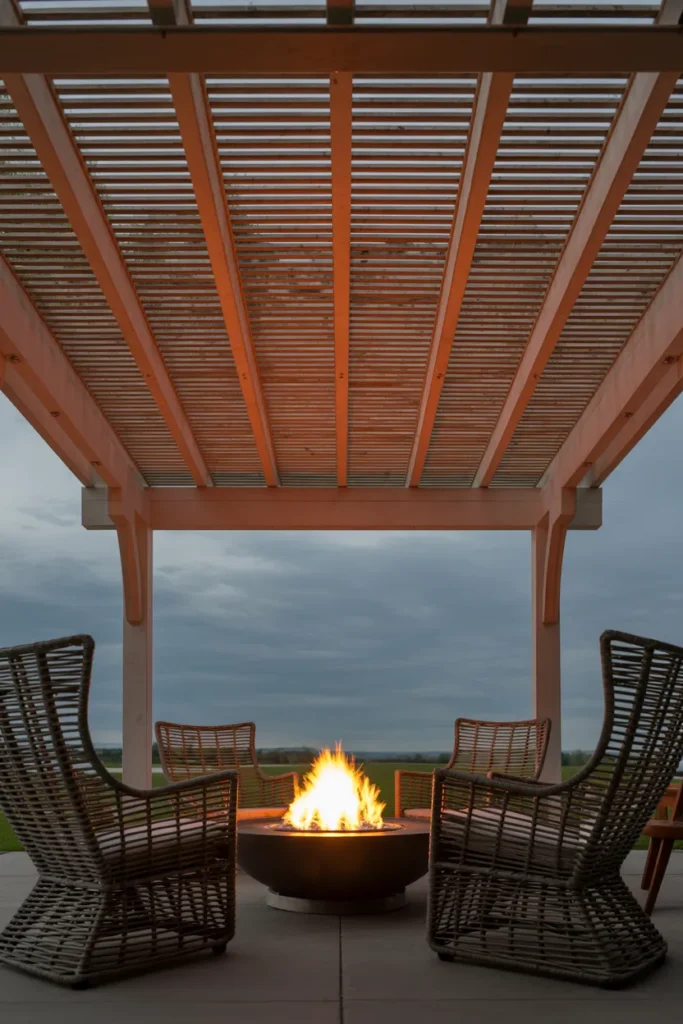
The ventilation design of the covered structure matters as much as the fire feature itself. A slatted pergola roof with 2-inch gaps allows heat and combustion gases to rise and disperse. A solid or near-solid roof, even one with an exhaust fan, changes the safety and code compliance picture significantly.
For the layout itself, position the fire pit toward the open end or center of the covered space, not pushed against the solid back wall. This gives heat and gases the maximum path to the open sides and prevents the area directly above the fire from becoming a heat trap within the structure.
6. The Elevated Deck Fire Pit Zone With Safety-First Planning
Placing a fire pit on an elevated wood deck is one of the most asked-about and most misunderstood outdoor fire pit scenarios. The short answer is that wood-burning fire pits should never be placed directly on a wood deck surface. The long answer is that gas fire pits on a composite or Trex deck surface, with a proper fire-rated deck protector pad underneath and manufacturer-specified clearances maintained, can work safely when installed correctly.
The layout for a deck fire pit zone should treat the fire feature as an isolated zone with at minimum 36 inches of clear deck space in every direction. Do not push deck chairs up against the rail on one side and the fire pit on the other, leaving guests with nowhere to step back from the heat. The fire zone needs space on all sides.
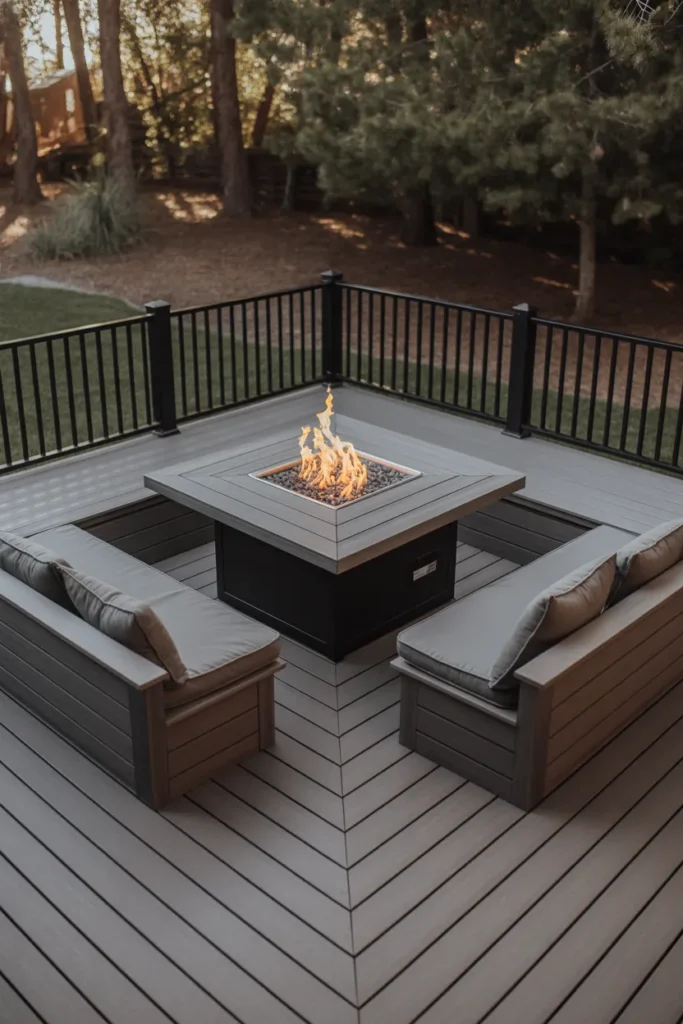
Built-in deck benches surrounding a gas fire pit on the deck are a practical and increasingly common solution in 2026 outdoor design. When the bench height and the fire table height are coordinated, the result looks intentional and keeps the fire at exactly the right visual and warmth distance for seated guests.
Always verify local fire codes before installing any fire feature on an elevated deck. Some municipalities require permits for gas line installations or prohibit open-flame features on decks above a certain height entirely. Check first, build second.
7. The Patio With Fire Pit and Separate Dining Zone That Both Function Well
One of the most common layout failures in outdoor design is placing the fire pit and the dining table too close together on the same patio. The result is a space where you cannot use both at the same time because the fire’s heat, smoke drift, and physical presence interrupt the dining experience. A well-planned patio with fire pit in 2026 treats these as two distinct zones with at least 8 to 10 feet of separation between them.
The fire pit zone and the dining zone should each feel complete independently. The fire zone needs seating oriented toward the fire, enough clearance behind the chairs, and ideally a side table or two. The dining zone needs a table sized to the group, proper chairs, and its own light source so it is not dependent on fire glow to be functional after dark.
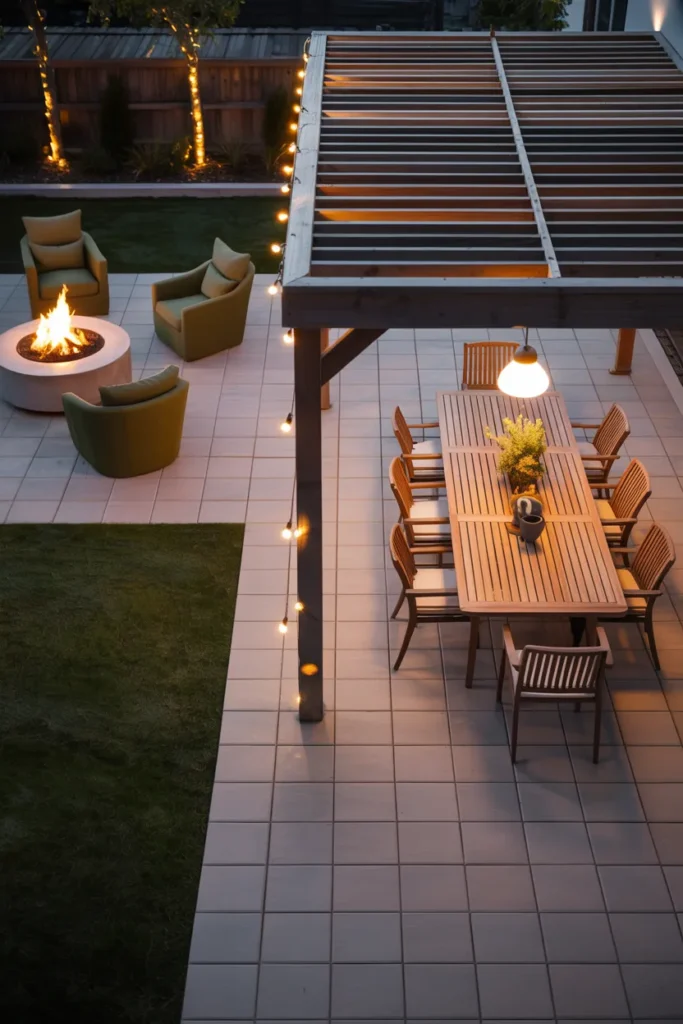
Connect the two zones visually by using the same or complementary materials in each. If the fire pit seating uses dark wicker chairs, the dining chairs should be in a related material or color family. If both zones share the same paver surface, define the transition with a change in rug, a row of planters, or simply the 10-foot gap itself.
The practical sequencing most people use is to dine first, then move to the fire pit seating for drinks and conversation. Design the layout to support this flow, with the fire zone positioned so that moving from the dining table to the fire chairs is a natural, easy transition rather than a journey across the yard.
8. The Low-Profile Fire Bowl Patio for Homes With HOA or Fire Code Restrictions
Many American suburban homeowners and those in HOA communities face restrictions on open-flame features, stack height, or permanent outdoor fire installations. A low-profile fire bowl on a non-combustible pedestal base, fueled by propane, navigates most of these restrictions while still delivering functional warmth and ambiance.
A fire bowl sits lower than a standard fire pit table, typically 18 to 24 inches off the ground, which actually improves the warmth radius for seated guests. The flame is at knee level rather than table level, and the heat radiates outward at sitting height rather than rising past it. For cool-climate use in fall and early spring, this is a more effective heat delivery position than a taller fire feature.
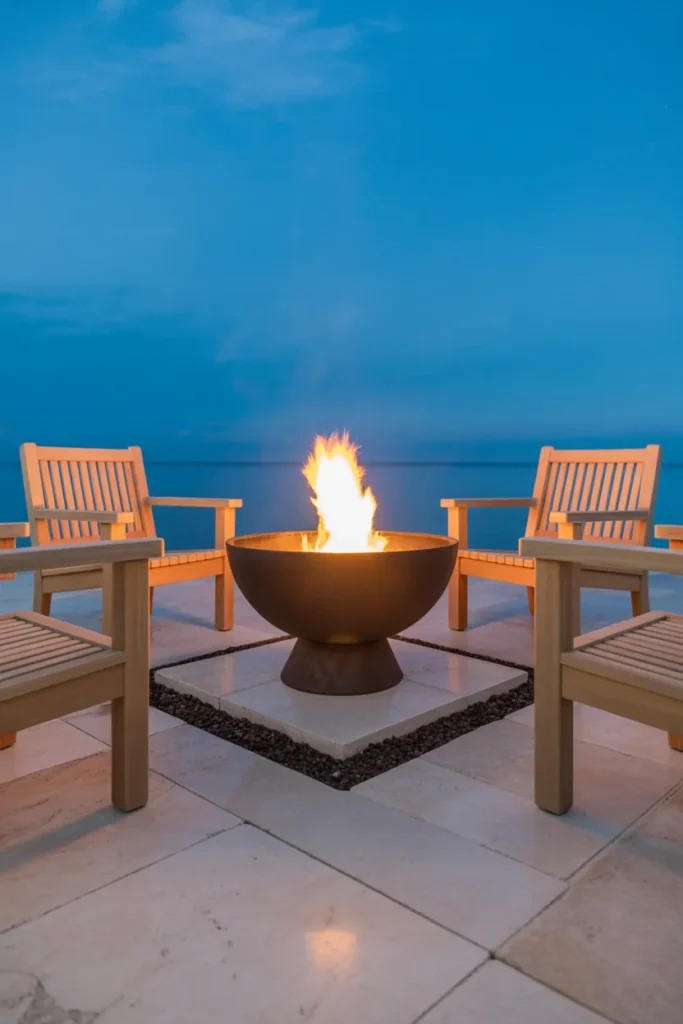
Because fire bowls are freestanding and propane-fueled with a removable tank, they are also portable. This gives you the flexibility to reconfigure your patio layout seasonally, bring the fire bowl to different zones of the yard for different events, and store it away during winter without any permanent installation to worry about.
The design consideration with fire bowls is that they can easily look like an afterthought if they are not positioned intentionally. Give the fire bowl its own visual moment by centering it on a distinct paver section, surrounding it with three or four well-chosen chairs, and keeping a clear 36-inch radius free of furniture. A fire bowl jammed between mismatched chairs against a fence wall is a missed opportunity.
9. The Fire Pit Seating Wall Patio That Replaces Traditional Chairs
A seating wall built from the same material as the patio hardscape, whether concrete block, natural stone, or brick, surrounding a fire pit eliminates the need for moveable chairs entirely and creates one of the most durable, low-maintenance fire pit patios possible. The wall doubles as structural edging for the patio and as permanent seating for the fire zone.
The wall height matters significantly. A 17 to 18-inch seating wall matches standard chair seat height and is comfortable for most adults without a cushion. A wall built at 20 inches or higher starts to feel like a barrier rather than seating. Add a 4 to 6-inch capstone in a contrasting material, such as bluestone on a concrete block wall, to create a comfortable and finished seating surface.
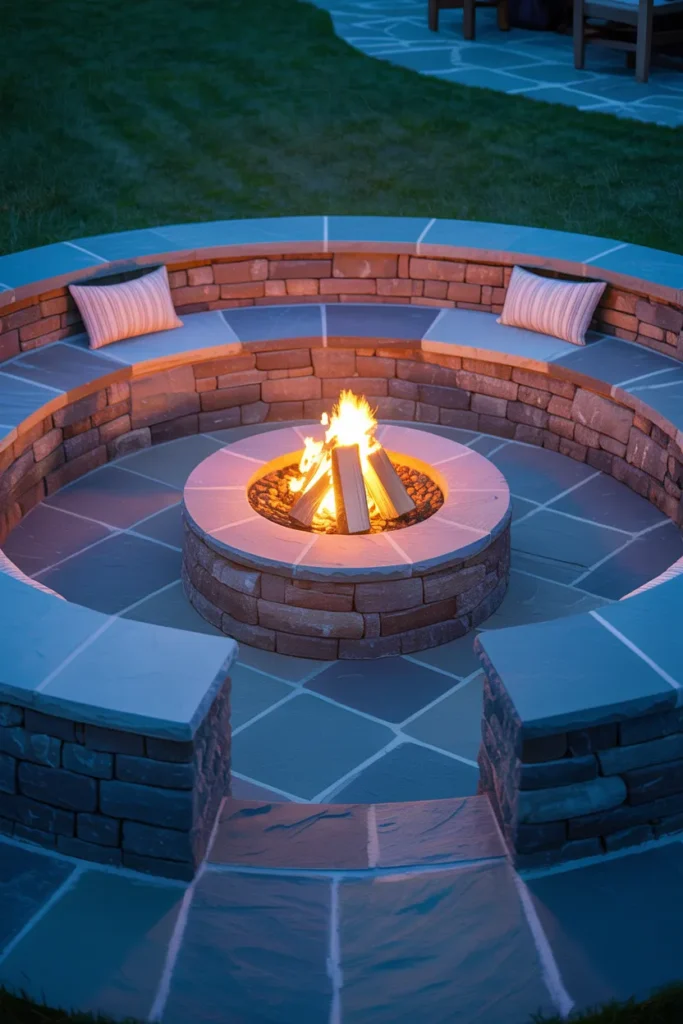
This layout is the right choice for homeowners who want a zero-maintenance fire patio, for families with young children where moveable furniture around a fire creates safety concerns, and for anyone building a permanent hardscape feature that should last 20 or more years without replacement.
The layout does have one genuine limitation. Seating walls are fixed in position, which means the size of the gathering that fits comfortably is determined at build time. If you regularly host groups of varying sizes, add one or two lightweight chairs nearby that can supplement the wall seating rather than relying on the wall alone for all guest capacity.
10. The Backyard Fire Pit Patio With Integrated Landscape Lighting
A patio with fire pit that has no lighting plan beyond the fire itself is a space that looks finished during the day and unfinished at night, which is exactly when you are using it. Integrated landscape lighting around the fire pit patio serves two functions: it extends the usability of the surrounding paths and patio edges after dark, and it adds depth and visual layering to the space that the fire alone cannot provide.
The most effective lighting approach for a fire pit patio uses three layers. The first is in-ground or step lights along any path that leads to the fire zone, so guests can navigate safely. The second is uplighting on one or two key plants or trees near the fire area, which frames the space without overpowering the fire glow. The third is low ambient lighting, such as string lights at a height of 8 to 10 feet, that fills in the middle zone between the fire glow and the dark sky.
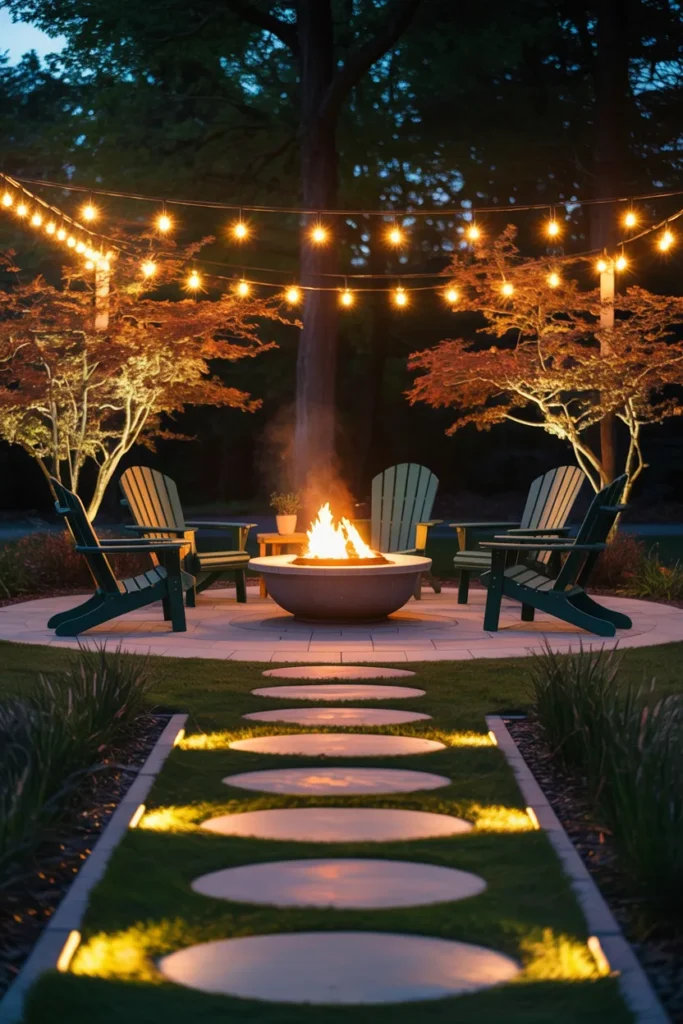
Avoid spotlights or bright overhead lighting aimed directly at the fire pit seating area. Bright directional light competes with fire glow, flattens the atmosphere, and creates glare that makes the space less comfortable rather than more. The goal is to supplement the fire, not replace it.
All landscape lighting in a fire pit zone should be low-voltage LED on a timer or smart switch. This makes the space effortless to use on any evening without manual setup and reduces energy cost to nearly nothing compared to line-voltage alternatives.
11. The Four-Season Fire Pit Patio Designed for Year-Round Use in Cold Climates
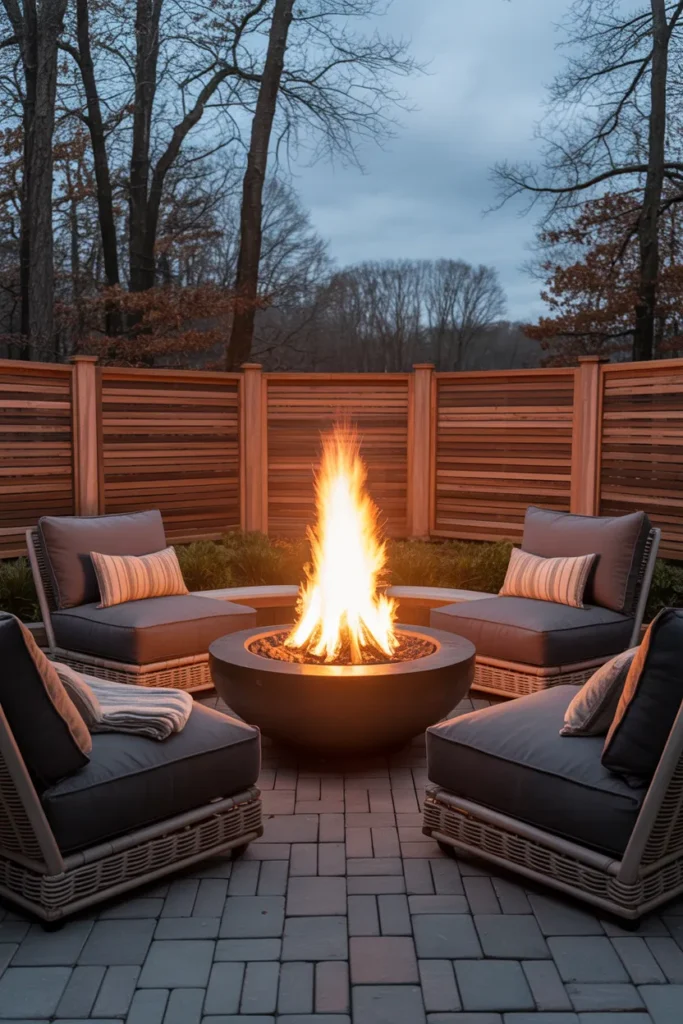
Most fire pit patios in the US go unused from November through March because the layout was designed for summer use only. A four-season fire pit patio in 2026 solves this with three deliberate design choices: a windbreak structure, an all-weather surface material, and a fire feature with enough BTU output to meaningfully heat the seating area in cold weather.
The windbreak is the most important element. A three-sided screen of cedar panels, a concrete privacy wall, or dense evergreen planting on the north and west sides of the fire pit zone reduces wind chill dramatically and makes the difference between a space that is usable at 38 degrees and one that is not. Wind chill is almost always the reason a fire pit patio feels too cold to use in shoulder seasons, not the air temperature itself.
Surface material selection matters more in cold climates than warm ones. Concrete pavers can heave with freeze-thaw cycles if not installed on a proper compacted gravel base with sand bedding. Poured concrete without control joints cracks. Porcelain pavers rated for freeze-thaw use are the most durable option for four-season outdoor living in the northern US.
Choose a fire feature with a minimum of 60,000 BTU for cold-climate year-round use. Below that threshold, a fire pit is primarily decorative in temperatures under 45 degrees. A higher-output burner creates a genuine warmth radius of 6 to 8 feet, which covers most fire pit seating configurations and makes the patio a space people actually choose to use in October, November, and March.
Final Thoughts
A well-planned patio with fire pit is one of the highest-return outdoor investments you can make, but only when the layout matches your yard, your climate, and how you actually use your outdoor space. Every idea in this guide is built around those practical realities rather than generic inspiration.
If one of these layouts fits your outdoor space or planning goals, save this post to your Pinterest boards so you can come back to it when you are ready to design or build. And if you are still exploring your options, browse more outdoor patio and fire pit design ideas to find the setup that fits your property, your local fire codes, and the way you want to live outside.