
Bad outdoor lighting does not just look wrong — it makes your garden unusable after dark and wastes the investment you have made in landscaping and planting. These garden lights ideas 2026 are built around real layout decisions, fixture placement logic, and light quality choices so you can plan a scheme that works for your specific outdoor space, not just one that looks good in a mood board.
1. Low-Voltage Path Lights Spaced at Unequal Intervals for a Natural, Non-Institutional Look
The most common mistake with garden path lighting is spacing fixtures at perfectly equal intervals, which creates a runway effect that feels institutional rather than residential. Unequal spacing — grouped slightly closer at corners and transitions, wider along straight runs — reads as deliberate and organic.
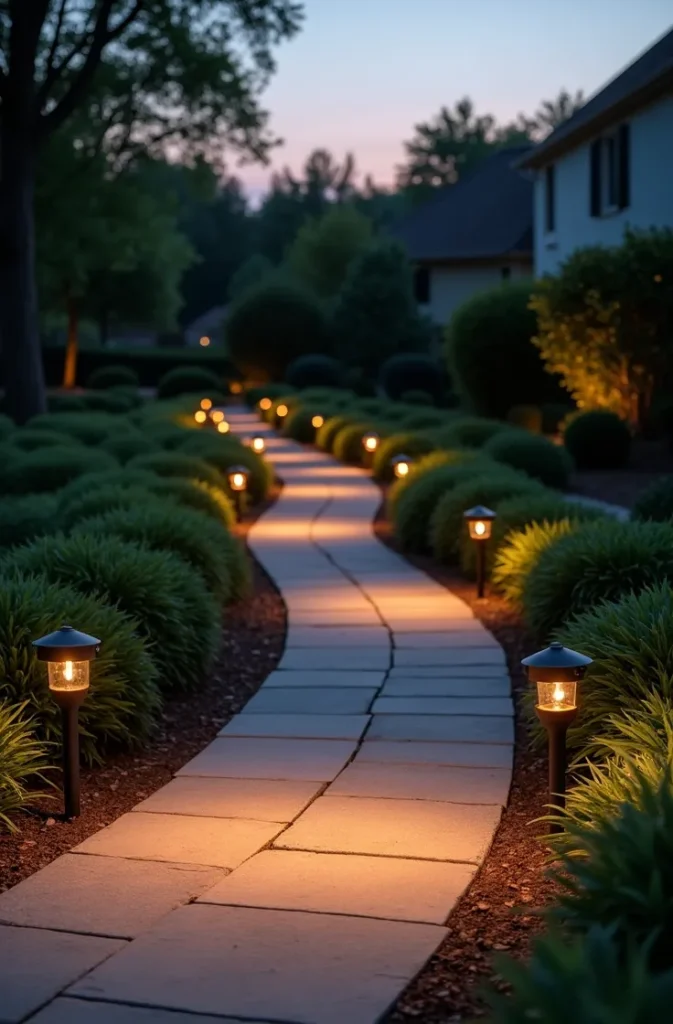
Use low-voltage stake lights in a matte black or dark bronze finish at a height of 12 to 18 inches. Keep the light output low: 3 to 5 lumens per fixture is enough to define a path without flooding it. The goal is to light the ground plane and edges, not the entire garden.

This layout works in any garden with a defined path — from a simple front walkway to a winding back garden route. It is one of the most reliable outdoor garden lighting ideas for 2026 because it serves a functional purpose while adding visual warmth. Avoid solar-only path lights on heavily shaded routes — their charge time is insufficient and the light output fades within an hour of dark.
2. In-Ground Uplights on Trees and Specimen Plants for Dramatic Nighttime Structure
Uplighting a single well-placed tree or architectural shrub transforms the night garden from dark and flat to layered and dynamic. An in-ground uplight positioned at the base of the trunk, angled at 30 to 45 degrees, throws light up through the canopy and projects leaf shadow patterns onto surrounding walls and fences.
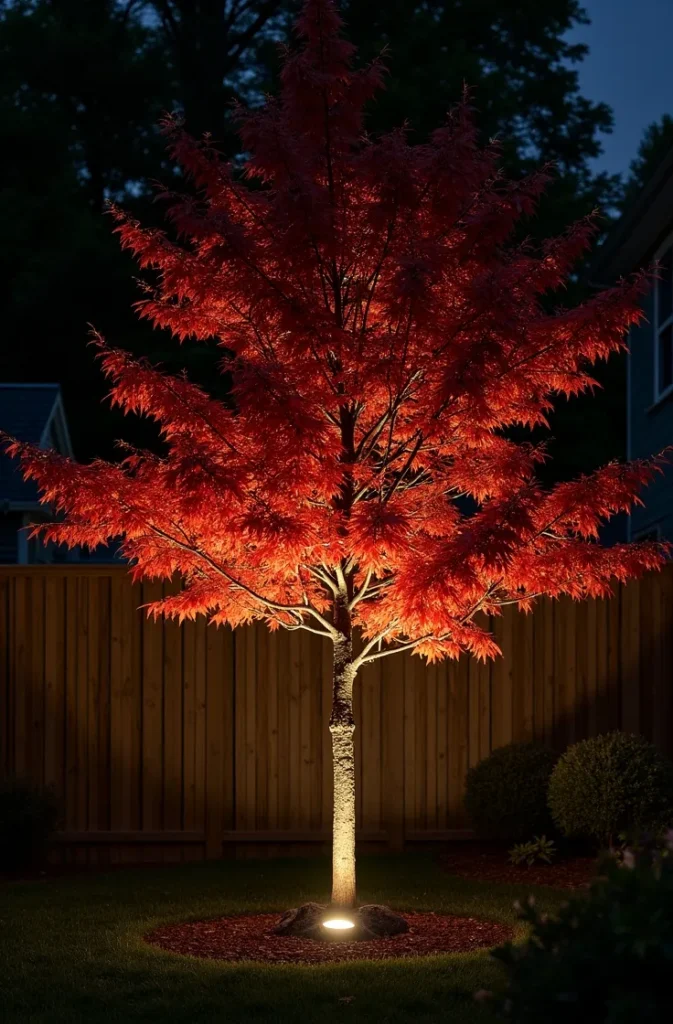
Use a narrow-beam LED uplight — 15 to 25 degrees beam spread — for trees with dense canopies. For open, sculptural trees such as Japanese maple or olive, a wider 40-degree beam captures more of the branch structure. Stick to warm white (2700K) to avoid the cold, clinical look that higher color temperatures produce on foliage.
This technique is central to any serious outdoor garden lighting plan because it adds vertical dimension to what is otherwise a horizontal night landscape. Position uplights away from main circulation paths so they are not visible as a light source — only the illuminated tree should read in the scene. A common mistake is using too many uplights, which cancels the drama. One or two specimen plants, lit well, outperform a dozen mediocre uplights every time.
3. String Lights Suspended in a Canopy Grid Over an Outdoor Dining Area
A grid of warm string lights suspended overhead at a consistent height — typically 8 to 10 feet from the ground — turns an outdoor dining area into an evening room that functions independently of the house. The overhead canopy of light defines the space without walls or a fixed roof structure.
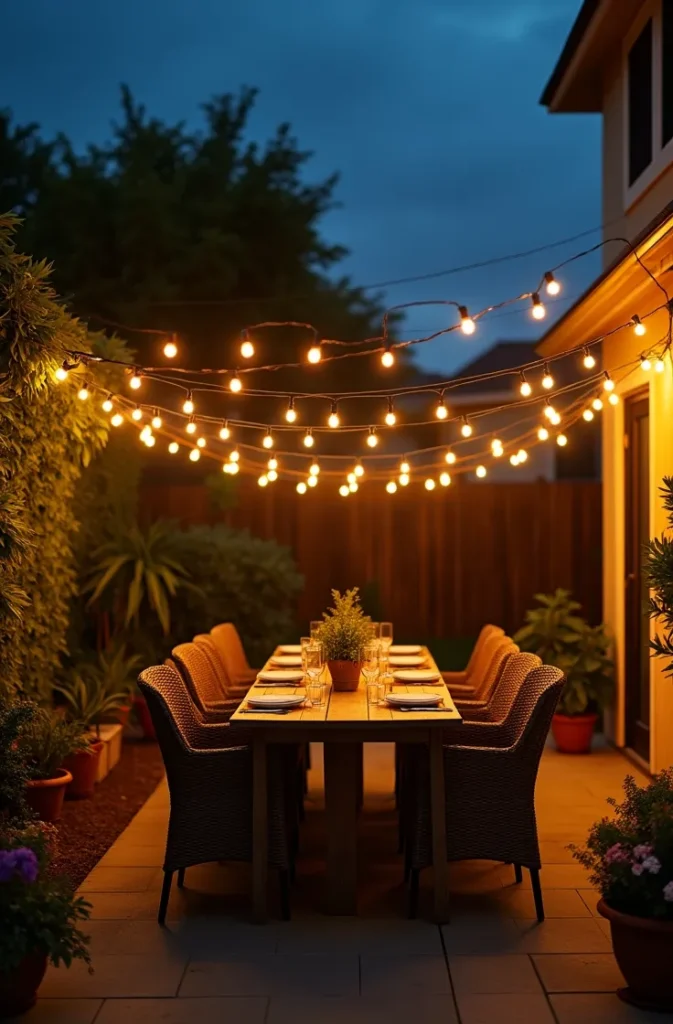
Suspend the lights between two or more anchor points: timber posts, pergola beams, or the house wall and a garden fence. Run parallel lines no more than 18 to 24 inches apart so the light output is even across the table. Use Edison-style or globe bulbs in a warm 2200K to 2700K range — this color temperature flatters food and faces equally.
This is one of the most popular backyard garden lighting ideas heading into 2026 because it works for patios, decks, and open lawn areas without requiring a permanent structure. The practical mistake to avoid is using too long a span between anchor points — strings longer than 15 feet without a mid-point support will sag under their own weight and look untidy. Use a center guide wire for longer runs.
4. Step and Riser Lights Built Into Garden Stairs for Safety and Clean Modern Style
Lighting built directly into the riser face of garden steps is both a safety feature and one of the cleanest modern outdoor lighting details available. A thin strip of light along each step edge defines the level change without requiring a separate fixture on a post or stake.
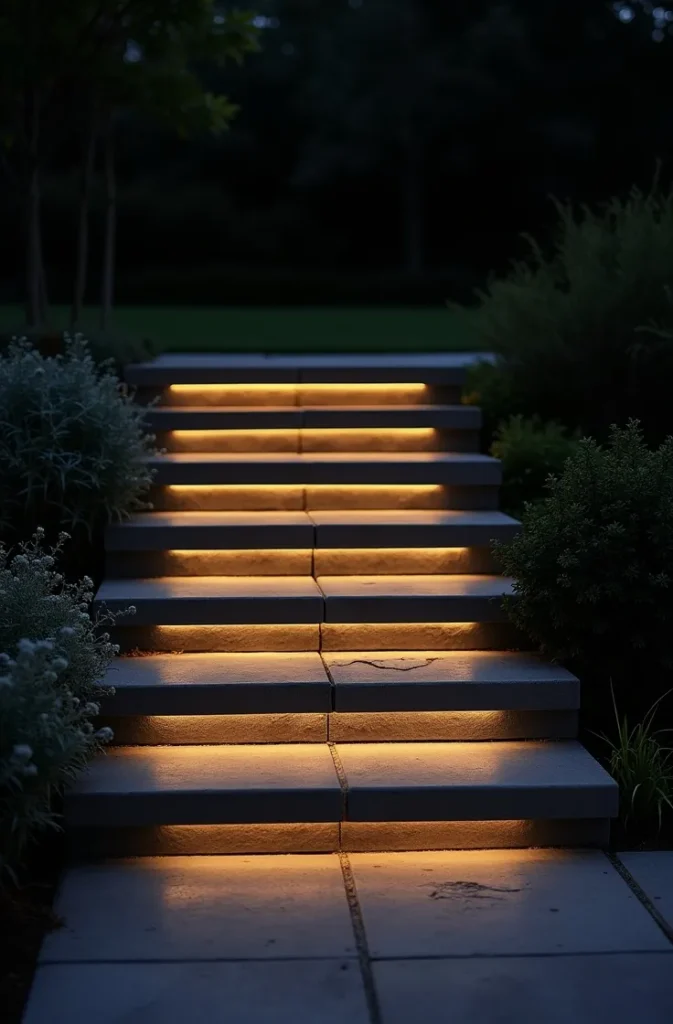
Use slim LED strip lights or purpose-built step lights recessed into the riser in a horizontal line. Choose a warm white output (2700K to 3000K) and keep the brightness low — these lights are for definition and safety, not for illuminating the surrounding garden. A frosted lens diffuses the light softly so no hot spots or glare are visible.
This approach is particularly relevant for multi-level garden lighting design in 2026, where integrated and concealed fixtures are replacing traditional lanterns and bollards. It works on stone steps, timber decking risers, and concrete staircases equally. Avoid installing these lights on the tread surface — they become slippery when wet and are easily damaged underfoot.
5. Wall-Mounted Sconces on Garden Boundary Walls for Layered Ambient Light
Exterior wall sconces mounted on a garden boundary wall, at pergola posts, or on the rear face of the house provide ambient light that fills the middle zone of the garden — above path light level but below canopy level. This middle layer is what separates a fully lit garden from one with just a few scattered fixtures.
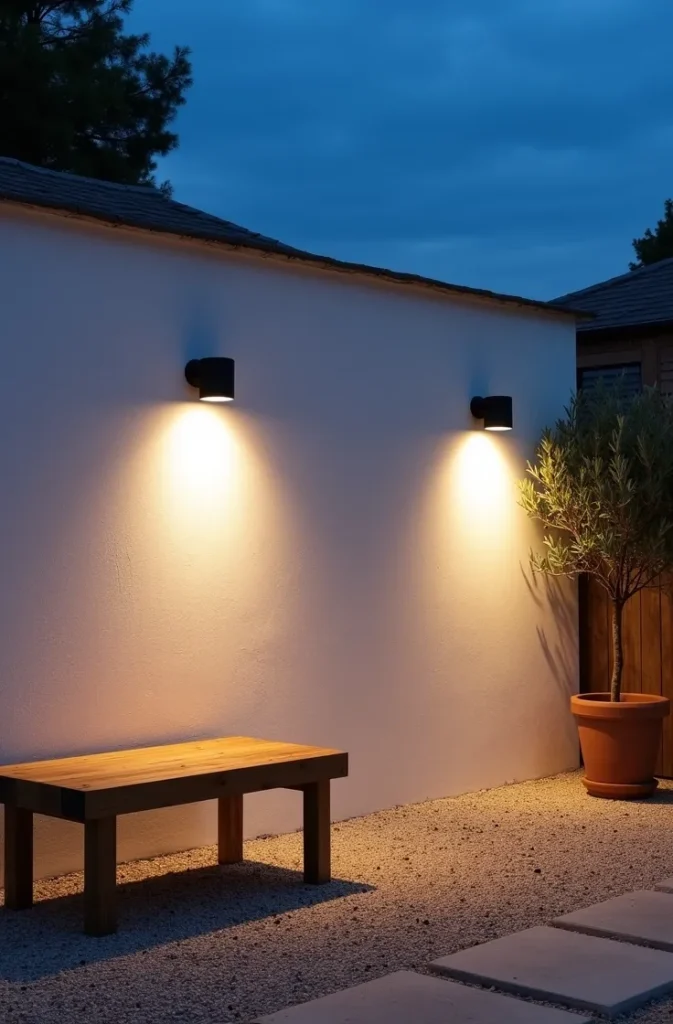
Choose sconces with a downward or upward-downward light distribution rather than a purely upward throw. A fully upward sconce contributes to light pollution and delivers very little usable illumination at ground level. Matte black, dark bronze, or weathered steel finishes hold up well outdoors and suit a wide range of garden styles.
Layered outdoor lighting — path, wall, and canopy levels combined — is the defining characteristic of high-quality garden light design in 2026. Wall sconces are the middle layer that ties the scheme together. Mount them at 6 to 7 feet above grade for the best light spread. Avoid positioning sconces where they shine directly into the eye line of anyone seated in the garden.
6. Underwater Pond and Water Feature Lights That Add Reflection and Depth
A submersible LED light placed at the base of a garden pond, fountain basin, or water feature creates a reflection layer that effectively doubles the visual depth of the garden at night. The light refracts through moving water and produces a dynamic, shifting effect on surrounding surfaces.
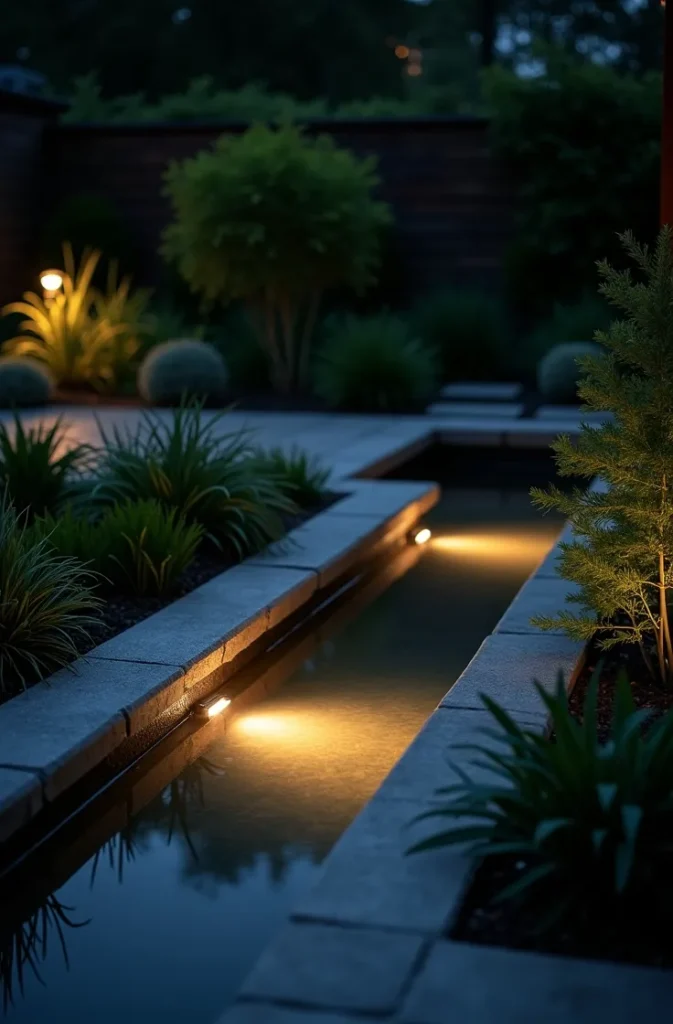
Use purpose-built submersible LED fixtures rated for continuous underwater use. Position them at the base of the pond facing upward to illuminate the water column, or angled at a waterfall or fountain spout to backlight the falling water. Warm white or very soft cool white (3000K) works best — avoid color-changing RGB lights, which look theatrical rather than refined.
This is a strong garden lighting idea for 2026 for homes with existing water features that go completely dark after sunset. A single well-placed underwater light extends the usability and visual appeal of the water feature through the entire evening. The mistake to avoid is over-illuminating the pond — one or two carefully placed fixtures produce a far better result than flooding the basin with multiple lights.
7. Bollard Lights Along a Garden Border for Structured Driveway or Lawn Edge Definition
A line of slim bollard lights positioned along a garden border, driveway edge, or lawn boundary creates structured visual definition after dark that daytime planting alone cannot deliver. Bollards at a consistent height — 18 to 24 inches — mark the territory of the garden and guide movement through it.
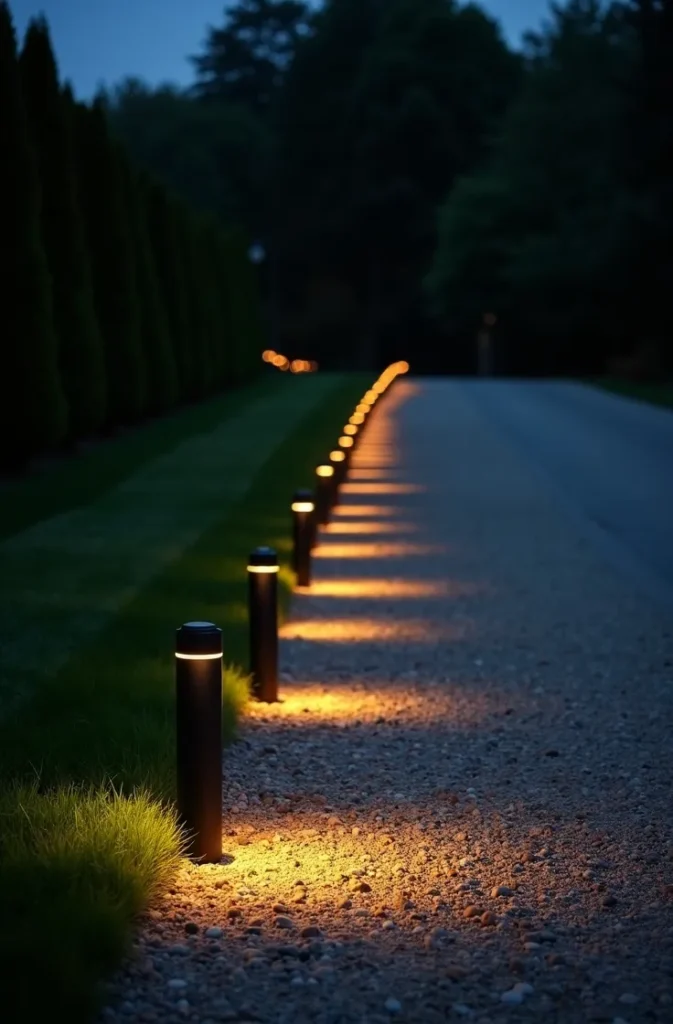
Choose bollards with a full 360-degree light distribution for border use, or a shielded directional output if the bollard faces toward a neighbor’s property or a window. Matte black powder-coated aluminum or brushed steel are the most durable and appropriate finishes for a contemporary American garden.
This approach works particularly well in larger suburban gardens where the scale of the space would make path lights feel too small and wall sconces feel too distant. Bollard spacing of 6 to 8 feet produces a clean, rhythmic line without over-lighting. Avoid placing bollards in lawn areas that require regular mowing — the fixture bases become obstacles and are frequently damaged by garden equipment.
8. Recessed Deck Lights Flush-Mounted Into Timber Decking for a Clean, Uncluttered Surface
Recessed LED lights set flush into a timber or composite deck surface eliminate the need for any above-surface fixture — no posts, no stakes, no visible hardware. The light source disappears into the deck during the day and activates at night as a clean, considered detail.
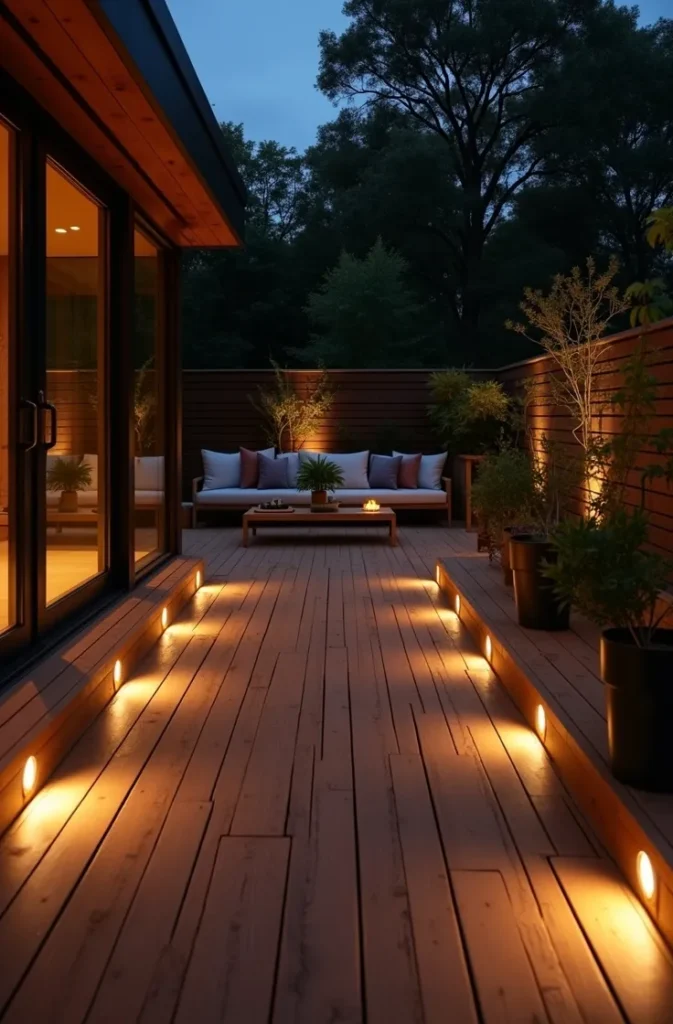
Use purpose-built deck recessed lights in a round or square format that matches the decking board width. Space them 24 to 36 inches apart in a grid or along the perimeter of the deck. A warm 2700K output is standard — avoid cool white in timber decking applications, as it makes the wood appear gray and cold rather than warm and inviting.
Recessed deck lighting is one of the most refined outdoor deck and garden light ideas for 2026 because the fixtures are completely hidden in daytime and create a floating, low-level glow at night. They are best installed during the initial deck build — retrofitting requires cutting into existing boards, which is more complex. Ensure the fixtures are rated for wet locations and are accessible for bulb replacement from above.
9. Lantern-Style Post Lights Along a Garden Fence for a Traditional American Exterior
For homes with a traditional, craftsman, or colonial architectural style, lantern-style post lights mounted along a garden fence or at gate piers deliver a lighting solution that is consistent with the home’s character. The vertical post and lantern form provides both ambient light and a visual anchor point in the landscape.
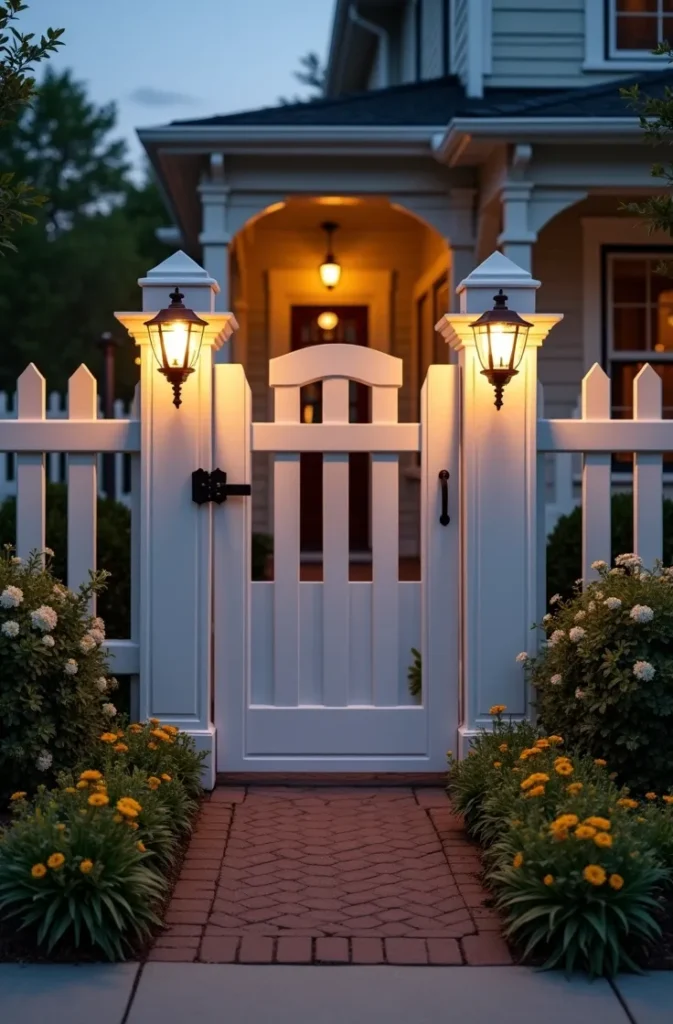
Choose a fixture height proportional to the fence — a 48-inch fence suits a 60 to 72-inch post light. Use a clear or seeded glass lantern in a black, oil-rubbed bronze, or dark green finish. Pair with a warm Edison-style LED bulb at 2200K to maintain the traditional lantern aesthetic without the heat or energy draw of an incandescent source.
This is the right lighting decision for front garden paths, picket fence lines, and entrance gates in period-style American homes. It provides adequate ambient light for safe circulation while reinforcing the home’s curb appeal after dark. The mistake to avoid is choosing an oversized lantern — the fixture should be proportional to the post and the fence height, not selected for maximum brightness.
10. Spotlights Aimed at a Garden Wall Mural or Textured Boundary for Architectural Drama
A boundary wall with interesting texture — exposed brick, rough stone, board-formed concrete, or decorative render — becomes a dramatic nighttime backdrop when lit with directional spotlights positioned at a low angle and aimed upward across the surface. This grazing technique amplifies every texture and shadow in the material.
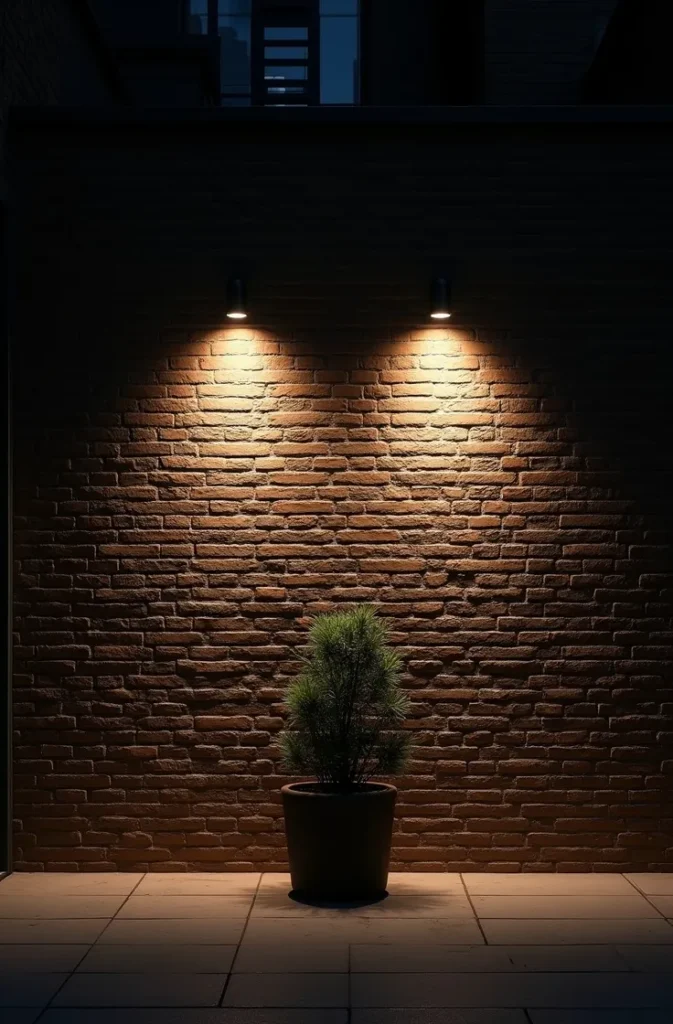
Position the spotlight fixture 12 to 18 inches from the wall base, aimed upward and inward at a steep angle. The closer the fixture to the wall, the more pronounced the shadow-and-highlight texture effect. Use a narrow 15 to 25-degree beam spread to keep the light contained and the shadows sharp.
This outdoor lighting technique is highly effective for gardens where the boundary wall is a key design element — particularly in small urban gardens, walled courtyards, and terraced homes where the walls are the most prominent surface area. It is one of the most visually sophisticated garden lights ideas 2026 has brought further into mainstream residential use. Avoid using this technique on painted or rendered walls in poor condition — the grazing light will highlight every crack and imperfection.
11. Solar-Powered Spike Lights in a Planting Border for a Flexible, Wire-Free Scheme
Modern solar-powered spike lights have improved significantly in output and reliability, making them a genuinely viable option for planting borders in gardens that receive at least six hours of direct sun during the day. They require no wiring, no electrician, and can be repositioned as the planting scheme changes.
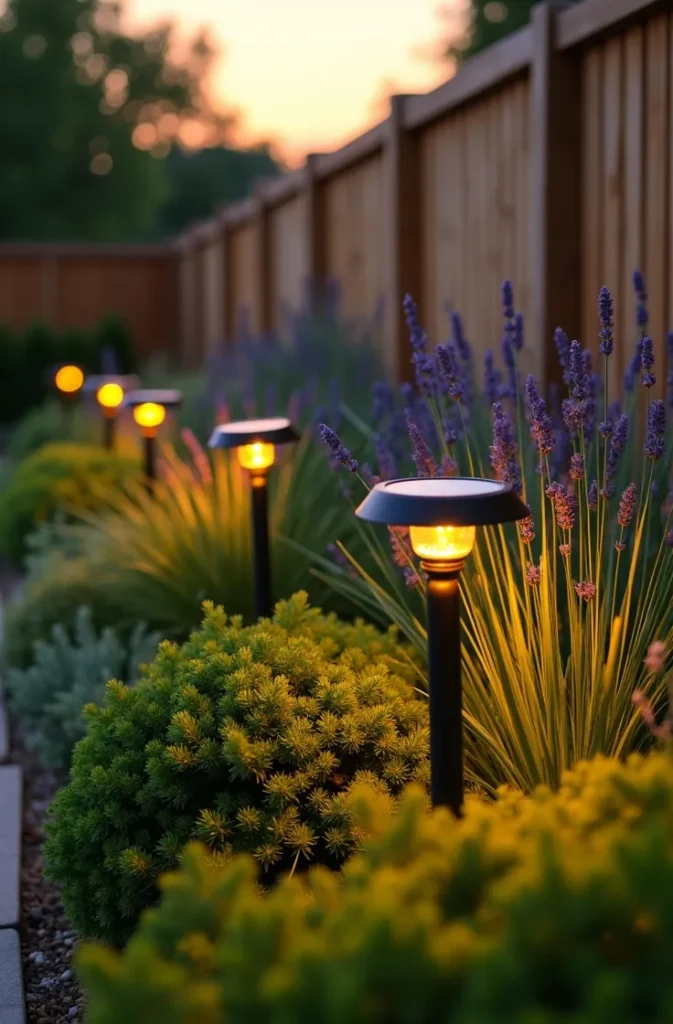
Choose solar spike lights with a stated lumen output of at least 15 to 20 lumens per fixture and a built-in dusk-to-dawn sensor. Matte black and dark slate finishes integrate best into a planted border without drawing attention during the day. Tuck the fixture spike close to the base of a plant so the solar panel faces the sky without obstruction.
This is the most practical entry-level garden lighting idea for renters, for temporary garden setups, and for any homeowner who wants to test a lighting layout before committing to hardwired installation. The honest limitation is longevity — solar spike lights typically last two to three seasons before the battery capacity degrades. Plan for replacement rather than repair.
12. Smart RGB Color-Tunable Garden Lights Controlled by App for Seasonal Mood Changes
Color-tunable smart outdoor lighting — fixtures that shift between warm white for everyday use, cool white for task-oriented areas, and full RGB color for seasonal events — represent the most flexible garden lighting investment available in 2026. A single smart system can serve multiple functions across the calendar year.
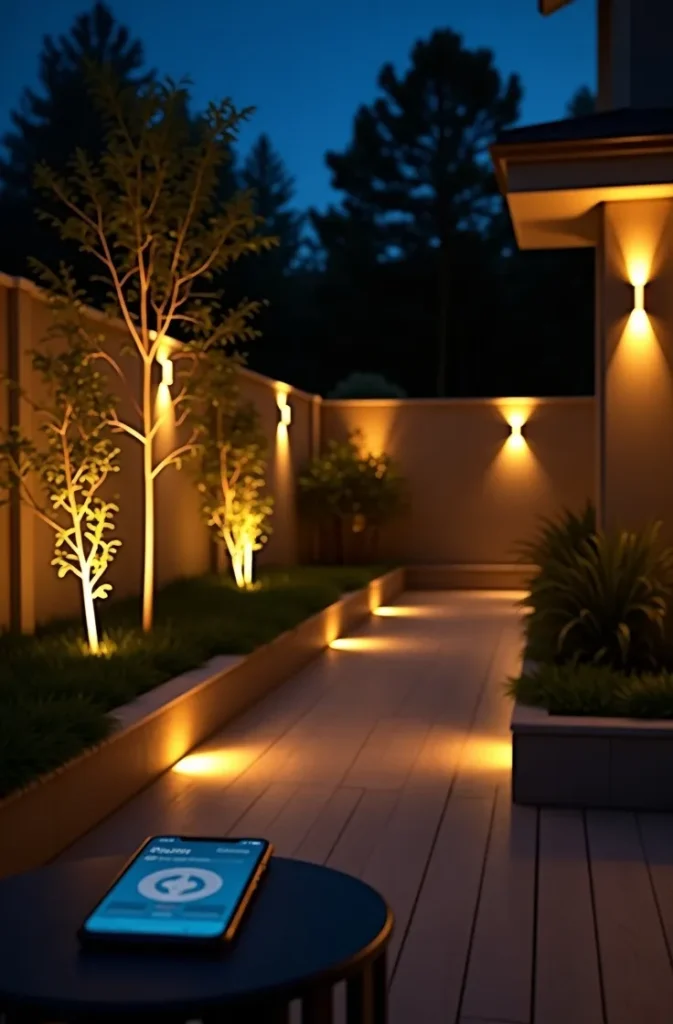
Use smart outdoor LED fixtures connected to a home automation system or a dedicated outdoor lighting app. Set the default scene to a warm 2700K white for standard evening use and program seasonal color shifts — warm amber for fall, cool blue-white for winter, soft green for spring — on a schedule or triggered manually. Keep color use restrained for everyday settings and reserve full RGB scenes for specific occasions.
This approach suits homeowners who want one lighting infrastructure that adapts to changing needs without physically replacing fixtures. It is also the most energy-efficient long-term option, since smart systems allow precise scheduling and dimming that reduces unnecessary runtime. The practical caution is integration complexity — ensure your chosen fixtures are compatible with your existing smart home ecosystem before purchasing.
Conclusion
Outdoor lighting is one of the few garden investments that delivers visible results every single night, and the ideas above cover every level of commitment — from simple solar spikes to fully integrated smart systems. The key is building in layers: ground level, middle level, and canopy level working together rather than relying on a single type of fixture to do everything.
Save this post to your Pinterest outdoor or garden boards before you start shopping — the right layout decision made early saves significant time and money during installation. These garden lights ideas 2026 are designed to be mixed and matched based on your specific garden size, style, and budget.
If this guide was useful, explore more outdoor living and garden design content for patio layout ideas, planting schemes, and seasonal garden updates that work alongside a strong lighting plan.