
The space under a staircase is one of the most consistently wasted areas in American homes, and a small garden under the stairs is one of the smartest ways to activate it. This guide gives you 18 practical, layout-specific ideas — each one designed to help you decide what works for your space, your light conditions, and your lifestyle.
1. Build a Tiered Plant Shelf System to Maximize Vertical Space Under Open Stairs
Open-riser staircases are ideal for tiered plant shelving because light can filter through the steps from above. A simple three-tier steel or timber shelf unit positioned beneath the staircase allows you to display plants at multiple heights, which creates a layered garden effect without taking up additional floor space.
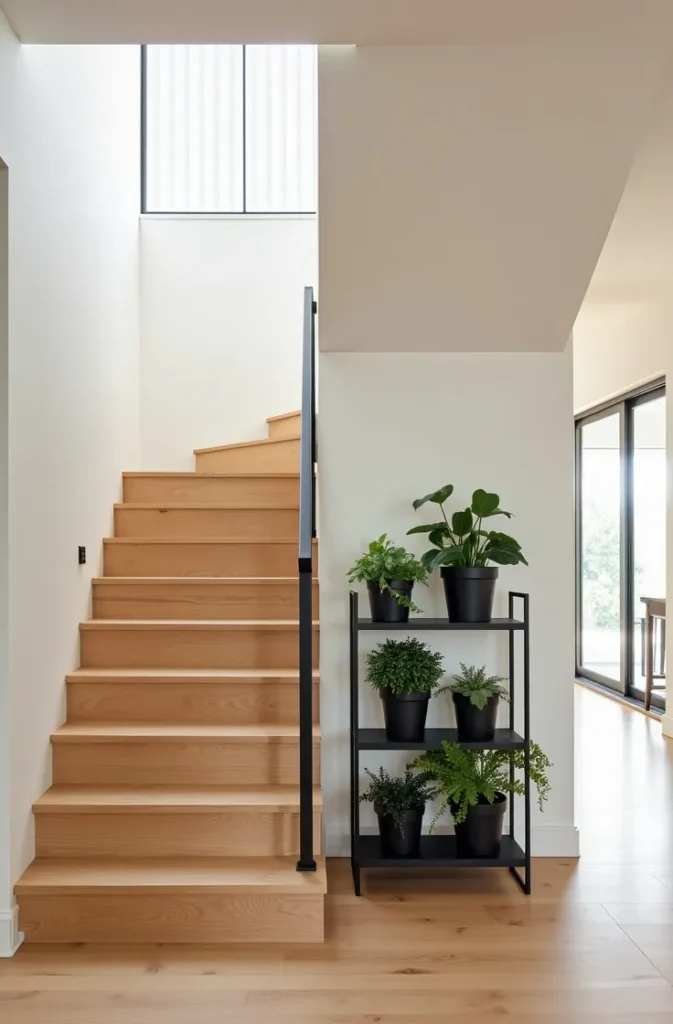
Position the tallest plants on the lowest shelf and the smallest on the highest to maintain visual balance and ensure every plant receives some ambient light. Use planters in a consistent material — matte ceramic, terracotta, or concrete — to keep the look cohesive rather than cluttered.

This layout works best in hallways and entryways where the staircase is a focal point. The mistake most homeowners make is mixing too many planter styles and plant types, which makes the display look accidental. Keep to two or three plant species and one planter material for a clean, intentional result.
2. Install a Built-In Planter Niche Directly Into the Wall Beneath the Stairs
If the space under your stairs is enclosed with drywall, cutting one or two recessed planter niches directly into that wall creates a built-in garden feature that looks architectural rather than added on. This is a permanent solution that adds real value to the home.
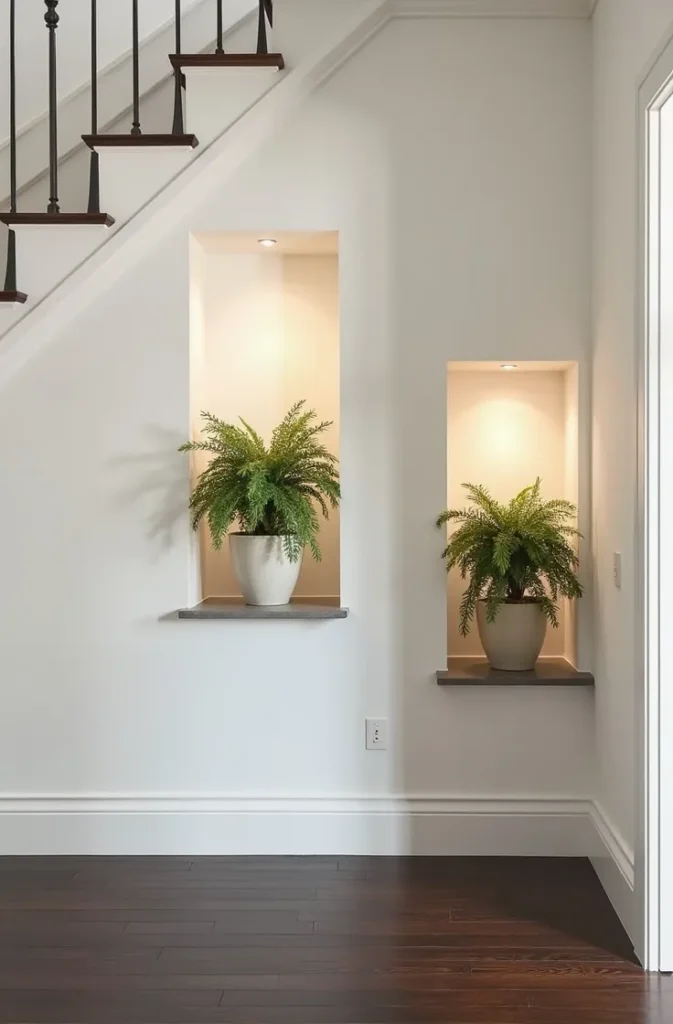
Each niche should be at least 12 inches deep and 16 to 20 inches wide to accommodate a meaningful planting arrangement. Add a thin LED strip inside the niche at the top edge to provide consistent grow light and to highlight the plants as a display feature.
This approach suits homes where floor space under the stairs is already used for storage or a powder room. The niche takes zero floor space and delivers year-round visual interest. Avoid placing the niche too high — eye level or just below is the most impactful position for a built-in garden display.
3. Create a Moss Wall Feature Behind Glass for a Low-Maintenance Living Display
A framed preserved moss wall panel mounted against the staircase wall or fitted inside a glass-fronted cabinet under the stairs creates a stunning living-art effect with virtually zero maintenance. Preserved moss requires no watering, no soil, and no light — making it ideal for under-stair spaces that receive little or no natural light.
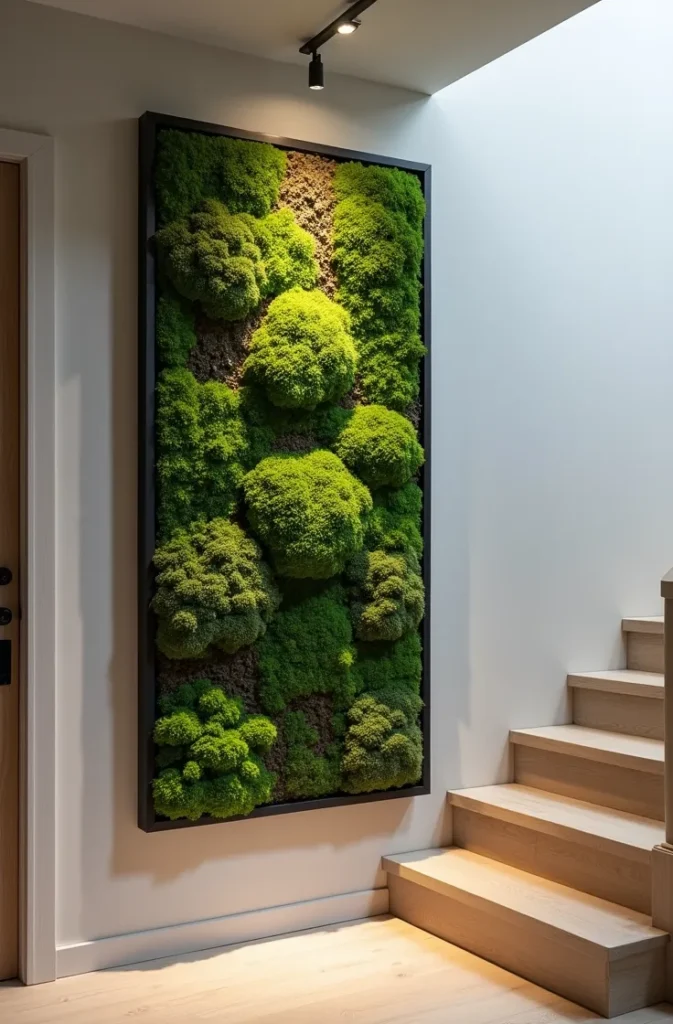
Choose a combination of flat sheet moss, reindeer moss, and mood moss arranged in a simple grid or organic composition within a slim timber or metal frame. Scale the panel to the wall — a single large panel reads better than several small ones in a confined space.
This is one of the most practical small garden under the stairs ideas for dark interior spaces or windowless hallways. It delivers the visual warmth of a plant display without any of the care requirements. The mistake to avoid is choosing artificially dyed moss in bright greens — natural tones look far more sophisticated and realistic.
4. Use a Glass Greenhouse Cabinet Under the Stairs as an Indoor Growing Station
A slim glass-fronted greenhouse cabinet — sometimes called a plant cabinet or greenhouse box — fitted into the under-stair space creates a fully controlled growing environment. This is one of the most functional under-stair garden ideas for plant lovers who want to grow humidity-loving or light-sensitive species.
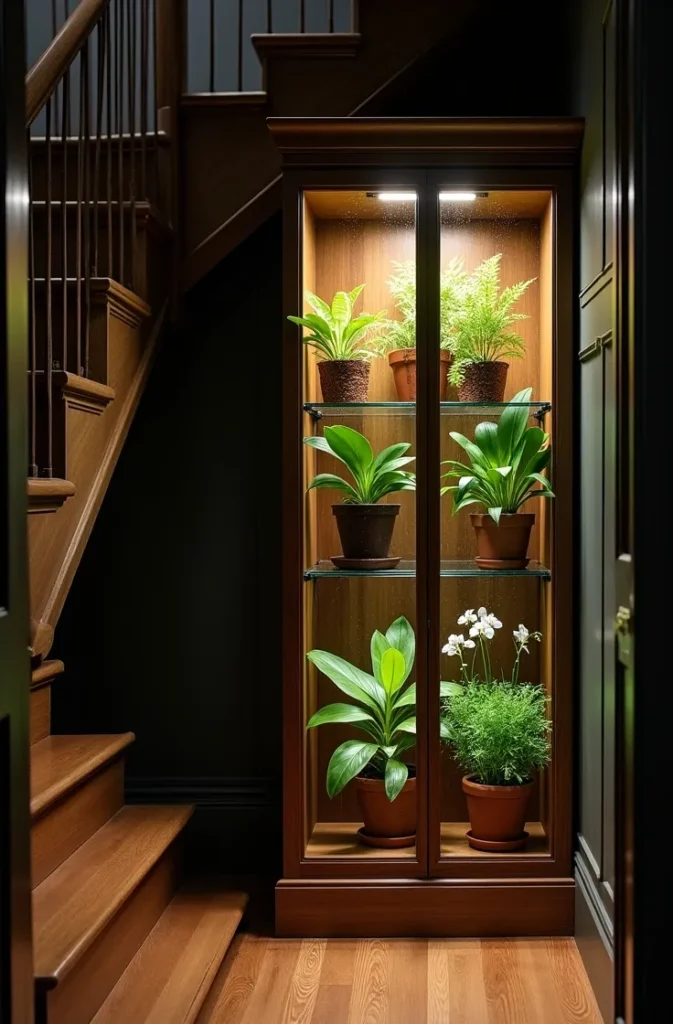
Look for custom or semi-custom cabinets that fit your specific under-stair dimensions. Add a grow light strip to the interior ceiling, a small USB fan for air circulation, and a removable drip tray on the base. The glass front keeps humidity in while making the plants fully visible as a display.
This layout is particularly effective for ferns, orchids, calatheas, and tropical plants that would otherwise struggle in standard indoor conditions. It functions as a micro-climate garden under a staircase that any standard home can accommodate. Avoid sealing the cabinet completely — some ventilation is necessary to prevent mold and rot.
5. Design a Minimalist Zen Corner With a Single Specimen Plant and Gravel Tray
Sometimes the most impactful small garden under the stairs is the most restrained. A single large specimen plant — a fiddle-leaf fig, an olive tree, or a sculptural snake plant — positioned in a wide low planter on a gravel tray creates a Zen-influenced display that feels considered and calm.
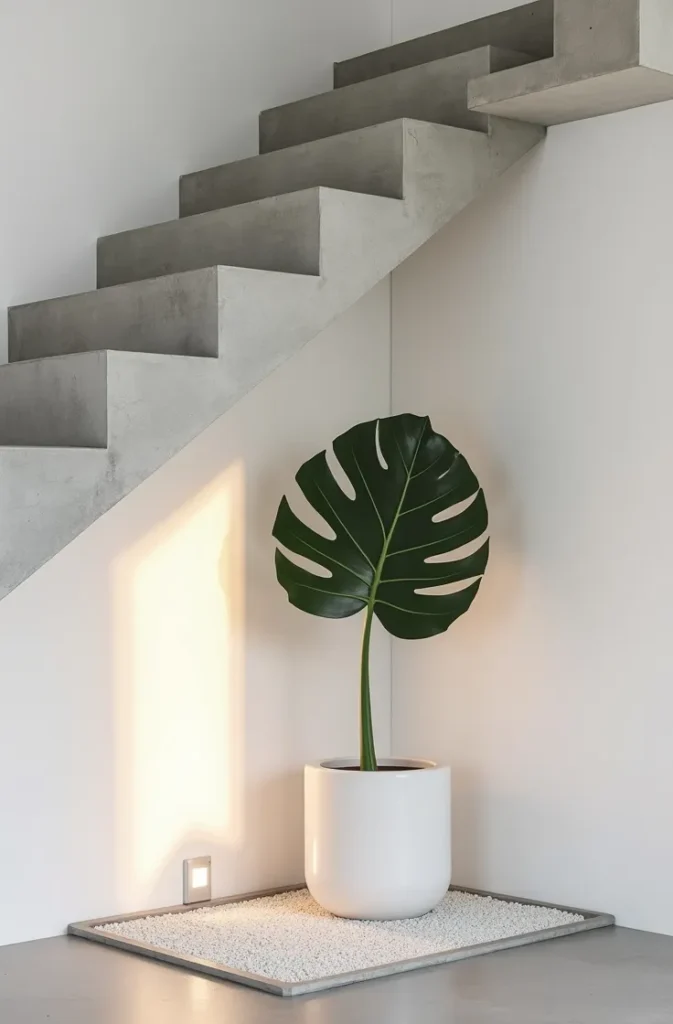
Use a wide shallow ceramic or concrete planter in a matte neutral tone. Place a thin layer of white or pale gray pebbles around the base of the plant within the tray to manage water runoff and add a clean ground-level detail. Position a single directional floor spot or wall-mounted picture light above the plant to create a gallery-like effect.
This is the right choice when the under-stair space is modest — four to six square feet — and you want maximum visual impact with minimum complexity. It works in entryways, open-plan living rooms, and modern condos equally well. The mistake here is choosing a plant that grows too quickly and outgrows the space within a season.
6. Install Hanging Planters at Staggered Heights From the Stair Underside
For open or semi-open staircases, hanging planters suspended from the underside of the stair structure at different heights creates a cascading vertical garden effect that uses completely dead space. This is a genuinely clever indoor garden layout idea for stairs in open-plan homes.
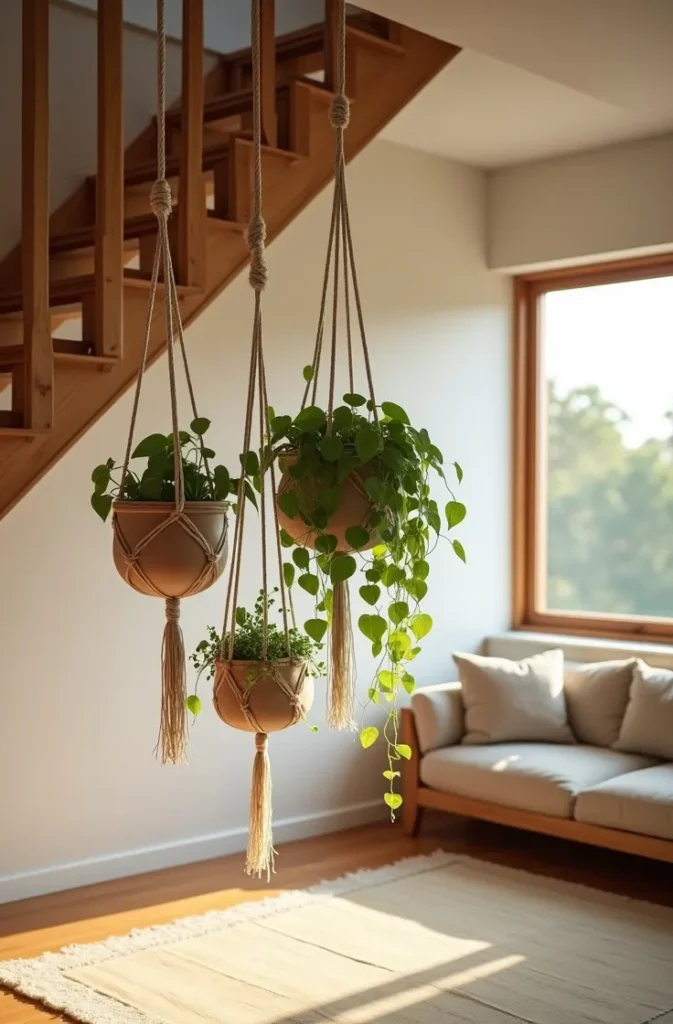
Use ceiling hooks or small eye bolts fixed into the stair stringers or joists. Hang macrame or slim metal-ring planters at three different drop lengths — short, medium, and long — to create a layered waterfall effect. Choose trailing plants such as pothos, string of hearts, or spider plants that spill downward naturally.
This layout works best when the staircase is a feature element in an open-plan living or dining area, where the hanging garden becomes a room divider as much as a display. In a narrow hallway, hanging planters can obstruct movement, so assess clearance carefully before committing.
7. Build a Narrow Hydroponic Tower Garden in the Under-Stair Alcove
A slim vertical hydroponic tower — purpose-built for herbs, salad greens, or small vegetables — fits neatly into the vertical alcove created by the underside of a staircase and can operate entirely on artificial grow light. This is a genuinely functional under-stairs garden for kitchen-adjacent spaces.
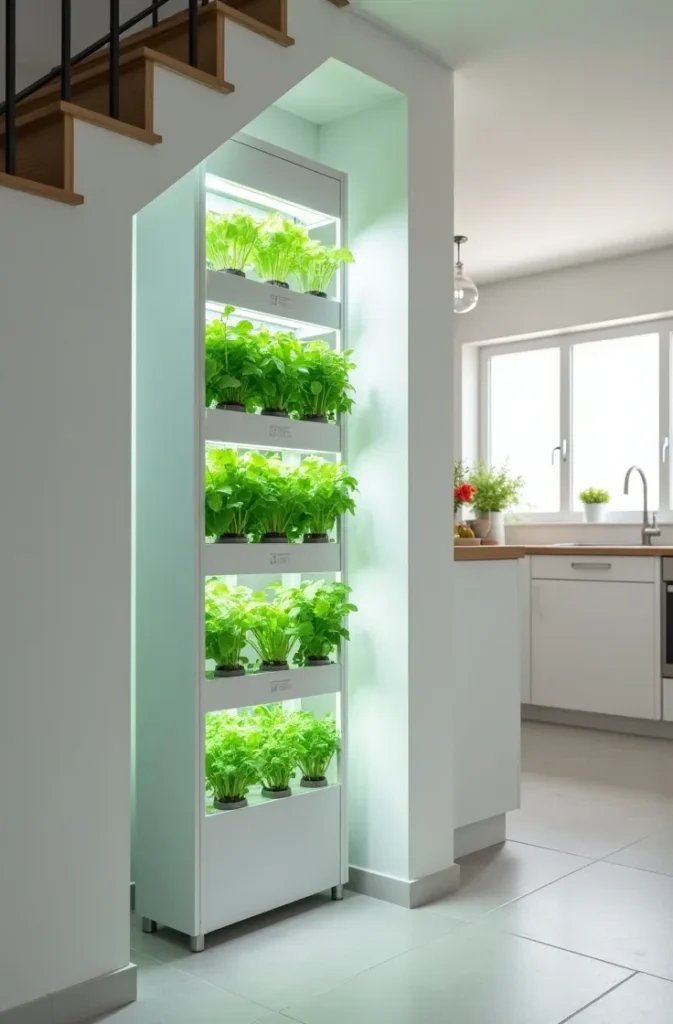
Position the hydroponic tower within two to three feet of the kitchen for convenient harvesting. The tower requires a power outlet for the pump and grow lights, so plan the location around existing electrical access. Most towers are 24 to 36 inches wide and 60 to 70 inches tall, which suits the triangular geometry of the under-stair space well.
This is one of the most practical indoor staircase garden ideas for homeowners who want their under-stair space to be productive rather than decorative. Fresh herbs and salad available steps from the kitchen represent real daily value. Avoid towers with noisy pumps in hallways adjacent to bedrooms or living rooms.
8. Line the Under-Stair Wall With a Continuous Planter Shelf at Dado Height
A single continuous planter shelf running the full length of the under-stair wall at dado height — approximately 36 inches from the floor — creates a simple, gallery-like plant display that works in both traditional and modern American homes. The shelf follows the diagonal line of the staircase above, which makes it look architecturally intentional.
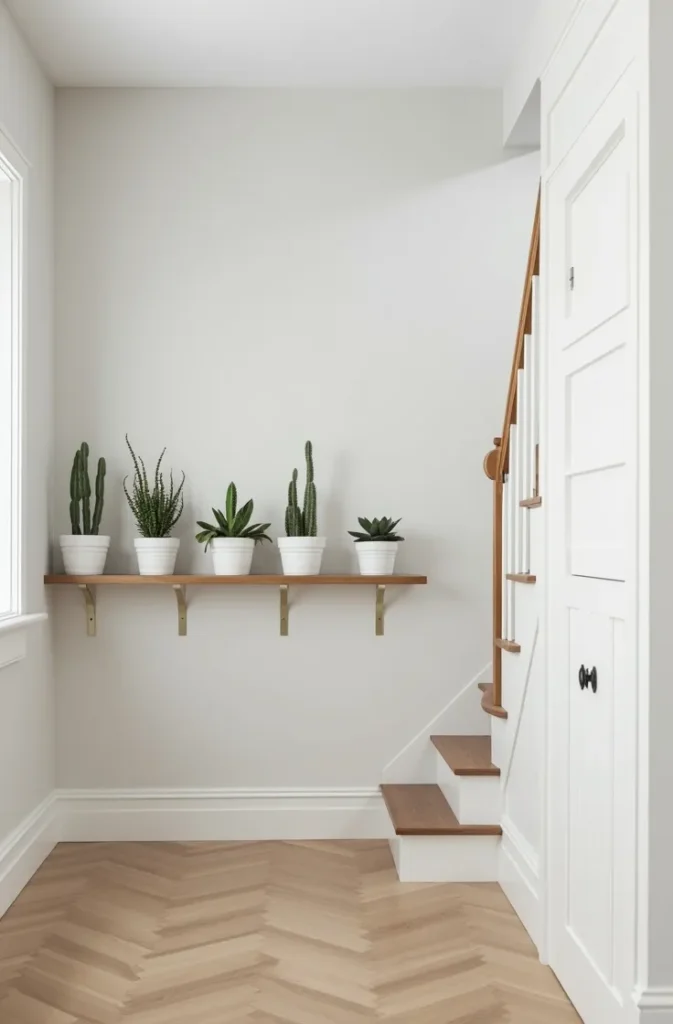
Build or install the shelf in painted MDF, solid timber, or powder-coated steel depending on your interior style. Keep the shelf depth at 10 to 12 inches to accommodate standard nursery pots. Use a consistent pot size and species across the shelf for a clean, curated look.
This approach is excellent for staircase walls in open hallways and foyers where a full cabinet or freestanding furniture is not practical. The continuous line of greenery draws the eye along the wall and up toward the staircase, which makes the hallway feel longer and more designed. Avoid overcrowding — leave space between pots so each plant reads individually.
9. Create a Lush Tropical Corner Garden Using a Grow Light Arc Lamp
In homes without natural light reaching the under-stair space, a single arc-style floor lamp fitted with a full-spectrum grow bulb can support a surprisingly lush tropical plant arrangement. This is one of the most accessible small garden under the stairs setups because it requires no construction.
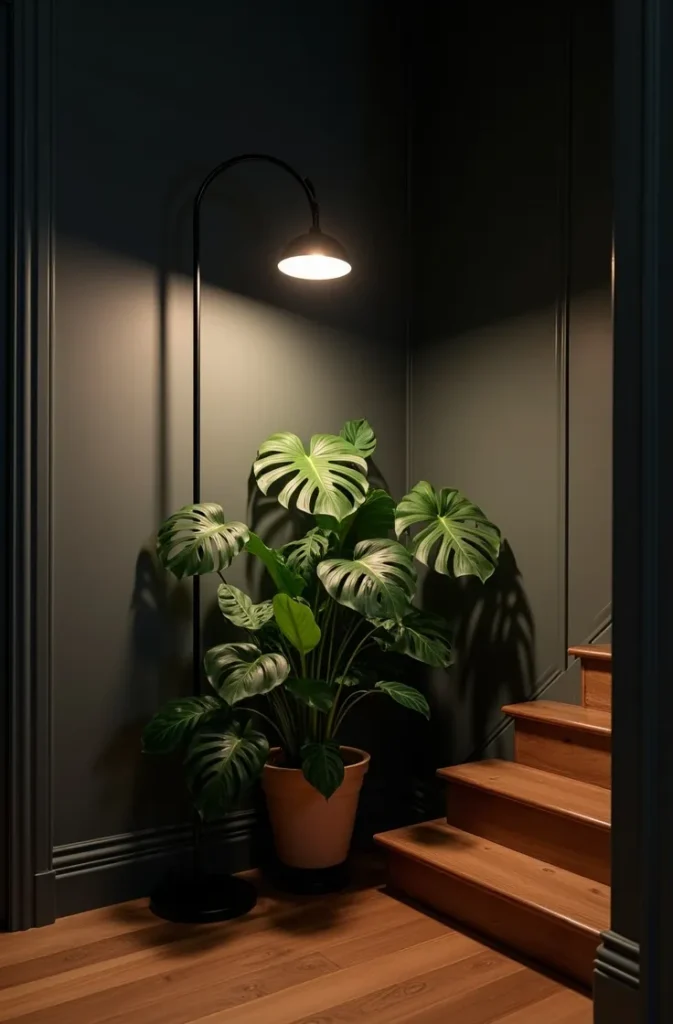
Position a large arc floor lamp so the head extends over a grouping of three to five tropical plants arranged at different heights using pot risers or small stools. Choose plants with large, dramatic foliage — elephant ear, bird of paradise, or monstera deliciosa — for maximum visual impact in limited floor space.
The grow light arc lamp approach suits renters and anyone who cannot make permanent changes to the home. It is also easy to adjust or relocate as the space changes. The common mistake is using a standard warm bulb rather than a full-spectrum grow bulb — standard light will not sustain most tropical plants over time.
10. Use the Full Triangular Under-Stair Volume as a Walk-In Plant Room
If the under-stair footprint is large enough — typically six feet wide and four or more feet deep at the base — converting the entire space into a dedicated plant room is the most immersive small indoor garden idea available. Remove the wall entirely, install full-height shelving on three sides, add grow lights, and treat it as a separate garden zone within the home.
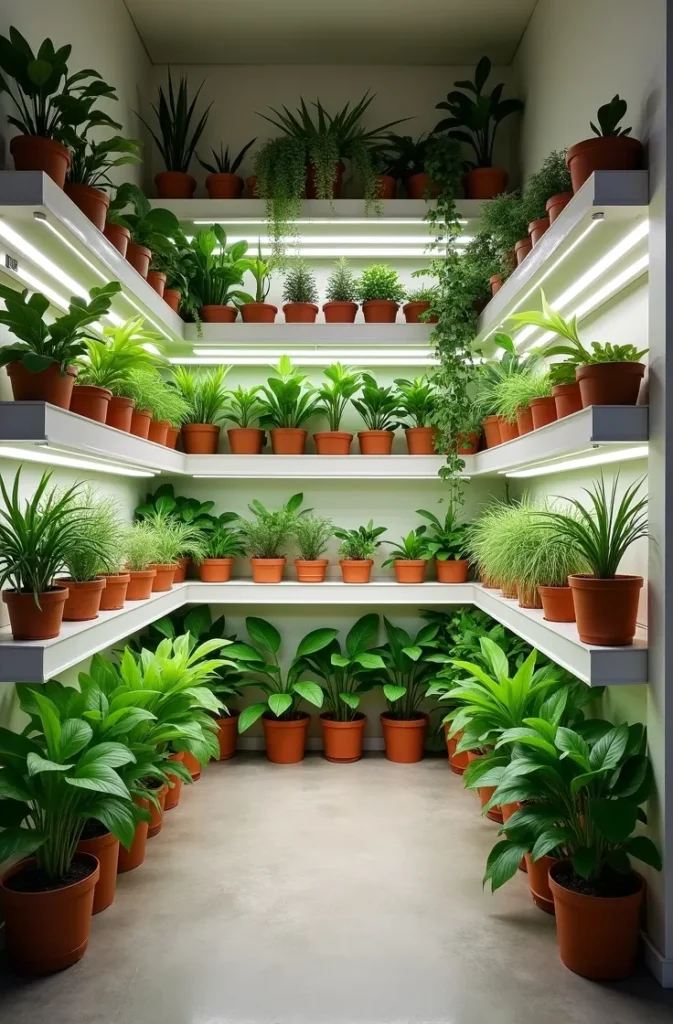
Line the sides and rear wall with adjustable shelving at three or four heights. Use waterproof flooring inside — large-format tile or sealed concrete — to handle watering runoff. Add a small drip irrigation system for the higher shelves that are harder to reach manually.
This is a committed, high-impact solution that works best in homes where the under-stair space is generous and there is no need for storage in that location. It is genuinely one of the most dramatic under-stair garden ideas for plant collectors and enthusiasts. Ventilation is critical — install a small wall or ceiling fan inside to prevent mold in the humid environment.
11. Mount a Vertical Peg Rail System for Hanging Air Plants and Lightweight Pots
A Shaker-style peg rail or a horizontal dowel rail system mounted on the under-stair wall allows you to hang lightweight tillandsia air plants, small wicker baskets with succulents, and decorative planters at varying positions. This is a fully flexible display system that requires no permanent shelving.
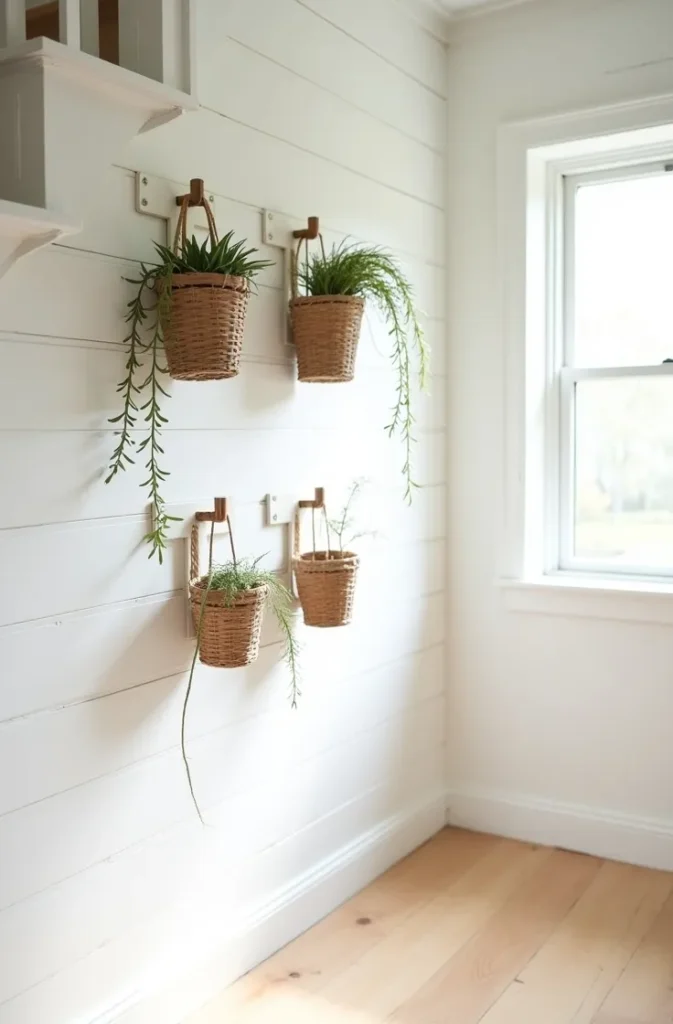
Use a solid timber peg rail in oak, walnut, or painted white and mount it at two heights — one at 48 inches and one at 60 inches — to create layered hanging positions. Air plants require no soil and almost no water, making them ideal for a display that gets minimal daily attention.
This setup works particularly well in small under-stair spaces where a shelf or cabinet would feel too heavy or dominant. The peg rail keeps the wall light and the display easily changeable. Avoid hanging pots that are too heavy — the rail is designed for lightweight display, not structural planting.
12. Design a Herb Garden Planter Box Built Into the Base of the Stair Enclosure
A custom built-in planter box running along the base of the stair enclosure wall — essentially a wide, low raised bed built into the skirting line — delivers a permanent herb garden that looks like it was always part of the architecture.
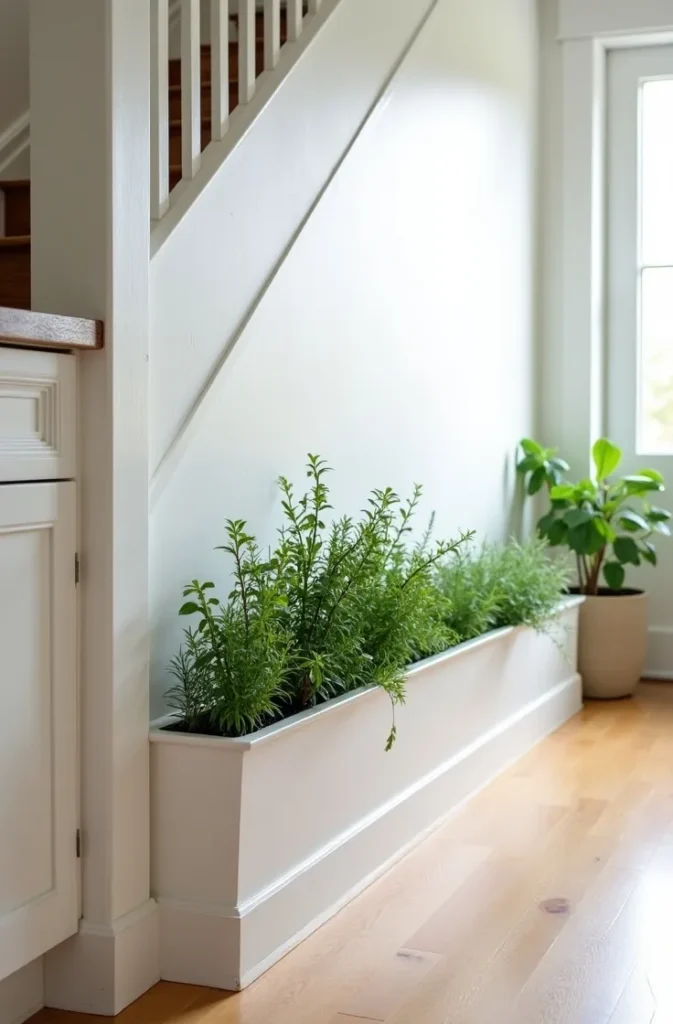
Build the planter from treated timber or waterproofed MDF with a waterproof liner and drainage holes leading to a concealed tray. Keep the height at 10 to 14 inches and the depth at 12 inches. Plant with a rotation of kitchen herbs — rosemary, thyme, mint, and basil — positioned near the kitchen for practical daily use.
This is one of the most functional under-stair indoor planting ideas for homes where the staircase is near or adjacent to the kitchen. The built-in design looks polished and adds to the perceived value of the space. The critical mistake is failing to install adequate drainage — standing water in a built-in planter will damage the surrounding structure quickly.
13. Suspend a Geometric Trellis Frame Under Open Stairs for Climbing Plants
A flat geometric trellis panel — in black steel, brass-finished metal, or painted timber — mounted vertically beneath an open staircase gives climbing or vining plants a structure to grow across. Over time, the trellis fills in with greenery and becomes a living architectural feature.
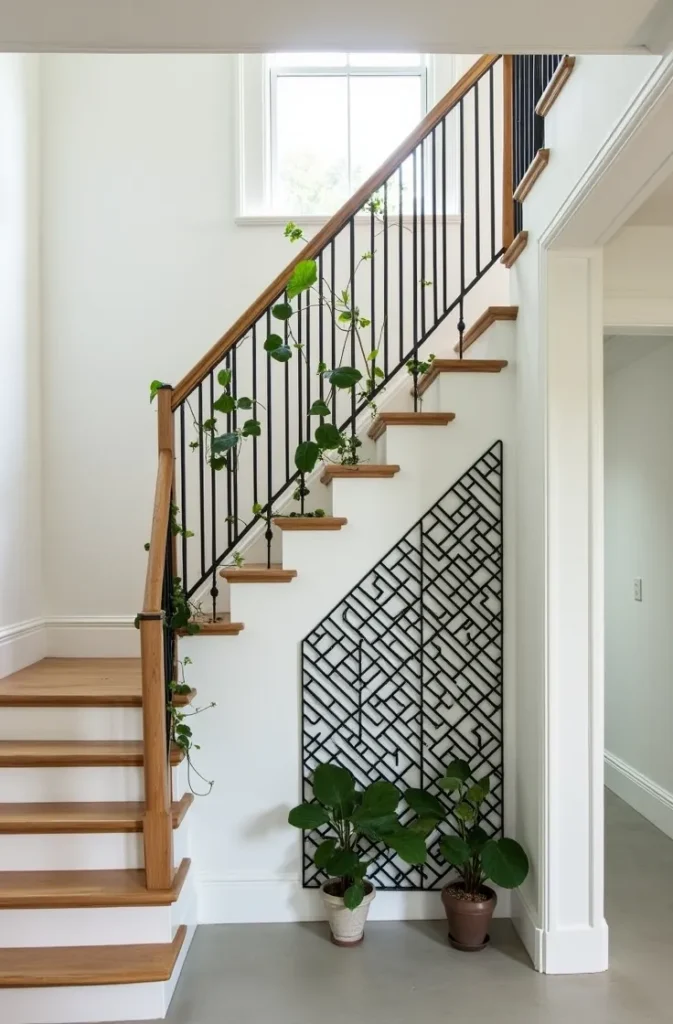
Use a panel-style trellis with a grid or diamond pattern and mount it flush against the wall behind the staircase. Train a pothos, a heartleaf philodendron, or a small-leafed ivy to climb the trellis using soft plant ties. The plant will follow the structure naturally within a few weeks.
This is a strong choice for living rooms and open-plan areas where the staircase is a design feature and the under-stair wall is highly visible. It creates a slower, evolving garden display that improves over months rather than being fully formed on day one. Avoid fast-growing invasive vines indoors — they can damage walls and are difficult to manage in a confined space.
14. Place a Self-Watering Planter Column as a Freestanding Sculpture Under the Stairs
A tall, slim self-watering planter column — a single vertical unit with multiple planting pockets at different heights — functions as both a garden feature and a freestanding sculpture in the under-stair space. No installation is required, making it ideal for renters or anyone wanting a no-commitment solution.
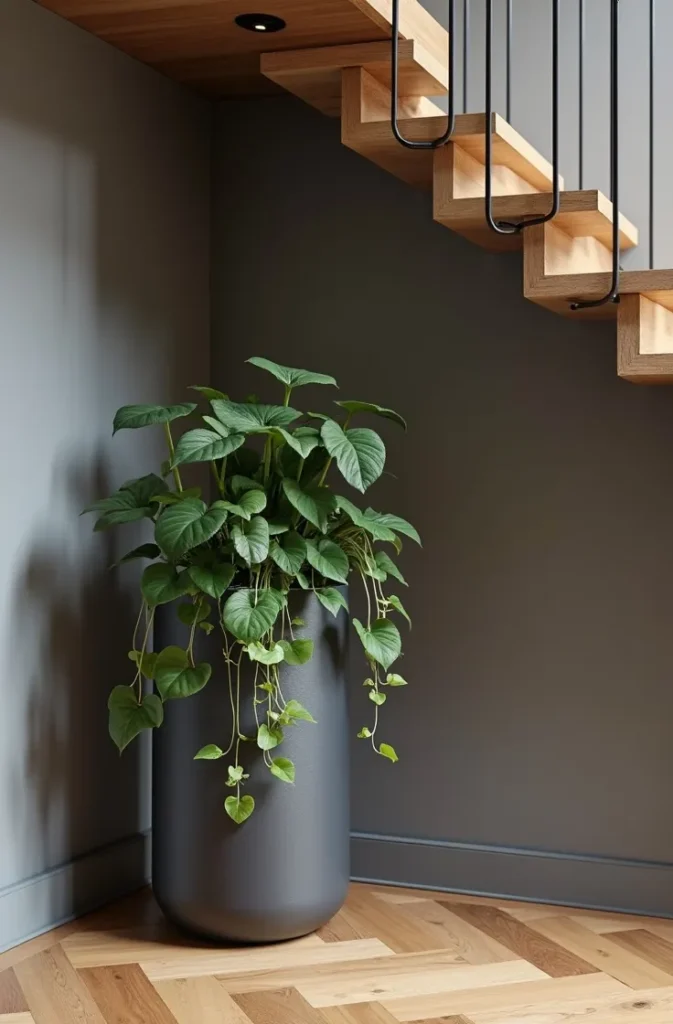
Choose a column in matte black, brushed concrete, or white ceramic finish to match your interior palette. Plant each pocket with a single species — trailing string of hearts at the top, compact peperomia in the middle, and a small succulent at the base — for a layered effect.
This freestanding approach is one of the easiest indoor staircase garden ideas to execute because it requires only a power outlet if a grow light is attached. It works in any size of under-stair space, including very small corner areas. The key is choosing a column proportional to the height available — measure the underside of the staircase at the point where the column will stand.
15. Transform the Under-Stair Powder Room Into a Plant-Filled Green Interior
If the space under your stairs is already a powder room, incorporating a deliberate plant display inside turns a functional utility space into a standout interior moment. A curated selection of humidity-loving plants thrives naturally in a bathroom environment without any supplemental watering.
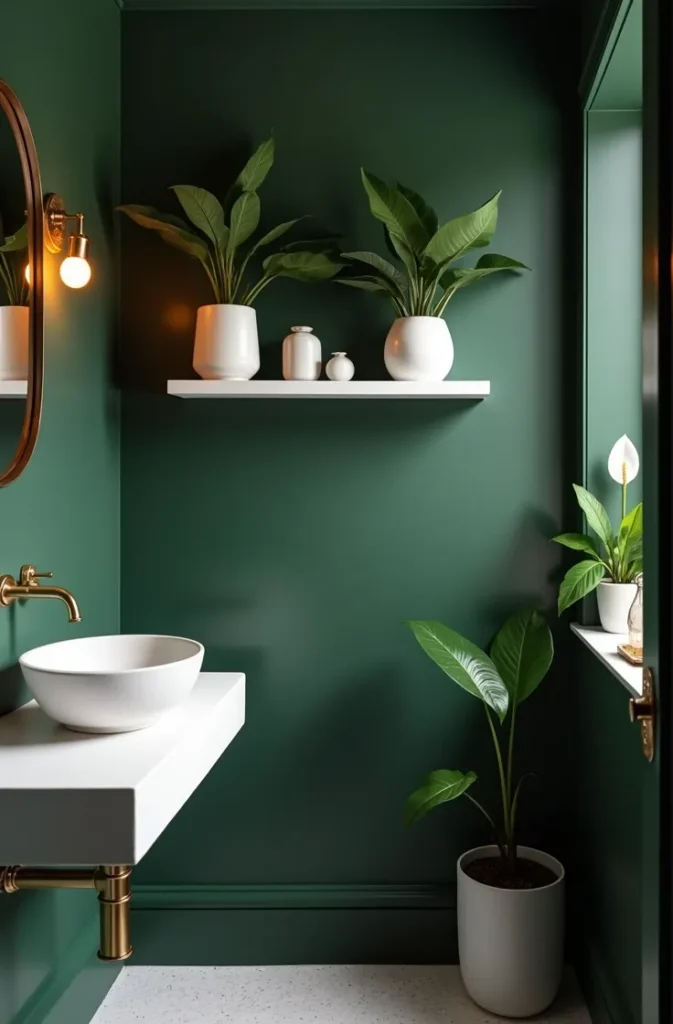
Mount two or three slim floating shelves above the toilet or beside the vanity and fill them with pothos, ZZ plants, or cast iron plants in consistent ceramic pots. Add a single large floor plant in the corner if space allows — a peace lily or dracaena works well in low-light bathroom conditions.
This is a practical and high-impact indoor garden idea for homeowners who do not have usable open floor space under the stairs. The humidity from the powder room supports plant growth naturally, which reduces maintenance. Avoid plants with very large root systems that will quickly outgrow a small bathroom container.
16. Use Clear Acrylic Floating Shelves to Display Plants Without Visual Weight
In under-stair spaces where the wall itself is a feature — exposed brick, a statement wallpaper, or a decorative finish — clear acrylic floating shelves allow you to display plants without the shelf hardware visually competing with the wall behind. The plants appear to float independently in front of the wall.
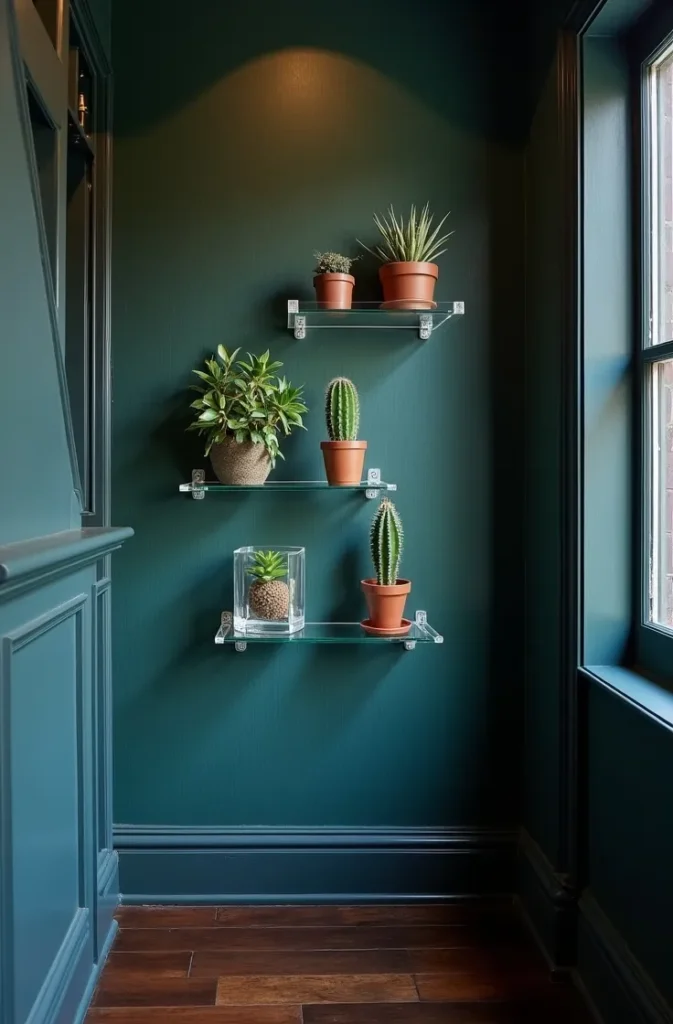
Use two or three clear acrylic shelves of different widths at varied heights. Keep the plant selection small and sculptural — a single cactus, a geometric air plant display, or a compact succulent arrangement on each shelf. The transparency of the shelf material means the wall remains the dominant feature.
This is the right approach when you have invested in a statement wall finish and do not want shelving hardware to undercut it. It works equally well in modern, eclectic, and maximalist interiors. The practical limitation is weight — acrylic shelves are not designed for heavy pots, so keep to lightweight ceramic or plastic containers.
17. Create a Seasonal Bulb and Flower Display on a Low Under-Stair Trolley
A slim wooden or metal trolley on casters placed under the stairs creates a flexible, moveable garden display that can be changed with the seasons — spring bulbs, summer flowering plants, autumn foliage, winter greenery. The trolley can be rolled out for entertaining and returned to its position without effort.
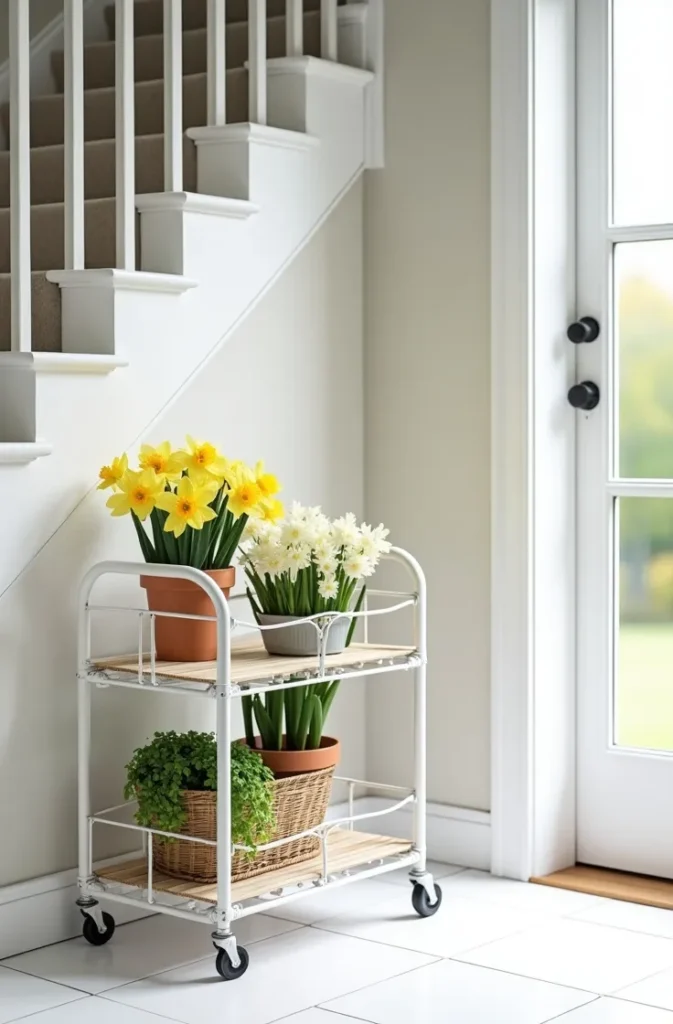
Use a two-tier trolley no wider than 18 inches to keep it proportional to the under-stair space. Line the trays with removable waterproof liners. Change the plant arrangement every six to eight weeks to keep the display fresh and seasonally relevant.
This is the most adaptable of all the small garden under the stairs ideas because it commits to nothing permanent and costs very little to refresh. It suits families with changing tastes and homeowners who enjoy seasonal decorating. The practical limitation is that a trolley on casters must sit on a flat, hard floor — it does not work on carpet.
18. Install an Under-Stair Garden Window Box That Faces an Interior Courtyard or Atrium
In homes with an interior courtyard, atrium, or lightwell adjacent to the staircase, a window box mounted on the interior-facing wall directly under the stairs captures natural light that would otherwise go unused. This is one of the most light-efficient indoor staircase planting solutions available.
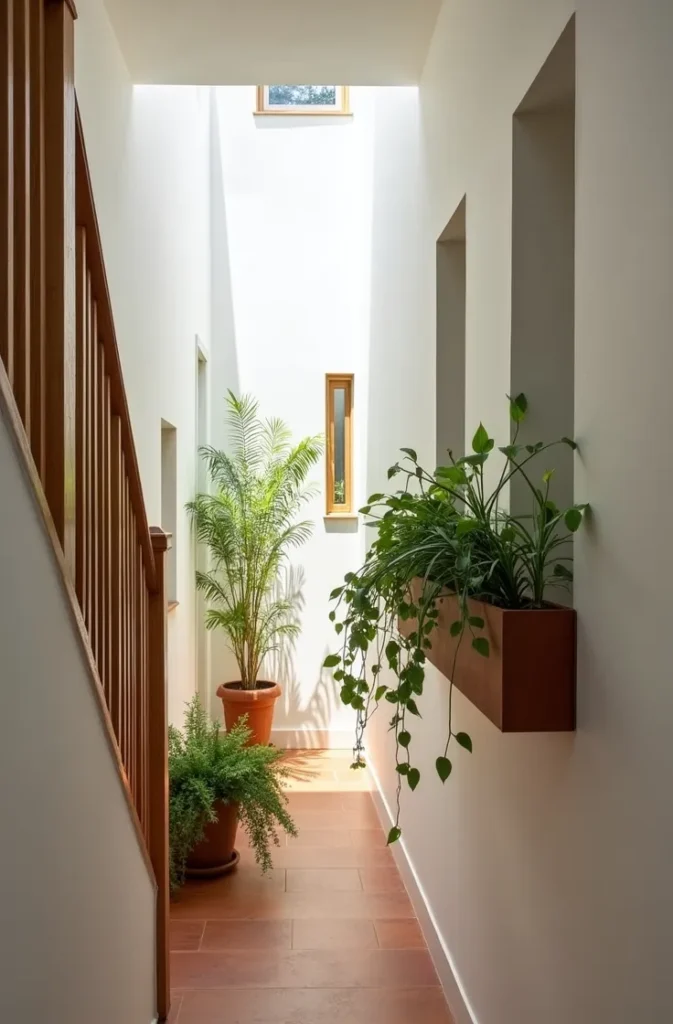
Mount a slim powder-coated steel or timber window box on the wall between the stair space and the light source. Plant with species that thrive in bright indirect light — pothos, nerve plant, or compact orchids. The box should be positioned to catch the light without obstructing movement through the hallway.
This solution is specific to homes with interior light wells, which are common in Victorian rowhouses, courtyard-style apartments, and certain mid-century designs. If your home has this configuration, it is the single best place to establish a natural-light plant display under the stairs. Ensure the box has a secure waterproof liner and drainage before planting.
Conclusion
The space beneath a staircase is one of the last genuinely underused areas in most American homes, and as these ideas show, it is also one of the most versatile. Whether you have a small corner, a full under-stair alcove, or an enclosed powder room, there is a plant display or garden layout here that fits your specific situation.
Save this post to your Pinterest garden or home decor boards — these ideas are worth returning to as your space evolves through different seasons and stages. Each idea here stands alone, but several can be layered: grow lighting with a glass cabinet, a peg rail with air plants, a herb box alongside a moss wall.
If you found these small garden under the stairs ideas useful, explore more indoor garden layout content for apartment balconies, windowsill growing setups, and compact patio garden design.