
If you are planning to add a backyard tiny guest house, the design you choose will determine whether the space feels like a retreat or a cramped afterthought. This guide covers 12 distinct layouts, each with practical guidance on when to use it, what makes it function well, and what to avoid — so you can move forward with a plan that fits your actual yard, budget, and lifestyle.
1. The Studio Loft Guest House: Maximum Ceiling Height, Minimum Footprint
A single-room studio with a sleeping loft above is one of the most space-efficient backyard tiny guest house designs available for narrow or shallow lots. The vertical use of space lets you pack sleeping, living, and a small kitchen into 200 to 300 square feet without the layout feeling compressed at eye level.
The loft works best when ceiling height reaches at least 14 feet. Below that, the sleeping area becomes uncomfortable for adults, and the lower level loses natural light. A steep, open-tread staircase against one wall keeps the floor plan open while providing secure access to the loft.
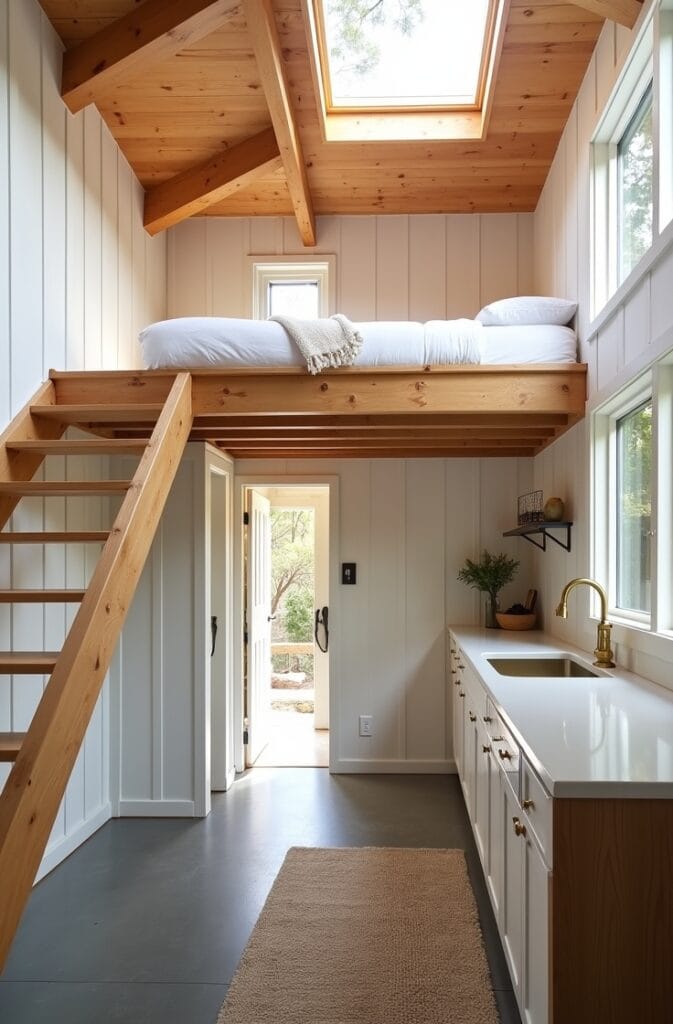

Use this layout when your lot has limited square footage but no height restrictions. It is a strong choice for yards in suburban neighborhoods where ground coverage is capped by local zoning but vertical construction is allowed.
Avoid placing the bathroom directly under the loft stairs. That corner tends to trap moisture and creates awkward clearance issues. Instead, position the bath on the opposite short wall, leaving the center of the ground floor open and flexible.
2. The L-Shaped Layout: Defined Zones Without Interior Walls
An L-shaped floor plan divides a backyard guest house into two distinct wings without requiring full partition walls. One arm typically holds the sleeping area, the other holds the living and kitchen space. A compact bath sits at the interior corner where the two arms meet.
This layout works well in wider lots where you have 20 to 30 feet of usable width. The natural bend in the plan creates a sense of separation between sleeping and living areas, which matters significantly when the unit is used by guests staying for a week or more.
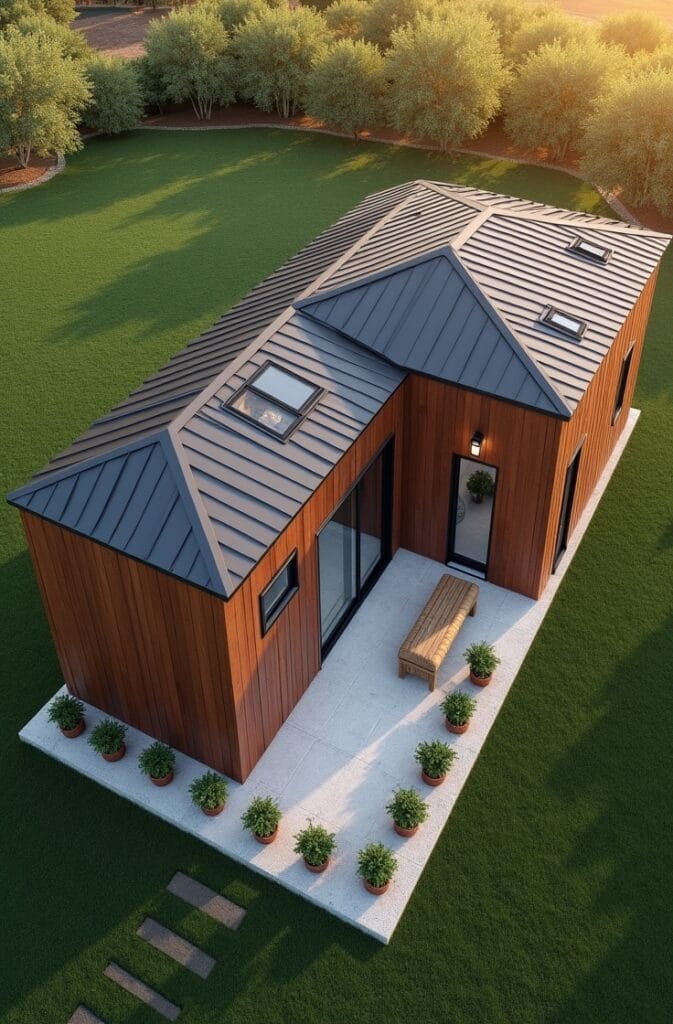
The corner placement of the bathroom is efficient because it shares plumbing walls with both wings, reducing pipe runs and construction cost. The exterior corner of the L also creates a sheltered outdoor patio space, which extends the guest’s usable area without adding indoor square footage.
One common mistake is making both arms of equal length. A longer living arm and a shorter sleeping arm creates better proportions and keeps the bedroom zone more private. Aim for a 60/40 split between the two.
3. The Single-Story Shed-Roof Design: Clean Lines for Modern Yards
A shed roof — a single sloping plane — gives a backyard guest house a clean, modern silhouette that fits naturally into contemporary landscaping. The high wall on one side allows for tall windows or a full-height glass panel, flooding the interior with directional light.
This is one of the most popular small guest house layout ideas for yards that already have a modern or minimalist aesthetic. The simple roofline is also one of the least expensive to build and easiest to waterproof correctly, which matters in wet climates.
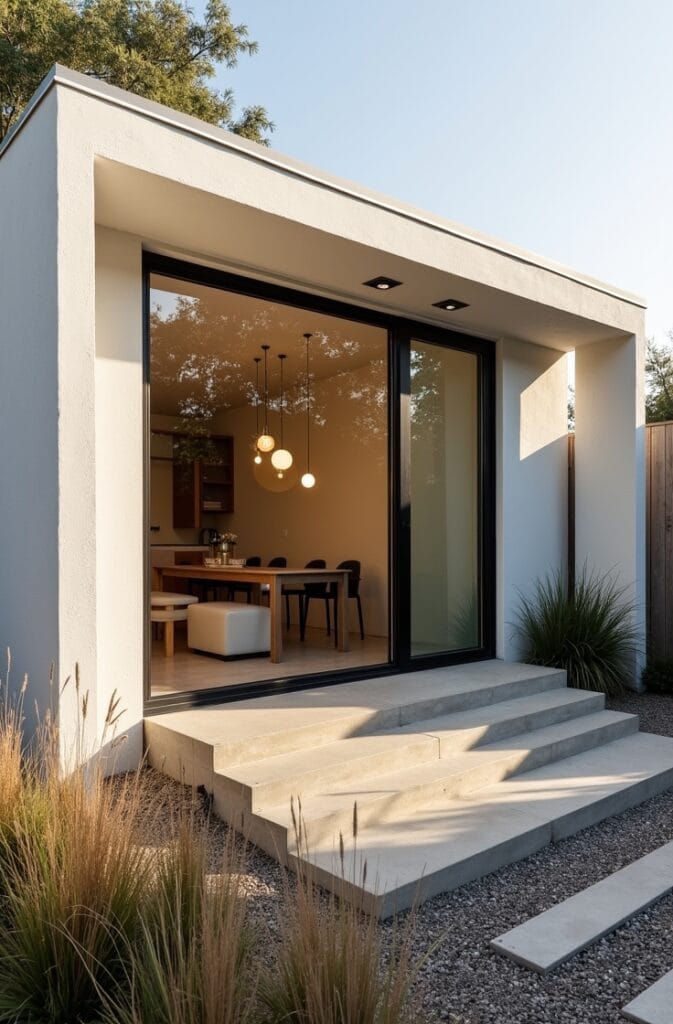
Orient the high wall toward the north or east for soft, consistent light without direct afternoon glare. South-facing high walls cause overheating in summer unless deep overhangs are included in the design.
The interior benefits most from an open-plan approach here. Placing the kitchen along the low wall, the living space under the high windows, and a partitioned bedroom at the back creates a logical flow that feels larger than the square footage suggests. This is a reliable functional kitchen floor plan concept adapted for a compact residential outbuilding.
4. The Gabled Cottage: Traditional Form With Efficient Interior Planning
A gabled roof cottage remains one of the most effective backyard tiny guest house designs for neighborhoods with traditional or craftsman-style homes. The peaked roofline integrates visually with surrounding architecture while giving the interior useful ceiling height at the center ridge.
The typical floor plan places entry and living area under the front gable, bedroom at the rear, and a compact bath and kitchen along one side wall. This linear arrangement works well on lots where the guest house sits parallel to the property line.
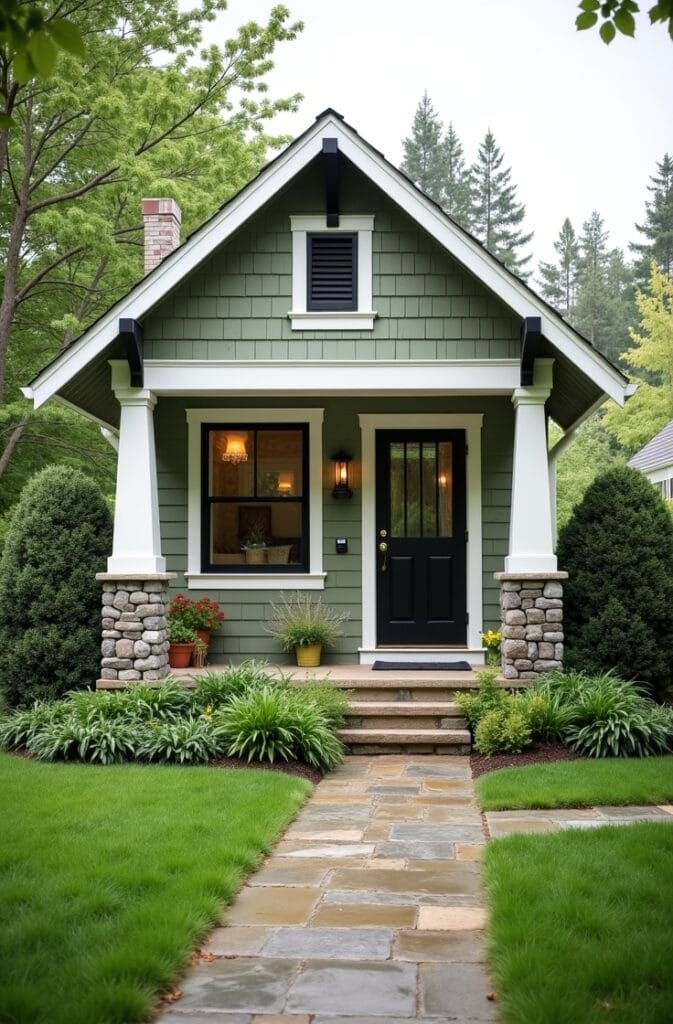
Keep the gable ends simple in materials. Board-and-batten or clapboard siding at the gable reads cleanly and avoids the overly decorative look that can date quickly. A covered front porch under a small shed extension off the main gable adds outdoor usability and improves the curb appearance.
For small guest house layout design, the gabled cottage struggles when the footprint drops below 180 square feet. At that size, the traditional form starts to feel more like a storage shed than a livable space. The minimum effective size for a gabled guest cottage is around 200 square feet, with 250 being more comfortable.
5. The Prefab Box Module: Precision-Built for Fast Installation
Modular and prefab guest house units have matured significantly in the past several years. Today’s box-module designs arrive on site 80 to 90 percent complete and can be installed on a prepared pad in a single day. For homeowners who want a functional backyard tiny guest house without a lengthy construction process, a prefab module is worth serious consideration.
The interior planning of quality prefab units maximizes every inch. Built-in storage runs floor to ceiling along one wall. The kitchen is a galley format along the entry wall. The sleeping zone is separated by a partial partition or a floor-level platform that signals a change in function without blocking light.
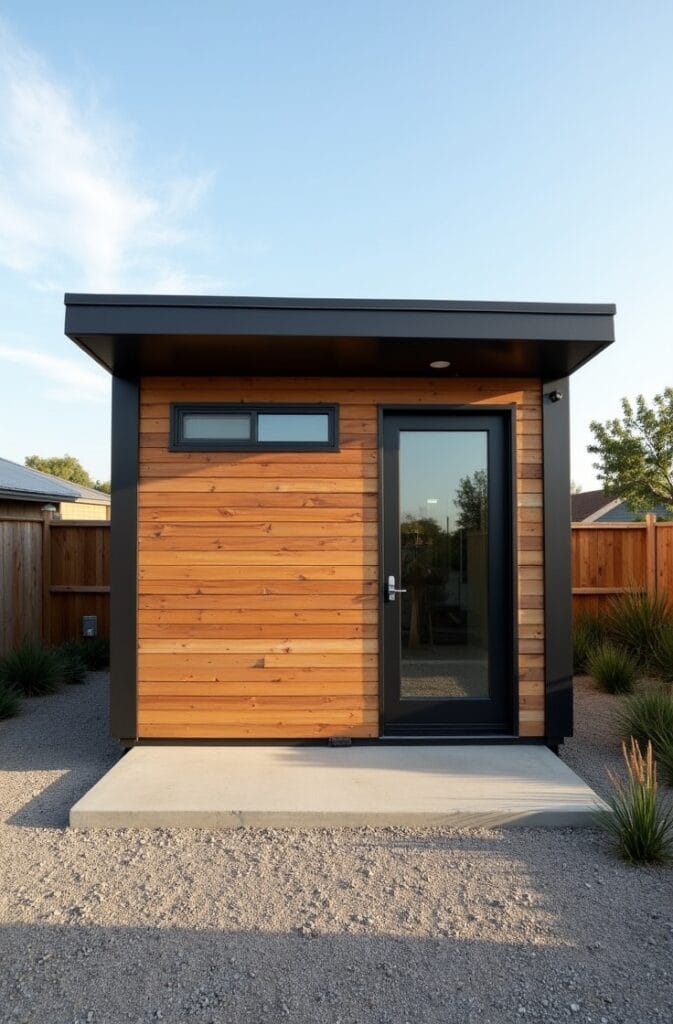
Prefab works best on flat lots with straightforward utility access. Sloped yards require a raised foundation or grading work that adds cost and time, partially eliminating the speed advantage. Confirm that your municipality allows prefab accessory dwelling units before purchasing, as permit requirements vary significantly by state.
One area where prefab often underperforms custom builds: acoustic separation. The lighter construction methods used in many modules transmit sound more easily. If guests will be working from the space or staying for extended periods, request acoustic specs from the manufacturer before committing.
6. The Garden Room Conversion: When a Structure Already Exists
Converting an existing garden room, large storage shed, or detached garage into a backyard guest house is one of the most cost-effective small guest house layout design paths available. The shell already exists — your work focuses on insulation, HVAC, plumbing rough-in, and interior layout.
The functional challenge in conversions is that the existing footprint was designed for storage, not living. Ceiling heights are often low, windows are small or absent, and the structure may sit on a slab that was not designed for wet-area plumbing. A thorough structural and code assessment before starting saves significant money.
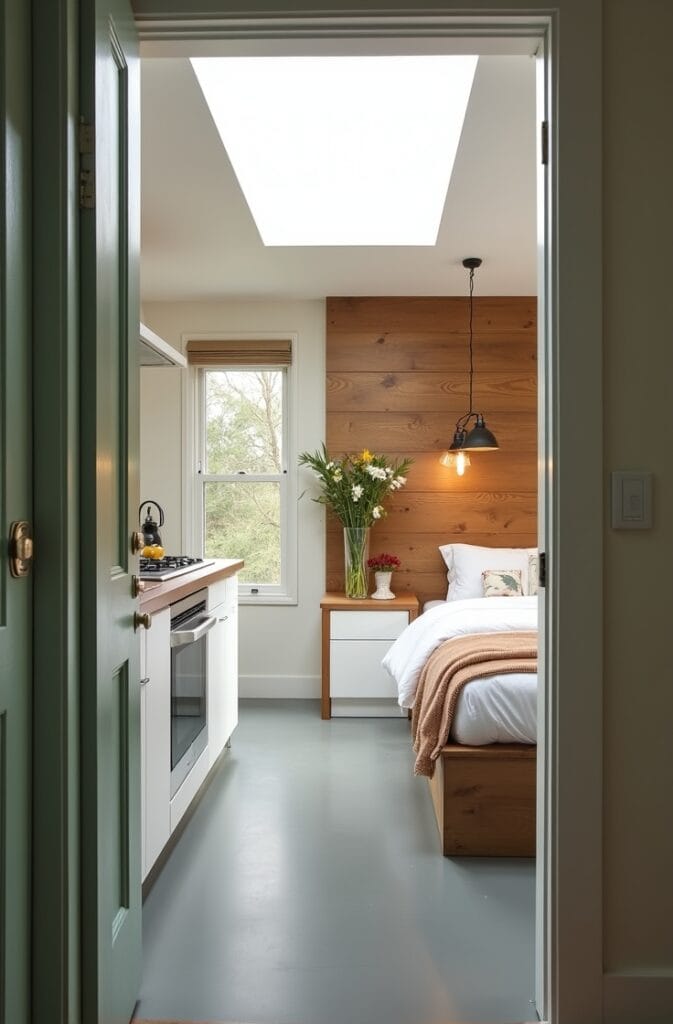
When planning the layout, keep the plumbing concentrated in one corner close to the closest exterior wall. This minimizes the excavation needed to run waste lines to the main sewer. A wet wall approach — stacking the bathroom, kitchen sink, and any laundry into a single plumbing cluster — reduces costs further.
Natural light is the biggest limitation in most conversions. Adding one or two skylights is often more effective than cutting new window openings into structural walls. A tubular skylight in the bathroom and a larger flat skylight over the kitchen area can transform what would otherwise be a dim, uninviting space.
7. The Screened Porch Hybrid: Indoor-Outdoor Living for Warm Climates
In warmer climates across the South and Southwest, a backyard tiny guest house that integrates a large screened porch effectively doubles the usable space for much of the year. The interior footprint can stay modest — 150 to 200 square feet — while the screened porch adds another 80 to 120 square feet of sleeping, dining, or lounging area.
This layout is particularly effective for weekend guest use. Guests who spend more time outdoors than in appreciate the ability to sleep on a porch daybed, eat breakfast outside, and retreat indoors only to shower and store luggage. The layout is not suited to year-round primary use in climates with cold winters.
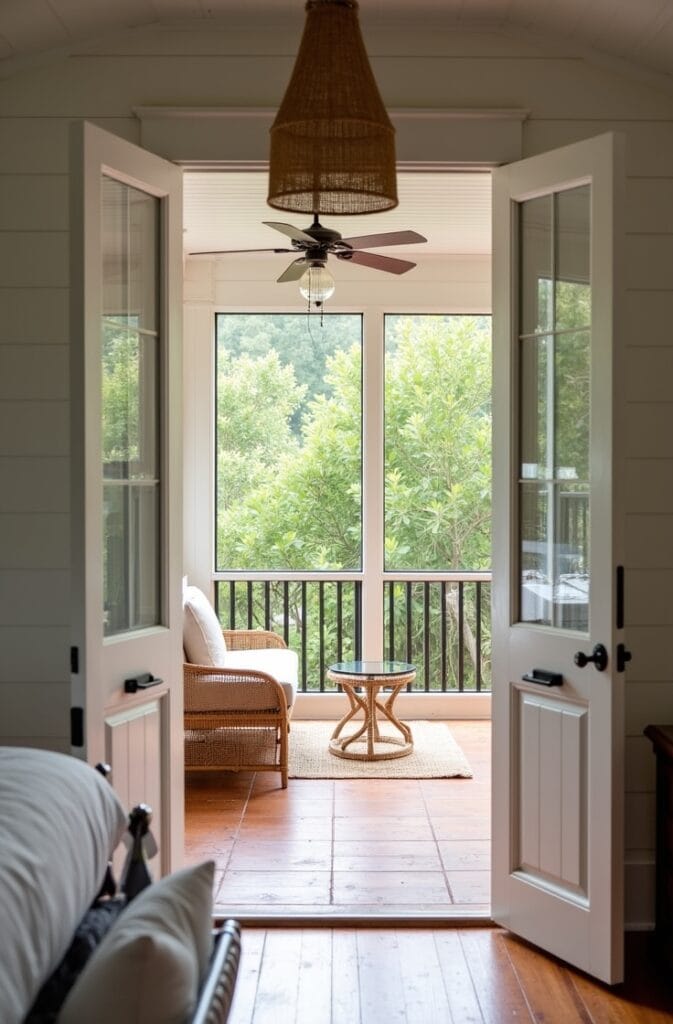
The interior should be treated as a pure functional core: bathroom, small kitchen, and a sleeping area. Pull the living function out to the screened porch rather than trying to accommodate everything inside. This focused interior planning makes the small square footage feel intentional rather than cramped.
Screening selection matters more than most homeowners expect. Standard fiberglass screen works adequately, but tighter mesh screens rated for no-see-um insects make a significant difference in livability in coastal and wetland areas. Specify the mesh rating based on your specific climate.
8. The Sunken Living Area Layout: Spatial Drama in a Small Footprint
Dropping the main living area 12 to 18 inches below the entry level creates an immediate sense of spaciousness and architectural interest that is rare in backyard tiny guest house designs. The sunken zone feels separate and sheltered without requiring a full room division, which preserves sightlines and light flow.
This layout works best with an open-plan kitchen at the entry level and the sunken lounge opening toward a glass wall or garden view. The single step down is enough to define the space. More than two steps creates a safety concern in a small unit where furniture is close to the edge.
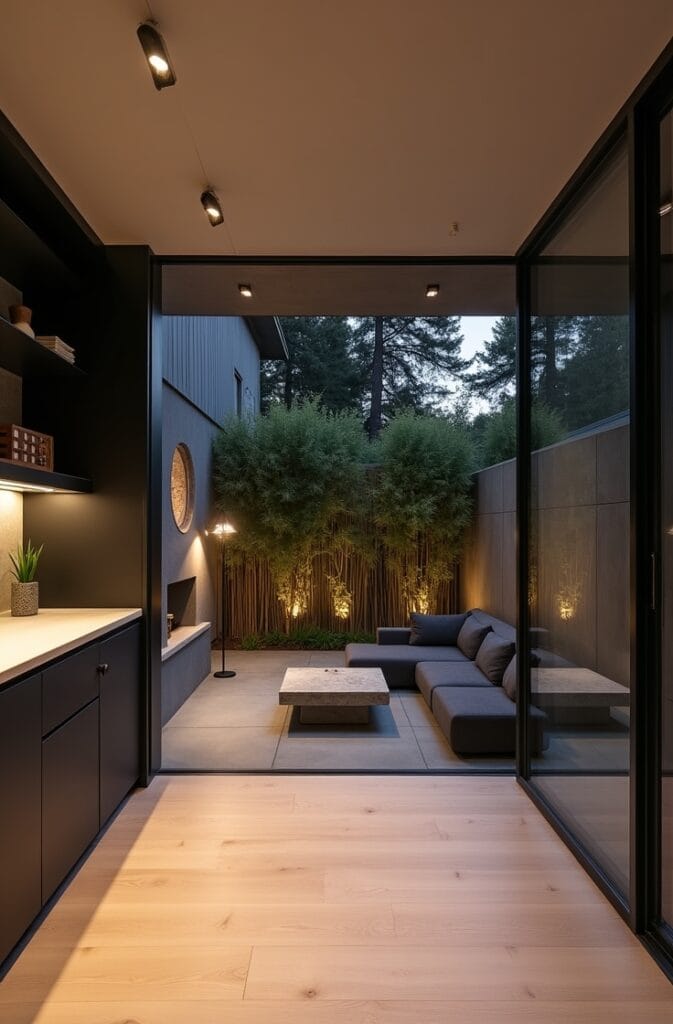
The sleeping area is typically positioned at the opposite end from the entry, on the same level as the entry or on a raised platform. Keeping sleeping and living at different levels — even if separated by only one or two steps — creates a layered, considered interior that feels more like a designed retreat than a utility space.
The limitation of this approach is construction cost. A sunken floor requires more extensive foundation work than a flat slab. It is not a practical choice for prefab or fast-track builds, but it adds significant perceived value and livability in custom construction.
9. The Sleeping Cabin Design: Pure Rest-Focused Simplicity
Not every backyard guest house needs a full kitchen or separate living area. A sleeping cabin design focuses purely on creating an exceptional resting environment. It includes a full bathroom, a well-sized sleeping alcove, a small built-in wardrobe, and a reading corner — nothing more.
This is the right choice when your main house has a kitchen and living area that guests will use during the day. The cabin becomes a private sleeping retreat, and guests appreciate the boundary between “their space” and the shared household. It also keeps construction costs significantly lower than a fully self-contained unit.
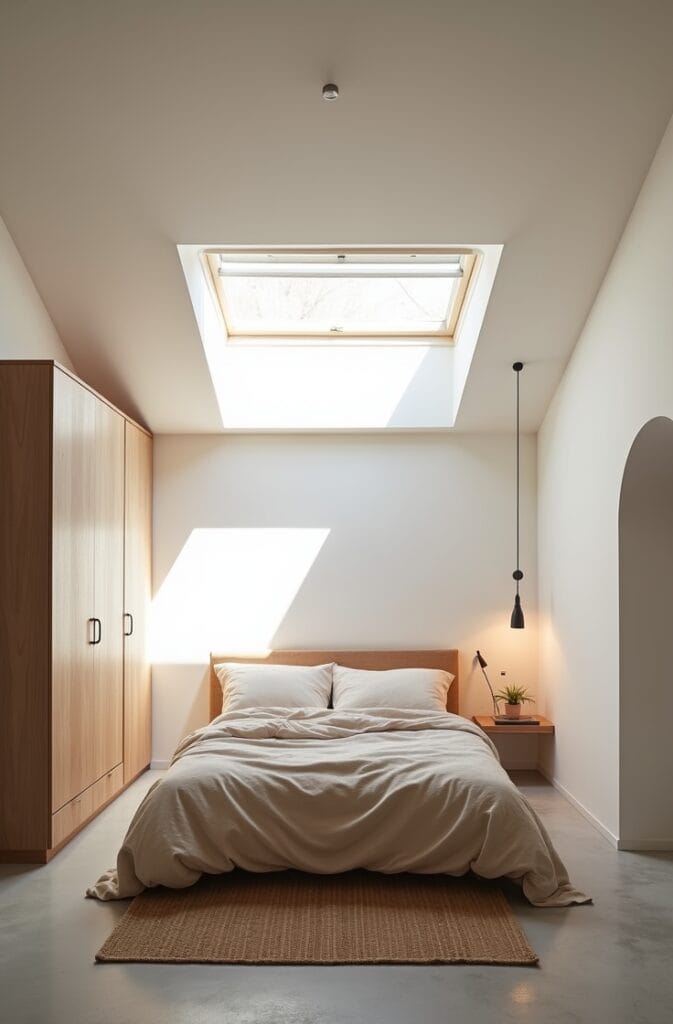
The interior design of a sleeping cabin benefits from extremely intentional material choices. A single high-quality bed, quality window treatments for blackout, and excellent acoustic insulation do more for the guest experience than a larger but poorly executed space. Every decision should serve sleep quality.
Natural ventilation deserves particular attention in a sleeping cabin. Operable windows on two opposing walls, positioned to create a cross-breeze, improve comfort significantly in all but the most extreme climates. A ceiling fan as a backup moves the conversation from functional space planning ideas to comfort engineering.
10. The Two-Story Micro-House: Full Function on a Small Lot Footprint
When ground coverage is tightly restricted but height allowances are generous, a two-story backyard guest house compresses full-function living into a minimal footprint. A ground floor of 150 square feet plus an equally sized upper floor creates 300 square feet of total living space on a 12 by 12 foot lot area.
The ground floor typically holds the kitchen, bath, and a living nook. The entire upper floor becomes the sleeping zone, often with a built-in desk tucked under the eave on one side. This vertical stacking is the most efficient use of footprint for homeowners who need a fully independent unit — full kitchen, full bath, sleeping, and work space — within tight zoning constraints.
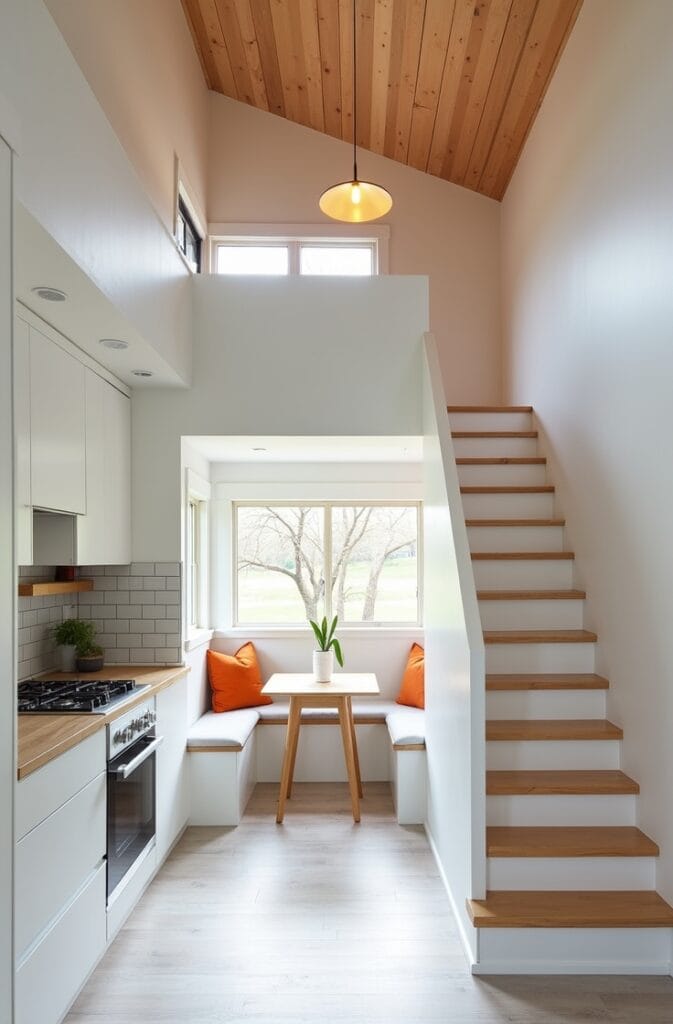
Stair placement is the most critical design decision in a two-story micro-house. A straight staircase uses the most floor space. A ship’s ladder saves floor area but is not suitable for all guests, particularly older visitors or those with mobility considerations. A compact quarter-turn stair with storage integrated underneath is usually the best functional compromise.
Natural light on the ground floor is the biggest challenge. With a full upper floor above, lower-level windows are the only source of daylight. Wider window openings on two walls and a light-colored interior palette help significantly. Dark finishes at ground level in a two-story micro-house will make the space feel like a basement.
11. The Japanese-Influenced Compact Guest Pavilion
Japanese residential design has refined small-space living over centuries, and its principles translate directly into backyard tiny guest house designs. The defining elements are a clear entry threshold, minimal furniture with maximum storage integrated into the architecture, and a strong visual connection to an exterior garden or planted courtyard.
The floor plan typically features a genkan — an entry zone that sits slightly lower than the main floor, used for removing shoes and transitioning into the interior. This small detail immediately elevates the sense of care and intention in the space. The main room is a single undivided area with a sleeping platform at one end and a minimal kitchen alcove behind a sliding screen.
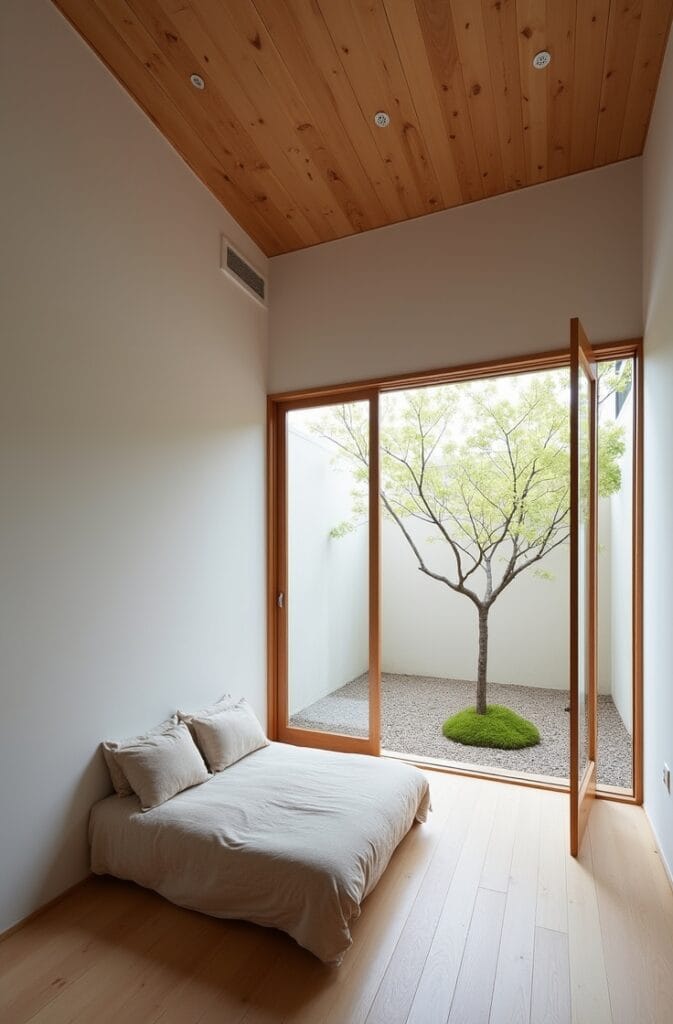
Materials are the primary design language here. Natural cedar, washi paper panels, smooth plaster, and poured concrete are used in combination to create textural contrast without visual clutter. Color is nearly absent — the warmth comes from material texture and the interplay of light and shadow.
This approach works best when the guest house opens to a carefully designed garden, even a small one. A six by eight foot gravel and stone courtyard visible from the main glass wall is enough to complete the composition. Without a planted exterior view, the Japanese-influenced interior loses much of its intended calm.
12. The Pool-Adjacent Cabana Guest House: Dual-Function Design
A backyard guest house positioned adjacent to a pool serves two distinct functions: a private bedroom suite for overnight guests and a daytime changing, lounging, and storage hub for pool users. Designing for both functions from the start is far more effective than trying to adapt a standard guest house layout after the fact.
The floor plan divides into two clear zones separated by a shared wet wall. The front zone, accessible directly from the pool deck, holds an outdoor shower, two-fixture pool bath, and a bench with hooks for pool gear. This zone has exterior access only — it never opens into the sleeping area. The rear zone is the private guest suite: a bedroom, a second interior bathroom, and a small refrigerator and coffee station.
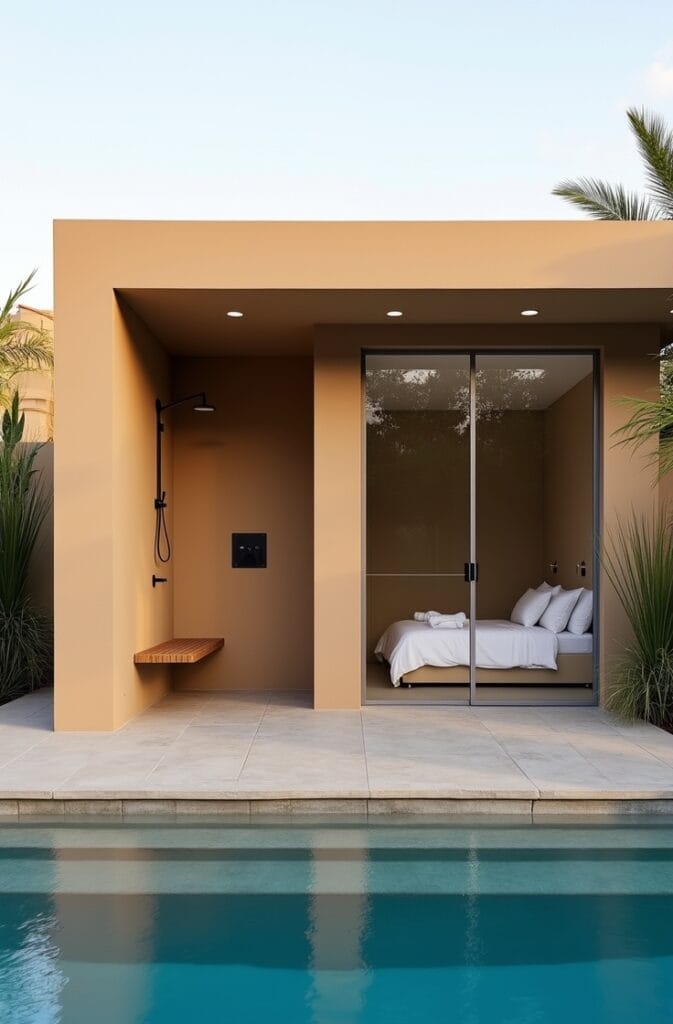
This dual-zone approach keeps pool traffic completely separate from guest privacy. Visitors using the pool do not need to enter the guest living space, and guests sleeping in the back portion are not disturbed by daytime pool activity.
Exterior materials should be chosen for moisture resistance from the start. Fiber cement siding, sealed concrete floors, and porcelain tile on the pool-side zone outperform wood-based finishes in this environment. A roof overhang of at least 24 inches on the pool-facing side provides shade for the deck and protects the exterior wall from direct water splash.
Final Thoughts
The best backyard tiny guest house design is not the most beautiful one — it is the one that fits your lot, your guests, and your long-term use clearly. Each of the twelve layouts above solves a specific set of real constraints, from tight footprints and zoning height limits to pool adjacency and climate-specific living.
Save this post if you are still in the early planning stages. Having a reference that shows the full range of layout options side by side helps enormously when you sit down with a designer or contractor. Return to it as your thinking develops — the right design often becomes clear only after you have ruled out the ones that do not fit.
If you want to go deeper, explore open-plan guest house floor plans and small ADU zoning guides for your specific state. The layout is only the beginning of a well-executed backyard guest house project.