
If your bathroom feels cluttered no matter how often you clean it, the problem is almost always a storage structure issue rather than a space issue. This guide covers 15 of the most effective bathroom storage cabinet ideas for 2026, giving you practical, decision-ready solutions for every bathroom size, layout, and style, from small powder rooms to large master baths.
1. Floating Vanity Cabinets: Why Wall-Mounted Storage Makes Small Bathrooms Look Larger
A floating vanity cabinet is mounted directly to the wall with the base elevated above the floor, typically by eight to twelve inches. That gap between the cabinet and the floor is what changes everything in a small bathroom. Visible floor space reads as square footage, and more visible floor makes the room feel significantly larger than it is.
This is the single most recommended storage upgrade for bathrooms under 60 square feet, which describes the majority of guest bathrooms and single-bathroom apartments across the USA. A floor-mounted vanity in the same space creates a visual barrier that cuts the room in half horizontally.
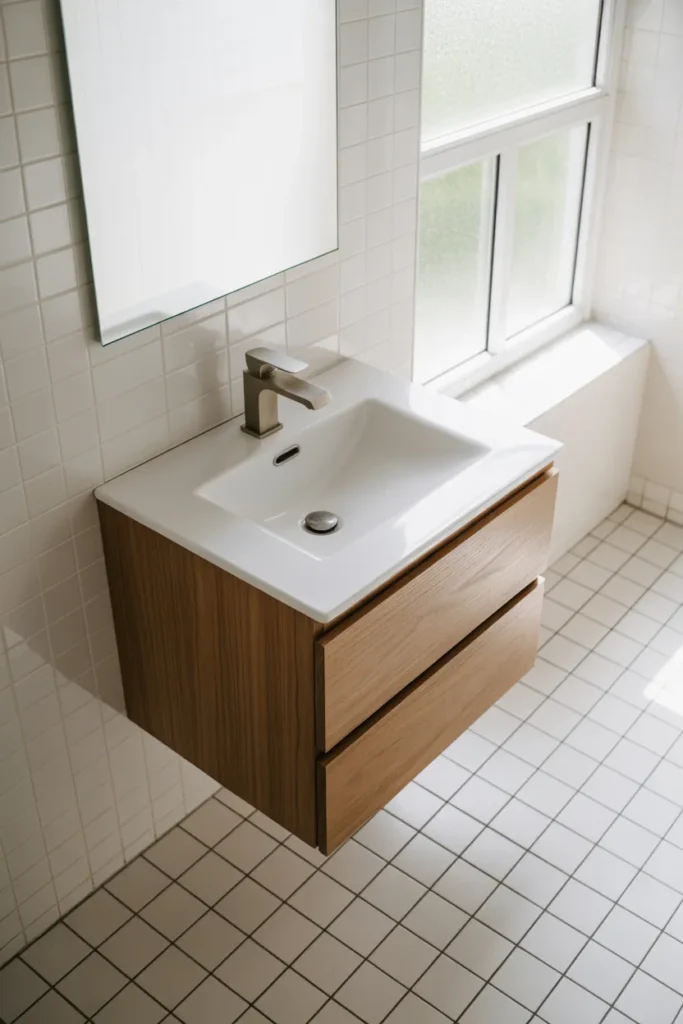

Choose a floating vanity with internal drawer systems rather than open shelving below. Drawers keep contents contained and the cabinet face clean. Open shelves beneath a floating vanity look great initially but accumulate visible clutter within weeks.
Floating vanities require wall studs or a mounting board behind the drywall for secure installation. This is not a renter-friendly option without landlord approval, but it is one of the highest-return upgrades for homeowners.
2. Tall Linen Tower Cabinets: The Vertical Storage Solution Most Bathrooms Are Missing
Most bathroom storage is organized horizontally, which wastes the most available real estate in a bathroom: vertical wall space above five feet. A tall linen tower cabinet, typically 72 to 84 inches high and 12 to 18 inches deep, uses that vertical space to provide significant storage capacity in a footprint no larger than a small nightstand.
A single tall linen tower can hold towels, toiletries, cleaning supplies, extra toilet paper, and personal care products in one organized column. That consolidation removes the need for multiple smaller storage pieces that collectively take up more floor space and create visual fragmentation.
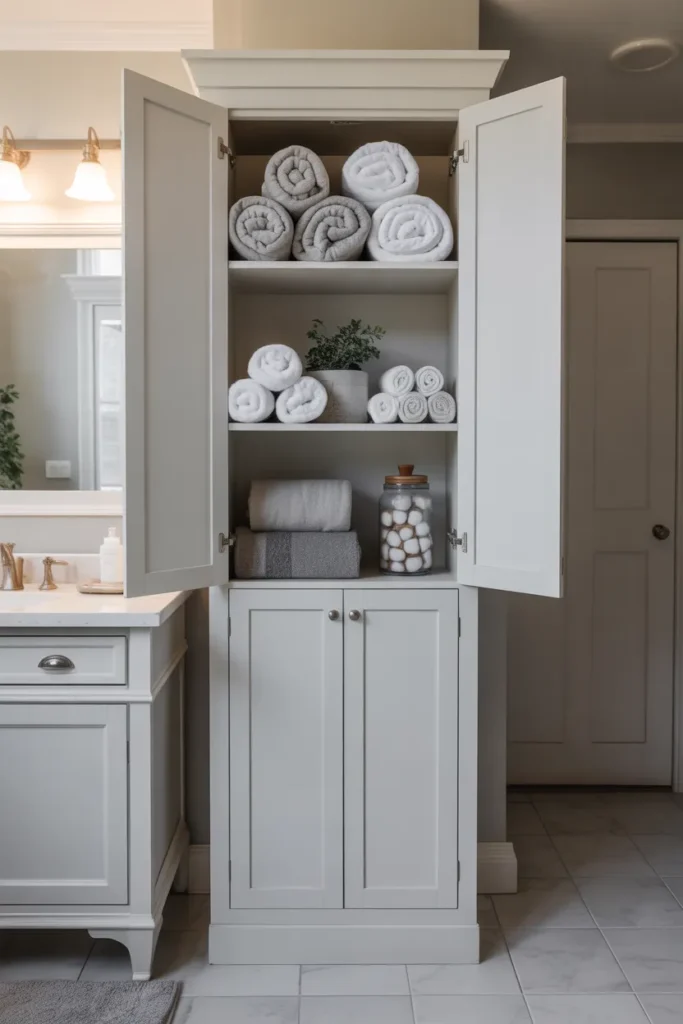
Place the tower adjacent to the vanity or in a recessed wall area if available. Avoid placing it directly in the pathway from the door to the shower, as this creates a circulation obstacle even in larger bathrooms.
In 2026 bathroom storage cabinet design, linen towers with combination storage are trending: upper open shelves for display and frequently used towels, lower closed cabinet sections for items that need concealment. This combination gives you the best of both storage types in one vertical unit.
3. Recessed Medicine Cabinets: Hidden Storage That Frees Up Counter Space Completely
A recessed medicine cabinet is built into the wall between studs, sitting flush or nearly flush with the wall surface rather than protruding into the room. This design provides substantial hidden storage without consuming a single inch of floor or counter space, making it one of the most space-efficient bathroom storage cabinet ideas for 2026.
The interior of a standard recessed medicine cabinet holds prescription bottles, vitamins, razors, toothbrushes, contact lens supplies, and everyday toiletries that otherwise crowd the vanity counter. Clearing that counter space changes the visual and functional quality of a bathroom immediately.
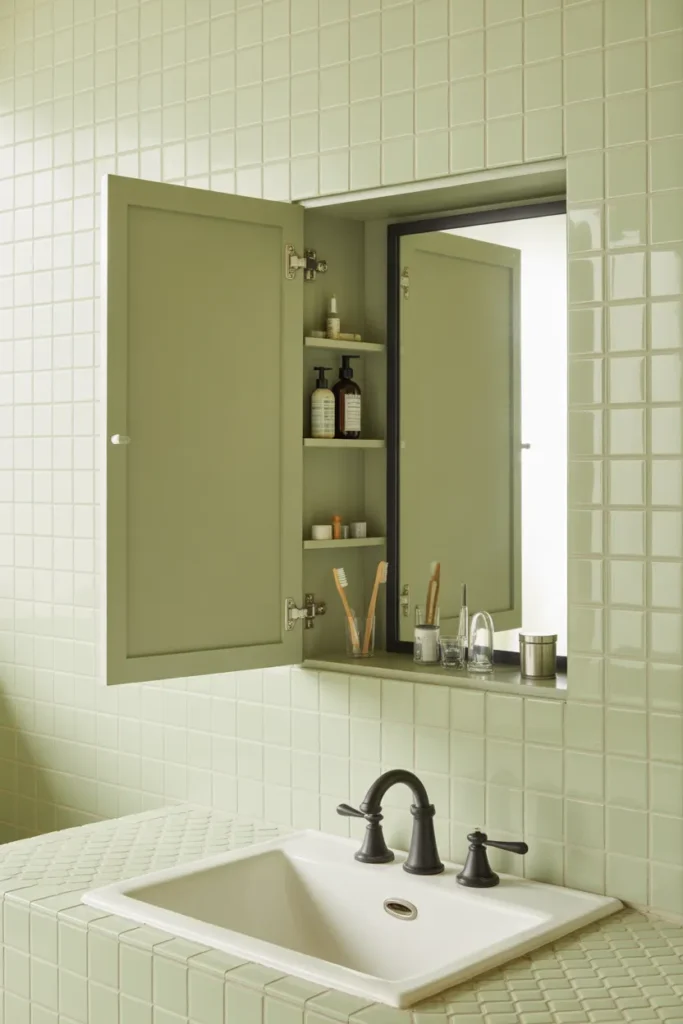
Standard stud spacing of 16 inches on center limits the width of a recessed cabinet to approximately 14 inches unless structural modifications are made. For wider storage needs, a surface-mounted medicine cabinet is a simpler alternative that still offers mirrored storage without counter clutter.
Mirrored medicine cabinet fronts serve double duty as functional mirrors and as a visual tool that adds perceived depth to a small bathroom. In a bathroom without a separate vanity mirror, the medicine cabinet eliminates the need for one and adds storage in the same move.
4. Under-Sink Bathroom Cabinets: How to Organize This Overlooked Storage Zone
The cabinet beneath the bathroom sink is in almost every bathroom in America, yet it remains one of the most consistently disorganized storage zones in the home. The problem is the plumbing configuration: pipes running through the center of the cabinet prevent standard shelving and create awkward dead zones on each side.
The solution is purpose-designed under-sink organizers that work around pipe placement. Sliding pull-out drawers mounted on either side of the plumbing, stackable bins that fit the irregular interior dimensions, and tension rod systems that create vertical hanging storage for spray bottles all convert wasted space into functional storage.
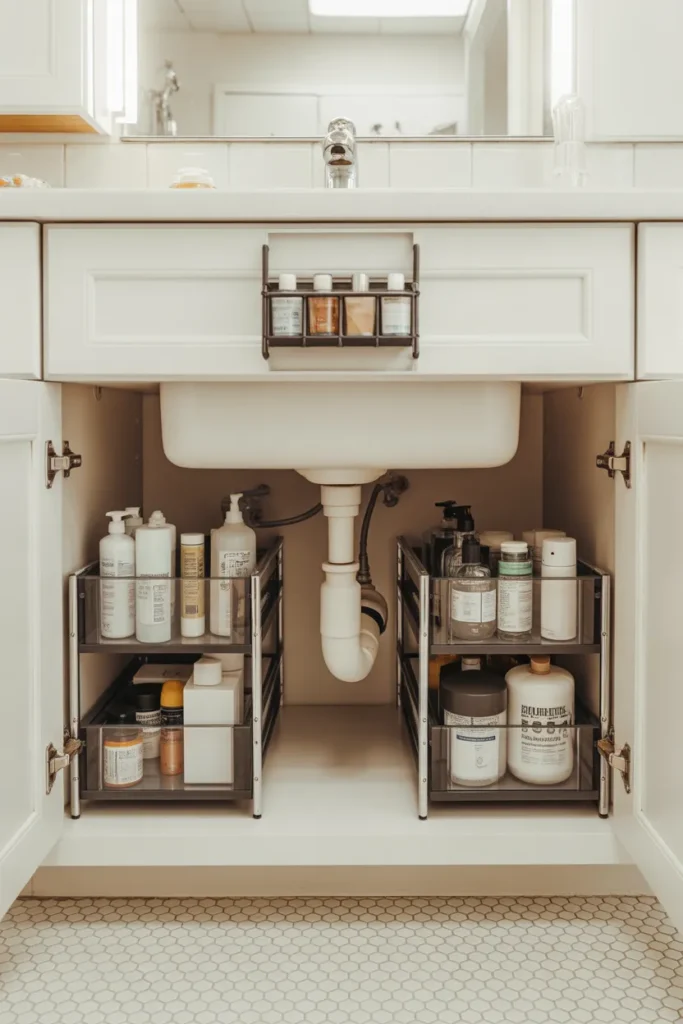
Beyond organizers, the cabinet door interior is consistently underused. Thin adhesive or magnetic organizers mounted inside the cabinet door hold small items like hair ties, nail polish, and cotton swabs without taking any interior shelf space.
In 2026, modular under-sink drawer systems designed to fit around plumbing are becoming more widely available in home improvement stores. These systems are worth the investment in any bathroom used daily, as they convert the most chaotic cabinet in the home into genuinely organized storage.
5. Over-Toilet Storage Cabinets: Maximizing the Most Wasted Space in Any Bathroom
The vertical space above the toilet is among the most universally wasted in American bathrooms. A wall-mounted cabinet or freestanding tower unit placed directly above the toilet converts this dead zone into meaningful storage without affecting the room layout or circulation path.
An over-toilet cabinet typically provides two to three shelves at a height that does not interfere with toilet use and stores enough product to reduce or eliminate vanity counter clutter entirely. In small bathrooms under 50 square feet, over-toilet storage is often the only viable location for additional cabinets given the limited wall space.
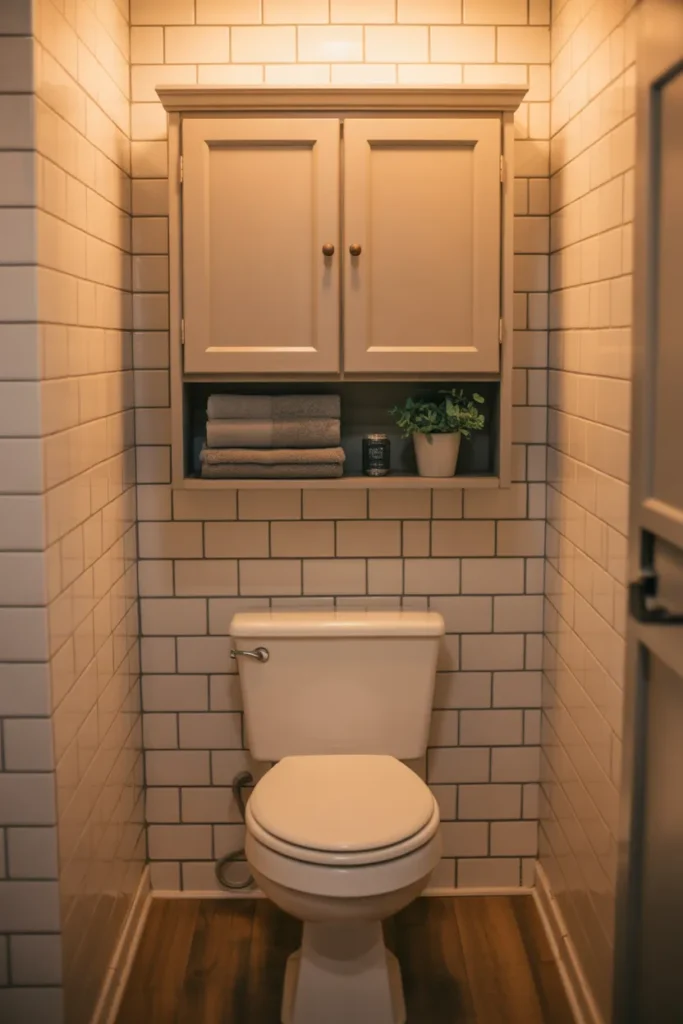
Wall-mounted over-toilet cabinets provide a cleaner, more permanent look and are preferable when studs are accessible for installation. Freestanding over-toilet towers are the renter-friendly alternative and can be moved or adjusted without wall modification.
Avoid overloading over-toilet cabinets with heavy objects. The location above a toilet is inconvenient for retrieving heavy or frequently used items. Reserve this space for backup supplies like extra toilet paper, spare towels, and infrequently accessed products.
6. Open Shelf Bathroom Storage: When It Works and When It Creates More Problems
Open shelving in a bathroom is one of the most debated storage approaches in interior design, and for good reason. Executed well, it creates a curated, spa-like atmosphere. Executed poorly, it becomes a visible collection of clutter that makes the room feel messy regardless of how clean it is.
Open shelves work in bathrooms when the items stored on them are genuinely attractive and consistently maintained. Neatly rolled white towels, matching glass or ceramic containers, a single plant, and minimal product display look intentional. A mix of differently sized bottles, opened packages, and miscellaneous products on open shelves look chaotic.
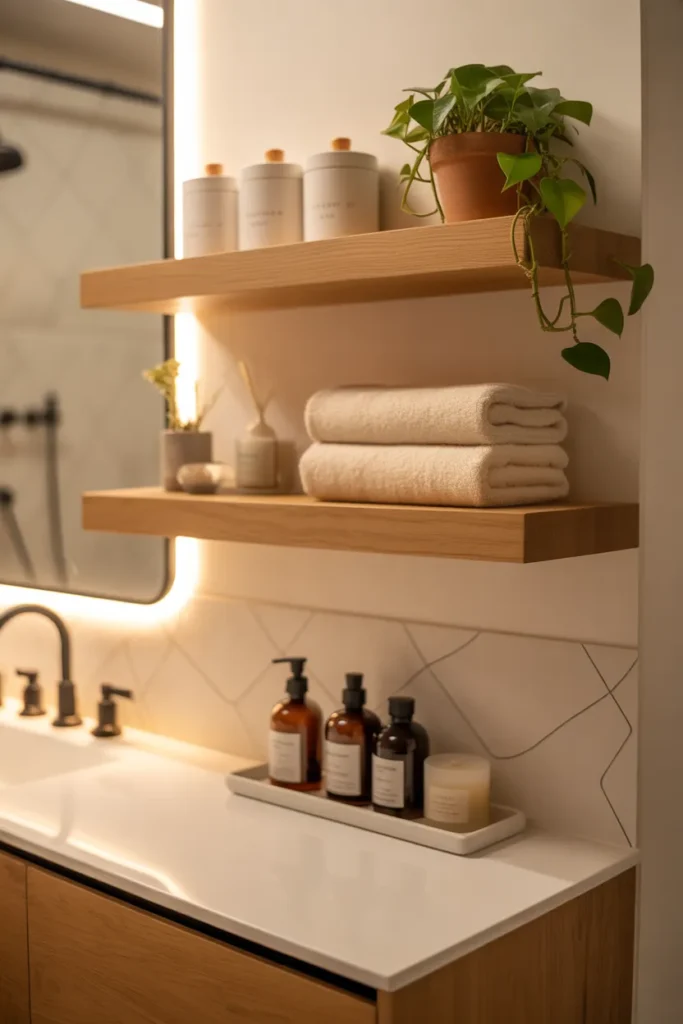
The practical rule for open bathroom shelving is that everything on display should be something you would leave out if a guest were visiting. If the honest answer is no, those items belong inside a cabinet.
Floating open shelves work best in bathrooms with a controlled color palette and a homeowner willing to maintain the visual editing. For most real-world bathrooms used daily, a combination of mostly closed cabinets with one or two open display shelves is more functional than a fully open shelving approach.
7. Bathroom Vanity with Drawers vs. Doors: Which Storage Type Actually Works Better
When selecting bathroom vanity cabinets, the choice between drawer configurations and door configurations has a real impact on daily function that most buyers do not consider before purchasing. Understanding the difference helps you choose the right vanity for how your bathroom is actually used.
Drawers provide significantly better access and organization than cabinet doors for most daily bathroom items. Everything in a drawer is visible and reachable from above. Everything in a cabinet behind a door requires bending, moving items, and navigating around plumbing obstacles. For makeup, skincare products, hair tools, and small personal care items, drawers are consistently more functional.
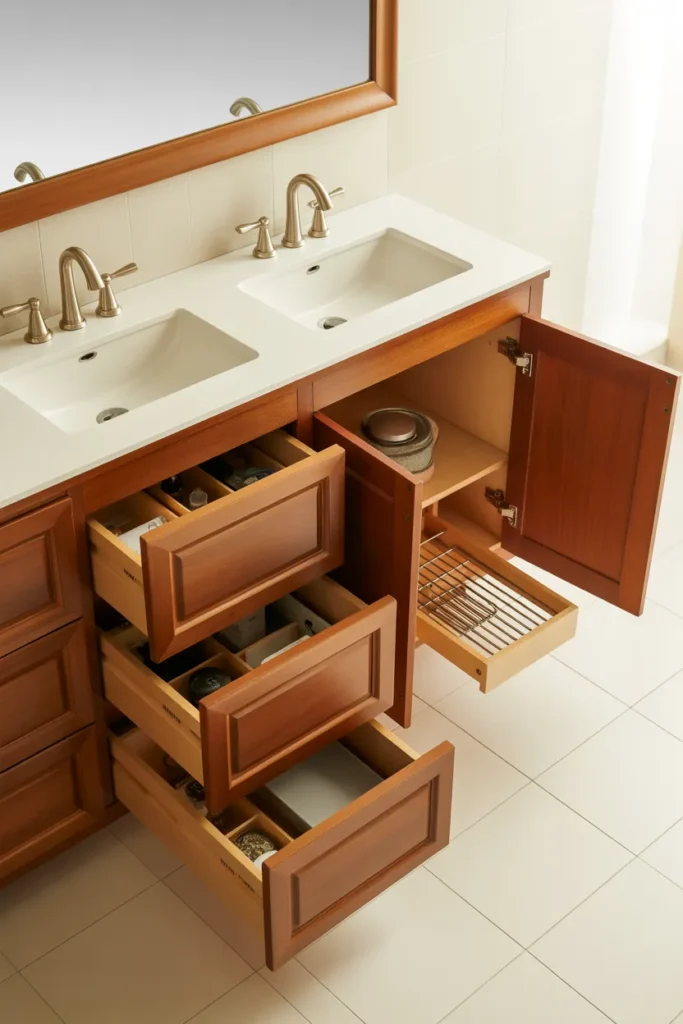
Doors are better suited for larger items that do not fit in drawers and for storing things that benefit from the concealment of a full cabinet: cleaning supplies, larger bottles, hair dryers, and bulkier products.
The most functional modern vanity configuration combines both: two to three drawers on one side for daily-use items and a door cabinet section on the other side for bulkier storage. This hybrid approach is one of the most recommended bathroom storage cabinet ideas for 2026 precisely because it eliminates the limitations of either-or configurations.
8. Corner Bathroom Cabinets: Using the Angles Most People Abandon as Wasted Space
Corner spaces in a bathroom are almost universally underutilized. Most bathrooms have at least one corner that is either empty or used as a visual dead zone, and a corner cabinet or corner shelving unit converts that otherwise wasted area into meaningful storage.
A corner floor cabinet designed specifically for angular spaces typically holds more than its small footprint suggests because it uses depth in both wall directions simultaneously. A corner unit of 12 by 12 inches at the entry point can reach 20 or more inches of depth toward the interior, providing substantial hidden storage behind a small door.
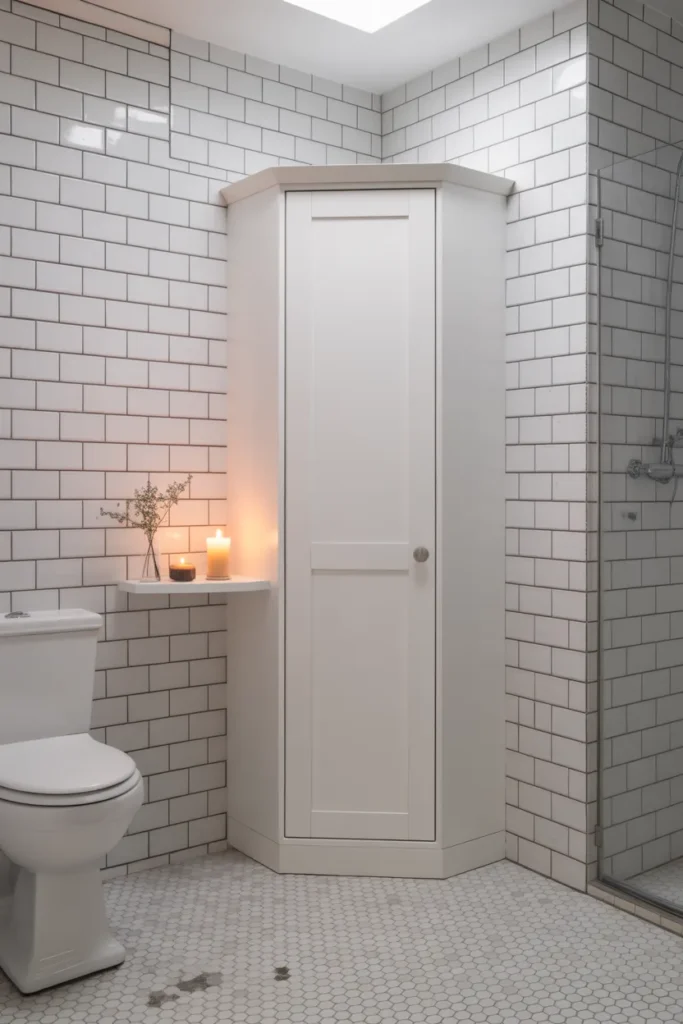
Wall-mounted corner shelves are the more open alternative and work well in bathrooms where floor space is tight. A set of two or three corner shelves mounted above the toilet or beside the vanity mirror adds display and storage capacity without affecting floor space at all.
Corner storage is especially relevant in bathrooms where the layout does not allow for full-width wall cabinets on any wall. In many apartment and older home bathrooms, the corner may be the only available surface for additional storage beyond the vanity.
9. Bathroom Mirror Cabinets With Built-In Storage: Double the Function, Same Wall Space
A mirror cabinet combines the bathroom mirror, which every bathroom requires, with interior storage behind the reflective face. This combination provides storage without adding any additional wall area beyond what the mirror was already occupying, making it one of the most space-efficient bathroom storage cabinet ideas applicable in 2026 and beyond.
The interior shelves of a mirror cabinet are ideally sized for the items that most commonly crowd a bathroom counter: toothbrushes, toothpaste, facial serums, razors, cotton pads, contact lens cases, and small prescription bottles. A standard 24-by-30-inch mirror cabinet holds enough daily-use products to clear an average bathroom counter entirely.
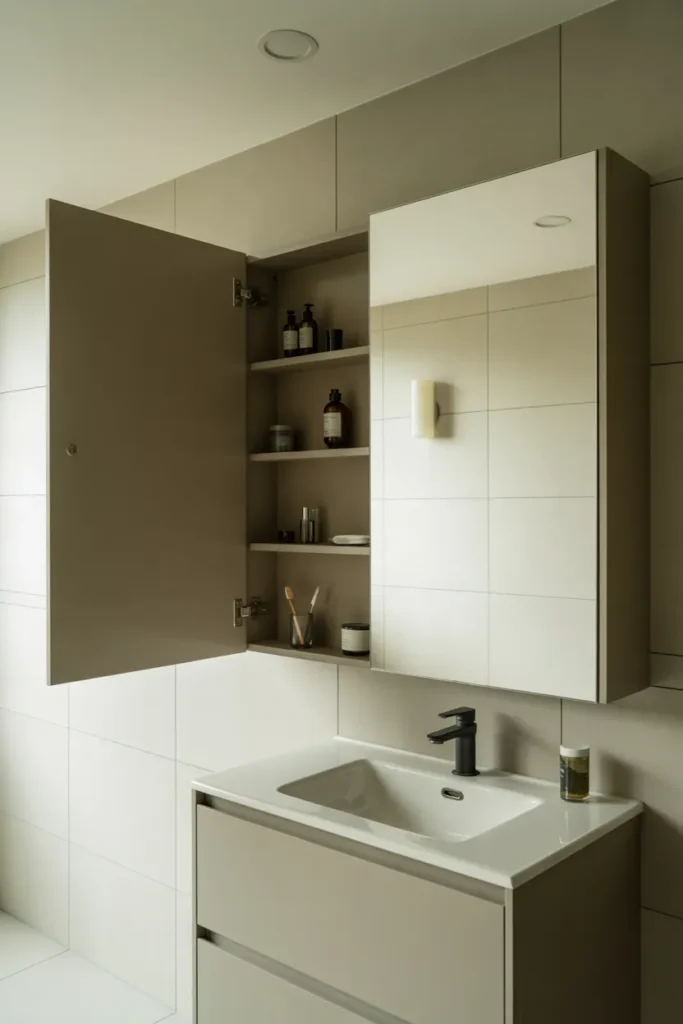
The most common mirror cabinet mistake is choosing a unit that is too narrow for the available wall space. A mirror cabinet should be proportional to the vanity beneath it. A narrow mirror cabinet above a wide double vanity looks undersized and reduces storage capacity unnecessarily.
For bathrooms without available recessed wall space, surface-mounted mirror cabinets that extend two to four inches from the wall are effective alternatives. Frameless or thin-framed versions minimize the visual intrusion and maintain a clean, modern aesthetic.
10. Freestanding Bathroom Storage Cabinets: The Renter-Friendly Solution That Actually Looks Permanent
Freestanding bathroom storage cabinets are the most accessible and flexible option because they require no wall mounting, no drilling, and no landlord approval. Despite this, the best freestanding designs look built-in and intentional when placed correctly.
The key to making a freestanding cabinet look permanent rather than temporary is placement precision and proportion. A cabinet pushed flush against the wall with its sides aligned to architectural features like tile edges, door frames, or existing trim looks intentional. A cabinet placed floating in the middle of a wall looks portable.
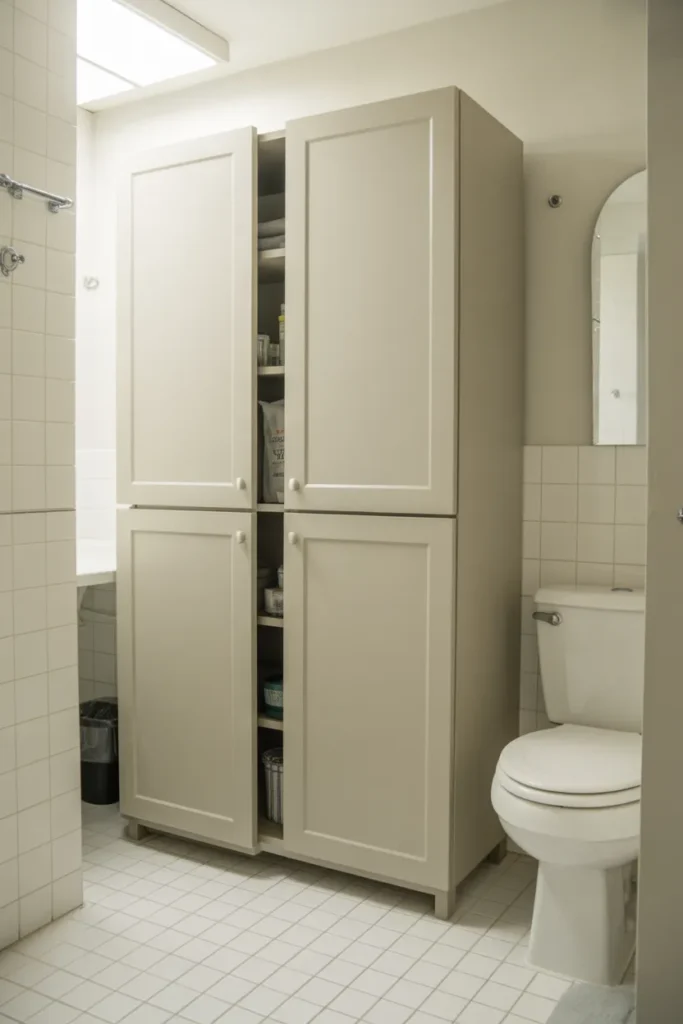
Freestanding bathroom cabinets in 2026 are increasingly designed to mimic built-in aesthetics: clean lines, flush doors with minimal visible hardware, and materials like matte white, warm wood, or matte black that integrate with modern bathroom finishes rather than standing out as furniture pieces.
Choose a freestanding cabinet with an adjustable interior shelf so it adapts to your specific product heights over time. Fixed shelves that do not accommodate tall bottles are a persistent frustration in lower-quality units and force inefficient stacking.
11. Bathroom Storage Cabinets in Dark Finishes: When to Choose Contrast Over White
White and light wood bathroom cabinets dominate the market, but dark-finish cabinets are becoming significantly more common in 2026 bathroom design as homeowners move toward higher-contrast, more dramatic bathroom aesthetics. Dark cabinets in a bathroom work under specific conditions and fail under others.
Dark cabinets work best in bathrooms with light walls, light tile, and strong natural or artificial lighting. The contrast between a dark cabinet and a white wall creates a clean, intentional break that reads as designed. In a bathroom with dark walls and dark tile, dark cabinets disappear into the background and create a visually heavy, unresolved space.
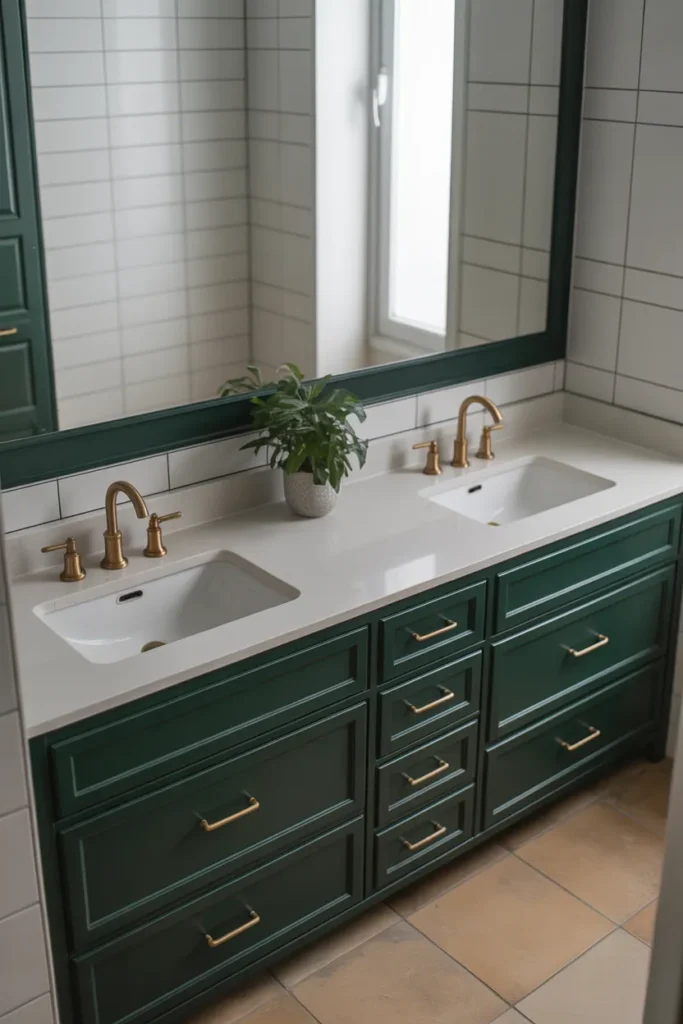
Matte black, deep navy, forest green, and warm espresso are the strongest performing dark finishes for bathroom cabinets in 2026. These tones pair well with warm metal hardware like brass, unlacquered bronze, or warm gold, which provides a lightening contrast against the dark base finish.
Dark cabinets show water spots and fingerprints more readily than light finishes, particularly around faucet areas and drawer pulls. Factor in daily maintenance requirements when making this choice, especially in high-use bathrooms shared by multiple people.
12. Modular Bathroom Storage Systems: Building Storage That Grows With Your Needs
A modular bathroom storage system is a collection of individual cabinet units, shelves, and drawer components that can be combined, stacked, and reconfigured to fit any bathroom layout without custom cabinetry costs. This approach is one of the most practical bathroom storage cabinet ideas for 2026 because it adapts to changing needs rather than locking you into a fixed configuration.
The modular approach is particularly valuable in bathrooms that will be used differently over time: a bathroom shared between children that becomes an adult bathroom, a guest bath that converts to a primary bath, or a rental property where tenant needs change between occupancies.
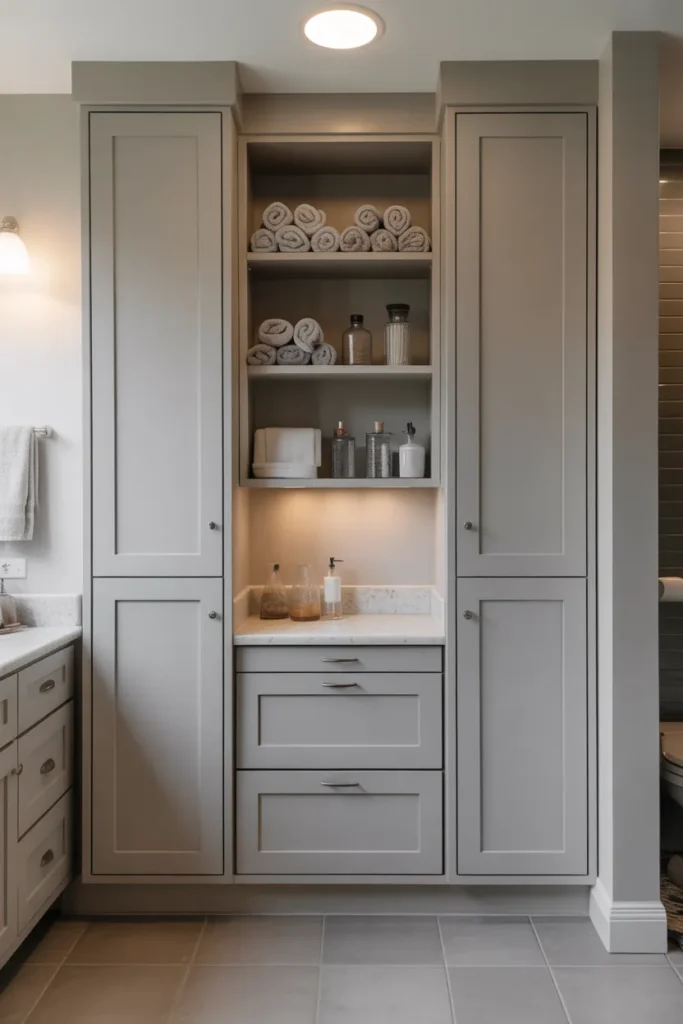
When assembling a modular system, plan the full configuration before purchasing individual units. Buying pieces incrementally without a master plan often results in components that do not integrate well visually or functionally, which defeats the purpose of a system approach.
Stick to one design family and one finish when selecting modular components. Mixing units from different product lines, even when they appear similar, almost always results in visible inconsistencies in height, depth, or door gap tolerances that break the built-in illusion.
13. Bathroom Storage Cabinets for Master Bathrooms: Thinking Beyond the Vanity
In a master bathroom, the vanity is typically the primary storage unit but rarely provides enough capacity for two people sharing the space. Effective master bathroom storage in 2026 requires thinking beyond the vanity and identifying secondary storage opportunities throughout the room.
A dedicated his-and-hers storage approach, where each person has their own clearly designated cabinet space rather than sharing drawers, eliminates the daily friction of shared storage and keeps the bathroom organized longer. This can be achieved through a double vanity with separate drawer banks, two separate vanity units, or a single vanity supplemented by a personal storage tower for each user.
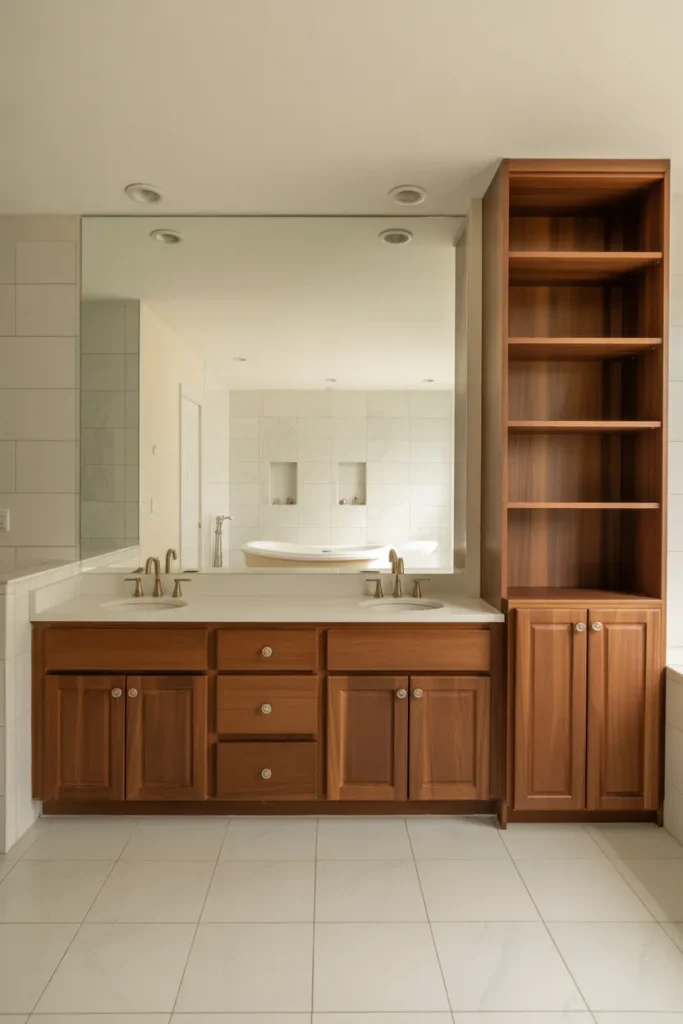
Built-in niches in the shower or beside the bathtub provide waterproof storage for products that currently live on the vanity counter. A properly tiled shower niche holds shampoo, conditioner, and body wash invisibly, clearing the shower floor of bottles and the vanity of overflow.
For master bathrooms with the square footage for it, a dedicated makeup or grooming station separate from the vanity proper provides an additional storage zone with purpose-designed organization rather than adapting general vanity storage to a specific grooming function.
14. Bathroom Storage in Awkward Layouts: Solutions for Sloped Ceilings, Tight Spaces, and Odd Angles
Not every bathroom is a standard rectangle with equal wall access. Many American homes, particularly older builds, cape cod styles, and attic conversions, have bathrooms with sloped ceilings, narrow footprints, or unusual angular layouts that make standard cabinet solutions impractical.
In bathrooms with sloped ceilings, low-profile horizontal storage is the primary option. Long, shallow wall-mounted cabinets installed at or below the ceiling slope line work within the architectural constraint rather than fighting it. Custom-built cabinets that follow the ceiling angle precisely are the most effective but also the most expensive solution.
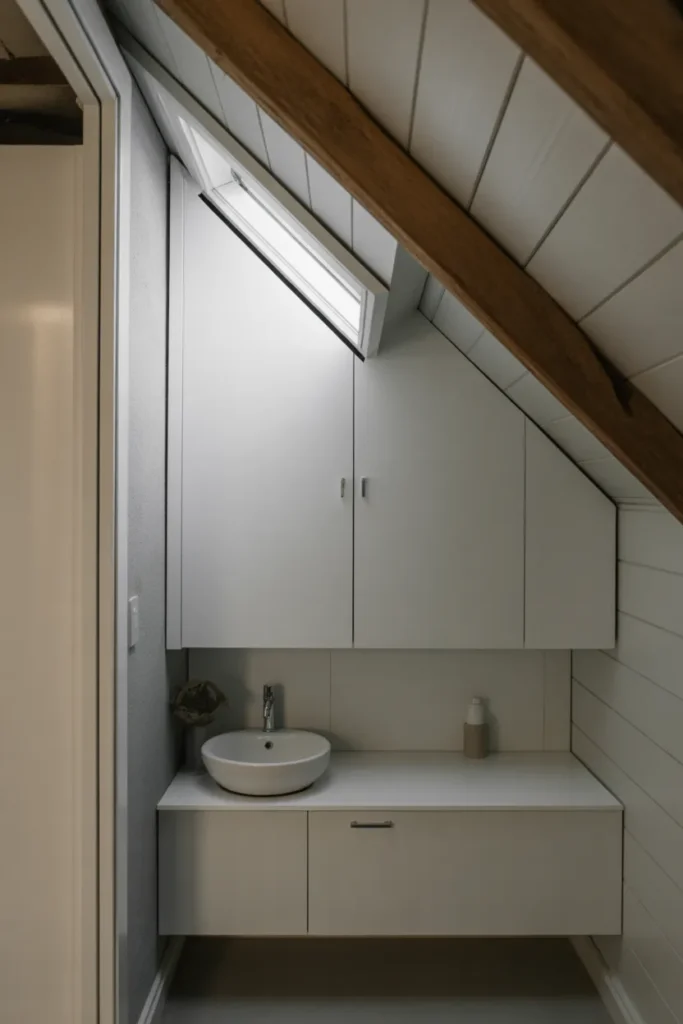
In very narrow bathrooms under five feet wide, standard 21-inch-deep vanities may be too deep for comfortable circulation. Narrow-depth vanities of 16 to 18 inches provide adequate storage while maintaining the minimum clearance needed to use the bathroom without feeling confined.
For odd angles created by bay windows, structural columns, or plumbing chases, corner cabinets, angled shelving units, and built-in niches designed to the specific angle of the space are more effective than trying to use standard square cabinets in non-square spaces.
15. Sustainable and Natural Material Bathroom Cabinets: The 2026 Design Direction Worth Considering
One of the clearest directions in bathroom storage cabinet design for 2026 is the move toward sustainable materials and natural aesthetics: bamboo, teak, FSC-certified solid wood, and natural rattan fronts replacing the plastic laminate and engineered wood that has dominated mid-range bathroom cabinetry for two decades.
Beyond the sustainability angle, natural material cabinets perform better in humid environments when properly finished. Solid teak and properly sealed bamboo are naturally resistant to moisture and dimensional change, which is the primary reason bathroom cabinets deteriorate in the first place. A higher-quality natural material cabinet outlasts a lower-quality engineered wood alternative significantly.
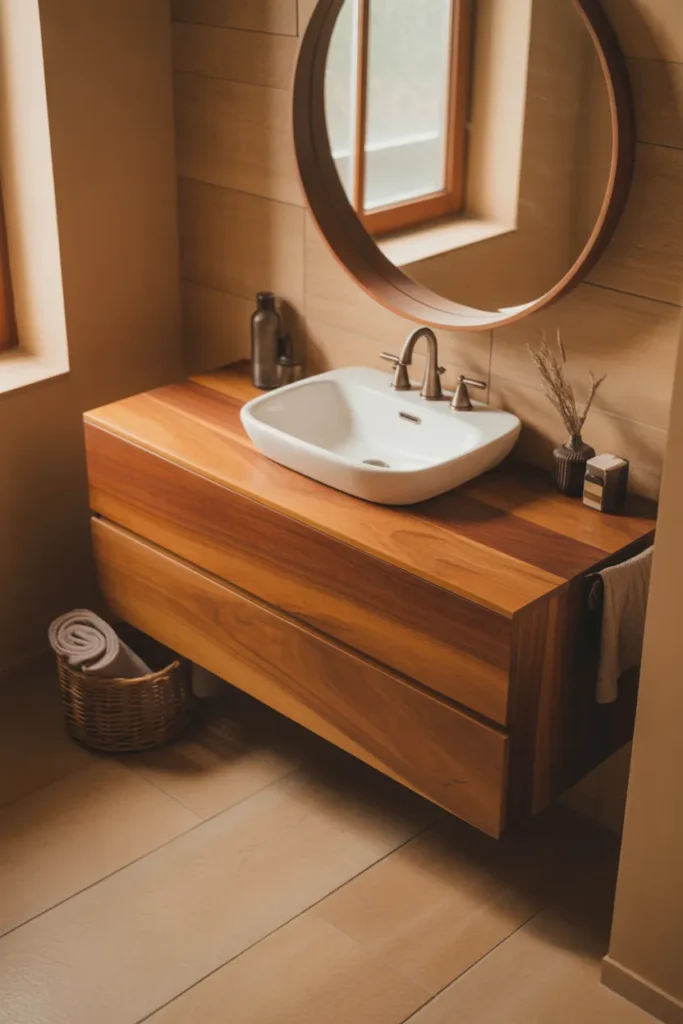
Natural material bathroom cabinets work most effectively in warm-toned bathrooms with earthy palettes. They clash in very cold or industrial bathroom aesthetics where the organic warmth of the wood fights the intentional coldness of the surrounding materials.
When evaluating natural material bathroom cabinets, ask specifically about the sealing and finishing process. Unfinished or poorly finished natural wood in a bathroom will absorb moisture, warp, and develop mold. The material itself is not the issue; the finishing standard is what determines longevity.
Final Thoughts
Good bathroom storage is not about buying more cabinets. It is about choosing the right storage types for your specific layout, usage habits, and room size, and placing them where they genuinely solve the clutter problems your bathroom faces daily. Every idea in this guide is grounded in how bathrooms are actually used in real American homes, not just in how they appear in design showrooms.
If this guide helped you identify the right storage direction for your bathroom, save it to your Pinterest boards so you can reference these ideas when you are ready to shop or plan. Explore more bathroom design and organization ideas to build a complete picture of what your ideal bathroom can look like in 2026 and beyond.