
Choosing the wrong vanity is one of the most expensive mistakes in a bathroom renovation — and one of the hardest to fix after the fact. This guide covers the most practical bathroom vanities ideas 2026 has to offer, organized by layout type, room size, and storage need, so you can make a confident decision before anything gets installed.
1. Floating Single Vanity in a Small Bathroom: The Layout That Makes Tight Spaces Feel Twice as Large
A wall-mounted floating vanity is the single most effective upgrade for a bathroom under 50 square feet. By lifting the cabinet off the floor, you expose the tile underneath, which extends the visible floor plane and makes the room read as larger than its actual dimensions. It is one of the most recommended moves in small bathroom vanity design for exactly this reason.
The practical benefit is just as significant as the visual one. The open floor zone underneath is easy to clean, and the space can hold a small stool, a basket, or simply remain clear — all of which contribute to the feeling of breathing room in a compact layout.
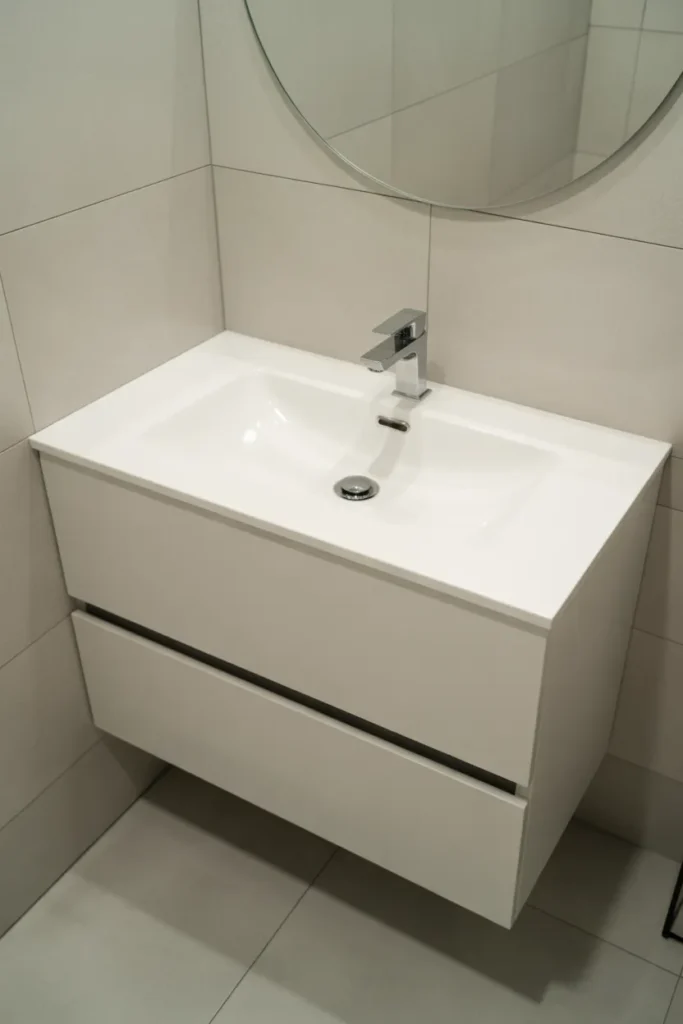

Mount the vanity between 18 and 22 inches from the floor for the most functional height range. Lower than 18 inches reduces the visual impact of the floating effect and makes cleaning the floor difficult. Higher than 22 inches creates an awkward countertop height for shorter users.
Avoid dark cabinet finishes in a bathroom under 40 square feet unless the walls and floor are light. A dark floating vanity in a dark room reads as heavy and defeats the openness the floating mount is supposed to create.
2. Double Vanity With Center Storage Tower: Solving the Shared Bathroom Storage Problem Permanently
A double vanity with a floor-to-ceiling storage tower built into the center between the two sinks is the most storage-efficient configuration for a shared primary bathroom. Each person gets a dedicated sink zone with their own mirror and counter space, while the center tower handles linens, toiletries, and items that both users share.
This layout requires a minimum wall width of 84 inches to work proportionally — narrower than that and the center tower visually dominates the sinks rather than connecting them. In bathrooms with 96 inches or more of vanity wall, the three-part configuration feels balanced and intentional.
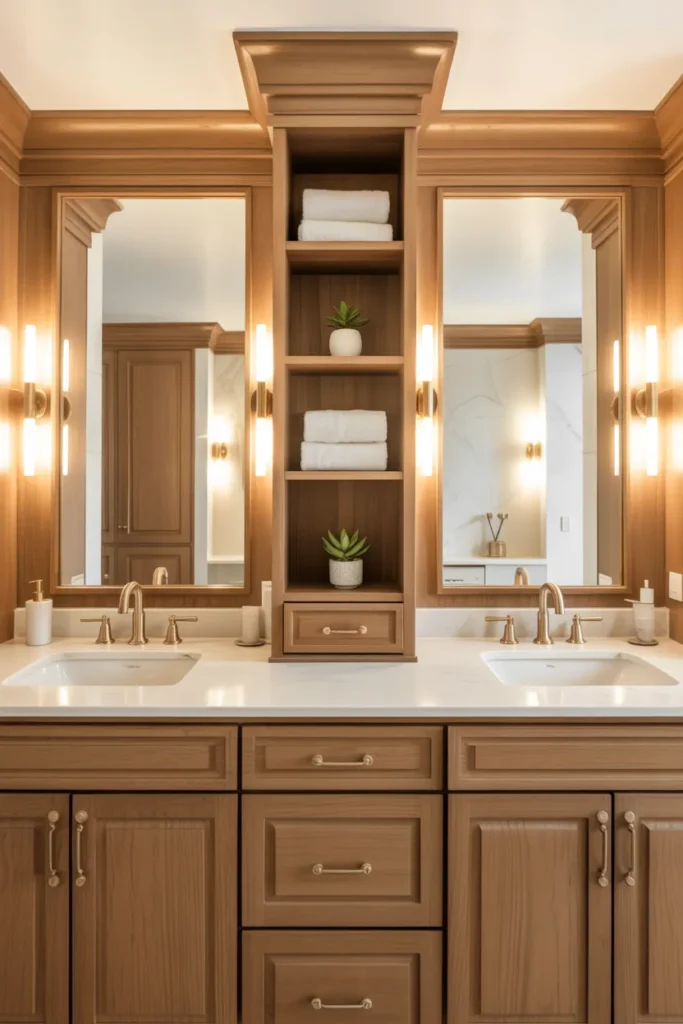
The center tower works best with closed cabinetry on the lower half and open shelves or glass-front doors on the upper half. This keeps bulk storage hidden while maintaining some visual lightness at eye level.
The most common design mistake with this layout is choosing three separate pieces of furniture that do not share a finish, depth, or hardware. The double vanity and center tower need to be specified as a unified system, not assembled from separate components, or the wall will look unplanned.
3. Single Vanity With Vessel Sink: Maximizing Counter Space Without a Larger Cabinet
A vessel sink — one that sits on top of the countertop rather than dropping into it — eliminates the need for a cutout in the counter surface. This means the full countertop area remains intact below the sink bowl, which effectively increases usable counter space in a layout that uses the same base cabinet footprint.
This is a practical choice for narrow vanities in the 18-to-24-inch depth range, where a standard undermount or drop-in sink would consume most of the counter width. With a vessel sink, the usable flat counter space on either side of the bowl is proportionally larger.
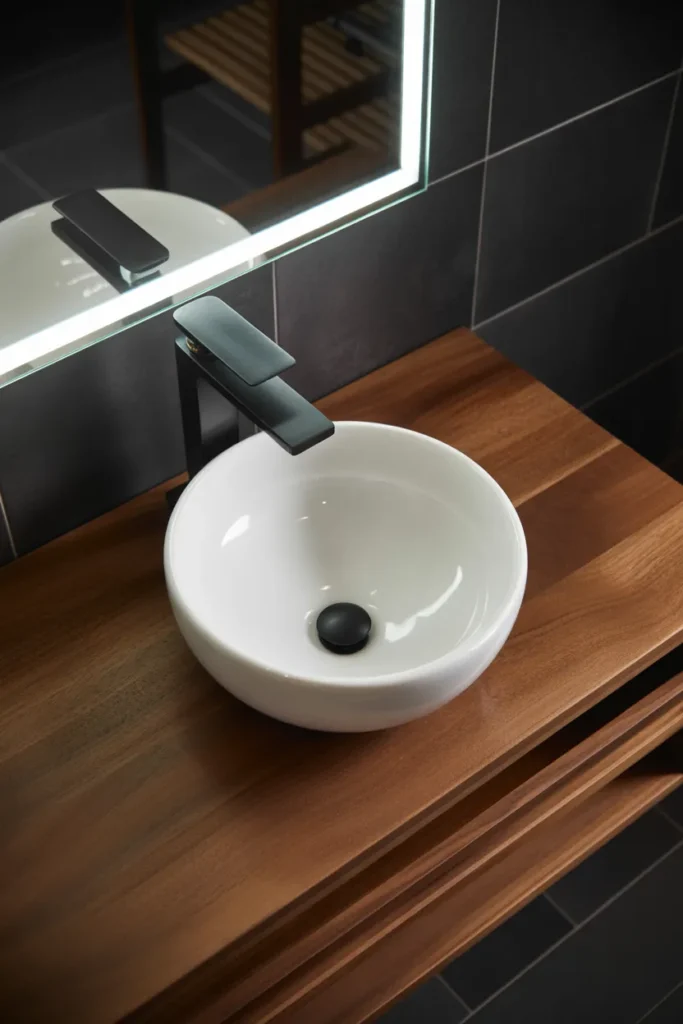
The faucet selection is critical with a vessel sink. You need a taller faucet — typically 12 to 16 inches in height — to clear the bowl rim and allow comfortable hand positioning. A standard faucet height used with a vessel sink creates an awkward and frustrating user experience.
Vessel sinks collect water pooling around their base where they meet the counter. A counter material that is easy to wipe clean — sealed stone, quartz, or solid surface — is more practical than wood or concrete in this location, which can absorb water over time if not properly sealed.
4. Vanity With Integrated Linen Cabinet on One Side: When You Need Storage and Style to Work Together
Extending a standard single vanity with an integrated linen cabinet on one side creates a unified wall of storage that reads as a custom built-in without requiring custom cabinetry pricing. This configuration works in bathrooms where the vanity wall is 60 inches or wider and there is no existing linen closet in the space.
The linen cabinet should match the vanity cabinet in door style, finish, and hardware to read as one piece. A height that aligns with the top of the vanity — rather than extending to the ceiling — keeps the wall composition grounded and prevents the storage wall from feeling visually overwhelming.
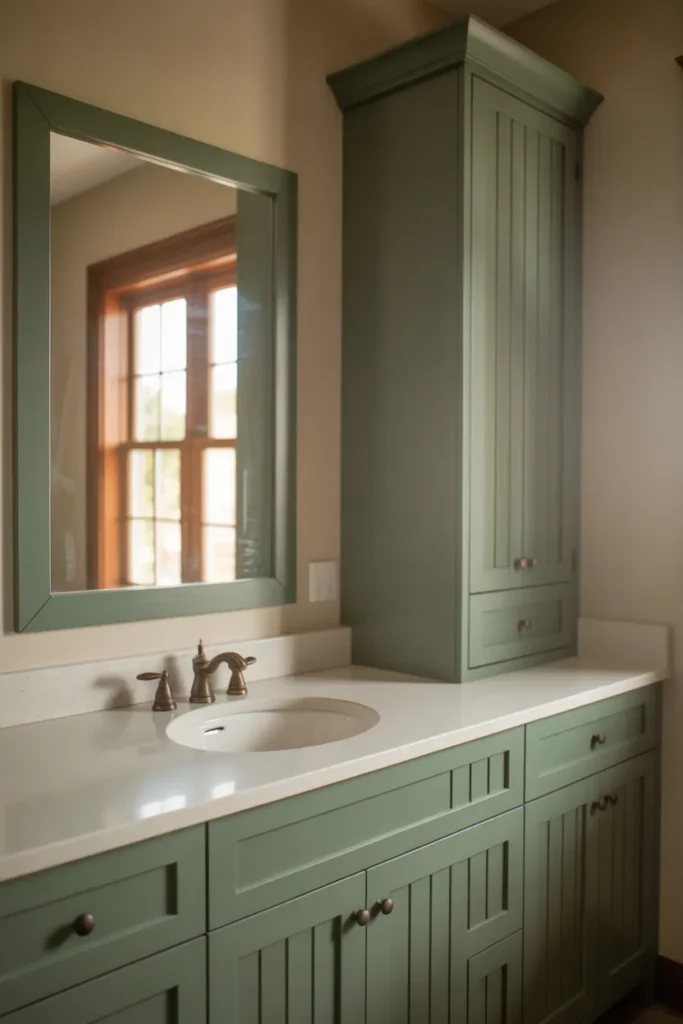
Use the linen cabinet for bulk storage: extra towels, cleaning supplies, toilet paper, and backup products. This frees the vanity drawers for daily-use items, which dramatically improves the organization and usability of the bathroom on a day-to-day basis.
The structural requirement is consistent with standard vanity installation — the linen tower needs a flat, level floor and wall, and its weight must be considered if mounting to drywall without stud reinforcement. This is one of the more straightforward vanity configurations to execute correctly, which makes it one of the better bathroom vanity storage ideas for 2026.
5. Bathroom Vanity With Makeup Station Built In: Eliminating the Second Mirror You Never Have Room For
A vanity designed with a dedicated makeup station — a lower countertop section, a built-in mirror, and open knee-hole space for a stool — consolidates two separate bathroom functions into one wall installation. This eliminates the need for a separate vanity table or makeup mirror, which in most homes gets pushed into the bedroom or a corner where lighting is inadequate.
The knee-hole section typically sits at 30 inches from the floor, which is standard desk height and works for seated use. The main sink counter sits at standard 34 to 36 inches. The two heights are connected by a single cabinet run, giving the vanity a custom, furniture-like appearance.
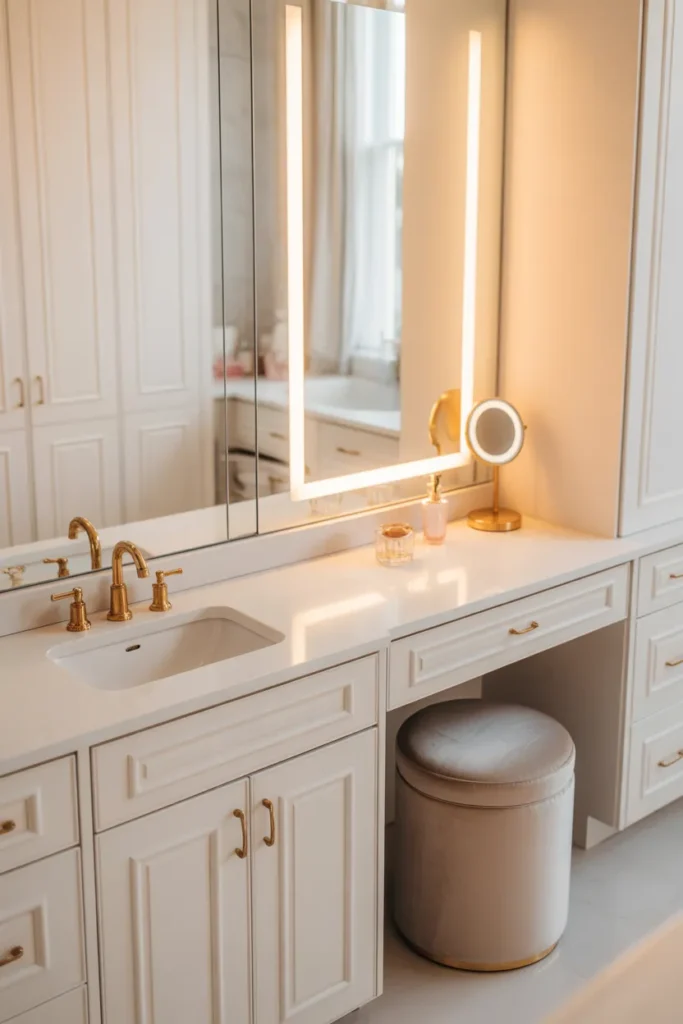
Lighting at the makeup station is the most important functional detail. A vertical light source on each side of the mirror — rather than overhead — eliminates the shadows that make makeup application inaccurate. Recessed overhead lighting alone is not sufficient at the makeup station.
This configuration requires a minimum vanity wall width of 72 inches to accommodate both the sink zone and the seated station without the proportions feeling squeezed. In bathrooms narrower than that, a wall-mounted pull-out mirror beside the main vanity accomplishes a similar function with a smaller footprint.
6. Freestanding Furniture-Style Vanity: The Right Choice for Bathrooms That Need Character
A freestanding furniture-style vanity — one that looks like a converted dresser, console table, or sideboard rather than standard bath cabinetry — adds visual warmth and character to bathrooms that otherwise feel generic. This is particularly effective in older homes, farmhouse-style interiors, and any bathroom where the existing architecture has personality that standard cabinetry would undermine.
The practical consideration is plumbing. A freestanding open-leg vanity requires exposed plumbing lines beneath the sink, which need to be clean, straight, and ideally in a metal finish that complements the faucet. Messy or mismatched plumbing beneath a furniture-style vanity is one of the most common and most visible installation mistakes.
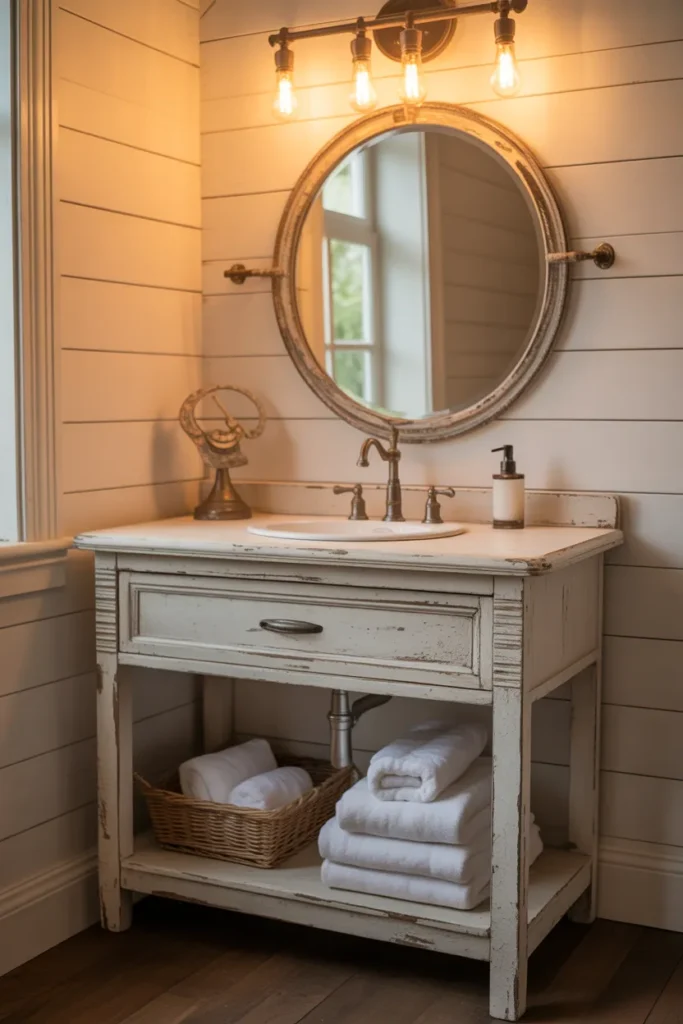
Counter-depth furniture pieces typically run 18 to 20 inches deep, which is shallower than a standard 21-inch vanity. This shallow depth is actually an advantage in smaller bathrooms because it extends walkway clearance.
Furniture-style vanities tend to offer less interior storage than standard vanity cabinets of the same width. This is a trade-off to evaluate honestly before committing. If the bathroom has other storage sources — a medicine cabinet, a linen closet, built-in shelving — the reduced vanity storage is manageable. If the vanity is the only storage in the room, a furniture-style piece may create a functional problem.
7. Dark Vanity Cabinet With White Countertop: The Contrast Combination That Works in Almost Every Bathroom Size
A dark vanity cabinet — navy, charcoal, forest green, or deep espresso — paired with a white or light stone countertop is one of the most versatile and well-balanced vanity combinations in contemporary bathroom design. The contrast between the dark lower cabinet and the light upper surface creates a clear visual separation that grounds the vanity without making the room feel heavy.
This combination works in small bathrooms when the walls remain light. The darkness is contained to the lower portion of the room — below countertop height — which does not interrupt the wall’s ability to reflect light and open the space. A dark vanity with dark walls is a different scenario entirely and requires careful lighting compensation.
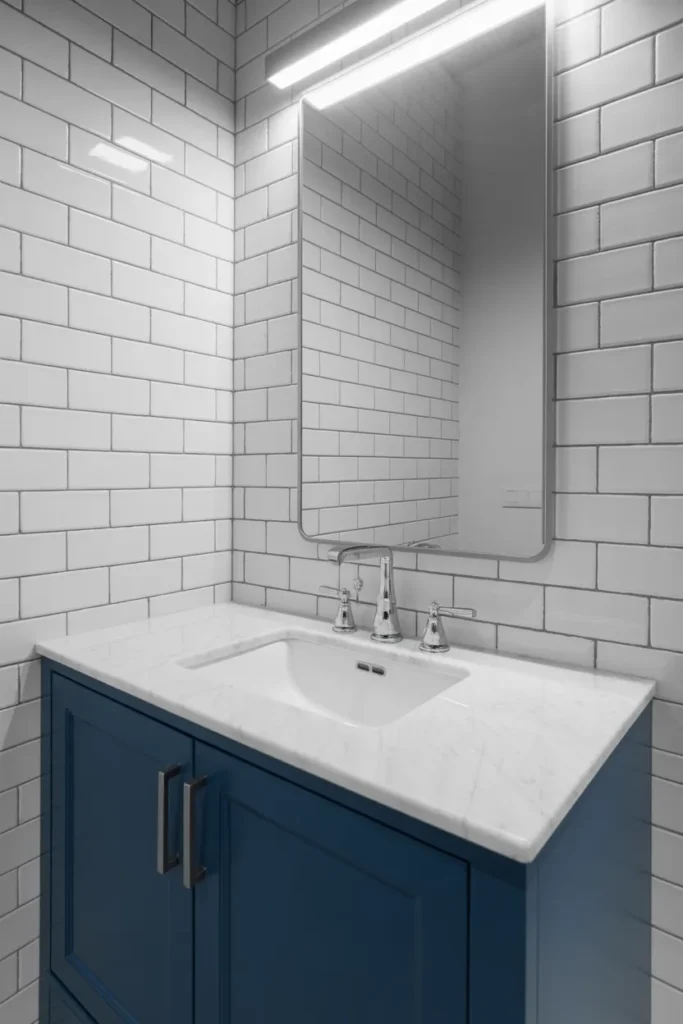
Dark cabinet finishes show water spots, toothpaste, and dust more readily than light finishes. Matte or satin finishes handle daily bathroom conditions better than high-gloss dark finishes, which require constant wiping to maintain their appearance.
Navy blue and white quartz is the pairing most frequently seen across modern bathroom vanity design in 2026. Forest green with honed Carrara marble is a close second. Both read as current without being trendy in a way that will feel dated in three years.
8. Vanity With Open Shelf Below the Sink: Airy Storage That Works Hard in the Right Bathroom
A vanity with an open shelf below the sink bowl — rather than a closed cabinet — creates a lighter visual profile that suits minimalist, Japandi, and spa-style bathroom designs. The open shelf zone is practical for displaying rolled towels, storing baskets, or keeping items that are used daily and benefit from being immediately visible and accessible.
This configuration is most appropriate in bathrooms where the items stored below are organized and attractive. An open shelf below the sink that holds cleaning products, mismatched bottles, and random household items looks worse than a closed cabinet in almost every scenario. The open shelf works when the storage is curated.
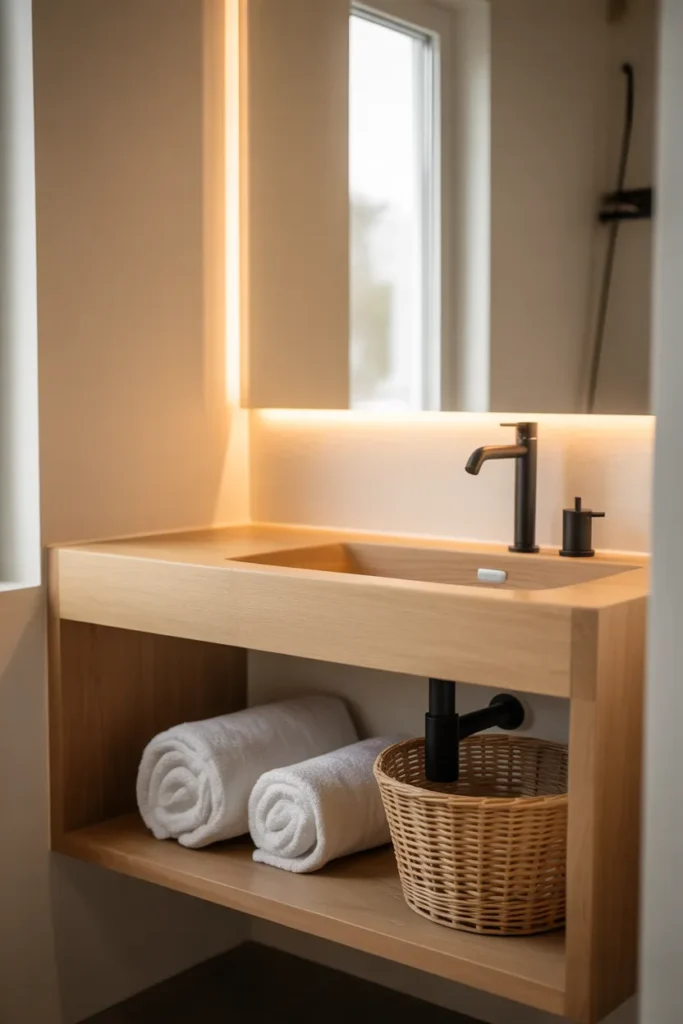
In terms of plumbing, an open lower shelf makes the drain pipe and supply lines visible. Specifying a vanity with a finished drain pipe — chrome, matte black, or brushed gold to match the faucet — is essential. Exposed grey PVC beneath an otherwise well-designed vanity is a detail that will bother you every time you look at it.
From a practical standpoint, open shelves below the sink collect more dust and ambient humidity than closed cabinets. In bathrooms with high daily shower steam, a closed lower cabinet may be a more sensible long-term choice.
9. Narrow Depth Vanity for a Tight Hallway Bathroom: Getting Function Out of 15 Inches
Standard vanity depth runs 21 inches. In a hallway bathroom — one where the toilet, vanity, and shower must fit into a space narrower than 60 inches — a shallow-depth vanity at 15 to 18 inches recovers 3 to 6 inches of walkway clearance that makes a measurable difference in daily usability and code compliance.
The trade-off is interior cabinet storage. A 15-inch-deep vanity cabinet holds less than a standard-depth one. Mitigating this requires a recessed medicine cabinet above the sink to absorb the storage capacity lost in the shallower base cabinet.
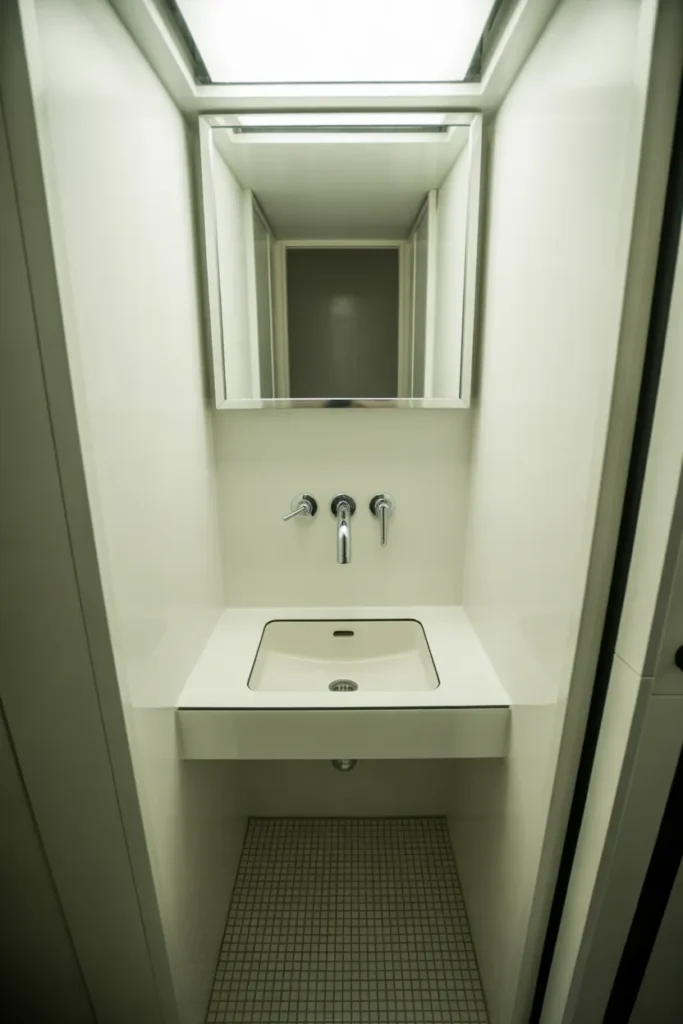
Counter space is also reduced at shallow depth. A wall-mount faucet rather than a deck-mount faucet eliminates the counter depth consumed by a standard faucet base, recovering usable surface area. Wall-mount faucets require in-wall plumbing rough-in, which is easier to incorporate in new construction than in a retrofit.
Narrow vanities at 18 to 24 inches of width — paired with shallow depth — are also the right specification for powder rooms and half baths where the vanity function is hand-washing only and no morning routine storage is required.
10. Two-Tone Vanity With Upper and Lower Cabinet in Different Finishes: A Detail That Reads Custom Without Custom Pricing
A two-tone vanity — where the base cabinet and the upper cabinet, mirror frame, or open shelf portion use two different finishes — creates the appearance of a custom, furniture-like installation without the cost or lead time of true custom cabinetry. This is one of the stronger bathroom vanity ideas for 2026 because it photographs well and solves the visual monotony of a single-finish vanity wall.
The most reliable two-tone combinations use a darker color on the base cabinet and a lighter or natural material on the upper element. White base with natural oak upper shelves, charcoal base with light grey stone countertop, or black base with a brass-framed mirror are all well-balanced pairings that follow this logic.
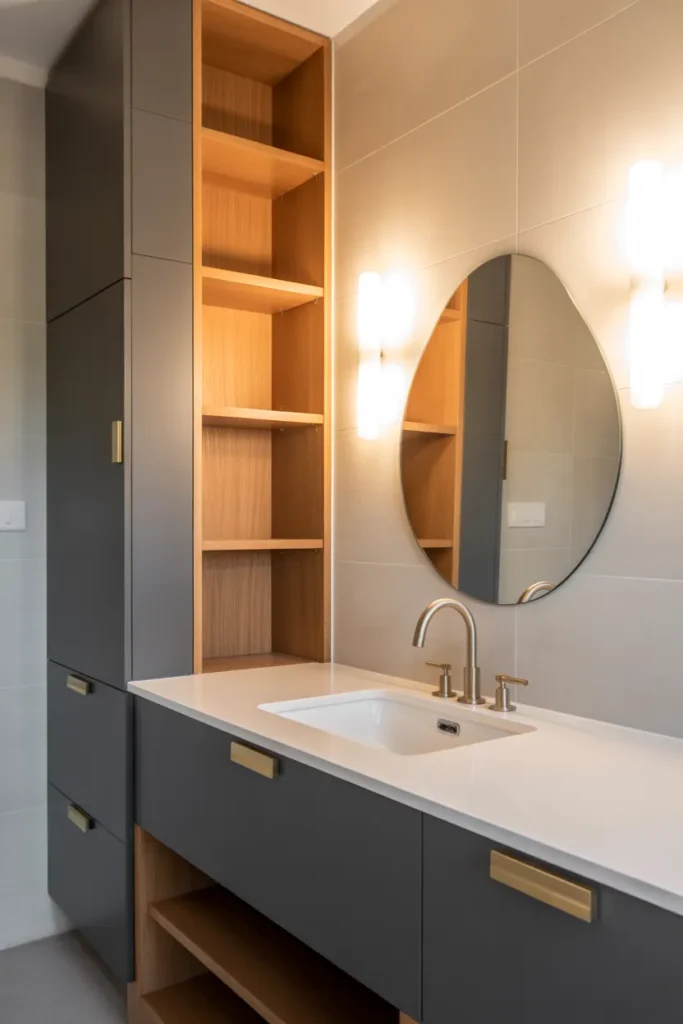
The mistake to avoid is pairing two equally dominant colors at the same visual weight — for example, a forest green base cabinet and a navy upper cabinet. Both colors compete for attention rather than one grounding the other, and the result looks unsettled.
Two-tone works best when it is limited to two materials or finishes. Introducing a third material — say, a patterned tile backsplash on top of a two-tone cabinet — requires a high level of design confidence to execute without the vanity wall feeling visually busy.
11. Corner Vanity for a Diagonal Layout: Solving the Most Awkward Bathroom Configuration
A corner-mounted vanity — installed diagonally across a corner rather than flat against a single wall — is the correct specification for L-shaped bathrooms, oddly proportioned rooms, and spaces where plumbing rough-in is already located in a corner. It resolves the corner storage problem while placing the sink in a position that opens sight lines into the room rather than blocking them.
Corner vanities are available in two configurations: true diagonal (angled at 45 degrees) and right-angle (two cabinet sections meeting at 90 degrees). The diagonal version is the more visually resolved option for most bathroom layouts. The right-angle version offers more counter surface but requires more square footage to install without crowding adjacent fixtures.
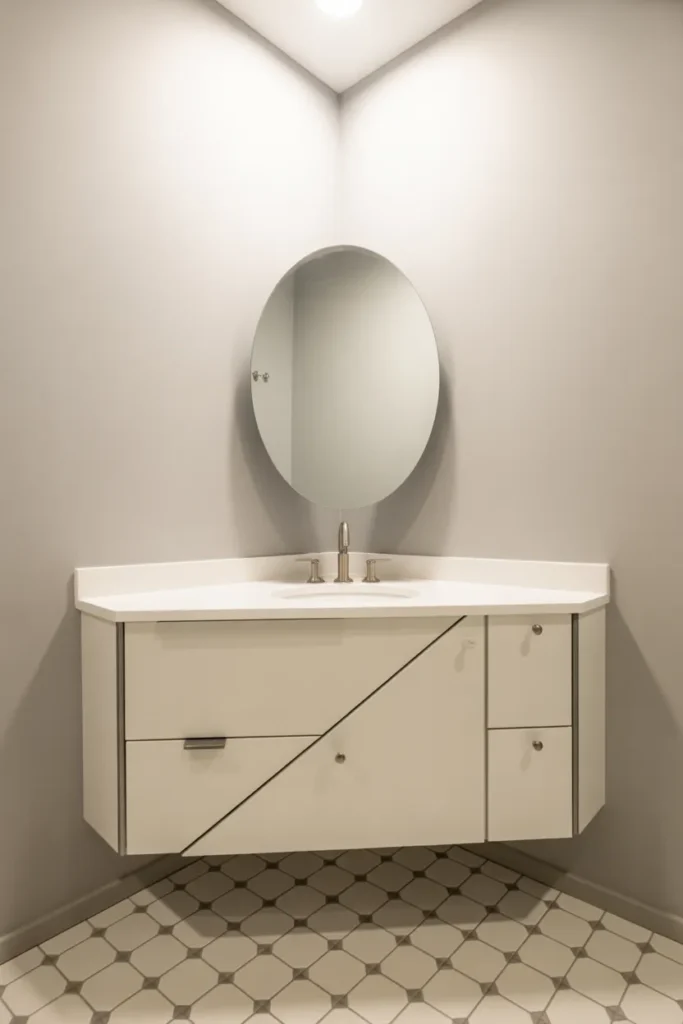
One limitation of corner vanities is mirror placement. A standard rectangular mirror does not sit correctly above a diagonal countertop. A round mirror, an angled frameless mirror, or two smaller mirrors flanking the corner are the cleaner solutions for this configuration.
This is one of the more underused bathroom vanity layout ideas in residential design, primarily because homeowners and contractors default to flat-wall placement. In bathrooms where the plumbing position makes a flat-wall vanity awkward, a corner configuration is worth serious consideration.
12. Floating Vanity With Waterfall Countertop Edge: When the Counter Becomes the Design Statement
A waterfall countertop — where the stone or surface material continues vertically down the side of the vanity cabinet to the floor — turns the countertop into the primary visual element of the vanity rather than the cabinet below. This detail reads as high-end because it requires precise material matching and careful installation, which means it is not commonly found in standard contractor bathrooms.
Marble, quartz, and porcelain slab are the most practical materials for a waterfall edge in a bathroom setting. Natural stone requires sealing and periodic maintenance but delivers an unmatched visual result. Quartz is lower maintenance and more consistent in pattern but limits the natural variation that makes a waterfall edge visually striking.
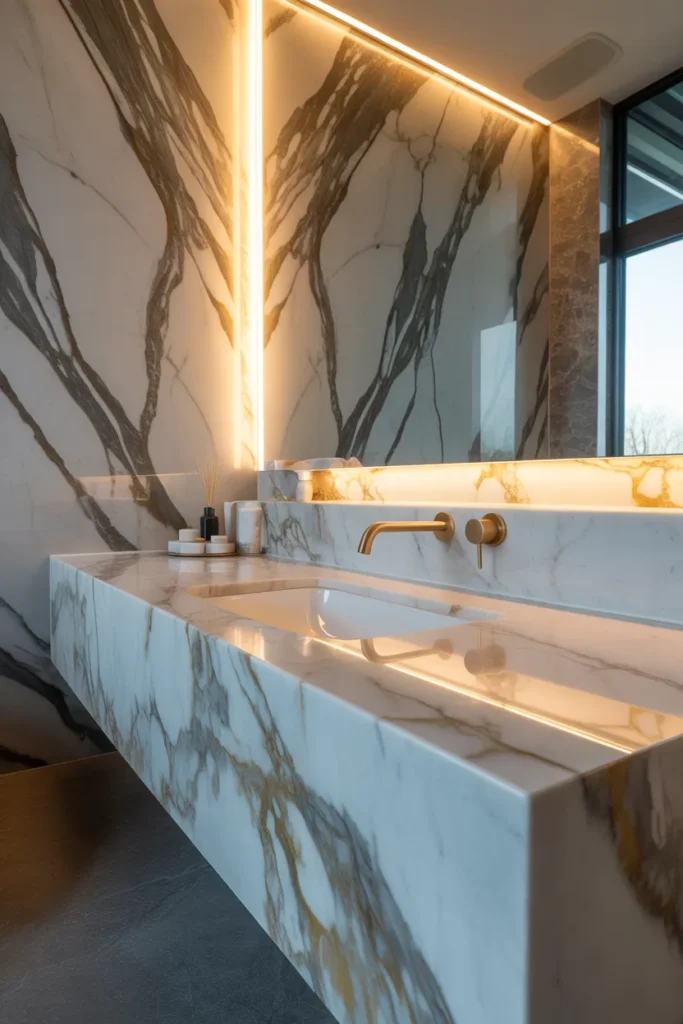
This detail works best on a single-sink floating vanity where the waterfall edge is visible from the entry point of the bathroom — ideally on the far or side wall where it reads as a focal point. A waterfall edge hidden against a wall or tucked into a corner loses most of its visual impact.
The installation cost is higher than a standard countertop because of the material quantity required and the precision of the mitered corner joint. Fabricators who specialize in stone or large-format porcelain are the right resource for this work — not general contractors.
13. Vanity With Integrated Electrical Outlets and USB Ports: The Practical Upgrade Most Bathrooms Still Lack
A vanity with built-in electrical outlets and USB charging ports — either inside a drawer, at the back of the countertop, or recessed into the side panel — solves one of the most persistent functional complaints in modern bathroom design: nowhere to charge devices or plug in grooming tools without using extension cords or occupying the one outlet near the door.
In-drawer outlets are the cleanest solution — they keep cords completely out of sight and allow grooming tools to charge and be stored in the same location. Pop-up countertop outlets are visible when in use but retract flush with the surface when closed. Both are significantly better than leaving the counter without outlets and relying on nearby wall outlets that are often in the wrong position.
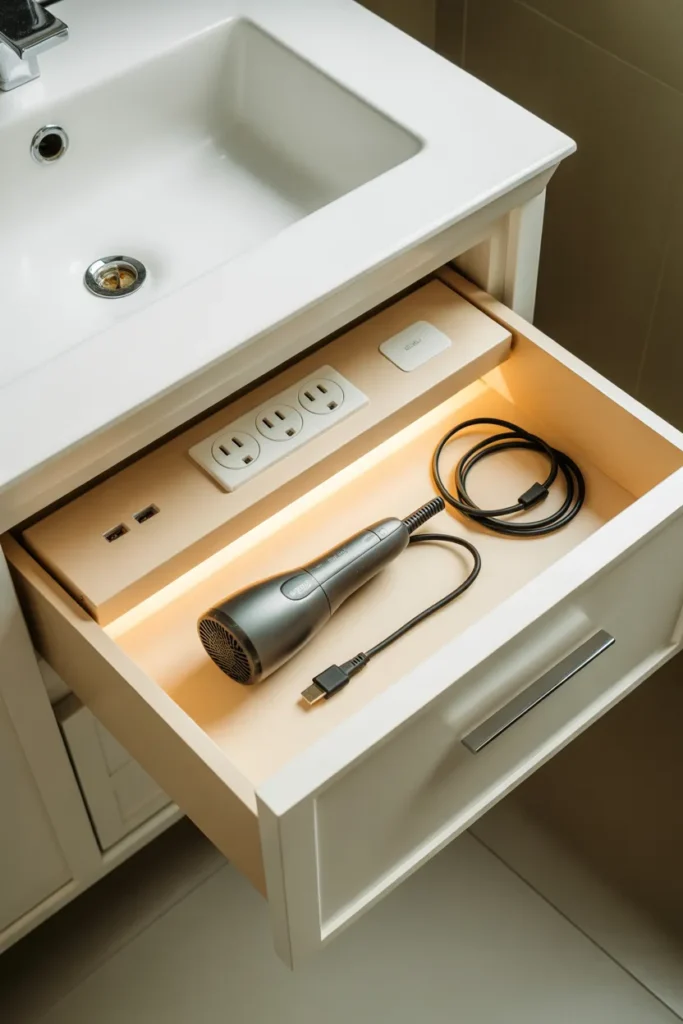
Electrical work inside a bathroom vanity is subject to GFCI protection requirements under the National Electrical Code. Any outlet inside or adjacent to the vanity within a bathroom must be on a GFCI-protected circuit. Verify this with your electrician during installation — this is a code requirement, not optional.
The USB port integration is particularly useful for households where phones, electric toothbrushes, and grooming tools are all charged in the bathroom. Specifying USB-C ports rather than USB-A at this point is the forward-compatible choice, as USB-A is already being phased out of most new devices.
14. Japandi-Style Vanity With Concrete Basin and Wood Cabinet: The 2026 Aesthetic That Balances Warmth and Minimalism
A Japandi bathroom vanity — one that combines a concrete or stone basin with a warm wood cabinet, minimal hardware, and intentionally simple lines — is the direction that contemporary bathroom design is moving most strongly in 2026. The combination of raw material texture from the basin and the warmth of natural wood creates a bathroom that feels calm, grounded, and carefully considered without being cold or clinical.
Concrete basins require sealing before use and periodic resealing depending on use frequency and the cleaning products used. Unsealed concrete in a bathroom absorbs water and staining agents and will show damage within months. This is the most important maintenance fact to communicate to anyone considering this material.
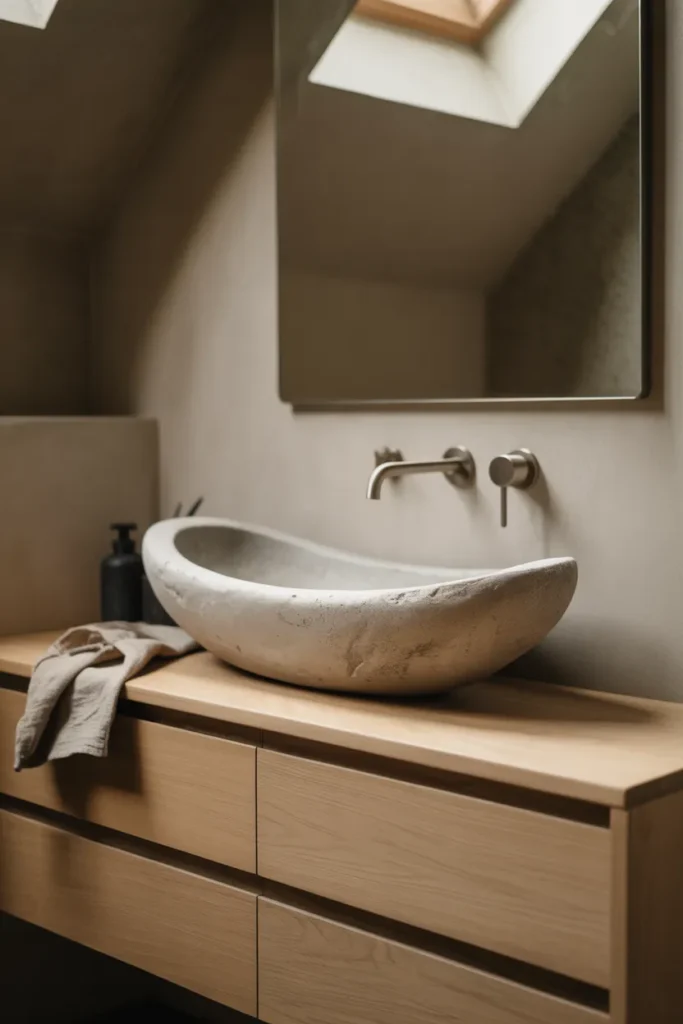
The wood cabinet in a Japandi vanity should use a species and finish that emphasizes grain without heavy staining. White oak, teak, and hinoki cypress are the most commonly specified woods for this aesthetic. The grain is the texture; the hardware should be minimal or absent — push-to-open drawers are the cleanest detail choice.
This vanity style is not the right fit for a bathroom used by multiple people with heavy daily storage needs. The aesthetic requires restraint in what is stored on and around the vanity. Clutter — even functional clutter — breaks the visual logic of this design language entirely.
Final Thoughts
The right vanity decision depends on your wall width, your storage needs, your plumbing location, and the number of people using the bathroom — not on what looks best in isolation. The bathroom vanities ideas 2026 covered here address all of those variables across different room sizes, budgets, and design directions, so there is a practical answer regardless of your starting point.
Save this post to your Pinterest boards before you begin the planning process — having these options in one place makes it significantly easier to compare approaches and communicate your preferences to a contractor or designer. For a complete bathroom renovation plan, pair this guide with bathroom layout ideas and bathroom tile design resources to cover all the decisions at once.