
A black and white checkered tile patio is one of the most versatile outdoor design choices you can make — but getting it right requires more than just laying the tile. This guide walks you through 18 practical layout and styling ideas, covering what works in small patios, large entertaining spaces, covered areas, and open-air setups, so you can make a confident decision before your project starts.
1. Classic Diamond Orientation to Make a Small Patio Feel Larger
Rotating standard square tiles 45 degrees into a diamond pattern is one of the most effective visual tricks for a compact outdoor space. The diagonal lines pull the eye outward toward the edges rather than boxing in the center, which creates a sense of expanded floor area without changing the actual dimensions.
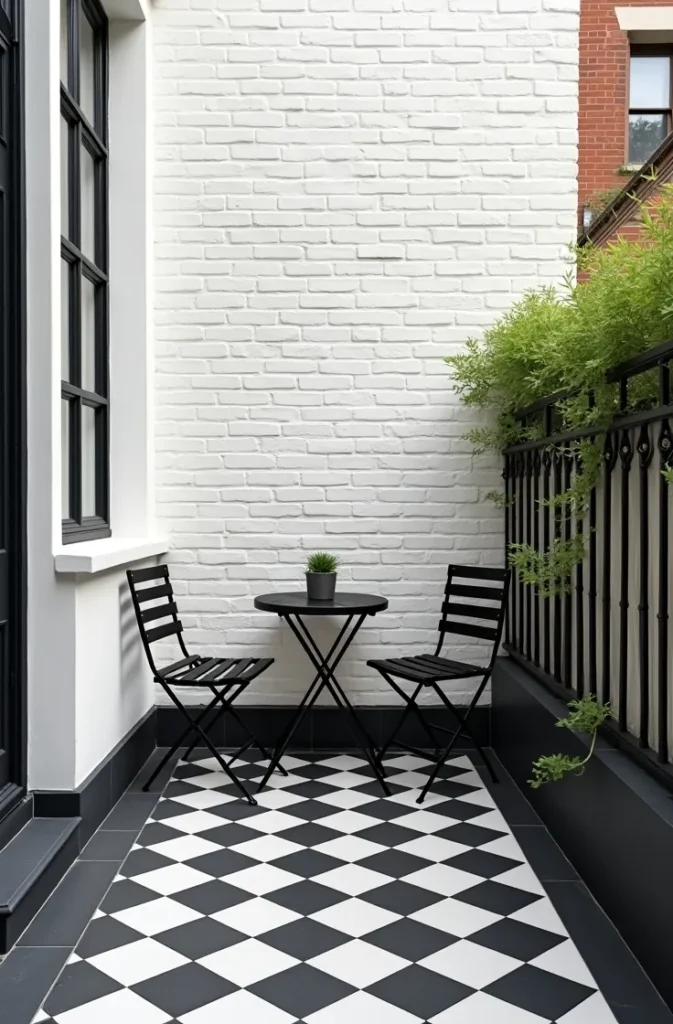
This layout works especially well when the patio is square or nearly square. Rectangular patios benefit less from the rotation unless the goal is to widen a narrow space visually. Avoid using oversized tiles in diamond orientation on tight patios — tiles larger than 12×12 inches can look crowded and may require excessive cutting at the edges.

For best results, start the diamond layout from the center of the patio and work outward symmetrically. Grout color matters here: a medium gray grout keeps the look clean without drawing too much attention to cut edges along borders.
2. Bold 24×24 Checkerboard for a Grand Outdoor Entertaining Space
Larger format tiles — particularly 24×24 inch checkerboard — create a dramatically different effect than the standard 12×12. The reduced number of grout lines gives the floor a cleaner, more architectural appearance that works well in upscale outdoor living areas. This scale is best suited to patios over 300 square feet where the pattern can breathe without feeling compressed.
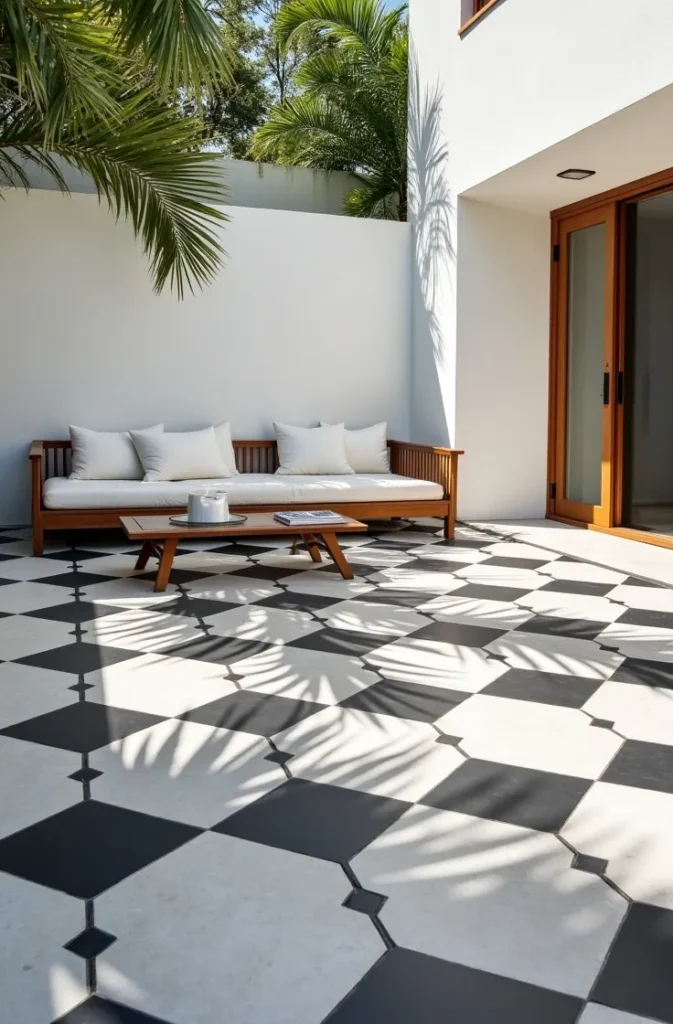
The common mistake is using large tiles on an irregular or small patio. When tile count is low, any imperfection in layout becomes immediately visible. Large format black and white checkered patio tile also requires a very level subbase — even minor lippage between tiles at this scale is visually jarring and creates a tripping hazard.
Pair this scale with low-profile, streamlined furniture. Heavy ornate pieces compete with the bold floor pattern; the floor should remain the visual anchor of the space.
3. Covered Porch Checkerboard With Recessed Lighting for Evening Use
A covered porch with black and white checkered tile transforms dramatically under artificial lighting. Recessed downlights positioned directly over tile seams create defined shadow lines that emphasize the pattern at night, turning a functional outdoor floor into a deliberate design statement.
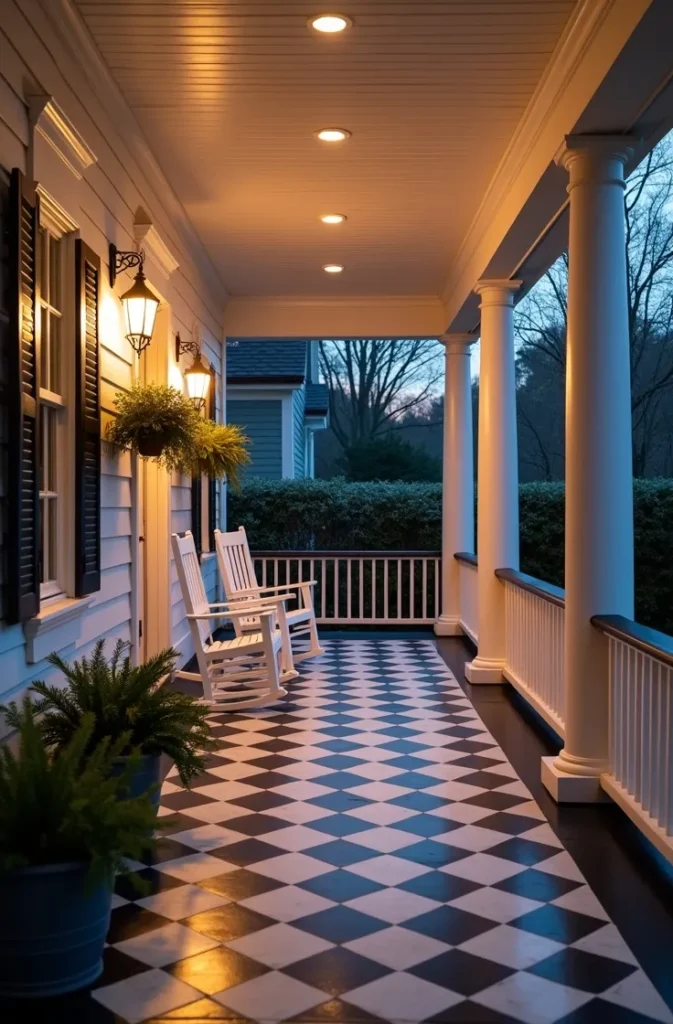
This works best when the ceiling height is at least 9 feet. Lower ceilings reduce the effectiveness of downlighting and can make the recessed fixtures feel too close to the activity area. For covered porches in humid climates, choose porcelain over ceramic — porcelain’s lower absorption rate handles moisture and temperature fluctuations without cracking or staining.
Keep surrounding materials neutral: white-painted tongue-and-groove ceilings and natural wood beadboard walls complement the checkerboard without competing. Avoid busy rugs or heavily patterned outdoor cushions in this setting.
4. Checkered Tile Pool Deck With a Black Coping Border
Using black and white checkered tile as a pool deck surface and adding a solid black coping tile as a border creates a strong visual frame around the water. The contrast between the geometric floor pattern and the flat border gives the space a finished, intentional look that reads well from inside the home looking out.
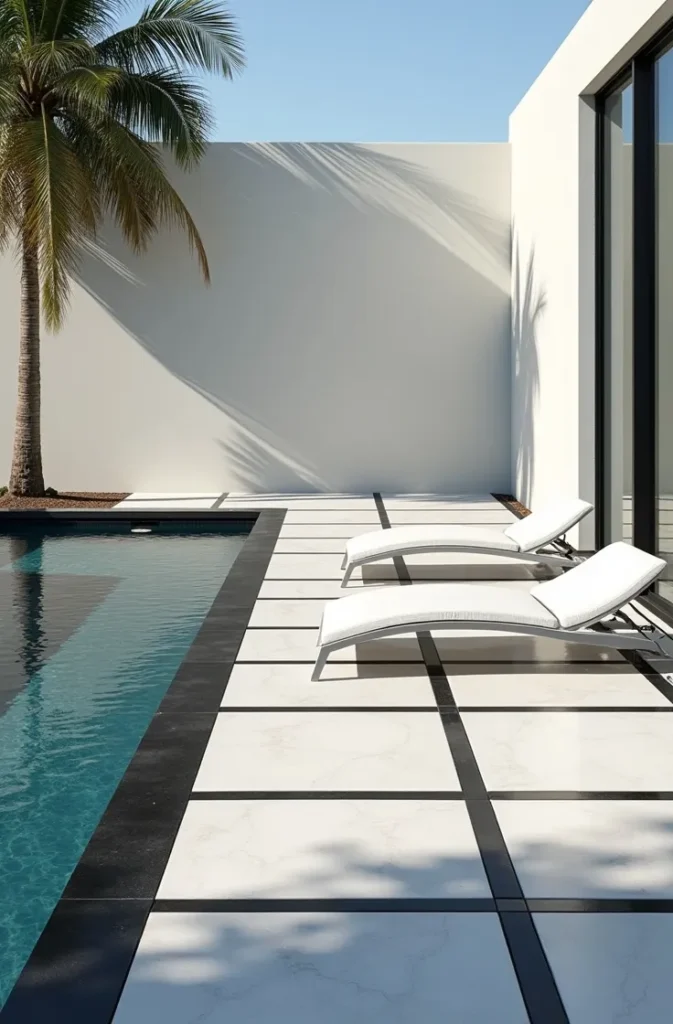
Pool deck tile must be rated for wet, slip-resistant applications. Standard porcelain or natural stone may not carry the required COF (coefficient of friction) rating for pool surrounds — always verify before purchasing. Honed or textured finishes are safer than polished surfaces in this context.
Stick to a 12×12 tile size for pool decks. Larger tiles leave less grout surface, which reduces natural grip. Epoxy grout is worth the added cost in pool environments — it resists chlorine, algae, and constant moisture far better than cement-based grout.
5. Transitional Indoor-Outdoor Checkerboard That Runs Through Glass Doors
One of the most effective uses of black and white checkered tile is continuing the same floor pattern from an interior room through glass sliding or folding doors onto the patio. This erases the visual boundary between inside and outside, making both spaces feel significantly larger.
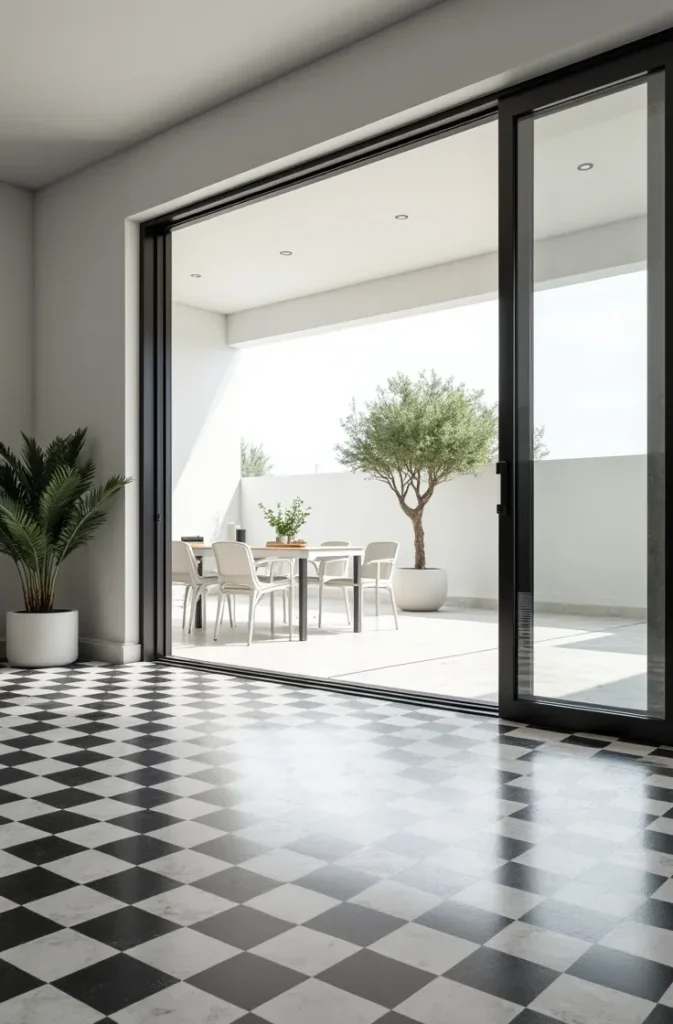
This approach works best in open-plan homes where the interior already uses a clean, minimal design language. The tile must be the same product indoors and out — different tiles of the same color will never match perfectly and the seam will always be noticeable. Porcelain rated for both interior and exterior use is the correct choice here.
The transition point at the threshold requires careful planning. The exterior tile needs to sit at the same height as the interior tile after both substrates are accounted for — getting this wrong results in a step or trip hazard at the door.
6. Small Apartment Balcony Checkerboard Using Snap-Together Tile
Renters and apartment dwellers can achieve the black and white checkered patio look without permanent installation by using interlocking snap-together porcelain or composite tiles. These products sit over existing concrete or tile and can be removed without damage to the original surface.
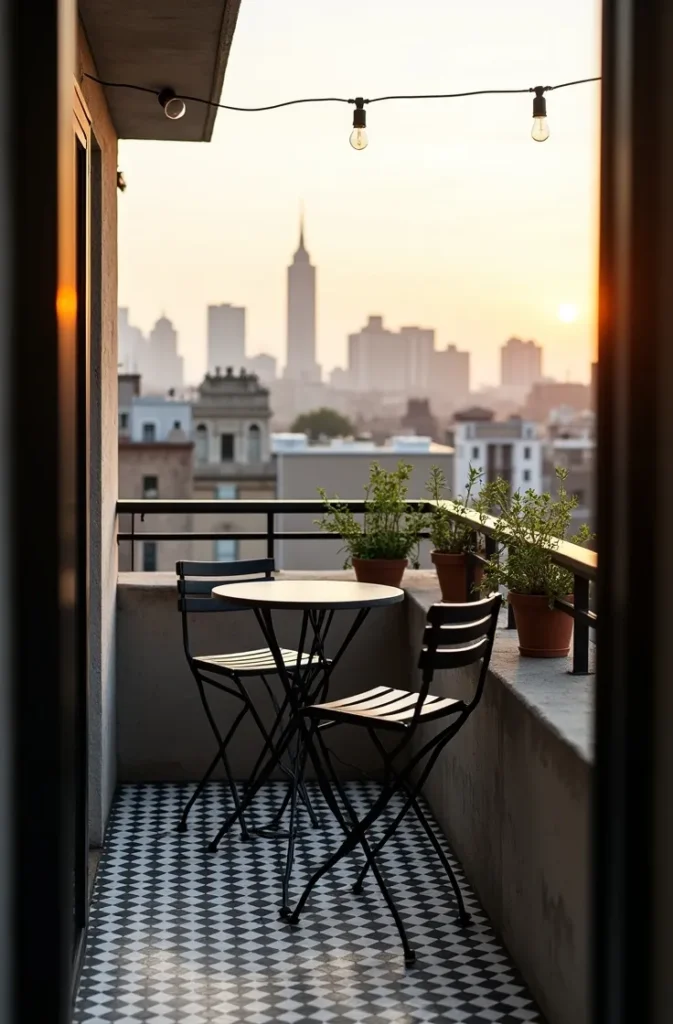
The visual result is nearly identical to a permanent installation from normal viewing distance. The main limitation is edge treatment — snap-together tiles have visible ramp edges that can look less refined than a grouted installation. Choosing tiles with beveled edges minimizes this.
This approach works well on balconies up to about 120 square feet. Beyond that, the cost of snap-together tiles begins to approach that of a permanent installation. It is also a practical solution for patios where the concrete below is stained or damaged but a full replacement is not in budget.
7. Farmhouse-Style Patio With Soft White and Off-Black Pairing
A checkerboard patio does not have to use stark pure white and jet black. Softer pairings — warm cream or antique white with a deep charcoal or slate — create a farmhouse aesthetic that feels less formal and more livable. This variation integrates more naturally into yards with natural wood fencing, raised garden beds, and casual outdoor furniture.
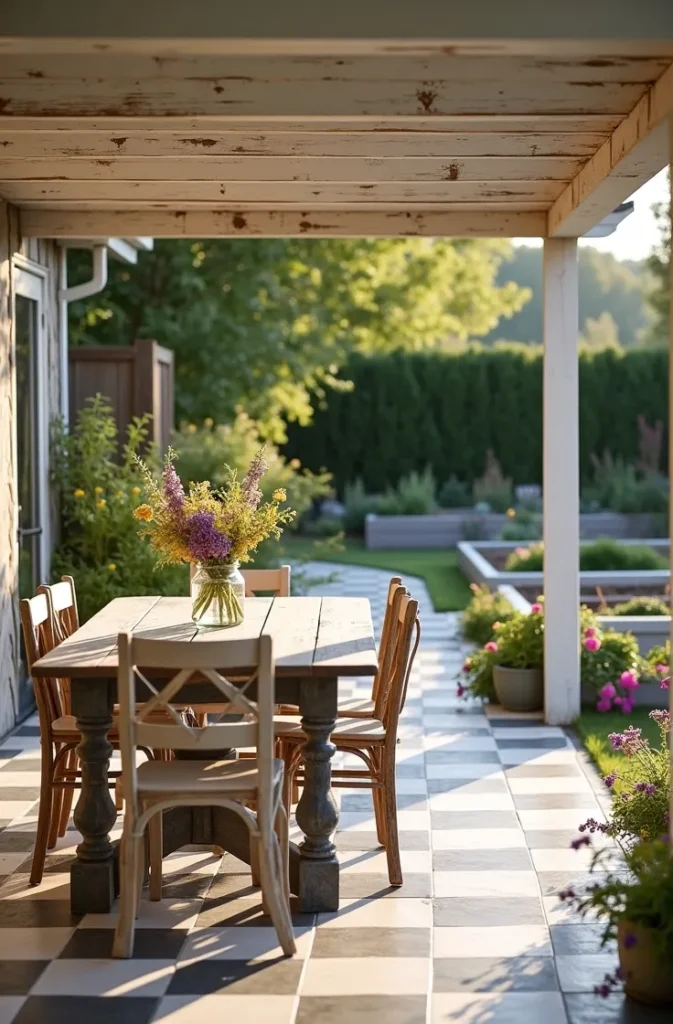
The softer contrast also means the floor is more forgiving. Slight dirt accumulation between cleanings is far less visible on cream and charcoal than on pure white tile. This is a practical consideration for families with children or pets who use the patio regularly.
When shopping for this look, request samples and view them in natural outdoor light before purchasing. Colors that look warm and muted in a showroom can appear cooler outdoors. Compare the actual tile against your exterior siding, trim, and fence colors before committing.
8. Narrow Side Yard Patio With a Tile Layout That Draws the Eye Forward
Side yard patios are typically long and narrow — a proportional challenge that a standard grid checkerboard can make worse. Laying the tile diagonally or perpendicular to the long axis creates a visual rhythm that moves the eye along the space rather than emphasizing its narrowness.
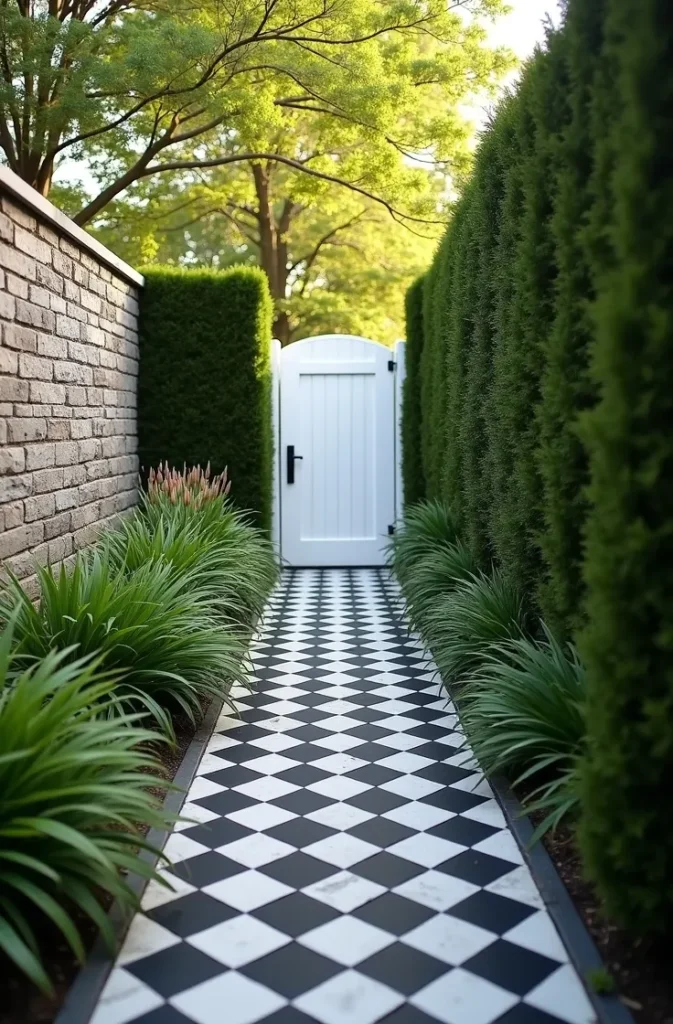
For truly narrow spaces under six feet wide, a 6×6 or 8×8 tile provides better scale than standard 12×12. Larger tiles in a narrow corridor produce awkward partial cuts along both sides that look unfinished. Smaller tiles allow better edge integration and give the floor more visual texture relative to the tight width.
Flanking a narrow patio with vertical plant elements — tall grasses, trellised vines, or columnar shrubs — combined with a directional tile layout transforms an afterthought space into a surprisingly elegant passageway.
9. Mediterranean Courtyard Checkerboard With Terracotta Accent Borders
Black and white checkered tile has deep roots in Mediterranean architecture. Pairing a standard checkerboard field with a terracotta or hand-painted encaustic border tile introduces warmth and regional character that gives the patio a sense of history and intention.
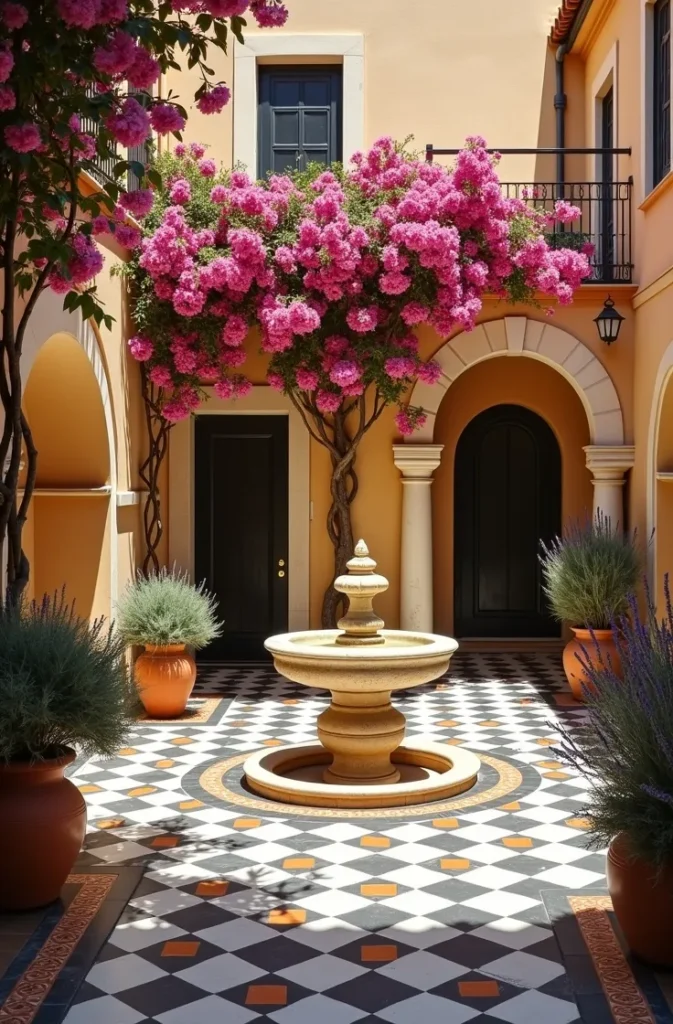
This combination works best in enclosed or semi-enclosed courtyard settings — the contained geometry of a courtyard allows the border tile to frame the space properly. In open backyard settings, the border can feel disconnected without walls or planting beds to anchor it.
Authentic encaustic cement tiles and terracotta require sealing and ongoing maintenance. If low maintenance is a priority, look for porcelain encaustic-look border tiles — they closely mimic the appearance with significantly less upkeep.
10. Modern Minimalist Patio Where the Tile Is the Only Pattern
In a minimalist outdoor design, the black and white checkered tile becomes the single decorative element — everything else is deliberately neutral and understated. Furniture is white, gray, or natural wood with zero ornamentation. Planters are concrete or matte black. Walls are unpainted stucco or board-formed concrete.
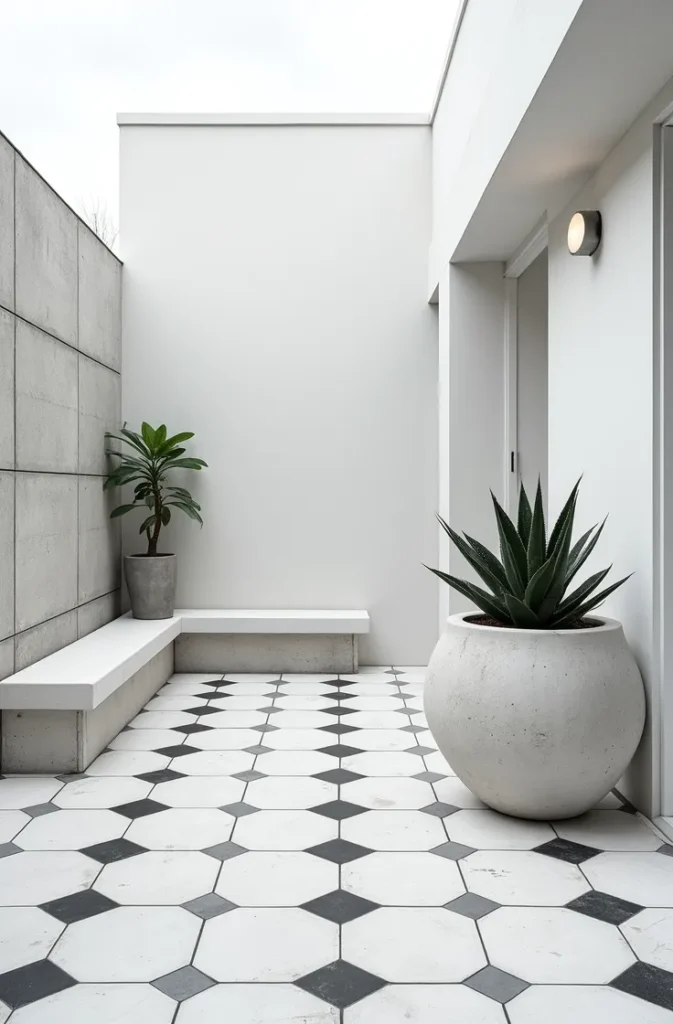
This approach demands discipline. One visually busy furniture piece, a colorful umbrella, or patterned outdoor cushions immediately undercuts the effect. The restraint is the design.
This works especially well in urban settings where the surrounding environment is already visually complex. A rooftop terrace or enclosed garden treated this way creates a composed, gallery-like outdoor space. The checkerboard reads as intentional architecture rather than decorative tile.
11. Checkerboard Tile Patio With a Pergola and Hanging Greenery
A pergola overhead changes how a checkered tile patio reads spatially. The overhead structure creates a defined room-like zone that makes the tile pattern feel contained and purposeful. Adding trailing plants — pothos, ivy, or passionfruit vine — softens the geometric hardness of the tile without competing with it visually.
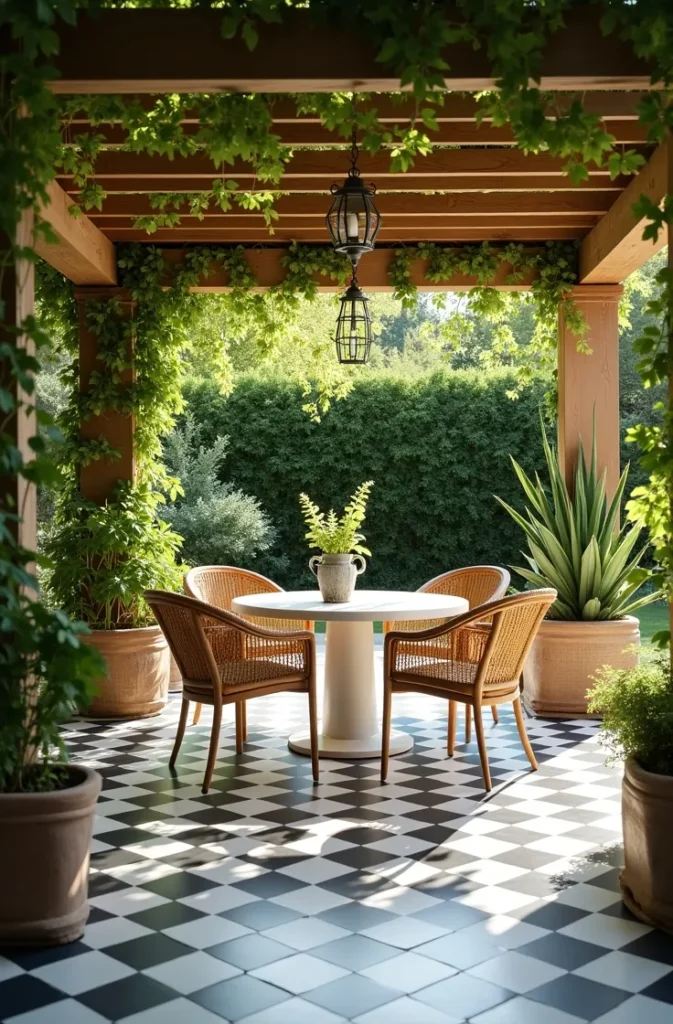
The key decision is ceiling density. A densely covered pergola produces a canopy-like effect that changes light quality on the tile dramatically — the checkered pattern becomes dappled and organic rather than crisp. A lightly covered pergola with intermittent slats keeps the tile contrast clean while adding shade.
This combination works well for families who want a defined outdoor dining or living zone with some weather protection but without the cost of a full roof structure.
12. Wet-Look Polished Checkerboard for a Covered Luxury Terrace
High-gloss polished black and white porcelain creates a mirror-like surface that gives any outdoor space an immediate luxury signal. When light hits the floor at low angles — early morning or late afternoon — the reflections animate the space in a way matte tile cannot replicate.
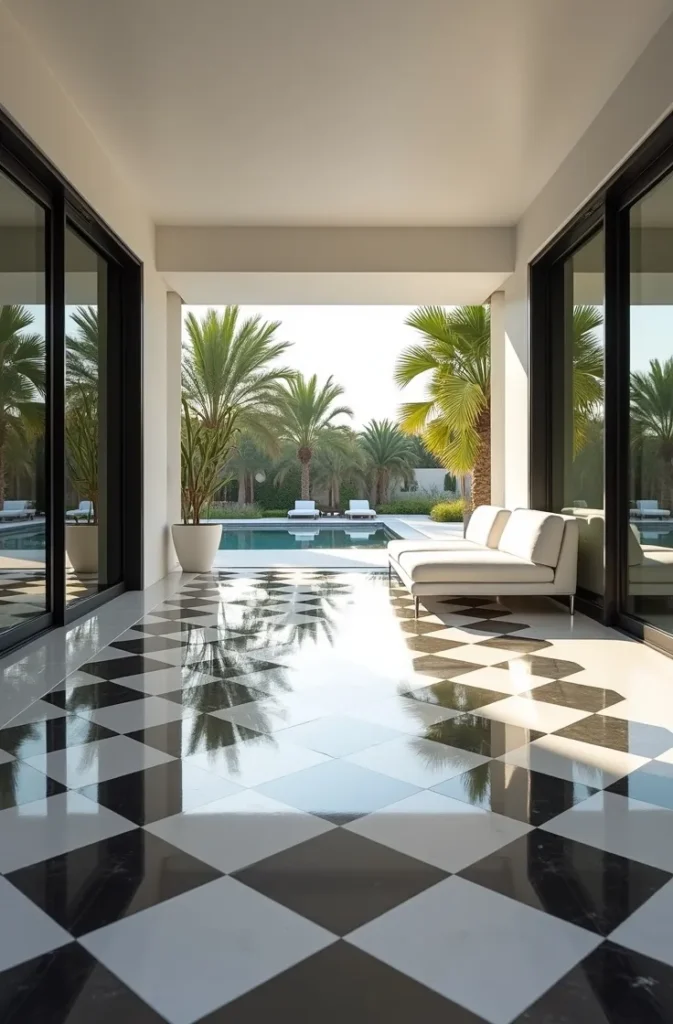
The tradeoff is practical: polished tile is significantly more slippery when wet and shows footprints, dust, and water marks readily. This finish is only appropriate in covered patios where rain does not fall directly on the surface. In uncovered applications, it becomes a safety hazard and a maintenance burden.
Pair polished tile with chrome or brushed nickel furniture hardware and white lacquered furniture frames. The goal is to support the high-finish aesthetic throughout the space — not just on the floor.
13. Patio Entrance Checkerboard as a Defined Welcome Zone
Rather than tiling an entire patio, using black and white checkered tile only in a defined entry zone — at the back door, gate entrance, or base of outdoor stairs — creates a deliberate transition moment. The pattern signals arrival and frames movement into the outdoor space.
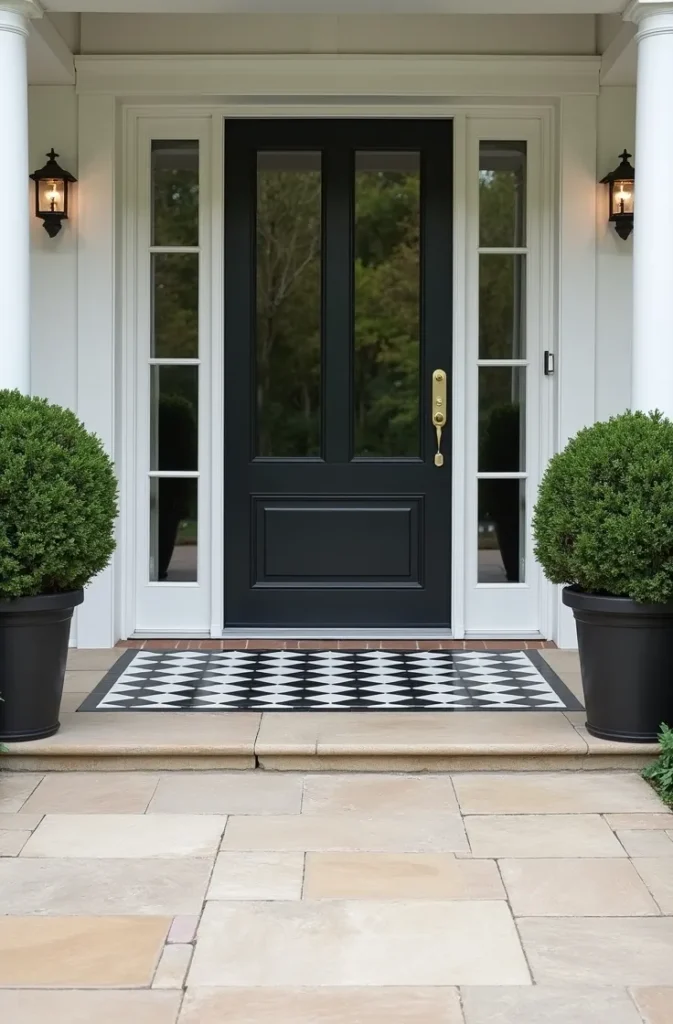
This works well when the rest of the patio uses a single material such as concrete pavers, bluestone, or timber decking. The checkerboard section reads as an accent rather than the dominant surface, which means a smaller tile investment achieves a strong visual impact.
Size the entry zone proportionally to the door width — typically 1.5 to 2 times the door width as a square or rectangular area. An undersized patch looks accidental; an oversized one becomes its own full patio zone and loses the welcome-zone effect.
14. Black and White Tile Combined With Warm Wood Decking
Combining black and white checkered tile with natural wood decking in the same patio space creates a layered material palette that adds depth and warmth. A common approach is to tile a central seating or dining zone and surround it with composite or hardwood decking, or to use the tile as a pathway between decked zones.
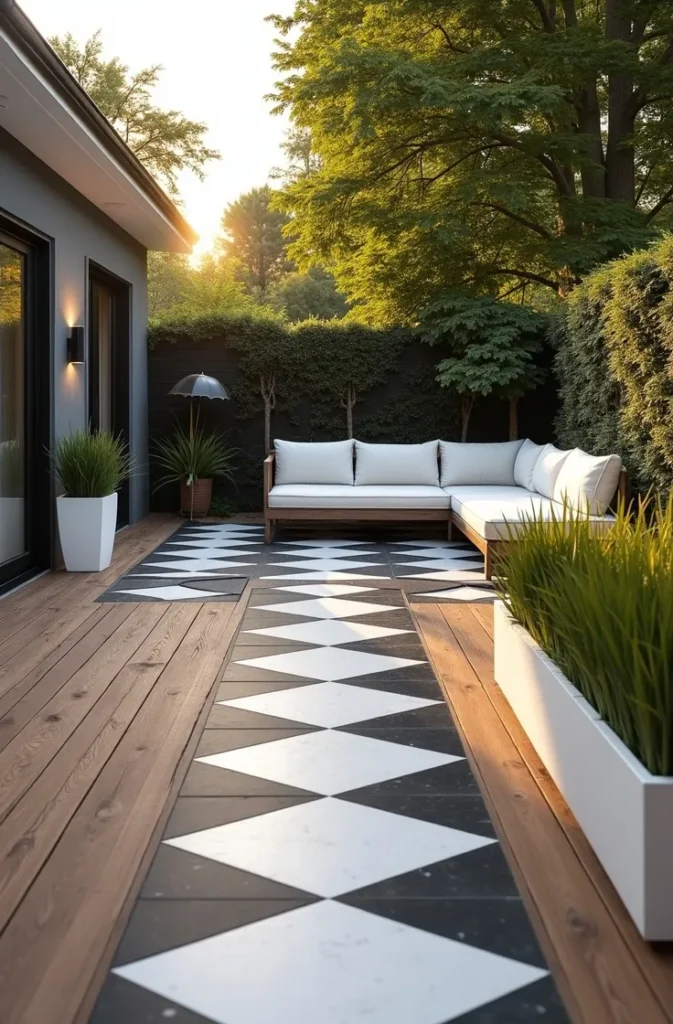
Material transitions must be handled carefully. The height differential between tile on a concrete base and decking on joists needs to be resolved at the junction — a flush transition is ideal. Even a quarter-inch step becomes a hazard for bare feet.
Teak, ipe, or gray-weathered cedar work well alongside black and white tile. Bright orange or red-toned wood species create color conflict — the warm tone competes with the cool monochrome tile palette.
15. Sunken Patio Checkerboard for a Room-Within-a-Yard Effect
A sunken patio creates a naturally enclosed outdoor room, and black and white checkered tile amplifies this effect by bringing strong interior design language into the landscape. The lowered perimeter — whether finished in stone retaining walls or poured concrete — acts as a baseboard that frames the tile floor the way walls frame an interior room.
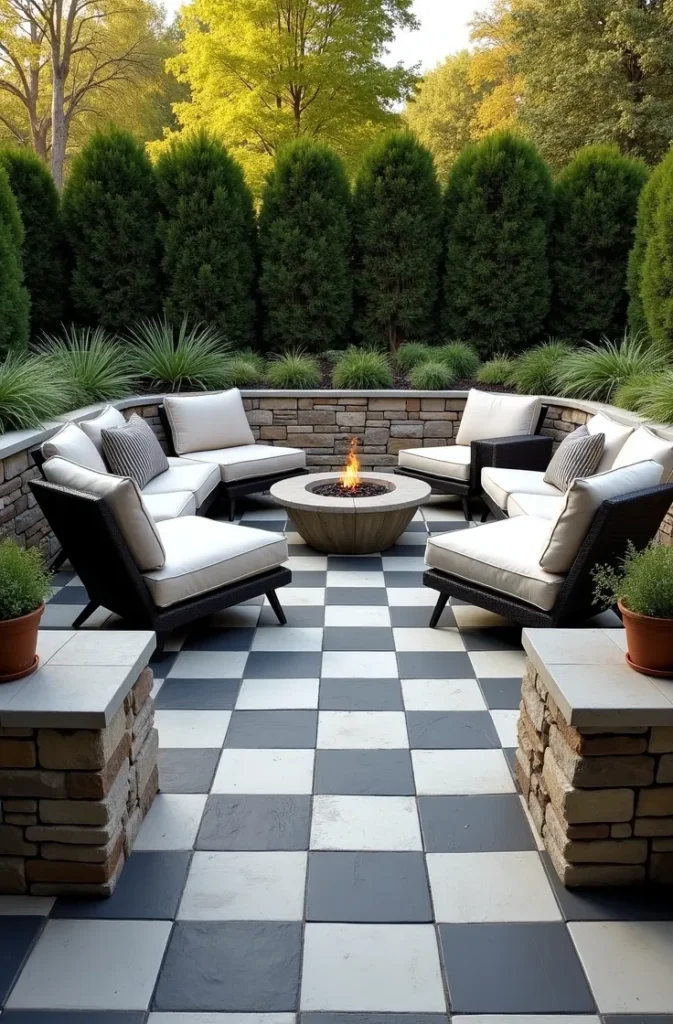
Sunken patios require proper drainage planning before any tile work begins. Water must drain away from the lower floor surface through a central or perimeter drain tied into the landscape drainage system. Tiling over a sunken concrete pad without drainage planning results in a flooded patio after any significant rain.
The sunken format also naturally reduces wind at the seating level, making this design practical in exposed or coastal settings where a freestanding patio would be uncomfortable during breezy conditions.
16. Coastal Patio With Blue Accents Against a Checkerboard Base
In coastal settings, black and white checkered tile serves as a strong neutral base that allows a carefully chosen accent color — navy, cobalt, or seafoam — to carry the regional character. Accent colors work best through furniture, cushions, or planters rather than additional tile.
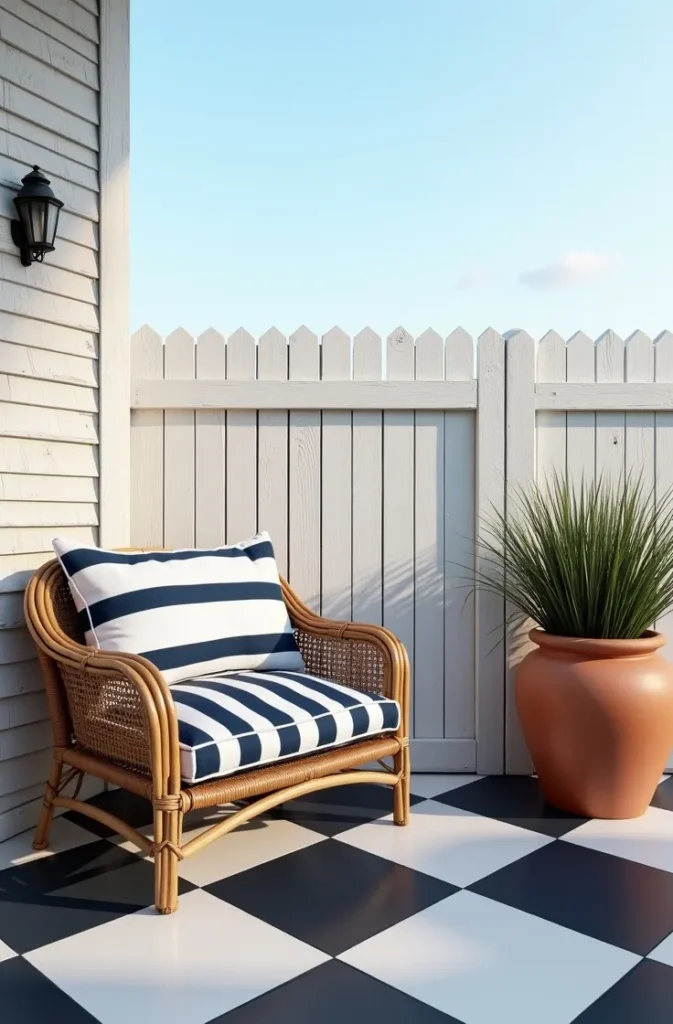
The checkerboard base outperforms plain white or plain concrete in coastal environments because the pattern stands on its own — it does not rely on color to make a statement. This means the accent color becomes a seasonal or changeable element rather than a permanent structural commitment.
Choose tiles with a slight texture or matte finish for coastal locations. Salt air, sand, and moisture make polished surfaces impractical — they scratch and dull quickly and become slippery when wet.
17. Night-Lit Patio Where Checkerboard and Landscape Lighting Create Drama
Strategic landscape lighting transforms a black and white checkered tile patio after dark into an entirely different visual experience. Ground-level pathway lights positioned at the patio perimeter graze across the tile surface and emphasize the geometric pattern through shadow contrast. String lights overhead create a secondary warm layer without washing out the floor effect.
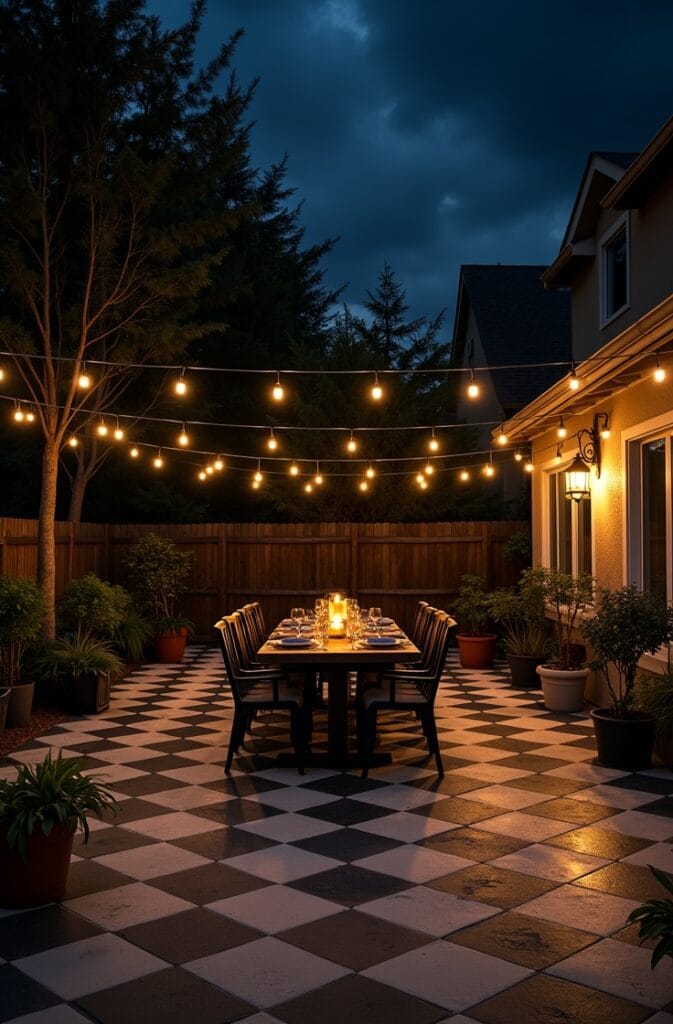
The most impactful lighting positions create a low, raking angle across the tile — typically bollard lights 12 to 18 inches tall or recessed step lights set into surrounding retaining walls. Overhead flood lighting pointed straight down flattens the pattern and is the least effective approach for checkered tile.
Warm white bulbs (2700K to 3000K) work better than cool white in this setting. Cool white light desaturates the black tile toward dark gray, reducing the contrast that makes the pattern readable after dark.
18. Checkerboard Tile With a Custom Center Medallion Inset
For homeowners who want a truly custom result, inserting a tile medallion or geometric inset at the center of a checkerboard field elevates the patio from attractive to architecturally distinctive. The medallion — typically a circular, starburst, or compass rose pattern — is cut and installed within the checkerboard field as a planned focal point.
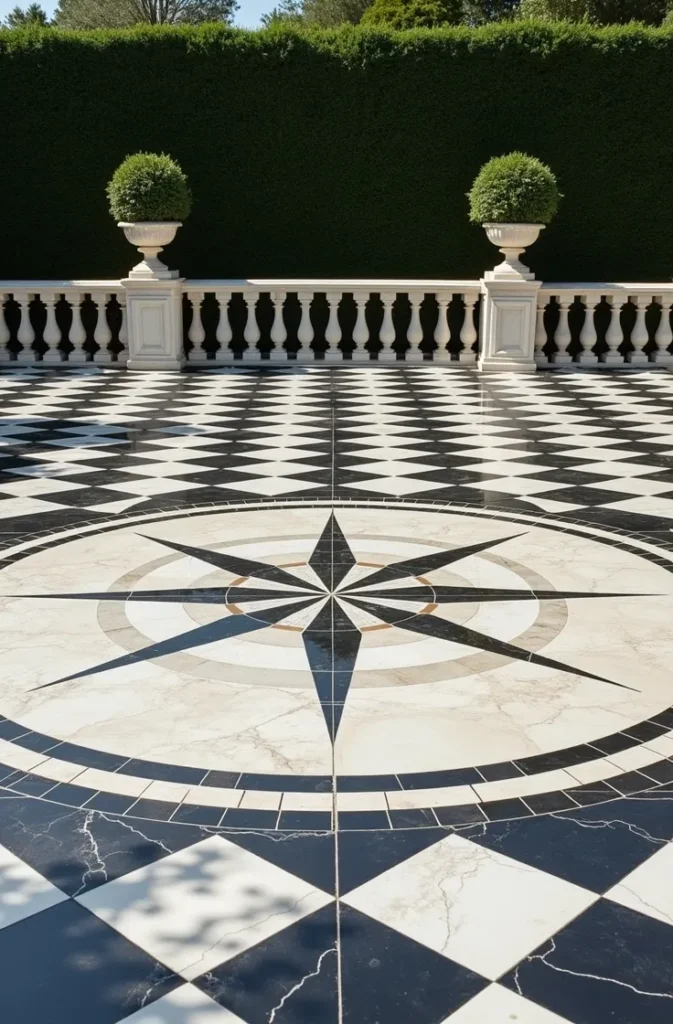
This works best in square or rectangular patios where a natural center point exists. Irregular patio shapes make centering a medallion difficult, and an off-center result can look like a mistake rather than a feature. Plan the medallion position during the layout stage, not after installation has begun.
Custom medallions can be fabricated from contrasting marble, hand-cut stone, or waterjet-cut porcelain. Waterjet cutting is the most cost-effective method for precise geometric patterns, and the result is seamless when set by an experienced installer. This detail significantly increases perceived value and resale appeal.
Final Thoughts
A black and white checkered tile patio holds its visual strength across decades and design trends — which is why it continues to appear in everything from farmhouse backyards to luxury resort terraces. The 18 ideas above cover a wide range of applications and budgets, so you can identify the approach that fits your specific outdoor space, climate, and lifestyle.
The most important decision is not which pattern to choose but which tile specification fits your usage conditions: slip resistance rating for wet areas, frost resistance for cold climates, and grout compatibility for your maintenance tolerance. Getting those practical elements right ensures the visual investment lasts.
Save this post before your next tile project or design consultation — everything you need to make a confident decision is here in one place. For more outdoor design ideas, explore guides covering concrete pavers, natural stone layouts, and mixed-material patio combinations.