Choosing the right couch for a bohemian living room is harder than it looks because the wrong piece makes the whole space feel either too generic or too chaotic. This guide gives you 18 specific bohemian couch ideas with practical direction on styling, placement, fabric selection, and layering so every decision you make moves the room in the right direction. Whether you are starting from scratch or restyling around a couch you already own, each idea here is designed to help you make a confident, informed choice.
1. Style a Low-Profile Floor Couch With Stacked Kilim Cushions for a True Boho Foundation
A low-profile floor couch or daybed-style sofa is the most direct expression of bohemian living room seating. It shifts the visual center of gravity downward, making the room feel more relaxed and grounded, and it creates the low, lounging orientation that defines casual bohemian interiors. The lower the seat height, the more intentional the boho feel.
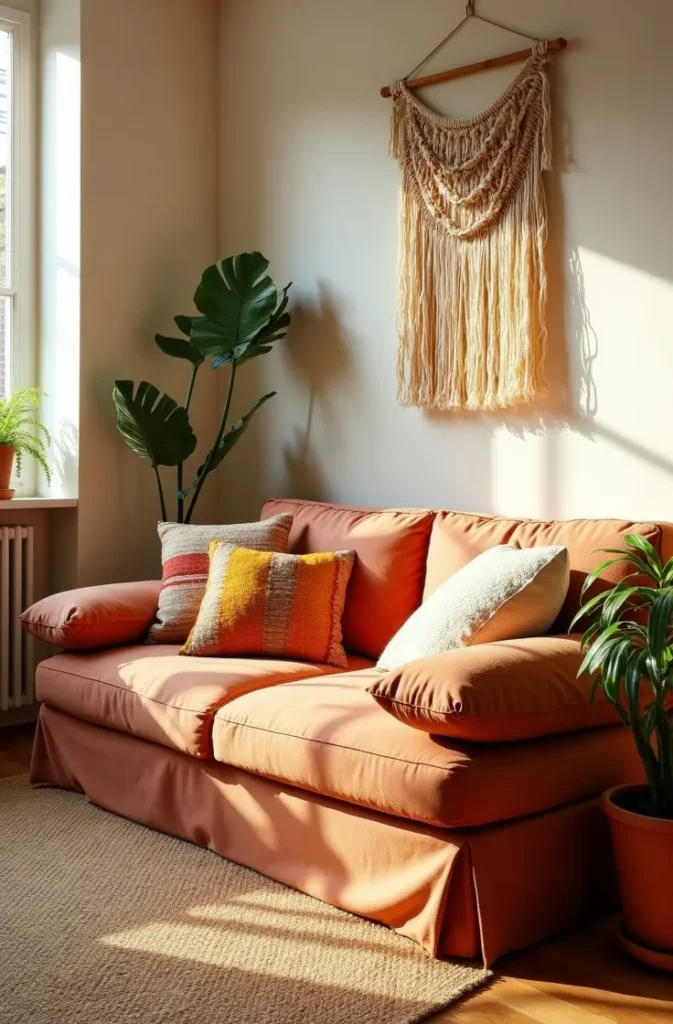
The key to making this work is the cushion selection. Stack kilim-covered floor cushions, flat-woven wool pillows, and oversized bolsters in a combination of warm terracotta, deep rust, mustard yellow, and ivory. Avoid matching sets; every cushion should look like it came from a different source. The layered, collected quality of the cushion arrangement is what gives this configuration its character.

The practical consideration is comfort over time. A very low floor couch is not comfortable for everyone, particularly for older adults or people with mobility concerns. If the household includes guests or residents who need a higher seat, a low-profile couch in the 12 to 16 inch seat height range is a better choice than a fully floor-level option.
This configuration works in open-plan living areas, studio apartments, and rooms with high ceilings where the low profile creates dramatic contrast with the vertical space above.
2. Choose a Velvet Couch in Jewel Tones and Layer It With Textured Throw Blankets
Velvet is one of the most effective upholstery fabrics for a bohemian couch because it carries color richly and develops subtle variations in sheen as it moves and ages. Jewel tones work particularly well in bohemian interiors because they connect to the global textile traditions that inform the style: deep teal, dusty plum, burnished gold, forest green, and rich rust are all strong choices.
The layering on a velvet jewel-tone couch should introduce texture contrast. Velvet is smooth, so throw blankets in chunky knit, cotton waffle weave, or woven wool provide the tactile variety that makes a styled couch feel genuinely comfortable rather than staged. Drape one blanket over the back of the couch and fold a second loosely at one end.
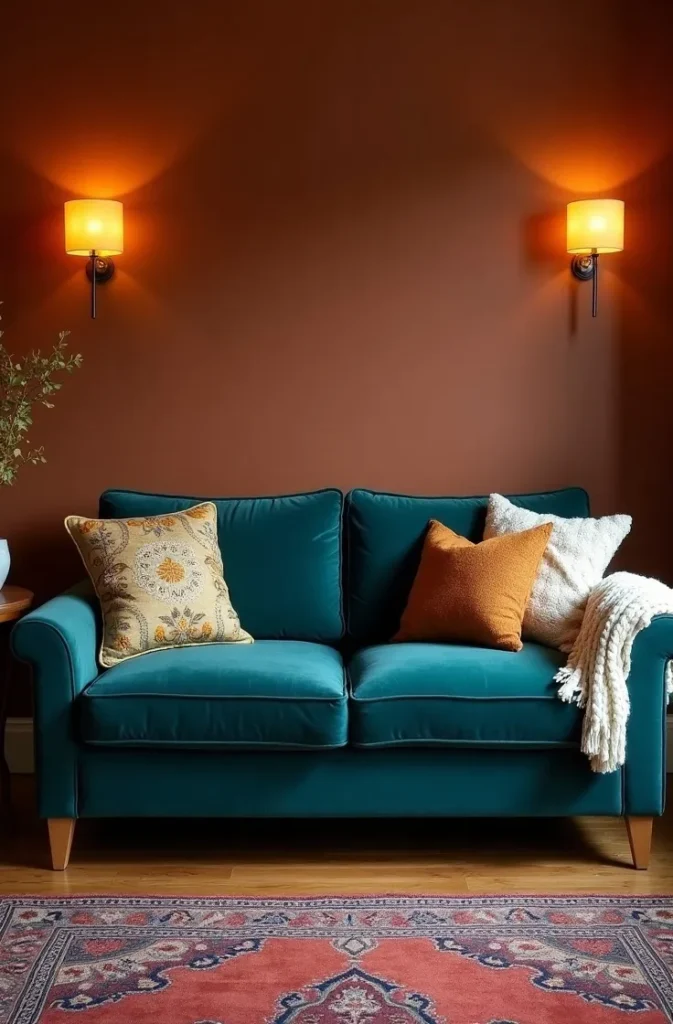
Pillow selection on a velvet couch should lean into mixed materials: embroidered linen, silk-stitched covers, beaded accent pillows, and printed cotton all work because the visual contrast against the velvet surface reads as curated rather than mismatched.
Avoid pairing a jewel-tone velvet couch with highly saturated wall colors that compete with the upholstery. Warm neutrals, aged white, dark charcoal, and deep warm greens on the walls allow the couch to function as the room’s color anchor without visual conflict.
3. Style a Neutral Linen Couch With a Layered Throw and Global-Print Pillows to Build a Boho Base
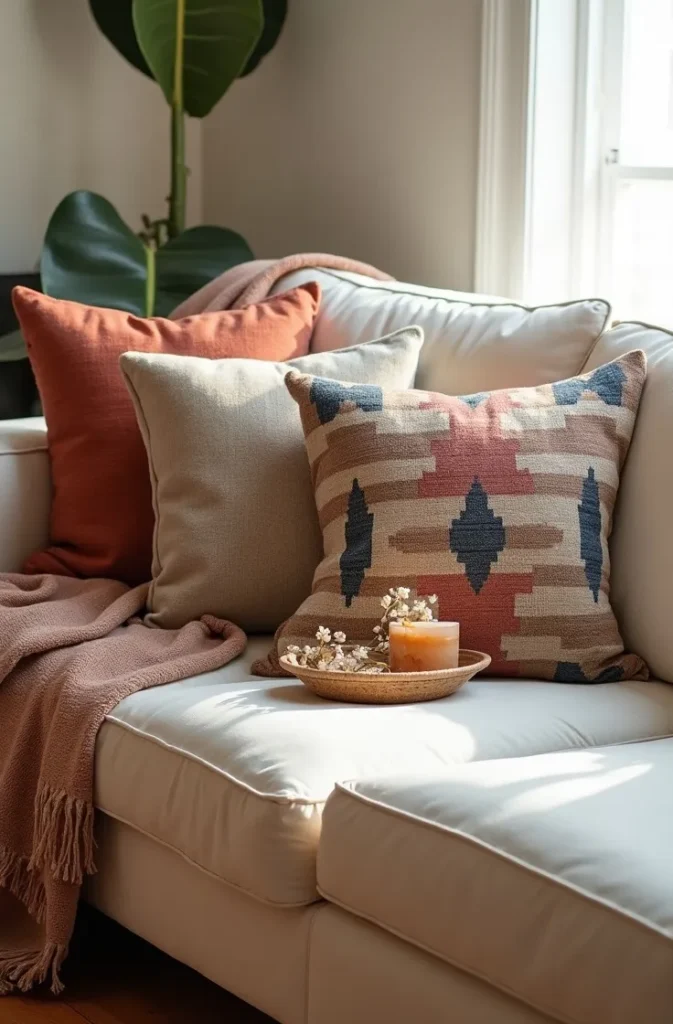
A neutral linen couch in cream, oatmeal, or warm greige is one of the most versatile starting points for a bohemian living room because it accepts any combination of pattern, color, and texture in the styling layer above it. The couch itself is the canvas; the pillows and throws do the heavy lifting.
For bohemian couch ideas centered on a neutral base, the pillow selection is the most important decision. Choose a minimum of five to seven pillows in varying sizes: two large 22-inch square pillows in a global print such as ikat, block print, or mudcloth, two medium lumbar pillows in a solid woven texture, and one or two smaller accent pillows in an embroidered or tasseled design. The variety of scale and pattern prevents the arrangement from looking like a matching set.
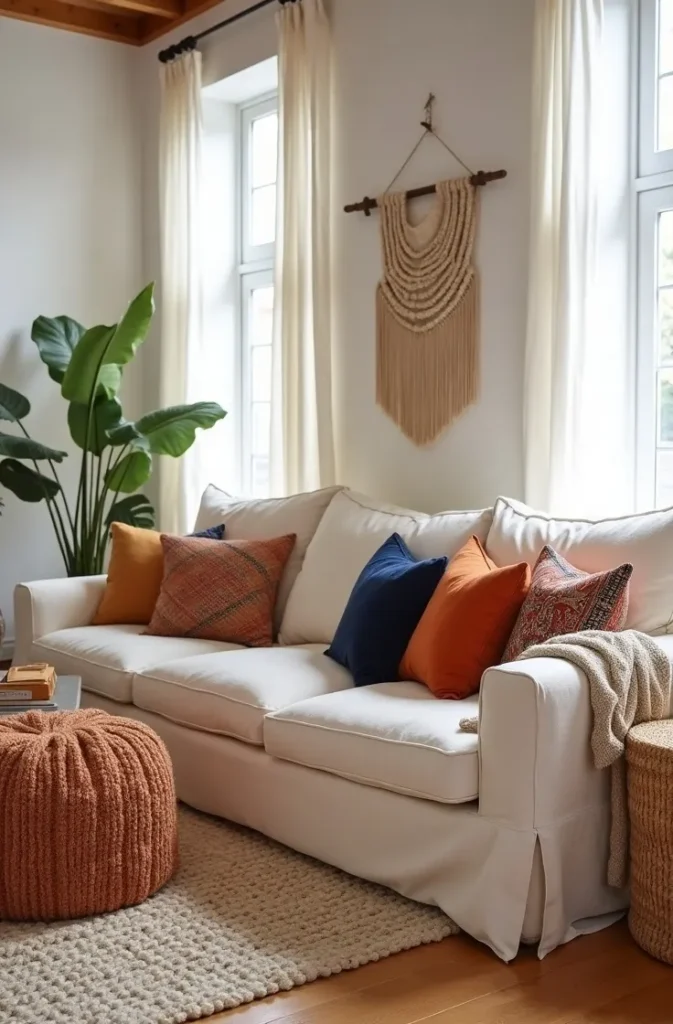
A throw in a warm earthy tone, such as terracotta, cinnamon, or dusty rose, draped casually over the corner or back of the couch introduces color without committing to a colored sofa. This also gives you the flexibility to swap the throw seasonally or as the room evolves.
The biggest risk with a neutral linen couch in a boho space is that it becomes too safe and the overall room reads as generic rather than intentional. The fix is to push the styling layer harder: more pillows, bolder prints, and a rug with more visual weight than you think you need.
4. Use a Curved or Barrel-Back Sofa to Add Sculptural Shape to a Boho Room
Curved sofas and barrel-back loveseats bring a sculptural quality to bohemian interiors that standard rectangular sofas cannot match. The curved form connects visually to the organic shapes that bohemian decor draws from: rounded arches, organic pottery, woven circular wall hangings, and irregular natural materials. A curved sofa feels like it belongs in this aesthetic at a fundamental level.
In a bohemian living room, a curved sofa works best as the room’s central piece, positioned to face a focal point such as a fireplace, a large piece of wall art, or a low coffee table arrangement. Because the curved form is already visually complex, the surrounding furniture and decor should be simpler and lower in profile to allow the sofa shape to read clearly.
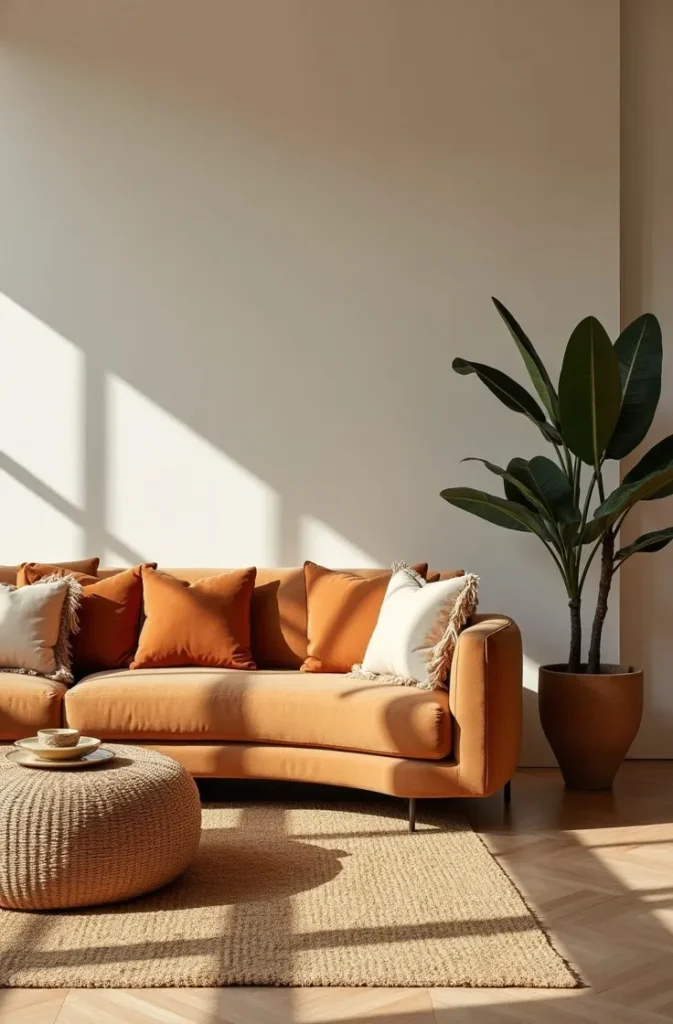
Upholstery for a curved boho sofa should lean toward tactile fabrics: brushed cotton, woven boucle, or slightly textured linen. Avoid smooth, highly polished fabrics like faux leather or sateen on curved sofas in this style, as they shift the feel from bohemian toward art deco or mid-century modern.
This works particularly well in round or square living rooms where a standard three-seat sofa would leave awkward corner dead zones. A curved sofa placed centrally in a square room creates a natural gathering point with no wasted space around the edges.
5. Create a Boho Corner Sectional With Mismatched Throw Pillows in Earthy Tones
An L-shaped or corner sectional is one of the most practical configurations for a bohemian living room because it maximizes seating, defines the space without walls or partitions, and creates the generous, sprawling seating area that the bohemian lifestyle aesthetic implies. A sectional in the right neutral or earthy tone becomes the foundation for an entire room’s color story.
Choose a sectional in a fabric that handles layering well: woven cotton, linen blend, or a durable textured weave in a warm neutral such as warm gray, sand, caramel, or olive. These tones connect naturally to the earthy palette that defines most bohemian living room color schemes without demanding a specific accent color in return.
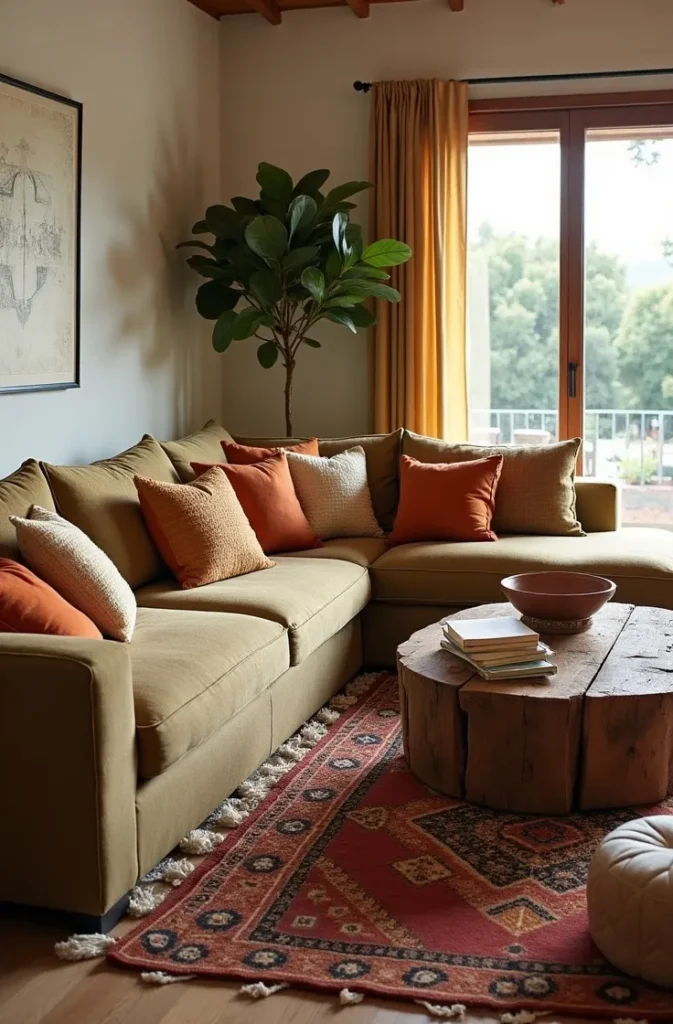
The pillow arrangement on a large sectional requires more volume than most people expect. A corner sectional typically needs eight to twelve throw pillows distributed across the main seat and chaise to look appropriately styled rather than sparse. Use three distinct pillow sizes, at least four different patterns, and no more than three coordinating accent colors in the earthy palette range.
The sectional layout works in open-plan living areas and larger apartments where a standard sofa would feel undersized relative to the space. Avoid placing a large sectional in a small room where it occupies more than two-thirds of the available floor space, as it will make furniture arrangement around the sofa impossible.
6. Drape a Vintage Rug Over the Back of a Plain Sofa to Instantly Add Boho Texture
Draping a vintage or flat-woven rug over the back or arm of a plain sofa is one of the most effective and least expensive bohemian couch ideas available. A single kilim, Turkish flat-weave, or vintage-inspired cotton dhurrie draped over the back of a standard sofa transforms it visually into a piece that reads as globally influenced and layered with history.
This technique works because it adds three things simultaneously: pattern, color, and texture. A plain beige sofa with a kilim draped over its back and a cluster of mixed throw pillows in front of it reads as a completely different piece than the same sofa styled with matching cushions. The rug drape signals bohemian intent immediately.
The practical guidance is to use a smaller rug in the two-by-three foot or two-by-four foot range. Larger rugs are too heavy to drape naturally and tend to slide. The drape should look casual, not perfectly arranged. Fold the rug once if needed, then lay it over the back of the sofa and adjust until it falls naturally on both sides.
This approach works on any sofa: sectionals, loveseats, standard three-seat sofas, and even futons. It is particularly effective in rental apartments where permanent changes are not possible and where a plain or generic sofa needs to be elevated without replacement.
7. Pair a Dark Charcoal Sofa With Warm Boho Accents to Avoid the Cold Minimalist Look
A dark charcoal or near-black sofa is a starting point that many bohemian decorators avoid because it feels too minimal or too modern. But a dark sofa styled with the right warm accents becomes one of the most grounded and visually sophisticated bohemian configurations available. The darkness of the sofa prevents the space from reading as too sweet or too predictable.
The critical variable with a dark sofa in a boho space is warmth. Every accent element needs to push toward warm tones: amber, rust, dusty rose, warm cream, and golden yellow all work. Cold accents such as bright white, silver, or cool gray will shift the room toward modern rather than bohemian and undercut the effect.
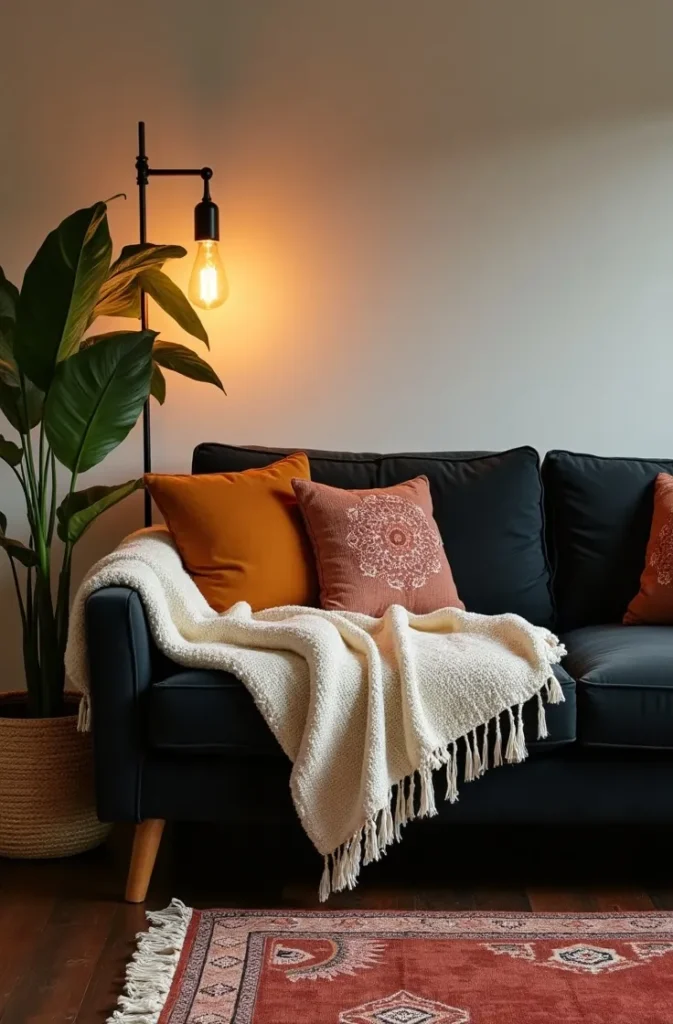
Textiles are the primary tool for warming a dark sofa. A chunky knit throw in warm cream, a cluster of embroidered pillows in amber and terracotta, and a Persian or Moroccan rug with warm tones in the weave all connect the dark sofa to the bohemian palette. Add one or two macrame or woven wall hangings above the sofa to connect the sofa to the vertical plane of the room.
Plants are especially effective against a dark charcoal sofa because the green of the foliage provides natural warmth and biological contrast that no textile can replicate. A large potted plant in a terracotta or woven basket planter placed at the end of the sofa completes the visual story.
8. Build a Boho Reading Nook Around a Small Loveseat With Floor Cushions and a Canopy
Not every bohemian couch idea needs to anchor an entire living room. A small loveseat or two-seat sofa used as the centerpiece of a dedicated reading nook creates an intimate, enveloping space that is one of the most pinnable configurations in the boho home decor category. The reading nook format concentrates the bohemian styling elements into a compact, highly photogenic corner.
Start with a small loveseat in a warm neutral or muted jewel tone: dusty rose, faded sage, or pale ochre. Position it in a corner or alcove and add two or three large floor cushions in front of it for additional seating. A canopy created from draped cotton, sheer curtains, or a simple wooden frame with hanging fabric above the loveseat creates the sense of enclosure that makes the nook feel like a room within a room.
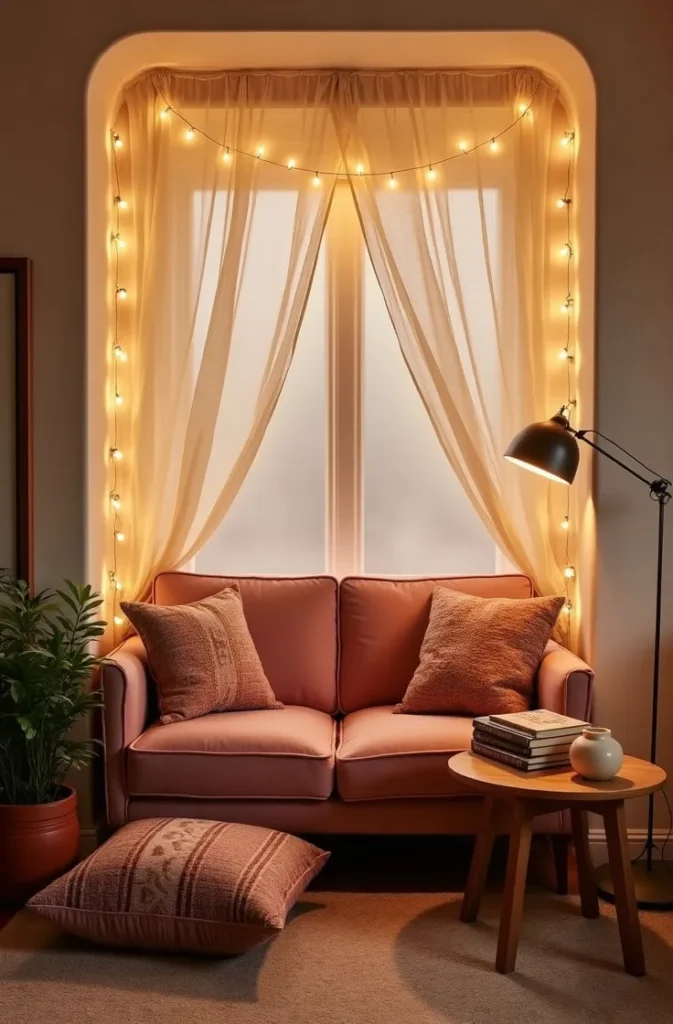
Lighting in a reading nook should be layered and low. A floor lamp with a woven or amber glass shade, a small table lamp on a side table, and a string of warm Edison-style lights draped in the canopy above all work together to create the warm, intimate light level that makes the nook feel inviting rather than dim.
Shelving is optional but powerful in this configuration. A small set of open shelves or a stack of books on the floor beside the loveseat reinforces the reading nook function and adds another surface for styling with plants, candles, and collected objects.
9. Style a White Couch for a Light Bohemian Aesthetic Using Natural Fiber Accents
A white or off-white couch in a bohemian living room produces a lighter, airier version of the aesthetic that works particularly well in small apartments, rooms with limited natural light, and spaces where the overall palette skews toward soft and muted rather than rich and warm. This is sometimes called light boho or global coastal, and it is one of the most searched bohemian living room variations.
The challenge with a white couch in any setting is practicality, and in a bohemian space where organic materials, plants, and natural dyes are common, the risk of staining increases. Choose a performance fabric, a tight-weave linen blend, or a slipcover design that allows for washing. Cream or warm white is more forgiving than bright optical white because slight discoloration reads as patina rather than stain.
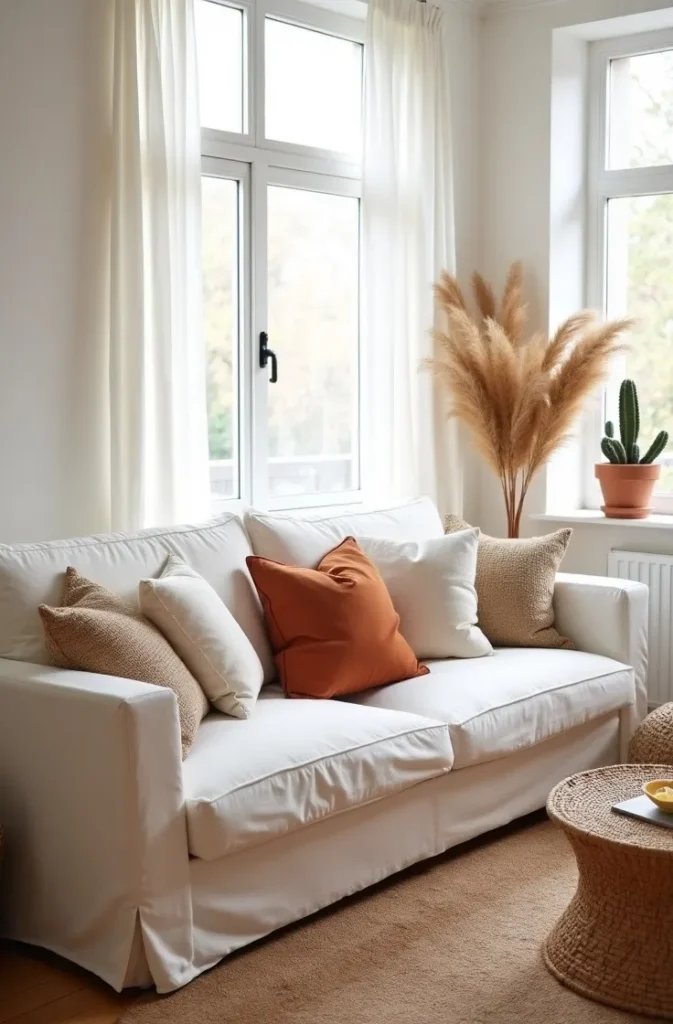
Natural fiber accents are the correct styling direction for a white boho couch. Jute, seagrass, rattan, and woven cotton introduce texture without color weight. Throw pillows in natural linen, undyed cotton muslin, and subtle woven patterns in cream and warm sand keep the palette cohesive. One or two accents in a soft dusty tone, such as faded terracotta or pale sage, add dimension without disrupting the light feel.
A large jute or sisal rug beneath the white couch grounds the seating area and introduces texture at the floor level. The combination of white upholstery and natural fiber flooring is one of the strongest visual pairings in light boho design.
10. Use a Camel or Cognac Leather Couch as a Warm Anchor for Earthy Boho Styling
Leather might not be the first material that comes to mind for bohemian couch ideas, but a camel, cognac, or warm saddle-brown leather sofa is one of the most grounded and age-resistant choices available in this style. Leather develops a patina over time that aligns naturally with the lived-in, collected quality of bohemian interiors. The warmth of the tone connects directly to the earthy palette the style is built on.
The key to keeping a leather couch reading as bohemian rather than mid-century modern or masculine is the styling layer. Pile woven textiles on and around it: a Moroccan pom-pom blanket, a chunky knit throw, layered kilim pillows, and a vintage-style embroidered accent pillow in rich jewel tones. The contrast between the smooth leather and the layered textiles is what produces the bohemian character.
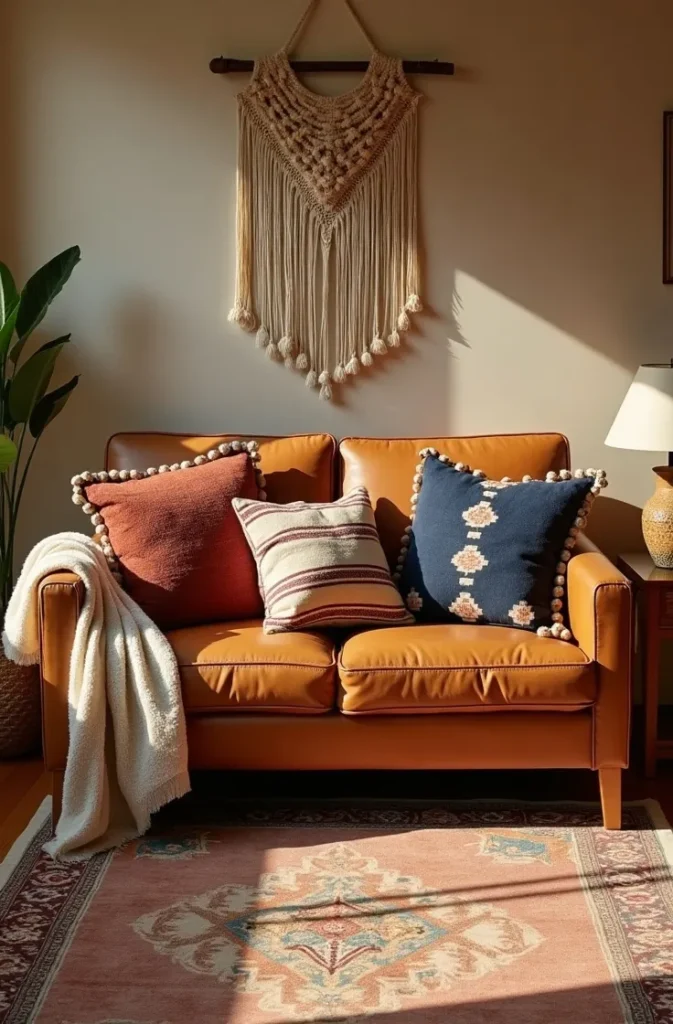
A leather couch works best in spaces with abundant natural texture elsewhere: woven rugs, rattan furniture, macrame wall hangings, wooden side tables, and plants in ceramic or terracotta pots. If the rest of the room is smooth and minimal, the leather couch will look more corporate than boho regardless of the styling on the couch itself.
From a practical standpoint, full-grain or top-grain leather that has not been over-processed is preferable to bonded leather or heavily coated leather for the bohemian aesthetic because it shows wear and age more honestly. Softer leathers also drape and wrinkle naturally, which reads as more relaxed and less formal.
11. Float a Sofa in the Center of the Room to Create a Bohemian Conversation Circle
Most living rooms position the sofa against a wall. Floating a sofa in the center of the room is a less common but highly effective configuration for bohemian interiors because it creates a conversational, communal feeling that the wall-pushed arrangement cannot. A centrally placed sofa becomes the hub of a seating circle, with floor cushions, poufs, and accent chairs positioned around it.
This configuration requires a room large enough to allow comfortable circulation around the sofa on all sides. A minimum room width of twelve feet works; anything narrower makes the central sofa feel like an obstacle rather than a design choice. In larger open-plan spaces, a centrally placed sofa also functions as a room divider, separating the living area from a dining or workspace without a wall.
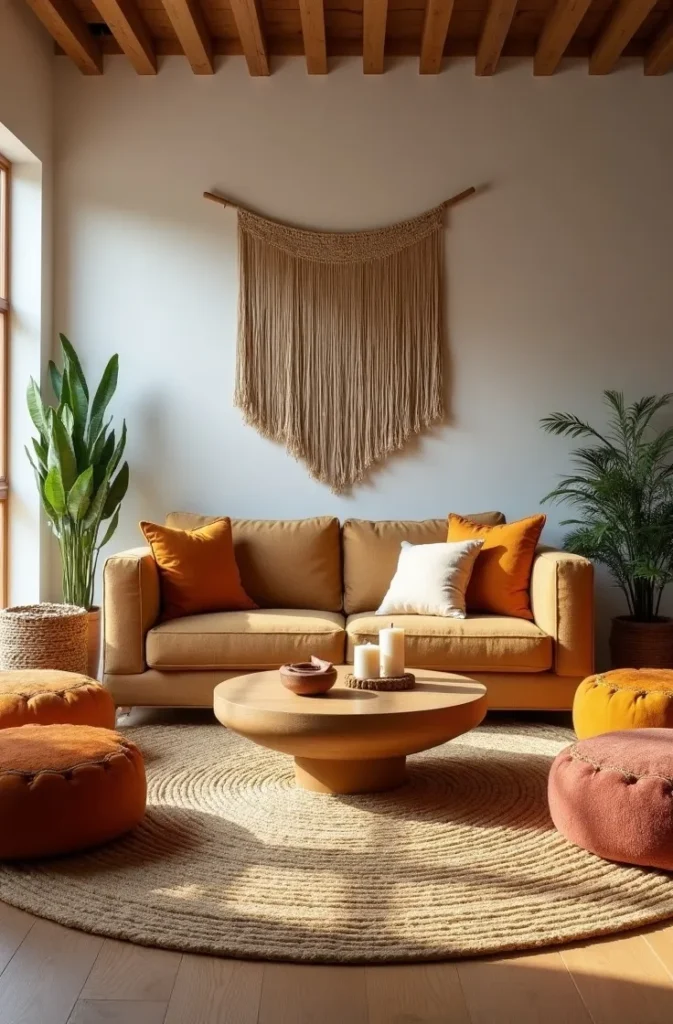
The sofa itself should have a finished back in this configuration because the back of the sofa will be visible from the rest of the room. A sofa with a plain, unfinished back fabric will look out of place when floated. Choose a sofa with a back panel that is either finished in the same upholstery as the front or styled with a draped rug or textile to create a finished appearance.
Grouping floor poufs, oversized cushions, and low accent chairs in front of the floating sofa creates the casual, multi-level seating arrangement that defines the bohemian social space. Add a low round coffee table or a collection of stacked books and trays at the center of the arrangement.
12. Layer a Sofa With a Canopy or Hanging Fabric Above to Create a Boho Sanctuary Feel
Hanging fabric, a canopy frame, or draped textiles above a sofa transforms the seating area from a piece of furniture into an intentional zone within the room. This is one of the more dramatic bohemian couch ideas and one of the most photographed configurations in the boho interior category. The overhead element creates a sense of enclosure and intimacy that changes how the sofa feels to sit in.
The simplest version of this technique is draping a large piece of lightweight fabric, such as a cotton sari, a sheer linen panel, or a lightweight embroidered textile, from the ceiling above the sofa using curtain hooks or decorative rods. The fabric should fall on either side of the sofa rather than covering it. A second option is a four-poster canopy frame placed behind and above the sofa to create a permanent framed canopy effect.
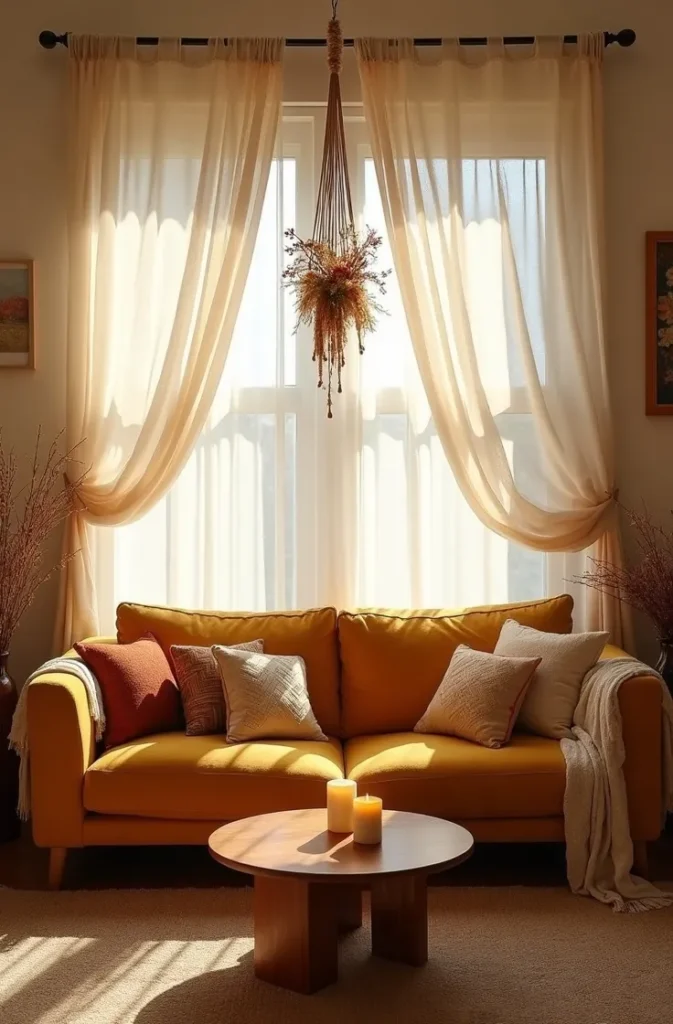
The fabric choice for the canopy determines the mood. Sheer white or cream linen creates a light, dreamy quality. A printed cotton in a global pattern creates more visual intensity. Embroidered fabric with metallic or mirror work introduces a festival-inspired richness. All three are valid bohemian expressions but produce very different room moods.
This technique is most effective on a sofa that serves as the room’s primary focal point. If the sofa is in a corner or positioned at the side of a larger seating arrangement, the canopy effect is less dramatic. Reserve it for the sofa that anchors the room’s main seating area.
13. Use a Sage Green Sofa as the Color Anchor in an Earthy Botanical Boho Room
Sage green is one of the strongest sofa colors for a contemporary bohemian living room because it bridges the gap between the nature-inspired palette of boho decor and the muted, sophisticated tones of modern interiors. A sage green sofa does not read as aggressively colorful, but it brings enough tonal presence to anchor a room’s color story without overwhelming it.
In a botanical boho room, the sage green sofa connects directly to the plant life in the space. Houseplants in terracotta, ceramic, and woven basket planters, dried botanical arrangements, and printed botanical pillows all extend the green tone into the room in a way that feels cohesive. The sofa becomes part of a green ecosystem rather than an isolated color choice.
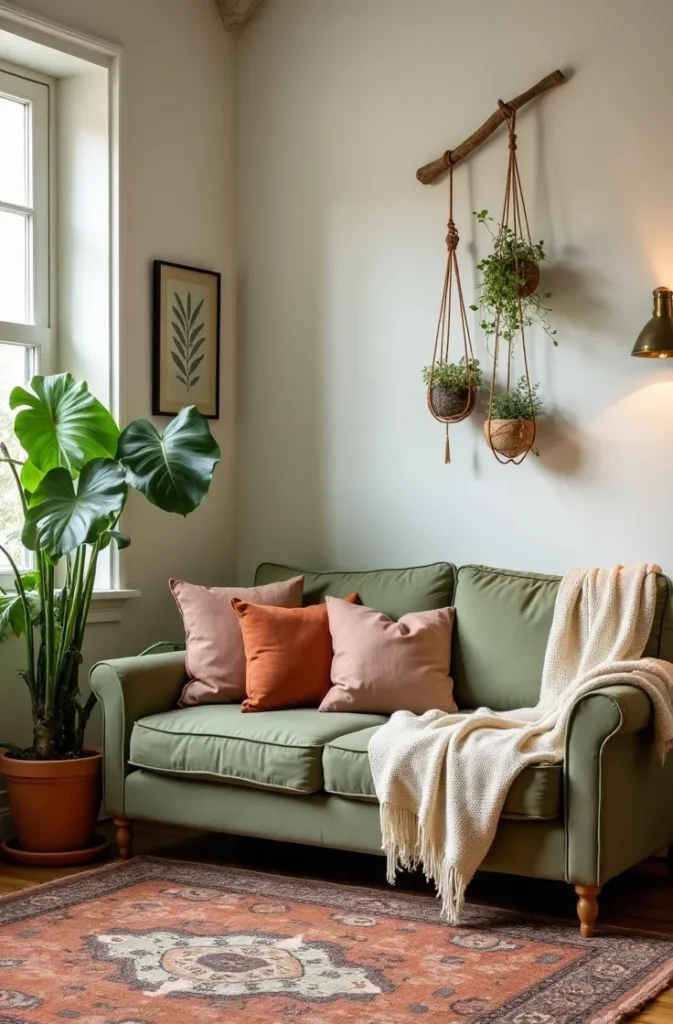
Complementary accent tones for a sage green boho sofa include warm terracotta, dusty rose, cream, aged brass, and warm wood tones. Cool grays, bright whites, and navy blue undercut the earthy warmth of sage green and push the combination toward a more coastal or Scandinavian aesthetic rather than bohemian.
The fabric for a sage green boho sofa should be matte and textured rather than shiny. A brushed linen blend, a velvet with a low sheen, or a woven cotton fabric in a slightly uneven weave all support the organic quality of the color. Avoid high-sheen or smooth fabrics in this palette.
14. Create a High-Low Bohemian Sofa Arrangement With a Statement Vintage Piece
Mixing a vintage or antique sofa with newer accent furniture is one of the most effective high-low bohemian couch ideas because it creates the layered, not-everything-matches quality that authentic bohemian interiors possess. A vintage Chesterfield in aged leather, a Victorian settee in worn velvet, or a mid-century loveseat with original upholstery all bring the kind of history and character that new furniture cannot replicate.
The practical challenge with a vintage sofa is comfort. Many vintage pieces were built for the proportions and customs of an earlier time, which means they may be firmer, shallower in seat depth, or lower than modern seating standards. Use additional floor cushions and poufs to supplement seating capacity and comfort around the vintage piece rather than relying on it as the sole seating option.
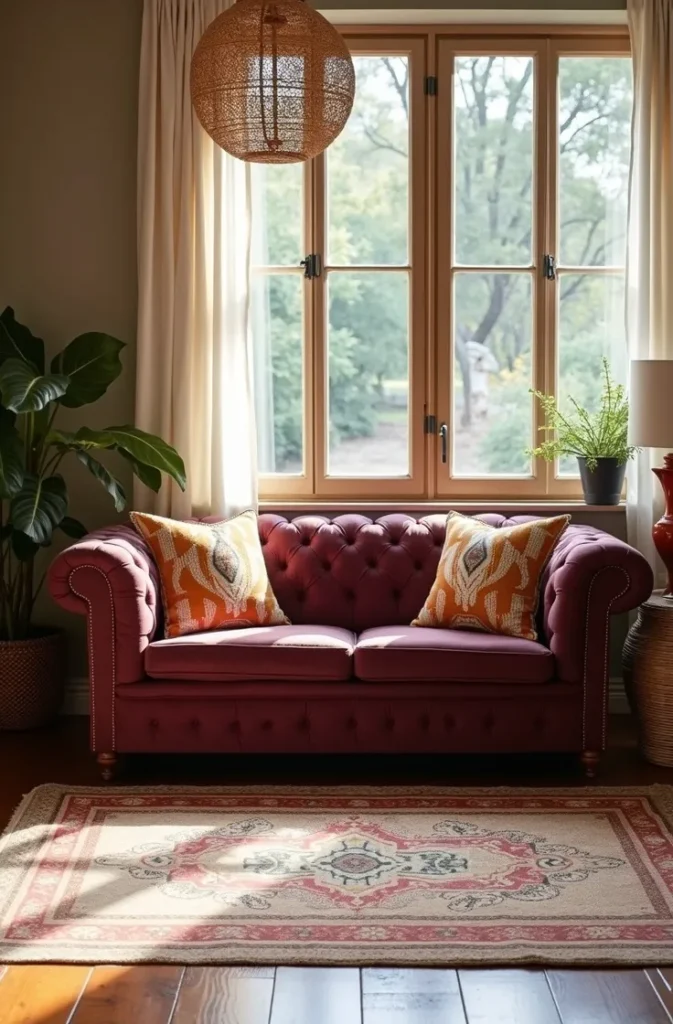
Styling a vintage sofa for a bohemian room requires restraint in the styling layer. Because the sofa itself carries so much visual history, the throw pillows and textiles around it should be simpler than you might use on a plain modern sofa. One or two large global-print pillows and a simple woven throw are enough. Overloading a vintage sofa with too many accessories makes it look cluttered rather than styled.
Pair the vintage sofa with newer, simpler accent furniture: a clean-lined rattan side table, a simple floor lamp, and a modern rug with ethnic or global pattern. The contrast between the ornate vintage piece and the simpler surrounding furniture creates the intentional high-low mix that is the hallmark of well-executed bohemian style.
15. Style a Modular Sofa in Multiple Sections for a Flexible Bohemian Living Room
A modular sofa, consisting of individual connected sections, is one of the most practically flexible bohemian couch configurations because it can be rearranged to suit different gatherings, different room layouts, and different visual moods. For renters or those who move frequently, a modular sofa that can be reconfigured without losing its function is a significant advantage.
In a bohemian living room, a modular sofa works best in a chunky, architectural form with exposed wood or metal frame details. The modular format suits the eclectic, non-prescriptive quality of bohemian style because no two configurations look exactly the same. Arrange sections in an L-shape for a standard living room, pull a single section forward to face the fireplace, or spread sections around a central rug for a circle conversation arrangement.
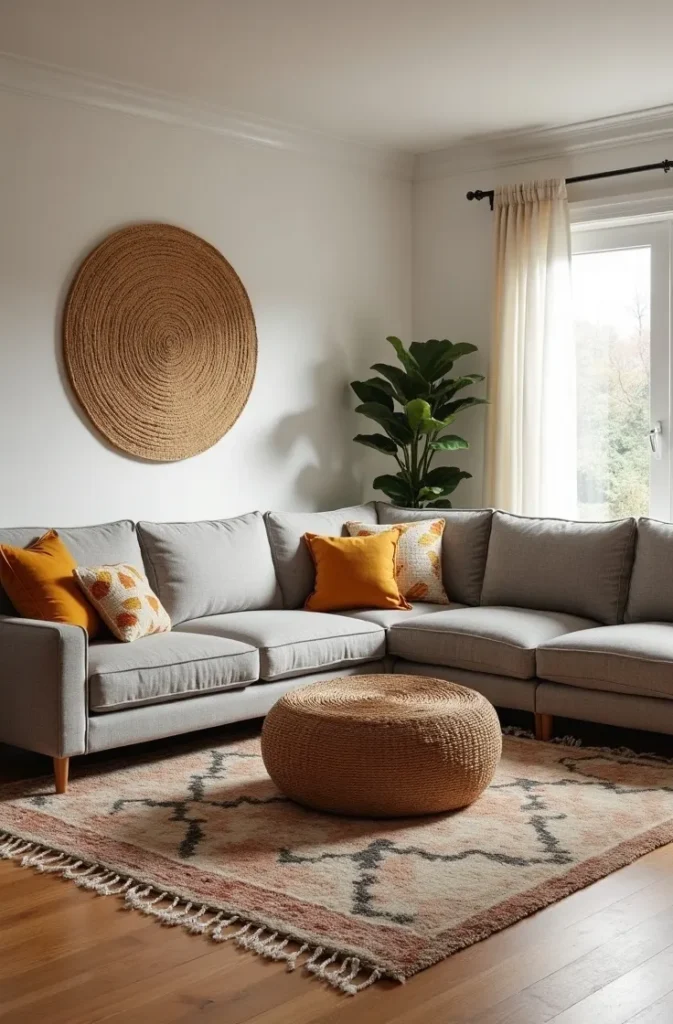
The upholstery for a modular boho sofa should be durable and pattern-friendly. A textured solid in a warm neutral, such as warm gray, camel, or olive, allows the pillow and throw styling to do the visual work without competing with an upholstery pattern. Performance fabrics in woven textures are practical on modular sofas because the seating gets more varied use than a fixed piece.
The modular format also allows for future sectional additions as the room evolves. Starting with three sections and adding a chaise or an additional corner piece later is a practical approach to building out a bohemian seating arrangement incrementally without replacing the entire sofa.
16. Anchor a Small Apartment Boho Living Room With a Compact Two-Seat Sofa and Floor Cushions
In a small apartment or studio, the temptation is to skip the sofa entirely and use only floor cushions. A better solution is a compact two-seat sofa as a functional anchor combined with floor cushions and poufs that extend the seating capacity without the floor plan cost of a larger sofa. This gives the room both structure and the bohemian layering effect.
A two-seat sofa in a small space should have a smaller footprint: a 58 to 68 inch width is ideal. Anything wider begins to dominate a small room. Choose a sofa with a slightly higher back for visual stability, as low-back sofas in small spaces can make the room feel like it has no defined center. A higher back also gives you a clear surface for pillow styling.
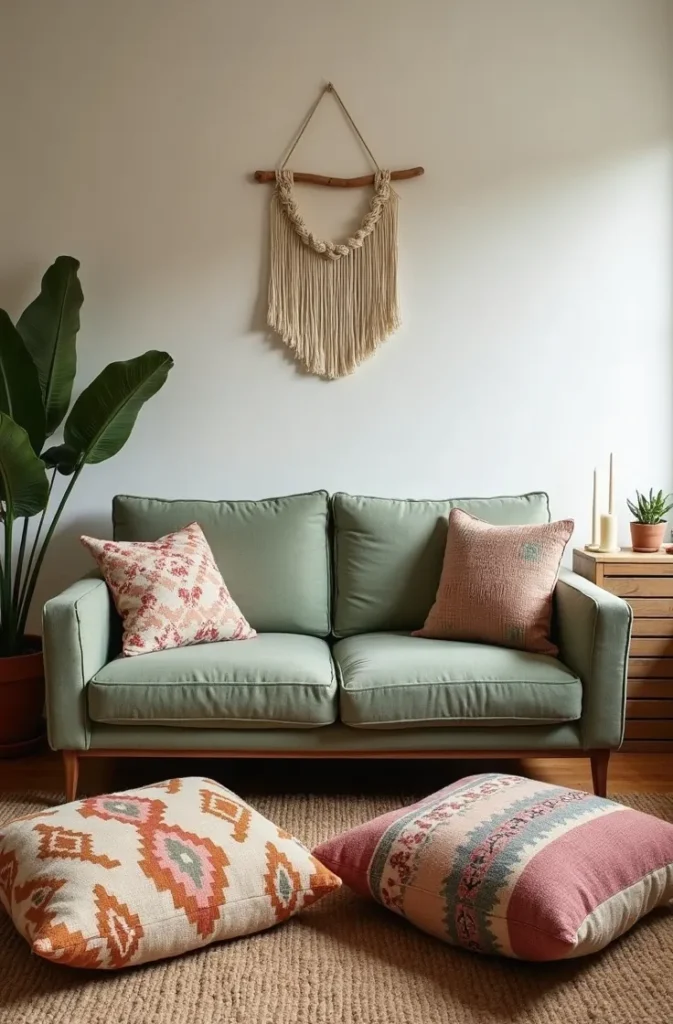
Two or three large floor cushions in global prints placed in front of the two-seat sofa on a layered rug arrangement create the expanded seating that a small sofa alone cannot provide. When not in use, floor cushions stack in a corner or slide under a console table, freeing up the floor for other functions.
Color choice is critical in a small apartment boho space. A sofa in a warm neutral with colorful floor cushions keeps the compact room from feeling heavy. A richly colored sofa in a small room requires careful balance with lighter wall colors and minimal additional pattern to prevent visual overload.
17. Mix Sofa Styles in One Room to Create an Eclectic Bohemian Seating Area
A single matching sofa and loveseat set is one of the least bohemian configurations possible, because bohemian interiors are built on the idea that pieces were found, collected, and combined over time rather than purchased as a set. Using two different sofa pieces in the same room, a sofa and a chaise, a settee and a loveseat, or even two mismatched sofas facing each other, produces the deliberately eclectic quality that defines the style.
The rule for mixing two different sofas successfully is to find one connecting element between them. That element can be color, material, scale, or leg finish. Two sofas in completely different colors can share the same upholstery texture. Two sofas in different scales can share a similar leg tone. The connecting element does not need to be obvious; it just needs to exist so the room reads as intentional rather than accidental.
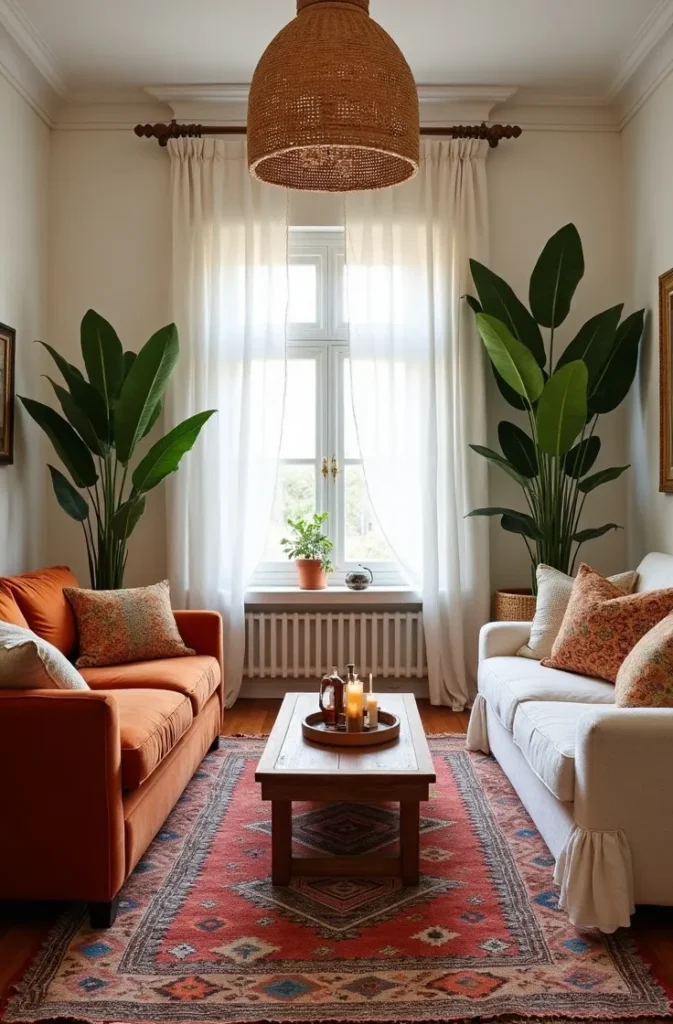
In a larger living room or open-plan space, two mismatched sofas facing each other across a central rug is one of the strongest bohemian conversation area configurations. The facing arrangement invites extended gathering and makes the seating feel generous and communal. A low coffee table or a collection of floor cushions between the two sofas completes the arrangement.
Avoid combining two pieces that are in direct visual competition with each other: two heavily patterned sofas in different colorways, or two ornate vintage pieces with different wood tones and scales. One piece can be complex; the other should be simpler to allow the room to breathe.
18. Add a Boho Canopy Bed-Style Frame Behind a Sofa to Define the Seating Zone
In an open-plan living space or a studio apartment where the living room lacks defined boundaries, placing a simple canopy or freestanding frame structure directly behind the sofa creates a visual room-within-a-room effect that defines the seating zone without walls or permanent architectural changes. This is one of the most creative and renter-friendly bohemian couch ideas for open-plan and multifunctional spaces.
A simple freestanding wooden or bamboo frame in a rectangular shape, tall enough to clear the sofa back by a foot or more, anchors the seating area and gives you a structure to hang textiles, macrame, string lights, and dried botanicals from. The frame becomes an overhead design feature that photographs dramatically and functions as a focal backdrop for the sofa.
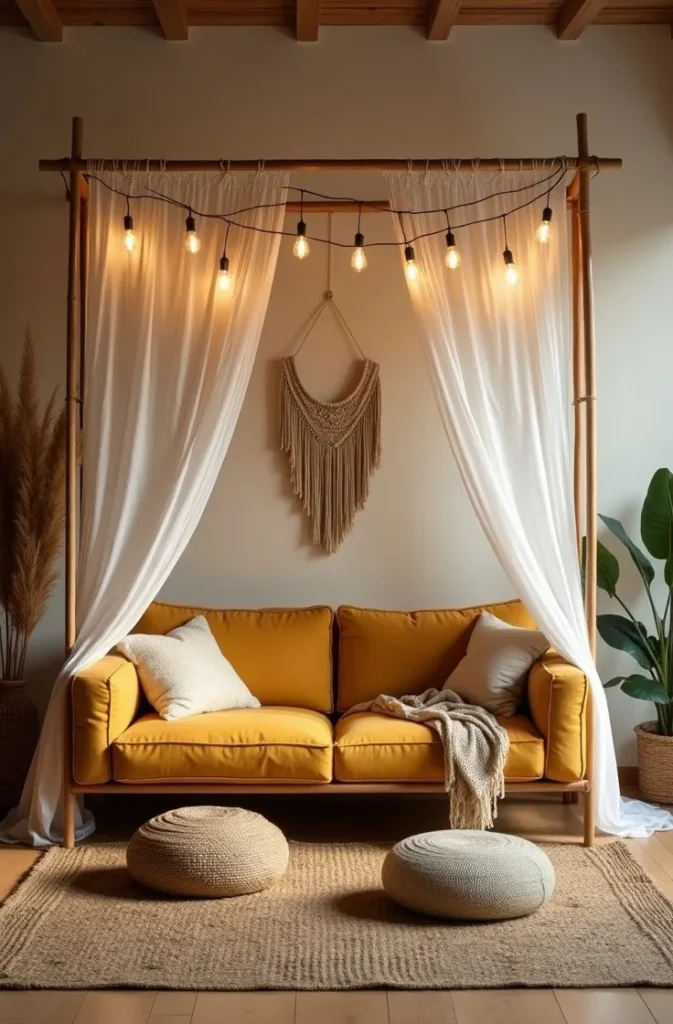
The textile selection for the frame determines the mood. Sheer white linen panels on the sides create a dreamy, airy quality. Printed cotton panels in global patterns create a festival canopy feel. Macrame panels hung from the frame top create a textural, artisan quality. All three can be mixed for a layered effect.
From a practical standpoint, this technique requires ceiling height of at least nine feet to avoid the frame crowding the sofa visually. In rooms with eight-foot ceilings, a lower-profile frame or a ceiling-hung canopy rod mounted close to the wall achieves a similar effect without requiring floor-standing height.
Final Thoughts: Putting These Bohemian Couch Ideas to Work in Your Space
The bohemian couch ideas in this guide cover the full range of what the style can do: from a high-drama canopy arrangement in an open-plan apartment to a simple floor cushion configuration around a compact two-seat sofa in a small living room. The right approach depends on your room’s size, light level, existing furniture, and how much of the aesthetic you want to commit to.
Start with one idea that solves your most immediate problem, whether that is making an existing plain sofa feel more bohemian, adding seating to a small apartment, or defining a seating zone in an open floor plan. Build from there one layer at a time. The most convincing bohemian living rooms are never finished all at once.
Save this guide to your Pinterest boards so you can return to specific ideas as your room evolves. Each section covers a distinct configuration, fabric approach, or styling technique that you can reference individually as you shop, style, and refine your space. Explore more bohemian living room decor, global textile ideas, and eclectic interior design inspiration to continue building your vision.