
Calming sage green bedroom ideas are searched constantly because most people know they want the color but are not sure how to use it without the room feeling too dark, too cold, or too trendy to last. This post gives you 12 specific, decision-ready approaches, each with clear guidance on when to use it, what to pair it with, and what to avoid. Whether you are starting from bare walls or refreshing an existing room, you will leave with a direction worth acting on.
1. Sage Green Accent Wall Behind the Bed: The Fastest Way to Anchor a Bedroom
A single sage green accent wall directly behind the bed is the most efficient way to introduce the color without committing the entire room. It defines the sleep zone visually, creates a natural focal point, and lets the remaining three walls stay neutral. This is the right starting point for anyone unsure how far to take the color.
The accent wall works because it concentrates the visual weight where the eye naturally travels first when entering a bedroom. Paired with white or off-white walls on the remaining sides, sage green reads as grounded and deliberate rather than overwhelming. The contrast is subtle enough for small bedrooms and impactful enough for large ones.
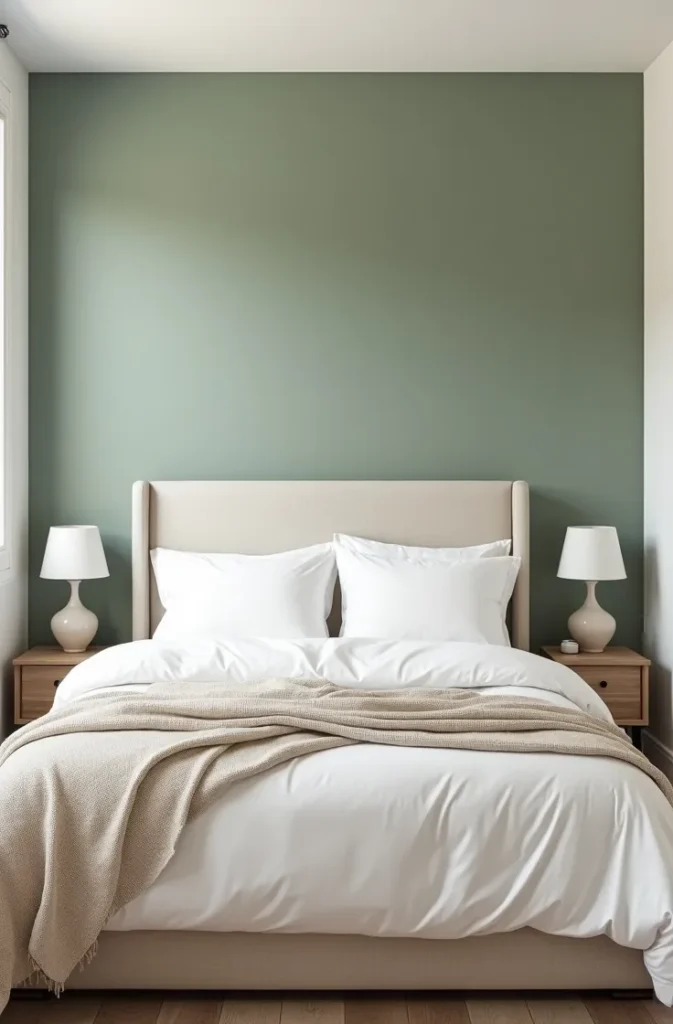

Use this approach in bedrooms with limited natural light. A full sage green room in a north-facing or window-limited space can feel dim and enclosed. Limiting the color to one wall avoids that problem entirely while still delivering the calming effect the color is known for.
The most common mistake is choosing a sage that skews too yellow or too gray for your light conditions. Test a paint swatch on the actual wall and observe it at multiple times of day before committing. What looks balanced in a hardware store under fluorescent light often reads very differently in a bedroom at 7 AM.
2. Full Sage Green Room With White Trim: A Committed Look That Still Feels Light
Painting all four walls in sage green with crisp white trim around windows, doors, and baseboards is one of the most cohesive calming sage green bedroom ideas for homeowners who want a fully immersive color experience. The white trim acts as a boundary that prevents the color from feeling heavy, and it gives the room a polished, architectural quality that accent walls cannot achieve.
This approach works best in bedrooms with at least one large window or a south-facing exposure. The white trim bounces light around the room and offsets the depth of the green. Without adequate light, full sage walls can feel cave-like by late afternoon, which defeats the calming intention entirely.
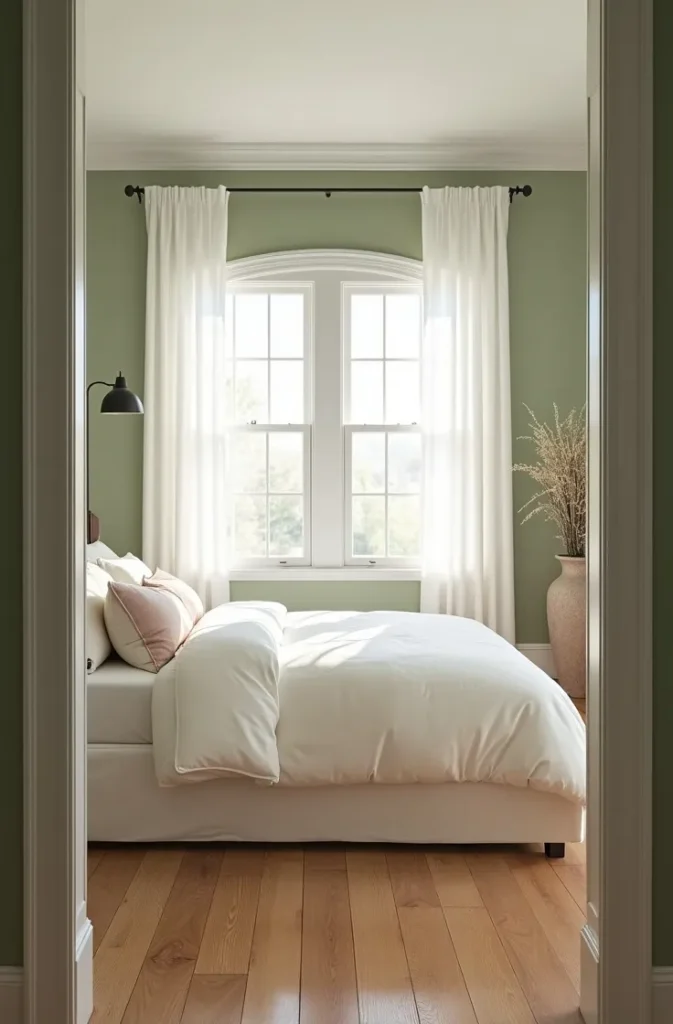
Keep the bedding and soft furnishings light. Ivory, warm white, and pale linen tones allow the sage walls to be the statement without competing. Introducing too many additional colors into a full sage room creates visual noise that undercuts the restful quality that makes this palette worth using.
Avoid using bright or cold white trim with a warm-toned sage. The contrast will feel jarring. Match the trim undertone to the sage undertone. A green with warm gray undertones pairs best with a creamy white trim rather than a stark blue-white.
3. Sage Green With Natural Wood: The Combination That Works in Almost Any Bedroom
Pairing sage green walls or furnishings with natural wood tones is one of the most reliable calming sage green bedroom ideas because the two elements share the same visual language: organic, quiet, and grounded. Light oak, ash, and pine all complement sage without competing. Darker walnut works too, adding weight and warmth to minimal layouts.
This pairing is particularly effective in bedrooms that lean toward a Japandi or Scandinavian aesthetic, which prioritizes texture, natural material, and negative space over decoration. A sage wall behind a platform bed in light oak, with a matching bedside table and exposed wood floor, creates a composition that feels complete without requiring additional accessories.
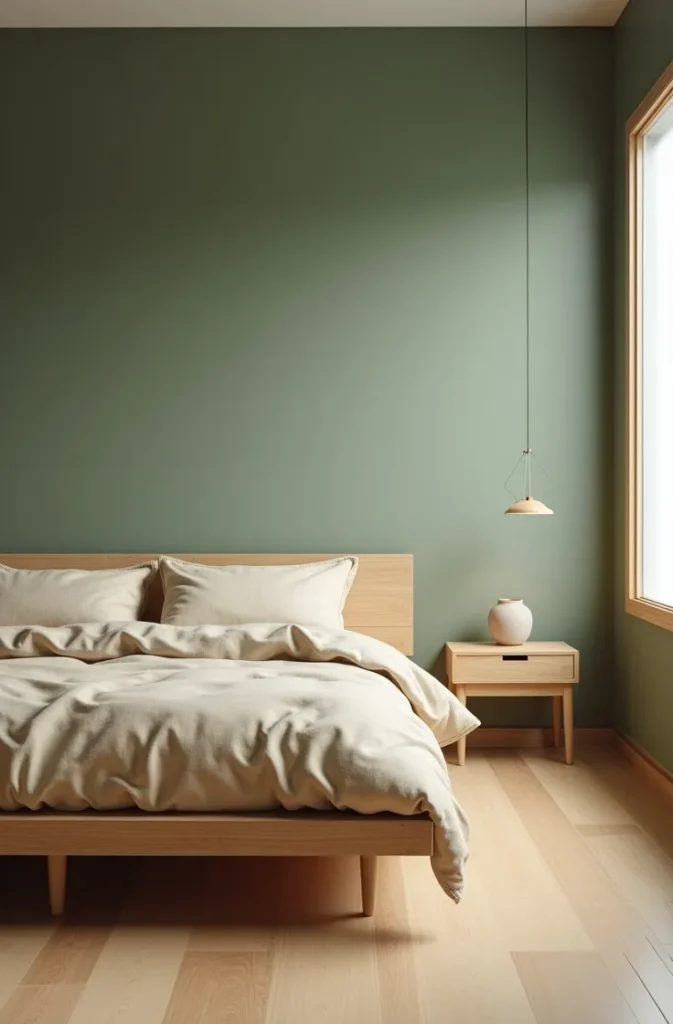
In smaller bedrooms, this combination prevents the space from feeling sparse. The wood introduces warmth that sage alone cannot provide, making the room feel furnished and considered even with minimal furniture. This is one of the most practical sage green small bedroom ideas for apartments and compact spaces where over-decorating creates clutter.
Avoid staining wood elements in orange or red tones in this pairing. Warm-toned wood with yellow or orange undertones will clash with the cool gray-green of most sage palettes. Stick to wood with neutral or cool undertones for a seamless result.
4. Sage Green Bedding on White Walls: Maximum Flexibility With Minimum Commitment
Using sage green through bedding, pillows, and throws on white walls gives you the full color effect without any paint or renovation. This is one of the most practical calming sage green bedroom ideas for renters, first-time decorators, or anyone who changes their room seasonally. The white walls amplify the color in your textiles rather than competing with it.
Layer different shades and textures of sage in the bedding to create depth. A sage linen duvet cover, a darker eucalyptus velvet pillow, and a lighter mint-toned waffle throw together form a tonal composition that reads as sophisticated rather than matchy. The variation in texture prevents the bed from looking flat or one-dimensional.
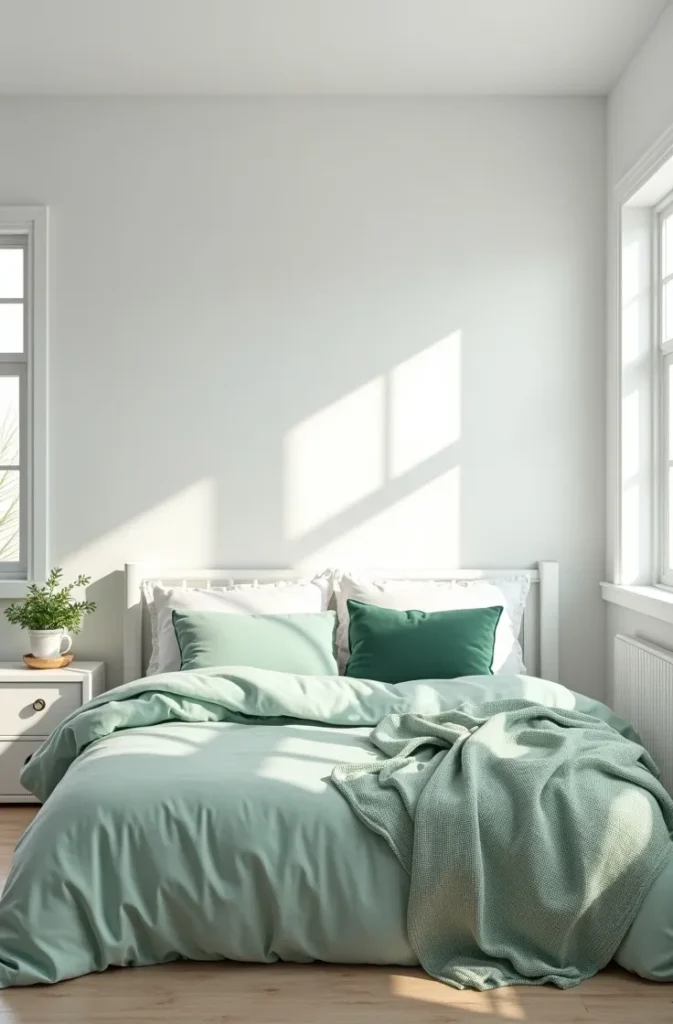
This approach is especially effective in sage green bedroom ideas for small spaces because it keeps the walls light and the room feeling open, while the bedding provides the color anchor. A small room with all white walls and a sage-layered bed will feel larger and more serene than the same room with painted walls.
The main limitation of this approach is that the color statement lives only on the bed. If the rest of the room is entirely white and minimal, the sage bedding can feel isolated rather than integrated. Add one or two supporting sage or green elements, such as a small plant, a sage-toned ceramic lamp base, or a green-framed mirror, to connect the bedding to the broader space.
5. Sage Green and Cream: A Soft Pairing That Reads Warm and Restful
Sage green paired with cream tones rather than stark white is one of the most livable calming sage green bedroom ideas for year-round comfort. Cream softens the cool edge that sage can carry, producing a palette that feels neither cold nor overly earthy. The combination is warm enough for winter and light enough for summer without requiring seasonal changes.
Use cream on the ceiling, trim, and upholstered pieces to create a warm envelope around sage walls or a sage upholstered headboard. The ceiling color choice matters more than most people realize. A cream ceiling above sage walls ties the room together and prevents the walls from feeling like they are competing with a bright white overhead.
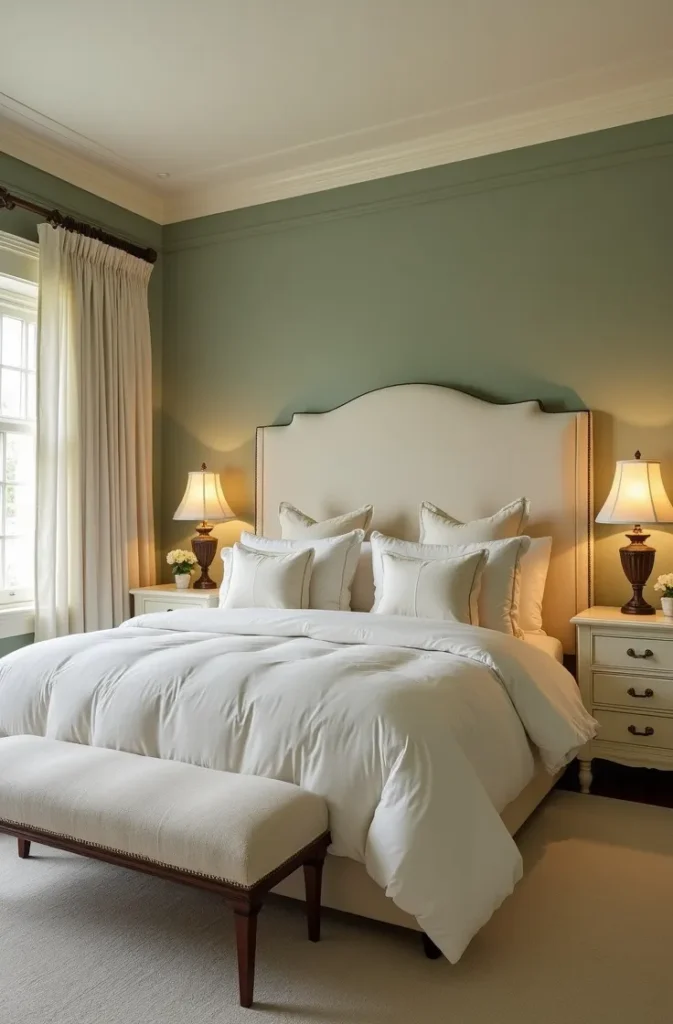
This pairing suits traditional, transitional, and soft modern interiors equally well. It does not lean too far into any particular style, which makes it one of the most universally applicable sage green bedroom color combinations available. For homeowners who want a room that ages well and does not feel trend-dependent, sage and cream is one of the safest and most lasting choices.
Avoid introducing cool grays into this pairing. Gray pulls the cream toward a colder register and disconnects it from the warmth the combination is meant to create. If you need a neutral accent, reach for warm taupe or a dusty blush instead.
6. Sage Green Wallpaper With Botanical Print: Adding Pattern Without Losing Calm
Sage green botanical wallpaper introduces pattern and texture to a bedroom while keeping the palette within the same calming range as solid paint. The botanical motif reinforces the organic quality of the color, making the room feel layered and considered without becoming visually busy. This is a strong choice for bedrooms that feel flat or unfinished despite having good bones.
Use botanical wallpaper on the headboard wall only and keep the remaining walls in a plain white or a matching solid sage. Wallpapering all four walls with a large-scale botanical print in a standard bedroom will feel overwhelming. One wall gives you the detail and interest without the saturation.
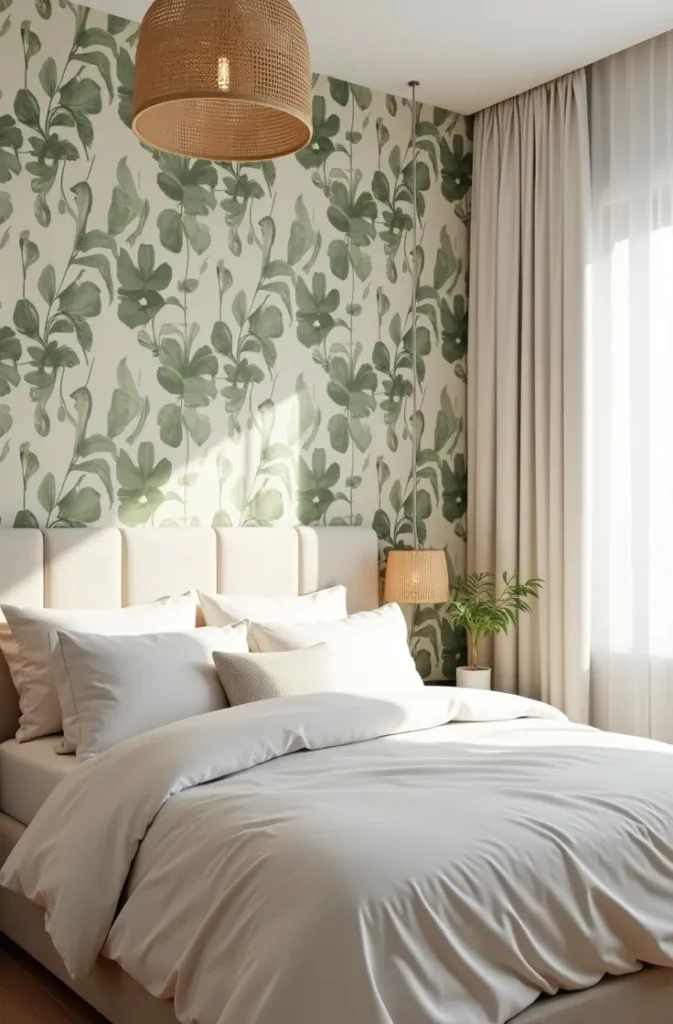
Select wallpaper with a light or cream background rather than a deep green base if the room has limited light. A cream-background botanical with sage green foliage keeps the wall bright while still delivering the color. A dark green background on a north-facing wall will absorb light and make the space feel smaller than it is.
This approach works particularly well in master bedrooms and guest rooms where a decorative touch is appropriate. It is less suitable for shared bedrooms where the pattern may feel too feminine or style-specific for multiple occupants to agree on long-term.
7. Sage Green Bedroom With Black Accents: Grounded and Modern Without Being Harsh
Adding black accents to a sage green bedroom creates definition and structure that prevents the palette from feeling too soft or undefined. Black picture frames, a matte black bed frame, black hardware on furniture, or black-shaded lamps all provide contrast that sharpens the overall look without introducing aggression or visual tension.
This combination works because sage and black share a quiet, recessive quality. Neither color demands attention loudly. Together they produce a modern, grounded interior that photographs well and holds up over time without feeling stark or cold. This is one of the most effective sage green bedroom color palette ideas for people who find all-soft palettes too unstructured.
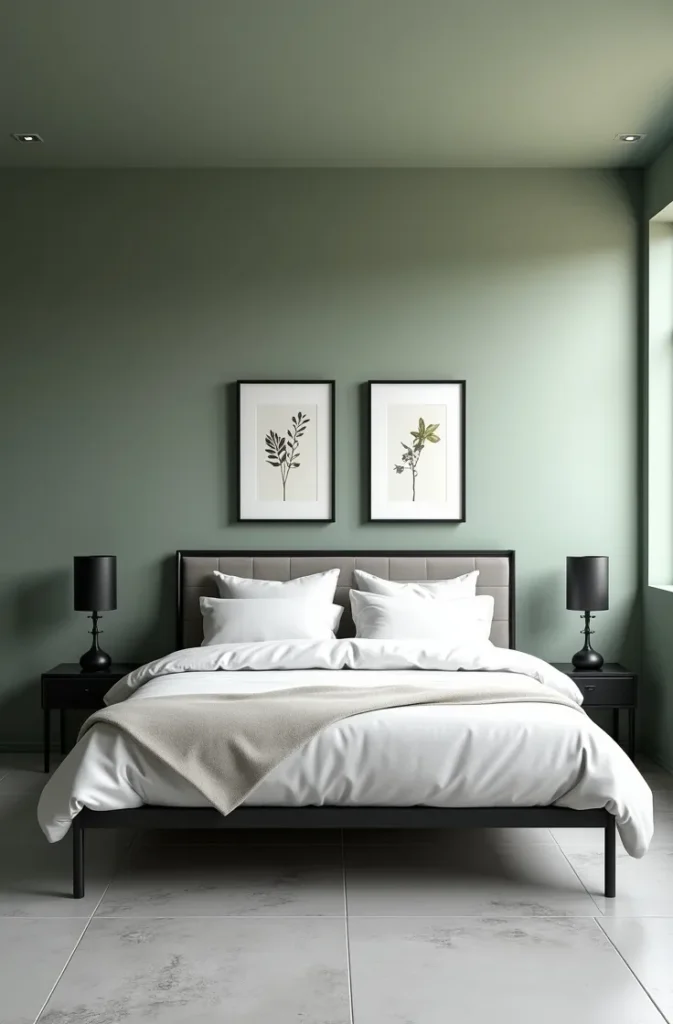
Use black sparingly. In a sage green room, black functions as punctuation, not as a primary element. Two to four black accents distributed around the room is sufficient. More than that, and the room begins to feel heavy and the sage loses its softening effect.
This pairing suits contemporary, modern farmhouse, and transitional bedroom styles. It is less suited to bohemian or romantic interiors where the contrast reads as too crisp. Match the black elements to each other in finish. Mixing matte black and shiny black in the same room creates a subtle incoherence that is hard to identify but easy to feel.
8. Sage Green Ceiling in a White Room: An Unexpected Detail That Changes Everything
Painting only the ceiling in sage green while keeping the walls and trim white is one of the least expected and most effective calming sage green bedroom ideas for modern interiors. The color overhead creates a subtle enveloping quality, like lying beneath a canopy of leaves, without touching the walls at all. It is unexpected, restful, and immediately distinctive.
This works particularly well in bedrooms with low ceilings where a dark ceiling would feel oppressive but a white ceiling feels flat. Sage is light enough to add color without reducing the perceived height, and its natural quality prevents it from reading as a decorating mistake. Most visitors to a room with a sage ceiling notice something feels calm and considered before they identify exactly what it is.
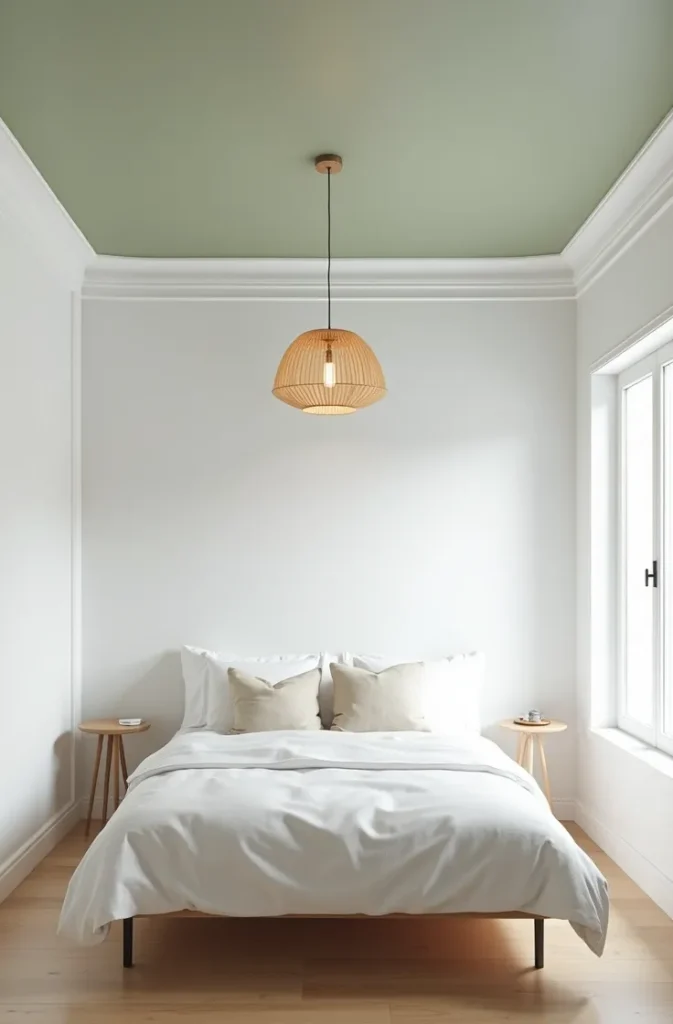
The technique also suits rooms where the architecture or wainscoting on the walls is worth preserving. If your bedroom has detailed wall paneling or trim that you do not want to paint over, the ceiling becomes the natural canvas for color.
Avoid using a high-sheen finish on the ceiling. A flat or matte sage ceiling will absorb light softly and feel peaceful. A semi-gloss sage ceiling will reflect overhead light in ways that can feel institutional rather than restful.
9. Sage Green in a Maximalist Bedroom: How to Use It Without Losing Its Calming Effect
Sage green can function in a maximalist, richly layered bedroom without losing its calming quality, but only if it is used as the unifying element rather than one of many competing colors. In a room with patterned textiles, collected objects, and multiple materials, sage on the walls provides the consistent backdrop that prevents the room from tipping into chaos.
The key is contrast management. In a maximalist space, sage green walls work because they are quiet. The pattern and interest come from the furnishings, artwork, and textiles, while the walls remain a steady, neutral anchor. Remove the sage and replace it with white, and the same maximalist room often reads as cluttered. The green absorbs visual noise in a way that white cannot.
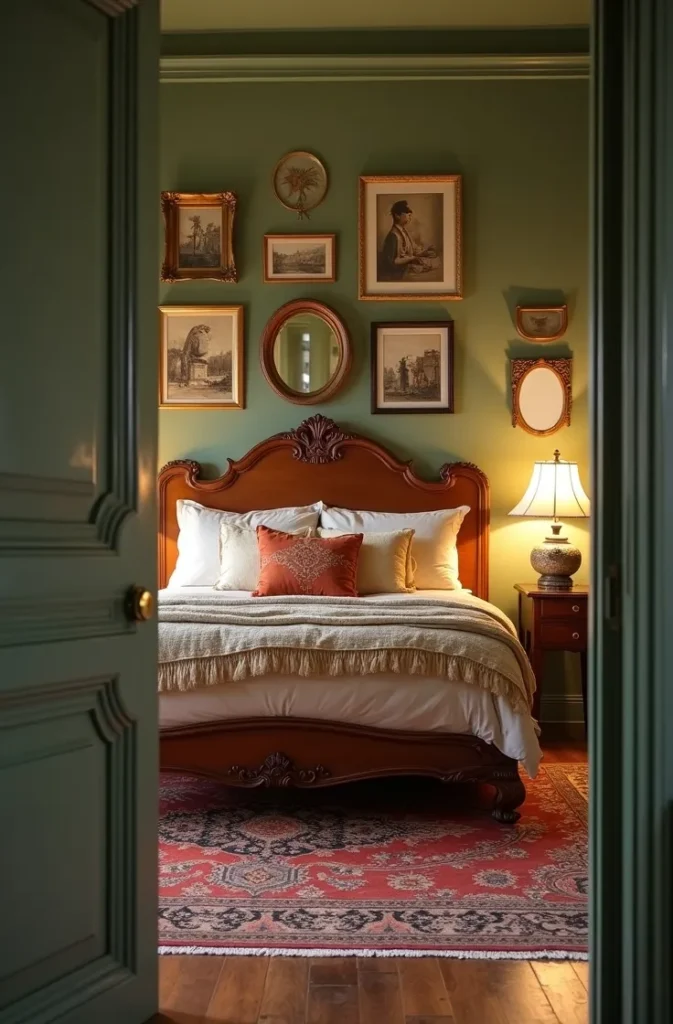
Use this approach in bedrooms where you have meaningful collections, layered textiles, or vintage furniture you want to showcase. The sage wall becomes the gallery behind the collection rather than competing with it. This is one of the more sophisticated calming sage green bedroom ideas because it requires thinking about the color as a supporting role rather than the headline act.
Avoid introducing more than two additional distinct colors into the palette when using sage in a maximalist space. Sage works as a unifier when the remaining colors are in the same warm family, such as terracotta, rust, gold, and warm cream. Introduce cool tones like blue or purple and the cohesion breaks down quickly.
10. Sage Green Kids Bedroom: Calm, Gender-Neutral, and Long-Lasting
Sage green is one of the most practical color choices for a child’s bedroom because it is gender-neutral, calming for sleep, and does not feel as juvenile as primary colors. A sage green kids room that is decorated thoughtfully at age three will still feel appropriate and restful at age ten, which makes it one of the most economical long-term choices a parent can make.
Use sage on all four walls with white trim and white or natural wood furniture for maximum flexibility as the child grows. The furniture and accessories, which are easier and cheaper to update, carry the age-appropriate details. As the child gets older, swap out the themed bedding and toy storage for more mature versions and the sage walls remain a perfect backdrop throughout.
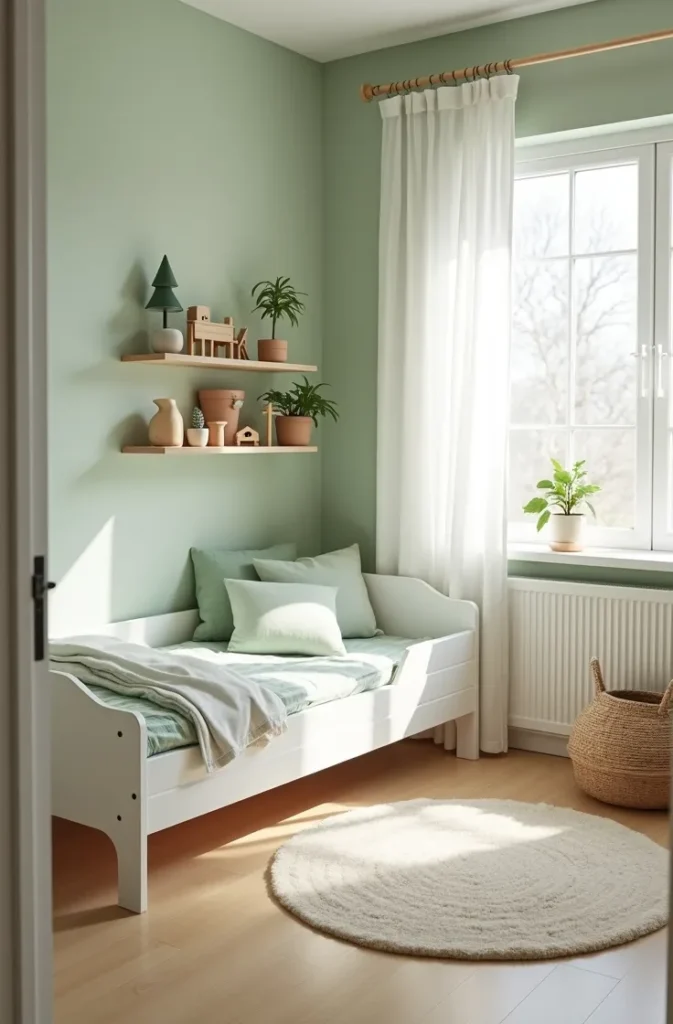
For nurseries specifically, sage green is supported by sleep research as a color that promotes calmness without stimulating the nervous system the way bright blues, yellows, or reds can. It is one of the most thoughtful choices for infant sleep environments.
Avoid deep or dark sage in a child’s room. Children’s rooms benefit from lighter, cleaner versions of sage that reflect rather than absorb the available light. A pale, airy sage is almost always more appropriate than a rich, moody one in this context.
11. Sage Green With Terracotta Accents: A Warm Earthy Combination for Cozy Bedrooms
Sage green paired with terracotta is one of the most popular calming sage green bedroom ideas among interior designers because the combination mimics the colors of the natural landscape directly: plant green against warm earth. The pairing is inherently organic and does not require effort to make cohesive because the colors share the same visual origin.
Use sage on the walls and introduce terracotta through accessories, ceramics, and textiles rather than painting an additional wall. A terracotta-toned throw pillow, a clay pot on the bedside table, or a terracotta linen cushion cover each add the warmth of the earth tone without overwhelming the sage. The sage remains the dominant color and the terracotta provides the supporting warmth.
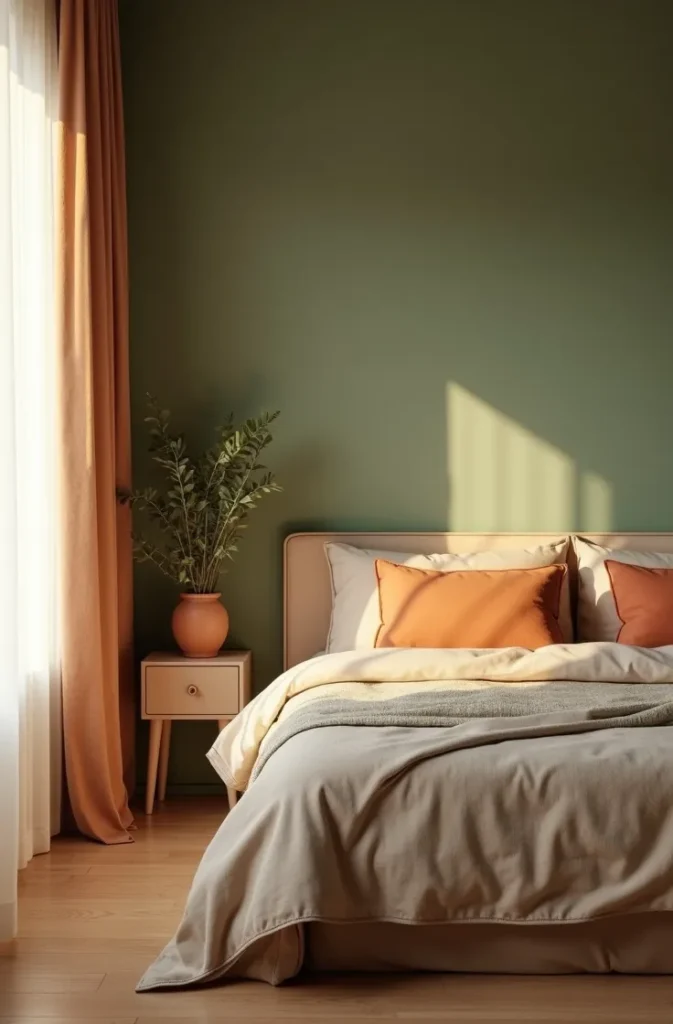
This combination works especially well in bedrooms that receive warm afternoon light from a west-facing window. The light enhances the warmth of the terracotta and softens the cooler edge of the sage into a balanced, golden-hour quality that makes the room feel genuinely restful at the time of day most people use it for winding down.
Avoid using terracotta in large quantities alongside sage green in the same bedroom. When the two colors appear in equal measure, neither one is restful. Sage should cover at minimum 70 percent of the color in the room, with terracotta as a deliberate accent at no more than 10 to 15 percent.
12. Sage Green in a Luxury Master Bedroom: Using the Color at Its Most Elevated
Sage green in a luxury master bedroom is not about using more of the color but about using higher-quality materials in the same palette. Silk or velvet bedding in sage, wallpapered walls in a textured sage grasscloth, or a sage upholstered bed in performance linen all elevate the color from a trend-driven choice to a refined material decision. This is the most aspirational of the calming sage green bedroom ideas, and it is entirely achievable without a full renovation.
The texture of the material determines whether sage reads as basic or elevated. Flat sage paint on drywall is a starting point. Sage in a woven grasscloth wallcovering, a velvet headboard, or a matte plaster finish is a finished design decision. The color is the same. The material transforms the intention.
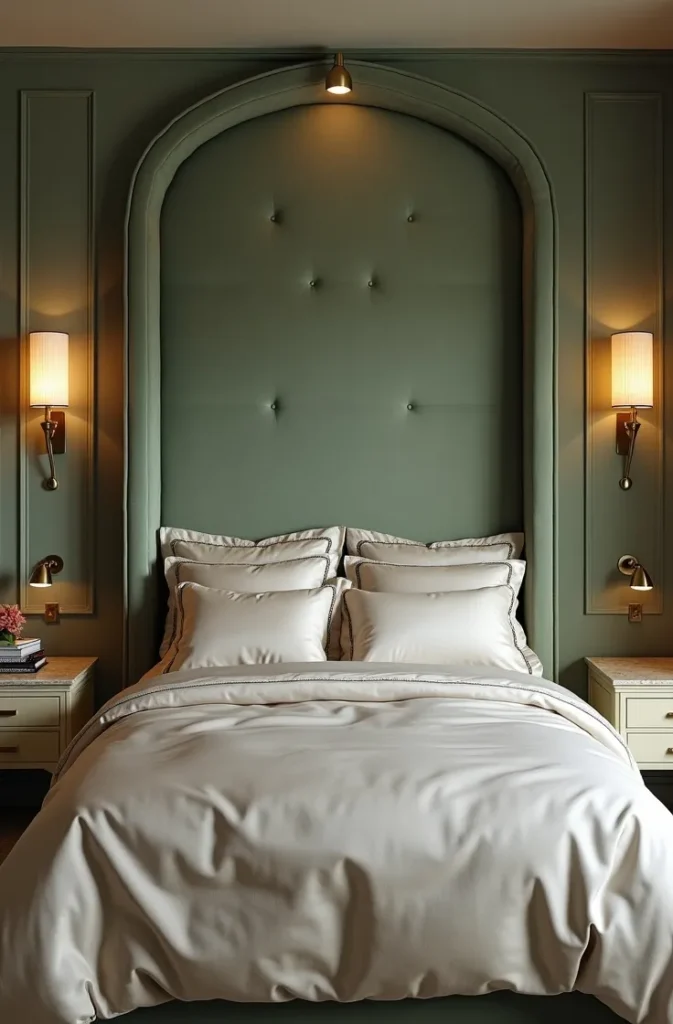
Layer metallic accents in brushed gold or warm antique brass to complete the luxury effect. These metals share the warm undertone that sage needs to feel rich rather than clinical. Avoid chrome or cool silver in this palette, as both metals pull the sage toward a colder, more commercial register.
This approach is best executed when the room has been stripped of clutter and the furniture is edited to only what is necessary. A luxury sage bedroom with too many objects reads as expensive clutter rather than intentional luxury. Fewer, better things are the rule in this context.
Final Thoughts
These calming sage green bedroom ideas cover the full range of commitment levels, room sizes, and design intentions, from a single sage green pillow on a white bed to a fully wallpapered luxury suite. The color is versatile enough to work in a nursery, a master bedroom, a small apartment room, or a maximalist collector’s space. The variables that determine success are the shade of sage you choose, the materials it appears on, and how much of the room it occupies.
Save this post before you start shopping or painting. Having a clear reference point prevents the common mistake of choosing a direction midway through a project and ending up with a room that mixes two incompatible approaches. Pick one idea that fits your actual room and your actual light, and execute it completely.
For more bedroom color ideas that are grounded in practical use and real room conditions, explore posts on warm neutral palettes, clay tones, and earthy bedroom design for the same level of decision-ready guidance.