
Most dorm rooms give you four plain walls, a bed frame, and roughly 150 square feet to call home. Cool guys dorm room ideas are not about spending a lot of money — they are about making smart layout and design choices that turn a generic box into a space that feels intentional. This guide breaks down 14 distinct setups, each with real layout logic, so you can decide which approach fits your space, your habits, and how you actually live.
1. The Elevated Loft Bed Setup That Reclaims Your Floor Space
Lofting your bed is the single highest-impact move in a small dorm room. When the bed is raised 5 to 6 feet off the ground, you reclaim the entire footprint underneath — enough room for a full desk, a compact chair, and vertical storage without the room feeling cramped.
The layout works because it separates your sleep zone from your work zone on a vertical axis instead of a horizontal one. You are not sharing the same sightline with your desk when you lie in bed, which actually helps your brain separate rest from work — a real benefit for academic performance.
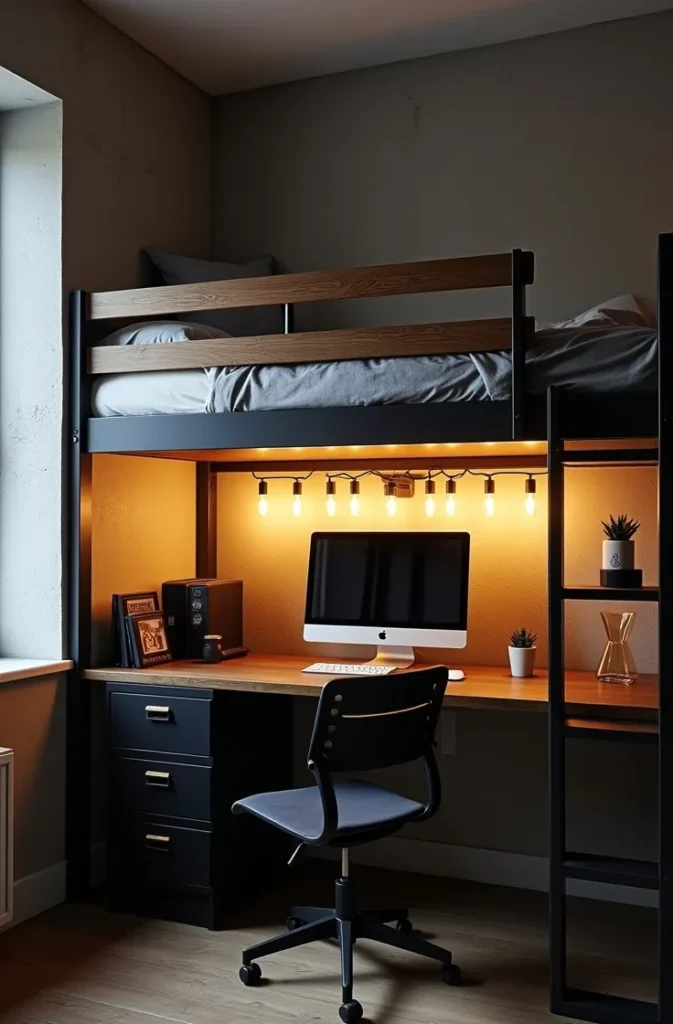

Where it falls short: low ceilings below 9 feet make this uncomfortable. If you have less than 3 feet of clearance above the mattress, you will hit your head constantly. Confirm ceiling height before committing.
Use this setup if your room is under 180 square feet and you need a dedicated work area. It is also the right call if you have a roommate, since it keeps your personal zone contained and defined.
2. The Dark Accent Wall That Makes a Dorm Room Look Designed
A single dark accent wall — deep navy, charcoal, or forest green — immediately changes how a room reads. It gives the space a focal point and makes everything placed in front of it (shelving, a monitor, a poster) look intentional rather than randomly placed.
The reason this works in small rooms is counterintuitive. Dark walls visually push the surface back, making the room feel like it has more depth. It works best on the wall your bed or desk faces, not the wall behind you.
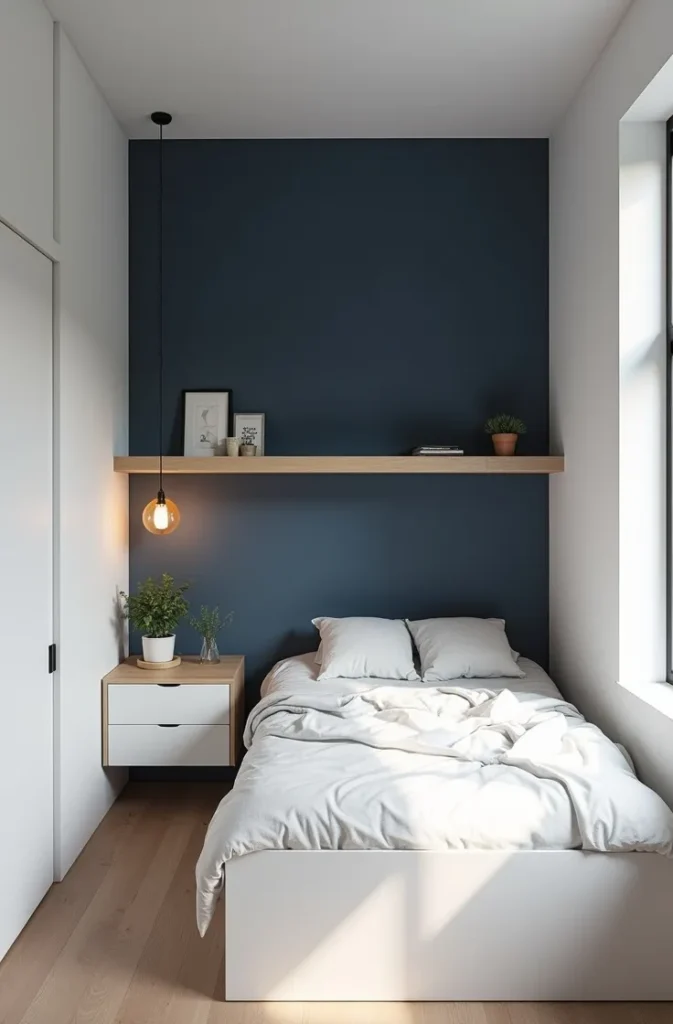
Renters and dorm residents should use removable peel-and-stick paint panels or dark fabric wall coverings that leave no damage. These install in under an hour and remove cleanly at the end of the year.
Avoid going dark on all four walls. That creates a cave effect that is hard to light properly. One wall is the rule.
3. The L-Shaped Desk Corner That Turns Dead Space Into a Functional Work Station
Most dorms place the desk flat against one wall, which wastes the corner on the opposite side. Rotating the desk setup into an L-configuration — even using a secondary folding table as the extension — gives you 40 to 60 percent more usable surface area without adding floor footprint.
This layout is especially useful for guys who game, draw, or need two screens. The monitor goes on the longer run, the secondary task area (notebook, tablet, books) lives on the shorter run. You stop clearing your desk every time you switch between tasks.
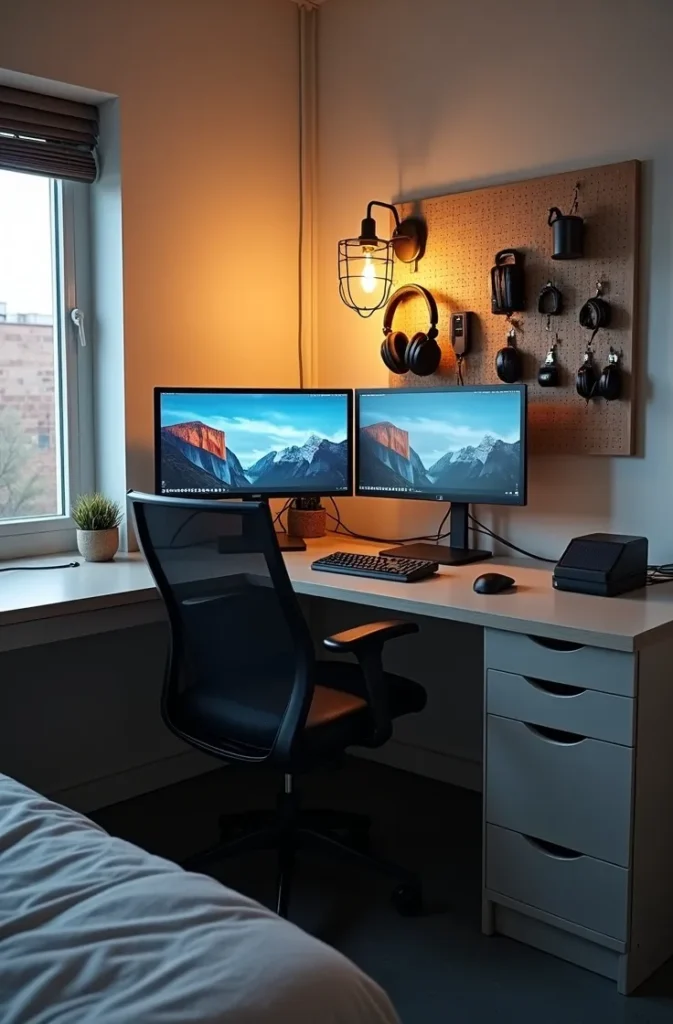
The mistake most people make is choosing a bulky corner desk that is too deep for a dorm room. Keep each run no deeper than 22 inches. Anything deeper blocks traffic flow and makes the room feel congested.
Use this if your room has a natural corner near a power outlet and you spend more than four hours a day at your desk.
4. The Minimalist Monochrome Setup for Guys Who Prefer Clean and Calm
A monochrome room uses one neutral base color across all major surfaces — white, off-white, or warm grey — and keeps contrast low. The result is a room that feels larger, quieter, and easier to focus in. It also photographs well, which matters for guys who stream or video call frequently.
The key to making monochrome work is texture variation. If everything is the same tone but has different materials — matte walls, a linen duvet, a wool rug, a brushed metal lamp — the room avoids looking sterile. Texture is what makes neutral rooms feel warm instead of cold.
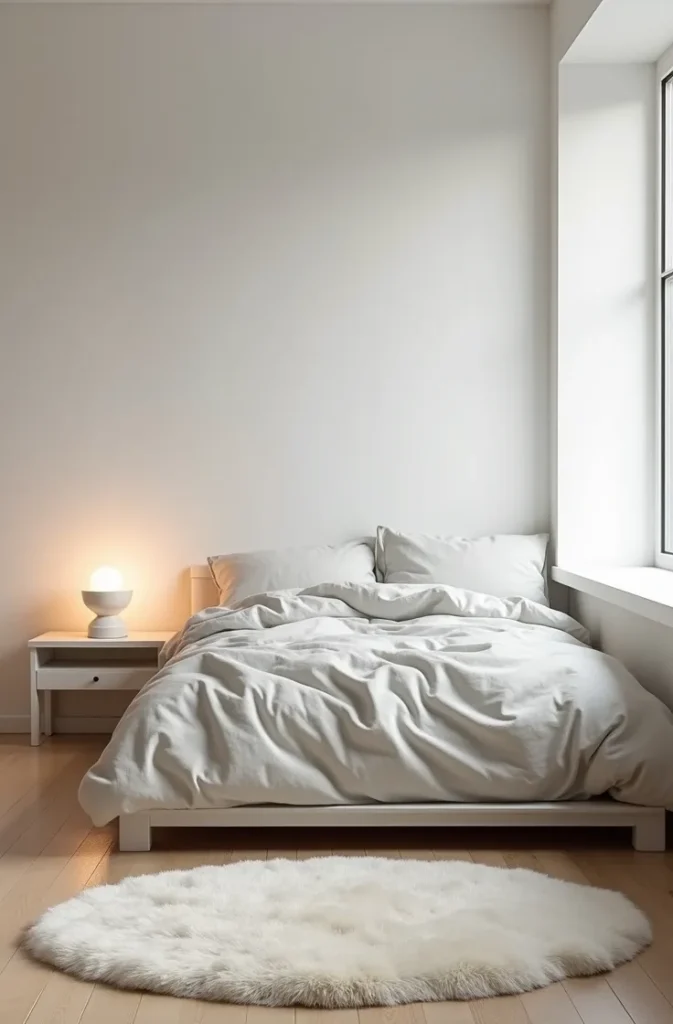
This approach works best in rooms with natural light. If your dorm window faces north or receives no direct sunlight, monochrome can feel flat. Add a warm-toned bulb (2700K to 3000K) to compensate.
Avoid all-white with a fluorescent overhead light. It is the fastest way to make a room feel like a hospital room instead of a living space.
5. The Exposed Shelving Wall That Replaces a Bulky Dresser
Instead of using a freestanding dresser that consumes 6 to 8 square feet of floor space, mount a vertical grid of open shelves along one wall. This stores the same volume of items while keeping the floor open, which makes a small room feel significantly less cluttered.
For a dorm that prohibits wall anchors, use a freestanding shelving unit that leans or tension-mounts between floor and ceiling. These systems are stable, move-in friendly, and available in thin metal or wood profiles that do not overwhelm a small room.
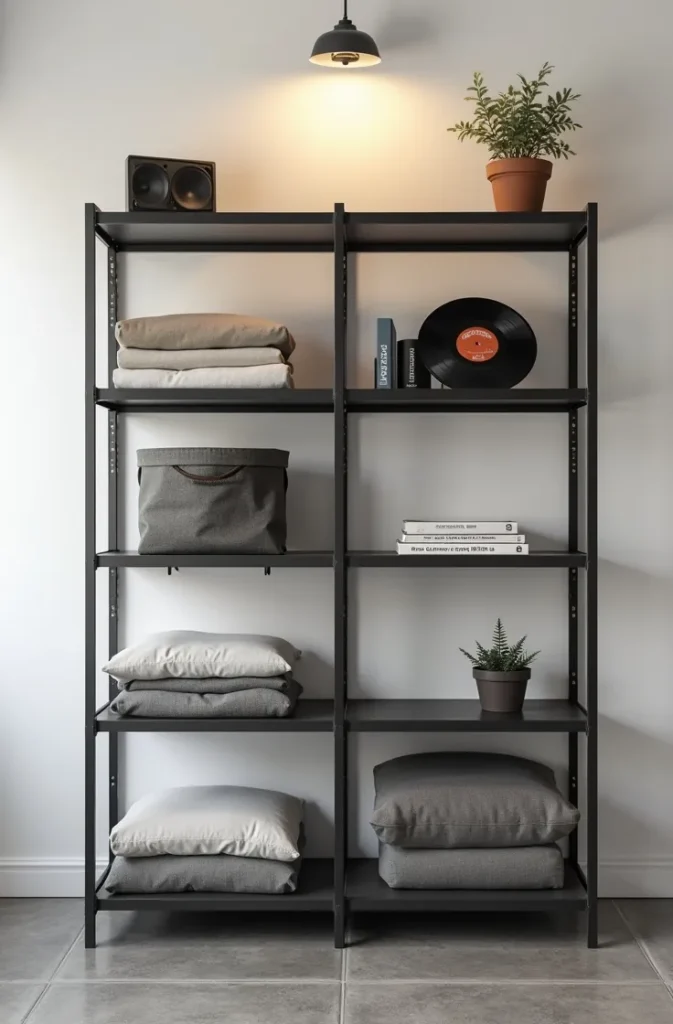
The organization principle matters here. Group items by type — folded clothes on lower shelves, books and tech in the middle, visual display items at eye level. Random arrangement defeats the purpose and makes the room look messier than before.
This layout works particularly well in rooms over 160 square feet where one wall can be fully dedicated to storage without blocking a window or closet access.
6. The Warm Ambient Lighting Setup That Makes Any Dorm Room Feel 10x Better
Dorm room overhead lighting is almost universally bad — harsh, flat, and unflattering. Replacing or supplementing it with layered warm lighting is one of the highest-return upgrades in any small room guide for men.
The approach uses three light sources at different heights: a floor lamp or corner lamp for ambient fill, a desk lamp for task lighting, and accent lighting (LED strip or string lights) for warmth at the lowest level. This layering mimics how well-designed residential spaces are lit.
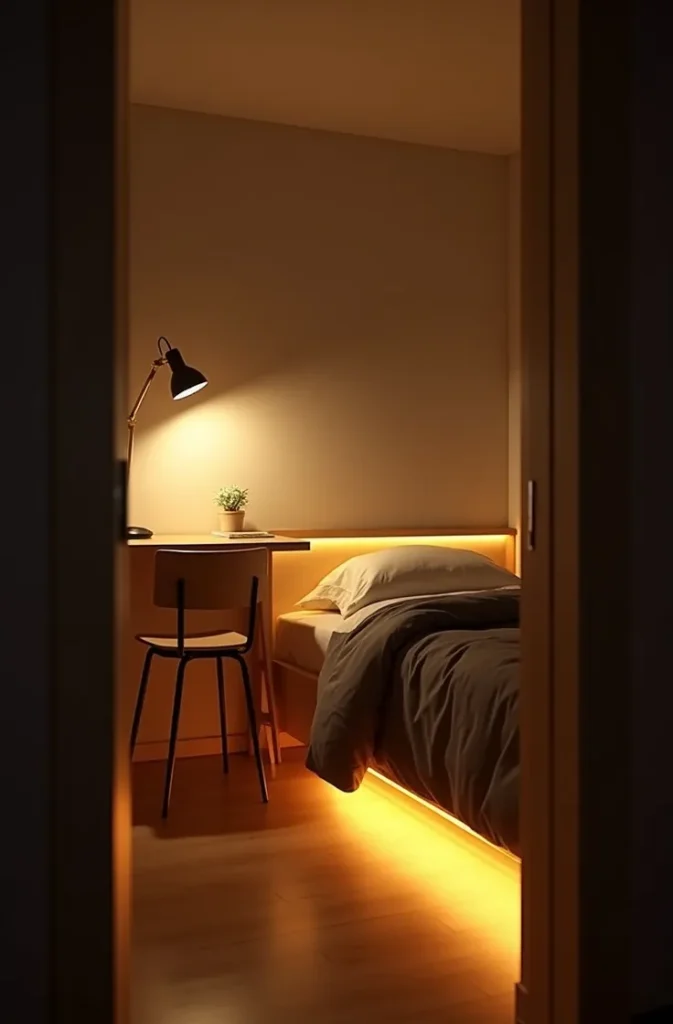
Color temperature is critical. Use 2700K to 3000K bulbs throughout. Avoid daylight (5000K+) bulbs in the bedroom — they suppress melatonin and interfere with sleep.
The most common mistake is relying on string lights alone. They create atmosphere but provide almost no usable light for reading or working. Treat them as a supplement, not a primary source.
7. The High-Contrast Industrial Style With Raw Materials and Metal Accents
The industrial aesthetic translates well to dorm rooms because it is built around raw, affordable materials — exposed metal, dark wood tones, concrete textures, and matte black hardware. It reads as intentional and mature without requiring expensive furniture.
The layout logic follows a contrast principle: pair light walls or flooring with dark furniture, or vice versa. A charcoal grey rug on light wood flooring, a black metal shelving unit against a white wall, raw wood shelves with matte black brackets — these pairings create the visual tension that defines the style.
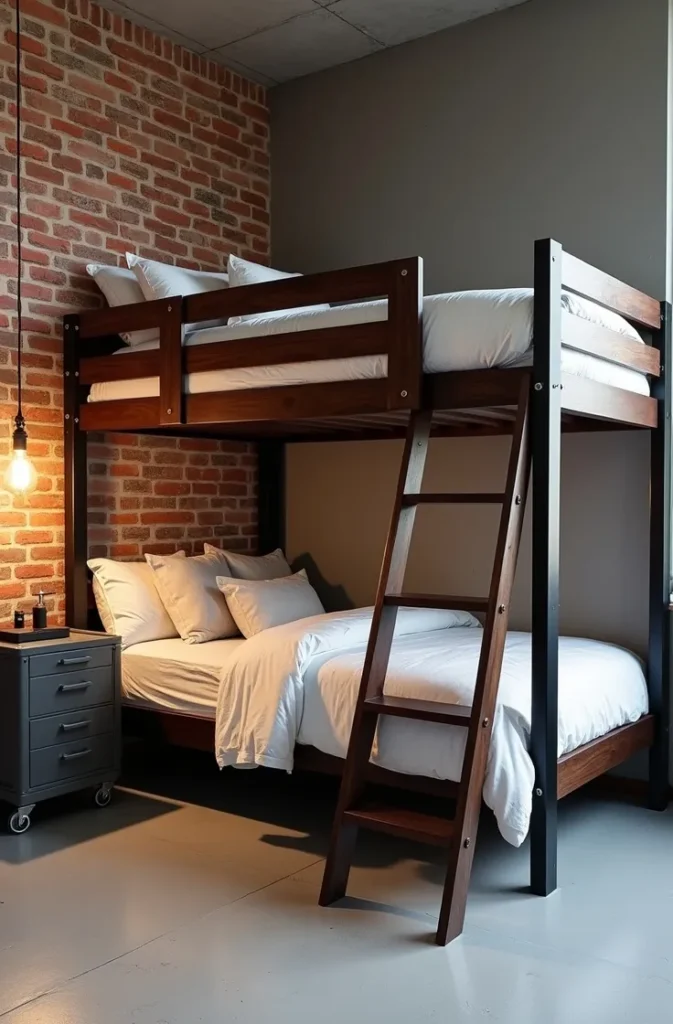
Lighting in this setup should be directional and warm. Cage-style pendant lights, industrial wall sconces, or clip-on Edison bulbs work with the aesthetic instead of against it.
Avoid mixing too many metal finishes. Pick one — matte black, gunmetal, or brushed steel — and use it consistently across your lamp, shelf brackets, and desk accessories.
8. The Dual-Purpose Bed Frame With Built-In Under-Bed Storage
A standard dorm bed sits high enough to store items underneath, but without organization, it becomes a dust-collecting dead zone. Purpose-built storage — flat rolling bins, vacuum storage bags for seasonal clothes, or a shallow drawer system — turns under-bed space into your most valuable square footage.
The key is categorizing what goes under there. Use it for items you access infrequently: extra bedding, off-season clothes, luggage. High-frequency items — chargers, shoes, daily-use gear — belong at a more accessible height.
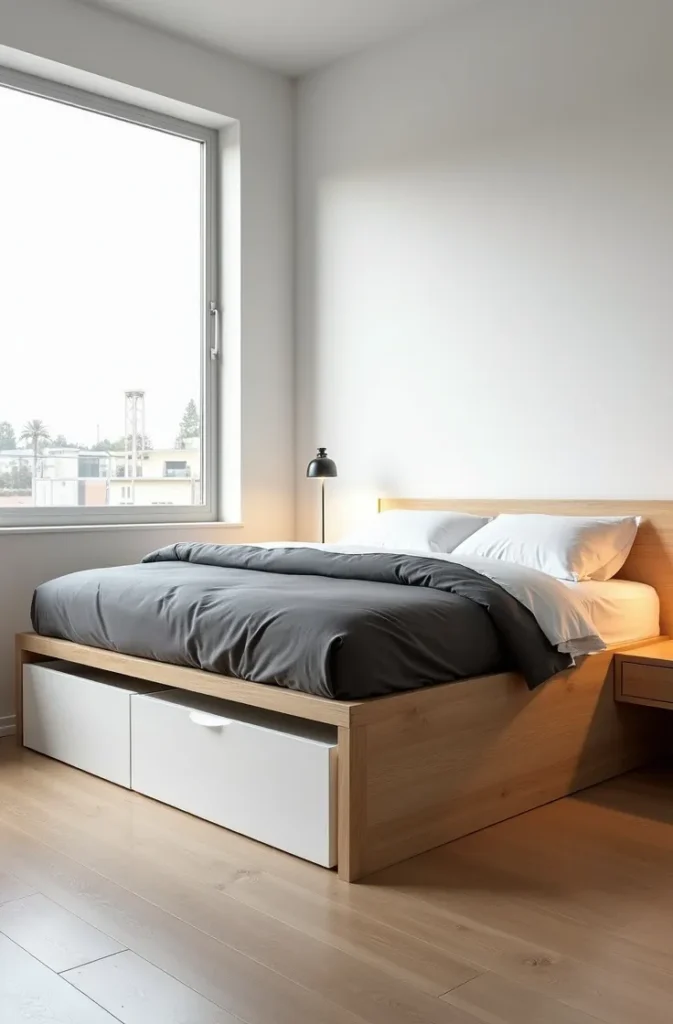
Bed risers can add 3 to 6 additional inches of clearance if the standard height is insufficient. Make sure risers are rated for the combined weight of the bed frame and occupant — cheap risers are a safety issue.
This approach works in every dorm room regardless of layout. It is one of the few storage solutions with no tradeoffs.
9. The Gallery Wall Setup That Adds Personality Without Clutter
A curated gallery wall — three to seven pieces in a consistent framing style — gives a room a strong visual identity without adding physical clutter. It is one of the few decorating strategies that uses vertical space most people leave completely empty.
The composition rule that works in small rooms is the asymmetric cluster: group pieces at different heights within a defined horizontal band on the wall, roughly between shoulder and ceiling height. Avoid perfectly symmetric grids — they look forced in casual spaces.
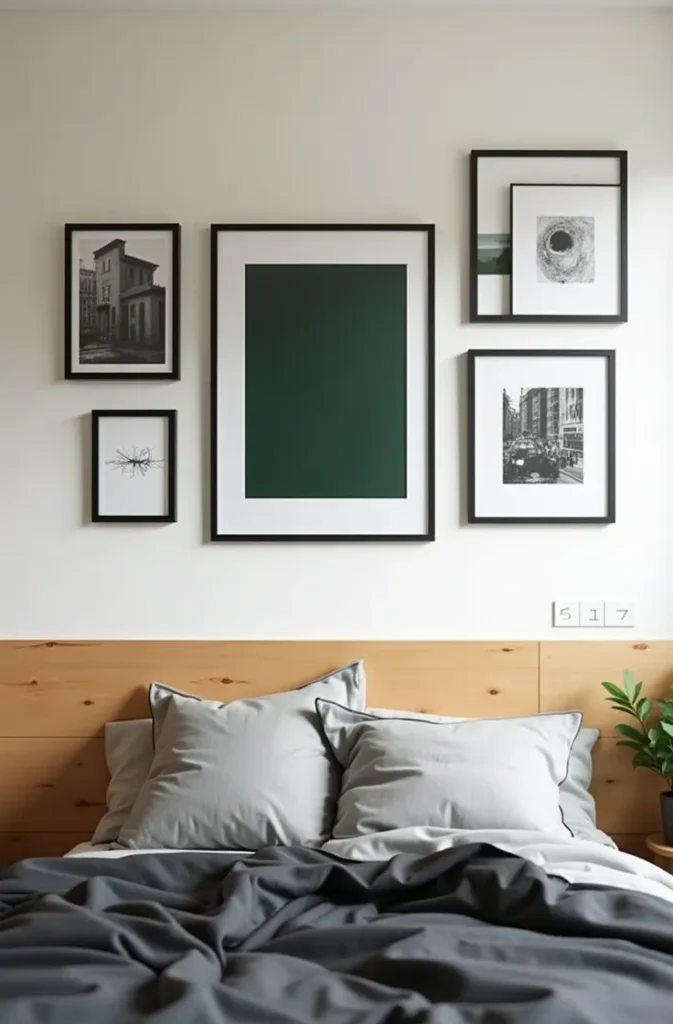
For dorms with no-pin policies, use damage-free adhesive strips rated for the combined weight of your frames. Test on a hidden area first. Flat canvas prints and lightweight metal frames are the most reliable choices for adhesive mounting.
Stick to two or three frame colors. Black, white, and natural wood cover most aesthetic directions without clashing.
10. The Compact Gaming Setup That Does Not Take Over the Room
A functional gaming setup in a dorm room requires strict footprint discipline. The goal is a single designated zone — usually one quadrant of the room — that handles gaming without spilling into the rest of the space.
The setup works best when the monitor is elevated on a monitor arm rather than a stand, freeing the full desk surface when gaming is done. The PC tower or console goes on a dedicated shelf below the desk or inside a compact tower shelf beside it. Cables are managed vertically using adhesive cable clips along the desk leg.
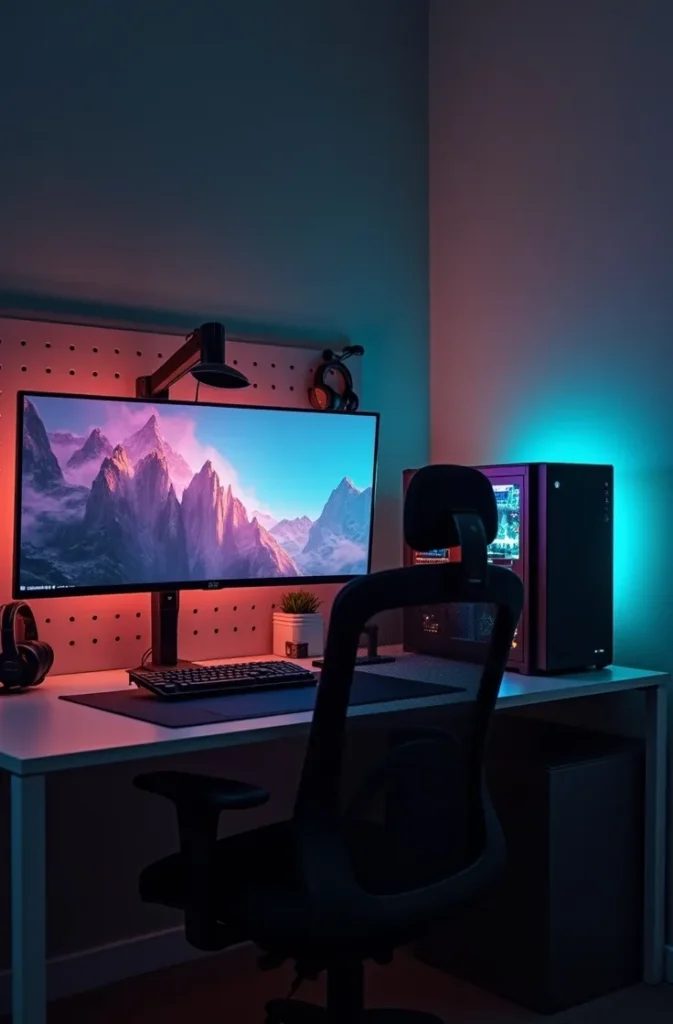
Acoustic management is worth addressing early. A rug under the desk area, a fabric chair, and curtains or fabric on one wall reduce sound reflection — relevant if you are gaming in a shared room or thin-walled building.
Avoid placing the gaming monitor directly across from your bed. The screen light disrupts sleep quality even when powered off due to standby glow.
11. The Scandinavian-Inspired Calm Setup With Natural Wood and Soft Neutrals
Scandinavian-style dorm rooms use light natural wood, soft white or oat tones, and functional simplicity to create a space that feels calm and lived-in. This style performs particularly well for guys who study or work long hours from their room and need an environment that does not feel overstimulating.
The material palette centers on light birch or ash-toned wood surfaces, white or linen-colored textiles, and matte finishes throughout. No glossy surfaces, no bright colors, no visual clutter. Every object has a purpose and a designated place.
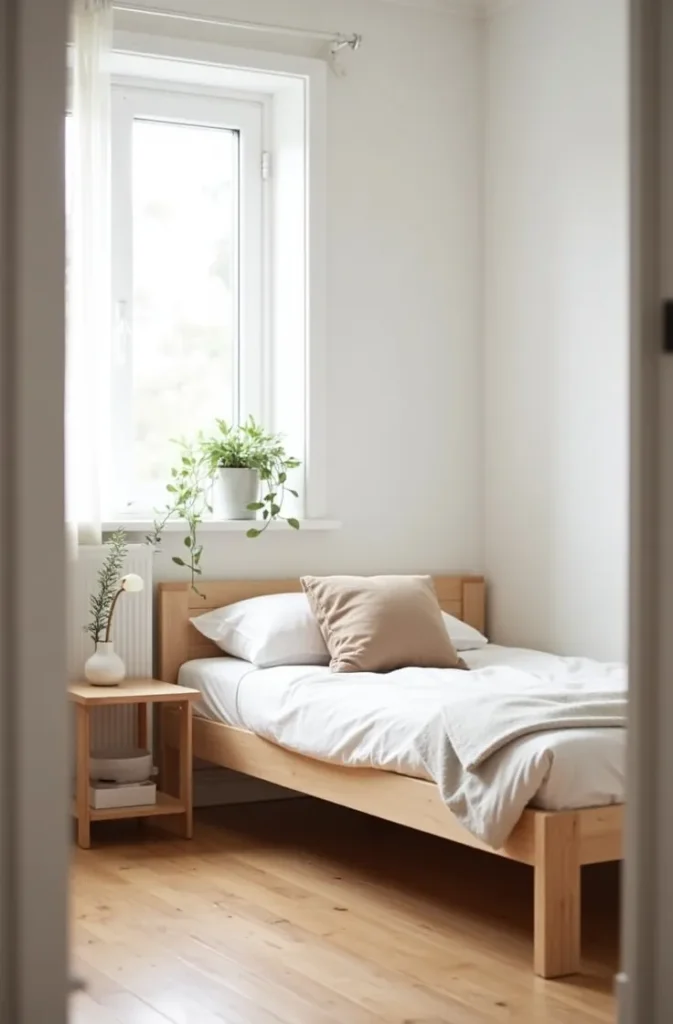
Plants are a natural fit here. A small trailing plant on the window ledge or a single succulent on the desk introduces organic texture without disrupting the calm visual tone.
The limitation is that this style requires actual discipline in maintaining tidiness. A Scandinavian room with clutter looks worse than most other styles because the clutter stands out sharply against the minimal palette.
12. The Maximized Corner Bedroom Layout for Awkward Room Shapes
Some dorm rooms have non-standard shapes — a column in the corner, a recessed window alcove, or an offset closet that breaks up the wall. These awkward features trip up most standard layout plans. The corner anchoring strategy addresses this directly.
The approach places the bed diagonally into the most awkward corner, turning the dead space beside it into a natural shelf nook or charging station. The desk is positioned perpendicular to the remaining clean wall. This breaks the typical parallel-to-the-wall arrangement and opens the center of the room.
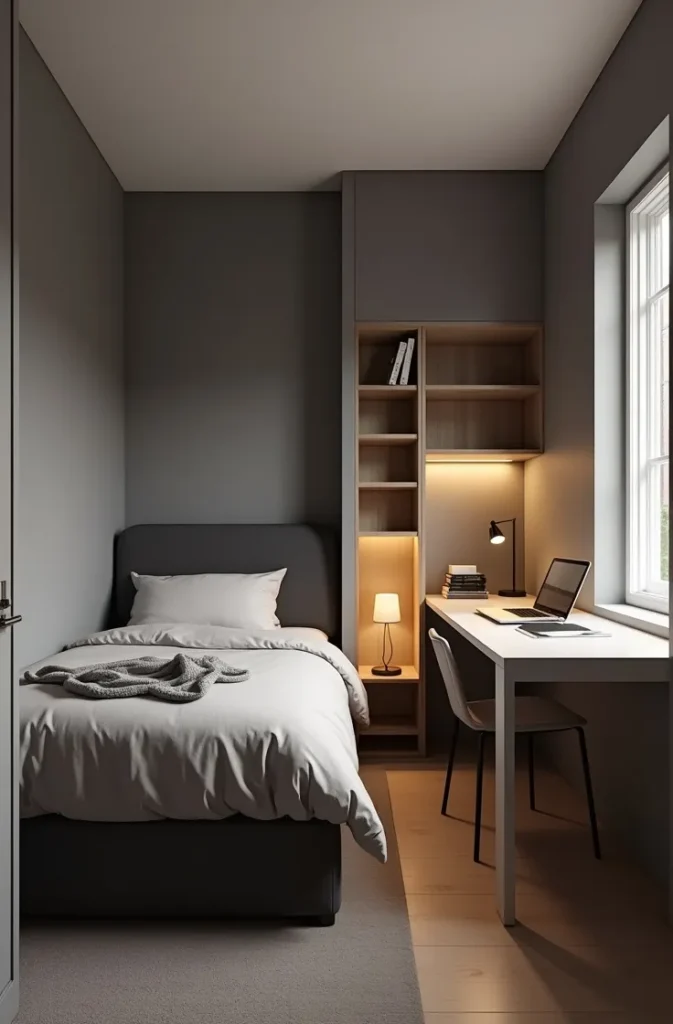
Corner placement also creates a natural sense of enclosure around the bed, which many people find more comfortable for sleep — it reduces the exposed feeling of a bed floating in open space.
This layout requires a bed frame that does not need access from both sides, since one side will be against or near the wall.
13. The Streetwear-Inspired Display Wall That Doubles as Closet Organization
For guys with a strong interest in fashion, sneakers, or streetwear, the display wall approach treats clothing and shoes as part of the room’s visual identity rather than hiding them in a closet. Floating shoe shelves, pegboard hooks, and clear acrylic display boxes create an organized visual feature rather than a messy pile.
The layout assigns the wall beside or above the closet as the display zone. Sneakers on wall-mounted slanted shelves sit at eye level. Hats on horizontal hooks form a horizontal line above. Folded graphic tees in a divided shelf add color.
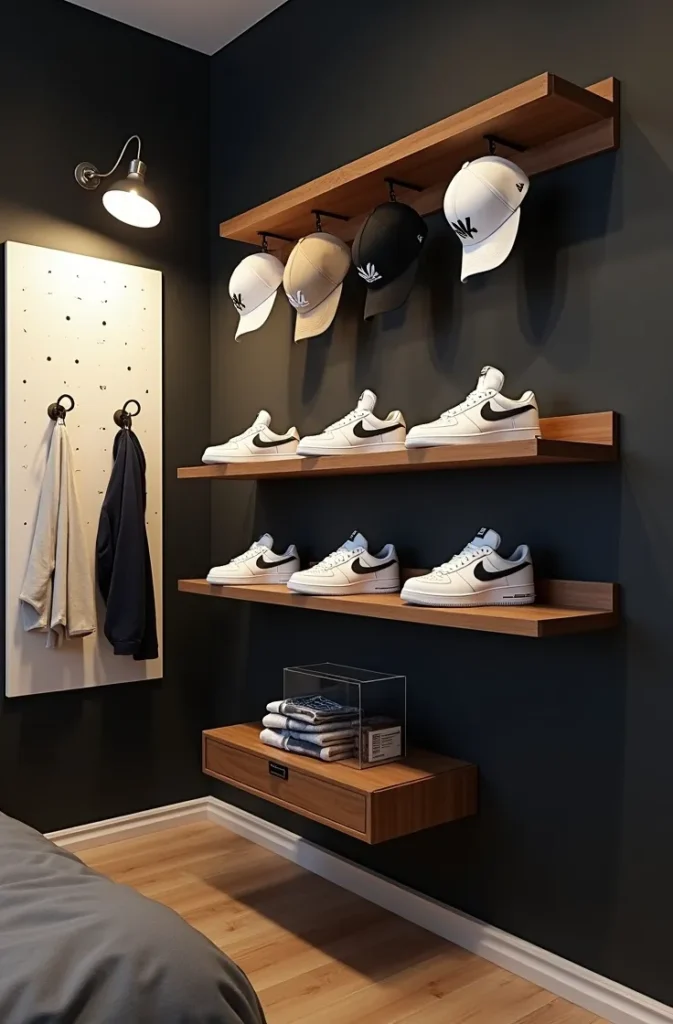
This works only if the collection is well-edited. Displaying 6 pairs of sneakers looks intentional and cool. Displaying 20 pairs in a dorm room looks like an overflow storage problem. Rotate seasonally.
Keep the rest of the room visually quiet — neutral walls, minimal clutter — so the display wall has room to read as a feature rather than noise.
14. The Dual-Roommate Layout That Gives Each Person a Defined Personal Zone
When sharing a dorm room, the biggest design challenge is not aesthetics — it is spatial psychology. Each person needs a zone that feels like their own, even if the room is only 250 square feet total.
The most effective approach is the mirror layout: beds on opposite walls, desks anchored beside each bed, and a clear visual dividing line down the center of the room. A tall bookshelf or narrow wardrobe placed perpendicular to the dividing axis reinforces the boundary without requiring a physical barrier.
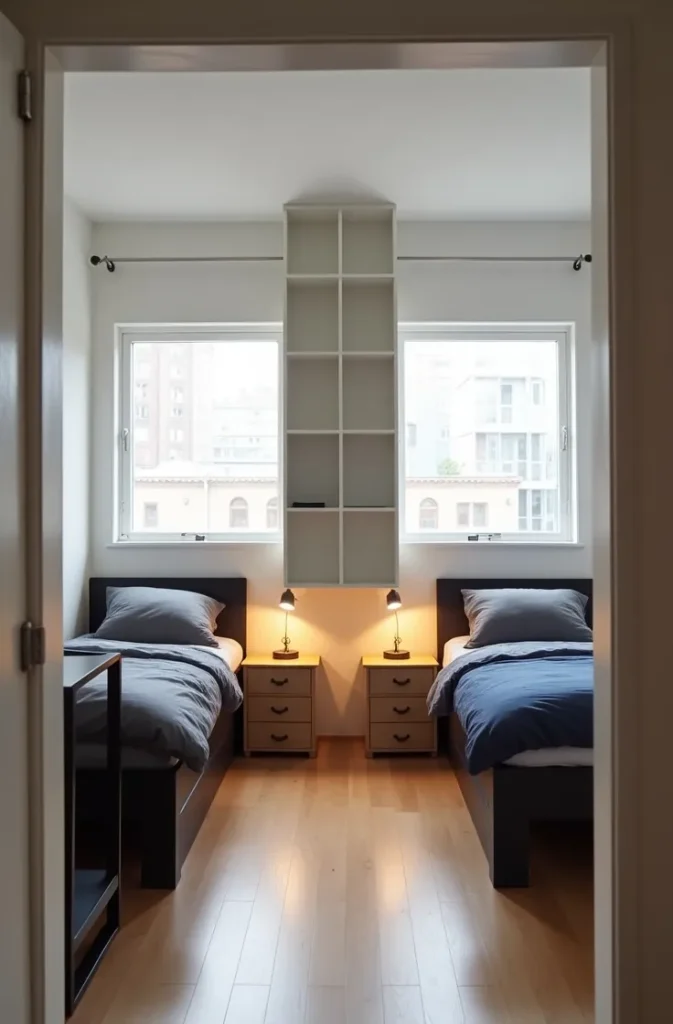
Each zone uses its own lighting, its own rug area, and its own wall section for personal display. The shared zone — a central aisle and any common storage — stays neutral and agreed upon.
The mistake is trying to style the whole room uniformly when two people with different tastes are sharing it. It leads to compromise that satisfies nobody. Instead, define the zones, agree on the shared areas, and let each side reflect the person who lives in it.
Final Thoughts
These cool guys dorm room ideas cover a wide range of styles, budgets, and room sizes — because no two dorm situations are exactly alike. The most important step is identifying which layout constraint is your actual problem: not enough storage, no defined work zone, poor lighting, or a shared space that feels chaotic. Once the constraint is clear, the right idea from this list will stand out.
Save this post so you can return to it when you are ready to shop, rearrange, or start fresh next semester. Each section is designed to give you real direction, not just visual inspiration. If you want to go deeper, explore small bedroom layout ideas and apartment-style dorm setups for even more functional space planning approaches.