
A cool minimalist summer bedroom is not just about removing clutter — it is about making deliberate material, color, and layout decisions that lower the perceived and actual temperature of a sleeping space. This guide breaks down 12 specific approaches, each built around a different spatial or material strategy, so you can identify exactly what your room needs and why it will work before you buy or change a single thing.
1. The All-White Linen Bed That Breathes Like a Second Window
White linen bedding is the single most impactful material change you can make in a summer bedroom. Linen is a naturally thermoregulating fiber — it absorbs moisture and releases it quickly, which means the fabric surface stays cooler against skin than cotton, polyester, or blended materials. In a room where the bed occupies thirty to fifty percent of the visual field, what the bed is made of determines how the whole room feels — both thermally and aesthetically.
The reason white specifically works in a minimalist summer context is photometric: white reflects light rather than absorbing it. A dark bedding set in a south or west-facing room absorbs radiant heat from afternoon sun, warming the mattress surface before sleep. White or very pale bedding stays cooler through the same exposure.


Choose a linen duvet cover with a thread count between 80 and 120 — this range is loose enough for maximum airflow and gets softer with each wash rather than degrading. Avoid linen-cotton blends if thermal performance is the priority; the cotton component reduces the breathability benefit significantly.
Style the bed with a single throw folded at the foot rather than a stack of cushions. In summer, every additional textile layer on the bed holds heat. The minimal approach is both the practical and the visual correct answer here.
2. The Bare Floor Bedroom That Uses Negative Space as a Cooling Strategy
Rugs are insulating by design. In winter, that is an asset. In summer, a rug that covers the majority of a bedroom floor traps heat close to the ground and raises the ambient temperature of the lower air layer — the air closest to where you sleep. Removing the rug entirely, or replacing it with a minimal-footprint version, is one of the most thermally effective changes in a summer bedroom refresh.
Beyond thermal performance, bare flooring in a cool minimalist summer bedroom creates a visual spaciousness that rugs interrupt. Light wood, polished concrete, pale stone, or white-washed tile all reflect light upward into the room from the floor surface. A covered floor absorbs that light. In a small bedroom, the difference between a covered and uncovered floor can be significant in terms of how large and how airy the room appears.
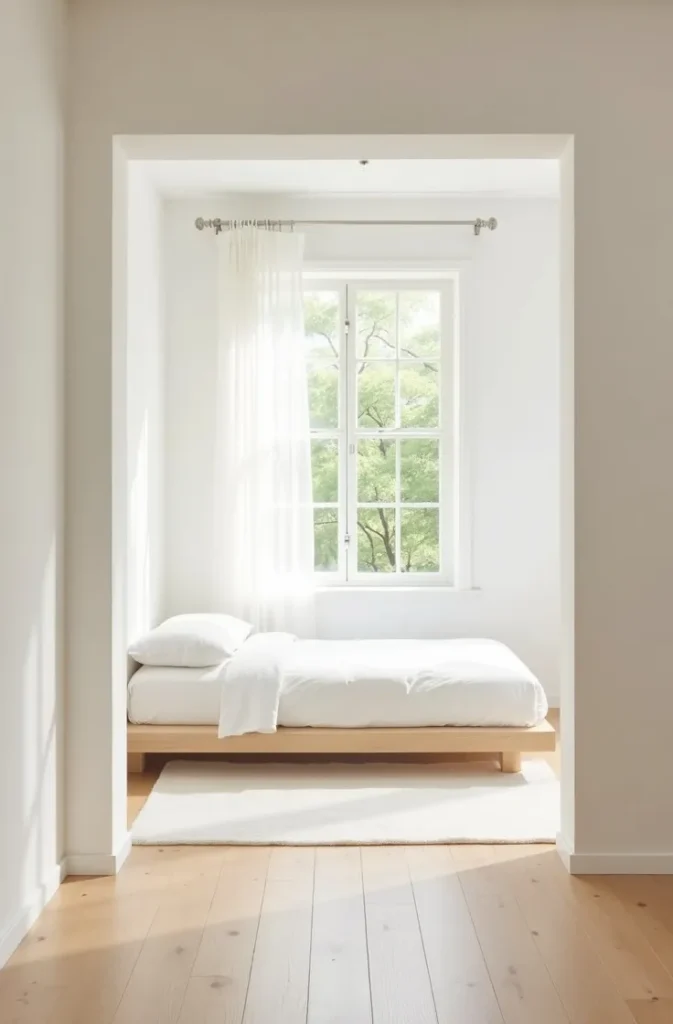
If complete removal feels too stark, replace a full-coverage rug with a narrow runner beside the bed only — the one strip of flooring where contact with bare floor feels cold and unwelcoming first thing in the morning. A slim jute or sisal runner in natural fiber is the most thermally neutral option because neither material retains heat the way a wool or synthetic rug does.
The mistake to avoid is leaving too much visual emptiness around a floating bed. If you remove the rug and the room suddenly feels unanchored, the solution is not to return the rug — it is to lower the bed frame height, which recalibrates the room’s proportions without reintroducing a heat-trapping textile.
3. The Single Architectural Plant That Brings the Outside In Without Adding Warmth
A large indoor plant in a minimalist summer bedroom does something no other decorative element can replicate: it introduces organic visual complexity and a biophilic sense of outdoor connection without adding any thermal mass or upholstered surface that would hold heat. A single well-chosen architectural plant — tall, structural, with a dominant vertical presence — can become the room’s primary visual statement while actively contributing to air quality.
The correct scale matters more than the species. In a standard bedroom of 120 to 180 square feet, a plant that reaches four to six feet in height reads as architectural. Shorter plants read as accessories. The difference is whether the plant occupies the room or decorates it — and in a minimalist context, a room-occupying plant is the right choice because it reduces the impulse to fill other surfaces with smaller decorative items.
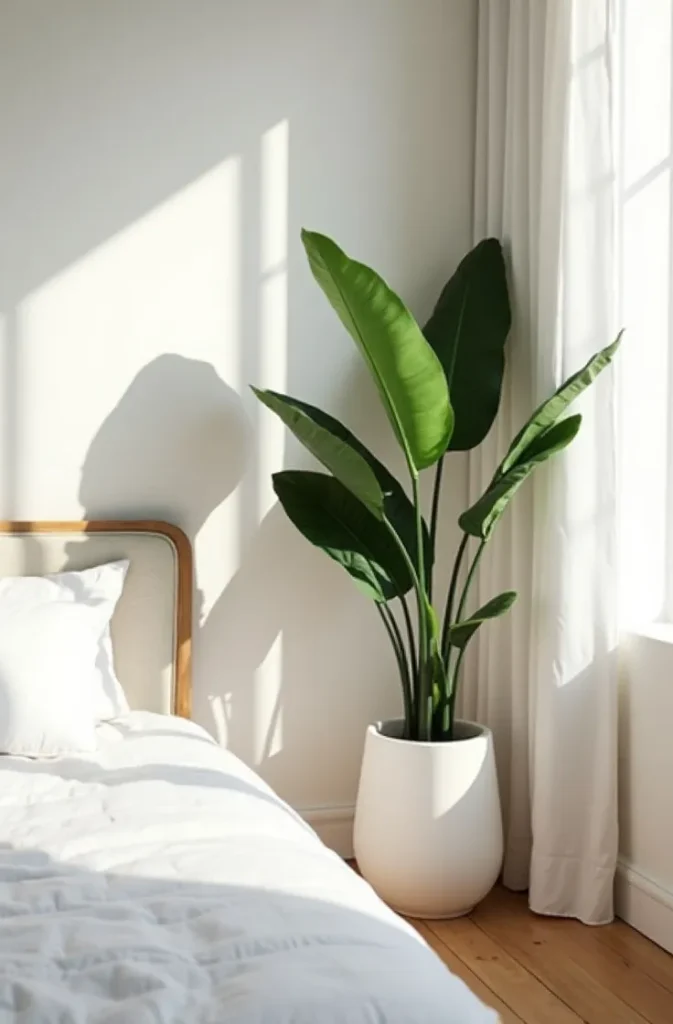
For summer-specific performance, choose species that tolerate heat, low humidity, and the reduced watering attention that comes with summer travel or inconsistent schedules. A fiddle leaf fig, a bird of paradise, a large monstera, or a floor-level potted snake plant cluster all meet these criteria. All four are structurally distinctive enough to anchor a corner without needing supplementary items around them.
Position the plant in the corner nearest the window but not in direct strong afternoon sun, which scorches most indoor tropical species. Morning light from an east-facing window is ideal. A white or pale terracotta pot keeps the base visually light.
4. The Sheer Curtain Wall That Controls Heat Gain Without Sacrificing Natural Light
Blocking summer sun entirely with blackout curtains is the thermal compromise most people make — effective at reducing heat but also effective at making a room feel sealed and dark during the day. The sheer curtain solution takes a different approach: diffuse the light rather than block it, which reduces the intensity of direct solar heat gain while preserving the brightness and spatial expansiveness of a naturally lit room.
A sheer curtain panel in white or pale cream installed directly against the window glass — not hanging several inches in front of it — minimizes the air gap between the fabric and the glazing and reduces convective heat transfer into the room. The fabric itself does not block much radiation, but the diffusion of direct sunlight substantially reduces the perceived warmth of the light entering the room.
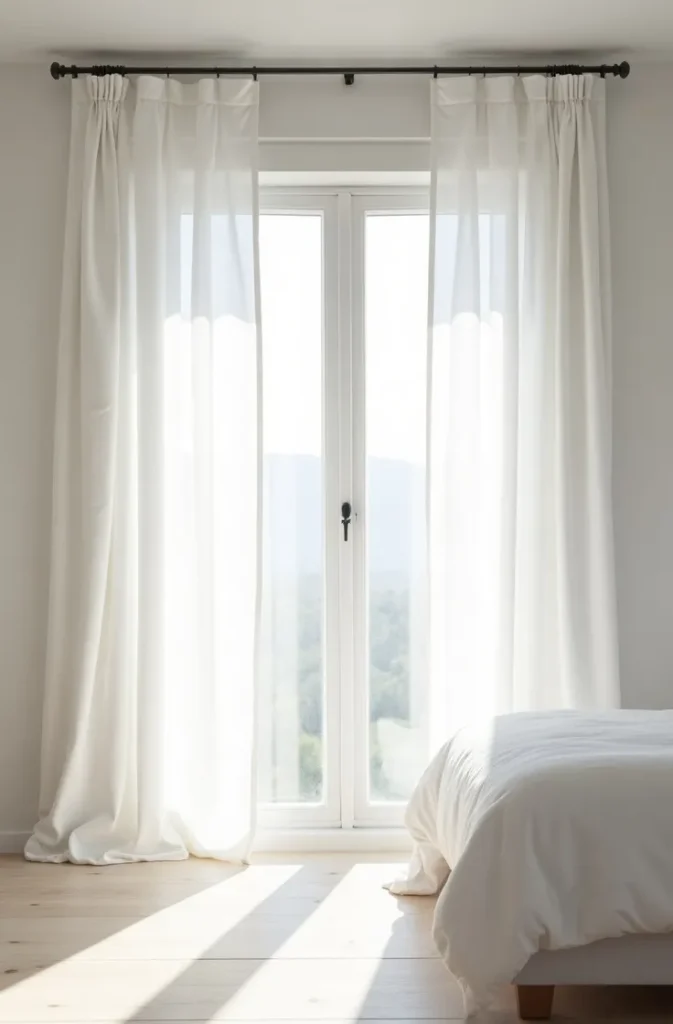
For summer-specific performance, extend the curtain rod eight to ten inches beyond the window frame on each side and mount it close to the ceiling line. This maximizes the curtain’s ability to cover the window completely when drawn, preventing the light-gap bleed that defeats most window treatments at their edges.
The minimalist design implication is equally important. A full floor-to-ceiling sheer curtain makes a standard window read as an architectural wall opening. It changes the entire proportion of the room toward a more refined, elongated aesthetic that heavy, layered window treatments cannot achieve.
5. The Concrete or Stone Bedside Surface That Stays Cooler Than Any Wooden Alternative
In a cool minimalist summer bedroom, material thermal mass works in your favor when chosen deliberately. Stone and concrete surfaces — a concrete-top bedside table, a marble slab mounted as a floating shelf, a travertine block used as a low bedside platform — are naturally cooler to the touch than wood or upholstered surfaces. The material pulls heat from the hand rather than returning it, which registers as freshness in a warm room.
This is not a trivial effect. In a bedroom where the morning routine involves reaching for a phone, a glass of water, or a lamp, the first surface contact sets a sensory tone for the room. A cool stone surface at hand level contributes to the perception of a room being cooler than it actually is — sensory temperature and actual temperature are not identical, and the minimalist summer bedroom leverages both.
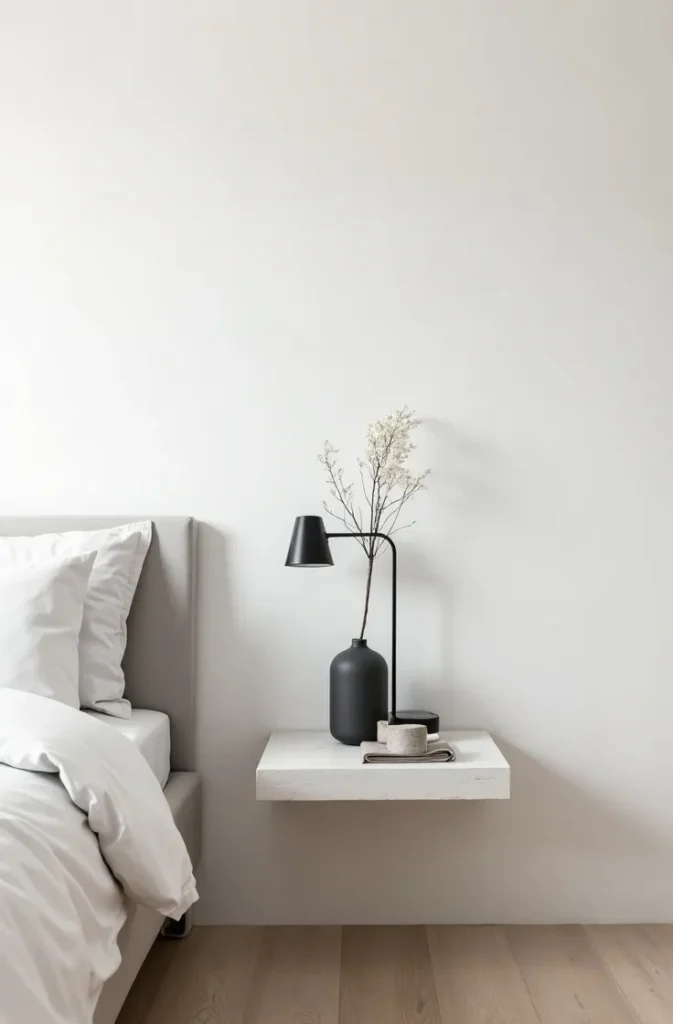
A floating concrete shelf at nightstand height is the most spatially efficient implementation of this principle. It requires no floor clearance, holds a lamp and a single personal item, and introduces the material with minimal visual presence. A travertine slab on slim hairpin legs reads slightly warmer in aesthetic while delivering the same thermal-contact quality.
Pair the stone surface with a matte finish rather than a polished one. Polished stone reflects light aggressively in a minimal room, which can create uncomfortable glare. A honed or leathered finish diffuses the reflection while maintaining the tactile coolness of the material.
6. The Neutral Summer Palette Built From Sand, White, and Bleached Wood Only
Color temperature is a real phenomenon in interior design. Colors in the blue, green, and grey-white family register as cooler to the eye and brain than colors in the red, orange, and yellow family — regardless of actual room temperature. Building a minimalist summer bedroom palette from the coolest end of the neutral spectrum is one of the most reliable, low-investment ways to change how warm a room feels without touching the HVAC system.
The specific palette that performs best is a three-tone combination of pure white, warm sand or pale dune, and the bleached natural tone of light wood. This trio works because each tone reflects light well — none are dark enough to absorb radiant heat significantly — and together they produce a room that reads as simultaneously airy and materially grounded. The sand tone prevents the all-white room from feeling clinical; the pale wood prevents it from feeling sterile.
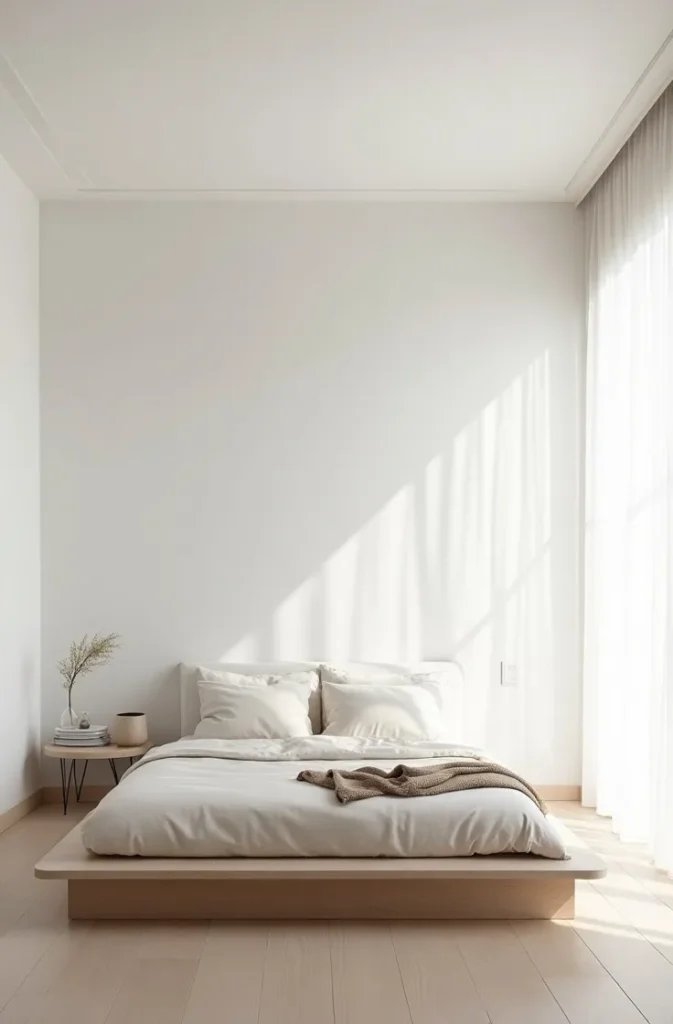
Apply the palette systematically. White goes on walls and ceiling. Sand or pale dune goes on one textile surface — the bedding, the curtain, or a single upholstered element. Bleached or light natural wood goes on the floor and any furniture frames. This three-way distribution prevents any single element from dominating and creates a cohesive, resolved appearance without requiring multiple design decisions.
The critical mistake in this palette is introducing one warm-toned accent — a terracotta cushion, a brass lamp, a golden-toned throw — and disrupting the cool neutrality the palette depends on. In a summer bedroom, even a single warm accent shifts the room’s temperature reading. Reserve warm accents for autumn and winter iterations of the space.
7. The Wall-Mounted Fan as Sculptural Fixture That Eliminates the Floor-Standing Eyesore
A floor-standing or desktop fan in a minimalist bedroom is one of the most visually disruptive objects a summer bedroom typically contains. It has a cord running to a wall outlet, it consumes floor clearance, and its utilitarian appearance reads as a functional intrusion rather than a considered design element. The wall-mounted fan solves all three problems simultaneously.
A wall-mounted fan at ceiling junction height or mid-wall height keeps air moving at the correct level for sleeping comfort — moving air significantly reduces perceived room temperature, regardless of actual air temperature — without consuming floor or surface space. The wall mount also positions the fan at a fixed angle that can be aimed toward the bed consistently, unlike a floor fan that shifts with each use.
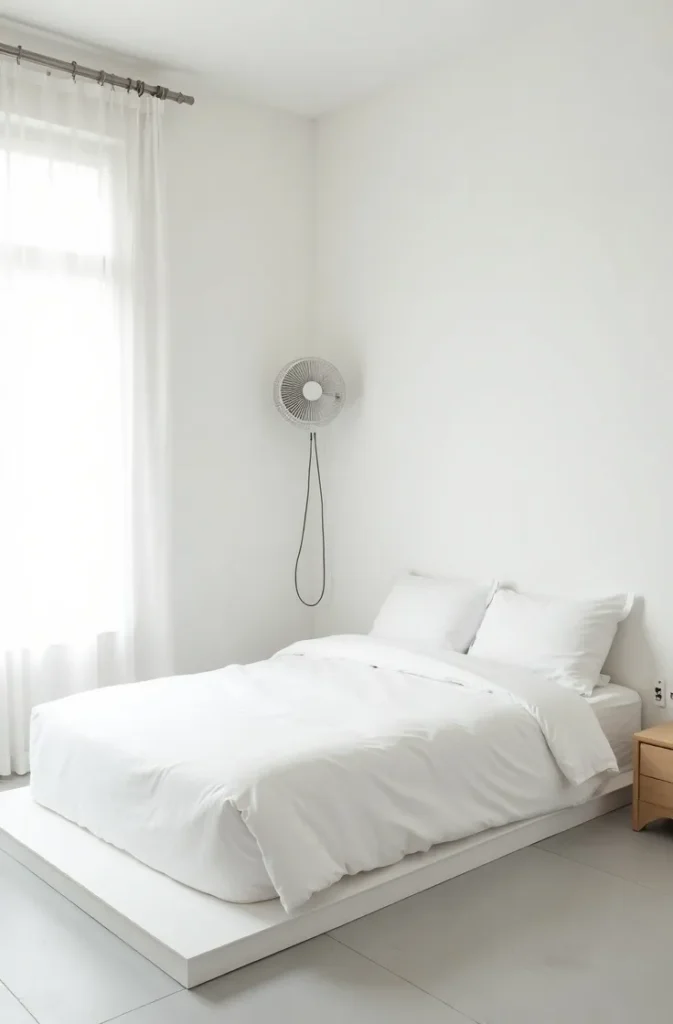
For minimalist design compatibility, choose a wall-mounted fan in a matte white or raw aluminum finish that reads as an intentional fixture rather than an appliance. Concealed wiring — either through the wall to an outlet inside the wall cavity, or run behind a slim wire channel painted to match the wall — eliminates the cord problem that makes most fan installations look improvised.
This approach works particularly well in smaller summer bedrooms where every square foot of floor space has a functional purpose. The room gains airflow performance without losing circulation path clarity, and the visual field remains uncluttered at eye and floor level.
8. The Platform Bed With Exposed Leg Clearance That Lets Air Circulate Beneath the Mattress
Heat accumulates at the mattress level in a bedroom because warm air rises and collects at the height where the body rests during sleep. A bed frame that allows air to circulate beneath the mattress — specifically, one with a minimum of eight to ten inches of clearance between the floor and the mattress base — creates passive airflow under the sleeping surface that reduces the temperature at mattress level over the course of the night.
This is the thermal argument for choosing an open-frame platform bed over a solid divan base or a low-profile frame with no clearance. The solid divan base is an excellent insulator — which is exactly what makes it problematic in summer. It holds warmth beneath the mattress and returns it through the mattress surface during the night.

The minimalist design implication aligns with the thermal function. An open-frame platform with exposed legs reads as lighter, less massive, and more spatially appropriate for a cool summer bedroom than a heavy upholstered divan. Slim round or tapered legs in natural wood or matte black steel are the most visually resolved options — both read as intentional material choices rather than structural necessities.
Do not add under-bed storage bins or rolling drawers if thermal performance is a priority. These close off the clearance space and eliminate the airflow benefit. In a summer bedroom context, under-bed storage is a winter-mode decision. Seasonal rotation of what is stored under the bed — keeping summer linens accessible and moving heavy winter items elsewhere — is a more practical approach than closing off the clearance entirely.
9. The Decluttered Nightstand With a Single Tray Edit That Keeps Surfaces Visually Cold
Surface clutter in a bedroom contributes to a room feeling warm and congested even when the actual temperature is manageable. The psychological experience of visual complexity triggers a similar cognitive load to physical warmth — the brain registers both as a form of overstimulation. In a cool minimalist summer bedroom, the nightstand surface discipline is as important as the bedding or the paint color.
The single tray edit is the most effective surface control technique for a bedside area. One tray — ceramic, stone, or matte lacquer in white or pale grey — placed on the nightstand surface corrals all bedside items into a contained zone. Inside the tray: one lamp, one small vessel, and one book maximum. Nothing outside the tray. The tray creates an implicit boundary that most people will intuitively respect once it is in place.
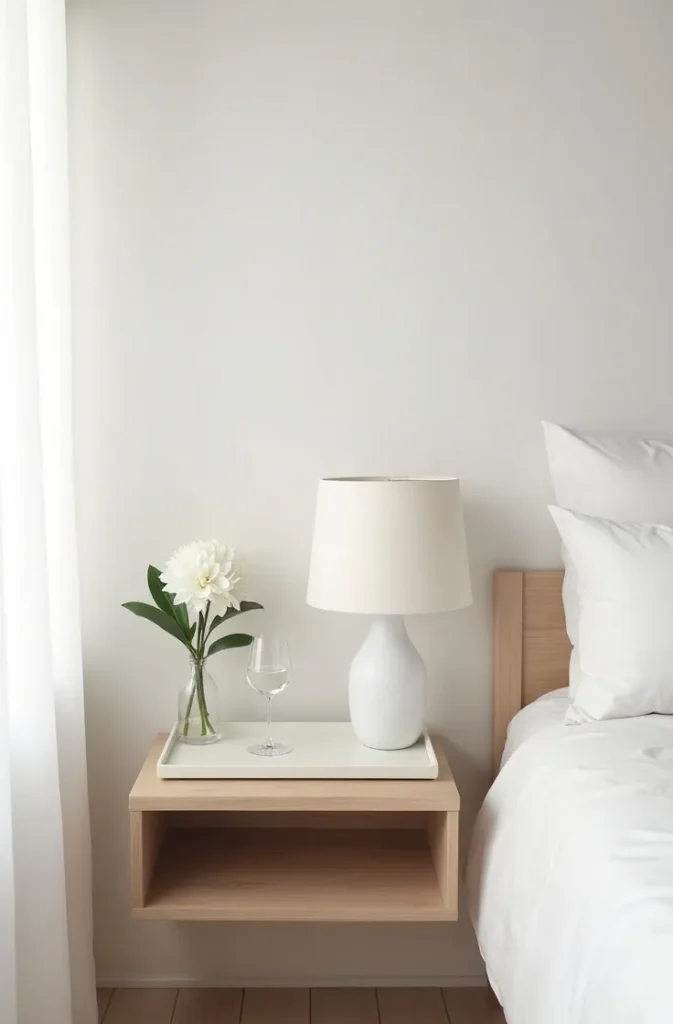
Remove everything currently on the nightstand surface and replace only the items that are functionally necessary daily. A glass of water, a lamp, a charging cable (concealed, not coiling on the surface). Anything used less than daily belongs in a drawer or not in the bedroom at all.
The visual effect of a single tray with three items on a nightstand surface is significant out of proportion to the effort required. It gives the surface a resolved, finished quality that a surface with seven or eight loose items cannot achieve regardless of how those items are arranged.
10. The Limewashed Wall Finish That Absorbs Light Softly Instead of Bouncing It Harshly
A smooth painted wall in a glossy or satin finish reflects summer light at high intensity, which can make a south or west-facing bedroom feel glaring and hot during peak afternoon hours. A limewash wall finish addresses this at the material level — the matte, slightly irregular surface of a lime wash absorbs and diffuses light rather than reflecting it back into the room, which produces a light quality that reads as softer, cooler, and more architecturally interesting than any standard paint can achieve.
Lime wash also has a natural breathability that standard paint lacks. It allows moisture vapor to pass through the wall surface rather than trapping it behind a polymer film, which contributes to a more balanced indoor humidity level — relevant in summer when humidity fluctuations affect thermal comfort considerably.
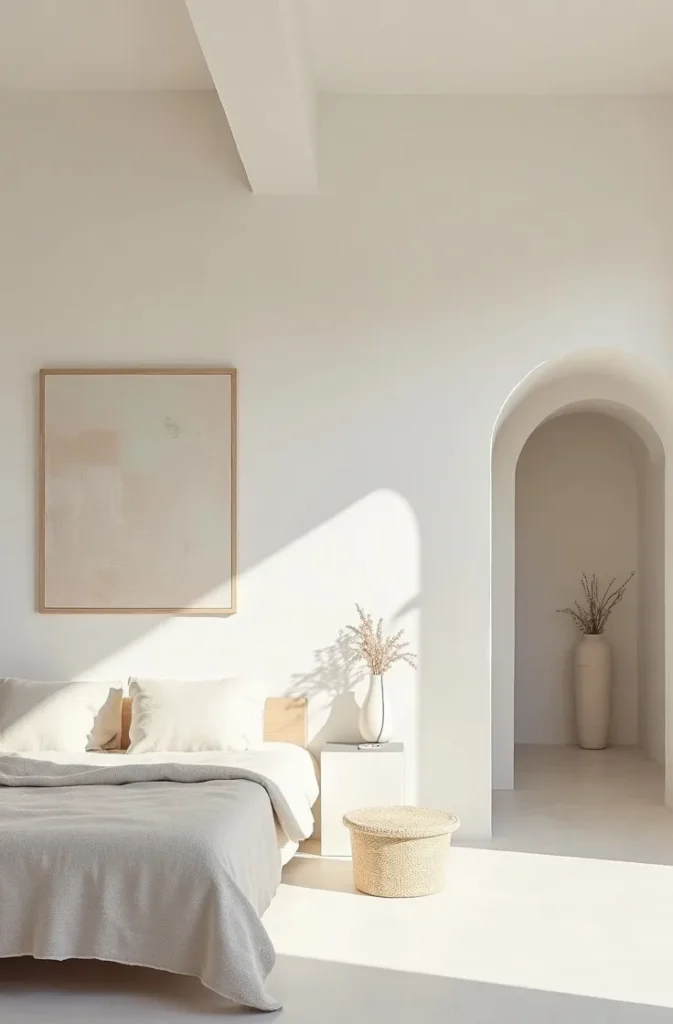
The color palette available in limewash finishes is naturally aligned with the cool minimalist summer bedroom: chalky whites, pale greiges, washed dove greys, and bleached stone tones are all standard. The characteristic depth of limewash — where the color appears to shift between light and shadow depending on viewing angle — adds the visual complexity that a minimalist room needs to avoid feeling flat, without introducing pattern or decoration.
Apply limewash to one wall for a feature effect, or to all four walls for full envelopment. In a summer bedroom, the all-four-walls application is more effective because it creates a consistent diffused light environment throughout the room rather than one surface behaving differently from the others.
11. The Open Closet System That Removes a Door to Improve Airflow and Spatial Flow
A closed closet door in a small or medium bedroom creates a dead air pocket behind it — a sealed zone where heat accumulates and cannot circulate back into the room. In summer, this sealed pocket raises the temperature differential between the closet zone and the rest of the room, and when the door is opened, that heat pocket releases into the sleeping space. Removing the closet door entirely eliminates this cycle.
An open closet system — a rail and shelf configuration without a door panel — allows air to move freely through the wardrobe space and back into the room. The thermal benefit is real in summer-specific conditions. The visual benefit requires discipline: an open wardrobe displays its contents, which means organization quality determines whether the result reads as intentional design or accidental disorder.
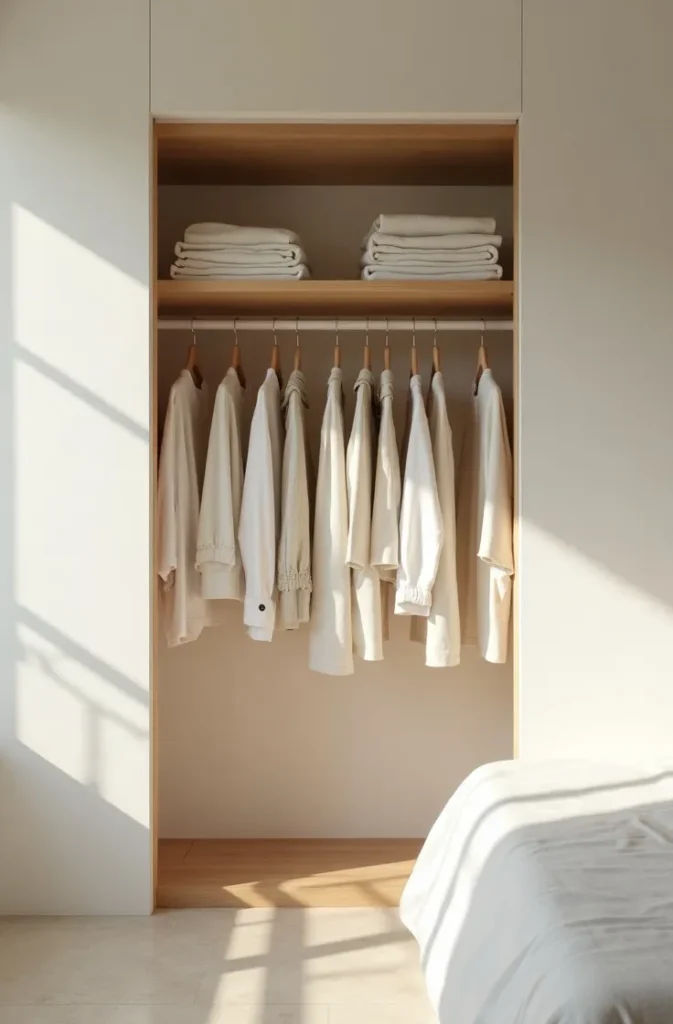
In a minimalist summer bedroom, the open closet contents should be curated for the season. Only summer clothing is on the rail — everything else is stored elsewhere. Color-coordinate the rail by hanging light-colored garments together and grouping by category. The result should read from the doorway as a curated textile display in a defined palette rather than a random assortment of garments.
This approach works particularly well in smaller apartments and urban bedrooms where closet doors are swing-out rather than sliding and consume significant clearance. Removing a swing-out door immediately reclaims clearance area that functions as additional walkable floor space.
12. The Ceiling-Anchored Mosquito Net That Creates a Sleeping Canopy With Zero Material Mass
A white or natural linen mosquito net hung from a single ceiling point above the bed does something architecturally distinctive that most bedroom canopy solutions cannot: it creates a complete enclosure around the sleeping zone using the least possible amount of material, which means it introduces the spatial intimacy of a canopy without the thermal weight of a fabric-draped frame.
The functional justification in summer is direct. In climates where windows are opened for nighttime ventilation and insect intrusion is a concern, a properly hung mosquito net allows full window ventilation while protecting the sleeping space. This removes the common summer compromise of choosing between airflow and insect protection — and in the minimalist summer bedroom, removing that compromise also removes the impulse to close the window and rely on mechanical cooling instead.
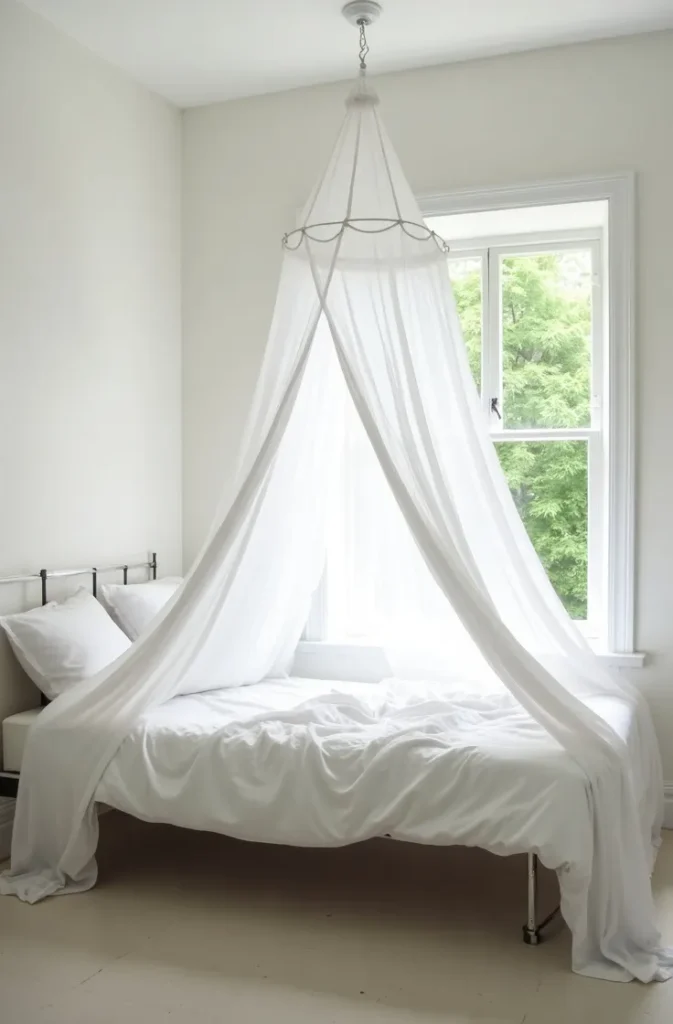
Hang the net from a single ceiling hook centered above the headboard. A circular or bell shape gathers at the top with a ten to fourteen inch diameter ring. The net falls in a tent shape and is tucked partially under the mattress at the sides and foot. Avoid nets with elaborate gathered tops or layered fabric designs — in a minimalist context, a simple straight-fall net in natural undyed cotton is the correct choice.
In rooms where the ceiling is eight feet or lower, the net should reach the floor on the sides and be gently gathered rather than taut. The loose fall of the fabric creates the dreamy spatial quality that makes this treatment visually compelling. A net pulled tightly reads as functional but not designed.
Final Thoughts
A cool minimalist summer bedroom is the product of specific decisions — about material, surface discipline, airflow, light management, and palette — not a single product purchase or a one-afternoon refresh. The ideas in this guide work because each one addresses a distinct spatial or sensory aspect of what makes a bedroom feel cool and resolved in summer.
Save this post before the season changes. Return to it room element by room element, and prioritize the decisions with the broadest impact first: bedding material, wall color, and floor coverage will do more than any accent change. When you are ready to go further, explore minimalist summer living room ideas and warm-climate bedroom layout strategies that carry these principles through the rest of the home.