
If your master bedroom feels more like a catch-all room than a true retreat, you are not alone. This guide on cozy and relaxing master bedroom decor ideas breaks down exactly what works, what to avoid, and how to make every design choice count — no matter the size of your space.
1. Layer Your Bedding With Texture, Not Just Color
Most people focus on color when choosing bedding, but texture is what actually makes a bed feel inviting. Combining a linen duvet, a chunky knit throw, and two or three pillow types creates visual depth that reads as both comfortable and intentional.
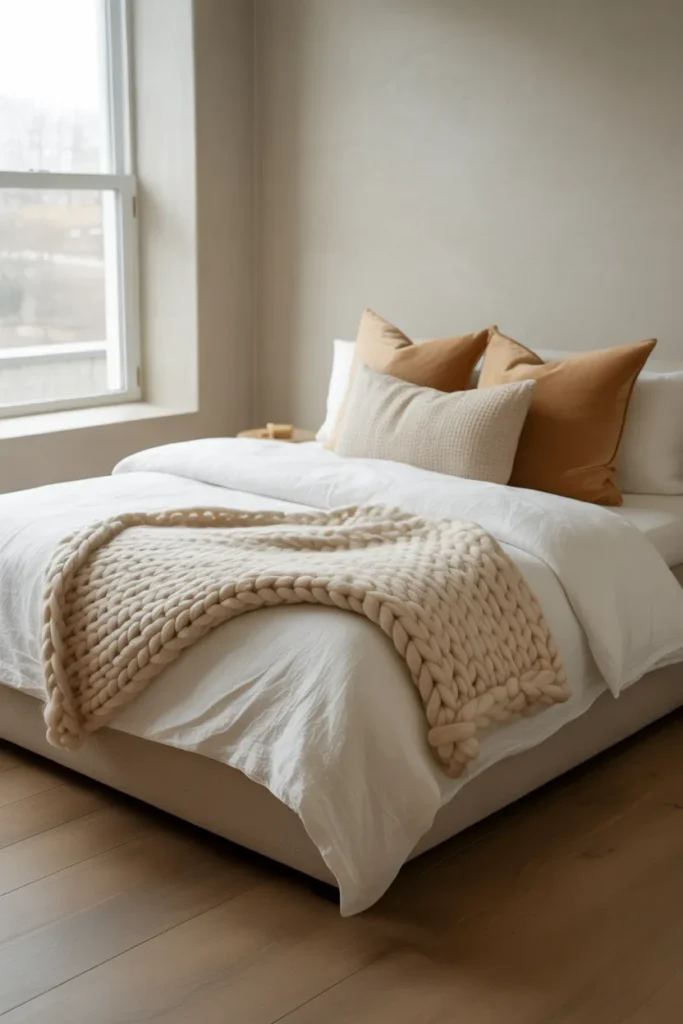
The key is contrast without chaos. Pair a smooth fitted sheet with a matte-finish duvet and add one textured element — a waffle-knit blanket folded at the foot of the bed works well in both modern and traditional rooms.

Avoid the mistake of over-layering with too many patterns. Stick to one pattern maximum and let texture carry the rest. This approach works especially well in neutral rooms where the bedding becomes the focal point.
2. Use a Soft Neutral Accent Wall to Ground the Room
An accent wall does not have to be bold to be effective. In a master bedroom, a soft warm neutral — think warm greige, dusty clay, or muted sage — on the wall behind the bed creates a subtle frame without demanding attention.
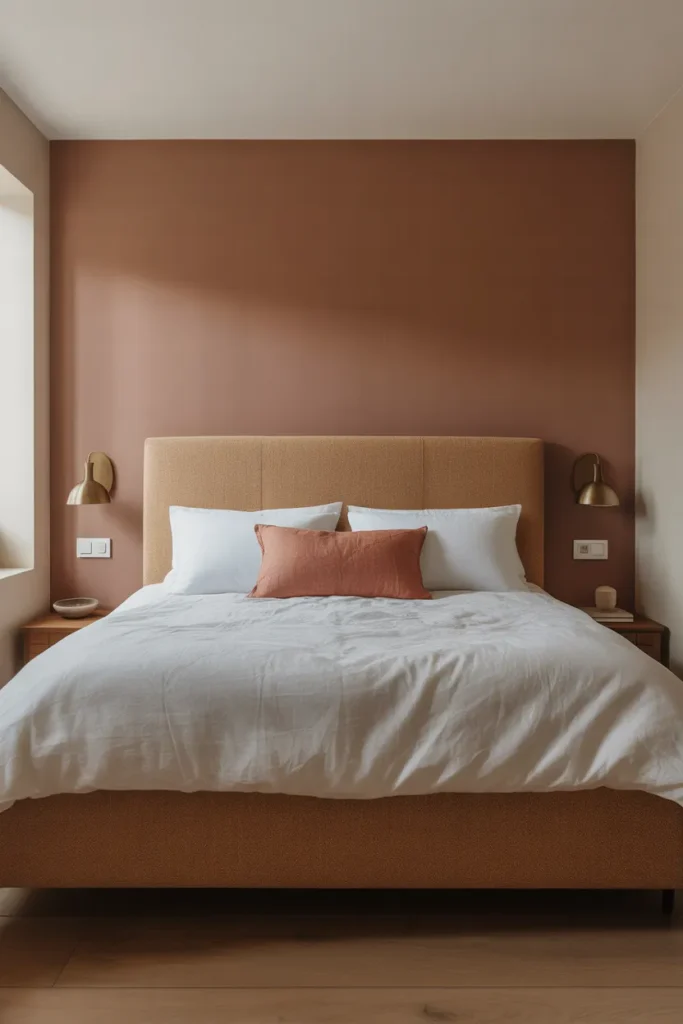
This technique works best when the rest of the walls remain white or a lighter version of the same tone. The contrast grounds the headboard area and makes the bed feel intentional, like a designed moment rather than furniture placed randomly.
Where people go wrong is choosing a color that is too saturated. In a relaxing bedroom, the goal is to lower visual stimulation, not increase it. Test paint samples at different times of day before committing, since warm-toned walls can shift significantly under artificial light.
3. Choose Warm Ambient Lighting Over Overhead Lights
The single biggest mistake in master bedroom lighting is relying on a central ceiling fixture. Overhead lighting casts unflattering shadows and signals the brain to stay alert — the opposite of what a relaxing space needs.
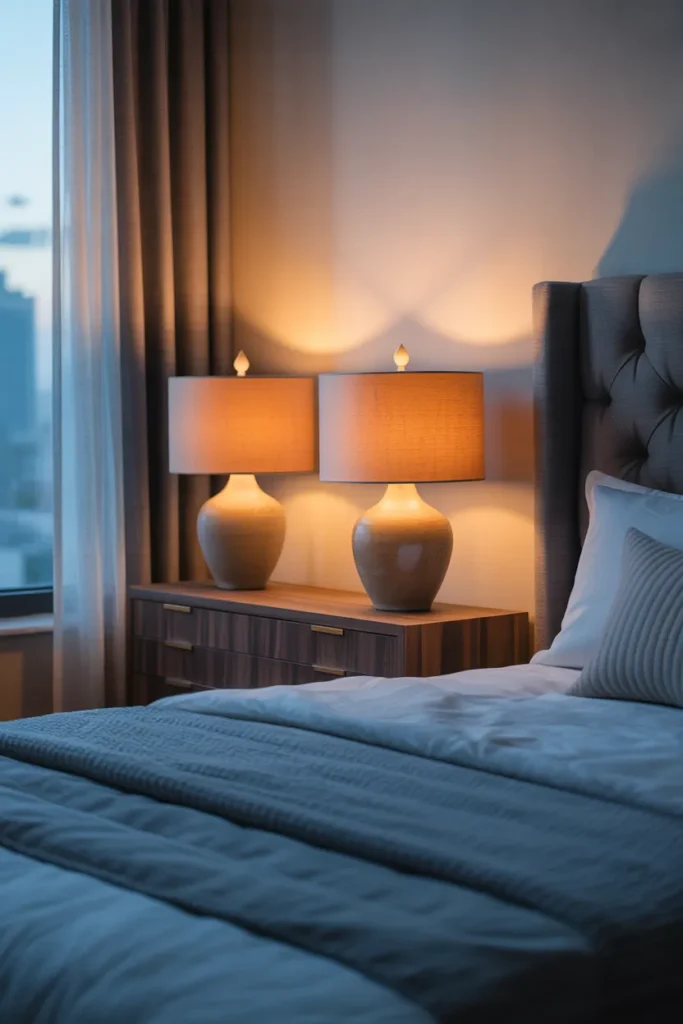
Instead, layer your lighting: a plug-in wall sconce or table lamp on each nightstand, a floor lamp in a reading corner, and dimmer switches wherever ceiling lights exist. The goal is to be able to control the intensity depending on the time of day or activity.
Warm bulbs in the 2700K to 3000K range are the standard choice for bedroom spaces. Anything cooler reads as office lighting and will undercut even the most carefully designed room. This lighting strategy is especially effective in smaller master bedrooms where a large chandelier would feel overwhelming.
4. Add a Reading Nook or Dedicated Corner for Calm
A master bedroom that serves only as a sleeping space misses an opportunity. Adding a defined reading or wind-down corner — even in a small room — gives the space a second purpose and signals that this room is designed for rest in all its forms.
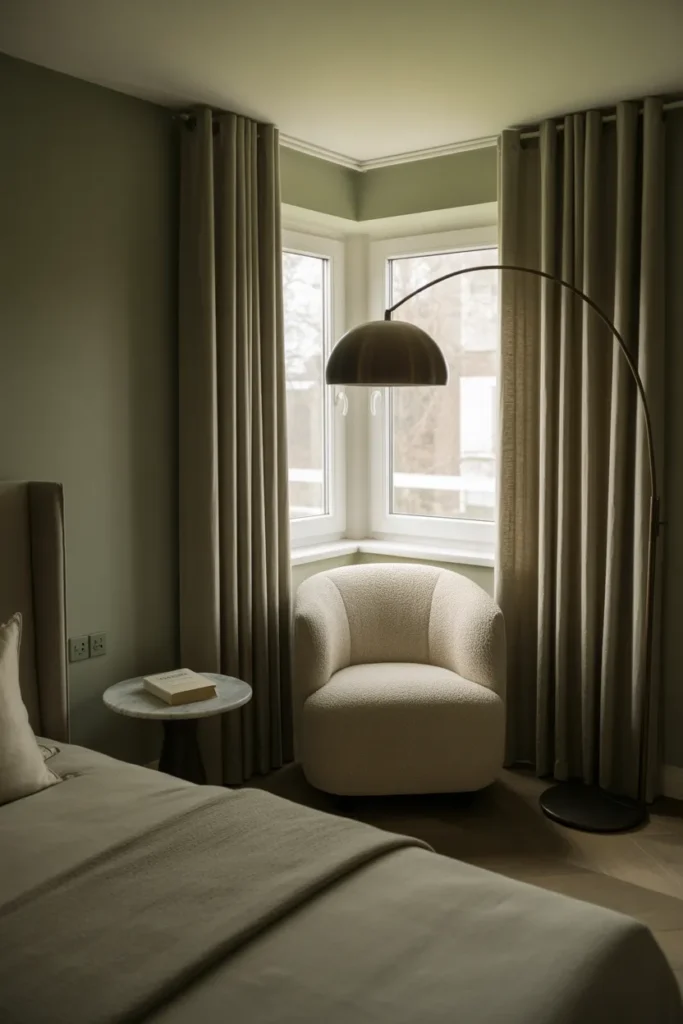
A single armchair with a side table and a floor lamp is enough. Choose a chair with a low back and soft upholstery in a tone that complements the bed. Positioning it near a window makes the space feel intentional and adds natural light during daytime use.
In rooms under 200 square feet, use a smaller accent chair or a cushioned bench with a wall-mounted reading light instead. Avoid placing the chair directly facing the bed, as this can make the layout feel confrontational and reduce the sense of calm.
5. Keep the Floor Mostly Clear for a Calm Visual Effect
Visual clutter at floor level is one of the most overlooked causes of a bedroom that feels stressful rather than relaxing. When the floor is clear, the eye moves smoothly through the space and the room automatically feels larger and more composed.
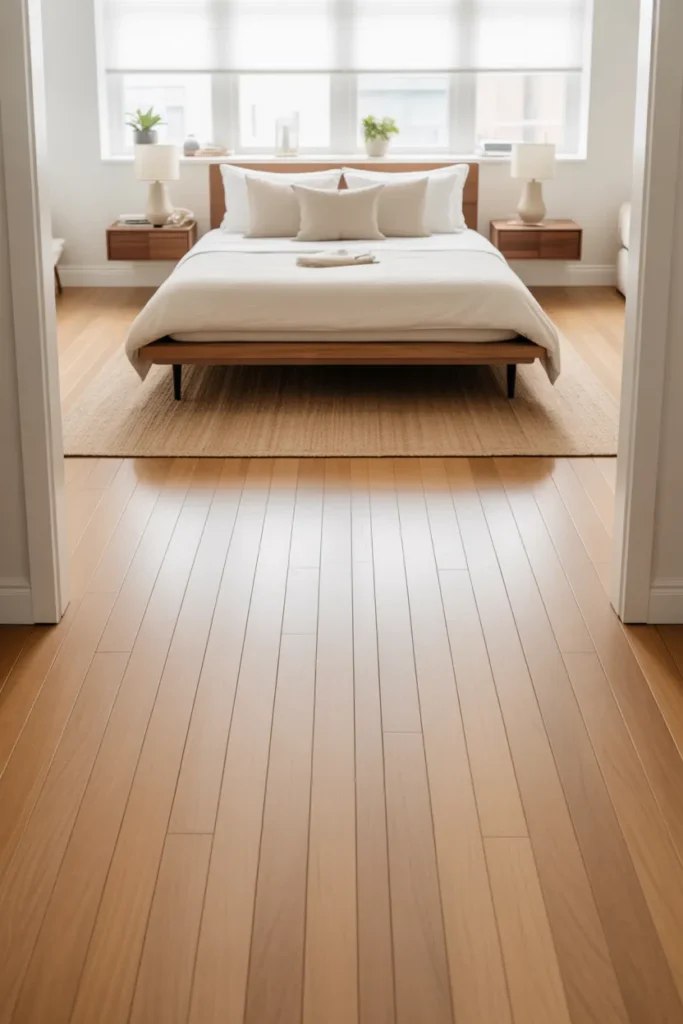
Limit floor-level items to one area rug, the bed frame legs, and one or two intentional pieces like a low bench or a single plant. Everything else — laundry, bags, extra blankets — needs dedicated storage.
A bed with built-in drawers or a solid platform base helps eliminate under-bed clutter. Floating nightstands mounted to the wall also open up floor space dramatically. This approach works especially well in master bedrooms that double as a home office or in apartments where square footage is limited.
6. Incorporate Natural Materials for Warmth Without Weight
Rooms that feel cold or sterile often lack natural materials. Adding wood, linen, rattan, or stone in small doses brings warmth into a master bedroom without making it feel heavy or overdone.
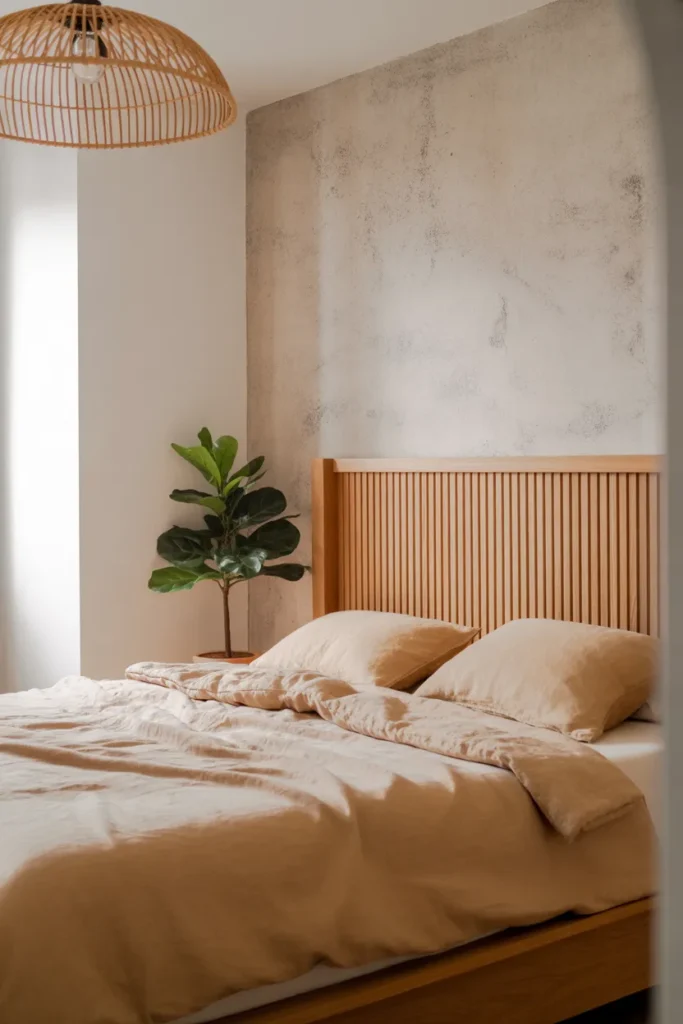
A wooden headboard, a rattan pendant light, or a stone-look ceramic lamp base are all low-commitment ways to introduce organic texture. These materials also photograph well, which matters if you ever share your space on social platforms or use it as a rental.
The mistake to avoid here is mixing too many natural materials at once. Choose one or two to lead — such as light oak wood and linen — and keep the rest of the room clean and neutral. Natural materials work best when they feel curated, not collected.
7. Use Curtains That Pool Slightly for a Soft, Luxurious Look
Window treatments are often an afterthought, but they have an outsized impact on how a master bedroom feels. Heavy curtains that hang from ceiling height and break slightly at the floor add a sense of height, softness, and luxury that blinds alone cannot achieve.
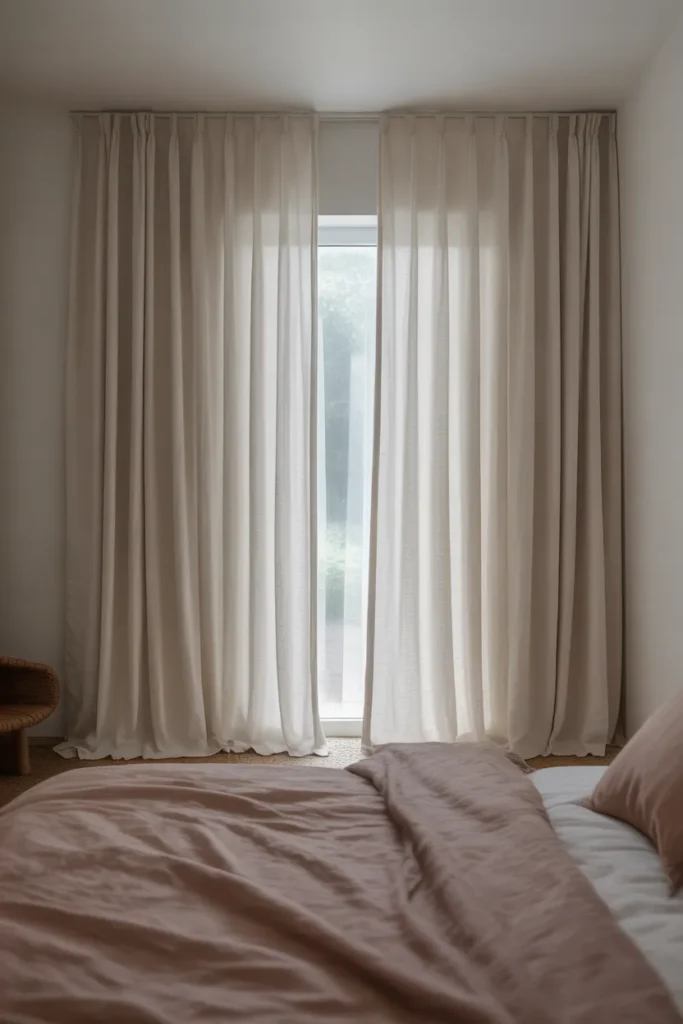
Linen, velvet, and cotton-blend curtains in neutral tones — ivory, warm white, dusty blush — work across most bedroom styles. Hanging the rod 6 to 12 inches above the window frame and using panels that extend beyond the frame on each side makes even average-sized windows look architectural.
Avoid synthetic fabrics that reflect light harshly. These cheapen the look of an otherwise well-designed room. If blackout capability is needed, use a separate roller blind behind the decorative curtain panel rather than choosing blackout curtains, which tend to look stiff.
8. Design a Minimal But Functional Nightstand Setup
Nightstands are some of the most cluttered surfaces in any home. A cozy and relaxing master bedroom decor approach means treating the nightstand as a curated surface, not a dump zone for charging cables and half-read magazines.
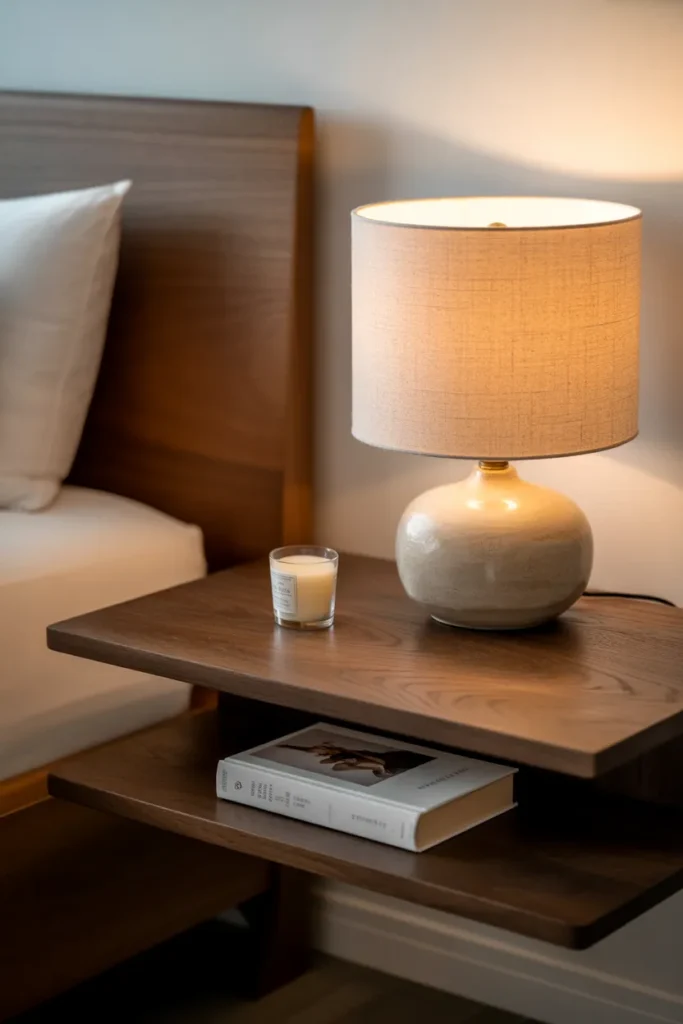
Keep it to three items maximum: a lamp, one small decorative object (a candle or small vase), and whatever is currently being read. Cords should be managed out of sight using a cable box or a nightstand with a built-in USB port and closed drawer.
The scale of the nightstand matters too. A nightstand that is too tall or too short relative to the mattress height creates an awkward proportion. The surface should sit within one to two inches of the top of the mattress for both visual balance and functional ease.
9. Introduce a Monochromatic Color Scheme for Instant Calm
A monochromatic bedroom — where all tones stay within the same color family — is one of the most reliably relaxing design strategies available. It removes visual conflict and creates a room where everything feels intentional and coordinated.
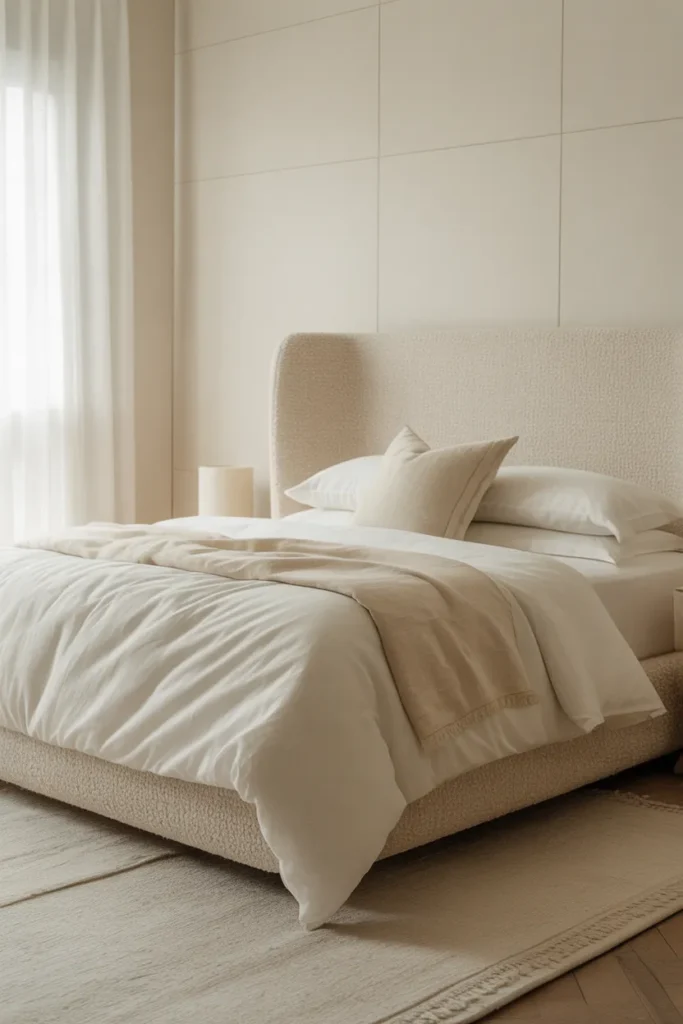
This does not mean everything must be the same shade. It means working within a single color range and varying only the depth and texture. A room done entirely in warm whites, creams, and soft taupes reads as calm, sophisticated, and timeless.
Warm tones (creams, taupes, blush) tend to feel most restful in bedrooms. Cool monochromatics like blue-grey or sage can work, but they require warmer accents — a wood element or warm-toned lamp — to prevent the room from feeling cold. This scheme works in any room size and is especially powerful in master bedrooms with limited natural light.
10. Use Mirrors Strategically to Open Up the Space
A well-placed mirror is one of the most functional and underused tools in bedroom design. It reflects light, visually doubles the sense of space, and adds a layer of considered design — all without requiring structural changes.
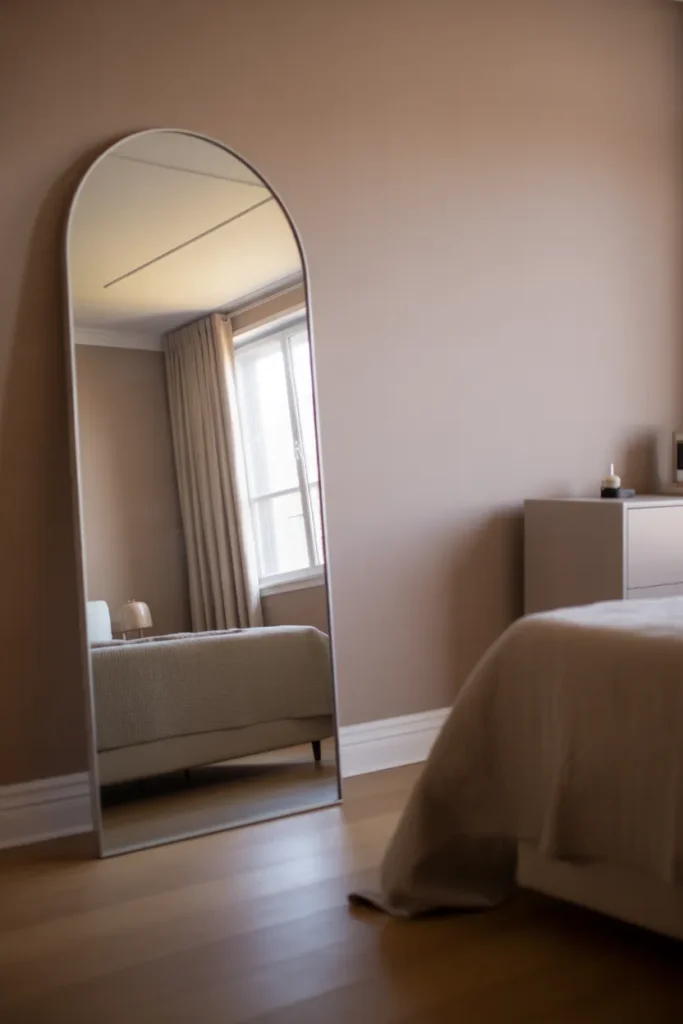
A full-length leaning mirror in a corner or a large round mirror above a dresser are both effective choices. The key is placement: position mirrors to reflect a window or a well-lit area of the room, not a wall of clutter or the ceiling.
Avoid placing mirrors directly opposite the bed, as this can feel unsettling for some people and reduces the sense of privacy in the room. Angling a leaning mirror slightly or choosing an irregular shape — arched, oval, or organic — makes the mirror feel like a design choice rather than a functional addition.
Final Thoughts
These cozy and relaxing master bedroom decor ideas are not about following trends — they are about making intentional choices that reduce visual noise and create a space that actually supports rest. Whether you are working with a large primary suite or a compact apartment bedroom, the same principles apply: layer thoughtfully, keep surfaces clear, and let light and texture do the heavy lifting.
Save this post so you can reference each idea as you work through your own space. If you found one or two ideas that clicked, that is a strong starting point — not every room needs every change. Start with the adjustment that will make the biggest difference for how your bedroom currently feels, and build from there.
Looking for more layout and decor inspiration? Explore more bedroom design guides to find ideas matched to your space and style.