
Most dining room remodel ideas fail not because of bad taste but because they ignore how the room actually gets used day to day. This guide gives you 18 specific, decision-ready remodel directions for 2026 — each with clear guidance on materials, layout, lighting, and what to avoid — so you can plan your remodel with confidence rather than trial and error. Don’t miss these dining room decor!
1. Replace Builder-Grade Lighting With a Statement Chandelier That Sets the Entire Room Tone
Lighting is the single highest-impact, lowest-disruption change available in any dining room remodel. A builder-grade flush mount or basic chandelier flattens the room and makes even expensive furniture look ordinary. Replacing it with a properly scaled statement fixture reframes the entire space without touching a wall or floor.
The rule most homeowners get wrong is scale. A chandelier should be approximately half to two-thirds the width of the dining table, and it should hang 30 to 36 inches above the tabletop in rooms with standard 8-foot ceilings. In rooms with higher ceilings, adjust upward proportionally — a fixture that floats too high loses its connection to the table and reads as an afterthought.
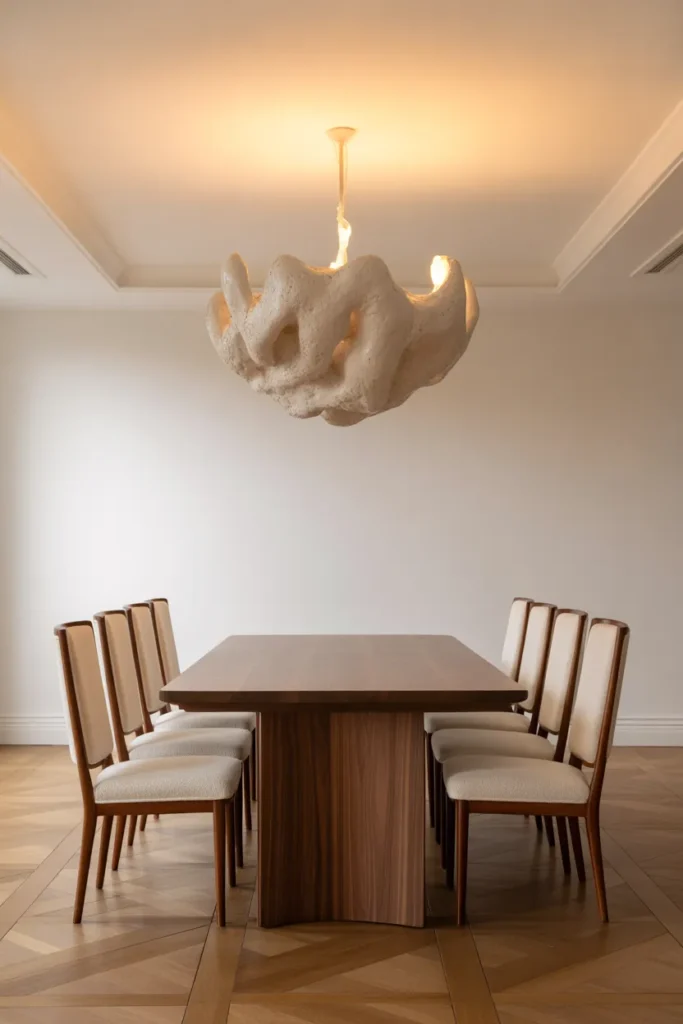

In 2026, the strongest lighting directions for dining rooms are sculptural plaster fixtures, large-format rattan or woven pendants, and multi-arm brass chandeliers with visible bulbs. Each reads differently in terms of mood — plaster gives a contemporary architectural quality, rattan brings organic warmth, and brass reads as formal but approachable.
Do not choose a chandelier based solely on how it looks in a showroom or product photo. Always verify the diameter relative to your table size before purchasing.
2. Install Wainscoting or Board and Batten to Add Architectural Character Without a Full Renovation
One of the most effective dining room remodel ideas 2026 has to offer costs a fraction of a full renovation but produces results that look structural and permanent. Wainscoting — the application of wood paneling to the lower half of a wall — and board and batten both add architectural depth that builder-grade flat walls simply cannot provide.
The practical function is as important as the aesthetic one. Wall paneling in a dining room also provides a degree of protection to the lower wall surface, which is the zone most likely to receive marks from chair backs and daily contact. This is particularly relevant in households with children or in dining rooms used frequently.
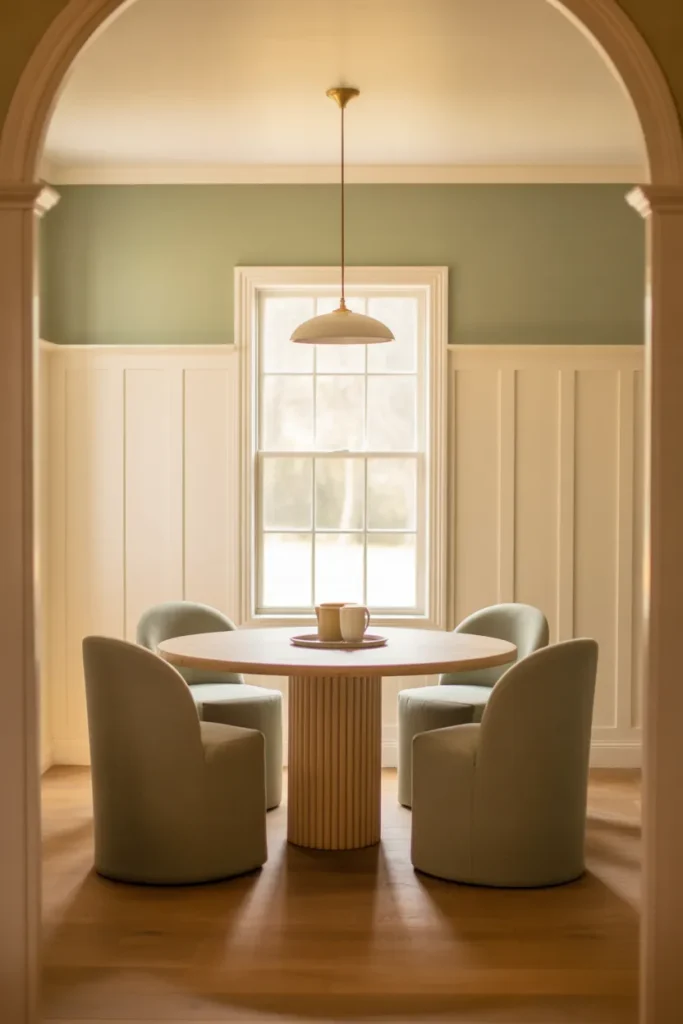
In 2026, the strongest direction is tall board and batten painted in a color that contrasts subtly with the upper wall — for example, warm white paneling against a very pale greige upper wall, or dusty blue paneling against a warm white upper zone. This two-tone approach adds sophistication without requiring heavy renovation.
Avoid overly intricate molding profiles if your dining room has low ceilings — complex paneling in a low-ceiling space reads as busy and compressive rather than refined.
3. Swap a Rectangular Table for a Round Pedestal Table to Improve Flow in Smaller Dining Rooms
Table shape is a structural decision, not a style preference. In dining rooms under 12 by 12 feet, a rectangular table forces traffic paths into tight corridors along the walls and makes the room feel like a hallway. A round table with a pedestal base — no legs at the corners — opens up floor space dramatically and allows people to move around all sides without navigating obstacles.
A round pedestal table also seats more people per square foot than its rectangular equivalent. A 54-inch round table seats four to six comfortably, and because there are no corner legs to work around, chair placement is fully flexible.
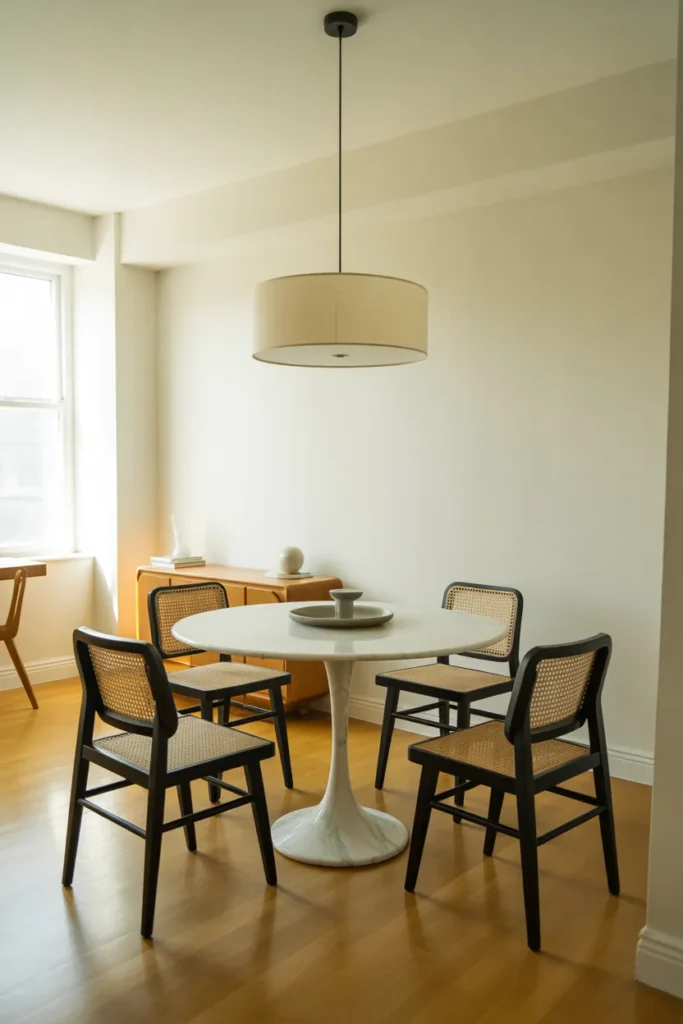
This is one of the most impactful small dining room remodel ideas available because it requires no construction. The change is in the furniture selection, not the room structure. The result, however, feels structural — the room reads as larger, more open, and better considered.
Pair a round table with a round or drum-shade pendant above. A rectangular fixture above a round table creates an unnecessary visual conflict.
4. Add a Built-In Banquette Along One Wall to Maximize Seating and Create a European Bistro Feel
A built-in banquette — an upholstered bench seat fixed against a wall — is one of the most space-efficient dining room remodel decisions possible. It eliminates the need for chairs on one or two sides of the table, which immediately opens up floor space and reduces the number of movable pieces cluttering the room.
Banquettes also allow for under-seat storage, which in smaller dining rooms and apartments is not a luxury but a genuine functional upgrade. Built-in drawers or lift-top seat panels can house table linens, serving pieces, or seasonal items that would otherwise require separate storage furniture.
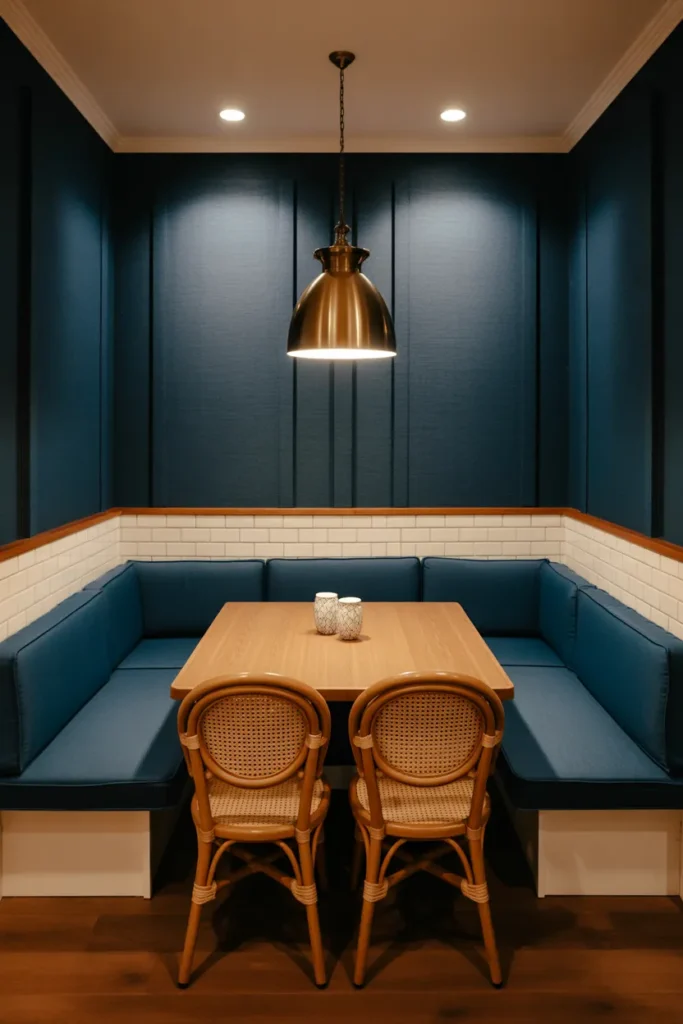
The aesthetic result — a built-in bench along one or two walls paired with chairs on the open sides — reads as deliberate and European in the best possible way. It signals that the space was designed for the specific room rather than assembled from generic furniture.
The most common mistake is building a banquette without a comfortable seat depth. A minimum of 18 to 20 inches of seat depth is required for adult comfort during a full meal. Shallower than that and the banquette will go unused regardless of how well it looks.
5. Replace Flat Ceilings With a Coffered or Tray Detail to Make the Dining Room Feel Taller and More Finished
Ceiling upgrades are among the most underutilized dining room remodel ideas in residential design. In rooms where the walls are already painted and the floors are finished, the ceiling is the one remaining surface that can add significant architectural presence with a targeted investment.
A coffered ceiling — a grid of recessed panels — adds visual depth and a sense of height even in standard 8-foot rooms. A tray ceiling, which involves a recessed center panel with a stepped perimeter, creates the illusion of a taller room by drawing the eye upward in a controlled, intentional way.
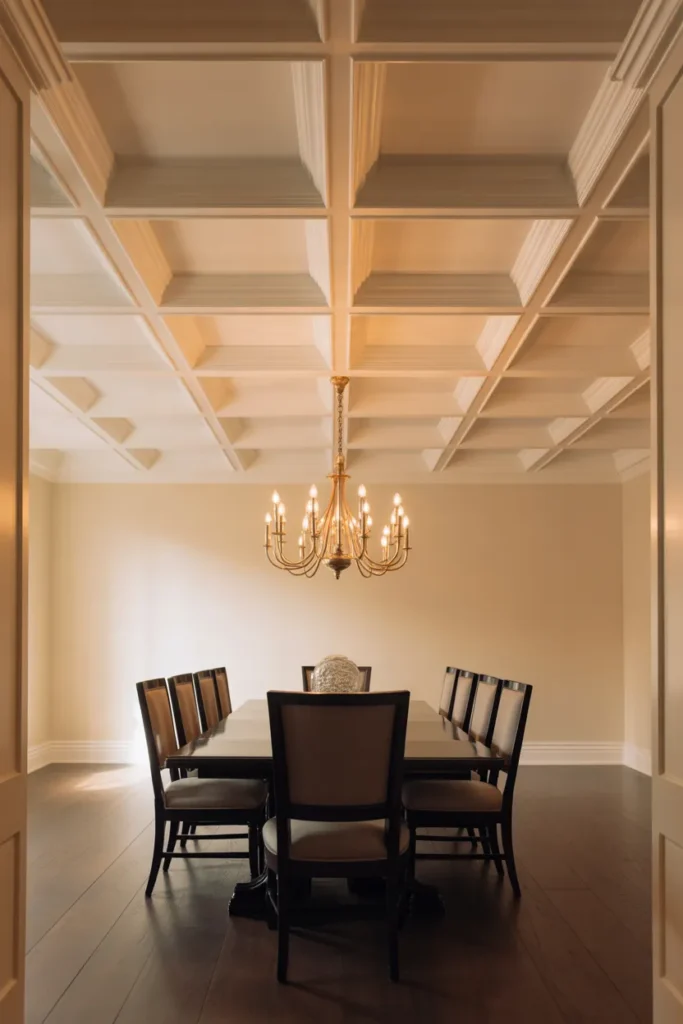
Both techniques work best in dining rooms because the dining space is typically viewed from a seated position, which naturally directs the eye upward more than in other rooms. The architectural detail overhead becomes part of the dining experience rather than background noise.
Keep the coffered or tray detail in a finish that is closely related to the wall color — stark white on white, or a subtle two-tone approach. Highly contrasted ceiling details in small rooms can feel theatrical rather than refined.
6. Install Grasscloth or Textured Wallpaper on a Single Accent Wall to Add Depth Without Overwhelming the Room
Wallpaper in dining rooms has a long and legitimate history in American residential design, and in 2026 it is returning in restrained, textural forms rather than busy patterns. Grasscloth, sisal-weave, and woven-textile wallpapers applied to a single accent wall add dimensional warmth that paint alone cannot achieve.
The single-wall application is the critical decision here. Full-room wallpaper in a dining room requires confidence in both the pattern choice and the long-term commitment. A single accent wall behind the dining table or sideboard is far more flexible — it can be updated in a future remodel without touching three other walls.
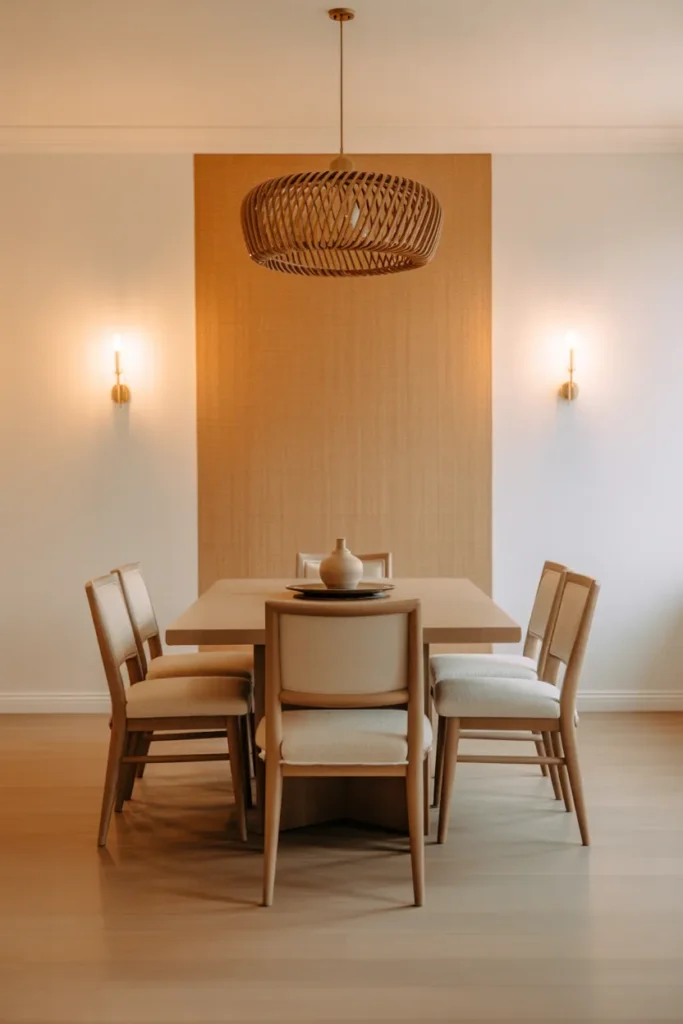
Grasscloth in particular ages extremely well. Its natural fiber construction means slight variations in tone across panels that give the wall an organic, handcrafted quality that improves rather than degrades over time. It also absorbs sound, which is a practical benefit in hard-surfaced dining rooms that tend to be acoustically harsh.
Avoid grasscloth in dining rooms with high humidity or poorly controlled ventilation — natural fibers can absorb moisture and develop mold over time if the room is not properly conditioned.
7. Upgrade to Large-Format Porcelain Tile or Wide Plank Hardwood to Ground the Entire Dining Room
Flooring is the foundation of any dining room remodel, and it is also the element most likely to be overlooked in favor of more visible surface changes. The reality is that the floor anchors every other decision in the room — furniture scale, color palette, and material pairings all read differently depending on what is underfoot.
In 2026, the strongest flooring directions for dining rooms are large-format porcelain tile in a stone-look finish and wide plank hardwood in natural or whitewashed tones. Both choices make dining rooms feel larger — large tiles eliminate the visual fragmentation of small grout lines, and wide planks reduce the number of seams visible across the floor.
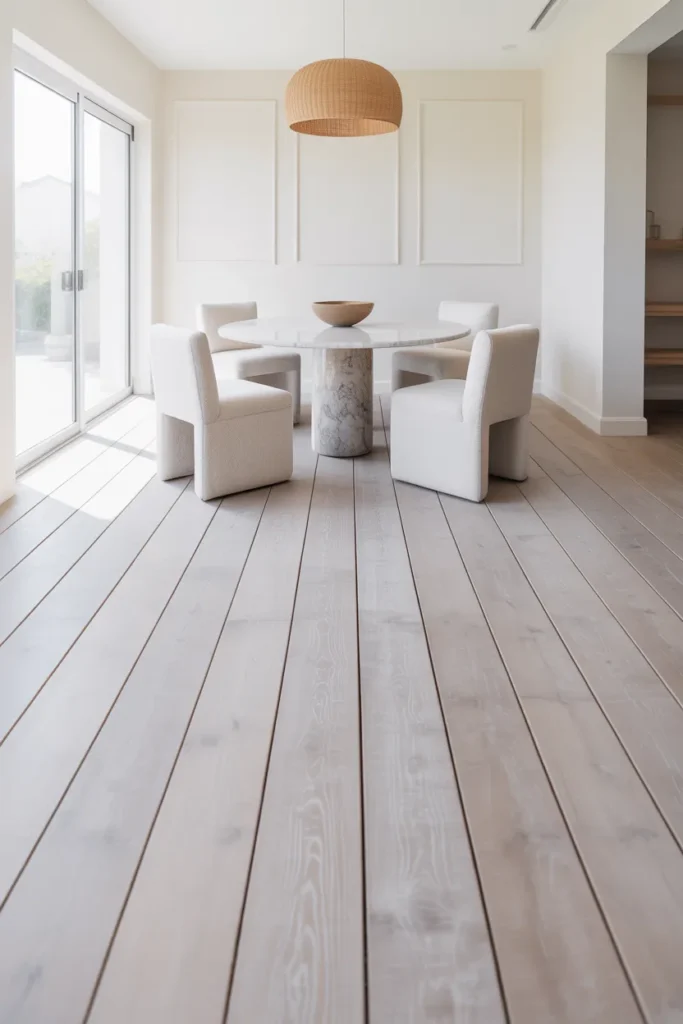
Wide plank hardwood in particular is one of the most forgiving and livable choices for a dining room. In widths of 5 inches and above, it reads as premium without being precious. It handles dropped items, chair movement, and daily cleaning well, and it pairs naturally with nearly every furniture material and color direction.
Avoid small-format tile in dining rooms — the grid of grout lines creates a busy visual pattern that competes with every other element in the room.
8. Add a Sideboard or Built-In Buffet to Solve the Storage Problem Every Dining Room Has
Most dining rooms lack functional storage, and the absence of storage forces everyday serving pieces, linens, and accessories to live elsewhere in the house. A sideboard — or better yet, a built-in buffet — solves this problem permanently while adding a grounding horizontal element that the room needs visually.
A built-in buffet along one wall is a stronger investment than a freestanding sideboard because it reads as architectural rather than furniture. It can be built to ceiling height with upper cabinets for additional storage, and it eliminates the exposed wall space behind a freestanding piece that always tends to look incomplete.
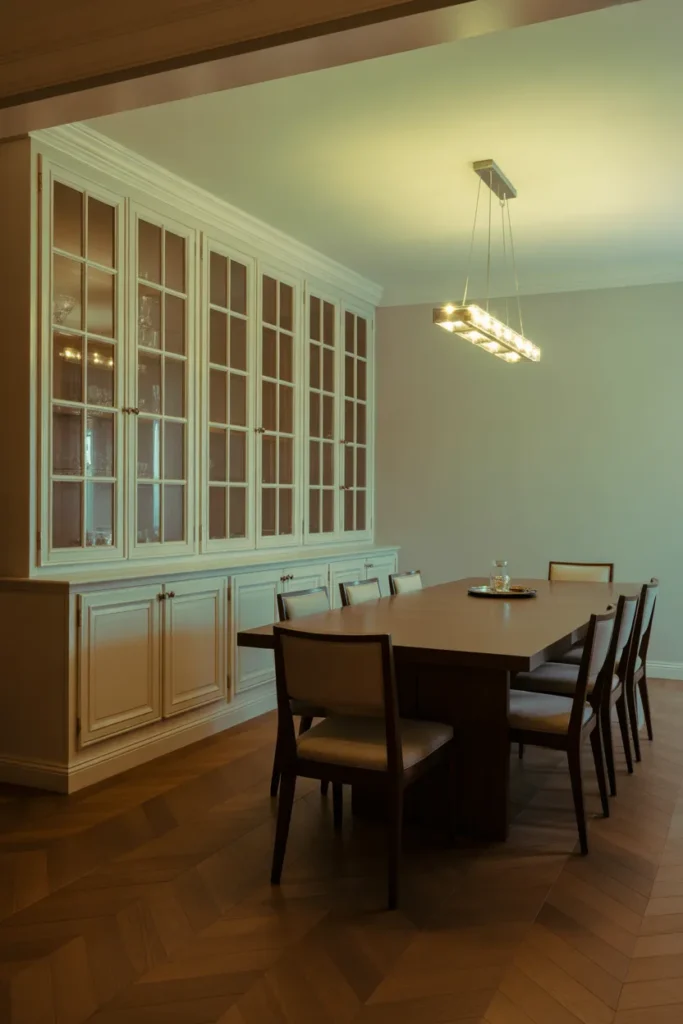
The top surface of a sideboard or buffet also serves as a dedicated staging and serving area during meals, which changes how the dining room functions during entertaining. Instead of returning to the kitchen for every dish, food can be staged on the buffet and served from the dining room itself.
Choose a buffet finish that relates to the dining table material — matching species of wood, complementary tones, or the same paint color as the surrounding trim. A sideboard that reads as a random addition undermines the coherence of the room.
9. Paint the Dining Room a Deep, Saturated Color to Create an Intimate, High-Impact Atmosphere
Deep wall colors — navy, forest green, charcoal, burgundy, plum — are among the most effective dining room remodel ideas 2026 has revived after years of all-white interiors dominating the market. In a dining room specifically, a deep saturated color on all four walls creates an envelope of intimacy that makes meals feel like events rather than routine.
The dining room is one of the few rooms in a home where a dark, saturated color consistently works because the room is used primarily in the evening under warm artificial light, which is exactly where deep wall colors perform best. The color absorbs the warm glow of the chandelier and creates a richness that pale walls cannot replicate.
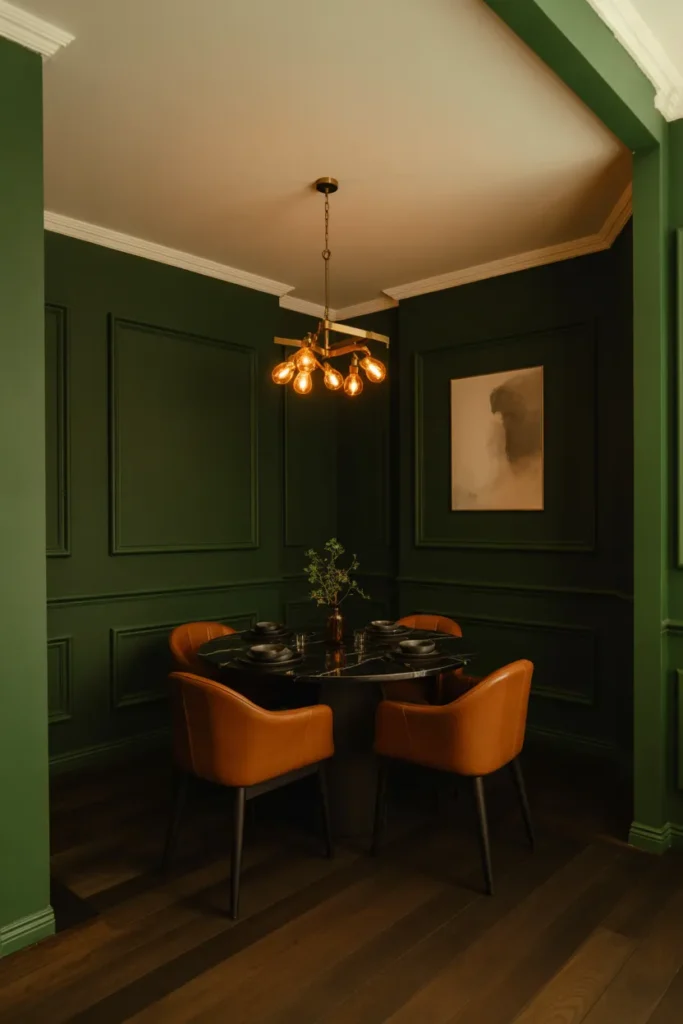
The practical consideration is that a deep-colored dining room requires adequate artificial lighting. Recessed lighting, a well-scaled chandelier, and wall sconces all working together ensure the room does not feel dim during the times it is most used.
Avoid using dark wall colors in dining rooms with very small windows and no artificial lighting plan. Without controlled light sources, a dark room becomes a dark room — not an intimate one.
10. Introduce a Statement Mirror Above the Sideboard to Add Light and Perceived Space
A large mirror in a dining room serves two practical functions simultaneously: it reflects light sources — natural and artificial — to brighten the room, and it creates a perception of additional depth that makes smaller dining rooms feel significantly larger than their actual footprint.
The placement above a sideboard is the most functional position because it reflects the chandelier and table back into the room from the optimal angle. An arched mirror in this position is particularly effective — the curved top frame softens the geometry of rectangular furniture and wall molding.
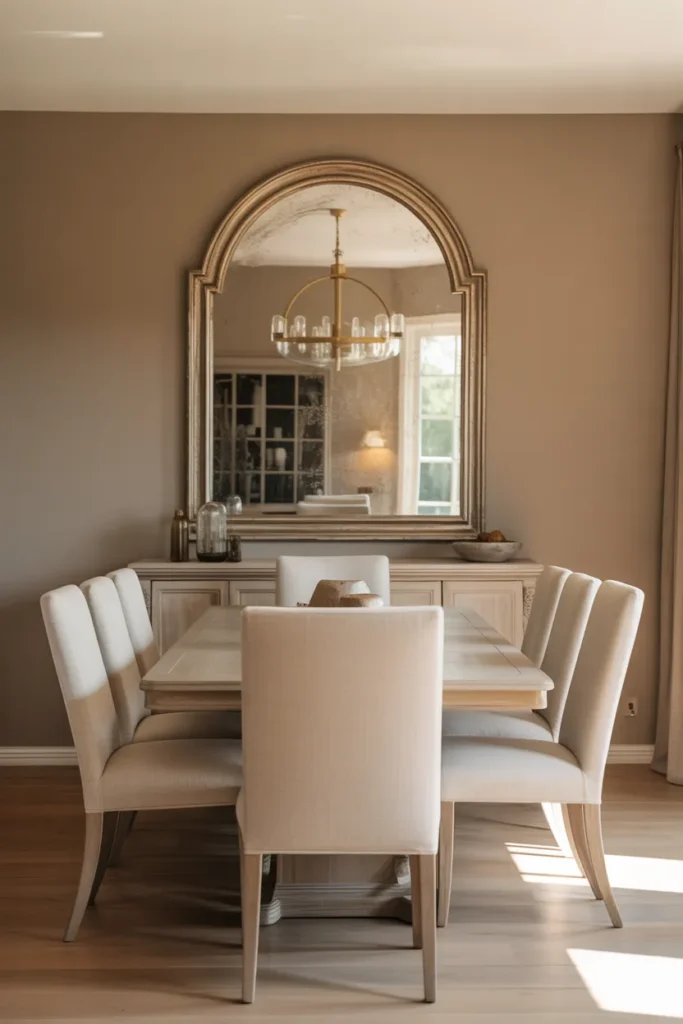
In 2026, the strongest mirror directions for dining rooms are antiqued glass with a brass frame, large-format arched mirrors with a simple plaster frame, and oversized round mirrors that contrast with the rectangular lines of the table and furniture below.
Avoid hanging a mirror directly across from a window in a dining room with a significant view — it doubles the view rather than the light, which can be disorienting. Position mirrors to reflect light sources rather than competing sightlines.
11. Create an Open-Plan Dining Area Defined by a Bold Area Rug and Pendant Lighting
In open-plan homes, the dining area often lacks clear definition — it floats between the kitchen and living zones without a sense of purpose or boundary. Defining the dining zone with a well-sized area rug and a pendant light positioned directly above the table solves this problem without any construction.
The area rug is the foundational element. It must be large enough that all dining chairs remain on the rug even when pulled out from the table — a minimum of 8 by 10 feet for a standard six-person table. A rug that allows chairs to slide off the edge looks like a mistake regardless of the quality of the rug itself.
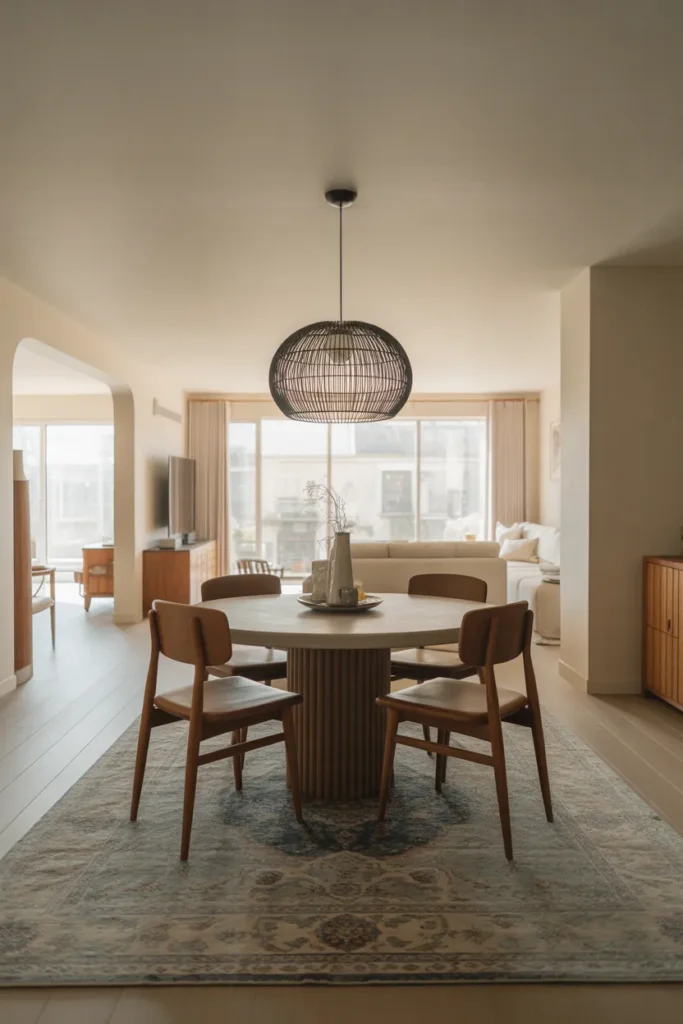
The pendant light above the table confirms and reinforces the zone defined by the rug. Together, the two elements signal “dining room” clearly within an open plan without requiring walls or dividers. This is one of the most practical open-plan dining room remodel ideas because it is entirely reversible and non-structural.
Choose a rug with enough texture or tonal variation to hide the inevitable marks and stains that come with a dining area — flat-weave rugs in light solid colors are the most difficult choice in a high-use zone.
12. Refinish or Replace Chair Upholstery to Refresh the Entire Dining Room Without Buying New Furniture
Dining chairs are the most frequently touched, most heavily used surfaces in any dining room — and worn, stained, or outdated upholstery is one of the most common reasons dining rooms feel tired rather than remodeled. Recovering existing chair frames in a new fabric can completely transform the room’s character at a fraction of the cost of new furniture.
This is a practical remodel strategy for homeowners who have structurally sound dining chairs with solid frames but outdated upholstery. A competent upholsterer can recover a standard dining chair seat pad in a few hours, and full-chair recovering — including backs — is a straightforward job for most upholstery professionals.
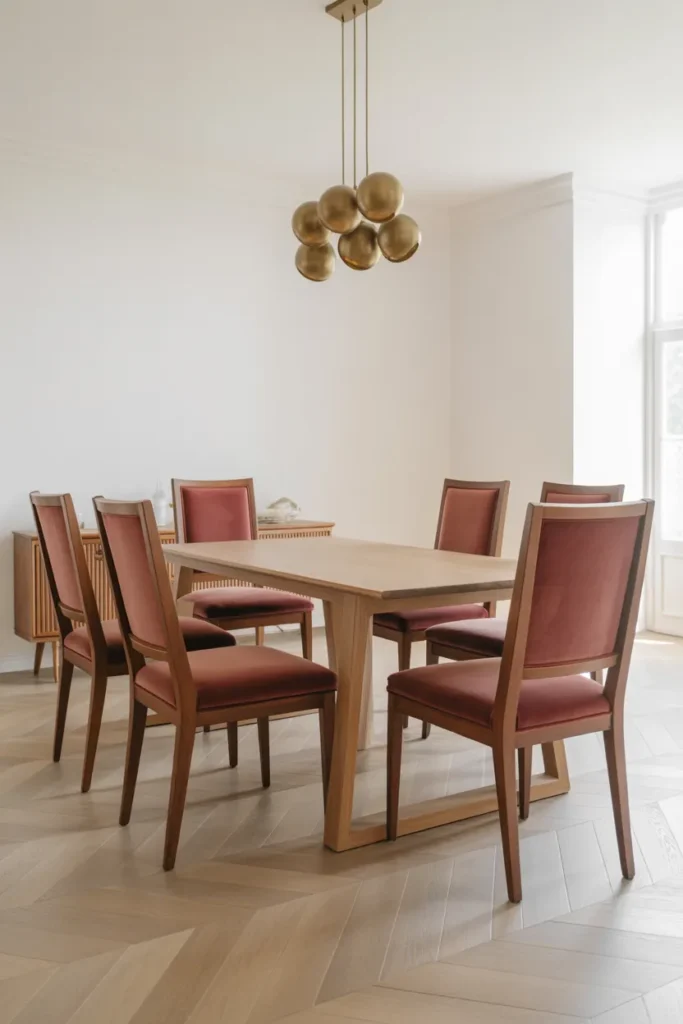
In 2026, the strongest fabric directions for dining chair upholstery are performance bouclé in cream or warm gray, velvet in jewel tones, and durable woven linen blends in natural or sage tones. All three choices read as current while being practical enough for daily dining use.
Avoid choosing fabric upholstery for dining chairs without checking the rub count — a measurement of fabric durability. Dining chairs require a minimum of 30,000 double rubs for adequate longevity.
13. Add Recessed Shelving or a Display Niche to Give the Dining Room a Built-In, Custom Feel
A recessed shelf or display niche — cut into a non-load-bearing wall — is one of the most underused dining room remodel ideas in residential renovation. It adds square footage to the usable visual field of the room without taking any floor space, and it creates a display or storage zone that reads as custom and architectural rather than added-on.
A single recessed shelf flanked by wall sconces is one of the most elegant and achievable versions of this idea. The sconces provide task lighting for the displayed objects and warm ambient light for the dining room, the niche frames whatever is displayed within it, and the combination adds significant architectural character to what might otherwise be a plain wall.
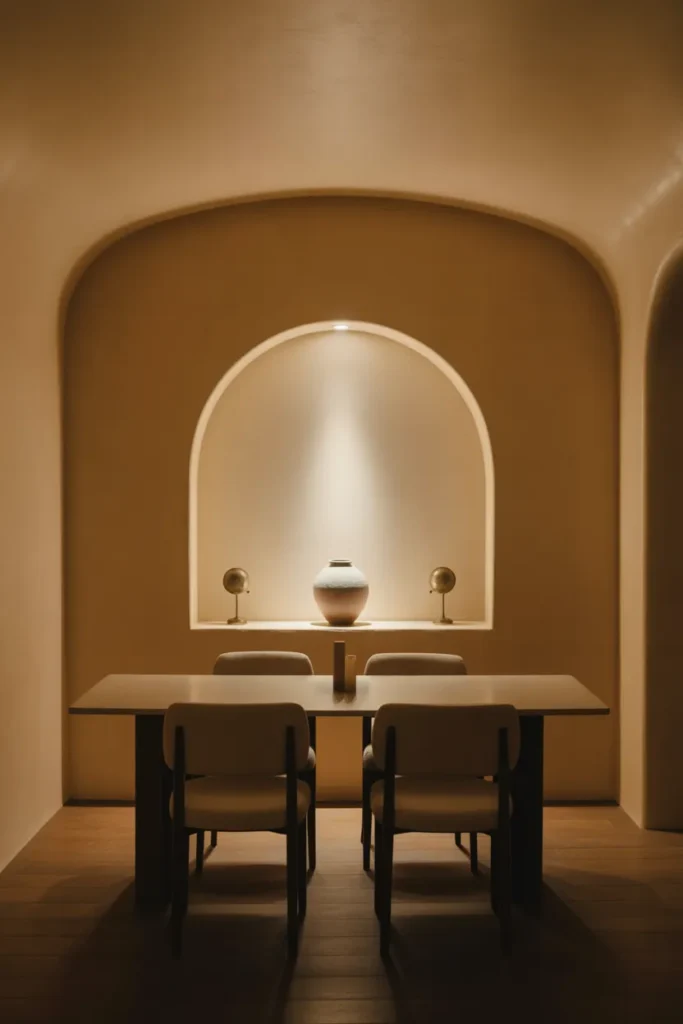
This works particularly well in dining rooms where one wall is directly adjacent to a closet or non-structural partition — the depth needed for a recessed niche is often already available within the wall cavity without major structural work.
Always work with a contractor to confirm the wall’s structural status before cutting any opening. Load-bearing walls require beam and header work that changes the scope and cost of the project significantly.
14. Switch to a Mixed-Material Table — Stone Top, Wood Base — for Elevated Visual Interest
A mixed-material dining table — combining a stone or marble top with a wood or metal base — is one of the strongest furniture upgrades available in a dining room remodel. The combination of materials adds a layered quality that single-material tables cannot achieve, and it allows the table to integrate more naturally with a wider range of chair materials and finishes.
The most practical combination is a honed stone or porcelain top — more durable and stain-resistant than polished marble — on a solid wood or powder-coated metal base. This combination performs better in daily use than a full marble table while retaining the visual sophistication of stone.
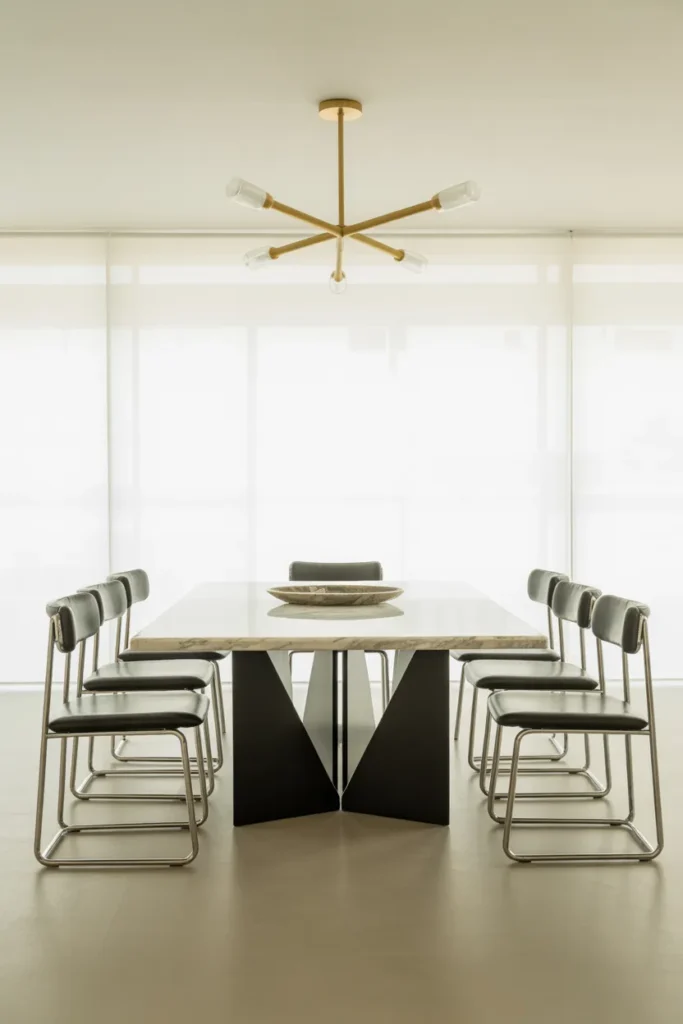
The stone top also functions as a temperature-stable surface for serving hot dishes directly from the kitchen, which a wood table cannot accommodate without protection. This is a genuine functional upgrade, not just an aesthetic one.
Scale the table base appropriately — a very delicate metal base under a large stone top looks structurally uncertain even if it is technically sound. The base should visually communicate the weight it is supporting.
15. Use Picture Frame Molding to Create a Formal, Gallery-Like Wall Finish on a Budget
Picture frame molding — thin wood trim installed in a rectangular pattern directly onto the wall surface — is one of the most cost-effective architectural upgrades available in a dining room remodel. It adds the appearance of paneled walls at a fraction of the cost of actual paneling, and when painted in the same color as the wall, it creates a refined, tonal depth that reads as high-end construction.
This technique works on any flat wall surface and requires no drywall modification. The trim pieces are adhered and nailed directly to the existing wall, painted over, and the result is indistinguishable from built-in paneling in most applications.
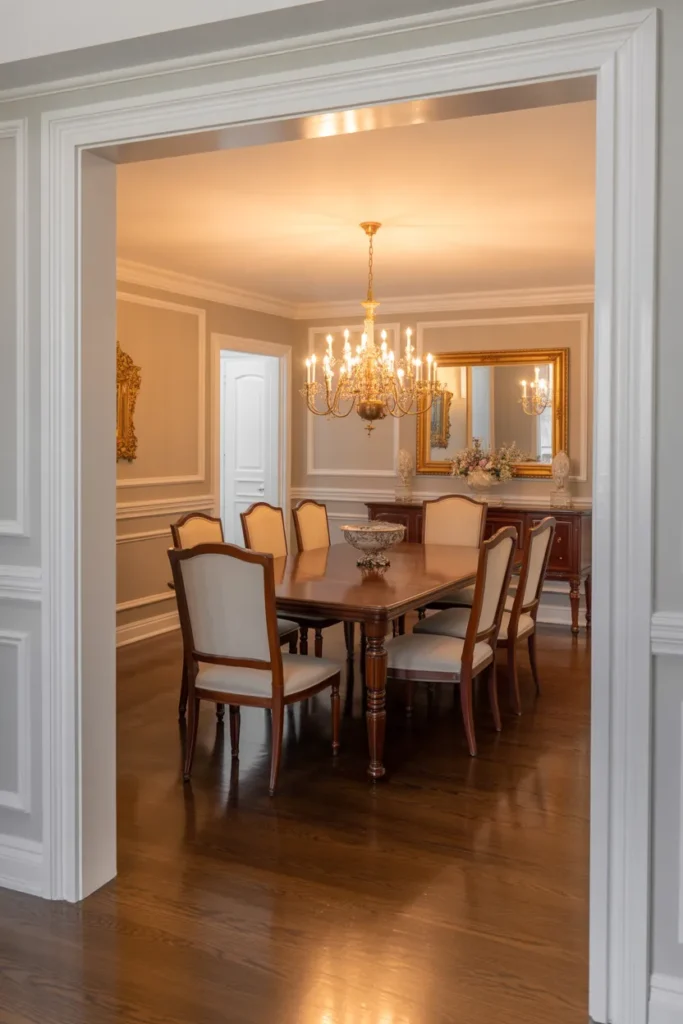
In a dining room, picture frame molding applied to all four walls paired with a chair rail creates a fully paneled look that would cost several times more if done in traditional wood panel construction. The effect is formal without being stuffy, and it adds significant perceived value to the room.
The most common mistake is spacing the frame panels inconsistently — this immediately exposes the technique as applied rather than built-in. Measure and mark all panel positions before installing a single piece of trim.
16. Convert an Underused Corner Into a Dedicated Bar or Drinks Station
A dedicated bar or drinks station in the dining room is one of the most functional dining room remodel ideas for 2026 — particularly in homes that entertain regularly. An unused corner or a section of wall adjacent to the dining table can be transformed into a purposeful, styled beverage zone that improves the flow and function of the entire room.
The simplest version requires only a bar cart or small cabinet positioned consistently in one corner with a wall-mounted shelf or sconce above it. A more committed version involves a built-in bar cabinet with a countertop, open shelving for glasses, and a small integrated wine rack. Either version removes the need to return to the kitchen during dining and entertaining.
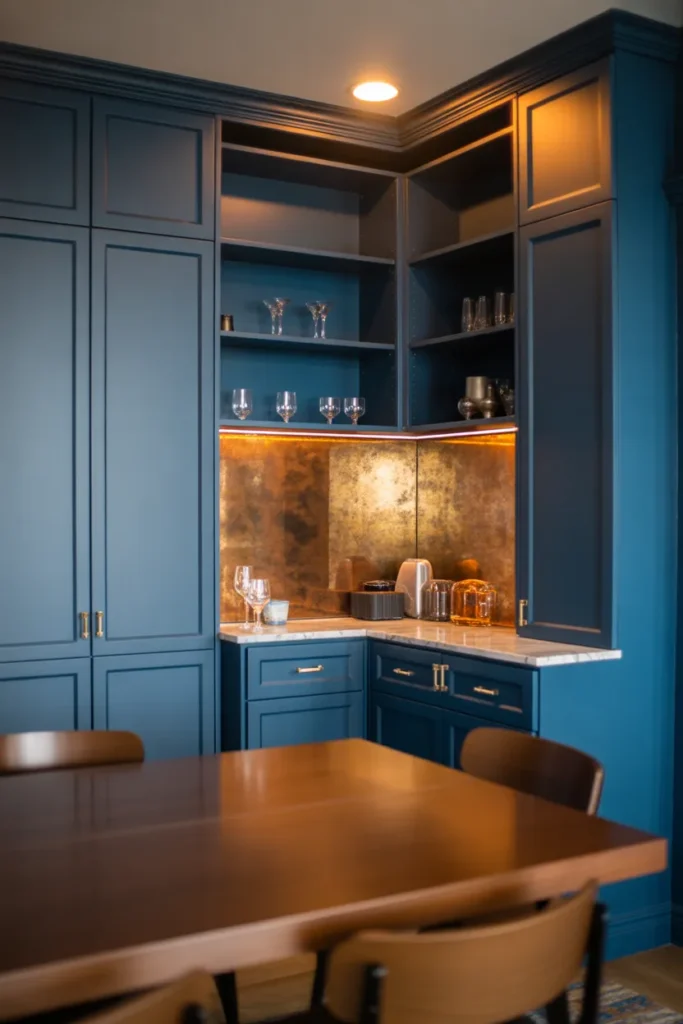
In 2026, the strongest bar station directions for dining rooms are built-in black cabinetry with brass hardware, natural wood shelving with an antiqued mirror backsplash, and painted built-ins that match the surrounding trim. All three approaches read as intentional rather than an added-on afterthought.
Ensure there is a power outlet in or near the corner designated for the bar station — a drinks station without the ability to plug in a wine cooler or a small ice maker loses much of its practical value.
17. Add Drapery Floor to Ceiling to Make Any Dining Room Feel Taller and More Finished
Window treatments in dining rooms are consistently underestimated as a remodel element. Most dining rooms have either bare windows or poorly proportioned curtains that hang at window height rather than ceiling height — and this single error makes rooms feel shorter, cheaper, and less finished than they are.
Floor-to-ceiling drapery — panels that begin at or within a few inches of the ceiling and fall to the floor — creates the visual illusion of significantly greater ceiling height regardless of the actual measurement. It also makes windows appear larger than they are, adds softness and acoustic dampening to hard-surfaced rooms, and frames the dining space with a sense of luxury that no other soft furnishing can replicate.
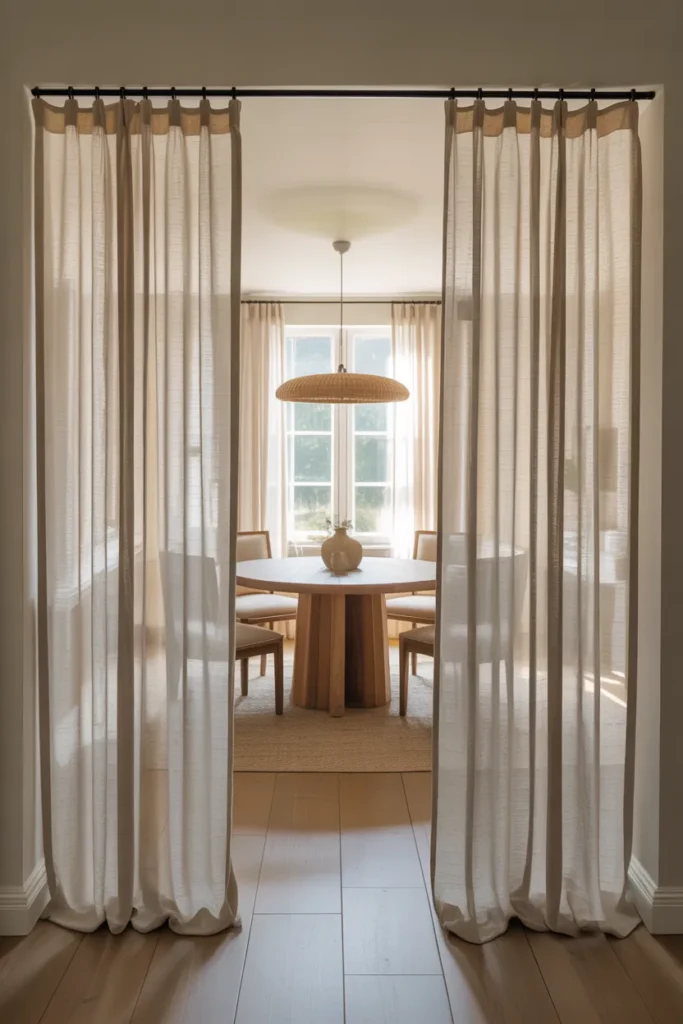
In 2026, the strongest drapery directions for dining rooms are linen or linen-blend panels in cream, warm white, or warm gray for bright, organic spaces, and velvet panels in deep jewel tones for moody, formal dining rooms. Both choices hang and move in ways that read as genuinely high-quality.
Mount the drapery rod at ceiling height, not at window frame height, and choose panels long enough to just graze or lightly pool on the floor. Any gap between the bottom of the panel and the floor — even a few inches — undermines the entire effect.
18. Reframe the Dining Room Entry With a Cased Opening or Arched Doorway for Immediate Architectural Presence
The transition from hallway or living room into the dining room is the first impression the space makes — and in most homes, that transition is a plain, square doorway with no architectural detail. Adding a cased opening with trim detail, or converting a square opening to an arched form, immediately elevates the dining room’s presence from the moment it is seen.
An arched doorway in particular signals permanence and craft. It reads as a design decision made at the architectural level rather than at the decorating level, which is precisely why it adds perceived value and character so effectively. In open-plan homes where the dining area has no true doorway, a simple cased opening with a heavy wood or plaster surround serves the same purpose of framing and defining the zone.
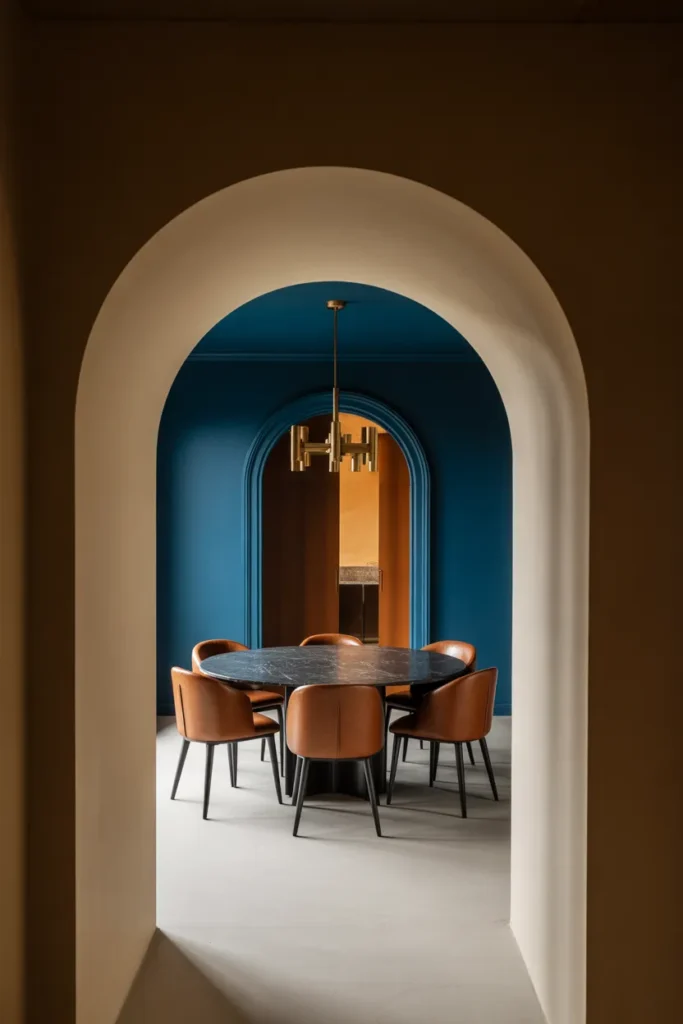
This remodel idea works in homes of any size. In smaller homes and apartments, even a modestly detailed cased opening creates a sense of rooms-within-rooms that makes the floor plan feel larger and more articulated. In larger homes, a full arched opening between the hallway and dining room becomes a defining architectural feature of the entire ground floor.
The practical considerations are primarily structural. Converting a square opening to an arch requires framing, drywall work, and finishing — the scope is manageable for most contractors but should not be approached as a weekend DIY project without relevant experience.
Final Thoughts
The strongest dining room remodel ideas in 2026 share one quality: they solve a specific problem rather than simply add decoration. Whether that problem is poor lighting, a lack of storage, an undefined open-plan zone, or plain builder-grade finishes — every idea in this guide is designed to address a real need in a practical, achievable way.
If this guide helped you identify your next remodel direction, save it to your Pinterest boards so you can return to it when you are ready to plan and budget. Share it with anyone currently working through a dining room update — specific guidance makes the process faster and the decisions easier.
For further planning, explore content on dining room lighting guides, furniture scale calculators, and open-plan layout strategies to carry your remodel forward with confidence.