
If you share your yard with a dog, you already know the tension between a space that looks good and a space that actually functions. This guide covers 14 dog friendly backyard ideas for 2026 — each one selected because it solves a specific real-world problem, from escape-proofing to turf choices to shade placement — so you can make smart decisions before you spend a dollar on materials.
1. Dedicated Dog Run That Blends Into the Landscape
A purpose-built dog run gives your dog a defined zone for high-energy movement without sacrificing the rest of your yard. The key difference between a run that works and one that looks like an afterthought is how it is bordered: gravel or decomposed granite on the floor, cedar or horizontal-slat fencing on the sides, and a planted buffer of ornamental grasses between the run and the main lawn.
This layout works especially well for medium and large breeds that need room to sprint but can destroy soft turf in weeks. Place the run along a side yard or fence line rather than cutting into the center of the garden — this keeps the primary outdoor living zone open and usable.
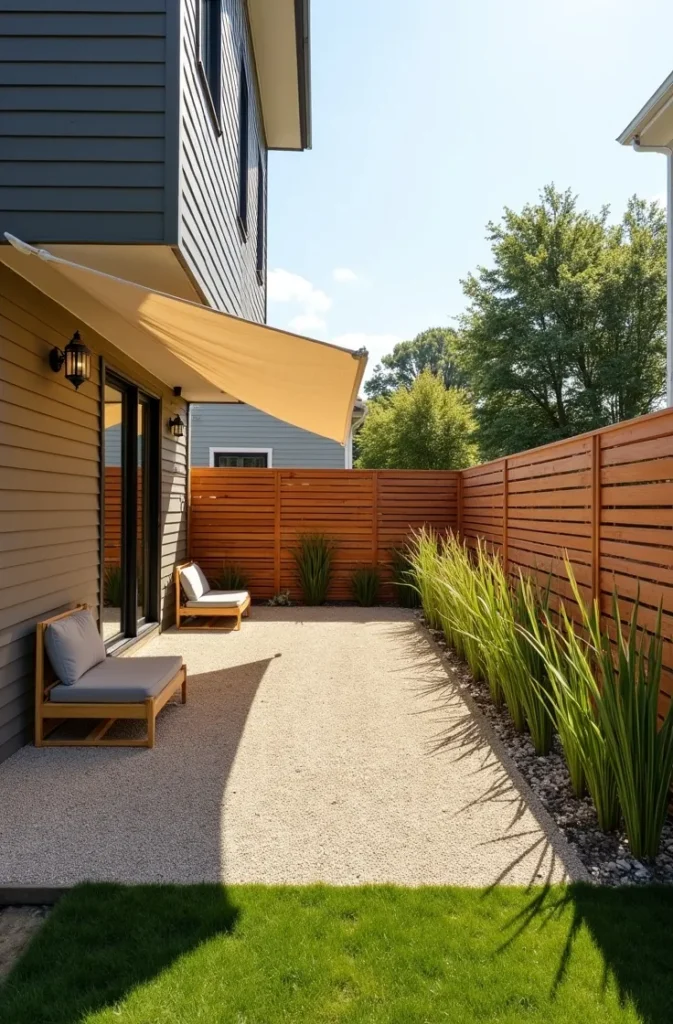

The most common mistake is building a run that is too narrow. Anything under six feet wide feels like a cage to most dogs and does not allow the lateral movement they need. A minimum of eight feet wide and twenty feet long gives a working run without dominating the yard.
Use a covered section at one end — a simple shade structure or planted pergola — so your dog has weather protection without you needing to bring them inside during rain or high sun.
2. Zoned Backyard With a Separate Dog Area and Human Living Space
Zoning is the most effective structural decision you can make in a dog friendly backyard. Instead of letting the yard function as one undivided space, divide it into at least two zones: a human zone with seating and dining, and a dog zone with turf, a water station, and a digging spot.
The division does not need to be a wall or a fence — a change in material (from pavers to artificial turf), a low-profile raised bed border, or a simple gravel path acts as a visual and behavioral boundary. Dogs learn zones quickly when the materials underfoot are distinct.
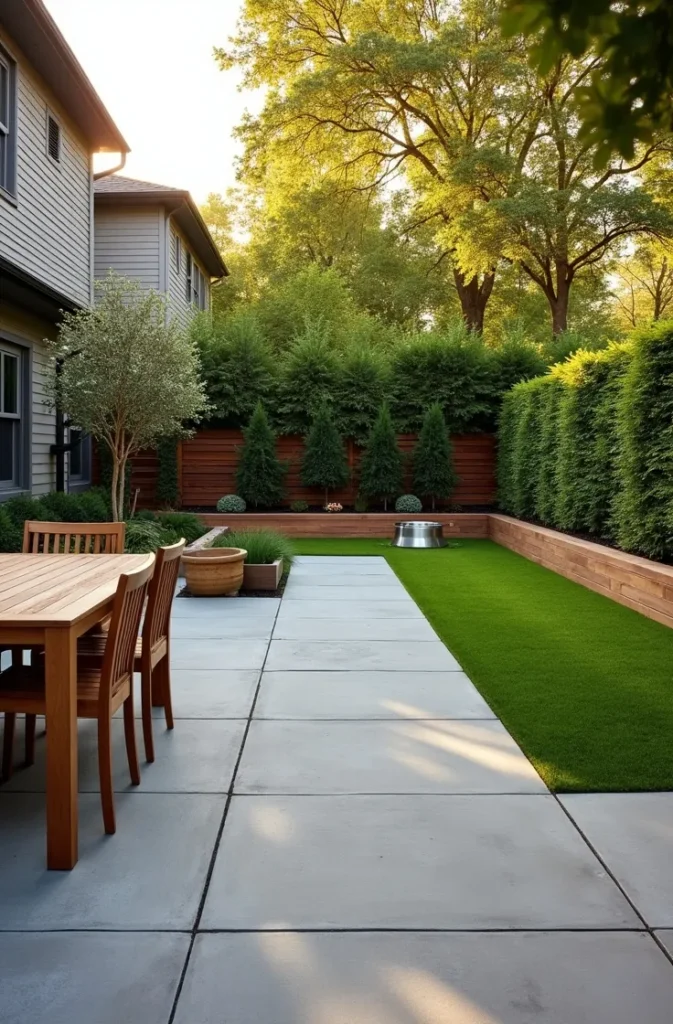
This layout is ideal for backyards over 800 square feet and for homes with more than one dog. Smaller yards can still use this principle scaled down — a corner dog zone separated by a low cedar border planter achieves the same result in a 400-square-foot space.
Avoid placing the dog zone directly behind the seating area. Dogs naturally want to stay near their people, so a side-by-side arrangement — human zone on the left, dog zone on the right — keeps proximity without the dog running through the dining space to access their area.
3. Artificial Turf Dog Yard With Drainage Built In
Artificial turf designed for dogs is one of the highest-return investments in a dog friendly backyard for 2026, but only when it is installed over the right base. Standard turf installation over compacted soil traps odors and moisture. The correct build uses a crushed rock drainage base of at least three inches, a weed barrier below it, and an antimicrobial-infilled turf product on top.
This setup works in any climate and any yard size. It is the right choice for yards where natural grass is impossible to maintain due to dog traffic, poor soil, shade, or a combination of all three. It is also the right choice for renters who want a temporary installation that can be rolled up on move-out.
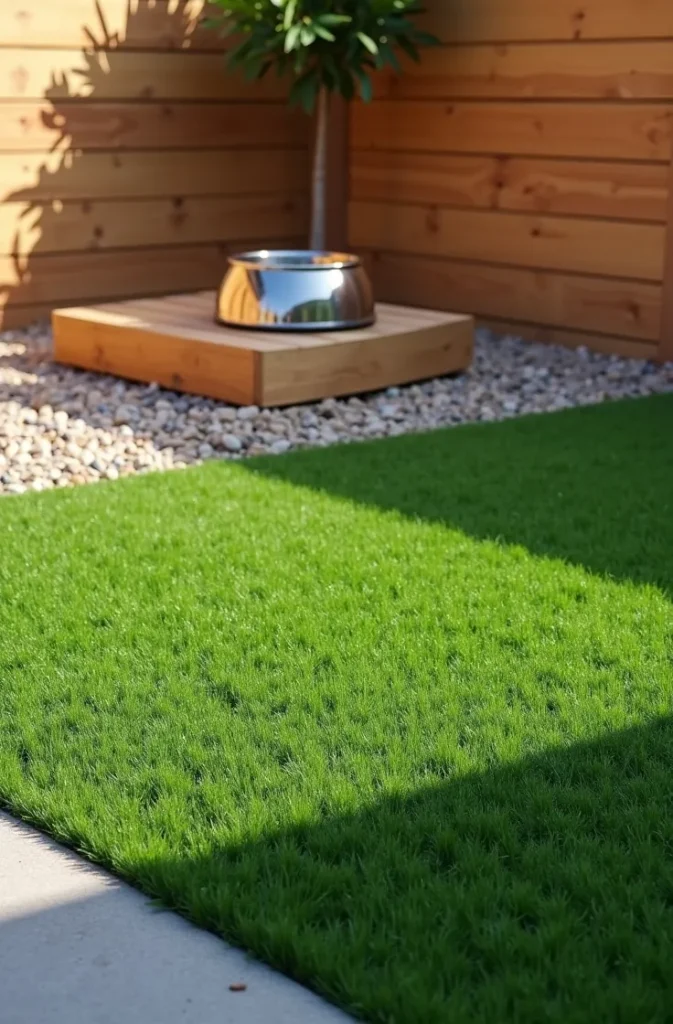
The mistake most homeowners make is choosing a turf product based on appearance alone. For dog use, you need a blade height of 1.5 to 1.75 inches and an open-weave backing that allows rapid drainage — these specs matter more than color or pile density.
Border the turf with a clean concrete or cedar edge to prevent lifting at the corners and to give the installation a finished look that reads as designed rather than installed.
4. Dog-Safe Native Plant Border That Protects the Lawn Edge
A native plant border along your fence line solves three problems at once: it gives dogs a natural barrier that discourages fence-running, it eliminates the gap between the fence base and the soil where digging starts, and it creates a finished garden look without requiring irrigation.
Select plants that are non-toxic to dogs and sturdy enough to handle occasional contact. In most USA climates, this means native ornamental grasses, switchgrass, blue grama, black-eyed Susan, and echinacea — all dog-safe and low-maintenance. Avoid oleander, sago palm, azaleas, and daylilies, which are among the most common toxic plants found in USA backyards.
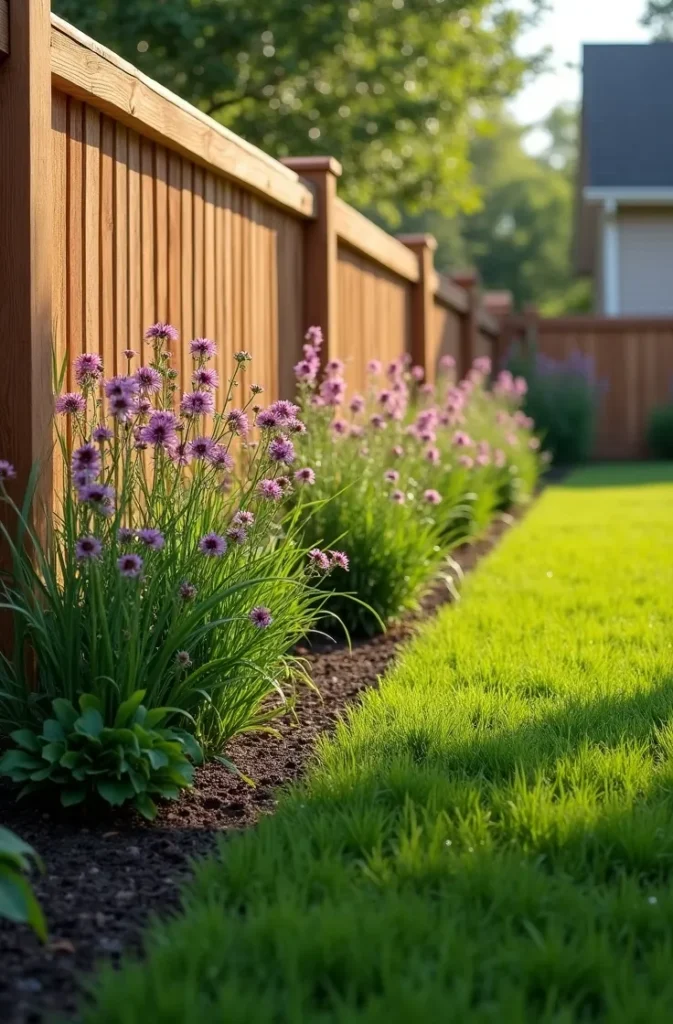
Plant the border at least eighteen inches deep so the root mass fills the soil gap at the fence base quickly. A shallow border of six-inch plants does not discourage digging — it just gives the dog something to push through.
This approach works in yards of any size and is particularly effective for dogs that patrol the fence line. Once the plants establish and fill in, most dogs stop patrolling because the visual trigger of the fence gap is removed.
5. Shaded Dog Lounge Corner With Built-In Water Station
Dogs need shade access during any outdoor time in summer, and most backyards underdeliver on this. A dedicated shaded lounge corner — a pergola, sail shade, or cantilevered umbrella over an outdoor dog bed or raised cot platform — gives your dog a go-to rest zone and keeps them from retreating inside on hot days.
Pair the shade structure with a recessed or flush-mounted water bowl at ground level, fed by a quick-connect hose fitting so it stays full without carrying a pitcher back and forth. A raised cot-style dog bed under the shade holds up better than foam beds outdoors and elevates the dog off hot paving.
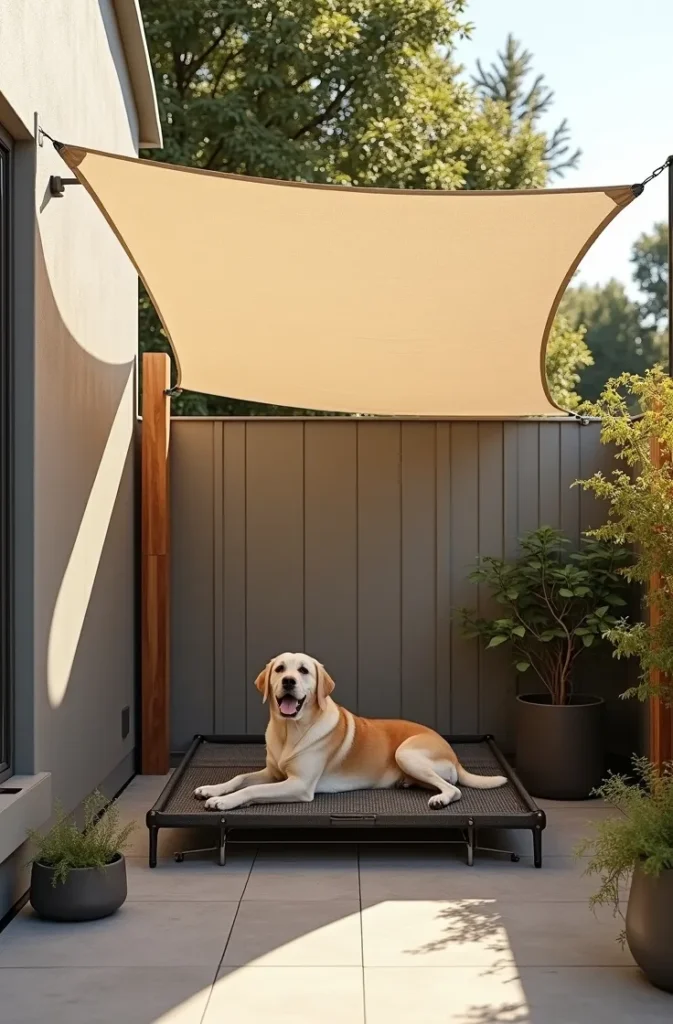
This layout works in any corner of the yard and can be as simple as a mounted wall umbrella and a pea gravel floor or as built-in as a pergola with a concrete base and a tiled water feature. Scale to your budget and yard size — the function is the same at any investment level.
Place the lounge corner with sightlines to the main living area so your dog can see the family. Dogs placed in shaded corners with no view of activity will not use the space voluntarily — sightline access is what makes a dog zone actually function.
6. Escape-Proof Fence System Using Coyote Rollers and Dig Guards
An escape-proof backyard perimeter is the most important safety investment in any dog friendly backyard idea for 2026, and it requires two distinct interventions: top-of-fence escape prevention and base-of-fence dig prevention.
Coyote rollers — spinning PVC cylinders mounted along the fence top — prevent dogs from getting grip to pull themselves over. They work on wood, vinyl, and chain-link fencing and are invisible from ground level. For the fence base, a galvanized wire mesh apron staked flat into the soil along the interior perimeter stops digging before it reaches the fence post.
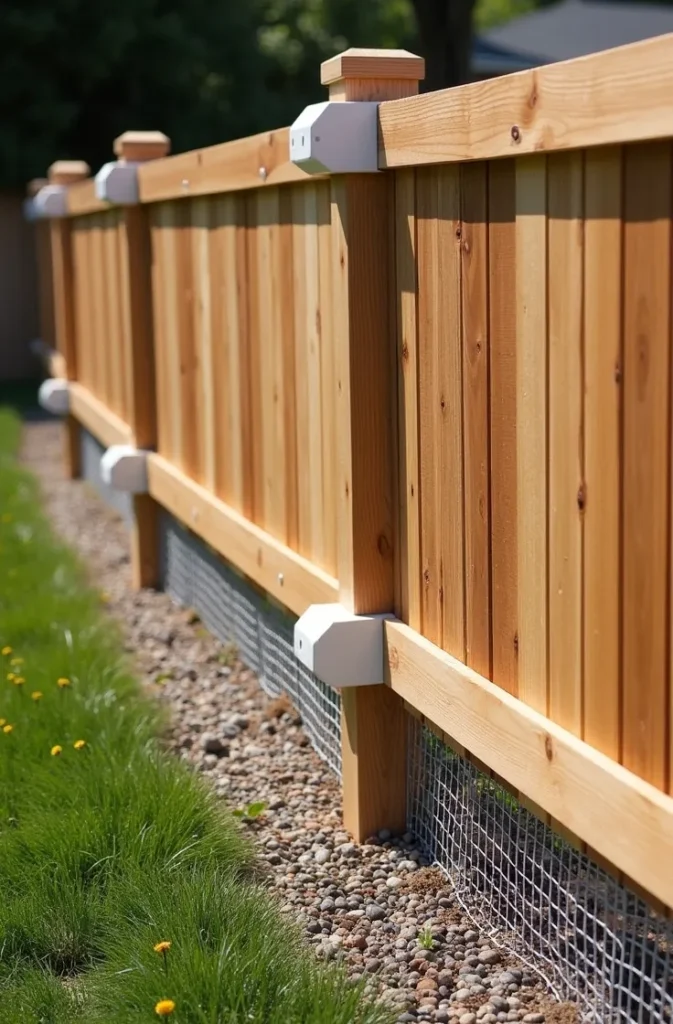
This system is the right choice for any breed with a history of escape attempts, high prey drive, or above-average jumping ability. It is also the right choice for any backyard that backs up to a street, alley, or open space where an escaped dog faces traffic risk.
The most common error is addressing only one of the two escape routes. A dog that cannot jump over will dig under. A dog that cannot dig under will find the highest point and try to climb. Both interventions need to be in place simultaneously to make the perimeter reliable.
7. Raised Vegetable Garden Beds Dog-Proofed With Cedar Rail Borders
Growing food in a yard with a dog is completely achievable when the vegetable beds are raised and bordered correctly. A standard twelve-inch-high raised bed does not stop most dogs — they step or jump in without hesitation. A thirty-inch-high raised bed on legs, or a standard eighteen-inch bed enclosed within a low cedar rail fence at thirty-six inches, is the effective threshold.
The rail fence approach is the better visual choice because it frames the garden zone, gives the yard a defined structure, and works at any scale from a single bed to a full kitchen garden. Use smooth-top cedar rails without sharp edges — dogs will brush against the border constantly, and rough cuts cause repeated skin abrasion.
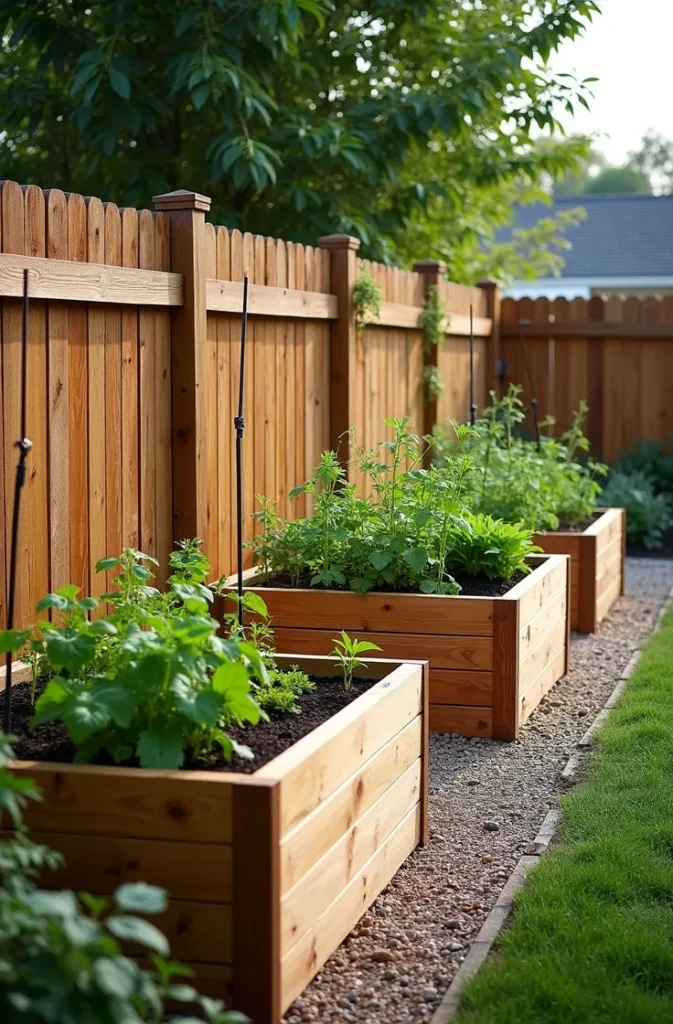
This layout is essential for any yard where dogs have unsupervised access to the garden. Even well-trained dogs will dig in loose, irrigated garden soil when left alone — the smell of fertilizer and moist earth is too strong a draw to resist through training alone.
Position the beds along the back fence rather than in the center of the yard so the dog has the maximum open running space and the garden has a natural backdrop.
8. Paw-Friendly Paving Layout That Stays Cool in Summer Heat
Standard concrete and dark pavers can reach 150 degrees Fahrenheit on a summer afternoon, making them dangerous for dog paws. A dog friendly backyard paving plan for 2026 uses lighter-colored materials with lower heat retention: light buff concrete, natural flagstone, pea gravel, or composite wood decking in a light tone.
Arrange the paving in a pattern that mixes materials — flagstone stepping stones set into pea gravel, or a light concrete path flanked by wood deck sections — so the dog always has a cooler surface option underfoot when moving across the yard. This is more practical than replacing all paving because it works with an existing layout.
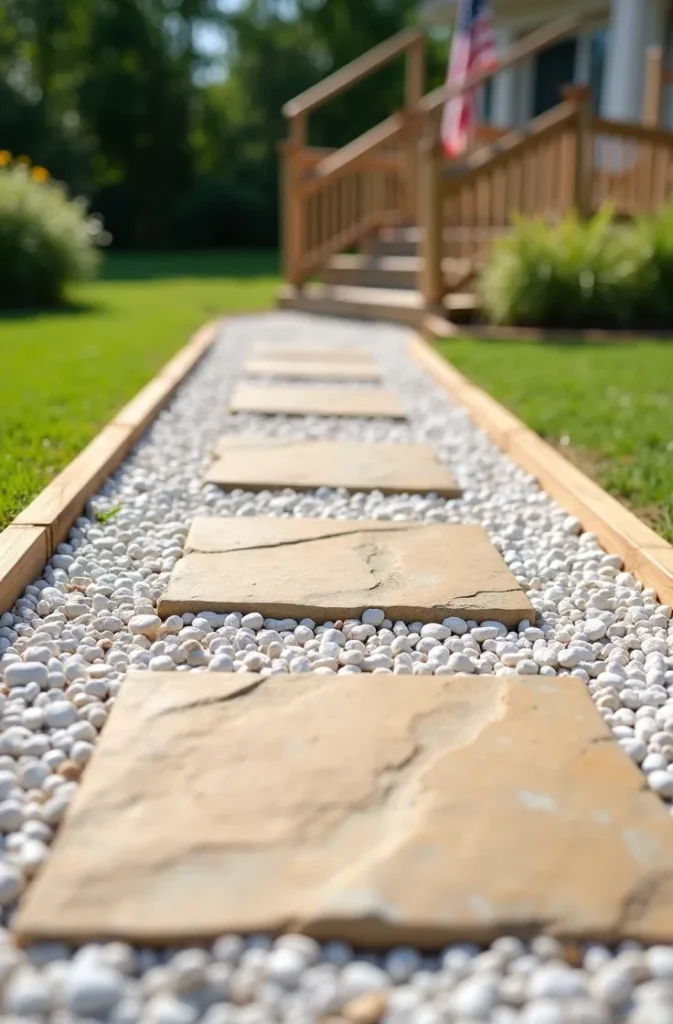
Pea gravel deserves a specific call-out here: it stays significantly cooler than solid paving, drains instantly, and is gentle on paws. Its one drawback is that it scatters easily, so contain it within a cedar border or metal edging at all perimeter transitions.
Avoid rubber mulch as a paving alternative for dog areas — it retains heat nearly as much as asphalt and is not safe if ingested in quantity, which most dogs will attempt at least once.
9. Dog Wash Station Built Into the Exterior Wall or Fence
An outdoor dog wash station eliminates one of the biggest friction points in dog ownership: the muddy-paws-through-the-house problem. A wall-mounted or fence-mounted wash station with a handheld sprayer head, a warm water hookup, and a teak or composite wood deck underfoot solves this at the transition point between yard and house.
Position the station at the gate or door your dog uses most frequently to re-enter the house. This makes washing a natural step in the return routine rather than a separate detour. A mounted towel hook and a drain channel in the deck underfoot complete the setup without adding equipment.
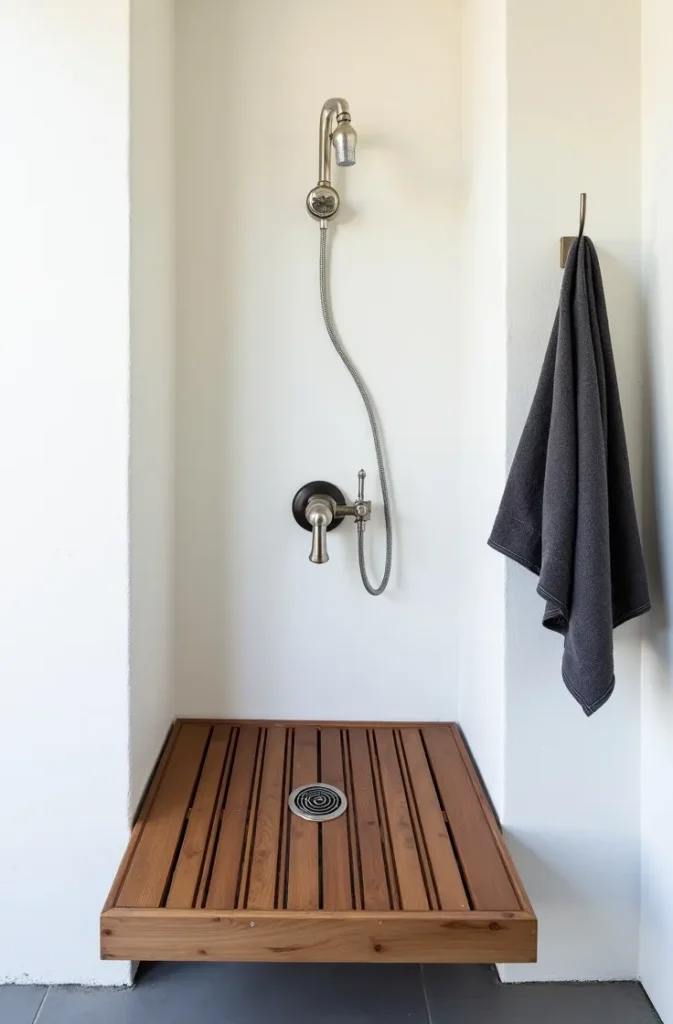
This idea works at any budget level — a basic version is a hose bib with a handheld sprayer attachment and a rubber mat, which costs very little and is fully functional. A built-in version with a hot and cold mixing valve and tiled surround is a premium upgrade that adds lasting value to the property.
The one detail most installations miss is the drain. Without a drain channel or a slight slope away from the house, wash water pools at the threshold and creates a muddy entry anyway.
10. Digging Zone That Redirects Natural Dog Behavior
A designated digging zone is one of the most effective and underused dog friendly backyard ideas available. Instead of fighting a natural behavior, you redirect it to a specific area: a defined pit filled with loose sandy soil or play sand, bordered with cedar or stone, and positioned away from the main planting beds.
Dogs trained to use a digging zone will use it consistently, especially if you bury toys or treats in the sand during the training period. The process takes two to three weeks of consistent reinforcement and almost completely eliminates digging elsewhere in the yard.
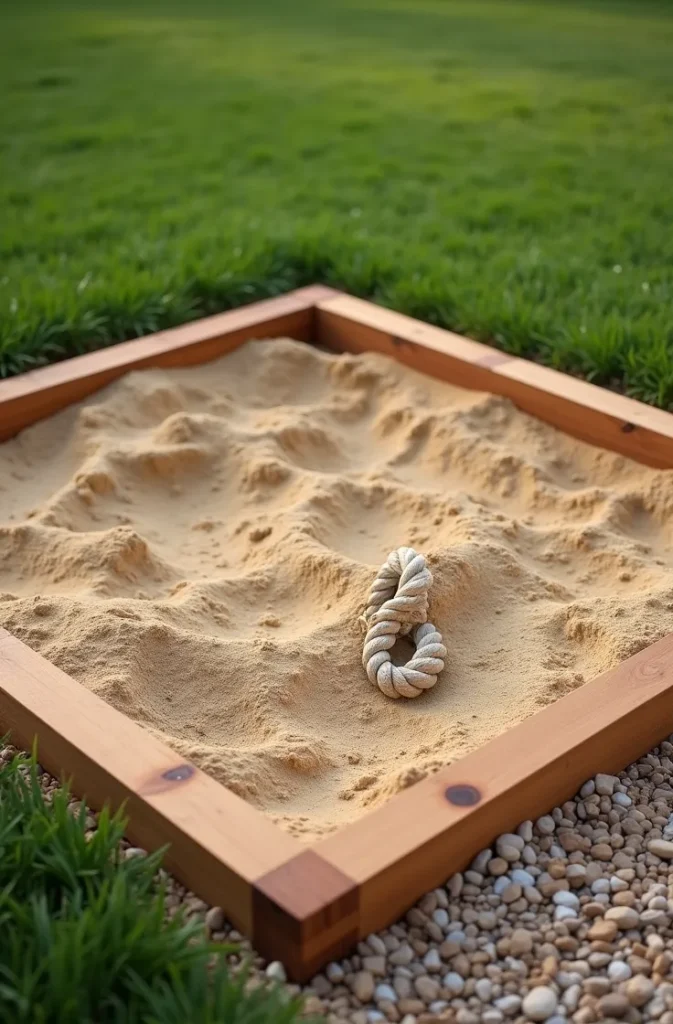
Size the pit to the dog’s size — a twenty-four-by-thirty-six-inch pit works for most medium breeds. Large breeds and dogs with strong digging instincts (terriers, huskies, dachshunds) need a minimum of thirty-six by forty-eight inches to feel the behavior is rewarded.
Surround the pit with a material that is visually distinct from the surrounding yard — river rock, landscape timbers, or a raised cedar frame — so the dog learns the boundary clearly. A vague edge of sand merging into lawn does not read as a defined zone for most dogs.
11. Dog-Friendly Pool Surround With Non-Slip Entry Points
A pool in a dog friendly backyard requires three specific modifications to be safe and functional: a designated entry and exit ramp or step, a non-slip surround surface, and a defined path back to the house that keeps wet paw prints off the main seating area.
Pool ramps designed for dogs are available as permanent installations that mount to the pool wall or as removable floating ramps. Both work — the key is placement at the shallow end, not the deep end, so the dog can always self-rescue if they fall in unexpectedly.
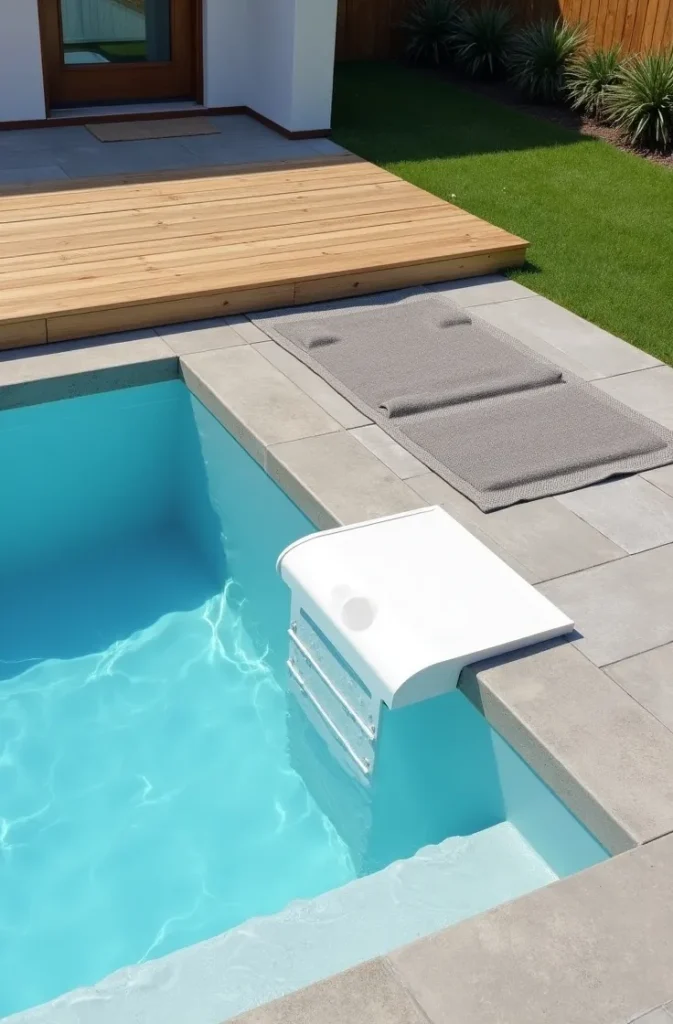
The pool surround should use a brushed or textured concrete finish rather than smooth-troweled concrete, or a composite decking product with a non-slip surface. Standard smooth concrete is dangerous for dogs at speed — they cannot brake on wet smooth surfaces and will slide into the pool edge repeatedly.
The path from pool to house is often overlooked. A strip of outdoor mat or textured pavers leading from the pool surround to the back door allows wet paws to air slightly before the dog re-enters. Without it, the pool surround becomes the threshold problem rather than the solution.
12. Sensory Garden Path That Keeps Dogs Mentally Stimulated
Mental stimulation is as important as physical exercise for most dog breeds, and a sensory path — a defined route through varied textures, smells, and visual stimuli — delivers it passively throughout the day. The path moves through different surface materials (pea gravel, turf, pavers, bark chip), passes planted zones with dog-safe aromatic herbs (rosemary, lavender, mint), and includes one or two objects of mild novelty (a large smooth boulder, a low balance plank).
This layout works best in yards of 1,000 square feet or more, where there is room to make the path a genuine circuit rather than a straight line. A figure-eight or oval path keeps the route interesting and allows a dog to loop independently without reaching a dead end.
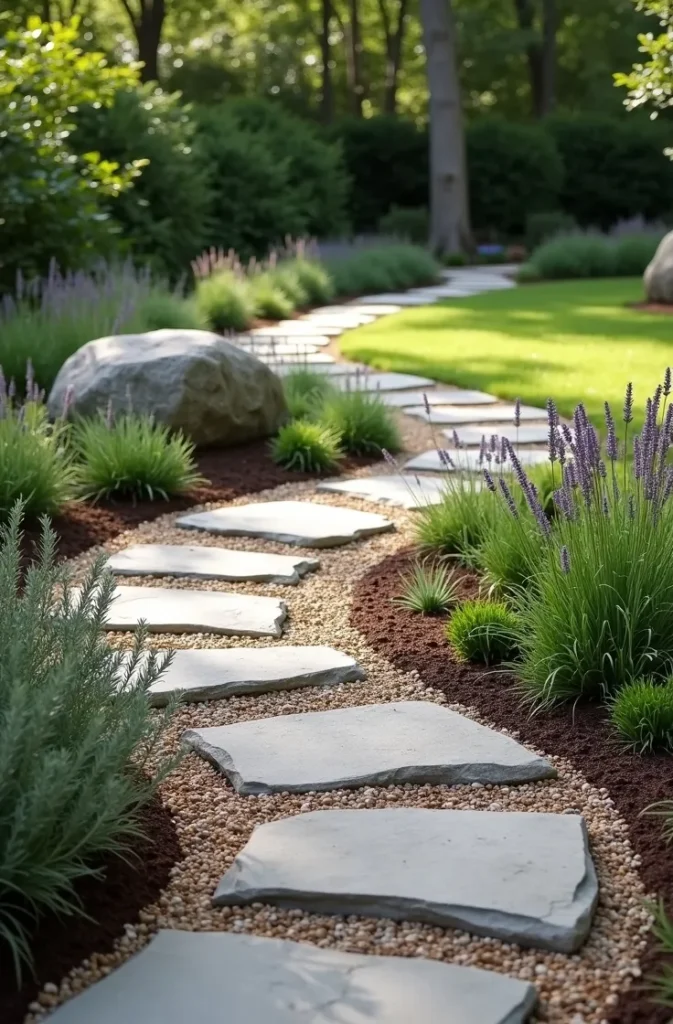
Use this approach for high-energy breeds that are underexercised, dogs that develop anxiety behaviors indoors, or multi-dog households where the dogs need individual enrichment options.
The most common mistake is making the path too narrow. A minimum of thirty-six inches allows a dog to move at speed without jumping off the path surface.
13. Fully Fenced Front Yard Converted to Dog-Safe Play Space
Converting a front yard into a secure dog friendly space is one of the higher-impact backyard ideas for 2026, particularly for homes on corner lots or properties where the rear yard is too small for meaningful dog exercise. A four-foot wrought iron or aluminum fence with a self-closing gate creates a contained front yard that functions as an extended play zone.
The front yard dog space requires more attention to visual design than a rear yard because it is street-facing. Use planting that softens the fence line (ornamental grasses, low boxwood hedging), a gate with clean architectural hardware, and a surface material that matches the exterior palette of the house.
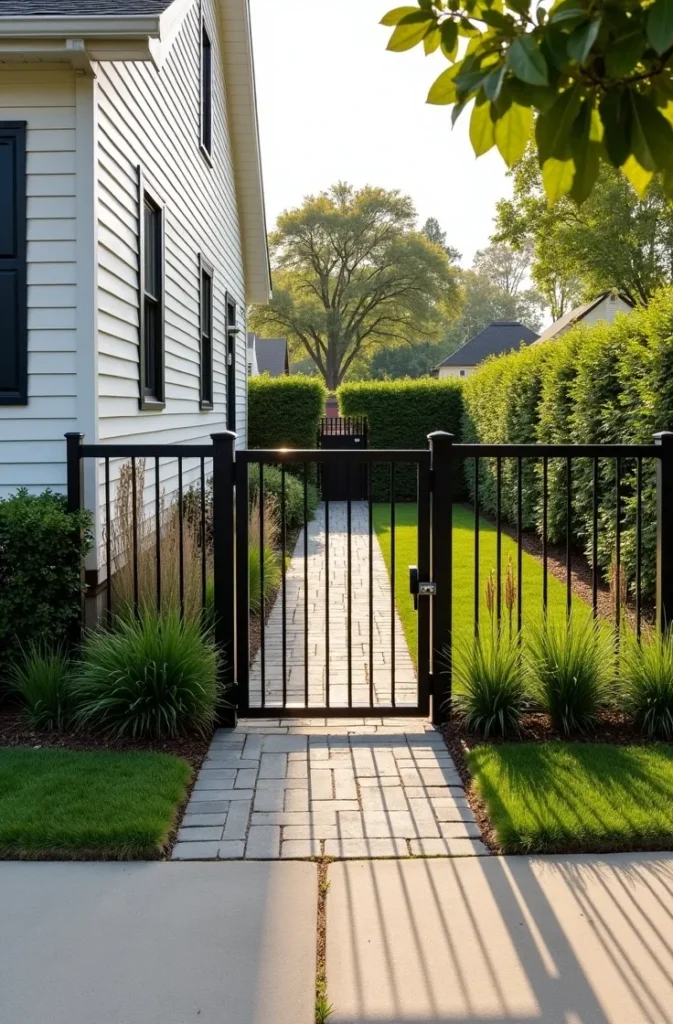
Avoid chain-link fencing in front yards — it reads as a containment pen rather than a landscape feature and immediately changes the curb appeal of the property. Wrought iron or horizontal aluminum slat fencing at the same height delivers the same security with a completely different visual result.
This conversion works best for front yards with at least 600 square feet of usable space. Below that threshold, the yard becomes crowded when fenced and plants are added.
14. Dog-Friendly Backyard Landscaping Plan That Grows With Your Dog
The most sustainable dog friendly backyard idea for 2026 is a phased landscaping plan that accommodates a young dog’s high energy and destructive phase and then transitions to a more polished landscape as the dog matures.
Phase one (years one and two) prioritizes durability: artificial turf or gravel surfaces, raised beds at height, minimal soft plantings in high-traffic zones, and robust fence perimeter work. This phase accepts that a young dog will dig, chew, and run fence lines — the design absorbs that behavior rather than fighting it.
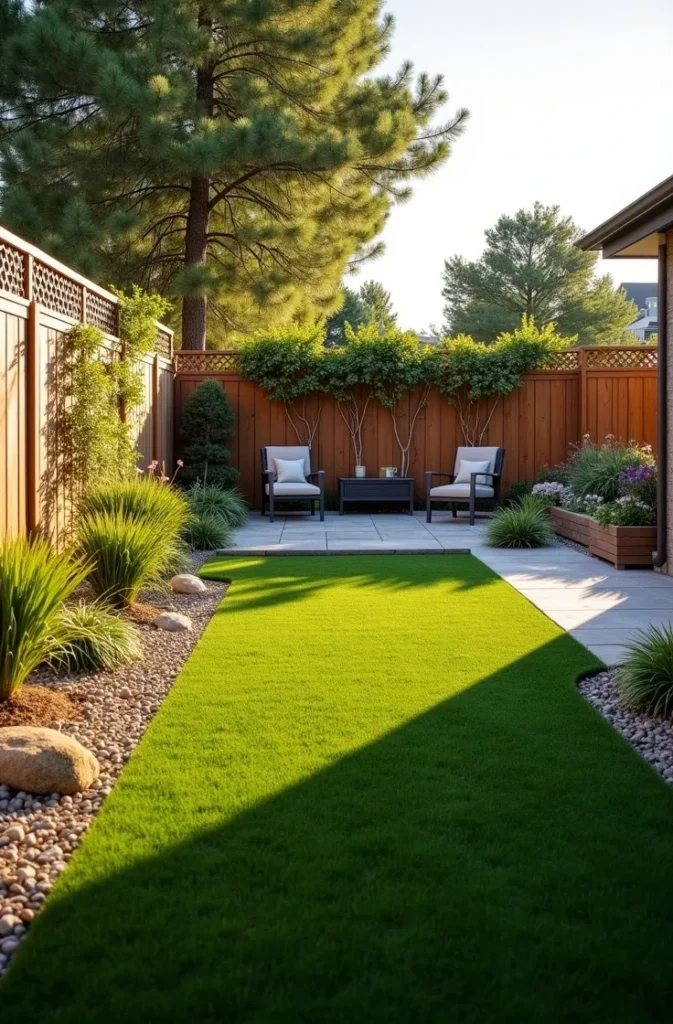
Phase two (years three and beyond) introduces softer landscaping: established native planting borders, a sensory path, a seating area with outdoor furniture, and garden beds in previously off-limits zones. By this point, most dogs have developed the predictability and impulse control to share the space without destroying it.
This phased approach saves significant money because it avoids re-doing expensive landscaping after a young dog damages it. It also produces a better final result because the planting in phase two goes into soil that has been improved by two years of management.
Final Thoughts
A dog friendly backyard in 2026 does not require compromise between function and design — it requires planning in the right order. The ideas above address the most common real-world problems: containment, shade, surface heat, digging, plant safety, and long-term durability. Start with the perimeter and surface choices, then layer in enrichment and aesthetics as the space matures.
Save this post before your next backyard planning session — every idea here is decision-ready, not just visual inspiration. If you are working with a specific constraint (small yard, rental, high-energy breed, or a pool), revisit the sections that match your situation directly and use the material and measurement details to brief a contractor or plan a DIY weekend project.
Explore more backyard layout ideas to continue building a space that works as hard as your dog does.