
If you have a small balcony and feel like it is wasted space, you are not alone. Most urban apartment dwellers struggle to turn a narrow outdoor ledge into something they actually want to use. This guide covers 11 dreamy small balcony ideas for a private urban oasis — each one practical, decision-driven, and designed for real city living.
1. Build a Low-Seating Retreat That Makes the Space Feel Twice as Large
Most small balconies fail because owners try to fit full-size patio furniture into a space that simply cannot support it. The solution is to go low. Floor cushions, low sling chairs, and ground-level poufs keep the sightline open, which tricks the eye into reading the space as larger than it is. Pair a low seat with a slim side table and you already have a functional zone without crowding the railing.
This layout works particularly well on balconies that are five to six feet deep or narrower. The open vertical space above the seating is what does the work. You can layer in a small woven rug underneath to define the zone further and add warmth underfoot.
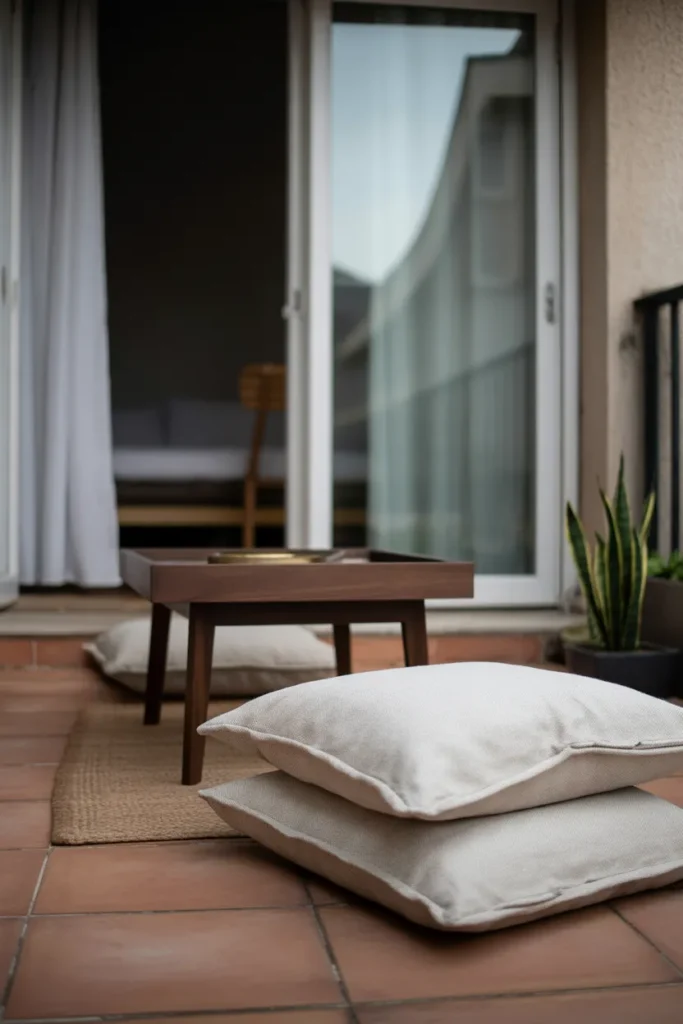

Avoid the common mistake of placing a standard-height bistro table and chairs on a narrow balcony. The legs eat up floor space and the table height blocks your view of the city or greenery outside. If you need a surface, a slim drum stool or a stacked crate works far better.
Decision guide: If your balcony is under 40 square feet, commit fully to low seating and resist the urge to add anything taller than your shoulder when seated.
2. Use Vertical Garden Panels to Create Instant Privacy Without Walls
Privacy is one of the biggest challenges in urban balcony design. You are often eye-level with neighboring apartments, which makes the space feel exposed and uncomfortable. Vertical garden panels — whether living moss walls, trellis with climbing vines, or modular planter grids — solve this without requiring permission to modify building structure.
A panel that runs three to four feet wide and six feet tall placed along one side of the railing creates a soft green screen. It blocks direct sightlines from the side while keeping the sky view open. This approach works especially well on corner balconies or balconies that face another building directly.
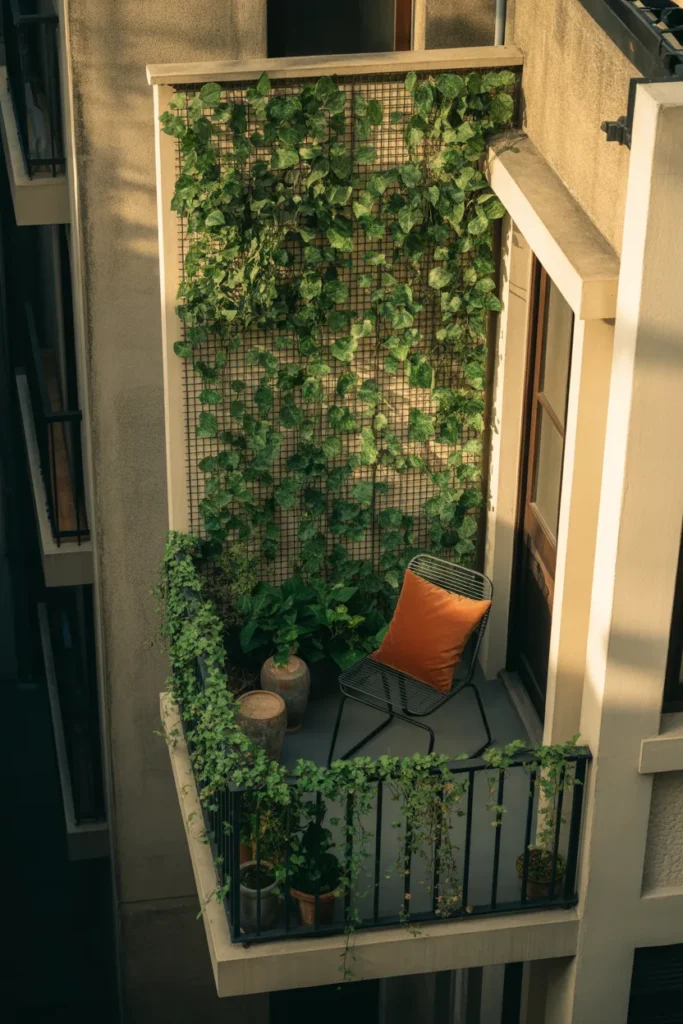
For low-maintenance options in most USA climates, choose climbing pothos, creeping fig, or boxwood in modular wall pockets. If you prefer a non-living option, cedar slat panels or bamboo screening give similar privacy with zero watering commitment.
One mistake to avoid: do not cover all four sides with screening. You will eliminate airflow and turn the balcony into a box. One or two screened sides is almost always enough.
Decision guide: If neighbors can see directly into your seating area, address privacy before adding any other decor. Without it, you will never actually use the space.
3. Install a Fold-Down Wall Table to Get a Functional Workspace or Dining Spot
A fold-down wall-mounted table is one of the single most useful upgrades for a small balcony. It attaches flush to the exterior wall when not in use and drops open to give you a surface for morning coffee, a laptop, or a light meal for two. It adds zero permanent footprint to the floor.
This setup is ideal for studio apartment dwellers who want the balcony to function as an extension of their living space, not just a place to put plants. A fold-down table at counter height pairs well with a set of stacking stools that slide underneath. When you close the table, the entire space opens back up.
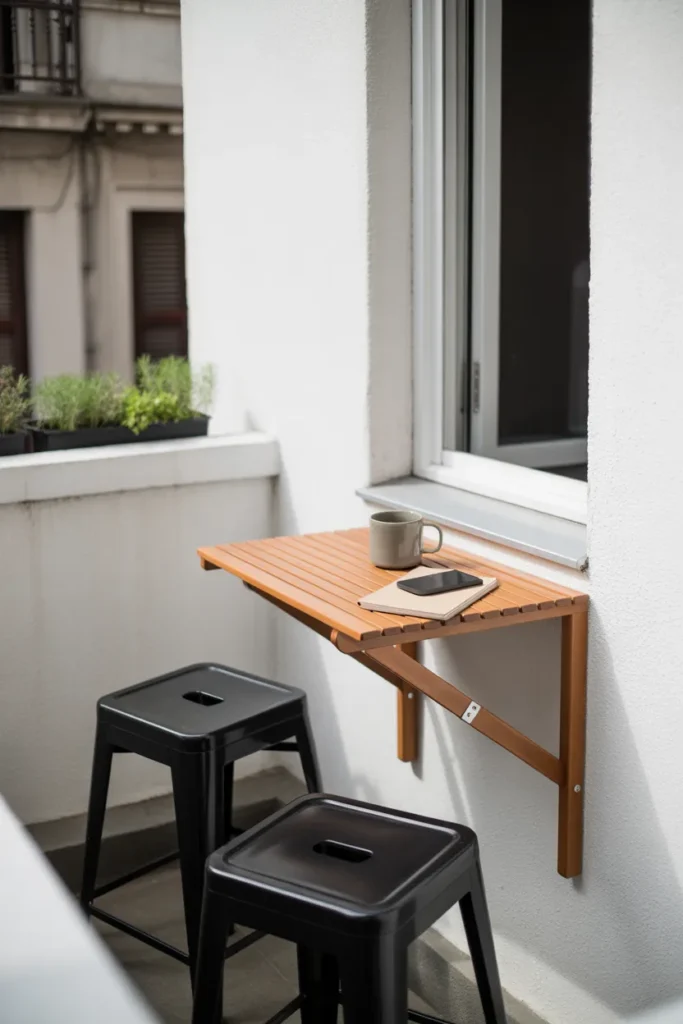
Material matters here. Choose teak, powder-coated steel, or high-pressure laminate over untreated wood, which warps quickly with outdoor humidity and sun exposure. Anchor it into a stud or use proper masonry anchors if your balcony wall is concrete — this table needs to hold weight reliably.
Avoid overloading the surface with permanent decor. The point is flexibility. Keep the tabletop clear when folded down and only set it when you plan to use it.
Decision guide: If you want to eat outside even once a week or work remotely on the balcony, a fold-down table will change how often you actually go out there.
4. Layer Outdoor Rugs and String Lights to Build a Cozy Evening Atmosphere
A balcony that looks fine during the day can feel completely flat after sundown. The solution is layering texture and warm light at two levels: the floor and overhead. An outdoor flatweave rug anchors the space visually and adds softness that hard tile or concrete never provides. String lights stretched overhead or draped along the railing add warmth without requiring any electrical work beyond a standard outdoor outlet.
This combination is particularly effective on balconies that face inward into a courtyard or overlook a city skyline at night. The rug defines the seating zone and the lights create a ceiling effect that makes the open-air space feel enclosed and intimate without actually being so.
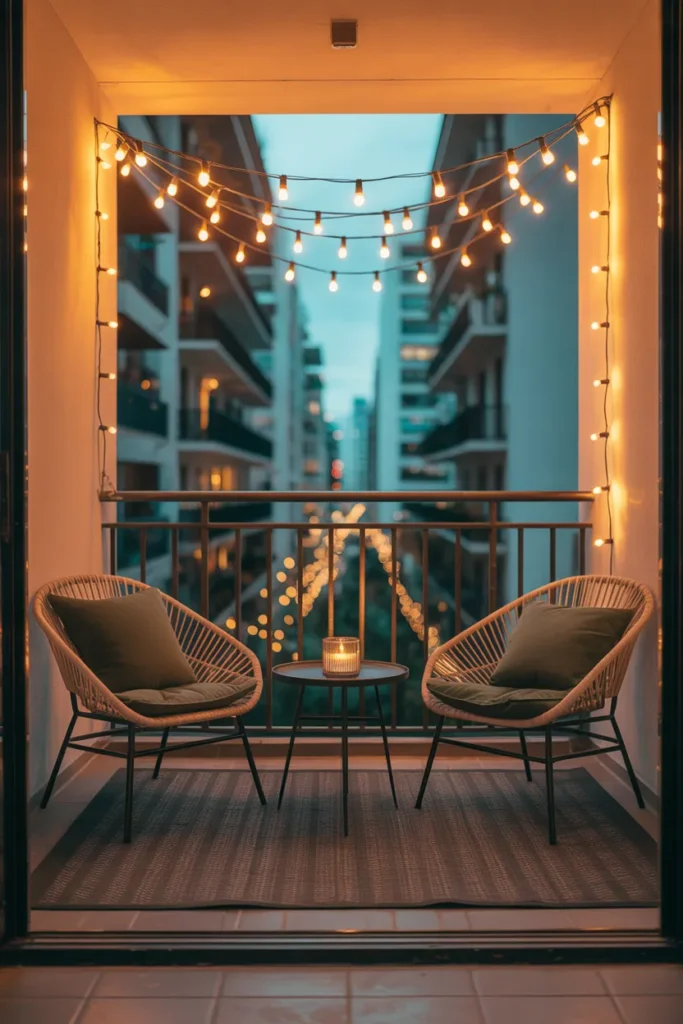
Choose a rug rated for outdoor use, specifically polypropylene or polyester — not an indoor rug moved outside, which will mold and deteriorate within one season. For lighting, warm white bulbs in the 2700K range give the most flattering, cozy feel. Avoid cool white or blue-toned bulbs, which feel clinical outdoors.
One common mistake is stringing lights too low, where they become a hazard and interrupt sightlines. Keep them at least seven feet above the floor or run them along the railing edge instead.
Decision guide: If you currently avoid the balcony after dark, lighting and a rug will solve that problem for less than most people spend on a single piece of furniture.
5. Design a Single-Chair Reading Nook That Requires Almost No Space
You do not need a full seating arrangement to make a balcony usable. A single well-chosen chair, a small side table, and a footrest can create the most used spot in your entire home. This works on balconies as small as four by four feet — even a Juliet balcony with limited depth can accommodate one good chair and nothing else.
The key is choosing the right chair. An egg chair, a hammock chair hung from a ceiling hook, or a compact bucket chair with a high back all work well because they wrap around you, creating a sense of enclosure that a standard chair does not. That enclosed feeling is what makes a reading nook feel intentional rather than just a place you dragged a chair to.
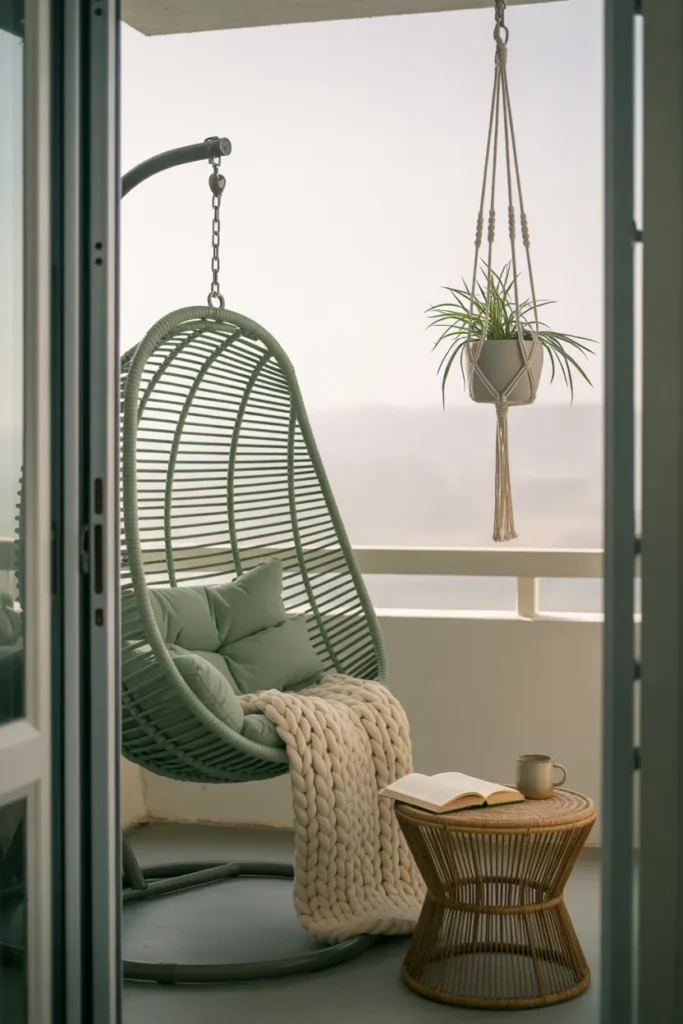
Keep the side table minimal — a small drum table, a ceramic stool, or even a simple plant stand works fine. The goal is a surface for a drink and a book, not a full workspace.
This layout is the right choice when you have exactly one balcony user most of the time, or when you want to carve out a personal space that is clearly yours. Trying to make a tiny balcony work for multiple people often results in it working for no one.
6. Create a Herb and Edible Garden That Doubles as Living Decor
A small balcony herb garden does two things at once: it adds genuine greenery and living texture to the space, and it gives you usable fresh herbs steps from your kitchen. This is one of the most functional uses of a small urban balcony because it justifies the space year-round and gives you a reason to go out there regularly.
The most effective layout for a small balcony herb garden uses a combination of railing planters, a single tiered plant stand in a corner, and one or two hanging planters overhead. This approach uses vertical and railing space rather than floor space, leaving the floor open for seating.
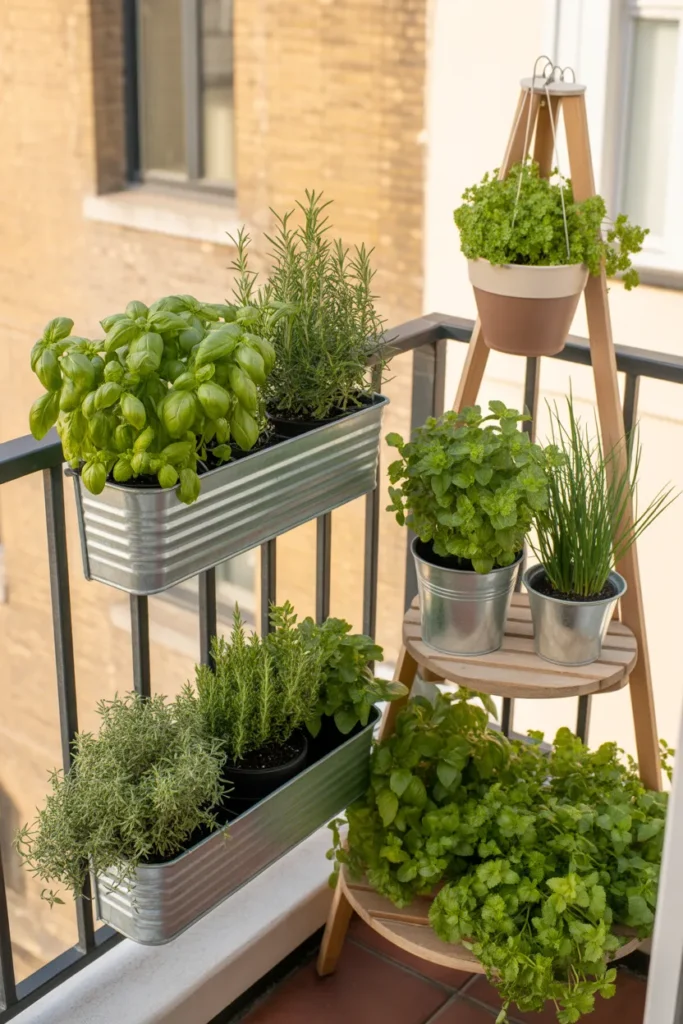
In most USA climates, basil, mint, rosemary, thyme, chives, and parsley all perform well in containers with adequate sun. If your balcony faces north or gets limited direct light, focus on mint, parsley, and chives, which tolerate partial shade better than others.
Avoid overcrowding pots. A single pot stuffed with four herb varieties looks good for one week and then declines quickly as roots compete. Give each variety enough container space and use a well-draining potting mix designed for containers, not standard garden soil.
Decision guide: If you cook regularly and your balcony gets at least four hours of direct sun, a herb garden is the highest return-on-investment balcony project you can do.
7. Apply a Monochrome Color Scheme to Make a Cramped Balcony Feel Curated
Color inconsistency is one of the main reasons small balconies feel cluttered even when they are not. When every element is a different color — a bright blue chair, a red rug, terracotta pots, a green umbrella — the eye has nowhere to rest, and the space reads as chaotic. A monochrome or tightly edited two-tone palette solves this instantly.
Pick one base color and one accent, and apply them across every element: furniture, cushions, pots, rug, and even the planters. A warm white and natural rattan combination feels fresh and airy. Deep charcoal and black iron feel sleek and urban. Sage green across cushions, pots, and a rug with natural wood accents creates a calm botanical mood.
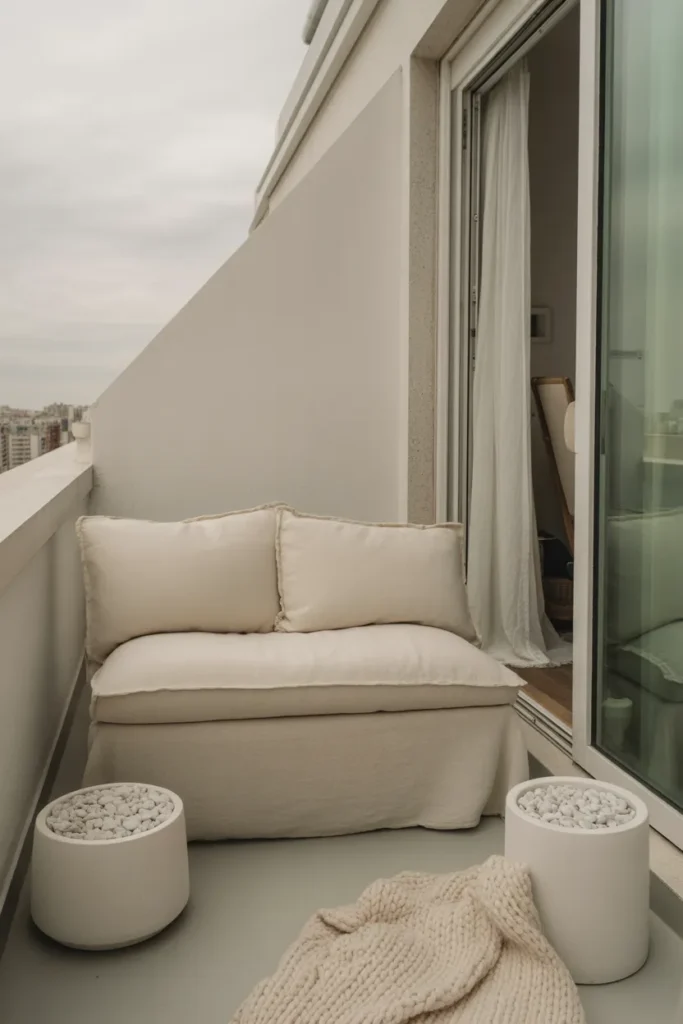
This approach works regardless of balcony size, but it is most powerful on very small balconies because cohesion reads as intention. A thoughtfully curated small space always looks better than a large space with random elements.
The one common mistake with monochrome balconies is forgetting texture. When everything is the same color, texture variation — linen versus rattan versus smooth ceramic — becomes the thing that keeps the space visually interesting.
8. Hang a Shade Sail or Pergola Canopy for All-Day Outdoor Comfort
Heat and direct sun are the most common reasons people stop using their balcony by late morning in summer. A shade sail or a compact pergola canopy with retractable panels solves this without requiring a full structural installation. Most shade sails can be anchored to the building wall on one side and the railing on the other using heavy-duty hooks rated for outdoor use.
A well-placed shade sail that covers sixty to seventy percent of the balcony floor is enough to drop the perceived temperature significantly and eliminate the glare that makes outdoor screens unreadable. This makes the balcony genuinely usable from early morning through late afternoon.
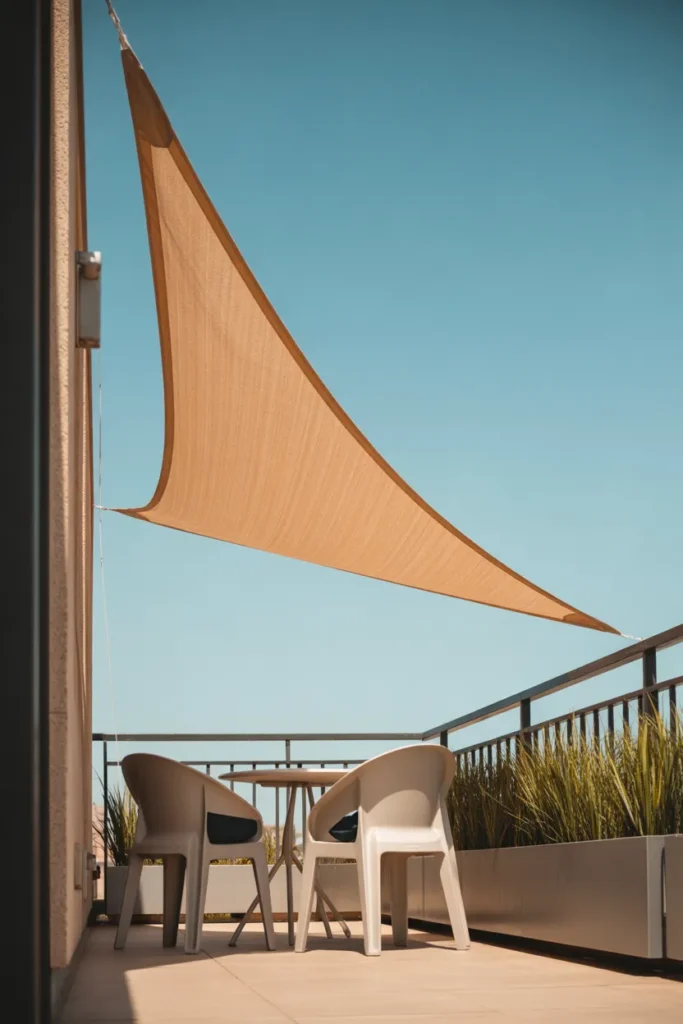
Choose UV-rated HDPE shade fabric in a neutral color — sand, charcoal, or warm gray. Avoid dark colors if you live in a hot climate, as they absorb more heat. Avoid bright white, which stains quickly and becomes dingy within a season.
This upgrade matters most for south- and west-facing balconies that receive intense afternoon sun. East-facing balconies generally only need shade by midday, so the installation can be positioned to block the late-morning angle.
Decision guide: If you currently go outside, feel immediately uncomfortable in the heat, and go back in, a shade solution is the first upgrade to make — before furniture, plants, or lighting.
9. Design a Wellness Corner With a Yoga Mat Space and Calming Greenery
A small balcony is one of the best places to build a morning wellness routine because you get fresh air and outdoor light without leaving home. You do not need much space — a six by three foot clear zone is enough for a yoga mat, which is all you need for stretching, bodyweight movement, or a seated breathwork session.
The layout is simple: keep one clear area of the balcony floor furniture-free. Store a rolled mat behind the chair or inside, and unroll it when you use it. Surround the perimeter with calming plants — low-maintenance options like peace lilies, aloe, lavender, or snake plants add living texture without requiring your attention every day.
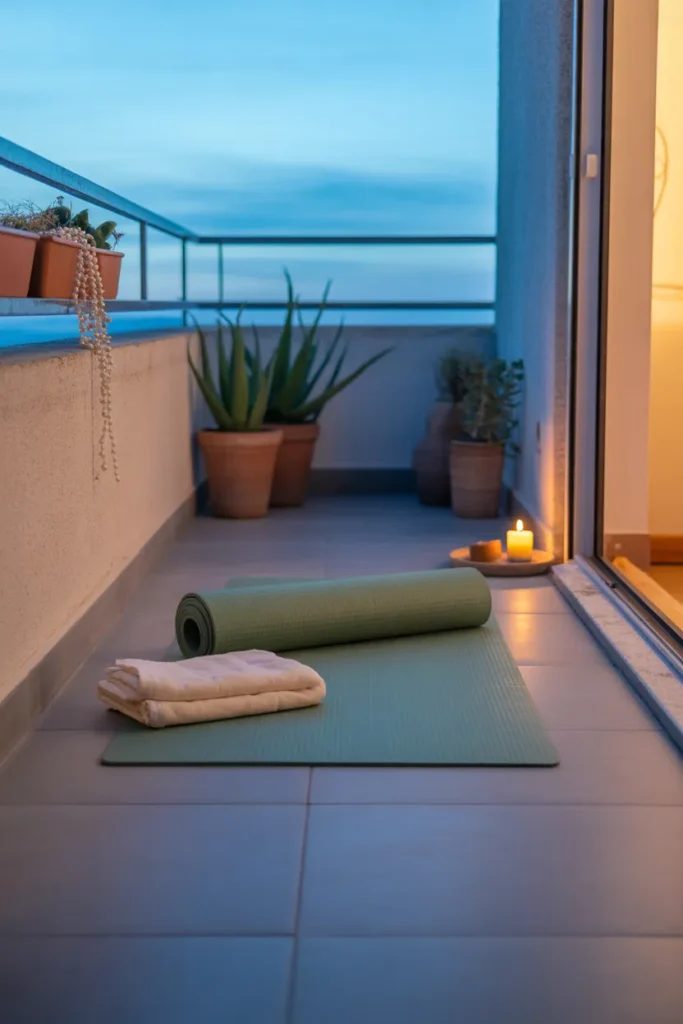
The sensory environment matters here. Avoid harsh overhead lighting if you use the space early morning. A small Himalayan salt lamp on an outdoor-rated extension cord or a simple lantern creates a much calmer visual environment for a morning practice.
This is the right choice for people who already have a fitness or mindfulness habit and want to stop doing it inside a bedroom or living room. Moving that practice outside — even to a tiny balcony — consistently improves the quality of the experience.
10. Use Mirrors and Metallic Accents to Amplify Light on a Dark Balcony
North-facing balconies and those shaded by surrounding buildings share the same problem: they feel dim and uninviting even on bright days. The conventional response is to load up on plants that tolerate low light, but that only partially solves it. The more effective approach is to reflect and amplify whatever light is available using mirrors and metallic surfaces.
An outdoor-rated mirror mounted on the exterior wall — even a simple round frameless mirror or a sunburst-style metal mirror — bounces light back across the space and creates the illusion of a second opening. This is the same principle used in small interior rooms to add depth, and it works equally well outdoors.
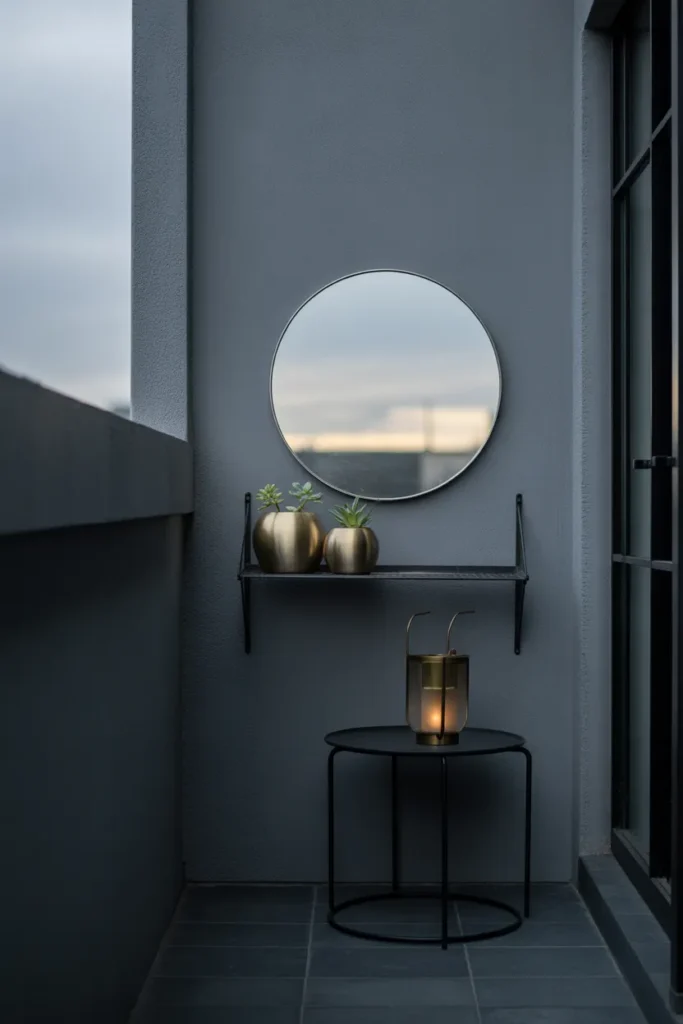
Complement a mirror with metallic accents: brushed brass planters, a chrome side table base, or chrome lanterns catch and scatter whatever ambient light exists. Together, these elements turn a flat, dim balcony into a space that feels dynamic throughout the day.
Avoid glass mirrors that are not rated for outdoor use — temperature swings and moisture will crack them within a season. Look for acrylic or polished stainless steel mirrors designed for exterior use.
Decision guide: If your balcony feels consistently darker or cooler than the rest of your apartment, address light before anything else. Furniture and plants look dull in a dim space regardless of quality.
11. Build a Container Water Feature for Sound Privacy and Sensory Calm
Sound is an underrated problem in urban balcony design. Traffic noise, HVAC units from neighboring buildings, and general city ambient sound make it hard to actually relax outside. A small container water feature — a self-contained tabletop fountain or a larger glazed pot with a submersible pump — introduces a layer of white noise that masks city sounds without requiring any structural changes.
A container fountain that produces a steady, low pour of water creates roughly the same ambient noise level as light rain. That sound actively competes with traffic and city noise, and in most cases wins enough of the sound field to make the space genuinely quiet-feeling. This is a functional solution, not just aesthetic.
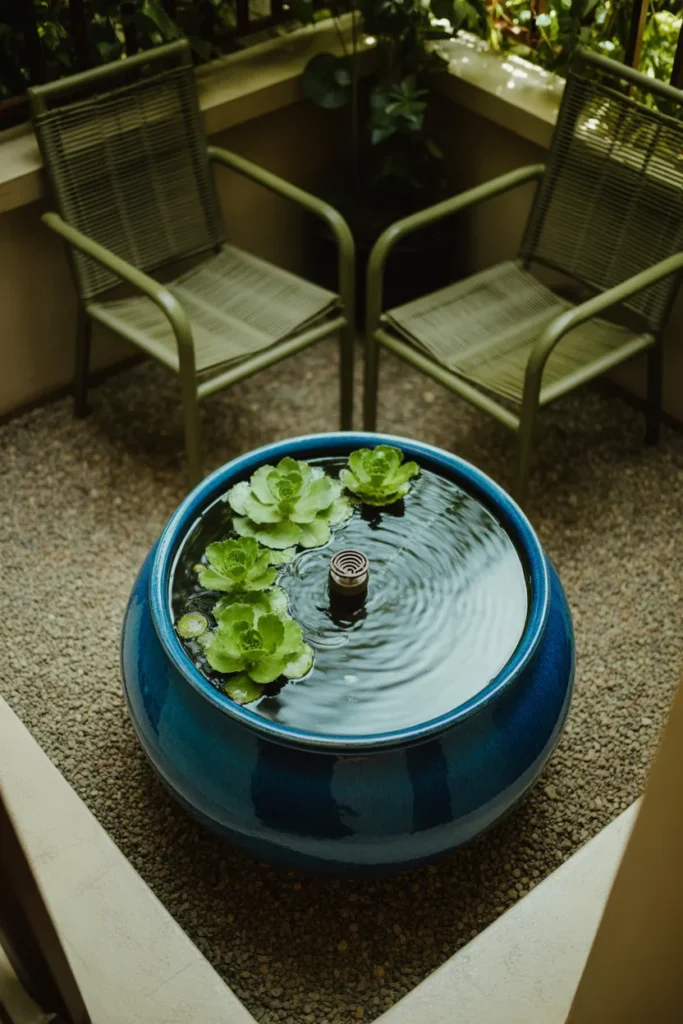
Place the fountain as close to where you sit as possible, because the closer you are to the water sound, the more effective the masking effect. A tabletop fountain on your side table is more effective than one across the balcony on the railing.
Maintain the water level consistently — a pump running dry burns out quickly. Most tabletop fountains need a top-up every three to five days in warm weather depending on evaporation rate and sun exposure.
This setup works best for balconies facing a busy street, near a freeway, or in a building complex with active mechanical equipment nearby. If your balcony already has reasonable ambient quiet, the fountain adds sensory pleasure without solving a particular problem.
Final Thoughts
These 11 dreamy small balcony ideas for a private urban oasis prove that square footage is rarely the real limitation — decisions are. The right seating height, a consistent color palette, one good privacy solution, and reliable lighting will do more for a small balcony than any amount of spending on decor. Start with the idea that solves your biggest current problem, whether that is privacy, shade, sound, or darkness, and build from there.
Save this post before you close it — it is the kind of reference you will want to come back to when you are ready for the next upgrade. And if you are still exploring small outdoor space planning ideas, there is always more to discover in functional balcony design for compact urban living.