
Planning an outdoor celebration involves far more decision-making than choosing flowers and a dress, and the details that make or break a garden wedding are rarely discussed in general inspiration guides. This guide covers the most practical and visually refined garden wedding ideas 2026 — from ceremony layouts and floral structures to reception lighting and guest comfort solutions — so you can make informed decisions at every stage of your planning process.
1. The Floral Arch Ceremony Backdrop That Frames the Moment Without Overwhelming the Space
A floral arch is the single most photographed element of any garden wedding ceremony, which means its proportions, placement, and plant selection deserve more planning than almost any other detail. An arch that is too wide loses visual impact in photographs. One that is too narrow feels restrictive and does not frame the couple effectively.
The optimal arch size for a garden ceremony is 7 to 8 feet tall and 5 to 6 feet wide. This proportion frames two standing adults comfortably while remaining in scale with an outdoor setting. Larger arches — 10 feet and above — work only when backed by a significant architectural feature like a stone wall or a tall hedge that gives the structure something to anchor against visually.
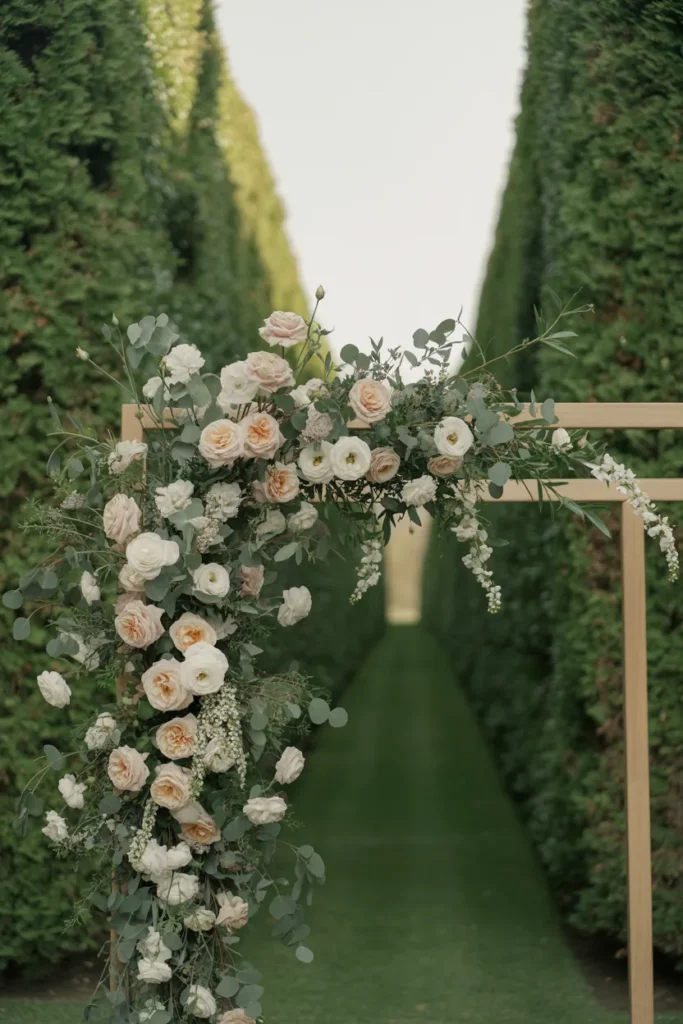

For garden wedding ceremony ideas, the planting style of the arch should respond to the garden setting rather than contrasting with it. If the venue has lush, informal plantings, a loose asymmetrical arch with trailing greenery, garden roses, and clematis reads as intentional. A tightly structured formal arch in the same setting looks out of place. Match the arch to the garden, not just to the aesthetic board.
The most common mistake is centering the arch in an open lawn without a visual backdrop. Without something behind it — a hedge, a tree line, a wall — the arch reads as a freestanding prop rather than a gateway. Always position the arch with a considered background before confirming the ceremony site location.
2. The Aisle Design That Uses Ground-Level Florals to Create a Runway Effect
Most garden wedding aisles rely on chair-end arrangements or shepherd’s hooks — which work, but place all the visual interest at a height that competes with guests rather than leading the eye toward the ceremony. Ground-level aisle treatments — low arrangements, candles in hurricanes, clusters of potted plants, or loose petal trails — create a runway effect that keeps the visual focus low and directs all attention toward the altar.
Ground-level aisle styling works in any outdoor setting because it does not require installation infrastructure. No hooks, no poles, no stands — clusters of arrangements simply sit on the ground beside each row of chairs. This makes setup significantly faster and the look considerably more naturalistic, which suits the garden setting better than elevated formal arrangements.
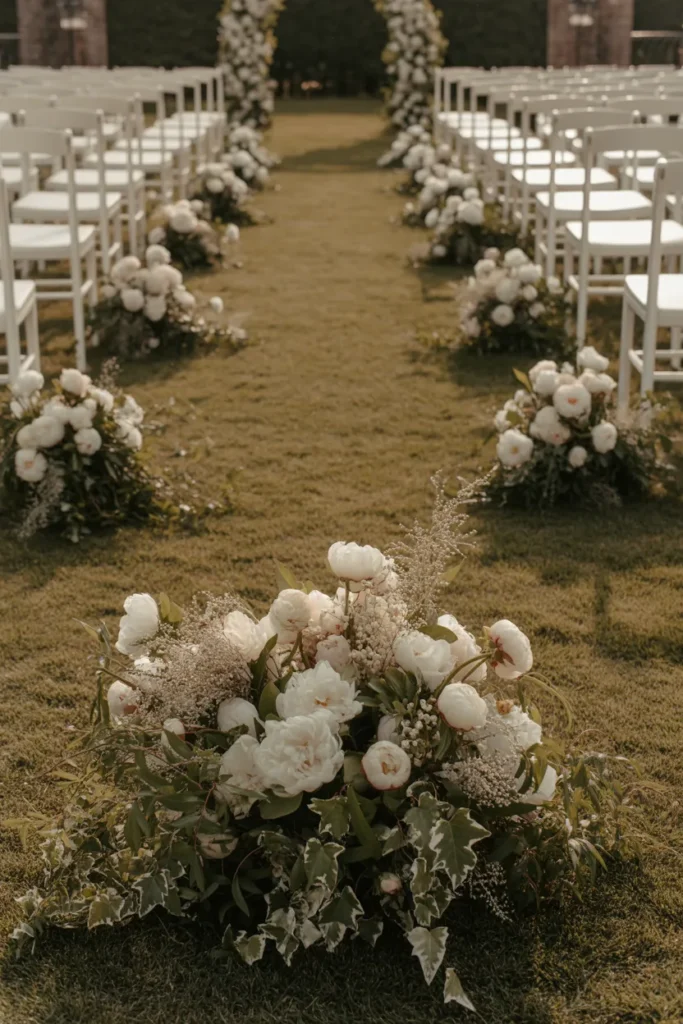
For grass aisle surfaces, use small wooden discs, flat stones, or sections of artificial turf under each arrangement to prevent flower stems from sinking into soft ground. Nothing undermines a careful arrangement faster than a vase that has tipped because the ground shifted under it two hours before the ceremony.
The spacing between aisle clusters determines the rhythm of the walk. Place arrangements every two rows of chairs — not every row — to create a measured pace and allow photography clear sightlines between clusters. Overloading the aisle with too many arrangements at every row creates visual clutter rather than elegance.
3. The Garden Reception Table Layout That Balances Long Tables With Round Tables
All-long-table receptions and all-round-table receptions each have documented weaknesses that experienced wedding planners consistently address by mixing both formats. Long banquet tables seat more guests per square foot and create a communal, celebratory energy. Round tables allow more flexible conversation and work better for older guests or those who do not know many others at the event.
A mixed layout — two or three long harvest tables for the wedding party and immediate family, surrounded by round guest tables at the perimeter — delivers the visual drama of a full long-table setting in photographs while maintaining the social flexibility that round tables provide. This hybrid approach is one of the most effective outdoor garden wedding reception layout strategies because it also creates natural visual variety across the space.
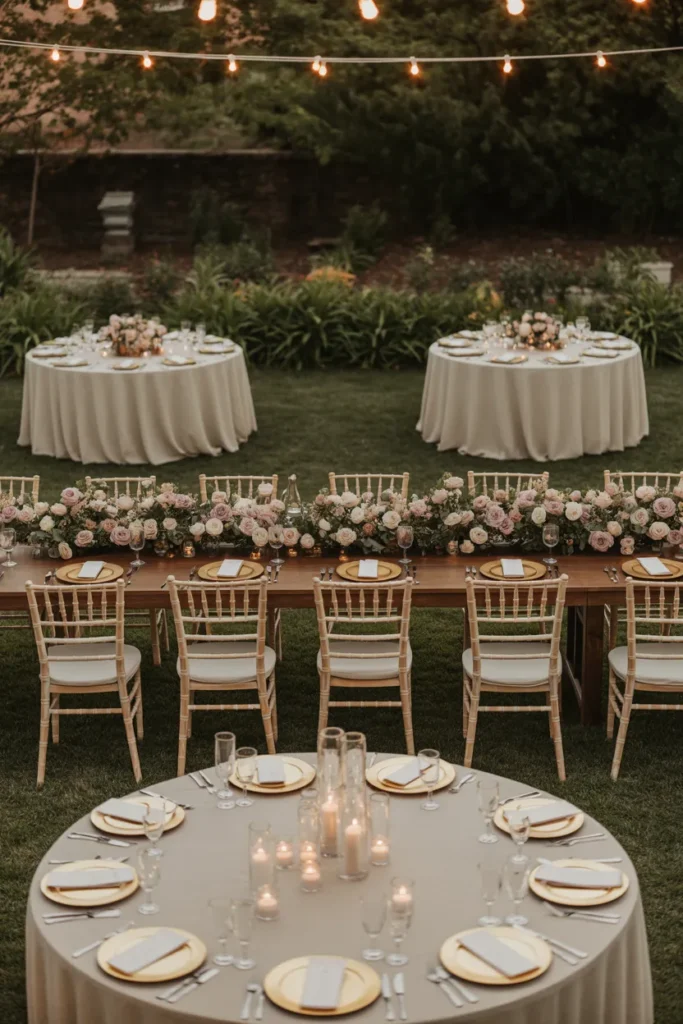
The critical planning detail is table linen continuity. When mixing table shapes, use the same linen across all tables — same color, same material — to unify the space visually. Changing linens between long and round tables makes the mixed layout look like an afterthought rather than a deliberate design decision.
Leave a minimum of 60 inches between any two table edges to allow comfortable guest movement and server access. Outdoor receptions consistently underestimate circulation space, which creates congestion during dinner service that affects guest experience more than almost any other layout decision.
4. The Candlelit Reception Setup That Works in an Open Garden After Dark
Candles are the most effective lighting tool for outdoor garden receptions, but they require a specific layering approach to work across an open garden space rather than functioning as isolated points of light in a dark field. The principle is density: candles work in clusters, not individually.
Group candles in multiples of three or five at every surface — centerpieces, bar tops, escort card tables, and cake tables. Vary the heights within each cluster: a 12-inch pillar, a 6-inch votive cluster, and a low tea light grouping create vertical interest at every table rather than a flat field of identical flames. This staggered approach photographs beautifully and illuminates a wider radius around each table.
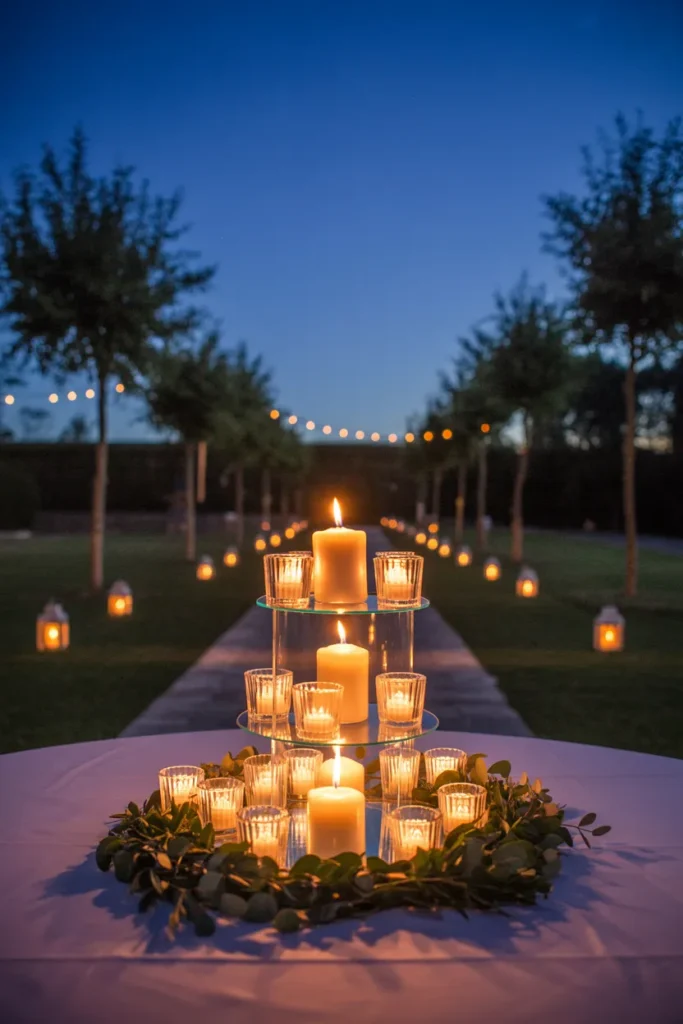
Supplement table candles with ground-level lanterns along pathways and at the base of any trees or floral installations. Ground-level candlelight creates a warm glow at foot level that anchors the garden space and prevents the dark zone between tables that makes outdoor receptions feel disconnected after sunset.
Always confirm local venue fire regulations before planning a candle-heavy setup. Many outdoor venues in dry western states restrict open flames during fire season. Battery-powered LED candles in glass hurricanes are a reliable alternative that photographs identically to real flame in most lighting conditions — a practical solution that does not compromise the aesthetic.
5. The Pergola Reception Structure That Creates an Outdoor Room Without a Tent
A pergola structure — four to six posts with open overhead beams — transforms an open garden into a defined reception room without enclosing it with tent walls. The overhead structure provides a surface for string lights, hanging florals, and fabric draping while leaving all four sides open to the garden setting, which maintains the outdoor atmosphere that makes garden weddings distinctive.
A pergola of 20×30 feet comfortably accommodates 80 to 100 guests for a seated dinner when properly furnished. This scale is achievable with a temporary structural rental rather than a permanent installation, making it one of the most cost-effective ways to create a fully designed reception room in a private garden or outdoor venue.
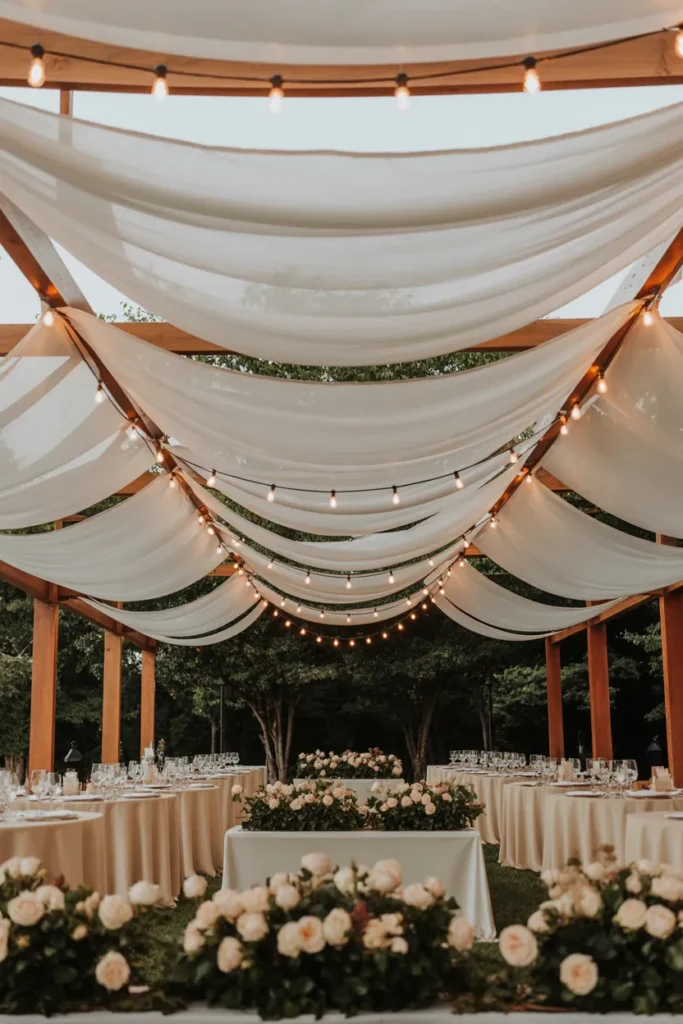
Draping fabric between the beams — gauze, muslin, or linen in white or cream — softens the overhead structure and adds a ceiling quality that defines the space as a room. Without fabric or string lights overhead, an open pergola reads as scaffolding rather than a designed event structure.
For garden wedding reception ideas 2026, the pergola approach works best on flat, level ground. Uneven terrain creates problems with post stability and requires additional leveling work that adds complexity and cost. Confirm the ground surface at your venue before planning a pergola-centered reception layout.
6. The Wildflower Centerpiece Design That Brings the Garden Aesthetic to Every Table
Wildflower-style centerpieces are the defining floral aesthetic of garden wedding ideas 2026 because they respond directly to the outdoor setting rather than importing a formal ballroom floral language into a natural space. The loose, informal arrangement of locally-appropriate flowers in simple vessels — clear glass, terracotta, raw ceramic — looks intentional in a garden setting in a way that tight, formal arrangements rarely do.
The most effective wildflower centerpiece uses a mix of textures rather than a mix of colors. Limiting the color palette to two or three tones — white and cream, soft peach and terracotta, or lilac and sage — while varying the flower forms and stem heights creates a cohesive arrangement that reads as designed rather than assembled. An unrestricted color palette across every centerpiece makes a garden reception look unplanned.
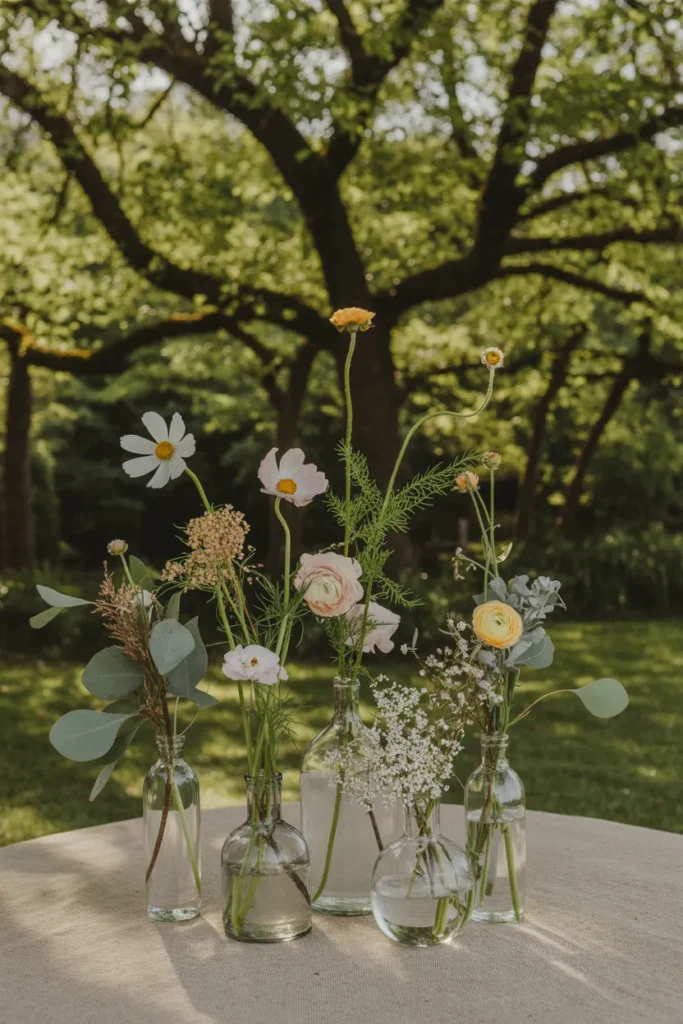
Group multiple small vessels together rather than using a single large arrangement per table. Three or five small vases of varying heights, clustered at the center of a round table or running down the length of a harvest table, create more visual interest and allow guests to see across the table without a large arrangement blocking conversation.
Source flowers as close to the wedding date as possible. Wildflower-style arrangements depend on the freshness and just-picked quality of the blooms — flowers that are even one day past peak look wilted in the loose arrangements that define this style, unlike tight formal arrangements that hold shape longer.
7. The Outdoor Ceremony Seating Layout That Works for Uneven or Sloped Ground
Sloped or uneven ground is one of the most common and least-discussed practical challenges in garden wedding planning. Standard chair rows set on a slope create an uncomfortable experience for guests in higher rows who sit at an awkward angle throughout the ceremony and may have obstructed sightlines to the altar.
The most effective seating solution for sloped ground is a curved or semicircular arrangement rather than straight rows. Curved rows follow the natural contour of the land more forgivably than straight lines, reduce the visual impact of the slope, and position every guest at a slightly different angle to the altar — which distributes sightline quality more evenly than straight rows where side seats are always disadvantaged.
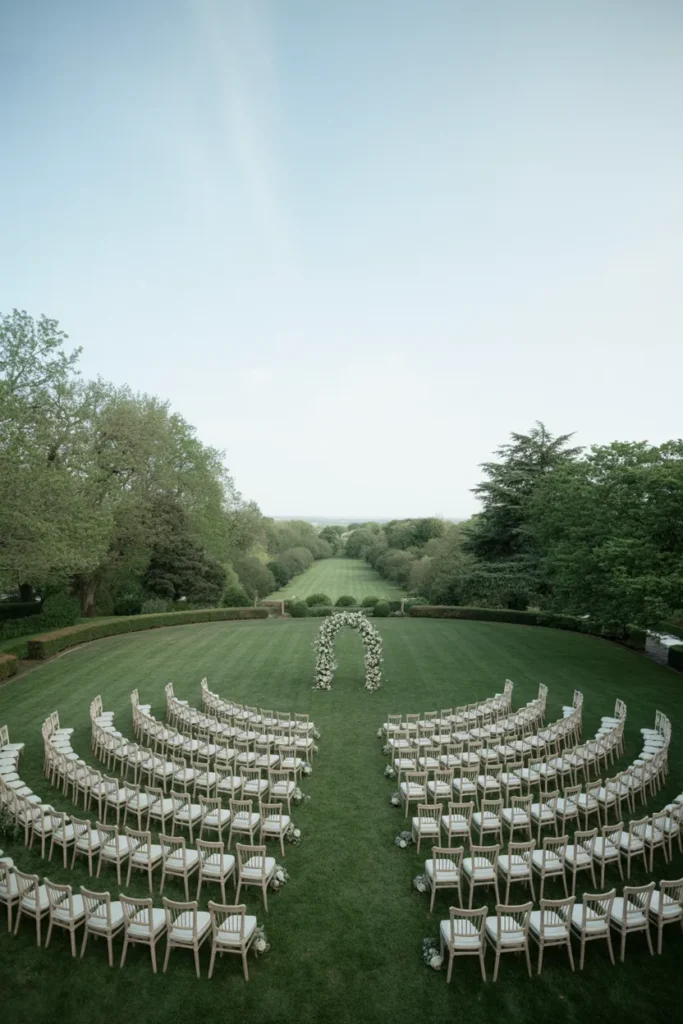
Alternatively, a standing ceremony for shorter services eliminates the slope challenge entirely while creating an informal, intimate atmosphere that works well for garden settings. Standing ceremonies also remove the rental cost and setup time of chairs entirely, which can redirect budget toward other elements.
For any seated outdoor ceremony, confirm chair stability before committing to a seating layout on grassed slopes. Chair legs sink into soft turf after rain, and rows set on a slope can shift over the course of a ceremony as the ground compresses under guest weight. Use chair glides or wooden floor panels on soft or sloped surfaces.
8. The Cocktail Hour Layout in a Garden Setting That Keeps Guests Moving and Comfortable
A cocktail hour that clusters all guests in one static zone creates congestion and reduces the social energy that makes the transition between ceremony and reception work well. A garden cocktail hour layout should distribute guests intentionally across the available space using furniture groupings, activity stations, and drink service points positioned at least 20 feet apart from one another.
Create three distinct zones within the cocktail space: a standing cocktail zone with high-top tables near the bar, a seated lounge zone with low furniture groupings for guests who need to sit, and an activity or display zone — an escort card display, a photo opportunity, a dessert preview — that draws guests to a third location. This distribution prevents clustering and ensures guests use the full space.
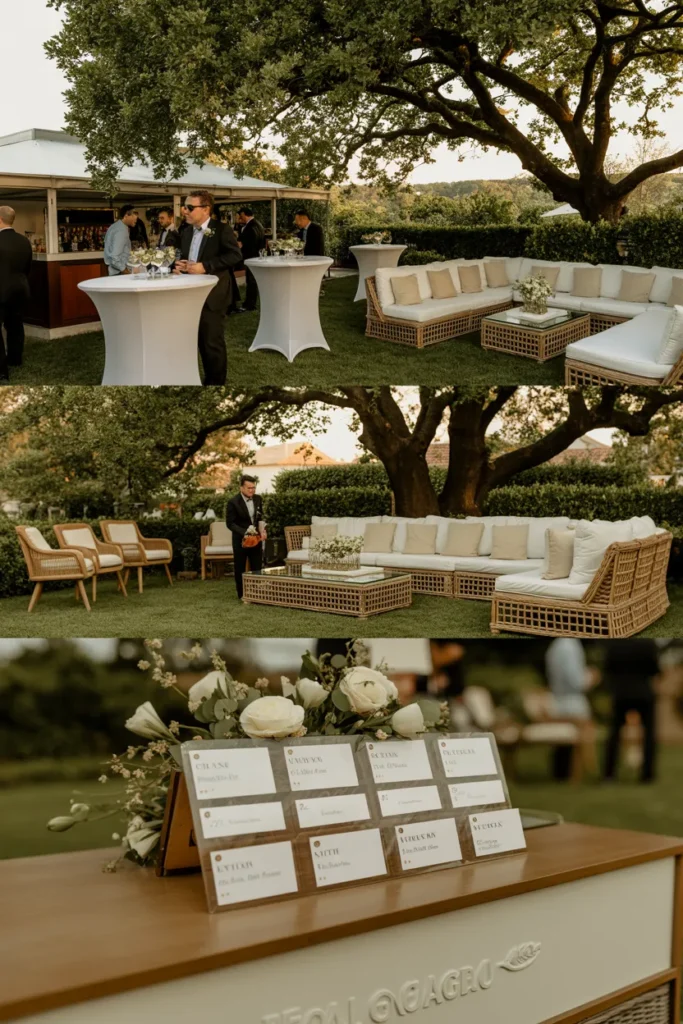
Garden cocktail hours face a specific challenge that indoor cocktail hours do not: direct sun exposure in the late afternoon, which is precisely when most cocktail hours occur. Position the lounge seating in available shade — under trees, under a sail shade, or on a covered terrace. Guests who are uncomfortable in direct sun will migrate inside, away from the experience the garden setting is intended to provide.
Serve passed appetizers during cocktail hour rather than relying on a single stationary station. Staff moving through the space with trays ensures every guest cluster receives food service regardless of their location in the garden, which prevents the congestion that forms when all guests move to one appetizer station simultaneously.
9. The Lighting Plan That Makes a Garden Venue Usable and Beautiful After Sunset
An outdoor garden reception that begins at 6 PM will be in partial darkness by 7:30 PM in most of the continental United States during spring and fall wedding seasons. A lighting plan is not an optional decorative addition — it is an operational requirement for any evening garden reception, and it needs to be planned and installed before any other decorative element.
The lighting hierarchy works in three layers. Ambient lighting — string lights overhead, uplighting on trees, landscape lighting along pathways — establishes the baseline illumination that makes the space feel safe and navigable. Decorative lighting — lanterns, candles, fairy lights in floral installations — adds warmth and visual detail at human scale. Task lighting — clear illumination at the bar, caterer’s station, and any steps or level changes — is functional and non-negotiable for guest safety.
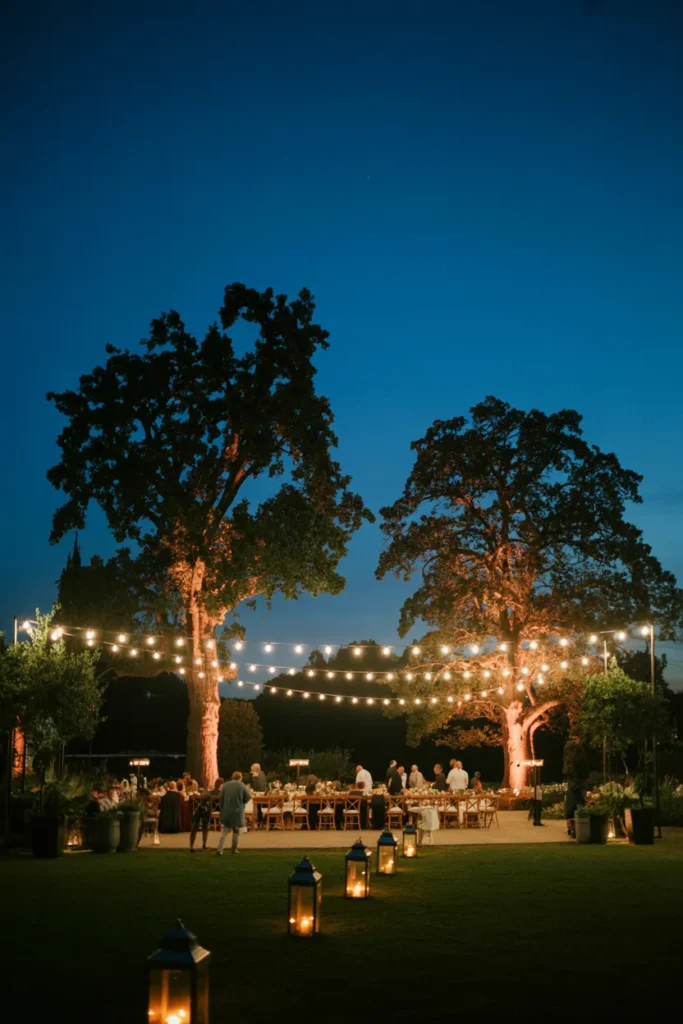
For garden wedding lighting ideas, tree uplighting is the highest-return single investment in an outdoor venue lighting plan. A mature tree uplighted in warm white or amber completely transforms the surrounding space and creates a dramatic natural backdrop that no tent or structure can replicate.
Generator capacity is the practical planning detail most garden wedding couples overlook. Determine total wattage requirements for all lighting, sound, catering equipment, and climate control before the event. Undersized generator capacity is the leading cause of power failures during outdoor events and cannot be resolved quickly on the wedding day.
10. The Outdoor Wedding Bar Setup That Integrates Into the Garden Rather Than Disrupting It
A bar that looks like a piece of furniture brought outdoors from a banquet hall disrupts the garden aesthetic immediately. An outdoor bar for a garden wedding should be built or styled from materials that belong in an outdoor setting: reclaimed wood, stone, galvanized metal, or covered with greenery and florals that integrate it into the surrounding garden design.
A bar made from two wine barrels supporting a wooden plank, a converted vintage cart, or a simple wooden farm table dressed with a full floral garland along the front edge becomes a design feature rather than a utility element. Guests gather around it not only for drinks but because it is visually interesting — which makes the bar a social anchor point that serves the cocktail hour layout.
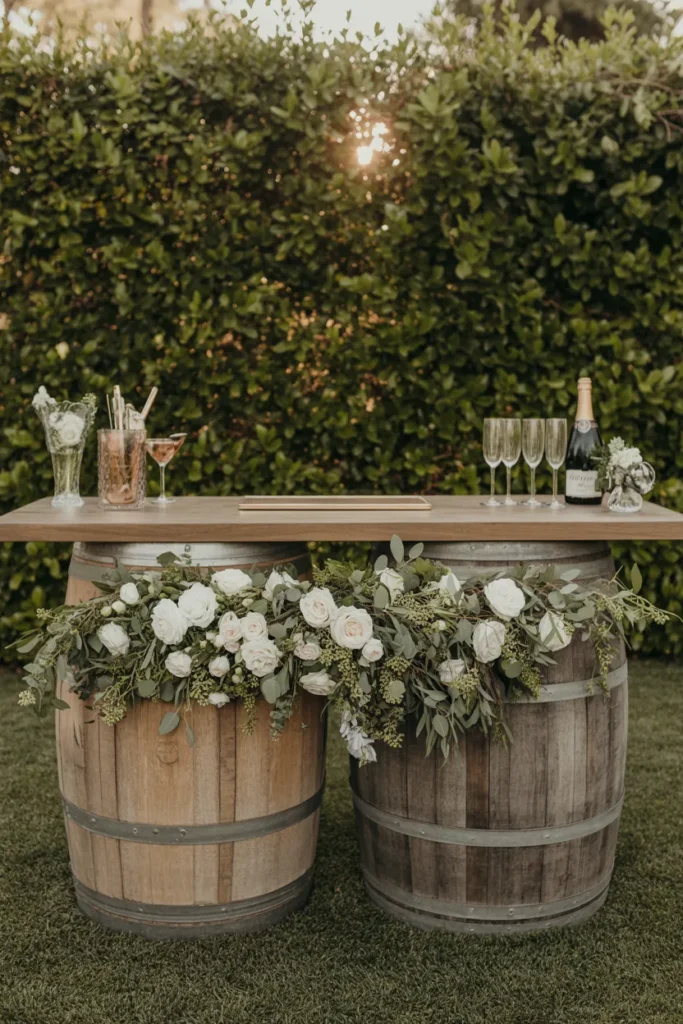
Position the bar at the periphery of the cocktail space rather than the center. A centrally placed bar forces all guest circulation to converge on one point, creating congestion at the bar and empty space at the edges simultaneously. A peripheral bar placement distributes guests more evenly and prevents the bar line from dominating the visual center of the cocktail space.
Stock the bar with a curated selection rather than a full open bar if the garden setting is intimate and the guest count is under 75. A champagne and signature cocktail service with one white and one red wine option serves most guests without the operational complexity of a full bar setup in an outdoor location with limited infrastructure.
11. The Wedding Cake and Dessert Table Placement That Photographs Well Outdoors
Outdoor dessert table placement requires balancing photography conditions, guest access, and food safety — three factors that frequently conflict with each other in a garden setting. The instinct to place the cake in the most beautiful part of the garden often results in a location that is impractical for service, exposed to direct afternoon sun, or inaccessible for the crowd that gathers during the cake cutting.
Position the dessert table in open shade — under a tree canopy, beneath a pergola, or against a shaded garden wall — to protect cake structure and cream-based desserts from heat. Direct afternoon sun collapses buttercream frosting in under 30 minutes in temperatures above 75 degrees Fahrenheit, which is a realistic condition for any spring or summer garden wedding in the American South or Southwest.
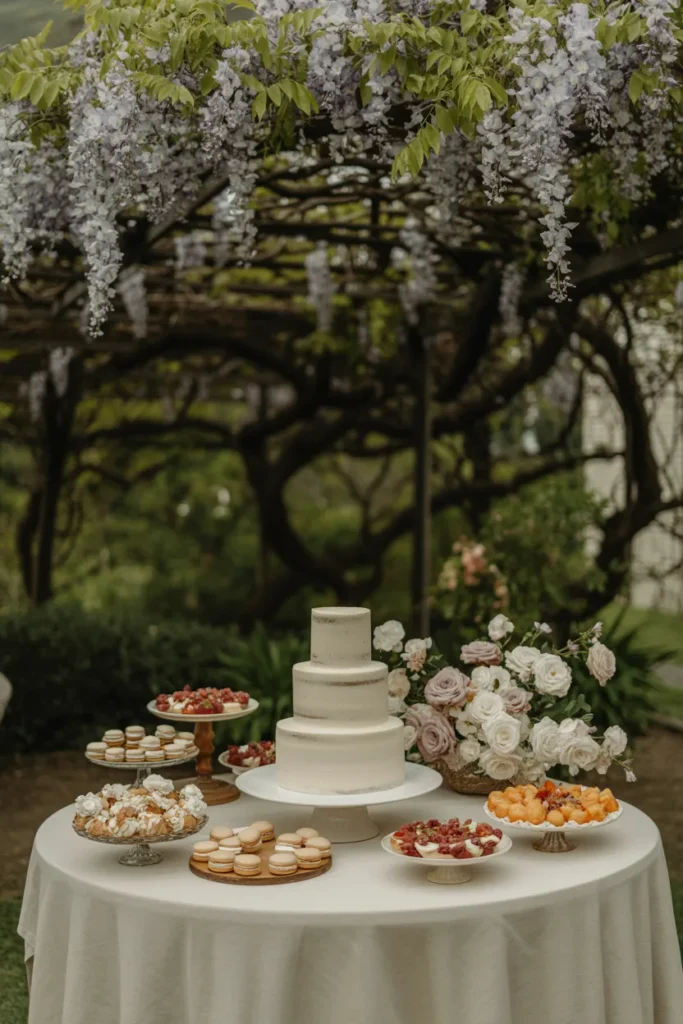
For the backdrop, use a garden feature that already exists rather than a constructed one: a flowering hedge, a climbing rose wall, a stone garden wall, or a mature wisteria. This integrates the dessert table into the garden rather than creating a separate styled station that competes with the setting.
Keep the table surface clear of non-food items. Candles, greenery runners, and decorative objects that share the dessert table surface reduce the available space for actual desserts, complicate service, and create fire hazards near cream-based food items in outdoor conditions.
12. The Guest Comfort Station That Prevents the Most Common Outdoor Wedding Complaints
The three most frequent guest complaints at outdoor garden weddings are heat, insects, and uncomfortable footwear on soft ground. Each is preventable with minimal investment and advance planning, and addressing them directly before the event is one of the clearest signals that the couple has planned with their guests’ experience in mind.
A guest comfort station — a small table or basket arrangement near the ceremony or cocktail space — stocked with sunscreen, insect repellent, paper fans, and a small first aid kit addresses heat and insect concerns immediately. These items cost very little relative to the entire event budget and are used consistently at garden weddings in humid or warm climates.
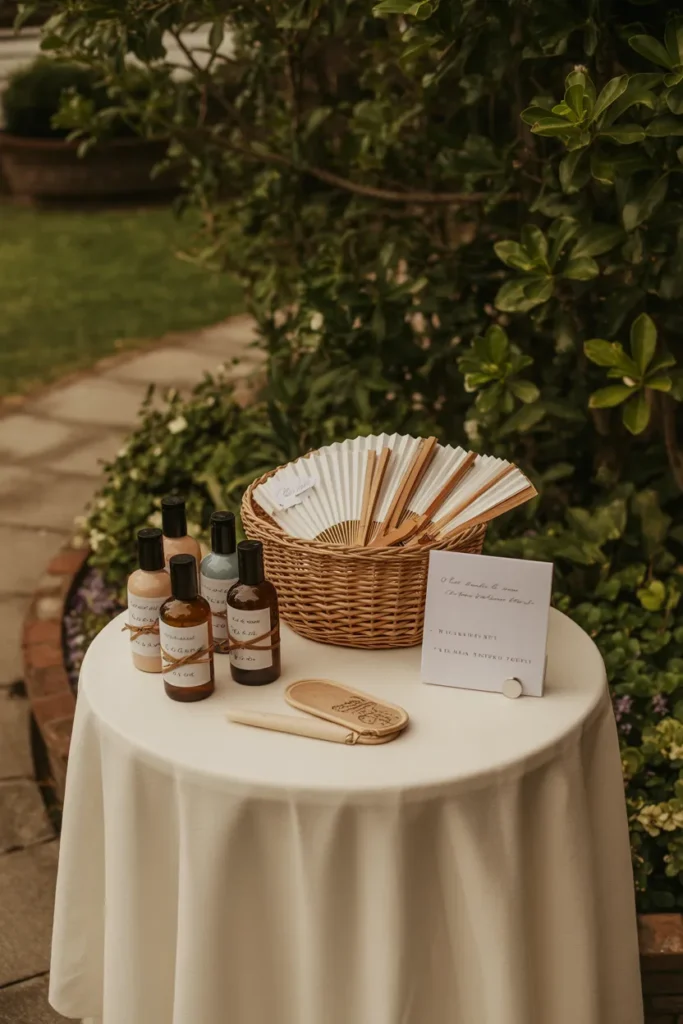
For soft grass surfaces, rent a temporary pathway system — interlocking plastic panels laid beneath a decorative runner — that provides a firm walking surface along the main guest circulation route. Heels sinking into turf is not only uncomfortable but creates a safety hazard, particularly on slopes and in low light after sunset.
Provide a parasol or umbrella stand near the ceremony if the event falls during June through August in a southern state. A parasol does not solve sun exposure but gives guests who are particularly sensitive to heat a tool to manage their own comfort — which is more effective than any single venue-level intervention.
13. The Garden Wedding Color Palette That Works With Natural Greenery Instead of Against It
Choosing a color palette for a garden wedding without accounting for the existing garden color is one of the most consistent planning mistakes. The setting itself contributes dominant color — green in almost every form, with whatever seasonal bloom color the venue provides — and the chosen palette must either harmonize with that base or consciously contrast with it.
Palettes that harmonize with natural greenery: white and cream, blush and sage, terracotta and warm rust, dusty lavender and silver. These tones sit within the same natural color family as garden foliage and allow the setting to amplify the overall palette rather than compete with it.
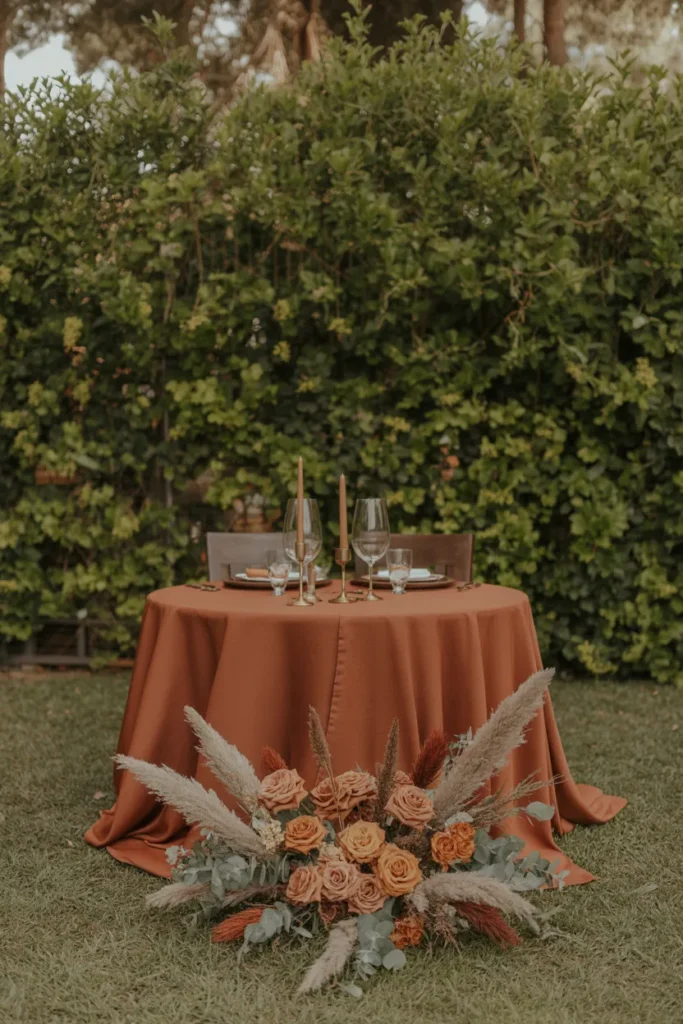
Palettes that deliberately contrast: deep burgundy and forest green, cobalt and gold, dusty blue and warm copper. These work in formal garden settings with strong architectural structure — clipped hedges, stone walls, formal pathways — where the contrast between the deliberate color and the formal setting creates visual sophistication. They are less successful in loose, informal garden settings where the contrast reads as a mismatch.
Avoid high-saturation primary colors — bright red, electric blue, vivid orange — in a garden wedding setting. These colors photograph well in isolation but compete directly with the natural tones of a garden in a way that desaturates the setting and makes the garden itself look less beautiful in photographs. The goal of a garden wedding palette is to make the garden more beautiful, not to override it.
14. The Garden Wedding Timeline That Accounts for Outdoor-Specific Delays and Light Changes
A garden wedding operates on a tighter timeline than an indoor event because two fixed conditions — natural light and temperature — determine the quality of key moments in ways that indoor venues do not. Photography, comfort, and dinner service are all affected by when specific events happen relative to sunset and the outdoor temperature curve.
For spring and fall garden weddings, the ceremony should begin no later than 4 PM to ensure full, warm natural light for the ceremony and post-ceremony portraits. Summer weddings can push the ceremony to 5 or 5:30 PM to avoid peak afternoon heat without sacrificing light. Winter garden weddings in mild climates require a 2 PM ceremony start to secure usable natural light for all photography before sunset at 5 PM.
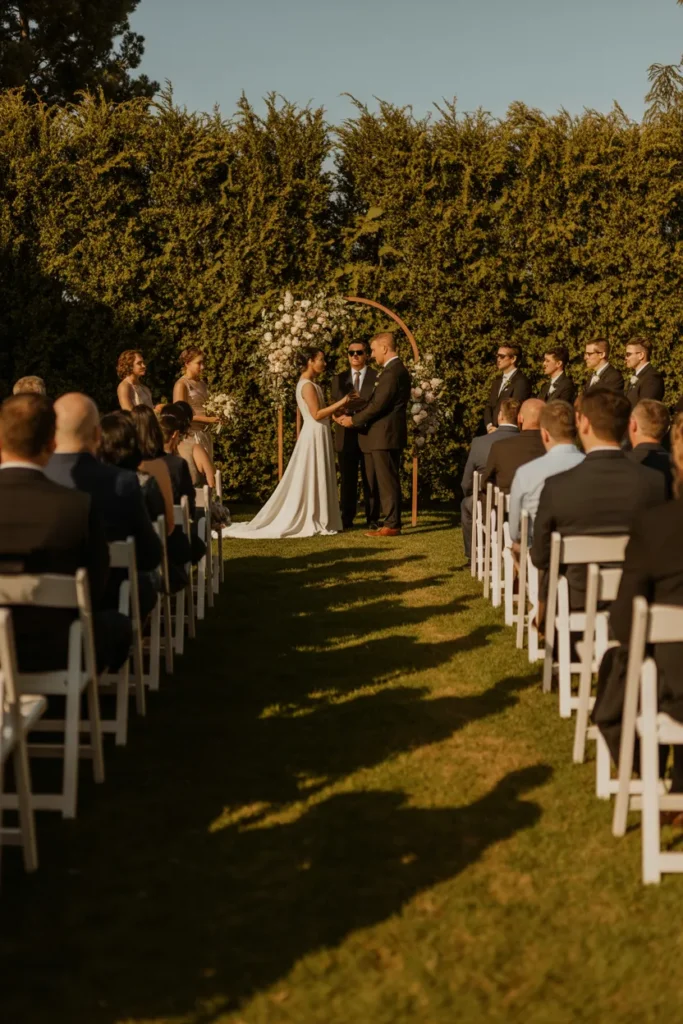
Build a 20-minute buffer into every transition in the outdoor event timeline. Indoor venues can absorb delays with climate control and artificial lighting. Outdoor venues cannot. A ceremony that runs 15 minutes late shifts portraits into harsher light, delays cocktail hour into the hottest part of the afternoon, and compresses the entire reception timeline in ways that cannot be fully recovered.
Brief all vendors on the outdoor timeline constraints specific to your venue. Photographers, caterers, musicians, and florists accustomed to indoor events frequently underestimate the impact of light and temperature changes on their service timing. A shared timeline document with sunset time, temperature forecast, and lighting installation schedule distributed to all vendors one week before the event prevents the majority of outdoor event timing failures.
Conclusion
A garden wedding succeeds when every decision — from the ceremony layout and floral arch placement to the lighting plan and guest comfort stations — is made with the outdoor setting at the center of the thinking rather than as a backdrop to an indoor event formula. The garden wedding ideas 2026 covered in this guide are designed to help you plan each element with that logic in mind.
Save this post to your Pinterest wedding planning boards so you can revisit each section as your planning evolves. The most successful outdoor celebrations are built through specific, sequential decisions rather than general inspiration. If this guide was useful, explore more outdoor ceremony design, garden reception styling, and wedding floral planning ideas to continue building your vision with confidence.