
Most guest bedroom ideas focus on aesthetics while ignoring the real problem: a room that looks good in photos but fails to function well for an actual overnight guest. This guide covers 15 specific guest bedroom setups built around real decisions, real room sizes, and real comfort needs, so you can create a space that works whether guests stay one night or two weeks. Each idea includes practical guidance on what to use, when it applies, and what to avoid.
1. The Murphy Bed Guest Room That Doubles as a Home Office Every Other Day
A Murphy bed, also called a wall bed, is the most practical solution for a guest bedroom that cannot afford to be a single-purpose room. When the bed folds up, the room functions fully as an office, workout space, or studio. When guests arrive, the bed folds down in under a minute and the room transitions completely.
The layout works best when the desk or workspace is built into the Murphy bed unit itself. Integrated designs include a fold-down surface that automatically tucks away when the bed lowers, so there is no furniture rearranging required. This integration is what separates a functional dual-purpose room from a cluttered one.
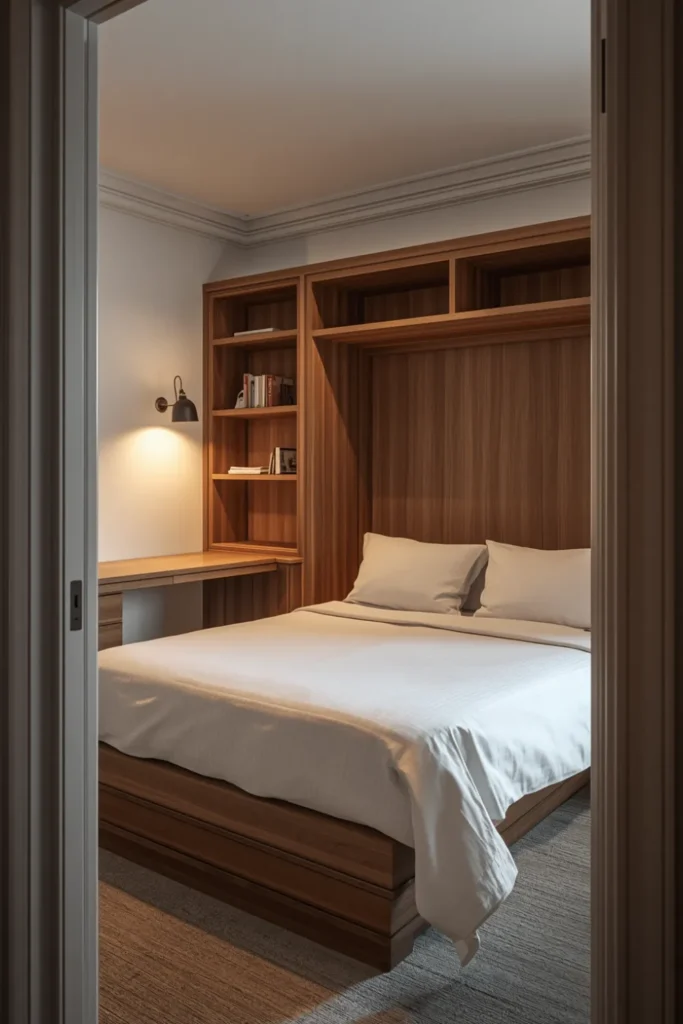

The mistake most homeowners make is buying a standalone Murphy bed and then trying to fit existing furniture around it. The room ends up serving neither purpose well. Plan the entire wall unit first and design the rest of the room around it.
This setup applies to any room between 100 and 180 square feet. Smaller than 100 square feet and the fold-down clearance becomes a problem. Larger rooms rarely need to double as offices, making a standard bed the better choice.
2. The Small Guest Bedroom Layout That Fits a Queen Bed Without Feeling Cramped
Fitting a queen bed into a small guest bedroom is one of the most common layout challenges in American homes, particularly in older houses where secondary bedrooms were built for twin beds. The solution is not to downsize the bed. It is to eliminate every non-essential piece of furniture and use the wall space that floor space cannot provide.
In a room under 120 square feet, a queen bed should be centered on the longest wall with exactly 24 inches of clearance on each side and at the foot. This is the minimum for comfortable movement and is non-negotiable if you want the room to function without guests feeling confined. Any less than 18 inches on either side and the room starts to feel like a hotel corridor.
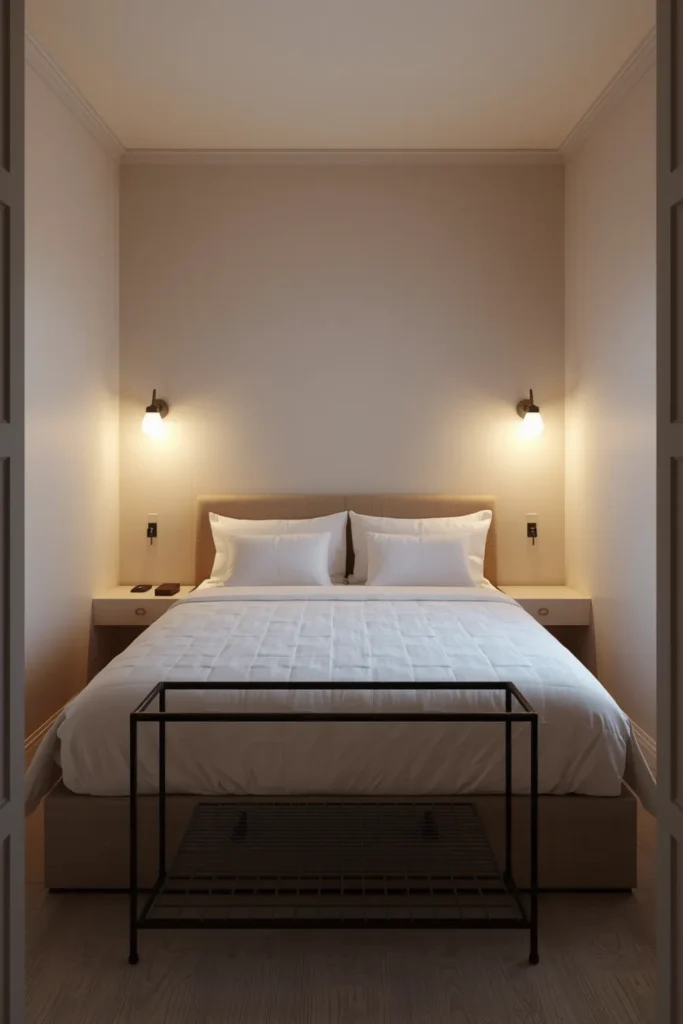
Replace a bulky dresser with two slim floating nightstands and a narrow wall-mounted shelf above the bed for storage. A small luggage rack at the foot of the bed eliminates the need for a bench and gives guests a dedicated place to keep their suitcase without placing it on the floor or the bed.
Avoid placing the bed in the center of the room or diagonally. Both arrangements waste perimeter wall space that small rooms cannot afford to lose. Against the wall, centered, is almost always the correct starting position for small guest bedroom layouts.
3. The Neutral Guest Bedroom Color Scheme That Works for Every Type of Guest
Color is where many guest bedroom ideas go wrong. A highly personalized color scheme, deep jewel tones, bold wallpaper, or a themed palette, may reflect the homeowner’s taste but it actively reduces how comfortable a wide range of guests feel in the space. A neutral scheme is not a default or a compromise. It is a deliberate choice that maximizes guest comfort across age groups, sensitivities, and preferences.
The most effective neutral palette for a guest bedroom combines three tones: a warm white or off-white on the walls, a medium warm grey or greige on soft furnishings, and one grounding accent in a natural material such as natural oak, rattan, or linen. This combination reads as calm and considered without feeling cold or bare.
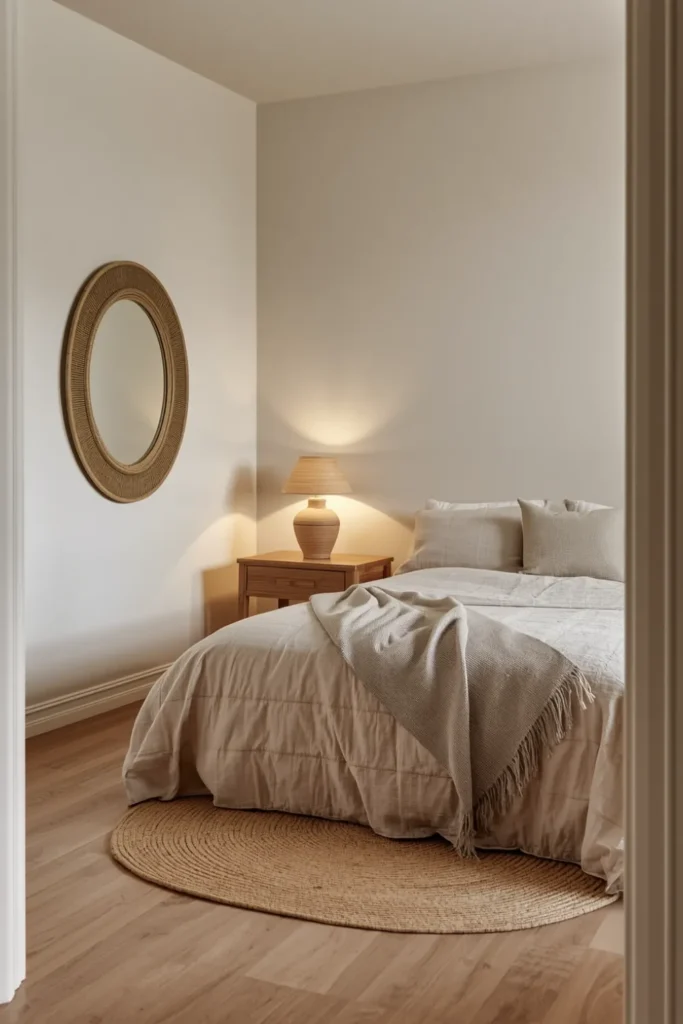
Warm whites work better than cool whites in guest bedrooms because they respond well to both daylight and artificial light, making the room look welcoming at any hour. Cool whites look clean in daylight but take on a clinical tone under warm incandescent or LED lighting at night, which is exactly when guests are winding down.
Limit accent colors to natural textures rather than painted or printed elements. A natural linen throw, a woven rattan mirror frame, or a jute area rug introduce visual interest without committing to a color that divides opinion.
4. The Daybed Guest Room Setup That Serves as a Sitting Room Between Visits
A daybed is the most versatile piece of furniture a guest bedroom can contain. Positioned against a wall with bolster pillows along the back and sides, it reads as a sofa during the day. At night or during a guest visit, it functions as a single bed without any conversion required. For households that host guests less than six times per year, a daybed setup makes more practical sense than a dedicated bed that sits unused the majority of the time.
The daybed works best in rooms where the secondary function, sitting room, reading room, or hobby room, is genuinely used between guest visits. If the room sits closed and unused between guests, a standard bed is the more honest choice.
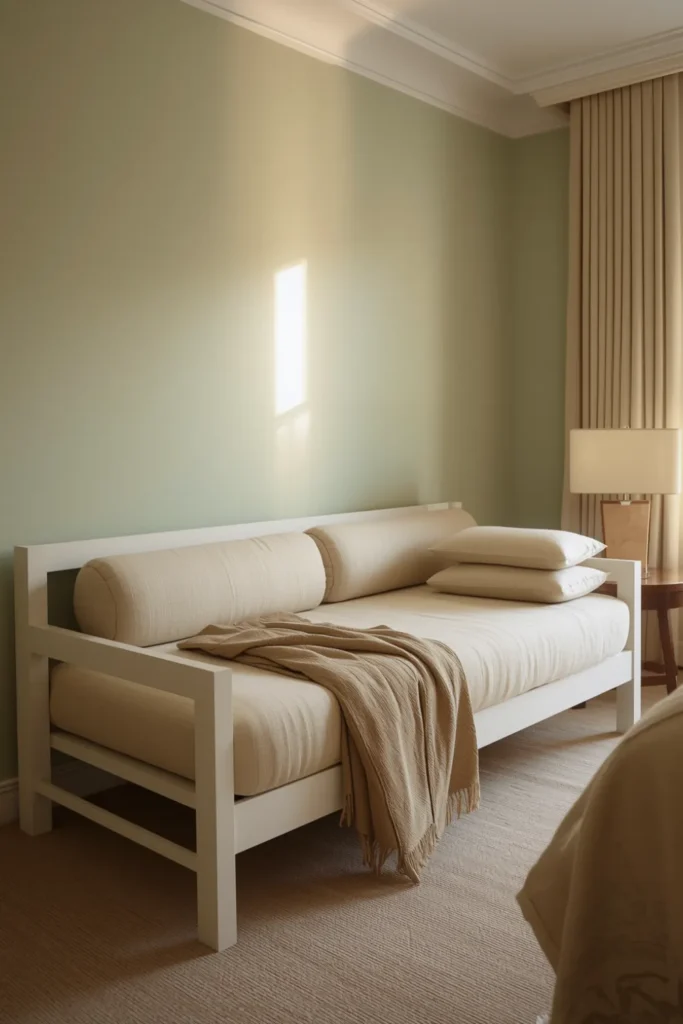
Frame selection matters for this setup. A daybed with a solid headboard on one end and a low footboard or open frame reads more like furniture and less like a makeshift arrangement. Avoid daybeds with ornate or heavily styled metal scrollwork, which age quickly and rarely integrate with modern interiors.
Bedding for a daybed guest room should layer from functional to decorative. A fitted sheet and duvet underneath, bolster pillows along the back wall, and two to three standard sleeping pillows stacked decoratively at one end gives the piece a pulled-together appearance without requiring a full bed-making routine every morning.
5. The Luxury Guest Bedroom on a Practical Budget Using Hotel-Inspired Layering
The reason hotel guest rooms feel more comfortable than most home guest bedrooms has little to do with expensive furniture and almost everything to do with bedding layering, symmetry, and deliberate lighting. Replicating the hotel approach at home is one of the most effective guest bedroom ideas that delivers immediate results without a full renovation.
The hotel layering formula works as follows: a firm supportive mattress topper, a fitted sheet, a flat sheet, a duvet in a duvet cover, and a folded blanket across the foot of the bed. Each layer serves a function. Guests who sleep warm push the duvet down and use the flat sheet. Guests who sleep cold pull the extra blanket up. The option eliminates the need to ask.
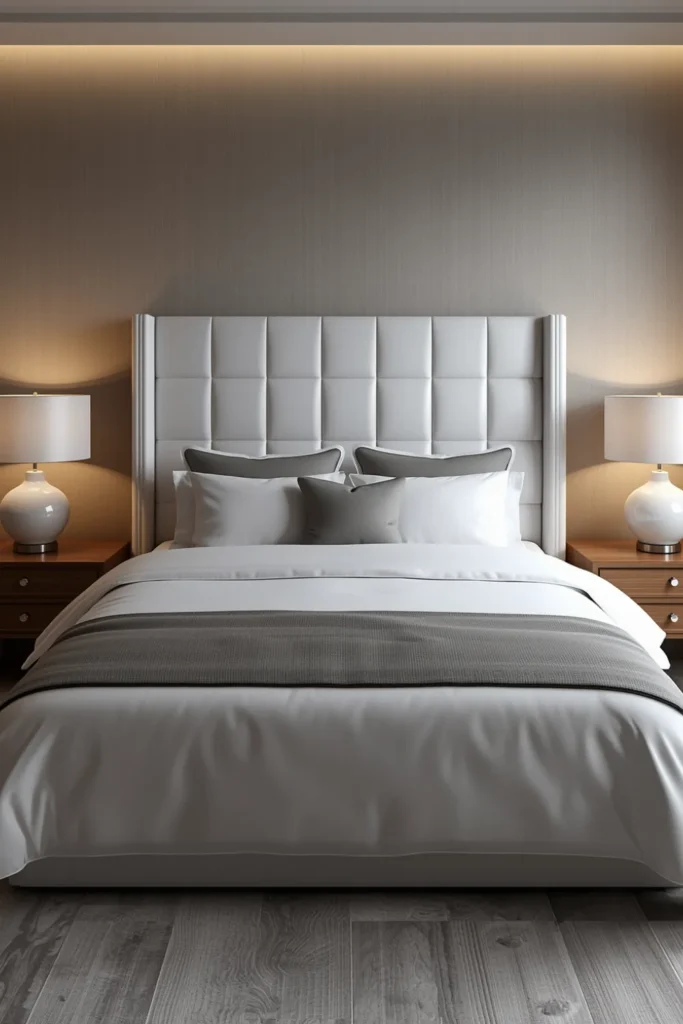
Symmetry is the second hotel principle that home guest bedrooms consistently lack. Two matching nightstands, two matching lamps, and pillows arranged evenly on both sides of the bed create the bilateral balance that makes a room feel intentionally designed rather than assembled. Even in rooms with asymmetric architecture, the bed zone should maintain symmetry.
Lighting at the bedside is where most home guest rooms fail completely. Overhead ceiling light at full brightness is not appropriate for a guest winding down at 10 PM. Add dimmable bedside lamps or wall-mounted reading sconces with individual switches on each side. This single change makes more difference to guest comfort than almost any other upgrade.
6. The Built-In Storage Guest Bedroom That Eliminates the Need for a Dresser
Most guest bedrooms include a dresser that guests rarely use for stays under five days but that takes up significant floor space permanently. Built-in storage along one wall eliminates the dresser, increases total storage capacity, and makes the room feel more considered and spacious simultaneously.
A built-in that runs floor to ceiling along one wall can incorporate hanging space for two or three garment rods, adjustable shelving for folded items, and a pull-out luggage shelf at bench height that replaces both the dresser and a separate luggage rack. The entire unit, when painted the same color as the walls, recedes visually and makes the room feel larger.
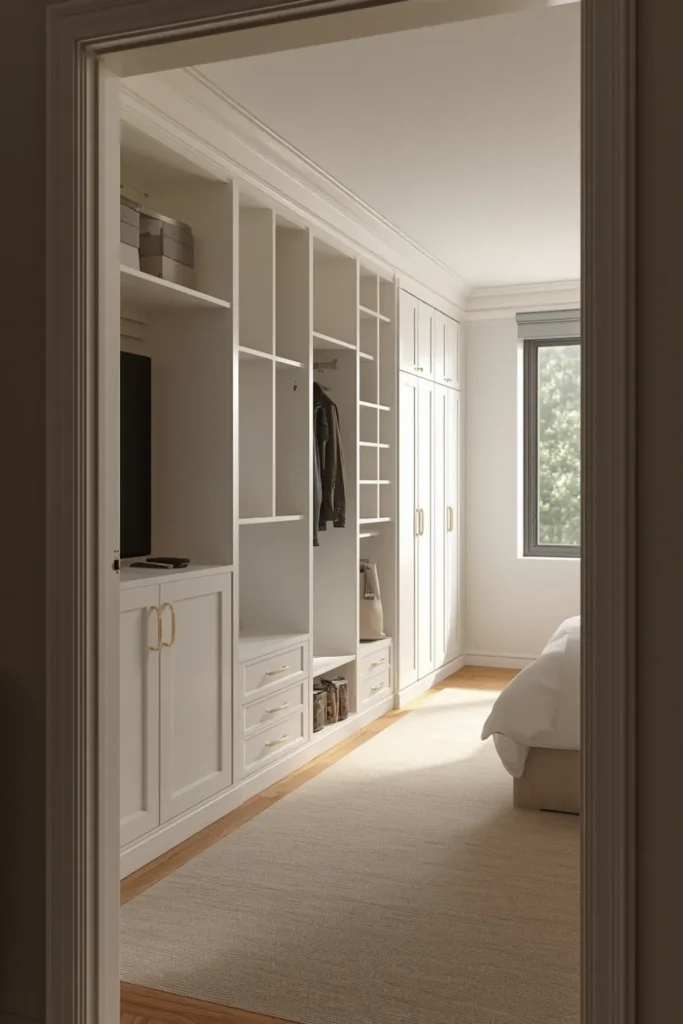
This is one of the most practical guest bedroom ideas for rooms in the 100 to 150 square foot range where every square foot of floor space matters. Built-ins take the same footprint as a dresser but deliver three to four times the usable storage, which also makes the room more functional for any secondary purpose the space serves.
The mistake to avoid is building floor-to-ceiling cabinetry on the same wall as the bed. It overwhelms the headboard zone and creates a visual imbalance. The storage wall should be perpendicular or opposite to the bed wall, which distributes visual weight evenly and keeps the sleeping zone feeling open.
7. The Boho Guest Bedroom With Layered Textures That Feels Warm Without Being Heavy
A bohemian-influenced guest bedroom works well when the layering is controlled. The visual warmth of mixed textures, woven textiles, natural materials, and layered rugs creates a room that guests consistently describe as comfortable and relaxed. The risk is tipping from curated into cluttered, which happens when too many pattern scales compete in the same visual field.
The rule for boho-inspired guest bedroom layering is one pattern per surface category. One pattern on the bedding, one pattern in the rug, and all remaining surfaces in solids or natural textures. This constraint gives the room warmth and visual interest while maintaining enough breathing room to feel designed rather than accumulated.
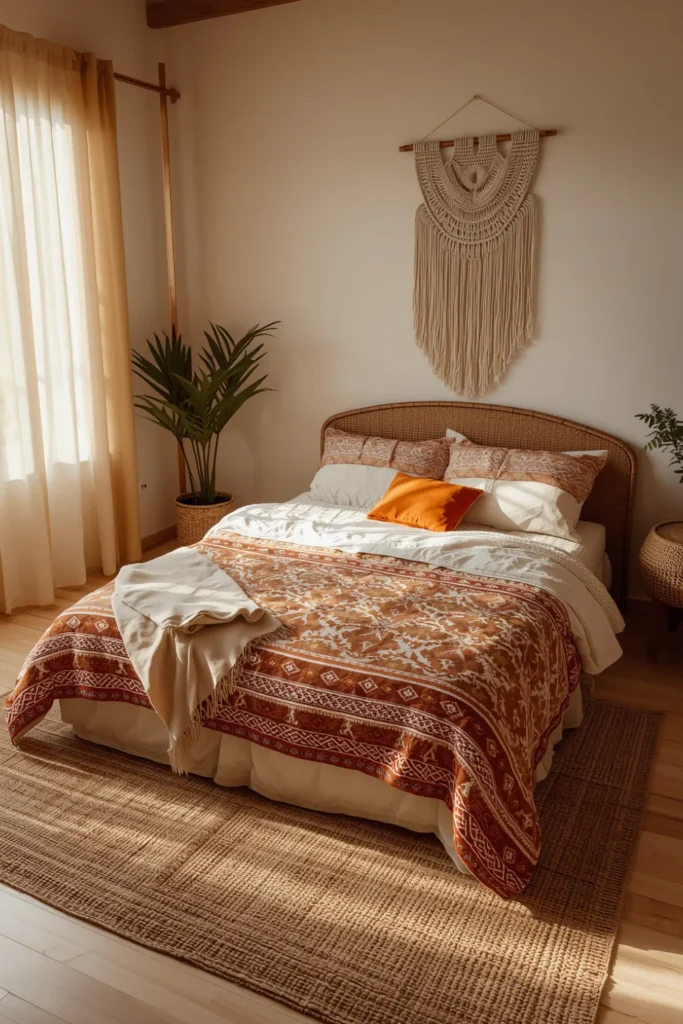
Macrame wall art, jute rugs, woven throws, and rattan or cane furniture frames are the material vocabulary of this style. In a guest bedroom context, limit macrame to one wall hanging above or beside the bed. Overuse of macrame across multiple walls reads as a trend-driven choice rather than a considered design decision.
Color in a boho guest bedroom should stay within a warm earth palette: terracotta, ochre, rust, sand, and warm white. Introducing cooler tones like navy or forest green is possible but requires a deliberate bridging element such as a green plant or a multicolor textile that contains both warm and cool tones.
8. The Twin Bed Guest Room Layout That Sleeps Two Without Feeling Like a Dorm
A twin bed guest room done correctly reads as a considered design choice, not a budget constraint. The challenge is avoiding the institutional symmetry of two identical beds placed side by side with a single table between them, which is the layout that produces the dorm room comparison most homeowners want to avoid.
The solution is to treat the two beds as a composition rather than a pair. Place them parallel on the same wall with a gap of 24 to 30 inches between them. Use one substantial nightstand in the gap that serves both beds rather than two small ones. Place a single large piece of wall art or a vertical mirror above the nightstand, centered between the two beds, which unifies the composition visually.
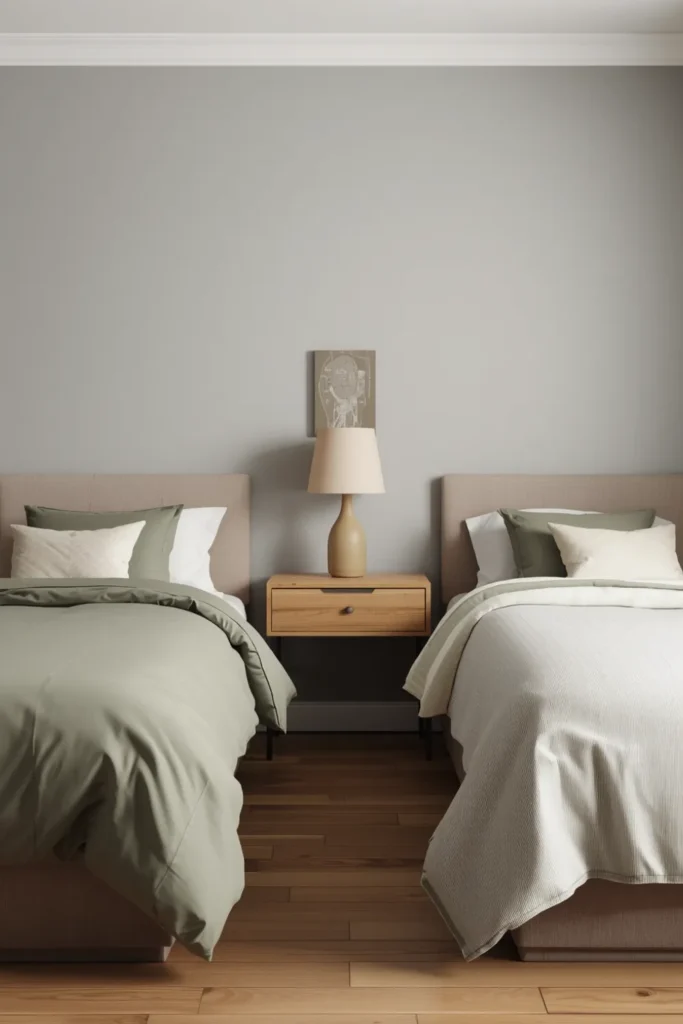
Bedding should match in color but vary slightly in texture or pattern weight. Identical bedspreads in the exact same fabric and finish read as institutional. Two beds in the same color family but with one using a solid duvet and the other a subtle texture or stripe creates distinction without chaos.
This layout works for households that regularly host couples who prefer separate sleeping arrangements, families with two children visiting, or siblings. In rooms under 150 square feet, it is often more comfortable for two guests than a queen bed, which requires both guests to negotiate a shared sleeping surface.
9. The Dark and Moody Guest Bedroom That Feels Like a Boutique Hotel
A dark guest bedroom consistently surprises people with how comfortable it feels to sleep in. Deep wall colors absorb light rather than reflecting it, which creates a genuinely darker environment conducive to sleep, particularly for guests traveling across time zones or arriving late at night. This is not just an aesthetic choice. It is a functional one.
The palette for a dark guest bedroom works best when it stays within one color family across all surfaces. Deep charcoal walls with charcoal or dark linen bedding and dark wood furniture creates depth and cohesion. Introducing a second dark color, such as forest green walls with navy bedding, creates a clash that feels aggressive rather than sophisticated.
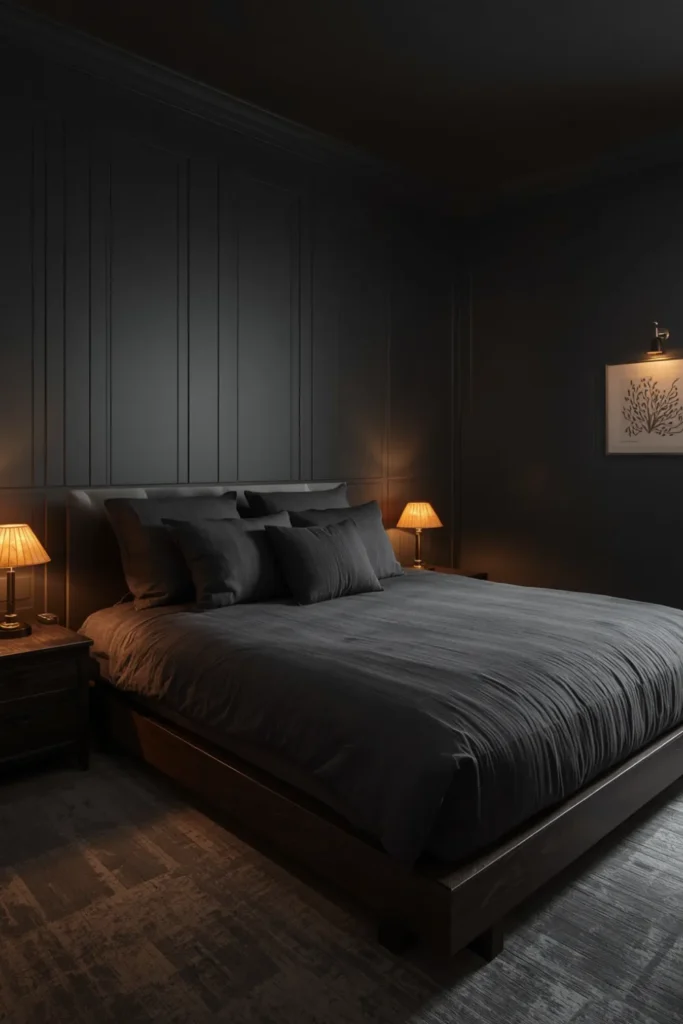
Warm-toned lighting is essential in a dark room. Exposed cool-white bulbs in a dark space look harsh and undermine the entire effect. Use amber or warm-toned bulbs in concealed or shaded fixtures. A single table lamp with a fabric shade on each nightstand provides enough light for reading without breaking the overall mood.
The common objection to dark guest bedrooms is that they will feel small. In practice, a well-lit dark room with a correctly scaled bed and minimal furniture reads as intimate rather than small. The mistake is adding too many light-colored accessories as a hedge. Commit to the palette or choose a different direction entirely.
10. The Guest Bedroom With a Reading Nook That Gives Long-Stay Guests Personal Space
A reading nook within a guest bedroom serves a specific and underappreciated function: it gives guests who are staying more than two or three days a place to exist in the room without being in bed. The absence of a chair or seating in a guest bedroom is one of the most frequent comfort complaints from long-stay guests, though few guests will mention it directly.
The reading nook does not need to be a separate architectural alcove. A well-positioned armchair with a floor lamp beside it and a small side table creates a fully functional reading nook in any corner of the room. The corner placement keeps it from interrupting the floor path and gives the chair a sense of enclosure that makes it feel intentional.
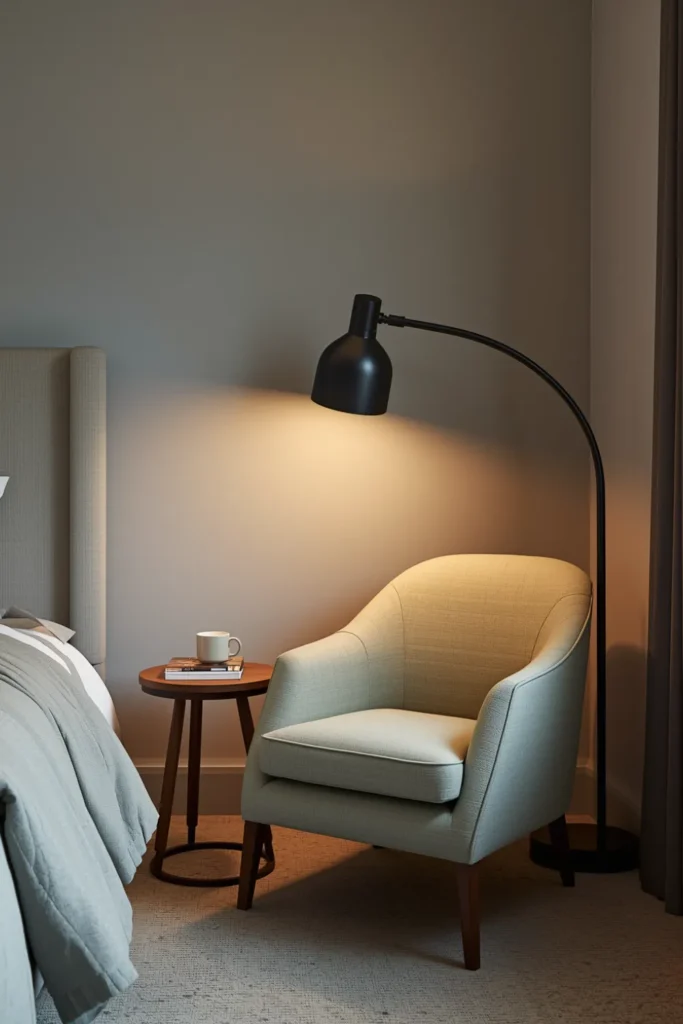
Chair selection for a guest bedroom reading nook should prioritize sitting comfort over visual design. An upholstered chair with arm support, a seat depth of at least 20 inches, and a cushioned back will be used. A thin-seated occasional chair that looks correct in the room but is uncomfortable to sit in for more than 15 minutes will be ignored.
For rooms under 120 square feet, a reading nook competes directly with bed clearance. In this case, a wall-mounted fold-down shelf at seating height paired with a small folding stool is a proportionate alternative that does not consume permanent floor space.
11. The Scandinavian Guest Bedroom That Achieves Comfort Through Simplicity
Scandinavian design principles translate exceptionally well to guest bedrooms because they are built around the same priorities: warmth, function, and the absence of clutter. A Scandinavian guest bedroom is not sparse. It is selective, and that selectivity is what makes it feel restful rather than empty.
The material palette is the foundation of this approach. Light natural wood in a blonde or ash finish, white or very light grey walls, natural wool or cotton textiles in cream and soft grey, and one or two plants in simple white or terracotta pots. Every element is present for a reason and nothing competes for attention.
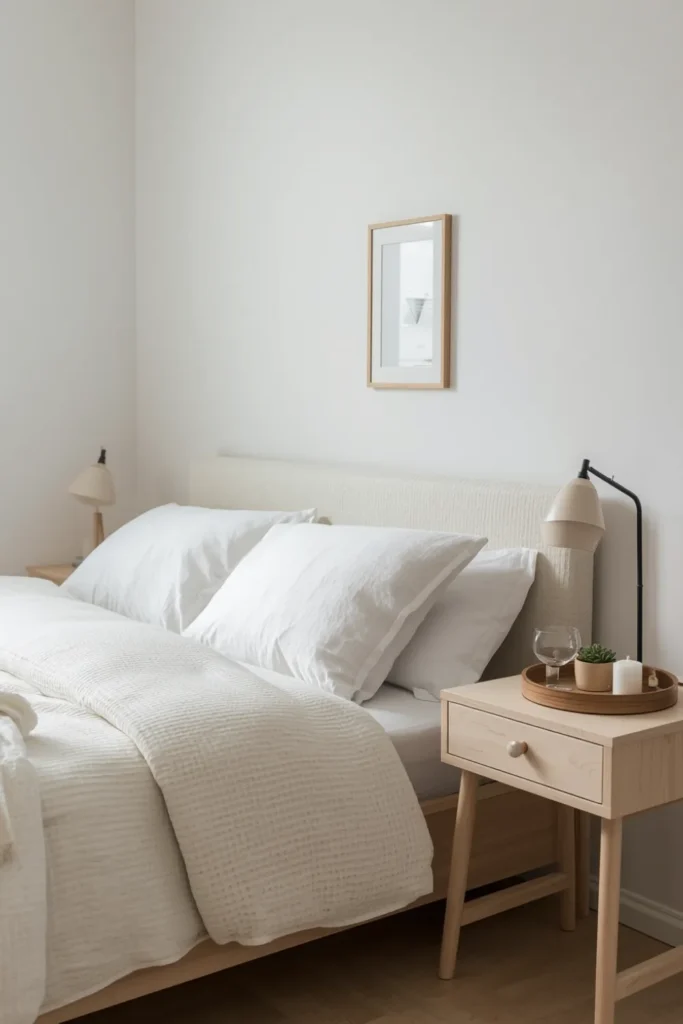
The bed is always the visual focal point in a Scandinavian guest bedroom, which means the headboard, bedding, and pillows deserve the most deliberate attention. A simple upholstered headboard in light grey or off-white linen anchors the bed without heaviness. Layer bedding in two tones of white: a crisp flat sheet and a textured waffle-knit duvet cover in warm white create depth without color.
Functional items should be visible and accessible rather than hidden. A wooden tray on the nightstand holding a glass of water, a small plant, and a candle creates a welcoming still-life that signals to guests that their comfort was considered in advance. This kind of pre-arrival staging makes a measurable difference in how welcomed guests feel.
12. The Guest Bedroom With a Dedicated Vanity That Removes Morning Bathroom Competition
Adding a vanity to a guest bedroom is one of the most underrated functional improvements in guest bedroom design. It removes the primary morning conflict in any shared home: bathroom access. When a guest can apply skincare, style their hair, and manage personal grooming at a dedicated surface in their room, they require significantly less time in a shared bathroom, which reduces friction for the entire household.
A vanity does not require a sink. A surface at seated height, 28 to 30 inches from the floor, with a well-lit mirror and two or three small drawers for guest storage is sufficient. The lighting above or around the mirror is the critical functional component. A mirror without adequate lighting defeats the purpose regardless of how good the vanity looks.
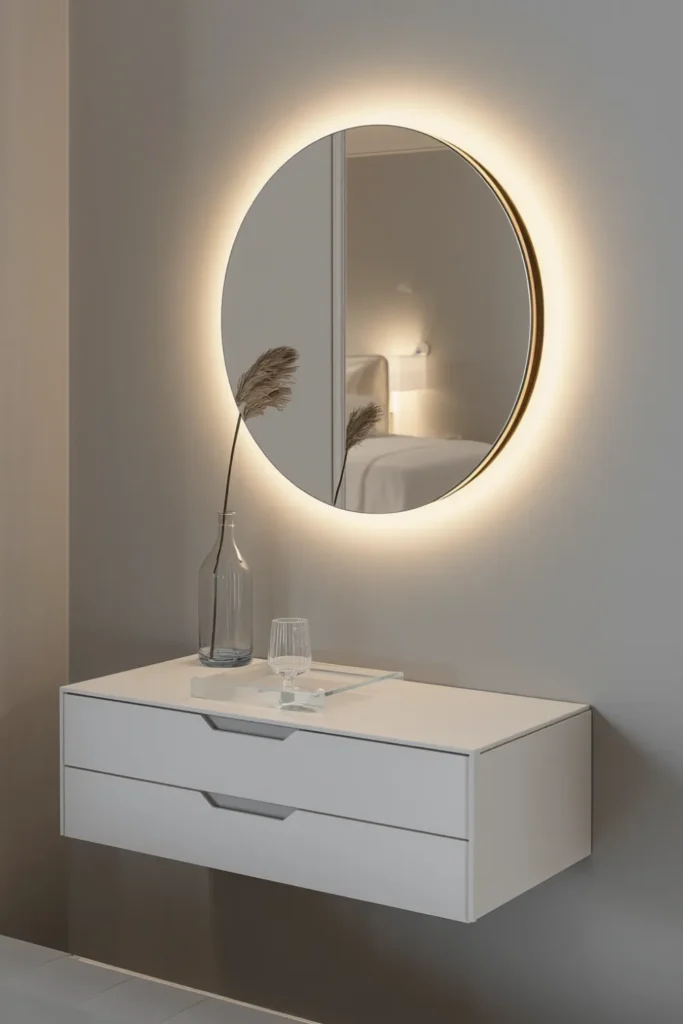
For small guest bedrooms, a wall-mounted vanity shelf with a lighted mirror above it takes up approximately 18 inches of floor depth and 30 to 36 inches of width, comparable to a nightstand footprint. This is a manageable addition even in rooms under 130 square feet.
Keep the vanity surface clear of personal items and stock it with a few universally useful items: a small mirror, a cup for toothbrushes or makeup brushes, and perhaps a small tray for rings or jewelry. A cluttered vanity that requires guests to move your items before using it is less welcoming than no vanity at all.
13. The Shared Guest and Craft Room Layout That Hides the Hobby Between Visits
Combining a craft or hobby room with a guest bedroom is one of the more complex dual-purpose arrangements, primarily because craft supplies and equipment are rarely easy to conceal. The key to making this work is storage that closes completely. Open shelving with craft materials visible does not become a guest bedroom between uses. It remains a craft room with a bed in it.
Closed cabinetry along one wall that contains all craft materials and equipment, combined with a Murphy bed or a daybed on a separate wall, divides the room clearly into two distinct zones. When the cabinetry is closed and the bed is in sleeping configuration, the room functions entirely as a guest room. When the bed is folded or styled as a sofa, the cabinetry can open and the room operates as a craft studio.
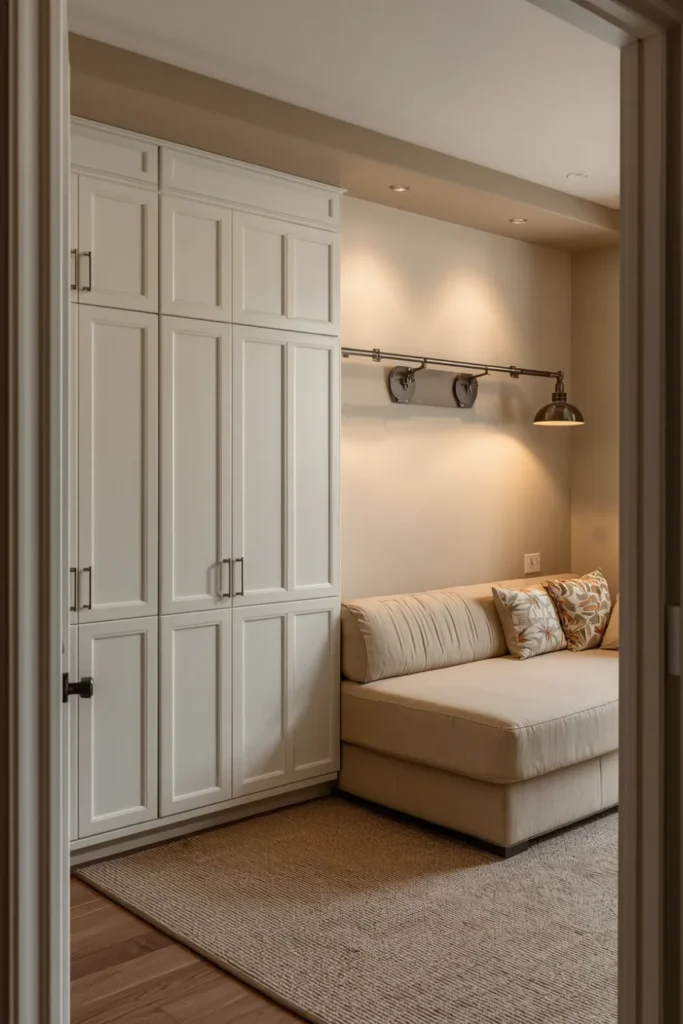
The worksurface for crafting should ideally be a fold-down table mounted to the cabinetry unit or wall, rather than a permanent table that remains in the room and signals craft use even when the cabinetry is closed. A fold-down surface at counter height, 36 inches, accommodates most craft activities from sewing to painting to paper crafting.
Lighting needs to serve both functions. Bright daylight-spectrum overhead lighting for crafting and warm dimmable ambient lighting for the guest sleeping function. Installing both on separate switches allows the room to shift its atmosphere on demand without any furniture rearranging.
14. The Airbnb-Ready Guest Bedroom Setup That Earns Five-Star Reviews
A guest bedroom designed to meet Airbnb hosting standards is one of the most useful frameworks for any homeowner who wants to host guests well, regardless of whether they are renting the space. Airbnb five-star reviews cluster around specific functional elements: blackout curtains, reliable high-speed WiFi, a properly made bed, and a clear place for luggage. These are solvable problems, not expensive ones.
Blackout curtains are non-negotiable for any guest bedroom where genuine darkness is not otherwise possible. Guests traveling from different time zones or working irregular schedules depend on sleep quality, and a room that cannot achieve darkness at 9 AM is a friction point regardless of how well-designed everything else is. Install blackout curtains on every window, even in rooms where it seems unnecessary.
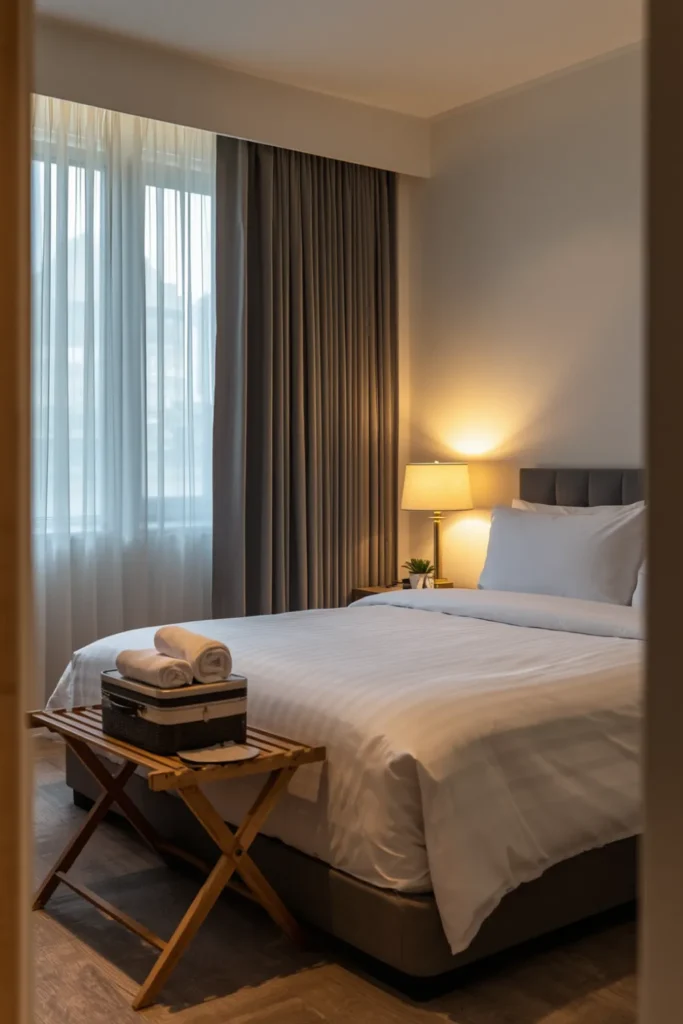
A small welcome basket on the dresser or nightstand containing travel-size essentials, a phone charger in a commonly used cable type, a local restaurant card, and a handwritten or printed note creates a tangible impression of preparation that guests remember and mention in reviews.
Luggage storage in the room, not the closet, is the practical detail most guest bedrooms miss. A folding luggage rack at the foot of the bed keeps suitcases off the floor and off the bed, which guests appreciate and which also protects bedding and flooring from wheel marks and travel wear.
15. The Budget Guest Bedroom Refresh That Transforms the Space Without Renovating
Not every guest bedroom idea requires a full redesign or new furniture budget. A targeted refresh using five specific changes delivers a disproportionate improvement in how the room looks and how guests experience it. The five changes are: new bedding, a new mirror, better lighting, window treatments, and one plant.
New bedding is the single highest-impact change in any guest bedroom refresh. Old or mismatched bedding signals neglect more clearly than any other element in the room. A clean white or neutral duvet cover with matching pillow cases, freshly laundered and properly fitted to the mattress, resets the entire visual baseline of the room.
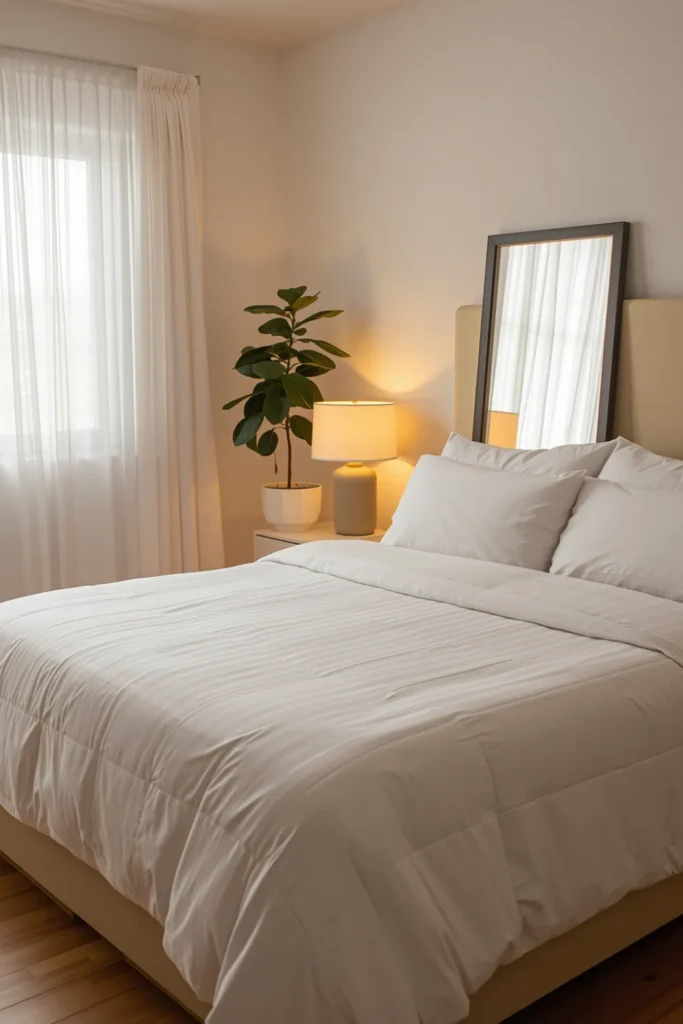
A large mirror, particularly a full-length or oversized leaner mirror, makes any guest bedroom feel larger and better lit by reflecting available light across the room. Position it on the wall opposite or adjacent to the window for maximum light reflection. A mirror leaned against the wall rather than wall-mounted requires no installation and can be repositioned easily.
Swap the overhead ceiling light for a lamp on each side of the bed or a combination of a central pendant and two bedside sconces. Overhead-only lighting is the most aging and uncomfortable lighting arrangement in any bedroom. Better lighting changes the mood of the room completely and costs far less than any furniture purchase.
Final Thoughts
A well-designed guest bedroom does not require a large budget or a dedicated room that sits unused most of the year. It requires deliberate decisions about layout, comfort, lighting, and storage, which is exactly what these 15 guest bedroom ideas are built around.
Save this post now so you can return to it when you are ready to plan, refresh, or redesign your guest room. The layout guidance, furniture sizing rules, and common mistakes covered here apply whether you are starting from scratch or working with what you already have.
When you are ready to go further, explore small bedroom layout planning, built-in storage design ideas, and dual-purpose room setups to build a more functional home across every room.