
An indoor plant mural wall can give a small bedroom the same layered, collected feeling as the rooms you save on Pinterest—without asking you to squeeze in another shelf, chair, or crowded plant stand. By the end, you will know exactly which wall to use, how large the mural should feel, and how to make it look intentional from the bed, doorway, and mirror.
Put the Greenery Where Your Eye Lands First, Not Where the Bed Happens to Fit
In a small bedroom, the most effective mural wall is usually the first full wall you see from the doorway—not automatically the wall behind the bed. That first visual hit tells the room where to place its attention, which matters far more than adding another decorative object to a nightstand.
This works especially well for small bedroom layout ideas for women in apartments where the bed has been placed wherever it physically fits. A leafy mural on the arrival wall can visually pull the room open, soften a plain rental wall, and make even a basic bed frame feel more considered. In a narrow New York apartment bedroom, this can be the difference between walking into a sleeping area and walking into a room with a point of view.
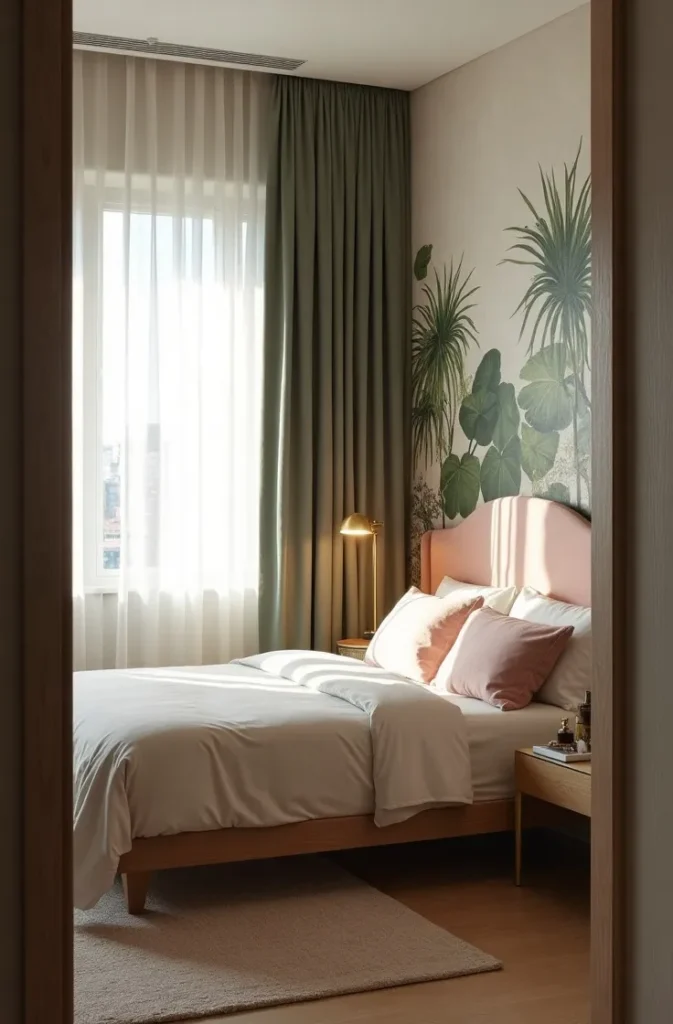

Do not choose the wall with the least furniture just because it is empty. A mural hidden behind an open door, tall dresser, or laundry basket becomes expensive visual noise. Stand in the doorway first, then choose the wall that deserves to hold the room together.
An indoor plant mural wall here gives you a designed first impression before you have even made the bed.
Let the Mural Rise Behind a Low Bed So the Ceiling Finally Feels Tall
A low bed gives a botanical mural room to breathe above it. When the painted leaves, stems, or oversized palms begin at floor level and rise well above the headboard, the eye travels upward instead of stopping at mattress height. That upward movement makes a standard eight-foot ceiling feel noticeably less boxed in.
This is one of the most useful bedroom layout ideas for small rooms with a window, especially when the bed must sit beneath or beside a window. The mural can create a visual headboard without blocking daylight, covering trim, or forcing you to hang heavy artwork in an awkward spot. It works beautifully in older Midwest starter homes where the bedrooms are small but the windows are often generous.
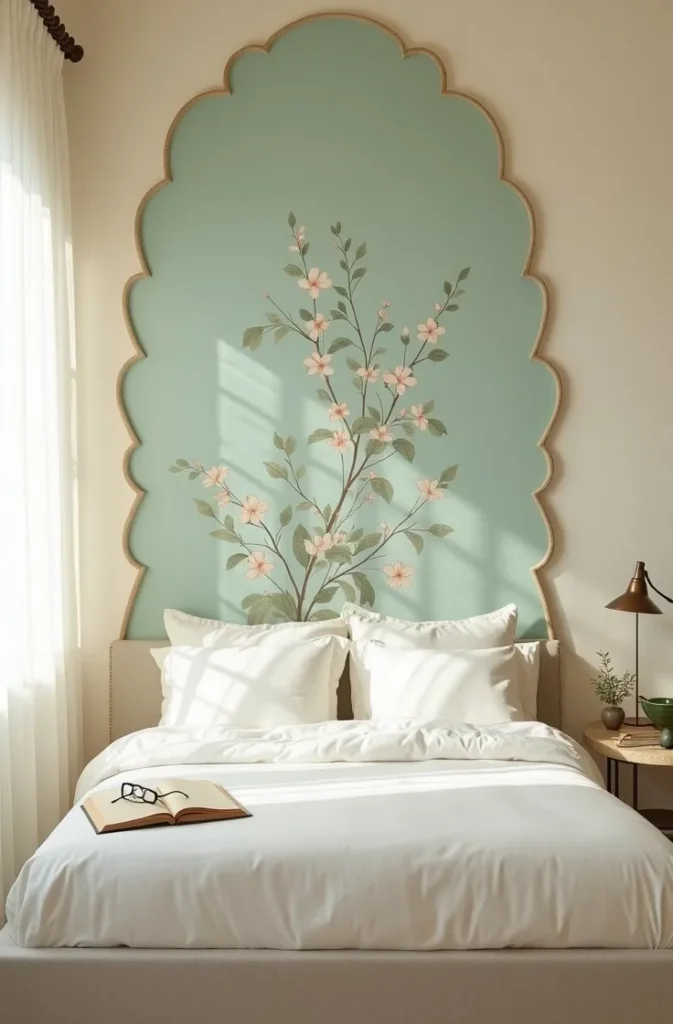
What does not work is using a tall tufted headboard, several framed prints, and a mural all on the same wall. Pinterest can make layered walls look dramatic in a styled photo, but in a real bedroom they often feel crowded the moment you add pillows, chargers, and a bedside lamp. Keep the bed low, let the mural be tall, and allow the wall to do one job well.
You should be able to look up from bed and feel the room lift with you.
Use the Window Wall Like a Frame, Not a Wall to Decorate Around
A window wall becomes much more useful when the mural begins beside the trim instead of competing with it. Painting or applying a soft botanical pattern around one side of the window gives daylight a frame, making the outside light feel intentional rather than like a bright interruption in the room.
This is especially effective in a California bungalow or a small guest bedroom where the window is the room’s best architectural feature. For a studio bedroom layout for small spaces, it can define the sleeping zone without the need for a bulky divider. The mural acts like a soft boundary while still keeping the room open and breathable.
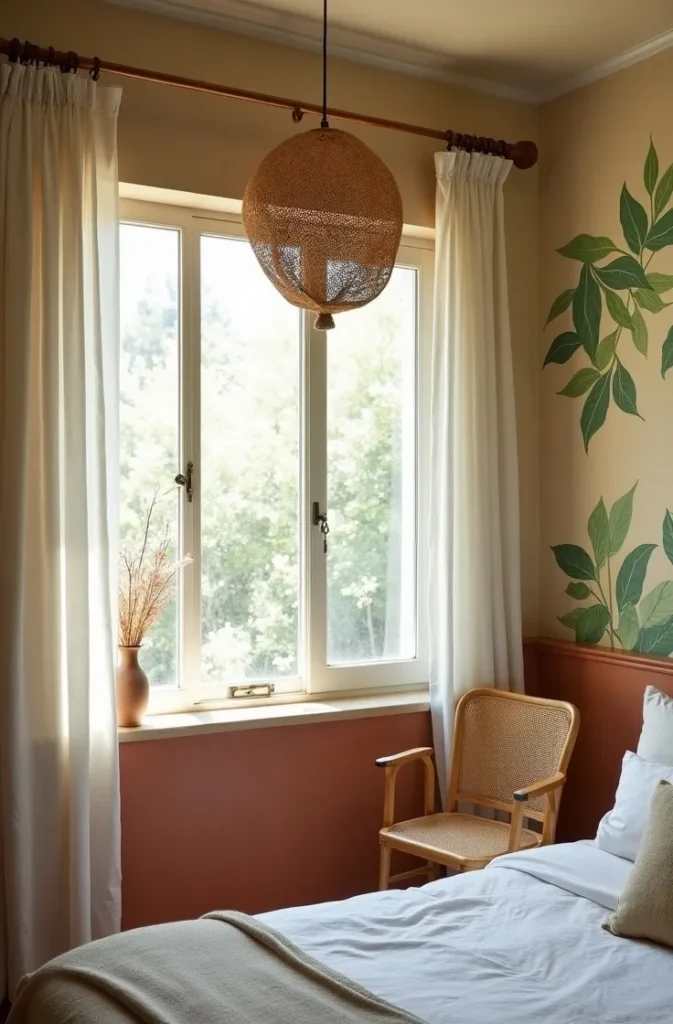
Avoid wrapping dark, dense leaves around every side of a small window. That can make the trim look pinched and reduce the light that makes the room feel larger in the morning. Leave one side quieter, use a lighter background tone, and let the mural feel like it is growing toward the light rather than swallowing it.
The result should feel like the daylight belongs to the room, not like it is fighting the decor.
Stop the Mural at Chair-Rail Height When a Rental Bedroom Already Feels Busy
A half-wall botanical mural can make a rental bedroom feel finished without turning every surface into a statement. Keep the mural below chair-rail height or just above the top of the mattress, then paint the upper wall in a warm neutral that gives the room a pause.
This approach is ideal for a minimalist small bedroom layout where you still want personality but do not want your walls to dominate the furniture. It is especially practical in apartments with uneven ceilings, awkward vents, or builder-grade trim that you cannot change. The lower mural gives visual weight to the bed zone while the clean upper wall keeps the room feeling calm.
Do not use a tiny border that looks like wallpaper left over from another project. The lower section needs enough scale to read from the doorway. A broad botanical sweep, painted leaves, or a large-scale mural panel will feel deliberate; a narrow stripe of small repeating leaves will feel fussy.
This is the version to choose when you want the room to look quietly expensive rather than loudly decorated.
Wrap a Quiet Vine Around One Corner When a Flat Accent Wall Feels Too Safe
A mural that turns one corner can make a small bedroom feel less like a square box. Instead of treating the wall behind the bed as a flat backdrop, let a painted vine, olive branch, or climbing stem trail gently onto the adjacent wall. The room begins to feel connected rather than divided into four hard edges.
This is a strong choice for small bedroom with no closet layout ideas, where furniture has to sit along every available wall. A wrapped corner visually softens the storage pressure and gives the room one continuous gesture instead of several competing pieces. It also works well in Texas ranch-style homes with small secondary bedrooms that have practical proportions but very little architectural drama.
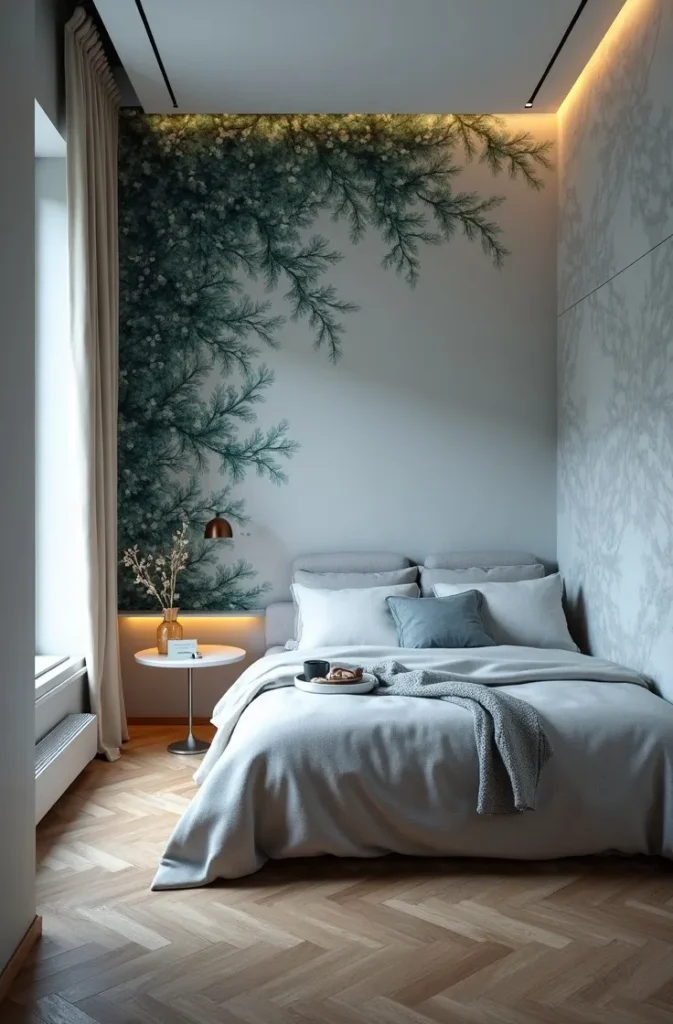
The mistake is making the corner too symmetrical. A botanical mural should feel like it found its way into the room, not like it was measured with a ruler. Keep the composition heavier behind the bed or desk, then let it taper naturally as it moves around the corner.
A thoughtful indoor plant mural wall can make even the least charming corner feel like it was always meant to be there.
Give a Closetless Bedroom a Botanical Headboard That Works Harder Than Storage Decor
When a bedroom has no closet, the bed wall often ends up surrounded by racks, wardrobes, hooks, and baskets. A botanical mural can organize that visual clutter by giving the bed a defined center, even when the room has to work much harder than a typical bedroom.
For a tiny bedroom furniture arrangement, place the mural directly behind the bed and keep wardrobe doors, storage hooks, or rolling garment racks on the adjacent wall. The mural creates a clear “resting” zone, so the room still reads as a bedroom first and storage second. This matters in small city apartments where every garment bag, suitcase, and winter coat needs to live in the same few square feet.
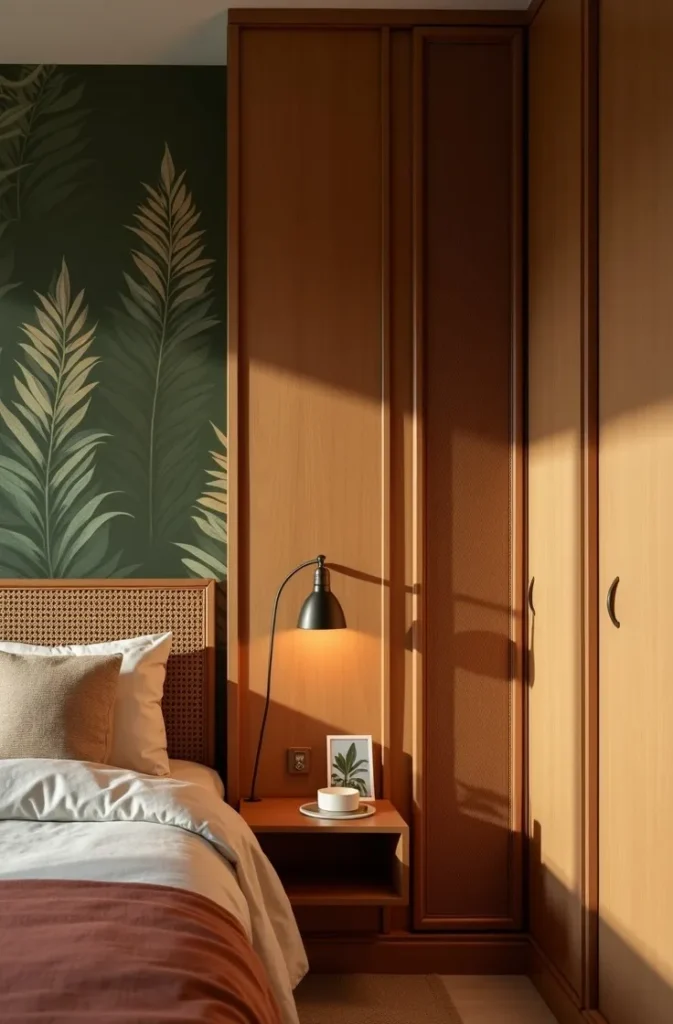
Do not try to camouflage every storage piece with more plant imagery. A mural cannot rescue a wall packed with open shelving, hanging clothes, and too many baskets. Give storage one clean system, then let the botanical wall stay mostly uninterrupted.
When you climb into bed at night, your eye should land on the one part of the room that feels calm.
Keep the Mural Large, Then Make the Furniture Go Quiet
The mural should carry the personality; the furniture should protect the calm. In a small room, one oversized botanical composition often works better than six smaller leaf prints, hanging plants, patterned pillows, and a busy rug competing for attention.
This is especially useful for small master bedroom layout ideas where two people need to move around the bed, open drawers, and access the closet without stepping around decorative clutter. A large mural behind a restrained bed frame gives the room a polished focal point while keeping the floor plan functional. In a shared bedroom, that visual calm also helps the room feel less like a collection of separate habits and belongings.
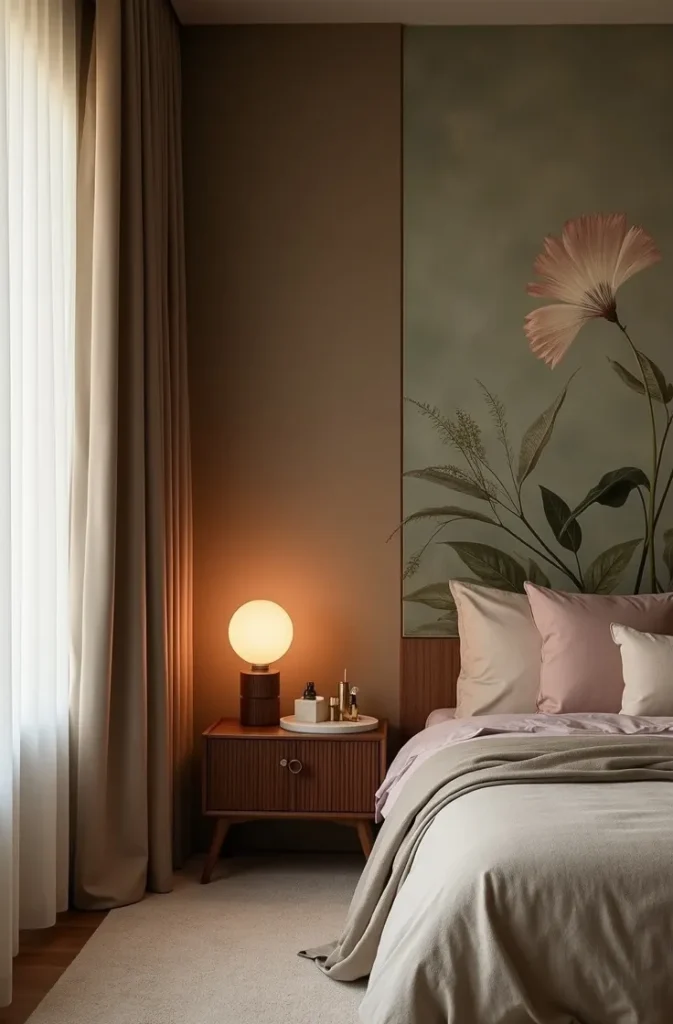
What Pinterest often makes look good—but fails in daily life—is the over-layered “plant room.” Too many pots collect dust, crowd nightstands, block windows, and make the bed wall disappear. Keep one live plant if you love it, but let the mural be your dependable greenery.
This is how you get softness without spending every Sunday watering, wiping, and rearranging.
Use Deep Green After Dark When a Small Secondary Bedroom Has No Architectural Charm
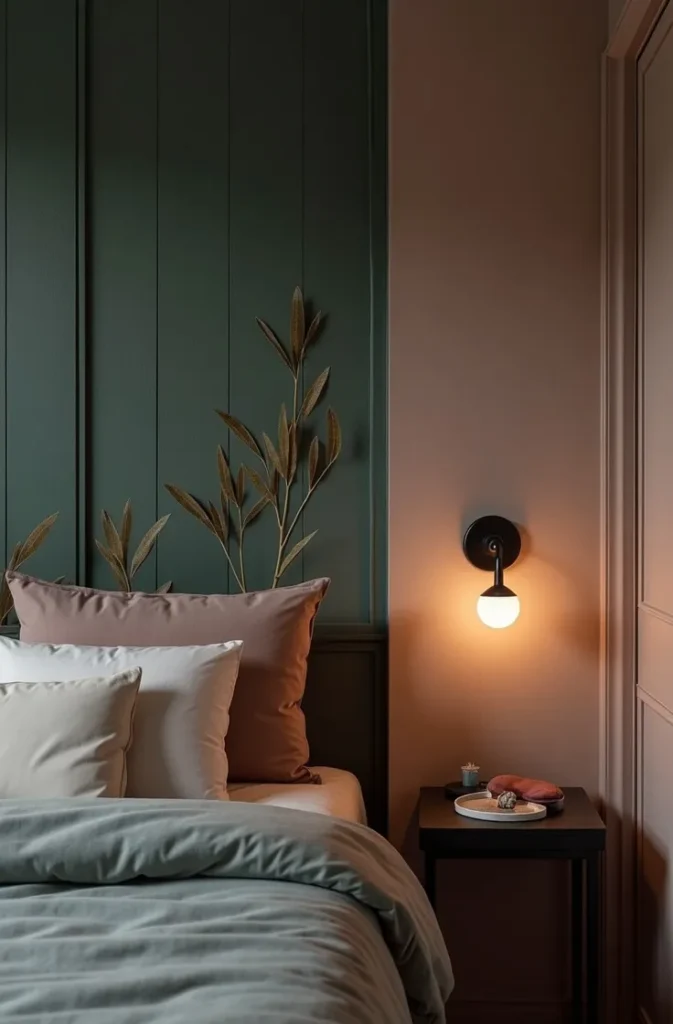
A dark botanical mural can make a plain secondary bedroom feel intentional at night, especially when the room has small windows, low light, or the kind of basic trim found in many older homes. Deep green works because it creates contrast around soft bedding and skin-toned materials, not because it makes the room “moody.”
This is one of the more useful cozy small bedroom design ideas for a guest room, teenage daughter’s room, or a small bedroom in a Midwest starter home. Pair the mural with a warm lamp, one soft wool throw, and bedding in cream or mushroom tones. The dark background gives the room depth after sunset, while the lighter textiles keep it from feeling heavy.
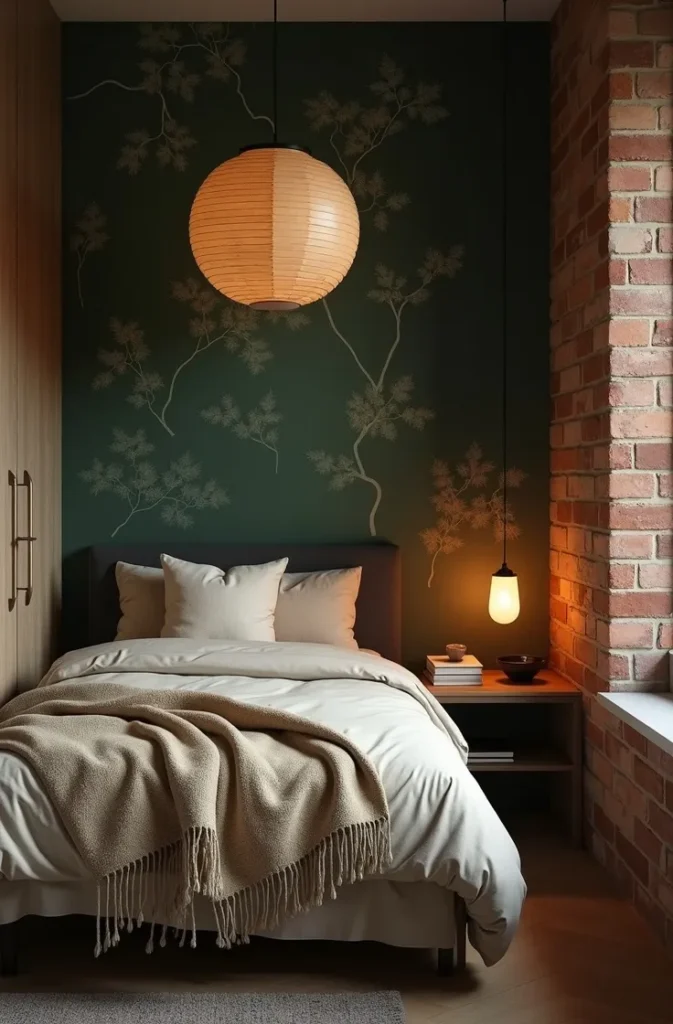
Do not paint every wall dark just because one wall looks beautiful in a photo. In a modest room, a full dark wrap can make corners disappear and make the doorway feel narrower. Keep the mural concentrated on the bed wall or the wall opposite the window.
The room should feel like a place someone wants to retreat to, not a room they need to escape from in the morning.
Separate Sleep From Living in a Studio With a Mural That Has a Clear Edge
In a studio, the plant mural should not drift across every wall. Give it a defined edge behind the bed, so it acts like a visual room divider without requiring a screen, curtain track, or bulky bookcase.
For a functional small bedroom floor plan in the USA, this works particularly well when your bed shares space with a sofa, desk, or dining table. The mural marks where the day ends and the bedroom begins. In a studio apartment, that small visual boundary matters: it helps the bed feel less exposed, even when it is only a few feet from the kitchen.
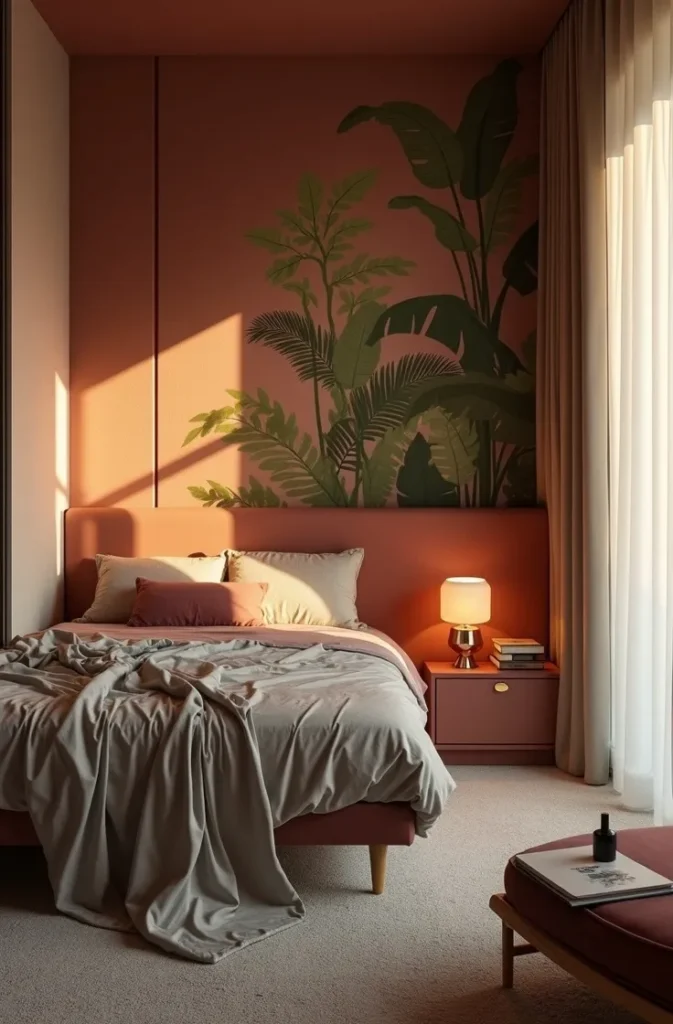
Avoid choosing a mural pattern that fades too softly into the surrounding paint. In a larger home, subtle transitions can look elegant. In a studio, they often disappear. Give the mural a clear outer shape—an arch, an organic panel, or a strong vertical edge—so the sleeping zone has a visible identity.
This is the kind of design choice that helps a studio feel like a home with rooms, not one room doing too many jobs.
Choose a Soft Botanical Scale for a Tiny Room That Needs Calm, Not More Visual Noise
The smaller the room, the more important the scale of the leaves becomes. Large, open stems with visible negative space feel calmer than tiny repeating foliage, especially in layouts for very small bedrooms 2026 where the wall is often seen from only a few feet away.
This works best when your room already has necessary visual activity: closet doors, a radiator, a desk, a ceiling fan, or a window with heavy curtains. A soft botanical mural in sage, gray-green, or faded olive gives the wall personality without forcing your eye to process dozens of little shapes. It is particularly good for women who want a feminine room without relying on pink accessories everywhere.
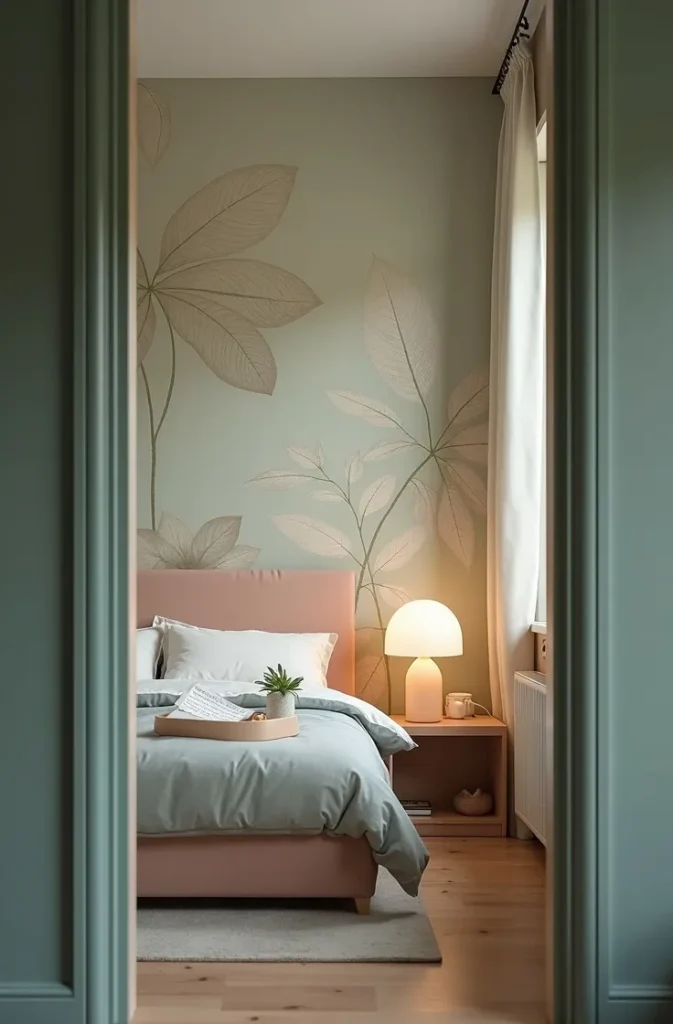
Do not confuse “small room” with “small pattern.” Small repeating leaves can make the walls feel closer, especially once bedding, lamps, and everyday clutter arrive. Choose a mural with enough open background that you can still notice the quiet parts of the wall.
An indoor plant mural wall should make a tiny bedroom feel more settled, not more decorated.
You do not need another pile of decor to make a small bedroom feel personal—you need one wall that knows what it is doing. Save this post before you rearrange, because the right mural decision can guide the placement of everything else around it. A well-designed small bedroom is not about fitting more in; it is about making every visible choice feel worth seeing.