
Renovating a child’s room is one of the most common home projects parents get wrong — not because of budget, but because of planning. These kids room renovation ideas 2026 are built around real decisions: how to use space smarter, how to design for the age your child is now and the age they will be in five years, and how to avoid redoing the whole room again in two years.
1. Build a Loft Bed With a Dedicated Study Zone Underneath to Double the Room’s Function
In any kids room where floor space is limited, a loft bed is the single most efficient structural change you can make. By elevating the sleep zone, you free up the entire footprint beneath it for a purpose-built study area — a desk, shelving, and task lighting — that would otherwise require a separate corner of the room.
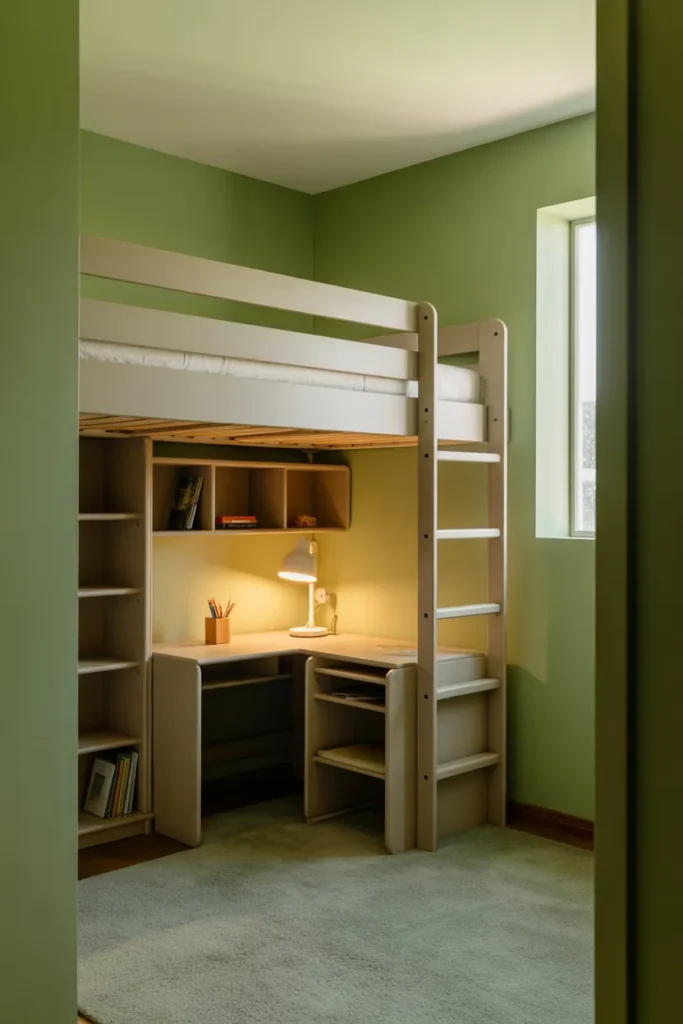
This layout works best for children aged seven and older who are in school and need a defined homework space. The study zone beneath the loft keeps work and sleep visually separated, which supports better focus during homework time and better sleep at night. That separation matters more than most parents realize when designing a room a child actually uses well.

The mistake most people make is choosing a loft bed without planning the under-bed zone at the same time. A bare space under the loft with a mismatched desk pushed in afterward never functions as well as one designed as a system from the start. Measure the clearance carefully — the desk surface should sit at a minimum of 26 to 28 inches from the floor, with at least 38 inches of headroom above it.
2. Install a Floor-to-Ceiling Bookshelf Wall to Build a Reading Identity Into the Room
A dedicated bookshelf wall does something that a single freestanding bookcase cannot — it communicates to a child that reading is a central part of who they are and how their room is designed. Floor-to-ceiling built-in or modular shelving along one full wall creates a library-like atmosphere that grows with a child’s collection from picture books to chapter books to reference materials.
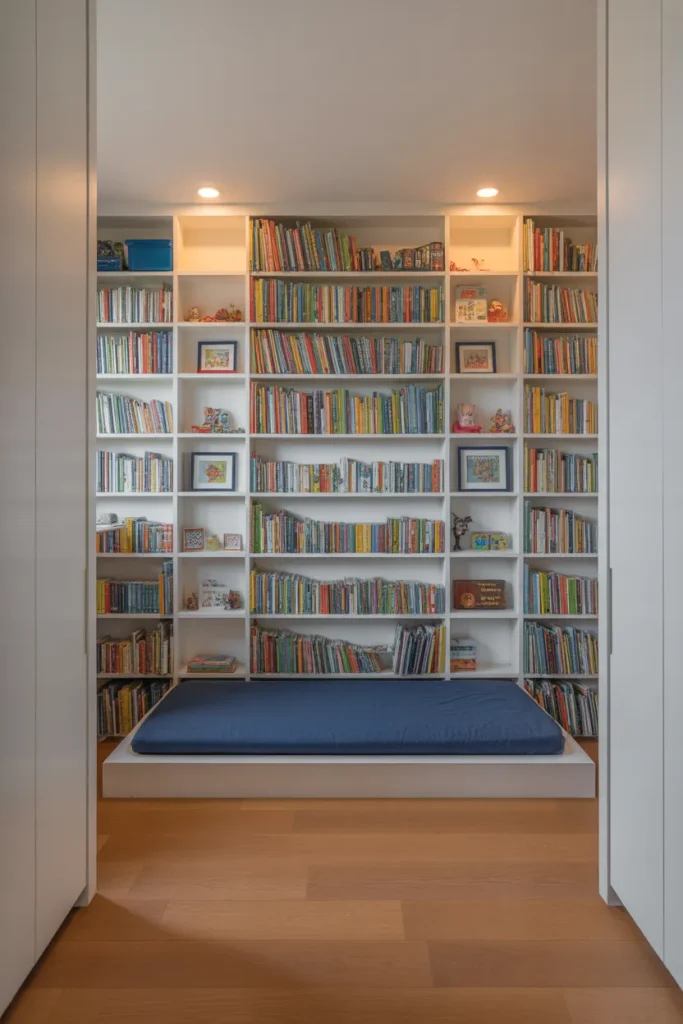
This works in rooms of almost any size because shelving is vertical storage — it does not consume floor space the way furniture does. In a small room, a single wall of deep shelving actually reduces clutter everywhere else by giving every book, toy, and display item a designated home.
Use the lower shelves — reachable without a step — for current reads and frequently used items. Upper shelves can store less-used books, art supplies in labeled bins, or display objects. Avoid filling every shelf to capacity at installation. Leave room to grow, and leave space for the child to display their own objects at their own eye level. A room that feels curated by the child is one they will take care of.
3. Design a Gender-Neutral Color Palette That Adapts as Your Child Grows
One of the most practical decisions in kids room renovation ideas 2026 is choosing a base color palette that does not need to be repainted every few years as tastes change. Gender-neutral does not mean beige and boring — it means choosing colors with enough sophistication and flexibility to adapt alongside a child’s evolving personality.
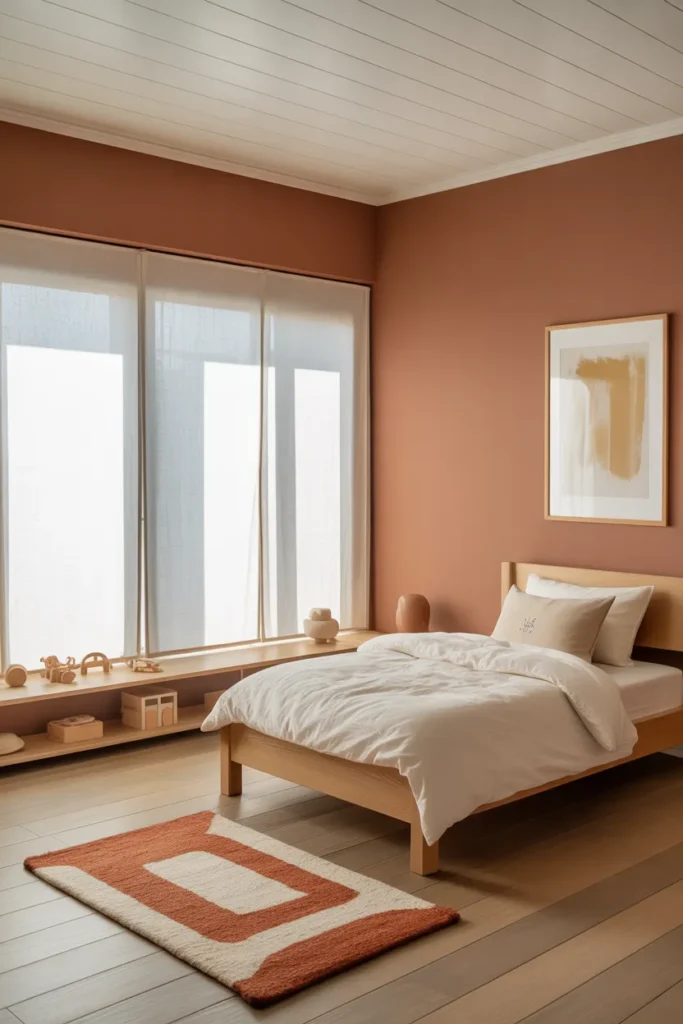
Warm terracotta, deep forest green, dusty mauve, earthy clay, and soft olive are all colors that read as modern and intentional rather than temporary and childlike. They pair easily with natural wood furniture, white bedding, and whatever accent colors a child gravitates toward at different ages. The wall color becomes a backdrop, not the statement.
Paint the walls in the chosen neutral, then introduce the child’s personality through bedding, a rug, wall art, and small objects — all of which can be swapped inexpensively as they grow. This approach means a room designed for a five-year-old can transition comfortably to a room a twelve-year-old is proud of with nothing more than new bedding and a different poster on the wall.
4. Add a Window Seat With Built-In Storage to Create a Reading Nook That Kids Actually Use
A window seat is one of the most beloved childhood room features for a simple reason: children seek out small, contained spaces within larger rooms. A built-in window seat satisfies that instinct while solving two practical problems at the same time — it adds a comfortable seating and reading spot, and the base becomes a deep storage drawer system for toys, blankets, or seasonal clothing.
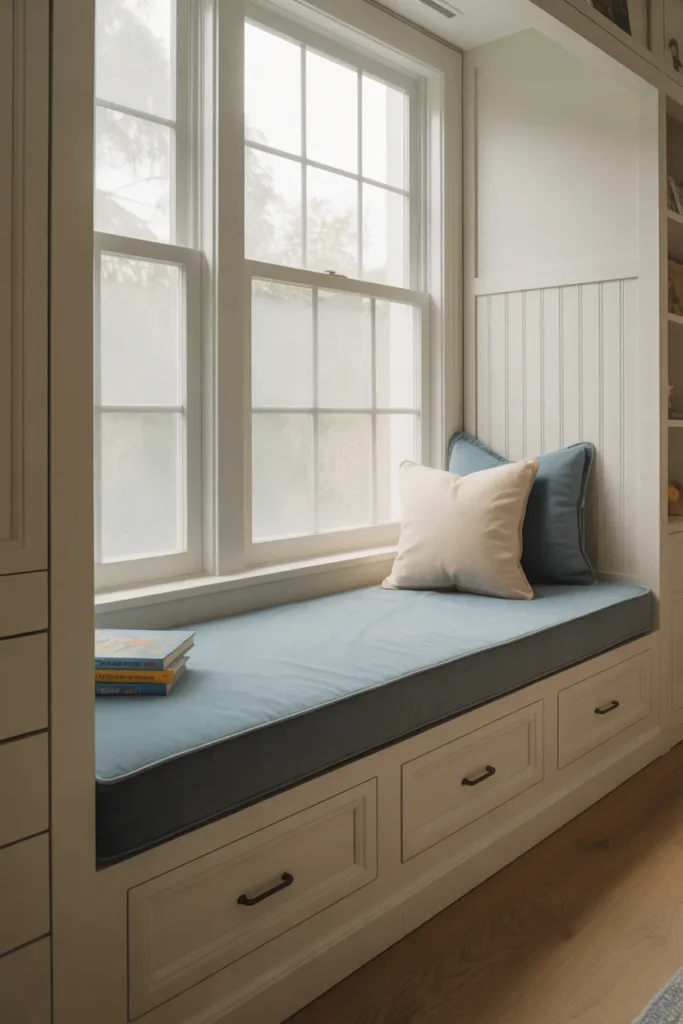
This layout works best when you have a window on an exterior wall with at least 18 to 24 inches of depth to work with. The seat surface should be positioned at 16 to 18 inches from the floor — comfortable for children to climb onto independently from around age four onward. Add a cushion in a durable, washable fabric and a small reading pillow for back support.
Do not overlook the lighting. A window seat used only during daylight hours is a missed opportunity. Adding a small wall sconce or a swing-arm lamp beside the seat extends its use into evenings and makes it a true reading destination rather than a decorative feature the child eventually stops using.
5. Use a Bunk Bed With Integrated Shelving to Maximize a Shared Kids Room
Shared kids rooms present a specific design challenge that single-occupancy rooms do not: two children with different ages, preferences, and storage needs must coexist in a single space. A well-designed bunk bed with integrated shelving on each level gives each child their own defined territory — personal shelf space, their own reading light, and their own area — which dramatically reduces conflict and makes the shared room feel fair.
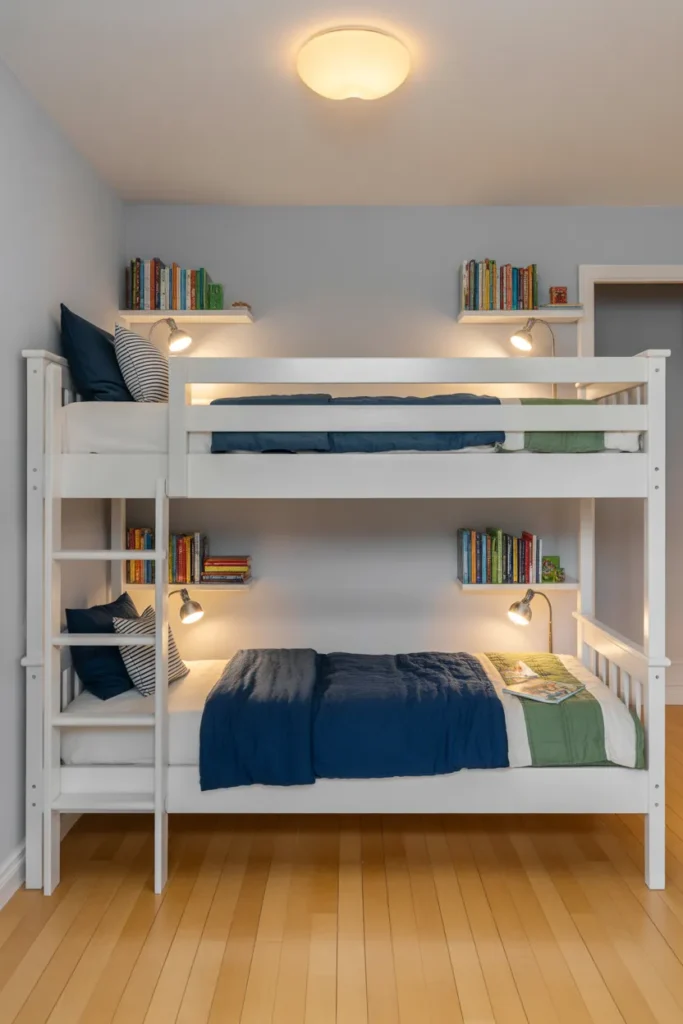
Standard bunk beds with no storage integration waste the vertical space around each bunk. A system that includes a small shelf at pillow height on each level for a book, a lamp, and a few personal objects transforms each bunk from a sleeping surface into a personal zone. Some configurations also include a small curtain that the lower bunk occupant can draw for privacy.
This layout is most effective when the children sharing the room are within three to four years of age of each other. Wider age gaps often require different furniture solutions because the spatial and storage needs diverge significantly. Keep the remaining room layout as open as possible — two children need more clear floor space for play than one child does.
6. Install Pegboard Wall Panels to Give Kids an Organized, Visual Art and Craft Station
A pegboard wall in a kids room solves one of the most persistent organization problems parents face: art and craft supplies that migrate across every surface in the room. By mounting a full pegboard panel — or a grid of smaller panels — on one dedicated wall, you create a fully customizable, completely visible storage system that children can manage themselves because everything has a place and nothing is hidden.
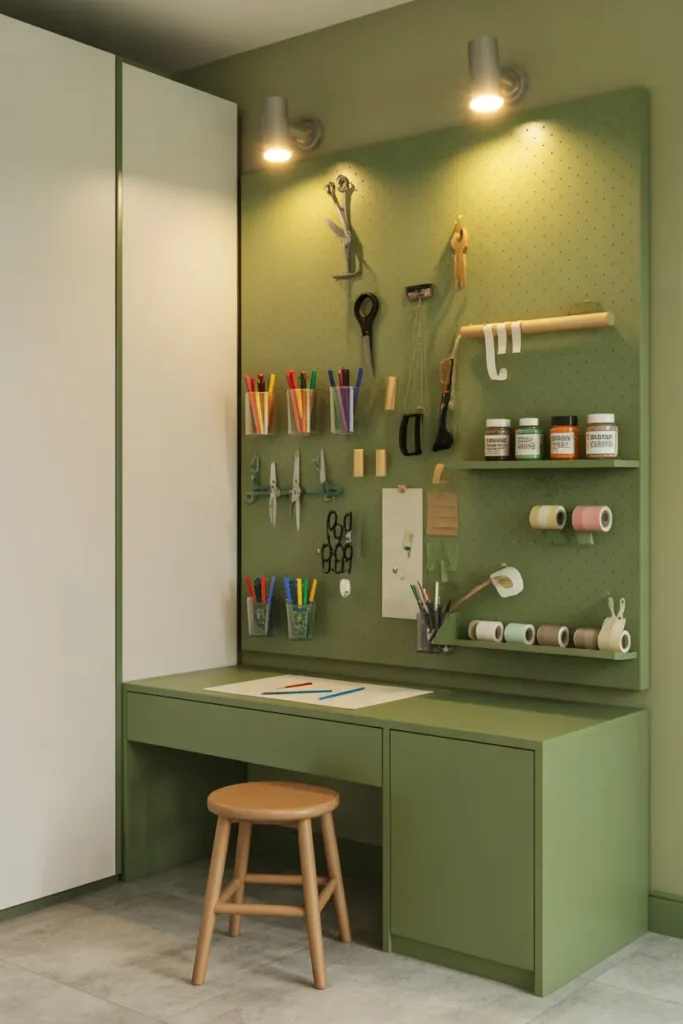
Pegboard works particularly well for children aged five to twelve who are in an active creative phase. Hooks, small bins, shelves, and holders attach and rearrange without tools, which means the storage configuration can evolve as interests change. Painting the pegboard a color that connects with the room palette — rather than leaving it raw — elevates it from a utilitarian panel to a design feature.
Position the pegboard at a height accessible to the child, not the adult. The bottom edge should start no higher than 24 to 30 inches from the floor. Supplies the child cannot reach will not be put away by the child, and the system fails as an organization tool the moment it stops being self-service.
7. Choose a Platform Bed With Under-Bed Drawers to Eliminate the Need for a Dresser
In smaller kids rooms — under 120 square feet — fitting a bed, a dresser, a desk, and a play area often feels geometrically impossible. A platform bed with integrated under-bed drawers solves this by consolidating two furniture pieces into one. The storage capacity of two or three deep under-bed drawers matches or exceeds what most children’s dressers hold, freeing an entire wall for a desk or open play space.
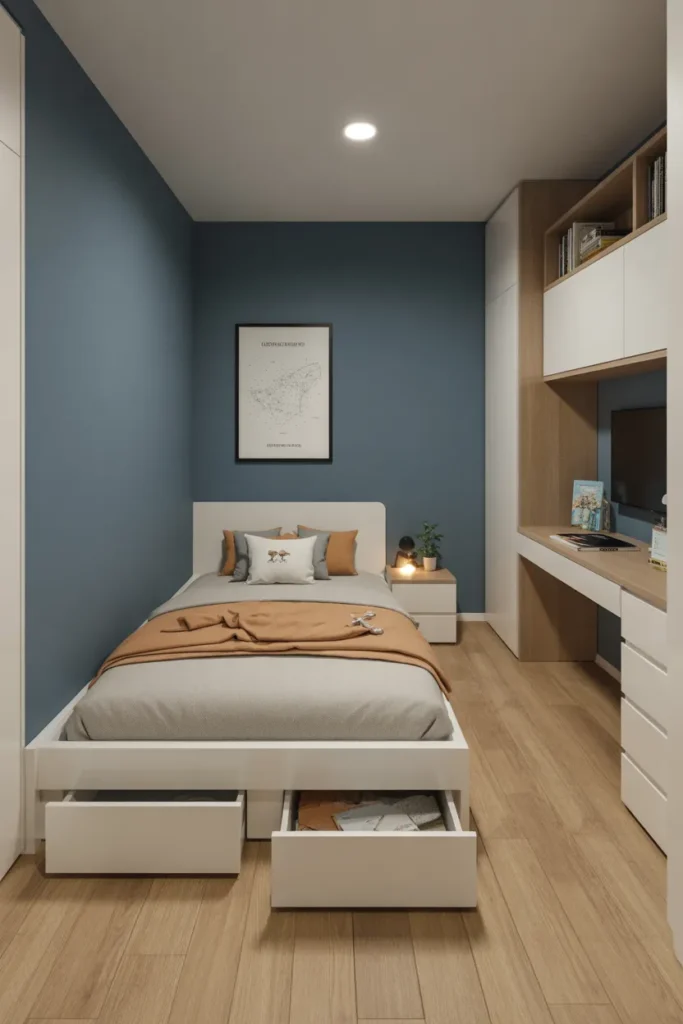
This is a particularly smart move in kids room renovation planning for apartments and urban homes where bedrooms run small. A platform bed sits lower than a standard frame, which also makes the room feel more open and less furniture-heavy, even though the total storage volume has not changed.
Choose a platform with drawers on smooth glide mechanisms that a child can open and close independently. Drawers that stick or require force will not get used consistently. Organize the drawers with simple fabric dividers rather than a rigid insert system — children’s clothing needs change too frequently to justify anything permanent.
8. Create a Canopy or Tent Corner to Give Young Children a Defined Imaginative Play Zone
Young children between the ages of two and eight consistently gravitate toward enclosed, semi-private spaces within a room. A canopy, a play tent, or a fabric-draped corner satisfies this instinct without requiring any structural change to the room. It defines a play zone that children feel ownership over, which encourages independent play and keeps imaginative play contained to one area rather than spreading across the entire room.
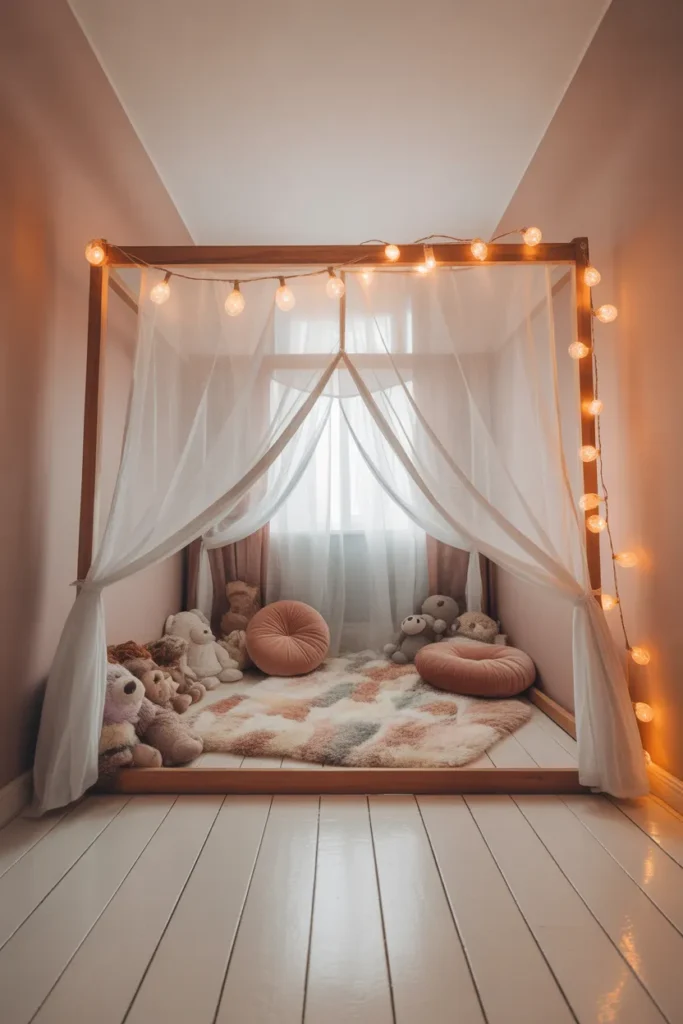
A ceiling-mounted canopy over the bed or a floor canopy tent in the corner of the room are the two most practical configurations. Ceiling mounts use a simple hook and require no permanent installation beyond a single anchor point. Floor tents are completely freestanding and require nothing at all — the right choice for rentals or for parents who want flexibility to reconfigure the room layout later.
This is one of the lower-cost, higher-impact elements in modern kids bedroom design. The material investment is small, but the effect on how a child experiences and uses the room is significant. As children age past eight or nine, the canopy can come down and the corner can transition to a reading chair or a small gaming setup without any renovation work.
9. Use Blackout Curtains Layered With Sheer Panels for Light Control That Actually Works
Sleep quality in a child’s room is directly connected to light control, and most kids rooms are dramatically under-equipped in this area. A single set of standard curtains does very little to block early morning light — which is the most common reason young children wake earlier than their bodies need to. Proper blackout curtains, layered with a sheer panel for daytime diffused light, give you full control over the room’s light environment at every time of day.
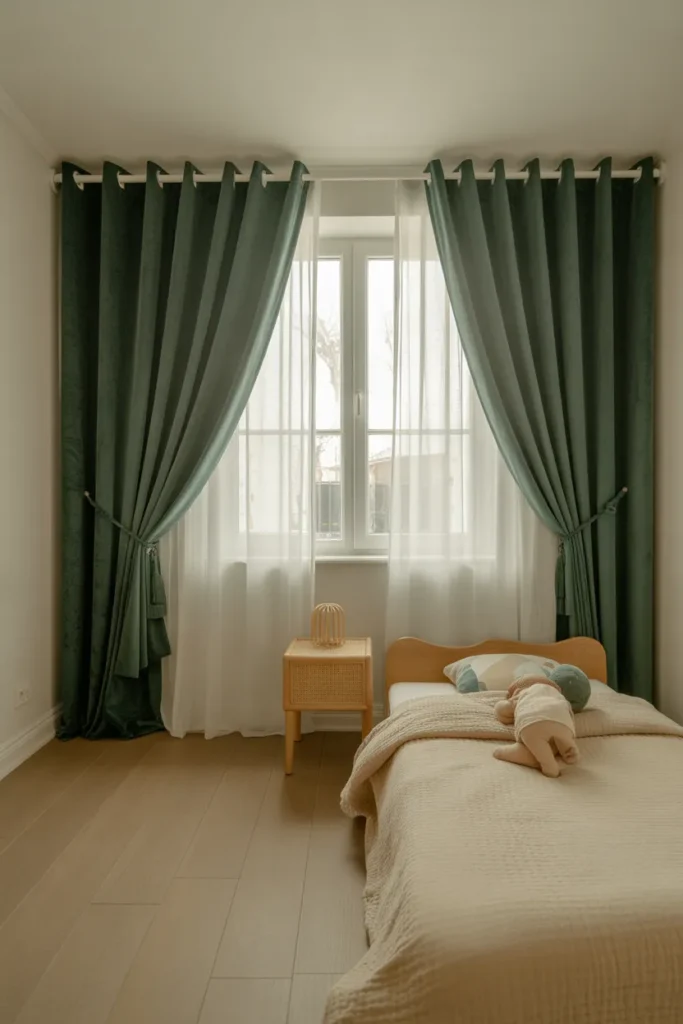
Mount the curtain rod at ceiling height — or as close to the ceiling as possible — and extend it six to eight inches beyond the window frame on each side. This approach blocks more light than a rod mounted at window height and makes the ceiling feel taller in the process. Both effects matter in a kids room renovation where you are trying to maximize both function and the feeling of space.
Choose blackout panels in a color or pattern that works with the room palette rather than treating them as a purely functional element. Curtains cover a large surface area and have significant visual weight. A considered choice here ties the room together. A mismatched or low-quality panel undermines a well-designed room more than most people expect.
10. Design a Homework and Study Wall That Separates Work From Sleep Visually
One of the most undervalued aspects of kids room renovation ideas 2026 is the deliberate separation of study from sleep within the same room. When a desk is positioned at the foot of the bed or directly beside it, the visual overlap between work and rest makes it harder for children to mentally switch off at bedtime. A dedicated study wall — positioned on the wall farthest from the bed, ideally facing away from it — solves this with no structural change required.
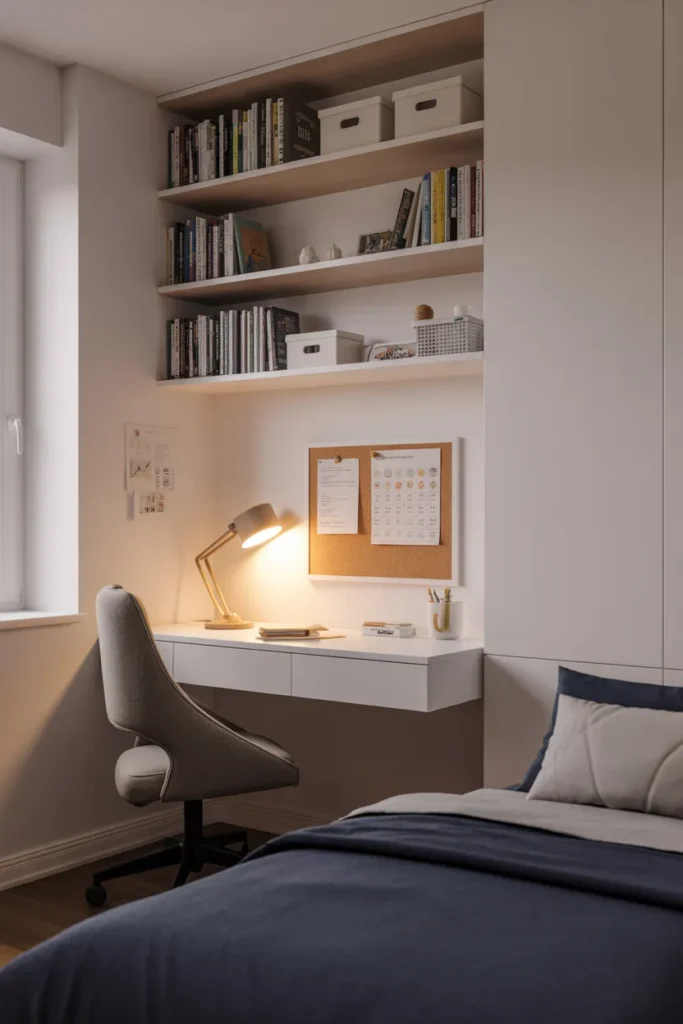
A study wall does not require a large footprint. A 36-inch floating desk with open shelving above it and a task light positioned correctly takes up less than 12 square feet of floor area and delivers a fully functional workspace. Use a corkboard or a small whiteboard panel above the desk to give the child a place to pin reminders, schedules, and personal notes.
For children in middle school and older, consider upgrading the desk chair along with the desk itself. A chair that is the wrong height relative to the desk surface is a comfort problem that directly affects how long a child can sit and work. The desk surface should be at elbow height when the child is seated with feet flat on the floor.
11. Add a Growth Chart Wall Feature That Doubles as Permanent Room Decor
A growth chart is one of the few room elements that carries genuine sentimental value while also serving a practical function. Built into a wall feature — either painted directly onto the wall, inlaid into a custom wood panel, or incorporated into a framed artwork installation — a growth chart becomes a permanent part of the room’s character rather than a removable sticker that leaves residue and eventually gets thrown away.
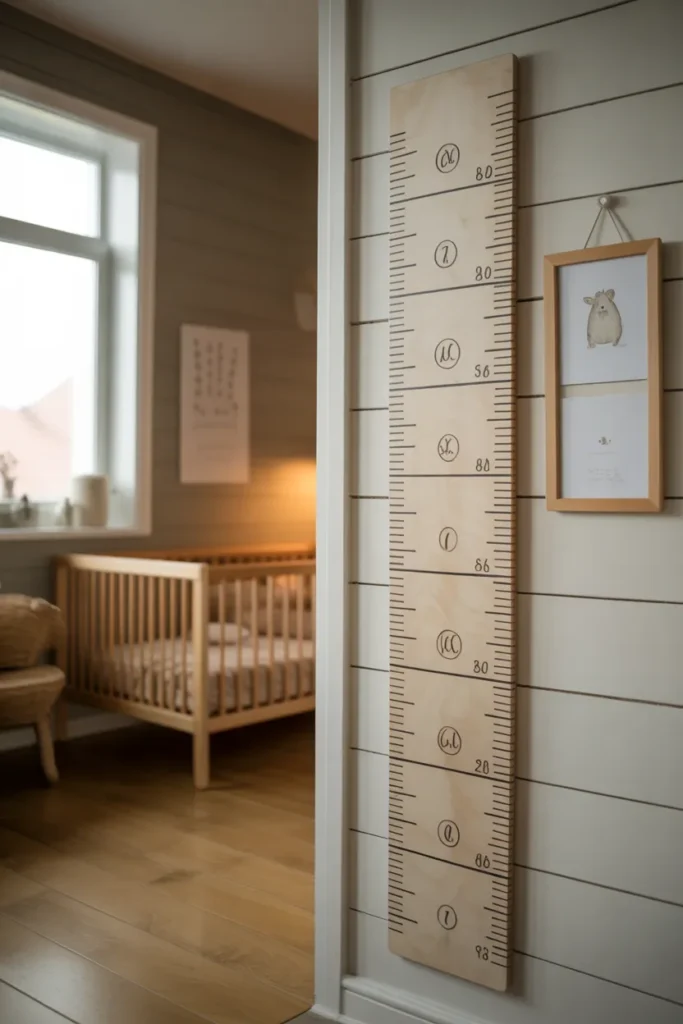
A vertical plank of natural wood, sanded smooth and mounted flush to the wall, with incremental markings burned or painted onto the surface, is the most durable and most visually refined version of this idea. It works in modern, farmhouse, Scandinavian, and transitional room styles equally well because the material is neutral enough to adapt to any palette.
Position the chart on a wall that is not behind a door and not beside a window — you want it to be clearly visible and consistently accessible for measuring. Mark it with the child’s initials and the date each time, not just the height. In five years, those dates tell a more complete story than the measurements alone.
12. Use Modular Cube Storage to Create a System That Adapts From Toddler to Teen
Modular cube storage is one of the most genuinely versatile investments in a kids room because it never becomes obsolete. The same cube grid that holds fabric bins of toddler toys can be reconfigured four years later to hold books, a small record player, a display shelf, or a combination of all three. The cubes themselves do not change — the contents and configuration do.
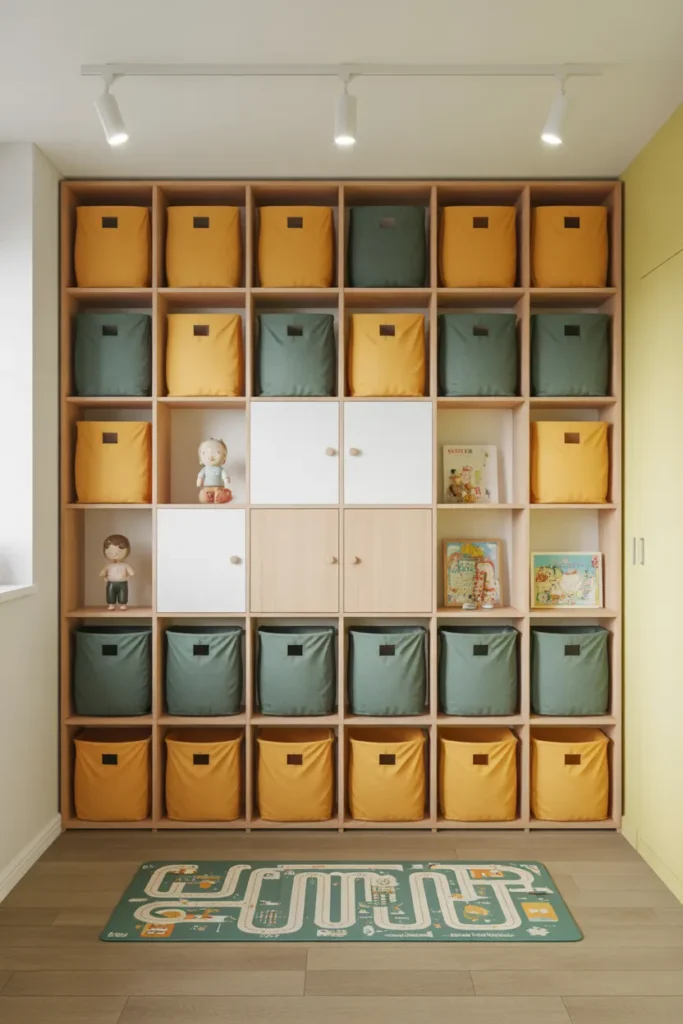
A 3×3 or 4×2 cube grid positioned along one wall at a height a child can access independently is the sweet spot for children aged two through ten. Keep the bottom row at floor level — no legs — so toddlers can pull bins in and out safely. As children get older, the bottom cubes can be converted to open display shelves or closed with small doors for a tidier look.
The practical advantage over a traditional dresser or wardrobe is reconfigurability. When a child’s interests shift — from building blocks to art supplies to sports gear — the storage system adapts without any replacement purchase. That adaptability is the core principle behind smart kids room design for homes that want longevity from their renovation decisions.
13. Paint an Accent Wall With Chalkboard or Magnetic Paint for an Interactive Room Feature
A chalkboard or magnetic paint accent wall gives a child an outlet for creativity that is built directly into the architecture of the room. Instead of drawings appearing on walls where they should not be, they appear on a wall specifically designed to receive them. This is one of those rare design decisions that works better in practice than it sounds in theory — children use it consistently, and it becomes one of their favorite features of the room.
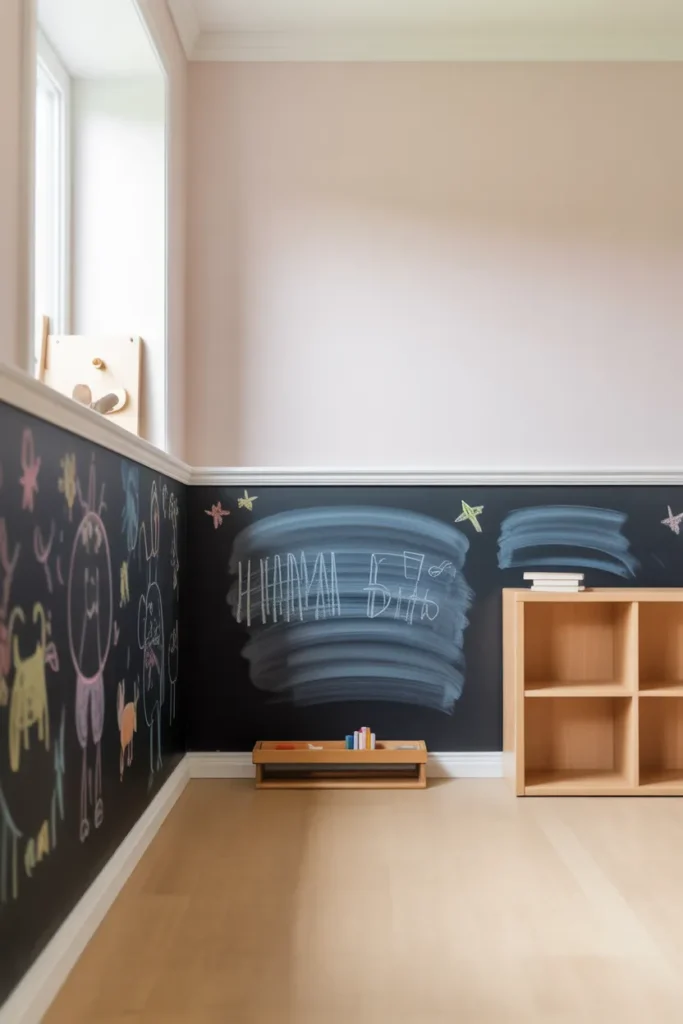
Chalkboard paint works on any smooth, primed surface and can be rolled on in one to two coats. Position it on a wall the child can reach comfortably — from the floor to approximately 60 inches high. Leaving the upper portion of the wall in a regular paint color keeps the room from feeling too dark and gives you space for a shelf or wall art above the chalkboard zone.
Magnetic paint is applied as a base layer under regular wall paint, making it invisible until magnets are placed on the wall. This option is subtler and more versatile — it turns the wall into a display surface for magnetic letters, artwork held with magnets, and organizational tools, without the visual weight of a dark chalkboard surface.
14. Incorporate Exposed Wall-Mounted Lighting to Free Up Surface Space and Add Design Character
Table lamps on nightstands and desk surfaces take up space that is genuinely limited in a child’s room. Wall-mounted lighting — whether a swing-arm sconce beside the bed, a fixed wall light above the desk, or LED strip lighting under a shelf — frees every surface it would otherwise occupy and adds a layer of intentional design detail that elevates the room significantly.
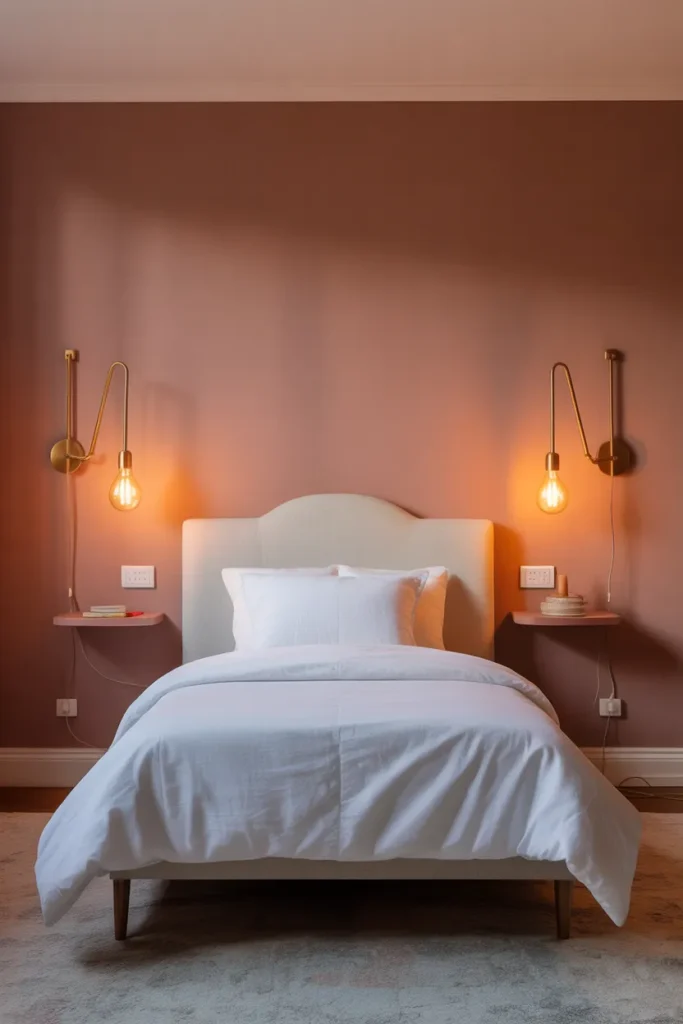
Swing-arm wall sconces beside each side of the bed are the most practical starting point. They deliver directed reading light without a lamp cord on the floor or a base taking up nightstand space. For children who read before sleeping, this is a more functional setup than any table lamp arrangement.
In a room renovation context, the most common wiring concern is whether hardwired fixtures are feasible. In most cases they are not — but plug-in wall sconces with a cord cover painted to match the wall solve this completely. The result is visually indistinguishable from a hardwired fixture and requires no electrician.
15. Add a Small Indoor Climbing Wall or Balance Board Corner for Active Kids
For children who are physically active — which is most children under ten — having a physical outlet built into their room reduces the energy that ends up directed at furniture, walls, and siblings. A small indoor climbing wall panel, a balance board station, or a floor-level gymnastics mat corner gives active children a designated physical space that channels energy productively without leaving the room.
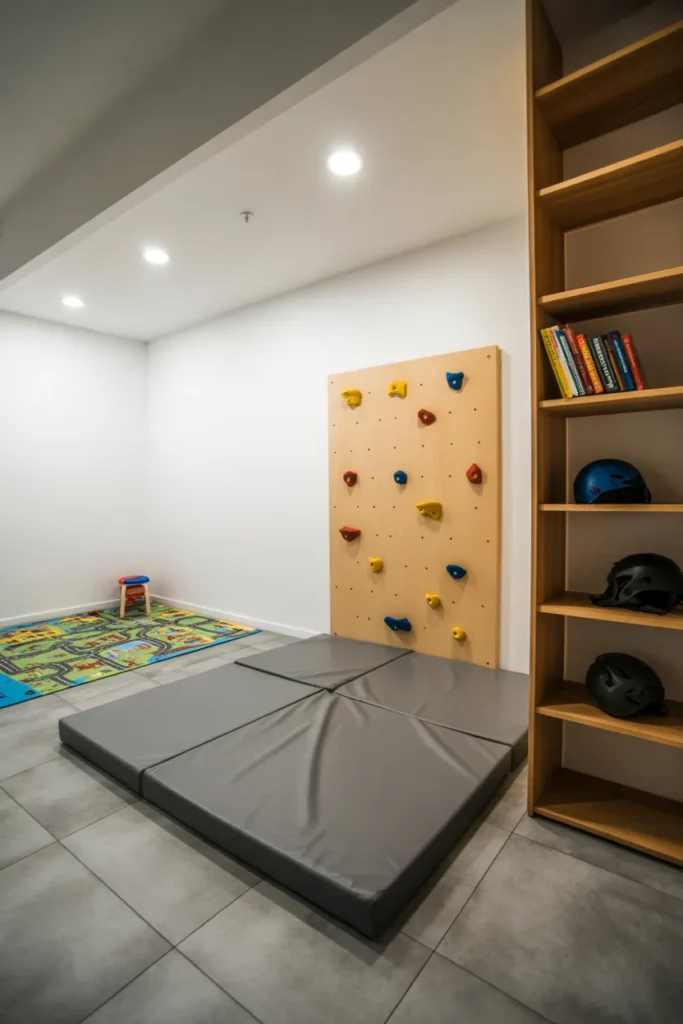
A climbing wall panel does not need to span the entire wall. A single 4-by-8-foot plywood panel mounted at a slight angle with twelve to fifteen climbing holds is enough for children aged four and older to use consistently. Mount it on a wall with clear floor space below and install a small crash mat beneath it. The whole installation takes under a day and requires no structural modification beyond wall anchors into studs.
This is a particularly smart investment for kids room renovation in homes without a yard or with limited outdoor access. The physical benefit is real — upper body strength, coordination, and problem-solving are all developed through climbing — and the room becomes a space a child genuinely wants to be in rather than one they are sent to.
16. Design a Dual-Zone Room Layout With a Clear Visual Boundary Between Sleep and Play
In any single-bedroom kids room renovation, the most functional layout decision you can make is separating the sleep zone from the play zone with a clear visual boundary. When a child plays in the same undefined space where they sleep, both activities suffer — play feels constrained and sleep feels harder to transition into. A simple zone boundary changes how the room functions without adding a single piece of furniture.
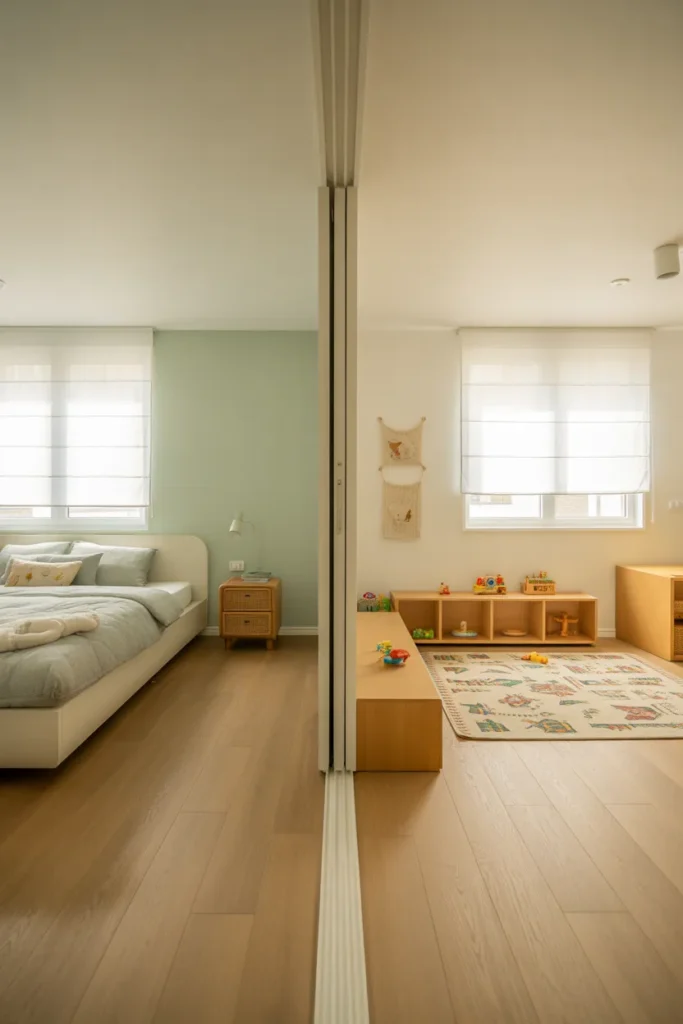
The boundary can be established with a rug that defines the play area, a low bookshelf that acts as a room divider without blocking light, a change in ceiling treatment above each zone, or simply a change in wall color between the two areas. The method matters less than the consistency — the boundary should be visually clear enough that both the child and parent recognize it immediately.
This principle applies in rooms as small as 100 square feet. Even a compact room can be zoned effectively when furniture is positioned with intention rather than arranged around the perimeter by default. Keep the bed in the quietest corner — usually farthest from the door — and position the play area closer to the entry and the natural light source.
17. Install a Ceiling-Mounted Canopy or Starlight Projector for a Bedtime Atmosphere
Bedtime transitions are consistently one of the most challenging parts of parenting young children, and the room environment plays a larger role in that transition than most renovation plans account for. A ceiling-mounted fabric canopy over the bed, combined with a starlight or constellation projector, creates a sensory cue that tells a child’s brain it is time to wind down — without any verbal instruction required.
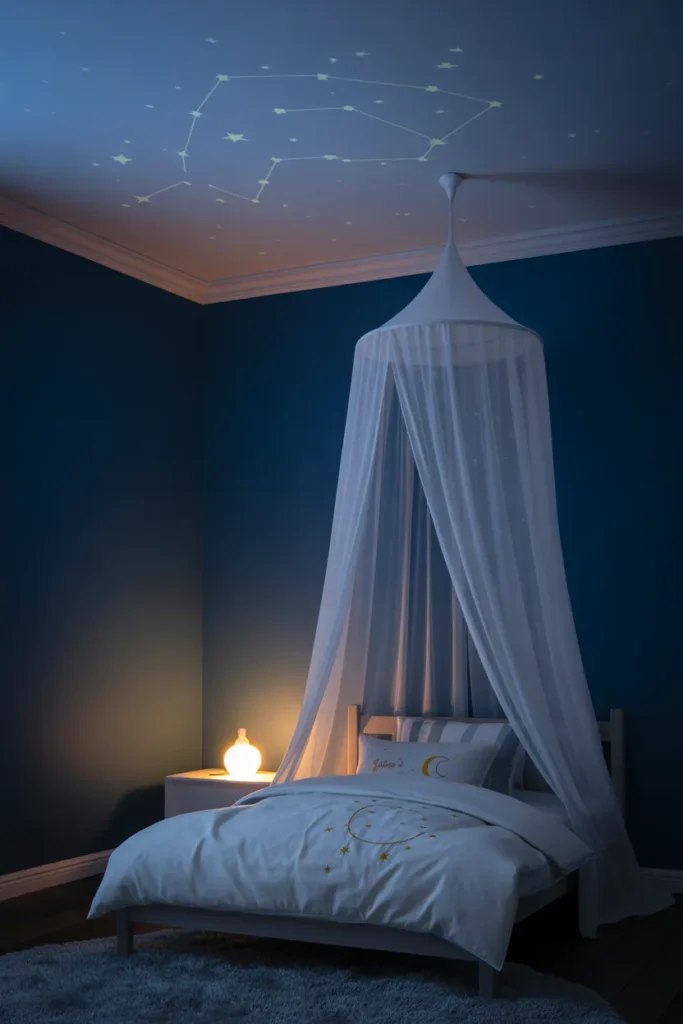
The canopy itself is a simple ceiling hook installation. A circular fabric panel or a draped sheer canopy anchored at a central point above the bed creates an enclosed, calming overhead environment. It reduces visual stimulation from the rest of the room without making the space dark, which is the exact condition most children need to settle for sleep.
A projector aimed at the canopy ceiling or the room ceiling above the bed adds a final sensory layer. Moving or static star projections in warm amber or deep blue tones signal sleep without stimulation. Set it on a timer so it switches off automatically after 20 to 30 minutes — long enough to accompany the child to sleep without running all night.
18. Redesign the Closet Interior to Give Kids an Organized System They Can Actually Use
The closet is the most neglected space in almost every kids room renovation. A standard closet rod at adult height with a single shelf above it is almost entirely unusable by children under twelve — they cannot reach the rod to hang things independently, the single shelf is too high for anything they need daily, and there is no storage for shoes, folded clothes, or small items. The result is that clothes end up on the floor and the closet becomes a storage zone only parents interact with.
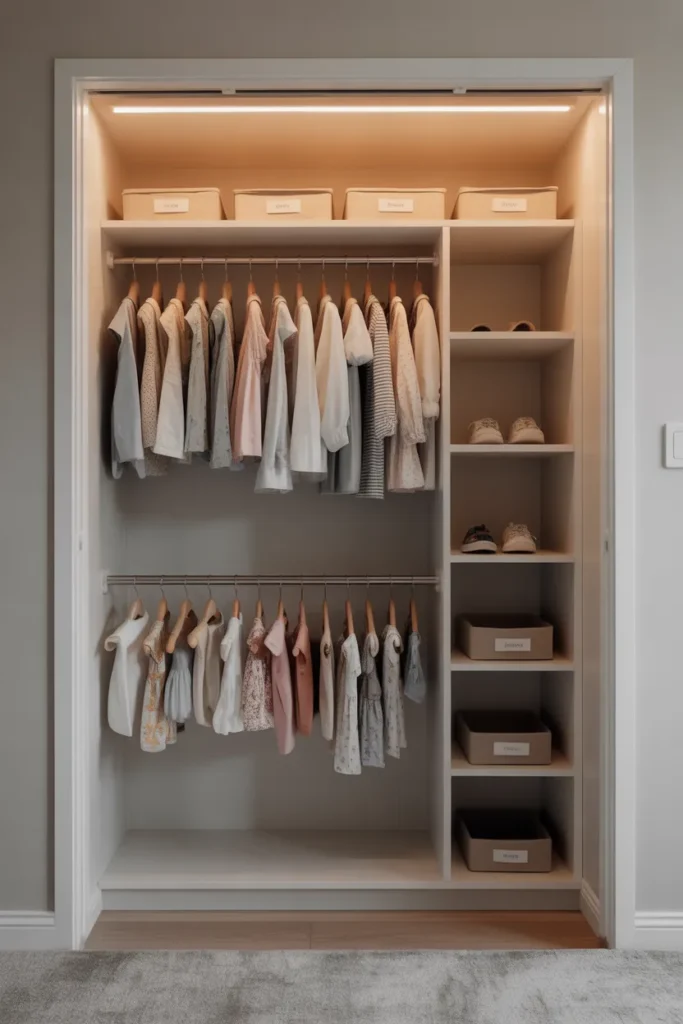
A reconfigured closet interior with a double hang rod system — one at 40 inches for children’s shorter garments and one at the standard 66 inches above it — immediately doubles the hanging capacity and puts one rod at a height children can use independently from around age five. Add three to four cubbies or short shelves along one side for shoes, folded items, and bins for accessories.
This renovation does not require a professional installer or custom cabinetry. Adjustable closet organizing systems available at most home improvement stores install with basic tools in a few hours and can be reconfigured as the child grows. The investment in time pays back immediately in a room that stays organized with significantly less parental effort.
Final Thoughts
The best kids room is not the most expensive one — it is the most considered one. Whether you are working with a small apartment bedroom or a larger dedicated space, the right combination of these kids room renovation ideas 2026 will give your child a room that supports how they actually live: how they sleep, how they study, how they play, and how they grow into it over the next several years.
Save this post before you start planning. Having a clear visual and practical reference for each idea will make your decision-making faster and your final result more cohesive. If you are still exploring options, continue browsing functional kids bedroom layouts and small room design ideas to find the combination that fits your home and your child best.