
Choosing the wrong chair is one of the most common reasons a living room layout never quite comes together — the scale is off, the function is missing, or the piece works visually but fails practically. This guide covers 25 living room chairs ideas 2026 that help you decide which chair type, placement, and style actually fits your space, your seating needs, and your daily routine.
1. Accent Chair in a Contrasting Fabric That Anchors a Neutral Room
A neutral living room — beige sofa, white walls, light wood floors — needs one deliberate point of visual tension to feel complete rather than unfinished. A single accent chair in a contrasting fabric, whether that is a deep velvet, a printed linen, or a textured boucle in a stronger tone, provides that anchor without overwhelming the space.
The reason this works is that contrast creates hierarchy. The eye needs a stopping point in a room, and a chair in a distinct fabric gives it one. Without that contrast, a fully neutral room reads as flat and undifferentiated, which is often described as feeling bland even when the individual pieces are high quality.
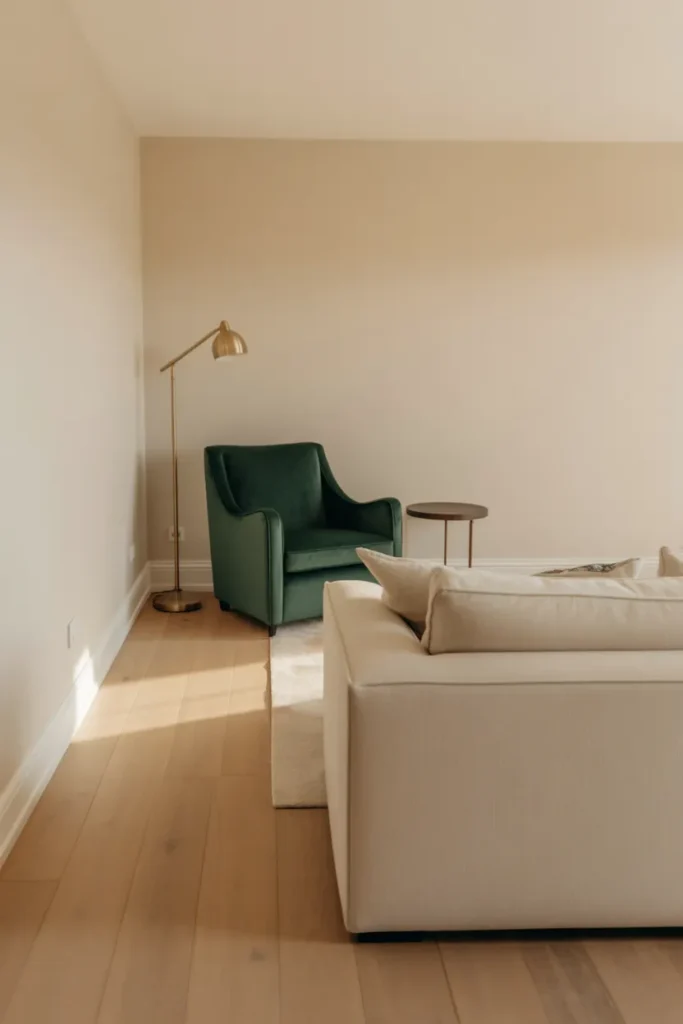

This approach works in rooms of any size but is most effective in living rooms between 200 and 350 square feet where you want to add visual interest without introducing a second large furniture piece. One chair does the work that an entire secondary color scheme would otherwise require.
The mistake to avoid is choosing a contrasting color that has no relationship to anything else in the room. The accent chair should connect to at least one other element — a throw pillow, a rug tone, or artwork — so it reads as intentional rather than mismatched.
2. Swivel Chair Placement That Solves the TV-and-Conversation Dilemma
A living room that serves both conversation and television viewing creates a placement conflict that a fixed chair can never fully resolve. A swivel chair solves this completely — it faces the conversation group when guests are present and rotates toward the screen for solo viewing without moving any furniture.
This is one of the most practical living room chairs ideas 2026 for open-plan homes where the seating area needs to work in multiple directions. It is also the right choice for rooms where the television is not directly opposite the main sofa — an off-angle placement that fixed chairs handle poorly.
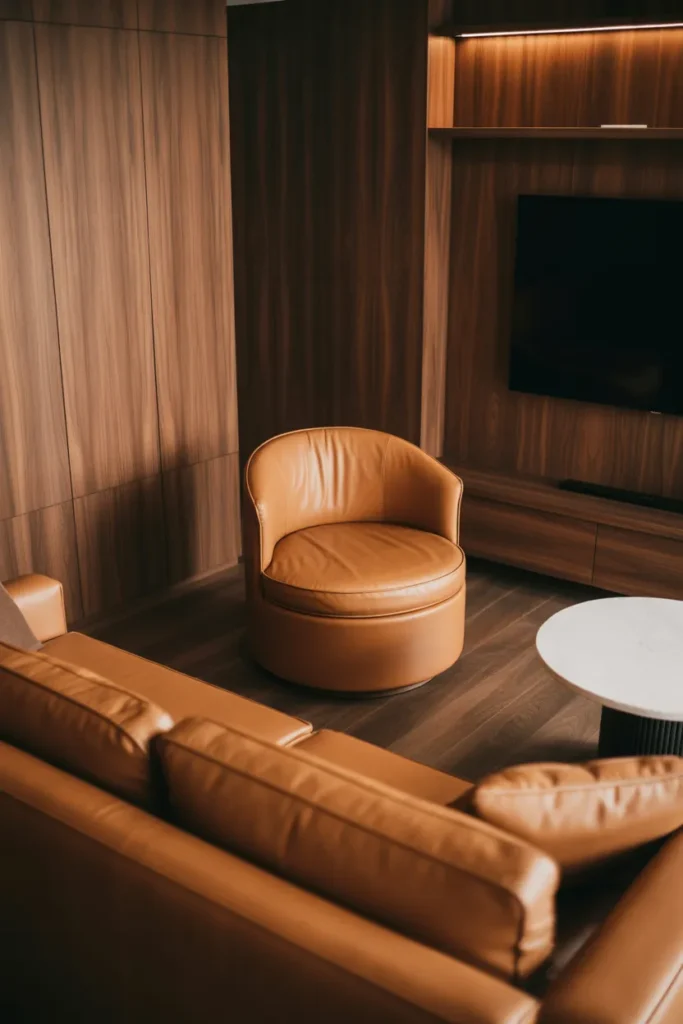
Swivel chairs work best when placed at the corner or end of a seating arrangement rather than directly opposite the sofa. In the corner position, the swivel function is used most naturally — rotating between a conversation partner on one side and the television on the other.
Avoid placing a swivel chair in a tight space where the rotation is physically blocked by a side table or the edge of a rug. The full rotation needs to be clearance-free for the chair to function as intended.
3. Slipper Chair Without Arms for Tight Corners and Narrow Spaces
A slipper chair — a low, armless upholstered chair — is one of the most underused solutions in small living room seating design. Its compact silhouette fits into corners, beside fireplaces, and along narrow walls where a standard armchair would be too wide to work.
The armless design reduces the physical footprint by 4 to 6 inches on each side compared to a chair with full arms. In a room where inches matter, that difference determines whether a seating piece fits or crowds a circulation path. A slipper chair can often be placed in spots where no other chair type would fit.
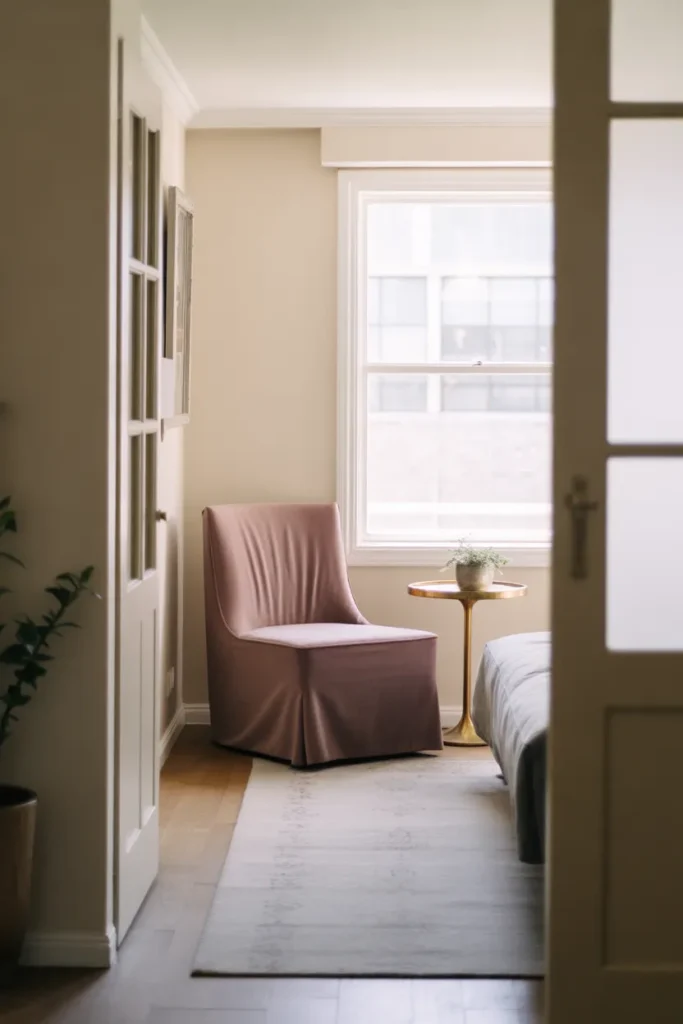
This is the right chair choice when you need additional seating in a room that is already at capacity. It adds a seat without adding the visual mass of a fully upholstered armchair, and its low profile keeps sightlines open across the room.
The functional trade-off is comfort for extended sitting. A slipper chair without arms is better suited for shorter conversations, reading, or occasional guest seating than for daily long-duration use. If daily comfort is the priority, a chair with at least a low arm is more appropriate.
4. Wingback Chair as a Reading Nook Anchor With Built-In Enclosure
A wingback chair creates its own micro-environment within a larger room. The high back and extended side panels physically wrap around the sitter, reducing peripheral noise and visual distraction — which is why it has remained the definitive reading chair across every design era.
In a living room context, a wingback placed in a corner with a floor lamp beside it and a small side table within reach establishes a dedicated reading zone without requiring a separate room. The chair’s structure does the spatial work that a wall or partition would otherwise need to do.
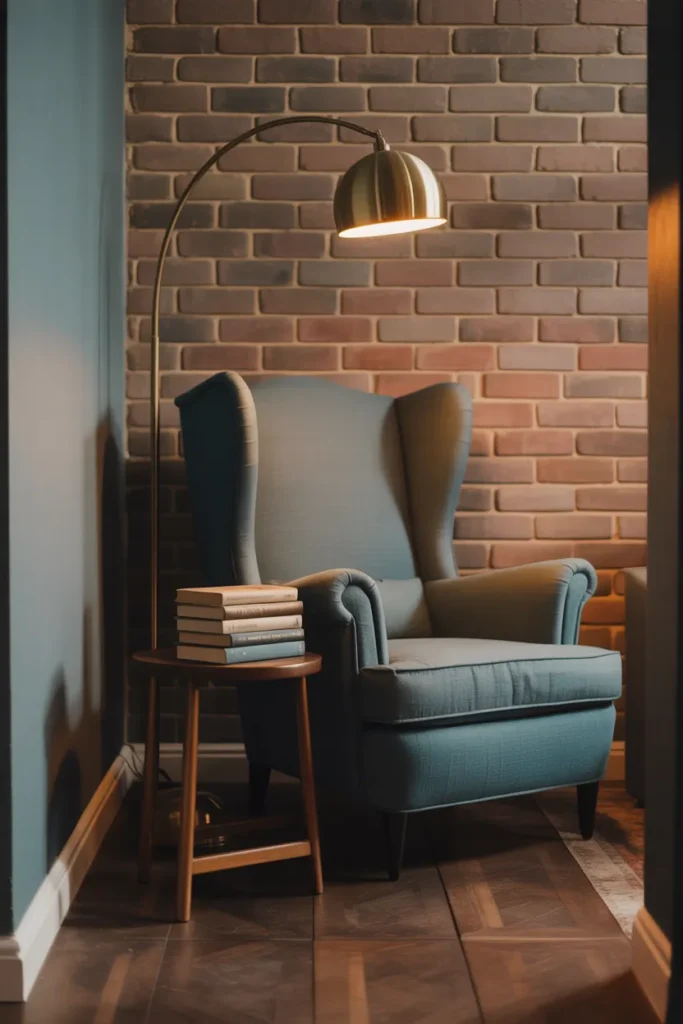
This is especially effective in open-plan living spaces where creating defined sub-zones is a design priority. The wingback signals a shift in function — from the main social seating area to a quieter, more individual space — without any architectural division.
Modern wingbacks in flatter, more streamlined profiles work better in contemporary interiors than traditional high-wing versions. The traditional version has a specific visual weight that works in period-appropriate rooms but can feel dated or heavy in a modern or transitional living room.
5. Barrel Chair That Fills Dead Space Between a Sofa and a Window
The gap between the end of a sofa and a window or wall is one of the most common dead zones in a living room layout. It is too wide to leave empty and too narrow for a standard armchair. A barrel chair — with its rounded back, compact width, and contained silhouette — fills this zone precisely without overcrowding it.
Barrel chairs typically measure 28 to 32 inches wide, which fits into gaps that a standard 33 to 36-inch armchair cannot. The rounded back also works visually in a way that a squared chair does not — the curve softens the transition between the straight sofa edge and the perpendicular wall.
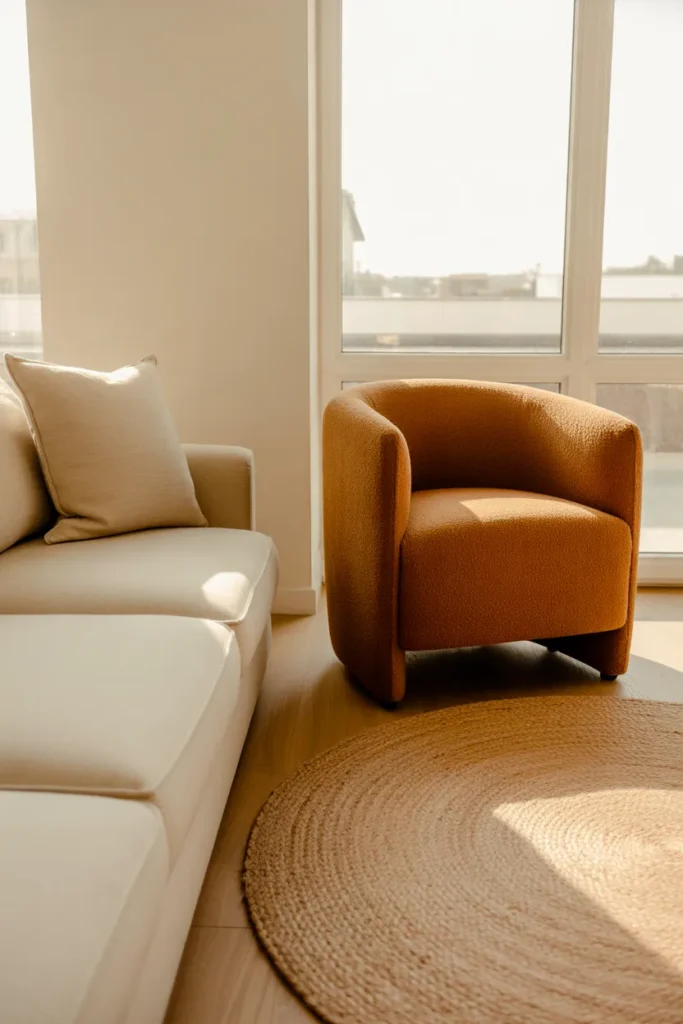
This chair type works in rooms where the sofa runs along one long wall and the seating group needs to extend or turn without a full sectional. The barrel chair bridges that transition naturally.
Choose a barrel chair in a fabric that complements rather than matches the sofa. Identical fabric on both pieces flattens the arrangement. A complementary tone or texture in the same color family creates more visual interest while maintaining cohesion.
6. Transparent Acrylic Ghost Chair That Adds Seating Without Visual Weight
When a living room is already at its visual capacity — furniture filling most of the floor space — adding another chair in a solid upholstered form makes the room feel overcrowded even if the physical clearance is sufficient. A clear acrylic ghost-style chair occupies floor space without reading as a solid mass, making it the most spatially forgiving seating addition available.
This is one of the most practical small living room seating ideas for apartments and condos where the layout is fixed and floor space is limited. The chair is physically present but visually recessive, which means the overall room density reads as lower than it actually is.
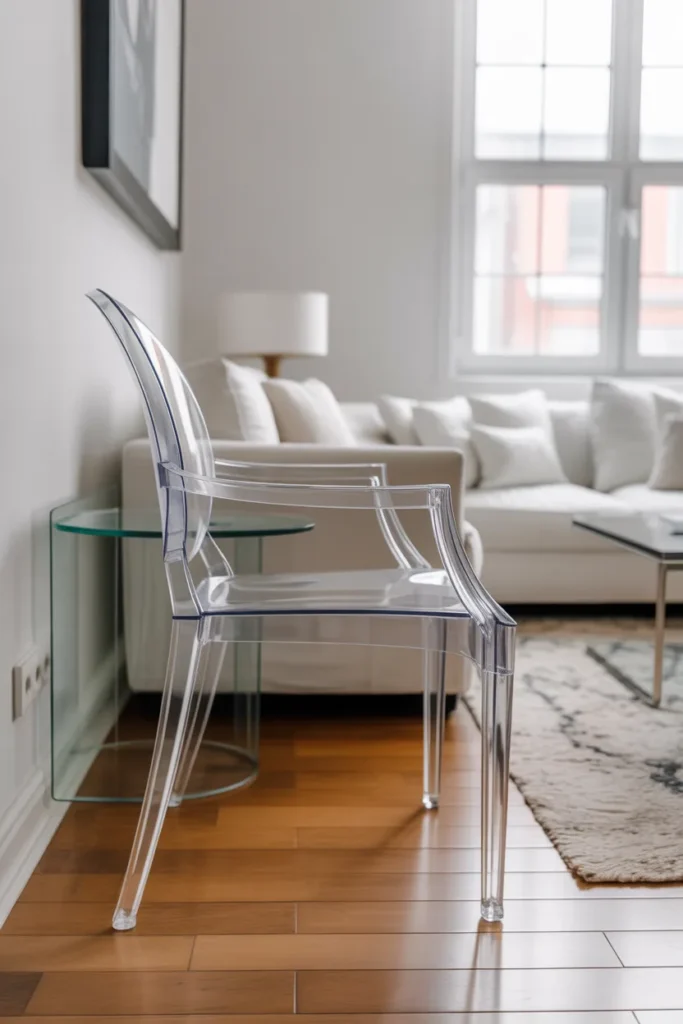
Ghost chairs work particularly well at a dining table within an open-plan living-dining space, where they can be pulled into the living area for extra seating and returned without disrupting the visual balance of either zone.
The maintenance consideration is the same as all transparent furniture — fingerprints and dust are visible and require more frequent cleaning. This is the honest trade-off for the spatial benefit, and it is worth knowing before committing to the piece.
7. Oversized Lounge Chair With Ottoman for a Primary Comfort Zone
In a living room where the sofa is used mostly by others — children, a partner, guests — the person who planned the space often ends up without a truly comfortable seat of their own. An oversized lounge chair with a matching or complementary ottoman positioned with its own lamp and side table solves this with a dedicated comfort zone that functions independently of the main sofa group.
This arrangement works best when the lounge chair is oriented at a slight angle to the main seating group rather than directly beside or opposite it. The angled placement signals that it is a separate zone while still remaining part of the same conversational field.
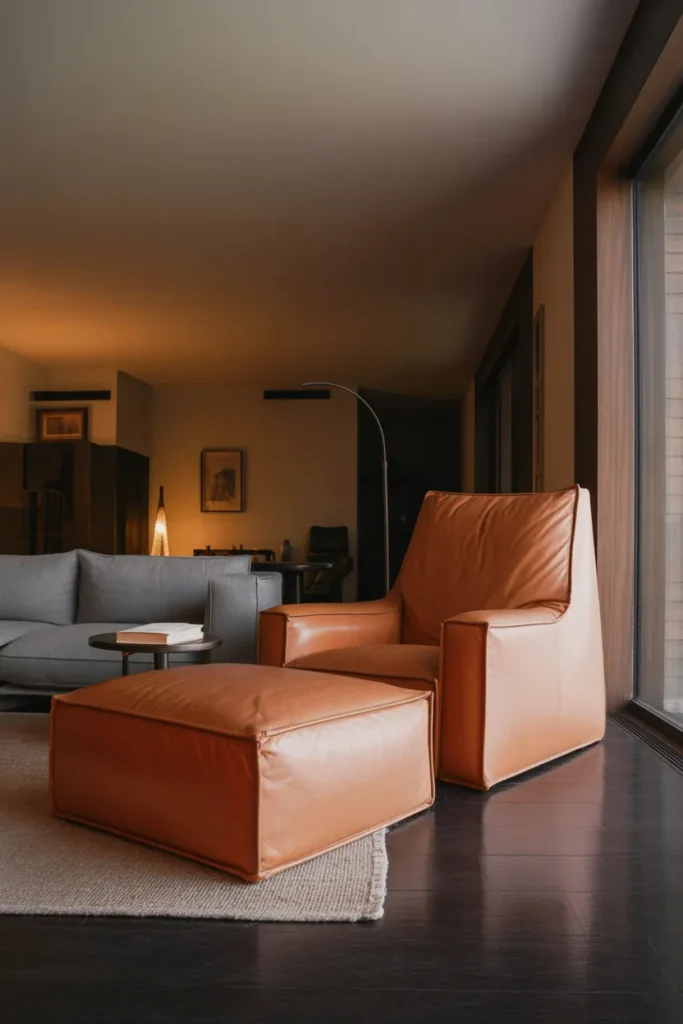
In rooms large enough to support it — typically 280 square feet and above — this configuration creates a living room with two distinct seating experiences: a social zone centered on the sofa and a personal comfort zone centered on the lounge chair.
The ottoman should be large enough to fully support the legs when extended — at least 20 by 20 inches — and positioned at a distance of 8 to 12 inches from the chair edge. An ottoman placed too close feels cramped and defeats its function.
8. Matching Pair of Chairs Opposite the Sofa for Symmetrical Balance
Two matching chairs placed opposite a sofa create the most structurally balanced living room seating arrangement available. The symmetry establishes a clear conversational layout, anchors the room visually, and eliminates the need for additional accent seating because every position in the arrangement faces inward.
This is the most appropriate configuration for formally oriented living rooms, living rooms used primarily for entertaining, and rooms where visual order is a priority. It also works well in open-plan spaces because the symmetrical arrangement reads clearly as a defined zone even without walls to frame it.
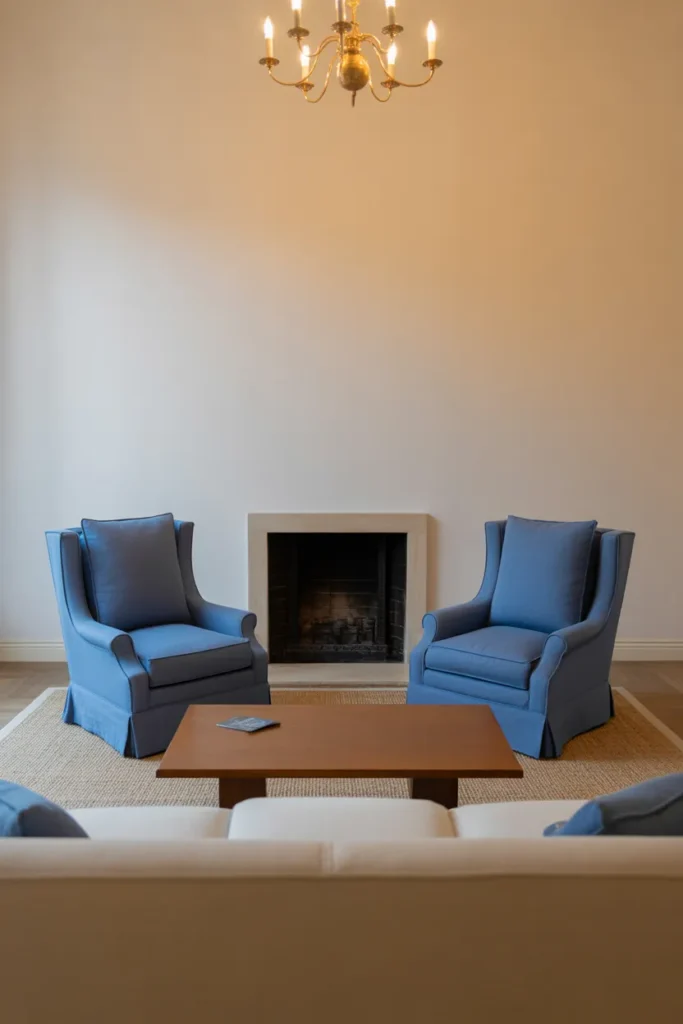
The chairs do not need to be identical to the sofa fabric. In fact, a matched pair in a complementary fabric or a slightly different tone from the sofa creates better visual rhythm than three perfectly identical pieces, which can feel showroom-static rather than lived-in.
Scale is the critical variable. The pair of chairs should have a combined visual weight roughly equivalent to the sofa. Two very small chairs opposite a large sofa feel unbalanced. Two chairs with generous proportions — 30 to 34 inches wide each — hold their own opposite most standard sofas.
9. Rocking Chair in a Modern Material for Function With a Design Edge
A rocking chair is one of the most functionally specific seating pieces available — the motion provides physical comfort, reduces tension, and makes it a preferred seat for reading, nursing, and extended relaxed sitting. In a modern material — molded plastic, bentwood, or a clean-lined upholstered form — it works in contemporary living rooms without the visual register of a traditional country-style rocker.
Modern rocking chairs in curved plywood or molded forms take up no more floor space than a standard accent chair but offer a distinctly different seating experience. For households where one member has a strong preference for motion seating, this is a more appropriate permanent solution than a glider or a rocking office chair.
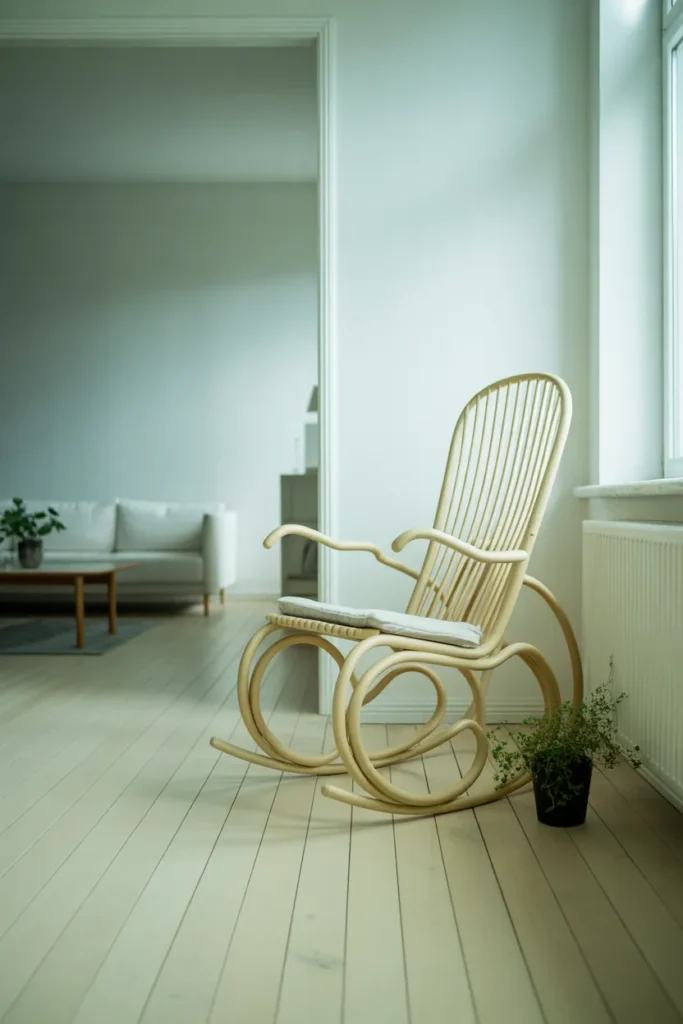
This chair works best in a corner position or at the edge of a seating arrangement where the rocking motion has unobstructed clearance front and back. Placing a rocking chair in the center of a tight seating group creates a collision risk with the coffee table and other furniture.
In a small living room seating layout, a modern rocker in a light-toned material can serve as the accent chair without adding visual weight — particularly in molded acrylic or pale bentwood versions.
10. Floor Chair or Zaisu for a Low-Seated Open-Plan Casual Living Area
A zaisu — a legless floor chair with a back support — or a structured floor cushion with a rigid back panel offers seating at ground level without the sprawl of a standard floor cushion pile. It suits living rooms with a deliberately low, open, and casual aesthetic where the goal is to reduce vertical furniture mass.
This seating type works best in open-plan spaces and modern minimalist living rooms where all furniture sits close to the floor — low sofas, low coffee tables, platform-style arrangements. Mixing a floor chair with standard-height seating creates an awkward height disparity that makes conversation across the levels uncomfortable.
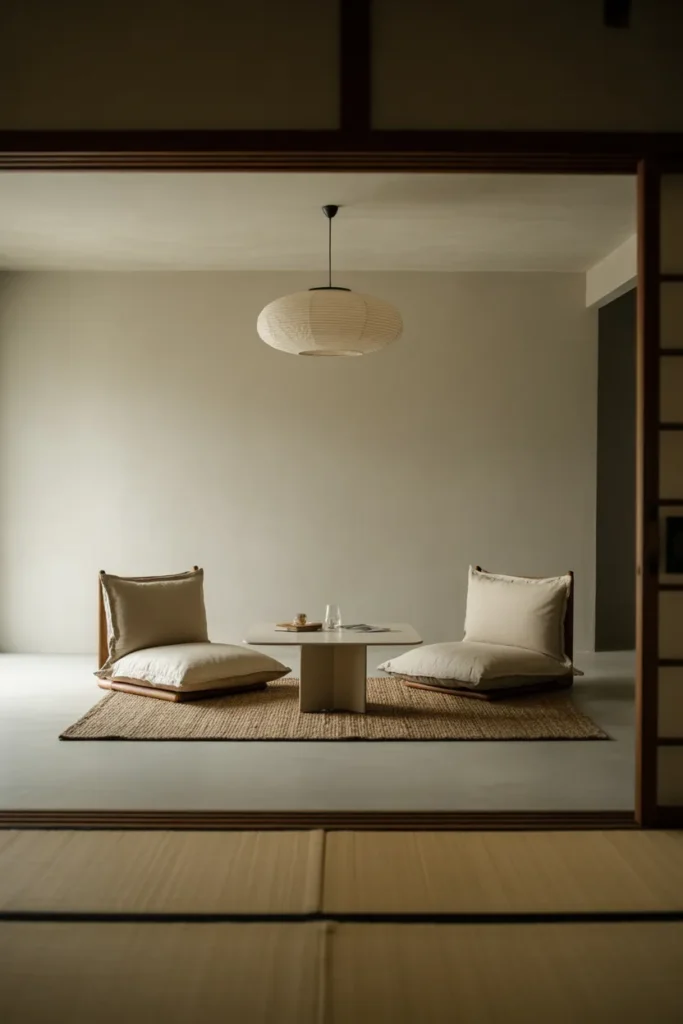
In smaller apartments and urban studios, floor seating can allow the living room to double as a meditation, yoga, or work-from-floor space, which is a functional flexibility that standard chairs cannot provide.
The practical consideration is accessibility. Floor-level seating is physically demanding to get in and out of for anyone with knee, hip, or mobility limitations. This seating type suits younger households or those where ground-level comfort is a daily preference, not an occasional choice.
11. Club Chair in Rich Leather for a Living Room That Needs Warmth and Weight
A leather club chair brings a level of material density and warmth that upholstered fabric chairs rarely match. In a living room that reads as too light, too minimal, or visually incomplete, a leather club chair introduces the visual weight needed to ground the arrangement without adding another large upholstered piece.
This is one of the most effective modern living room accent chairs for spaces that have strong architectural features — exposed beams, brick walls, large windows — that need furniture of corresponding substance to hold the room together. A lightweight fabric chair can feel visually outmatched by heavy architecture.
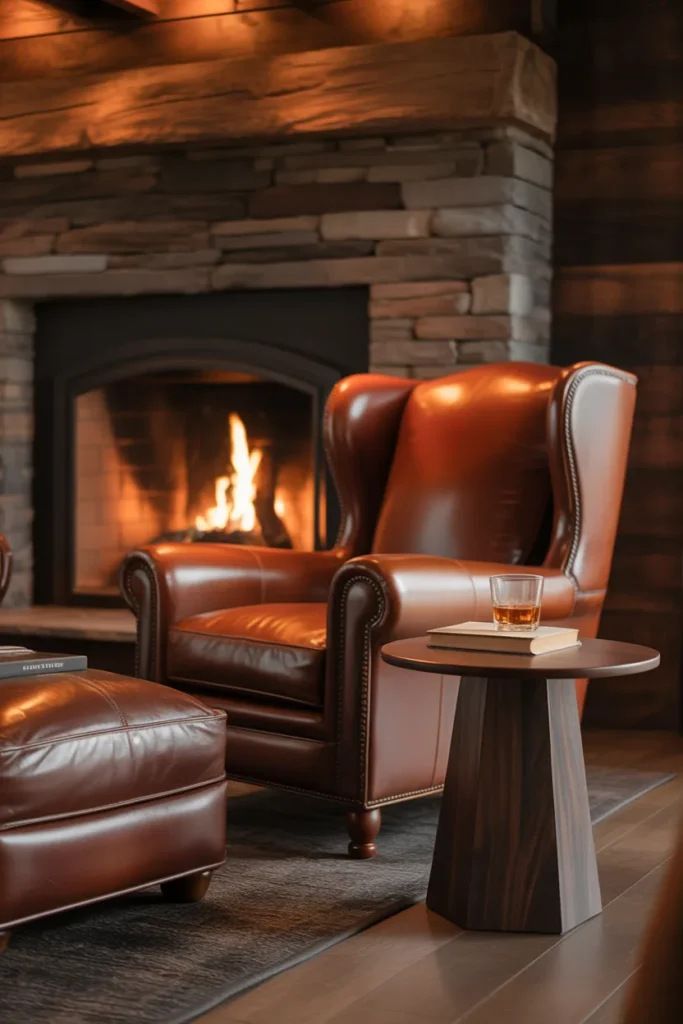
Full-grain or top-grain leather in warm tones — cognac, tobacco, caramel, aged tan — develops patina over time, meaning the chair improves visually with age and use. This is a long-term furniture investment that suits households where longevity and material quality are priorities over trend-driven aesthetics.
The sizing consideration is important. A classic club chair is typically 32 to 35 inches wide with a deep seat — proportions designed for full physical relaxation rather than upright conversation. In a tight living room where posture-appropriate seating is needed, a slightly scaled-down version at 30 inches wide is a better functional choice.
12. Papasan or Egg-Shaped Chair as a Statement Seating Piece in a Teen or Casual Space
A papasan or molded egg chair occupies a specific functional and visual role that no other chair type fills — it is fully enveloping, visually commanding, and signals a casual, personal, non-formal seating zone. In a family living room, a teen hangout area, or a casual den, it provides a seating experience that a standard armchair cannot replicate.
The egg-shaped form — whether suspended from a frame or mounted on a pedestal — wraps around the sitter completely, creating a semi-enclosed space within the larger room. This physical enclosure is psychologically distinct from open seating and is why this chair type is instinctively favored for reading, phone use, and solitary relaxation.
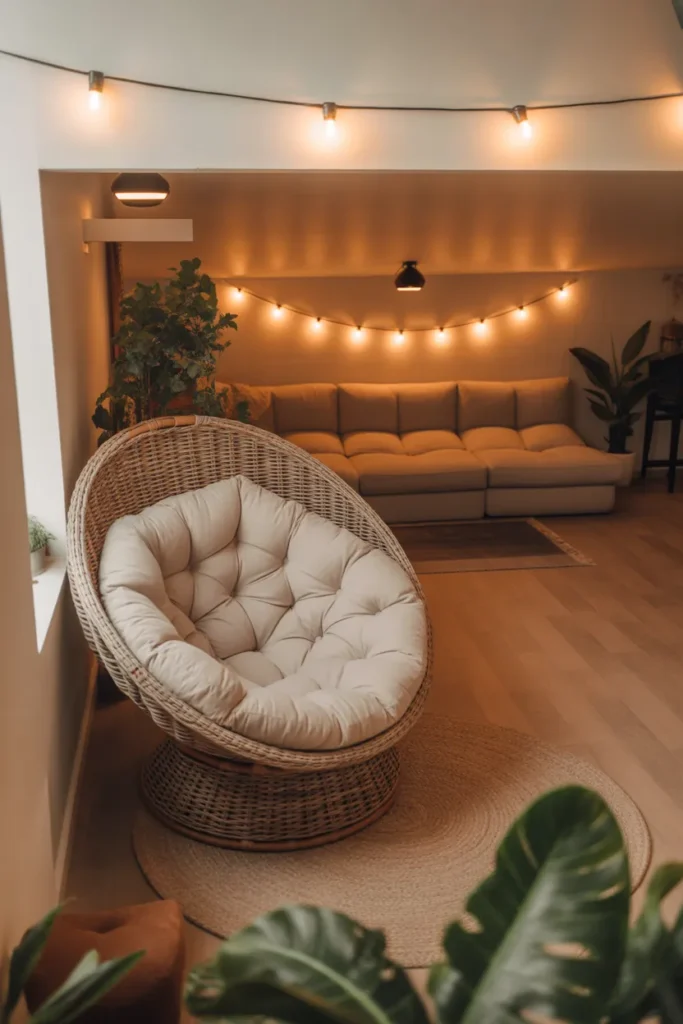
This chair works best as a single statement piece rather than in multiples. Two egg chairs in a small living room compete visually and make the layout feel like a showroom. One egg chair beside a more conventional sofa arrangement creates the right contrast between statement and background.
In terms of placement, a hanging egg chair requires ceiling anchoring rated for the weight. This is a structural consideration that should be confirmed before purchase. A pedestal version offers the same visual and seating experience without any ceiling installation.
13. Settee or Small Loveseat Chair for Rooms That Need Two Seats in One Footprint
A settee — essentially a small two-seater with a chair-like scale — occupies the floor space of a large armchair but provides seating for two. This makes it one of the most space-efficient additions in small living room seating design when a full sofa is already present and a second sofa would overcrowd the room.
This is the right choice for living rooms where a couple routinely sits together in a secondary seating position — reading, watching, or working — and needs a shared seat that is not the main sofa. A single armchair in that position forces one person out of the arrangement.
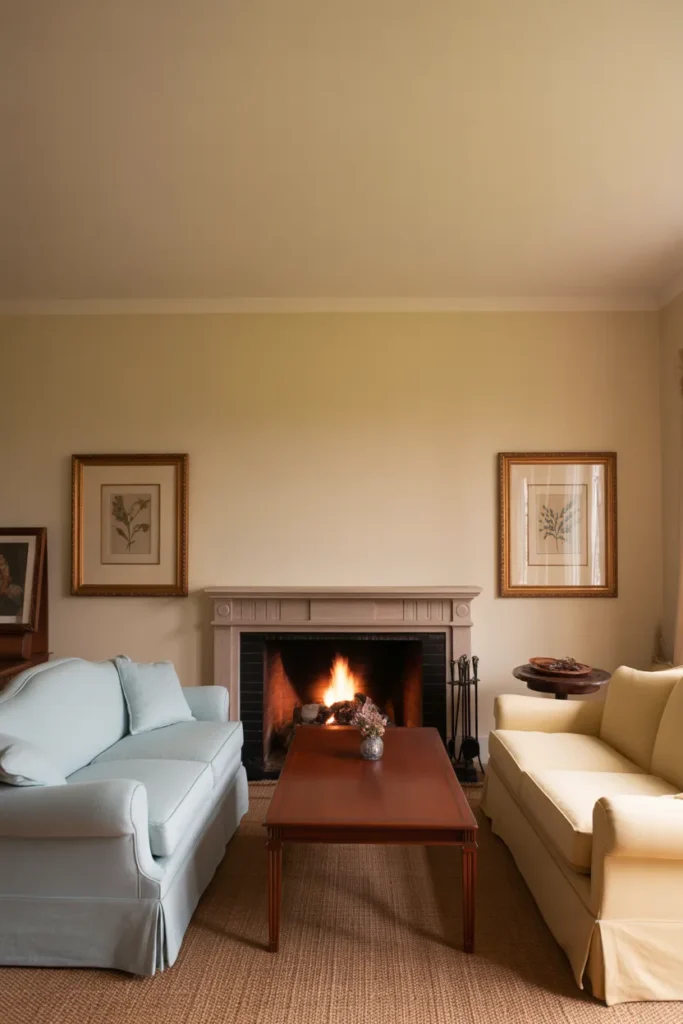
Settees work particularly well in living rooms with a fireplace opposite the sofa, where the secondary seating faces the fire. Two people can share the settee comfortably, which is a use case that a single accent chair cannot serve.
The visual proportion to manage is the settee’s relationship to the sofa. If the sofa is large — 90 inches or more — a settee at 48 to 54 inches reads as too small in the arrangement. In that case, a 60-inch settee or a small three-cushion sofa is a more balanced pairing.
14. Ergonomic Accent Chair for Living Rooms That Double as Work-From-Home Spaces
As more American households use their living rooms as part-time work spaces, the need for seating that supports upright posture for extended periods — not just relaxed lounging — has become a real design requirement. An ergonomic accent chair that looks like a living room piece but functions like a supportive work chair solves this without introducing office furniture into a residential space.
These chairs typically feature lumbar support, a seat depth of 17 to 19 inches, and a firmer cushion than a standard lounge chair. The key is finding versions that are styled for residential interiors — clean lines, residential fabrics, non-commercial finishes — while delivering the postural support that standard accent chairs do not.
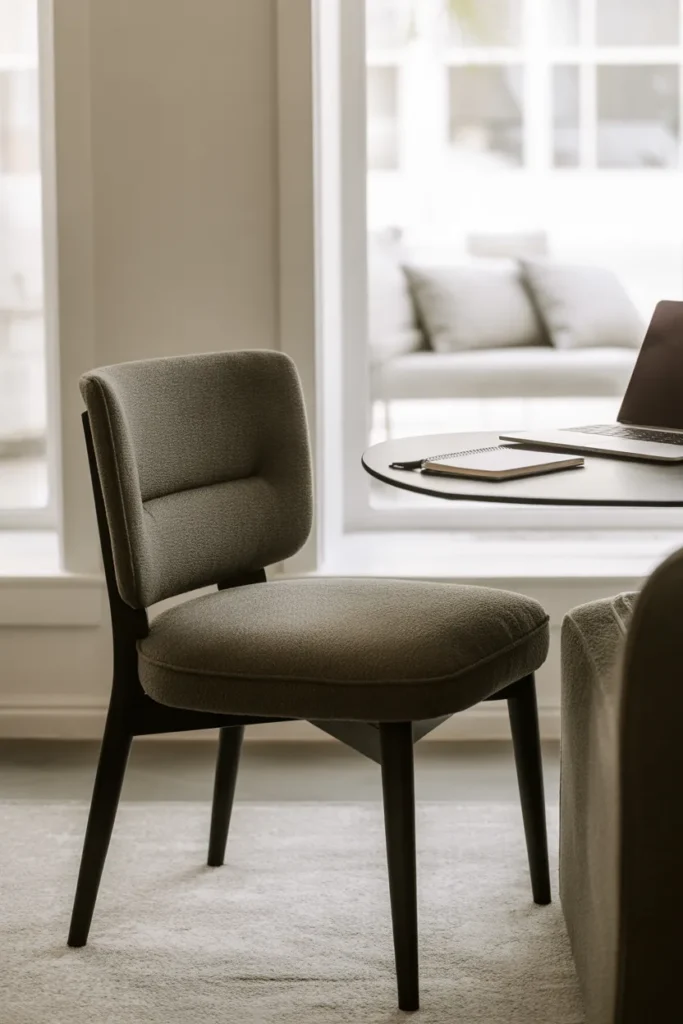
This is particularly relevant in small apartments where the living room is the only available space for focused work. A designated ergonomic accent chair in a corner with a small side table functions as a work station during the day and returns to its role as seating in the evening.
The mistake is choosing purely on appearance. A chair that looks supportive but has a seat pan that is too deep or too soft for upright work will fail functionally within days. Seat depth and cushion firmness are the two most important ergonomic variables to test before purchasing.
15. Chaise Lounge as a Single-Seat Living Room Extension for Rest and Recovery
A chaise lounge offers something no standard chair provides — a fully reclined seating position that is not a bed. In a living room used for rest, recovery, or simply extended horizontal relaxation, a chaise in the right position extends the function of the space without requiring a daybed or a second sofa.
In contemporary living room chairs ideas 2026, the chaise is being integrated more often into main seating arrangements rather than treated as a decorative outlier. When positioned at the end of a sofa or angled in a corner, it reads as a natural extension of the seating group rather than a separate piece.
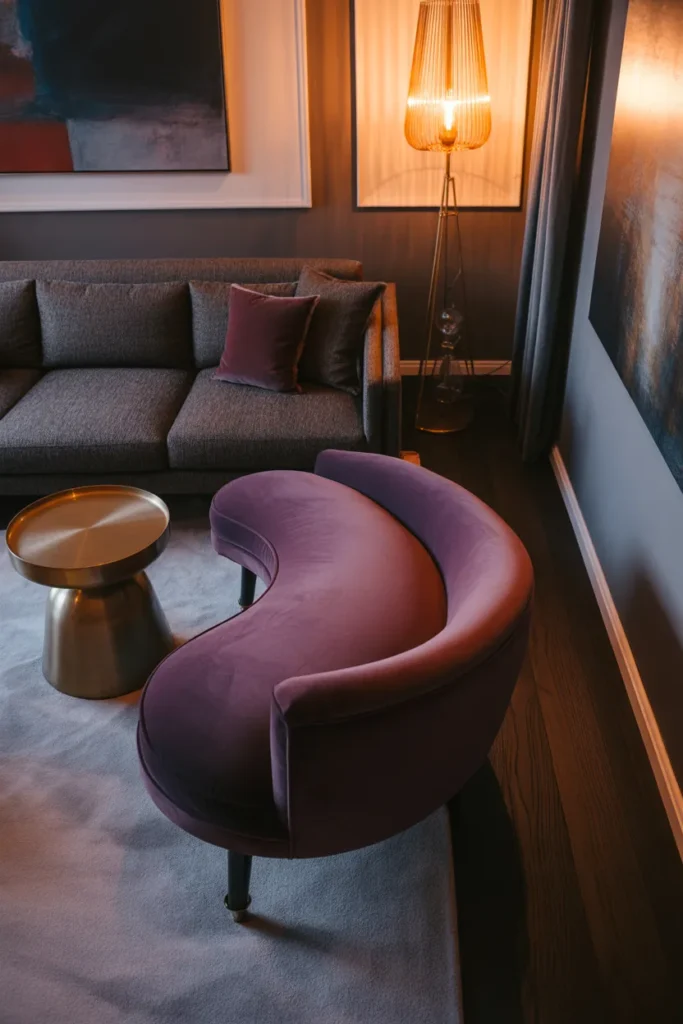
The proportional challenge with a chaise is length. A full chaise typically runs 60 to 72 inches, which is significant in a small room. In rooms under 200 square feet, a chaise should replace a piece rather than be added to an existing full arrangement.
A backless chaise is more versatile in placement because it can be oriented from either end. A chaise with a back is more directional and needs to be positioned so the back faces a less prominent direction — typically a wall rather than the room’s main sightline.
16. Sculptural Chair as Functional Art That Eliminates the Need for a Statement Piece
Some living rooms need a visual focal point but have no fireplace, no architectural feature, and no obvious wall for a large art piece. A sculptural chair — one with an unconventional silhouette, an interesting material, or a distinctive structural form — functions as both seating and the room’s visual centerpiece simultaneously.
This resolves the common problem of a room that feels complete in layout but lacks a moment of visual interest. A sculptural chair delivers that moment without requiring a separate art purchase or a structural change.
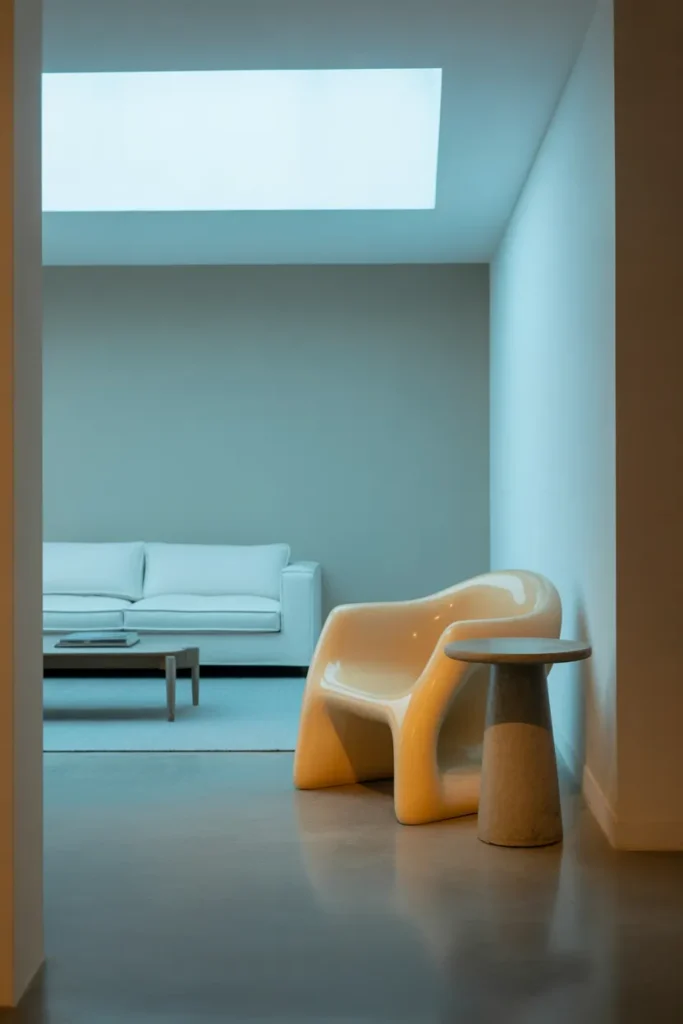
The key distinction is that a sculptural chair must still be comfortable and functional. A purely decorative chair that no one actually sits in is a prop, not furniture. The best versions are chairs where the design interest comes from the structure of the piece itself — the curve of the back, the material of the shell, the joinery of the legs — rather than from added surface decoration.
This chair type works best as a singleton in the arrangement. One sculptural chair among conventional pieces creates the right contrast. Multiple sculptural pieces in the same room compete and cancel each other out.
17. Poufs and Floor Cushions as Flexible Secondary Seating Without Permanent Footprint
A large Moroccan-style pouf or a structured floor cushion stacked in a corner takes up almost no permanent space but can be pulled out instantly when additional seating is needed. For households that entertain occasionally but do not want permanent chairs crowding the room daily, this is the most spatially honest solution.
Poufs in leather, cotton, or woven fabric at 20 to 24 inches in diameter function as footrests, side tables with a tray on top, and extra seating — three uses from a single piece that stores easily. This multi-function performance is exactly what small living room space planning requires.
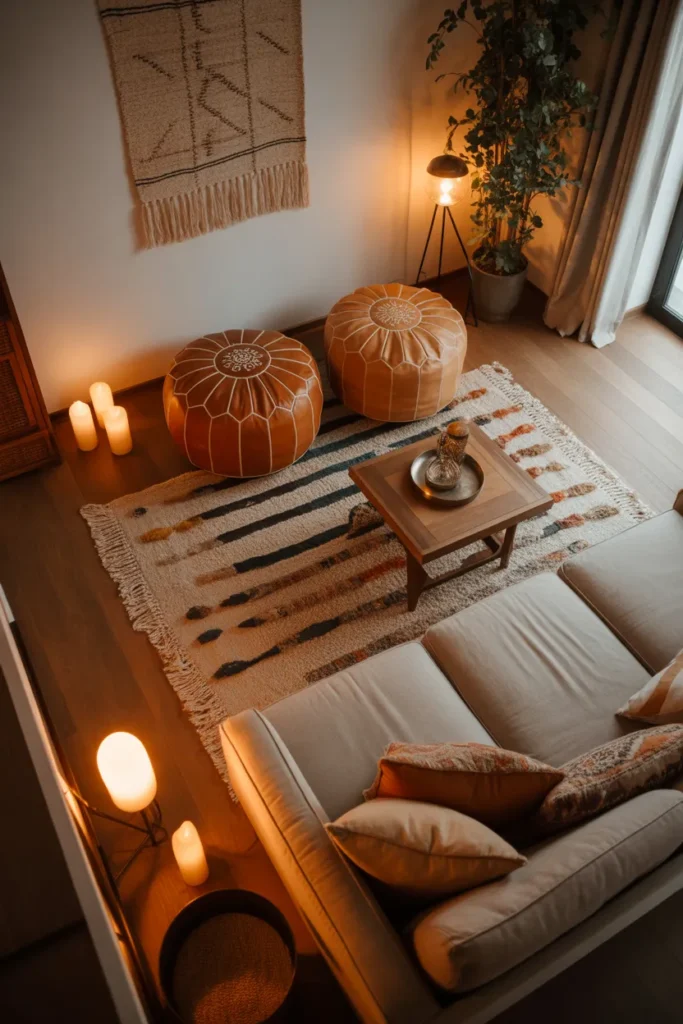
In rooms with a bohemian, global, or eclectic aesthetic, multiple poufs arranged casually become a design feature rather than a stopgap. In more formal rooms, a single leather pouf at the base of a reading chair serves as a discreet ottoman that does not compete with the main furniture.
The structural caution is support. A pouf that is too loosely filled compresses into an uncomfortable shape quickly. Look for poufs with firm fill — recycled cotton, shredded foam, or polystyrene beads — that maintain their height under regular use.
18. Recliner Chair in a Modern Profile That Does Not Look Like a Traditional Recliner
The traditional recliner has a specific visual identity — large, upholstered in vinyl or microfiber, with visible lever mechanism — that conflicts with most modern and transitional living room aesthetics. Modern recliners in slim profiles, clean upholstery, and concealed mechanisms deliver the same reclining function within a contemporary design language.
This resolves the common household conflict between the functional need for a reclining seat and the design goal of a cohesive living room aesthetic. A modern recliner in linen, leather, or performance fabric with a low-profile silhouette integrates into a styled room in a way that a traditional recliner cannot.
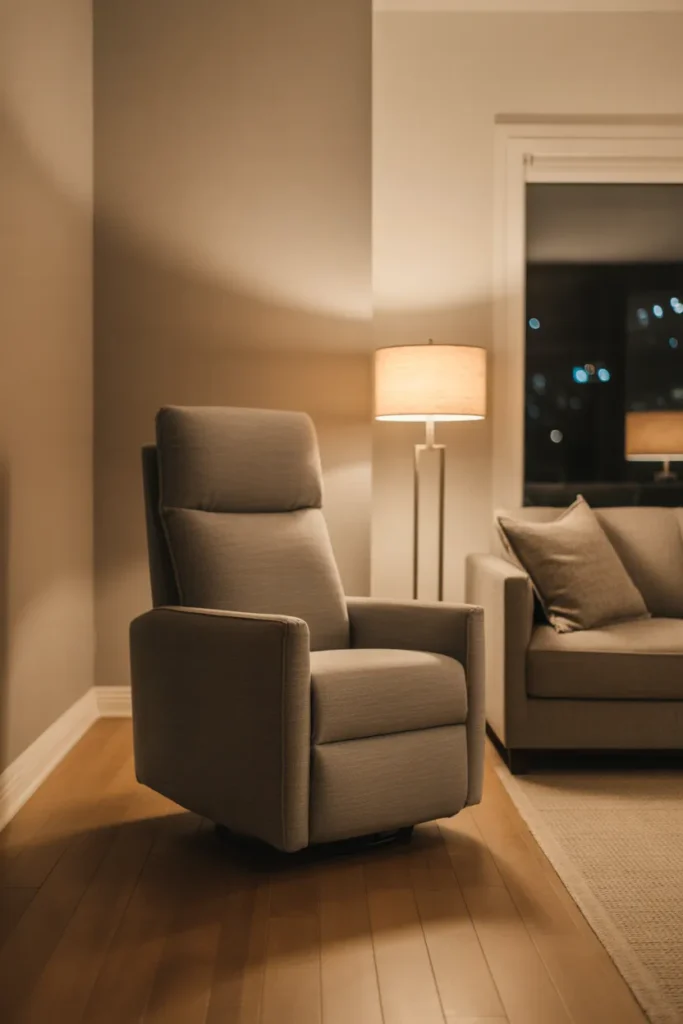
These chairs typically require 10 to 15 inches of clearance behind the chair back for the reclining mechanism to operate. This is less than traditional recliners that need 18 to 24 inches, but it still needs to be planned into the layout before placement.
This is one of the most searched living room seating ideas for households with older adults or anyone who uses a reclining position for medical, comfort, or recovery reasons. The modern version makes the functional requirement aesthetically compatible with the rest of the room.
19. Upholstered Chair in Performance Fabric for Households With Pets or Children
Standard upholstery fabrics — plain linen, silk blends, loosely woven textures — stain, snag, and trap pet hair in ways that make them genuinely impractical for households with pets or young children. A chair upholstered in performance fabric — solution-dyed acrylic, performance velvet, or coated weave — handles daily abuse that standard fabric cannot.
Performance fabrics have reached a point in quality where they are visually indistinguishable from natural fabrics in most standard lighting conditions. A performance velvet in a rich jewel tone looks identical to a natural velvet in a photograph and to the naked eye in a room — but it cleans with water and resists staining at the fiber level.
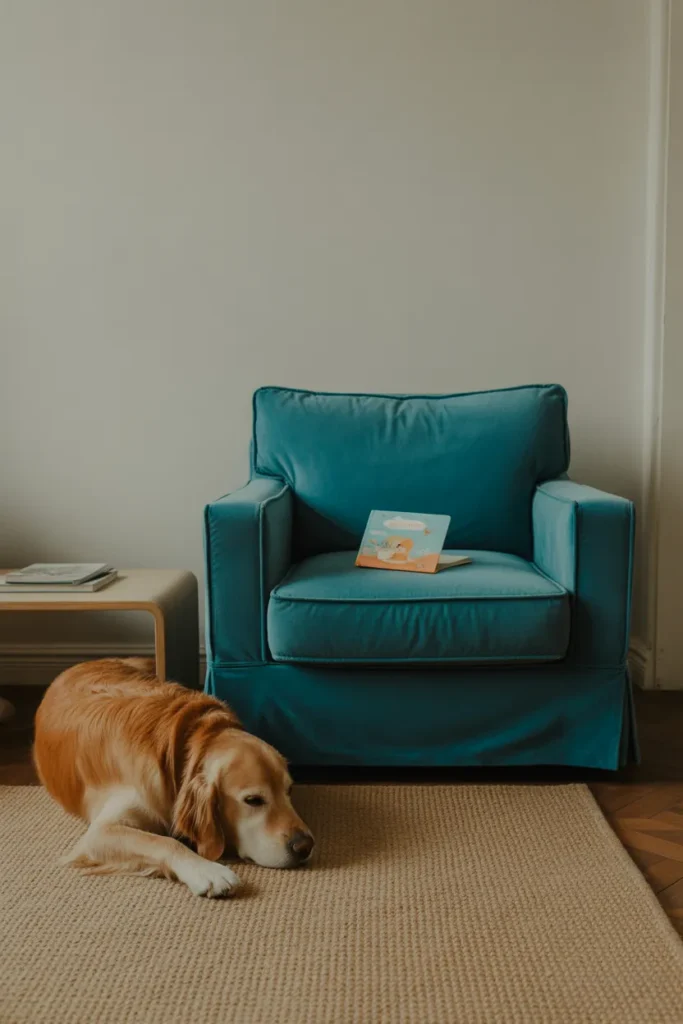
This is a decision that should be made before purchasing any upholstered chair for a household with pets or children. The cost difference between standard and performance fabric is typically modest, but the functional difference over three to five years of daily use is significant.
The one performance fabric limitation is breathability in warm climates. Some performance fabrics retain heat more than natural fibers. In rooms without air conditioning or in warm Southern states, this is worth testing before committing to a fully upholstered high-performance chair.
20. Vintage or Antique Chair as a Character Piece in a Modern Room
A single vintage or antique chair in an otherwise modern living room creates the kind of layered, curated look that fully new rooms often lack. The patina, the proportion, and the craft detail of an older chair introduce material history that contemporary furniture production rarely replicates.
This works visually because the contrast between the aged piece and the modern surrounding elements creates a reference point — something that gives the eye evidence of personality and selection rather than a room that was purchased as a complete package.
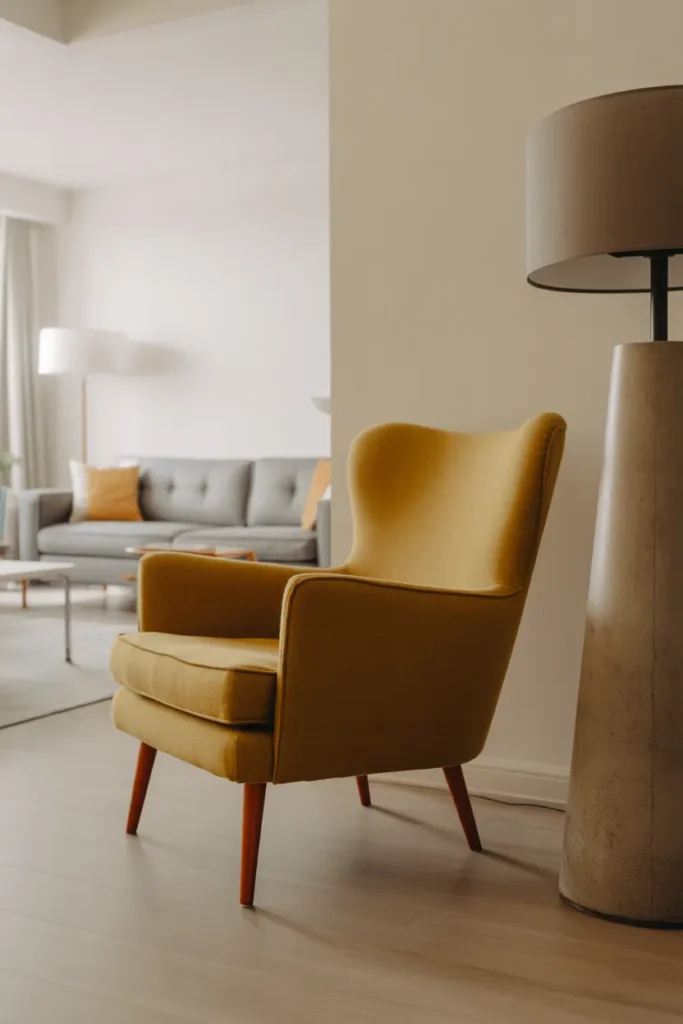
The practical consideration is the structural integrity of the vintage piece. An antique chair that is visually beautiful but structurally compromised — loose joints, failing webbing, weakened frame — should be professionally evaluated and restored before use as daily seating. Decorative use of a structurally unsound chair is reasonable; daily use is not.
Reupholstering a vintage chair frame in a modern fabric is one of the most effective ways to integrate an older piece into a contemporary room. The frame retains its period character while the new fabric makes it current. This combination is often more distinctive than either a fully vintage or fully new piece alone.
21. Corner Chair Arrangement That Turns an Awkward Diagonal Wall Into a Feature
Some living rooms have angled walls, bump-outs, or diagonal corners that standard furniture placement cannot address cleanly. A chair positioned directly into that diagonal corner — facing outward at 45 degrees — converts the architectural awkwardness into a deliberate reading or accent zone.
This works because the angled placement of the chair mirrors the angle of the wall, creating a relationship between the furniture and the architecture that reads as intentional. A chair forced against an angled wall at a 90-degree angle, by contrast, leaves visible gaps on both sides and looks like an unsolved layout problem.
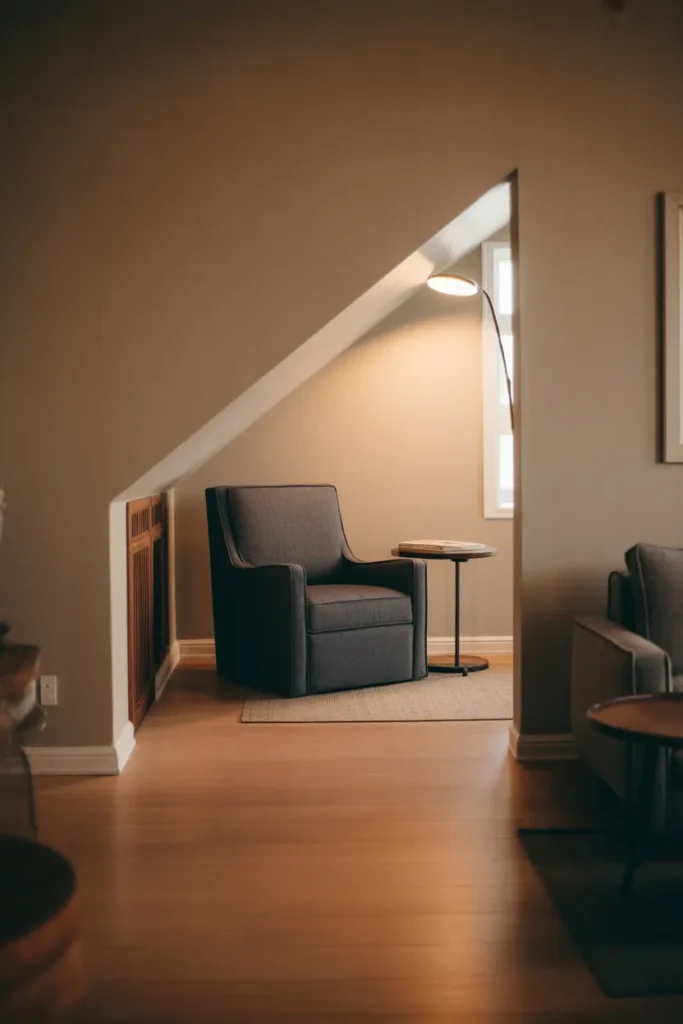
In rooms where this diagonal corner exists near a window, the position creates a naturally lit seat that functions as a reading spot without requiring additional lamp placement. The combination of the architectural feature and the seating piece together becomes a focal point rather than a problem area.
The chair style for this placement should have a relatively compact footprint — 28 to 32 inches wide — so it fits into the corner cleanly without the arms extending past the wall lines on either side.
22. Outdoor-Style Wicker or Rattan Chair Used Indoors for Texture and Warmth
Natural wicker, rattan, and seagrass chairs have moved from exclusively outdoor use into mainstream indoor living room design, and the functional reason is texture. In a living room dominated by smooth, flat, upholstered surfaces — sofa, rugs, curtains — a rattan or wicker chair introduces a woven, organic texture that no upholstered piece can replicate.
This textural contrast is what makes a room feel layered and collected rather than staged and showroom-ready. It introduces a material reference to natural environments — water, plants, sun — that creates warmth without adding color.
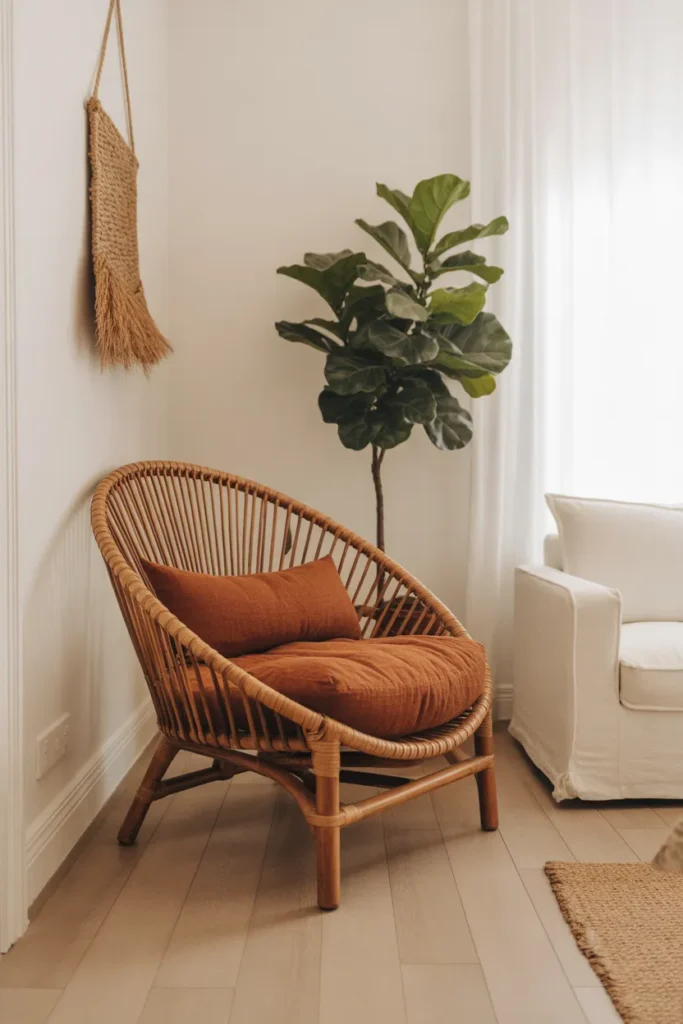
Rattan and wicker chairs work best with a comfortable seat cushion since the woven structure alone is not padded for extended sitting. The cushion is also the opportunity to introduce a pattern, a color, or a textile that connects the chair to the rest of the room’s palette.
The structural consideration for indoor use is moisture. Rattan and natural wicker respond to indoor heating systems, which can dry the material over time and cause cracking or loosening. A periodic light conditioning treatment maintains the material and extends the chair’s indoor lifespan significantly.
23. Dining Chair Used as a Living Room Accent for a Cohesive Open-Plan Look
In an open-plan living-dining space, bringing one or two dining chairs into the living room seating arrangement creates a visual connection between the two zones that makes the overall floor plan feel more cohesive. The repeated chair element bridges the living and dining areas without requiring matching fabrics or identical furniture throughout.
This is one of the most practical small living room seating ideas for apartments and open-plan homes where the living and dining areas share a single continuous space. Using the same dining chair as a living room accent eliminates the design discontinuity that happens when two completely different furniture languages meet in the same room.
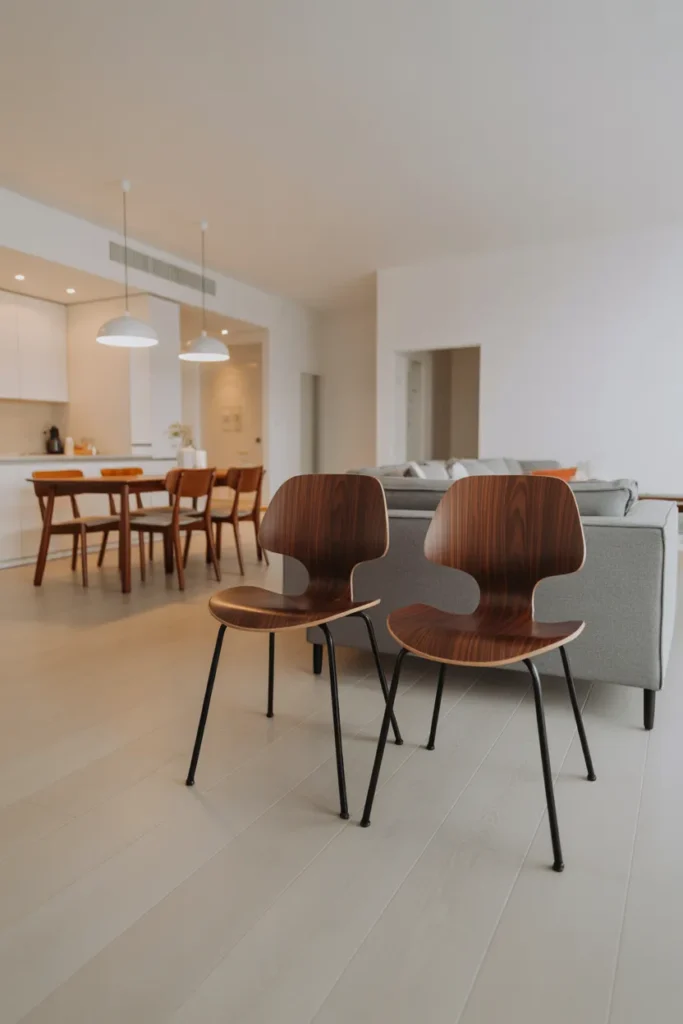
Dining chairs used as living room accent chairs work best when positioned at the edge of the seating arrangement — beside the sofa, at the end of the coffee table, or flanking a bookcase — rather than in a central seating position. Their seat height and depth are calibrated for dining, not extended living room lounging.
The chair style that crosses over most effectively is the side chair — a clean-lined dining chair without arms, in a material like wood, molded plastic, or slim upholstery — that has enough design character to function as an accent while remaining connected to its dining counterpart.
24. Layered Chair and Side Table Vignette That Creates a Complete Corner Moment
The most common reason a living room corner fails is that a chair was placed there without context — no lamp, no table, no relationship to the wall or anything else in the space. A complete corner vignette — chair, side table, lamp, and one wall element such as a plant or artwork — creates a composed moment that reads as finished rather than incidental.
This is one of the most reliable living room chairs ideas 2026 for pulling together a room that already has the right pieces but feels unresolved. The issue is almost never the chair itself — it is the absence of the supporting elements that give the chair a reason to be where it is.
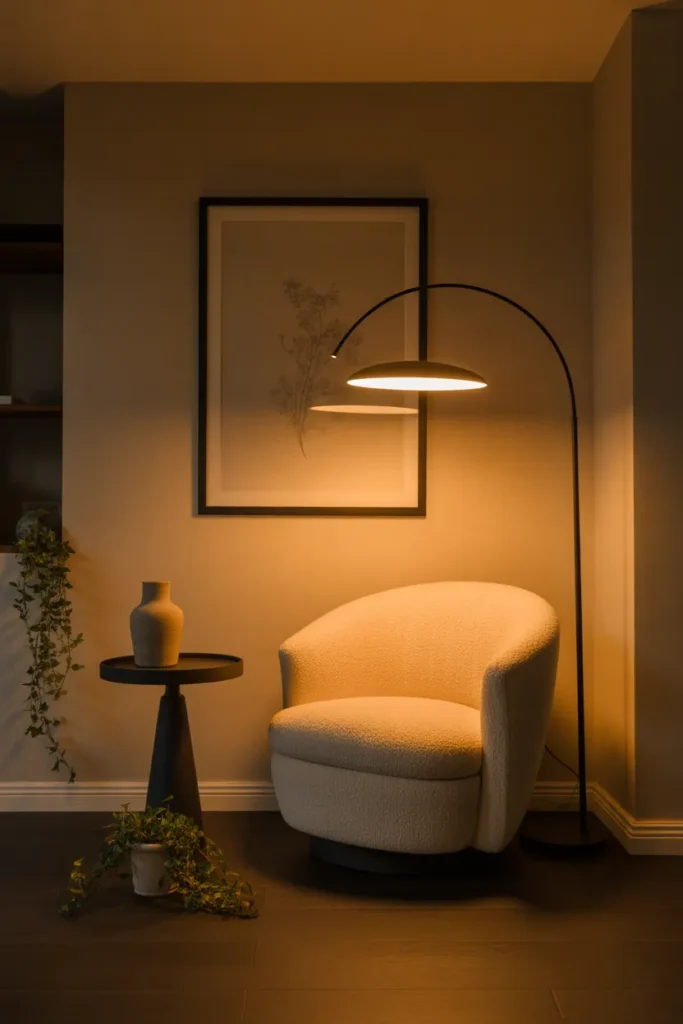
The formula for a complete corner vignette is consistent: one seating piece, one surface at arm height, one light source, and one vertical element above or beside. These four components together create a self-contained zone that holds its own within the larger room arrangement.
The vertical element is the most commonly skipped component. A plant, a tall lamp, a framed print, or a wall sconce above the chair gives the eye a reason to travel upward and registers the corner as a designed space rather than leftover room.
Final Thoughts
The right chair does more than fill a seat — it completes a layout, solves a seating gap, and gives a room the visual and functional balance it needs to work every day. Whether you are furnishing a small apartment living room, refreshing an open-plan space, or looking for one piece that brings a room together, the living room chairs ideas 2026 covered here give you a practical framework for making that decision confidently. Explore more living room sofa ideas!
Save this post to your Pinterest boards so you can refer back to each idea during your planning process. The best chair choices are always made against a specific room — its size, its existing pieces, its daily use — and these 25 ideas are designed to help you match the right chair to exactly that. For your next step, explore modern living room seating layouts and small living room space planning guides to put these chair ideas into a complete arrangement.