
Living room corner ideas usually get treated as an afterthought — the leftover space you fill once everything else is arranged, if you bother filling it at all. That empty corner has been quietly working against you, making the whole room feel unfinished no matter how well the rest is styled. By the end of this, you’ll know exactly which corner idea fits your room and how to make that once-dead space the first thing people notice when they walk in.
The Reading Nook That Makes an Empty Corner Feel Like the Best Seat in the House
Most corners sit empty because nobody can picture what belongs there, but a single well-chosen chair changes that instantly. Add one accent chair angled slightly toward the room, a floor lamp positioned just behind the shoulder for reading light, and a small round side table, and the corner stops being unused space and becomes a destination.
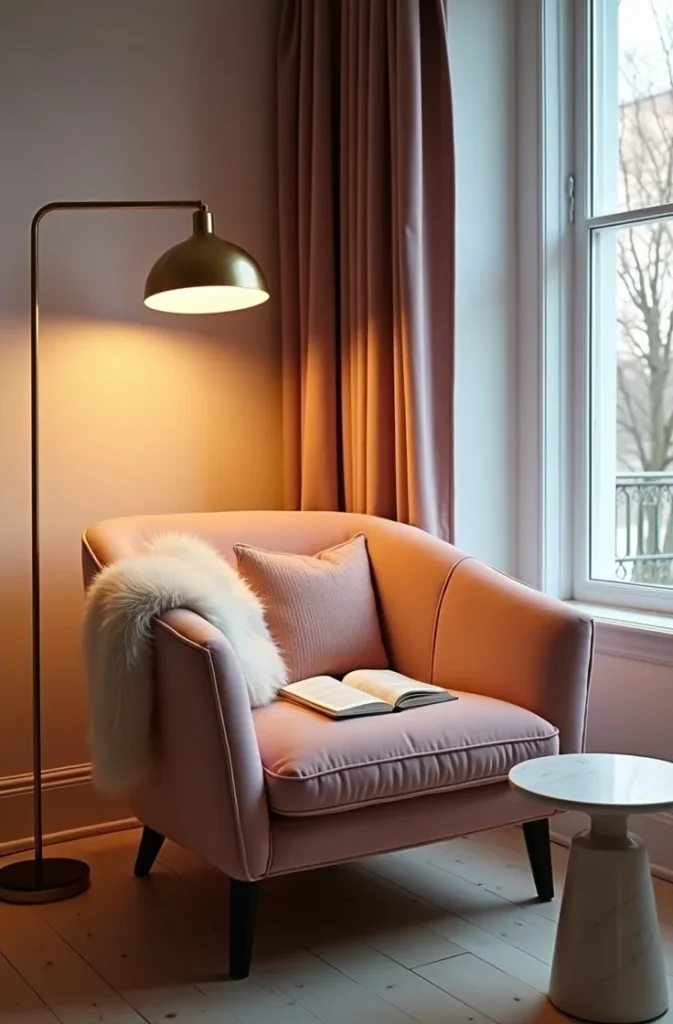
This is one of the most effective living room corner ideas for apartment renters and anyone in a smaller home where a separate reading room isn’t an option — the corner becomes that room in miniature. It works especially well in corners near a window, since natural daylight during the day and a warm lamp at night give the nook two completely different moods.

The mistake is choosing a chair that’s too large for the footprint, which crowds the walking path instead of completing it. Keep the chair scaled to the corner, not the room, and angle it at roughly 30 to 45 degrees rather than facing it flat into the wall — that small adjustment is what makes it feel inviting instead of stiff.
The Floating Shelf Corner That Adds Storage Without Adding Furniture
A corner is often too narrow for a full bookshelf but perfectly suited to floating shelves, which use the vertical wall space that a floor-standing piece never could. Mounting two or three shelves at staggered heights, rather than one long uniform run, keeps the eye moving up the corner instead of stopping flat, which makes the ceiling feel higher in the process.
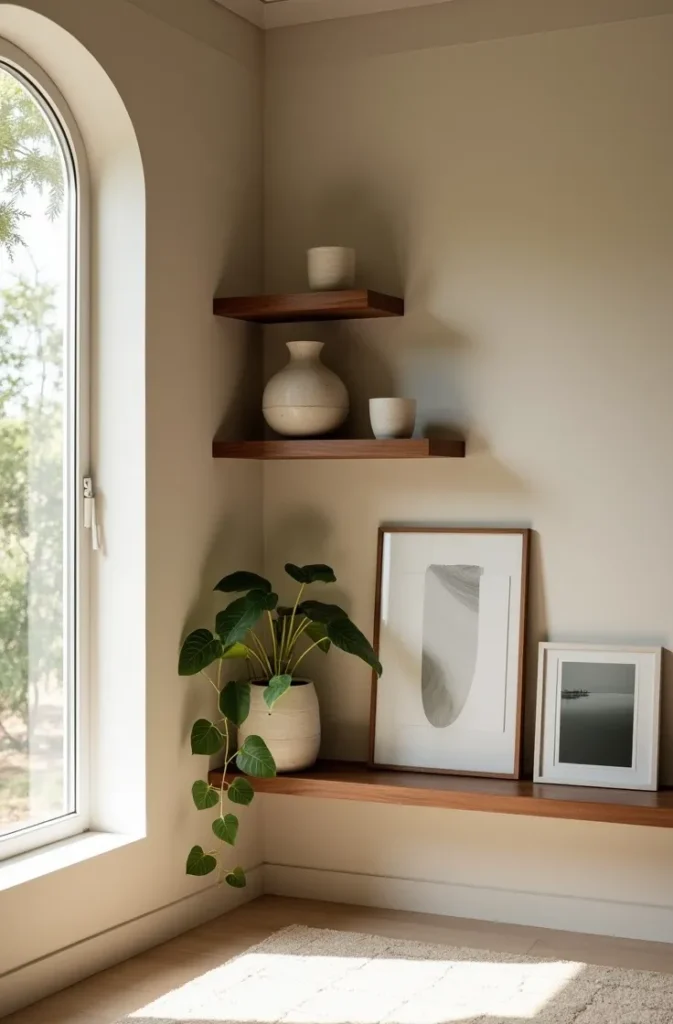
This is one of the corner decor ideas for small living rooms that solves a real problem — a place for books, plants, and display objects — without taking a single inch of floor space, which matters most in Texas ranch-style homes and Midwest starter homes with one modest living room and no extra storage room to spare.
The mistake is filling every shelf edge to edge, which turns a clean architectural detail into visual clutter. Leave real breathing room between objects, roughly two to three items per shelf, so the corner reads as curated rather than crammed.
Why a Corner Fireplace Setup Makes the Whole Room Feel Anchored
A living room without an architectural focal point can feel directionless, with furniture floating in the middle with nothing to orient around. Placing a freestanding or electric fireplace in the corner gives the room a visual anchor it didn’t have before, and it lets you angle the sofa toward that corner instead of the usual flat wall-facing arrangement.
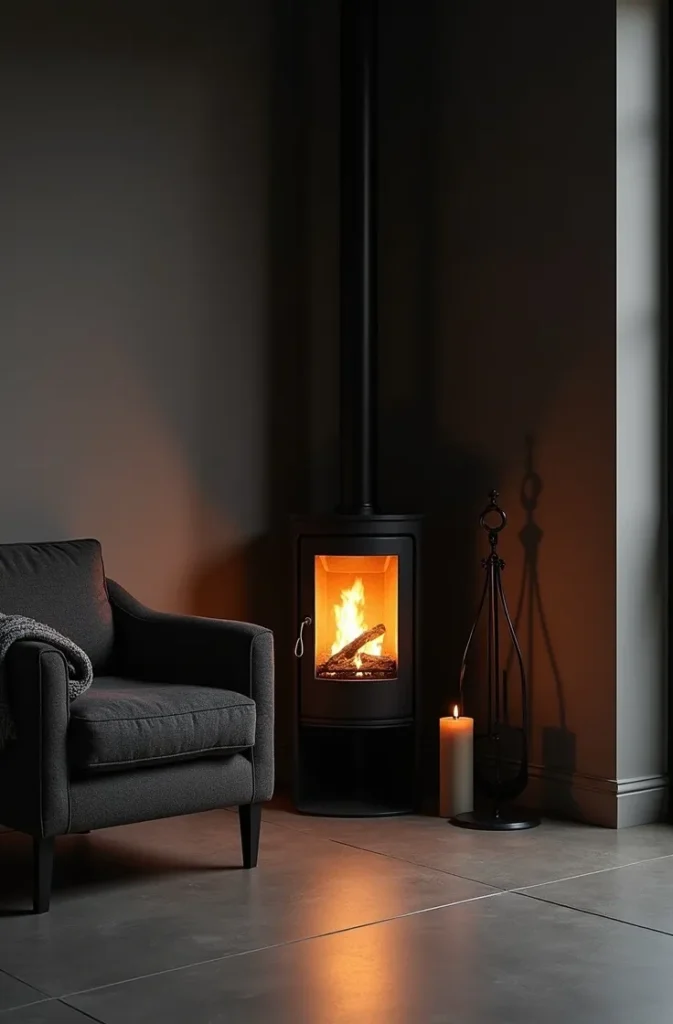
This is one of the living room corner ideas most renters overlook, assuming a fireplace requires construction, when freestanding and electric options need nothing more than an outlet. It works particularly well in open-concept spaces and studio apartments where the living area has no natural focal wall of its own.
The mistake is centering the fireplace in the corner but leaving the furniture arrangement unchanged around it, which wastes the anchor you just created. Angle at least one seating piece diagonally toward the corner so the fireplace genuinely becomes the room’s focal point, not a decoration nobody is actually facing.
The Tall Plant Trick That Softens a Sharp, Awkward Corner
A ninety-degree corner is the hardest edge in any room, and furniture rarely softens it because furniture has its own hard edges too. A single tall plant — something with height and movement, like a fiddle leaf fig or an olive tree — breaks that sharp line with an organic, irregular shape that no piece of furniture can replicate.
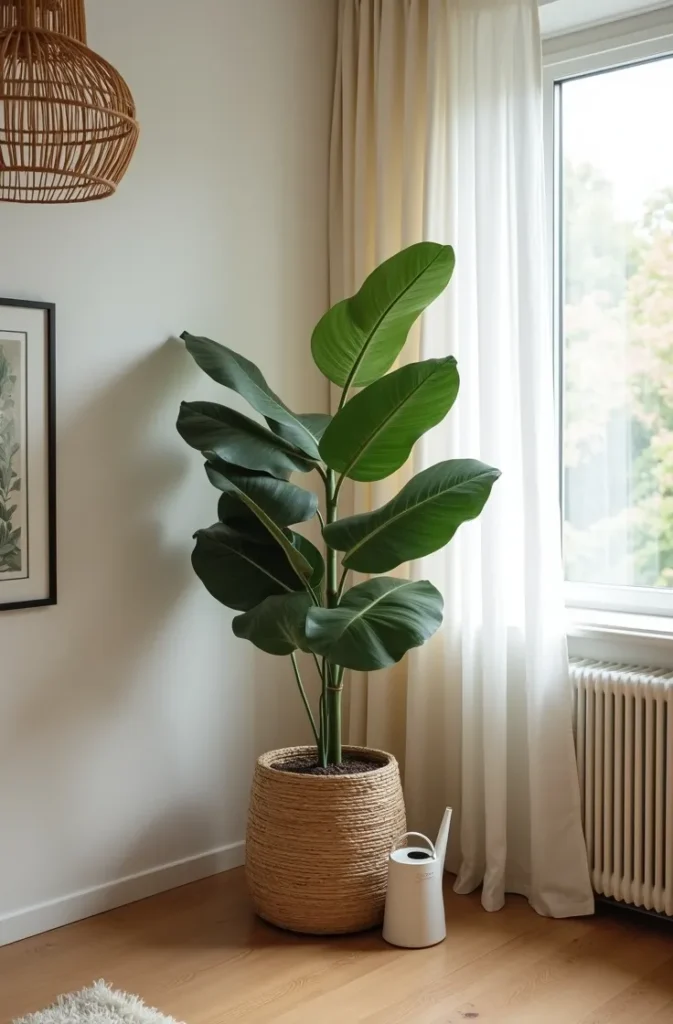
This is one of the empty corner ideas for living rooms that costs almost nothing and works in nearly any home, from California bungalows to New York studio apartments, because it doesn’t require rearranging anything else in the room. It’s especially useful in corners too narrow or oddly shaped for furniture of any kind, since a plant only needs floor space for its pot.
The mistake is choosing a plant that’s too short, which just adds clutter at eye level instead of solving the height problem. Look for something that reaches at least five to six feet, so the eye is drawn upward through the corner rather than stopping at knee height.
The Corner Bar Cart That Makes an Unused Space Feel Like a Destination
An empty corner often gets ignored because it doesn’t have an obvious job, but giving it one — even a small one — changes how the whole room functions. A slim bar cart tucked into a corner turns dead space into a spot people actually gather around, without requiring a full built-in or permanent renovation.
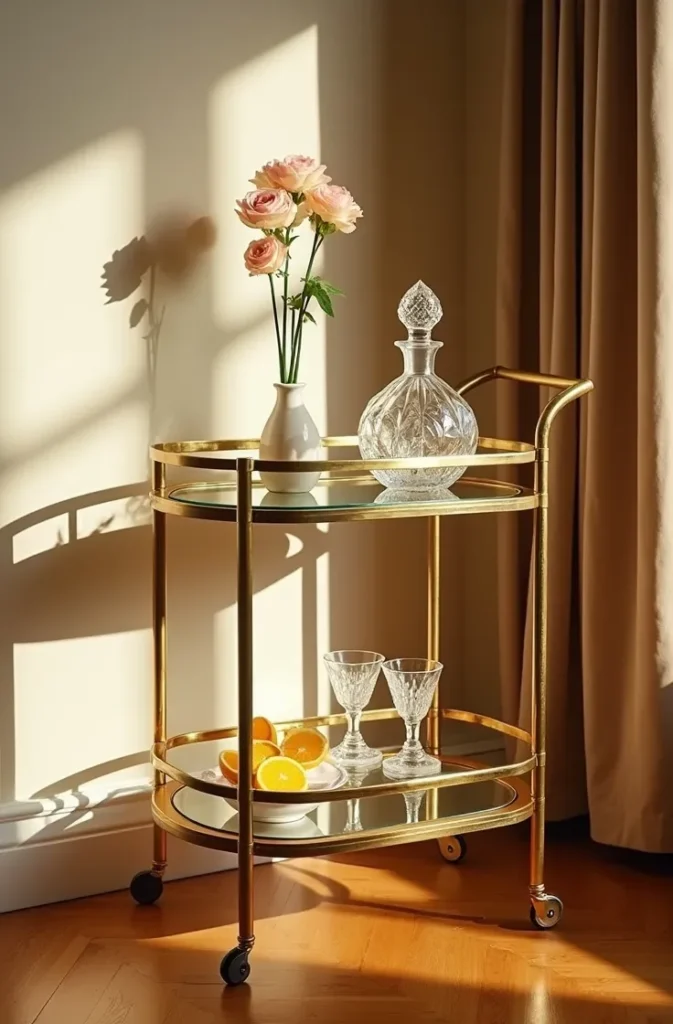
This is one of the living room corner ideas that works especially well for anyone who hosts casually, in shared living rooms or open-concept apartments where a dedicated dining or entertaining area doesn’t exist. Because a cart is on wheels, it also solves the problem of a corner that needs to serve double duty — roll it out for a gathering, tuck it back against the wall the rest of the week.
The mistake is overloading the cart until it looks more like storage than styling. Keep it to a curated handful of bottles and glassware with one decorative object, like a small vase or a stack of coasters, so the corner still reads as intentional rather than functional clutter.
The Corner Gallery Wall That Gives an Awkward Angle a Reason to Exist
A corner where two walls meet at an angle is difficult to furnish, but it’s an ideal spot for something that doesn’t need to sit flush against a single flat surface — art. Wrapping a gallery arrangement of small framed pieces around the actual corner, rather than confining it to one wall, uses the angle itself as part of the composition instead of fighting it.
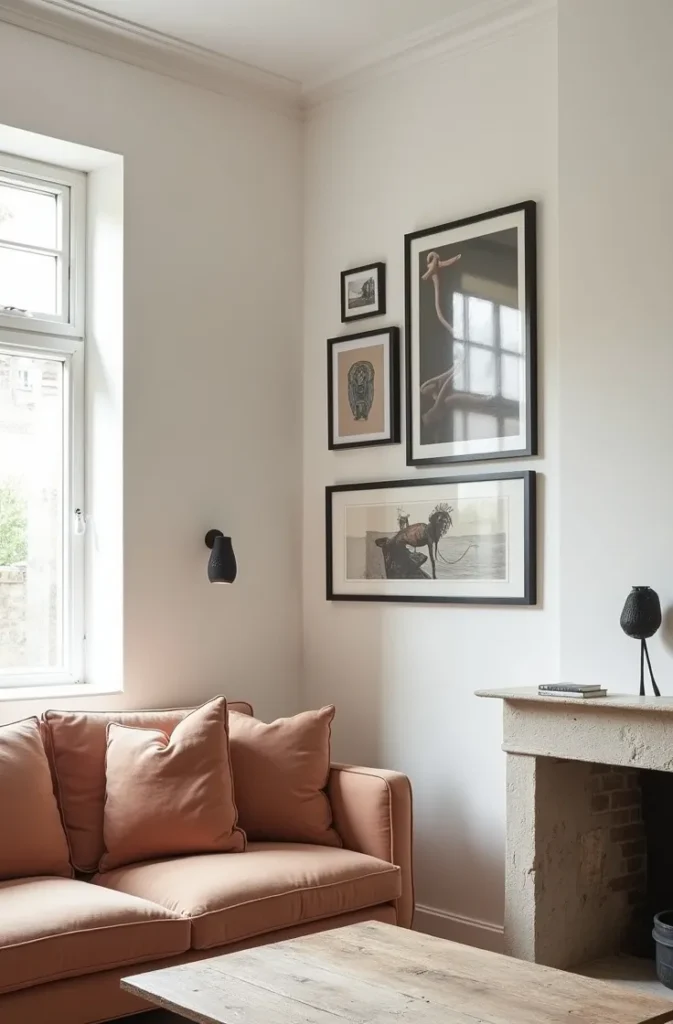
This is one of the awkward corner living room solutions worth trying before assuming the space is unusable, particularly in older homes with irregular architecture, non-square rooms, or a corner interrupted by a window or vent that rules out furniture entirely. It also gives you a place to display personal, meaningful pieces without needing an entire dedicated wall.
The mistake is spacing the frames too evenly, which can look sterile wrapped around a corner. Vary the spacing slightly and let a few frames overlap the corner’s edge itself, so the arrangement reads as one continuous piece rather than two separate walls of art that happen to meet.
The Built-In Bench Look That Turns a Wasted Corner Into Real Seating
A corner near a window is frequently left empty because it’s too small for a chair and too awkward for a sofa, but a fitted bench solves both problems at once. Whether it’s a true built-in or a simple upholstered bench cut to the corner’s exact width, this approach uses every inch of the footprint for seating instead of leaving a gap that never gets used.
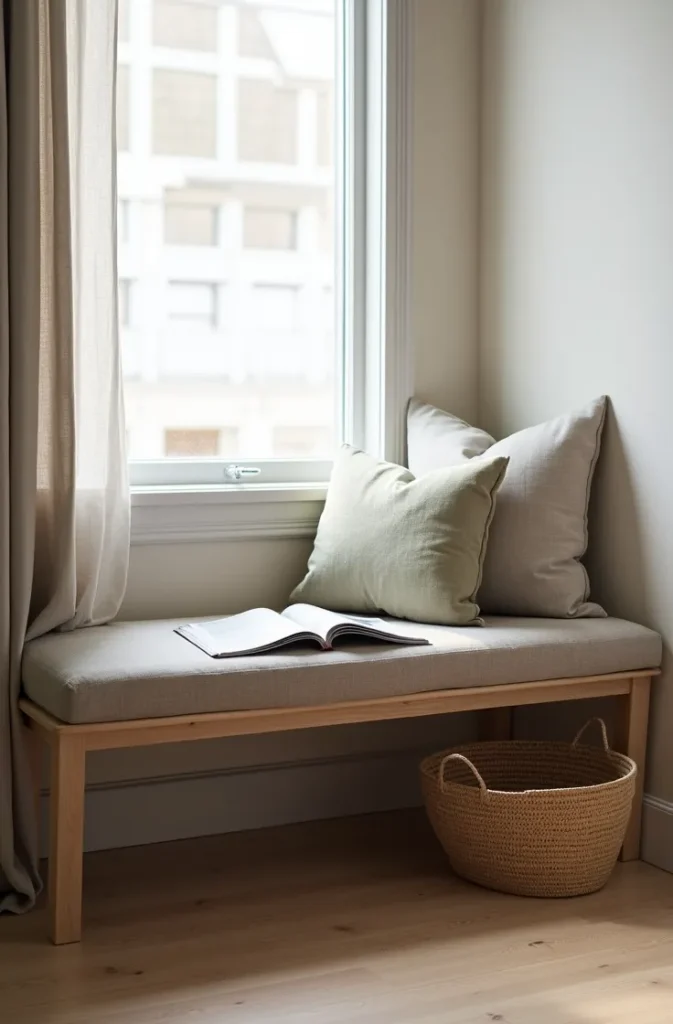
This is one of the functional corner ideas for small living rooms in the USA that works particularly well under a window, since the bench doubles as a window seat and adds a second casual seating option without eating into the room’s main walking path. It’s a strong choice for shared living rooms where extra seating always seems to be in short supply.
The mistake is skipping the cushioning depth, which makes even a well-built bench feel more like a shelf than a seat. Aim for at least three inches of cushion and add two or three throw pillows so it functions as genuine seating, not just a display surface.
The Oversized Mirror Corner That Makes a Small Living Room Feel Twice as Deep
A corner catches less natural light than any other part of the room, which is exactly why it benefits most from a mirror. Leaning a large mirror against the corner wall, rather than centering it on a flat wall elsewhere, reflects light from two directions at once and creates a sense of depth that a flat wall placement can’t match.
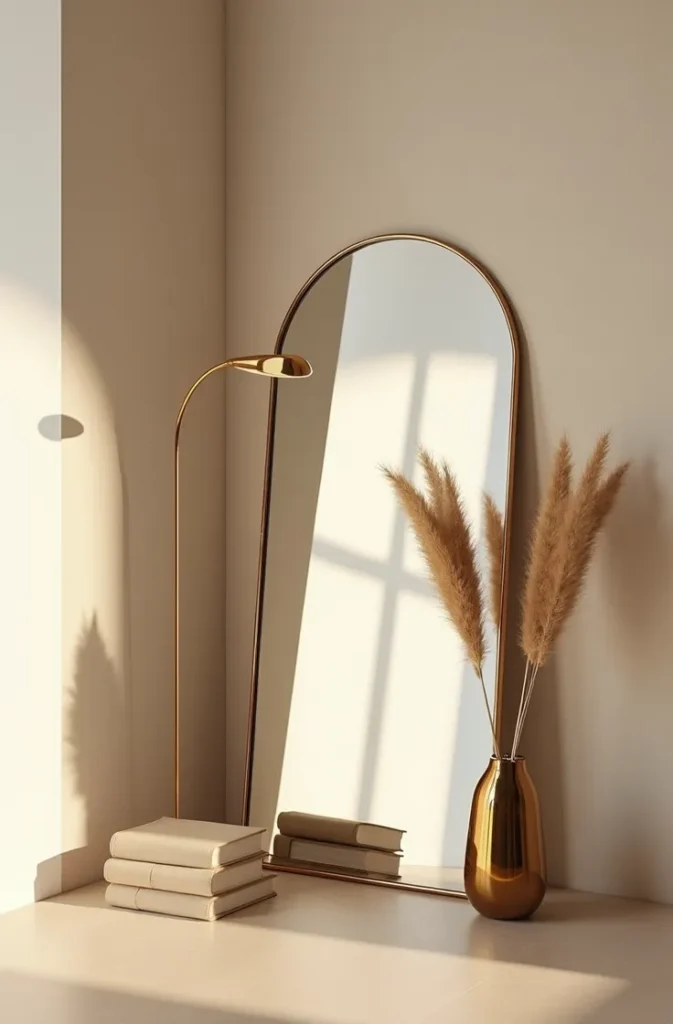
This is one of the modern living room corner ideas worth prioritizing in darker apartments, ground-floor units, or any room where the corner sits farthest from the window. It also visually doubles whatever is styled nearby, so a single plant or a small chair placed beside the mirror reads as a fuller vignette than it actually is.
The mistake is choosing a mirror too small for the corner, which gets lost rather than making an impact. Go oversized and let it lean rather than hang — a leaning mirror in a corner reads as intentional and collected, while a small mirror centered on the wall can look like an afterthought.
The Corner Desk Nook That Fits a Home Office Into a Room With No Office
A corner that’s too shallow for seating is often just deep enough for a slim desk, which makes it one of the few spots in a small living room that can genuinely double as a workspace without taking over the room. A desk against the corner, rather than against a full wall, keeps the footprint minimal and leaves the desk visually tucked away rather than dominating the space.
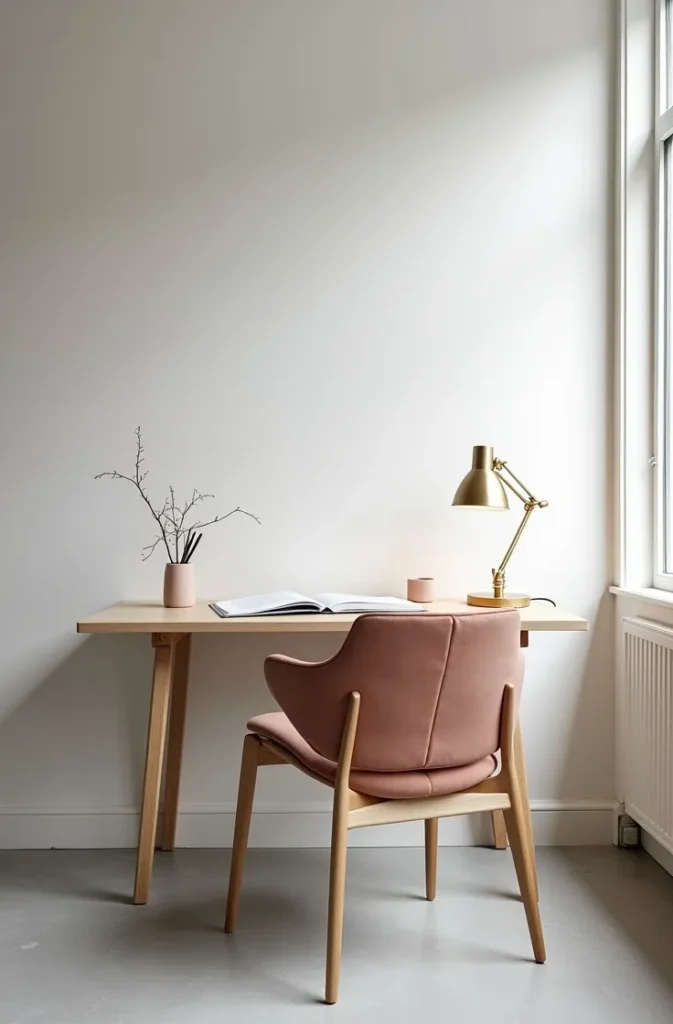
This is one of the living room corner ideas that solves a real daily-life problem for anyone working from a small apartment with no spare room for an office, which describes a growing share of renters in cities where a dedicated study simply isn’t in the floor plan. Positioning the desk to face into the room, rather than into the corner itself, also keeps it from feeling isolating during long work hours.
The mistake is choosing a desk too deep for the corner, which forces the chair into the room’s main walking path. Keep the desk under 20 inches deep and choose a chair that tucks fully underneath when not in use, so the corner reads as living room first and workspace second.
The Sculptural Floor Lamp That Turns an Empty Corner Into a Piece of Art
Sometimes the simplest fix for a stubborn corner is to stop trying to furnish it functionally at all and let it be purely visual. A floor lamp with a genuinely sculptural shape — a curved arc, an asymmetric silhouette, a organic branching form — fills the corner the way a piece of art would, giving it presence without adding another surface to maintain or style.
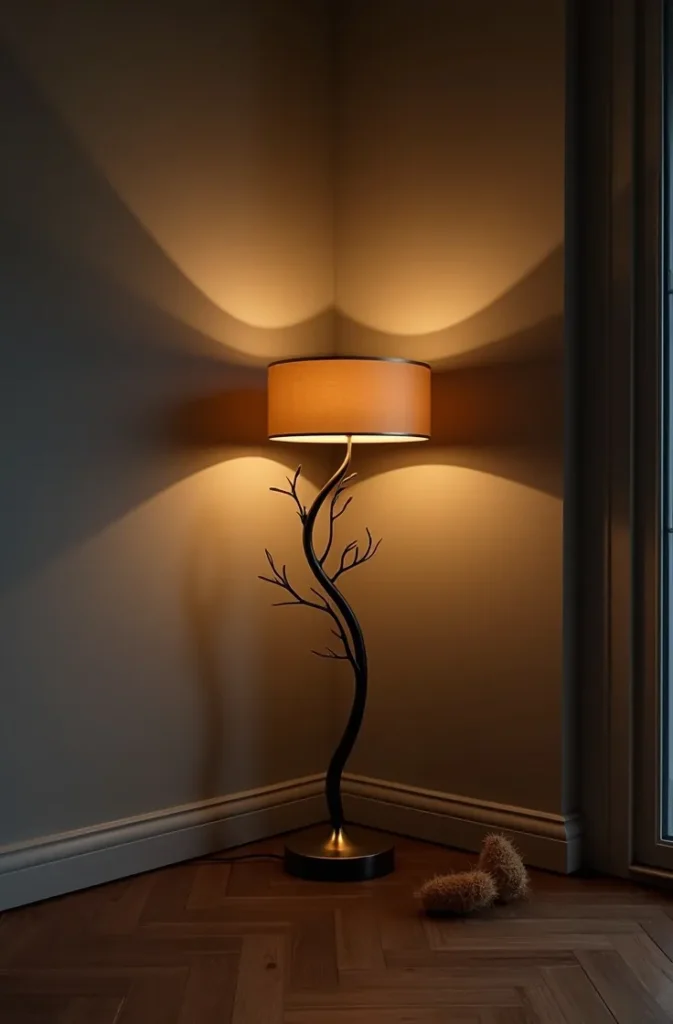
This is one of the cozy corner ideas for living rooms best suited to a corner too small or too oddly shaped for anything else, including corners interrupted by outlets, vents, or radiators that rule out furniture and shelving. Because the lamp itself is the decoration, there’s nothing else to arrange, which makes this the lowest-effort option on this entire list with one of the highest visual payoffs.
The mistake is choosing a lamp that’s purely functional in shape, which fills the space without adding any real character to it. Spend the extra effort finding a lamp with an interesting silhouette, even if it costs more than a standard option, since in an empty corner the lamp is doing all of the visual work alone.
Every one of these living room corner ideas gives you a real plan for that space you’ve been walking past for months, not just another photo to admire and scroll away from. Save this post before you commit to one, since the right corner idea depends on your light, your traffic flow, and the exact shape of the space you’re working with. Consider this your go-to guide for every stubborn corner you’ll ever need to solve.