
If your living room feels outdated, disconnected, or just not working for how you actually live, you are not alone — and the solution is rarely a complete gut renovation. These living room renovation ideas 2026 cover the changes that deliver the highest visual and functional return, from layout adjustments and material upgrades to lighting decisions and storage solutions. Every idea here is practical, decision-focused, and built around real homes so you can prioritize what matters most for your specific space.
1. Replace Your Sofa Wall Layout With a Floating Furniture Arrangement
The most common living room layout mistake is pushing all furniture against the walls. It feels logical — more open floor space — but it actually makes the room feel larger and emptier in the wrong way, with furniture floating at the perimeter and a hollow, unused center.
A floating arrangement pulls the sofa and chairs away from the walls and anchors them around a central point — typically a coffee table, rug, or fireplace. This creates a defined conversation zone that feels intentional, warm, and proportional regardless of room size. The surrounding negative space between furniture and walls actually makes the room feel more spacious, not less.
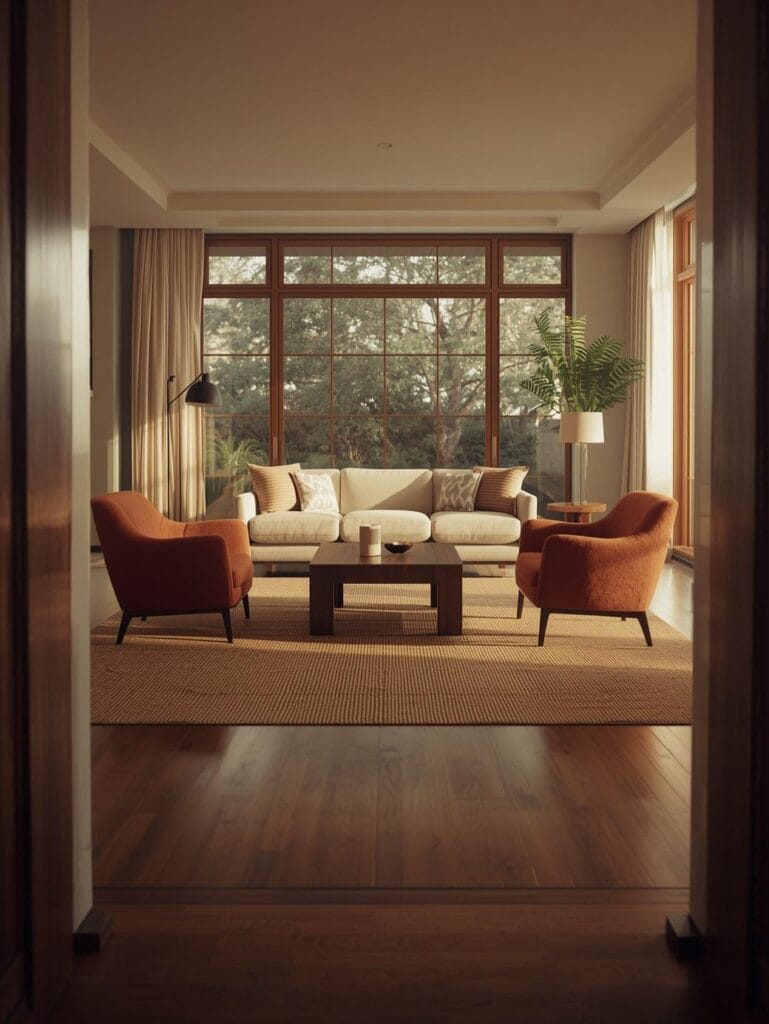

This works in living rooms from 200 square feet upward. In smaller rooms, even pulling the sofa twelve inches from the wall creates enough depth to shift the room’s energy significantly. The mistake to avoid is floating furniture without a rug to anchor it — without a rug, the arrangement reads as incomplete rather than designed.
In open-plan living spaces, floating furniture does double duty: it defines the living zone without walls or dividers, creating a clear boundary between the living area and dining or kitchen zones.
2. Install Limewash Paint on One Wall to Replace Tired Neutral Walls
Flat beige and greige walls defined the last decade of living room design. In 2026, the shift is toward walls with depth, texture, and character — and limewash paint is the most accessible way to achieve that without wallpaper, paneling, or specialty contractors.
Limewash creates a layered, slightly varied finish that shifts in tone depending on the light source and viewing angle. A single limewash accent wall behind the sofa or media unit adds warmth and sophistication that flat paint simply cannot deliver. Colors like aged terracotta, dusty sage, warm slate, and antique white all perform exceptionally well in living room applications.
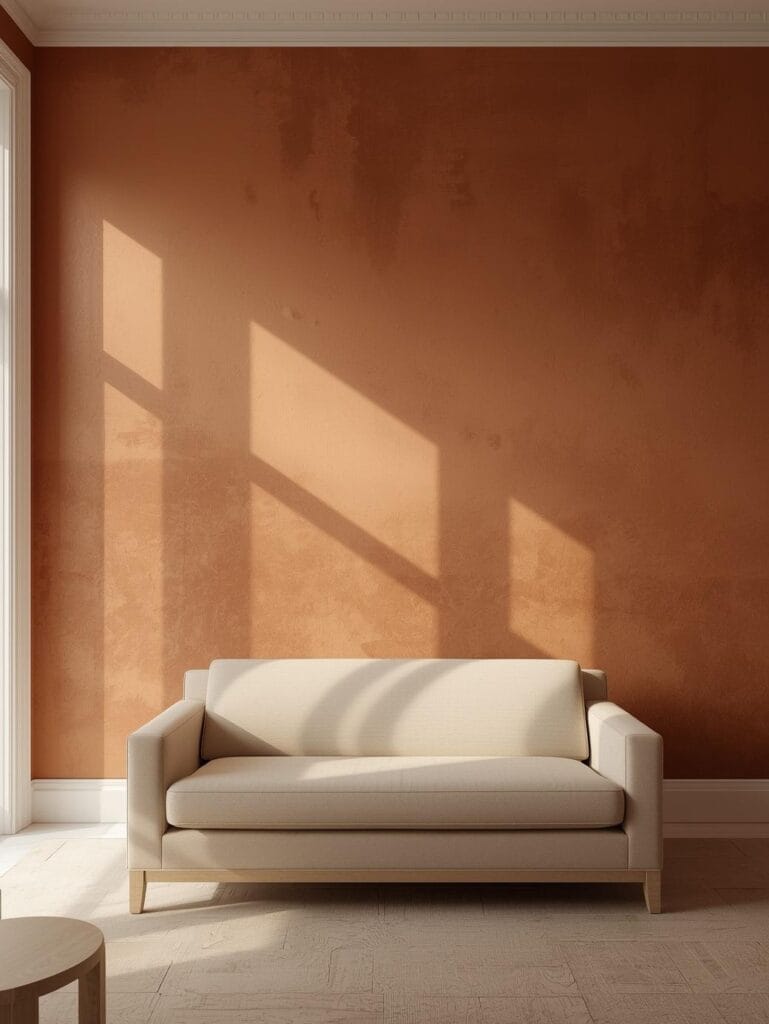
This is one of the most impactful living room renovation ideas for 2026 because it is achievable as a weekend DIY project, costs significantly less than wallpaper or paneling, and the result photographs and reads in person as genuinely high-end. The mistake is applying it to all four walls in a small room — in compact living spaces, one limewash wall is enough. More than that can feel heavy rather than atmospheric.
Apply limewash with a wide brush in overlapping circular strokes rather than standard rolling technique. The brush marks are part of the finish — they create the variation that gives the wall its depth.
3. Swap Overhead Lighting for a Layered Three-Source System
Most living rooms rely on a single overhead light — a ceiling fixture or recessed lights on one circuit. The result is flat, even illumination that wipes out shadow, depth, and the sense of warmth that makes a living room feel like a place worth staying in.
A layered lighting system uses three distinct source types: ambient light from the ceiling, task light from floor or table lamps at seating level, and accent light that highlights specific architectural or decorative features. Each layer operates independently and at different intensities, allowing the room’s mood to shift from bright and functional to soft and atmospheric depending on the time of day and activity.
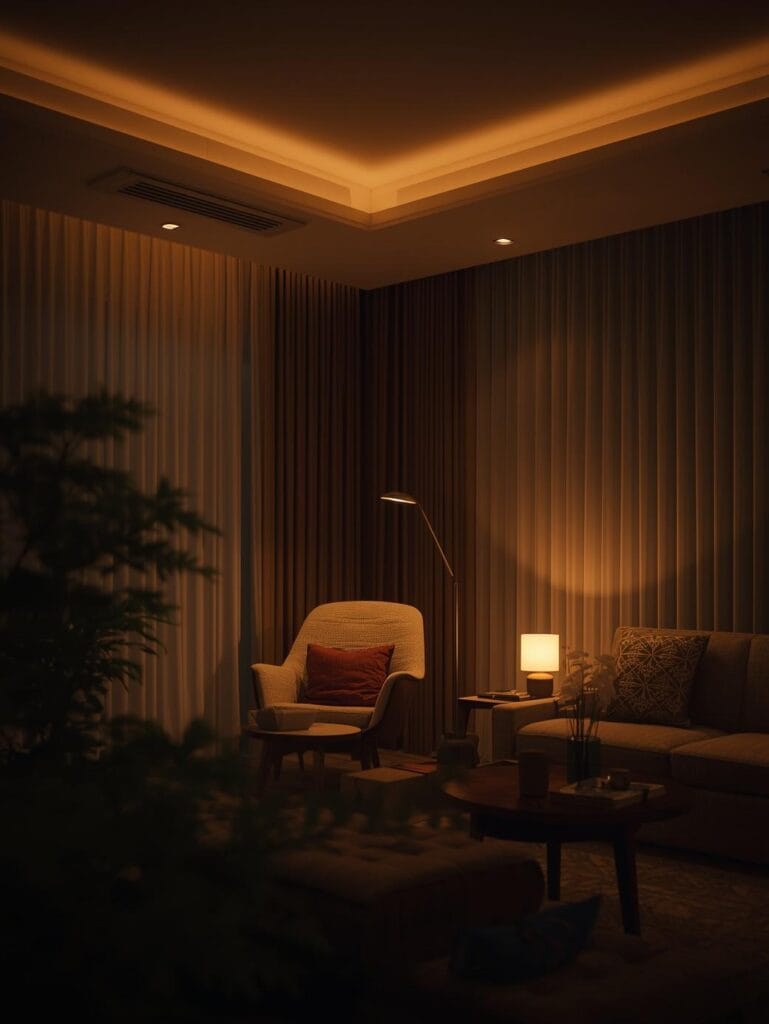
For living room renovation projects in 2026, this is one of the highest-return changes available because it requires no structural work beyond adding switched outlets or smart plugs — both of which can be handled without an electrician in most standard living rooms. The investment is in the fixtures themselves, and the impact is immediate and transformative.
The specific mistake most living rooms make is having zero lamps at seated eye level. Overhead light alone creates a flat, institutional feel regardless of how expensive the furniture is. Add one floor lamp and one table lamp and the room changes completely.
4. Add Architectural Interest With Fluted or Slat Wood Wall Panels
Flat walls are functionally fine but architecturally boring. Fluted panels — vertical columns of rounded ridges — and slat wood panels — evenly spaced horizontal or vertical strips — are among the most searched living room renovation ideas in 2026 because they introduce three-dimensional texture, shadow play, and a sense of craftsmanship that painted walls cannot achieve.
Both panel types are available as prefabricated systems that mount directly to existing drywall with adhesive and hidden fasteners, making them accessible to homeowners without construction experience. Painted in the same color as the surrounding wall, they read as built-in architectural detail. In natural wood tone against a painted wall, they read as a warm material accent.
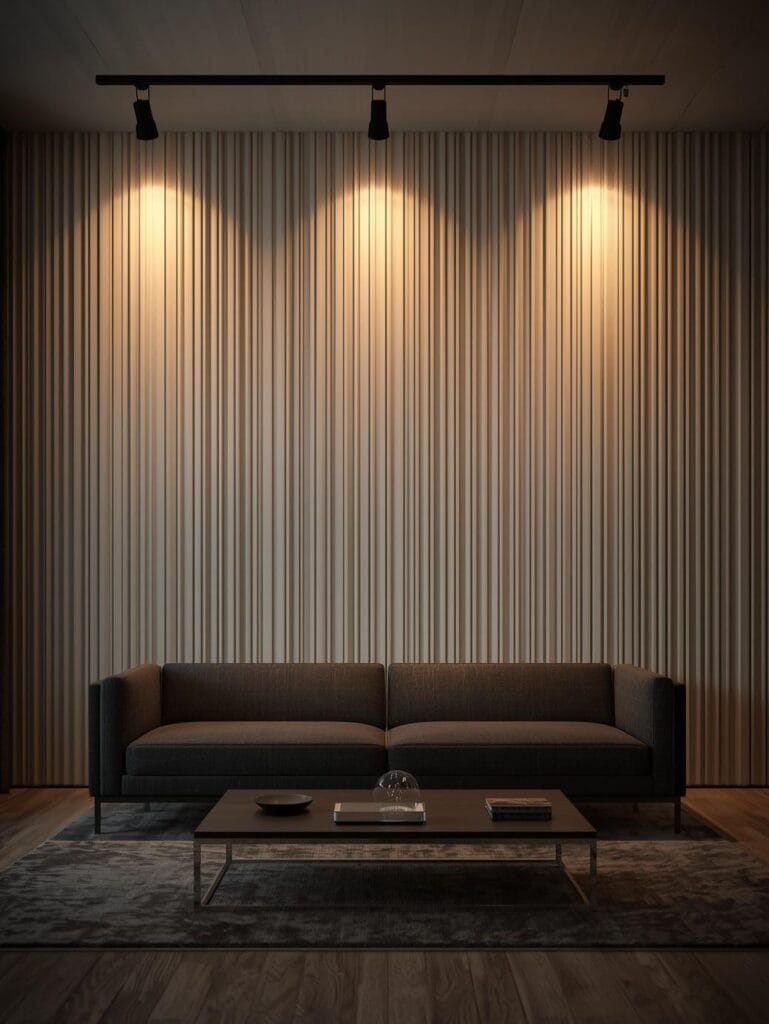
Behind the sofa or as a media wall, slat and fluted panels perform equally well. The choice between them is a proportion decision: fluted panels with their rounded ridges work better in rooms with soft, curved furniture; slat panels with their crisp flat edges complement more rectilinear, minimalist furniture arrangements.
Avoid over-paneling. One feature wall is the correct application for most living rooms. Paneling two or more walls quickly shifts from architectural interest to sensory noise.
5. Replace a Generic Media Unit With a Built-In Shelving Wall
A freestanding TV stand or generic media console is the most visually unresolved element in most living rooms. The television sits exposed, cables often visible, surrounding wall empty and unaddressed. A built-in shelving wall that integrates the television as one component among many resolves this problem completely.
Built-in shelving walls frame the television within a larger composition of open shelves, closed cabinets, and intentional negative space. The TV ceases to be the room’s focal point by default and becomes one element in a curated, architectural feature wall. The closed lower cabinets handle storage invisibly; the open upper shelves carry books, objects, and plants.
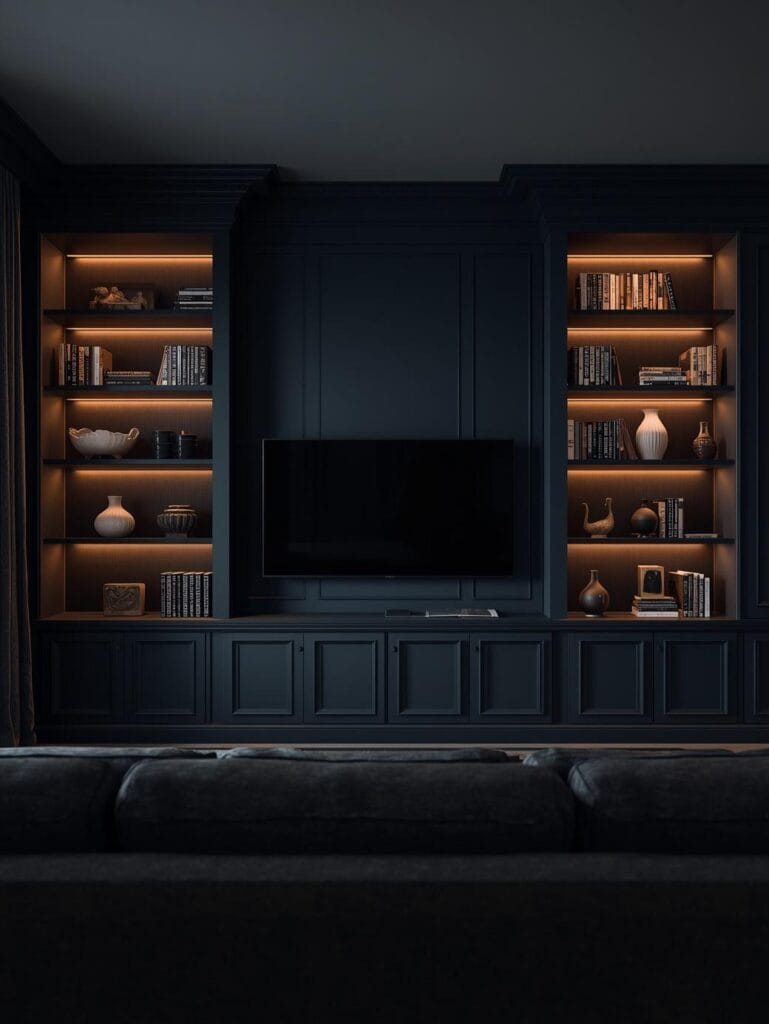
For 2026 living room renovations, built-ins are increasingly achievable without custom carpentry — modular shelving systems designed for built-in installation are widely available and can be painted to match the wall, giving them a genuinely custom appearance at a fraction of the cost of site-built joinery.
The proportional mistake to avoid is building shelves that are too shallow. Shelves less than ten inches deep look inadequate and limit what can be displayed. Twelve to fourteen inches is the functional minimum for books and objects of meaningful scale.
6. Introduce an Earthy Material Palette to Replace Cold Grey and White
The grey and white minimalist palette that dominated the 2010s has aged visibly and is one of the primary reasons so many living rooms feel dated heading into 2026. The replacement is an earthy material palette — warm beige, terracotta, raw linen, natural oak, jute, and olive — that delivers the same visual calm with significantly more warmth, texture, and longevity.
An earthy palette works because the colors exist in the same warm-neutral family, making them naturally harmonious without requiring careful coordination. Layer a warm beige sofa with natural linen cushions, a jute rug, a terracotta ceramic side table, and warm oak shelving — each material is distinct in texture and tone but cohesive in temperature.
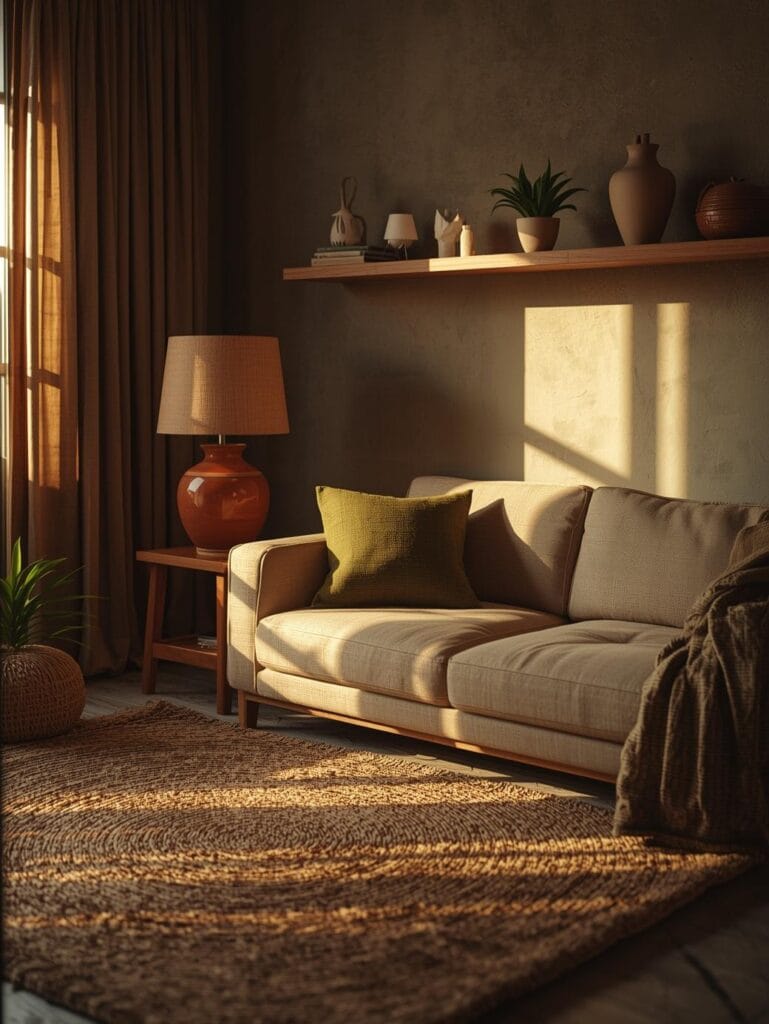
This is particularly relevant for small living room renovation planning because warm earthy tones make compact rooms feel more intimate and intentional rather than cold and exposed. The materials themselves — linen, jute, raw ceramic, natural wood — also add tactile interest that makes a room feel layered and considered without requiring many pieces.
The mistake is mixing warm earthy tones with cool grey or bright white. The temperature clash prevents the palette from cohering. If you are introducing earthier tones, retire the cool greys simultaneously.
7. Use a Statement Rug to Define Zones in an Open-Plan Living Space
In open-plan homes, the living room often lacks definition — it bleeds into the dining area or kitchen without a clear boundary, making both zones feel unresolved. A statement rug is the most effective non-structural tool for defining the living zone because it establishes a visual floor boundary that the eye reads as a room within a room.
The rug must be large enough to sit all front legs of the sofa and accent chairs on it — this is the critical sizing rule that most homeowners get wrong. A rug that only reaches the front legs of the sofa, or worse sits entirely in front of the furniture, fails to define the zone and makes the furniture arrangement look disconnected.
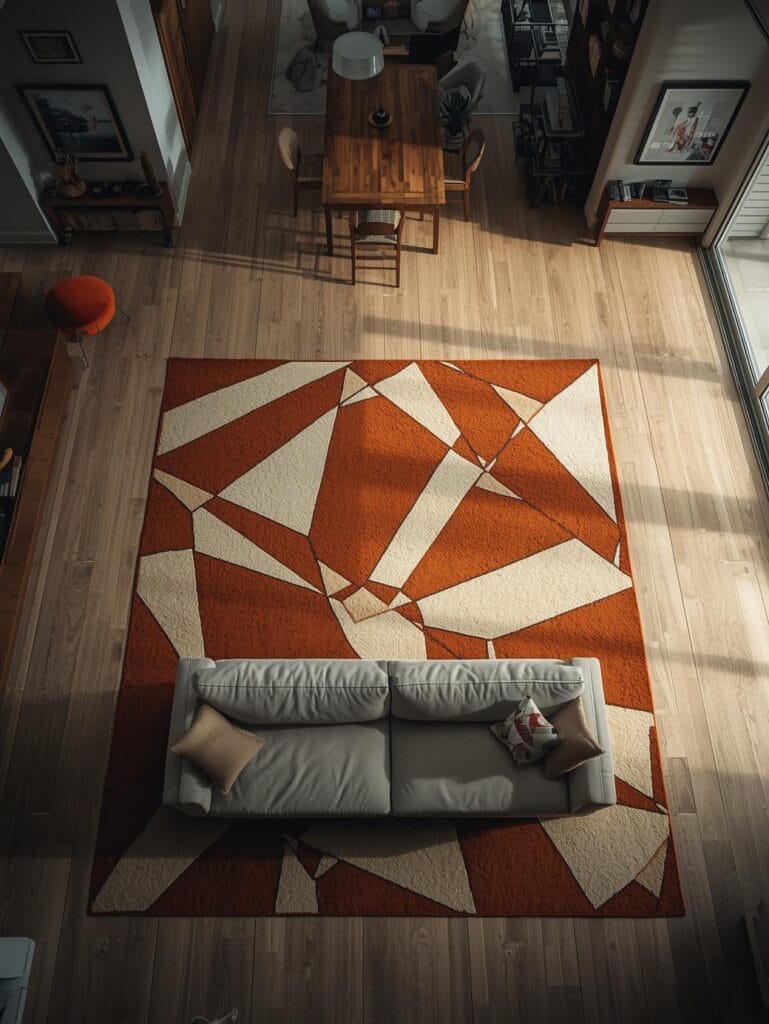
For open-plan living room renovation ideas, the rug’s pattern or color should distinguish the living zone from adjacent areas. A textured neutral rug in the living zone next to bare floor or a different surface in the dining zone creates clear visual differentiation without walls or dividers.
Bold patterned rugs — geometric, abstract, or botanical — work in open plans because there is enough surrounding space for the pattern to breathe. In enclosed living rooms, a bold pattern can feel overwhelming at scale.
8. Mount the Television Higher and Create a Gallery Wall Below
The conventional wisdom of mounting the television at seated eye level has a functional basis, but placing the TV on a low console against a plain wall leaves the surrounding space unaddressed. An increasingly common living room renovation approach for 2026 is to mount the television higher — at standing eye level — and use the wall space below for a curated gallery arrangement of art, mirrors, and objects.
This works because it separates the functional television from the decorative wall composition below. The television becomes one element in a larger vertical wall arrangement rather than the single focal point that everything else defers to. When the television is off, the gallery wall remains a complete and visually interesting composition.
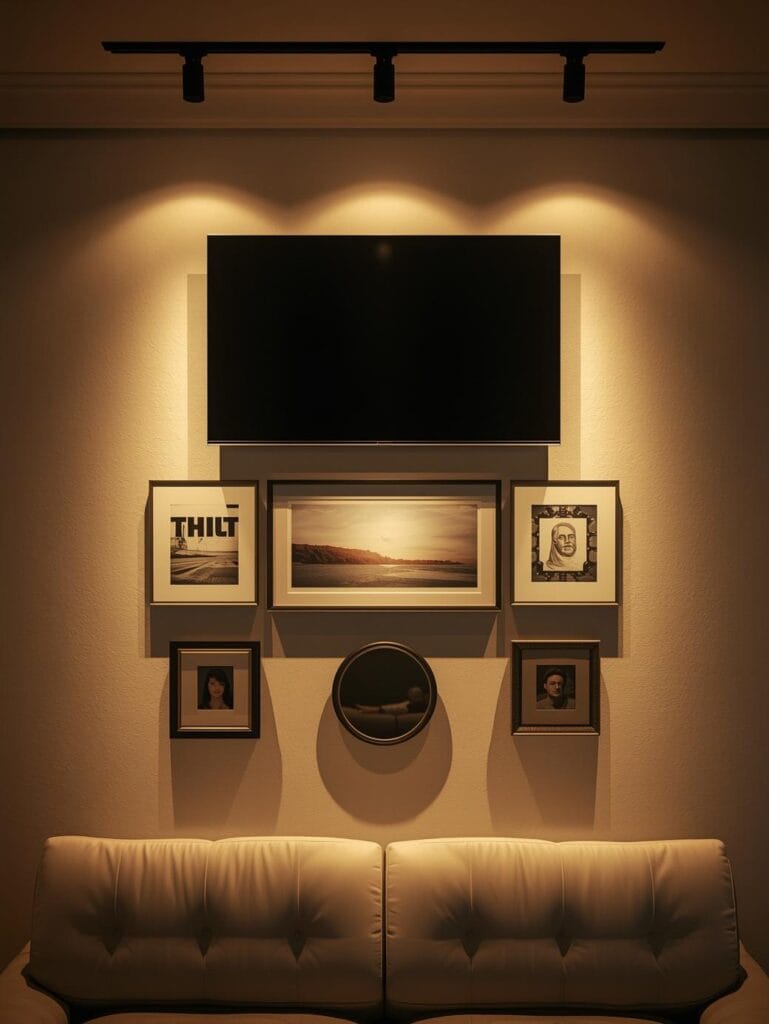
The gallery arrangement below should be anchored by one larger piece — a horizontal print or mirror — with smaller pieces arranged around it. Keep the gallery to the same horizontal width as the television above for visual alignment.
This approach is particularly effective in living rooms where wall space is limited and every surface has to serve multiple purposes. It maximizes the decorative use of a single wall without requiring additional furniture.
9. Choose a Curved Sofa to Soften an Angular or Box-Shaped Room
Box-shaped living rooms with hard corners and flat walls benefit significantly from the introduction of curved furniture. A curved or semi-circular sofa is the single piece of furniture most capable of softening a room’s architectural rigidity — its arc creates movement that breaks the grid of walls, floor, and ceiling without any structural change.
Curved sofas work particularly well centered in a room with space on all sides — the floating placement allows the full silhouette to be appreciated from multiple angles. They also work exceptionally well in rooms with low ceilings because the horizontal arc draws the eye around the room rather than upward to the ceiling height.
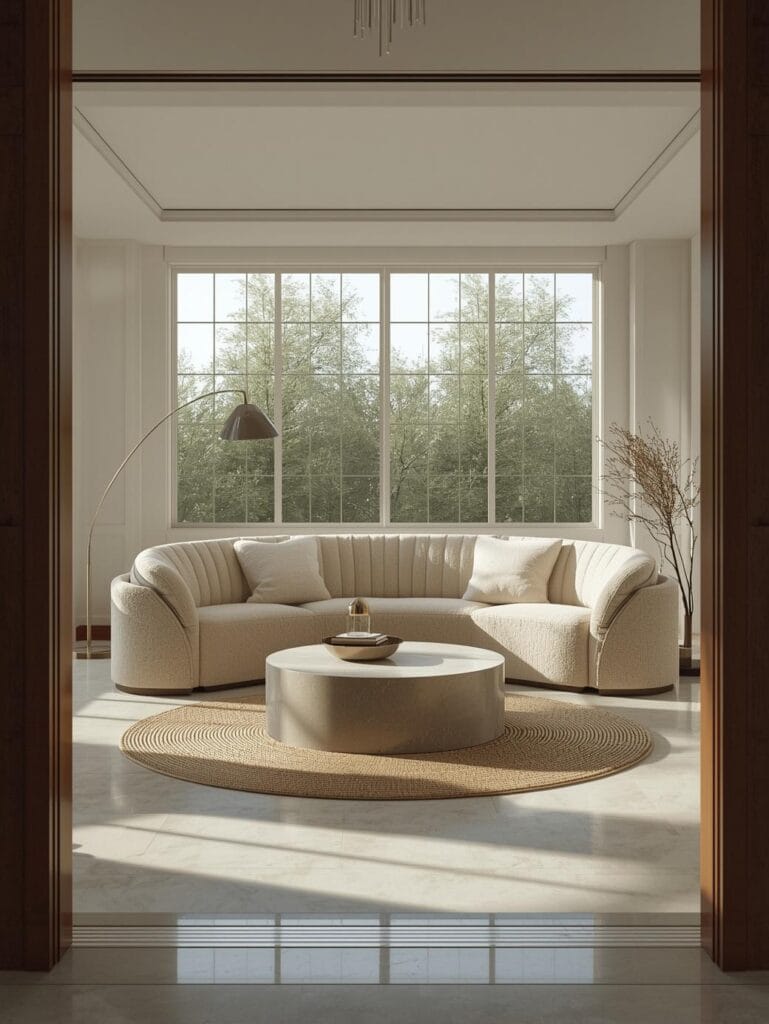
For 2026 living room redesigns, curved sofas have moved from statement pieces to practical options in a wide range of sizes and configurations. Bouclé, velvet, and performance linen are the most popular upholstery choices because they complement the organic shape with textural warmth.
The mistake is pairing a curved sofa with a rectangular rug — the shapes fight each other. Choose a round or oval rug under a curved sofa for visual harmony. A round coffee table completes the composition.
10. Convert an Unused Fireplace Into a Functional Design Focal Point
Non-working fireplaces are among the most underused architectural features in American homes. Most homeowners simply place a candle inside and move on. In 2026, the approach to unused fireplaces in living room renovations has shifted toward full conversion — either into a styled display niche, an electric fireplace insert, or a built-in drinks or book cabinet.
A styled display niche treats the firebox opening as a framed alcove — lined with tile, painted in a deep accent color, and filled with a curated arrangement of candles, stacked books, or ceramic objects. The result is a purposeful focal point that reads as more designed than a functioning fireplace with no surround treatment.
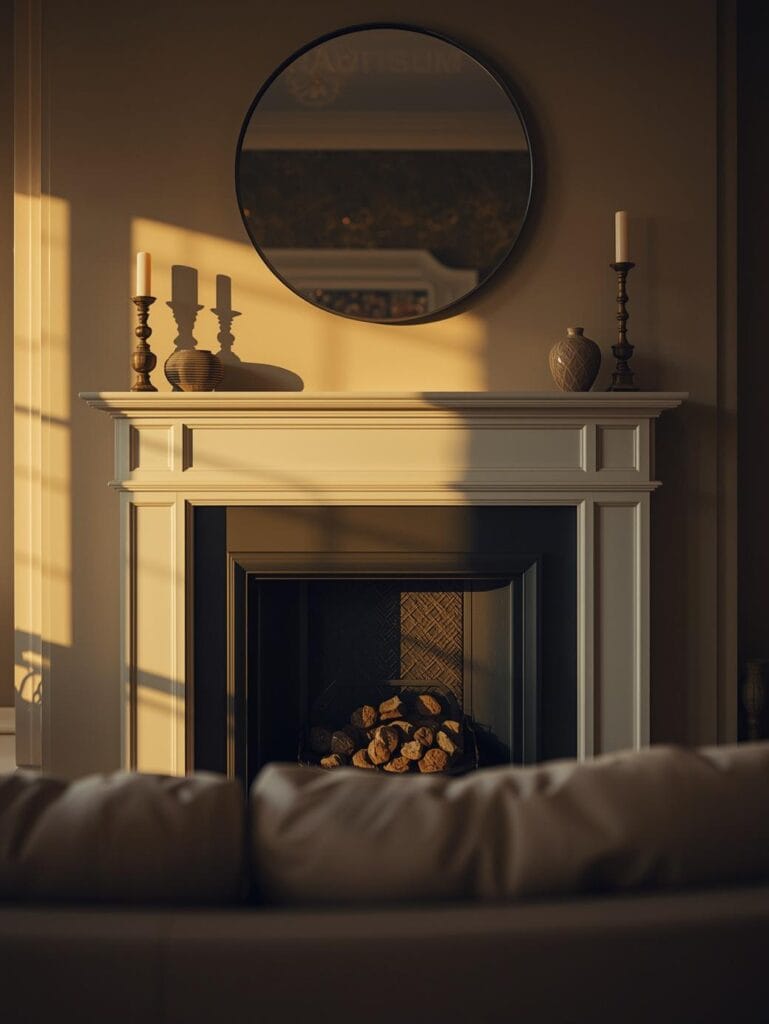
An electric insert returns heat function to the fireplace with no chimney work and significantly less cost than a gas conversion. Modern electric inserts with realistic flame simulation are now visually convincing at close range.
The mantel above is equally important. A bare mantel is a missed opportunity. One large piece of art or a mirror above, and three to five objects of varying height below, creates the layered mantel composition that anchors a living room around the fireplace as its center.
11. Upgrade Window Treatments to Full-Height Curtains That Pool at the Floor
Window treatments are the detail that separates a professionally designed living room from a self-assembled one. Standard curtains hung at the window frame, cut to exact window height, make windows look smaller and ceilings look lower. Floor-to-ceiling curtains mounted as close to the ceiling as possible — and long enough to touch or slightly pool at the floor — do the opposite.
The visual effect is immediate: the curtain rod placement raises the apparent ceiling height, the fabric’s length emphasizes the vertical dimension of the wall, and the pooling at the floor adds a sense of material abundance associated with high-end residential design. This change costs the same as standard curtains but delivers dramatically more impact.
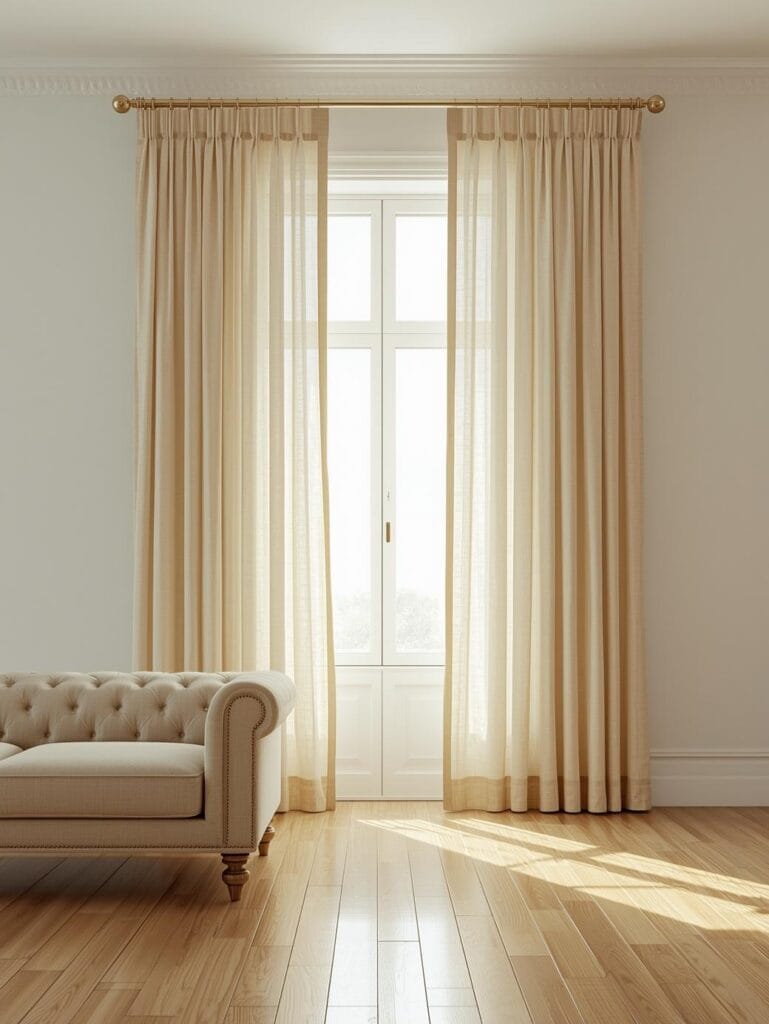
For living room renovation updates in 2026, linen, velvet, and cotton-silk blend fabrics are the strongest performing options. Linen is the most versatile — it works in casual, modern, and transitional living rooms equally well. Velvet adds drama and sound absorption. Avoid polyester sheers as the primary curtain — they look inexpensive at close range and photograph poorly.
Curtain rod placement is the most critical decision. Install the rod four to six inches below the ceiling molding — not four inches above the window frame. This single adjustment changes the entire proportion of the room.
12. Add a Wet Bar or Coffee Station Niche for Functional Living Room Utility
The living room is increasingly expected to serve multiple household functions beyond passive relaxation — working, entertaining, and casual dining all happen in the living space in modern American homes. A dedicated wet bar niche or coffee station alcove addresses this directly by carving out a functional zone within the living room without requiring a separate room.
A wet bar niche can be created from an unused corner, a recessed wall space, or by converting an existing built-in cabinet. Open shelving above for glasses and bottles, a small countertop surface, and a compact under-counter refrigerator are the three functional elements. The result is a designated entertaining zone that makes hosting significantly more fluid.
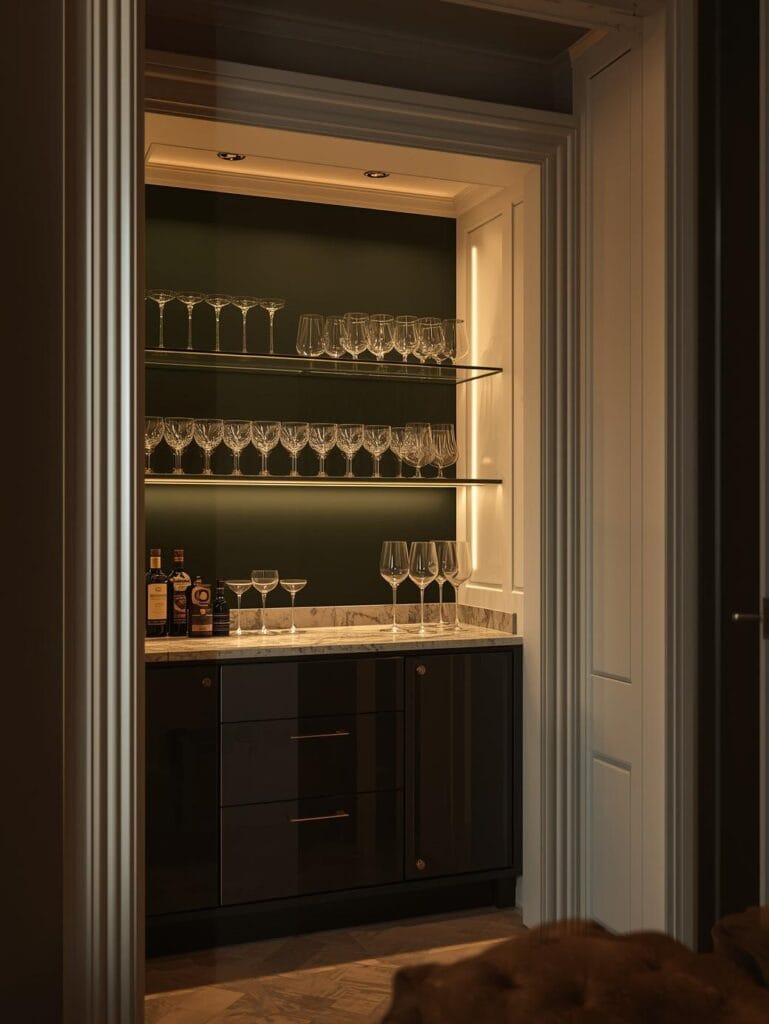
A coffee station alcove is the lower-investment version — a dedicated counter area with open shelves, a small cabinet, and a surface for appliances. In living rooms adjacent to home offices or open-plan kitchen spaces, a coffee station creates a clear functional pause between zones.
Both options work best when given a visual identity that connects to the rest of the room — same wood tone as other built-ins, matching wall color, consistent hardware throughout.
13. Incorporate Indoor Plants at Three Height Levels for Living Depth
Plants are not a decorative trend — they are a design tool that adds color, scale, and organic movement to a living room in a way that purchased objects cannot replicate. The error most homeowners make is placing all plants at the same height — a row of small plants on a shelf, or a single large floor plant in a corner — which reads as an afterthought rather than a design decision.
Effective plant placement in a living room uses three distinct height levels: floor level for large statement plants like fiddle-leaf figs, monsteras, or tall olive trees; mid-level for plants on side tables, stools, or plant stands; and high-level for trailing plants on shelves or hanging planters near the ceiling. The three levels create vertical movement and make the room feel more alive.
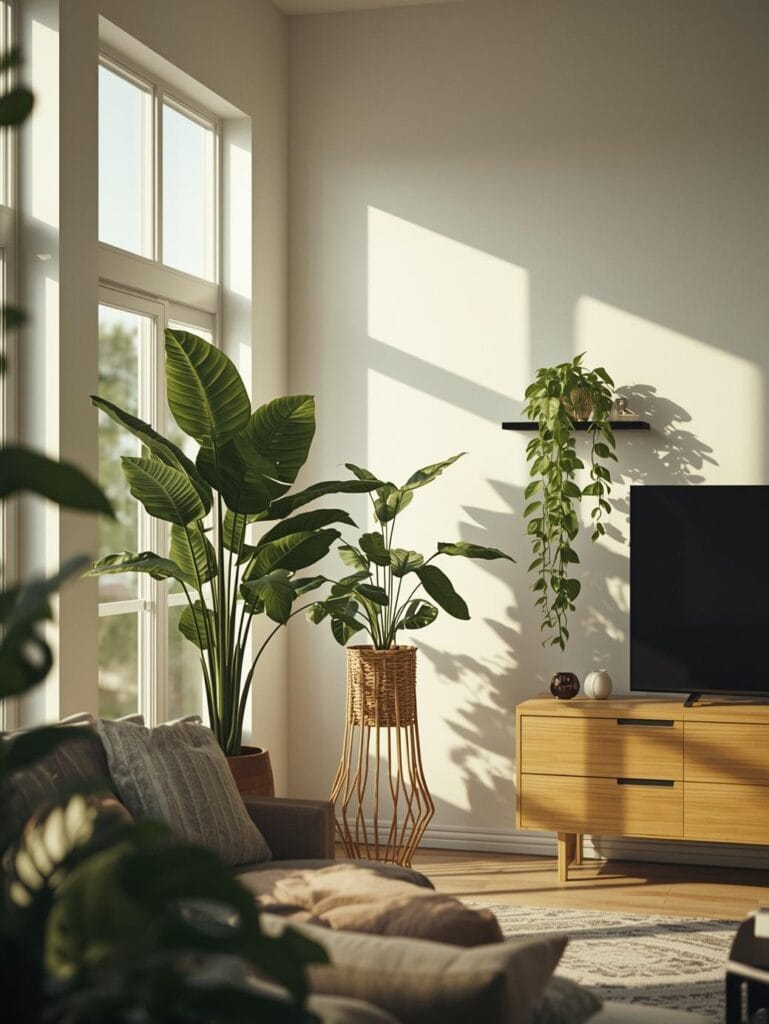
This is particularly effective in living rooms with high ceilings where the upper portion of the wall tends to feel empty and disconnected from the furniture below. Tall floor plants and high trailing plants bridge the gap between the furniture zone and the ceiling line.
Choose a consistent planter material throughout — terracotta, white ceramic, or woven basket — to unify the plant groupings visually. Mixed planter styles create visual noise that undermines the organic coherence plants are meant to provide.
14. Redesign the Entryway Transition Into the Living Room for Better Flow
In many homes, the living room begins immediately at the front door with no visual or physical transition. The result is a room that feels exposed and lacks a sense of arrival. Creating a defined transition zone — even a minimal one — immediately improves how the living room reads and functions.
A console table and mirror positioned just inside the entry creates the transition without requiring architectural work. A pendant light above the entry area, different from the living room’s lighting, signals a spatial shift. A small area rug at the entry distinct from the living room rug creates a visual pause between the two zones.
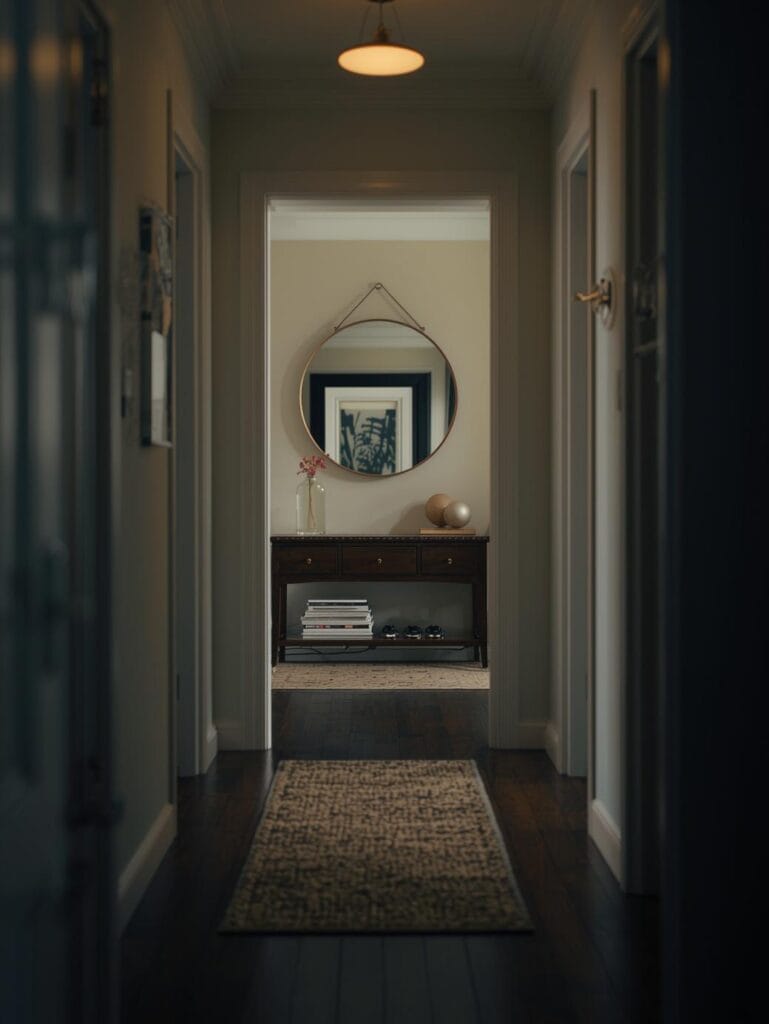
In open-plan homes, the living room entry transition is even more critical because it provides the only defined moment of arrival before the space opens up. A partial partition — a bookshelf turned perpendicular to the wall, a hanging pendant, or a change in floor material — can create this transition without physical walls.
This is a living room renovation consideration that is frequently overlooked because it exists at the room’s edge rather than its center — but it shapes the first impression of the entire space every time someone enters.
15. Replace Hollow-Core Doors With Solid or Glass Panel Interior Doors
Interior doors are one of the most overlooked elements in a living room renovation because they are perceived as fixed architectural elements rather than upgradeable finishes. Hollow-core doors — the thin, lightweight standard in most builder-grade homes — look and sound cheap, flex when touched, and age poorly. Replacing them with solid-core doors in the same frame is a straightforward swap that immediately elevates the quality of the living room’s architecture.
For living rooms that open onto hallways, replacing a solid door with one that has glass panels brings natural light from adjacent spaces into the room and creates visual connection between interior zones. This is particularly valuable in north-facing living rooms with limited direct sunlight.
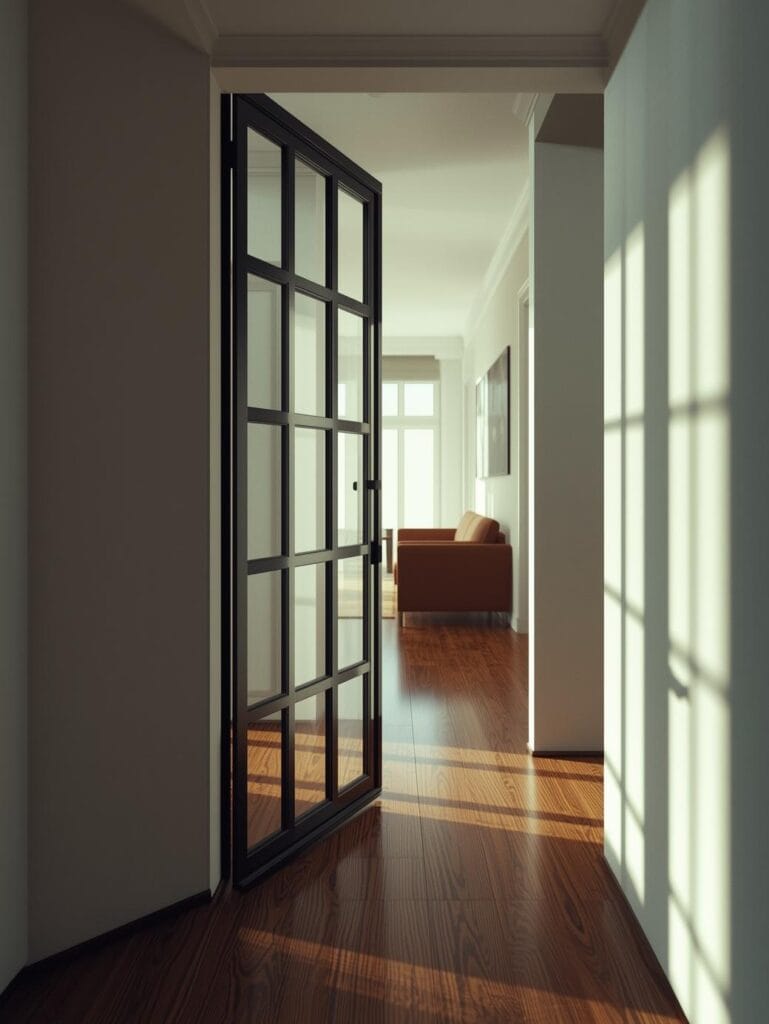
Black-framed glass interior doors — steel or aluminum profile doors with clear glass panels — are among the most requested living room renovation design elements for 2026. They add architectural presence, allow light transfer, and create a clear visual boundary between spaces without blocking sightlines or light.
The hardware upgrade that accompanies a door replacement is equally important. Lever handles in brushed brass, matte black, or satin nickel update the door’s appearance at the most tactile point of contact.
16. Use Contrasting Trim Color to Add Architectural Interest Without Construction
White trim on white walls is the default — and it is invisible. Painting window frames, door surrounds, baseboards, and crown molding in a contrasting color to the wall creates architectural articulation that the room’s original construction already provided but the standard white-on-white finish has obscured.
Dark trim on light walls is the most dramatic version: charcoal, deep forest green, or black trim against white or cream walls makes every architectural edge crisp and intentional. It reads as sophisticated and considered in a way that white trim never can, regardless of the wall color behind it.
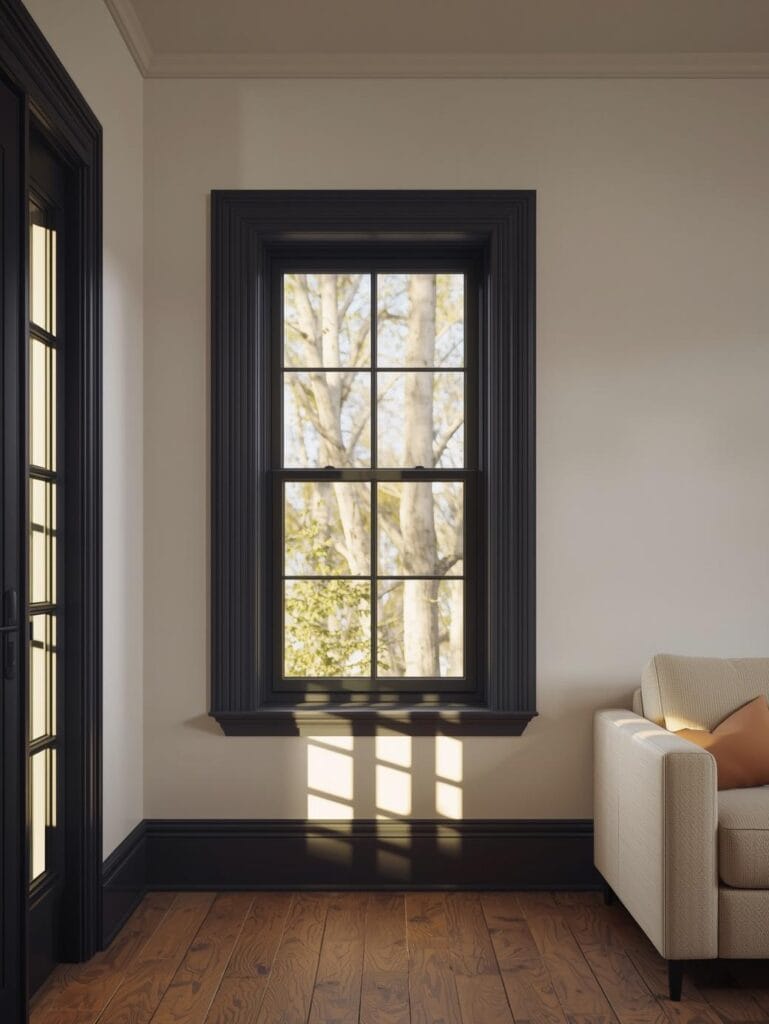
Light trim on dark walls works equally well — cream or off-white trim against deep navy, hunter green, or charcoal walls gives the room a refined, library-like quality. The trim becomes the accent rather than the wall color, which is a reversal that creates unexpected depth.
This is one of the highest-impact, lowest-cost living room renovation ideas available because it requires only paint and careful taping. The result, however, photographs and reads in person as architectural — like the room was designed with intentional contrast from the beginning.
17. Introduce a Reading Corner With Dedicated Lighting and Storage
Living rooms that serve only as television-watching spaces underuse their square footage and fail to support the full range of how people actually want to spend time at home. A dedicated reading corner — a single chair, appropriate task lighting, a small side table, and a nearby book storage solution — transforms an unused corner into a genuinely used and valued space.
The chair selection is critical: it needs to be comfortable for extended seated reading, which means seat depth of at least 20 inches, adequate lumbar support, and fabric that does not make contact uncomfortable over time. Upholstered accent chairs in performance fabrics — boucle, performance velvet, or treated linen — are the practical standard for this application.
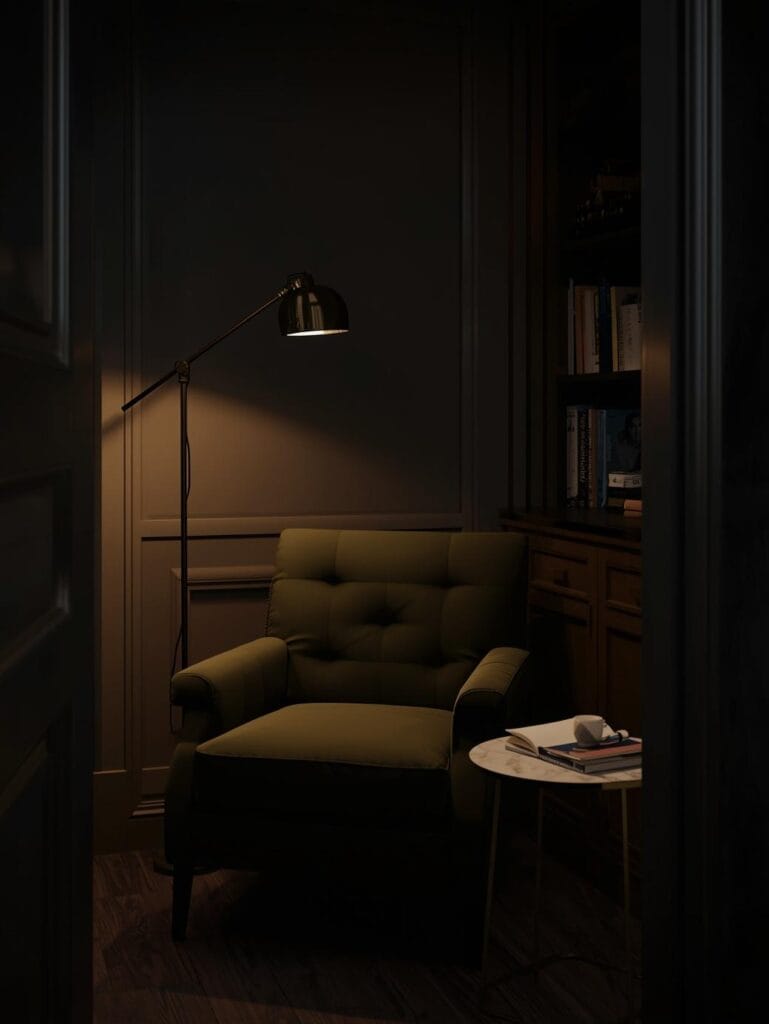
Lighting for a reading corner requires a floor or table lamp positioned over the shoulder at the correct angle — not directly overhead, which creates glare on the page, and not from the front, which creates shadow on reading material. A swing-arm floor lamp with an adjustable head solves this completely.
A small side table or integrated shelf within arm’s reach handles the current book, a drink, and nothing else. The deliberate restraint of a reading corner — its dedication to a single activity — is what makes it feel like a sanctuary within the larger living space.
18. Resurface or Replace the Flooring to Unify and Ground the Entire Space
Flooring is the surface that every other element in the living room sits on, references, and is judged against. Outdated carpet, worn laminate, or disconnected mixed flooring materials undermine every other renovation decision in the room — no matter how well the furniture, lighting, and wall treatments are executed.
For 2026 living room renovations, wide-plank engineered hardwood in warm oak, natural walnut, or whitewashed ash tones is the strongest performing choice for both visual warmth and practical durability. Wide planks — five inches or wider — make the floor feel more expansive and reduce the visual fragmentation of narrow-plank flooring.
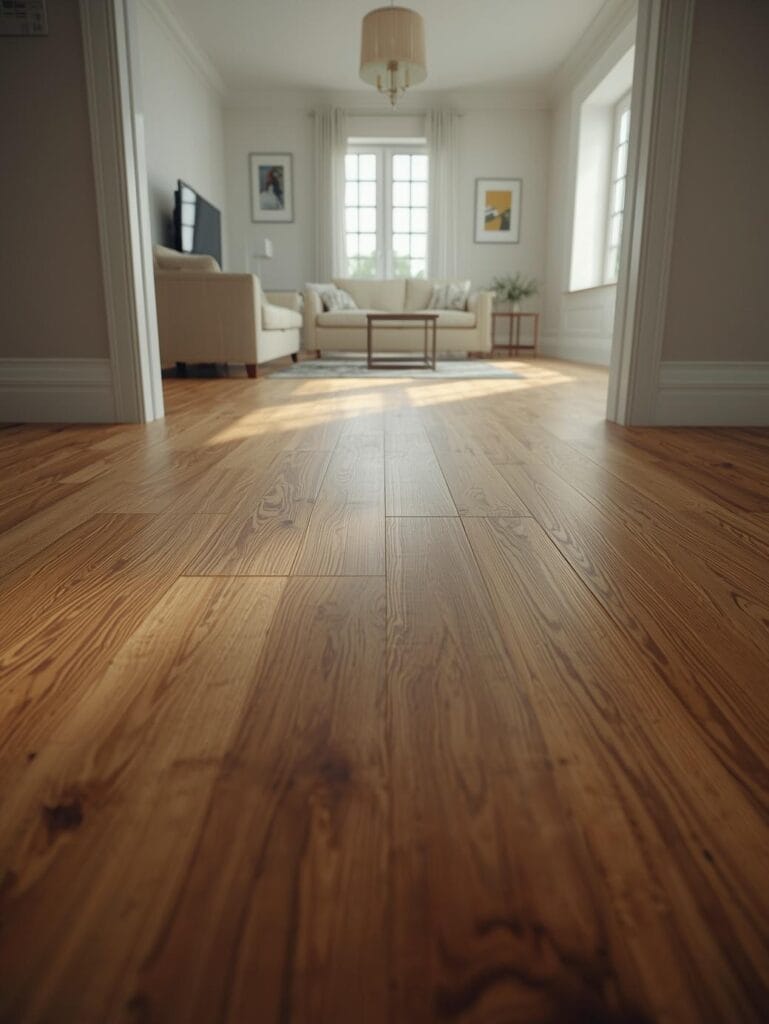
In living rooms with existing hardwood that is in good condition, refinishing is a more cost-effective option than replacement. Changing the stain color from dark espresso to a warmer, mid-tone natural oak finish immediately updates the room’s palette and makes it feel significantly more current.
In apartments and rentals where floor replacement is not permitted, large-format area rugs covering most of the floor surface serve as the practical alternative — choosing a rug large enough to reach within twelve inches of each wall essentially replaces the floor visually within the furniture zone.
Conclusion
These 18 living room renovation ideas for 2026 cover the full range of changes available — from zero-cost layout adjustments and paint decisions to flooring replacements and built-in installations. The key is prioritizing by impact: lighting, layout, and one strong material upgrade will do more for most living rooms than a full furniture replacement. Do check these living room decors too!
Save this post so you can return to it as you work through your renovation one decision at a time — every section is designed to help you choose, not just browse. When you are ready to go further, explore more living room design guides and open-plan layout ideas to keep building a space that genuinely works for how you live.