
Finding the right living room table ideas 2026 is less about trends and more about matching the correct table type, scale, and material to your specific floor plan, seating arrangement, and daily use habits. This guide covers 17 distinct table directions — coffee tables, side tables, console tables, and beyond — with clear, practical guidance on when each works, when it does not, and how to make the decision confidently for your actual room.
1. A Round Coffee Table That Solves the Traffic Flow Problem in Smaller Living Rooms
A round coffee table is the most practical shape choice for living rooms where seating wraps around more than two sides of the table, or where foot traffic needs to move around the table without catching corners. The absence of sharp edges makes navigation easier and the circular form distributes visual attention evenly around the seating group rather than directing it toward one end.
In rooms under 250 square feet, a round coffee table sized between 28 and 36 inches in diameter keeps the center of the room open while still providing adequate surface area for daily use. The general sizing rule is to leave 18 inches of clearance between the table edge and the front of any sofa or chair — less than this makes the table feel intrusive; more makes it feel disconnected from the seating.
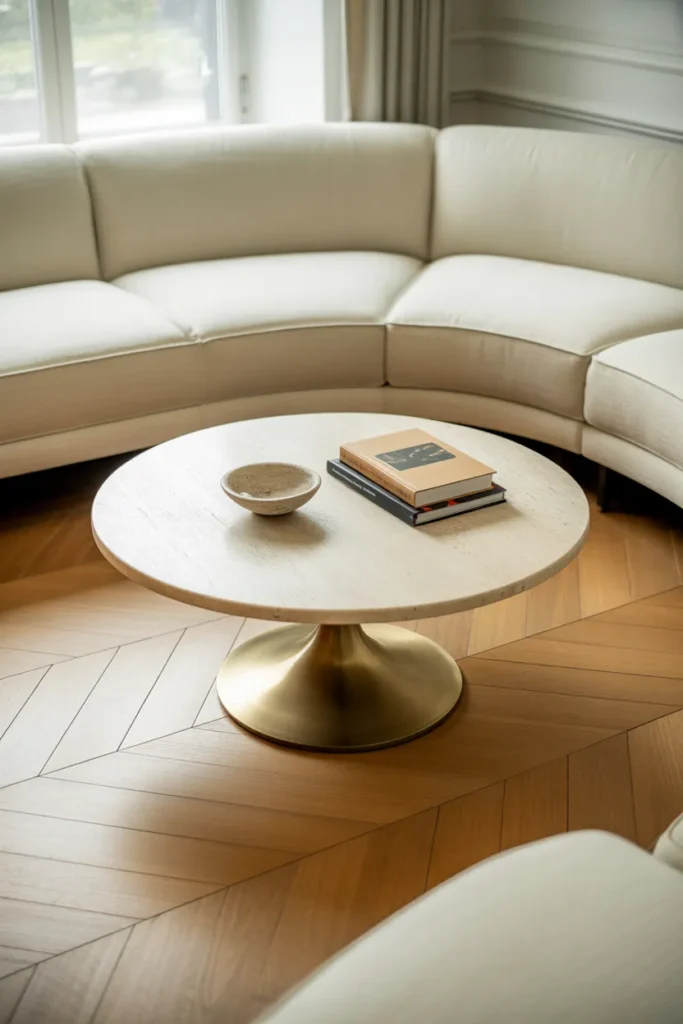

Round tables also work particularly well in front of curved or L-shaped sofas where a rectangular table would leave awkward gaps between the table corners and the sofa’s angled sections. The curve-to-curve relationship between a round table and a curved sofa creates a more resolved, intentional composition than a rectangular table in the same position.
The material choice matters more on a round table than on a rectangular one because the shape draws attention to the table as an object rather than as a surface. A solid stone top, a sculptural pedestal base, or a richly grained wood slab all benefit from the round format that puts the material on full display from every angle.
2. A Rectangular Coffee Table With Storage That Keeps a Family Living Room Functional
A rectangular coffee table with built-in storage — drawers, a lower shelf, or a lift-top mechanism — is the most practical living room table choice for households where the table needs to work harder than simply providing a surface. Remote controls, throw blankets, children’s items, and daily-use objects need somewhere to go, and a table with intentional storage solves this without requiring additional furniture.
The rectangular format suits sofas of 84 inches or longer, where the table needs to run parallel to the sofa’s full length to maintain visual proportion. A round or square table in front of a long sofa leaves too much of the sofa’s length without a corresponding table presence, making the seating group feel unanchored. The rectangular table mirrors the sofa’s linear profile and creates a balanced, organized composition.
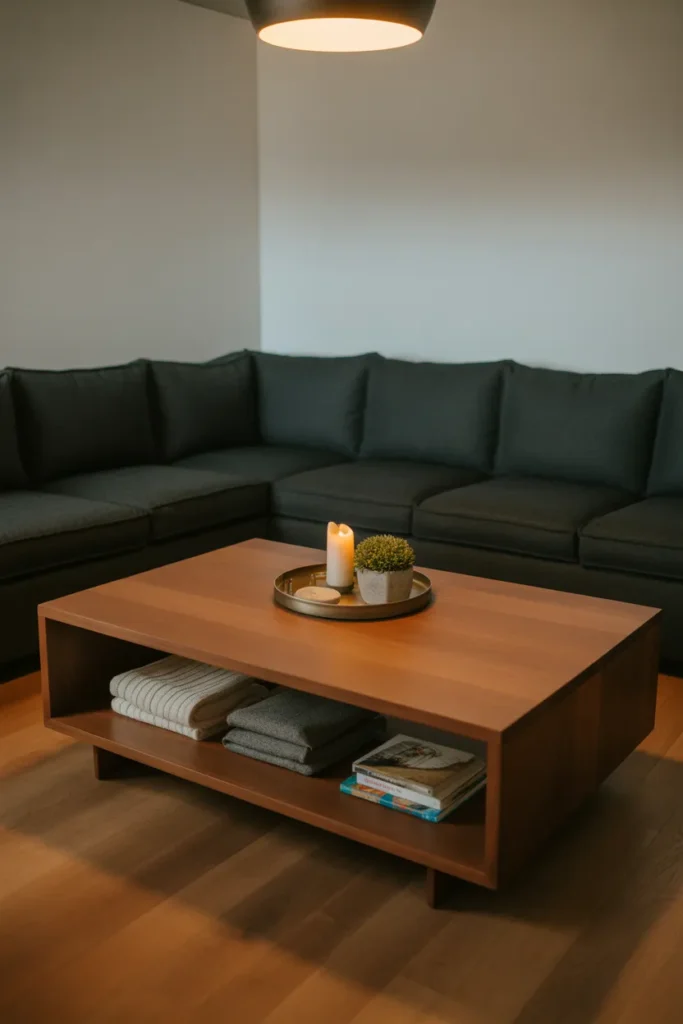
For a storage coffee table to remain functional rather than becoming a clutter trap, the storage compartments need to be used with intention. Assign each compartment a specific category — one drawer for remotes and chargers, one shelf section for current reading material, the lift-top for board games or larger items. Storage without a system fills up with miscellaneous objects within weeks and loses its organizational value.
Sizing guidance: a rectangular coffee table should be approximately two-thirds the length of the sofa it faces. For a 90-inch sofa, a table between 54 and 60 inches long is proportionally correct. A table that is the full length of the sofa or longer overwhelms the seating group visually and reduces the sense of open floor space in the room.
3. A Nesting Table Set That Gives a Small Living Room Maximum Flexibility
Nesting tables — a set of two or three tables of graduated sizes that slide underneath one another when not in use — are the most flexible living room table solution for small apartments and rooms where daily furniture reconfiguration is a practical necessity. When all tables are deployed, they provide multiple surface points around a seating area; when stacked, the entire set occupies the footprint of a single small side table.
This flexibility matters in rooms that serve multiple functions — a living room that doubles as a dining area for guests, a home office that converts to a gathering space, or a studio apartment where the same square footage handles everything. Fixed coffee tables in these contexts become obstacles; nesting tables become tools that adapt to the moment.
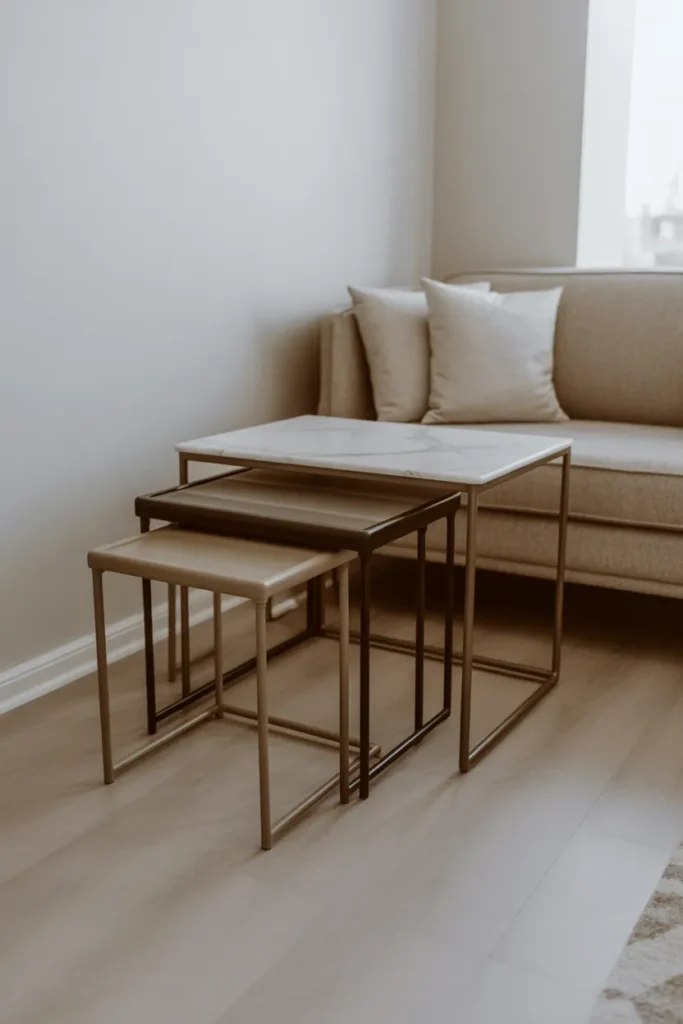
The most effective nesting table sets for modern interiors in 2026 combine contrasting materials across the tables in the set — a marble-top largest table with a glass or wood mid-size table and a metal accent smallest table, for example. This material variety makes each table visually interesting when separated and creates a layered, collected look when grouped together.
The mistake most people make with nesting tables is treating them as permanently stacked furniture — buying the set for flexibility and then never rearranging them. If the room layout allows, deploy the tables in a scattered configuration around the seating area as standalone accent tables. This approach uses the set’s flexibility to create a more dynamic, relaxed seating composition than a single central coffee table can achieve.
4. A Glass Coffee Table That Opens Up a Dense or Small Living Room Visually
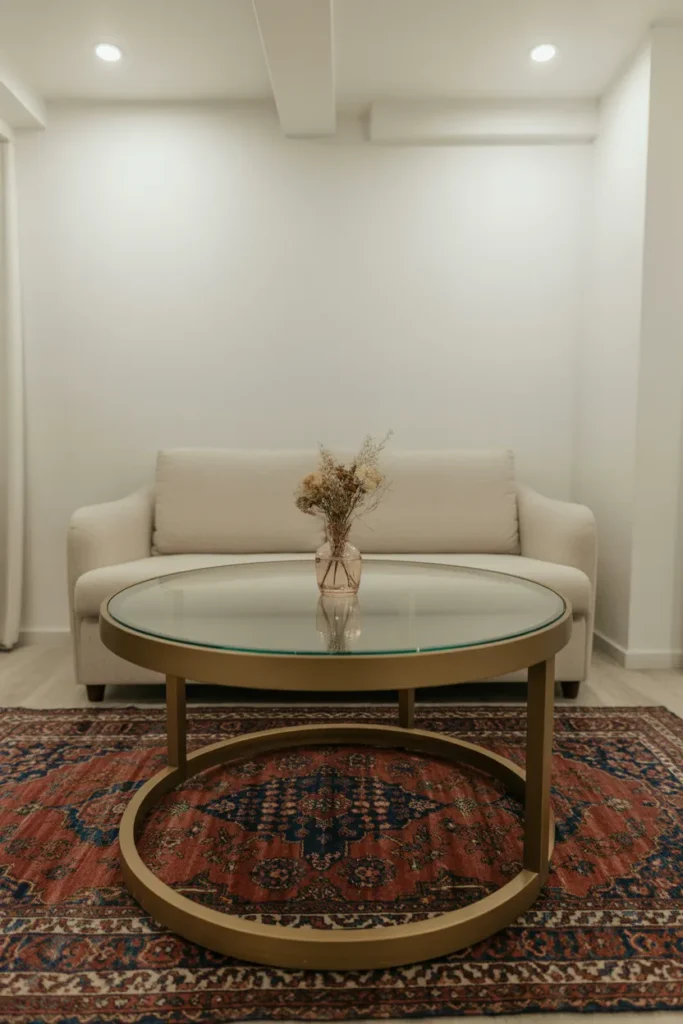
A glass-top coffee table — whether on a metal frame, a lucite base, or a sculptural stone or wood support — is the most effective table choice for visually expanding a small or densely furnished living room. Because the glass surface is transparent, the floor beneath the table remains visible, which preserves the sense of open floor space that makes small rooms feel larger.
The visual expansion effect of a glass table is most pronounced in rooms with a distinctive floor — patterned tile, rich hardwood, or a statement area rug. A glass table over a beautiful rug allows the full rug design to remain visible rather than being obscured by an opaque table surface, which makes the room feel more intentional and complete.
Glass tables require more surface maintenance than wood or stone alternatives — fingerprints, water rings, and smudges are immediately visible on the transparent surface. In households with young children or pets, this maintenance reality should be weighed carefully. Tempered glass is the safe standard for coffee table applications; avoid regular plate glass, which shatters into large dangerous shards rather than the small pellets that tempered glass produces.
The base design carries full visual responsibility in a glass-top table since the surface itself is invisible. A sculptural metal base, an architectural concrete support, or a clear lucite pedestal each creates a very different room character. Choose the base material to connect with at least one other material already present in the room — a gold-toned metal base in a room with brass hardware, a concrete base in a room with other raw materials.
5. A Solid Wood Slab Coffee Table That Anchors an Open-Plan Living Room With Natural Weight
A solid wood slab coffee table — cut from a single or bookmatched piece of timber with live edges or clean-cut edges depending on the design direction — brings the most material weight and organic character of any coffee table option. In an open-plan living space where the seating area needs to feel grounded and defined within a larger floor plan, a substantial wood slab table anchors the zone with a presence that lighter tables cannot match.
Live-edge slab tables retain the natural contour of the tree’s outer edge, creating a form that is unique to each piece. This is one of the few furniture categories where two identical pieces genuinely cannot exist, which gives the table an authenticity and character that manufactured furniture cannot replicate. In 2026 interiors, live-edge tables appear most confidently in rooms with other natural materials — linen, stone, leather, and natural fiber rugs — where the organic wood form reads as part of a cohesive material language rather than a statement piece in isolation.
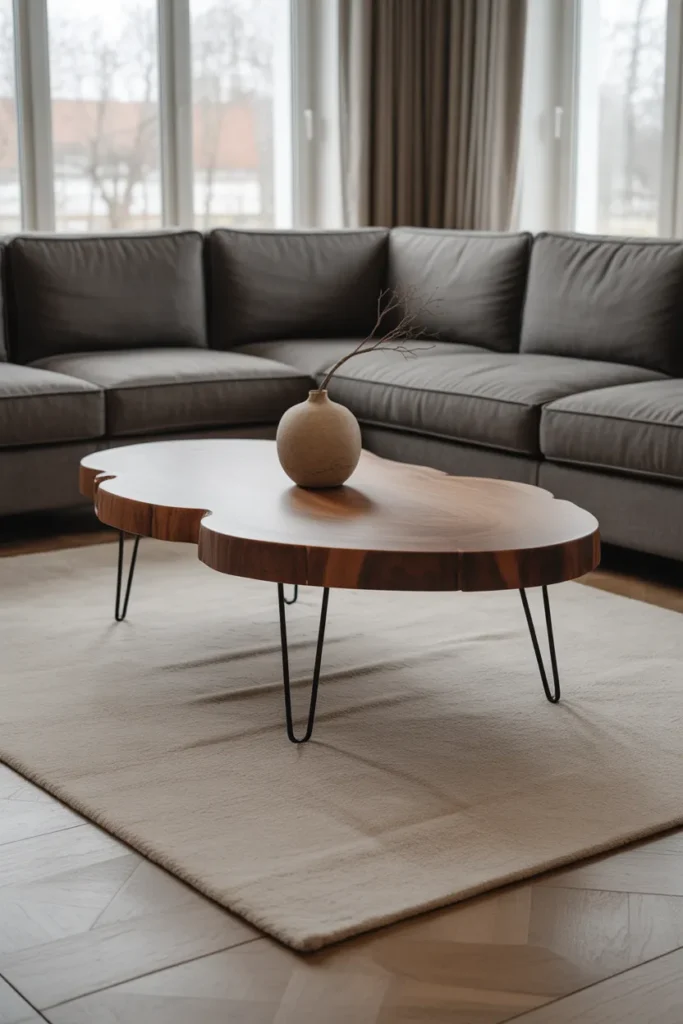
Clean-edge slab tables — where the timber is cut to precise rectangular or oval dimensions — retain the wood’s grain and material richness while presenting a more controlled, architectural silhouette. This version integrates more readily into modern and minimalist interiors where the live edge would introduce too much organic irregularity.
The practical consideration with any solid wood slab table is weight and maintenance. Large slab tables are genuinely heavy — reconfiguring the room requires two people. Wood surfaces require periodic treatment with oil or wax to maintain their appearance and water resistance. These are not dealbreakers, but they represent a real difference from the maintenance requirements of stone, glass, or metal tables.
6. A Drum or Cylinder Side Table That Fills the Awkward Gap Beside a Sofa or Chair
The drum or cylinder side table — a cylindrical form in a solid material such as concrete, stone, rattan, ceramic, or upholstered fabric — is one of the most architecturally useful table forms in living room design because its compact circular footprint fits in spaces where a conventional rectangular side table would be too wide or too angular.
The gap between a sofa arm and a nearby wall, the space between two chairs in a conversation grouping, or the area at the end of a sectional where a standard table would interrupt traffic flow — these are the placement contexts where a drum table consistently outperforms other table forms. Its shape has no dominant orientation; it looks correct from every angle, which makes it forgiving to position in complex seating arrangements.
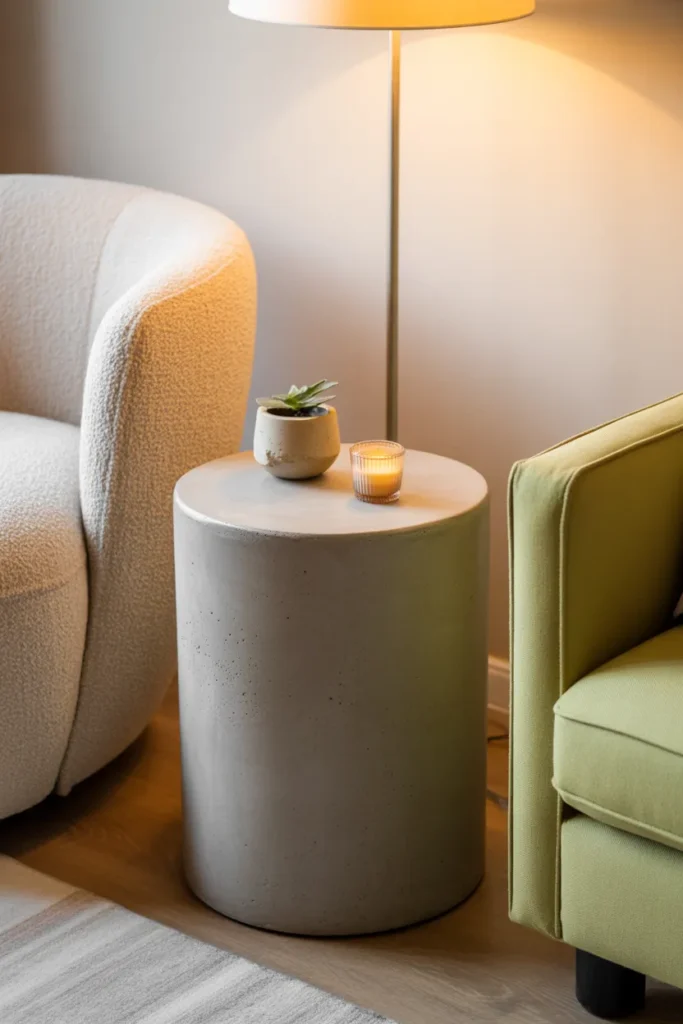
In 2026 living room table ideas, concrete and stone drum tables are among the most-specified pieces in transitional and contemporary interiors because they introduce material weight and tactile contrast into rooms that are otherwise dominated by soft upholstered furniture. A smooth concrete drum table beside a linen sofa creates a material conversation — hard versus soft, smooth versus textured — that makes both pieces more interesting in proximity.
Height selection is the key practical decision with a side table of any form. The table surface should sit within 2 inches of the adjacent sofa or chair arm height for comfortable use. A table significantly lower than the arm requires uncomfortable reaching; a table significantly higher makes the surface feel like a counter rather than a table. Measure before purchasing — sofa arm heights vary considerably between manufacturers and styles.
7. A Travertine or Stone Coffee Table That Brings Luxury Material Into an Everyday Space
Natural stone coffee tables — in travertine, marble, limestone, or slate — represent the highest material investment in the living room table category but also the longest functional lifespan. A quality stone table maintained properly does not wear out, go out of style, or require replacement. In a room where the sofa, rug, and textiles will cycle through updates over years, a stone table becomes the stable anchor that outlasts every other piece.
Travertine in particular has become the most discussed stone material in 2026 interior design. Its warm, creamy tone with natural voids and veining reads as simultaneously ancient and current — it works in Mediterranean-inspired interiors, in warm modern rooms, and in transitional spaces with equal confidence. The natural voids in travertine can be left unfilled for a raw, textured look or filled and honed for a smooth, refined surface. Both finishes work in residential settings; the choice is a function of the room’s overall formality level.
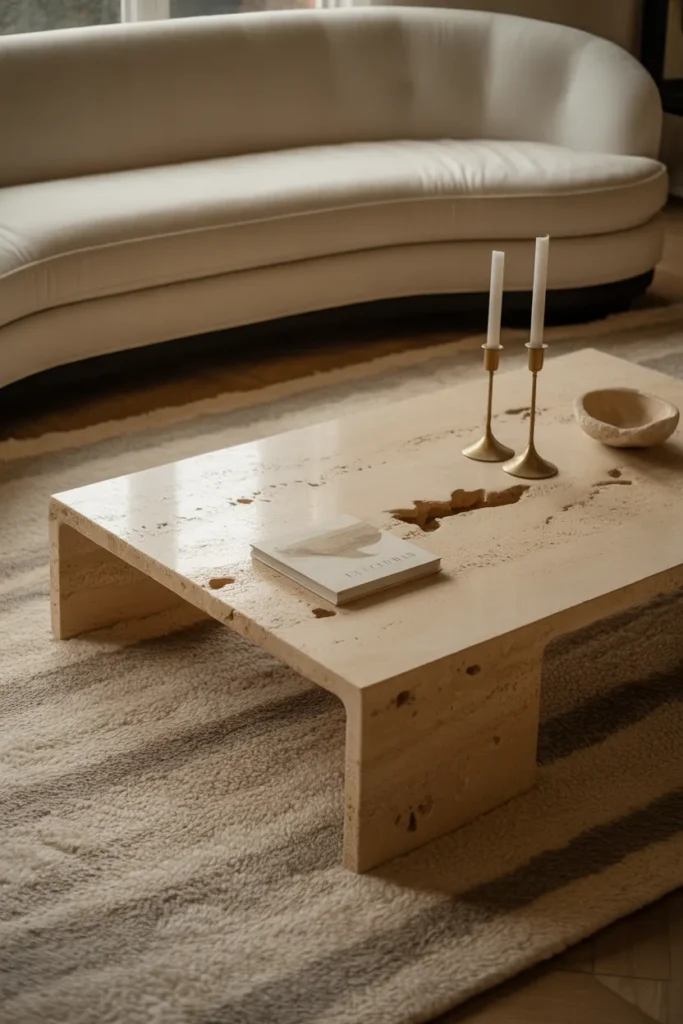
The weight of a stone coffee table is the primary practical consideration. A solid travertine slab table can weigh 150 to 300 pounds depending on size and thickness, which means it is not a piece of furniture that gets casually rearranged. If your living room layout changes seasonally or frequently, a stone table is not the right category — the material commitment comes with a positional commitment.
For apartments with weight-bearing floor concerns, engineered stone tops on a lighter structural core are a practical alternative. They present the same visual surface as natural stone with significantly reduced weight, making them suitable for upper-floor apartments or buildings with older floor structures.
8. A Lift-Top Coffee Table That Converts to a Work or Dining Surface in Multi-Use Rooms
A lift-top coffee table — where the tabletop hinges and rises to a height suitable for dining, working, or detailed activity at sofa level — is the most functionally transformative table option for living rooms in apartments and smaller homes where one room must accommodate multiple daily activities.
The mechanism raises the table surface from a standard coffee table height of 16 to 18 inches to approximately 26 to 28 inches — close to standard desk height. This range allows comfortable laptop use, eating a full meal, working on a puzzle, or folding laundry at sofa level without requiring a separate dining table or desk in the room. For studio apartments and one-bedroom units where a dining table would consume floor space needed for daily movement, the lift-top coffee table is a genuine space-planning solution rather than a novelty.
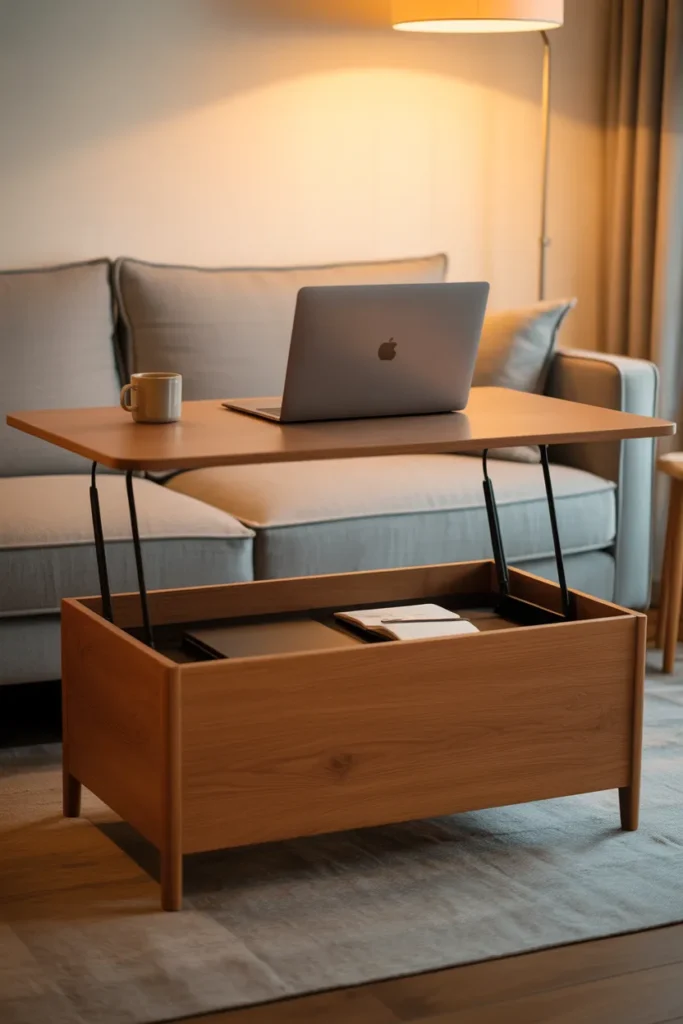
Construction quality of the lift mechanism determines the long-term value of this table type. Gas-assisted mechanisms with smooth operation and solid metal hardware last significantly longer than spring-loaded or cheap plastic hinge systems. Before purchasing, test the lift mechanism for smoothness, stability at the raised position, and ease of operation with one hand — two-hand operation becomes frustrating in daily use.
The visual trade-off of a lift-top table is that the mechanism requires a slightly taller table body to accommodate the lifting action, which makes these tables appear more visually substantial than a standard coffee table at the same size. In very small rooms, this added visual weight should be weighed against the functional benefit.
9. A Hairpin Leg Coffee Table That Keeps a Room Feeling Light and Mid-Century Inspired
Hairpin legs — slim, bent-rod metal legs in a V or double-V configuration — are the most visually lightweight structural option for a coffee table. Because the legs are thin and the negative space between them is open, a hairpin leg table reads as significantly less massive than a table of the same surface dimensions on solid legs or a panel base. This visual lightness is the primary reason the hairpin leg has remained continuously relevant since its mid-century origin.
In small and medium-sized living rooms, a wood slab or concrete top on hairpin legs strikes an effective balance between material substance in the top and visual openness in the base. The top carries the warmth and weight of its material while the legs prevent the table from dominating the floor plane. This combination is one of the most consistently reliable living room table ideas for rooms between 150 and 300 square feet.
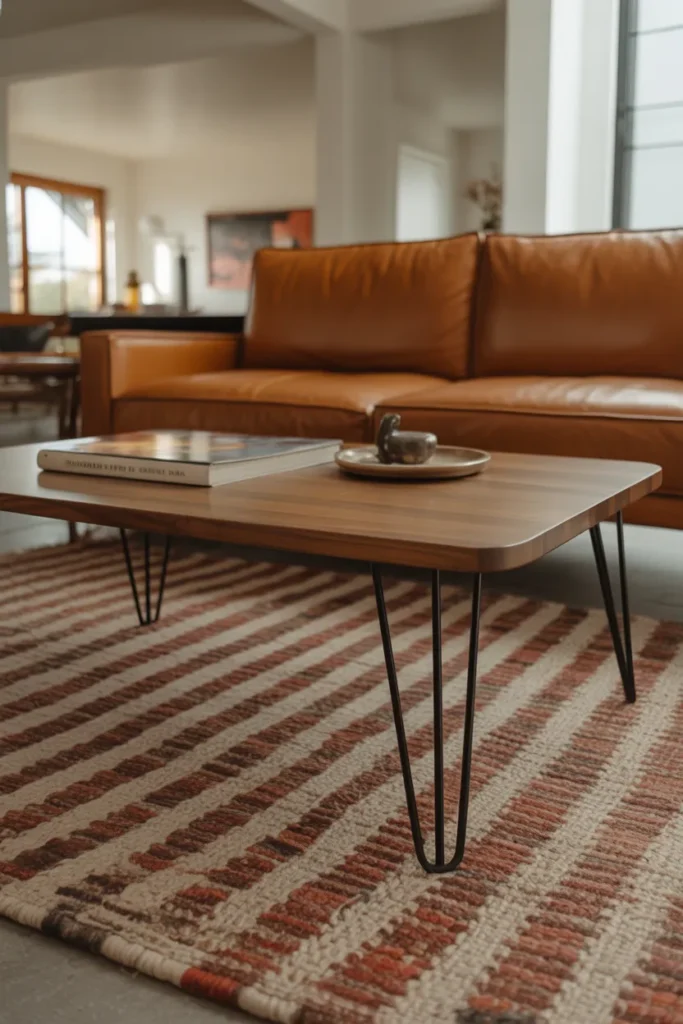
Hairpin legs connect most naturally to mid-century modern, industrial, and casual contemporary interiors. They feel less resolved in very formal traditional rooms, in maximalist interiors with heavy ornate furniture, or in rooms where all other furniture has solid panel construction. The design language of the hairpin leg is inherently casual and architectural — it suits rooms with exposed materials, clean lines, and an unstuffy atmosphere.
Metal finish selection for hairpin legs follows the same rule as all hardware in a room: connect to at least one other metal finish already present. Matte black hairpin legs in a room with black window frames and black light fixtures create a cohesive metal thread; the same black legs in a room dominated by brass and warm wood tones create a jarring contrast that fragments the room’s material story.
10. A Console Table Behind the Sofa That Adds a Functional Layer in Open-Plan Spaces
A console table placed directly behind a floating sofa — in rooms where the sofa sits away from the wall — creates a functional and visual rear boundary for the seating area that is one of the most underused layout strategies in open-plan living rooms. It defines the back edge of the living zone, provides a surface for lamps and decorative objects, and creates a visual transition between the seating area and the space behind it.
This setup is specifically relevant in open-plan homes where the living area floats in a larger shared space — no walls define the seating zone on the back or sides. A sofa facing the room with nothing behind it can look like furniture adrift in a floor plan. A console table immediately behind the sofa gives the seating arrangement a sense of enclosure and completion without requiring any structural change.
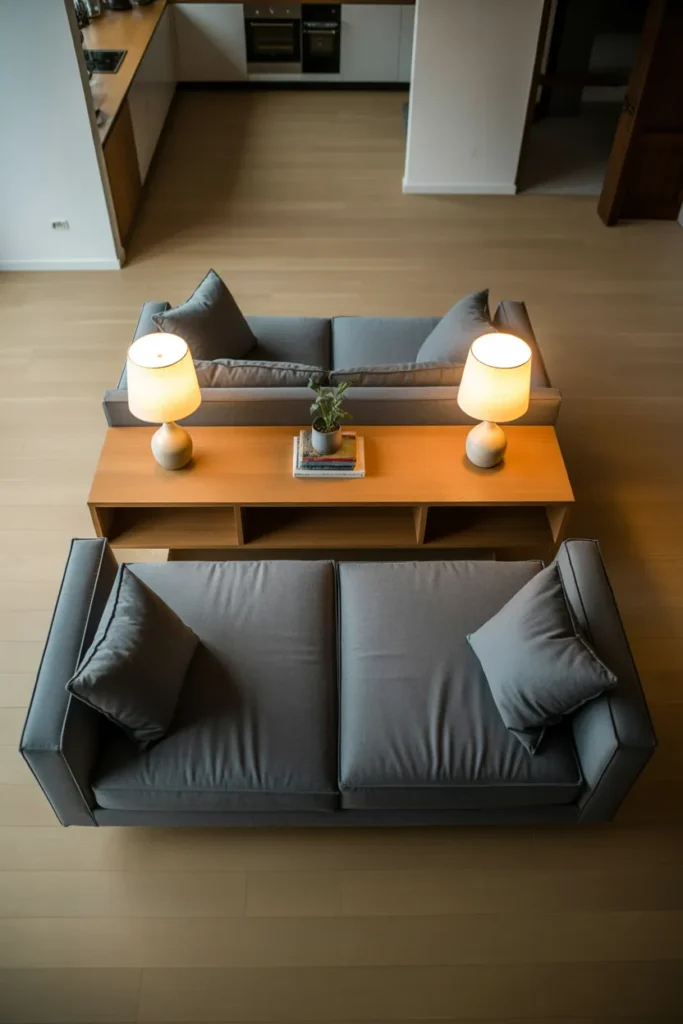
The console table height should be within 2 to 4 inches of the sofa back height — ideally at or just below the top of the sofa back cushions. A console table significantly lower than the sofa back disappears behind the sofa and loses its visual function. A console table significantly higher than the sofa back looks disproportionate and draws the eye awkwardly above the seating area.
Use the console surface to provide the lighting and decorative function that a wall would typically support. Two table lamps on either end of the console provide ambient light for the seating area from behind, which is one of the most flattering and atmosphere-building light positions in a living room. A central object — a plant, a collection of objects, a piece of art — gives the console visual purpose from the opposite side of the room.
11. A Rattan or Wicker Side Table That Introduces Natural Texture Without Visual Weight
A rattan or wicker side table — woven from natural palm reed or synthetic rattan alternatives — is one of the lightest visual table choices available in terms of perceived mass. The open weave construction means the table reads as texture rather than solid form, which allows it to sit beside upholstered furniture without competing for visual attention or adding to the room’s sense of density.
This quality makes rattan side tables particularly effective in rooms that are already well-furnished and need additional surface area without additional visual weight. A room with a sofa, two armchairs, a coffee table, and a bookcase is already carrying significant furniture mass — adding a solid wood or stone side table compounds the density. A rattan table adds the surface function without the visual contribution.
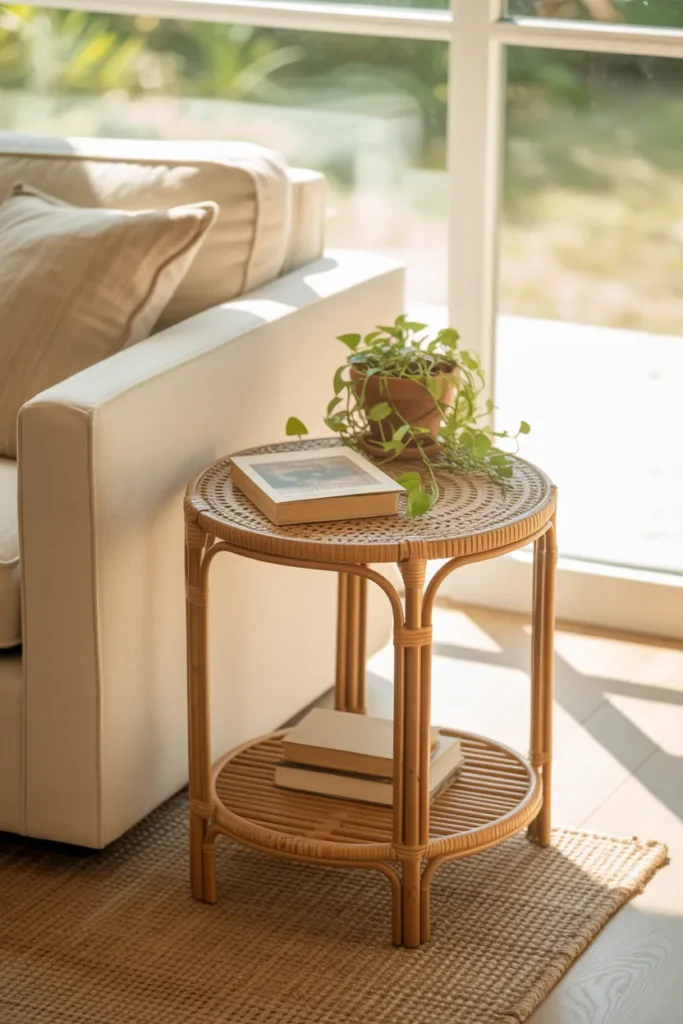
Natural rattan works best in rooms with other organic materials — linen, jute, cotton, wood, and raw ceramics. It suits coastal, bohemian, transitional, and relaxed contemporary interiors where the natural material language is part of the room’s identity. In very sleek modern rooms — polished concrete, lacquered furniture, chrome fixtures — natural rattan introduces an organic informality that can feel stylistically inconsistent.
Synthetic rattan alternatives — typically made from resin-woven over a metal frame — offer the visual character of natural rattan with significantly better durability and moisture resistance. For rooms that connect to outdoor spaces, receive high humidity, or see heavy daily use, synthetic rattan side tables are the more practical choice without meaningful aesthetic compromise.
12. An Ottomant Used as a Coffee Table That Adds Flexibility and Softness to the Center of the Room
An upholstered ottoman used in place of a traditional coffee table introduces softness, flexibility, and an additional informal seating or footrest function to the center of the living room — none of which a hard coffee table provides. In rooms where the seating arrangement is used for relaxed daily living rather than formal entertaining, the ottoman-as-table is often the more livable choice.
The standard configuration for using an ottoman as a coffee table is to place a large tray — in wood, stone, or lacquered material — on the ottoman surface. The tray provides the rigid, stable surface needed for drinks, remotes, and objects, while defining a clear display zone on the otherwise soft top. Without a tray, objects placed directly on an upholstered ottoman sit unstably and the surface looks unresolved.
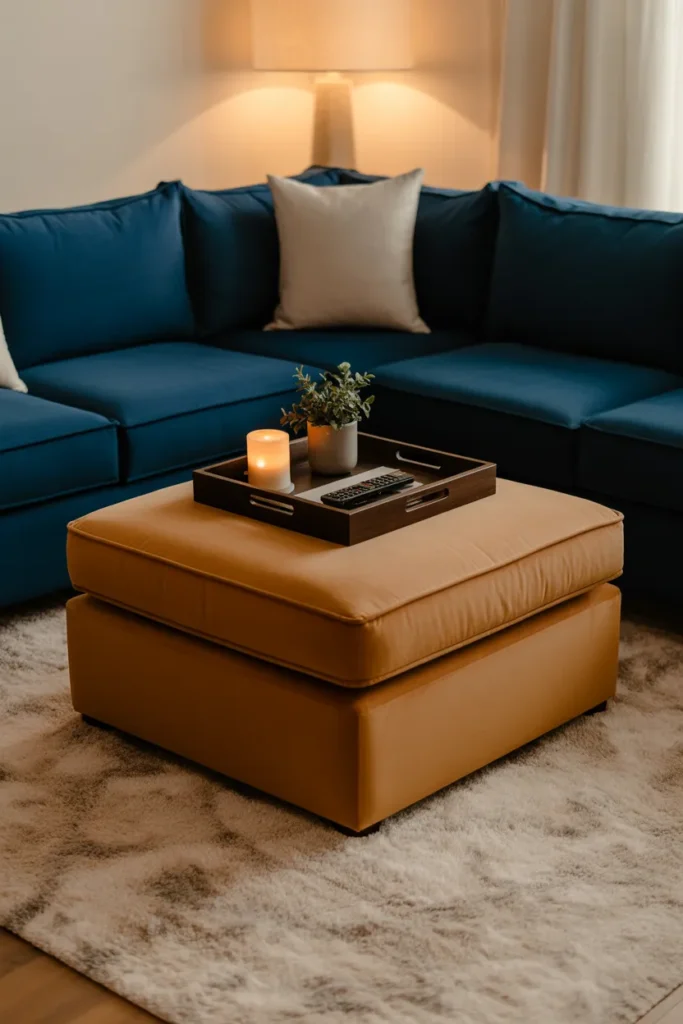
Ottoman sizing for this use follows the same proportional rules as a coffee table: leave 18 inches of clearance from the ottoman edge to the sofa front, and size the ottoman to approximately two-thirds the sofa length for a rectangular format, or 36 to 42 inches in diameter for a round version. An ottoman that is too small for the seating group looks like a footrest that got lost; one that fills the entire center of the room limits traffic flow and makes the space feel overcrowded.
Performance fabric is the correct upholstery choice for any ottoman used as a coffee table. Silk, velvet, and delicate wovens mark, stain, and show wear from daily contact at a rate that makes them impractical in this application. Solution-dyed acrylic, performance velvet, or leather are the materials that hold up to daily use as a central table surface.
13. A Pedestal Side Table in Marble or Stone That Functions as a Sculptural Accent
A pedestal side table — a single-column support in stone, metal, or ceramic holding a round or square top — is the most sculpturally resolved side table format in residential design. Unlike four-legged side tables whose structural logic is purely utilitarian, the pedestal form is an architectural statement in itself, and the material of the column and top determines the entire character of the piece.
Marble and stone pedestal tables in 2026 living room design function as both surface and sculpture. A slim white marble column with a round white marble top reads as architectural and serene — a visual pause in a room full of soft furnishings. A chunky travertine pedestal with an irregular top reads as organic and earthy. An onyx pedestal with dramatic veining reads as bold and luxury-oriented. The material choice defines the design register entirely.
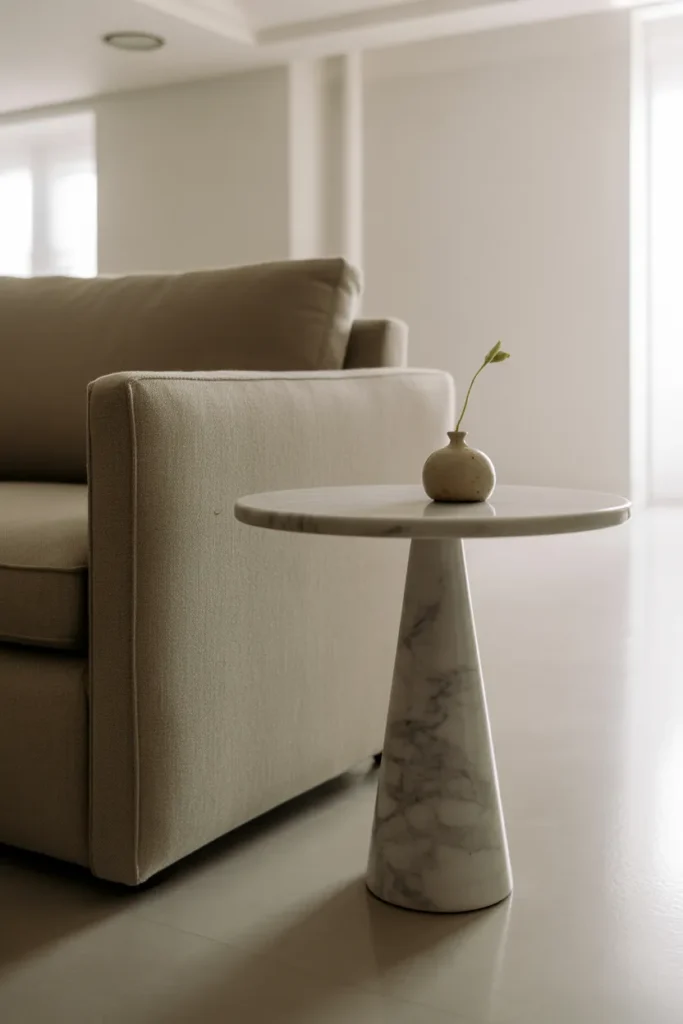
Pedestal tables work best in rooms where they have space to be seen from multiple angles — beside a chair in a conversation corner, at the end of a sofa with open space on the opposite side, or as a standalone accent in a room corner. Pushed against a wall or hemmed in by adjacent furniture, the three-dimensional quality of the pedestal form is lost and the table becomes visually ordinary.
Size the pedestal table with restraint. Pedestal tables with tops over 20 inches in diameter begin to look like small coffee tables trying to be side tables. At 14 to 18 inches in diameter or width, the pedestal top provides adequate surface for a drink, a candle, or a small plant while maintaining the elegant, slender character that makes the form distinctive.
14. A Lucite or Acrylic Coffee Table That Makes Furniture Almost Disappear in a Small Room
A lucite or clear acrylic coffee table is the most visually recessive table option available — it takes up physical space in the room while consuming almost none of its visual space. In a small living room where every piece of furniture registers as mass and weight, a clear acrylic table is the closest thing to having no table at all while still having full table function.
This property is most valuable in rooms where a coffee table is functionally necessary but where the room already feels dense or furnished to capacity. A small apartment living room with a sofa, two chairs, a bookcase, and a television console can feel genuinely claustrophobic with a solid coffee table in the center. The same room with a lucite table in the center retains the visual openness of the floor plane.
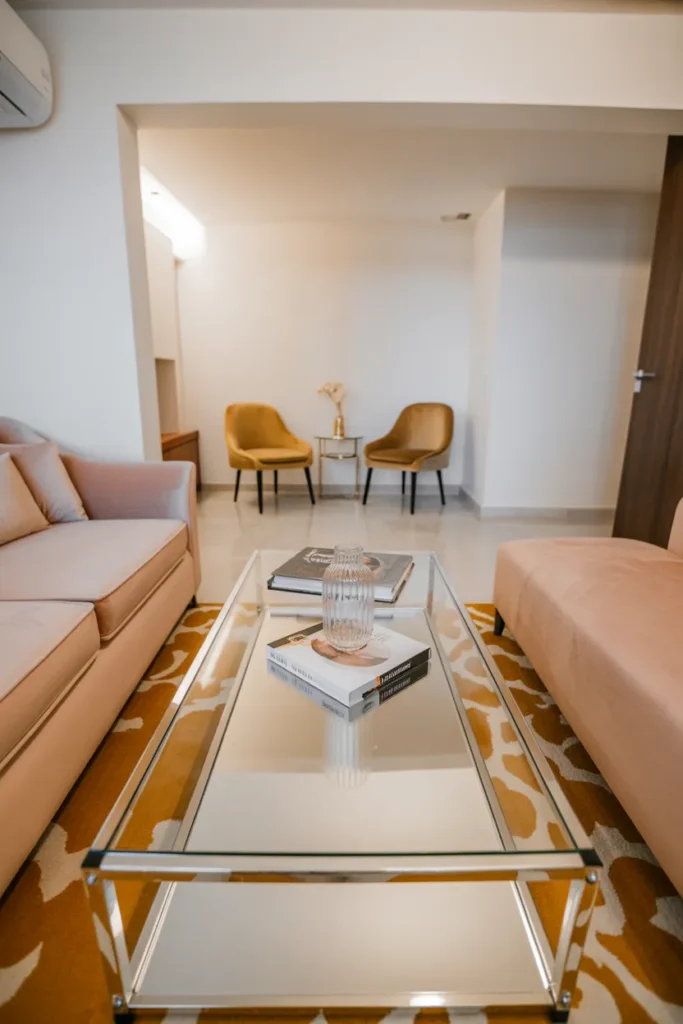
Clear acrylic shows scratches over time, particularly on the surface and edges. This is an inherent characteristic of the material and should be understood before purchasing. Light surface scratches can be polished out with plastic polish products; deeper scratches are permanent. For households with heavy daily coffee table use, a lucite table may accumulate visible wear faster than a stone or wood alternative.
Acrylic and lucite tables look most resolved when their surrounding furniture is also fairly refined and minimal. In a room full of casual, rustic, or heavily textured furniture, a perfectly clear synthetic table can feel incongruously sleek — the material contrast becomes a friction point rather than a design choice. The material suits modern, contemporary, glam, and transitional interiors most naturally.
15. A Moroccan-Style Tile-Top Side Table That Adds Pattern Without Overwhelming the Room
A Moroccan or hand-painted tile-top side table introduces color, pattern, and artisanal character to a living room through a surface small enough that it adds visual interest without becoming the dominant element in the room. Because it is a side table rather than a coffee table, its pattern plays a supporting role in the room’s overall composition — it is noticed and appreciated without commanding the entire space.
The tile top on a Moroccan-style table is typically set into a low-profile metal or wood frame that contains the tile and provides a smooth, level surface. The geometric patterns — zellige tile in Islamic star and interlocking geometric motifs — work particularly well in rooms with warm earth tones, natural materials, and an eclectic or global-influenced aesthetic. They also appear with increasing frequency in transitional rooms as a single pattern accent in otherwise solid-toned interiors.
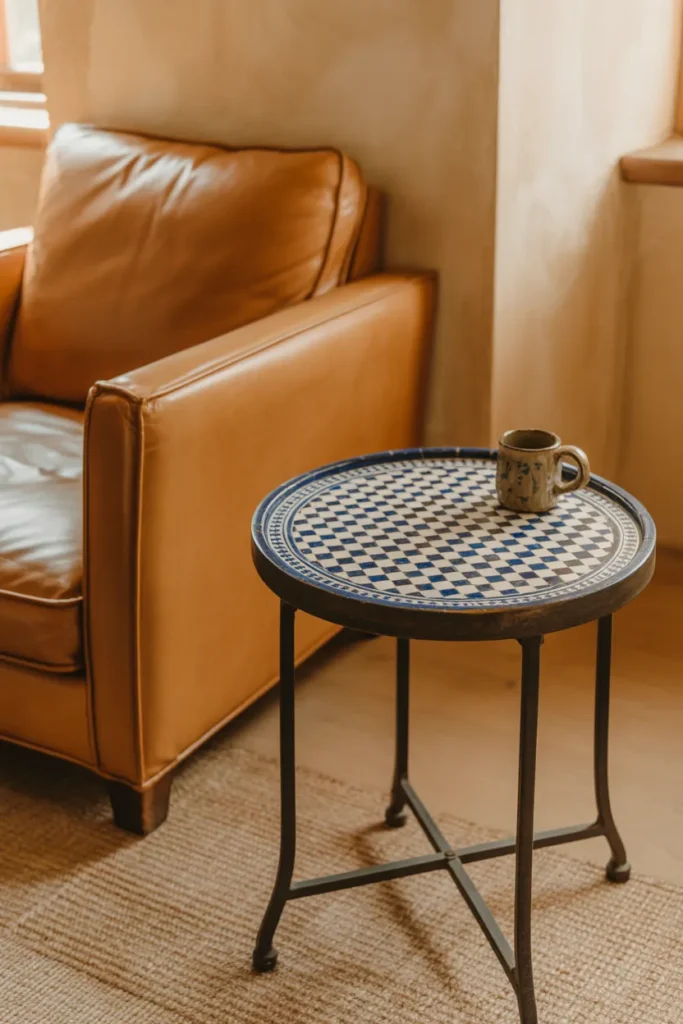
The practical advantage of a tile top over a fabric or wood top in a side table application is durability. Glazed ceramic tile is heat-resistant, moisture-resistant, and easy to clean — it handles hot mugs, cold glasses, and spills with no lasting damage. For a table beside seating where drinks are regularly placed, tile is functionally superior to almost any other surface material.
Pair a tile-top side table with solid-toned upholstered furniture and minimal pattern elsewhere in the room. The tile pattern earns its place as the single pattern accent — introducing a second patterned element (a graphic pillow, a busy rug, a patterned curtain) in close proximity creates visual competition that diminishes the impact of both patterns.
16. A Tree Stump or Raw Wood Side Table That Brings Organic Authenticity to Earthy Interiors
A natural tree stump or raw cross-section wood side table — a literal slice of tree trunk, sealed and stabilized for interior use — is the most directly organic table form available in residential design. No two pieces are identical. The natural outer bark or the smooth cut edge, the grain pattern, the color variation across the wood’s rings — all of these characteristics are unique to the individual tree and make the piece genuinely irreplaceable.
This table type works best as a side table rather than a coffee table because the organic form reads as a deliberate accent at small scale but can look like unfinished construction material at coffee table scale in most rooms. A 12 to 18-inch diameter stump section beside a chair or sofa reads as a considered, characterful choice. A 36-inch diameter section in the center of a room requires a very specific surrounding context to avoid looking like a lumber yard delivery.
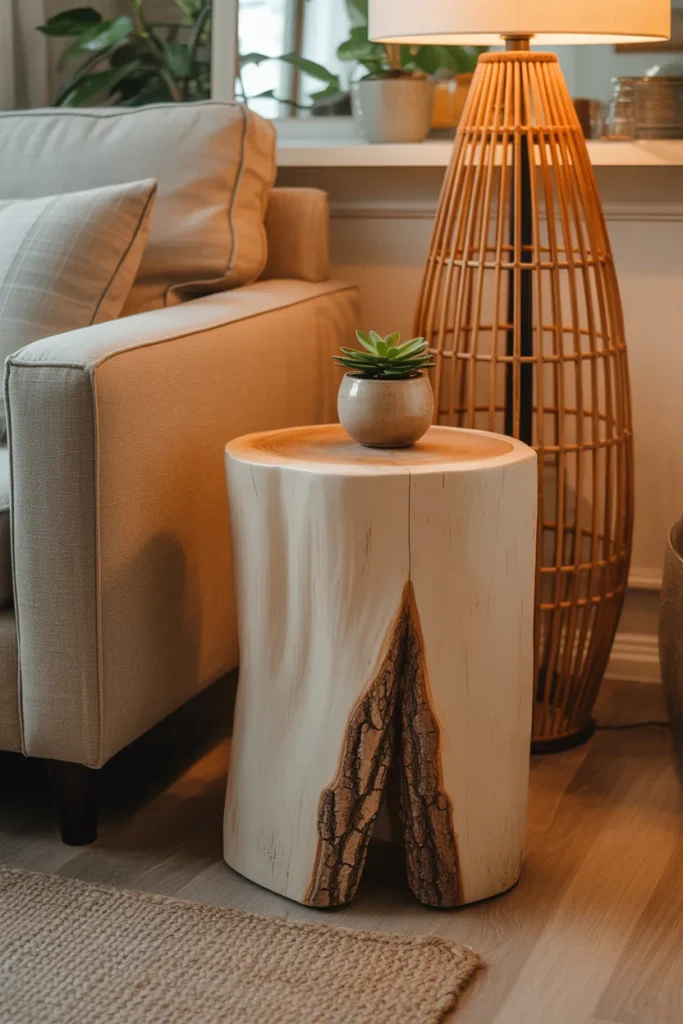
The interior design contexts where raw wood side tables work most naturally include bohemian, Japandi, biophilic, rustic modern, and nature-inspired interiors. Rooms with linen, cotton, jute, ceramic, and other natural materials welcome the raw wood form as part of a cohesive material palette. In very sleek, urban, or contemporary interiors with polished surfaces and precise lines, the raw organic form creates a stylistic friction that is difficult to resolve without a significant room redesign.
Sealing and stabilizing are non-negotiable for any raw wood piece used indoors. Unsealed wood absorbs moisture, can harbor insects, and may crack as it acclimates to interior humidity levels. A quality penetrating oil or a hard wax seal preserves the natural appearance while protecting the wood for years of indoor use.
17. A Sofa Table With Integrated Charging That Solves the Modern Technology Problem Invisibly
A sofa table with built-in USB charging ports or wireless charging pads — positioned behind a floating sofa, against a wall beside seating, or between two chairs — is the most directly modern living room table idea in this guide and one of the most practically valuable for households where daily device charging is a persistent design and organization challenge.
Visible charging cables draped across furniture, extension cords on the floor, and phones balanced precariously on sofa arms are the most common signs of a living room where technology integration was not considered in the furniture plan. A table with built-in charging — typically flush-mounted USB-A and USB-C ports or a Qi wireless charging pad integrated into the tabletop — routes technology needs through the furniture itself, eliminating the cable and cord problem at the source.
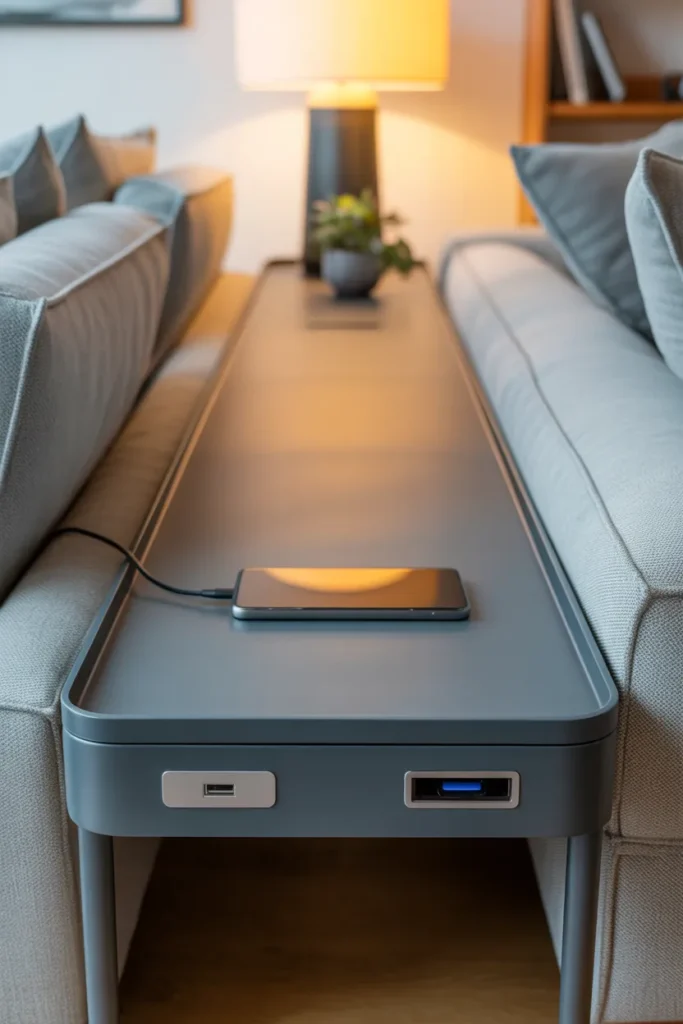
For rooms where the sofa floats away from the wall, a console-style sofa table with built-in charging placed directly behind the sofa is the most space-efficient solution — it provides a surface, defines the back of the seating zone, and handles device charging all in one piece. For rooms where the sofa is against the wall, a side table with integrated charging between the sofa and the nearest chair serves the same function at a smaller footprint.
The design consideration with any technology-integrated furniture is that the technology ages faster than the furniture. USB standards, wireless charging protocols, and port types change over time. Choose a table where the charging module is replaceable — a removable insert rather than hardwired components — so the table remains useful as technology standards evolve without requiring full furniture replacement.
Final Thoughts
The right living room table is not the most visually impressive one you can find — it is the one that matches your floor plan, serves your daily habits, holds up to your household’s use patterns, and works within the material language of the room it lives in. The 17 living room table ideas in this guide cover the full range from the most practical multi-use solutions to the most materially distinctive accent pieces, giving you a clear map of what exists and which direction fits your specific situation.
Save this post so you can return to individual sections as you work through your living room decisions — whether you are choosing a primary coffee table, a pair of side tables, or a console for an open-plan layout. Each idea here is designed to be useful at the moment of decision, not just at the moment of browsing. If this guide was helpful, explore more living room furniture and layout content for the same level of practical, room-specific guidance.