Achieving maximalist bedroom ideas with a bold Hollywood glam look is not about filling a room with expensive things — it is about understanding which layers of pattern, texture, lighting, and color work together to create a space that feels both dramatically rich and deliberately designed. This guide gives you 10 practical, distinct ideas that translate the Hollywood Regency aesthetic into real bedroom decisions, with clear guidance on what works, what does not, and how to execute each look confidently.
1. Install an Upholstered Tufted Headboard Floor to Ceiling to Anchor the Entire Room
A floor-to-ceiling upholstered headboard is the single most impactful structural investment in a Hollywood glam bedroom. Unlike a standard headboard that ends at shoulder height, a full-height upholstered panel — tufted in diamond or square button detail — creates a wall-within-a-wall effect that immediately signals luxury and intention. The bed stops being furniture and becomes the room’s primary architectural statement.
The tufted surface creates light and shadow play across the fabric throughout the day and under lamp light at night, which is why this detail is so closely associated with glamorous interiors. Velvet performs best in this role because its pile catches and releases light differently from every angle, producing depth that flat fabric or leather cannot achieve. Deep colors — midnight blue, emerald, charcoal, aubergine, or champagne — are the most effective choices for the Hollywood glam register.
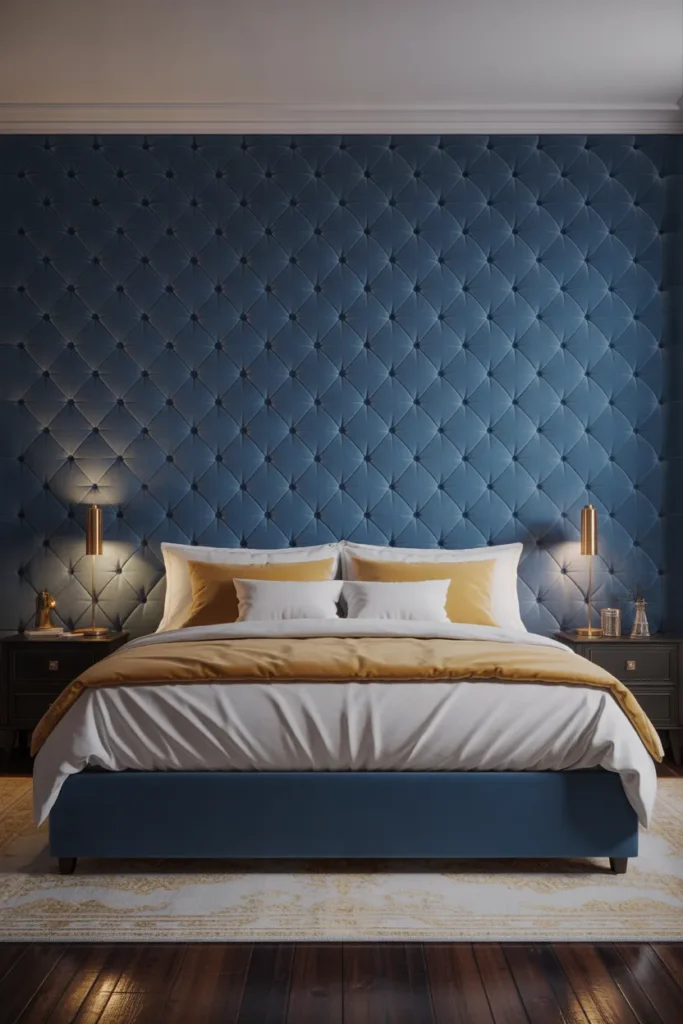

Size the headboard panel to run from the floor to within six to twelve inches of the ceiling. If your ceiling is eight feet, take the panel to seven and a half feet. In rooms with ten-foot ceilings, a full-height panel becomes genuinely dramatic. Mount the panel directly to the wall rather than attaching it to the bed frame, which allows it to read as architecture rather than furniture.
The most common mistake with oversized headboards is under-scaling the bed and surrounding pieces. A floor-to-ceiling headboard demands a bed frame with visual presence — a low-profile platform frame in a contrasting finish, or a substantial upholstered bench at the foot — and bedside tables that are tall enough to stay in proportion with the expanded vertical scale of the headboard behind them.
2. Use a Mirrored Accent Wall Behind the Bed to Double the Room’s Visual Richness
Mirrored walls have been central to Hollywood Regency design since the style’s origins in 1930s California, and for a reason grounded in pure visual logic: mirrors double every element in the room — the light, the color, the texture, the depth — creating the perception of a space that is twice as layered and twice as rich as its actual contents. In a maximalist bedroom, this multiplication effect is exactly the goal.
A full mirrored wall behind the bed works best when the room already contains strong visual elements on the opposite side of the bed — richly styled bookshelves, a dramatic window treatment, or a gallery of framed art — because those are the elements the mirror will reflect and multiply. A mirrored wall in a sparsely furnished bedroom reflects emptiness, which defeats the purpose entirely.
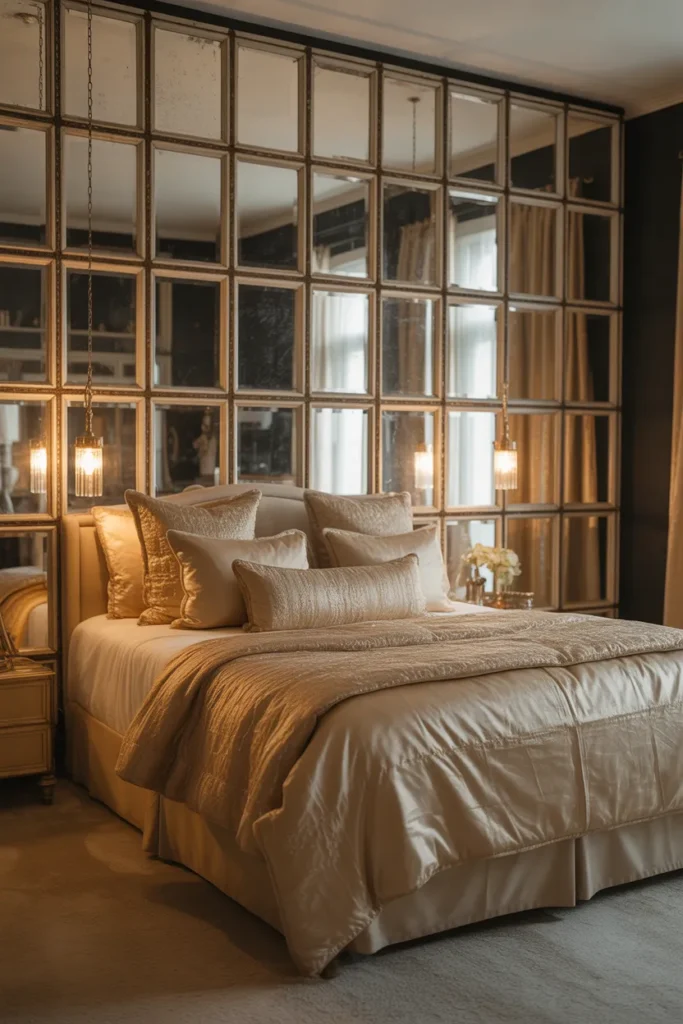
Antique mirror — glass with a slightly aged, foxed, or smoky patina — is far more sophisticated in a maximalist glamour context than clean, clear mirror. The subtle imperfection of antique glass adds warmth and depth that modern mirror lacks, and it photographs better because it does not create the harsh, flat reflections that clear mirror produces under direct light.
Apply the mirror in panels rather than as a single floor-to-ceiling sheet for a more designed and practical installation. Panels framed with thin brass or chrome trim, or set in a grid pattern with narrow mirrored dividers between them, add geometric structure to the surface and allow for easier installation and future replacement if individual panels are damaged.
3. Dress the Bed in Five or More Distinct Textile Layers for Maximum Tactile Luxury
The bed in a maximalist Hollywood glam bedroom should not be made — it should be composed. The distinction matters: making a bed implies function, composing a bed implies design. A maximalist bedding composition uses five or more distinct textile layers stacked with deliberate variation in texture, weight, pattern, and finish to create a surface that reads as indulgently rich from across the room and rewards close inspection with material complexity.
The layering sequence that works most reliably starts with a high-thread-count white or ivory base sheet set. Add a solid-colored or subtly patterned flat sheet in a contrasting tone folded back over the duvet at the top. Layer a velvet, faux fur, or quilted satin coverlet across the lower half of the bed. Arrange three to five Euro shams in a solid color at the back. Stack two to three standard pillows in a contrasting cover in front of them. Add two to three decorative throw pillows in bold patterns — animal print, geometric, or heavily embellished — at the very front. Drape a fringed throw casually across one corner of the bed.
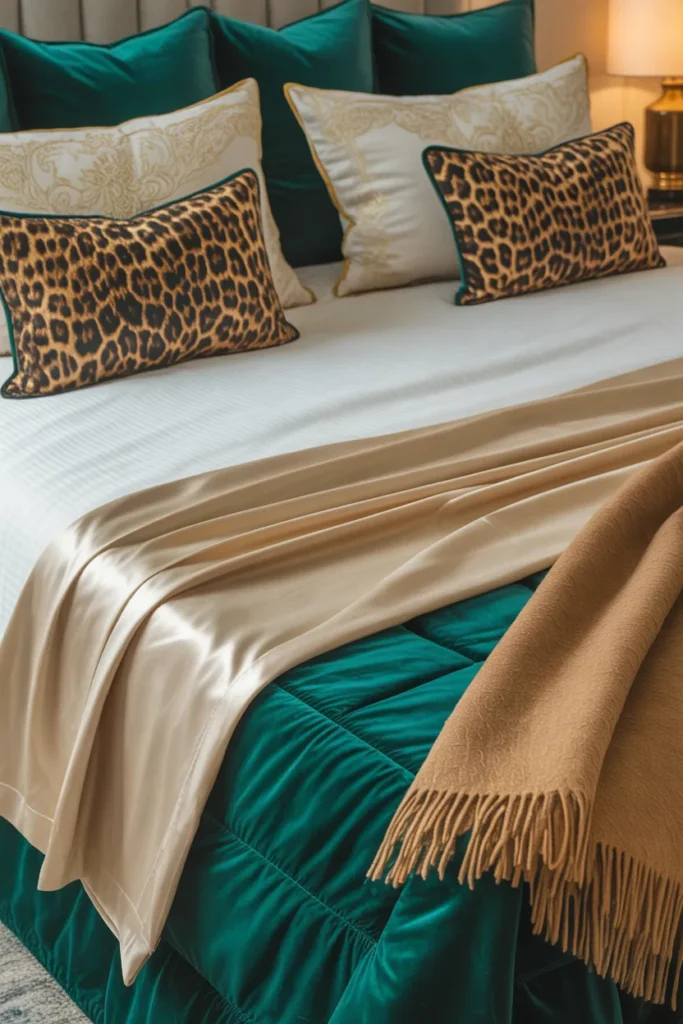
The material variation across all layers is what produces the tactile maximalist effect. Satin next to velvet next to faux fur next to embroidered linen engages the eye with surface contrast in a way that matching or coordinating materials cannot. The color palette across all layers should share one to two dominant tones — typically a neutral like champagne, ivory, or black, plus one jewel tone — to prevent the composition from feeling incoherent.
The most common mistake is over-matching. A bedding set purchased as a complete collection tends to look flat and retail-styled, not composed. Deliberately sourcing each layer separately — or at minimum adding one or two distinctly different pieces to an existing set — introduces the variation that maximalist layering requires.
4. Hang Full-Length Dramatic Curtains from Ceiling to Floor on Every Window Wall
Window treatments in a Hollywood glam maximalist bedroom should never end at the window frame. Curtains that hang from the ceiling and pool slightly on the floor — not just reaching the sill or the floor exactly, but deliberately pooling by one to three inches — are one of the clearest visual signals of luxury in a bedroom interior. The excess fabric creates the impression that the curtains were made without cost consideration, which is the emotional register that glamour design inhabits.
Mount curtain rods as close to the ceiling as possible, regardless of where the actual window opening begins. A window that starts four feet from the floor should still have curtains hanging from the ceiling. This height extension elongates the window visually, makes the ceiling feel higher, and gives the curtain enough fabric to carry the weight and visual presence that glamour interiors require.
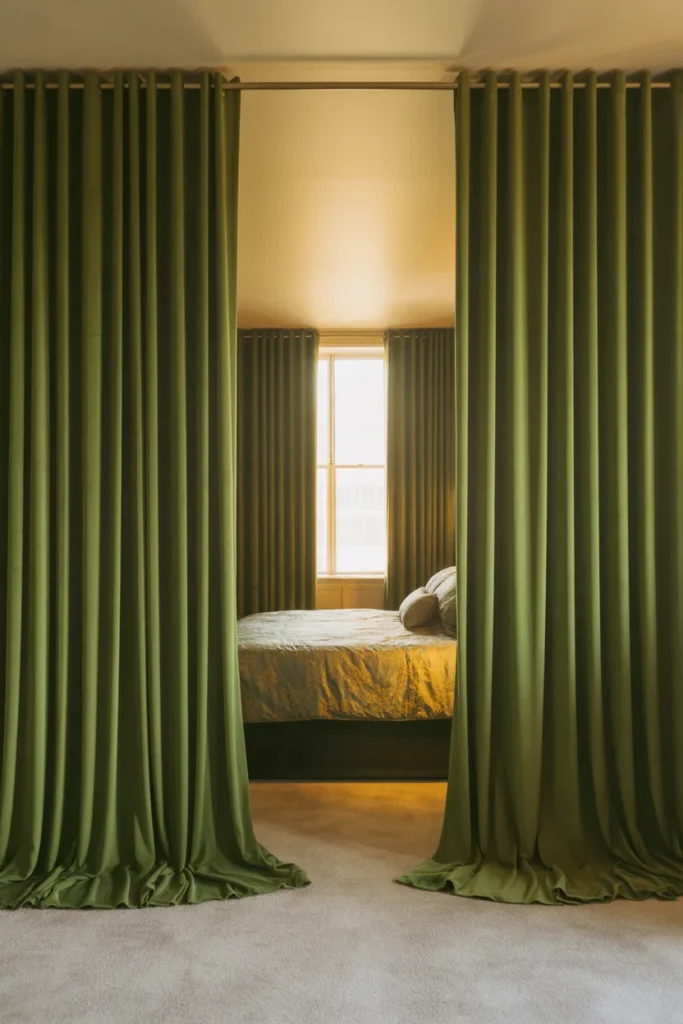
Choose curtain fabrics with enough body and drape to look rich when hanging — velvet, heavyweight silk, or lined linen in a satin weave are all appropriate. Unlined lightweight curtains in a glamour bedroom look casual and underfunded regardless of their pattern or color. Fully lined curtains hang better, block light more effectively, and maintain their silhouette over time far better than unlined alternatives.
In a maximalist Hollywood glam bedroom, curtains in a bold pattern — large-scale floral, oversized geometric, or rich jacquard — serve as functional wall art that also performs as light control. Curtains in a solid deep tone — black, emerald, plum, or midnight blue — frame the room like a stage set, particularly effective in bedrooms where theatrical atmosphere is the primary design goal.
5. Introduce a Statement Vanity Area with a Hollywood Bulb Mirror as a Functional Design Feature
A Hollywood vanity — a dedicated dressing table or vanity desk fitted with a round or rectangular mirror surrounded by exposed Edison or globe bulbs — is both a functional grooming station and one of the most recognizable visual signatures of the Hollywood glamour aesthetic. Including one in a maximalist bedroom adds a layer of designed intentionality that a simple dresser-with-mirror arrangement cannot provide.
The vanity area should be treated as its own mini-environment within the bedroom: a small upholstered stool or chair, a surface large enough for a tray of beauty objects, a mirror large enough to reflect the face and upper body, and adequate bulb lighting that is warm rather than cool in color temperature. Warm white bulbs at 2700K to 3000K produce the flattering golden light that Hollywood mirrors are designed to cast.
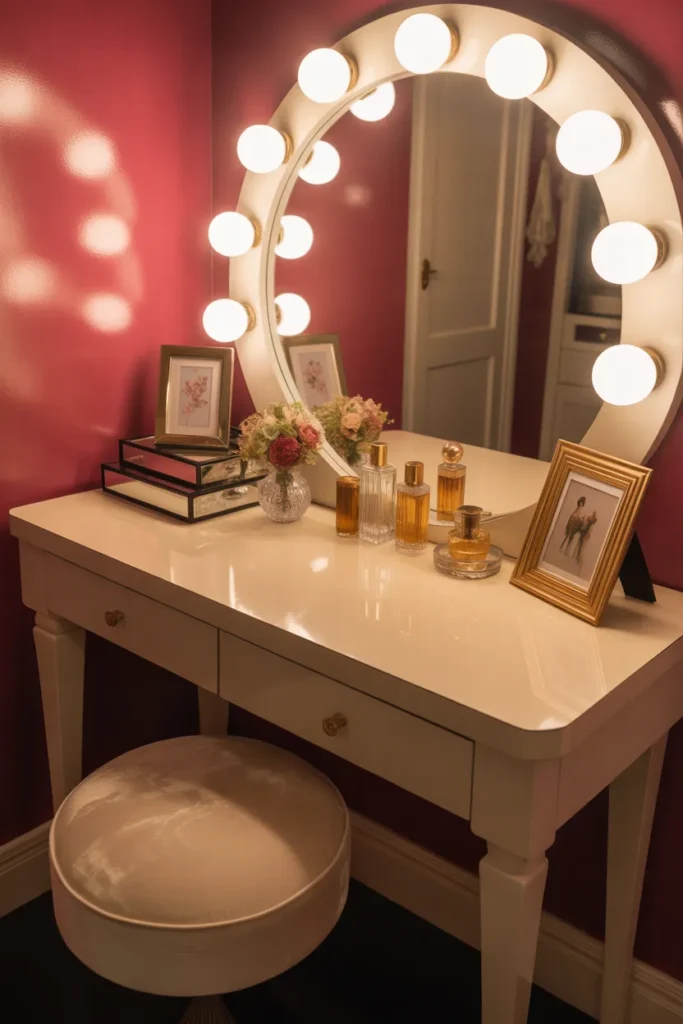
In maximalist terms, the vanity surface and mirror surround should be styled as a dense, curated display. Perfume bottles, a small vase with flowers, stacked trays, a decorative box, and a few framed photos or small prints propped against the mirror base create the layered surface richness that signals maximalist intention. An empty vanity with a single candle looks sparse and under-decorated regardless of how beautiful the mirror itself may be.
Position the vanity on a wall that does not compete visually with the headboard wall. A side wall, an alcove, or a dressing room adjacent to the bedroom are all appropriate placements. The vanity should be its own destination in the room, not a visual afterthought tucked into a corner without proper lighting or spatial consideration.
6. Apply Maximalist Wallpaper on All Four Walls Including the Ceiling for Full Immersion
Wallpaper applied to all four walls and the ceiling — a technique known as enveloping — transforms a bedroom from a decorated room into an immersive designed environment. In a Hollywood glam maximalist bedroom, this approach creates a cocooning effect that is impossible to achieve with paint alone, regardless of how bold the color. The pattern moves across every surface, including overhead, producing a level of richness and enclosure that defines the room as a retreat from the first step inside.
The wallpaper pattern appropriate for a Hollywood glam application should carry a sense of drama and history — large-scale botanical prints, chinoiserie scenes, Art Deco geometric repeats, or heavily stylized florals in metallic and jewel-toned colorways. The scale of the repeat matters: too small a repeat becomes busy and visually taxing when applied to every surface. A medium-to-large repeat — one complete pattern unit visible within a two-foot section of wall — works best in full-envelope applications.
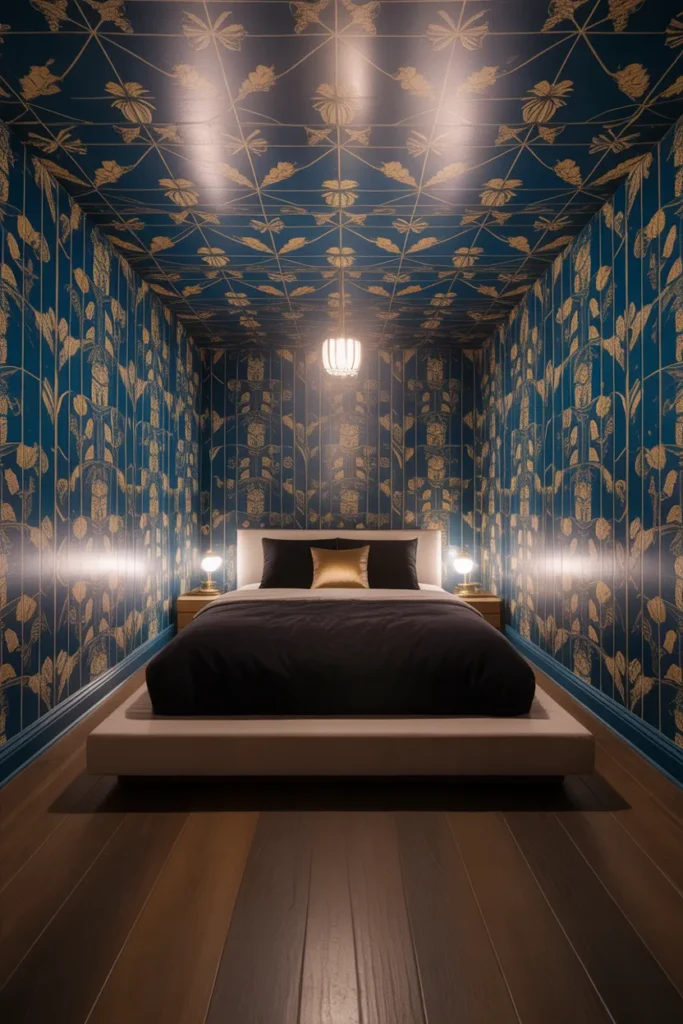
Metallic elements within the wallpaper — gold leaf detailing, silver highlights, or copper tonal variation — interact with lamp light in ways that matte-finish wallpapers cannot, creating a surface that shifts subtly as light sources change throughout the day and evening. This quality is particularly aligned with the Hollywood glam aesthetic, which has always depended on the drama of changing light.
The ceiling wallpaper should be installed last after all four walls are complete. Ensure all seams are oriented in the same direction across walls and ceiling for visual continuity. Using the same pattern on all surfaces is the most dramatic choice — using the wallpaper on three walls and a coordinating solid color on the fourth creates a clear feature wall within the enveloped room that can be useful in smaller bedrooms where full-surface pattern can feel overwhelming.
7. Use a Canopy Bed Frame with Draped Fabric for a Theatrical Bedroom Centerpiece
A canopy bed is the most architecturally theatrical furniture piece available in residential bedroom design, and in a maximalist Hollywood glam context it functions simultaneously as a furniture choice, a ceiling treatment, and a room-within-a-room enclosure. The vertical posts and overhead frame extend the bed’s presence into the upper half of the room — the zone that most furniture completely ignores — and the draped fabric softens the structural form while adding the layered textile richness that maximalism requires.
Four-poster canopy frames with fabric draped from a central ceiling point, or with full-length panels hung from each corner post, produce the most glamorous effect. Fabric choice is decisive: heavy velvet panels in a deep color create a cocoon of enclosure and warmth. Sheer silk or organza panels filtered over a velvet backing layer create a layered translucency that moves softly with air circulation and catches light beautifully. Either approach needs fabric with enough yardage to hang generously — skimping on fabric volume is the single most common error that makes canopy beds look underdressed.
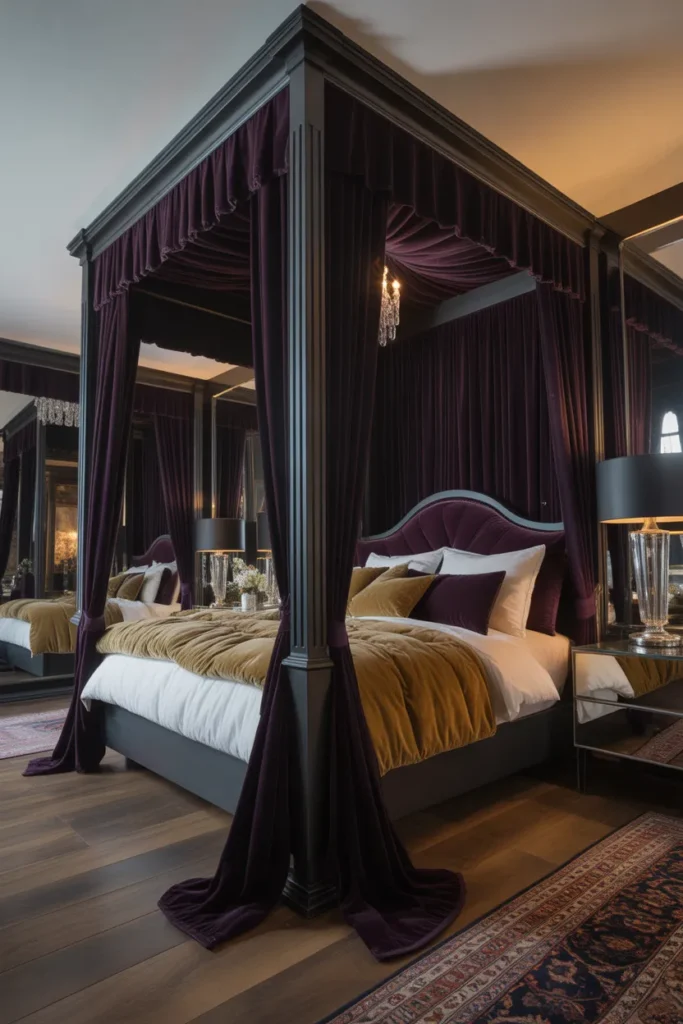
This treatment works in bedrooms with ceiling heights of at least nine feet. In rooms with eight-foot ceilings, a canopy bed can feel compressive and make the ceiling appear lower rather than more dramatic. In those cases, a half-canopy — a wall-mounted canopy crown above the headboard with fabric falling to either side — achieves a similar visual effect without requiring the ceiling clearance of a full four-poster structure.
Match the canopy fabric to one of the room’s dominant upholstery colors — the headboard, the curtains, or the dominant bedding tone — to keep the canopy integrated into the room’s overall design rather than appearing as an isolated feature. A canopy in a color or fabric entirely unrelated to the rest of the room reads as an afterthought rather than a considered design choice.
8. Layer Warm Lighting Across Five Sources to Create the Glam Bedroom’s Signature Golden Glow
The defining quality of the Hollywood glamour aesthetic — the golden, flattering, warm glow that makes everything inside the room look rich and beautiful — is entirely a function of lighting strategy, not just decor choices. A maximalist Hollywood glam bedroom with excellent furniture but poor lighting will always underperform visually. A room with modest furnishings and a well-executed layered lighting plan will consistently look more glamorous than its material budget suggests.
The target is a minimum of five distinct light sources in the bedroom, each operating at a different height and angle. A chandelier or pendant overhead provides ambient fill light. Two bedside table lamps at a height of 24 to 28 inches provide mid-level warm light flanking the bed. A floor lamp in one corner provides soft upward fill. A wall-mounted sconce or a vanity mirror light provides task-level illumination. A string of low-level candle or LED lights along the base of the headboard or within a display cabinet provides the lowest layer of accent glow.
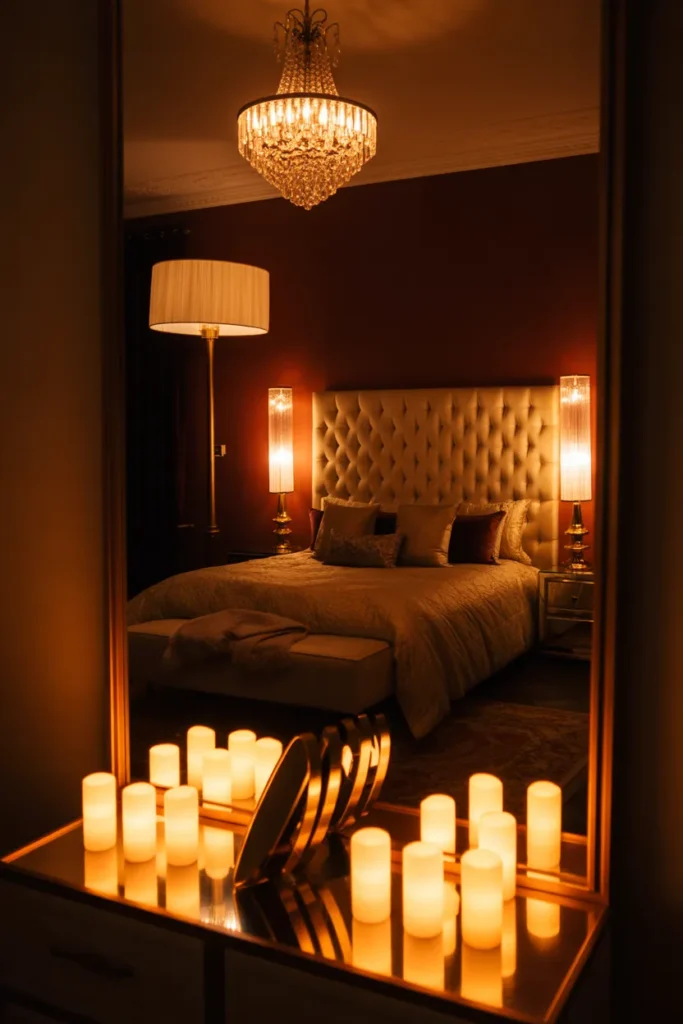
All light sources should use warm white bulbs in the 2700K to 3000K color temperature range. A single cool or daylight bulb in the range of 5000K or above — even one — disrupts the warm golden atmosphere the other sources are building. Replace every bulb in a Hollywood glam bedroom with a warm-spectrum equivalent before styling the space.
Dimmer switches on every circuit are not optional in a bedroom designed for glamour. The ability to adjust each layer of light independently allows the room to shift from functional dressing-room brightness to intimate evening glow depending on the time and mood. Fixed-output lighting in a maximalist glam room eliminates the flexibility that makes layered lighting work across different conditions.
9. Combine Animal Print, Velvet, and Metallic Accents as the Room’s Three Material Signatures
One of the most reliable material combinations in the Hollywood glam maximalist bedroom toolkit is the trio of animal print, velvet, and metallic accent. Each material carries a distinct visual quality — animal print functions as a neutral with pattern energy, velvet delivers depth and light-reactive richness, and metallic accents provide the reflective glamour that ties the other two together. Used together with clear allocation of role and proportion, this trio creates a room that reads as glamorous without requiring any single expensive element.
Animal print — leopard, cheetah, or zebra — works best in this context when assigned to one or two secondary pieces: an accent chair, a bench at the foot of the bed, a pair of throw pillows, or a small area rug. Keeping animal print as a supporting material rather than a dominant surface prevents it from overwhelming the room. The warm caramel and warm black tones of most animal prints harmonize naturally with the jewel-tone color palette that Hollywood glam bedrooms favor.
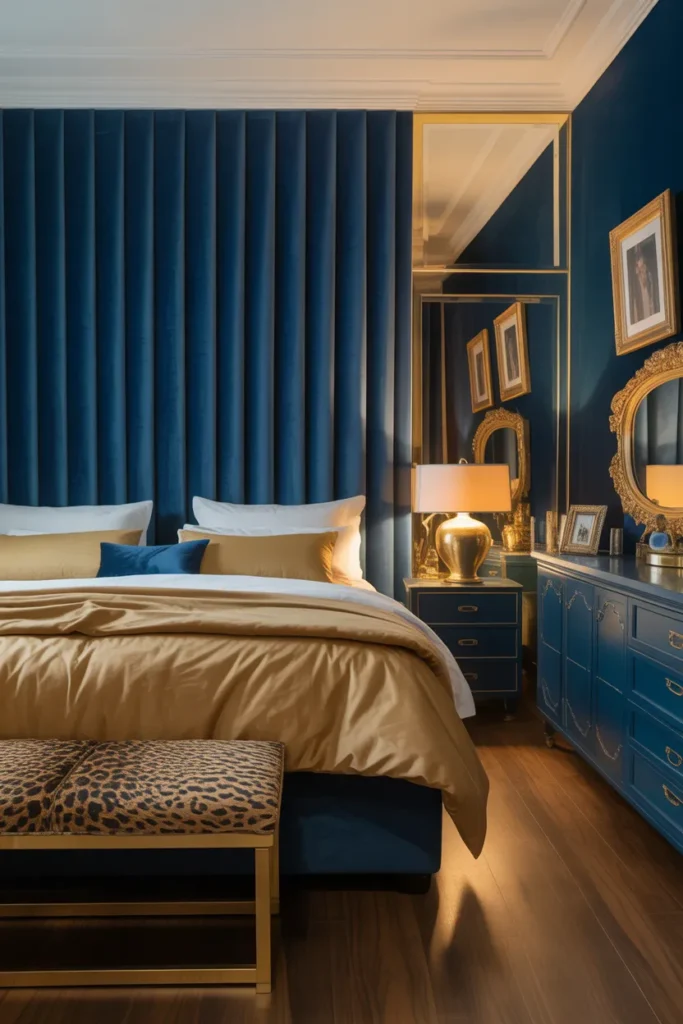
Velvet should cover the room’s dominant surface — ideally the headboard wall panel or the bed’s primary upholstery — in a deep, saturated color. Emerald, sapphire, deep plum, and rich burgundy are the most aligned choices for this aesthetic. The velvet’s light-reactive quality under warm lamp light is what gives the room its characteristic evening richness.
Metallic accents — brass, gold, polished chrome, or antique silver — appear in hardware, lamp bases, mirror frames, picture frames, and decorative objects. The key is consistency of metal tone throughout the room. Mixing warm gold and cool silver metals in equal proportion creates visual confusion. Choose one dominant metal tone and use it on at least 80 percent of hardware and accent pieces, allowing the other to appear sparingly as contrast.
10. Style a Maximalist Bedside Arrangement with Stacked Trays, Tall Lamps, and Layered Objects
In a maximalist Hollywood glam bedroom, the bedside tables are not functional afterthoughts — they are two of the room’s primary styling stages, visible from the bed’s entrance view and flanking the headboard on both sides of the most important piece of furniture in the room. Understyled bedside tables are the most common single point where maximalist bedroom ideas for a bold Hollywood glam look fall flat in practice, even in rooms where every other element is well executed.
A tall bedside lamp — 28 to 32 inches to the base of the shade — is the starting point. The height keeps the light source in the correct zone for both ambient contribution and bedside reading use, and the visual proportion of a tall lamp anchors the bedside table in relation to a large headboard. A lamp that is too short disappears beside a floor-to-ceiling headboard and looks undersized from the room’s entrance.
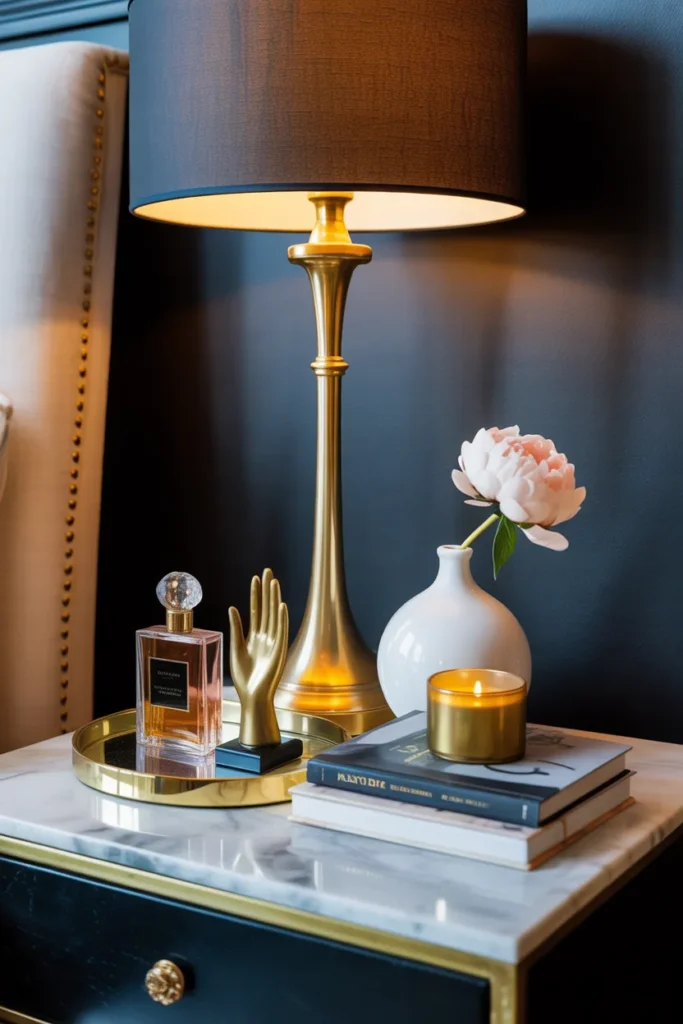
Layer the table surface with a mirrored or lacquered tray as the base organizing element. Inside or around the tray arrange three to five objects of varying height: a small stack of books, a perfume or diffuser bottle, a small sculptural object, a single bud vase with a flower or branch, and a candle in a decorative vessel. The objects should vary in material — glass, ceramic, metal, organic — to create material contrast that rewards close attention.
The most common bedside styling mistake in maximalist rooms is perfect symmetry between the two tables. Matching table lamps is appropriate and visually stabilizing. But identical styling on both tables tips from glamorous into hotel-suite formulaic. Allow each bedside table to have a slightly different object arrangement while maintaining the same lamp and the same tray — this creates the composed-but-collected quality that distinguishes a designed maximalist bedroom from one that simply has a lot of objects in it.
Final Thoughts
The maximalist bedroom ideas in this guide work best when they are layered progressively rather than implemented all at once. Start with the room’s largest fixed element — the headboard treatment or the wall treatment — and build outward from that anchor point. Each additional layer of textile, light source, mirror surface, or styled object should reinforce the direction established by that first decision.
Save this post to your Pinterest boards so you can reference specific ideas when you are ready to shop, plan, or style each element of the room. A bold Hollywood glam bedroom takes more decisions than a minimal one, and having a clear visual reference for each layer makes the process far more confident and far less expensive in the long run.