If your master bedroom feels outdated, cluttered, or just not restful, modern master bedroom decor 2026 has shifted toward intentional simplicity — fewer pieces, better materials, and layouts that genuinely support how people sleep and live. This guide gives you 10 distinct, decision-ready ideas so you can identify exactly what your room needs and make changes that hold up over time.
1. Low-Profile Platform Beds That Make Ceilings Feel Taller
The bed is the room’s anchor, and in 2026, the dominant direction is low and grounded. Platform beds with a frame height of 12 to 18 inches from the floor visually lower the furniture line and draw the eye upward, making standard 8-foot ceilings read closer to 10. This works especially well in smaller master bedrooms where a tall headboard or a thick box spring setup eats into visual space.
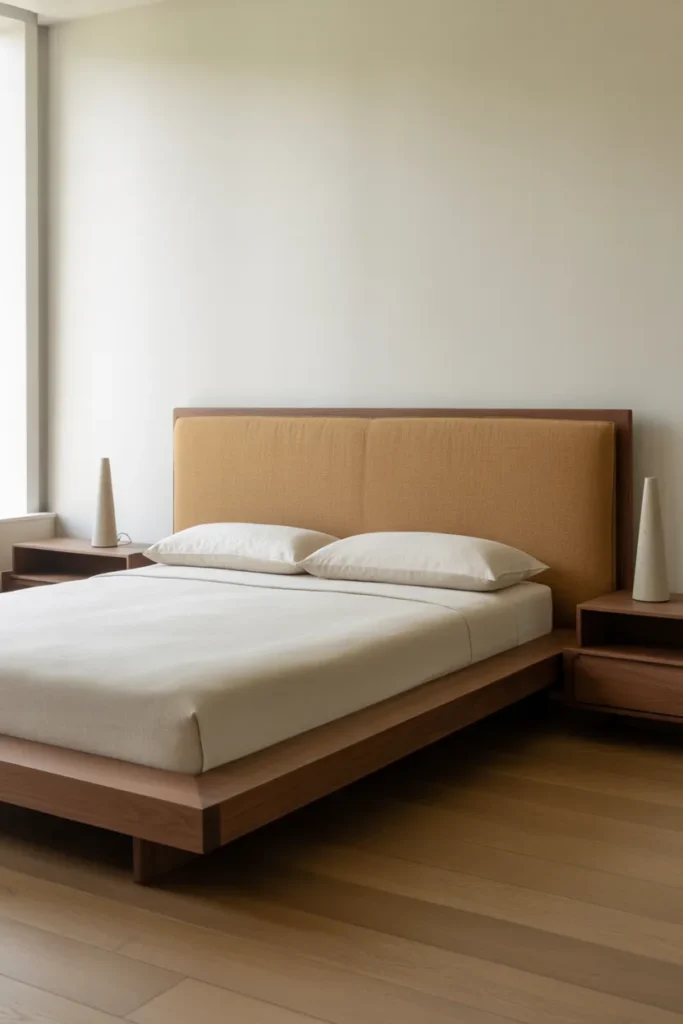
Choose a platform frame with a solid upholstered headboard in a neutral — warm white, greige, soft charcoal, or oat linen. Avoid tufted headboards with ornate button detailing, which trend fast and date quickly. A flat panel or gentle curved top edge is the cleaner, more timeless choice for 2026.
The mistake most people make here is pairing a low platform bed with nightstands that are too tall. Your nightstand surface should sit within two to three inches of your mattress top. Mismatched heights make the layout feel unresolved even when everything else is right.
2. Warm Neutral Wall Colors That Replace Cold Gray for Good
Cool gray dominated master bedrooms for nearly a decade, but modern master bedroom decor in 2026 has moved decisively toward warm neutrals. Shades like warm taupe, soft clay, aged linen, and greige — neutrals with a distinctly warm undertone — make the bedroom feel more restful and flattering under both natural and artificial light.
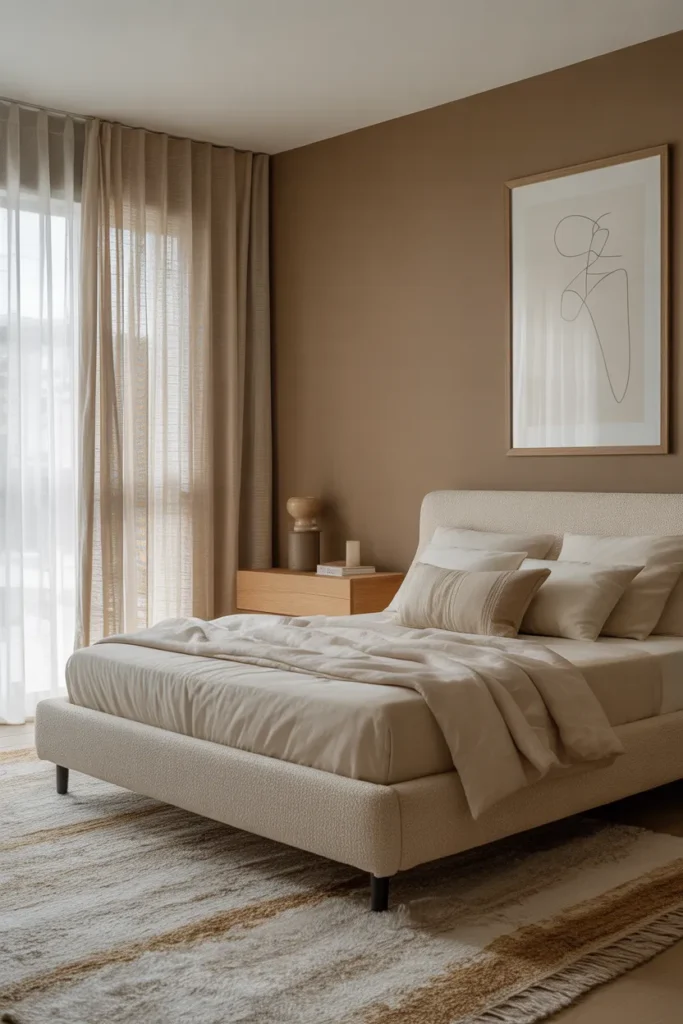
Warm neutrals work because they absorb light rather than bounce it. A cool gray wall under warm LED lighting often reads lavender or green, which disrupts the calm you are trying to create. A warm taupe or sand tone stays consistent across lighting conditions, which is exactly what a sleep space needs.
This approach works in both large and small master bedrooms. In a smaller room, go lighter within the warm neutral range — a soft linen white or pale sand keeps the space open. In a larger room, a deeper warm clay or muted terracotta on one accent wall adds depth without the room feeling closed in.
Do not sample wall color only on a small chip. Paint a 12-by-12 swatch directly on the wall and observe it at three different times of day before committing. What looks perfect at noon can read entirely differently at 7 PM under your specific lighting.
3. Built-In Wardrobes That Eliminate Visual Clutter Instantly
Freestanding dressers and armoires take up floor space and interrupt the clean sightlines that define a modern master bedroom. Built-in wardrobes — whether floor-to-ceiling or a half-height run along one wall — solve both the storage problem and the visual clutter problem simultaneously. This is one of the highest-return investments in modern master bedroom design for 2026.
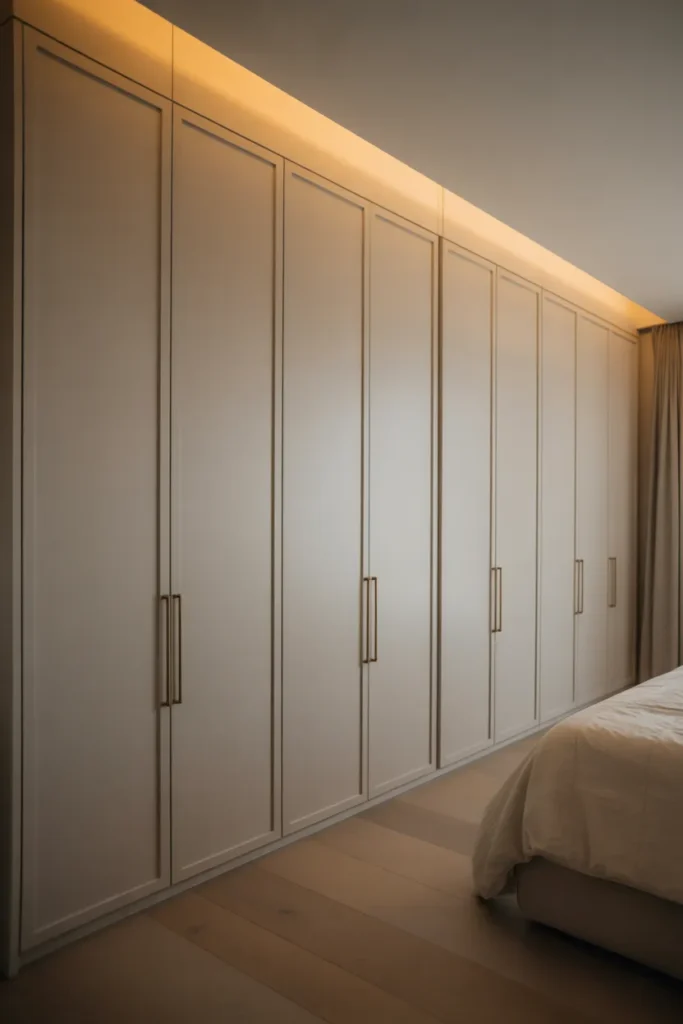
Flat-panel doors in a matte finish — painted to match the wall color or in a warm white — make the storage essentially disappear into the room. This technique is particularly effective in master bedrooms where one wall is given over entirely to storage. The room reads larger because the eye finds no visual interruption along that wall.
For rooms where built-ins are not feasible, a long, low credenza-style dresser with flat drawer fronts achieves a similar effect. Keep hardware minimal — a thin bar pull in matte black or brushed brass — and avoid ornate knobs or mixed metals.
The most important detail to get right is the reveal between cabinet doors. Doors that are not perfectly aligned or have visible gaps read as low quality immediately. If doing a DIY installation, invest in soft-close hinges and adjustable legs — they make the difference between a finished look and one that constantly needs attention.
4. Layered Lighting That Removes the Single Overhead Fixture
A single overhead light is one of the most common reasons master bedrooms feel flat and uncomfortable. Modern master bedroom decor in 2026 relies on layered lighting — ambient, task, and accent — to create a room that functions well at every hour of the day and shifts mood with simple dimmer adjustments.
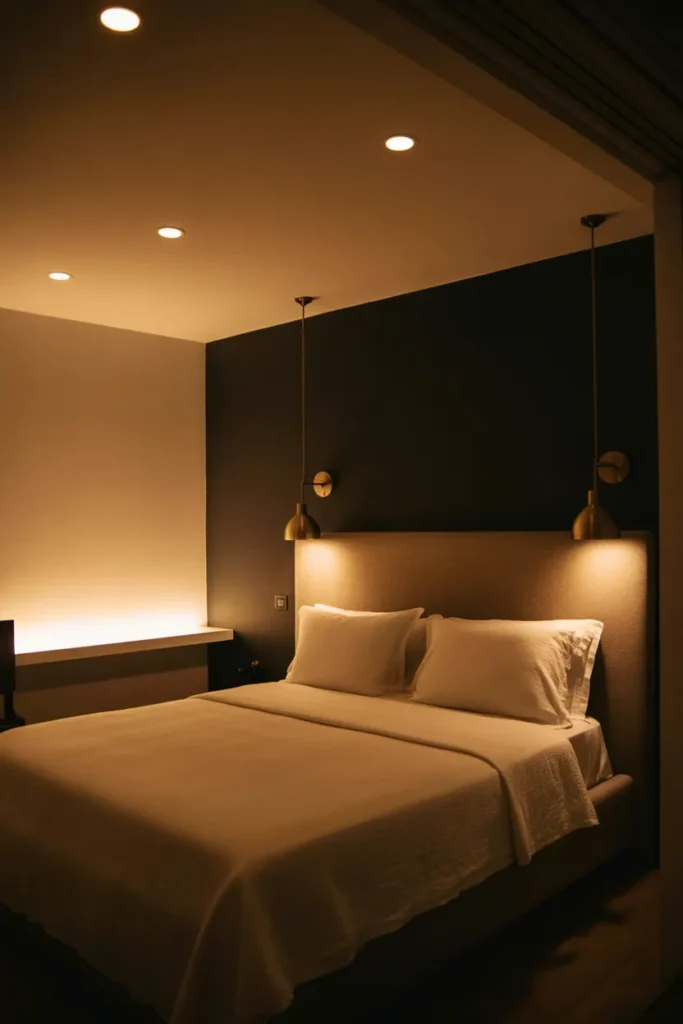
The three-layer approach works as follows: recessed or flush ceiling lights on a dimmer provide ambient light for getting dressed and general movement. Bedside table lamps or wall-mounted sconces provide task lighting for reading. A piece of low-level accent lighting — an LED strip inside a floating shelf or behind a headboard — provides the warm, indirect glow that makes a bedroom feel genuinely relaxing in the evening.
Wall-mounted sconces beside the bed are a strong 2026 direction because they free up the nightstand surface entirely. Mount them at 56 to 60 inches from the floor — high enough to light a book comfortably, low enough that you are not staring directly at the bulb when lying down.
Avoid cool white bulbs anywhere in a master bedroom. Stick to 2700K to 3000K bulbs throughout the space. Anything cooler disrupts the warm, settled feeling that layered lighting is designed to create.
5. Japandi-Influenced Minimalism for a Clutter-Free Layout
Japandi — the design hybrid of Japanese minimalism and Scandinavian warmth — has moved from trend to standard in modern master bedroom design, and it remains one of the most livable, practical directions for 2026. The core principle is simple: every object in the room must earn its place through function or intentional beauty, not decoration for its own sake.
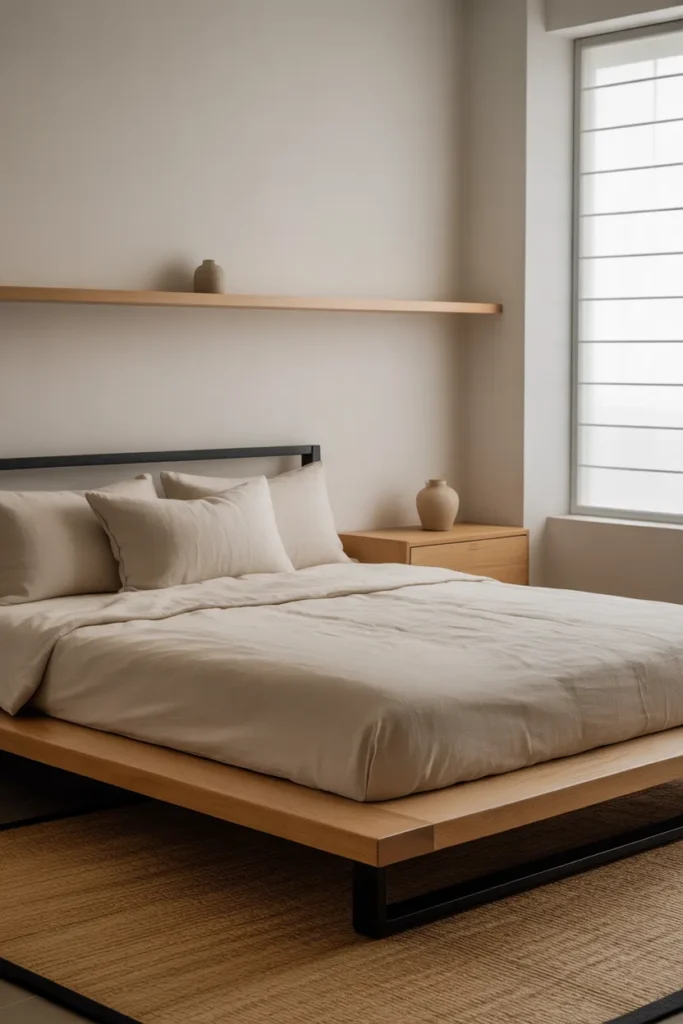
In practice, this means a bed with clean lines, two nightstands with one item each on the surface, a single piece of wall art or none at all, and storage that is entirely concealed. Natural materials — raw wood, linen, ceramic, woven grass — provide the visual texture so the room does not feel sterile.
This approach is particularly well-suited to master bedrooms in apartments or homes where square footage is limited. Removing visual complexity makes a small room feel significantly larger. The layout itself carries the design — the furniture arrangement, the negative space between pieces, and the alignment of edges all become the design details.
The key mistake is keeping too many decorative accessories out of habit. A Japandi-influenced master bedroom should have negative space on every surface. If a surface has more than two objects on it, it is over-decorated for this direction.
6. Statement Headboard as the Room’s Only Focal Point
When a master bedroom is otherwise kept simple and neutral, a single statement headboard does everything a gallery wall, an accent wall, and decorative furniture would normally do — in one element. This is an efficient design decision that works particularly well in rooms where architectural detail is limited.
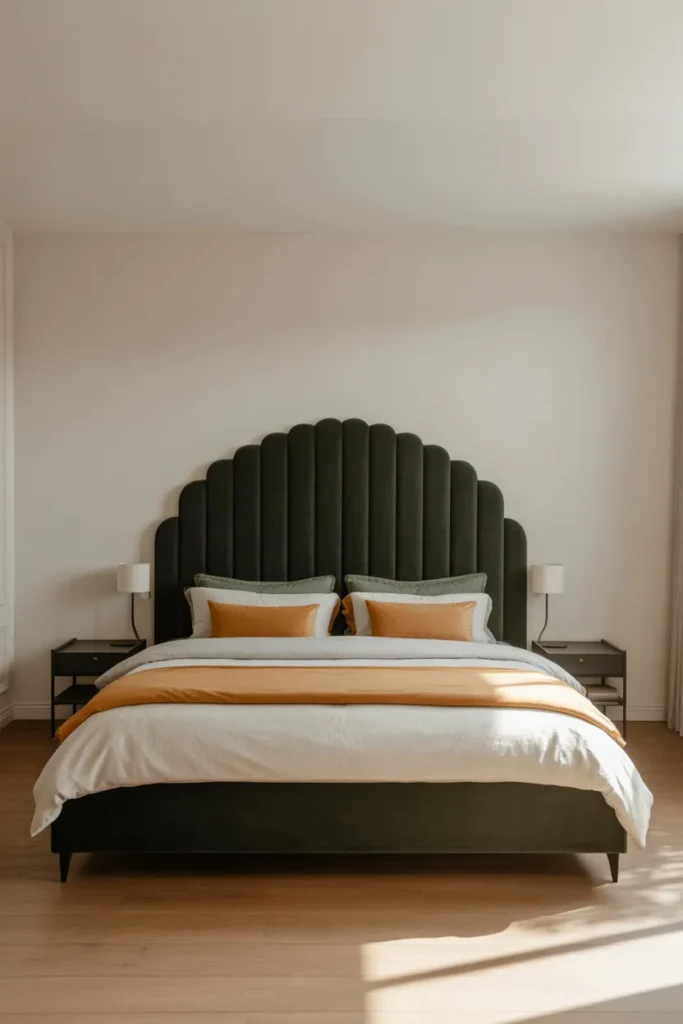
The formats that are leading in 2026 are curved arch headboards in bouclé or velvet, oversized flat-panel upholstered headboards that extend to the ceiling, and natural material headboards in rattan or sliced wood. Each reads as intentional and high-design while remaining functional.
For a small master bedroom, an upholstered headboard that mounts directly to the wall — without a visible bed frame footprint — is the strongest space-saving version of this idea. The bed appears to float, the headboard reads as a design feature, and the floor remains visible on both sides, which keeps the room feeling open.
Proportion matters more than style here. The headboard should extend at minimum six inches beyond the mattress width on each side. A headboard that is the exact width of the mattress looks undersized and unresolved.
7. Floating Shelves and Nightstands That Open Up Floor Space
Floor space is one of the most valuable commodities in a master bedroom, and wall-mounted elements recover it without sacrificing function. Floating nightstands — thick wood slabs or thin metal shelves mounted at mattress height — give you a bedside surface while keeping the floor completely clear. This is one of the more practical modern master bedroom layout ideas for smaller rooms or rooms with limited clearance between the bed and the wall.
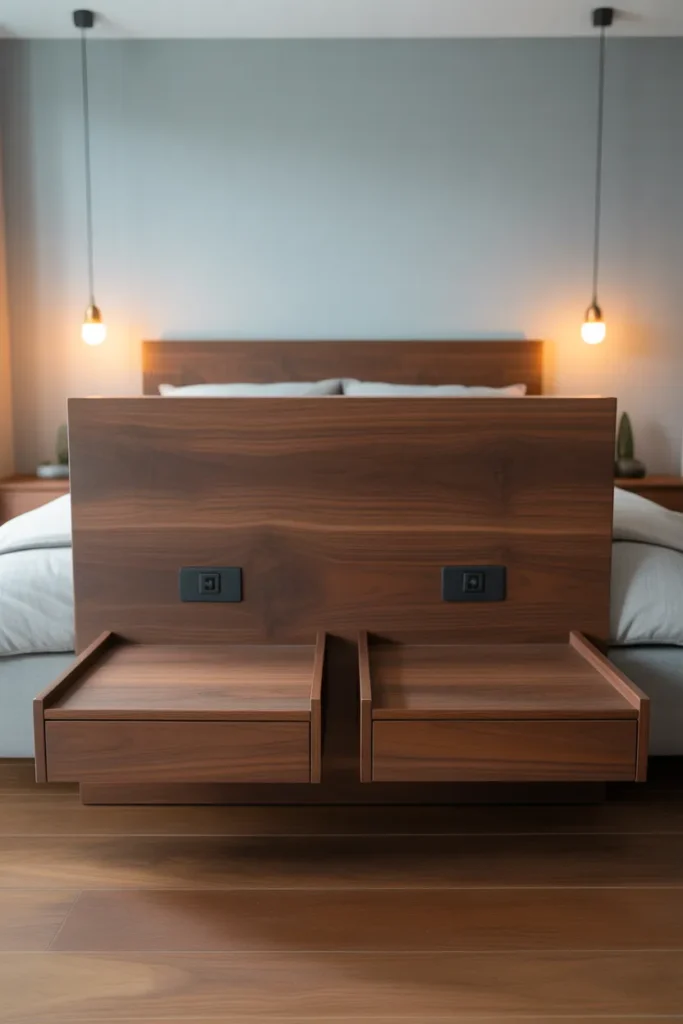
The same principle applies to shelving. A floating shelf above the bed or along a side wall handles decorative display and light storage without adding any floor footprint. Keep shelves to a single depth — 10 inches maximum — so they do not project far enough into the room to feel like an obstacle.
Floating nightstands work best when the wall anchor is genuinely solid. In drywall, always anchor into studs or use heavy-duty toggle bolts rated for the load. A floating nightstand that shifts or droops instantly undermines the entire look.
In rooms with lower ceilings, floating elements also have the same ceiling-lifting effect as low-profile furniture — they clear the floor, let the baseboard remain visible, and create a lighter overall impression.
8. Textured Bedding Layers That Replace Decorative Pillows
The pile of decorative pillows that became standard in master bedroom styling is being replaced in 2026 by a more intentional, texture-first approach to bedding. The concept is simple: instead of adding decorative interest through pillow volume, you build it through fabric variety — a linen duvet, a waffle-knit throw, a velvet euro sham, a quilted coverlet at the foot of the bed.
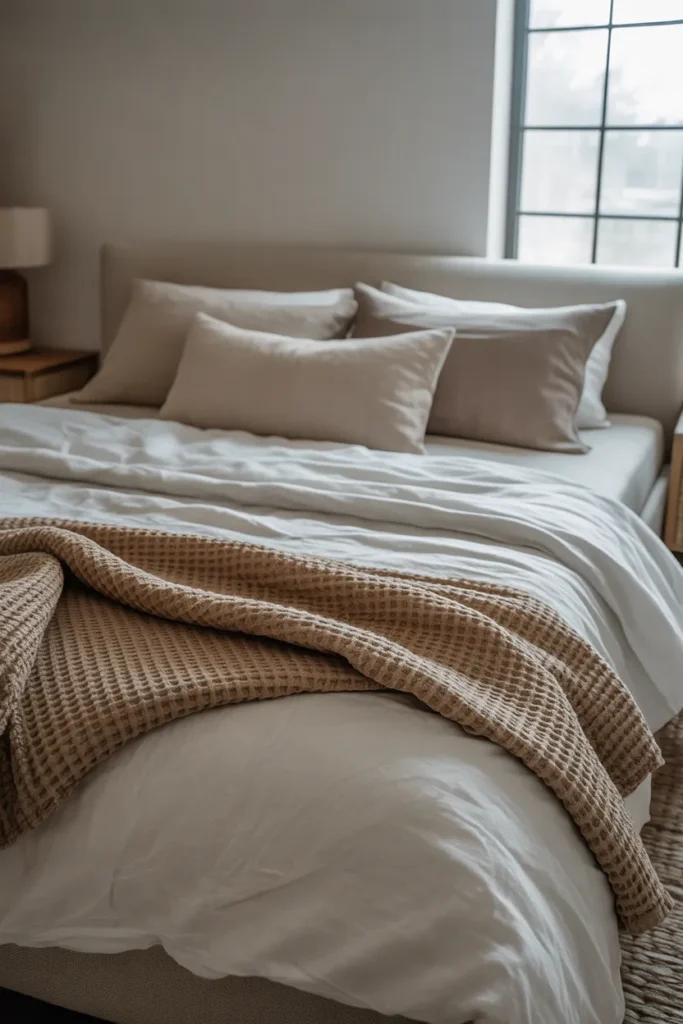
This works better in practice because the bed looks composed in the morning with minimal effort. There are no twelve pillows to stack and arrange before you leave the room. The textured layering approach looks intentional whether the bed is fully made or loosely pulled together.
The most effective combinations use three to four fabric textures in the same tonal family. White linen with an ivory waffle throw and a warm stone-colored quilt reads as cohesive and designed. Mixing five different colors in the same texture space creates chaos rather than calm.
For modern master bedrooms in 2026, limit sleeping pillows to two to four and use one euro sham at most. The cleaner the pillow arrangement, the more considered the overall bed presentation looks.
9. Dark Accent Wall Behind the Bed Without Painting the Whole Room
A single dark wall behind the headboard is one of the most transformative changes a master bedroom can absorb without a full renovation. It creates depth, anchors the bed as the room’s focal point, and adds a sense of enclosure that makes the sleeping zone feel distinct from the rest of the room. This idea works in both large and small master bedrooms when executed correctly.
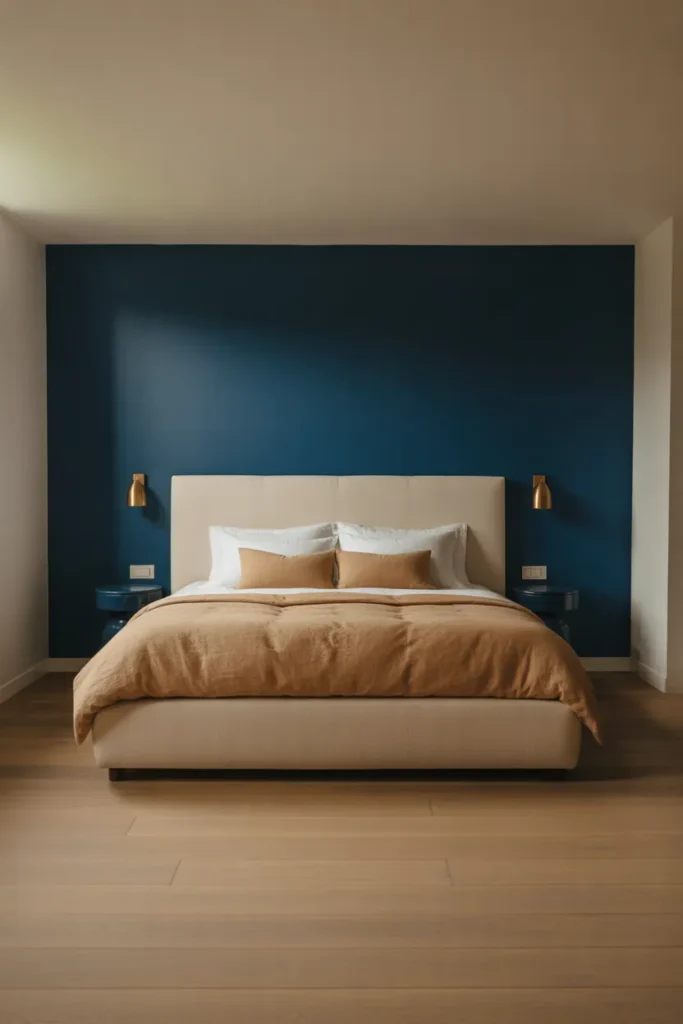
The colors doing the most work in 2026 are not the stark blacks that dominated a few years ago. Deep navy, warm charcoal, muted forest green, and dusty slate are the current directions — all dark enough to create contrast, but warm enough to keep the room from feeling cold or dramatic.
Limit the dark wall strictly to the headboard wall. Painting adjacent walls the same color collapses the room visually. The contrast between the dark anchor wall and the lighter surrounding walls is exactly what makes the technique work.
Avoid adding too much to the dark wall. A mounted sconce on each side of the bed is enough. Gallery walls, floating shelves, and multiple art pieces on a dark accent wall compete with the wall itself and dilute the effect.
10. Functional Reading Nook That Uses a Dead Corner
Many master bedrooms have one corner that never gets used — it holds a chair nobody sits in or sits empty entirely. Converting that corner into a genuine reading nook gives the room a secondary function that makes the entire space feel more considered and intentional. This is one of the most practical modern master bedroom layout ideas for larger rooms where the bed does not fill the full floor plan.
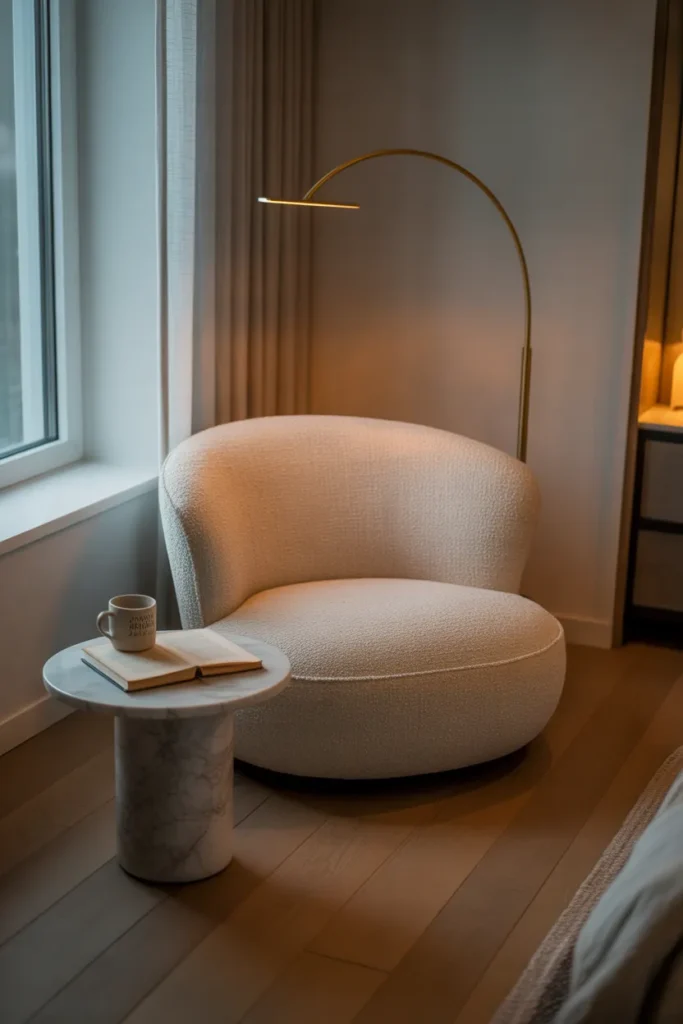
The minimum requirements for a functional reading nook are a comfortable chair that actually supports the back, a light source at reading height, and a surface for a book or drink. A low-slung accent chair in a natural linen or bouclé fabric, a floor lamp with an adjustable head, and a small side table cover all three. The nook does not need to be elaborate to work.
Position the chair to face the window if possible. Natural light is always preferable for a reading position, and a chair angled toward a window also benefits from the view, which makes the corner feel like a destination rather than a placeholder.
The mistake to avoid is choosing a chair purely for its appearance. A chair that looks right but is uncomfortable will never be used. Sit in it before you commit — the seat depth, back angle, and armrest height all affect whether the nook gets daily use or becomes another surface for folded laundry.
Final Thoughts
Modern master bedroom decor in 2026 is not about following a single aesthetic — it is about making deliberate decisions that produce a room that actually functions as a rest space. The ideas in this guide are designed to work independently, so you can apply one change at a time or use several together to reshape the whole room.
If this post gave you a clear next step, save it to your Pinterest board so you can return to it during the planning process. For more modern bedroom layout ideas, small room design strategies, and 2026 interior updates worth your time, keep exploring the blog.