
If your open kitchen cabinet makeover feels overdue but you are not sure where to start, this guide gives you 18 practical, decision-ready ideas organized by layout, style, and room size. Each idea explains what works, why it works, and when to use it — so you can move forward with a real plan, not just saved inspiration.
1. Float Walnut Shelves Above a Peninsula to Define an Open-Plan Kitchen Layout
In an open kitchen layout where the kitchen flows into a living or dining area, floating shelves above a peninsula serve two functions at once: they define the kitchen zone without walling it off, and they create display space that reads as intentional design.
Walnut works well here because the grain adds warmth against both white and dark cabinetry, and it photographs beautifully — an important consideration for anyone designing with Pinterest kitchen space planning ideas in mind.
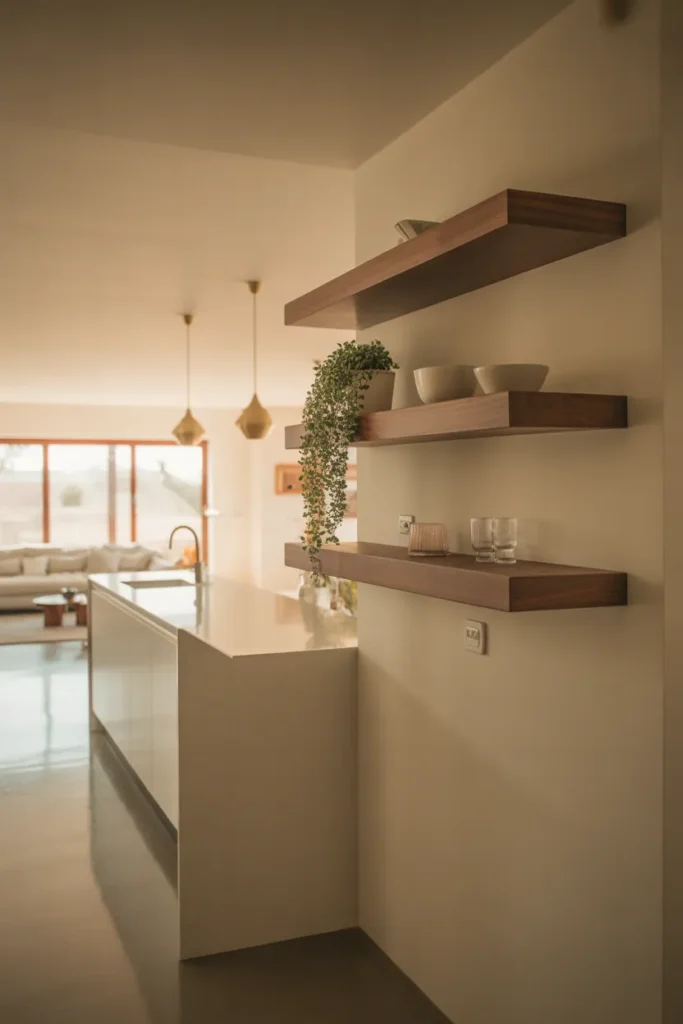
Keep shelf depth at 10 to 12 inches maximum. Deeper shelves above a peninsula begin to feel like a partial wall forming, which defeats the open-plan purpose entirely.
This approach is best suited to open-plan homes where the kitchen island or peninsula already acts as the room divider. The shelves reinforce that boundary softly, without sacrificing light or sightlines.
2. Use Glass-Front Cabinet Doors to Keep Storage and Gain Visual Depth
If fully open shelving feels too exposed for your lifestyle, glass-front cabinet doors are the practical middle ground. You keep the concealment of a door while still letting the eye travel into the cabinet, which adds visual depth and prevents that boxed-in feeling.
This works particularly well in U-shape kitchen layouts where cabinetry wraps three walls. Without some visual break, all those solid door panels can feel like you are standing inside a closet. A few glass-front uppers interrupt the repetition and lighten the space considerably.
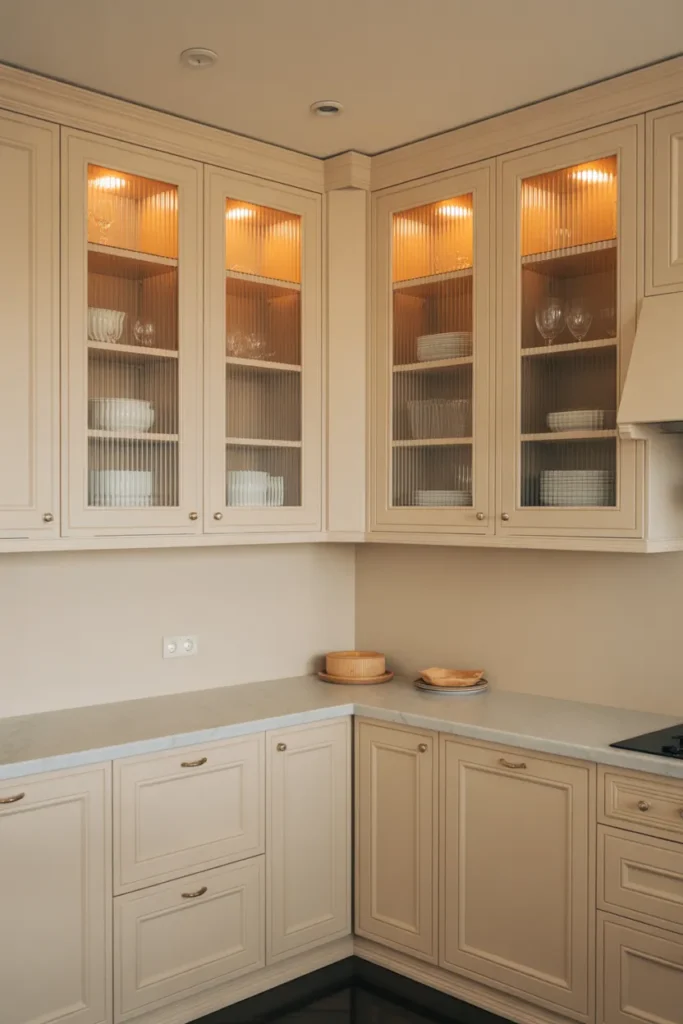
Clear glass reads as modern and clean. Fluted or reeded glass is increasingly popular in 2026 kitchen updates because it adds texture while keeping contents slightly blurred — useful if your storage is not perfectly curated.
Mistake to avoid: Backlight glass-front cabinets only if the interior is consistently tidy. Interior cabinet lighting draws attention directly to what is inside. If the shelves are disorganized, the lighting makes it worse, not better.
3. Paint Open Shelves the Same Color as the Wall to Create a Seamless, Modern Look
A simple painting technique can make open kitchen shelving look intentional and architecturally built-in: paint both the shelves and the wall behind them the exact same color. This eliminates the visual break between shelf and wall, making the storage feel like it belongs rather than was added.
This is one of the most underused small kitchen layout design tricks available. In tight spaces, contrast draws attention to every individual element, which makes the room feel busier. A tone-on-tone approach does the opposite — it unifies surfaces and lets the objects on the shelves become the focal point.
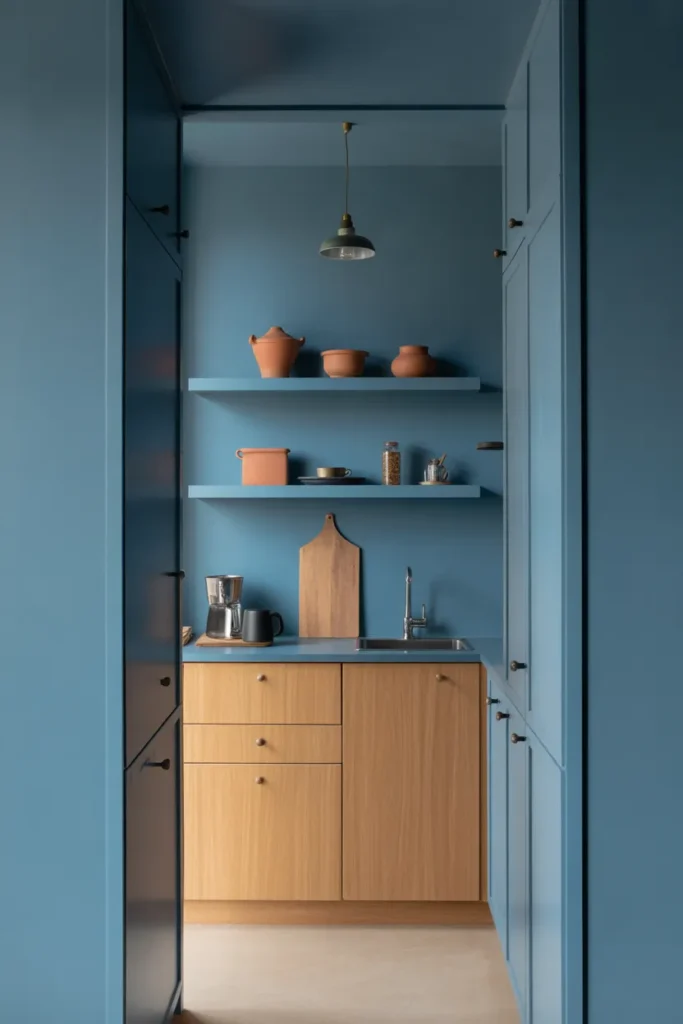
Warm whites, soft greiges, and deep matte navies all work well depending on your existing cabinetry color. The key is using the same sheen level on both the shelf and the wall — typically a low-sheen eggshell or satin finish.
This technique works in any kitchen size but delivers the most dramatic improvement in small apartments and galley kitchens where every design decision affects how spacious the room feels.
4. Install Open Corner Shelves to Solve the Dead-Space Problem in L-Shape Kitchens
Corner cabinets in an L-shape kitchen are notoriously inefficient. Blind corners, lazy susans, and swing-out systems all try to solve the same problem — and most do it imperfectly. Open corner shelving is a cleaner, more visual solution that turns the awkward corner into a display moment.
Angled corner shelves or simple wraparound floating shelves mounted at counter height and above require no mechanisms, no specialty hardware, and no guessing where that pan disappeared to. Everything is visible and reachable.
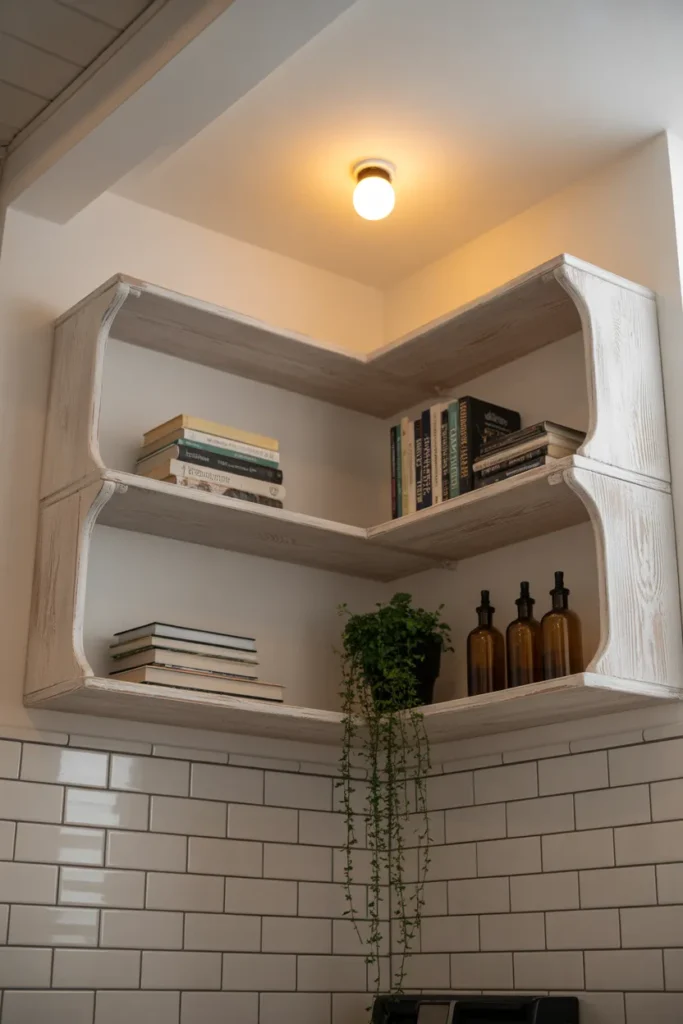
This is a practical functional kitchen floor plan adjustment that does not require moving any walls or plumbing. You are simply changing how the corner is used, not reconfiguring the layout.
Keep the corner shelves reserved for lighter items — cookbooks, a small plant, oils and vinegars you use regularly. Heavy ceramic dishes belong in the lower base cabinets where the structural load is properly supported.
5. Combine Closed Base Cabinets with Full Open Upper Shelving for a Balanced Storage System
A reliable layout used in modern kitchen design is the full split: completely closed base cabinets for the bulk of storage, completely open upper shelves for display and daily access. This creates strong visual contrast between the lower and upper zones and prevents the overwhelmed look that comes from trying to partially open some cabinets and not others.
The logic is sound from a practical standpoint too. Base cabinets handle the heavy, less attractive items — pots, pans, small appliances, cleaning supplies. Upper open shelves hold the items that look good and that you reach for constantly: glasses, plates, mugs, a few jars.
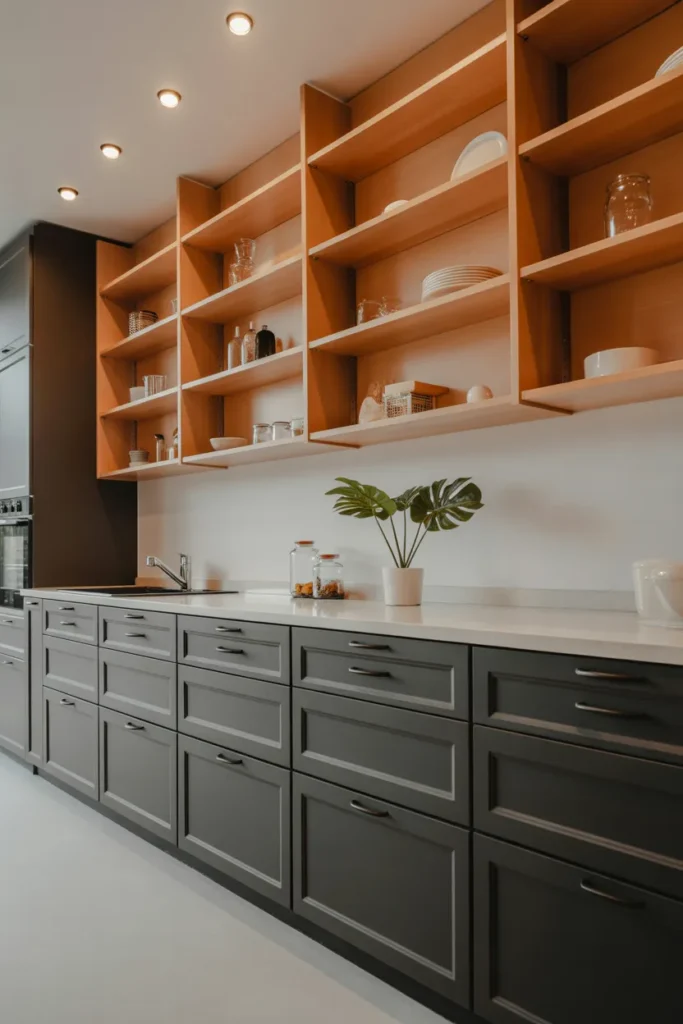
This is one of the more structured open kitchen cabinet makeover approaches and works well in homes where the kitchen is part of an open-plan living area and needs to look intentional from every angle.
For the shelves, solid wood brackets and thick 2-inch shelf boards read as substantial and high-end. Thin melamine shelves sag over time and look budget-grade almost immediately.
6. Use Open Shelving on a Kitchen Island to Add Storage Without Blocking Sightlines
A standard kitchen island with a solid base is a missed storage opportunity. Converting one or both sides of the island base to open shelving creates accessible storage while keeping the space visually light — especially important in open-plan kitchen layouts where the island is visible from the living or dining room.
This works best on the non-seating side of the island. The seating overhang on one side stays clean, and the opposite side becomes a functional shelf zone for cookbooks, baskets, or decorative storage.
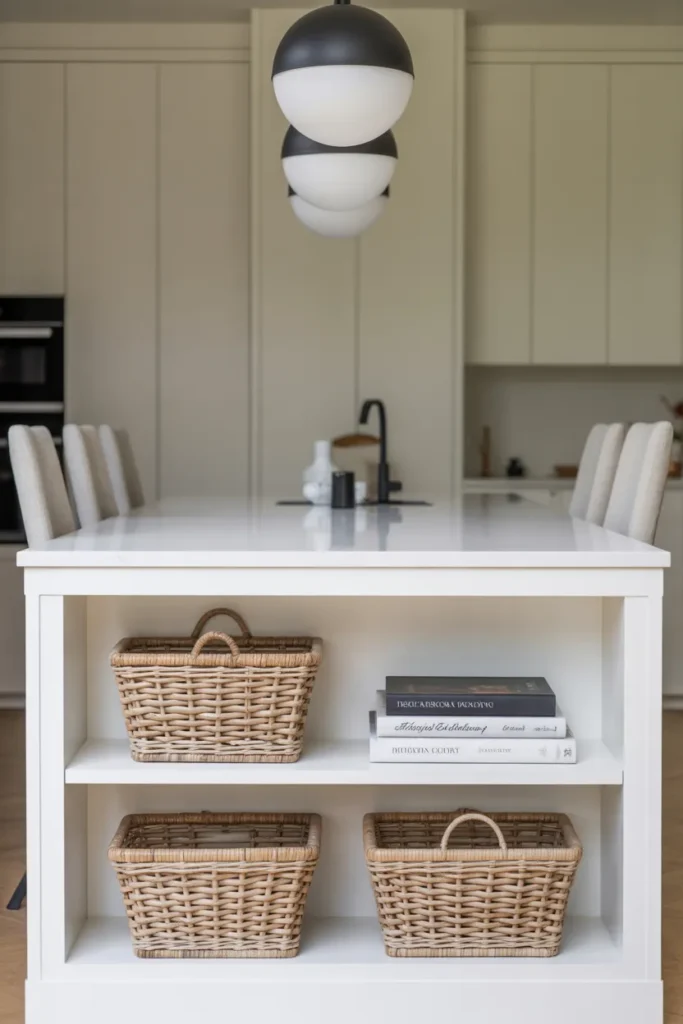
For smaller kitchens with a rolling or portable island, open lower shelves make the piece feel less heavy and allow light to pass partially underneath, which contributes to a more spacious feel in the room.
Avoid mixing too many different storage items on the island shelves. Matching baskets or uniform bins keep the open storage looking intentional. Mismatched items in an open space always read as clutter.
7. Line Open Shelves with a Contrasting Backsplash to Add Depth and Color
One of the most visually impactful and low-cost open kitchen cabinet makeover upgrades is adding a contrasting tile or painted backsplash directly behind open shelves. The contrast between the shelf material and the wall behind it creates depth and makes the shelves feel like a designed architectural feature rather than simple boards on a wall.
Zellige tile in an earthy tone behind natural wood shelves, or a deep emerald painted section behind white floating shelves, both create a focal point that photographs extremely well and performs consistently well as kitchen space planning ideas content on Pinterest.
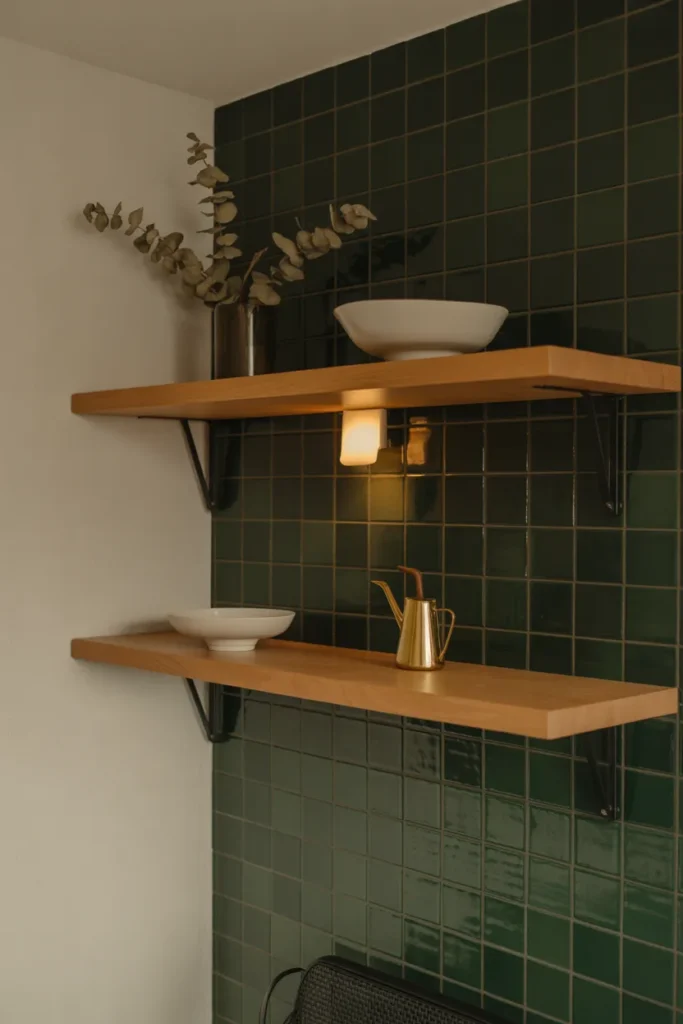
This works particularly well in kitchens where the open shelves span only part of the wall. You tile or paint only that section, which keeps cost low and gives the effect of a designed inset or niche.
The practical consideration: make sure whatever finish you use behind the shelves is easy to wipe clean. Open shelves near a stovetop collect grease, and so does the wall behind them. A glossy tile is much easier to maintain than a flat painted surface in that zone.
8. Install Open Shelves Inside a Kitchen Niche or Alcove for a Built-In Look
If your kitchen has an unused alcove, a chimney breast, or any recessed wall section, converting it into an open shelving niche is one of the cleanest ways to add storage that looks architecturally intentional. Niche shelving reads as built-in because the walls frame the shelves naturally on three sides.
This approach suits older homes and apartments where the original layout includes awkward wall recesses that do not align with standard cabinet depths. Rather than trying to fill those spaces with custom cabinetry, open shelves inside the niche work with the existing geometry.
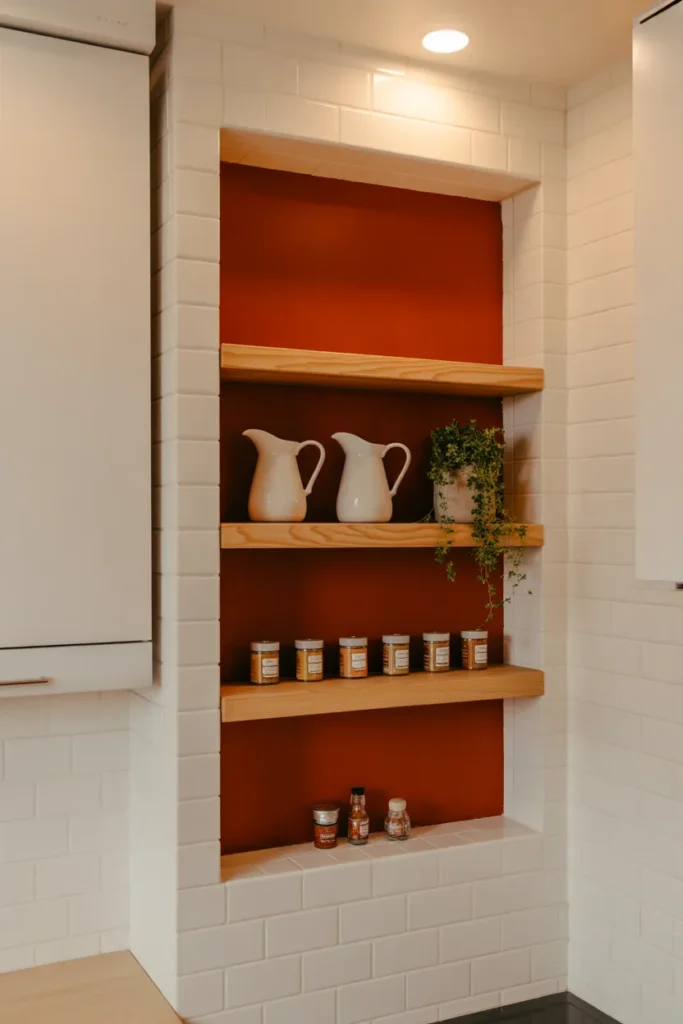
Paint the interior of the niche a contrasting color to make it feel more like a designed feature. A warm terracotta, deep navy, or matte black interior against white surrounding walls creates a framed effect that highlights the shelves and whatever is displayed on them.
This is a practical functional kitchen floor plan decision that requires minimal construction — often just a few shelf boards and some brackets — but delivers a significantly more polished result than adding a freestanding shelf unit in the same space.
9. Add a Pegboard Panel Between Open Shelves for Flexible Tool and Utensil Storage
A painted pegboard panel installed between two open shelf runs adds a highly functional storage zone without requiring any additional cabinetry. Hooks, small shelves, and rails mounted to the pegboard can be rearranged at any time, which makes this one of the most adaptable open kitchen cabinet makeover solutions for renters or anyone whose storage needs change frequently.
Pegboard works especially well in galley kitchens and small kitchen layout designs where wall space is at a premium. You are essentially stacking multiple types of storage in one vertical zone rather than dedicating separate wall sections to each purpose.
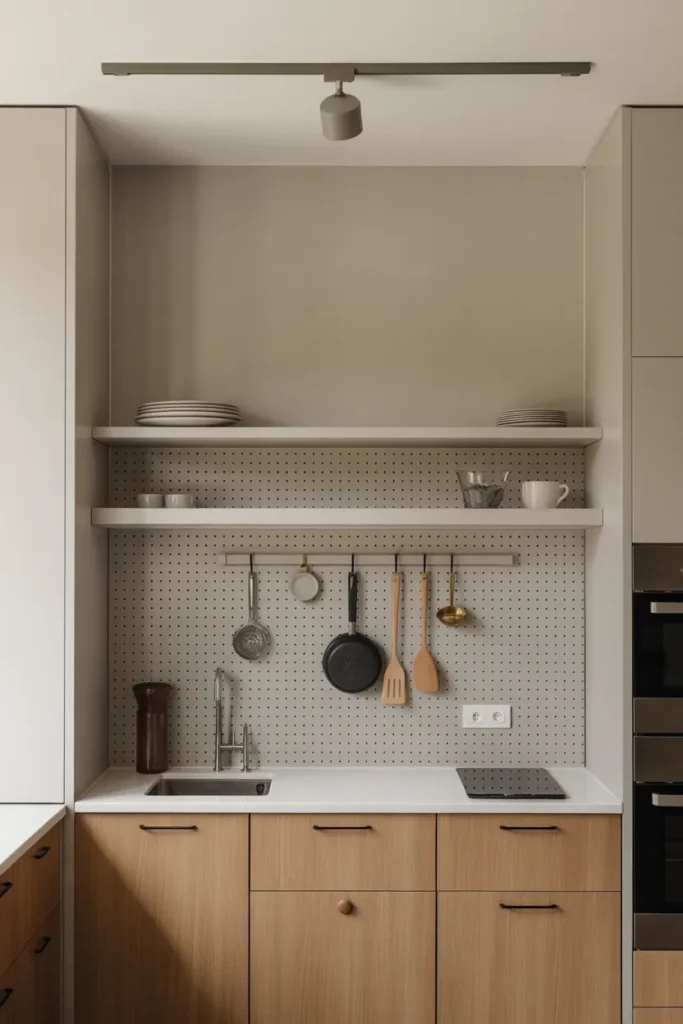
Paint the pegboard the same color as the surrounding wall for a cohesive, modern look. Left natural or painted a contrasting color, pegboard reads as a utilitarian workshop element — which may suit some styles but can feel out of place in a refined kitchen.
Limit what you hang to items you genuinely use every day. A pegboard loaded with rarely used tools becomes a visual distraction. Six to eight hooks holding your actual daily utensils reads as organized and purposeful.
10. Replace a Solid Cabinet Run with Open Shelving and a Curtain for a Soft, Eclectic Look
Instead of leaving open shelves completely exposed or covered by solid doors, fabric curtains hung below open shelves or in place of lower cabinet doors offer a softer, more textured alternative. This approach suits eclectic, bohemian, or vintage-inspired kitchens that benefit from the layered, lived-in aesthetic that hard cabinetry does not deliver.
Linen, canvas, or cotton curtains in a natural, undyed tone work best because they add warmth without competing with other elements in the room. Avoid synthetic fabrics near a stove — both for practical safety reasons and because they tend to look cheap in the space.
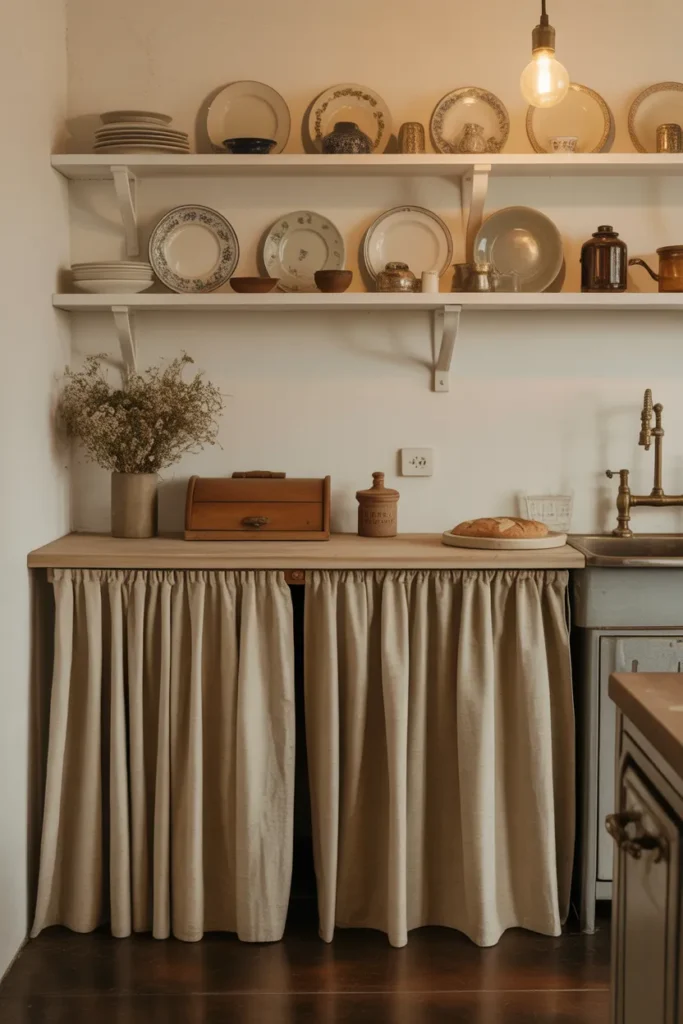
This is particularly relevant as a small kitchen layout design solution in rental apartments where permanent cabinet changes are not permitted. A tension rod inside a cabinet opening with a simple curtain panel replaces the need for any modification at all.
From a practical standpoint, the curtain conceals whatever is stored behind it completely, which means you can use that space for less attractive storage without any of it being visible — a real advantage in open kitchen layouts where everything on display is subject to scrutiny.
11. Build a Floor-to-Ceiling Open Shelf Wall to Maximize Vertical Storage in a Narrow Kitchen
In a narrow kitchen where counter and floor space are genuinely limited, building a full floor-to-ceiling open shelf wall on one side is the most efficient use of that vertical space available. Rather than stopping shelves at standard upper cabinet height, extending them all the way to the ceiling nearly doubles the storage volume of a single wall.
The upper shelves — beyond comfortable reach — work best for seasonal items, rarely used serving pieces, and overflow pantry stock. Lower shelves handle everyday dishes and cookware. This stratified approach mirrors how well-designed pantries work and brings the same logic into an open kitchen layout.
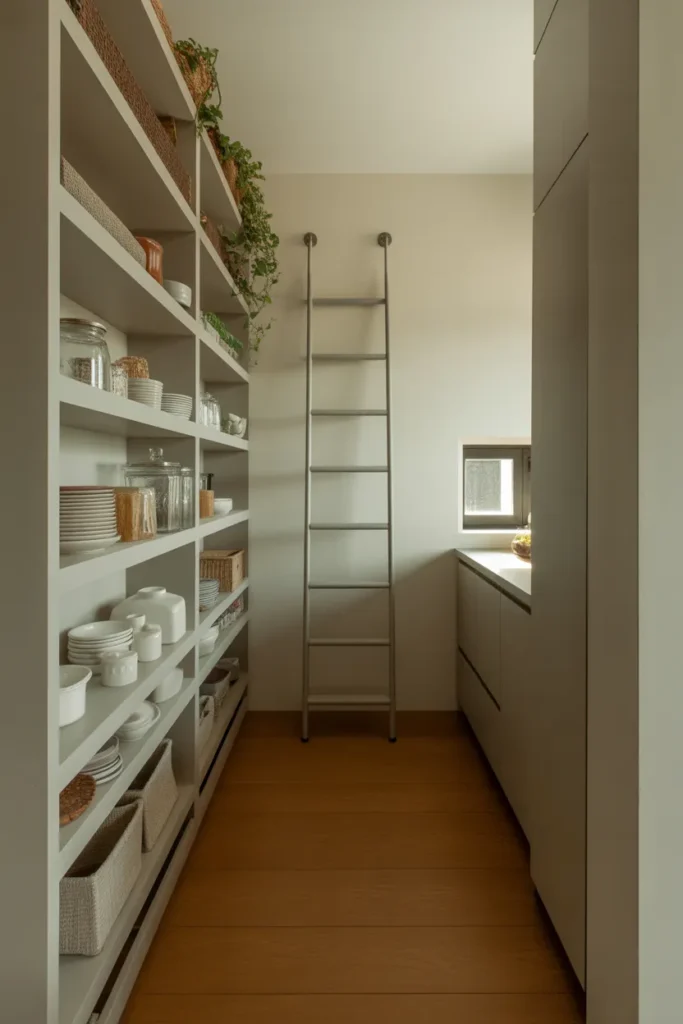
This is a strong modern kitchen layout idea for 2026 because it treats the kitchen wall as a complete design surface rather than a collection of separate upper and lower cabinet units. The result feels architectural.
Use a simple rolling library ladder on a ceiling-mounted track if the ceiling is above nine feet. It is both functional and one of the most visually dramatic design moves available in a kitchen without any structural work.
12. Create a Styled Coffee and Drink Station with Open Shelving in an Unused Kitchen Corner
Converting an underused kitchen corner into a dedicated open-shelf coffee and drink station gives the room a functional zone that is also highly visual. A two-shelf open unit at counter height, holding mugs, a coffee setup, and a small tray with essentials, creates a purposeful moment that anchors the corner without any cabinetry.
This works in kitchens of all sizes but is particularly valuable in open kitchen layouts where the kitchen is always visible from adjacent living spaces. A styled station gives that visible corner intentional character rather than leaving it as dead counter space.
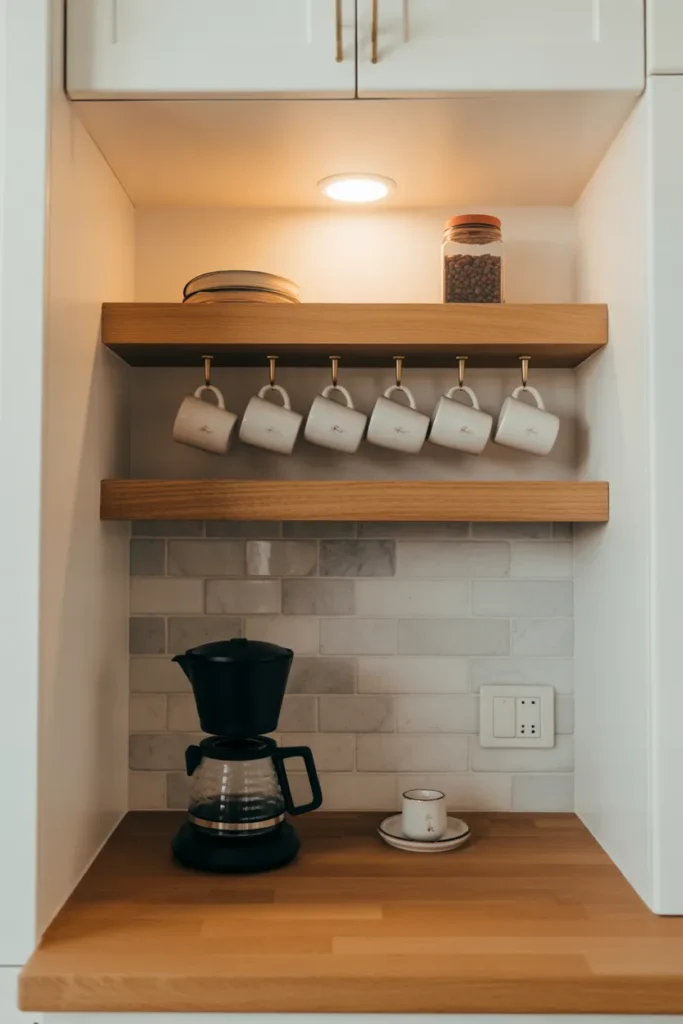
The key to making this look designed rather than staged is limiting what sits on the shelves to what you actually use every morning. Real-use stations look more convincing than overly curated ones because the proportions feel natural rather than arranged.
From an open kitchen cabinet makeover perspective, this is one of the easiest wins available — it requires no demolition, minimal investment, and creates the kind of specific, useful vignette that performs consistently well in kitchen content on Pinterest.
13. Use Drawers Below Open Shelves Instead of Cabinet Doors for Better Daily Functionality
A common and useful kitchen space planning idea is pairing open upper shelves with full-extension drawers in the base cabinets below, rather than standard lower cabinet doors. Drawers give you full visibility and access to everything inside without kneeling, reaching to the back, or unloading the front items to find what is behind them.
This pairing — open shelves above, full drawers below — is one of the most functionally efficient kitchen storage systems available and is increasingly standard in high-end kitchen design. It applies equally well to L-shape, U-shape, galley, and open-plan kitchen layouts.
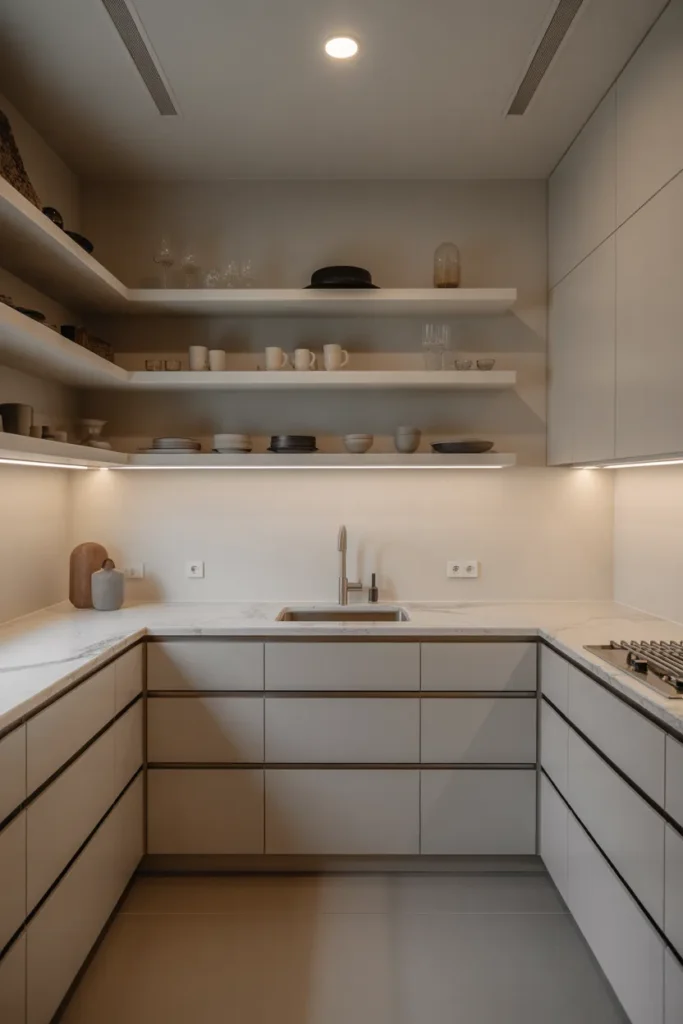
The visual result is clean and modern. With no lower cabinet doors interrupting the cabinetry run, the base of the kitchen looks more streamlined. This is especially notable in kitchens with handle-free flat-front drawer fronts.
For anyone approaching an open kitchen cabinet makeover primarily from a function-first perspective, replacing lower cabinet doors with deep drawers is the single upgrade that most consistently improves daily kitchen use — more so than any styling or aesthetic change.
14. Install Thin Steel or Iron Shelf Brackets as an Industrial Design Detail
The bracket is not just structural — it is a visible design element in open shelving, and choosing the right one significantly affects the finished look. Thin handmade steel or iron brackets in a raw, blackened, or powder-coated matte black finish carry a strong visual character that suits industrial, urban, and modern rustic kitchens equally well.
Paired with thick reclaimed wood or solid pine shelf boards, blackened steel brackets create a contrast between heavy and refined that reads as intentional and confident. This combination is one of the most consistently high-performing aesthetics in kitchen content across Pinterest and home design platforms in 2026.
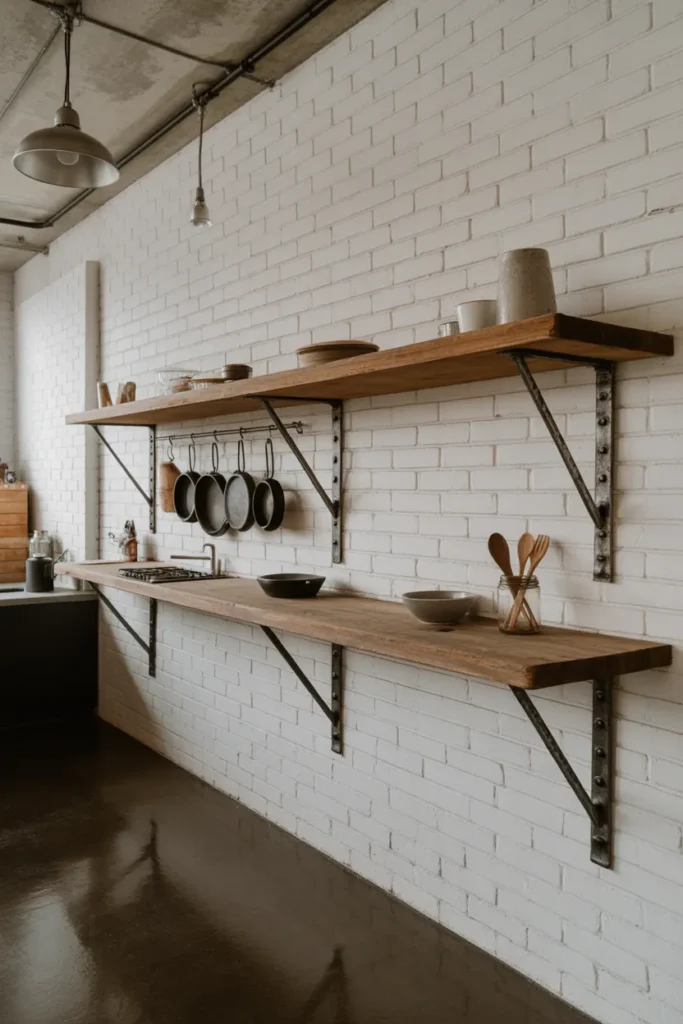
This approach works in both large kitchens and compact ones. In a small space, the open shelf supported by visible steel brackets takes up minimal visual weight compared to a closed cabinet — the eye reads the space behind and below the shelf as open, which contributes to a more spacious feeling in the room.
One practical note: make sure brackets are rated for the weight you plan to carry. A thick reclaimed wood plank loaded with ceramic dishes is heavy, and the bracket spacing must account for that load appropriately.
15. Wrap Open Shelves Around a Kitchen Window to Frame the View and Gain Slim Storage
Shelves that wrap around or sit directly alongside a kitchen window use what is typically wasted wall space — the narrow sections of wall on either side of the window — and turn them into practical storage zones. The natural light from the window illuminates whatever is on those shelves beautifully and creates a bright, greenhouse-style corner.
This approach is ideally suited to kitchens where window placement has fragmented the wall into sections too narrow for standard cabinetry. Instead of viewing those sections as a limitation, wrapping shelves around the window treats them as intentional framing elements.
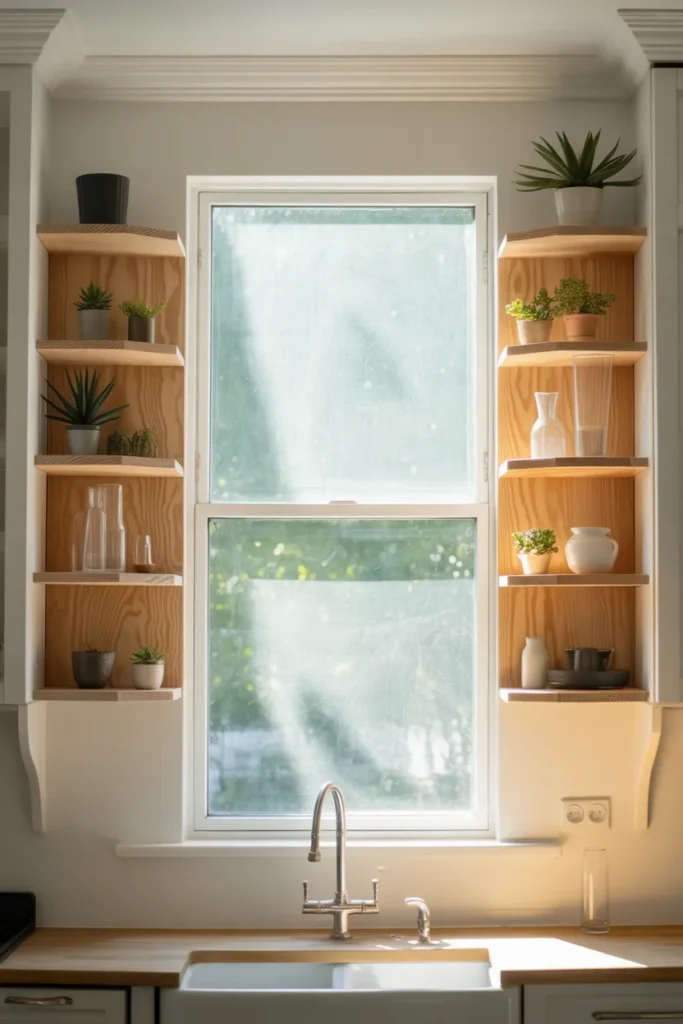
Use the window-adjacent shelves for glassware, small plants, and translucent objects — items that interact with light well and look their best when backlit or side-lit by natural daylight. This is one of the more photography-friendly open kitchen cabinet makeover configurations because the natural light does most of the visual work for you.
Avoid putting anything on these shelves that you do not want exposed to direct sunlight for part of the day. Oils and some food items degrade in sunlight, and certain dyed textiles will fade.
16. Add Cabinet Lighting Inside Remaining Closed Cabinets to Elevate the Whole Kitchen
If you are keeping some closed cabinets as part of a mixed open-and-closed approach, adding interior LED lighting inside those closed cabinets with glass doors takes the entire kitchen up a level visually. When the kitchen lights are on, the illuminated cabinet interiors add a layered, ambient glow that flat overhead lighting alone cannot achieve.
This is a lower-effort open kitchen cabinet makeover addition that has an outsized visual effect — particularly in the evening and in kitchen photography. It also has a practical benefit: cabinet interiors that are lit are easier to navigate, especially in lower base cabinets with deep interiors.
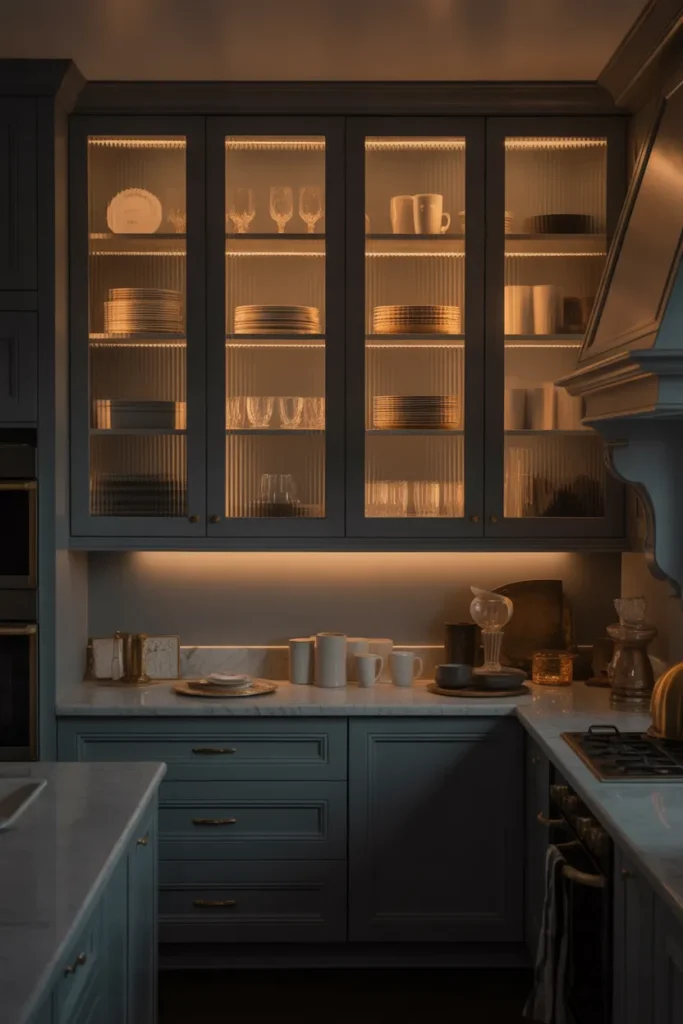
Puck lights or flexible LED strip tape both work well depending on cabinet size. Battery-powered puck lights require no wiring and are appropriate for anyone not ready to involve an electrician. Strip LED tape wired into the kitchen circuit is the more permanent and polished solution.
Color temperature matters more inside cabinets than anywhere else in the kitchen. Warm white (2700K to 3000K) makes dishes and glassware look warm and inviting. Cool white (above 4000K) tends to make the interior look clinical and harsh — save that temperature range for task lighting under cabinets, not display lighting inside them.
17. Refresh Open Shelf Styling with a Consistent Color Palette to Unify a Cluttered Kitchen
Sometimes the open shelves already exist — the problem is that what is on them has accumulated over time without any visual logic. One of the most immediate open kitchen cabinet makeover improvements available requires no construction: edit and restyle the existing shelves using a controlled, consistent color palette.
Choose two or three colors for everything on the shelves — for example, white, natural wood tones, and a single muted earth tone. Remove anything that falls outside that palette to a closed cabinet or a different room. What remains will immediately read as intentional and coordinated rather than collected and random.
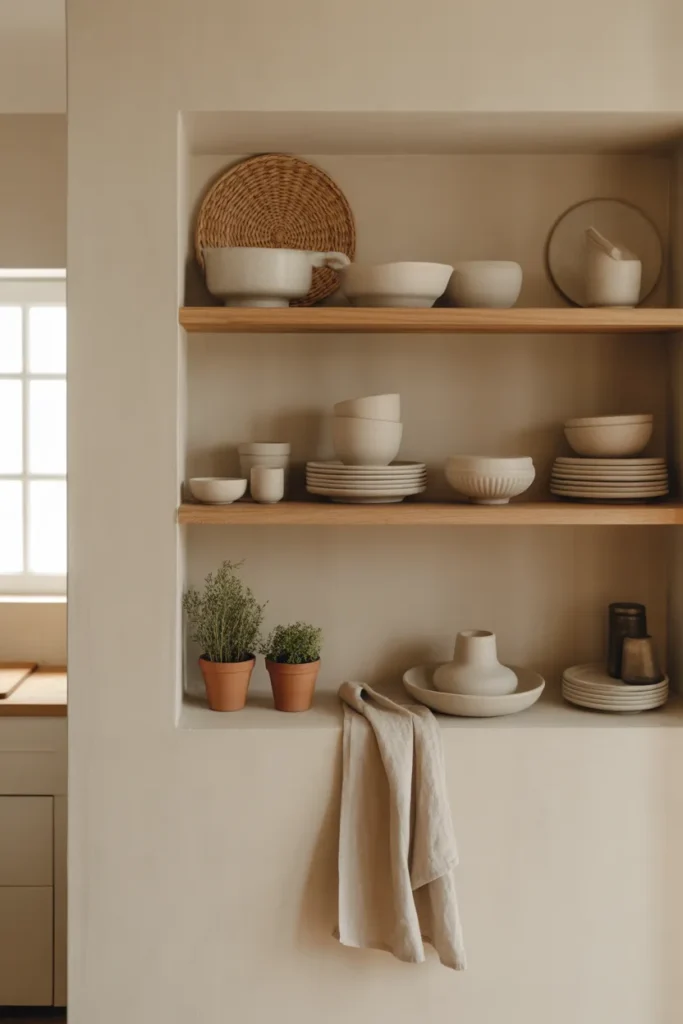
This is the most accessible version of a kitchen refresh for anyone not ready to commit to structural or construction changes. The result is often dramatic enough that the kitchen reads as a completely different space — and it is reversible if your preferences change.
For anyone working on functional kitchen floor plans in a home where the kitchen is part of a shared open-plan space, this kind of visual discipline on the open shelves is especially important. Open shelves in a visible kitchen affect how the entire living area feels, not just the kitchen itself.
Final Thoughts
These 18 open kitchen cabinet makeover ideas cover a wide range of layouts, budgets, and design preferences — from small apartment kitchens to open-plan family homes. The ideas that perform best are the ones that solve a real problem in your specific kitchen rather than simply following a trend.
Use this post as a working reference, not just inspiration. Save it now so you can return to it when you are ready to make decisions, compare layouts, or share specific ideas with a contractor or partner. If you found these ideas useful, explore more kitchen layout and storage guides for deeper coverage of functional kitchen floor plans and modern kitchen layout ideas for 2026.