
If you have been browsing outdoor bar ideas 2026 and struggling to figure out which setup actually works for your space, budget, and how you entertain, this guide is built for that decision. Each of the 10 ideas below is explained by layout, material, size requirement, and what to avoid — so you walk away with a clear direction rather than a saved photo you never act on.
1. The Built-In Stone Bar That Anchors a Patio and Handles Heavy Outdoor Use
A built-in outdoor bar constructed from concrete block and faced with natural stone or stacked ledger panels is the most durable permanent bar setup available for a residential backyard. The masonry structure handles freeze-thaw cycles, direct rain exposure, and years of heavy use without warping, rotting, or requiring seasonal takedown. It is the right choice when you want a backyard feature that looks intentional, adds property value, and does not need to be covered, stored, or replaced every few years.
The layout that works best for a built-in stone bar is an L-shape or straight run positioned against a fence line, a retaining wall, or the back exterior wall of the house. This keeps the bar from interrupting foot traffic flow through the patio and creates a natural back-of-house zone where the bar operator faces the guests rather than a wall. A minimum counter depth of 24 inches and a bar height of 42 inches is the standard that accommodates bar stools comfortably on the guest side.
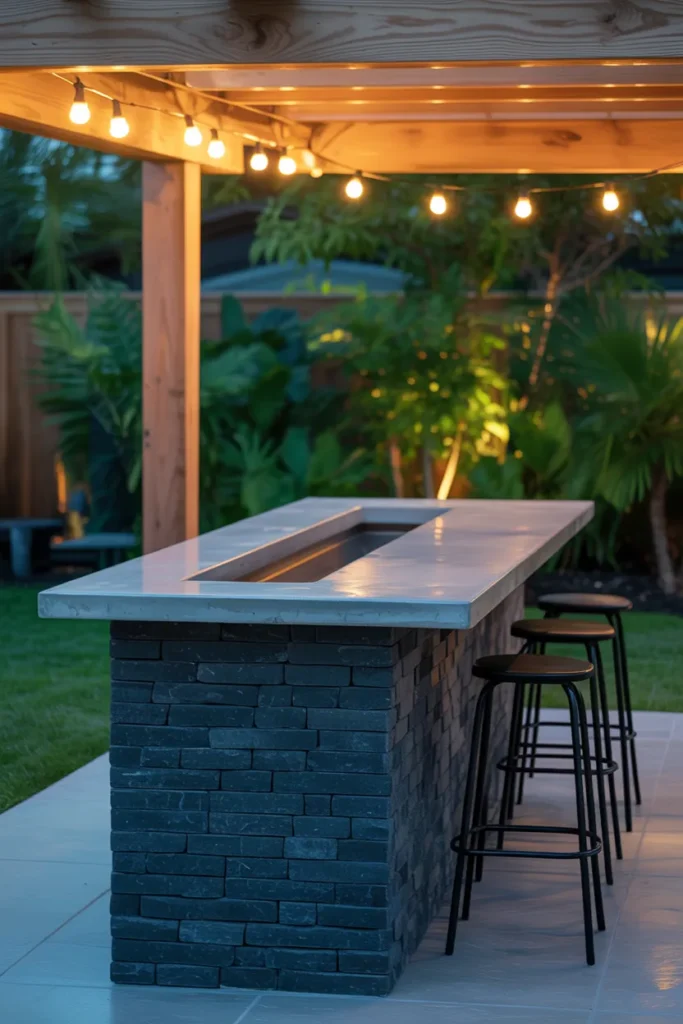

The construction detail most homeowners underestimate is drainage. A solid masonry bar counter without a slight front-to-back slope will pool water on the surface after every rain or rinse. Build a 1-degree slope toward the back edge where a recessed drain channel or open gap allows water to escape. Without this, standing water becomes a daily nuisance and accelerates any surface material deterioration.
If a full masonry build is outside your current scope, a poured concrete counter on a CMU block base is a faster and less expensive variation that achieves the same permanence and visual weight with less skilled labor required.
2. The Freestanding Outdoor Bar Cabinet That Sets Up in an Afternoon and Moves With You
A freestanding outdoor bar cabinet — a self-contained unit with a counter surface, cabinet storage below, and often a built-in wine rack or bottle holder on the side — is the most practical outdoor bar setup for renters, homeowners who entertain seasonally, or anyone not ready to commit to a permanent structure. A quality all-weather cabinet in teak, eucalyptus, powder-coated steel, or high-density polyethylene sets up in hours and can be repositioned on the patio based on the season, the occasion, or a future landscape change.
This setup works particularly well on smaller patios under 200 square feet where a built-in bar would consume too much of the usable space. The freestanding cabinet creates a designated bar zone without physically dividing the patio or requiring any construction. When entertaining season ends, the cabinet closes up, protects the contents, and reduces its footprint to a piece of outdoor furniture rather than a structure.
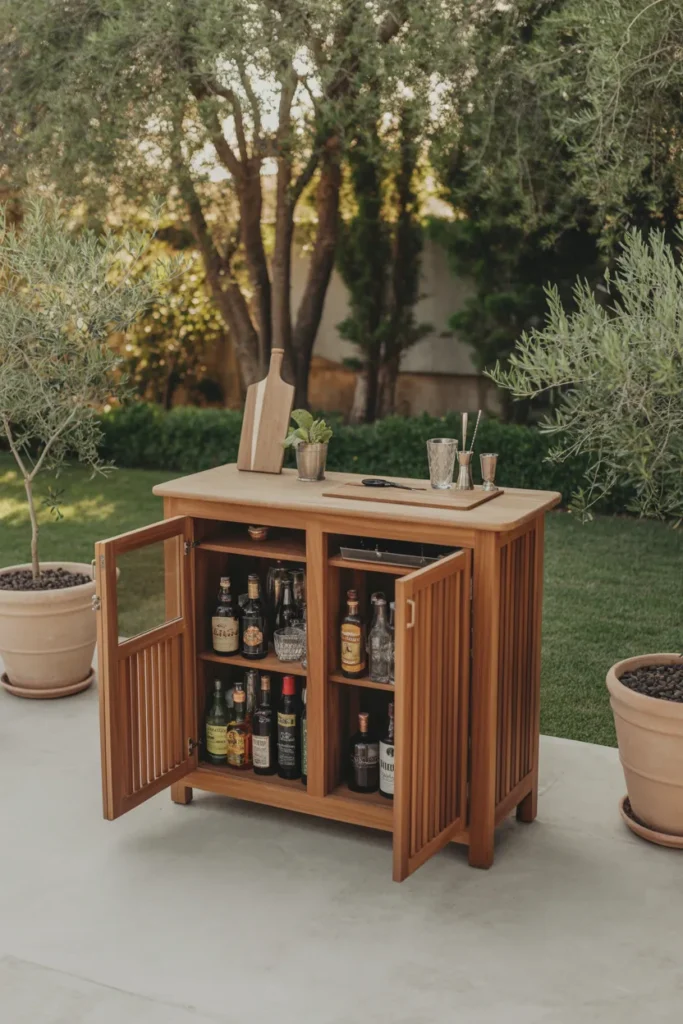
The material decision here has real long-term consequences. Solid teak or eucalyptus weathers beautifully and lasts decades with annual oiling. Powder-coated steel resists rust in most climates but will show corrosion within a few years in coastal salt-air environments. High-density polyethylene, the material used in commercial outdoor furniture, is the most weather-resistant option but has the least premium visual quality. Match the material to your climate first, aesthetics second.
One mistake to avoid is purchasing a freestanding bar cabinet sized only for the counter surface. Check interior cabinet dimensions before buying. A unit that looks substantial from the outside often has surprisingly shallow interior shelves that cannot accommodate full-size bottles standing upright.
3. The Pergola Bar That Creates a Covered Outdoor Entertaining Zone Without a Full Roof
A pergola-integrated outdoor bar combines a built-in or semi-permanent bar counter with an overhead pergola structure that defines the entertaining zone, provides partial shade, and gives you a framework for string lights, ceiling fans, and hanging planters. The pergola does not fully waterproof the space the way a solid roof would, but it reduces direct sun exposure significantly and creates the visual enclosure that makes an outdoor bar feel like a destination rather than just a counter in the yard.
This is one of the most effective outdoor bar ideas for mid-size backyards between 500 and 1,500 square feet where you want to create a distinct entertaining zone without enclosing the whole yard. The pergola overhead acts as a ceiling reference that defines the bar area the same way a ceiling defines a room, and it does this without blocking sight lines to the rest of the yard or garden.
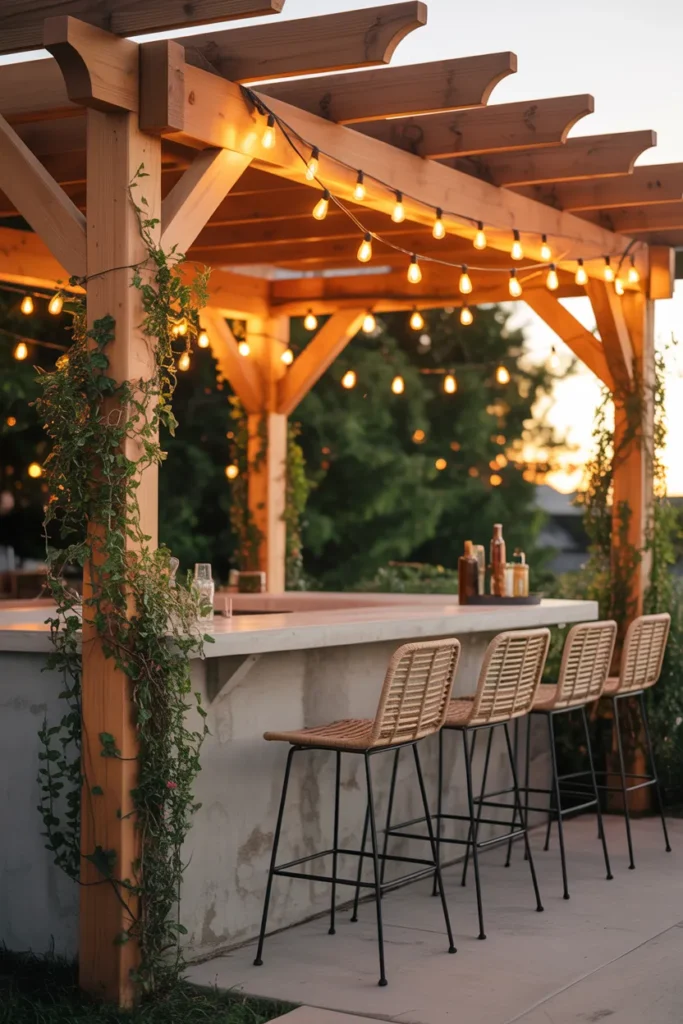
Cedar and pressure-treated pine are the standard pergola materials for residential applications in the continental US. Cedar is naturally rot-resistant and holds stain well. Pressure-treated pine is more affordable and structurally strong but requires a longer drying and curing period before staining or painting. Aluminum pergola systems with powder-coated finishes are increasingly popular because they require zero maintenance and never warp, though they carry a higher upfront cost.
The bar counter under the pergola should be anchored to the pergola posts rather than freestanding where possible. Attaching the counter structure to the posts eliminates the risk of the counter shifting and creates a more built-in appearance with significantly less material than a fully independent counter-and-support build.
4. The Poolside Swim-Up Bar That Functions as Both a Water Feature and an Entertaining Hub
A swim-up bar built at the edge of a residential pool, with the counter sitting at water level on the pool side and standard bar height on the patio side, is the highest-impact outdoor bar investment for a pool-owning household. It eliminates the need to exit the pool to get a drink, creates a natural social gathering point, and visually connects the pool and patio into a single cohesive entertaining environment.
This is a structural addition to an existing or new pool, not a portable or DIY weekend project. It requires waterproofed masonry construction, tile or stone cladding rated for submerged contact, and in most US states, a permit as part of the pool construction or modification process. That context established, the functional and entertainment payoff in a household that uses the pool regularly is proportionally higher than almost any other outdoor bar format.
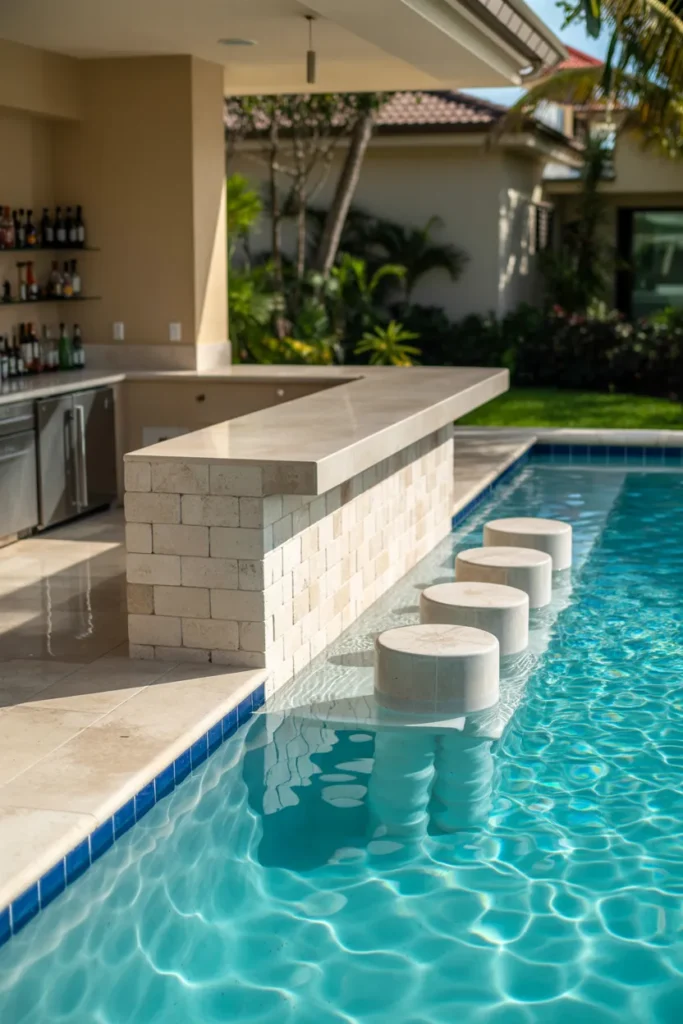
The counter material at a swim-up bar must be fully impervious to pool chemistry. Porcelain tile, natural stone with a non-porous sealer, or poured concrete with a waterproof topcoat are the appropriate choices. Unsealed natural stone, wood, or any porous material will absorb chlorinated water and deteriorate within one to two seasons. This is a material specification mistake that is expensive to correct after installation.
On the dry patio side of the swim-up bar, include a recessed bottle cooler or an ice well at counter level rather than relying on a portable cooler on the ground. At-counter cooling keeps drinks cold during long entertaining sessions without the visual clutter of a freestanding cooler blocking the poolside sightline.
5. The Outdoor Kitchen Bar Combo That Puts Grilling and Entertaining in One Zone
An outdoor kitchen that integrates a dedicated bar section — typically an L-shaped or U-shaped counter layout where one arm contains the grill, side burners, and prep space while the other arm is a raised bar counter with seating — solves the most common backyard entertaining problem: the host being isolated at the grill while guests are seated elsewhere.
This layout keeps the host in the social zone throughout the entire cooking and serving process. Guests sit at the bar counter directly across from the cooking area. Conversation continues while food is being prepared, and serving is a matter of sliding plates across a counter rather than carrying them across the patio. It is the most socially efficient outdoor entertaining layout available.
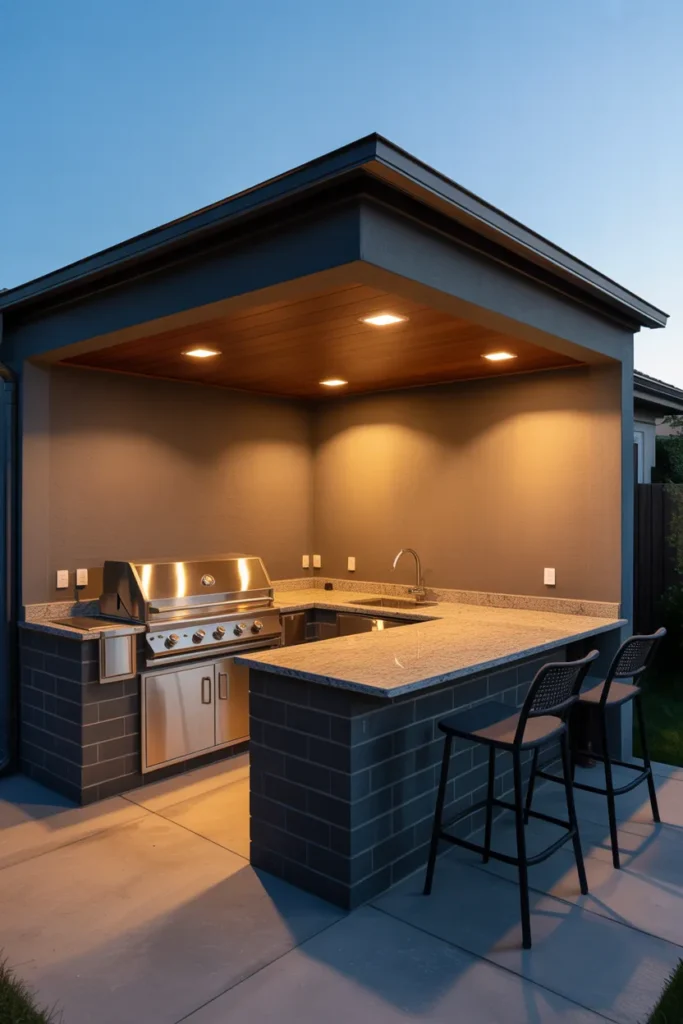
The bar counter in an outdoor kitchen combo should be 6 to 12 inches higher than the cooking counter — typically 42 inches versus 36 inches — so that bar stools seat guests at a comfortable height relative to the cooking surface. This height difference also creates a natural visual and functional separation between the work zone and the seating zone, which keeps the cooking area from feeling like a table.
Outdoor kitchen bar combos require a level, load-bearing foundation — typically a concrete slab. The combined weight of masonry construction, appliances, countertop material, and stored items is significant. A timber deck without engineered reinforcement is not an appropriate base for a full outdoor kitchen build. Confirm your deck’s load rating with a contractor before planning this setup over existing decking.
6. The Small Deck Bar That Maximizes a 100-Square-Foot Outdoor Space
A compact outdoor bar designed specifically for a small deck, balcony, or urban backyard under 100 square feet requires a completely different approach than a standard patio bar. The setup that works in this context is a narrow bar counter — 18 to 20 inches deep — mounted directly to the deck railing or exterior wall, oriented so that bar stools on the outer side do not consume floor space inside the deck perimeter.
This rail-mounted or wall-mounted bar counter format is the most space-efficient outdoor bar idea available for apartment balconies, rooftop terraces, row home rear yards, and small attached decks. By mounting the counter to an existing structure rather than building an independent unit, you avoid the footprint of legs, base cabinets, or freestanding furniture and keep the remaining deck floor open for movement and other seating.
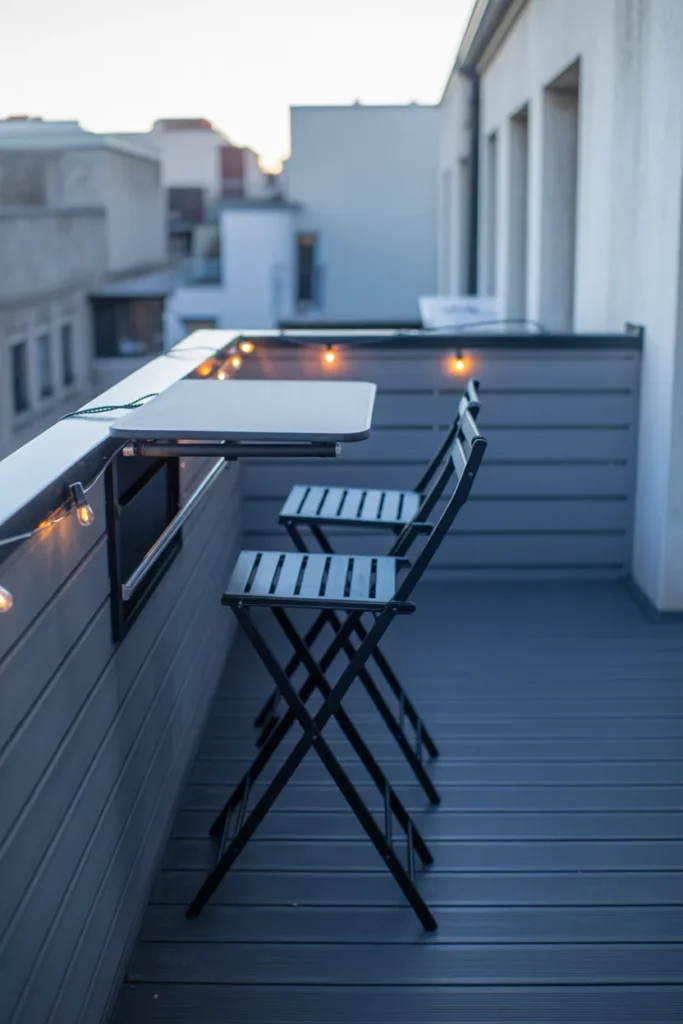
Folding or drop-leaf bar counter designs take this further. A hinged counter that folds flat against the railing or wall when not in use gives you a full-size functional bar surface during entertaining and zero footprint when the deck is used for other purposes. For a household that uses the outdoor space daily for multiple functions — morning coffee, casual seating, and occasional entertaining — the fold-away format is consistently more practical than a permanent counter.
Weight loading is the critical safety variable on any railing-mounted outdoor bar. Standard residential deck railings are engineered to meet a lateral load requirement, not a vertical counter load. Before mounting a counter to a railing, confirm with a contractor or structural engineer that the railing posts and ledger attachment can handle the added load of a counter plus whatever is placed on it.
7. The Tiki-Style Outdoor Bar With a Thatched Roof That Creates a Resort Atmosphere at Home
A tiki-style outdoor bar built with a bamboo or cedar post structure and a natural thatched palm or synthetic thatch roof panel covering creates one of the strongest visual transformations available in a residential backyard. The structure signals a clear recreational zone, provides genuine shade, and creates an atmosphere that no simple counter-and-stools setup can replicate. For households that entertain frequently around a pool or in a tropical-climate state, this style of outdoor bar genuinely delivers on its visual promise.
The structural decision that matters most in a tiki bar build is the roofing material. Natural palm thatch is authentic but requires replacement every three to five years depending on climate and UV exposure, and it carries a higher fire risk rating than synthetic alternatives. Synthetic thatch panels made from UV-stabilized polyethylene replicate the visual appearance of natural thatch, last fifteen or more years without fading, and carry a Class A or Class C fire rating depending on the product. In most US residential applications, synthetic thatch is the more practical long-term choice.
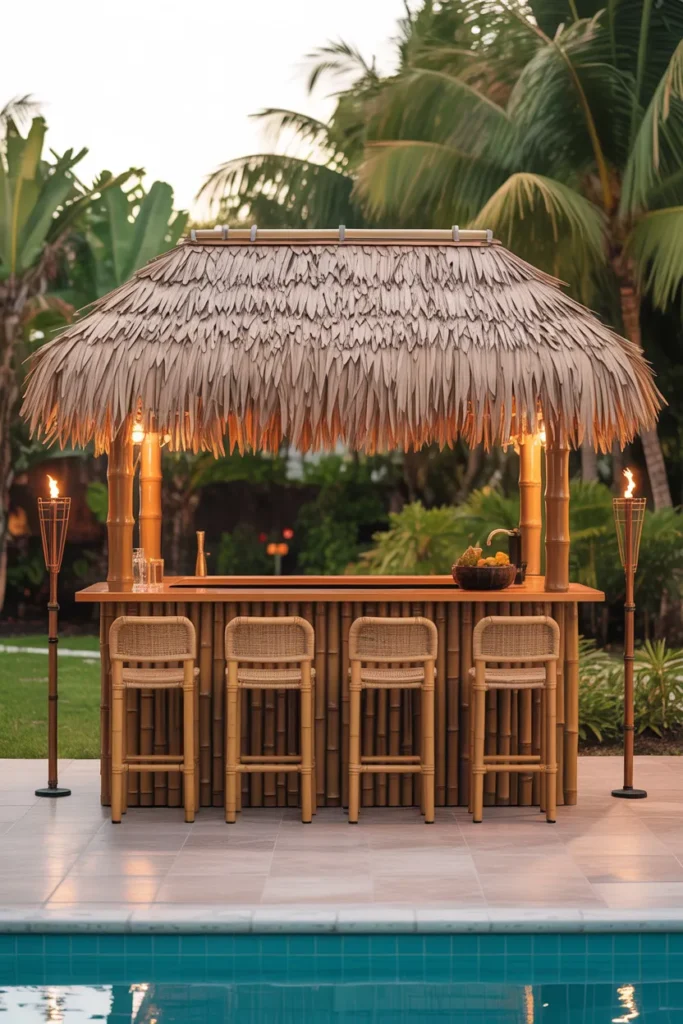
Post material follows the same logic. Natural bamboo poles look authentic but will crack, split, and weather significantly within two to three years without aggressive sealing. Fiberglass poles with a bamboo texture skin maintain the appearance without the structural degradation. For the bar counter itself, solid teak, IPE, or concrete is appropriate. Natural bamboo as a counter surface in an outdoor environment is a maintenance liability that most homeowners regret within the first full season.
Keep the footprint of a tiki bar relatively compact — typically 8×8 to 10×12 feet including the roof overhang. Larger structures require permits in most US municipalities and can feel incongruous in a standard suburban backyard. A compact but well-executed tiki bar reads as intentional. An oversized one reads as an attempt to build a commercial structure in a residential yard.
8. The Garage-to-Outdoor Bar Conversion That Uses an Existing Wall as the Bar Back
Converting the exterior garage wall facing the backyard into an outdoor bar back — by adding a pass-through window at counter height, mounting open shelving on the exterior wall for bottles and glassware, and building a counter directly below — creates one of the most functional and architecturally integrated outdoor bar setups available without new construction. The garage interior handles the refrigerator, the ice maker, the keg setup, or whatever back-of-bar equipment you use, and the exterior wall face becomes the serving front.
This is the most underused outdoor bar idea for American homes with an attached or detached garage that faces the backyard. The garage wall provides a built-in back structure that eliminates the need to build an independent enclosure. The pass-through window, similar to a restaurant service window, is the functional link between the interior setup and the outdoor counter. This window can be a simple horizontal cut with a hinged panel, a proper casement window, or a folding glass panel system for a more finished appearance.
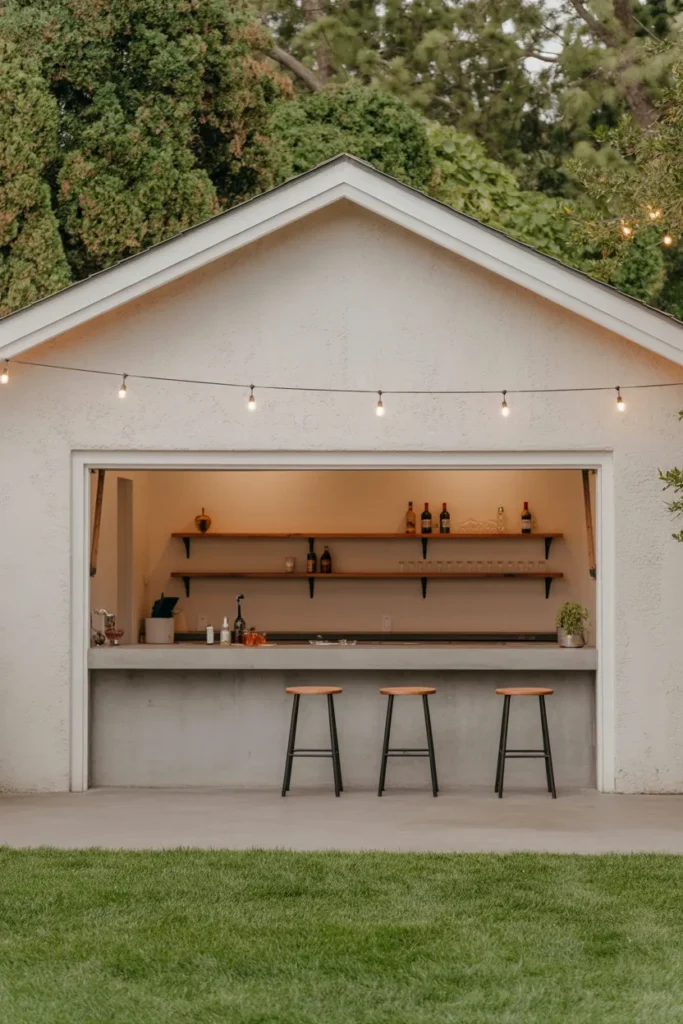
The counter built against the garage wall should be designed to match the garage exterior finish for visual cohesion. A stucco exterior carries a concrete or stone counter. A wood or fiber cement siding exterior suits a wood or Dekton counter. Mismatching the counter material with the wall cladding is the design detail that most distinguishes a planned built-in from a DIY afterthought.
Electrical and plumbing access in this setup is more straightforward than in a freestanding outdoor bar because you are working adjacent to an existing structure with accessible utilities. Running a waterproof outdoor outlet to the counter for a blender or lighting, or extending a cold water line for a small bar sink, is significantly easier and less expensive when the source is 12 inches away through a wall rather than 30 feet across a yard.
9. The Barrel and Reclaimed Wood Bar That Builds Character With Low-Cost Materials
An outdoor bar built from reclaimed wood planks as the counter and shelving surface, supported by two repurposed wine or whiskey barrels as the base, creates a high-character setup at a fraction of the material cost of a masonry or custom cabinet bar. The barrels provide a stable, heavy base that does not require anchoring, and the reclaimed wood counter carries a visual texture that no new material replicates.
This is a genuinely practical option for homeowners who want a permanent-feeling outdoor bar without construction skills or a large material budget. The barrels are self-leveling with shims if your patio surface is not perfectly flat, and a single reclaimed plank counter spanning two barrels at standard bar height is structurally stable for normal bar use. Two to three barrels can also be arranged in an L or U configuration for a larger counter surface with more visual complexity.
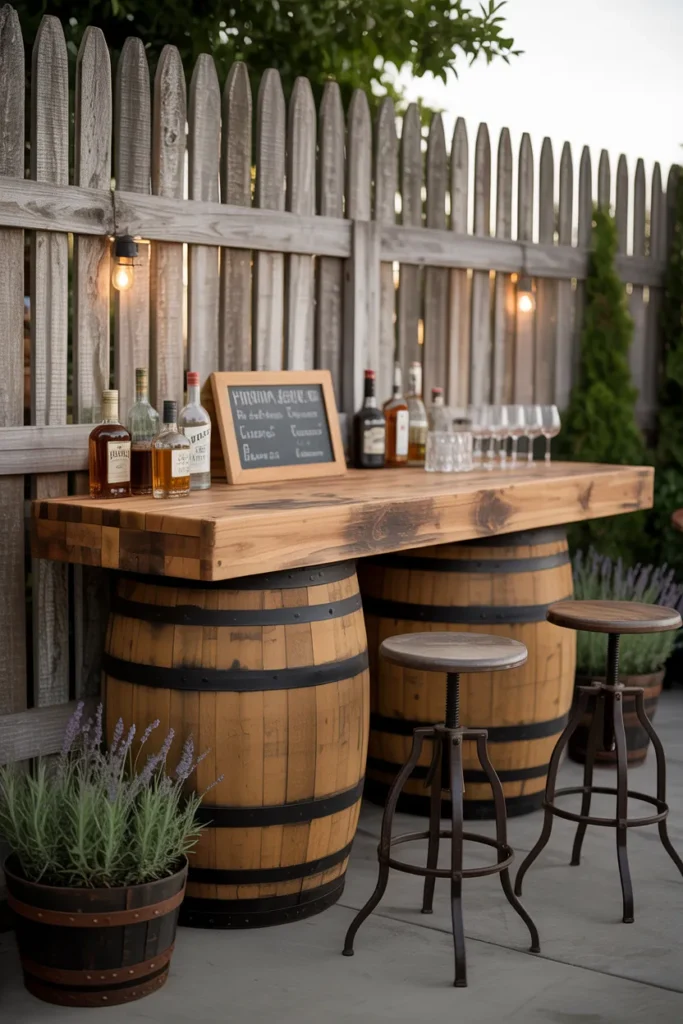
The functional limitation of this setup is storage. The barrel interiors can hold bottles, cleaning supplies, or bar tools, but access requires a hinged lid or a cut top, and the round interior makes organizing difficult. Plan the barrel setup as a serving and display bar rather than a primary storage system, and supplement with a separate outdoor cabinet or cooler for active use items.
Reclaimed wood used outdoors needs to be sealed with an exterior-grade penetrating oil or polyurethane to prevent moisture absorption, splitting, and gray weathering. Unsealed reclaimed wood on an outdoor bar counter will show significant degradation within one season regardless of how dry your climate is. Reapply the sealant annually to maintain the surface.
10. The Modern Minimalist Concrete and Steel Outdoor Bar for Contemporary Backyards
A straight-run outdoor bar built from poured concrete or precast concrete panels for the counter and clad with smooth steel or Corten weathering steel panels on the base creates the most architecturally contemporary outdoor bar available in a residential setting. The material palette is intentionally raw and industrial, which aligns with modern home design in a way that wood and stone setups do not. In a backyard with clean lines, geometric landscaping, and a contemporary home exterior, this bar style reads as a natural extension of the architecture rather than an added-on feature.
Corten steel, which develops a controlled rust patina over time, is particularly effective for this application because it weathers into an organic reddish-brown tone that softens the industrial material palette without requiring paint or maintenance. The patina stabilizes after one to two seasons and does not continue to corrode beyond the surface layer. It is one of the few outdoor materials that intentionally improves in appearance with age and weather.
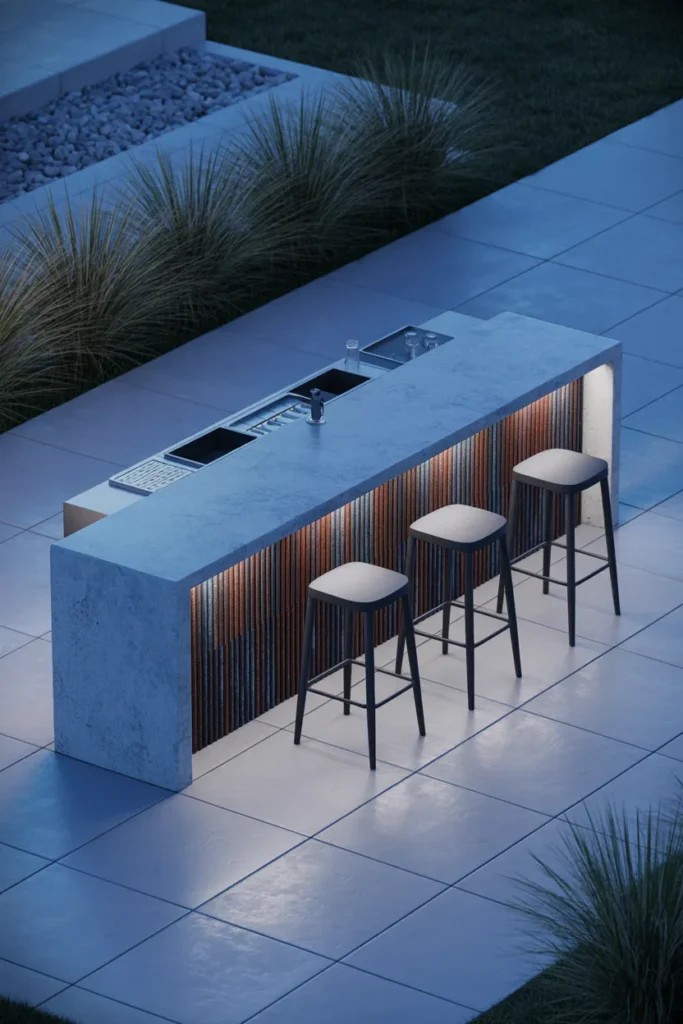
The concrete counter in this setup should be sealed with a penetrating concrete sealer rated for outdoor use and reapplied every two to three years. Unsealed concrete in an outdoor bar environment absorbs wine, spirits, and citrus immediately and permanently. The sealer does not change the appearance of the concrete — it maintains it.
Lighting in a minimalist concrete and steel outdoor bar should be integrated rather than decorative. Recessed LED strips in the counter overhang light the bar stool area from below. In-ground uplights accent the structural base. String lights and lanterns work against the minimal aesthetic of this setup and undermine the design intent. Keep the lighting architectural and the hardware matte black or brushed steel to maintain material consistency.
Final Thoughts
A well-planned outdoor bar does not just add a surface to your backyard — it defines how your outdoor space functions and how often you actually use it. Whether you are working with a compact urban balcony, a pool deck, a large suburban yard, or a contemporary architectural exterior, one of these ten setups gives you a specific, grounded starting point built around your real space and how you entertain.
Save this post to your Pinterest boards before you move into the planning phase. The layout guidance, material specifications, and avoid-this details here are exactly what gets forgotten between inspiration and execution, and having this as a reference will keep your project on the right track. When you are ready to go further, explore coordinating outdoor kitchen layouts, patio lighting ideas, and backyard landscaping setups that tie the whole entertaining space together.