
If you’re rethinking your outdoor space this year, the right patio furniture ideas for 2026 go far beyond picking a set that looks good in a catalog. This guide gives you 15 layout-driven, decision-ready ideas that work for real yards, small patios, rooftop decks, and everything in between. Each one is chosen to help you use your space better, not just decorate it.
1. The Floating Sectional Layout for Mid-Size Patios
A sectional placed away from the wall and centered on an outdoor rug instantly makes a mid-size patio feel intentional and designed. This layout works because it creates a defined living zone without relying on the architecture of the space.
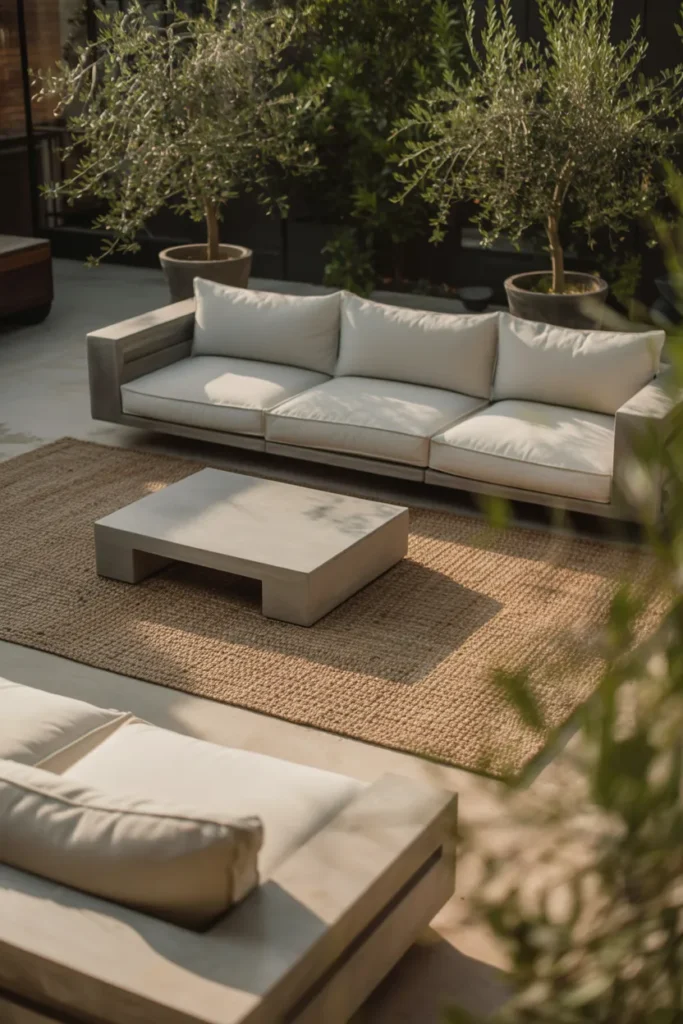
Use this when your patio is between 12×12 and 16×16 feet and you want it to feel like an outdoor room. Anchoring the sectional with a low concrete or stone coffee table adds visual weight and keeps things grounded.

The most common mistake here is pushing the sectional against the wall. That kills the room effect and makes the space feel like a waiting area, not a living area. Pull it in, center it, and let the perimeter breathe.
2. The Narrow Side Yard Dining Setup
Long, narrow side yards are one of the most underused outdoor spaces in American homes. A slim rectangular dining table with bench seating on one side and chairs on the other fits perfectly in a 6 to 8-foot-wide corridor without blocking movement.
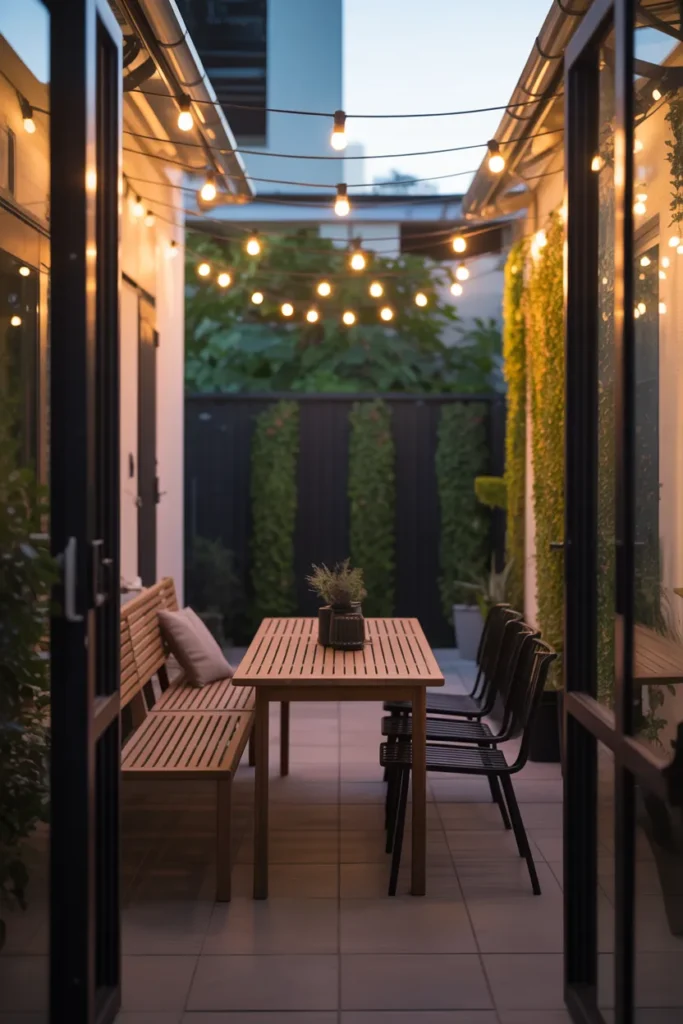
This layout works because it runs parallel to the fence or wall, using the length of the space rather than fighting the width. Teak or powder-coated aluminum are the best material choices here since they hold up against close-contact walls where air circulation is lower.
Avoid round tables in this layout entirely. They waste the linear space and make seating awkward along the edges. Keep the table narrow, under 36 inches wide, and the flow stays comfortable.
3. The L-Shape Conversation Corner for Small Square Patios
An L-shaped furniture arrangement turns a small square patio into a proper conversation zone. Two loveseats or a compact L-sectional placed in one corner with a shared accent table creates a contained, cozy feel that large sets cannot achieve in tight spaces.
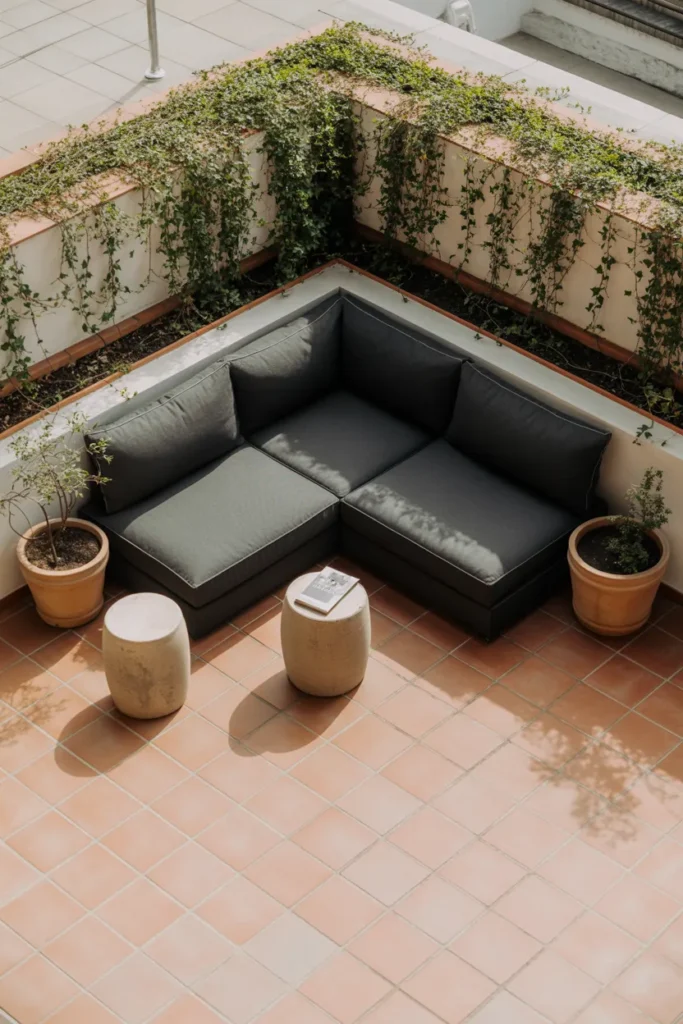
This layout is ideal for patios under 10×10 feet. The corner placement opens up the remaining floor area for movement, which makes the space feel larger than it is. It also naturally faces outward, giving everyone in the seating a clear sightline to the yard or view.
Do not try to fit a full coffee table in this configuration. A small side table or a pair of drum stools between the seats works much better and keeps the layout from feeling cluttered.
4. The Open-Plan Backyard Zones Layout
For larger backyards, the biggest design mistake is placing all the furniture in one cluster. A zoned layout separates the dining area from the lounge area with at least 8 to 10 feet of space between them, which gives the yard a sense of purpose and scale.
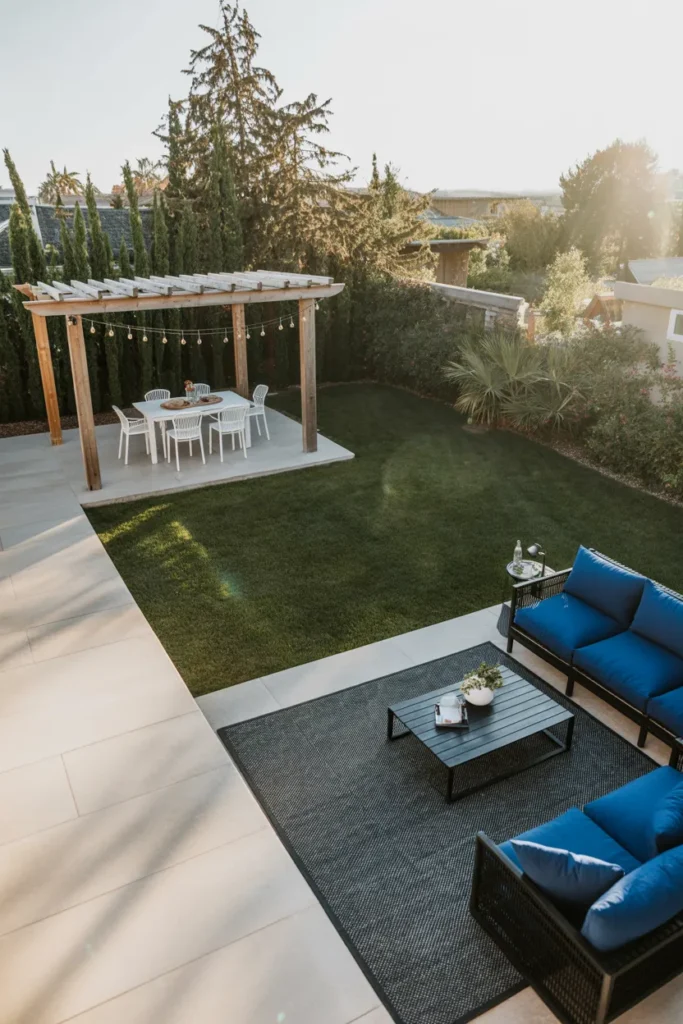
Use a pergola, outdoor rug, or change in material underfoot, such as switching from pavers to gravel, to signal where one zone ends and another begins. This works especially well for families who use the outdoor space for different activities at the same time.
The key is making each zone feel complete on its own. A lounge with no table feels unfinished. A dining area with no shade feels impractical. Treat each zone as a standalone room.
5. The Rooftop Minimalist Setup
Rooftop patios have specific constraints that ground-level spaces do not. Weight limits, wind exposure, and smaller footprints mean less is always more. A low-profile two-seat sofa with a pair of lightweight stackable chairs and a fold-flat coffee table is the most functional rooftop configuration.
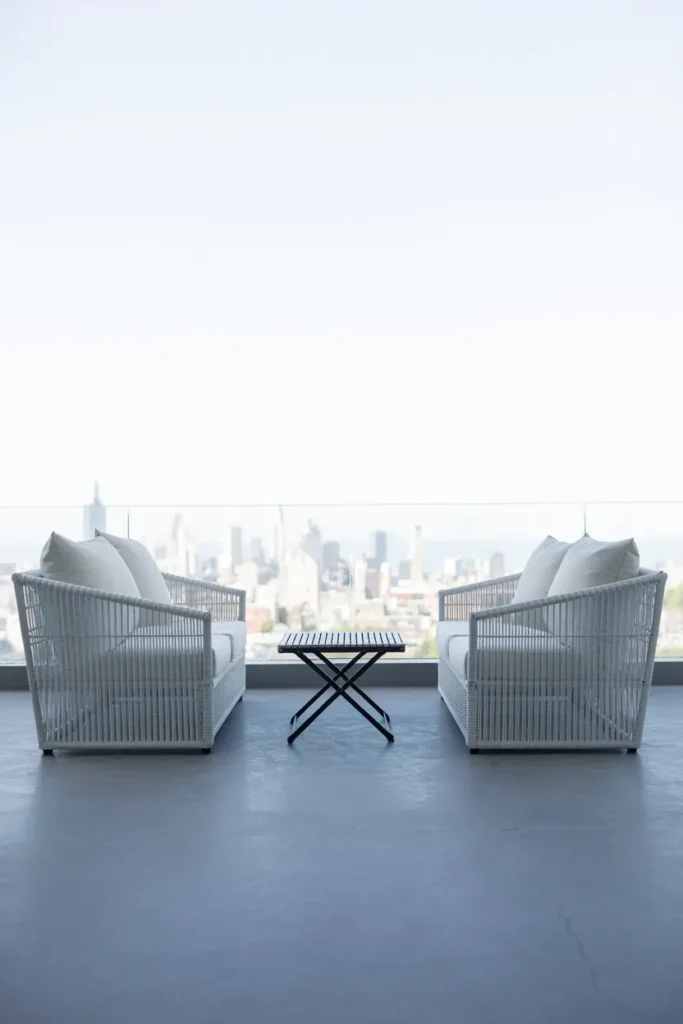
All-weather wicker over aluminum frames and powder-coated aluminum are the best material choices for rooftop use. They are light, wind-resistant, and do not rust. Avoid heavy concrete or cast iron pieces at elevation.
Keep the furniture low. High-back chairs and tall tables catch wind badly and can feel unstable. Low seating also keeps the rooftop view open, which is usually the whole reason someone uses the space.
6. The Poolside Chaise Layout That Actually Functions
Most poolside furniture layouts fail because the chaises are placed too close together or angled incorrectly. The functional rule is simple: each chaise needs at least 24 inches of clearance on the walkway side, and they should be angled slightly toward the water, not perfectly perpendicular to it.
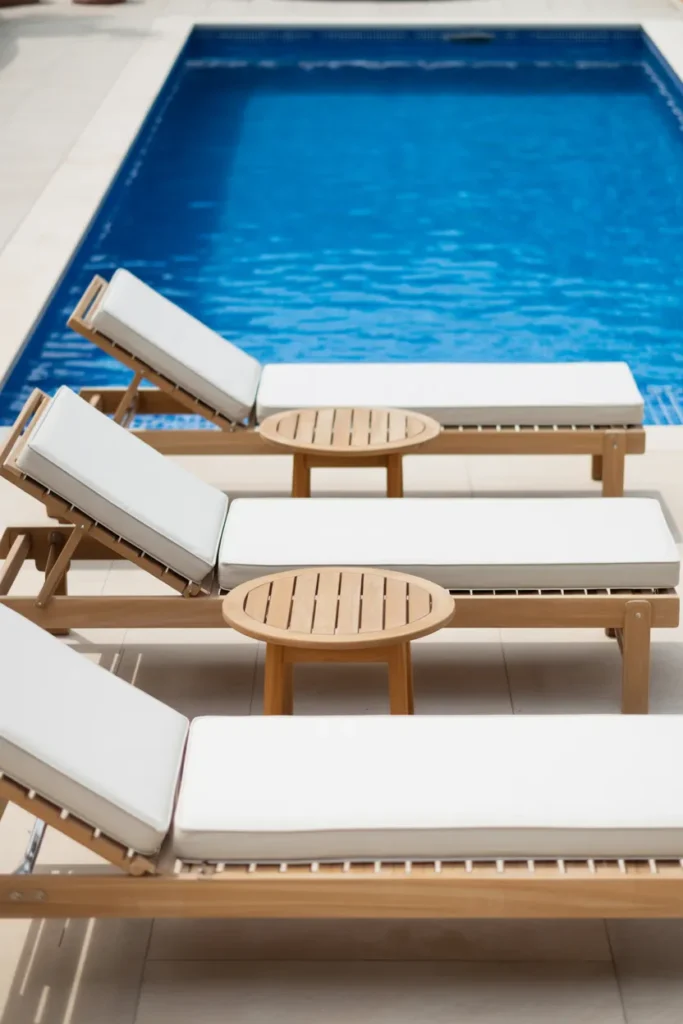
Pair two chaises with a shared side table between each pair rather than one long coffee table in front. This keeps the table reachable from a reclining position without requiring anyone to sit up fully.
For material, teak and resin wicker both perform well poolside. Avoid fabric cushions unless they have a quick-dry foam core. Standard outdoor cushions that stay wet are the number one complaint in poolside setups.
7. The Four-Season Covered Porch Arrangement
A covered porch changes how furniture performs and how the space gets used. With overhead protection, you can use softer cushion fabrics and heavier tables, and the space becomes usable in light rain or cool evenings.
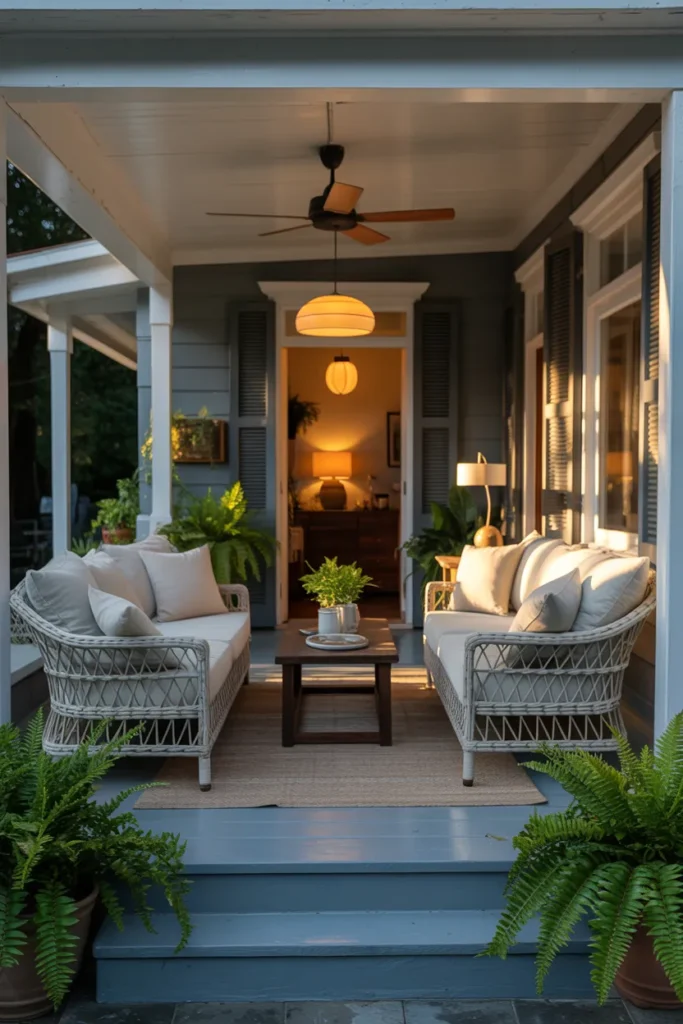
The best layout for a covered porch is a U-shape or facing-sofa arrangement with a low coffee table in the center. This layout encourages longer stays and conversation, which is exactly what a covered porch should do. Add a ceiling fan directly above the seating cluster to extend usability into humid summer months.
The mistake most people make is treating the covered porch like an uncovered one and choosing materials built for full weather exposure. On a covered porch, you can invest in better cushion quality because they are protected. Use that advantage.
8. The Small Balcony Two-Seater Setup
Balconies under 50 square feet need furniture that earns its place. A bistro table and two folding chairs is still the single most effective layout for this size, not because it is the only option, but because it leaves enough room to stand, move, and actually use the space.
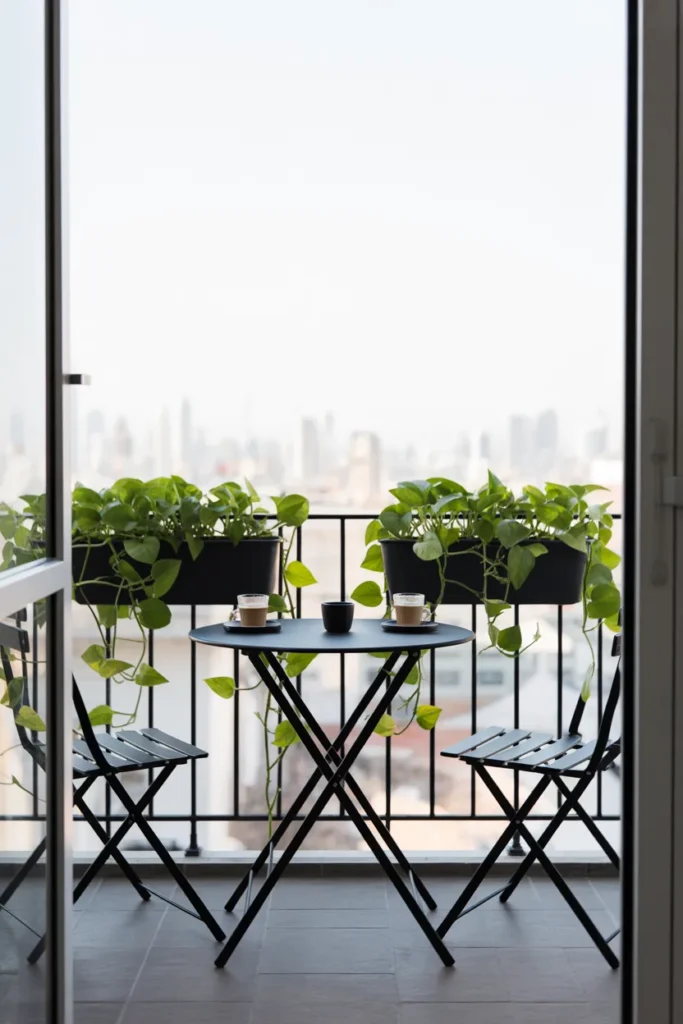
Choose a round bistro table over a square one. Rounded edges prevent the constant bruised-hip problem that square corners create in tight spaces, and a round table seats two more naturally for face-to-face conversation.
The modern upgrade for 2026 is pairing the bistro setup with a small wall-mounted planter or railing rail planter to add greenery without using floor space. This adds visual depth without adding footprint.
9. The Outdoor Dining Room With a Statement Table
In 2026, outdoor dining is moving toward furniture that looks like it belongs inside. A large rectangular dining table in concrete, live-edge wood, or sintered stone with upholstered weather-resistant chairs creates an outdoor dining room that feels like a real room.
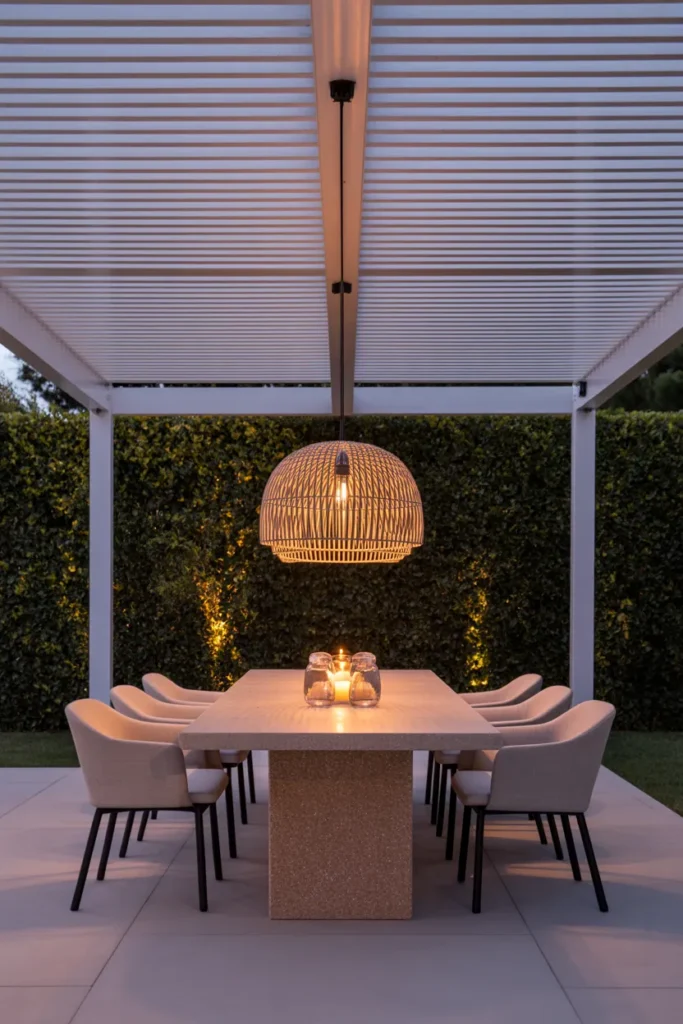
This layout works on patios of 14×16 feet or larger. The table should seat at least six to feel proportionate to the space. Undersizing the dining table on a large patio is one of the most common layout errors and it makes the whole setup look like it was placed as an afterthought.
Lighting matters more here than in any other outdoor layout. A pendant hung from a pergola beam or a standing arc lamp positioned over the table completes the indoor-room effect and makes the space usable after dark.
10. The Firepit Circular Seating Layout
A firepit layout only works when the seating fully wraps around the fire, not when chairs are placed on two or three sides. A complete or near-complete circle with consistent chair height and spacing makes everyone feel equally included and equally warm.
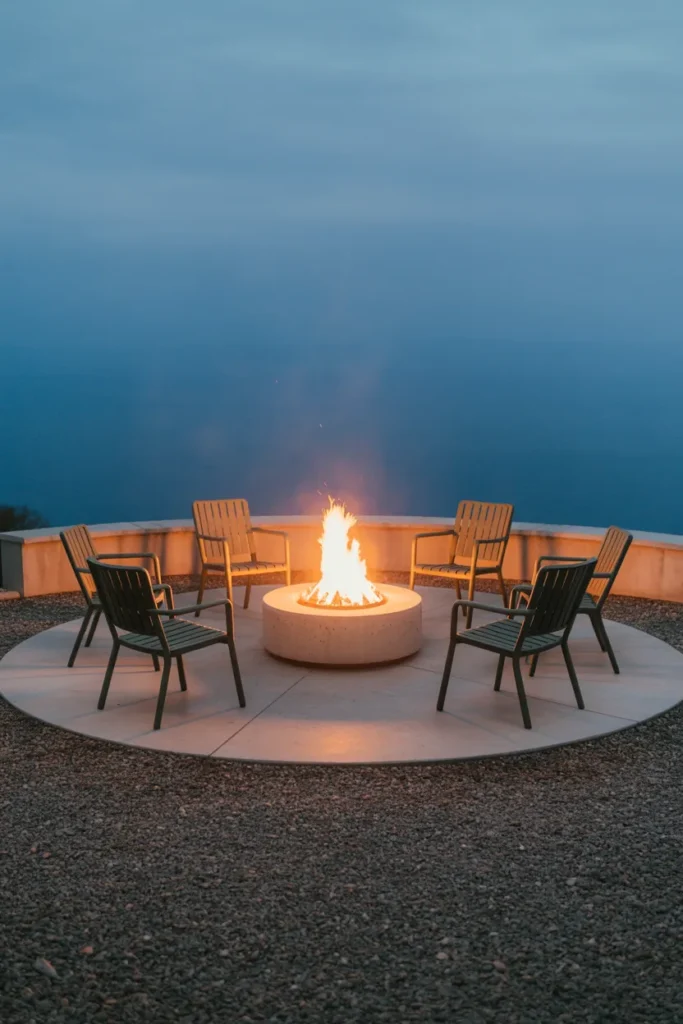
The optimal distance from the edge of the firepit to the front of the seating is 36 to 48 inches. Closer feels too hot for mild nights; farther feels disconnected. Use four to six low-back chairs or a mix of low chairs and curved bench seating to maintain that distance evenly around the pit.
Avoid mixing wildly different seat heights in a firepit circle. A 17-inch chair next to a 24-inch stool makes the group feel split. Keep all seating within two to three inches of the same seat height for visual and social cohesion.
11. The Shade-First Pergola Lounge Layout
Building a patio layout around shade rather than around furniture is one of the most practical shifts in outdoor design for 2026. A pergola-anchored lounge with a deep sofa, two chairs, and a side table creates a space that is genuinely comfortable during peak summer hours when most outdoor spaces are too hot to use.
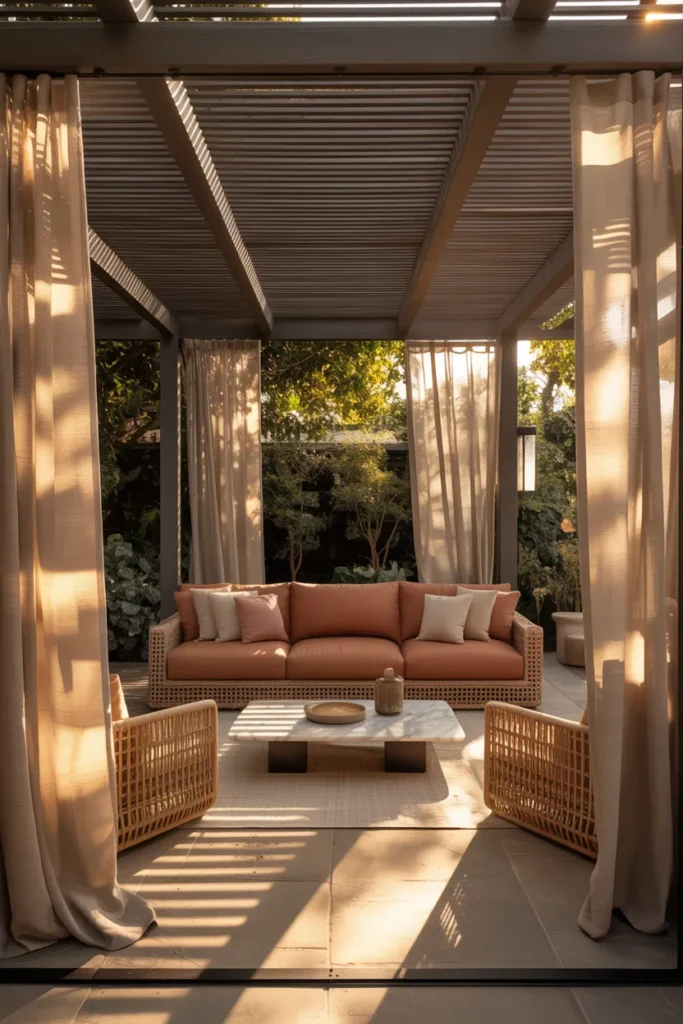
Position the sofa on the side of the pergola that receives afternoon shade, which is typically the west-facing interior. This is when most people actually want to sit outside, in the late afternoon, and most layouts ignore this completely.
Add shade sail extensions or linen curtain panels to the open sides of the pergola if your yard has no natural wind break. This turns the structure into a true room and gives the layout a sense of enclosure that makes it feel more private.
12. The Studio Apartment Patio Multipurpose Layout
When a patio is someone’s only outdoor space, it needs to function as dining, lounging, and sometimes working. A foldable dining table that doubles as a work surface paired with two chairs that work at both heights is the most space-efficient solution available.
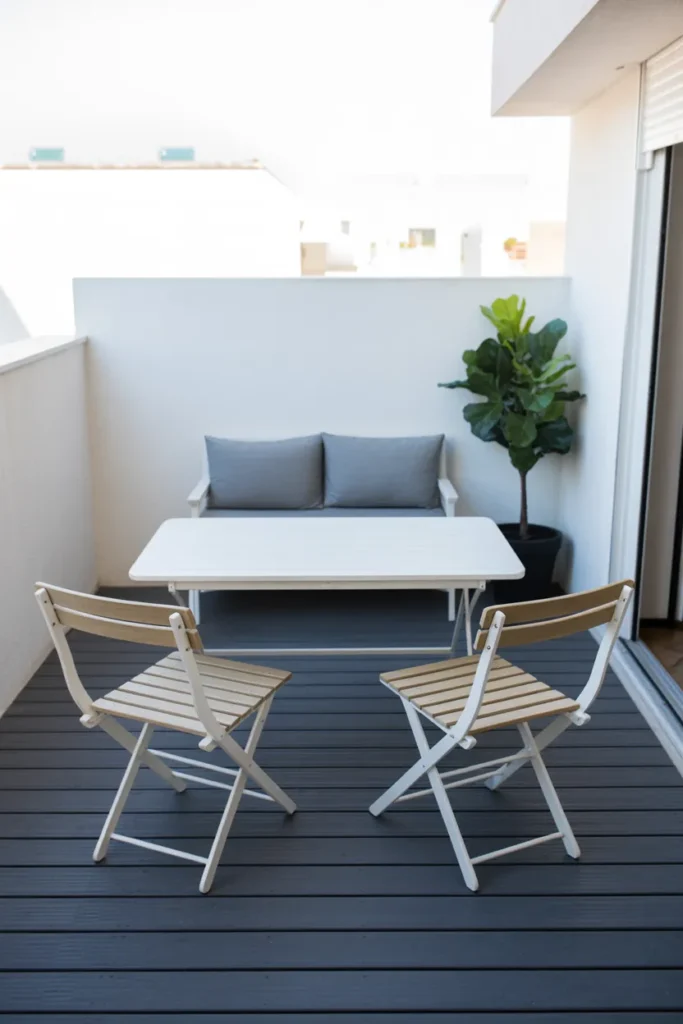
Add a small outdoor loveseat or two-seat bench along the opposite wall for a secondary use mode. When the table is folded away, the bench gives a lounging option. When the table is open, the bench becomes overflow seating for guests.
Storage is the overlooked element in this layout. A deck box that doubles as a bench or side table keeps cushions, throws, and supplies off the floor and out of sight. In a small multipurpose patio, clutter destroys the functionality completely.
13. The Drought-Tolerant Desert Patio Layout
For homes in the Southwest and other dry climates, patio furniture ideas for 2026 increasingly incorporate the landscape as part of the design. A low-profile lounge set in warm sand, rust, or terracotta tones placed among gravel beds and native plantings creates a cohesive layout that works with the environment rather than against it.
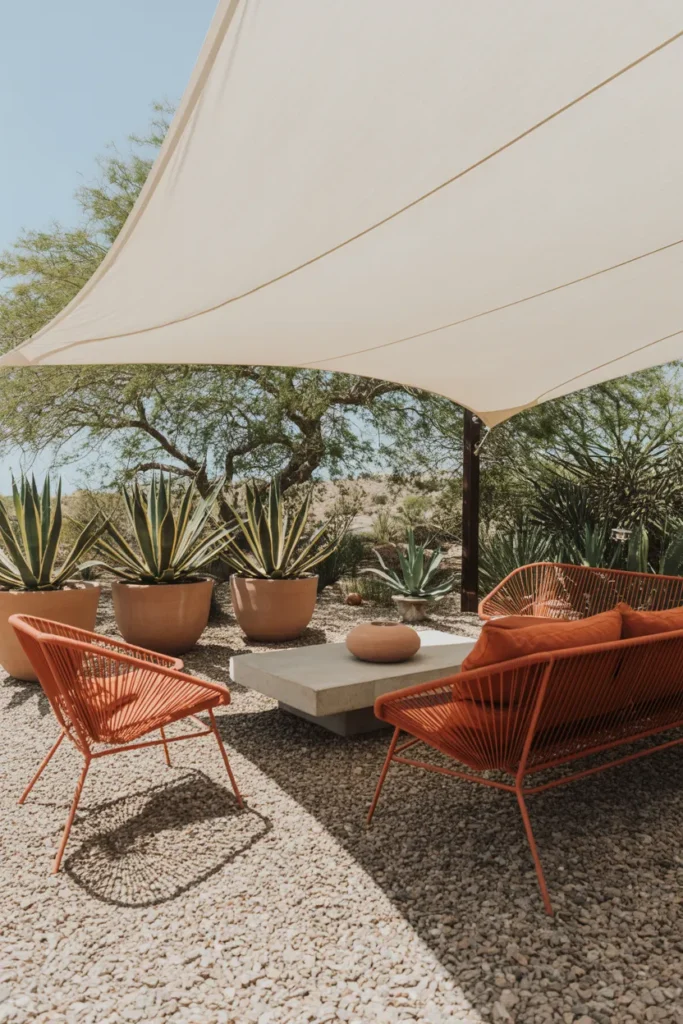
Powder-coated steel and concrete are the ideal materials for hot, dry climates. They absorb heat during the day but cool quickly in the evening. Avoid all-weather wicker in desert climates with intense UV exposure as it fades and cracks faster than any other outdoor material.
Use one large shade sail anchored diagonally over the seating cluster to create asymmetric shade coverage. This is more visually interesting than a symmetrical pergola and can be adjusted seasonally to track the angle of the sun.
14. The Elevated Deck Dining and Lounge Combo
Elevated decks offer a natural separation between functional zones because the change in level does the work for you. A dining setup near the house entry point and a lounge cluster at the far rail end creates a natural flow that mirrors how people actually move through the space.
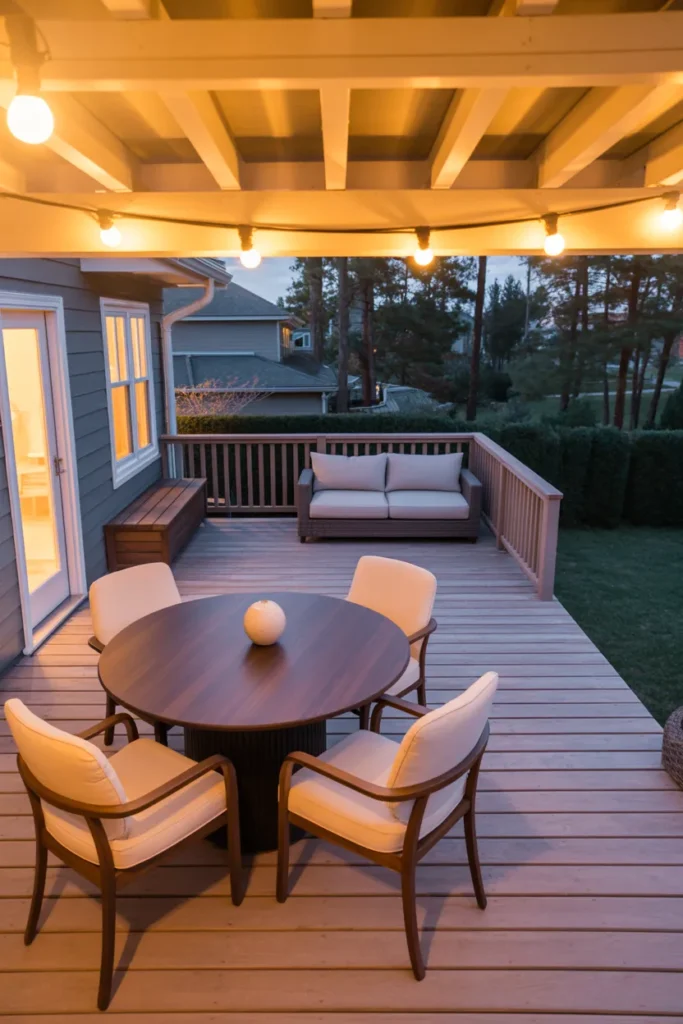
The most important layout rule for elevated decks is to keep furniture at least 18 inches away from the railing on all sides. This is both a safety requirement and a design one; it prevents the seating from feeling pushed against the edge and gives the layout room to breathe.
For the railing-side lounge cluster, orient chairs to face outward toward the view. This is an obvious point that many layouts miss entirely because the furniture was arranged to face inward toward the house rather than outward toward the reason someone built an elevated deck in the first place.
15. The Enclosed Privacy-First Courtyard Layout
Enclosed courtyards and walled patios are having a significant moment in 2026 outdoor design. When walls or tall hedges define the space on multiple sides, the furniture layout can go much more interior-focused, with pieces arranged as they would be in an indoor living room.
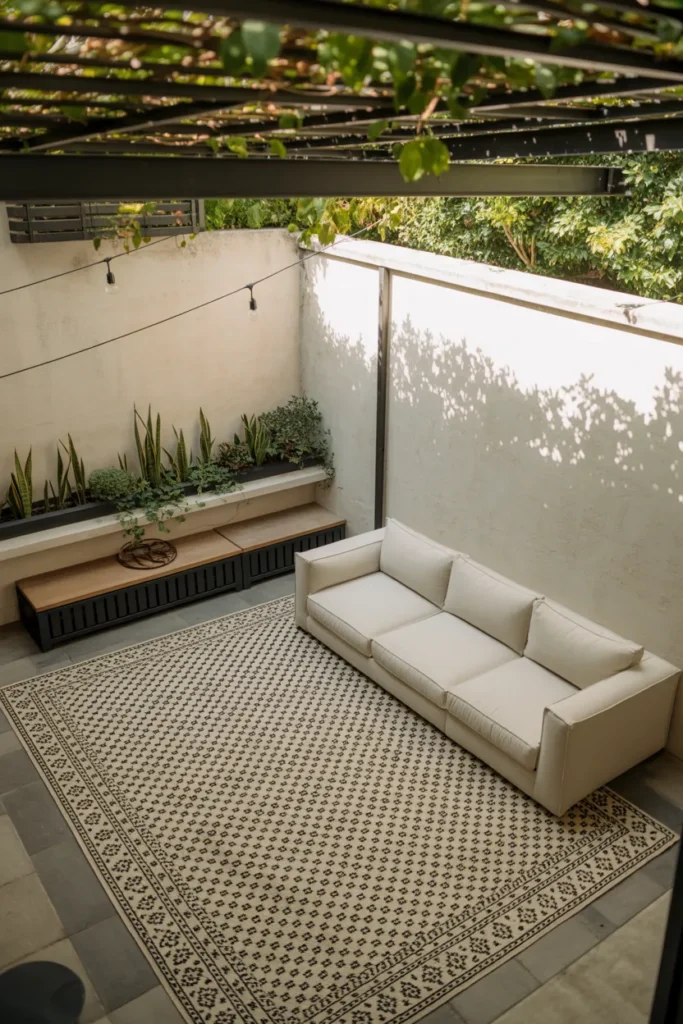
A single large outdoor sofa facing a low media-style console with a planted shelf or an outdoor art piece turns the courtyard wall into a focal point. This layout works best in urban homes and townhouses where the patio is enclosed on three or four sides and privacy is already built in.
The courtyard layout fails when it is overfurnished. Because the walls already add visual density, the furniture should be restrained. One strong sofa, one accent chair, and one table is enough. Adding a rug in a bold pattern or textured weave pulls the enclosed space together without adding bulk.
Final Thoughts
Choosing the right patio furniture layout is less about style and more about understanding how your specific space works, what hours you use it, who uses it, and what it needs to do. The 15 patio furniture ideas for 2026 in this guide are built around those real-world decisions, not just aesthetics.
If one of these layouts matches your space, save this post to your Pinterest boards so you can come back to it when you’re ready to plan or shop. And if you’re still exploring, browse more outdoor space planning ideas to find the configuration that fits your yard, your lifestyle, and your climate.