
Finding the right sectionals living room ideas for 2026 is not just about choosing a sofa you love the look of. It means understanding how the shape, scale, and placement of a sectional will interact with your actual floor plan, your light sources, and the way your household moves through the space. This guide covers 18 practical, layout-focused ideas with clear guidance on when each approach works, what mistakes to avoid, and how to make each configuration feel intentional.
1. Float an L-Shape Sectional in an Open-Plan Living Room
Most people push their sectional to the wall. In an open-plan room, that makes the space feel like a waiting area. Floating the sofa at least 18 to 24 inches inward creates a defined seating zone while allowing the room to breathe. The back of the sectional acts as a soft architectural divider between the living and dining areas without the need for walls or shelving.
This approach works best when your living space flows directly into a kitchen or dining room. A low console table placed behind the sofa reinforces the zone separation and adds surface space without bulk.
The common mistake is choosing a sectional too large for the float. If it occupies more than 60 percent of the floor plan, the room loses walkable space. Scale down one module if necessary. Anchor everything with a rug that extends at least 12 inches beyond all sides of the sofa.

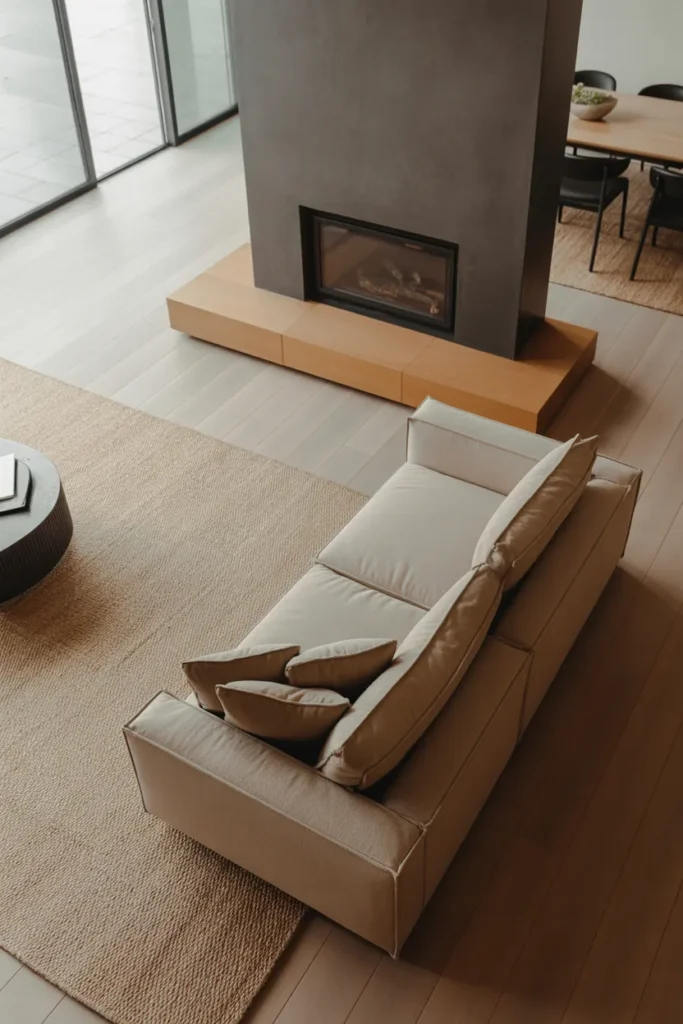
2. U-Shape Sectional for a Family Room That Seats Everyone Comfortably
When your living room serves more than four adults regularly, a U-shape sectional is one of the most functional configurations available. It maximizes seating while keeping everyone facing inward, which makes conversation and media-watching equally comfortable. The enclosed feeling also works well for households with young children.
This layout requires a room at least 14 feet wide and 16 feet deep. The center of the U needs enough depth to accommodate a coffee table with 18 inches of clearance on all sides. An oversized ottoman can replace the table if you need flexibility.
The design risk is visual dominance. A U-shape can eat an entire room. Counter this by keeping everything else minimal: one pendant light, one accent chair, one streamlined media unit. Do not layer in more bulk.
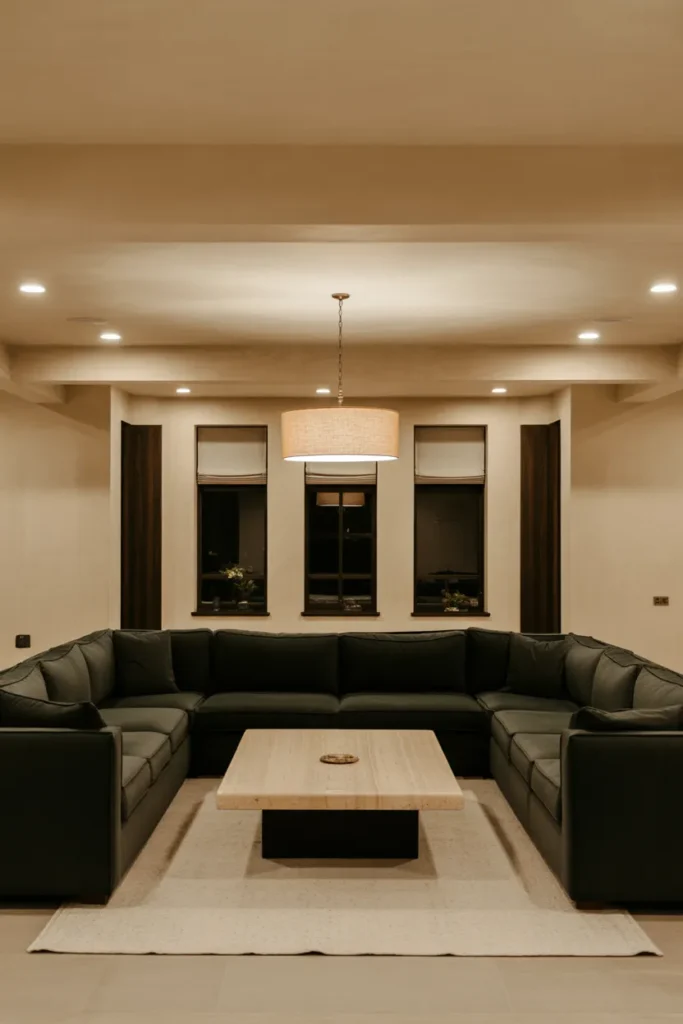
3. Chaise-Right Configuration for a Long, Narrow Living Room
Narrow living rooms, those that are wider than they are deep, resist most standard sofa layouts. A chaise-right sectional solves this by running the chaise parallel to the longer wall rather than cutting across the walkway. The sofa portion anchors the short wall and the chaise uses the room’s length efficiently without blocking movement.
This is one of the more underused open-concept sectional space planning ideas. It gives the eye a clear direction to travel and makes the room feel purposeful rather than compromised.
Avoid adding a second chaise on the opposite side. It creates congestion. If you need more seating, one armchair or a bench at the foot of the chaise is enough. Keep upholstery in the same color family throughout a narrow room. Contrast adds visual fragmentation when space is already tight.
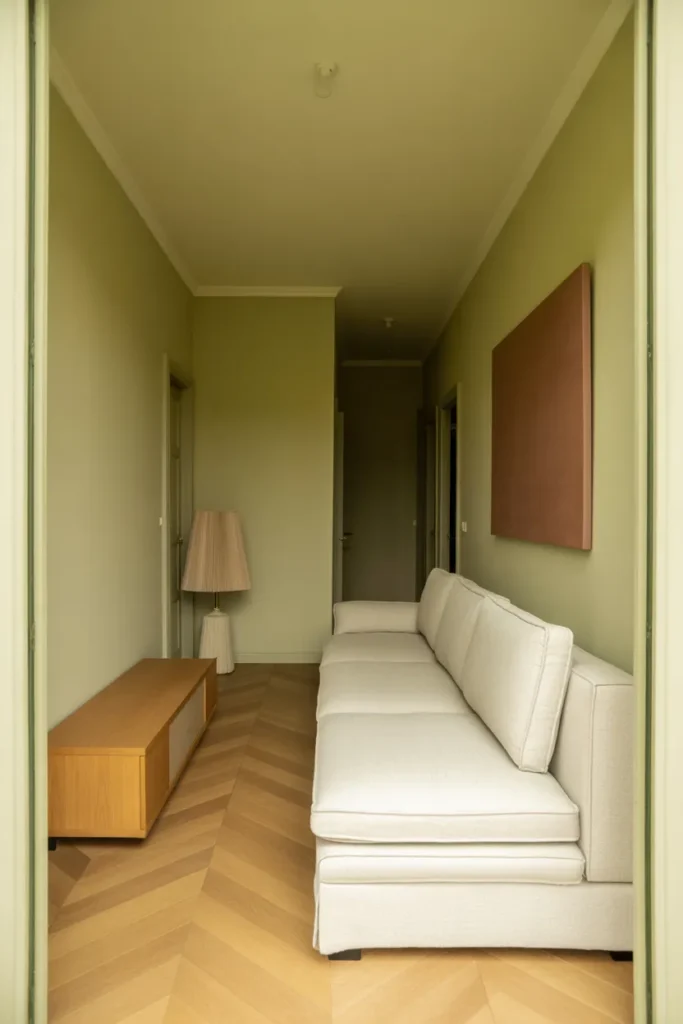
4. Modular Grid Layout for Renters and Flex Spaces
Modular sectionals have become a serious 2026 option for one practical reason: they move with you. For renters or anyone in transitional housing, a system that reconfigures into an L, a straight sofa, or two separate pieces removes the commitment risk of a fixed sectional. These systems also work well in rooms that serve dual purposes, such as a living room that doubles as a home office or occasional guest room.
The key to making a modular layout look intentional is treating it as a single unit. Keep modules compact and anchor the entire formation with a rug. A modular arrangement on a bare floor always looks unfinished.
When purchasing, prioritize systems where modules lock or clip together securely. Units that slide apart during daily use create daily frustration in households with children or pets.
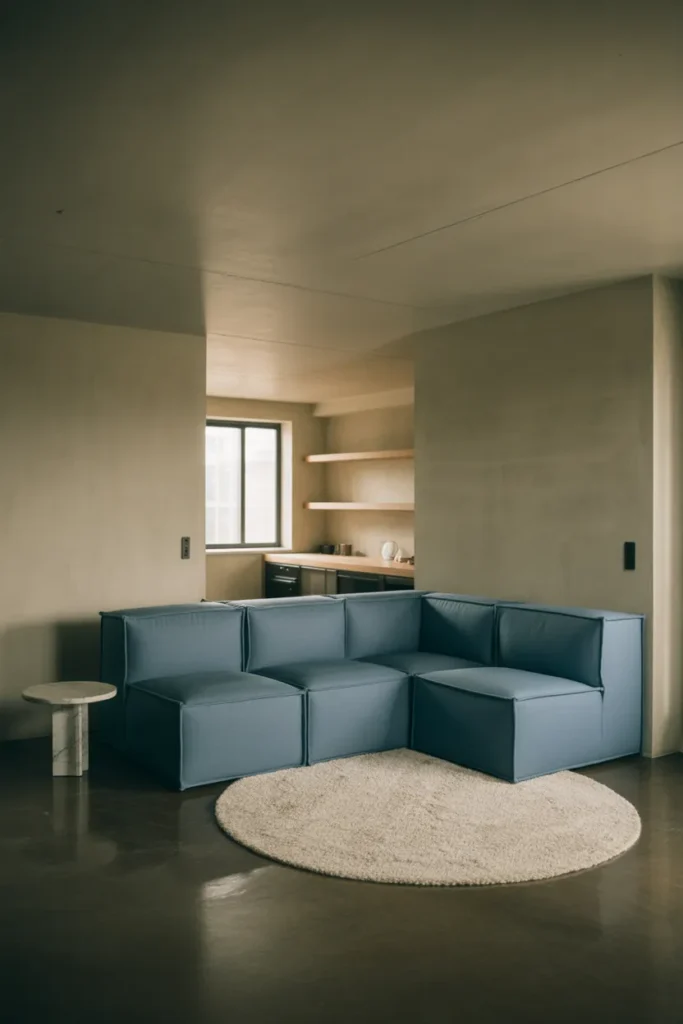
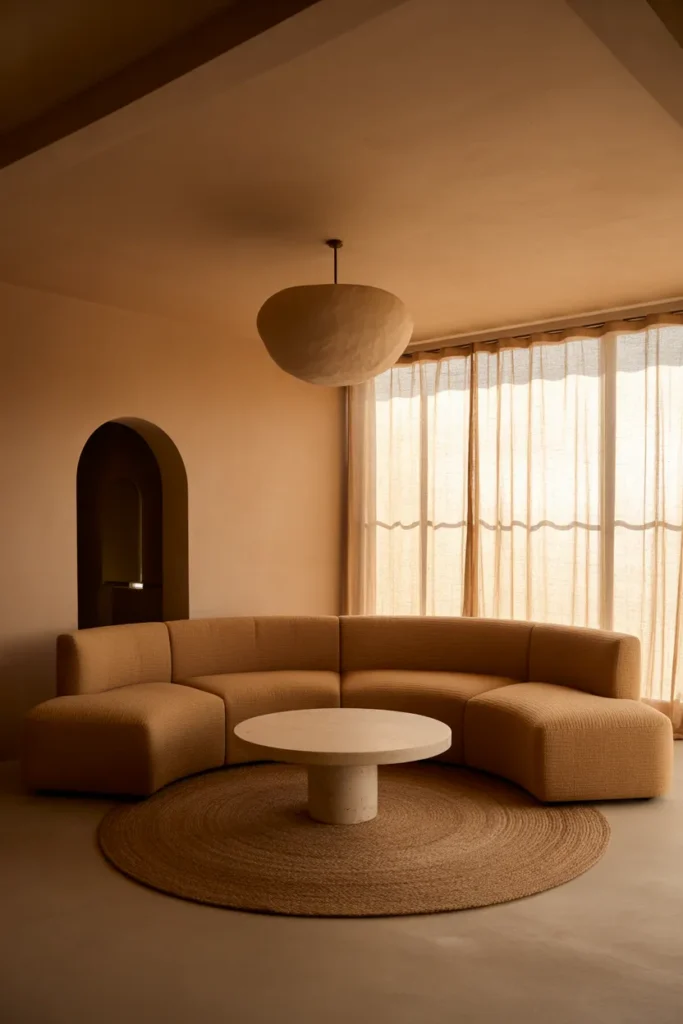
5. Curved Sectional in a Square Room to Break the Grid
Square rooms emphasize boxy geometry no matter where you place a straight sofa. A curved or crescent-shaped sectional introduces organic movement that interrupts the grid and draws the eye inward. It is one of the most visually effective sectionals living room ideas for 2026 in rooms where conventional layouts feel stiff.
Curved sectionals work best in rooms with high ceilings or architectural detail. The organic silhouette balances strong overhead elements. In a low-ceilinged, minimal room, a curved sofa can feel overly sculptural without anything to balance it against.
Pair a curved sectional with a round coffee table. A rectangular table cancels out the effect. Keep nearby furniture on tapered or rounded legs for visual consistency. Solid matte fabrics, boucle or velvet, are the most effective upholstery choices for curved pieces. Patterns compete with the silhouette.
6. Apartment-Scale Compact Sectional for Rooms Under 200 Square Feet
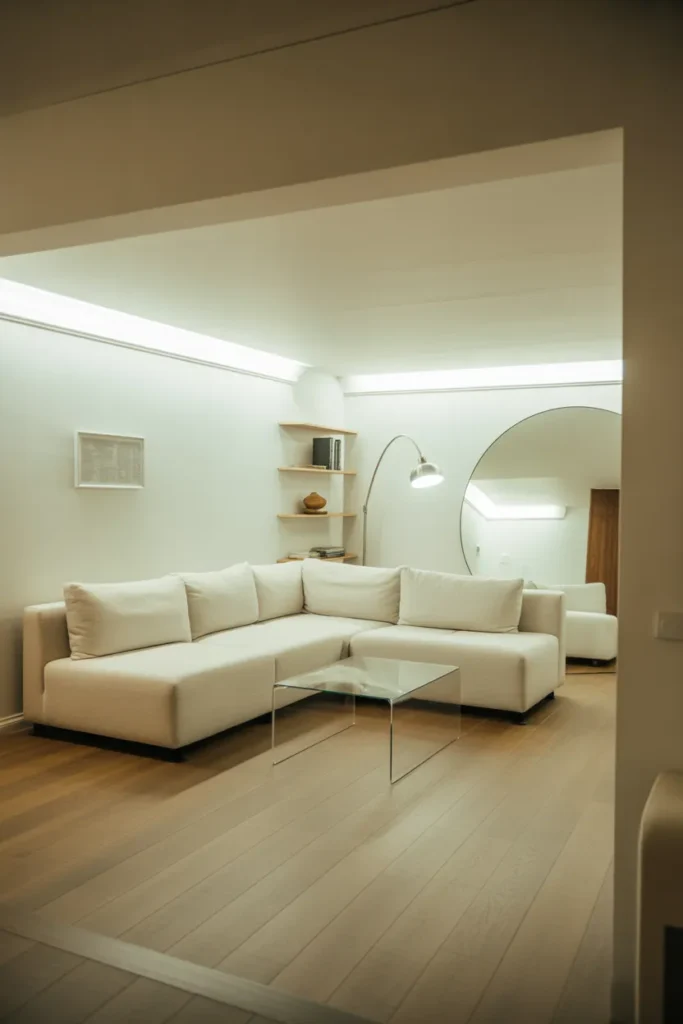
Compact sectionals built for apartment living have improved significantly heading into 2026. Many now feature seat depths of 32 inches or less and low arm heights that keep sightlines open. In a genuinely small living room, a compact L-shape almost always outperforms a sofa-plus-loveseat pair because it consolidates seating into one corner and leaves the rest of the room functional.
The critical number in a small living room is clearance. You need at least 36 inches between the front of the sectional and whatever is across from it. If you cannot achieve that, the piece is too large for the space, regardless of how much you like it.
Keep everything else in the room quiet. A glass or acrylic coffee table reduces visual weight. Wall-mounted shelving replaces floor-standing units. A large mirror on the opposite wall deepens the perceived space.
7. Two-Tone Sectional Upholstery to Add Depth Without Adding Furniture
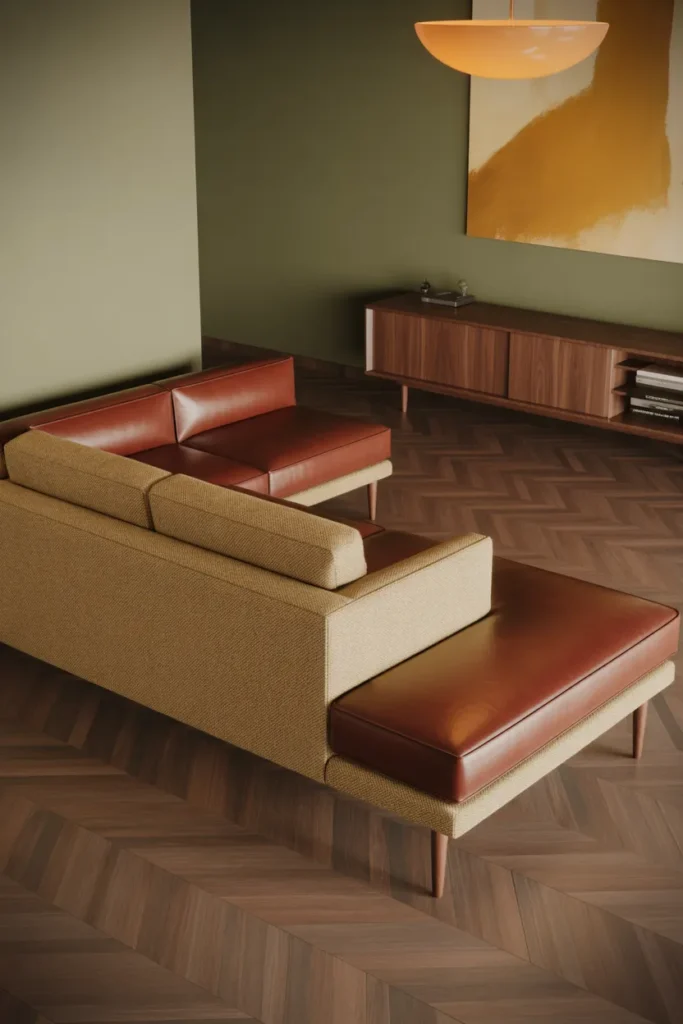
One of the more refined functional living room layout ideas in 2026 is using two-tone upholstery, where the chaise or one module is covered in a slightly different tone or texture from the rest of the sofa. This visually breaks the mass of a large sectional and adds dimension that a single-fabric piece cannot deliver, without introducing additional furniture into the room.
The most successful combinations stay within the same color family. Cream and warm white, charcoal and deep navy, or cognac and tan all read as deliberate. Contrasting unrelated colors requires significant design confidence to execute in a home setting and often reads as mismatched.
Let the sofa be the primary art element of the room in this layout. Keep wall decor minimal and allow the upholstery contrast to carry the visual interest. One statement pendant and a single large artwork on the facing wall is typically enough.
8. Low-Profile Sectional to Visually Raise a Room With 8-Foot Ceilings
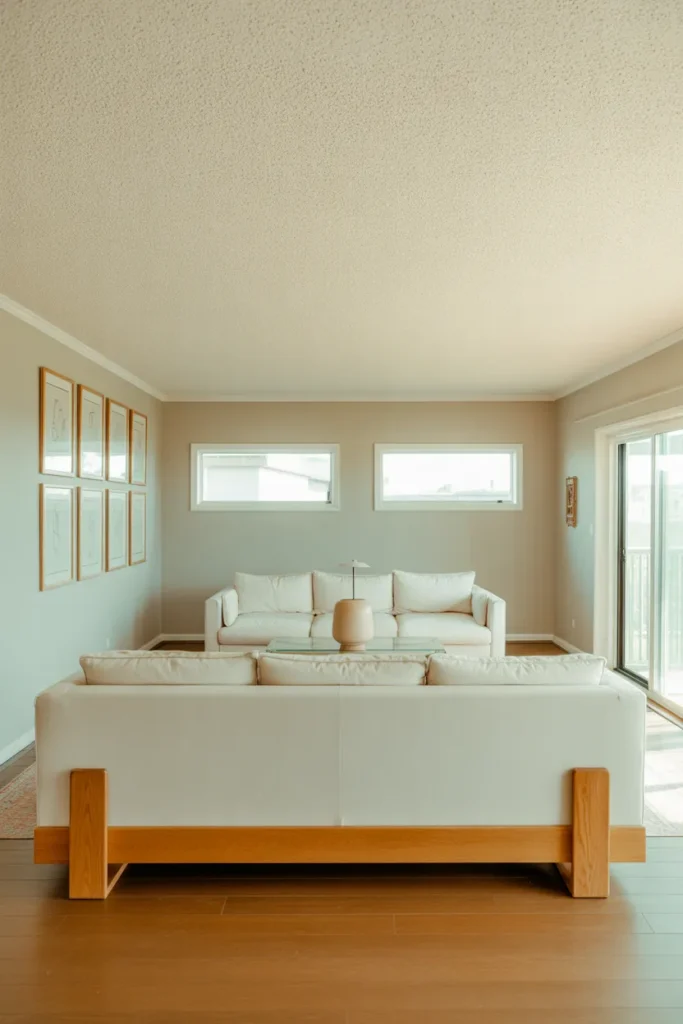
Homes built before 1990 typically have 8-foot ceilings. A tall, high-backed sectional compresses these rooms further. A low-profile sectional, with a seat height of 14 to 16 inches and a back height of 26 to 30 inches, is one of the most practical sectionals living room choices for these proportions. The extra visual clearance between the sofa back and the ceiling creates a perceived height that taller furniture cannot achieve.
Low-profile pieces also allow wall art, sconces, and shelving to register properly above the sofa. With a tall-backed sectional, artwork must compete with the upholstery for visual real estate and usually loses.
This configuration pairs well with rooms that have low horizontal windows. The sofa does not block light and the room maintains its connection to the outdoors. Keep the legs exposed if the sofa offers that option. Legs add breathing room at the floor level and lighten the overall visual weight of the piece.
9. Corner-Anchor Sectional With an Open Leg for a Defined Living Zone
Placing a sectional directly in the corner of a room is one of the oldest sectional configurations, but it is also one of the most misexecuted. The error is pushing both arms fully into the corner, which eliminates visual access to that part of the room and creates a closed, boxy feeling. The better approach is to anchor one arm to the corner wall and leave the opposite end open, letting the eye travel around the sofa rather than being stopped by it.
This layout works particularly well in rooms where one corner is naturally the focal point, near a fireplace, a large window, or a built-in bookcase. The sectional reinforces that focal point without surrounding it completely.
Do not add a chaise that runs along the secondary wall unless the room is deep enough to keep the center fully open. In tighter rooms, a clean two-piece L is more effective than a three-piece configuration that closes off the center.
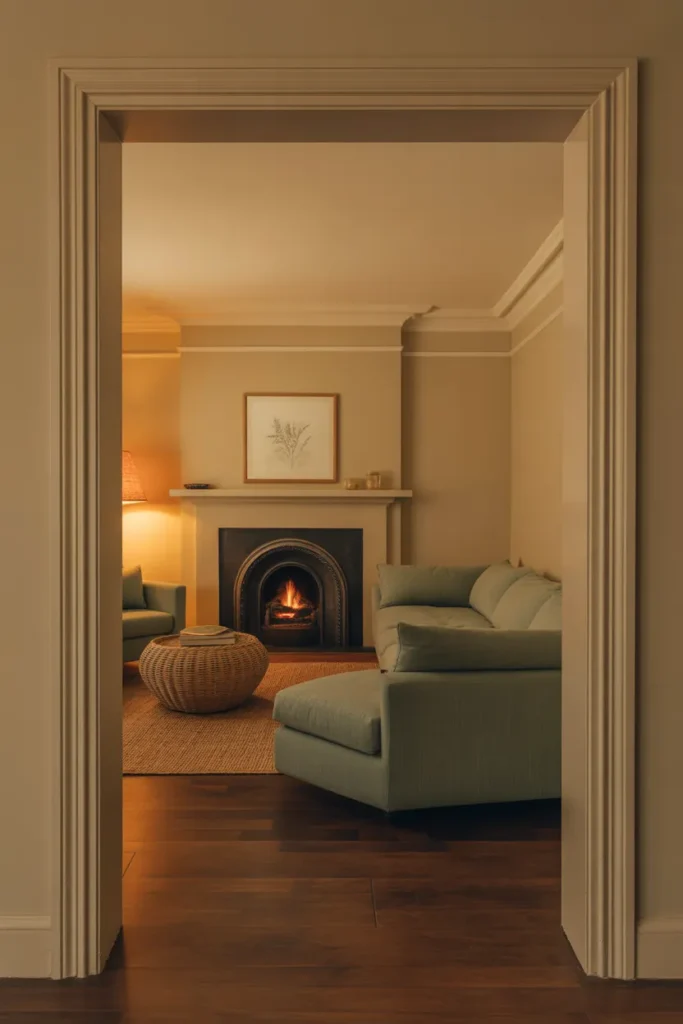
10. Boucle Sectional in a Minimal Room for Maximum Textural Impact
Boucle upholstery has proven staying power into 2026 because it delivers textural richness in rooms that are otherwise restrained. In a minimal living room with white or near-white walls, smooth floors, and few decorative objects, a boucle sectional does the work of an entire layer of decor. You do not need throw pillows, gallery walls, or additional textiles to make the room feel complete.
This is a decision-simplifying approach to decorating. Fewer decisions means fewer mistakes. The boucle becomes the texture anchor, and everything around it is kept flat, smooth, and simple.
The practical concern with boucle is maintenance. In households with pets, the looped texture traps hair and requires more frequent cleaning than flat-woven or performance fabrics. For pet owners, a boucle-look performance fabric is available from several manufacturers and offers the visual benefit without the maintenance difficulty.
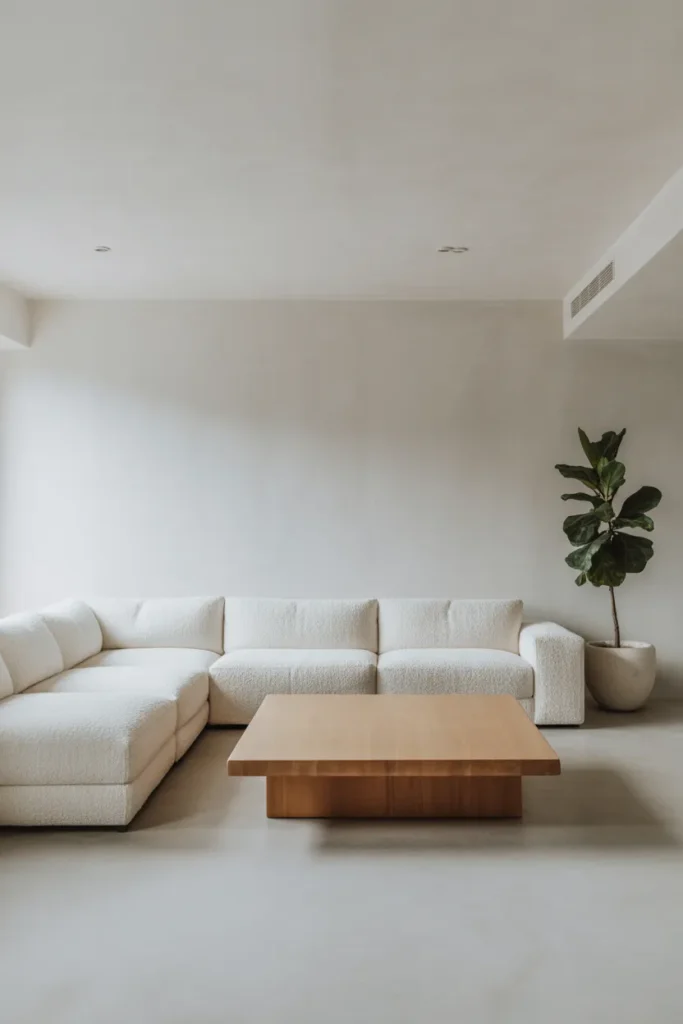
11. Sectional Plus One Accent Chair Formation for Balanced Social Seating
A sectional alone, without a counterpoint, creates a seating formation that points everyone in the same direction, typically toward a TV. Adding a single accent chair across from the shorter arm of the sectional introduces a second seating orientation and makes the room work as a space for actual conversation, not just media consumption. This is one of the most underused functional living room layout ideas for homes that host guests regularly.
The chair does not need to match the sectional. In fact, a deliberate contrast, different material, different leg style, or slightly different scale, makes the layout feel curated rather than matchy. The chair should be close enough to be part of the conversation zone, ideally within 7 to 8 feet of the sofa.
Avoid placing the accent chair in a corner where it becomes decorative rather than functional. It should be angled slightly toward the sofa, not squared to the wall.
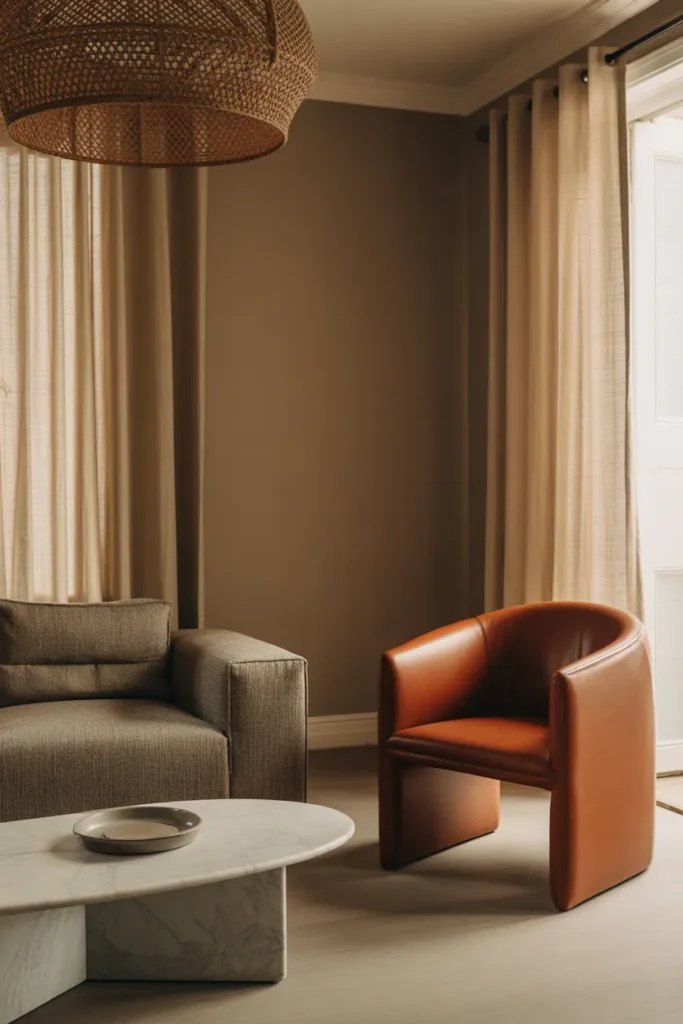
12. Dark Upholstery Sectional in a Light-Filled Room for Grounded Contrast
The instinct in bright, light-filled rooms is to use light upholstery. But a dark sectional in a genuinely bright room is one of the most grounding and sophisticated sectionals living room ideas available. The contrast between dark furniture and a white or warm white room creates visual depth, prevents the space from reading as flat, and makes the seating area feel intentional and anchored.
Charcoal, deep navy, forest green, and near-black work well in this role. The darker the sofa, the more important it becomes to ensure the room has consistent, generous light. A dark sectional in a dim room creates heaviness. The same sofa in a bright room creates drama.
Pair dark upholstery with warm-toned natural materials like rattan, travertine, or warm oak to prevent the room from feeling cold. The warmth of the surrounding materials balances the visual weight of the dark sofa.
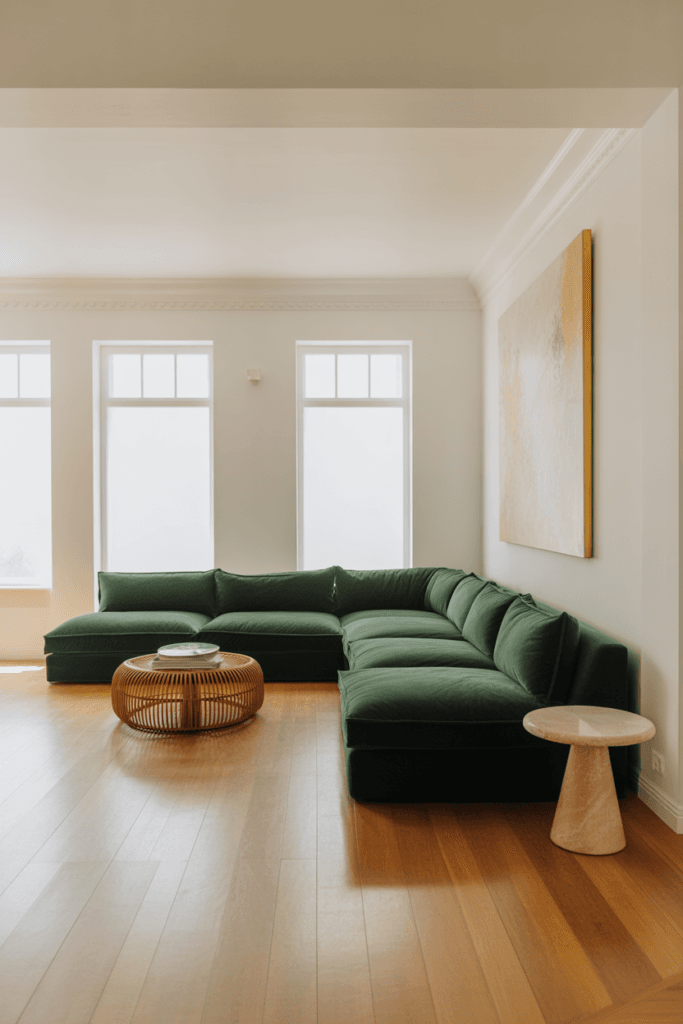
13. Outdoor-Adjacent Indoor Sectional for a Seamless Indoor-Outdoor Flow
In homes with sliding glass doors or large windows that open to a patio or deck, the sectional placement should consider the transition, not just the interior. Positioning the open end of an L-shape sectional toward the door, rather than the wall, allows the seating to serve both the indoor room and the outdoor space during gatherings. It is one of the more practical modern living room layout ideas for warmer climates and open-plan homes.
Use performance fabric in this configuration without exception. Even with doors closed, UV exposure and humidity fluctuations near large glass panels degrade standard fabric faster than most people expect.
Keep the coffee table in this layout lower than usual, around 14 to 16 inches, so sightlines remain unobstructed from the seating through to the outdoor space. A full-height table blocks the connection between inside and outside.
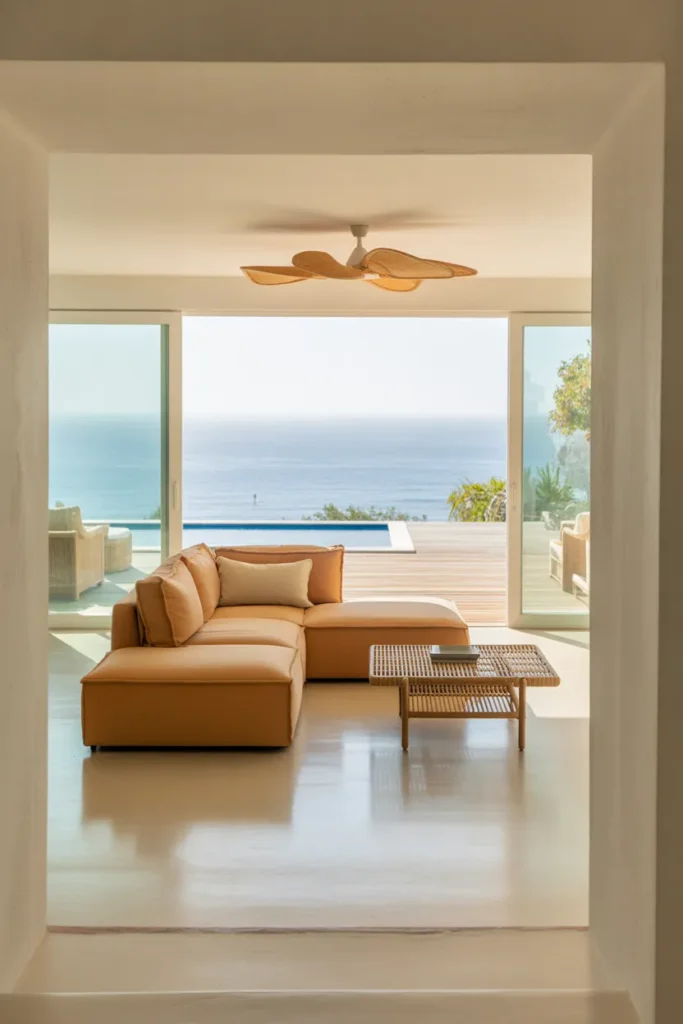
14. Linen Sectional in an Earthy, Tonal Living Room
Natural linen upholstery anchors a living room in a way that synthetic fabrics do not. The texture, the subtle variation in the weave, and the way linen responds to light all contribute to a room that feels genuinely warm rather than staged. In an earthy, tonal room, anchored in terracotta, warm white, ochre, and natural wood, a linen sectional ties every element together without being the loudest thing in the space.
This is one of the most livable sectionals living room approaches for 2026. The overall effect is calm, layered, and grounded. It reads well in both modest and larger homes because the quality is in the texture rather than the scale.
Linen does wrinkle and shows wear faster than performance fabric. It is better suited to lower-traffic households or rooms used primarily for adults. For high-traffic rooms, a linen-look performance weave delivers a similar visual result with significantly better durability.
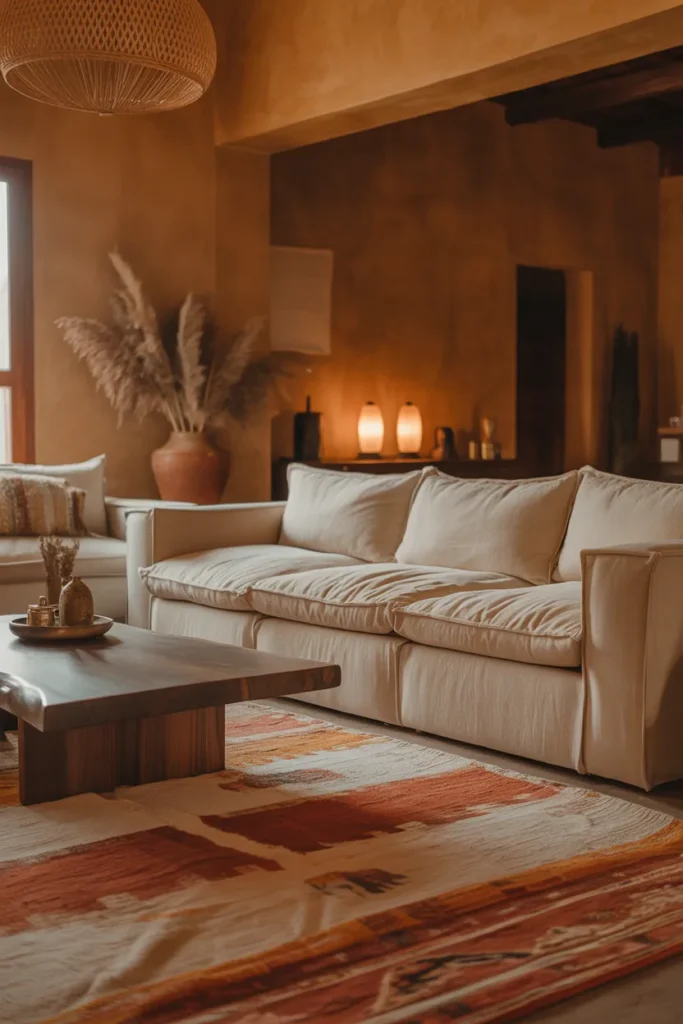
15. Asymmetric Sectional in a Wide Room to Avoid a Furniture Lineup
Wide living rooms, those that are significantly broader than they are deep, present the temptation to fill the width with as much furniture as possible. The result is a lineup of equal-weighted pieces that makes the room look like a showroom floor. An asymmetric sectional, where the chaise extends significantly farther on one side than the other, naturally resolves this by distributing visual weight unevenly and creating movement across the width.
This works well in rooms where the television is off-center or where an architectural feature like a fireplace or window is on one side. The longer chaise can point toward or away from the focal point based on what creates the better sightline.
Balance the asymmetry of the sofa with a symmetric overhead element, a centered pendant or chandelier, to give the room an anchor point that prevents the asymmetry from feeling chaotic.
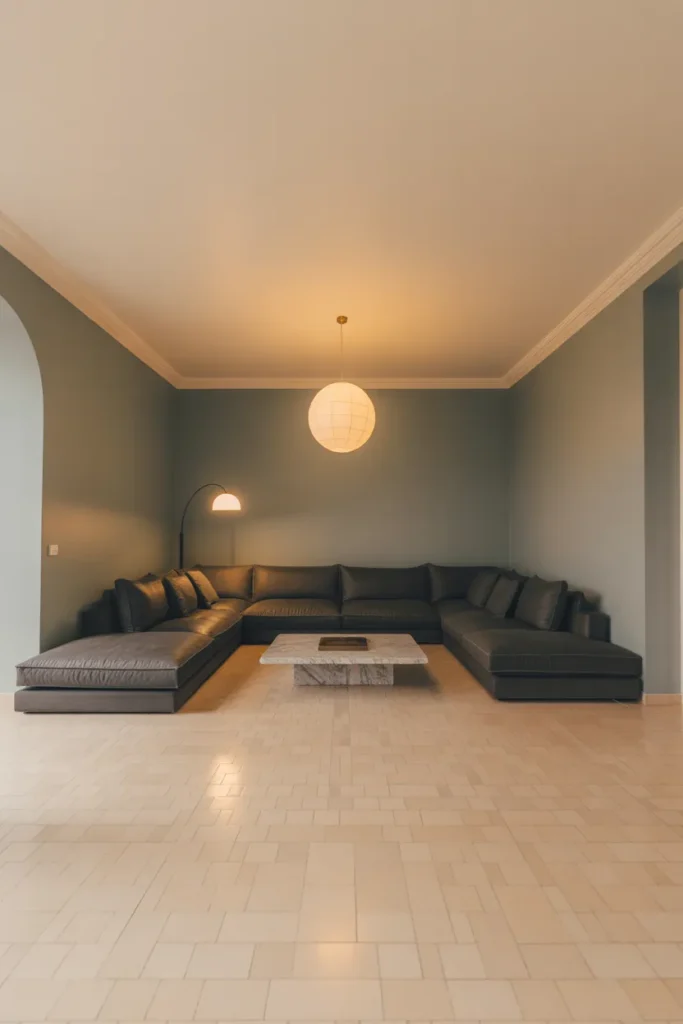
16. Modular Island Layout for a Dedicated Media or Home Theater Room
A media room is one of the few spaces where placing a large sectional in the center of the room, surrounded by walkable space on all sides, makes genuine functional sense. This island configuration ensures that every seat has a direct sightline to the screen without necks craning or seats being cut off at an angle. It is one of the most purposeful sectionals living room configurations for rooms dedicated primarily to viewing.
The sofa in this layout should face the screen squarely. Avoid angling it. Media rooms require precision in sightline geometry, not decorative looseness. The screen height should align with the eye level of a seated viewer, typically 42 to 48 inches to the center of the screen from the floor.
Sound also factors into furniture placement in a media room. Sofas with high backs absorb sound from rear speakers. If you have a surround system, keep the sectional back height below 32 inches or use a configuration where the rear speakers are elevated above the back of the sofa.
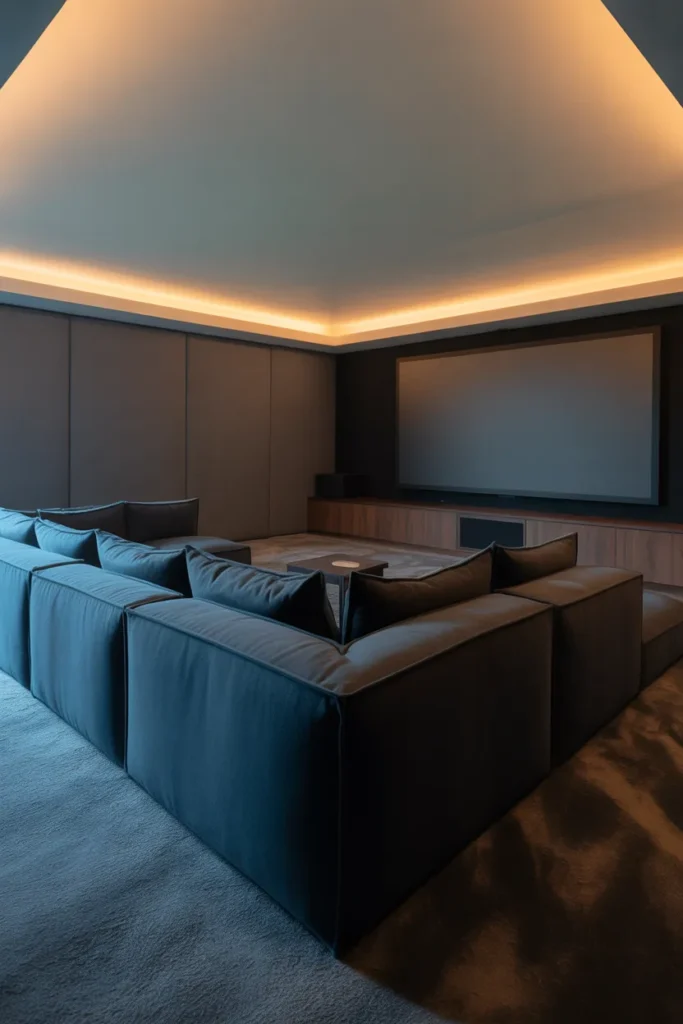
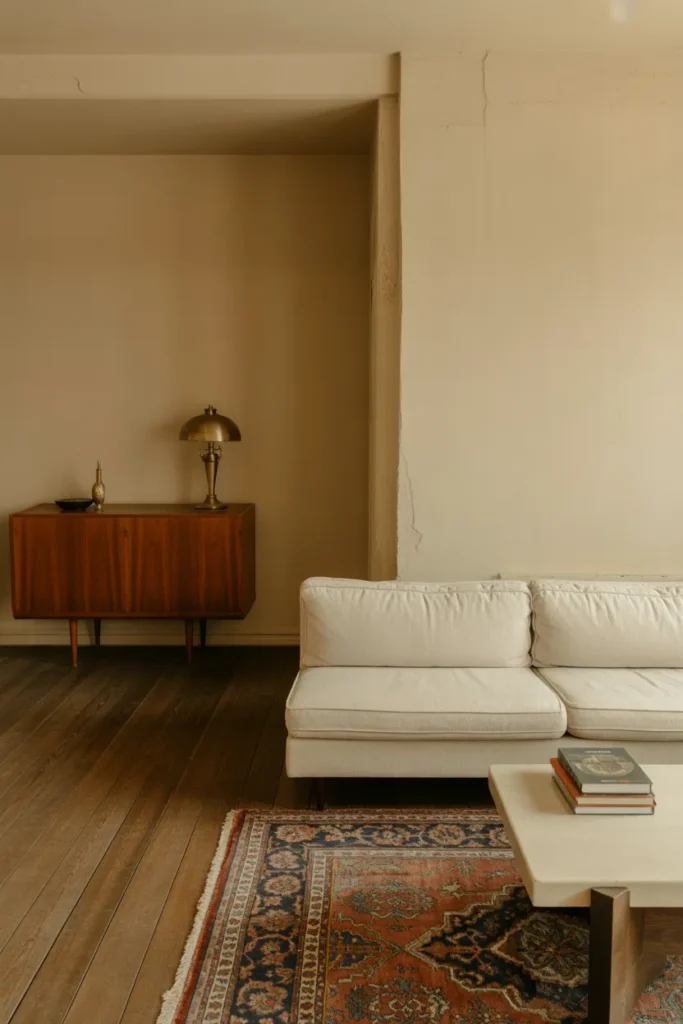
17. Vintage-Meets-Modern Sectional Setup for a Layered Living Room
Pairing a contemporary sectional with deliberately vintage or antique elements is one of the most character-rich approaches to living room design in 2026. The key is contrast in age and not in color. A clean-lined modern sectional in a neutral tone sits convincingly alongside an aged Persian rug, vintage brass accessories, or a mid-century credenza, because the colors can still be cohesive even while the design eras are different.
This approach works because modern sectionals tend to be large and graphically simple, which gives older, more detailed pieces room to breathe beside them. The vintage elements add specificity and history; the sectional adds order and comfort.
The mistake to avoid is pairing a very ornate sectional with very ornate vintage pieces. The room becomes visually exhausting. The sectional should be the calm, simple element and the vintage pieces should be the interesting ones.
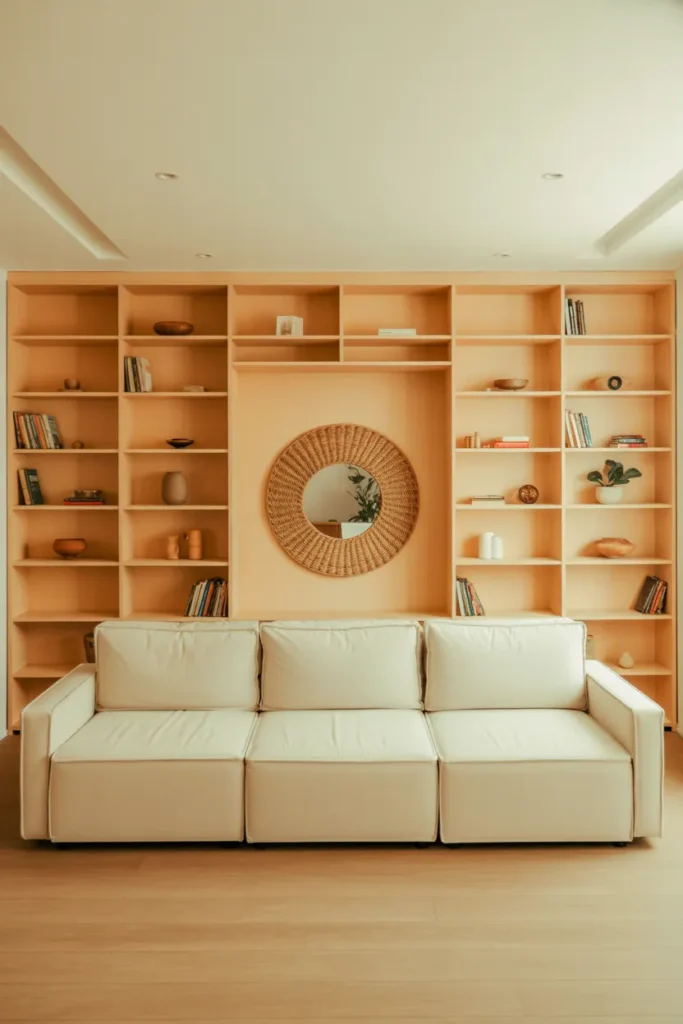
18. Built-In Look With Modular Units for a Custom Sectional on a Budget
Achieving the look of a custom built-in sectional without the custom price point has become significantly more accessible in 2026. The approach is to use modular sofa units from a single collection and flank the configuration with built-in or freestanding bookcases that abut the sofa’s arms. When the bookcase height matches the sofa arm height and the materials share a consistent tone, the entire arrangement reads as one intentional built-in unit rather than a collection of separate pieces.
This works especially well in living rooms that lack architectural detail. The pseudo built-in adds a sense of permanence and investment to a room that might otherwise feel generic.
Paint the wall behind the entire arrangement the same color as the shelving to reinforce the built-in illusion. If the shelves are white and the wall behind them is a different color, the eye reads them as freestanding. A single continuous color unifies everything into one composed backdrop.
Final Thoughts
Choosing among sectionals living room ideas for 2026 comes down to three things: the actual dimensions of your room, the primary way you use the space, and the visual weight you want the sofa to carry. A layout that works beautifully in a 400-square-foot open plan will overwhelm a traditional 12-by-14-foot living room, and vice versa. Measure carefully, consider clearance before scale, and let the sofa’s configuration respond to the room rather than fighting it.
If this guide helped you clarify your layout decision, save it to your Pinterest boards so you can reference it while shopping or planning. Each of these ideas applies to real floor plans and real usage patterns, not just aspirational spaces.
Explore more living room space planning ideas, sectional color guides, and layout tutorials to continue building toward a room that actually works for how you live.