
If you are planning a kitchen renovation and want to incorporate stonewall kitchen ideas 2026 that actually hold up in real homes — not just on mood boards — this guide gives you exactly that. Each idea below is chosen for its practicality, visual impact, and ability to work across different home sizes and layouts. You will leave with clear direction, not just inspiration.
1. Floor-to-Ceiling Stacked Stone Accent Wall Behind an Open-Shelf Kitchen
A floor-to-ceiling stacked stone wall behind open shelving is one of the most structurally powerful moves in modern kitchen layout ideas 2026. The vertical height draws the eye upward, making the kitchen feel taller without any structural changes. The rough, layered texture of stacked stone creates natural depth that painted drywall simply cannot replicate.
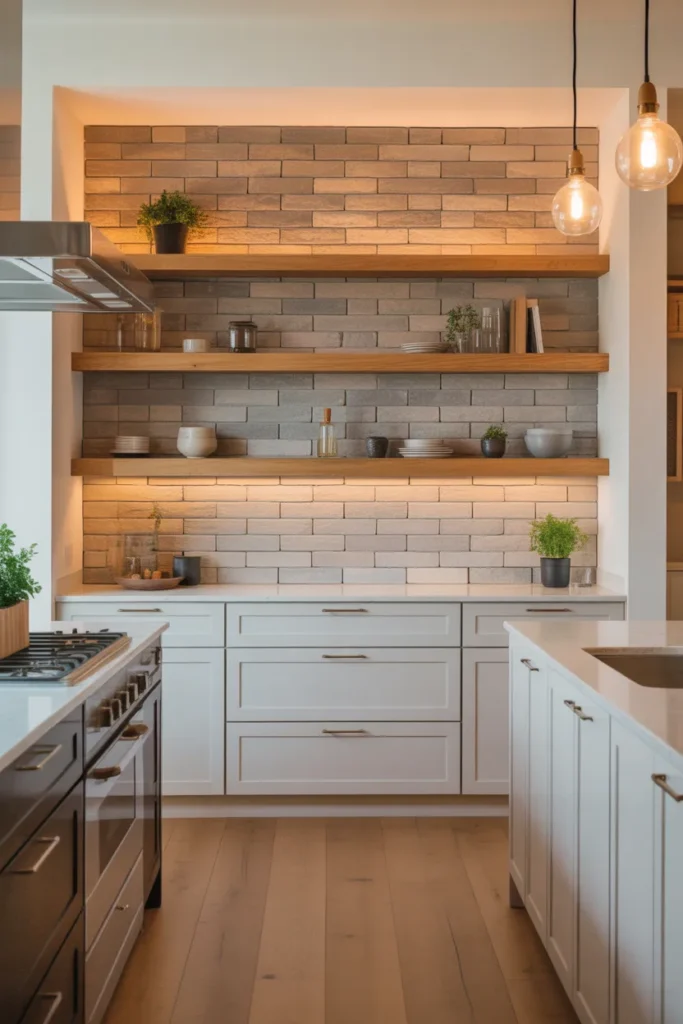
This works best in kitchens where one wall is designated as the design focal point — typically the wall opposite the main entry point or the wall visible from the living area in an open kitchen layout. Open shelving mounted directly in front of the stone lets the material show between and around objects, so the stone becomes part of the display rather than a hidden backdrop.

The most common mistake with this approach is choosing a stacked stone with too much color variation. A stone with warm tan, rust, and gray all in the same panel can compete with everything placed in front of it. A more tonal, single-family palette — warm gray ledgestone or pale limestone — gives the shelving and objects on it room to breathe.
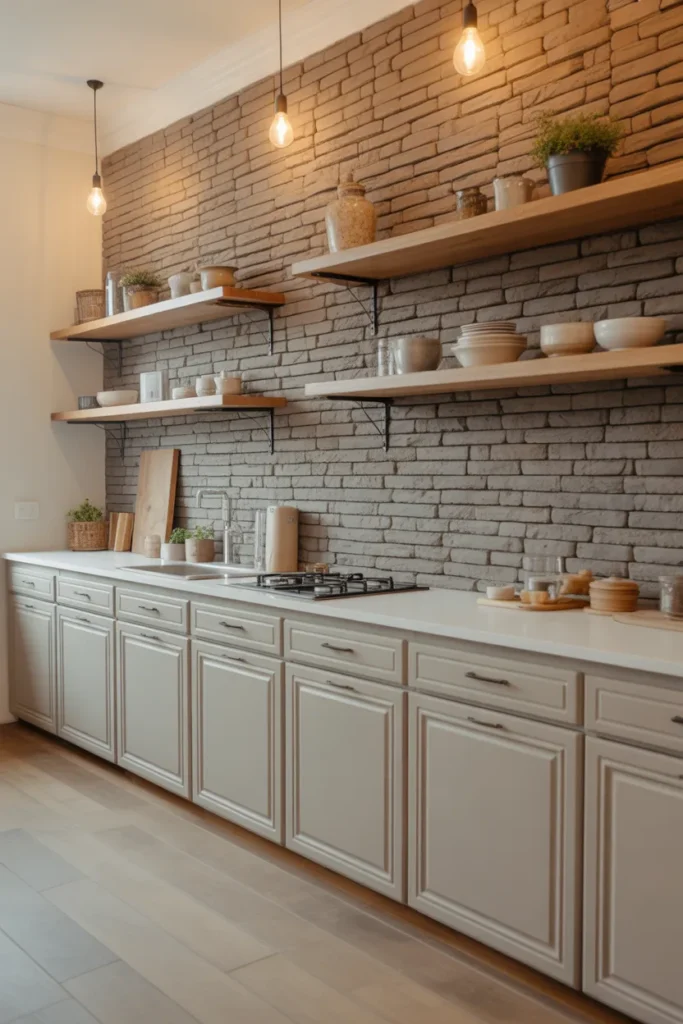
This direction suits medium to large kitchens in open-plan homes, mountain cabins, and transitional-style houses. It is not the right fit for very small kitchens where the texture will overwhelm the space.
2. Rough-Cut Limestone Feature Wall in a White Galley Kitchen for Maximum Contrast
In a white galley kitchen, a rough-cut limestone end wall creates the exact kind of contrast that transforms a functional but forgettable layout into a deliberate design statement. White cabinetry and white countertops on both sides of the galley corridor keep the space bright and practical. The limestone wall at one end stops the eye and anchors the room.
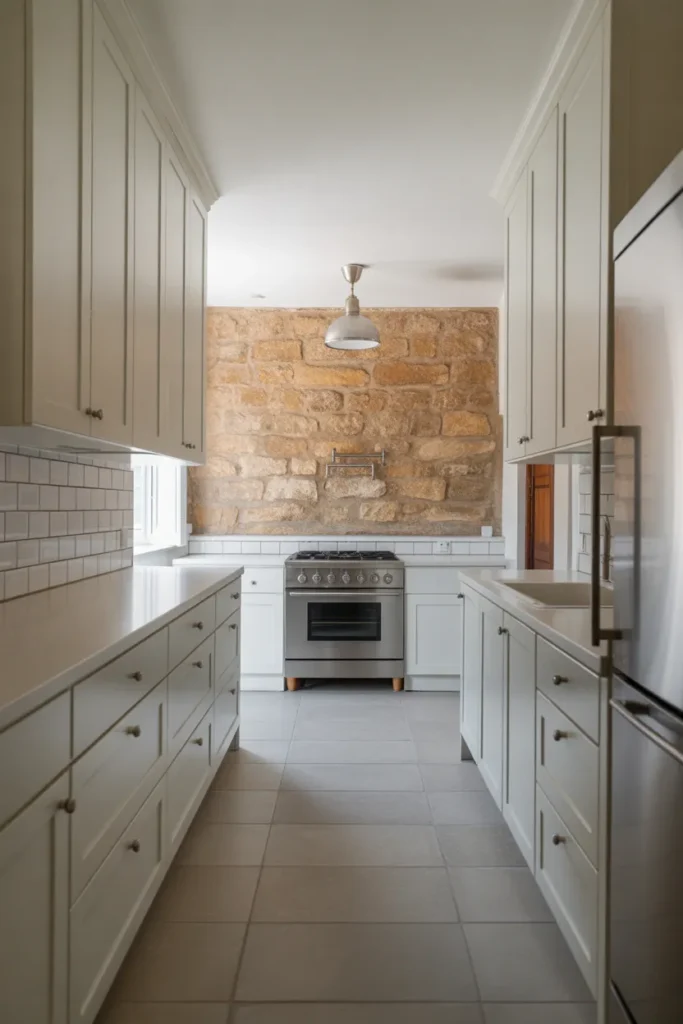
Limestone in its rough-cut or split-face form has a sandy, organic quality that reads as warm rather than cold. This is important in a galley layout, which can feel clinical when everything is white. The stone introduces a natural material that softens the hard geometry of the two parallel cabinet runs without adding clutter.
This is one of the most effective small kitchen layout design decisions for galley kitchens in apartments or narrow urban homes. It requires no change to the cabinet layout or workflow — the stone goes on the terminal wall only, often the wall at the end of the corridor where a window or range is positioned.
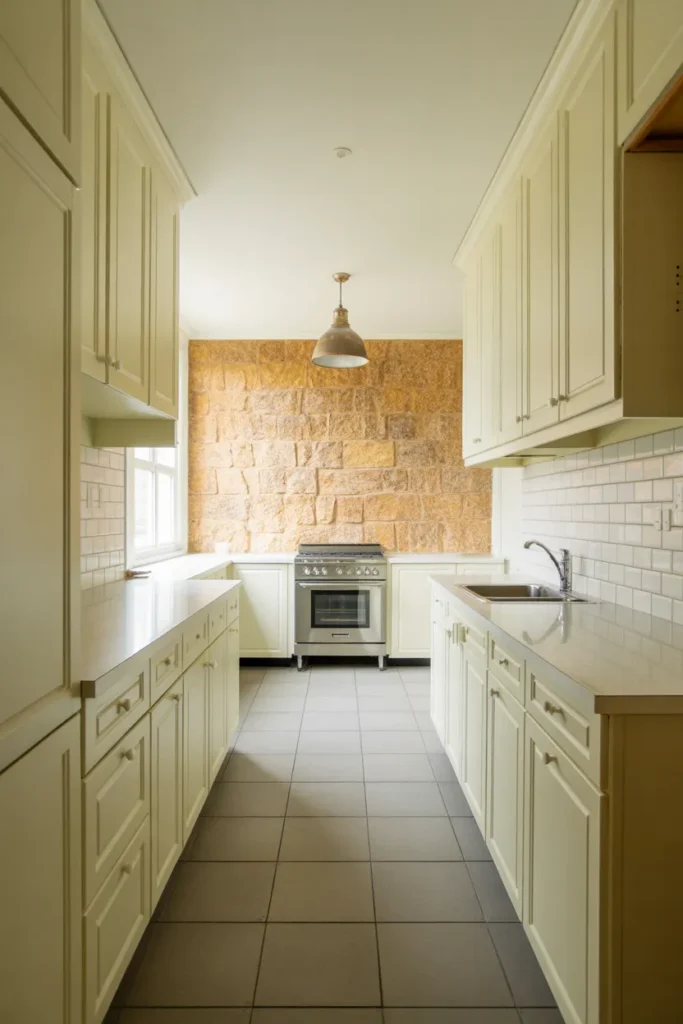
Avoid mounting stone on a wall that also needs to carry upper cabinets. The irregular surface makes cabinet installation unreliable. Reserve the stone for a wall that is free of cabinetry and hardware.
3. Dark Basalt Stone Wall With Integrated Range Hood in a Luxury Island Kitchen
Dark basalt or honed black slate used as a full stone wall behind the range and integrated hood creates a kitchen focal point with genuine architectural weight. In a luxury island kitchen layout, this wall becomes the anchor of the entire design — every other element in the room is oriented toward it.
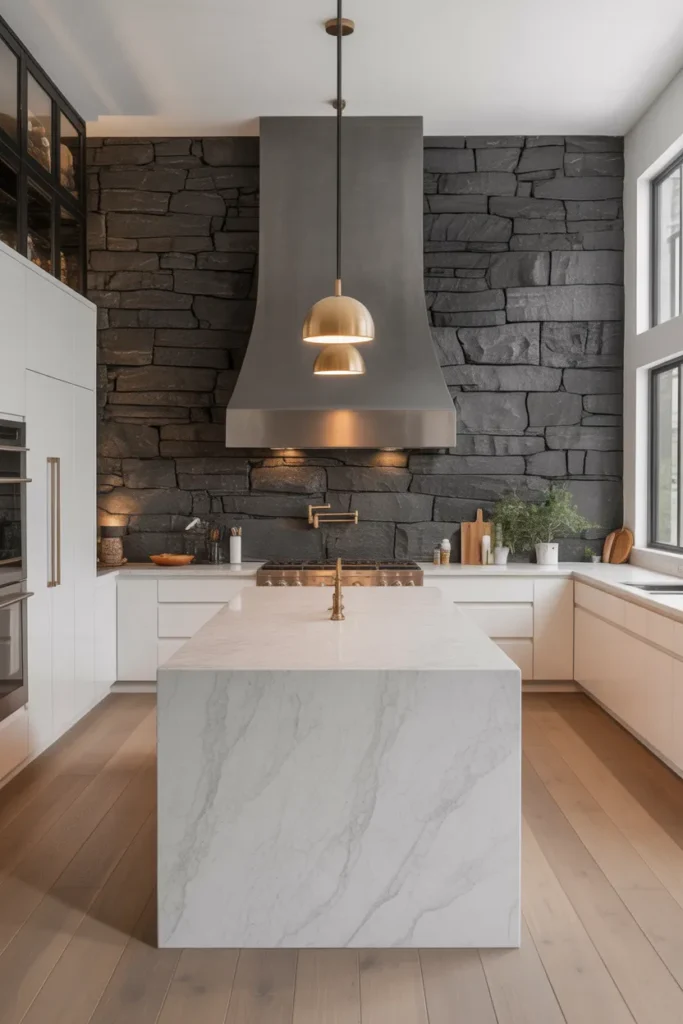
The natural variation in dark basalt — subtle shifts between deep charcoal, black, and faint blue-gray — gives the wall a richness that painted surfaces cannot achieve. A custom range hood integrated flush into the stone, either in a matching stone surround or in blackened steel, completes the wall as a single cohesive architectural element rather than a collection of separate parts.
This configuration works best in kitchens with high ceilings, where the full height of the stone wall can be utilized. In a standard 8-foot ceiling kitchen, a floor-to-ceiling dark stone wall can feel compressive. In a kitchen with 10-foot or vaulted ceilings, the same wall becomes genuinely dramatic.
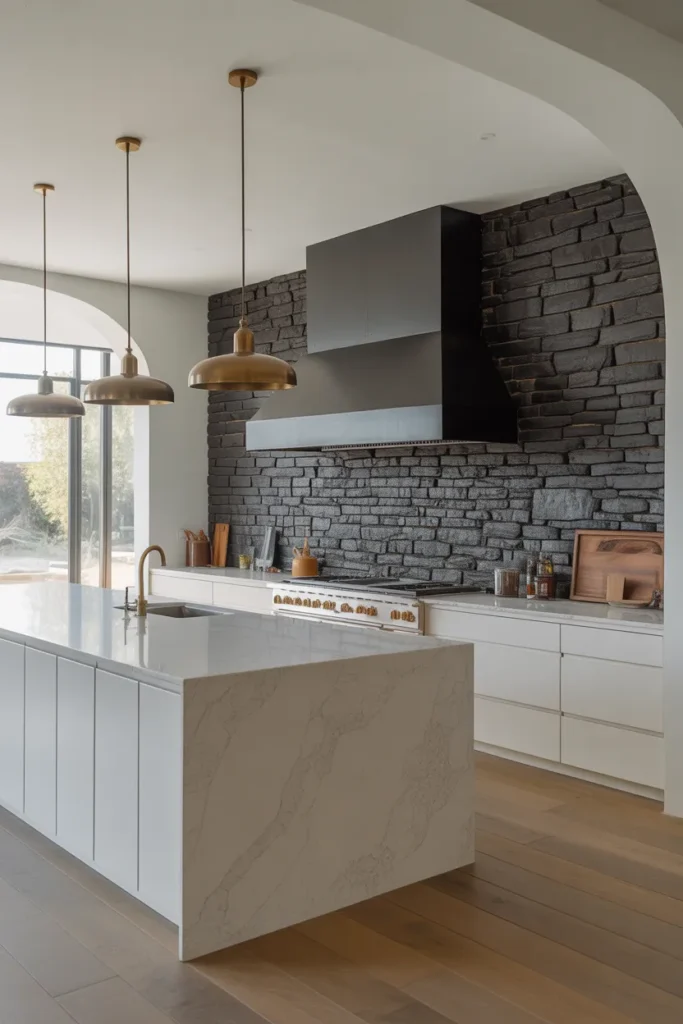
The island in this layout should be kept light — white quartz, pale oak, or concrete — to prevent the kitchen from reading as uniformly dark. The contrast between the stone wall and the lighter island surface is what makes the design functional as well as striking.
4. Whitewashed Stone Wall in a Farmhouse Kitchen With Open Shelving and Apron Sink
A whitewashed stone wall in a farmhouse kitchen layout softens the raw quality of natural stone while preserving its texture and dimension. The wash of white over the stone allows the surface irregularities — the bumps, crevices, and layered edges — to remain visible, while the overall tone of the wall stays light and cohesive with a classic American farmhouse palette.
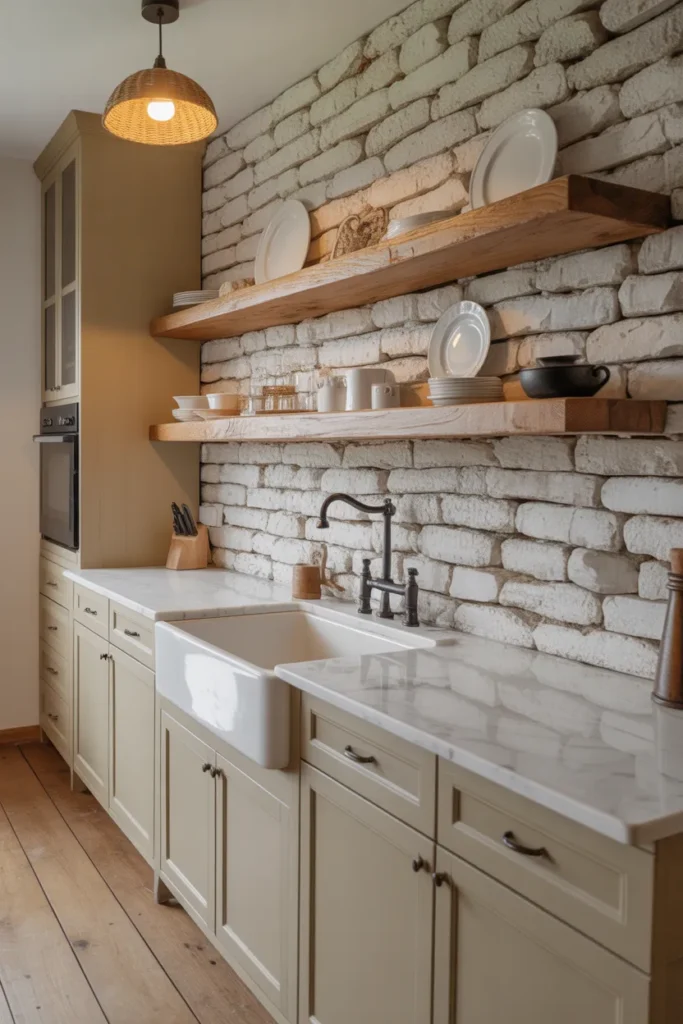
This is one of the stonewall kitchen ideas 2026 that works particularly well in older homes, rural properties, or new-builds designed to reference traditional architecture. The whitewashed finish bridges the gap between rustic and refined — it is not too rough for a family kitchen but still carries the warmth of a natural material.
Pairing this wall with an apron-front sink below and open wooden shelving above is a functional kitchen floor plan decision as much as an aesthetic one. The apron sink signals the farmhouse reference clearly, and open shelving above keeps the stone visible between displayed items. This arrangement avoids the wall becoming entirely hidden behind cabinetry, which would defeat the purpose of the material investment.
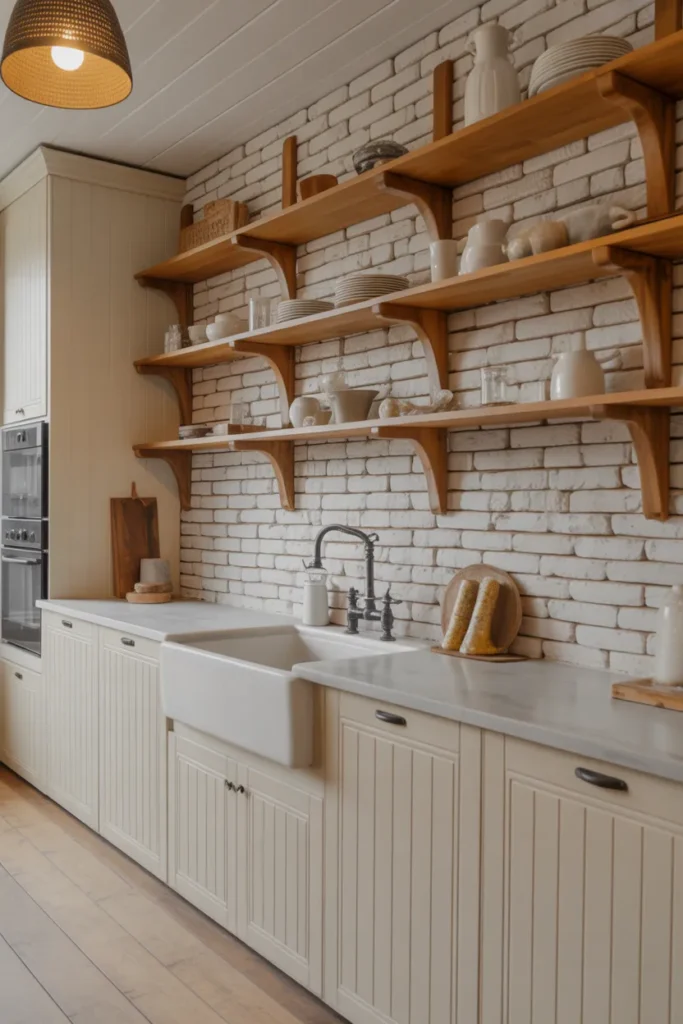
One important practical note: whitewashed stone should be sealed before use in a kitchen. The wash opens the surface slightly, which can allow grease and cooking residue to penetrate without a proper sealant coat applied over the top.
5. Thin Porcelain Stone-Look Panels as a Full Backsplash in a Modern Kitchen
For homeowners who want the visual quality of natural stone on a kitchen wall without the weight, installation complexity, or maintenance demands of real stone, thin-format large-body porcelain panels that replicate stone are a genuinely practical alternative. In a modern kitchen layout, these panels function as a full backsplash from countertop to upper cabinet — or countertop to ceiling — with near-seamless grout lines.
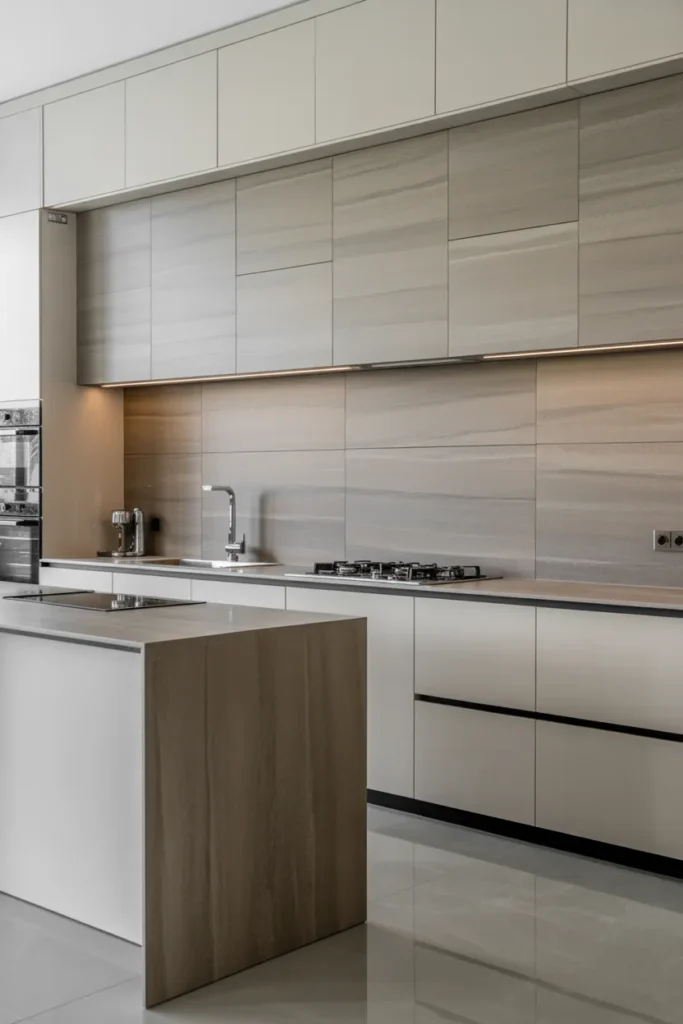
The advantage of this approach in kitchen space planning ideas is significant. Thin porcelain panels are non-porous, require no sealing, resist heat and moisture, and can be installed over existing drywall without structural reinforcement. A single large-format panel — 5 feet by 10 feet or larger — eliminates the grout grid entirely, which gives the wall a clean, architectural quality that tile cannot.
This is particularly effective in sleek, contemporary kitchens with handle-free cabinetry where every surface is expected to be smooth and precise. The stone-look pattern — whether it replicates Calacatta marble, Nero Marquina, or quartzite — gives the kitchen visual warmth without the surface inconsistency of real stone.
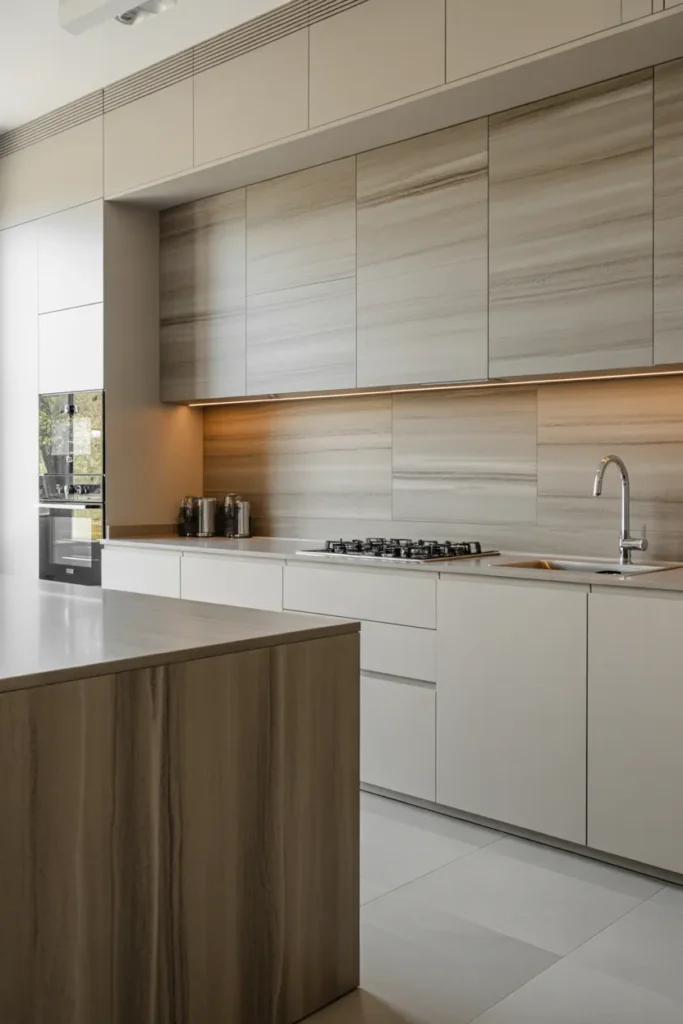
The decision point here is authenticity versus performance. If you want the genuine texture, variation, and aging quality of real stone, porcelain will not fully satisfy. If your priority is a high-performing, low-maintenance surface that looks exceptional, this is one of the most intelligent modern kitchen layout ideas 2026 can offer.
6. Cobblestone or River Rock Lower Wall Detail in a Rustic Country Kitchen
Using natural cobblestone or river rock as a lower wall treatment — from the floor up to countertop height — is a less common but highly effective stonewall kitchen idea for rustic country kitchens. The rounded, organic shapes of river rock create a surface that is both visually rich and deeply tactile. It reads as a built-in architectural feature rather than a decorative addition.
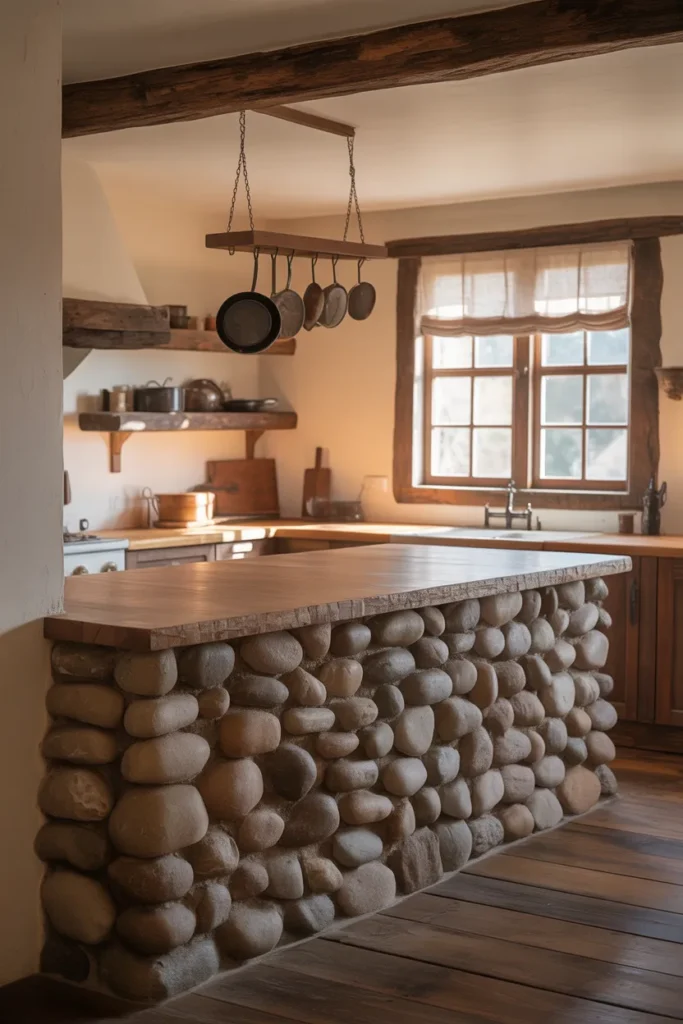
This approach is most appropriate for kitchens in rural properties, log homes, or houses designed with heavy natural material use throughout. It connects the kitchen to the broader material vocabulary of the home — stone floors, wood beams, rough plaster — in a way that feels consistent and considered rather than decorative.
From a functional kitchen floor plan standpoint, the lower wall position is the right choice. Upper walls in kitchens need to carry cabinetry, lighting, and ventilation. A stone lower wall sits below the functional zone and requires no hardware penetration. The countertop above it acts as a natural cap that transitions cleanly into the work surface.
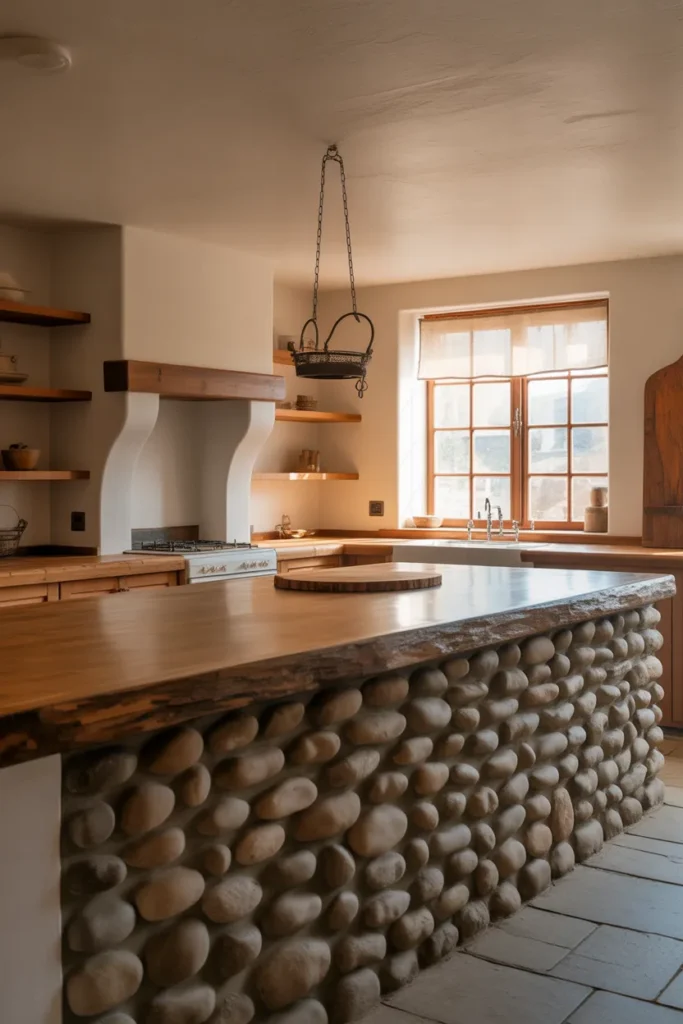
The practical challenge with river rock as a wall material is cleaning. The rounded surfaces and recessed mortar joints collect grease and cooking residue over time. This application is best suited for kitchen walls that are away from the cooking zone — the perimeter wall opposite the range, or the wall beneath a breakfast bar overhang.
7. Marble Slab Feature Wall Behind the Range in a Transitional Kitchen With Two-Tone Cabinets
A full marble slab installed as a range surround wall is one of the most refined stonewall kitchen ideas 2026 can offer in a transitional setting. Unlike marble tile — which introduces grout lines and a more traditional grid pattern — a single marble slab reads as one continuous surface with natural veining flowing uninterrupted from edge to edge. This is a material decision that immediately elevates the visual quality of the entire kitchen.
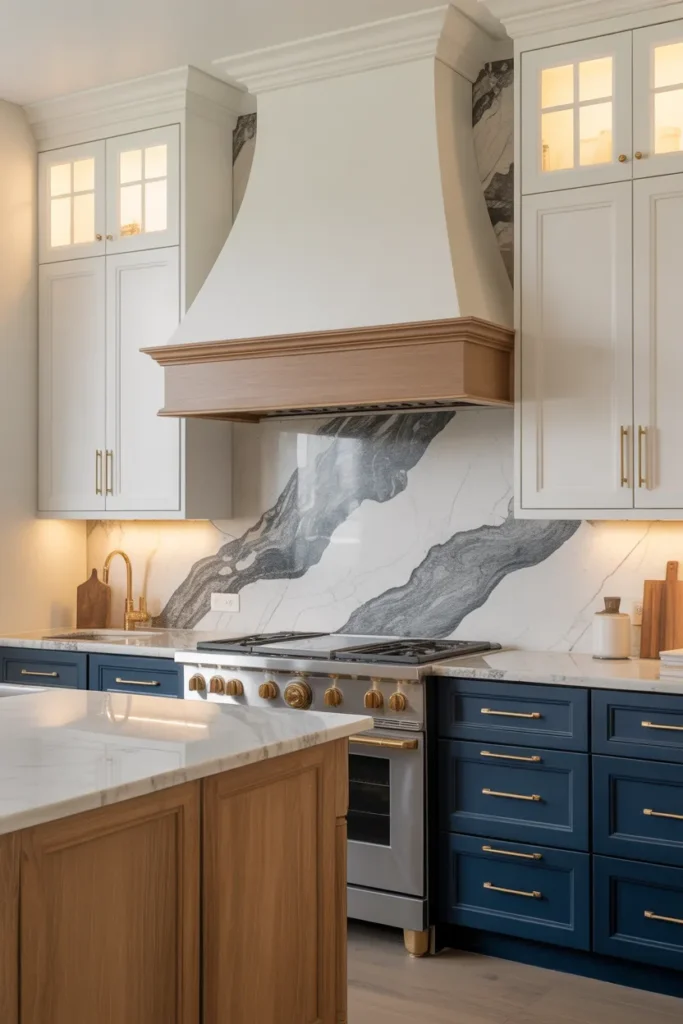
In a transitional kitchen layout — where traditional forms like shaker cabinetry meet clean, modern proportions — a marble slab feature wall occupies the sweet spot between the two aesthetic registers. It is natural and organic enough to complement the shaker profile, and monolithic enough to satisfy modern design sensibilities.
Two-tone cabinetry is the right pairing for this wall. Dark lower cabinets — navy, charcoal, or sage — anchor the room and provide a contrast base for the marble above. White or cream upper cabinets keep the upper portion of the kitchen light, ensuring the marble wall reads clearly rather than disappearing into a uniformly dark room.
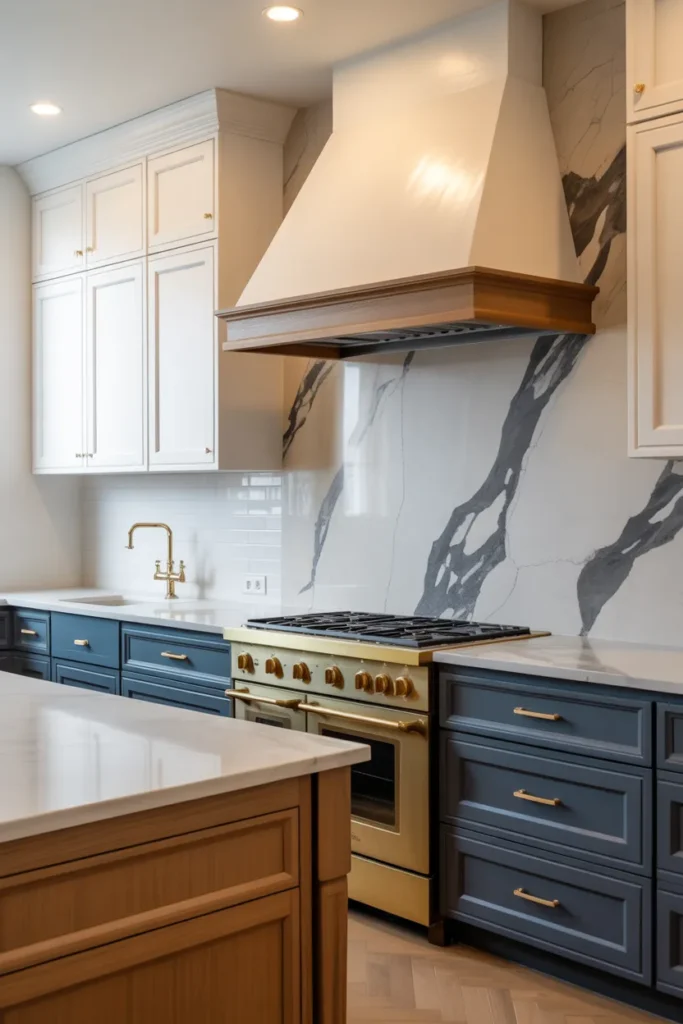
The most important planning decision with a slab marble wall is veining orientation. Vertical veining makes the wall feel taller. Horizontal veining creates a more grounded, landscape quality. Neither is wrong, but the choice should be made intentionally based on your ceiling height and the overall proportions of the kitchen.
8. Exposed Brick Wall Painted in Muted Sage for a Kitchen That Bridges Old and New
Exposed brick painted in a muted, low-saturation sage green is one of the most intelligent ways to use an existing architectural material as a design feature in an older home kitchen. The brick texture remains visible through the paint, preserving the character of the original material while shifting its color into a palette that works with contemporary kitchen design.
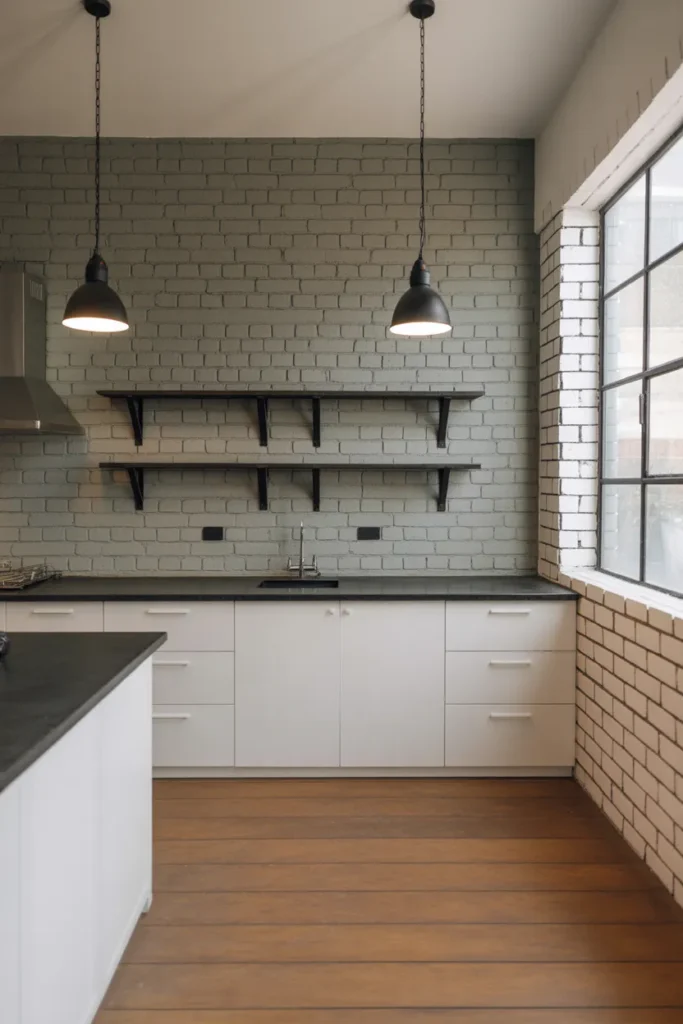
This approach is particularly well-suited to open kitchen layouts in urban brownstones, older craftsman homes, and converted industrial apartments where brick walls are already present. Rather than concealing the brick behind drywall or tile, painting it in a considered color turns a structural given into a deliberate design choice.
Sage green as the paint color works because its gray undertone keeps it from reading as overly colorful or trend-dependent. It bridges the warm, earthen quality of the brick with the cooler tones of modern cabinetry and appliances. This is one of the most accessible functional kitchen floor plans for homeowners renovating an existing space rather than starting from scratch, because it requires only paint — no demolition, no new material installation.
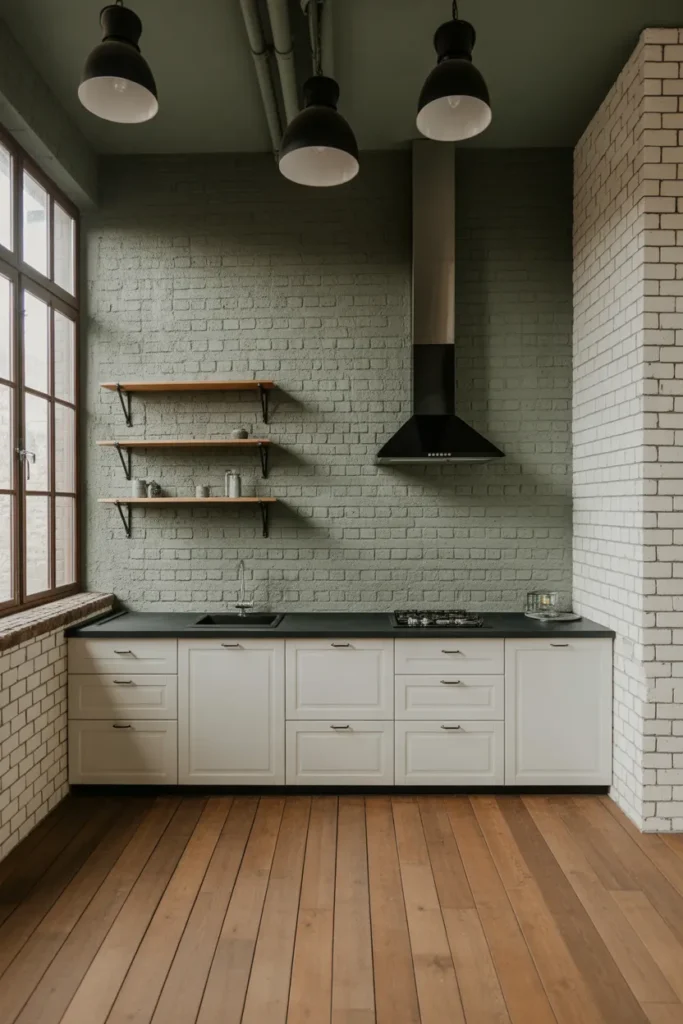
The key decision point is paint finish. A flat or matte finish on painted brick preserves the most texture and light absorption, which keeps the wall looking natural. A satin or eggshell finish makes the surface easier to clean but adds a slight reflectivity that can make the texture look less authentic.
9. Travertine Stone Wall in a Warm Mediterranean-Style Kitchen With Arched Details
Travertine is one of the oldest and most structurally distinctive natural stones used in residential design. Its characteristic small voids, cross-cut patterning, and warm ivory-to-amber tone make it immediately legible as a Mediterranean material. In a kitchen designed around that reference — arched doorways, plaster ceilings, terracotta floors — a travertine stone wall is the most cohesive choice available.
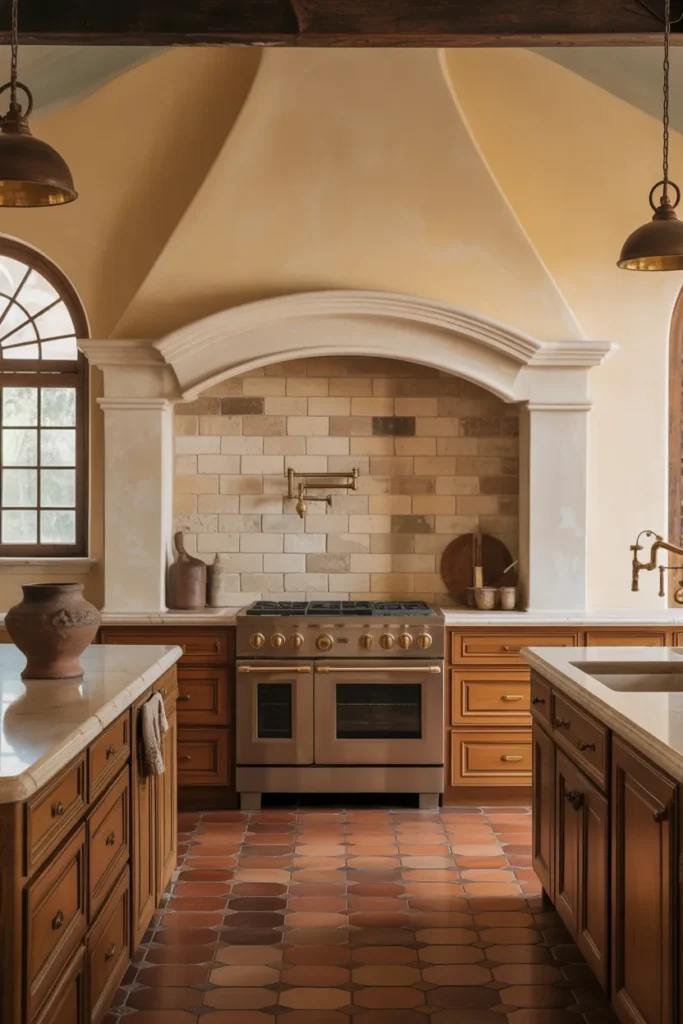
In terms of kitchen space planning ideas, the travertine wall works best as a continuous surface behind the range and hood, extending to the full height of the wall. In a kitchen with arched architectural details, the stone wall can wrap around the arch surround, reinforcing the Mediterranean register throughout. The natural color variation in travertine — from pale cream to warm caramel within the same installation — creates a wall that looks as though it has been there for decades.
Travertine requires filling and sealing before installation in a kitchen context. The naturally occurring voids in the stone can trap grease and food residue if left unfilled. Filled and honed travertine — where the voids are grouted flush and the surface is smoothed — provides a flat, cleanable surface that still shows the distinctive cross-cut veining the stone is known for.
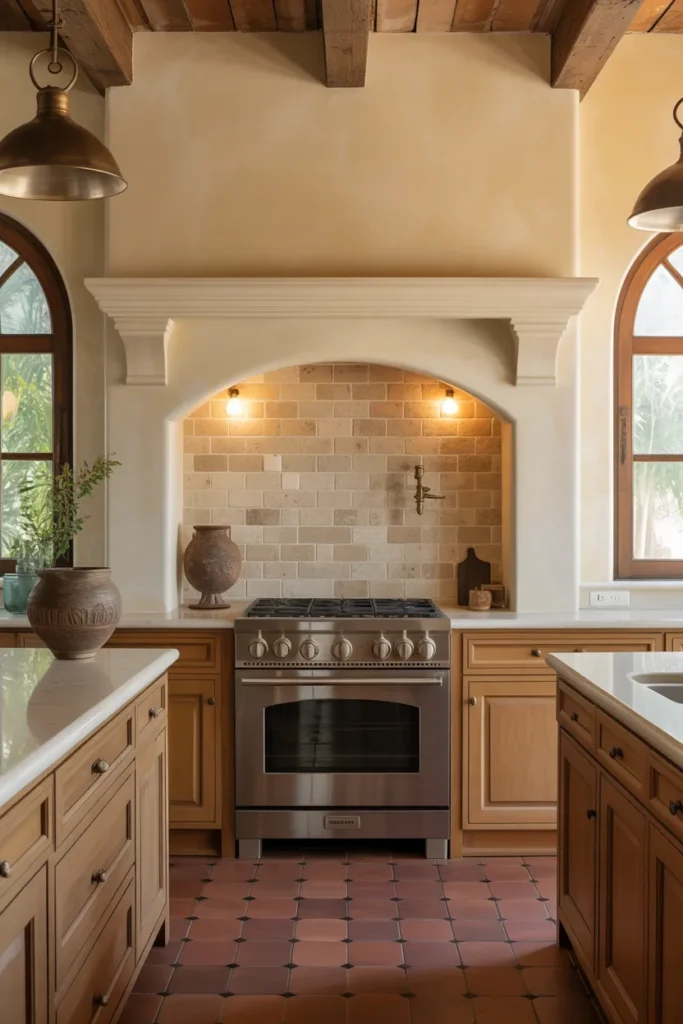
This is not the right material for a modern or minimalist kitchen. Its inherent warmth, texture, and historical association are an asset only when the surrounding design supports them. Used in the right context, travertine delivers a level of authenticity that manufactured stone alternatives cannot match.
10. Concrete-Look Microcement Wall in a Minimalist Kitchen for an Urban Loft Aesthetic
Microcement applied to a kitchen wall delivers a stone-adjacent surface that is smooth, seamless, and deeply suited to urban loft and minimalist kitchen aesthetics. Unlike poured concrete — which requires formwork and significant structural planning — microcement is a thin overlay applied directly over existing wall surfaces. The result is a matte, continuous, stone-gray wall with no joints, no grout lines, and minimal visual interruption.
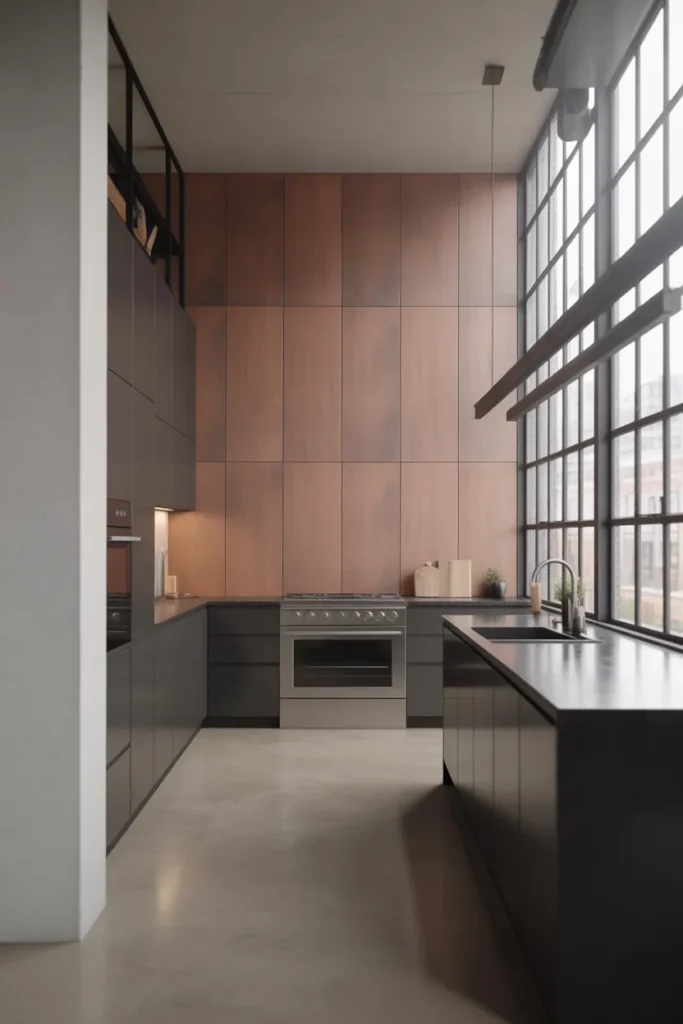
In a minimalist kitchen layout, particularly in a loft or open-plan urban apartment, a microcement wall behind the range or along the entire cooking wall creates a backdrop that is neither neutral nor distracting. It has enough texture and color depth to read as a material choice rather than a default finish, but it does not compete with the cabinetry, appliances, or hardware.
This is one of the most practical stonewall kitchen ideas 2026 for renters or homeowners who want a high-design wall surface without committing to heavy stone installation. Microcement is significantly lighter than natural stone, can be applied over tile or drywall, and can be removed or covered in a future renovation without structural damage.
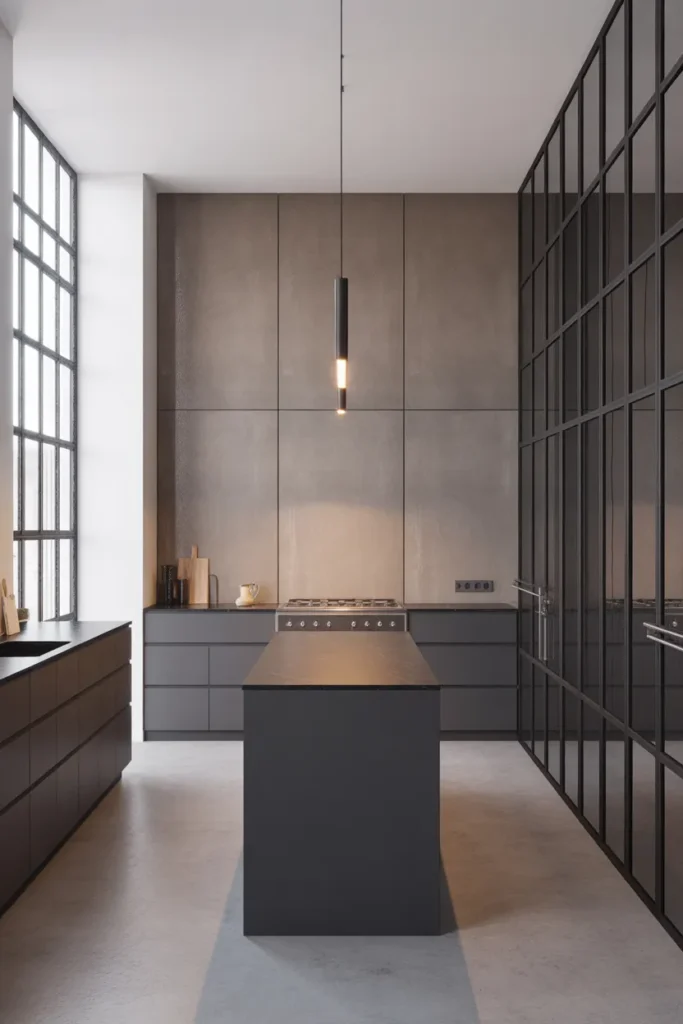
The critical application detail is topcoat sealing. Microcement without a proper polyurethane or epoxy topcoat is not kitchen-appropriate — it will stain and absorb moisture quickly. With the correct two or three-coat sealing process, the surface becomes fully waterproof and grease-resistant, making it as practical as it is visually refined.
Final Thoughts
The right stonewall kitchen ideas is not the one that looks best on a screen — it is the one that fits your actual layout, your home’s architectural language, and your daily cleaning and maintenance reality. The ten directions above cover everything from luxury natural stone slabs to practical porcelain panels and painted brick, precisely because no single material works for every home.
Save this post now so you have a concrete reference when you are ready to make decisions with a contractor or designer. Whether you are planning a full renovation or a single wall update, having a clear picture of what each material demands — and delivers — puts you significantly ahead in the process. If you are still exploring beyond stone, look into open kitchen layout guides and functional kitchen floor plan resources to make sure your layout works as well as your walls look.