
A dining table that works for summer requires more than a fresh centerpiece — it needs the right combination of materials, lighting, and layering to feel both comfortable and put-together for the season. These summer dining table setup ideas give you a clear, actionable framework for every scenario: indoor formal dinners, casual outdoor meals, small apartment tables, and everything in between. Each idea below tells you exactly what to use, how to arrange it, and what common mistakes to avoid.
1. Set a Linen Tablecloth Base That Makes Every Other Element Look More Expensive
The foundation of any well-styled summer table is the tablecloth, and linen is the single best material choice for the season. It is breathable, wrinkle-forgiving when handled correctly, and photographs beautifully in natural light — which matters for both real-life enjoyment and any social sharing you plan.
Natural, undyed linen in warm white, oat, or stone reads as expensive without the cost. It works on round, rectangular, and oval tables equally well. The key measurement: a six-to-eight-inch drop on each side. Too short looks staged; too long looks formal in a way that conflicts with the casual warmth of summer.
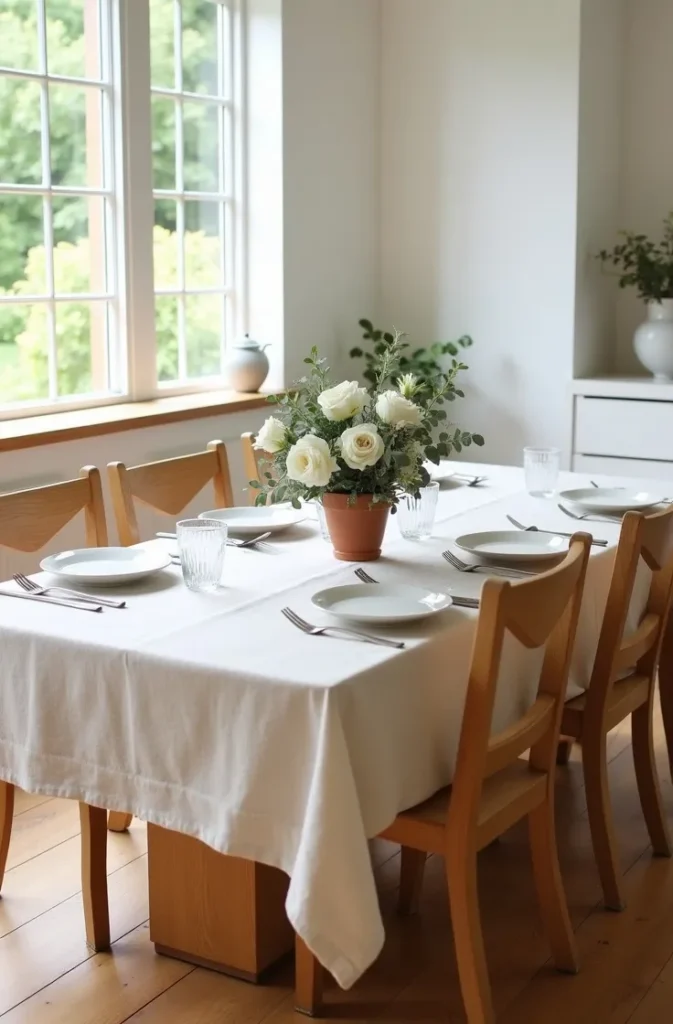

Avoid polyester or cotton-blend “linen-look” tablecloths in this context. They reflect light differently, crease in ways that cannot be steamed out without an iron, and feel noticeably synthetic in warm-weather settings where texture becomes more apparent to the touch.
If you are setting a table without a cloth — on a wood or stone surface — a linen table runner down the center achieves the same organic quality with less coverage.
2. Build a Centerpiece With a Single Material Repeated Three Times for Visual Cohesion
The most common dining table centerpiece mistake is variety for its own sake — mixing too many textures, heights, and colors until nothing reads clearly. The most effective summer centerpieces are built around one material, repeated in two or three different forms.
For example: terracotta repeated as a low wide pot, a narrow bud vase, and a small dish holding salt or tea lights. Or glass: a tall clear cylinder vase, a set of clear votives, and a glass carafe of water with citrus slices. The repetition creates cohesion without requiring styling experience.
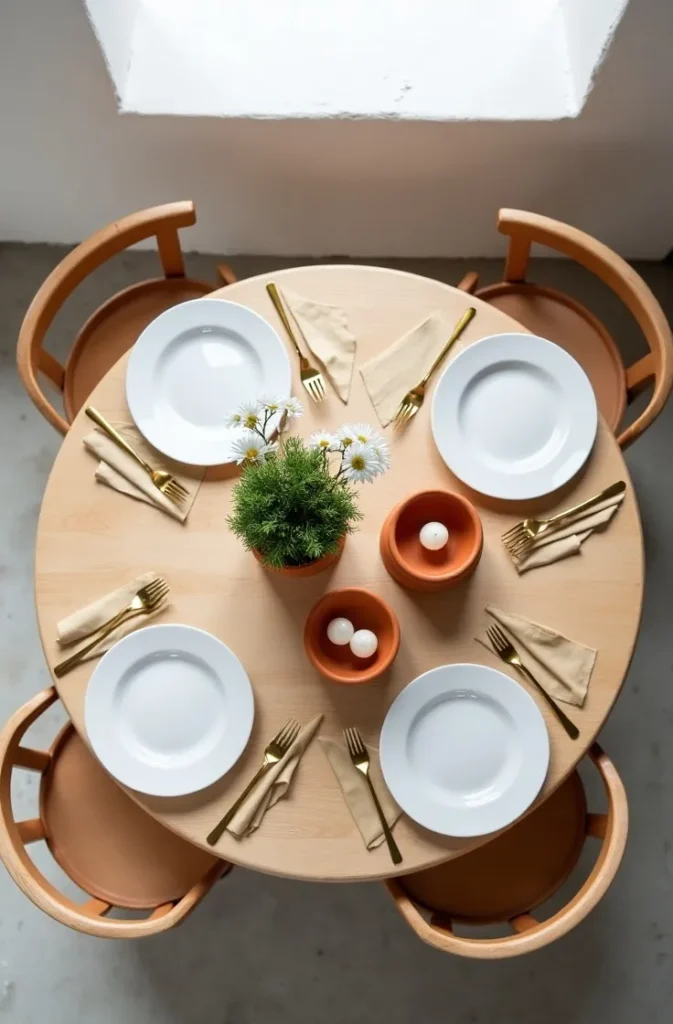
This approach scales to any table size. For a small two-seat bistro table, one terracotta pot and one bud vase are sufficient. For a ten-seat farmhouse table, a row of five matching glass votives down the center with two potted herbs at either end achieves the same rhythm at larger scale.
The centerpiece height rule for summer: keep everything below 10 to 12 inches so seated guests maintain eye contact across the table without visual obstruction.
3. Use Mismatched Chairs in One Unified Color to Create Intentional Eclectic Style
A dining table surrounded by four or six identical chairs is the default — and often the safe but visually flat choice. For summer, mismatched chairs in the same painted color create the relaxed, collected look that photographs well and feels genuinely inviting rather than showroom-staged.
The rule: vary the chair shape (one rattan, one windsor, one ladder-back, one bentwood) but paint or choose them all in the same tone. Matte white, warm cream, or dusty sage are the most versatile summer options. This gives the table an intentional, curated quality rather than looking like a storage room overflow.
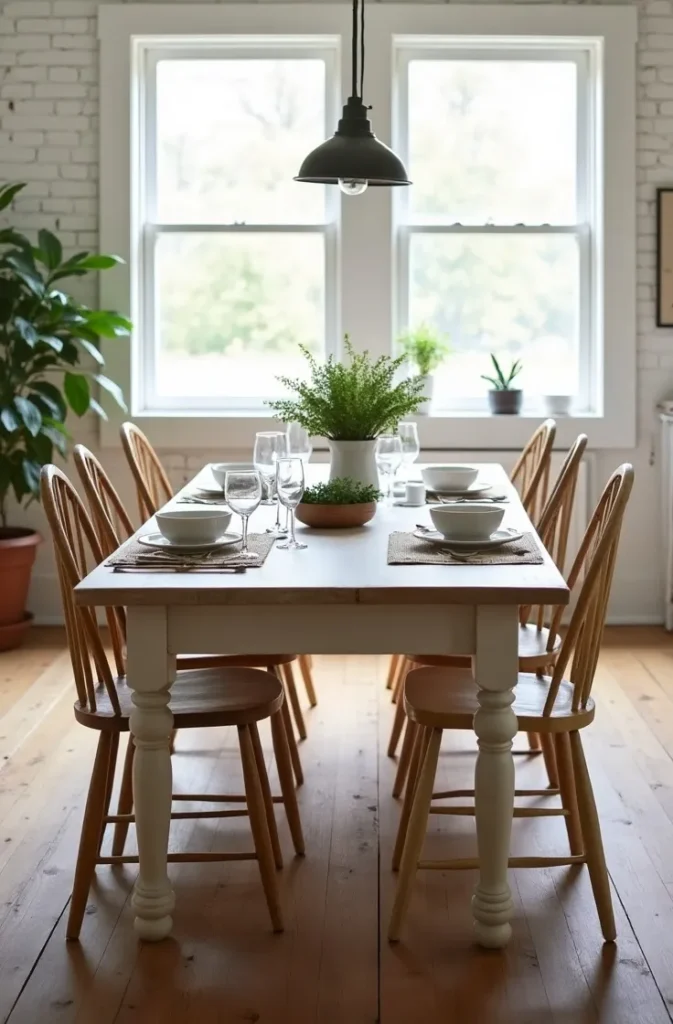
This setup works best on rectangular or oval dining tables where the variety of silhouettes is visible from multiple angles. Around a round table, mismatched chairs can look congested if the shapes are too different.
The practical consideration: make sure seat heights are consistent across all chairs. A two-inch height difference between chairs at the same table creates visible discomfort and looks unbalanced from across the room.
4. Layer Placemats Under Plates to Add Depth Without a Full Tablecloth
A bare table surface can look minimal and intentional or sparse and unfinished — the difference is usually a placemat. For summer dining table setups, a placemat under each place setting adds visual structure, protects the table, and gives you an easy way to introduce color or texture without committing to a full cloth.
Woven rattan, seagrass, cork, or washed cotton placemats in natural tones are the most versatile summer choices. They work under any plate style and pair well with both wood and stone table surfaces.
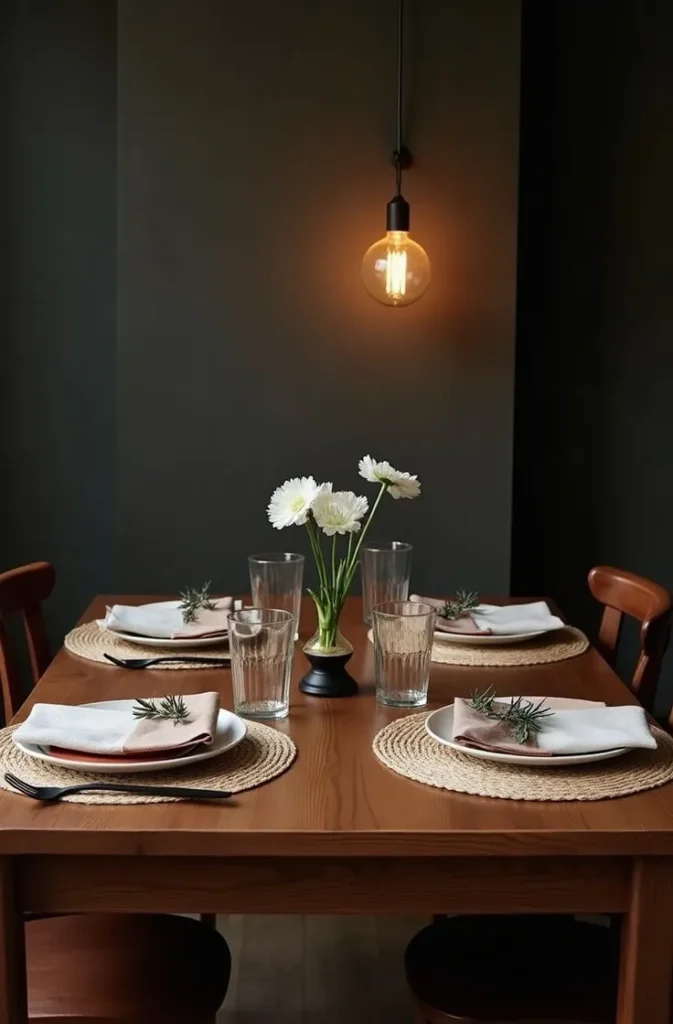
The layering technique: set a placemat first, then a dinner plate, then a salad plate on top, with a folded linen napkin beside or on top of the stack. This three-layer place setting reads as put-together with minimal effort and works for both casual summer dinners and more intentional entertaining.
Avoid vinyl placemats with printed patterns in summer entertaining contexts. They trap heat under plates, peel at the edges with regular use, and read as decorative rather than purposeful.
5. Set an Outdoor Summer Table on a Patio That Handles Wind and Heat Practically
An outdoor summer dining setup has different functional demands than an indoor one. Wind lifts lightweight napkins, centerpieces tip, and tablecloths billow. A setup that looks good in still photographs but falls apart in a light breeze is not a functional summer dining table setup — it is a liability.
Practical outdoor table design starts with anchored elements. Use napkin rings or fold napkins into a shape that stays flat under the weight of flatware — a simple roll is sufficient. Choose a centerpiece that has enough base weight to stay put: a wide ceramic bowl with fruit, a potted herb, or a cluster of three large smooth stones with taper candles in weighted holders.
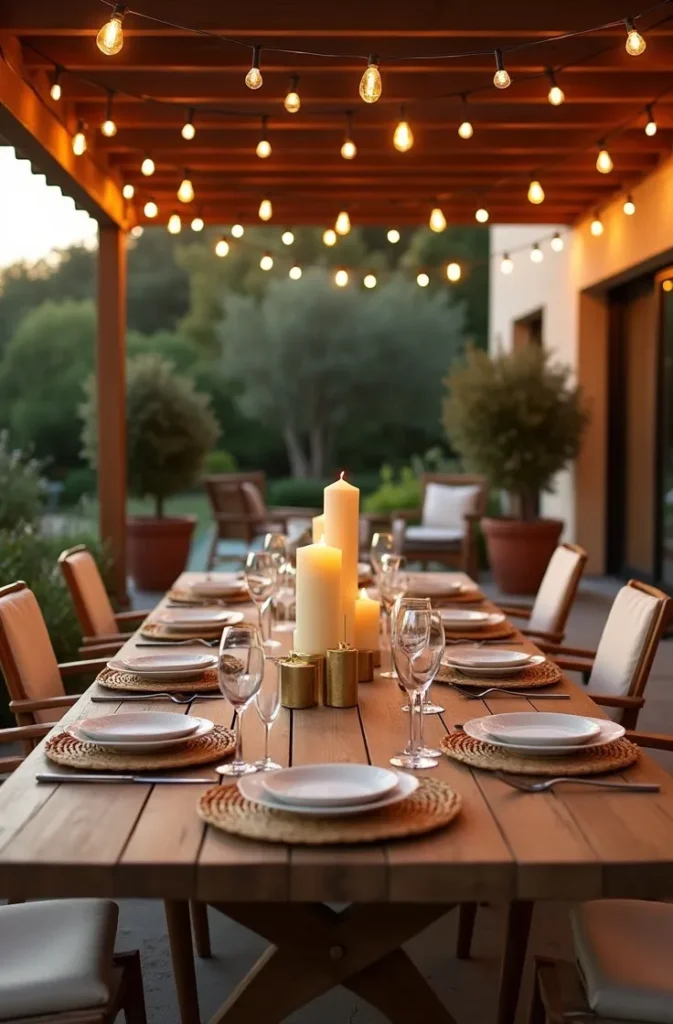
For the table surface, skip the tablecloth outdoors unless you use clips or table weights at each corner. A bare teak or powder-coated metal table surface styled with placemats and charger plates achieves a cleaner, more weather-practical setup.
Lighting is where outdoor summer tables earn their atmosphere: a string of warm Edison bulbs above the table from a pergola or umbrella frame, combined with three pillar candles at the center, creates a layered lighting effect that works from late afternoon through the evening.
6. Design a Small Apartment Dining Setup That Functions as Both Workspace and Table
In apartments and small homes, the dining table is often a multi-use surface — workspace by day, dining table by evening. A summer dining table setup in this context needs to transition quickly and look intentional in both modes.
The key is a clear-to-set system: store placemats, napkins, and a small centerpiece piece in a nearby basket or shelf so the table can be set in under three minutes. The everyday bare table should be clean enough to need only that addition to shift into dining mode.
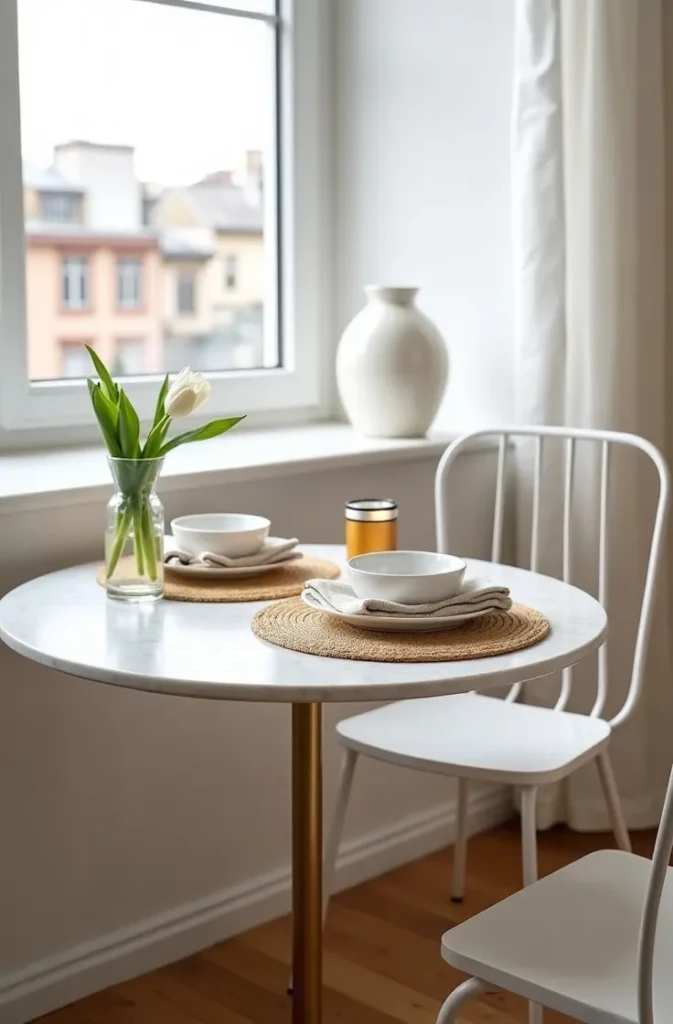
For the setup itself: two placemats, two matching plates, minimal flatware, and one small bud vase with a single stem is the complete summer setting for a two-seat apartment table. More than this on a small surface creates visual noise.
Choose a table lamp or a rechargeable portable table lamp for dining ambiance in apartment settings — overhead lights are often harsh and fixed. A warm-toned rechargeable lamp placed near the table shifts the mood in seconds without any wiring.
7. Use Fresh Citrus as a Low-Cost Centerpiece That Stays Fresh All Day
Fresh fruit — specifically citrus — is one of the most underused summer table elements. Lemons, limes, blood oranges, and grapefruits are available year-round but are at their visual and aromatic best in summer. Arranged thoughtfully, they create a centerpiece that costs a fraction of a floral arrangement and lasts longer.
The arrangement approach: use a shallow wide bowl or a low ceramic dish and fill it generously rather than sparsely. A centerpiece bowl with three lemons looks accidental; a bowl with twelve looks abundant and styled. Add a few leaves — from a garden, a grocery store bunch of fresh herbs, or an indoor plant — tucked between the fruit for a layered, organic look.
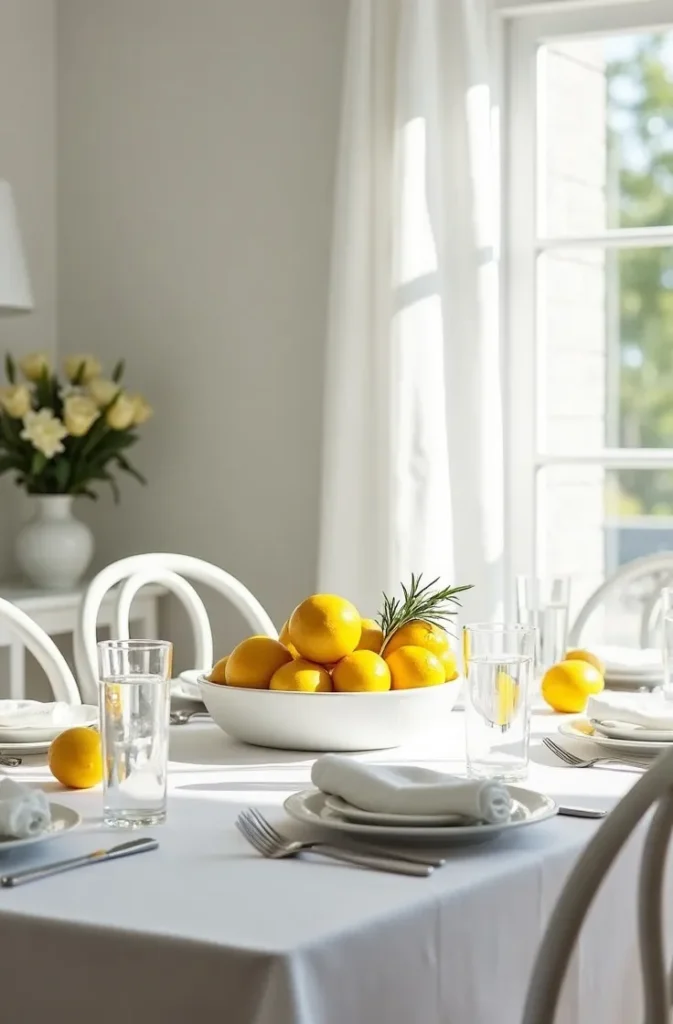
This works on any table size and style: farmhouse, modern, coastal, or minimal. It photographs well in natural light, requires no floristry skill, and can be eaten afterward — which makes it one of the most practical summer table centerpiece choices available.
The one mistake to avoid: mixing too many citrus types in one bowl. Lemons and limes together read as a considered pairing. Adding oranges, grapefruits, and kumquats to the same arrangement loses focus.
8. Create a Tiered Table Setting With Charger Plates for Effortless Summer Elegance
Charger plates — the large base plates that sit beneath the dinner plate — are often considered a formal-only tool. They are not. Used with the right materials, charger plates elevate a summer dining table setup without making it feel stiff or overdone.
For summer, rattan, woven seagrass, or hand-hammered metal charger plates work better than formal gold-rimmed options. They add a base layer that frames each place setting and makes the entire table look more intentional with no additional effort.
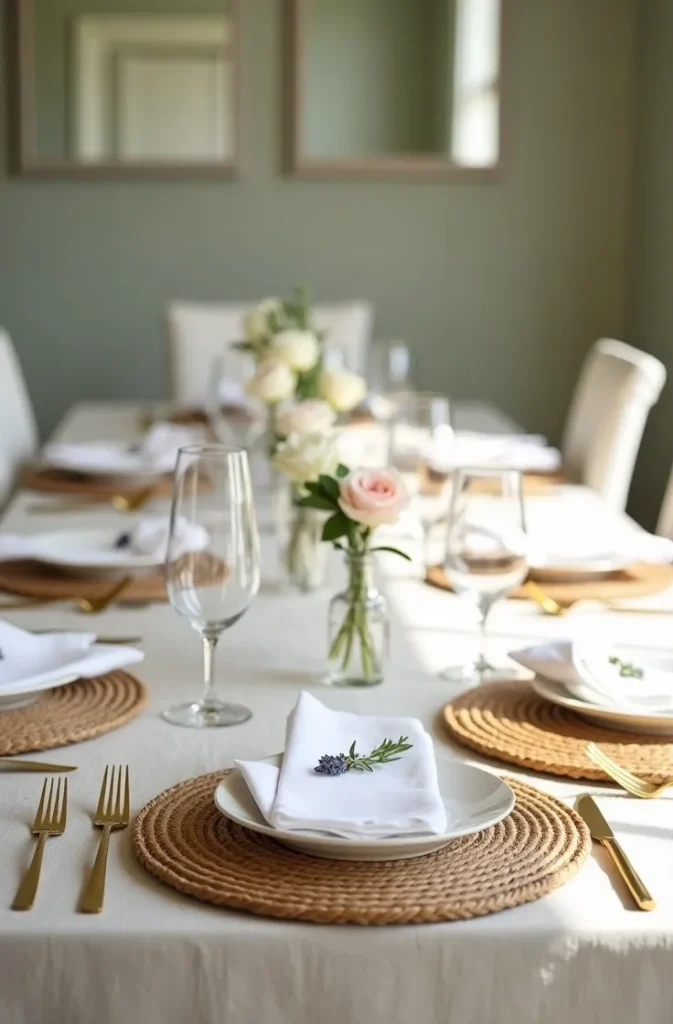
The stack: charger plate, dinner plate, folded napkin on top with a single flower or herb stem tucked in. That three-piece stack, repeated at each seat, gives the table a visual rhythm that reads as professionally styled.
Charger plates work best on tables with a tablecloth or runner, where the cloth provides a neutral base that lets the charger’s texture read clearly. On a bare dark wood table, very dark chargers can disappear visually — choose a material that contrasts with your table surface.
9. Set a Coastal-Inspired Table With Blue, White, and Natural Textures
A coastal summer dining table setup does not require nautical props or shells. The palette and material choices do all the work: white, soft blue, and natural textures — linen, rattan, unfinished wood, and raw ceramic — read as coastal without any themed accessories.
The color ratio matters: use white as the dominant tone (tablecloth, plates), natural texture as the secondary layer (rattan charger, woven placemat, wood table surface), and soft blue as an accent only (napkins, a single blue ceramic piece, a blue glass bud vase). This ratio prevents the setup from tipping into themed territory.
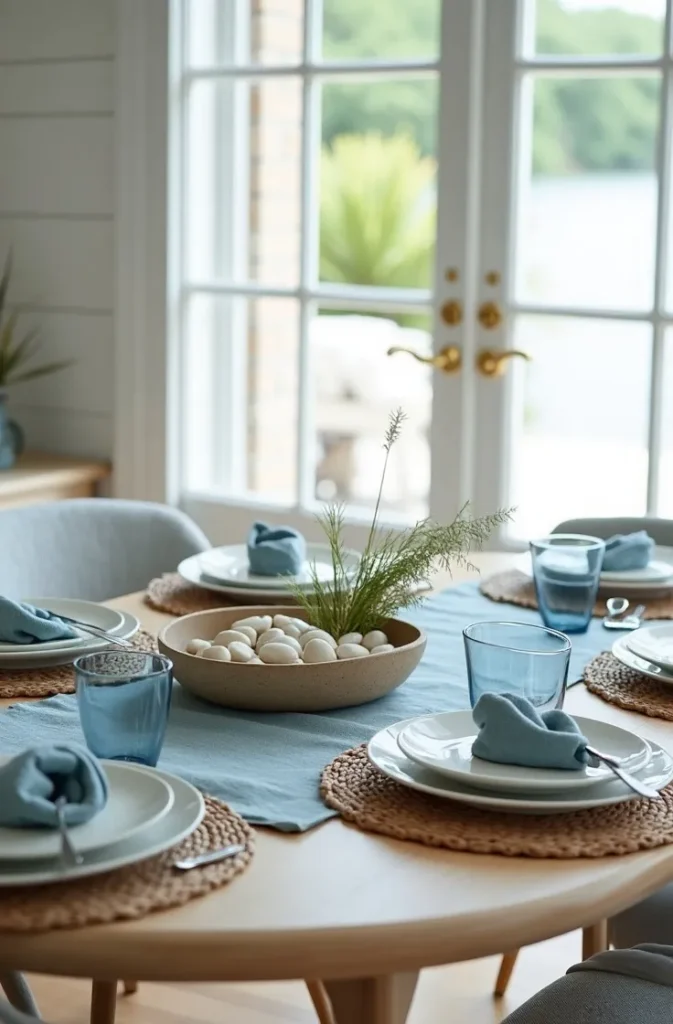
This works especially well in beach houses, lake homes, and coastal apartments, but also translates to any home with good natural light. The key is keeping every element within the palette — one warm-toned centerpiece or a contrasting napkin color will shift the mood away from the coastal direction.
For tableware, matte white stoneware in slightly irregular shapes reads as coastal and artisan. Perfectly smooth, high-gloss white plates shift the mood toward formal, which conflicts with the relaxed coastal intent.
10. Style a Brunch Table Setup That Works From 10 AM to 2 PM Without Restyling
A summer brunch table has a different visual requirement than a dinner setup. It needs to handle food and drink traffic — pitchers, serving platters, a fruit bowl, and drinks — while still reading as styled rather than casual spread.
The approach: set the table in two zones. Zone one is the place setting area — placemat, plate, napkin, and glassware at each seat. Zone two is the center channel — the food and drink area, which is styled separately. In zone two, group items by height: a tall pitcher, a medium serving bowl, and low flat plates form a natural tiered arrangement.
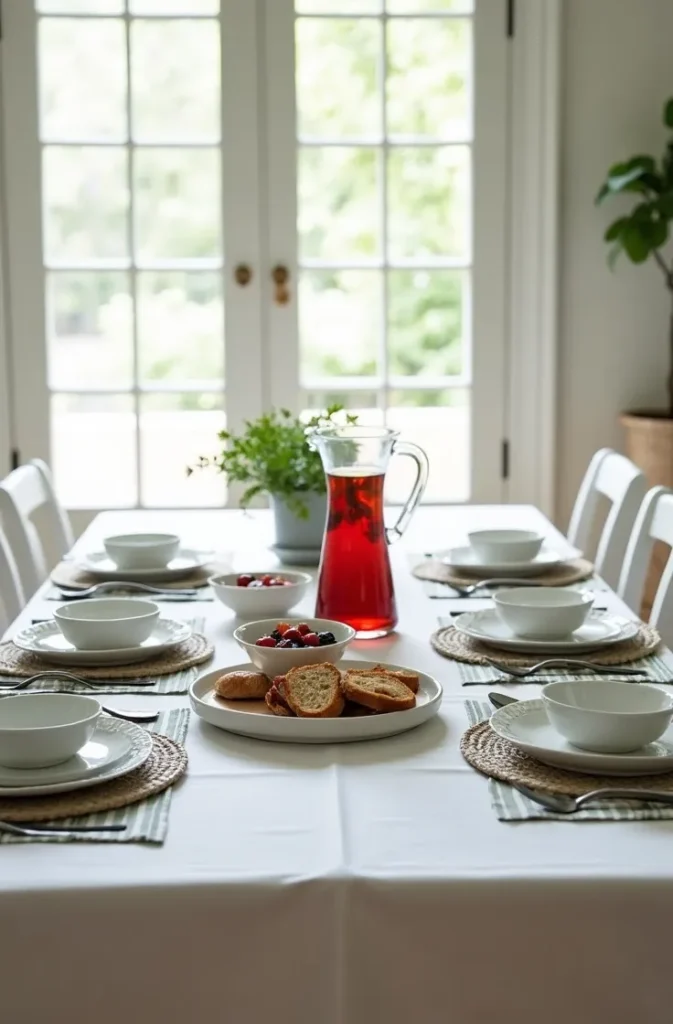
Leave deliberate space in the center channel between items — crowded serving pieces look like a buffet, not a styled brunch table. Two to three inches between items gives each piece visual breathing room.
For summer brunch specifically, include one clear element that holds color: a glass pitcher of iced hibiscus tea, a bowl of bright berries, or a glass jar of fresh-squeezed orange juice. This color becomes the visual anchor of the entire setup.
11. Build a Candlelit Summer Dinner Table That Does Not Overheat the Space
Candles and summer seem like a contradiction — adding heat to an already warm season. But candlelit summer dinner tables work when the candle scale and type are chosen correctly. The goal is ambient warmth of light, not warmth of temperature.
Taper candles in tall candlesticks produce the least heat relative to their visual output. Three to five taper candles spaced along the center of a table create a linear, elegant lighting effect that photographs beautifully and feels genuinely special without warming the room noticeably.
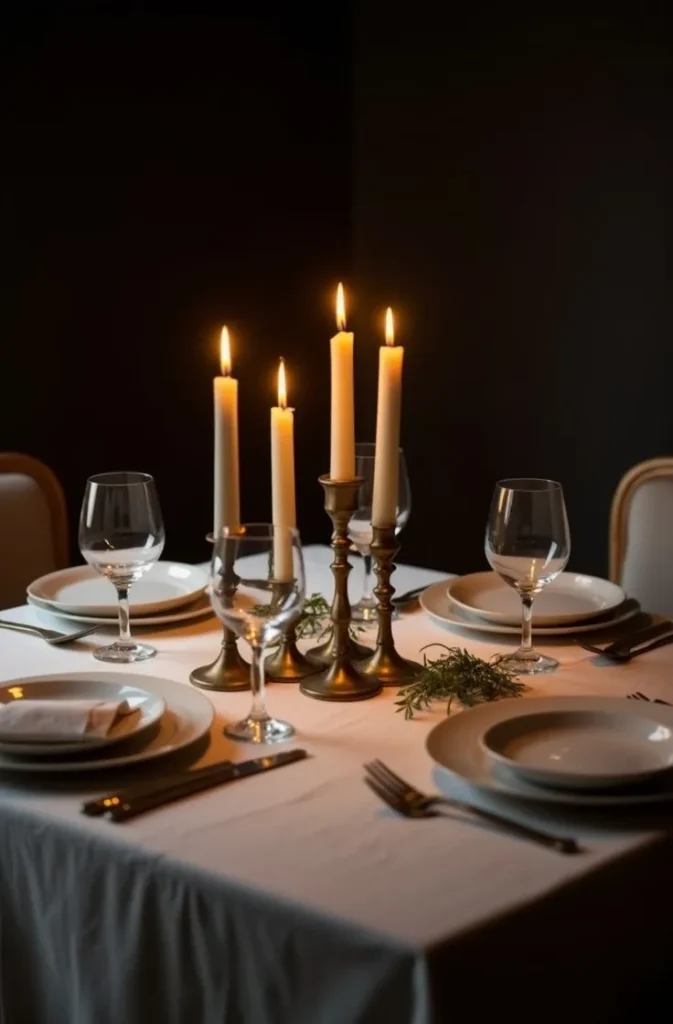
Alternatively, a cluster of low votive candles in glass holders does not raise room temperature at all at the scale typically used on dining tables. Group seven to nine votives of slightly varying sizes at the table center rather than spacing them apart — a cluster reads as a deliberate arrangement, spread-out votives read as scattered.
The mistake to avoid: pillar candles with very large diameters in an enclosed dining room. A four-inch pillar generates measurable heat and can also drip wax onto a tablecloth if the candle is not on a suitable holder.
12. Use a Herb and Flower Mix as a Living Centerpiece That Doubles as a Serving Element
A centerpiece that is also functional is one of the best summer dining table ideas for hosts who want style without waste. A combination of potted herbs and small-stemmed flowers in grouped pots creates a table arrangement that guests can actually use — picking fresh basil for a salad, mint for a drink, or thyme for a bread plate.
The arrangement: use three to five terracotta or ceramic pots of varying but similar sizes. Group them at the table center with the tallest pot (typically a bushy basil or an herb bouquet in a vase) in the middle and smaller pots flanking it. Tuck small-stemmed flowers — chamomile, lavender, or cosmos — between the herb pots to add visual softness.
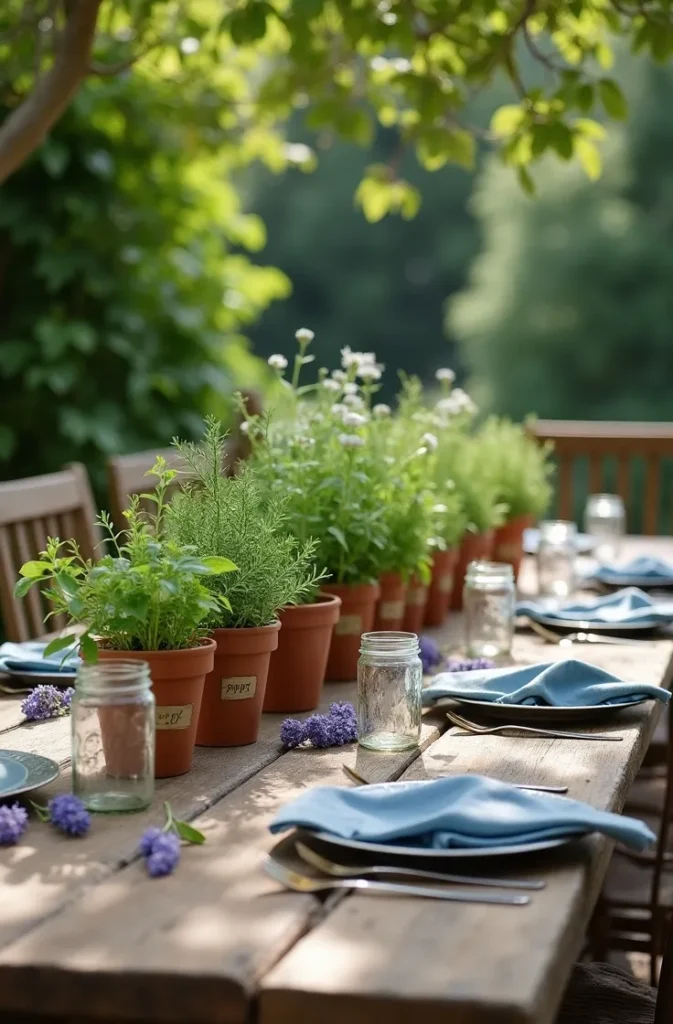
This is the ideal summer dining table setup for outdoor garden parties, farm-table dinners, and casual summer entertaining where the experience is as important as the aesthetic.
Label each herb with a small handwritten card or clay tag if your guests may not recognize them by sight. This small detail makes the functional element feel considered rather than informal.
13. Fold Napkins in a Way That Adds Structure Without Requiring Origami Skills
Napkin presentation is one of the most overlooked details in a summer dining table setup. The default — a flat square beside the plate or stuffed into a glass — communicates effort without any actual styling. Two folds that work for summer and require no special skill are the flat roll and the loose diagonal fold.
The flat roll: lay the napkin flat, fold into thirds lengthwise, then roll firmly from one end. Secure with a napkin ring, a sprig of herbs, a single flower stem, or a length of natural twine. This works on any plate or beside it and photographs well from every angle.
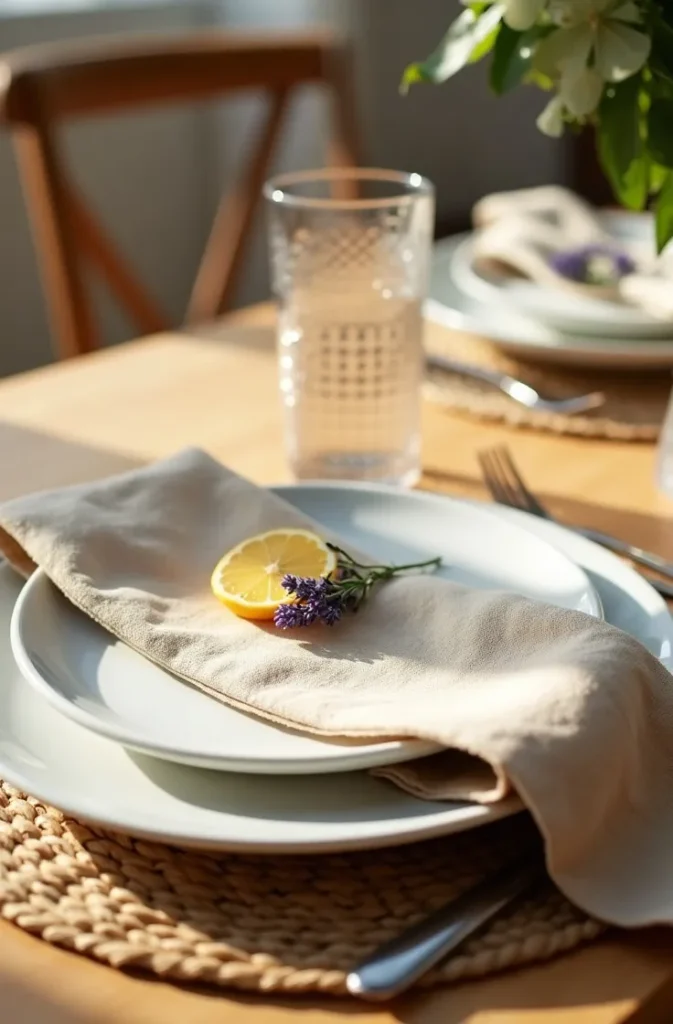
The loose diagonal fold: fold the napkin into a wide triangle, then fold the top point down slightly. Lay it on the plate with the folded edge toward the guest. It reads as considered without looking like a hotel turndown.
For summer specifically, tuck a single herb sprig, a small flower stem, or a thin slice of dried lemon into the napkin fold. These are the small details that guests notice and remember, and they tie the napkin into the overall table story.
14. Design a Kid-Friendly Summer Table That Still Looks Styled for the Adults
A dining table that needs to work for both children and adults in summer does not have to look like a compromise. The key is separating the functional accommodations from the visible styling layer.
The functional layer: use wipeable or washable placemats at children’s seats, keep the centerpiece away from the child-seat end of the table, and use tumblers with lids for younger children placed toward the inner edge of the placemat.
The visible styling layer — the tablecloth, the centerpiece, the adult place settings — remains fully intact. The children’s settings use simpler versions of the same palette: the same placemat material in a smaller size, a matching plate in a coordinating color, the same napkin folded flat.
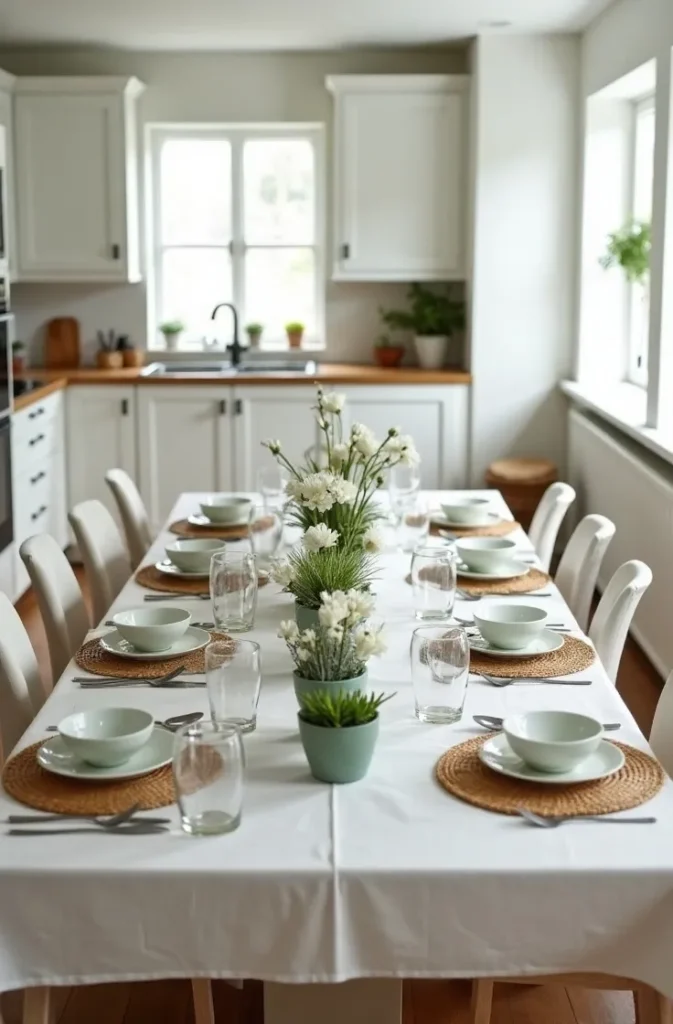
This approach works by keeping the table’s visual center — the area seen in photographs and from the dining room entry — styled for adults, with the child-accommodating elements closer to the table ends.
What does not work: plastic disposable tableware at a child’s seat at a styled table. The material contrast undermines the entire setup. Durable ceramic or melamine in colors that match the table palette reads as intentional rather than functional.
15. Incorporate Natural Stone or Slate Elements for a High-End Summer Table Without Extra Cost
Natural stone — whether a small slate serving board, a marble pastry board used as a cheese display, or a single quartzite trivet — adds a material depth to a summer dining table that no synthetic substitute replicates. The weight and texture of stone communicates quality in a way that is felt as much as seen.
The most accessible approach: one slate or marble board positioned at the table center as a serving platform. Place a soft cheese, a few crackers, and some grapes on it for a meal, or use it as a riser to elevate a central centerpiece element — a candle, a bud vase, or a small potted herb.
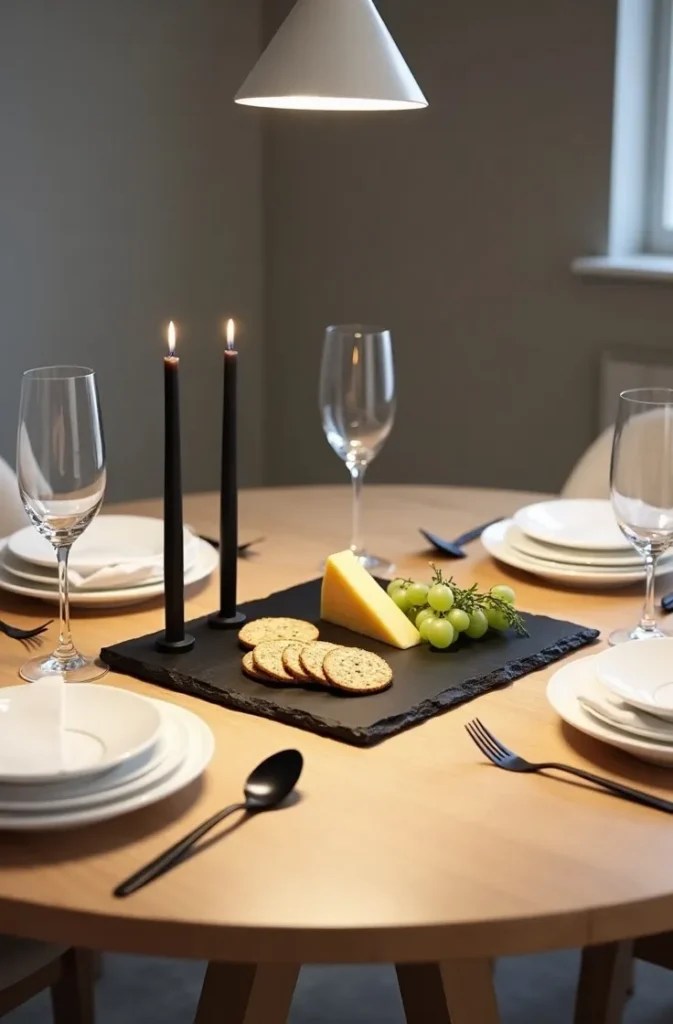
This technique works especially well in modern and minimal summer dining table setups where the goal is a refined, curated look with few elements. One strong material like slate against a white linen cloth creates a stark, beautiful contrast.
Stone boards are available at most kitchen supply and home goods stores and represent a permanent investment — unlike flowers or candles, they last indefinitely and improve the table setup for years.
16. Style a Dessert or Drinks Station Beside the Dining Table for Summer Hosting
A secondary styled surface near the dining table — a sideboard, console, or bar cart — extends the summer entertaining setup beyond the table itself and dramatically reduces table crowding during longer meals.
The purpose: move drinks, dessert, serving dishes, and extra napkins to this secondary surface so the main dining table can remain styled and uncluttered throughout the meal. This is the single biggest functional upgrade for summer hosts who entertain more than once a month.
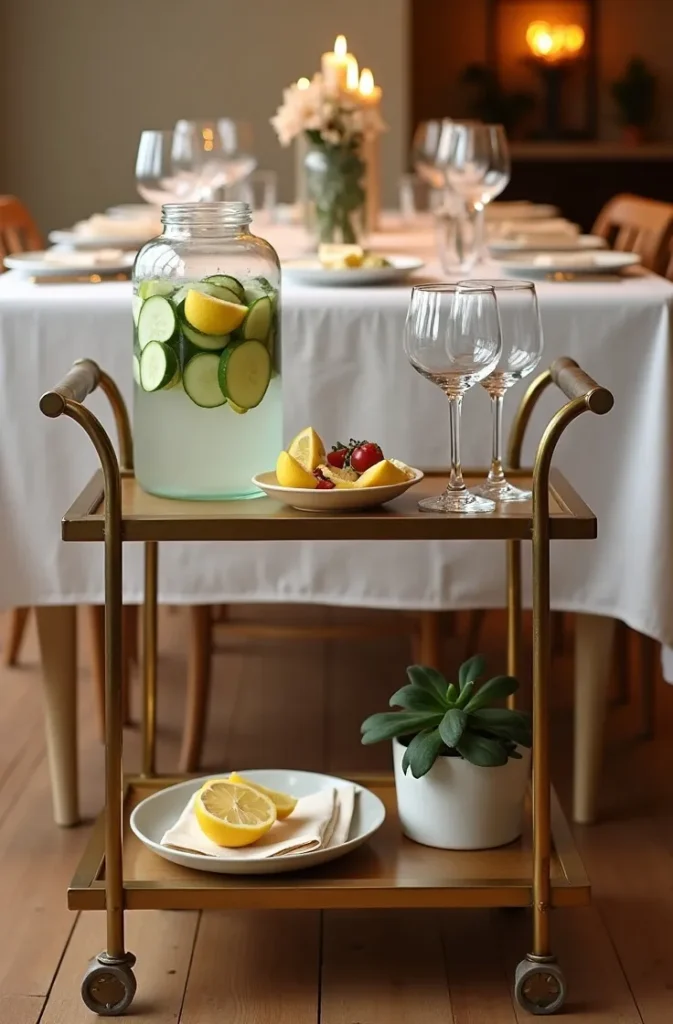
The styling approach for the secondary surface: treat it like a smaller version of the main table. A cloth or runner, one statement centerpiece element (a large glass jar of iced water with citrus, a small floral arrangement, or a tiered fruit stand), and organized glassware or dessert plates arranged by height create a cohesive setup that guests can navigate independently.
Bar carts work well for this purpose and offer mobility — they can be wheeled to the patio for outdoor summer dinners and back inside without disassembly.
Final Thoughts
These summer dining table setup ideas cover the full range of scenarios you will encounter this season — from small apartment tables to outdoor garden dinners, from quick family lunches to candlelit summer evenings. Each idea is built around decisions you can make immediately with materials that are widely available and genuinely worth the investment.
If you found this guide useful, save it to your Pinterest boards so you can return to specific ideas when you are ready to set up each type of table. These setups work across every home style, table size, and hosting situation — no professional styling experience required.
For more summer home ideas, explore table styling for small dining rooms, open-plan living and dining combinations, and outdoor entertaining setups that work in any backyard or balcony space.