
Most kitchens feel disconnected from the season they are used in most — and summer is when that gap shows the most. This guide covers 12 practical summer kitchen decor ideas that work across different kitchen sizes, layouts, and budgets, so you can make changes that actually improve how the space looks and functions during warmer months.
1. Switch to Linen and Cotton Textiles to Instantly Lighten the Kitchen
Textiles are the fastest way to shift a kitchen’s seasonal feel without touching a single fixture. Swapping out heavier dish towels, seat cushions, and window treatments for lightweight linen or cotton immediately reduces the visual weight of the room. Natural fiber textiles in white, soft yellow, or pale sage read as warm-weather materials without requiring a full decor overhaul.
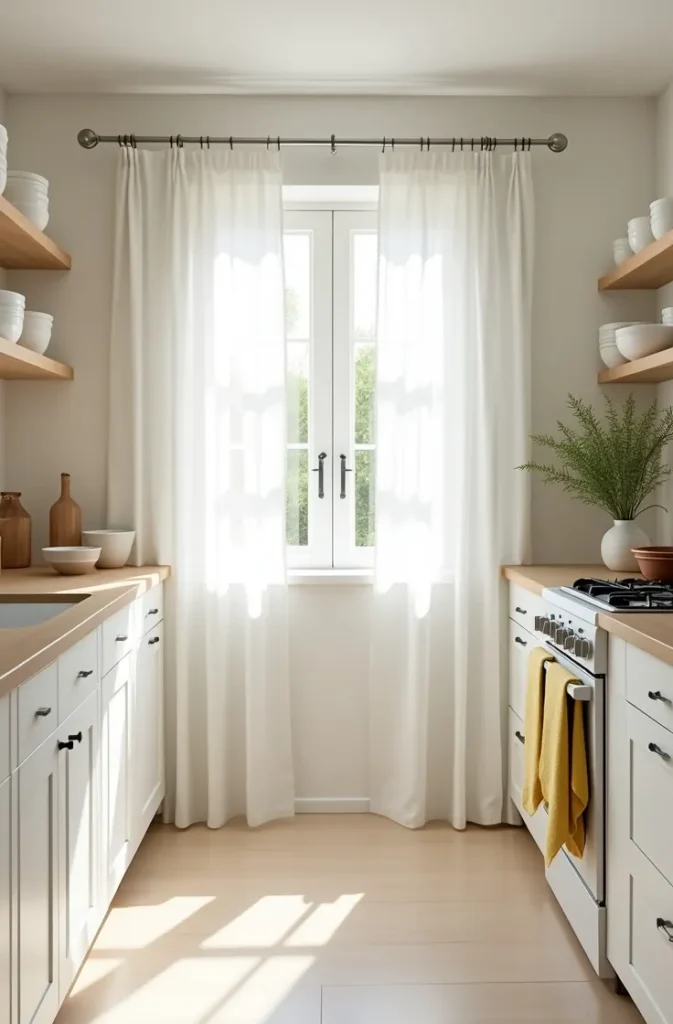
This works in any kitchen size, but the impact is most noticeable in smaller kitchens where heavy dark textiles visually compress the space. In galley or L-shape kitchens with limited natural light, white linen window panels rather than structured valances allow more light diffusion into the room.

The mistake to avoid is mixing too many textile patterns in a small kitchen. Stick to one pattern maximum — such as a simple stripe on a dish towel — and keep remaining textiles solid. Pattern overload in a compact space creates visual noise that conflicts with a clean summer aesthetic.
2. Add a Bowl of Seasonal Fruit as a Functional Centerpiece
A ceramic or wooden bowl filled with lemons, limes, peaches, or apricots is one of the most effective and low-effort summer kitchen decor ideas available. It introduces natural color, organic texture, and a seasonal reference point without anything artificial or temporary.
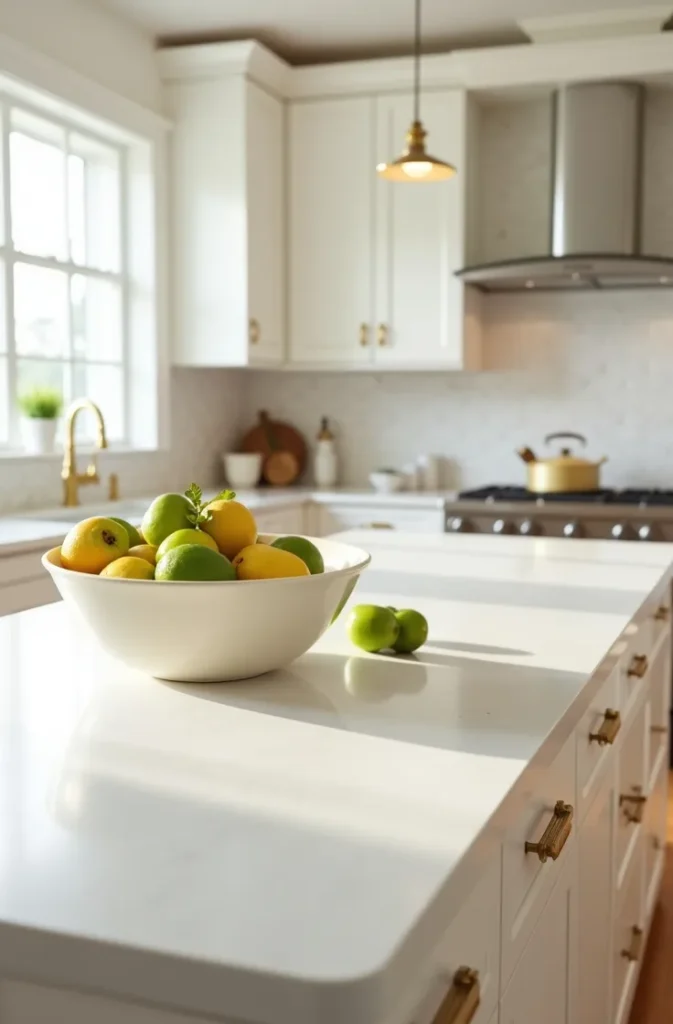
The key is choosing the right bowl for your existing countertop material. A matte white ceramic bowl reads well against dark granite or quartz countertops. A raw wood bowl works best on white or light-toned counters where the contrast registers clearly. A woven rattan tray with loose fruit works on kitchen islands with waterfall edge counters.
Place the bowl where it earns its footprint — on an island, a peninsula counter, or a small eat-in ledge where it is visible from the primary sightline entering the kitchen. Avoid placing it near the stove or sink where heat and moisture will shorten the fruit’s lifespan rapidly.
3. Replace Upper Cabinet Hardware With Brushed Brass for a Warm Summer Tone
Hardware is one of the most cost-efficient ways to shift a kitchen’s color temperature toward summer warmth. Brushed brass pulls and knobs on white, cream, or sage cabinet faces create a warm, sun-touched quality that feels intentionally seasonal without being temporary or decorative in an impermanent way.
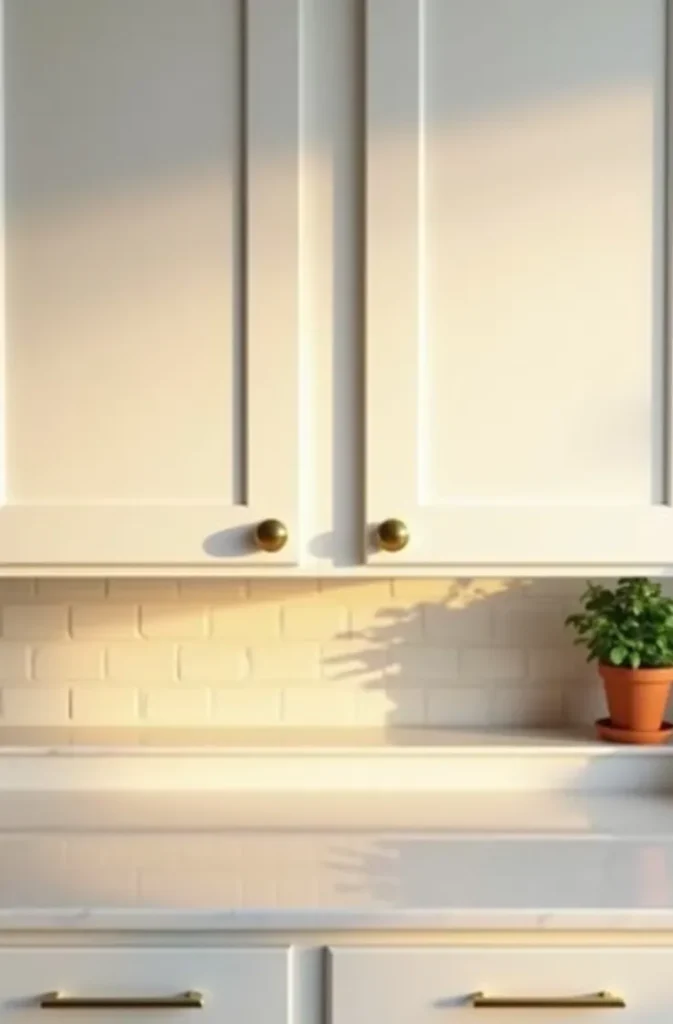
This update works particularly well in kitchens with white or off-white cabinetry that currently have chrome or brushed nickel hardware. The shift from cool silver tones to warm brass tones changes the entire color temperature of the kitchen, making it feel warmer and more summer-appropriate without painting or replacing anything structural.
One common mistake is mixing brushed brass pulls with chrome faucets or stainless appliance trim. The metal conflict reads as unfinished rather than eclectic. If replacing hardware, also swap the faucet finish or add a matte black faucet, which bridges both metal families more neutrally.
4. Use Open Shelving to Display Summer-Specific Serveware
Replacing one or two upper cabinet doors with open shelving for the summer months allows you to display serveware that signals the season without permanent commitment. Straw placemats rolled and stored vertically, colorful ceramic pitchers, and stack of linen napkins on open shelves create a curated display that functions as both storage and seasonal decor.
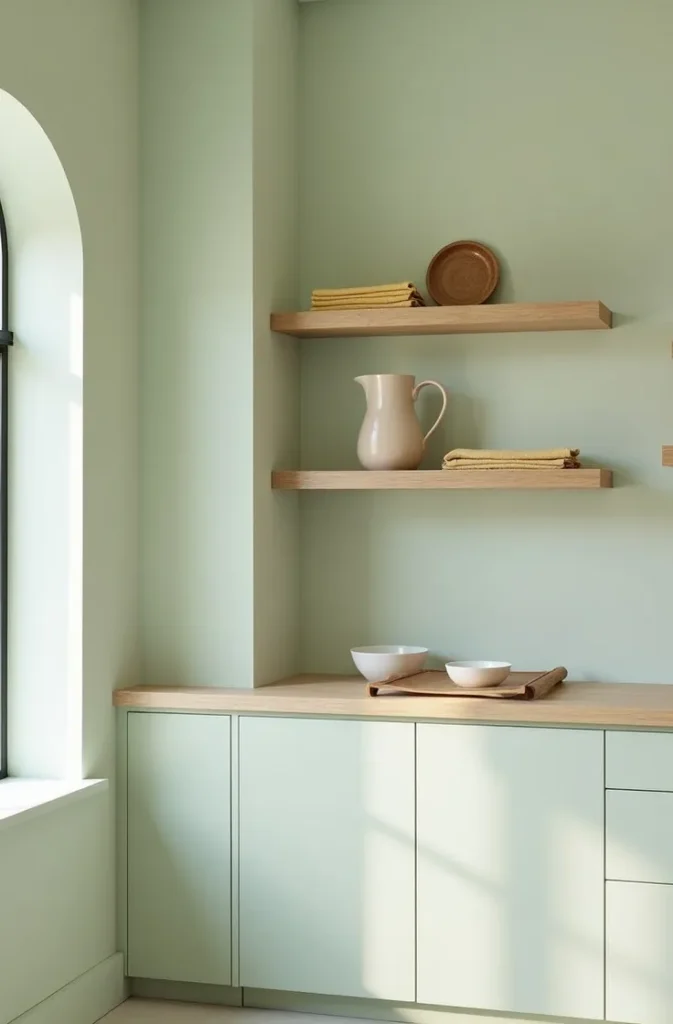
This approach works best in kitchens with enough wall run on one side to accommodate two to three shelves without disrupting the cabinet symmetry. In U-shape or L-shape kitchens, one wall section of open shelving balanced against full upper cabinets on the other walls is the right proportion.
The practical mistake with open shelving is over-filling. Each shelf should contain three to five items maximum with deliberate negative space between groupings. Dense shelves look cluttered within days of styling and lose the clean summer aesthetic entirely.
5. Install a Simple Herb Garden on the Windowsill Above the Sink
A windowsill herb garden is one of the most practical summer kitchen decor ideas because it performs double duty — it adds living greenery to the space while providing usable ingredients. Basil, mint, rosemary, and thyme in matching terracotta or white ceramic pots lined along the sill above a kitchen sink creates a cohesive, intentional look.
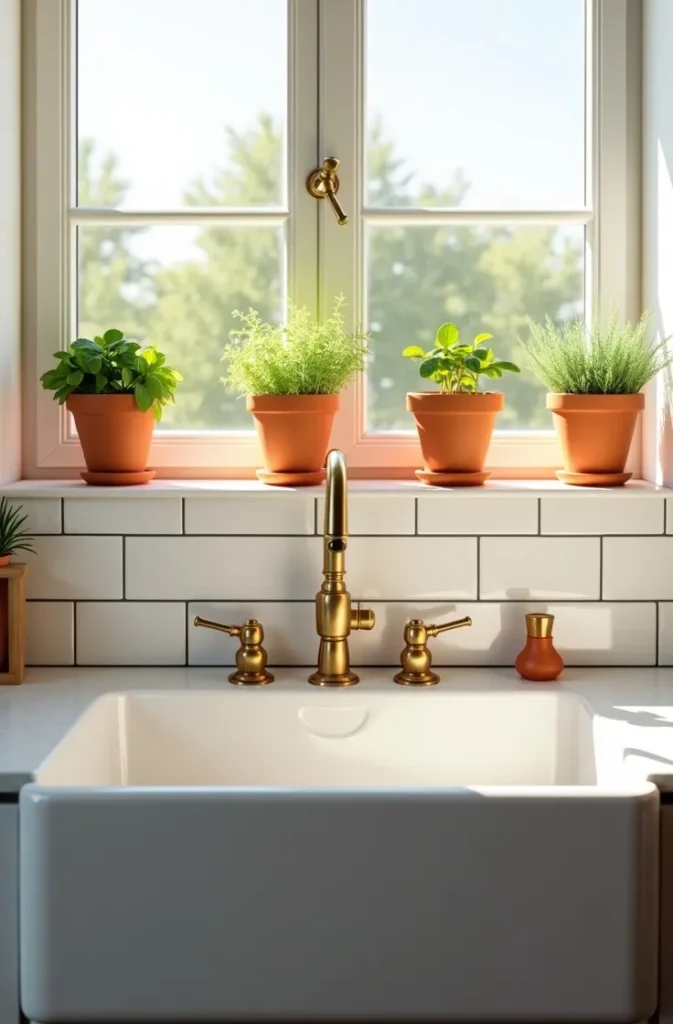
This works in kitchens with a south or east-facing window above the sink, which provides the direct sunlight most culinary herbs require. North-facing kitchen windows do not receive enough light for herb growth — in those cases, a small grow light shelf on a countertop adjacent to the window is a more functional alternative.
Keep pot sizes consistent — matching pots read as a designed element, while mixed pot sizes and materials read as accidental accumulation. Three to four pots of identical shape in the same material family is the ideal arrangement for a standard kitchen windowsill.
6. Refresh the Kitchen With a Coastal Color Palette Without Repainting
Introducing a coastal summer palette through accessories rather than wall paint is a reversible and practical approach for renters and homeowners who do not want to commit to a seasonal color change. The palette — soft white, warm sand, muted ocean blue, and natural wood — can enter the kitchen through a new rug, updated counter accessories, and a few ceramic pieces.
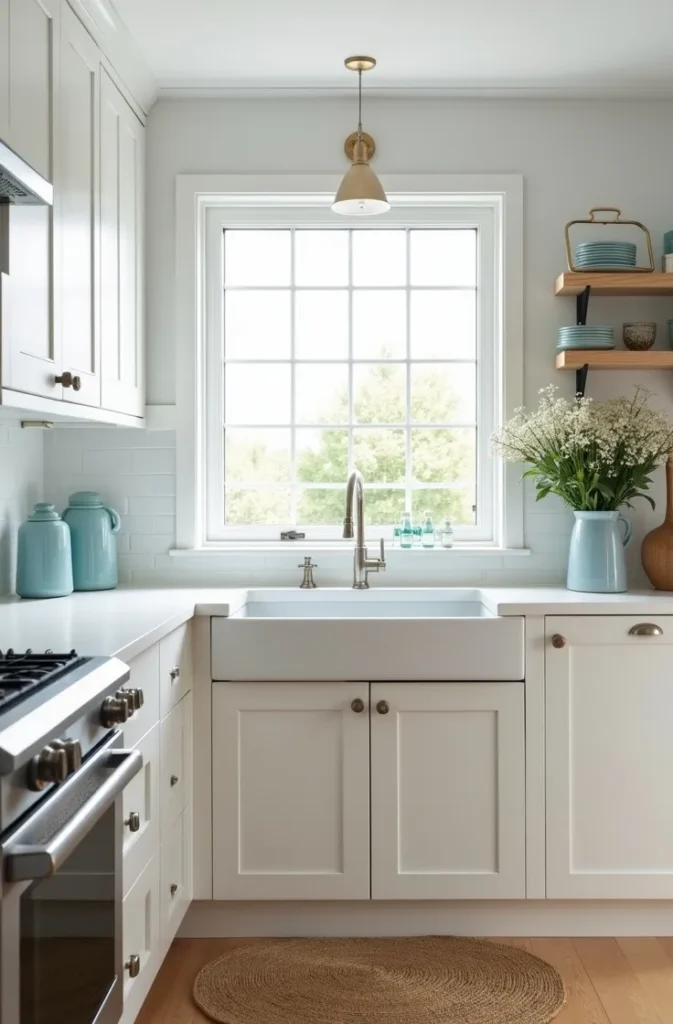
The most effective single item in a coastal color refresh is a kitchen rug in a natural fiber like jute or sisal in a sand or cream tone. It anchors the floor plane and sets the palette base without requiring any other changes. From there, adding two or three accessories in muted blue — a ceramic canister, a pitcher, or a soap dispenser — completes the seasonal shift.
Avoid the common mistake of going too saturated with blue. Bright cobalt or navy reads as year-round nautical rather than soft summer coastal. The right tones are dusty blue, faded denim, or chalky sky blue — colors that feel sun-bleached rather than bold.
7. Add Woven Rattan Accents to Break Up Hard Kitchen Surfaces
In kitchens dominated by hard materials — stone countertops, tile backsplash, stainless appliances — adding woven rattan or seagrass accessories introduces organic texture that shifts the sensory mood toward summer without color changes. A rattan bread basket, a seagrass tray on the island, or a woven pendant light shade over the kitchen table are all practical entry points.
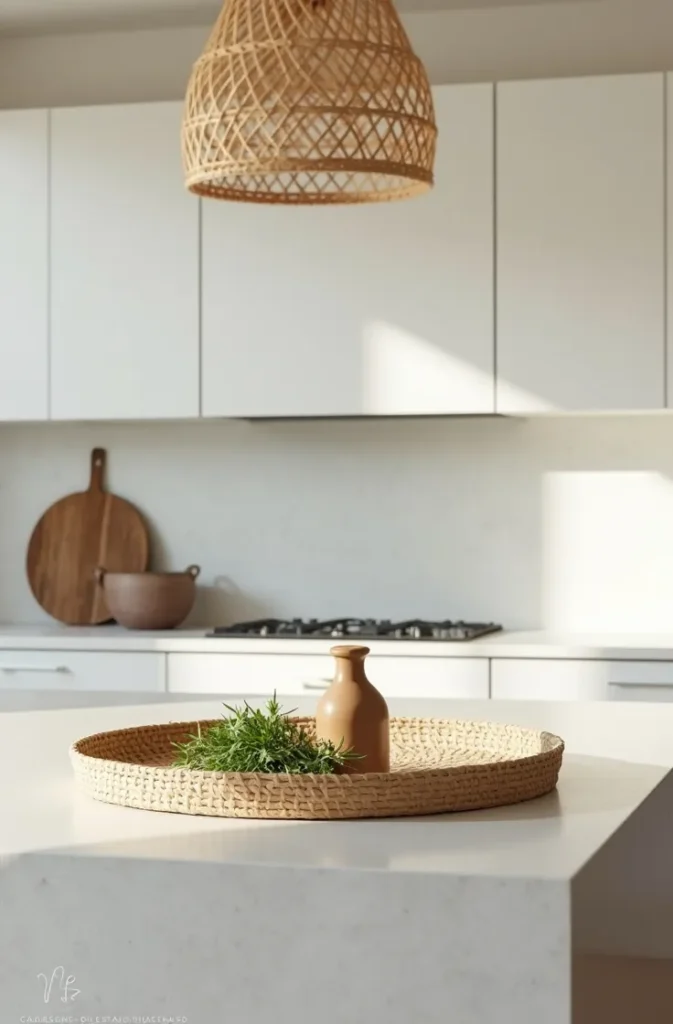
Rattan works best as an accent rather than a primary material in the kitchen. One to three rattan pieces in a kitchen create warmth and texture contrast. More than three starts to compete with the functional character of a working kitchen.
The placement decision matters. A rattan tray on a kitchen island used to corral oil bottles, salt, and pepper, or a small woven basket holding fruit on the counter, keeps the material functional rather than purely decorative — which is important for kitchens that need to feel practical as well as styled.
8. Swap Standard Lighting for Warm-Toned Bulbs to Shift the Kitchen Mood
Kitchen lighting color temperature has a direct and immediate effect on how seasonal and warm a kitchen feels. Most standard kitchen installations use cool white bulbs in the 4000K range, which read as clinical and year-round functional. Switching to warm white bulbs in the 2700K to 3000K range makes the kitchen feel significantly warmer and more summer-evening appropriate without any structural changes.
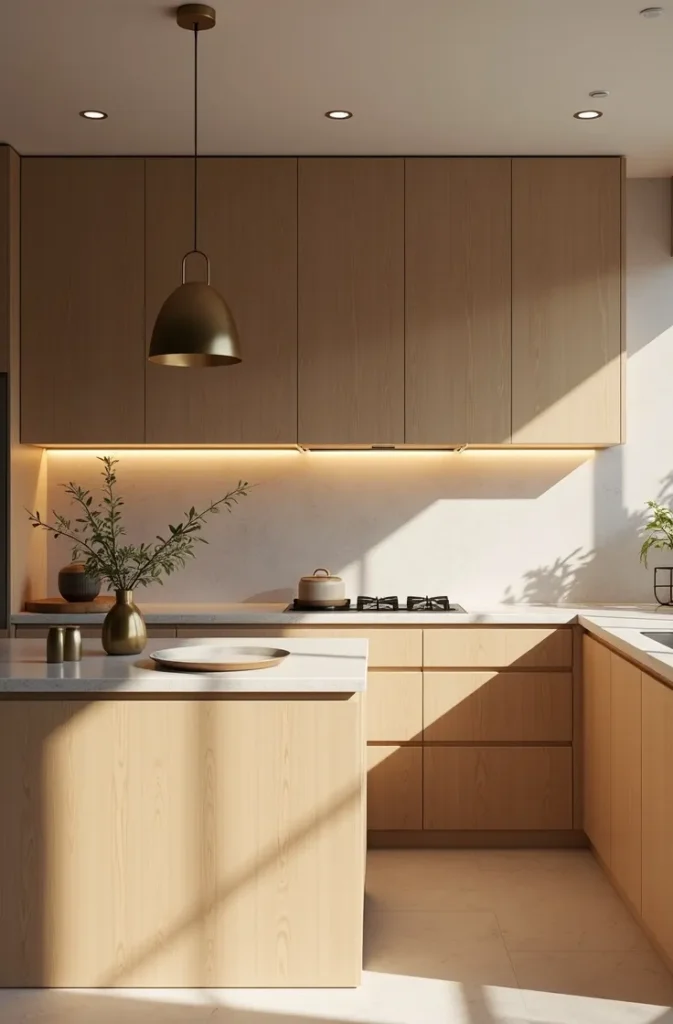
This update works in any kitchen size and is one of the only seasonal kitchen changes that has zero visual footprint — it changes the ambient quality of the entire space with no objects added to the room. The difference is most apparent in kitchens with warm-toned materials — wood, brass, terracotta — that are currently being washed out by cool light.
If the kitchen has recessed can lights on a dimmer, warm-tone dimmable LED bulbs allow full mood range from bright task lighting during cooking to ambient evening lighting during dining. This single change often improves the kitchen’s overall feel more than multiple accessory additions combined.
9. Use a Lemon or Citrus Print Tea Towel Display as Low-Cost Seasonal Decor
Printed linen tea towels hung from an oven handle or folded on open shelving are a low-cost, high-impact summer kitchen decor idea. A lemon grove print, a citrus slice pattern, or a simple botanical herb print immediately establishes a summer reference in the kitchen without any permanent change.
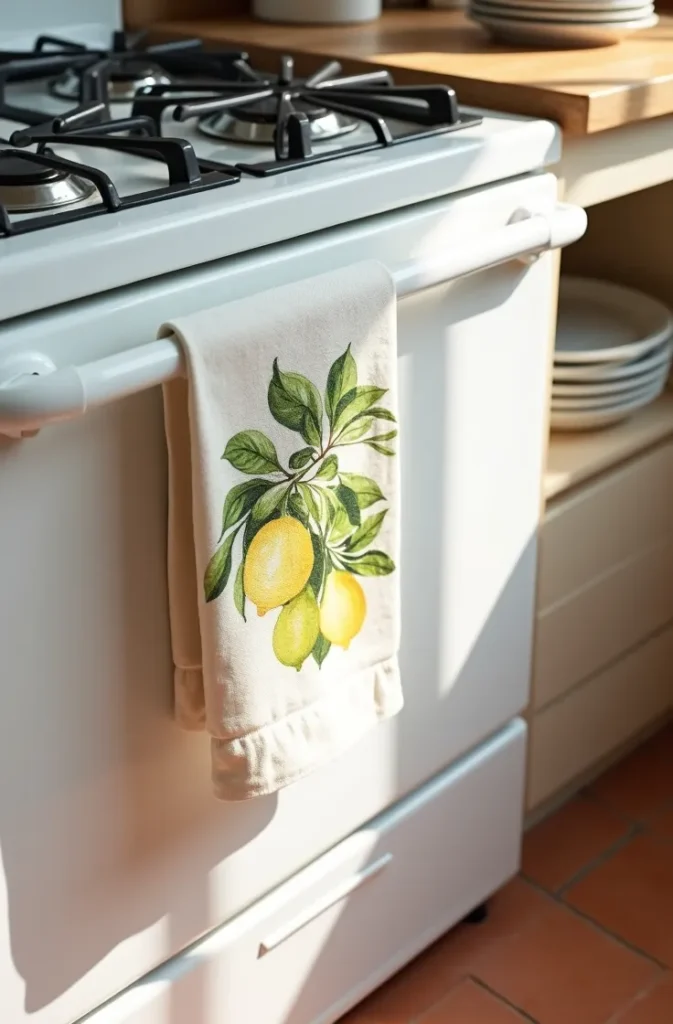
This works in any kitchen style — the print does the seasonal communication, so the underlying kitchen does not need to match a specific aesthetic. A lemon print towel reads as summer in a farmhouse kitchen, a modern white kitchen, and an older apartment kitchen equally effectively.
Limit the print to one or two towels in the visual frame. Multiple competing prints — a lemon towel on the oven and a floral towel on the shelf — create pattern conflict. Keep one print as the seasonal accent and all other textiles in the room solid or neutral.
10. Place a Single Large Green Plant in the Kitchen Corner for Visual Freshness
A single large plant placed in a kitchen corner or beside a window brings vertical interest and natural color into a room that is typically dominated by horizontal surfaces and hard materials. For summer specifically, the right plant choices are those that thrive in warm temperatures and indirect bright light — pothos, monstera, or a large fiddle-leaf fig in a ceramic or terracotta pot.
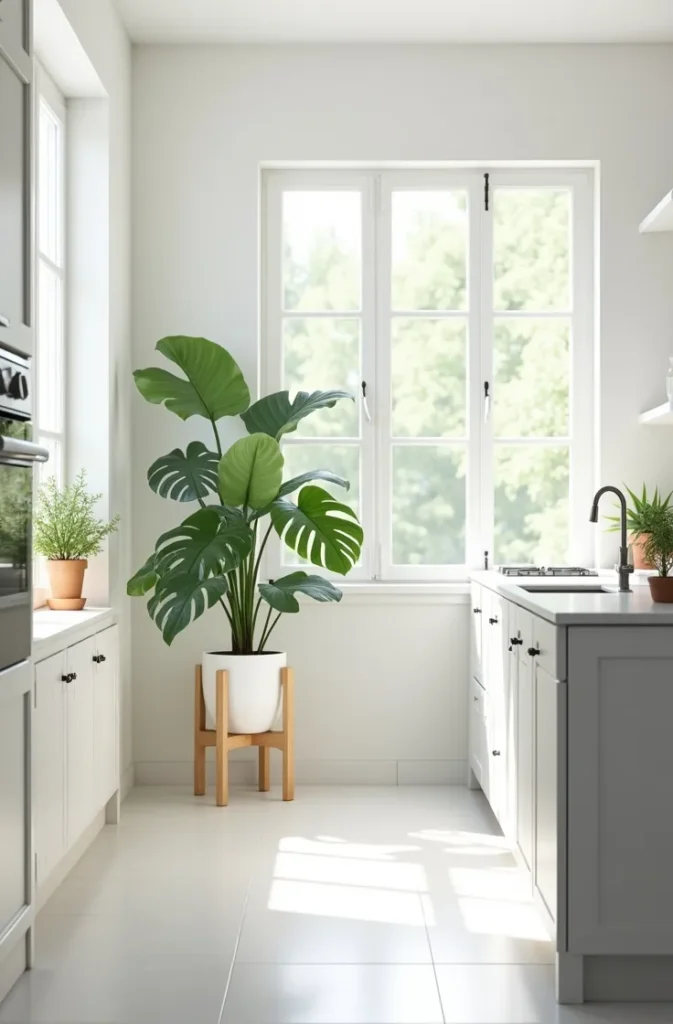
The scale of the plant matters significantly. A small 4-inch plant on a countertop has almost no visual impact in a full kitchen. A plant that reaches 3 to 4 feet in height placed in a corner at floor level or on a low plant stand creates the kind of visual presence that genuinely changes the feel of the room.
In summer kitchen decor planning, a large plant in the corner is preferable to multiple small plants scattered across the countertops, which occupy valuable workspace. One large statement plant uses one floor footprint and delivers more visual return than five small pots competing for counter space.
11. Add a Small Chalkboard or Linen Menu Board as a Seasonal Kitchen Feature
A small wall-mounted chalkboard or a stretched linen framed board used to write a seasonal menu, a grocery list, or a simple summer quote adds a personal and functional element to the kitchen wall without requiring artwork that needs to feel permanent. It also introduces a matte, textural surface into a space often dominated by reflective materials.
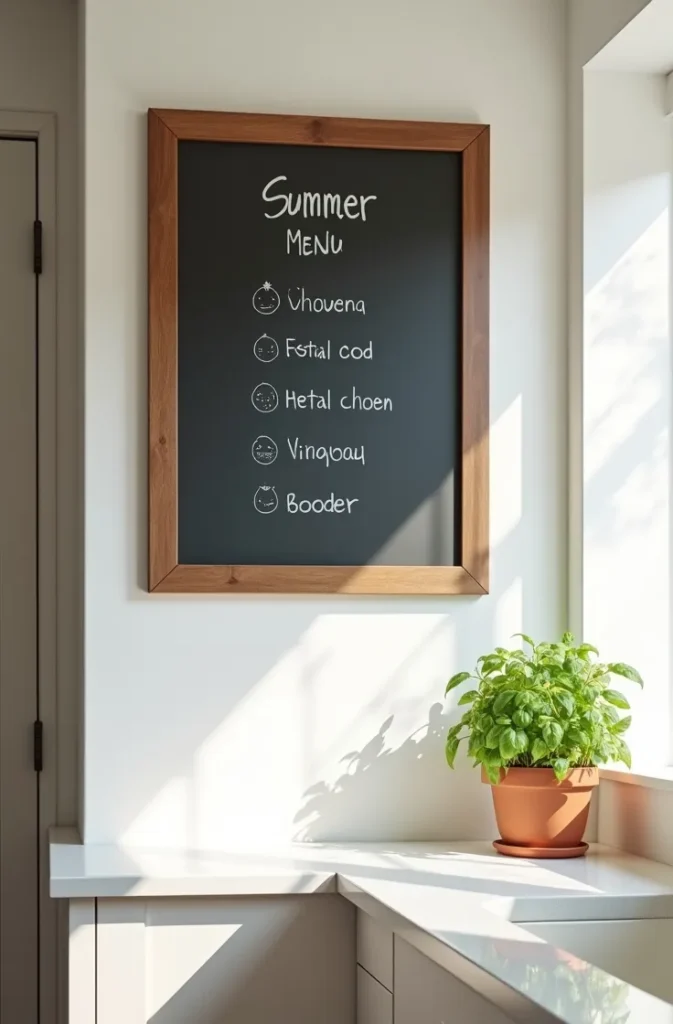
This works best in kitchens with at least one clear wall section — beside the refrigerator, above a breakfast nook, or on the end wall of a galley kitchen. The board should be proportioned to the wall space: a 12×16 board looks proportionate in tight spaces, while a wider kitchen can carry an 18×24 or larger frame.
The mistake to avoid is placing the board too high. Eye-level mounting — roughly 57 to 60 inches from floor to board center — makes the board readable and usable. Boards mounted at ceiling height become decoration rather than function, and the kitchen does not benefit from either.
12. Layer a Striped or Woven Kitchen Rug to Add Ground-Level Summer Color
The kitchen floor is one of the most overlooked surfaces in seasonal decor planning. A flat-woven cotton rug in a summer stripe — soft yellow and white, sage and cream, or terracotta and natural — placed in front of the sink or stove run adds ground-level color and pattern that shifts the whole kitchen’s energy without touching the walls or cabinets.
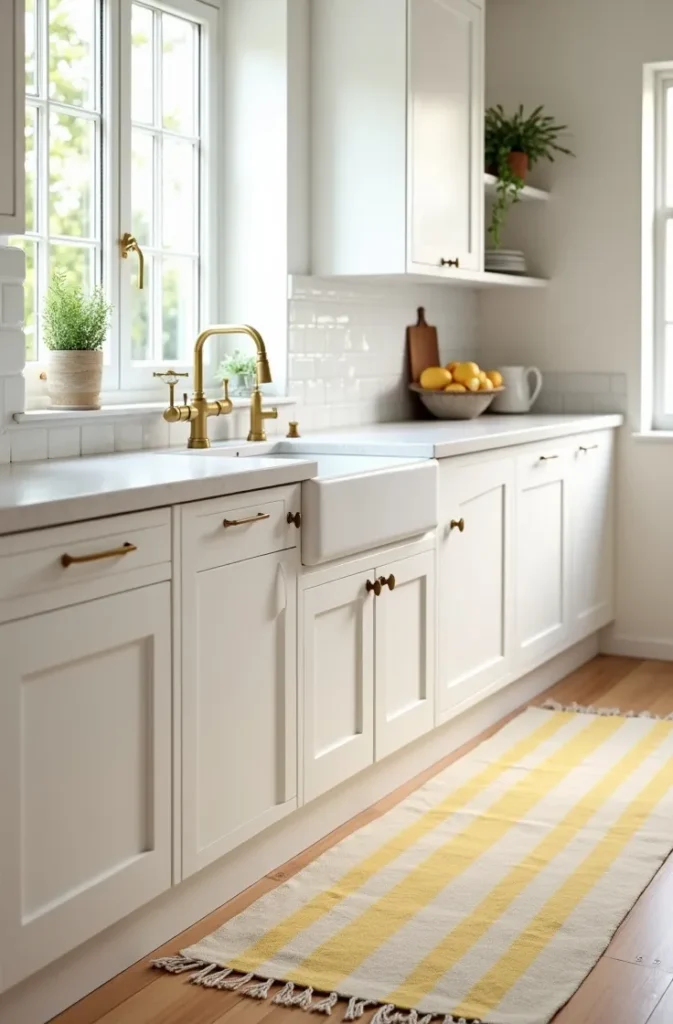
Flat-woven cotton rugs are the correct choice for kitchen floors specifically. They lie flat without a thick pile that catches debris, they are machine washable, and they do not create a trip hazard in a high-traffic cooking zone. Thick pile or jute rugs are not practical in front of the sink or stove where liquid spills are regular.
Size the rug to match the run it serves. A rug in front of the sink should be 20 to 24 inches wide and at least 5 feet long to cover the standing zone adequately. A rug that is too short — cutting off before the dishwasher or the end of the counter — looks proportionally incorrect and draws attention to what is missing rather than what is there.
Conclusion
The best summer kitchen decor ideas are the ones that work within your existing kitchen rather than against it. Whether you start with a new textile, a bowl of citrus, or a simple hardware swap, each change in this guide is designed to be practical, reversible, and visually effective without requiring a renovation.
Save this post before your next grocery or home store run — having a clear reference point makes the difference between a considered seasonal refresh and a random collection of summer purchases that do not quite work together. When you are ready to go further, explore seasonal color planning and kitchen layout ideas to carry the refresh into the cooler months ahead.