
A living room that felt cozy and layered in winter can feel heavy, dark, and stale by June — and the fix rarely requires a renovation. This guide covers 12 summer living room refresh ideas 2026 that address the real reasons a room stops working seasonally: wrong light balance, heavy textiles, poor airflow staging, and color palettes that fight the season rather than work with it. Each idea is practical, decision-ready, and designed for real American homes across all sizes and budgets.
1. Swap Heavy Drapes for Sheer Linen Panels to Instantly Brighten the Room
Window treatments are the single fastest way to change how a living room feels in summer. Heavy velvet, blackout, or thermal drapes trap heat visually and physically — they make a room read as closed and heavy even when pulled open. Replacing them with sheer linen or cotton panels for the summer months allows diffused natural light to fill the room without the harsh glare of bare windows.
Sheer linen panels work because they filter direct sunlight into soft, even ambient light — which is what makes a room feel airy rather than washed out. They also move with air circulation, which adds a subtle sense of life and freshness that fixed treatments cannot provide.
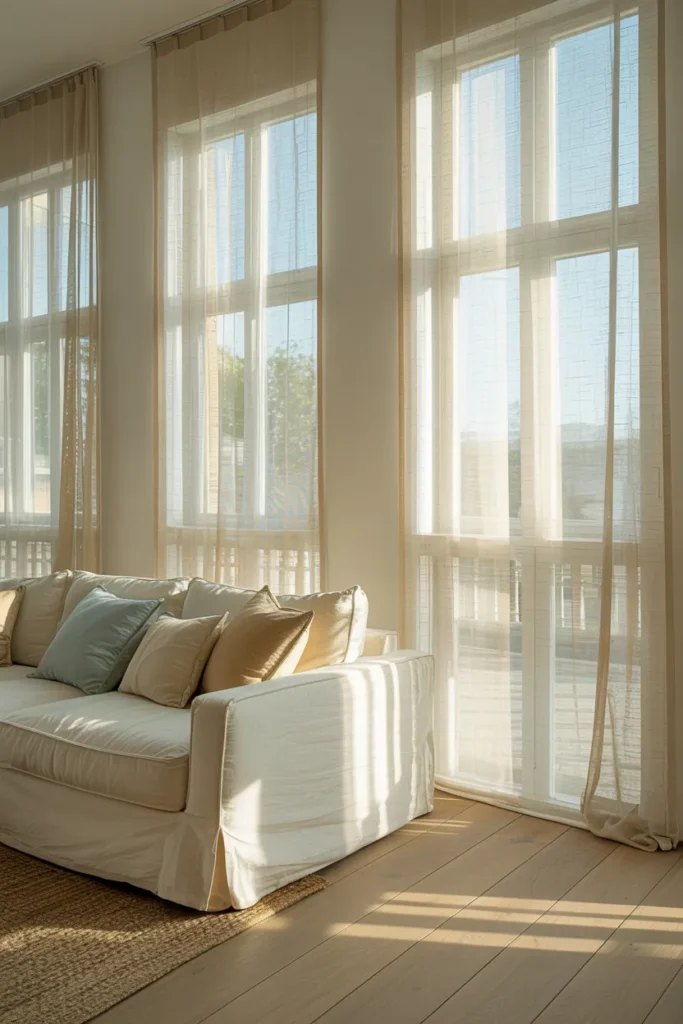

Hang panels as high as possible — at ceiling height if your walls allow — and wide enough to clear the window frame completely when open. This single installation decision makes windows read larger and ceilings read taller, which amplifies the summer-light effect significantly.
Avoid bright white sheers in rooms with south or west-facing windows. In strong afternoon light, bright white sheers can create a glare effect that is harder on the eyes than the drapes they replaced. Natural undyed linen or warm ivory diffuses the same light without the glare issue.
2. Introduce a Summer Color Palette Through Interchangeable Pillow Covers
Throw pillow covers are the most cost-effective and reversible way to shift a living room’s color story between seasons. The insert stays the same year-round — only the cover changes. For summer, the shift should move toward soft warm neutrals, terracotta, sage green, coastal blue, or warm sand tones that reflect the seasonal light rather than absorbing it.
The reason this works so well is that pillows occupy the center of visual attention in a living room — the sofa or sectional is where eyes land first, and what sits on it sets the tone for the whole space. Changing five or six pillow covers effectively re-colors the room without touching a wall or a piece of furniture.
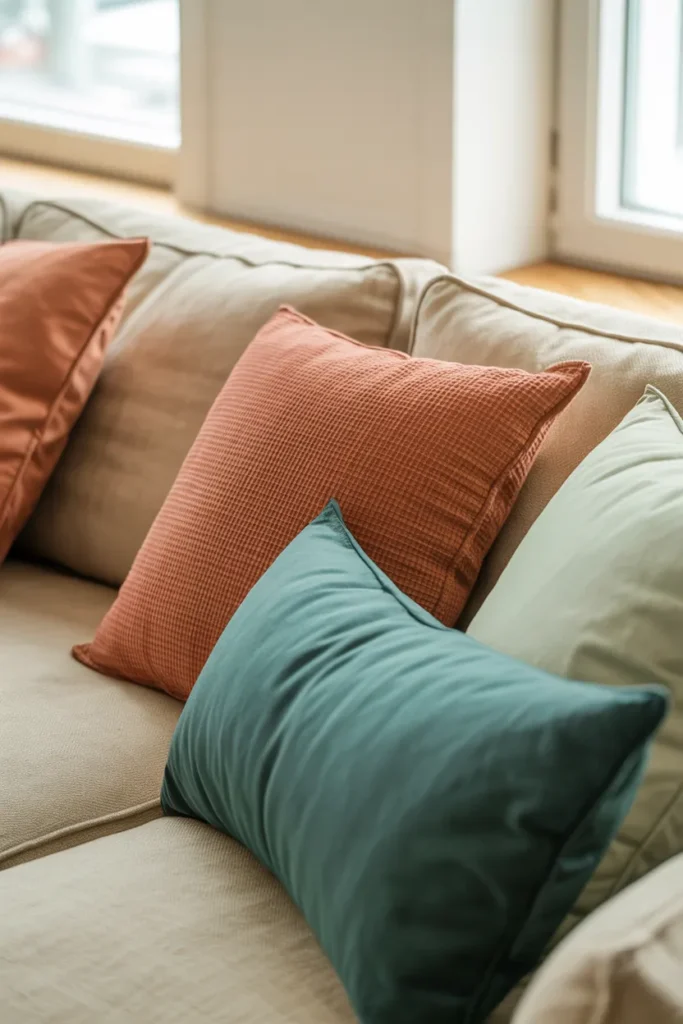
For a cohesive result, choose covers in two main tones and one accent. Three different colors with no repeating reads as scattered. Two tones plus one accent — for example, warm sand, soft terracotta, and one deep teal — creates variety while maintaining visual unity.
Avoid mixing too many patterns at the same scale. If you use a stripe and a print, make sure they are significantly different in scale — a large-scale pattern alongside a fine-grain texture reads well, while two medium-scale patterns of similar size compete with each other.
3. Remove One Large Furniture Piece to Improve Summer Airflow and Scale
Most living rooms are furnished for maximum seating capacity rather than comfortable daily living — and in summer, that overcrowding becomes noticeably worse. An extra armchair, a bulky ottoman, or a secondary side table that serves no real function takes up floor space that the room needs to breathe.
Removing one significant piece for the summer months — storing it in a spare bedroom or basement — immediately creates better circulation paths through the room, makes cleaning easier, and allows any summer breeze from open windows to move freely. It also gives the remaining furniture room to be appreciated individually rather than competing for attention.
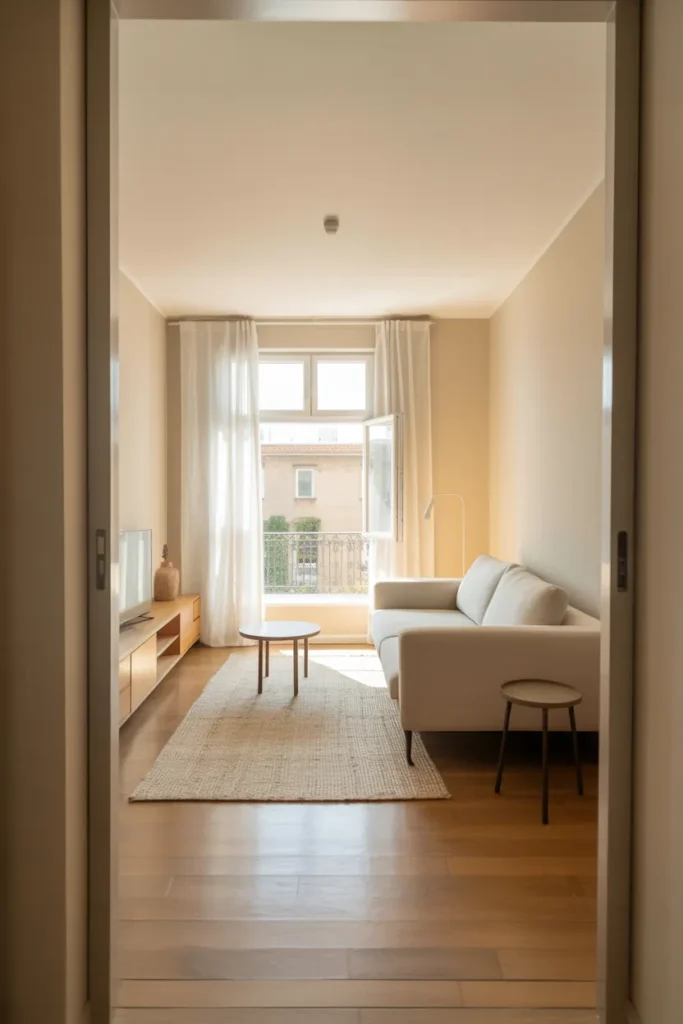
This is particularly effective in small living rooms and apartments where every square foot counts. A 12-by-14-foot living room with five pieces of furniture feels fundamentally different from the same room with four. The math is disproportionate — one piece removed creates more perceived space than the arithmetic suggests.
Do not remove the piece that anchors the room. The sofa, the primary rug, and the main light source define the space. Remove secondary pieces — the accent chair that is never actually used for sitting, the large floor cushion that migrates to a corner, the console table that only holds mail.
4. Layer Natural Texture With Jute, Rattan, and Seagrass Accents
Summer living room refresh ideas 2026 consistently point toward natural, tactile materials as the defining textural shift of the season. Jute rugs, rattan side tables, seagrass baskets, and woven pendant shades bring warmth and organic texture without adding visual weight — which is the critical distinction between a room that feels summery and one that just feels beige.
Natural fiber textures work in summer because they carry an inherent lightness — the open weave of rattan and seagrass reads as breathable rather than dense, which subconsciously communicates the season without requiring a complete furniture change. Layering these materials across different surfaces — floor, table, wall, light fixture — creates cohesion that feels considered rather than assembled.
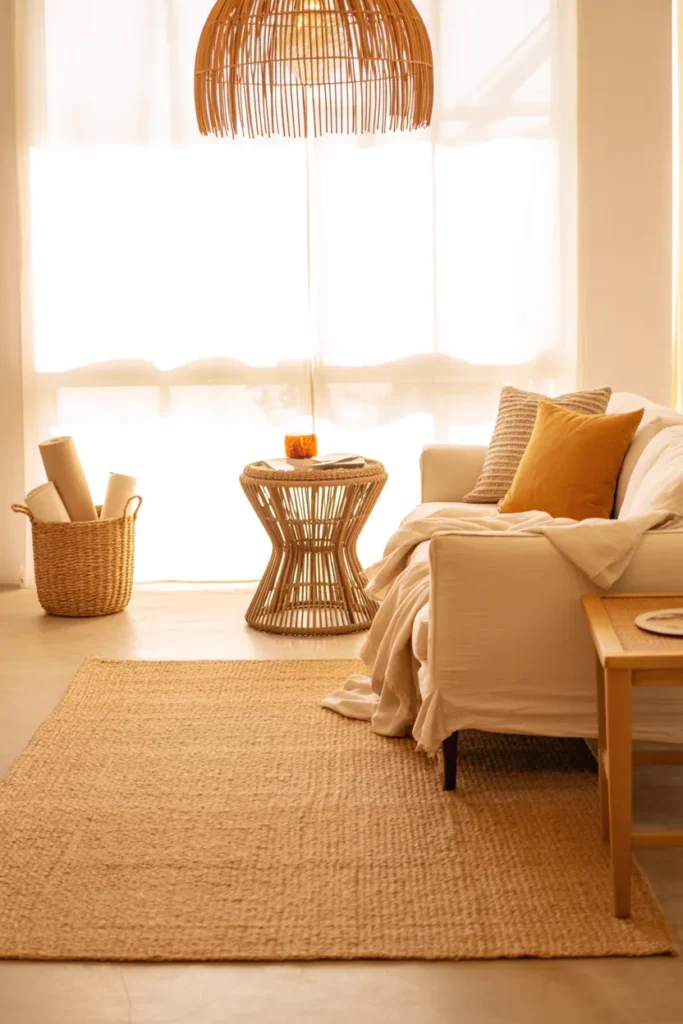
The most effective way to introduce this palette quickly is a jute or seagrass area rug as a swap for a heavier wool or synthetic rug. The floor covering is the largest surface area in the room and has the greatest impact on the seasonal feeling of the space.
Avoid using all-natural-fiber furniture if you have young children or pets. Woven natural fiber pieces — particularly rattan seating — require more careful maintenance than upholstered furniture and can be sharp on bare summer skin. Use natural fiber as accent pieces rather than primary seating.
5. Refresh the Living Room Gallery Wall With Botanical Prints for Summer
Gallery walls that work year-round often feature a mix of abstract art, photography, and personal pieces — but for a summer seasonal refresh, replacing two or three pieces with large botanical prints shifts the wall’s energy without requiring a full reinstallation. Botanical art introduces the natural world into interior spaces in a way that feels current, collected, and deliberately seasonal.
The most effective botanical prints for summer are oversized single-stem or leaf studies in muted greens, warm earthy tones, or washed-out neutrals. Over-saturated, brightly colored tropical prints can read as novelty decor rather than considered art — the muted or hand-drawn illustration style reads as higher-quality in most living room contexts.
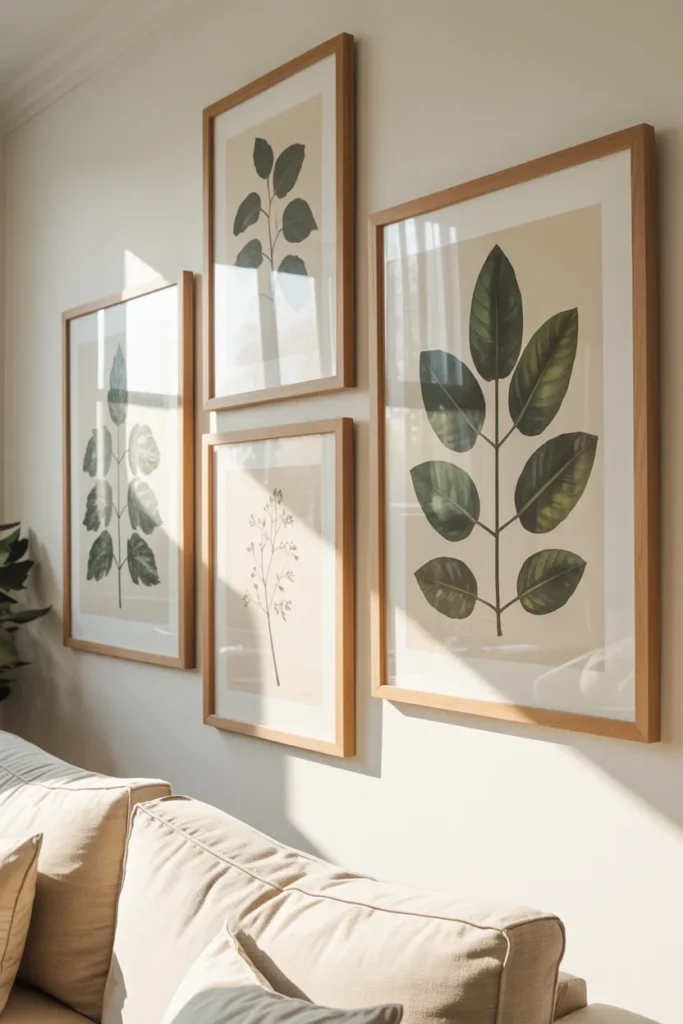
Frame botanical prints consistently with the existing gallery wall — matching frame finish, or deliberately contrasting in a way that signals intentionality. A mix of gold and black frames on the same wall works; a random mix of five different finishes does not.
This approach is specifically effective in living rooms that already have an established gallery wall because the swap requires no new holes and no rearrangement. Simply exchange two or three prints in existing frames for summer-appropriate alternatives.
6. Replace a Dark Area Rug With a Light Flatweave for Instant Room Lift
A dark or heavy patterned area rug holds visual weight that is an asset in winter but a liability in summer. Swapping it for a flat-woven cotton or low-pile rug in light natural tones — cream, warm white, pale sand, or soft sage — lifts the entire room by reflecting rather than absorbing light from the floor plane upward.
Flatweave cotton rugs are the practical summer rug choice for multiple reasons beyond aesthetics: they are easier to clean in high-traffic summer conditions, they do not trap allergens the way high-pile rugs do, and they lie flat without a rug pad in most applications, which eliminates a trip hazard with bare summer feet.
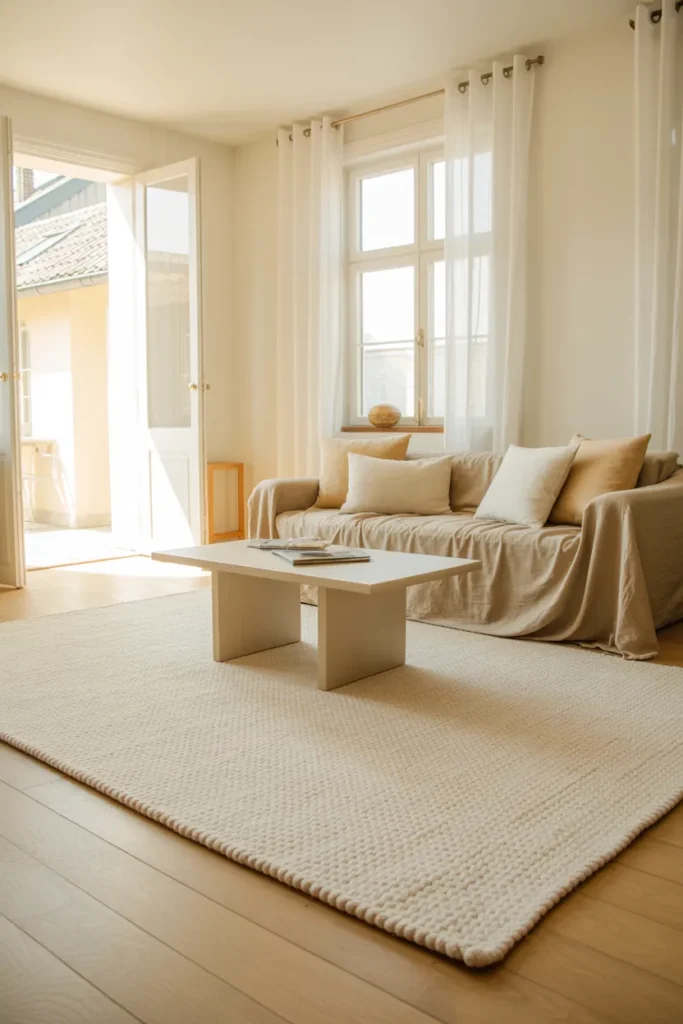
The floor is the largest horizontal surface in the room and has a disproportionate effect on the overall brightness of the space. A dark rug under warm-season lighting creates a visual anchor that makes the room feel grounded and heavy. A light rug under the same lighting conditions makes the room feel open and lifted.
Size is as important as color. A rug that is too small for the furniture arrangement reads as an afterthought regardless of color. For a standard sofa-and-chairs arrangement, the rug should be large enough for at least the front legs of all seating pieces to rest on it.
7. Bring in One Statement Houseplant to Anchor the Summer Refresh
A single large houseplant — positioned thoughtfully rather than randomly placed — does more for a summer living room refresh than a collection of small plants scattered across surfaces. The scale of a large plant creates a genuine focal point and brings the room into conversation with the outdoor season in a way that small accents cannot.
The most effective statement plants for living rooms are those with strong silhouette and low-drama maintenance: fiddle leaf fig, bird of paradise, olive tree, and large-leafed monstera all read as architectural rather than fussy. Their presence in a room signals considered curation, not just a decorative impulse.
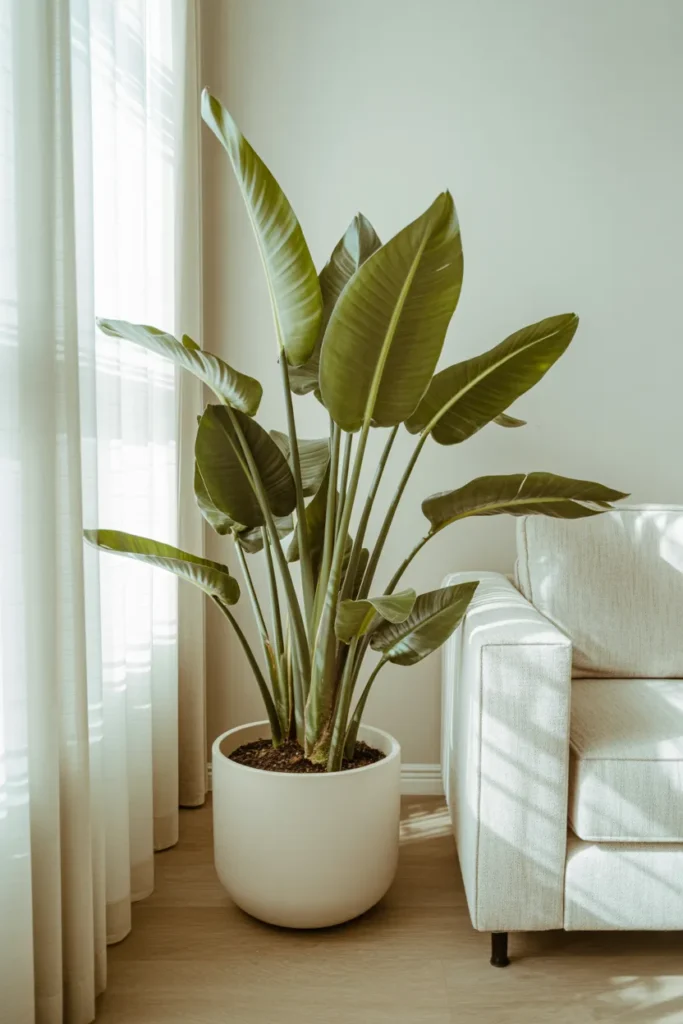
Position the plant where it receives the light level it actually needs — not where it looks best aesthetically. A plant that declines within six weeks because it was placed for visual effect creates more maintenance and cost than it resolves. Identify your brightest natural light source first, then design the plant placement from that constraint.
Avoid using a collection of matching small pots to replace one large plant. Three 6-inch pots of the same species do not have the same visual impact as one 14-inch specimen. Scale matters more than quantity in living room plant styling.
8. Switch to Lighter Throw Blankets That Serve Style Without Adding Heat
Throw blankets stay on sofas year-round in most American living rooms — but the ones chosen for winter warmth actively work against the summer refresh. Chunky knit wool throws and heavy fleece blankets read as cold-season objects even when they are purely decorative. Replacing them with lightweight cotton waffle-weave, stonewashed linen, or open-weave throws maintains the styled look without the visual weight.
Summer throws should feel light enough that they could plausibly be used on a warm evening — which means they look functional rather than decorative. A throw that is visibly too heavy for summer reads as forgotten rather than styled.
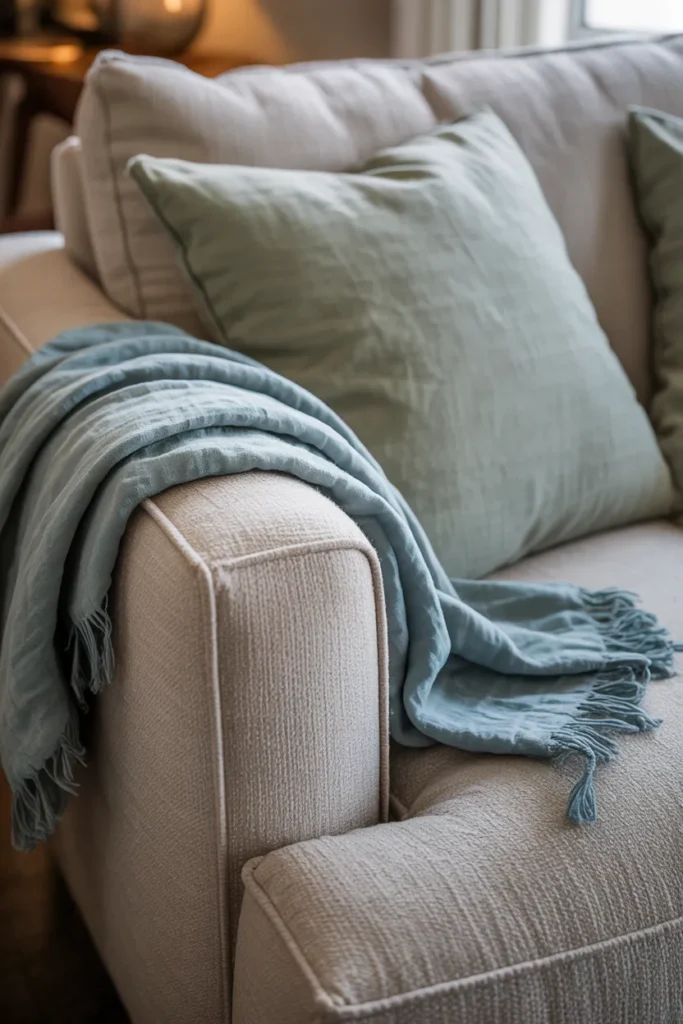
The texture of the replacement matters as much as the weight. Cotton waffle weave has an open texture that reads as casual and breathable. Stonewashed linen reads as relaxed and collected. Both work well for summer. Avoid tightly woven cotton in solid dark tones — it reads as a folded piece of fabric rather than a designed textile.
Drape throws asymmetrically over one corner of the sofa or loosely folded over an armrest rather than centered and symmetrical. An asymmetric drape reads as lived-in and natural. A perfectly folded, centered throw reads as a display model.
9. Edit the Coffee Table Styling Down to Three Intentional Objects
Coffee table surfaces are among the most cluttered areas in a living room, and clutter reads as visually heavy regardless of the season. For a summer refresh, the goal is reduction rather than addition — editing the surface down to three intentional objects creates the kind of calm, curated display that photographs well and lives well.
A working summer coffee table composition uses three elements at different heights: something low and flat such as a stack of two books or a low tray, something of medium height such as a small vase with a single stem or a candle, and one natural element such as a small stone, a piece of coral, or a simple ceramic bowl. The variation in height creates visual interest without complexity.
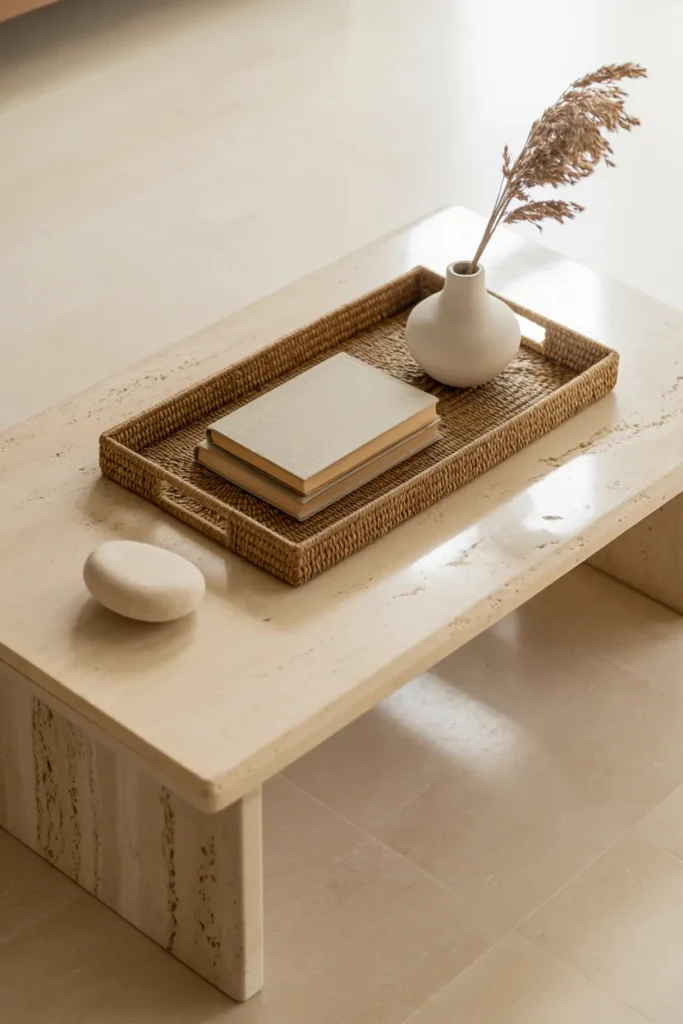
The tray is the organizing tool that makes a coffee table look considered rather than random. Everything outside the tray reads as clutter. Everything inside the tray reads as a composed vignette. This is a reliable principle regardless of style or budget.
Remove remote controls, coasters, and everyday items from the surface during any photo or when the room is not in active use. These objects serve a function but visually they destroy any styling effort immediately. Store them in a small lidded box within the tray for quick access without the visual noise.
10. Use Warm Ambient Lighting Instead of Overhead Fixtures in the Evening
Summer evenings extend daylight later, which means the transition to artificial lighting happens in a different visual context than winter. Overhead lighting that worked adequately in dark winter evenings reads as harsh and clinical against the warm residual light of a summer dusk. Shifting to warm ambient sources — table lamps, floor lamps, and low candlelight — creates the right light balance for the season.
The target color temperature for summer evening living room light is 2700K to 3000K. This is the warm amber range that complements natural summer tones and creates a flattering, relaxed atmosphere. Anything above 3500K reads as office-bright and works against the seasonal mood entirely.
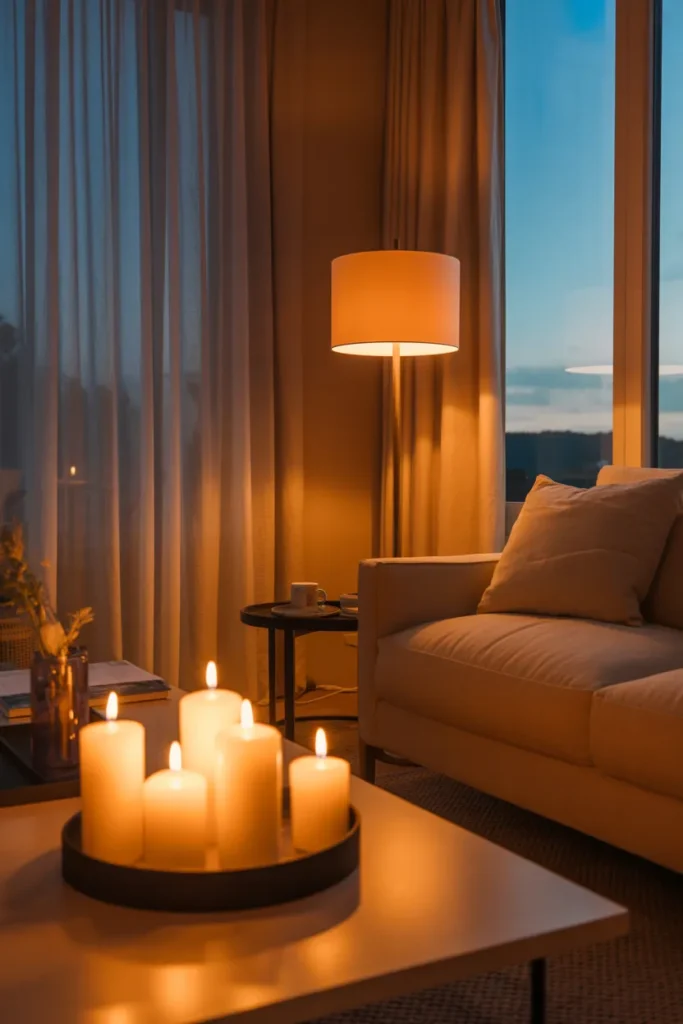
Layer at least three light sources in the room at different heights — one table lamp, one floor lamp, and one ambient source such as a candle grouping or a low-slung pendant. Three sources at varied heights create dimensionality. A single overhead fixture flattens the room regardless of its wattage.
This is one of the most impactful and lowest-cost summer living room refresh changes available because it requires no purchases if you already own lamps — simply change the habit of which switch you reach for when the light fades.
11. Refresh a Neutral Living Room With One Terracotta or Sage Accent Wall
An accent wall in a single warm seasonal color is one of the most committed summer living room refresh ideas 2026 and also one of the most impactful. Terracotta and sage green are the two tones most aligned with the 2026 interior direction — both carry warmth without the harshness of bright saturated colors, and both work across a wide range of furniture tones.
Terracotta suits rooms with warm wood tones, cream or ivory upholstery, and natural fiber accents. It creates a sense of sun-warmed depth that no decorative object can match. Sage green suits rooms with white or cool grey furniture, rattan or natural wood accents, and homes with significant natural light. Both tones perform well in both natural and artificial light, which matters for year-round livability.
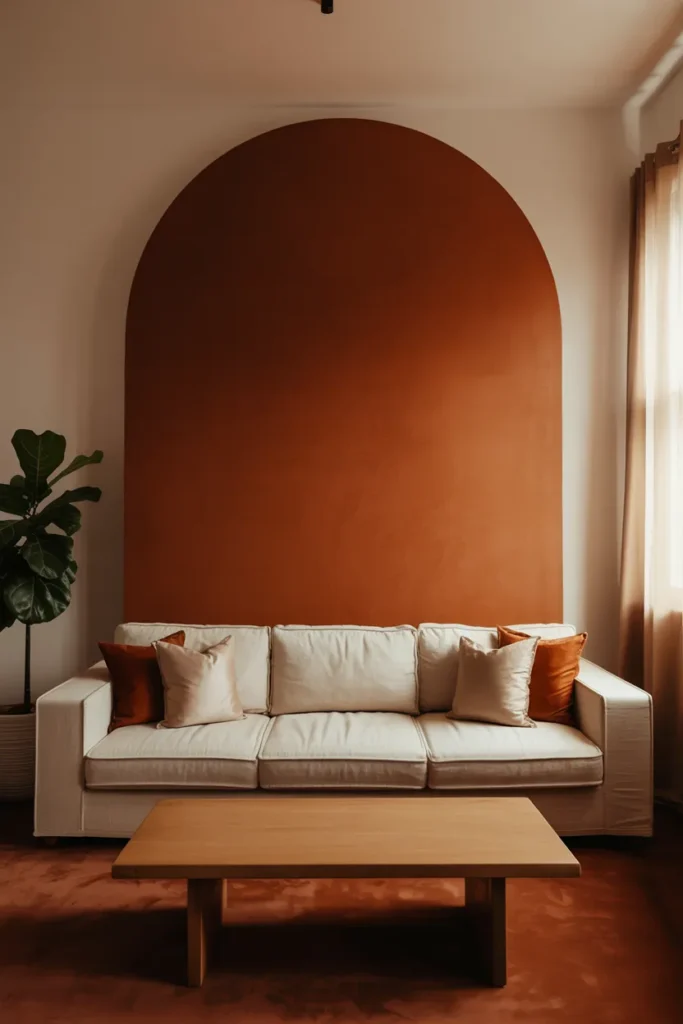
Paint the wall behind the primary sofa seating rather than a side wall. The sofa-facing wall is the first surface seen from the room entrance and the backdrop for the room’s main visual composition. Painting a side or peripheral wall spreads the color without concentrating its impact.
Avoid going darker than a mid-depth tone in rooms under 200 square feet. A deeply saturated accent wall in a small living room creates drama at the expense of perceived space. In small rooms, a lighter tint of the same hue achieves the seasonal feeling without closing the room in.
12. Declutter Built-In Shelves and Restyle With Summer-Appropriate Objects
Built-in shelves and bookcases in living rooms accumulate objects seasonally — and by summer, most have become a dense mix of books, objects, and forgotten decorative pieces that read as visual noise rather than curated display. A summer shelf refresh is not about adding new objects. It is about removing 40 percent of what is there and reorganizing what remains.
The working principle for summer shelf styling is negative space. Leaving clear shelf sections between groupings gives the eye places to rest and makes the displayed objects more impactful. A shelf filled edge-to-edge with books and objects reads as storage. A shelf with thoughtful groupings separated by open space reads as design.
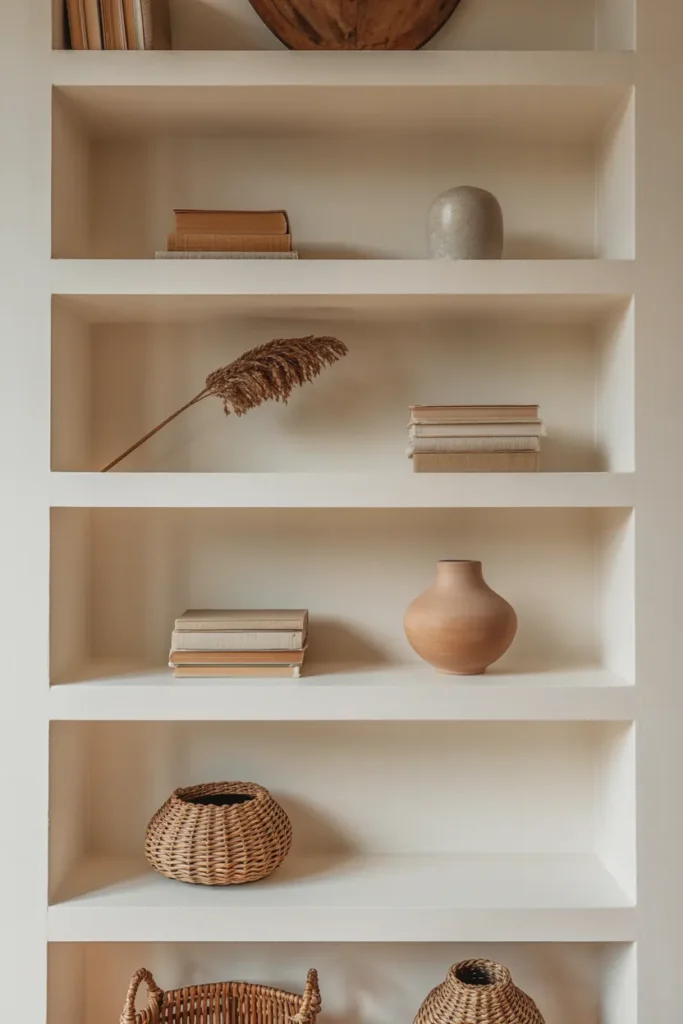
Introduce summer-relevant objects into the composition: a simple ceramic vase in a muted warm tone, a stack of linen-covered books, a small woven basket, a single dried botanical stem. These do not need to be new purchases — objects that exist elsewhere in the home, edited and repositioned, can carry the seasonal shift.
Remove anything from the shelves that belongs in a different room, has been there over two years without being noticed, or creates visual clutter at eye level. Objects below knee height on a shelf are rarely seen — use that zone for storage baskets rather than display.
Final Thoughts
A summer living room refresh does not require a renovation, a large budget, or a full weekend of work. The ideas in this guide are built on one consistent principle: remove what works against the season and reinforce what works with it. Light, texture, scale, and color all shift naturally with the time of year — the rooms that feel best in summer are the ones where the design acknowledges that shift rather than ignoring it.
Save this post to your Pinterest boards so you have a practical reference ready when you are planning your own seasonal refresh. Whether you are working with a small apartment living room, a large open-plan space, or a traditional home with fixed architectural features, at least two or three of these summer living room refresh ideas 2026 will apply directly to your situation. Explore more seasonal interior design and living room styling content to keep building a home that works beautifully in every season.