
Most summer outdoor decor ideas look great in photos but fall apart in real conditions, fading in direct sun, warping under heat, or simply not fitting the actual dimensions of a porch, patio, or backyard. This guide skips the vague inspiration and focuses on what works, why it works, and how to make specific design decisions for your space. Whether you are working with a small apartment balcony, a covered porch, or a full backyard setup, each idea below gives you a practical framework to follow.
1. Layered Outdoor Rug and Seating Vignette That Anchors an Open Patio
An open patio without a defined seating area reads as unfinished regardless of the furniture quality. An outdoor rug is the fastest way to solve that problem because it creates a visual boundary that tells the eye where the living space begins and ends. On a plain concrete or paver surface, this distinction is what makes a patio feel like a designed room rather than a leftover slab.
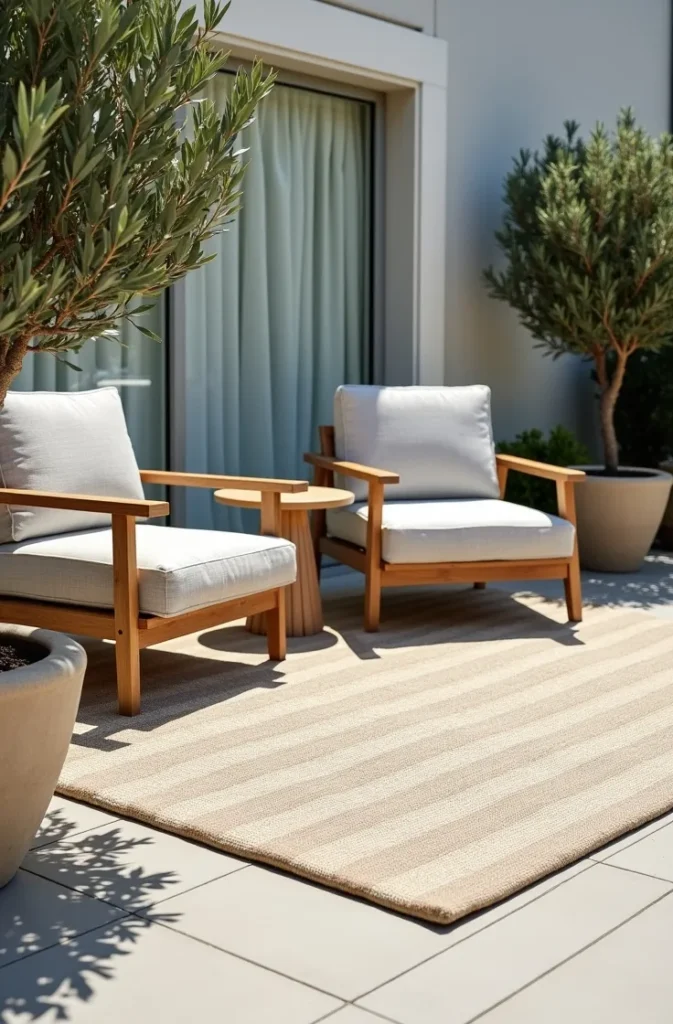
Choose a rug that extends at least 18 inches beyond the outer legs of your seating group on all sides. Rugs that are too small for the furniture arrangement are one of the most common outdoor decorating mistakes, and they make even expensive furniture feel disconnected. For summer specifically, low-pile flatweave outdoor rugs in natural-looking patterns perform best, they dry quickly after rain and hold up through UV exposure without the backing peeling as rapidly as thicker pile options.

Layer the rug under a seating group of two chairs and a small side table for smaller patios, or a full sofa and chair pairing for larger spaces. Consistent leg placement on the rug across all furniture pieces is what completes the anchored look.
2. String Light Canopy Over a Dining Area That Creates Instant Ambiance After Dark
Outdoor string lights are one of the highest-impact summer outdoor decor additions available at any price point, but only when installed with intention. The canopy configuration, strung overhead in a grid or radial pattern between fixed anchor points, is specifically what elevates them beyond the basic porch-drape look.
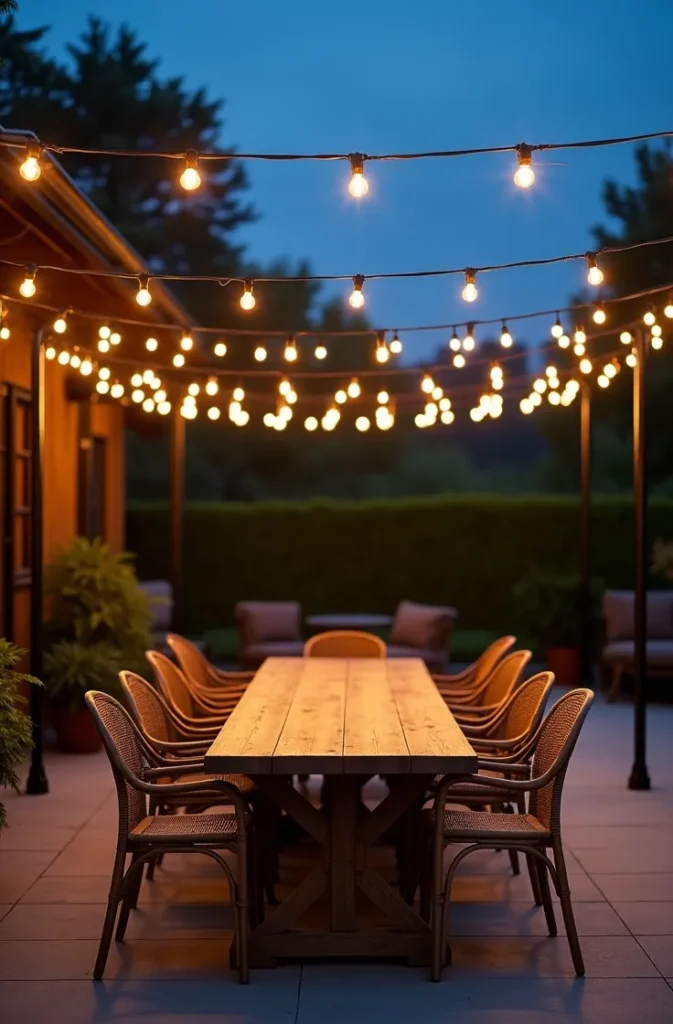
The canopy setup works for covered and uncovered dining areas alike. For uncovered patios, you need anchor points in the form of pergola posts, freestanding poles set in weighted bases, or existing fence lines at the perimeter of the space. The string lights should hang with a slight downward curve between points, not pulled taut, as the gentle sag creates the soft, enveloping quality that makes the arrangement feel intentional.
Use warm white bulbs in the 2700K to 3000K range. Daylight or cool white bulbs create a clinical quality that undercuts the evening ambiance entirely. Edison-style or globe bulbs read best on camera and in person for summer outdoor dining spaces.
3. Raised Planter Wall That Doubles as a Privacy Screen on a Small Patio
Small patio outdoor decor ideas need to solve more than one problem at a time to be genuinely useful. A row of tall raised planters or planter boxes positioned along one edge of a small patio simultaneously introduces greenery, creates privacy from adjacent properties, and adds vertical dimension to a flat space without requiring a permanent structural addition.
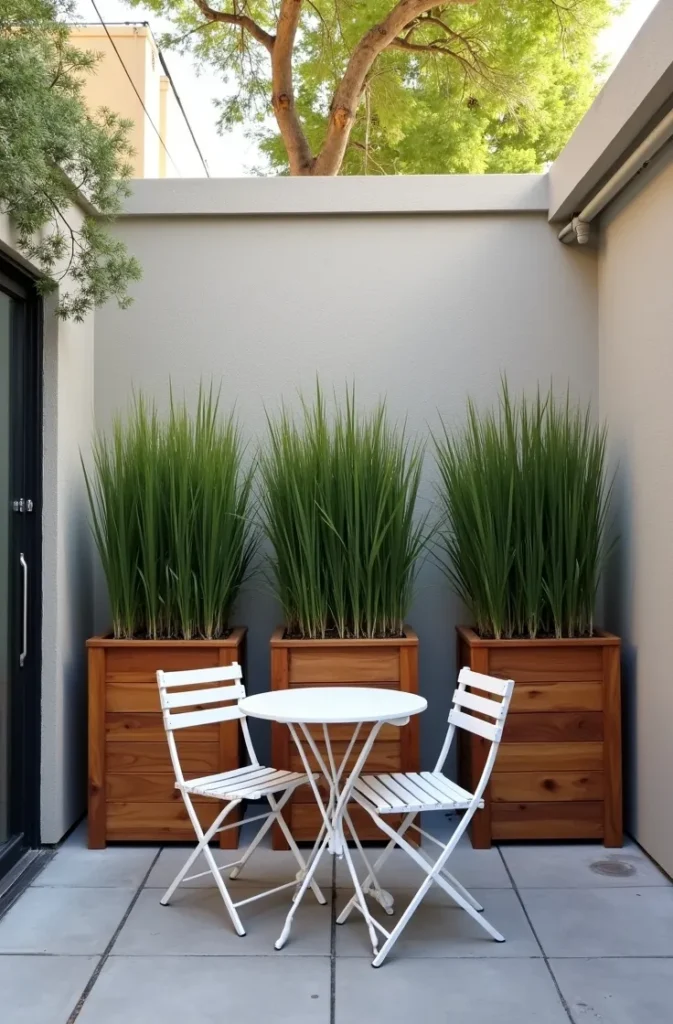
Cedar, powder-coated steel, and concrete-look fiber planters are the three best material choices for this application. Cedar handles heat and moisture without warping as quickly as pine and looks better as it weathers. Powder-coated steel works best in modern exterior settings and is less prone to soil staining. Concrete-look fiber planters give the weight and visual density of real concrete at a fraction of the actual weight, which matters on elevated patios and decks where load limits apply.
Plant tall ornamental grasses, bamboo in root barrier containers, or climbing plants on a trellis insert for maximum height. Keep the planting consistent across the row rather than mixing plant types, a uniform planting reads as intentional landscape design rather than collected pots.
4. Covered Porch Swing Setup That Feels Like an Outdoor Living Room
A porch swing done well functions as the anchor piece of a full outdoor seating arrangement rather than an isolated feature. The key is treating the swing the way you would treat a sofa indoors, building the surrounding decor outward from it.
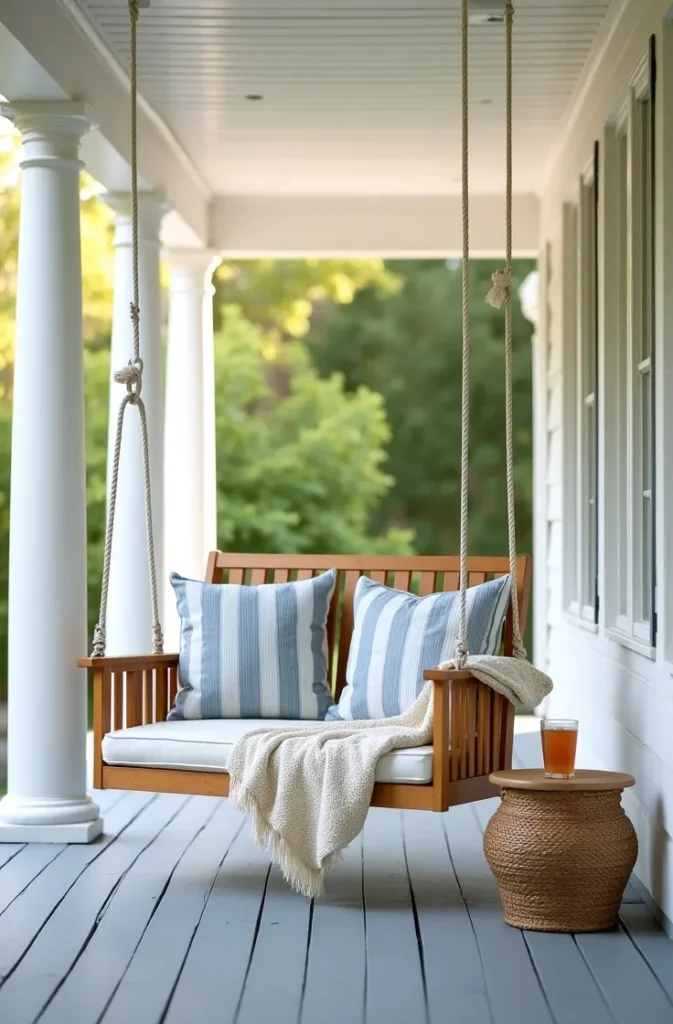
Hang the swing from a reinforced ceiling joist rated for the combined weight of the swing and occupants, and position it so the swing plane is parallel to the porch railing, never perpendicular. A perpendicular placement limits the swinging motion and creates an awkward traffic flow through the porch. Two to three feet of clearance behind the swing at rest position is the functional minimum.
Style the swing with outdoor throw pillows in two coordinating patterns, a solid and a print in the same color family, and add a woven outdoor blanket folded over one armrest for texture. Place a small outdoor side table at one end for drinks. A jute or sisal outdoor rug beneath the swing anchors the vignette and protects the porch floor from swing scuff marks.
5. Outdoor Firepit Seating Circle That Works for Both Evenings and Daytime Use
A firepit seating arrangement that looks and functions well during the day is a challenge most summer outdoor patio design setups fail. The typical approach of chairs pointed inward at a firepit leaves an unattractive ring of furniture with no secondary function when the fire is out.
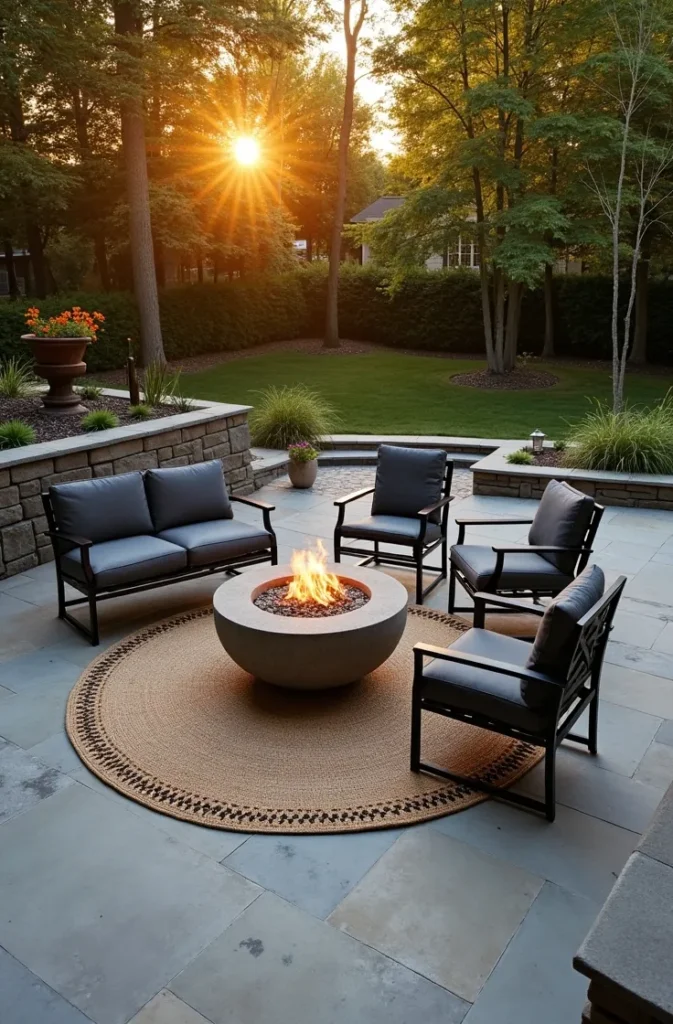
The solution is to design the arrangement as a conversation grouping first and a fire-viewing setup second. Use a mix of seating types, two loveseats or outdoor sofas facing each other with occasional chairs completing the circle, so the arrangement reads as a full living area rather than a fire-watching ring. The firepit or fire bowl at the center becomes the table stand-in when not in use.
Spacing matters significantly here. Each seat should be positioned 5 to 7 feet from the center of the firepit for heat comfort and safety. Closer than five feet is uncomfortable at operating temperature. Further than seven feet breaks the conversational intimacy that makes this layout work as a social space.
6. Vertical Garden Wall Panel That Brings Life to a Bare Fence or Exterior Wall
A bare fence or exterior wall is wasted vertical space in any backyard setup. A vertical garden panel, whether planted with succulents, ferns, herbs, or trailing vines, converts that flat surface into a living design element that photographs well, adds color, and reduces the visual weight of large fence sections.
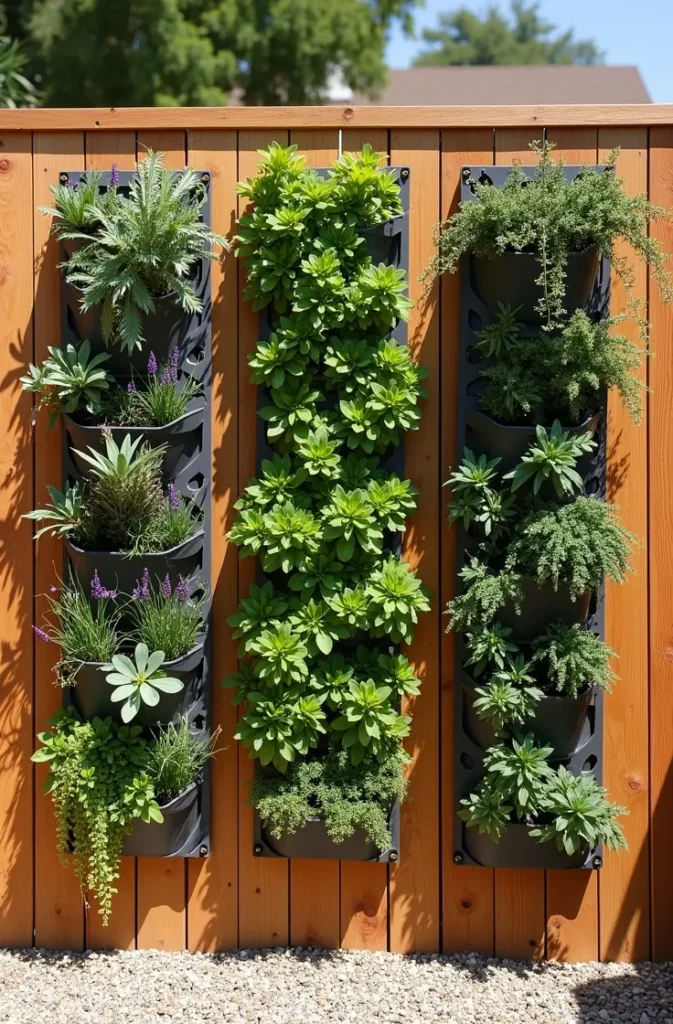
Modular vertical planter panels that mount with hardware directly to fence boards or exterior walls are the most practical option for most homeowners. They distribute weight evenly and allow individual plant sections to be swapped without dismantling the entire installation. For renters or homeowners who cannot drill into surfaces, freestanding vertical planter towers achieve a similar effect without permanent attachment.
For summer specifically, choose plants with proven heat tolerance for your USDA zone. Succulents, lavender, trailing rosemary, and ornamental sweet potato vine handle full summer sun without constant supplemental watering. Ferns and impatiens require shade placement and more consistent moisture. Matching the plant selection to your actual light conditions determines whether this installation thrives or fails within the first month.
7. Bohemian Macrame and Rattan Porch Decor for a Layered Casual Look
Bohemian-influenced summer outdoor decorating works on covered porches and screened porch settings because the natural materials, jute, rattan, macrame, raw wood, perform well in filtered light and partial weather exposure. This is not a design direction for an uncovered exposed porch where humidity and rain would degrade the materials rapidly.
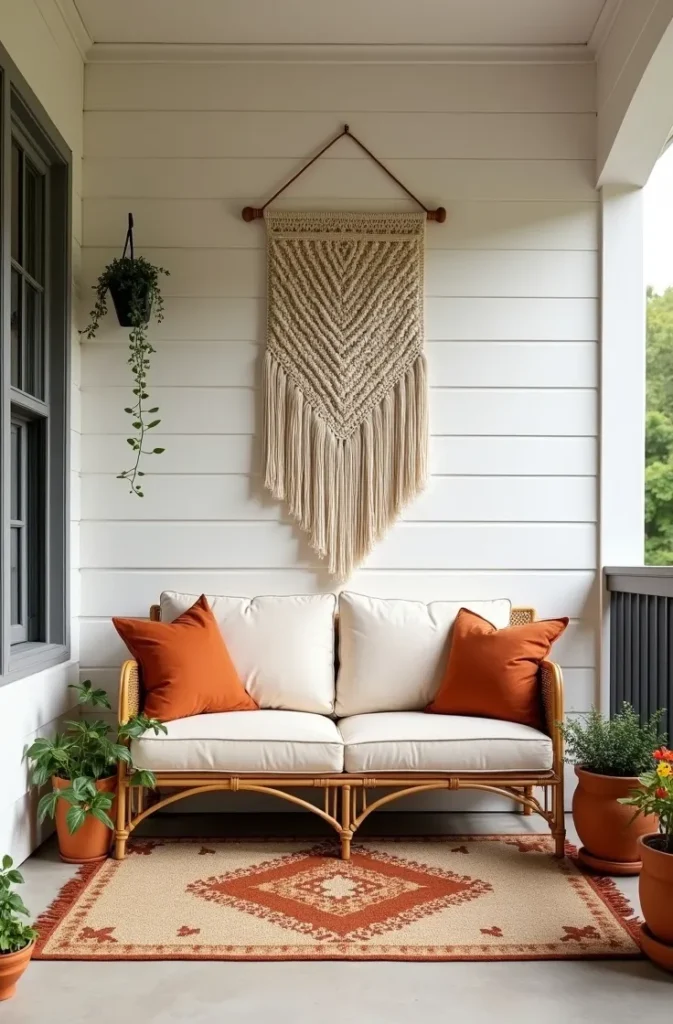
The layering approach is what creates the boho porch aesthetic: a woven macrame wall hanging or door hanging, rattan furniture with natural cushions, layered outdoor rugs in earthy tones, and an abundance of potted trailing plants. Each element on its own reads as incomplete. The visual depth only emerges when three or more texture layers are active simultaneously.
Use terracotta, warm cream, rust, and sage as the color palette. Avoid introducing too many competing patterns. One patterned cushion or rug print is enough. Keep additional textiles in solid or subtly textured tones to maintain cohesion. This is where most bohemian porch attempts lose the intentional quality, too many competing prints of similar visual weight produce visual noise rather than layered warmth.
8. Modern Minimalist Deck Setup That Uses Negative Space as a Design Element
In modern outdoor decorating for 2026, less furniture and more deliberate open space is replacing the traditional fill-every-corner approach. A minimalist deck setup works by selecting fewer, better-quality pieces positioned with intentional spacing so the eye moves through the space rather than being stopped by clutter.
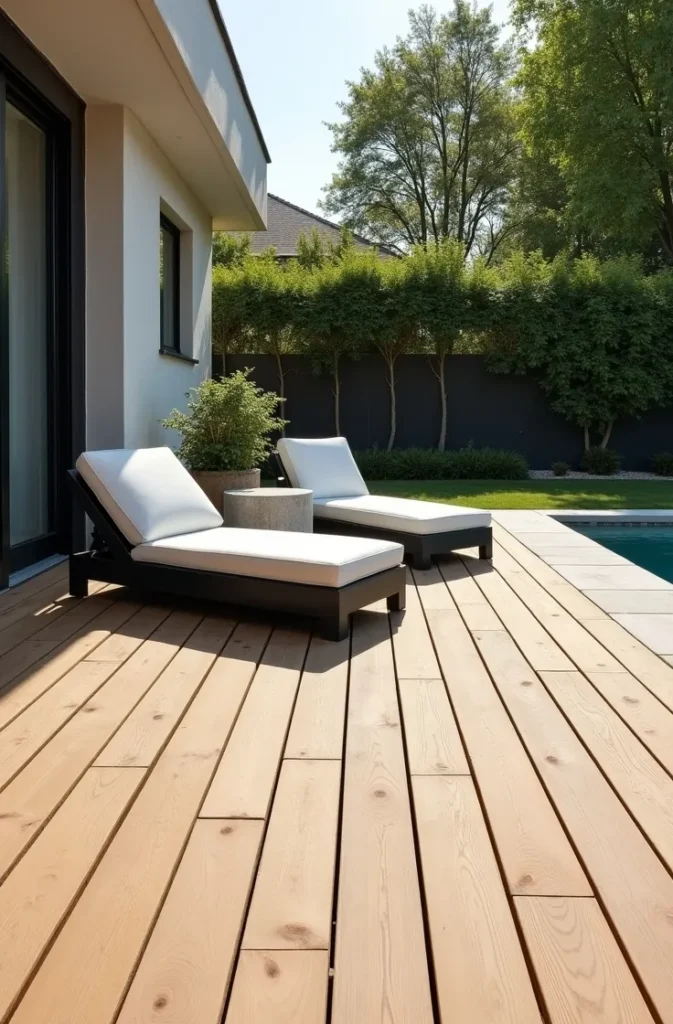
For a deck or patio in the 200 to 400 square foot range, limit seating to one primary arrangement and leave at least a third of the deck surface completely open. That open area is not wasted, it is what makes the seating area feel spacious and deliberate. Crowding a modest deck with too much furniture is the single most common mistake in residential outdoor decorating.
Material selection defines this style. Powder-coated steel, concrete, teak, and composite decking materials in neutral tones work together cleanly. Avoid mixing too many material types. Two or three consistent material finishes across all furniture and accessories is the maximum before the arrangement starts reading as collected rather than designed.
9. Outdoor Curtain Panel Setup That Turns a Pergola Into a Private Retreat
Pergola outdoor decor ideas that do not address sun and privacy miss the two most important functional requirements of the space. Outdoor curtain panels solve both problems simultaneously and add softness and scale to what is otherwise a structural frame.
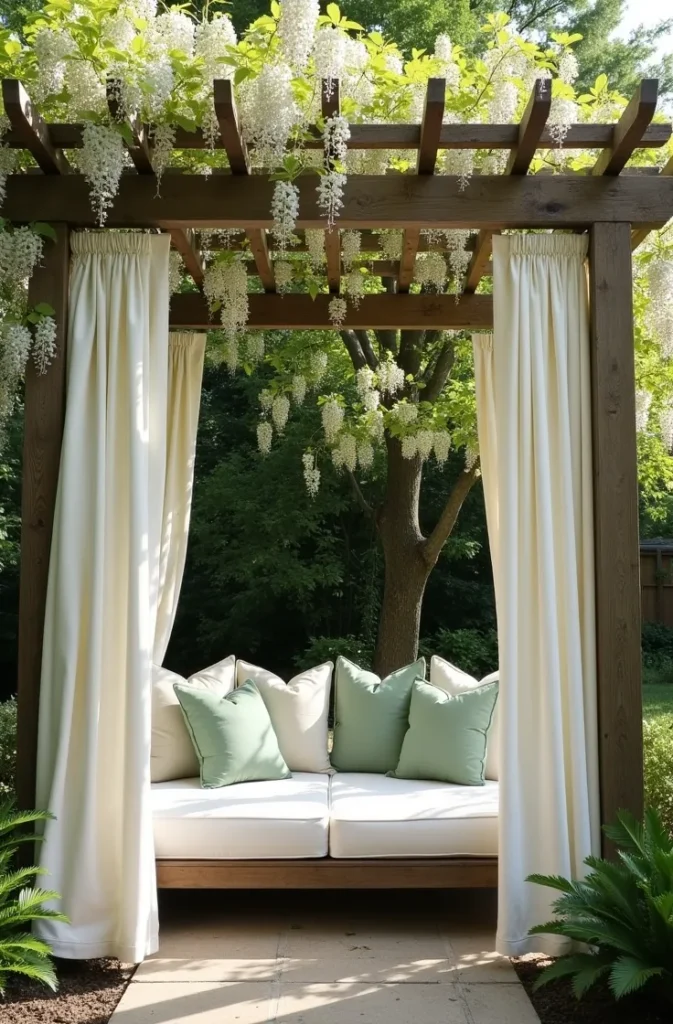
Use panels made from outdoor-rated solution-dyed acrylic fabric or weatherproof polyester. Standard indoor sheer curtains are often marketed for outdoor use but fail within a single summer season under direct sun and moisture exposure. Verify that the fabric is rated for outdoor UV exposure before purchasing. The investment in material quality here directly determines how long the installation lasts.
Mount the curtain rod or cable system at the maximum ceiling height of the pergola, not at the top of the panel itself. This creates the ceiling-height hang that makes curtain panels read as architectural elements rather than add-ons. Draw the panels to one side during the day and position them to cover one or two open sides of the pergola for evening privacy and wind protection.
10. Coastal Blue and White Outdoor Tablescape for Summer Entertaining
Outdoor entertaining decor functions differently from interior tablescaping because wind, heat, and brightness are active factors. A coastal-inspired outdoor tablescape in blue and white navigates these conditions effectively because the palette is bold enough to read clearly in full sun without relying on delicate or heat-sensitive decorative elements.
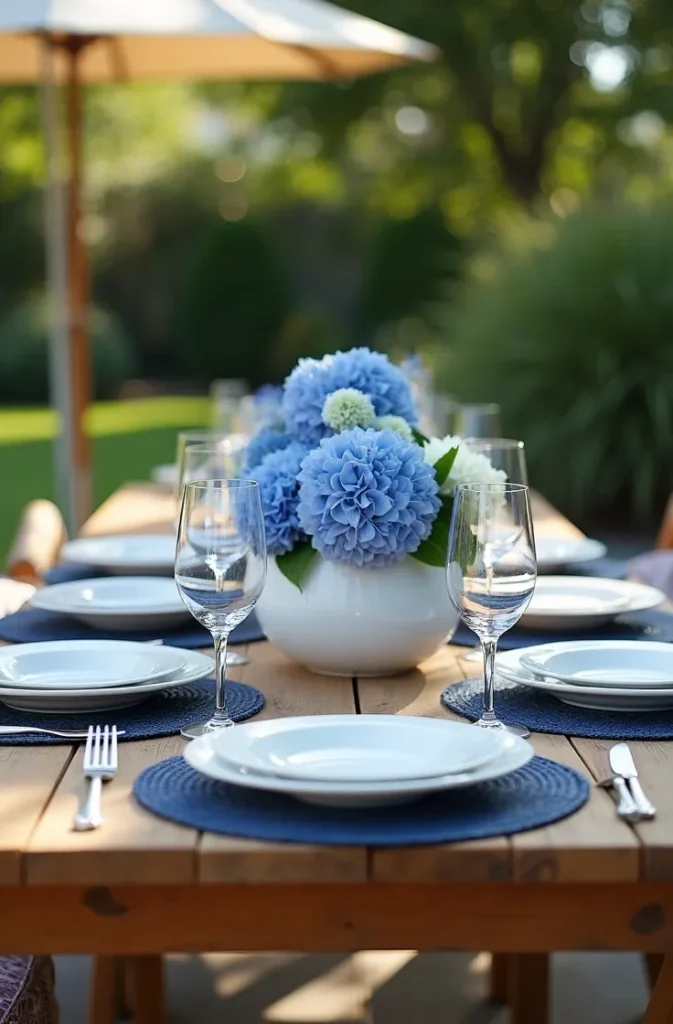
Build the tablescape on a base of navy or cobalt blue outdoor placemats on a teak or concrete table surface. White ceramic or melamine dishes read cleanly against the blue base and handle outdoor heat without the surface dulling the way some painted ceramics do. Add simple glass or acrylic stemware and a low centerpiece arrangement that does not obstruct sightlines across the table.
Keep the centerpiece low and weighted. Tall floral arrangements outdoors become wind hazards and require frequent repositioning. A low bowl of blue hydrangeas, a tray of white pillar candles in hurricane glass, or a collection of blue and white lanterns at varying heights are stable options that hold up through outdoor dinner service.
11. Low-Profile Outdoor Lounge Setup for a Ground-Level Garden Seating Area
Ground-level seating is one of the most underused summer outdoor patio ideas for small to mid-size backyards. By lowering the seating plane closer to the ground through floor cushions, low platform frames, or Japanese-influenced lounge furniture, you make a small space feel expansive because you eliminate the visual interruption of chair backs at standing eye level.
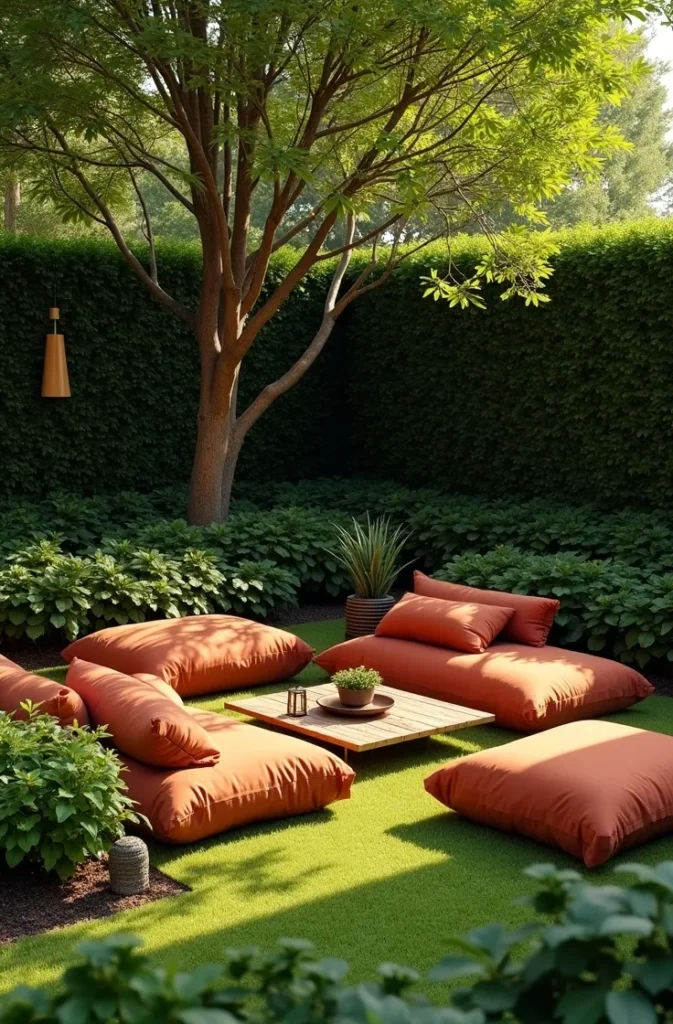
This approach works best in sheltered garden settings with existing landscaping on at least two sides. The low seating nestled within greenery creates a discovered, tucked-away quality that is difficult to achieve with standard-height furniture. It does not translate as well to open, exposed patios where the surrounding fence line or neighboring structures are the dominant visual.
Use oversized outdoor floor cushions in washable covers or purchase low-profile modular lounge systems specifically designed for outdoor use. Confirm that the cushion inserts are made with quick-dry foam rated for outdoor use. Standard indoor foam cushions used outdoors will develop mold and mildew inside the insert within one summer season in humid climates.
12. Solar Lantern Path That Guides and Decorates a Backyard Garden Walkway
A garden path lined with solar lanterns serves dual purpose: it is functional lighting for evening hours and a visual design element during the day. The common mistake is purchasing the inexpensive spike-mounted solar stake lights that read as utilitarian rather than decorative. Lantern-style solar fixtures with a defined frame and a warm amber bulb are what bridge the gap between functional and designed.
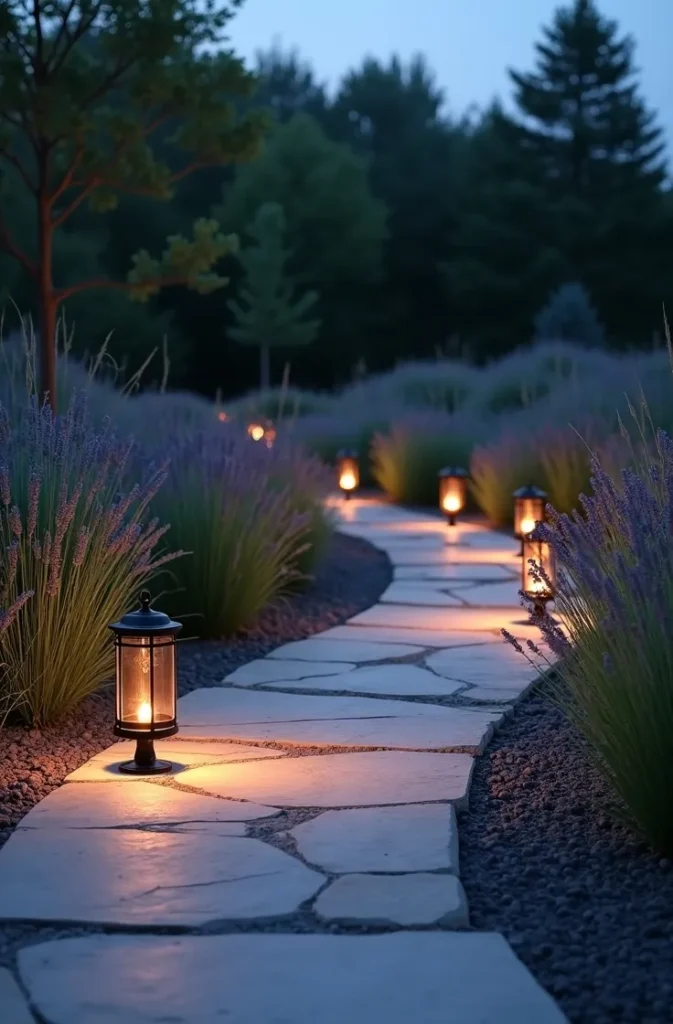
Spacing is more important than quantity. Solar lanterns positioned 4 to 6 feet apart along a curved garden path create a rhythm that draws the eye through the space. Closer than four feet reads as industrial runway lighting rather than residential landscape design. Further than six feet creates disconnected pools of light at night.
Select a lantern finish that complements your existing outdoor hardware, black, bronze, copper, or matte silver. Mixing finishes across a single path is a common error that prevents the installation from reading as a cohesive design decision. Consistent finish across all lanterns in the path ties the lighting feature to the overall exterior palette.
13. Outdoor Hammock Corner That Creates a Destination Spot in a Large Backyard
A hammock, when placed without design intention, looks like a camping accessory dropped into a backyard. When positioned as the anchor of a dedicated rest zone, it becomes one of the more compelling summer outdoor decor ideas for large yards because it creates a destination, a specific area the yard invites you toward.
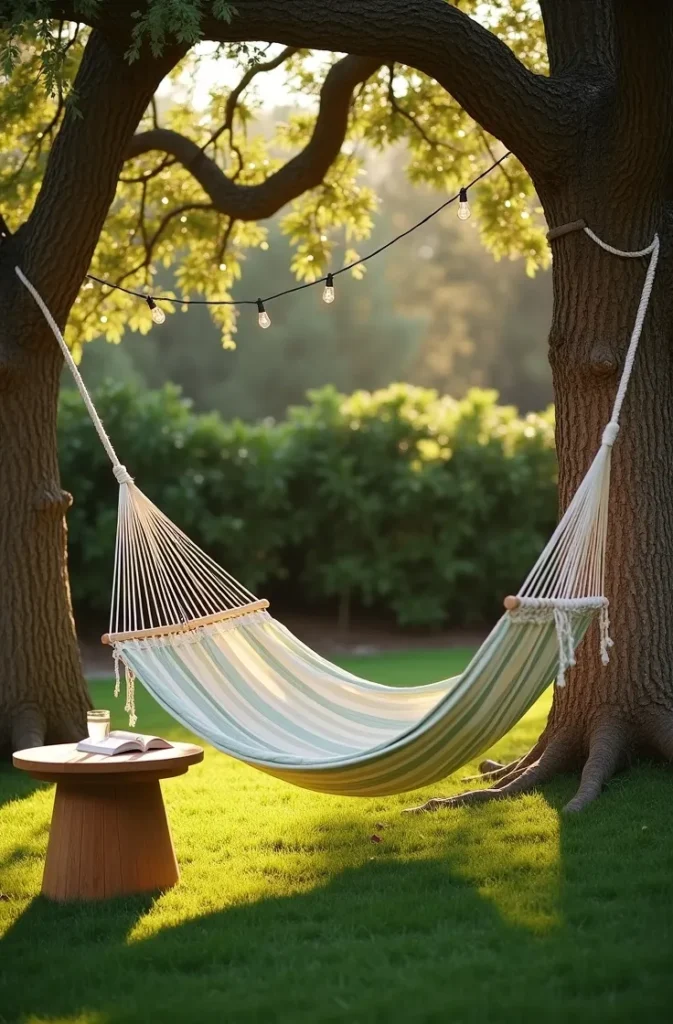
The hammock zone works best under existing tree canopy or beneath a purpose-built wooden frame in a corner or edge position of the yard. Positioning it in the center of an open lawn removes the sense of enclosure that makes a hammock feel like a retreat. Backing it against trees, a fence, or a hedge wall on at least one side creates the spatial containment that makes the spot feel intentional.
Complete the zone with a small side table within arm’s reach of the hammock, a floor lantern or string light overhead in the tree canopy, and at least one large potted plant to ground the area. Without these additions, the hammock sits in isolation. With them, the space becomes a defined outdoor room within a larger yard.
14. Potted Plant Cluster Display That Builds Visual Height on a Flat Surface
A grouping of potted plants arranged in a cluster at three distinct heights is one of the most effective and flexible summer outdoor ideas for improving a patio, deck, or porch corner that feels unfinished. The height variation, achieved through plant size, pot height, and the use of plant stands or inverted pots as risers, creates the visual structure that a flat arrangement of same-height containers cannot provide.
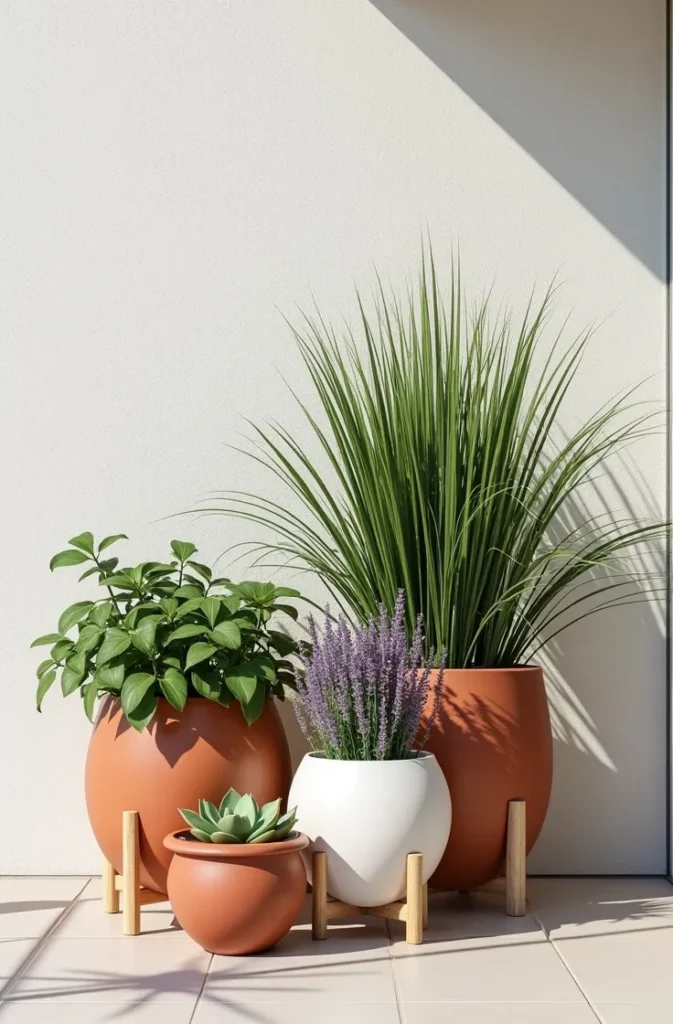
The standard grouping rule is odd numbers, three or five containers per cluster rather than two or four. Even-numbered groupings tend to look symmetrical and static. Odd groupings create a natural visual tension that the eye finds more interesting. Within each cluster, aim for one tall element, one mid-height element, and one low or trailing element.
For summer heat tolerance in full sun positions, select plants that are rated for your specific USDA zone and can withstand the surface temperatures that dark or metal planters can produce. Pot surface temperatures in direct sun can exceed air temperature by 30 to 40 degrees, which damages root systems of heat-sensitive plants even when the air temperature appears manageable.
15. Weather-Resistant Outdoor Gallery Wall for a Covered Porch or Exterior Wall
An outdoor gallery wall on a covered porch or exterior wall creates the same visual anchor indoors that an interior gallery wall provides, but for outdoor living spaces that lack a defining focal point. The practical requirement is that every piece must be genuinely rated for outdoor moisture and UV exposure. This is where most outdoor gallery wall attempts fail prematurely.
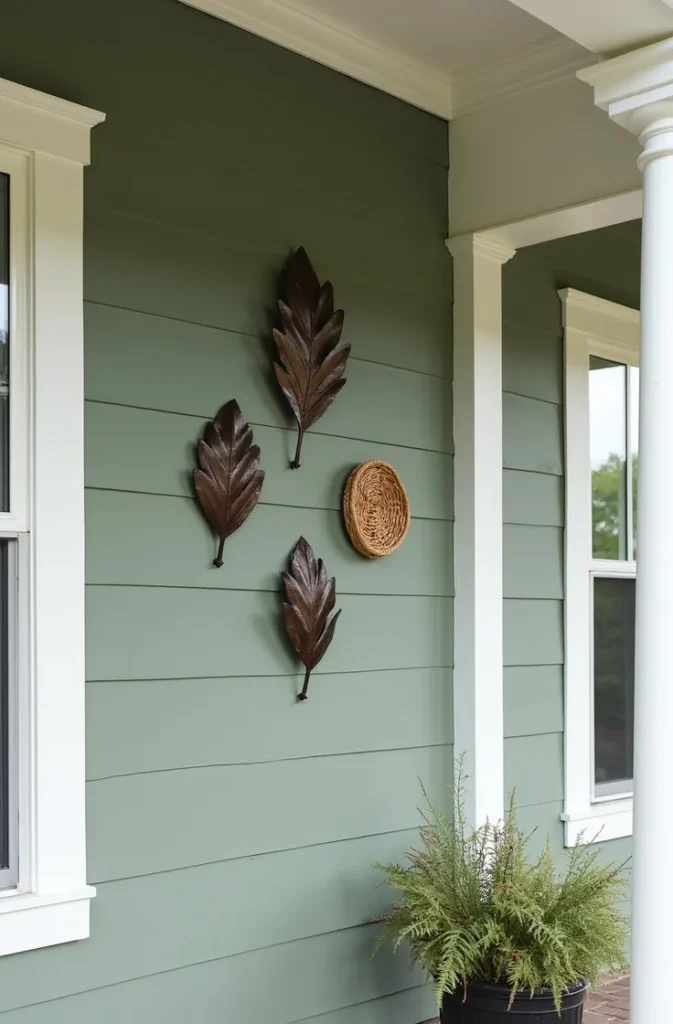
Materials that hold up outdoors include powder-coated metal wall art, marine-grade teak or cedar carved panels, UV-stabilized resin sculptures, and weatherproof printed canvas that has been sealed and stretched on a treated frame. Standard canvas prints marketed for outdoor use without a UV-resistant coating will fade within one season in direct sun exposure.
Arrange pieces the same way you would an interior gallery wall, start with the largest piece centered at eye level and build outward. For a covered porch, eye level is typically 57 to 60 inches from the floor to the center of the main piece. Space pieces 2 to 3 inches apart for a cohesive grouping. A larger gap between pieces breaks the gallery effect and makes the arrangement read as individual items rather than a curated collection.
16. Shade Sail Structure That Solves Direct Sun Exposure on an Uncovered Patio
An uncovered patio with direct afternoon sun exposure is uncomfortable for most of the day from late June through August in the majority of the continental USA. A shade sail installation is the most visually modern solution to this problem, and it is reversible, which makes it appropriate for renters and homeowners with HOA restrictions on permanent structures.
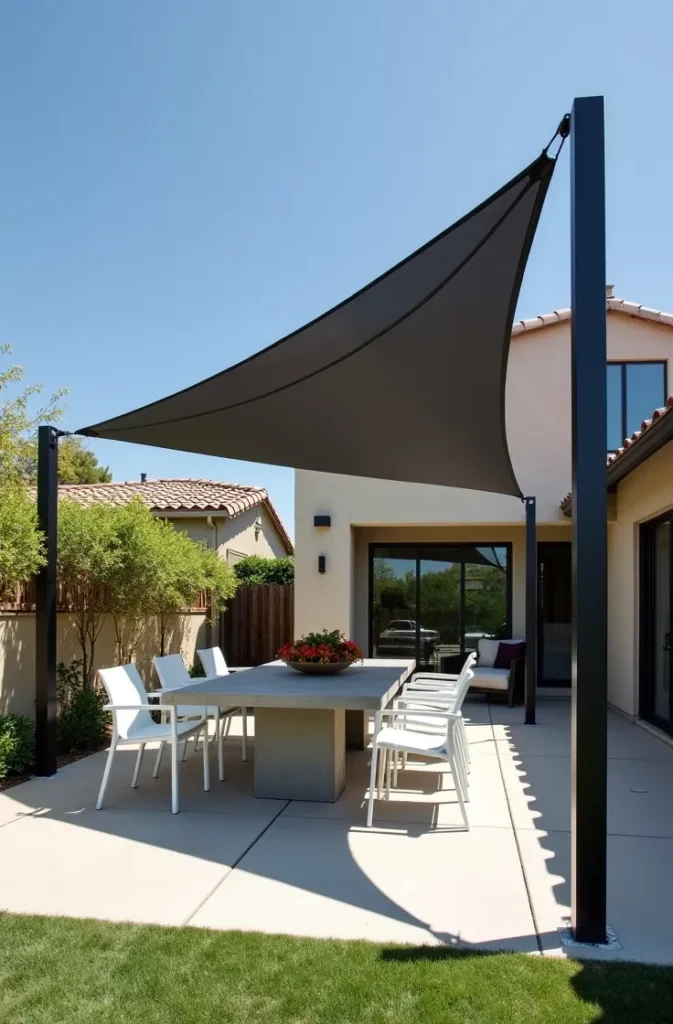
Shade sails require three to four anchor points that must be capable of withstanding tension loads in wind. Evaluate your anchor options before purchasing. Fence posts, exterior walls with through-bolts, and freestanding steel poles set in concrete footings are all viable options depending on your patio configuration. Attaching to standard wood fence pickets without through-bolting to a post is not safe under high wind load.
Choose a sail in a color that relates to your existing outdoor palette but reads as neutral enough to function as a ceiling plane, charcoal, sand, slate blue, and warm white are consistently successful. Avoid bright colors for the sail itself as the color casts a tint on everything beneath it, which makes the seating area feel enclosed rather than shaded.
17. Herb and Edible Garden Display That Combines Function With Outdoor Decor
Functional outdoor decor is one of the strongest trends in residential outdoor decorating, and an herb garden display that is designed as a visual feature rather than a utility planting achieves both purposes simultaneously. The key distinction is in the container selection and arrangement, not just the plants.
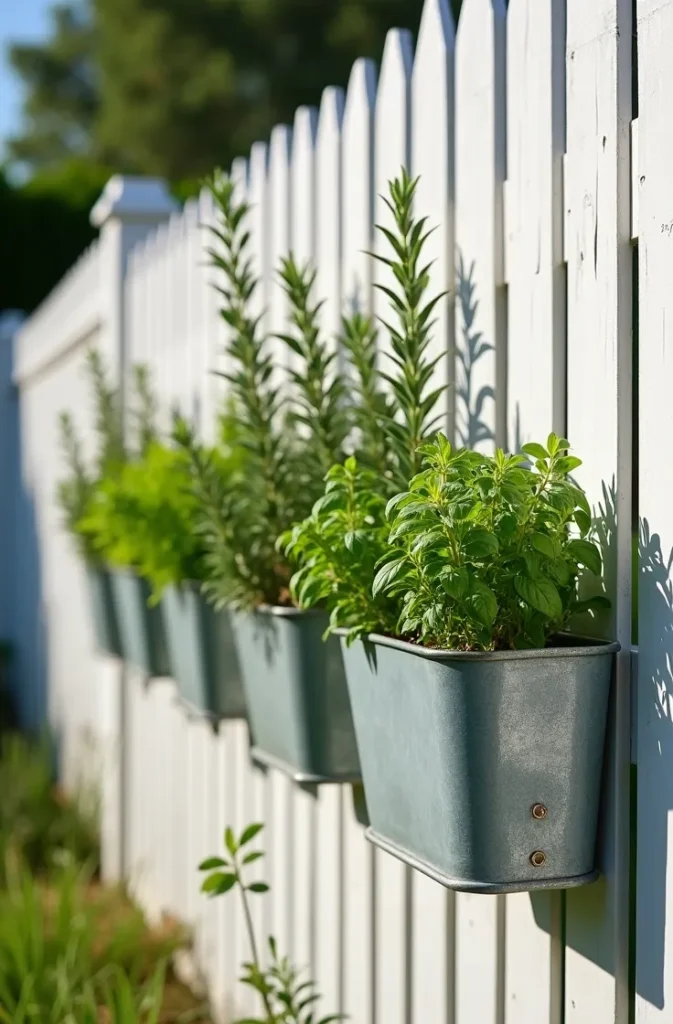
Use a consistent container material, galvanized metal troughs, matching terra cotta, or white ceramic, and arrange the planters in a structured way, either in a row on a potting bench, a tiered shelf, or mounted directly to a fence in aligned horizontal brackets. Identical or closely matched containers create the designed quality that separates a curated herb display from a random collection of pots.
Plant selection for a summer herb garden should prioritize both visual texture and culinary use. Tall rosemary provides structural height, bushy basil adds dense green mass, trailing thyme softens edges, and purple sage introduces color variation. The planting reads as an intentional composition when at least three distinct leaf textures and heights are present within the display.
18. Luxury Outdoor Living Room Setup With a Sofa, Coffee Table, and All-Weather Accessories
A fully appointed outdoor living room, sofa, coffee table, side tables, and styled accessories, is the highest investment tier of summer outdoor living ideas but also the one that most completely transforms a large patio into a year-round usable space. Done correctly, it eliminates the visual difference between indoor and outdoor living in terms of comfort and style.
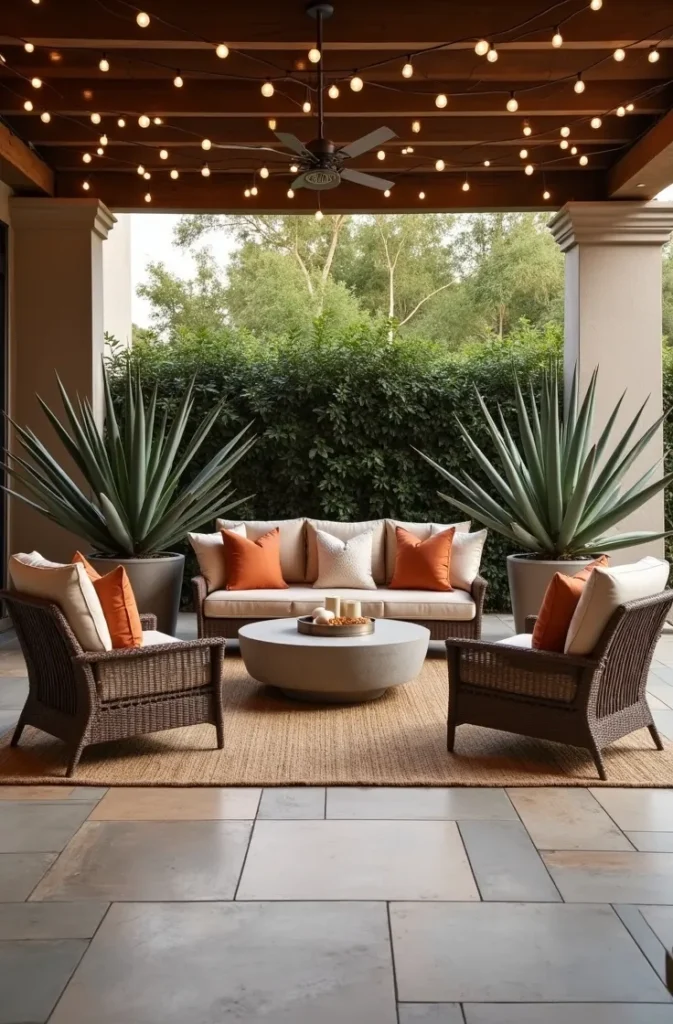
The material selection is the investment that determines longevity. All-weather wicker on a powder-coated aluminum frame, performance fabric cushions rated for outdoor UV and moisture, and a concrete, teak, or slate coffee table surface are the material combinations that hold up best through summer heat, humidity, and rain. Avoid faux-wood plastic furniture in this tier, it ages poorly and undermines the investment quality the rest of the setup represents.
Style the space the same way you would an interior living room. A tray on the coffee table with grouped objects, outdoor candles, a small potted succulent, and a textured bowl or decorative object creates the finished, layered look. Outdoor throw pillows in performance fabric add color and comfort. A large outdoor rug beneath the furniture group anchors the entire arrangement and is, as with interior living rooms, the single most important element for making the space feel complete.
Conclusion
Summer outdoor decor ideas only work when they are matched to the actual size, light conditions, and functional requirements of your specific space. Inspiration without that decision layer is where most outdoor decorating projects stall or produce results that look nothing like the reference photos.
If one of these ideas fits your space, save this post to your Pinterest boards now so you can return to the specific sections when you are ready to plan or shop. Each design above is intended to function as a practical reference you come back to, not a one-time scroll.
The strongest outdoor spaces combine two or three of these ideas in a cohesive way rather than executing them in isolation. Start with the element that solves your biggest current problem, inadequate shade, a lack of seating definition, or missing evening lighting, and build outward from there.