
INTRO
The best summer patio decor ideas for 2026 are not about buying an entirely new outdoor furniture set — they are about understanding why some patios feel like a destination and others feel like an afterthought, and closing that gap with deliberate, specific choices. If your patio looks fine but never quite matches the gorgeous outdoor spaces you save on Pinterest, the problem is not your budget or your square footage. By the end of this post, you will know exactly which changes make the difference between a patio that looks decorated and one that feels designed.
The One Outdoor Rug Choice That Anchors a Patio and Makes Every Other Piece Look More Expensive
An outdoor rug does not just protect a patio floor — it defines where the room begins and ends. Most patios feel disjointed because the furniture is placed directly on concrete or stone without any visual grounding, which makes even beautiful pieces look like they were set out temporarily rather than arranged intentionally. The rug is the foundation that tells the eye: this is a room. Everything placed on top of it looks chosen rather than assembled.
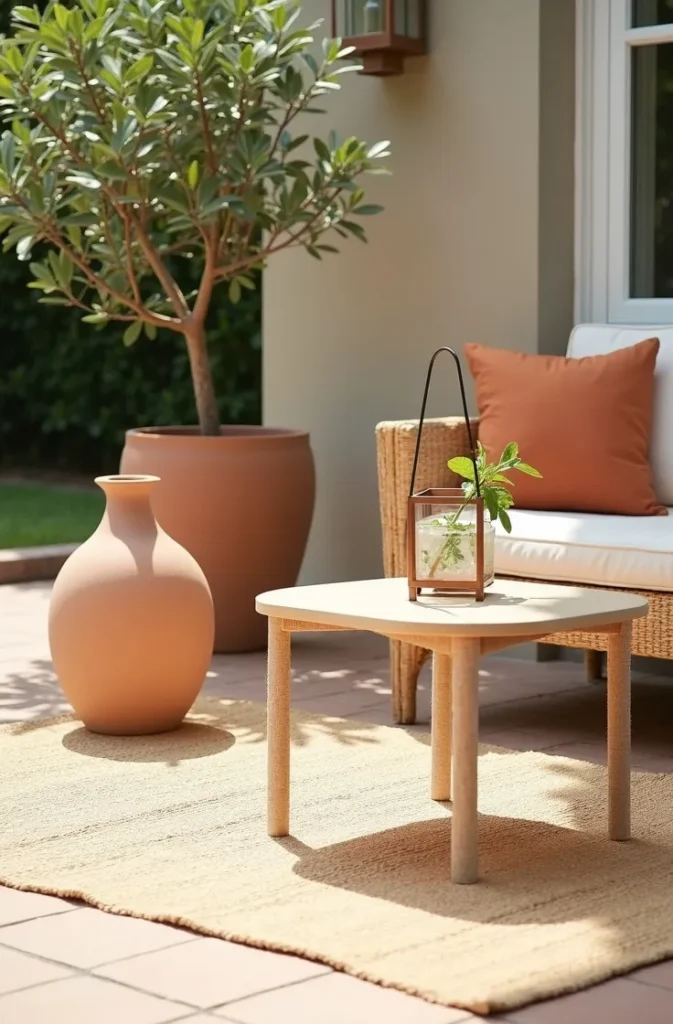
For summer patio decor in 2026, the material matters as much as the pattern. A flatweave outdoor rug in warm oatmeal, natural sand, or dusty terracotta reads as organic and summery without leaning into any trend that will feel dated by next season. Avoid dark-colored outdoor rugs in sunny climates — they absorb heat and make the space feel heavy in the middle of July. The sizing rule is identical to interior design: large enough that all front legs of the seating group rest on it.

The mistake that makes even expensive outdoor furniture look cheap: a rug that is too small. A 5×8 under a four-piece seating group looks like a bath mat. Go larger than you think you need — a 9×12 for a full seating area — and the entire patio scales up visually with it.
Why a Single Oversized Planter Creates More Visual Impact Than a Row of Small Pots Ever Will
The most common patio decorating mistake is the collection of small pots arranged along a railing or lined up against a wall. Individually they read as filler; together they read as garden center overflow. One large, deliberately chosen planter in a sculptural shape — an oversized matte terracotta urn, a wide concrete bowl, a tall ribbed ceramic cylinder — does more for a patio’s visual presence than twelve small ones combined.
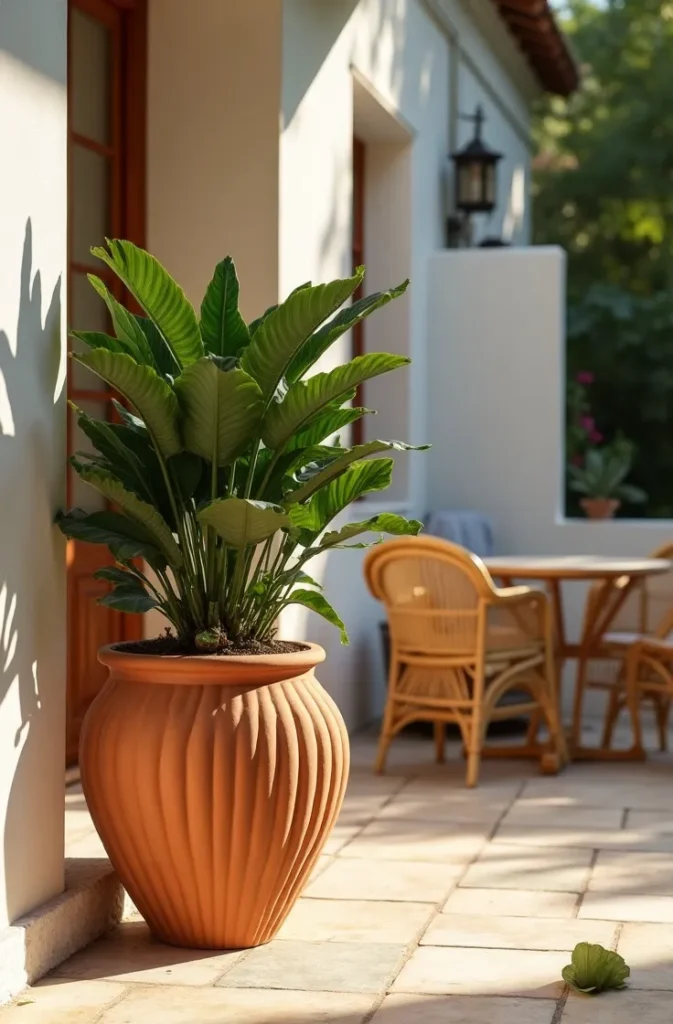
The reason is the same principle that makes a large plant work inside: scale communicates intention. A single planter that is visually significant enough to be a focal point tells the eye this space was designed. The plant inside it matters too — for summer patio decor ideas 2026, a bird of paradise, a large bougainvillea trained upward, or a tall ornamental grass gives vertical movement and a sense of lushness that small herbs or succulents cannot provide.
Placement is the final variable. The highest-impact position for a large planter is the corner diagonally opposite the main seating area, or flanking the entry point to the patio. Both positions anchor the space and create a visual destination for the eye. Centered on a wall, even a beautiful planter reads as decoration. In a corner or at an entry, it reads as architecture.
The Outdoor Lighting Formula That Turns a Plain Patio Into a Summer Evening Destination
A patio that looks beautiful during the day but flat after sundown is a patio that has not been lit with intention. The formula that creates the magical outdoor evening atmosphere she saves on Pinterest is not expensive or complicated — it is the same layering principle that works indoors, applied to the outdoors: one overhead source, one low source, and one flame source. Together they create depth, warmth, and a sense of occasion that a single string light run across a pergola cannot achieve alone.
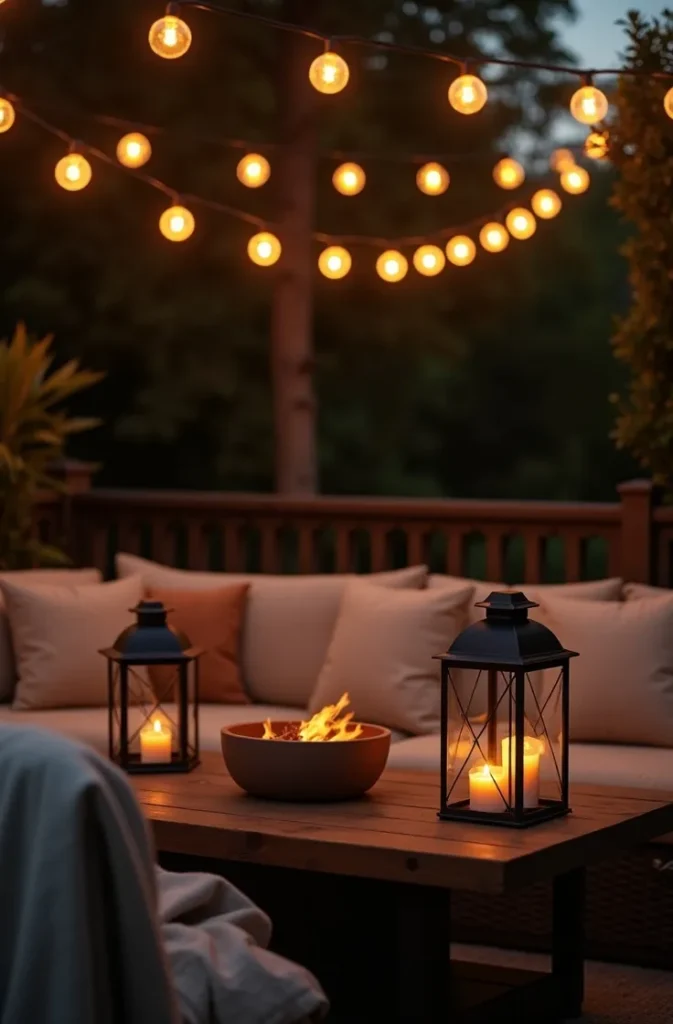
The overhead source for a summer patio in 2026 is Edison-style or warm globe string lights hung at a low canopy height — no higher than 8 feet above the seating area, so the light falls at the right level to feel intimate rather than institutional. The low source is a lantern or two on the coffee table and side tables, using real candles or high-quality flame-effect inserts. The flame source is a tabletop fire bowl or a cluster of pillar candles in storm glass holders. All three sources on together, after sundown, create a patio that feels like an outdoor room.
The mistake is stringing lights too high and too far apart, which produces even, flat illumination across the whole patio — the equivalent of turning on an overhead light inside and calling it atmosphere. The warmth comes from pooling light at low levels, not distributing it evenly at height.
How to Create a Shaded Patio Retreat Without a Permanent Structure When You Rent or Cannot Build
Shade is the single most overlooked element of summer patio decor, and it is the one that determines whether the space is actually usable between 11am and 4pm in July. Most renters assume shade requires a permanent pergola or awning — neither of which is typically allowed. The solution that works in apartments, rental homes, and small urban outdoor spaces across the USA is the freestanding market umbrella combined with one lightweight shade sail anchored to existing points.
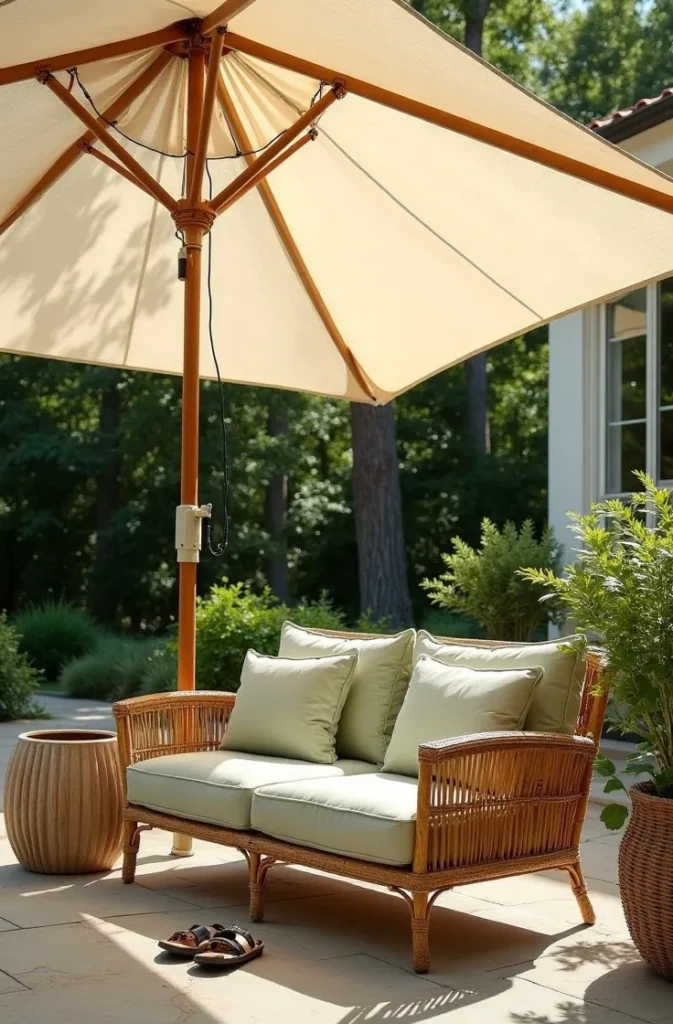
A 9-foot or 11-foot cantilever umbrella in a neutral canvas — warm cream, natural beige, or a weathered sage — positioned off-center from the main seating group creates shade without centering the umbrella awkwardly over the coffee table. The off-center position also looks more designed and less like a hotel pool setup. A secondary shade sail in the same tone family, stretched between two anchor points at a slight angle, creates layered coverage and a sense of architectural intention that a single umbrella alone cannot achieve.
The material of the umbrella matters for the overall patio aesthetic. A canvas umbrella with clean seams and a wooden pole reads as summery and considered. A shiny polyester umbrella with a logo embossed on the ribs reads as temporary regardless of how beautiful everything else around it is. For summer patio decor ideas 2026, the umbrella is furniture — choose it with the same care.
The Outdoor Cushion Color Strategy That Keeps a Patio Looking Fresh All Summer Without Constant Replacing
Outdoor cushions are the element most women get wrong for summer — not because of quality, but because of color strategy. Choosing bold, saturated outdoor cushion colors (navy, cobalt, bright coral) feels exciting in the store and looks dated on the patio within a season. The cushion colors that photograph beautifully, feel genuinely summery, and do not need replacing every year follow a specific formula: one warm neutral as the dominant, one muted organic accent, and one soft contrast that is lower in saturation than it initially appears.
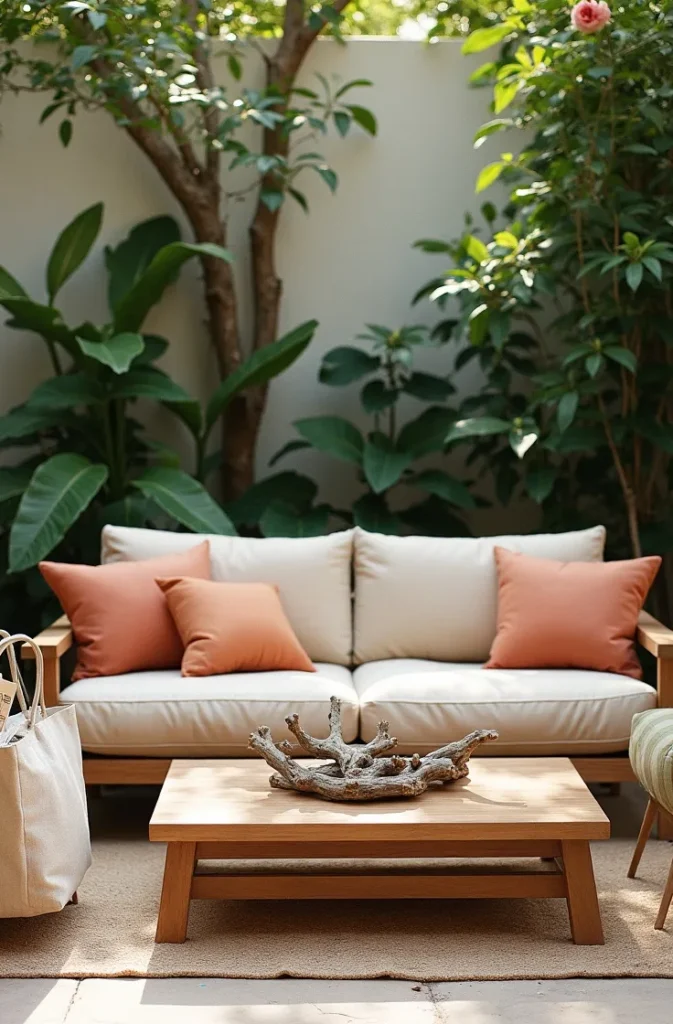
For summer patio decor in 2026, that formula looks like: warm sand as the dominant cushion color across the main seating pieces, dusty terracotta or sun-faded sage as the accent in throw pillows, and a warm white or natural stripe as the contrast on the seat backs or bolsters. This palette reads as summer in the way that beach grass and afternoon light are summer — without being literal about it. It also photographs in natural light without color-shifting the way bright saturated colors do, which matters for anyone who wants their patio to look as good in photos as it does in person.
The mistake: mixing too many cushion patterns. One solid, one subtle texture, and one very quiet pattern is the ceiling. Beyond that, the patio reads as busy rather than layered. The pattern, if there is one, should always be the smallest cushion in the grouping — a lumbar pillow, not a seat cushion.
Why a Dining Table on the Patio Changes How You Live in Summer More Than Any Other Single Purchase
A patio without a dining table is a patio that functions as a viewing area. A patio with a dining table becomes a room where life actually happens — morning coffee, lunch in the shade, dinner with the windows open, a glass of wine at 7pm while the sun goes down. This shift in function is not about the table itself; it is about what having a proper dining surface does to the way a space is inhabited. It creates a reason to be outside rather than a place to look at.
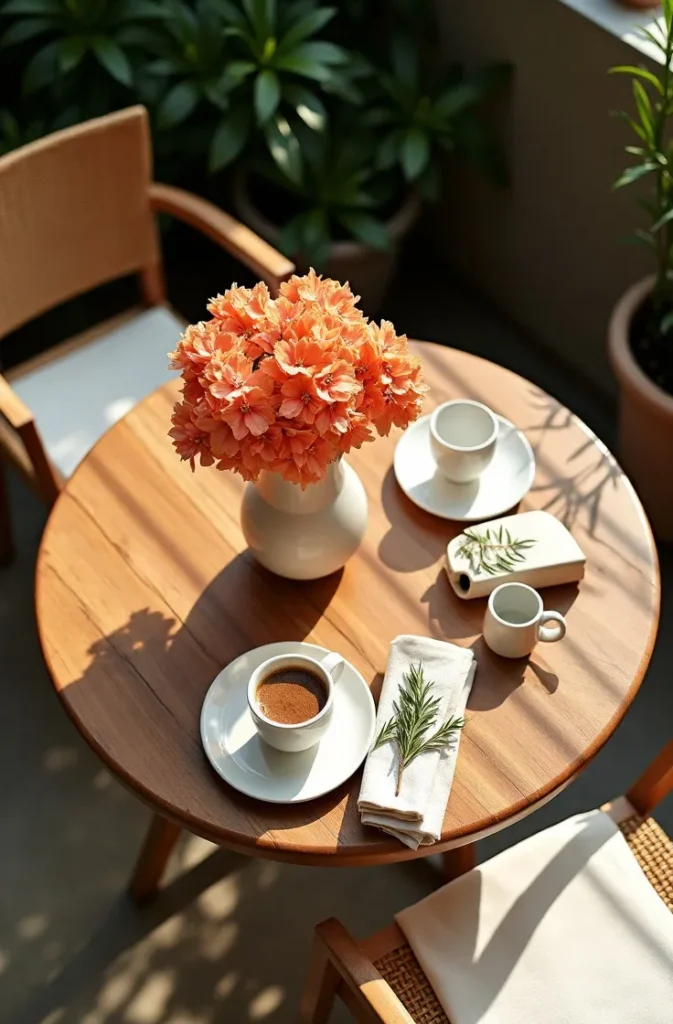
For small patios in USA apartments and urban homes where square footage is limited, the solution is a round bistro table rather than a rectangular dining table. A round 36-inch table with two or three chairs takes up the footprint of a small side table arrangement but functions as a complete dining area. In California bungalows and Texas homes with covered back patios, a larger rectangular table in teak, acacia, or poured concrete becomes the patio’s architectural anchor — the piece everything else is arranged in relation to.
The mistake is choosing a table that is too tall for the patio’s proportions. Standard dining height (30 inches) feels formal and restaurant-like outdoors. A counter-height table at 36 inches or a low Japanese-inspired table at 18 inches with floor cushions reads as more intentional and more interesting than the standard, and it photographs far better for the layered, grounded aesthetic that performs well on Pinterest.
The Vertical Garden Trick That Adds Lushness to a Small Patio When You Have No Ground Space to Plant In
A small patio — a balcony, a courtyard, a concrete slab beside a rental — has no ground to plant in and no room for large planters without sacrificing seating space. The solution that changes the entire character of a compact outdoor space is vertical: a wall-mounted planter system, a freestanding trellis with climbing plants, or a hanging planter arrangement that uses overhead space rather than floor space to introduce greenery.
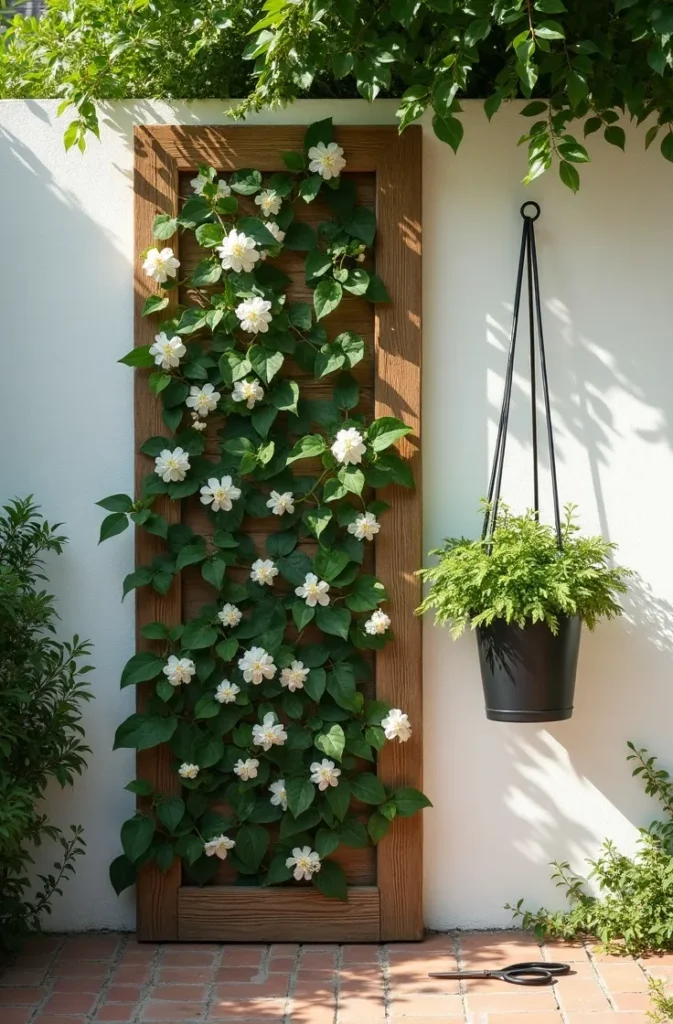
The specific approach that works best for summer patio decor ideas 2026 is a single trellis panel in natural wood or matte black steel, mounted against the most visible wall of the patio, planted with a fast-growing climber — jasmine for fragrance, passion flower for drama, or a climbing rose for color. Within one summer season, the trellis reads as a living wall rather than a decorative accessory. The fragrance of night-blooming jasmine on a summer evening is a design detail that no cushion or lantern can replicate.
The mistake is a wall of identical small hanging planters in a grid — this reads as a product display rather than a garden. The organic approach is better: vary the height, vary the planter size and material, and include one trailing plant whose vines fall downward as a counterpoint to the upward movement of the climber.
How to Style a Summer Patio Coffee Table the Way Interior Designers Style an Indoor One
The patio coffee table is treated as a functional surface — somewhere to set drinks and leave a candle — rather than a design element. The same styling principles that make an indoor coffee table look intentional apply directly to the outdoor version, and most people simply never apply them outside. The formula: one tray to contain and organize, one sculptural object that is interesting to look at, one organic element from nature, and genuine empty space around them.
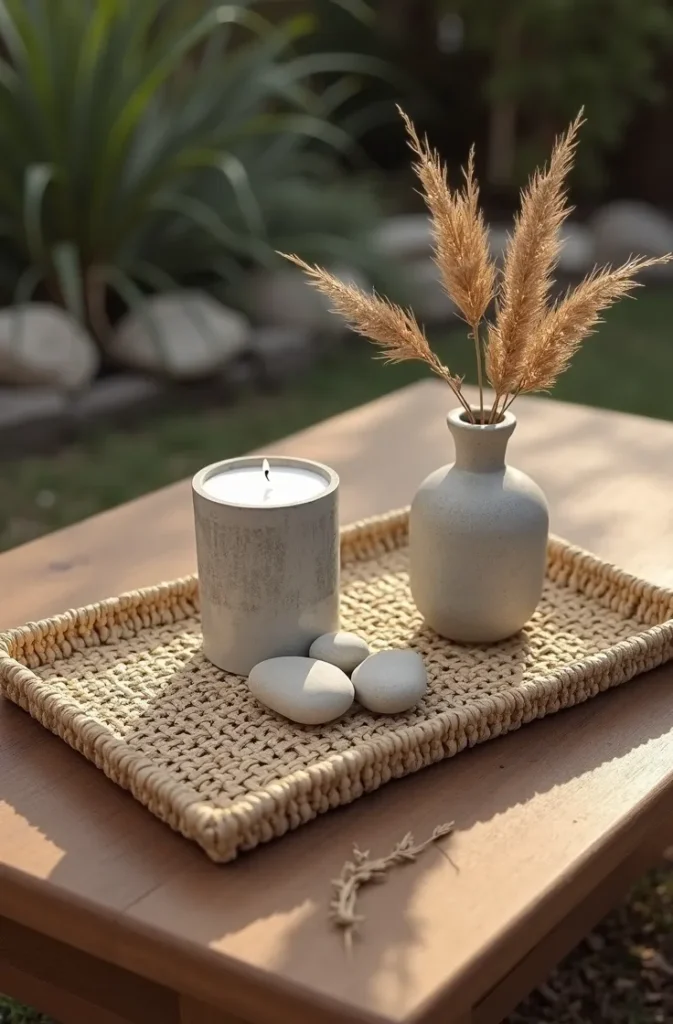
Outdoor-appropriate versions of this formula for summer 2026: a woven seagrass tray holding a weathered concrete candle holder and a small stack of smooth river stones, with a single stem of dried pampas in a short raku-fired ceramic vase beside it. The tray creates the visual boundary. The candle holder is the sculptural object. The stones are the organic element. The empty teak surface around the tray is the breathing room that makes everything on it look deliberately placed.
The mistake is treating the outdoor coffee table as overflow storage — sunscreen, books, drink coasters, a phone, a remote for the outdoor speaker. All of these belong somewhere else when the patio is being used as a designed space. A small basket tucked under the table handles the functional clutter and keeps the surface as a visual moment rather than a utility tray.
The Outdoor Textile Layer That Makes a Patio Feel as Warm and Inviting as an Interior Room
The reason most patios feel cold and transactional even when they are physically warm is the absence of soft textiles. Indoors, the warmth of a space is communicated through layered fabrics — throws, cushions, curtains, rugs. Outdoors, most people stop at cushions and consider the job done. The patios that feel genuinely inviting — the ones that stop scrolling on Pinterest — have one additional textile element that most people do not think to use outdoors: an outdoor-rated throw blanket draped across the back of a chair or sofa.
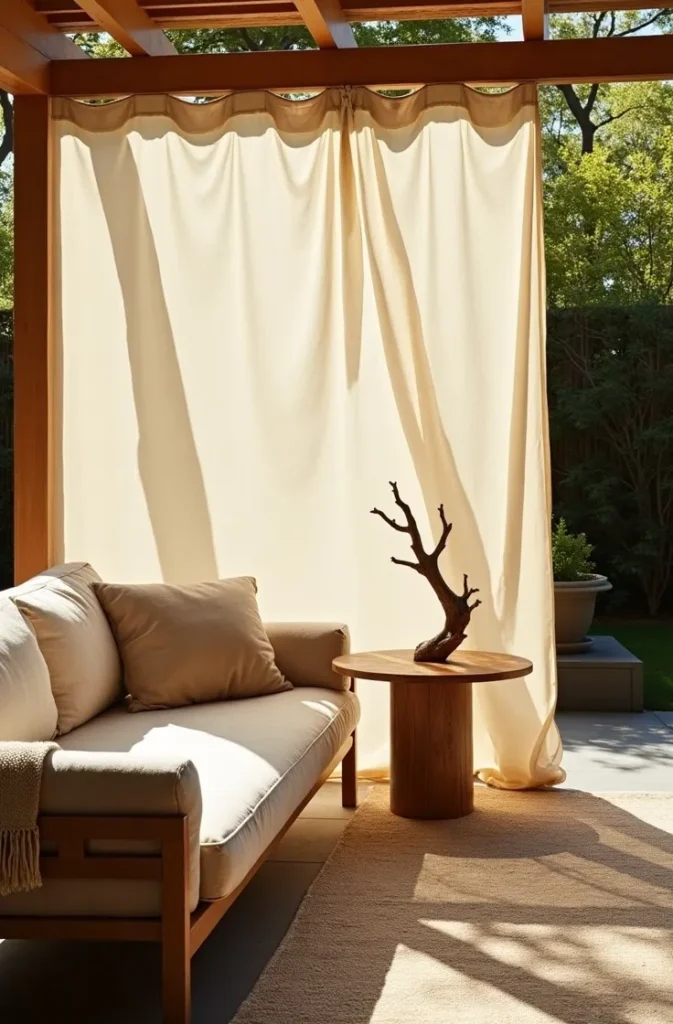
An outdoor throw in a woven cotton or performance fabric — something that looks like linen but withstands moisture — draped loosely over the back of the main seating piece does for a patio what a throw does for a living room sofa. It communicates: someone lives here beautifully, and you are invited to stay. For summer patio decor ideas in 2026, the colorway to reach for is warm natural — oatmeal, pale terracotta, sun-bleached sage. Not a bright print, not a color that competes with the cushions.
If the patio has a pergola or an overhead structure, a length of outdoor linen or sheer cotton fabric draped loosely over one beam — not stretched taut like a sail but loosely gathered as a canopy — introduces the softness that hard materials like teak and concrete and terracotta cannot provide on their own. This is the one detail that makes a patio photograph like a luxury boutique hotel terrace.
Why the Entry Point to Your Patio Is the Most Overlooked Design Opportunity of the Whole Summer
The threshold between inside and outside — the doorway, the sliding glass door frame, the step down from the house — is the first thing anyone sees before they experience the patio, and it is almost always ignored as a design moment. In the same way that an entryway sets the tone for an entire interior, the entry point to a patio sets the tone for the outdoor space before a single cushion or plant is registered. A considered entry point makes the patio feel like a destination you arrive at rather than a space you wander into.
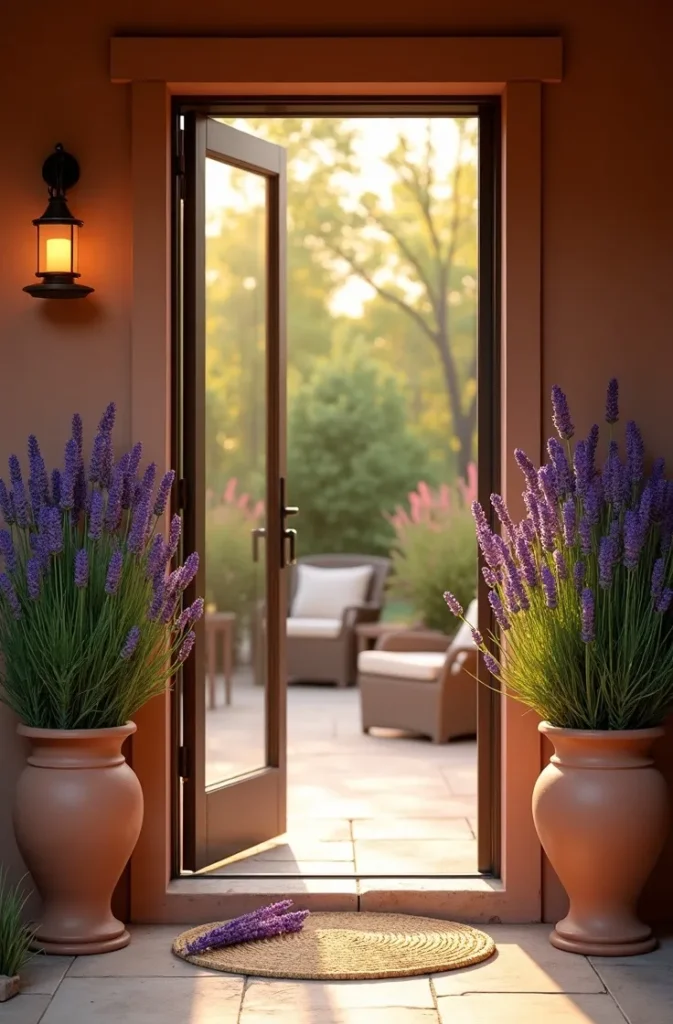
The specific elements that make a patio entry feel designed: a pair of matched planters flanking the doorway in the same material as the dominant planter on the patio, a door mat in a natural fiber that bridges the interior and exterior material languages, and one vertical element — a tall lantern, a climbing plant on a narrow trellis, a wall-mounted sconce — that draws the eye upward and signals arrival. In a California bungalow or a Texas home with a covered porch, this arrival sequence can be as simple as two terracotta pots of lavender flanking the back door and a jute mat in front of it.
The mistake is treating the entry point as purely functional — a place where shoes come off and nothing more. When the threshold reads as intentional, the entire patio beyond it reads as more intentional by association. It takes one afternoon to address and changes how the space is perceived every single day of summer.
CONCLUSION
You now have ten specific, actionable summer patio decor ideas for 2026 — not a general mood board, but a real plan you can work through in order of impact and budget. Save this post to your Pinterest board before you close it, because the ideas that seem less urgent right now are usually the ones that matter most when you are standing on the patio in August wondering why something still feels off. Your outdoor space deserves the same considered attention as every room inside your home.
The patio is the room most people forget to design. Design it.