If you have been searching for vintage lamp ideas 2026 that go beyond generic antique aesthetics and actually work in modern American homes, this guide is built specifically for that decision. Each idea below covers a distinct lamp style, placement strategy, and room context — so you can identify which direction suits your space and act on it with clarity rather than guesswork.
1. A Banker’s Lamp With a Glass Shade That Brings Focused Warmth to a Home Office or Library
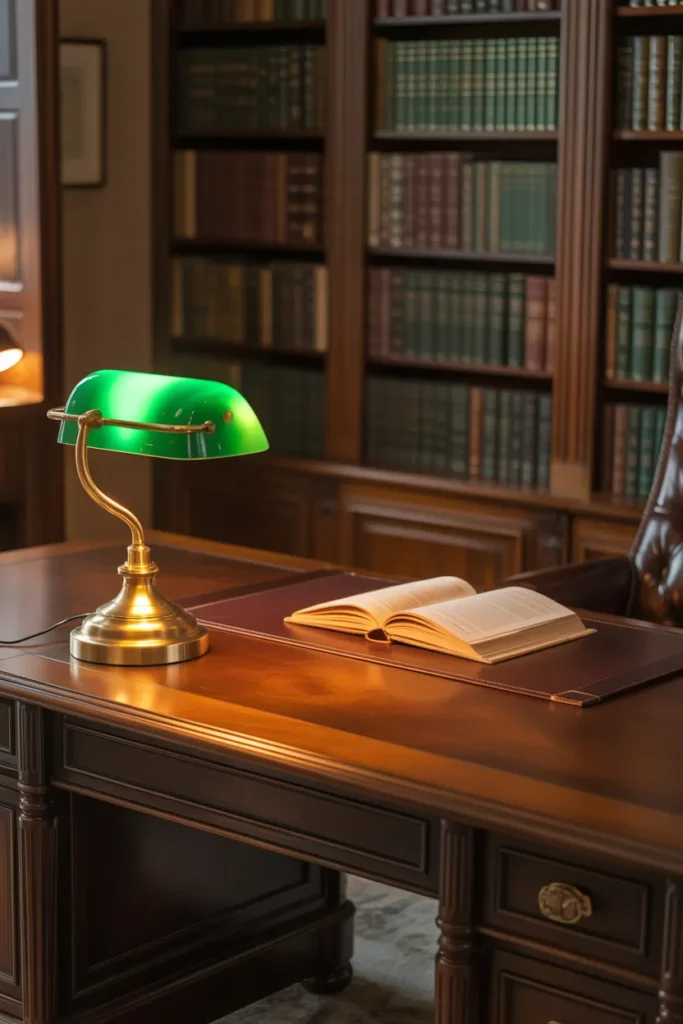
The banker’s lamp — characterized by its pull-chain switch, solid weighted base, and distinctive cased glass shade in green, amber, or white — is one of the most functionally specific vintage lamp styles available. Its directional, focused light output makes it genuinely useful as a task light, not just a decorative object, which is what separates it from most vintage-inspired lamp choices.
The green glass shade version is the most recognizable and the most visually potent. It casts a warm, slightly tinted downward glow that works exceptionally well on dark wood desks, library shelves, and reading surfaces. In a home office or study with warm wood tones, leather seating, and traditional architectural details — crown molding, panel wainscoting, built-in shelving — the banker’s lamp reads as a natural, cohesive element rather than a period piece dropped into the wrong decade.
In 2026 interiors, the banker’s lamp is also appearing in non-traditional contexts: on kitchen islands as a pair flanking a pendant light, on nightstands in rooms with a literary or academic aesthetic, and on console tables in entryways where the visual weight of the brass base adds instant gravitas. These placements work when the surrounding room already has warm metal tones, dark wood, or a rich, layered color palette.
The mistake to avoid is pairing a banker’s lamp with a very cool or minimal room — all-white interiors, Scandinavian-style furniture, or contemporary rooms dominated by chrome and glass. The lamp’s warm tones and heavy visual character create a stylistic conflict in those contexts that accessories alone cannot resolve.
2. An Edison Bulb Cage Lamp That Exposes the Bulb as the Design Feature in Industrial Spaces
The cage lamp — a lamp whose shade is replaced entirely by an open metal cage or wire frame that exposes the Edison-style filament bulb — is the most authentic expression of industrial vintage lighting available for residential interiors. It treats the bulb itself as the visual centerpiece rather than something to be concealed or diffused.
This approach works because Edison filament bulbs in their classic teardrop, globe, or tubular form are genuinely beautiful objects. The warm amber glow of a visible carbon-style filament at 2200K produces the most atmospheric and flattering light of any bulb type — significantly warmer and more golden than standard warm white LEDs at 2700K. When that filament is fully visible through an open cage, the lamp delivers both task light and visual drama simultaneously.
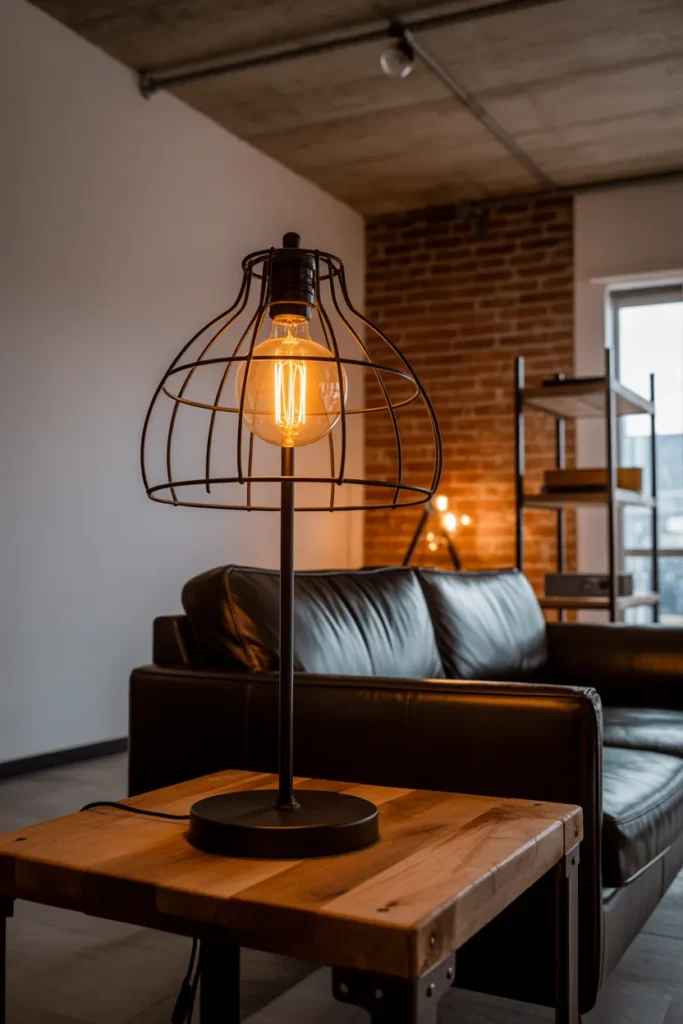
The cage lamp is most at home in living spaces with exposed brick, raw concrete, dark metal shelving, reclaimed wood surfaces, or any combination of industrial materials. In these rooms — common in converted loft apartments, urban condos, and industrial-style homes — the cage lamp fits the material language of the space rather than fighting against it. On a side table beside a leather sofa, on a floating shelf in a media room, or as a desk lamp in a studio workspace, it reads as intentional and specific.
In rooms with softer, more feminine, or more traditional aesthetics, the cage lamp tends to feel misplaced — too raw and unfinished for the surrounding context. The lamp relies on the room’s existing industrial material palette to look purposeful. Without that context, it reads as a styling prop rather than a genuine lighting choice.
3. A Torchiere Floor Lamp With a Frosted Glass Bowl That Lifts Ambient Light in Low-Ceilinged Rooms
The torchiere — a tall floor lamp with an upward-facing bowl or shade that directs light toward the ceiling rather than downward — is one of the most effective vintage lamp solutions for apartments and older homes with low ceilings and limited overhead lighting options. By bouncing light off the ceiling, the torchiere creates a soft, even ambient glow that fills the room from above without requiring any ceiling fixture installation.
The vintage torchiere in a frosted or opalescent glass bowl version — common in American homes from the 1920s through the 1950s — is having a strong resurgence in 2026 interior design. The frosted glass bowl diffuses the upward light beautifully, eliminating harsh hotspots while maintaining the lamp’s vintage character. Paired with a warm white or amber LED bulb in the 2700K range, the result is a room-filling ambient light that feels genuinely warm and domestic.
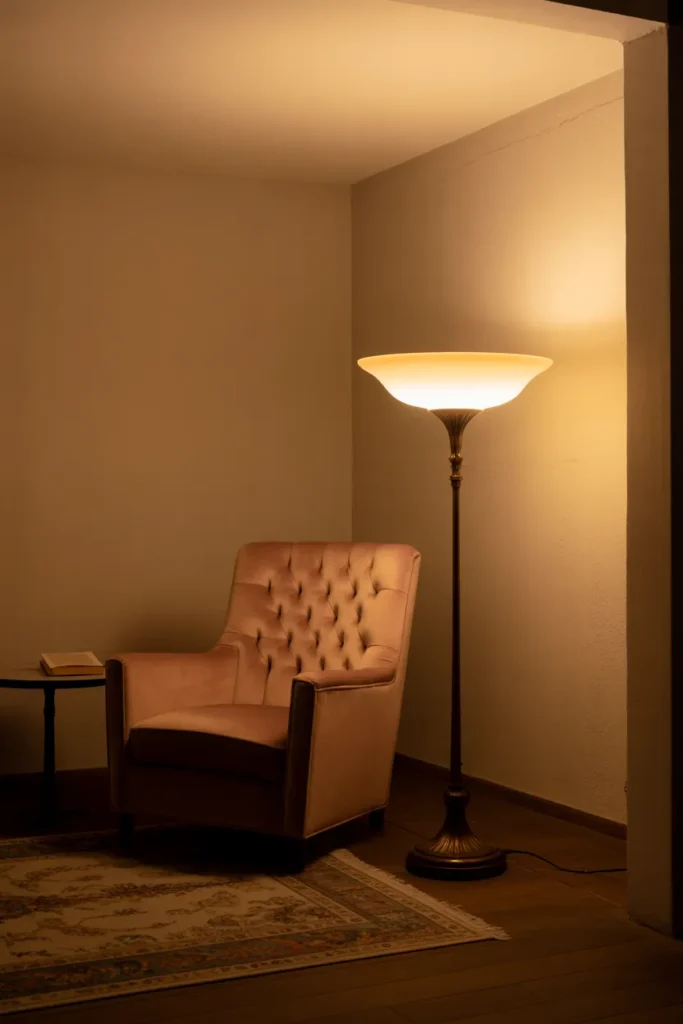
Placement strategy matters significantly with a torchiere. Because its light output is primarily upward, positioning it in a corner maximizes the ceiling reflection across the entire room. Two torchieres in opposite corners of a living room can eliminate the need for overhead lighting entirely in smaller rooms, which is particularly valuable in apartments where ceiling fixtures are fixed and unflattering.
The practical limitation of the torchiere is that it provides ambient light but poor task light. Reading, working, or any activity requiring focused illumination needs a supplementary source — a table lamp or a directed floor lamp aimed at the task surface. A torchiere alone in a room creates beautiful atmosphere but inadequate functional light for detailed work.
4. A Ceramic Table Lamp With a Linen Drum Shade That Works Across Traditional and Modern Rooms
The ceramic table lamp — a lamp whose base is a hand-thrown or molded ceramic vessel in an organic shape — is one of the most versatile vintage lamp directions in 2026 because ceramic as a material spans the full range from rustic and handmade to refined and gallery-quality. The base can read as vintage, artisanal, or simply warm and organic depending on its glaze, form, and color.
In vintage lamp design specifically, ceramic bases from the mid-century American tradition — bulbous forms in matte glazes, crackle finishes, or earthy tones — pair naturally with a simple linen drum shade that keeps the lamp looking grounded rather than fussy. The combination of the organic ceramic form and the clean drum shade creates a lamp that feels vintage in spirit but not period-specific in execution, making it compatible with a wider range of interior styles than more explicitly historical lamp forms.
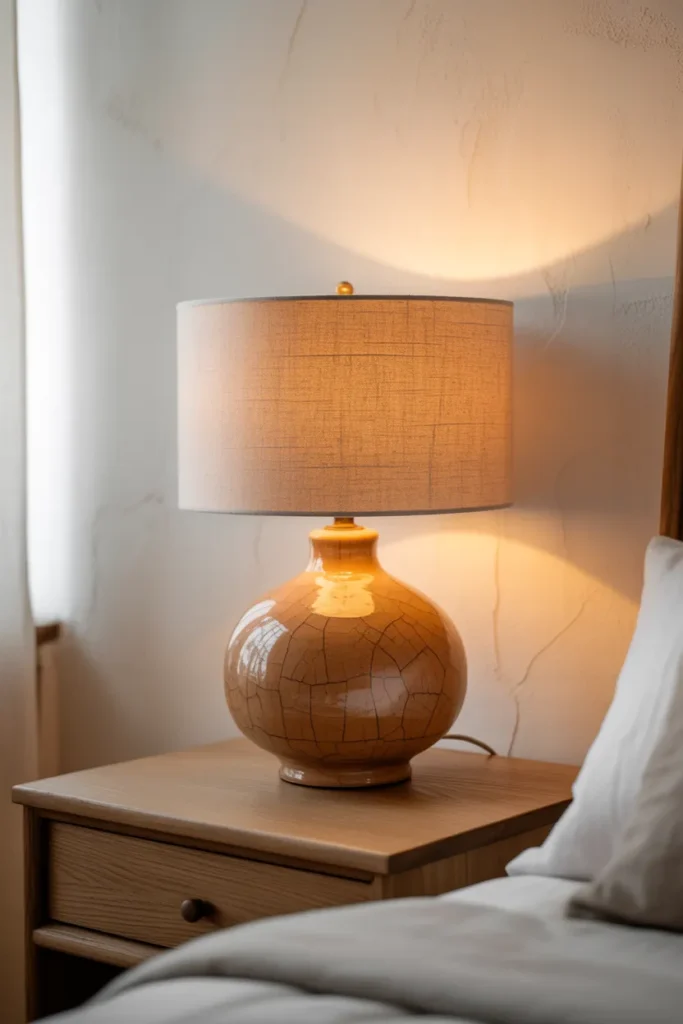
This lamp style works in living rooms, bedrooms, and hallways where a warm, human-scaled light source is needed on a console, dresser, nightstand, or side table. Two matching ceramic lamps on either side of a sofa or bed create the symmetrical, anchored look that is one of the most reliable lighting configurations in residential design. The visual weight of the ceramic base provides the presence needed to balance a large sofa or king-size bed without the lamp feeling insignificant.
Glaze color selection is the primary decision point. Warm earth tones — terracotta, ochre, warm cream, dusty sage — integrate into most living and bedroom palettes naturally. Bold or very dark glazes make a stronger statement but require more considered placement. A matte black ceramic base with a white linen shade reads as more contemporary than vintage; a crackle-glazed ivory base with a natural linen shade reads as genuinely warm and antique-adjacent.
5. A Buffet Lamp With a Tall Narrow Profile That Fills Vertical Space on a Console or Sideboard
A buffet lamp — distinguished by its tall, narrow proportions compared to a standard table lamp — is a specific form designed for placement on console tables, sideboards, and entry hall furniture where low-profile lamps look undersized and disappear visually against the wall behind them. The extra height of a buffet lamp fills the vertical space between a table surface and the midpoint of the wall, creating a properly scaled composition.
In vintage lamp design, buffet lamps typically feature a slender candlestick-style base in brass, bronze, or ceramic, with a small tapered or empire shade on top. This proportional relationship — a long, slim base with a relatively small shade — is what defines the silhouette and distinguishes it from a standard table lamp at a larger scale. The effect in a room is visual elegance rather than visual weight.
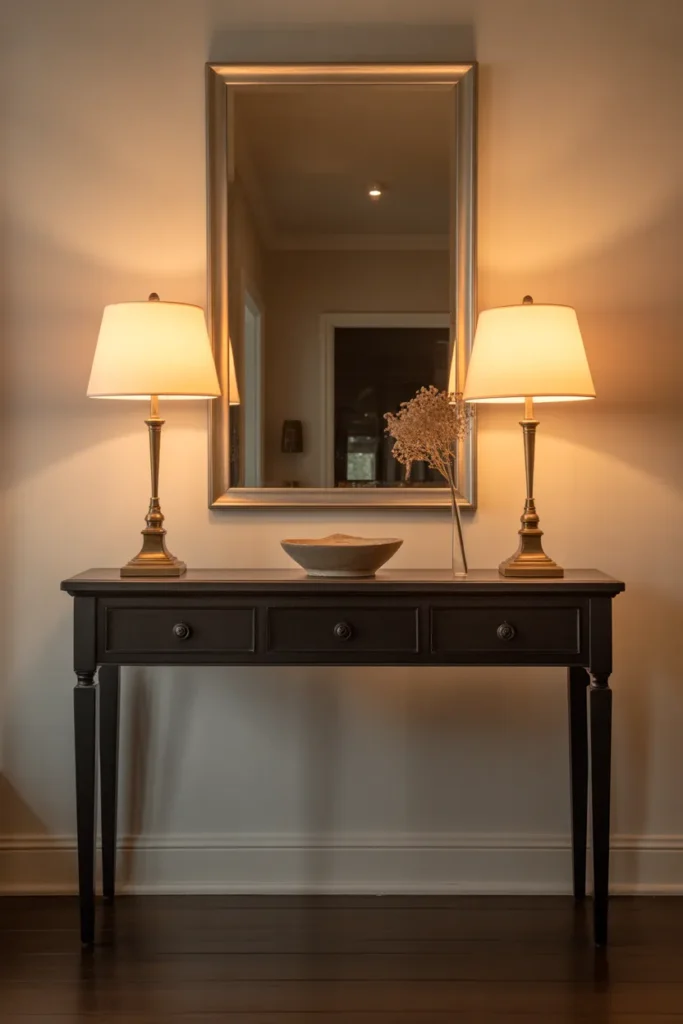
The buffet lamp is most effective on surfaces where it appears in pairs — two identical lamps flanking a mirror, a piece of art, or a central decorative object on a console table. This symmetrical arrangement is one of the most classically grounded compositions in interior design and works in virtually every room style from traditional to transitional to relaxed modern. A single buffet lamp on a long sideboard can look lonely and unresolved; two immediately create a complete, balanced composition.
Entry halls and dining rooms are the natural habitat of the buffet lamp, but in 2026 they appear increasingly in living rooms on sofa tables, in bedrooms on tall dressers, and in home offices on credenzas. Any surface that needs vertical lighting presence without the footprint of a full floor lamp is a candidate for a pair of buffet lamps.
6. A Pharmacy Floor Lamp With an Adjustable Arm That Solves the Directed Task Lighting Problem
The pharmacy lamp — originally designed for clinical task lighting — has become one of the most useful vintage lamp forms for residential interiors because its adjustable arm and directional shade allow the light to be positioned exactly where it is needed rather than fixed at the angle of manufacture. In an era when most decorative floor lamps prioritize appearance over function, the pharmacy lamp prioritizes both.
The vintage pharmacy floor lamp in its most recognizable form features a weighted or claw-footed base, a long articulating arm with one or two pivot points, and a deep conical shade in a painted finish — typically white, black, or a classic green or cream enamel. The enamel shade is the most authentically vintage element and the most visually distinctive component. It directs light precisely downward and forward without spill, which makes it genuinely superior to a decorative floor lamp for reading.
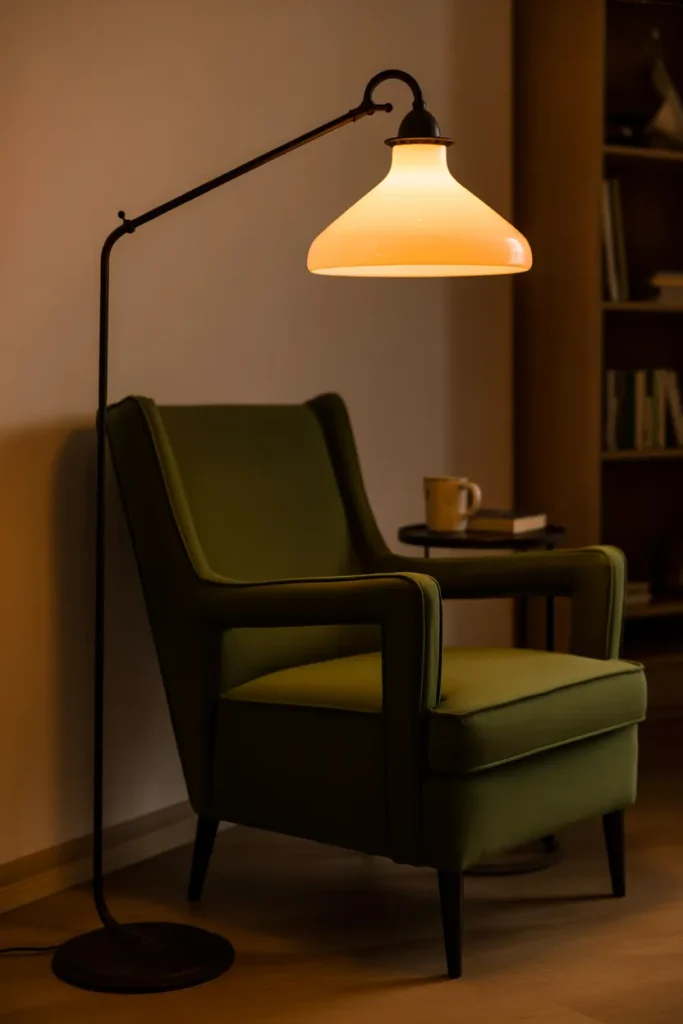
In a living room, a pharmacy lamp positioned beside an armchair or sofa provides reading light without requiring a table lamp or end table — which matters significantly in small rooms where every surface counts. The lamp’s arm extends over the seating area to deliver light at the correct angle without the lamp base needing to be immediately adjacent to the reader. This flexibility makes the pharmacy lamp one of the best vintage-inspired lamps for small apartment living rooms.
The one limitation of the pharmacy lamp is that it provides task light, not ambient light. A room lit only by a single pharmacy lamp will feel dramatically shadowed beyond the lamp’s focused beam. Plan for a secondary ambient source — a ceiling fixture, a torchiere, or wall sconces — in any room where the pharmacy lamp will be the primary light during evening use.
7. A Stained Glass Table Lamp That Functions as Both a Light Source and a Piece of Art
A stained glass table lamp — where the shade is constructed from individually cut and soldered pieces of colored glass — is one of the few lamp styles that genuinely functions as a piece of art when unlit and as an immersive light experience when illuminated. The colored glass panels transform ambient bulb light into a projected display of warm color that changes the entire character of the surrounding room at night.
The American Arts and Crafts tradition produced some of the most enduring stained glass lamp designs in residential interior history, and these forms remain highly relevant in 2026 home design. Geometric patterns in earth tones — amber, brown, green, and cream — read as warm and naturalistic. Floral or botanical motifs in the same palette add organic character. Avoid stained glass lamps with very saturated primary colors — bright red, electric blue, or intense purple — in rooms with a modern or restrained design language. These high-saturation palettes work in very specific eclectic contexts and clash in most contemporary interiors.
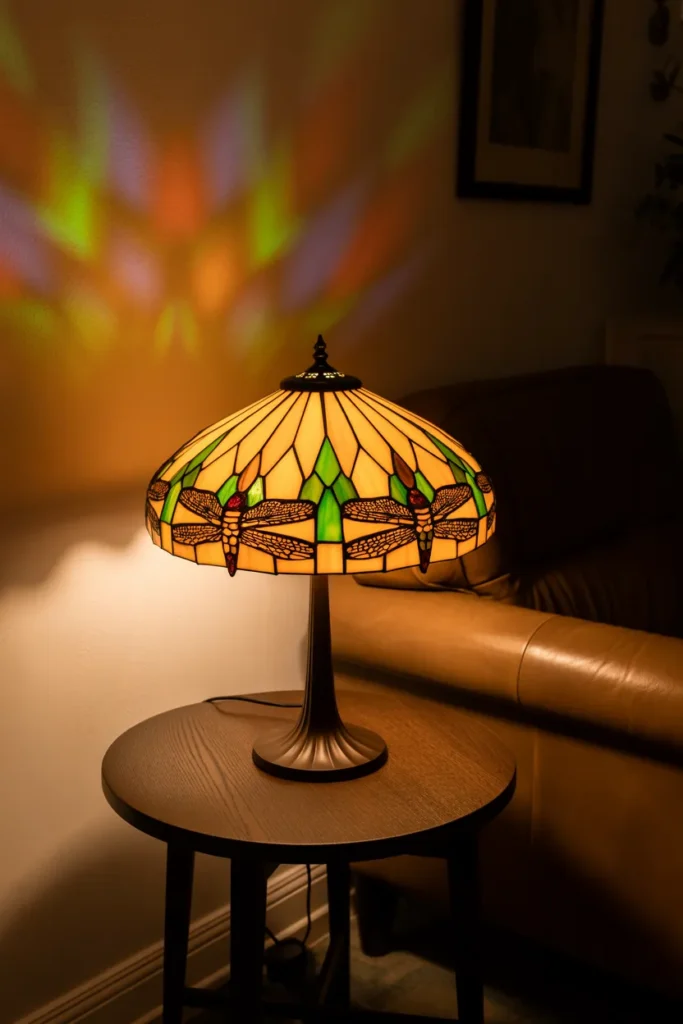
Scale is the most important practical decision with a stained glass lamp. A large stained glass shade — 18 to 22 inches in diameter — works on a substantial side table or a dedicated lamp table in a living room corner. A small stained glass shade — 10 to 14 inches — works on a nightstand or a narrow console. Choosing a shade that is disproportionately large for its base or its placement surface makes the lamp look top-heavy and unstable.
For apartments and smaller homes where one strong visual statement per room is the correct design approach, a single stained glass lamp in a well-chosen location delivers more impact than multiple vintage lamps of lesser individual character. It earns its place as the room’s most distinctive object.
8. A Converted Vintage Object Lamp — Upcycled Bases That Add Irreplaceable Originality
One of the most distinctive vintage lamp ideas 2026 has brought into mainstream interior design is the converted object lamp — a light fixture created by electrifying an existing vintage object and fitting it with a shade and socket kit. Antique vases, ceramic crocks, glass bottles, old wooden post columns, laboratory flasks, and decorative urns are among the most commonly converted objects, each resulting in a lamp that is genuinely one of a kind.
The practical process of converting a vintage object into a lamp is more accessible than most homeowners expect. Lamp conversion kits — including a harp, socket, wiring, and cord — are widely available at hardware stores, and the conversion of a ceramic or glass vessel requires drilling a hole through the base for the cord and fitting a standard socket assembly at the top. For homeowners not comfortable with basic electrical work, lamp rewiring is an inexpensive service offered by most lighting repair shops.

The design advantage of a converted lamp is total originality. No two converted object lamps are identical, which means the lamp becomes a genuine point of difference in the room rather than a product that could appear in any number of identical homes. A 1920s pharmacy bottle converted into a bedside lamp, an antique stoneware crock electrified as a living room table lamp, or a turned wooden porch column base fitted with a linen shade — each of these communicates a design sensibility that no off-the-shelf lamp can replicate.
The shade selection for a converted object lamp is where the design decision becomes critical. The shade should not compete with the base for attention. A simple, clean shade in natural linen, white cotton, or a muted solid tone allows the converted base to remain the visual focus. An elaborate or heavily textured shade shifts attention away from the base that makes the lamp interesting in the first place.
Final Thoughts
Vintage lamp ideas in 2026 are not about recreating a period look — they are about choosing a lamp form that brings genuine warmth, material character, and functional light to a specific room and a specific placement. Each idea in this guide solves a different lighting problem: ambient light, task light, vertical scale, artistic impact, or total originality.
Save this post so you can return to specific sections when you are making lighting decisions room by room. The right vintage lamp for your space is the one that addresses your actual lighting need and fits the material language of the room it lives in. If this guide was useful, explore more home lighting and interior decor content for the same level of practical, placement-focused guidance.