
Getting western ranch living room looks right is harder than it appears — the line between a cohesive, grounded interior and an overcrowded themed space is thin, and most guides skip the practical decisions that determine which side you land on. This post covers 15 specific, actionable ideas across furniture, materials, color, lighting, and layout so you can build a western ranch living room that feels intentional, livable, and genuinely American without looking like a roadside attraction.
1. The Leather Sectional Layout That Anchors a Large Ranch Living Room
In a large open living room, the sectional sofa is the structural decision everything else responds to. For western ranch living room looks, a deep-seated leather sectional in saddle brown, cognac, or dark tobacco is the single most effective furniture choice — it brings material authenticity, visual weight, and practical durability together in one piece.
An L-shaped configuration positioned with the long end parallel to the longest wall creates a defined seating zone in open-plan spaces without isolating it from the rest of the room. Pull the sectional at least 18 inches from the wall — floating furniture always reads better than furniture pushed against perimeter walls, and the gap allows the leather material to be seen from multiple angles.
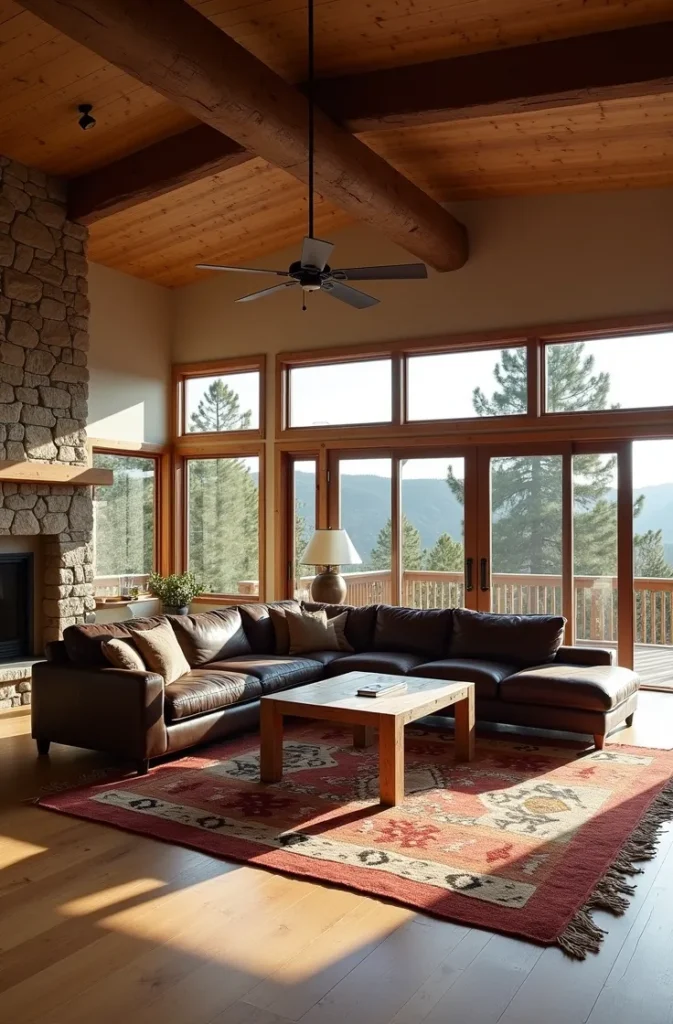

Avoid fabric sectionals in earth tones as a substitute. Microfiber and polyester blends in brown or tan read as approximations of the Western material palette rather than genuine expressions of it. If genuine leather is outside budget, a high-quality top-grain bonded leather performs better visually than most fabric alternatives in this context.
The common mistake is pairing a large leather sectional with a coffee table that is too small or too delicate. A substantial reclaimed wood coffee table — at least 48 inches long and proportional to the sofa depth — grounds the seating zone and keeps the scale consistent throughout.
2. A Stone Fireplace Wall That Does the Design Work for the Entire Room
No single element establishes western ranch living room looks more immediately or more permanently than a floor-to-ceiling stone fireplace wall. The material — whether stacked ledger stone, rough-cut limestone, or river rock — brings natural texture, mass, and a reference to landscape architecture that cannot be replicated by furniture or accessories alone.
The fireplace wall works as the primary focal point, which means everything else in the room should orient toward it. Arrange seating in a U-shape or angled configuration that faces the fireplace directly. Avoid placing the main sofa parallel to a side wall with the fireplace in peripheral view — the room loses its organizing logic and the fireplace becomes background rather than anchor.
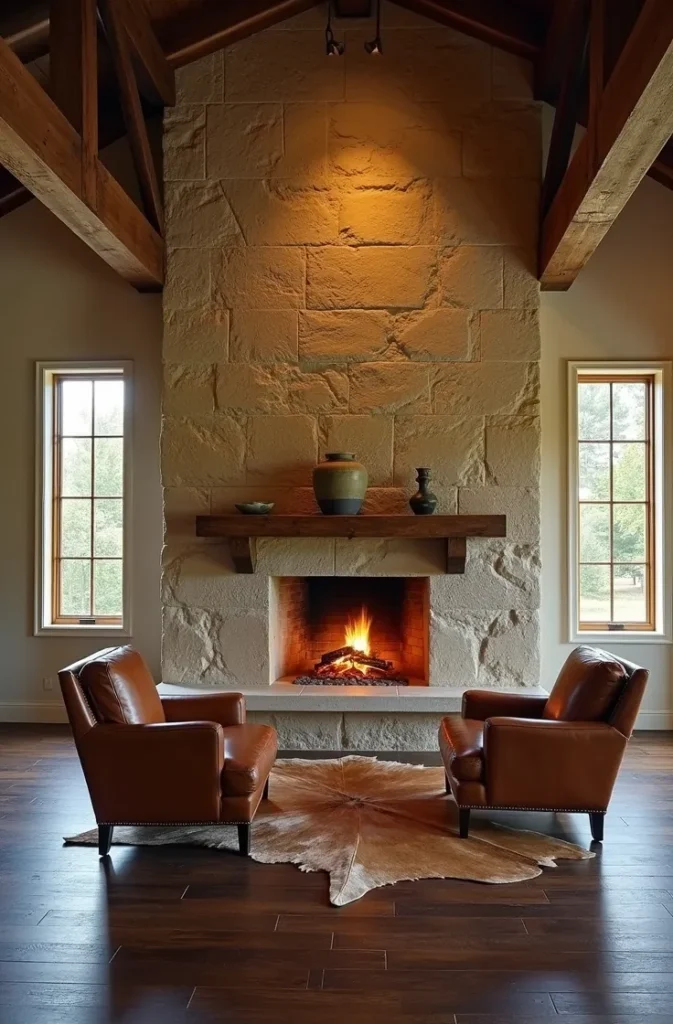
Stone selection matters more than people expect. Rough-cut or irregular stacked stone creates a rugged, ranch-authentic look. Uniform thin-veneer ledger stone produces a more contemporary result that reads closer to modern farmhouse than western ranch. Choose based on the overall direction of the space: if the rest of the room is clean and edited, ledger stone keeps it from tipping rustic; if the room has heavy beams and worn leather, rough-cut stone is the stronger choice.
Keep the mantel simple and intentional. Two or three well-chosen objects — a large raw-edge wood slab, a single oversized ceramic vessel, a framed topographic print — work better than a crowded arrangement of small items. The fireplace wall is already doing significant visual work; the mantel styling should support it, not compete with it.
3. Exposed Ceiling Beams With Whitewashed Walls for a Light Western Ranch Feel
The assumption that western ranch living rooms must be dark and heavy is one of the most limiting misconceptions in this style. A bright, whitewashed or warm white painted living room with exposed dark wood ceiling beams delivers a western ranch reference that reads as fresh and contemporary — and works particularly well in smaller homes where a darker palette would make the space feel compressed.
Dark walnut or espresso-stained beams against a white or warm cream ceiling create strong visual contrast that draws the eye upward and makes the ceiling feel taller than it is. This is an effective strategy in single-story ranch homes with standard 8 to 9-foot ceiling heights — the beams add architectural interest without lowering the perceived ceiling the way a dark painted ceiling would.
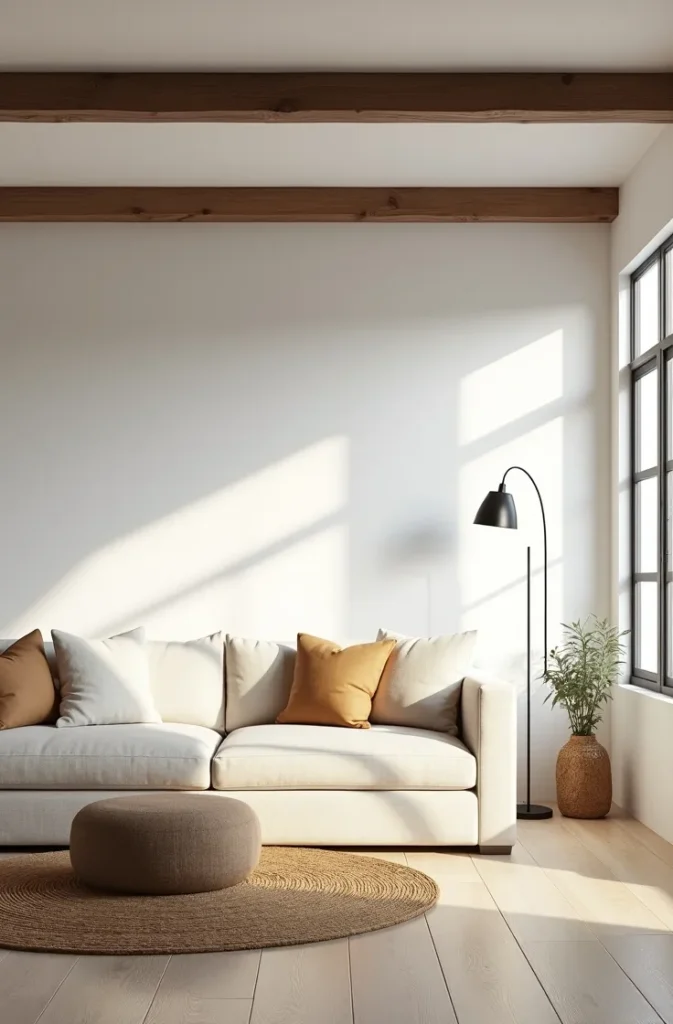
Faux beams — hollow polyurethane or lightweight wood casing — are structurally sound for this application and install without requiring any structural modification. They are the practical solution for the vast majority of homes. Stain them before installation and have a professional measure the spacing carefully — uneven beam spacing is immediately visible and difficult to correct after installation.
Pair this approach with natural linen or cotton canvas furniture, woven jute rugs, and minimal accessories. The whitewashed wall and beam combination is already carrying significant design weight — the furniture and textiles should be warm and textural but restrained in color.
4. A Cowhide Rug Layered Over Jute to Define the Seating Zone
Layering a cowhide rug over a larger jute or sisal base rug is one of the most practical and visually effective flooring strategies in western ranch interior design. The jute base defines the full seating zone; the cowhide sits on top, centered under the coffee table, and introduces the Western reference at a scale that feels considered rather than literal.
This layering approach solves a common sizing problem. Genuine cowhides are organic in shape and typically range between 5×7 and 7×9 feet equivalent — often too small to anchor a full living room seating arrangement on their own. A 9×12 or 10×14 jute base underneath extends the footprint without requiring a second cowhide purchase.
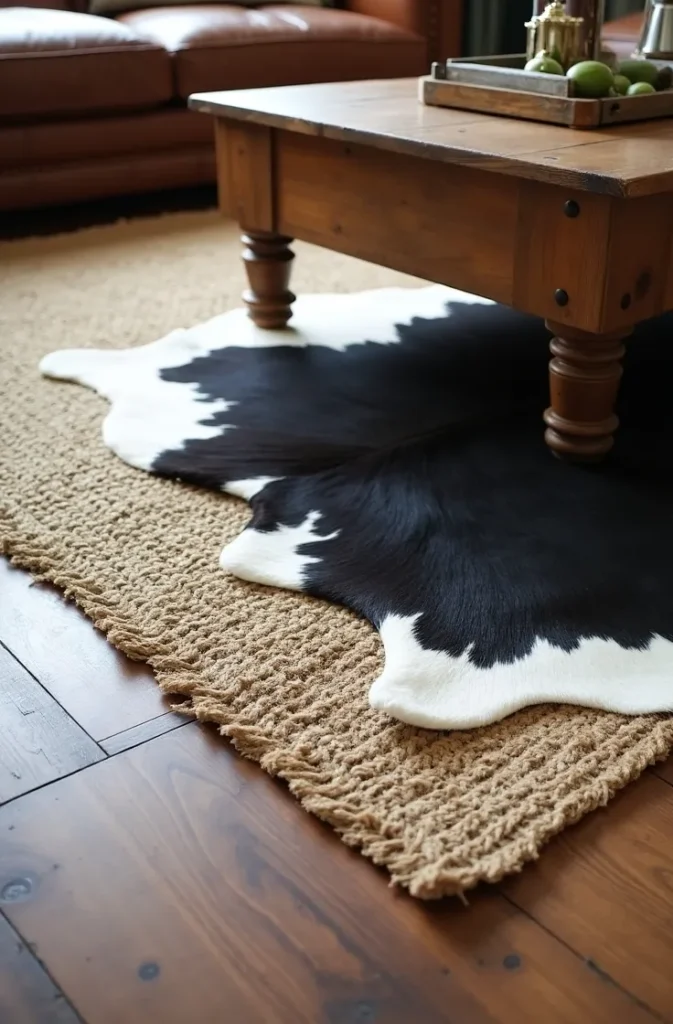
On hardwood or wide plank floors, use a rug pad under the jute layer to prevent shifting. On concrete or polished floors, both layers need independent non-slip backing. The cowhide itself does not need a pad if it sits on top of the jute, which has enough texture to hold it in place under normal use.
Avoid layering cowhide over a patterned rug. The cowhide’s own organic pattern — black and white, tricolor, or brindle — needs a neutral ground beneath it. A geometric or striped base rug underneath creates visual conflict. Solid jute, sisal, or a plain natural fiber weave is the correct base.
5. A Navajo or Southwestern Blanket Wall Hanging as the Room’s Focal Point
In living rooms without a fireplace wall or architectural focal point, a large Navajo-style or Southwestern geometric woven textile hung as wall art creates the visual anchor the room needs. A well-chosen woven piece in rust, cream, navy, and forest green at 4 to 6 feet wide commands a wall the way a large painting would — with the added dimension of texture.
This approach works particularly well in apartment living rooms and smaller homes where a stone fireplace is not an option. The textile carries the Western aesthetic without requiring any structural change to the space and can be relocated without leaving a significant mark on the wall.
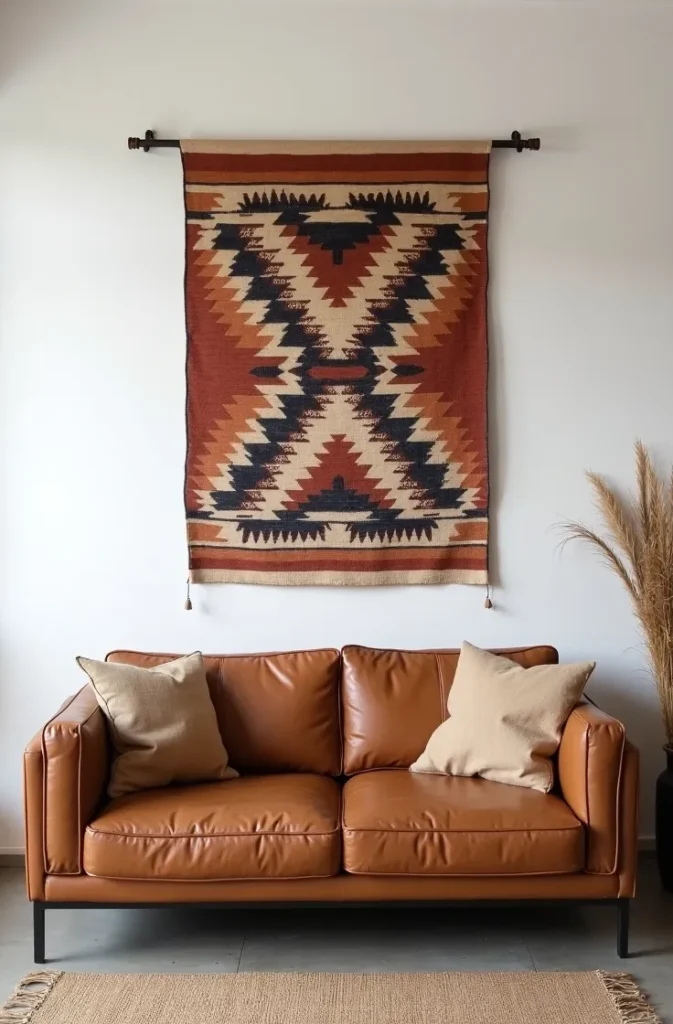
Hanging method matters. A wooden dowel or a thin iron rod through the top hem of the textile is the most authentic and visually clean approach. Avoid nailing directly through the textile or using visible clips along the top edge — both look makeshift at close range. If the textile does not have a hanging sleeve, a textile conservator or upholstery shop can add one for a modest cost.
Keep the wall around the textile completely clear. No flanking sconces, no additional frames, no floating shelves nearby. The textile needs open wall space to read clearly as the primary art element. Crowding it with adjacent objects reduces its visual impact and makes the wall feel cluttered rather than curated.
6. Reclaimed Wood Shelving That Organizes and Decorates at the Same Time
Built-in or bracket-mounted reclaimed wood shelving along one wall of a western ranch living room solves a practical storage problem while adding the raw material texture that defines the aesthetic. Rough-sawn or hand-hewn wood planks on simple iron pipe or blackened steel brackets create shelving that reads as functional and Western simultaneously.
The styling of the shelves is where most people overcorrect. The instinct is to fill every inch with Western objects — spurs, horseshoes, rope coils, ceramic cowboys. The better approach is to treat the shelves like a design-conscious general store: grouped objects with breathing room between clusters, mixing books, plants, ceramic vessels, and one or two genuinely Western artifacts rather than filling every surface with themed items.
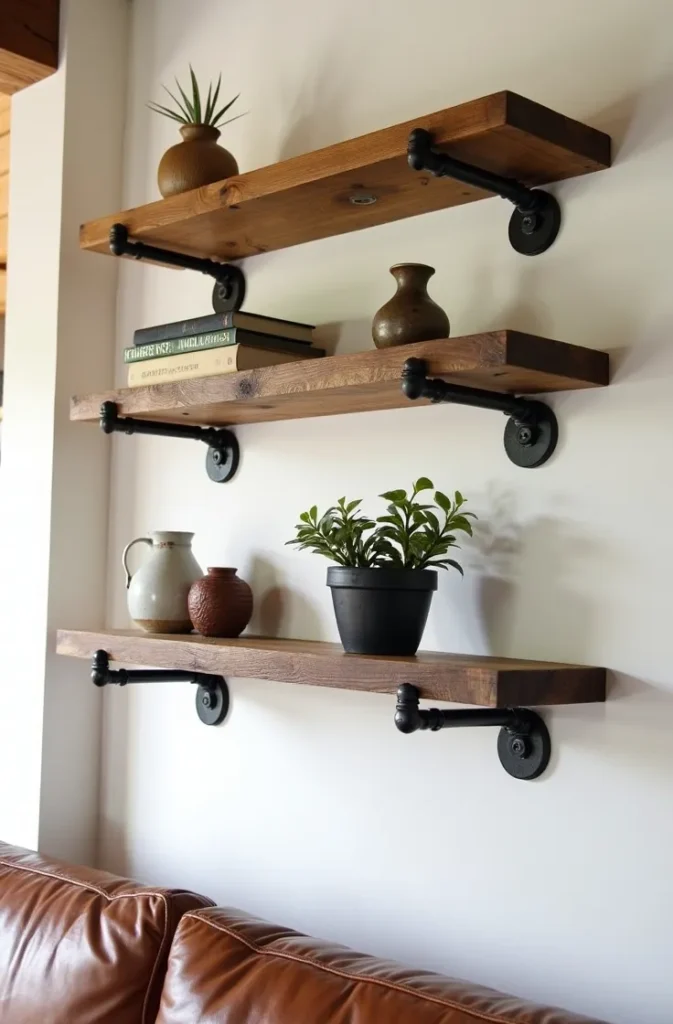
Keep shelf heights consistent and plan the bracket placement before installation. Uneven shelf spacing is one of the most common and most visible installation mistakes. The top shelf should be reachable — no higher than 78 to 80 inches from the floor — otherwise the upper display area becomes inaccessible for regular styling updates.
Reclaimed wood varies significantly in quality and stability. Well-dried reclaimed lumber with a moisture content below 12 percent is essential for shelving — green or improperly dried wood will warp after installation. Ask suppliers for moisture content data or use a moisture meter before purchasing.
7. A Warm Terracotta and Cream Color Palette for a Modern Southwestern Edge
Among western ranch living room looks that have gained consistent traction in 2025 and 2026, the terracotta and cream palette stands out as the most versatile and the most compatible with contemporary furniture profiles. It references the natural color environment of the Southwest and Great Plains without requiring any explicitly Western motif.
Terracotta works best as an accent applied in 20 to 30 percent of the room’s color volume: cushion covers, a single accent chair, a ceramic lamp base, or painted terracotta on one wall. The remaining 70 to 80 percent of the room stays in warm cream, sand, and natural wood tones. Reversing this ratio — too much terracotta — creates a room that feels heavy and one-note.
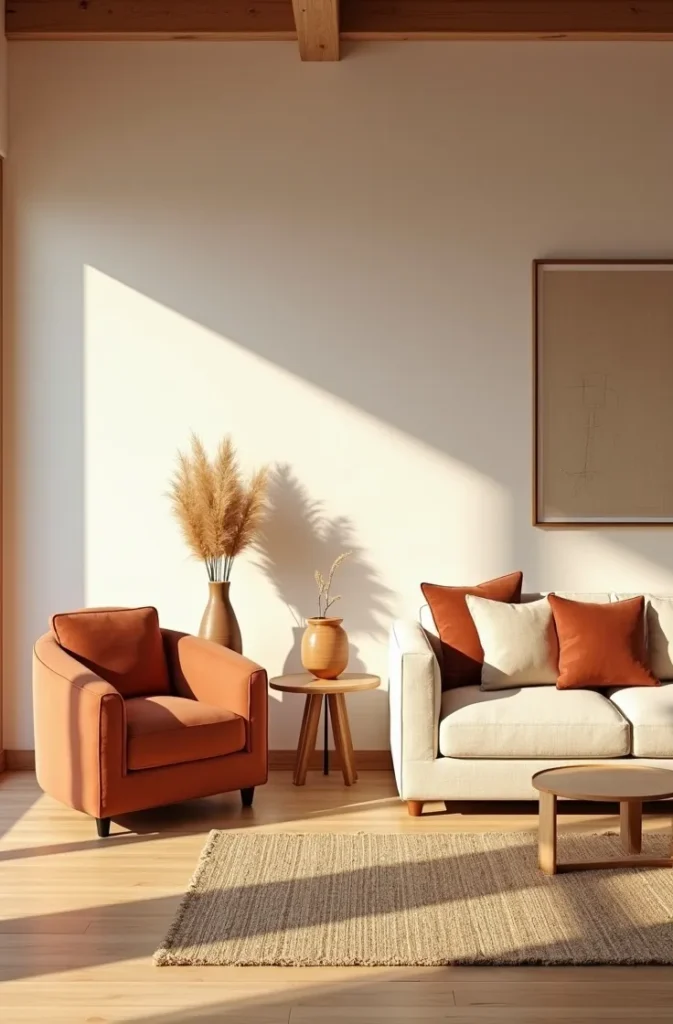
This palette is particularly effective in living rooms with south or west-facing windows where afternoon light is warm and golden. The terracotta tones deepen and become richer under warm natural light. In north-facing rooms with cooler light, the same palette can feel muddy — adding cream and warm white in higher proportion compensates.
Avoid cool-toned accents in this palette: no gray-blue, no cool mint, no lavender. Every accent color should pull warm — dusty sage, ochre, burnt orange, raw sienna, or deep indigo are compatible additions. Cool tones create a color temperature conflict that disrupts the cohesion of the palette.
8. A Sliding Barn Door Between the Living Room and Hallway
A sliding barn door on the transition between a living room and an adjacent hallway, home office, or dining area is both a functional and aesthetic decision that earns its place in a western ranch living room. It eliminates the floor space a swinging door requires — typically a 3-foot swing radius — and introduces a strong Western architectural reference at the room’s threshold.
The barn door works best in open-plan ranch homes where doorways feel like interruptions in the floor plan. Installing a barn door visually acknowledges the transition between spaces without creating a hard architectural division. When open, the door slides along the wall and disappears into the room’s composition; when closed, it becomes a design feature.
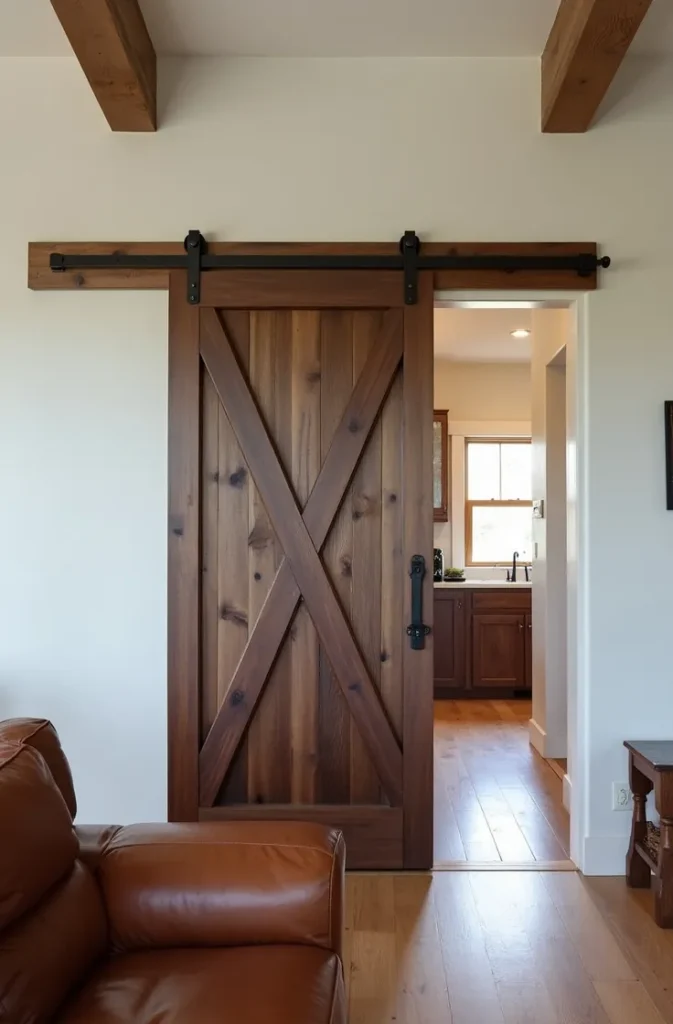
Wood species and hardware finish are the two decisions that control how formal or rustic the result reads. A smooth-face solid wood door in dark walnut with matte black hardware reads contemporary Western. A rough V-groove plank door with distressed finish and rustic iron hardware reads ranch-casual. Neither is wrong — they serve different room directions.
Ensure the wall adjacent to the doorway has at least the full width of the door plus 2 inches of clearance for the door to slide open completely. This seems obvious but is frequently overlooked in planning, resulting in a barn door that cannot fully open because a light switch, outlet, or adjacent frame is in the way.
9. Iron and Wood Furniture Combinations That Read Ranch Without the Kitsch
The furniture pairings that work most consistently in western ranch living rooms combine dark iron or blackened steel frames with solid wood tops and leather or canvas upholstery. A coffee table with a welded iron base and a thick reclaimed wood top, a floor lamp with a blackened iron pipe shaft and an aged brass socket, or a side table with an iron hairpin base and a live-edge wood surface — these combinations are material-coherent and scale-flexible.
This furniture direction works across room sizes. In a smaller living room, iron-base furniture with slim profiles keeps the visual weight low while still delivering the Western material reference. In a larger room, heavier iron and wood pieces — a solid iron-framed sofa table behind the sectional, or a large iron lantern pendant above the seating zone — match the scale of the space.
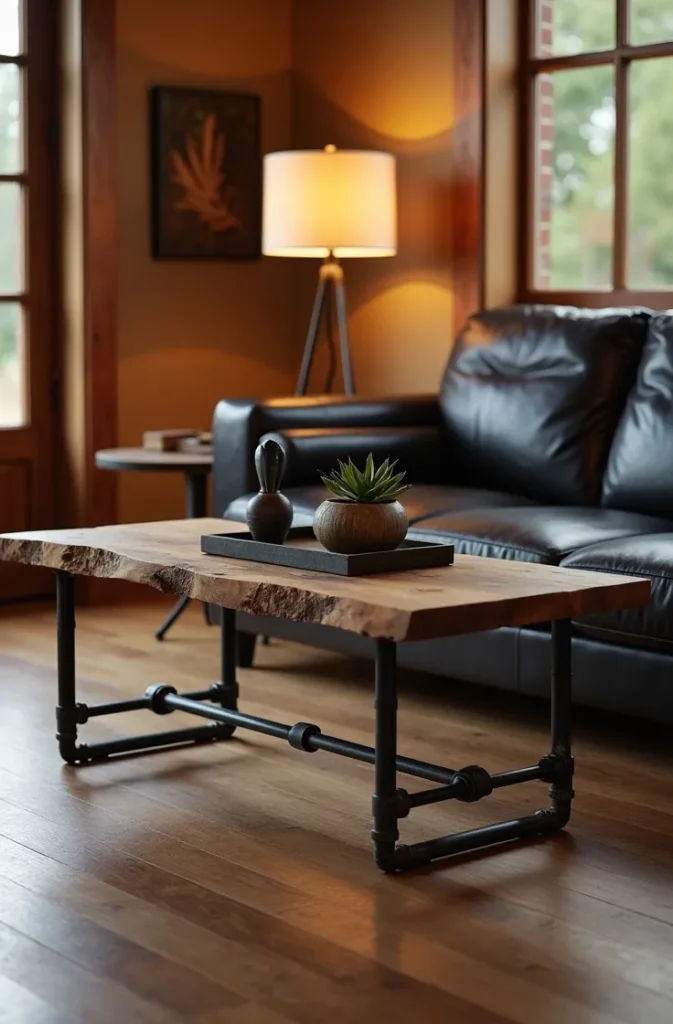
The kitsch line is crossed when furniture shapes become theatrical: wagon wheel coffee tables, horseshoe side table bases, stirrup-shaped drawer pulls. These pieces date quickly, limit your ability to evolve the room, and are difficult to pair with non-Western accessories. Stick to honest material combinations — iron and wood — and let the materials carry the reference.
Avoid mixing iron with chrome or nickel in the same room. The cool metallic tone of chrome conflicts with the warm, industrial quality of blackened iron or oil-rubbed bronze. All metal finishes in a western ranch living room should sit in the warm range: iron, bronze, brass, or copper.
10. A Dramatic Dark Accent Wall in Charcoal or Deep Forest Green
One of the more unexpected western ranch living room looks gaining traction in current interior design is the dark accent wall — specifically in deep charcoal, forest green, or dark navy — used on the fireplace wall or the wall behind the primary sofa. The dark tone creates a sense of enclosure and depth that references the landscape architecture of ranch interiors without using a single explicitly Western motif.
Deep forest green has particular resonance in western ranch contexts — it references conifer forests, ranch fencing, and military-surplus canvas, all of which are embedded in Western American material culture. Against this dark green backdrop, leather furniture reads richer, wood grains become more prominent, and warm lighting sources glow with greater intensity.
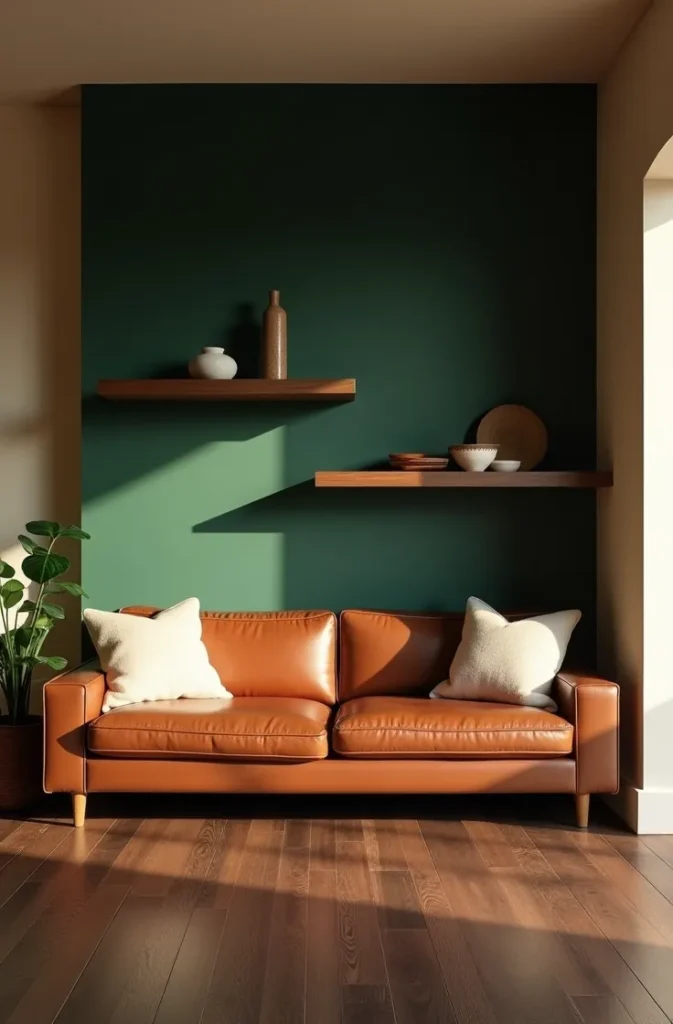
This approach works best in living rooms with adequate natural light. A dark accent wall in a north-facing room with one small window will absorb light and make the space feel oppressive. In a room with two or more windows or a south or west exposure, the dark wall creates drama without compromising livability.
Keep the other three walls in a warm neutral — cream, warm white, or warm greige. Extending the dark color to all four walls requires a room with exceptional natural light and high ceilings to remain functional. Most standard ranch home living rooms do not meet that threshold.
11. Antique or Vintage Map Art That Adds Depth Without Themed Clutter
Replacing overtly Western wall art — branded cattle brands, bucking bronco prints, horseshoe arrangements — with a curated selection of antique American land survey maps, vintage National Park posters, or topographic prints in sepia, ochre, and raw umber creates visual depth and intellectual weight that themed novelty art cannot.
This is the art direction that separates a mature western ranch living room from a decoration-trend room. Vintage maps and survey prints signal genuine engagement with American landscape history. They work as art in their own right, which means they hold up under close inspection rather than reading as backdrop filler.
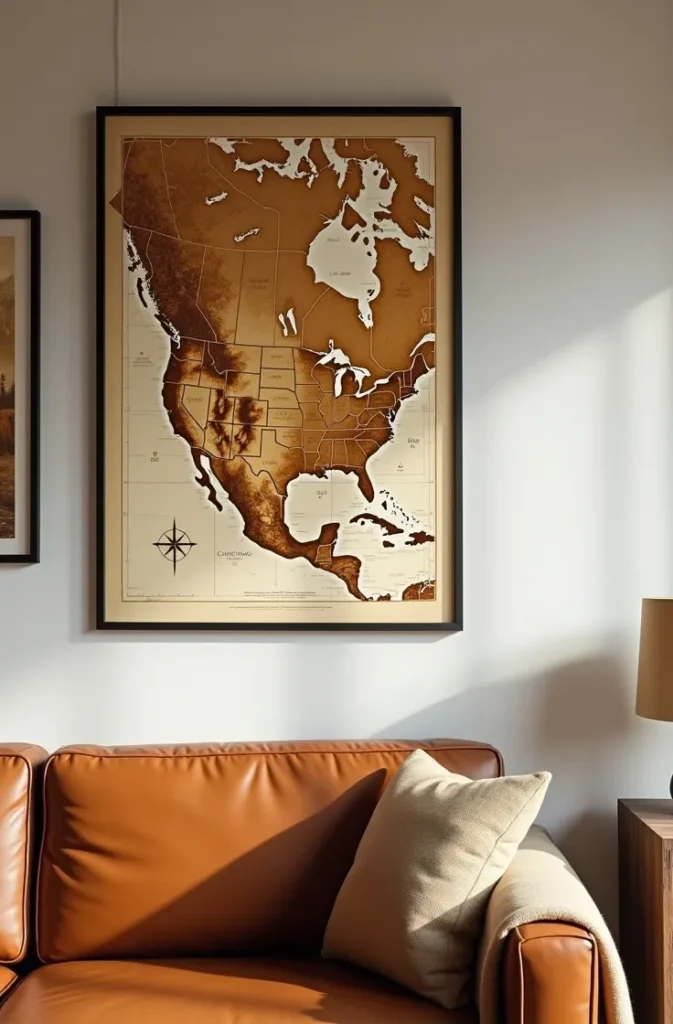
For a living room gallery wall, limit the selection to three to five pieces in a consistent frame profile — thin black metal or raw wood in the same width. Arrange them in a horizontal cluster between 60 and 76 inches from the floor, centered on the wall rather than left-aligned or scattered. A horizontal arrangement at eye level creates a gallery moment; vertical stacking or scattered placement creates visual noise.
Large-format single prints — 24×36 or 30×40 — work as solo pieces above a sofa or console table without requiring a gallery arrangement. A single oversized vintage National Park map in a simple frame above the sofa makes a stronger statement than six small prints competing for attention.
12. A Woven Rattan or Rawhide Chair as a Functional Accent Piece
A single woven rattan, rawhide-laced, or cane-back accent chair in a western ranch living room introduces material variety — a break from the leather and wood palette — that prevents the room from feeling monotonous. It also provides a visual and functional counterpoint to the primary sofa: a lighter, more upright seating option that suits different activities and different body types.
Woven rattan chairs with a wood frame in walnut or oak stain pair naturally with the Western material palette. Rawhide-laced chairs — where strips of natural leather are woven through a wood frame — are a more explicitly Western reference and work well in rooms that are already committed to the aesthetic through multiple other elements.
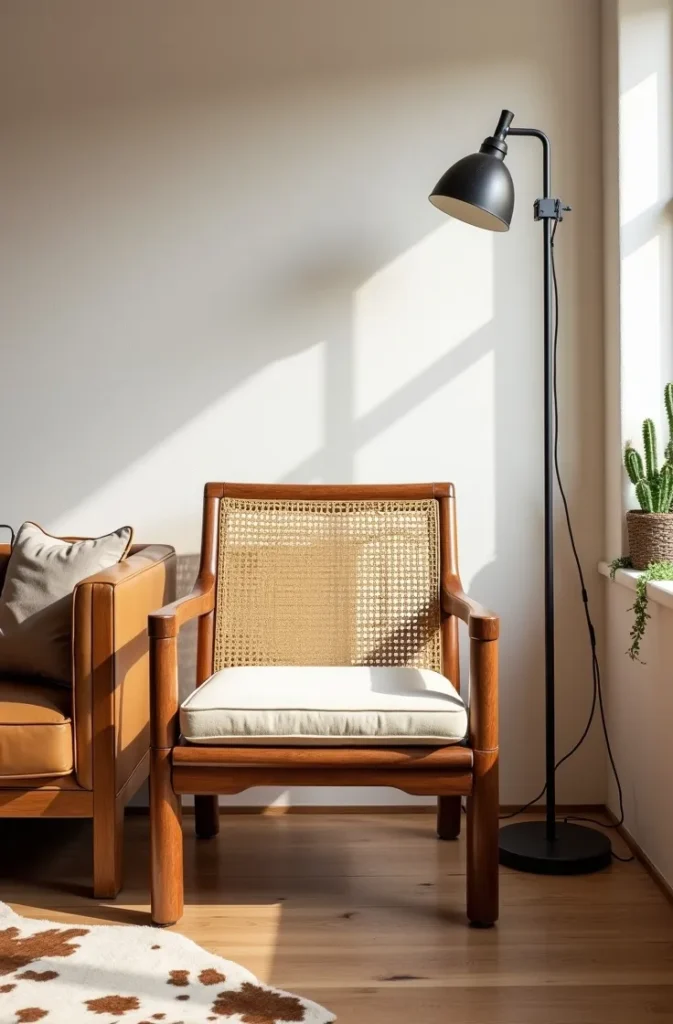
Position the accent chair at a slight angle to the main sofa rather than parallel to it. Angled placement creates a more conversational, natural arrangement and breaks the rigid geometry of sofa-chair-sofa configurations that can make a living room feel like a waiting room.
Avoid using two accent chairs in the same material and finish unless the room is large enough to support the symmetry without feeling staged. In most standard living rooms, one accent chair introduces variety; two identical accent chairs create formal symmetry that conflicts with the relaxed, lived-in quality western ranch interiors depend on.
13. A Lofted Ranch Living Room With Double-Height Windows and Warm Wood Tones
In homes with loft-style or cathedral ceiling configurations, western ranch living room looks take on a dramatically different character. Double-height or vaulted ceilings with exposed structural rafters or open trusses, combined with floor-to-ceiling windows that frame an exterior landscape, create a living space that references the scale and openness of actual ranch architecture.
The furniture strategy in these rooms must respond to the vertical scale. Standard-height sofas and coffee tables can feel dwarfed in a double-height space — choose furniture with visual mass: a deep leather sectional, a large rectangular coffee table, an oversized area rug that fills the seating zone generously. The rule is to anchor the human-scale seating zone so it does not float in the vertical space.
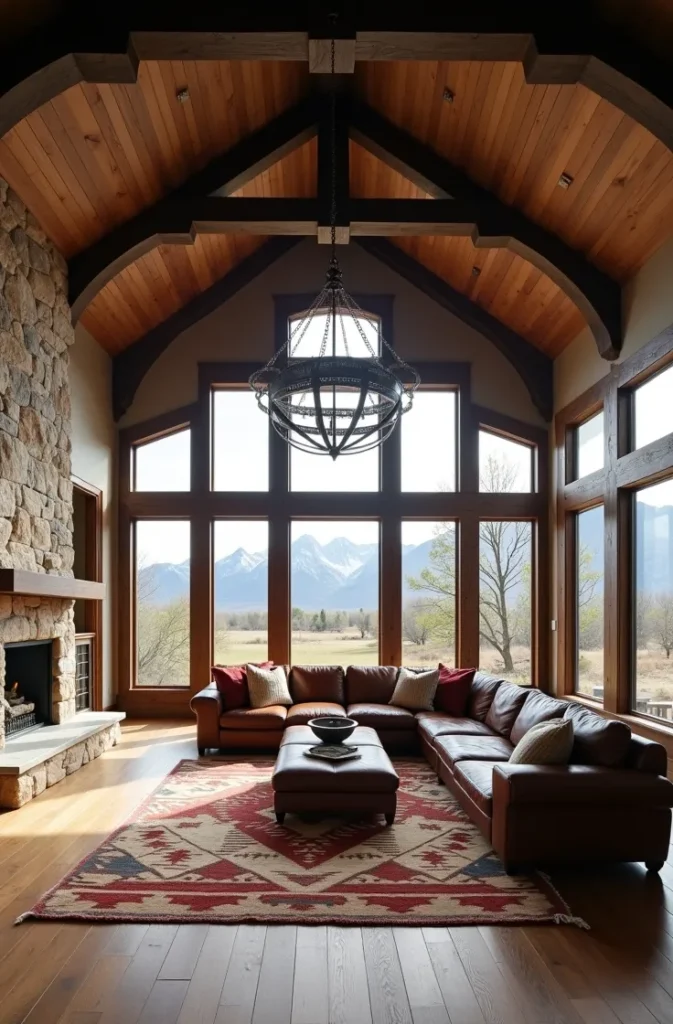
Lighting in double-height rooms requires particular planning. A large pendant or chandelier — iron, antler-style, or a cluster of industrial iron pendants — hung at the standard 84 to 96 inches above the floor anchors the ceiling visually and brings the light down to a useful level. Recessed lighting alone in a lofted space produces flat, uninviting light that works against the cozy-meets-grand quality of ranch architecture.
Window treatments in these rooms are typically impractical beyond simple interior shutters or no treatment at all. If the exterior view is the point of the room — which it usually is in a genuine ranch setting — leave the windows clear. Interior shutters on lower panels provide light control and privacy without blocking the upper glazing.
14. A Console Table Behind the Sofa That Adds Function and Visual Depth
In open-plan ranch homes where the living room seating area is positioned away from the walls, the space behind the sofa is frequently wasted. A narrow reclaimed wood or dark-stained console table positioned directly behind the sofa — typically 10 to 14 inches deep and approximately the same height as the sofa back — defines the rear boundary of the seating zone and creates a surface for lamps, plants, and considered accessories.
This piece works particularly well in great rooms and open-plan layouts common in ranch-style homes where the living area flows directly into the dining or kitchen space. The console table acts as a soft room divider, creating visual definition without building a wall.
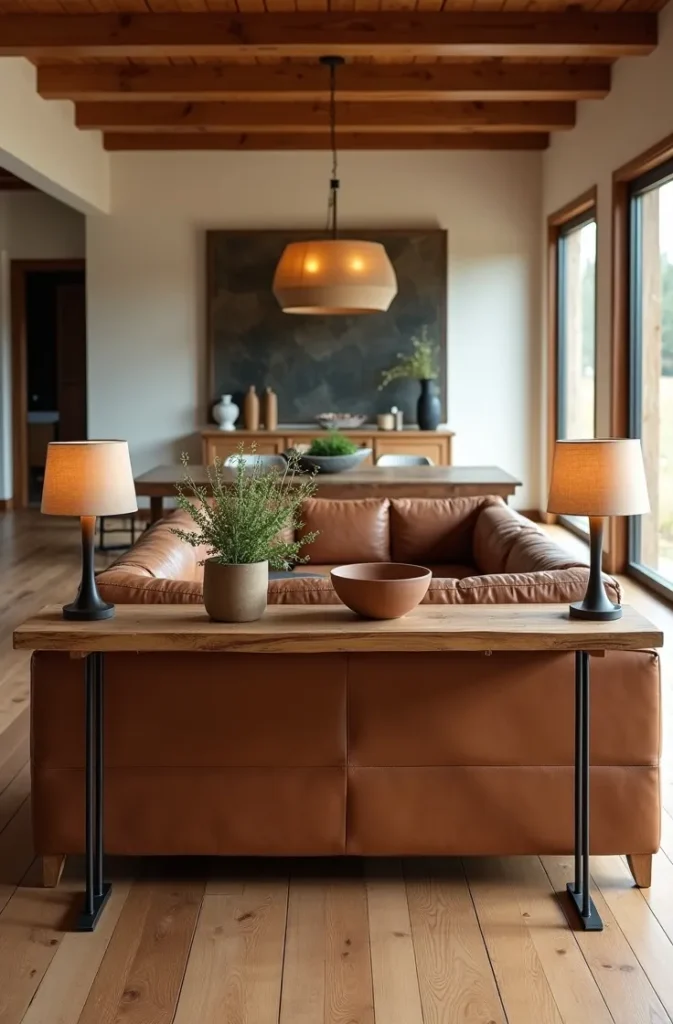
Style the console table with restraint: one table lamp on each end, a centered ceramic or raw wood object, and one small plant. Avoid using the console table as general storage — stacked books, remote controls, chargers, and random objects on this surface undermine the considered quality of the entire seating arrangement.
A console table also solves the problem of how to address the sofa back from an adjacent space. When seen from a kitchen or dining area, a sofa back without a console table creates a blank, furniture-back view. A console table with a lamp and minimal styling creates a view worth looking at from every angle in the open plan.
15. A Curated Mix of Vintage and Contemporary That Avoids the Museum Effect
The most sophisticated western ranch living room looks in 2025 and 2026 are not period rooms — they are contemporary living spaces that incorporate carefully chosen vintage or antique Western elements alongside modern furniture profiles. This mix prevents the room from reading as a historical recreation and keeps it feeling like a real, current home.
The ratio that works consistently is roughly 70 to 80 percent contemporary and 20 to 30 percent vintage or antique. A modern clean-lined sofa with a vintage Navajo rug. A contemporary iron-and-glass coffee table with an antique leather trunk used as a side table. Current wall paint and lighting with a single genuine vintage topographic map in an old frame. The contemporary elements keep the room current; the vintage pieces give it authenticity.
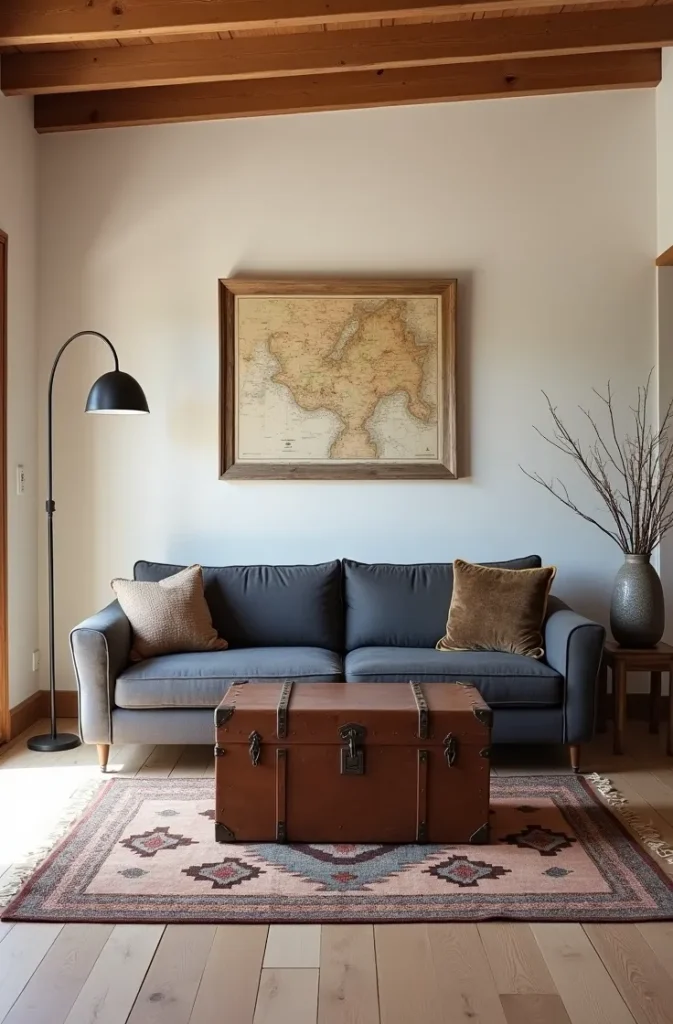
The mistake is reversing this ratio — too many antique or vintage pieces and the room begins to read as a museum or a collector’s storage space rather than a functioning living room. Every vintage piece should earn its place by serving a function: a leather trunk as a coffee table, an antique map as wall art, a vintage blanket as a usable throw. Purely decorative antique objects on every surface tip the balance toward clutter.
Apply this same editorial discipline to inherited or sentimental Western objects. If a piece has genuine personal meaning, find it a prominent single placement. If it is merely old and Western-adjacent, assess it by the same standard as anything else: does it add to the room or subtract from it?
Final Thoughts
Western ranch living room looks succeed when they are built on material integrity and spatial logic rather than themed accessories. The 15 ideas above give you a complete decision framework — from the foundational furniture layout and fireplace wall through to the finishing details of art selection, accent chairs, and lighting layers — so you can approach each choice with clarity rather than guesswork.
Save this post before your next living room project or design consultation. Everything covered here is directly applicable regardless of your home’s size or whether it is a genuine ranch property or an urban apartment reaching for the aesthetic. For more living room style direction, explore guides covering modern rustic, mountain lodge, and Southwestern interior design.