
Most bedroom renovations fail not because of budget but because changes are made without a clear order of priority. The best bedroom renovation ideas 2026 focus on structural decisions first, surface upgrades second, and decorative layering last. This post gives you 11 practical, decision-ready renovation directions covering layout, materials, lighting, storage, and finish choices so you can plan with confidence before spending a dollar.
1. Replace the Ceiling Light With a Statement Fixture Before Anything Else
The ceiling light fixture is the first thing visible when you enter a bedroom and the last thing that gets upgraded in most renovation plans. That order should be reversed. A well-chosen pendant, semi-flush, or chandelier-style fixture immediately communicates that the room was designed rather than assembled, and it changes how every other element in the room reads under its light.
In 2026, the strongest performing fixture styles for bedroom renovation are rattan or woven pendant lights for warm organic rooms, sculptural plaster or ceramic semi-flush fixtures for minimal or contemporary spaces, and aged brass lantern-style pendants for transitional or traditional directions. The common thread across all three is that they produce warm, diffused light rather than flat overhead illumination.
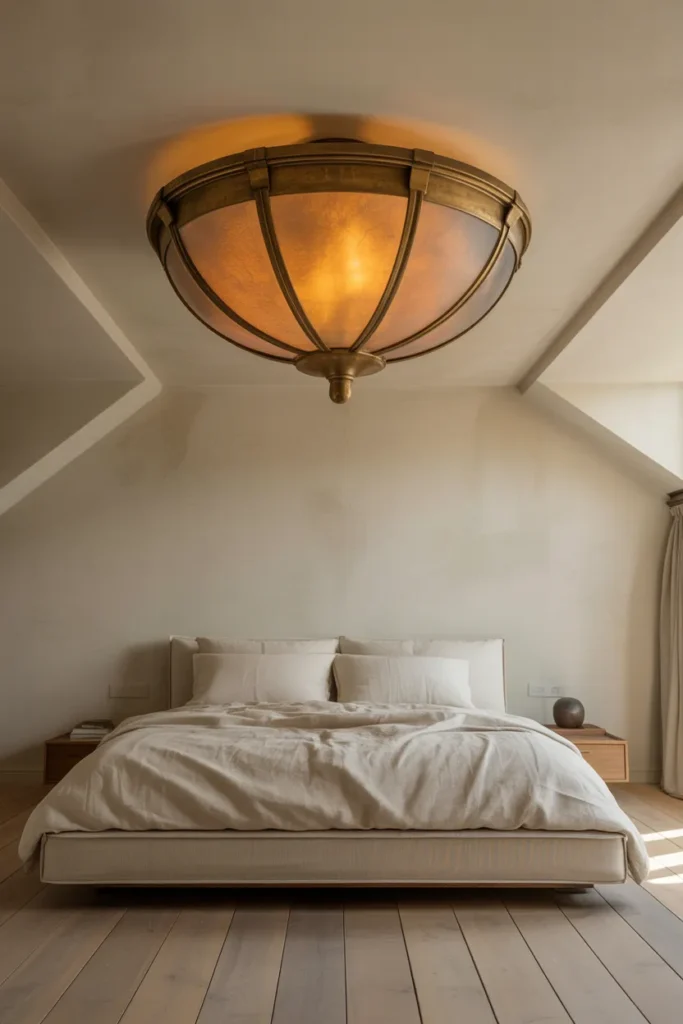

The mistake most people make is treating the light fixture as a finishing touch after furniture and paint are complete. The fixture affects how your paint color reads on the wall and how your materials photograph. Choose it early and let the rest of the decisions respond to it.
For low-ceiling bedrooms under eight feet, a flush-mount or semi-flush fixture is the only safe option. For anything nine feet and above, a pendant or chandelier becomes viable and adds the vertical visual interest that makes ceilings feel even taller.
2. Install a Limewash or Plaster Finish on One Wall Instead of Wallpaper
One of the strongest material trends defining bedroom renovation ideas 2026 is the move away from patterned wallpaper toward textured wall finishes. Limewash paint and Venetian plaster applied to a single accent wall create depth, movement, and warmth that flat paint cannot replicate and that photographs dramatically better for Pinterest.
Limewash is the more accessible of the two options. It can be applied by a confident DIYer over a weekend and produces a soft, organic variation in tone across the wall surface that reads as genuinely expensive. Venetian plaster requires more skill and time but produces a polished, stone-like surface with reflective depth that suits minimal and luxury bedroom directions.
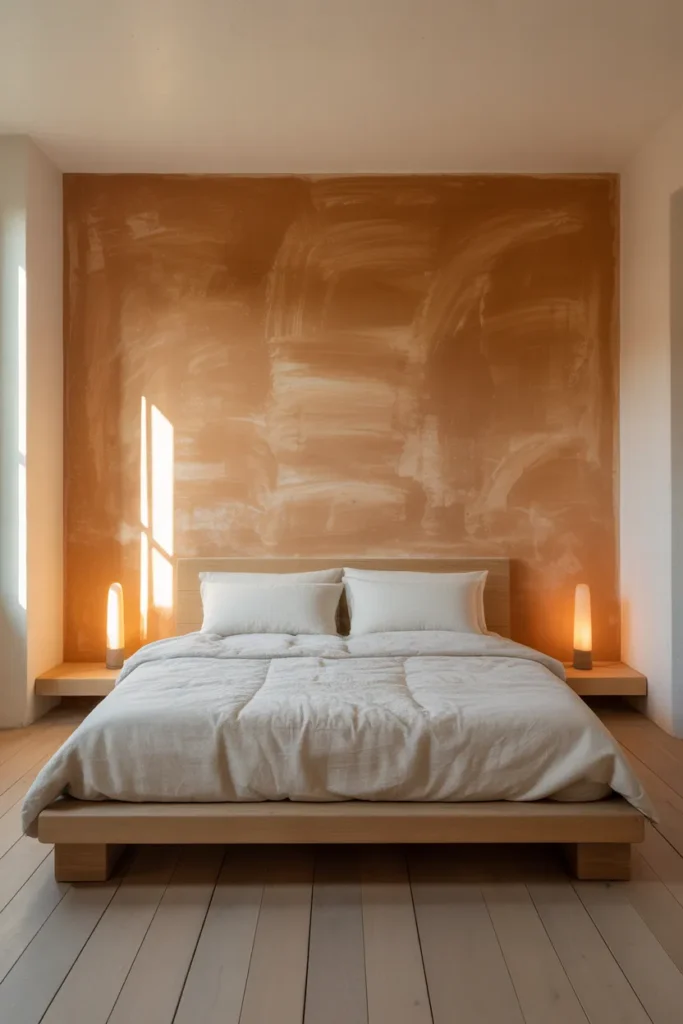
Both finishes work best on the wall directly behind the bed. This positions the texture at the most photographed and visually significant wall in the room. Applying a textured finish to all four walls makes a bedroom feel heavy and cave-like. One wall is always the correct decision.
Color selection for a textured accent wall should stay within the warm neutral range: warm clay, dusty sage, soft terracotta, or deep greige. These tones interact with natural and artificial light in ways that cooler grays and blues do not, creating the warm organic atmosphere that defines the most-saved bedroom renovation content of 2026.
3. Raise the Bed Platform and Add Recessed Under-Bed LED Lighting
Platform height and under-bed lighting are two of the most overlooked structural decisions in a bedroom renovation. A bed that sits at the correct height for the room’s proportions looks designed. A bed that floats too high or sits too low reads as accidental. In 2026, the strongest proportion is a low-to-mid platform in the 14 to 18 inch range from floor to mattress top, not including the mattress.
Under-bed LED lighting installed along the inside base of the platform frame creates a floating visual effect that is one of the highest-performing bedroom renovation aesthetics in current design. The warm amber LED strip runs along the underside of the platform perimeter and casts a soft glow onto the floor below, making the bed appear to hover. This effect works in both minimal and luxury bedroom directions.
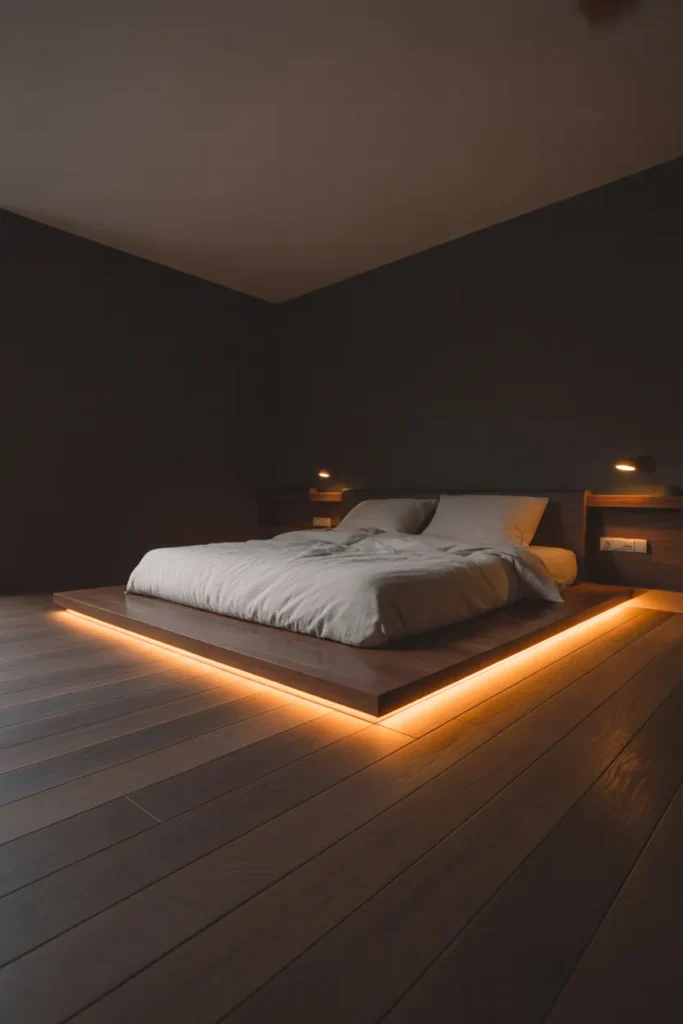
The practical benefit beyond aesthetics is genuine: under-bed lighting replaces the need for a bedside lamp in some configurations, reduces the need for nightlights in shared rooms, and makes navigating the room at night significantly safer without turning on overhead lights.
The installation requires a recessed LED strip, a low-voltage driver, and a simple dimmer switch. This is not a complex electrical job for a qualified electrician and the visual return is disproportionate to the installation cost.
4. Convert an Unused Bedroom Wall Into a Full-Height Built-In Wardrobe
Storage planning is where most bedroom renovations underdeliver. A full-height built-in wardrobe across one complete wall of the bedroom produces more functional storage and more visual impact than any combination of freestanding furniture can match. It also resolves the single most common complaint in bedroom design: insufficient clothing storage without visual clutter.
The 2026 direction for built-in wardrobe fronts favors flat-panel doors with integrated push-to-open mechanisms rather than visible handles, floor-to-ceiling height that eliminates the dead space above standard wardrobes, and door finishes in matte white, warm sage, or natural wood veneer rather than high-gloss finishes that show fingerprints and date quickly.
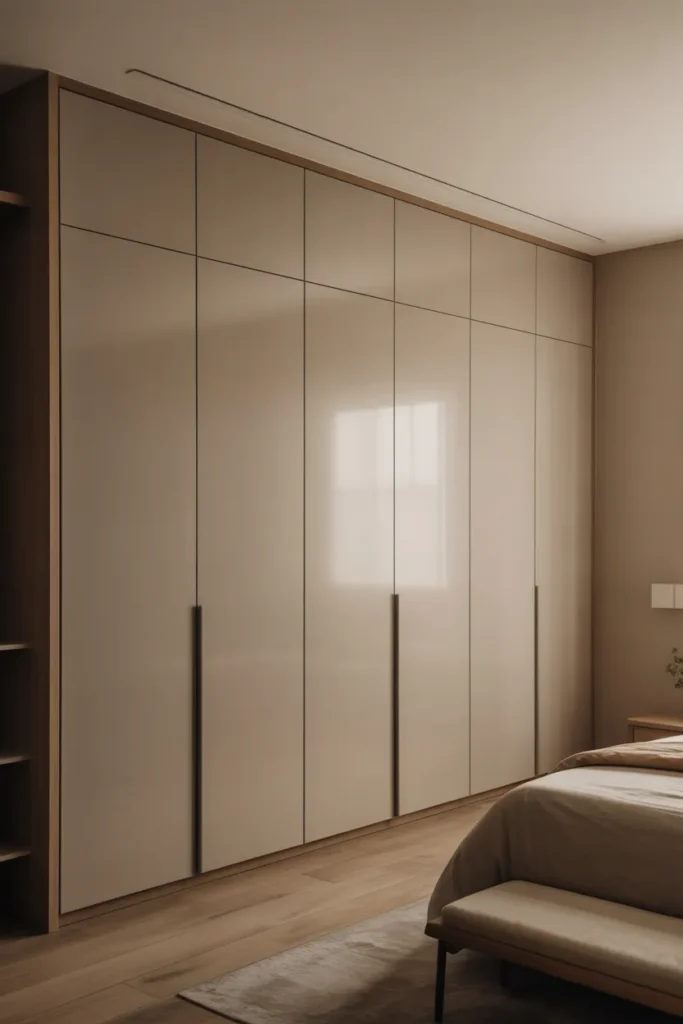
The critical planning decision is door style. Sliding doors are the right choice for narrow rooms where swing clearance is not available. Hinged doors are preferable in any room with sufficient space because they allow full simultaneous access to the entire interior. The mistake is choosing sliding doors for a room that could accommodate hinged doors, which halves the accessible interior at any given moment.
Built-in wardrobes also create a visual effect that freestanding furniture cannot: the wall reads as a single designed surface rather than a collection of objects, which simplifies the room and makes it feel significantly larger.
5. Install a Bedhead Wall With Integrated Sconces and No Nightstands
Replacing traditional nightstands with a fully integrated bedhead wall is one of the most space-efficient and visually sophisticated bedroom renovation moves available in 2026. The approach mounts wall-mounted reading sconces on either side of the bed at the correct height, integrates a floating shelf or narrow ledge for bedside essentials at the same level, and eliminates the freestanding nightstand entirely.
This configuration recovers eight to twelve inches of floor space on each side of the bed, which in smaller bedrooms is the difference between a room that flows comfortably and one that feels congested. It also creates a hotel-quality visual impression because it is the exact approach used in high-end boutique hotel room design.
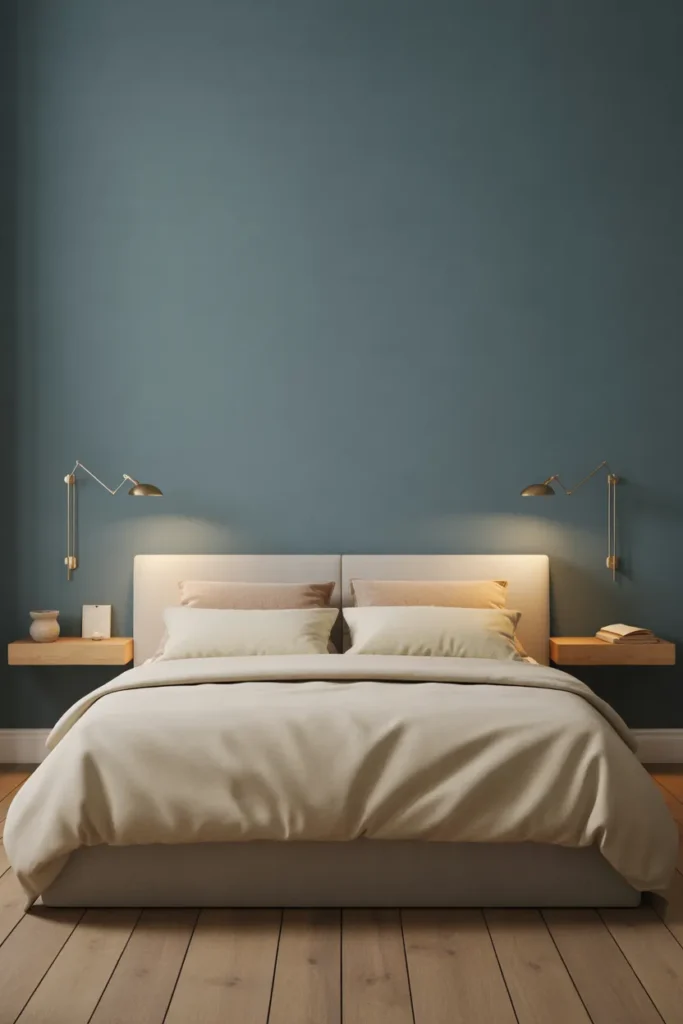
The sconce placement is precise. The center of the shade or the light source should sit at approximately 24 to 30 inches above the mattress surface. Too high and the light misses the reading zone. Too low and the light glares directly into the eyes when sitting upright in bed.
For the ledge or shelf element, a depth of four to five inches accommodates a phone, a glass of water, a small plant, and a book without projecting far enough to interrupt the walking line beside the bed. The ledge should be in the same wood tone as any other wood element in the room.
6. Add a Window Seat With Storage in Any Bedroom That Has Bay or Deep-Set Windows
A window seat built into a bay window or a deep-set window opening is one of the highest-value renovation additions available in a bedroom because it converts unused structural dead space into functional seating, storage, and one of the most coveted visual features in bedroom design. Nothing generates more Pinterest saves in the bedroom category than a well-executed window seat.
The construction involves building a platform box across the window opening at bench height, typically 17 to 19 inches from the floor, with lift-up lid access to the interior for blanket or seasonal clothing storage. A custom or cut-to-size cushion in a performance upholstery fabric finishes the top surface.
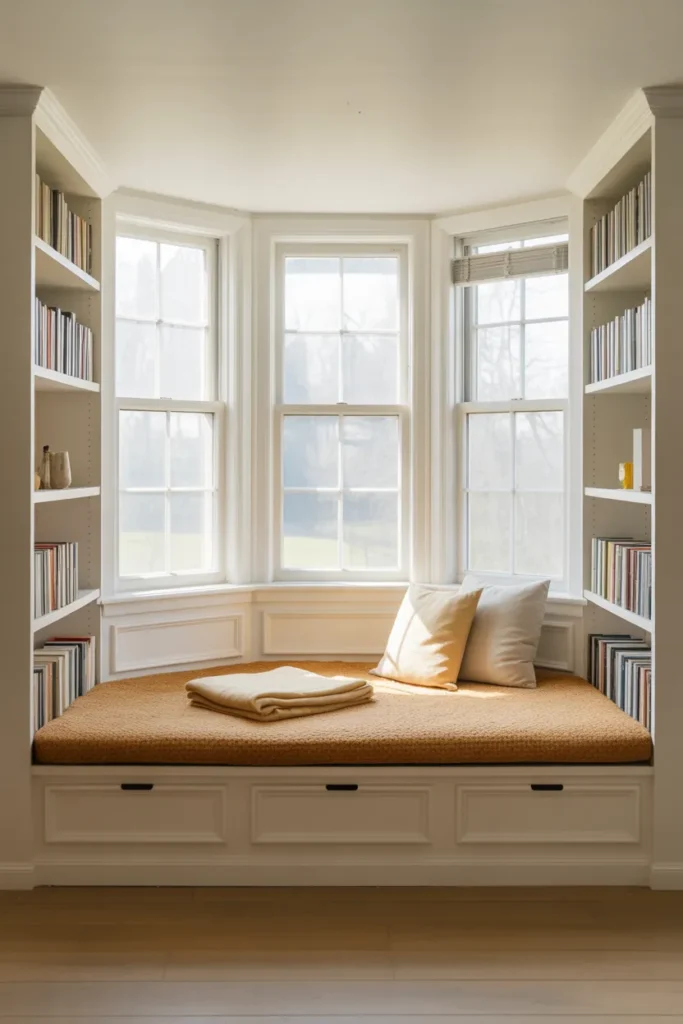
Fabric choice is the most consequential aesthetic decision for the window seat. A linen or boucle fabric in a warm neutral reads as elevated design. A bold patterned fabric dates quickly and limits how the surrounding room can evolve. Choose the fabric the same way you choose bedding: a neutral base that allows the layered textiles around it to change over time.
Built-in bookshelves on each side of the window seat above the platform height complete the alcove and significantly increase the feature’s visual and functional value. This addition transforms a window into an architectural destination within the bedroom.
7. Replace Carpet With Wide Plank Engineered Wood or Large Format Tile
Flooring is the most impactful surface change in any bedroom renovation because it affects the entire footprint of the room simultaneously. Carpet in a bedroom signals a dated renovation. Wide plank engineered wood or large format porcelain tile in a warm stone tone signals a current, considered renovation and dramatically improves how every other element in the room reads.
The 2026 direction in bedroom flooring is wide plank engineered oak in natural, warm honey, or light ash tones with a matte or satin finish. Widths of five to seven inches read as premium. Widths under four inches read as standard and do not produce the same spatial expansion effect in photography or in person.
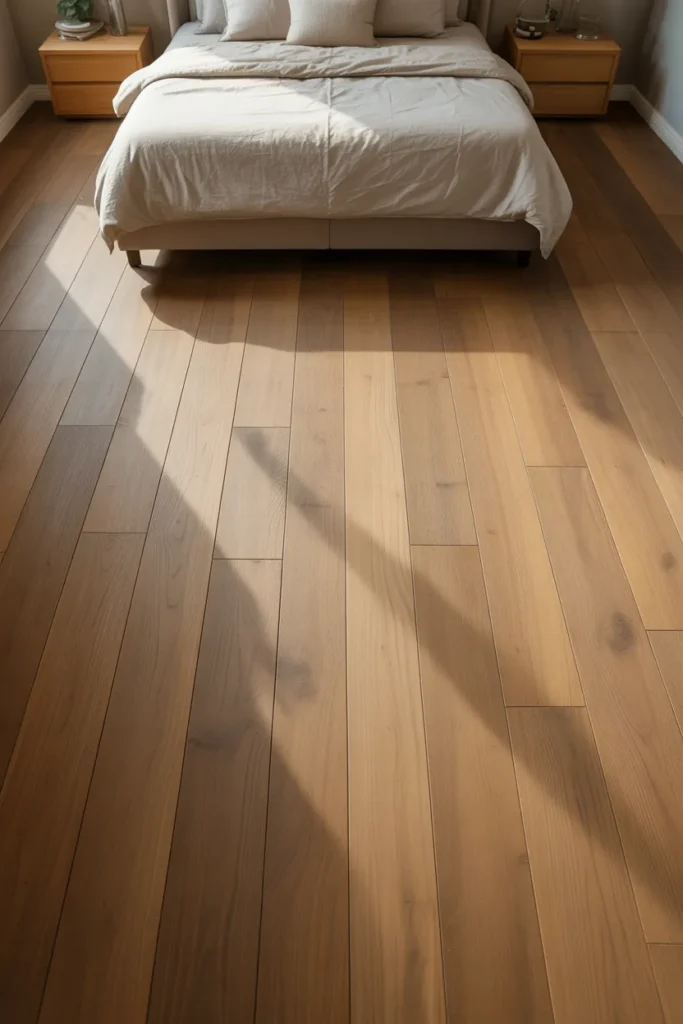
For bedrooms in warm climates or on concrete subfloors where wood is impractical, large format porcelain tile in a warm sand, light travertine, or warm gray tone is the correct alternative. Tiles at 24 by 48 inches or larger with minimal grout lines read as close to natural stone as porcelain can achieve and photograph exceptionally well.
The mistake most renovators make is keeping existing carpet and working around it. Carpet is one of the few renovation elements that actively prevents the rest of the room from reaching its visual potential. If the budget must be prioritized, flooring should be the first structural investment ahead of furniture replacement.
8. Design a Minimal Gallery Wall That Uses Negative Space as the Design Element
A gallery wall in a bedroom renovation is most effective when negative space is treated as an active design element rather than empty filler. The 2026 approach to bedroom gallery walls moves away from dense salon-style hanging and toward a spare, architectural arrangement where the gaps between frames are as deliberate as the frames themselves.
Three to five pieces in a single horizontal line above the bed or a structured asymmetric grid with generous breathing room between frames produces a result that reads as a design decision. Fifteen to twenty frames packed tightly reads as a collection, not a design. The distinction matters because one approach communicates expertise and the other communicates accumulation.
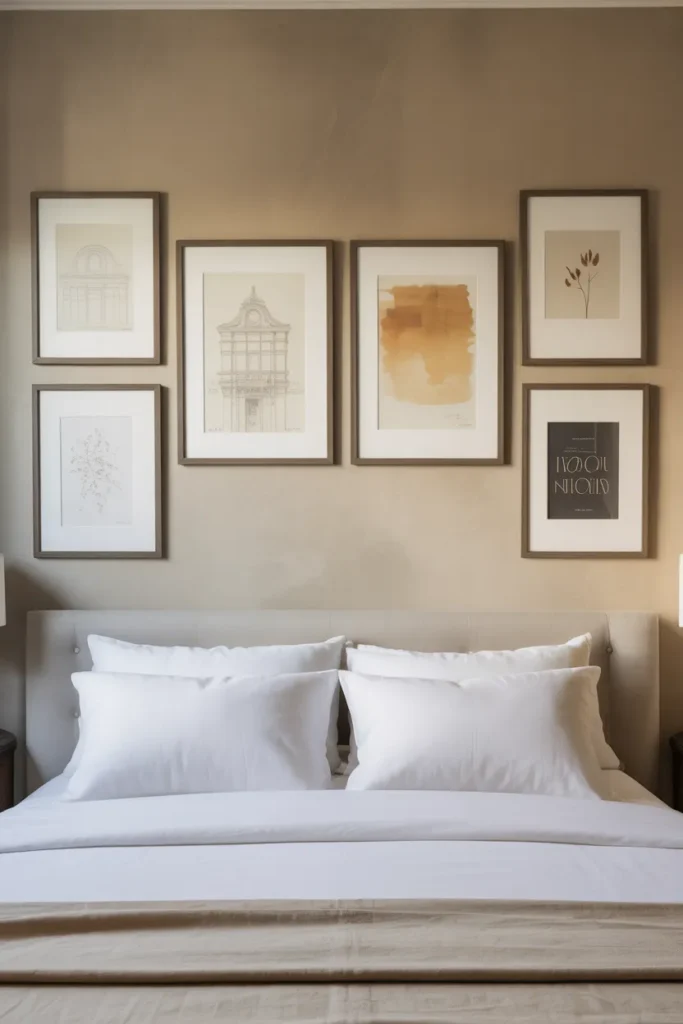
Frame consistency is the second rule. All frames should share one material and one finish: all thin matte black, all thin natural oak, or all thin brushed brass. Mixing frame styles within a gallery wall is the single most common mistake that makes an otherwise good room look unfinished.
Content within the frames should stay within a consistent tonal family. Warm sepia, muted botanical, architectural line drawings, or abstract in cream and tan all work. Mixing photographic styles, color temperatures, and subject matter within one gallery wall creates visual noise that a bedroom, as a rest space, should not have.
9. Build a Dressing Corner With a Full-Length Mirror and Directional Lighting
A dedicated dressing area is one of the most practical additions in a bedroom renovation and one of the most consistently overlooked. Converting a corner of the bedroom into a functional dressing zone with a full-length mirror, a narrow open shelving unit or coat stand for the most-used clothing items, and a directional overhead or wall-mounted light creates a defined function within the room that removes daily friction.
The full-length mirror should be leaned against the wall rather than hung flat against it wherever the room allows. A leaned mirror reads as styled and intentional. A flat-hung mirror reads as afterthought. For rooms with insufficient floor depth to lean a mirror, a wall-mounted mirror with a slim profile frame works effectively when centered on the corner wall.
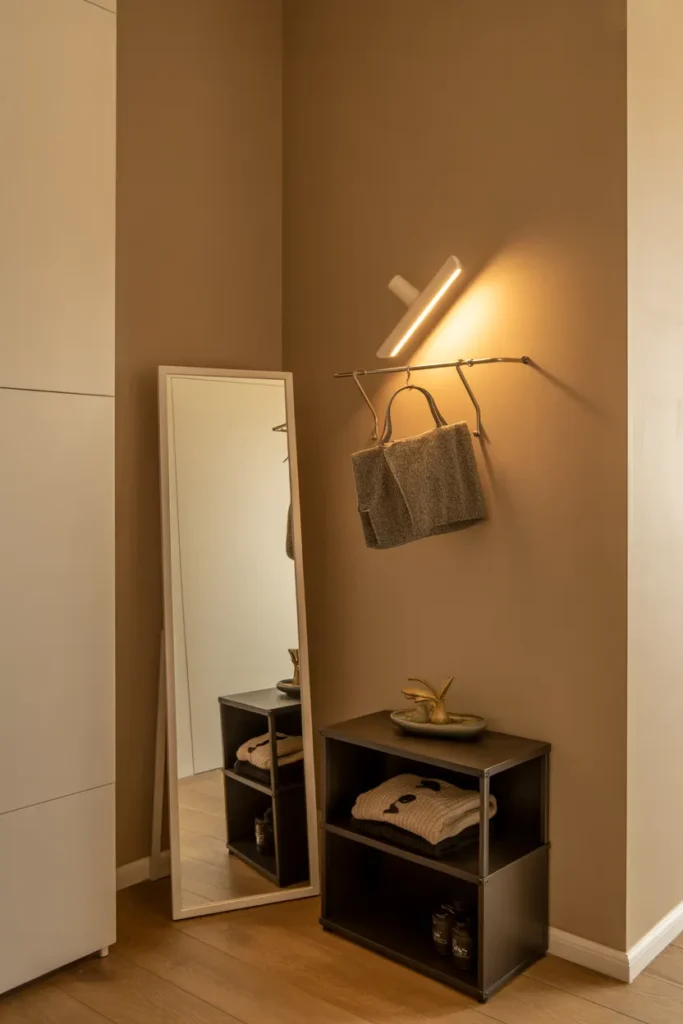
Lighting in the dressing area is critical for function. Overhead ceiling light creates downward shadows on the face and body, which makes it nearly useless for dressing assessment. A wall-mounted fixture on each side of the mirror or a single overhead directional spotlight angled toward the mirror user produces even, accurate light that the space needs to be genuinely functional.
This renovation addition works in any bedroom with a corner that measures at least four feet wide in each direction. It does not require significant construction or electrical work beyond a single light fixture addition.
10. Upgrade the Window Treatment to Create a Layered Light Control System
A window treatment system in a bedroom renovation is a functional decision first and an aesthetic one second. The 2026 standard for bedroom windows is a two-layer system: a blackout roller blind or roman shade mounted close to the glass for light control, and a sheer or semi-sheer linen curtain panel hung at ceiling height for softness and daytime privacy. Together these two layers give complete flexibility from fully dark to fully lit.
The common single-layer approach, whether a single curtain panel or a single blind, compromises either the light control or the aesthetic. Heavy blackout curtains alone make a bedroom feel institutional when open during the day. Sheer panels alone provide no true darkness for sleep. The two-layer system solves both problems simultaneously.
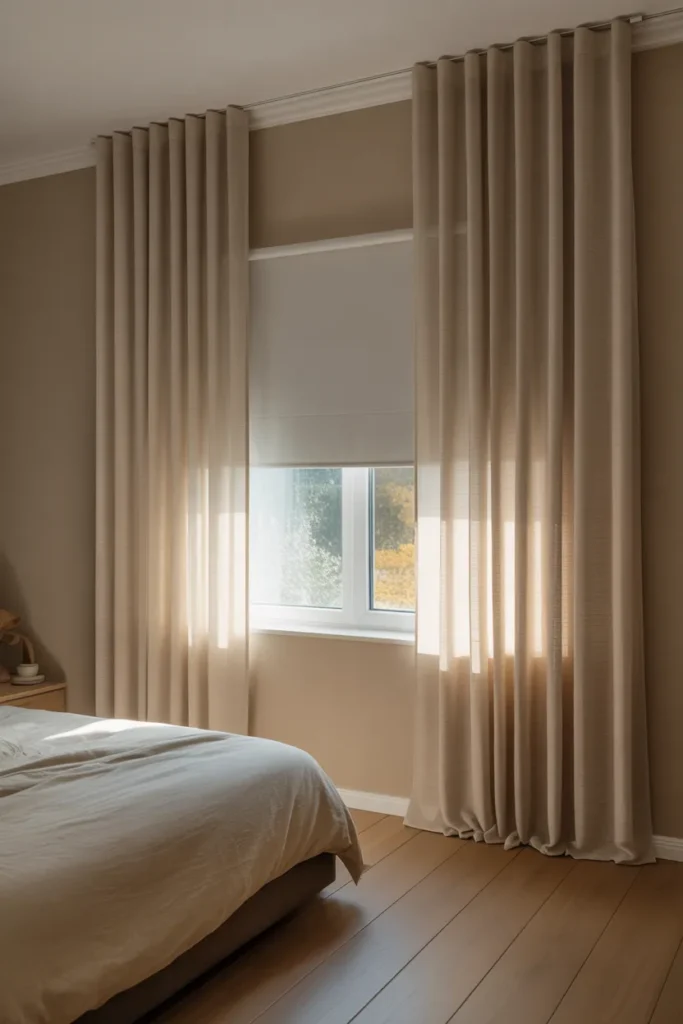
For the outer curtain layer, ceiling-height linen or cotton panels in warm white or natural linen are the most versatile choice across all bedroom styles. These panels should be hung six to twelve inches above the window frame on a ceiling-mounted track or rod. When open, they frame the window architecturally. When closed, they soften the entire wall.
Avoid patterned curtains in a bedroom renovation. Patterns lock the window treatment into a single design direction and limit how the surrounding room can evolve. A plain panel in a quality fabric is always the more flexible and ultimately more expensive-looking choice.
11. Introduce Warm Metals in Three Specific Places to Anchor the Room
Warm metal finishes, specifically aged brass, brushed gold, and unlacquered brass, are the defining hardware accent of bedroom renovation ideas 2026. Used correctly in three specific locations, they anchor the room’s color palette, add reflective warmth, and communicate material quality without significant cost. Used incorrectly across too many surfaces, they tip from curated to excessive.
The three most effective placements for warm metal in a bedroom renovation are: light fixture hardware or shade frame, door and window handles or hinges, and one furniture hardware location such as nightstand drawer pulls or a bed frame detail. These three locations appear at different heights in the room, creating a coherent material thread from floor level to ceiling without clustering the metal in one zone.
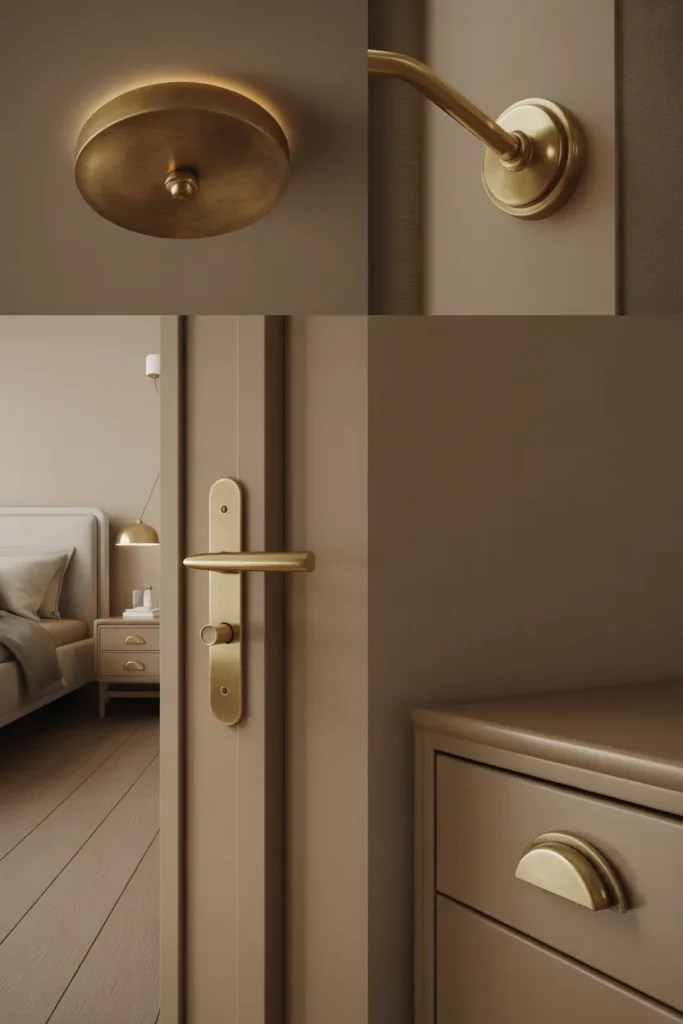
The mistake is mixing warm and cool metals in the same room. Chrome or brushed nickel mixed with aged brass reads as inconsistent rather than eclectic. Commit to one metal family throughout the room and maintain it across all hardware and fixture choices.
For rooms that already have fixed cool metal elements such as existing door hardware or window frames that cannot be replaced within the renovation budget, lean the rest of the palette toward cooler tones in the textiles and furniture to create coherence with the existing metal rather than fighting it.
Conclusion
The bedroom renovation ideas 2026 that consistently produce the strongest results share one characteristic: they address structural and foundational decisions before cosmetic or decorative ones. The order of decisions matters as much as the decisions themselves. Flooring before furniture, lighting before accessories, wall treatment before art, and storage architecture before organizational products.
Save this post to your Pinterest boards so you can return to each section as your renovation moves through its phases. For more targeted guidance on specific room sizes, shared bedrooms, or primary suite layouts, explore the related posts in this series covering small bedroom renovation strategies and primary suite design principles for 2026.