
If your concrete patio looks dull, stained, or just plain tired, the right paint approach can completely change how your outdoor space looks and functions. This guide covers 18 practical DIY concrete patio paint ideas — each one chosen to solve a specific problem, suit a specific space, and help you make a confident decision before you buy a single can.
1. Cool Gray Solid Paint Finish for a Clean Modern Look
A flat, solid gray is one of the most underused concrete patio paint ideas for homeowners who want a modern, polished look without a complex process. It hides surface imperfections effectively while creating a neutral base that works with almost any outdoor furniture style.
Choose a light to medium cool gray rather than warm beige-gray. Cool tones photograph better, reflect heat slightly more than dark shades, and pair well with black metal furniture or natural wood accents. This is the right choice when your patio surface is in decent shape but looks dingy from age.
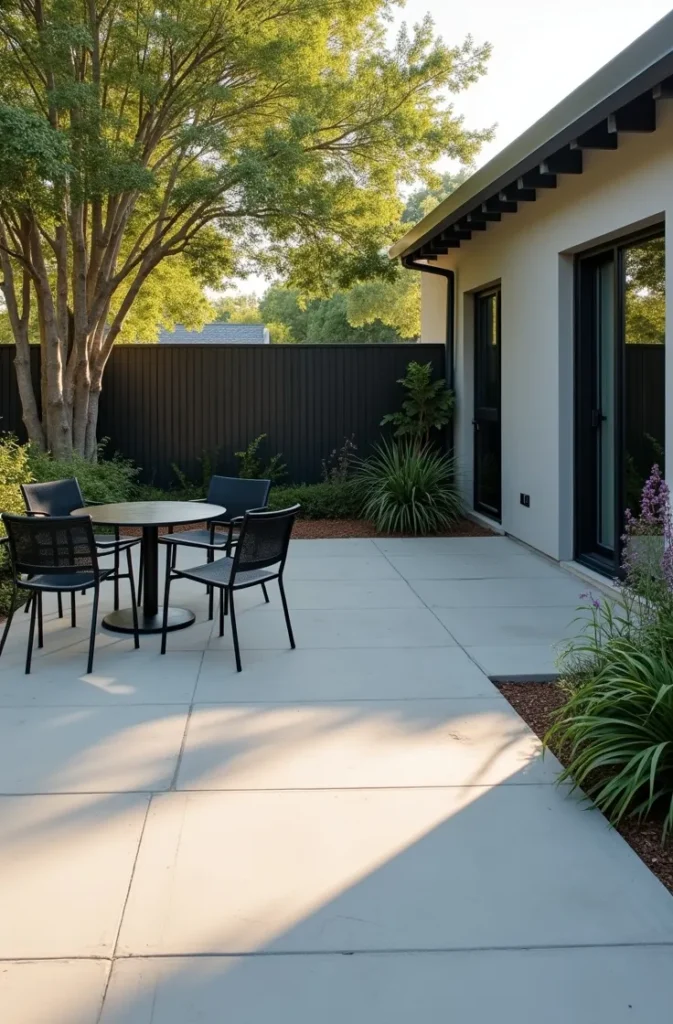

The most common mistake here is skipping the primer. On bare or previously painted concrete, an epoxy-based bonding primer is non-negotiable. Without it, even quality patio paint will peel within one season.
Apply two thin coats rather than one thick coat. Thick coats trap air bubbles and create an uneven finish. A two-coat system also gives you better durability against foot traffic and weather.
2. Earthy Terracotta Painted Patio for a Warm Southwest Feel
Terracotta-toned concrete patio paint works especially well in dry, sunny climates like the Southwest or Southern California. It reads warm and grounded, and it visually connects the patio to natural landscaping without requiring expensive pavers.
This shade performs best on larger patio surfaces where the color can spread out and breathe. In smaller spaces, deep terracotta can feel heavy. If your patio is under 150 square feet, consider a lighter clay tone instead.
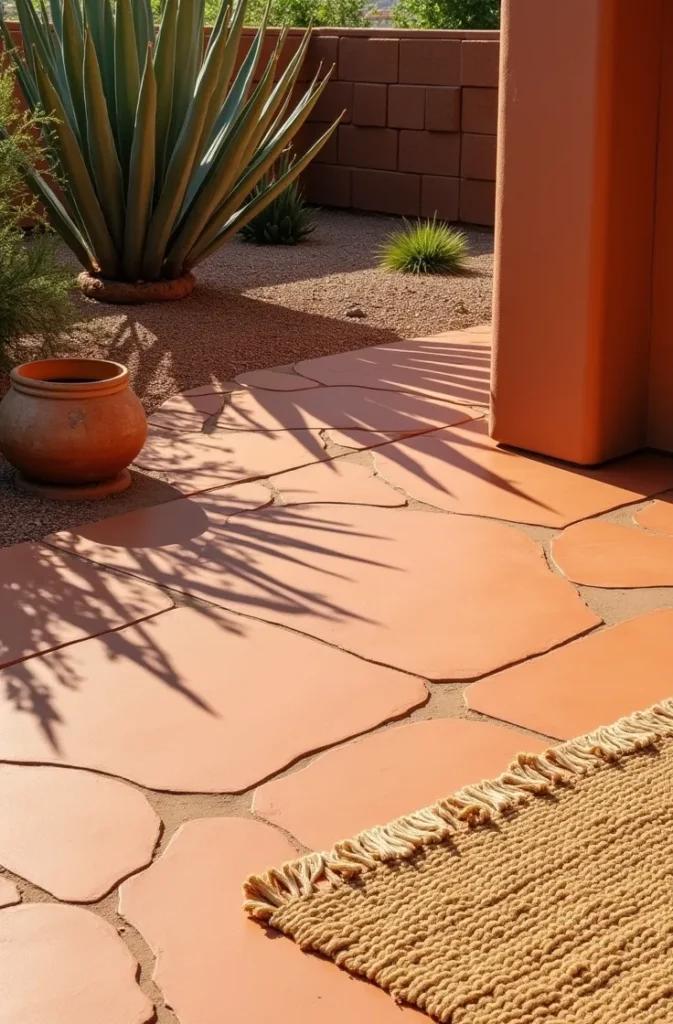
Use a 100% acrylic masonry paint in a terracotta or burnt clay finish. These hold up better against UV exposure than standard exterior latex. In high-sun environments, satin or semi-gloss finishes resist fading longer than flat finishes.
Avoid painting over existing sealers without stripping them first. Terracotta tones show peeling especially quickly if adhesion is compromised.
3. Painted Concrete Checkerboard Pattern for Bold Visual Interest
A two-color checkerboard is one of the most searched DIY concrete patio paint ideas because it mimics the look of tile at a fraction of the cost. Done correctly, it looks intentional and high-end rather than craft-project casual.
The key is precision in your tape lines. Use a chalk snap line to mark your grid before you tape. Standard squares for outdoor patios range from 12 to 18 inches — anything smaller gets busy, anything larger loses the pattern effect. Black and white is classic. Navy and white reads coastal. Sage and cream reads cottage.
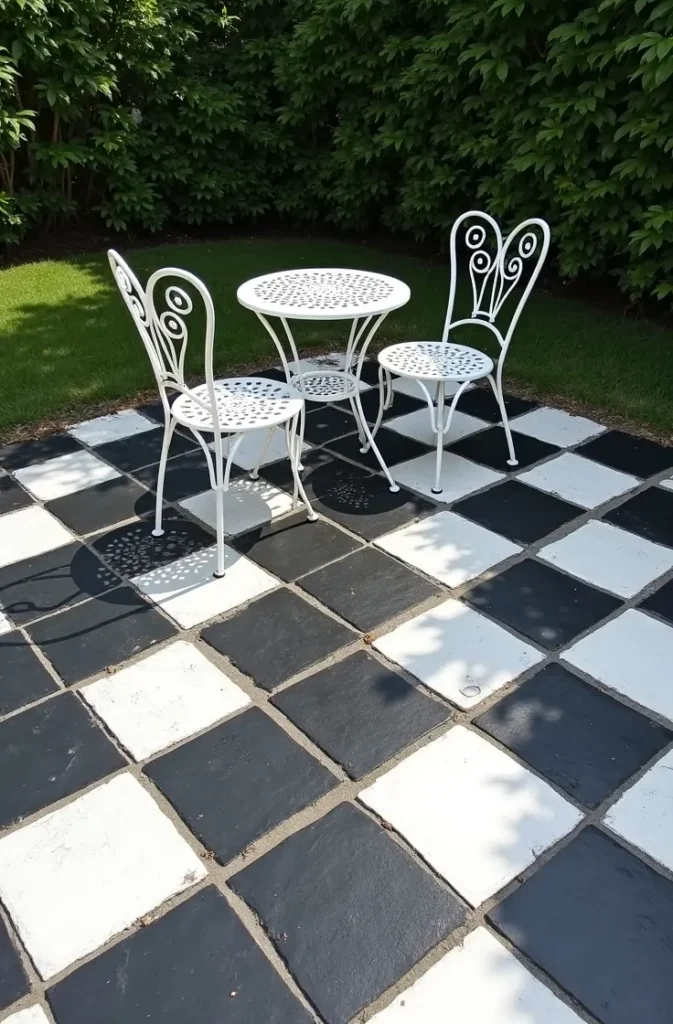
Apply your base coat first and let it cure fully — at least 48 hours — before adding the second color. Rushing this step causes the tape to pull up the base coat and ruins clean edges.
This works best on flat, level patios with no major cracks. Cracks will break the pattern visually. Fill and sand any cracks before you begin.
4. Navy Blue Concrete Patio Paint for a Coastal or Lakeside Home
Deep navy is an unexpected but powerful choice among outdoor concrete patio paint ideas. It grounds a patio visually, creates a strong contrast with natural wood, and photographs beautifully in both sun and shade.
This color works best on covered or partially shaded patios. In full sun, very dark concrete surfaces absorb heat significantly — which can make the space uncomfortable in summer and accelerate paint wear. If you have a pergola or porch roof overhead, navy becomes a smart choice.
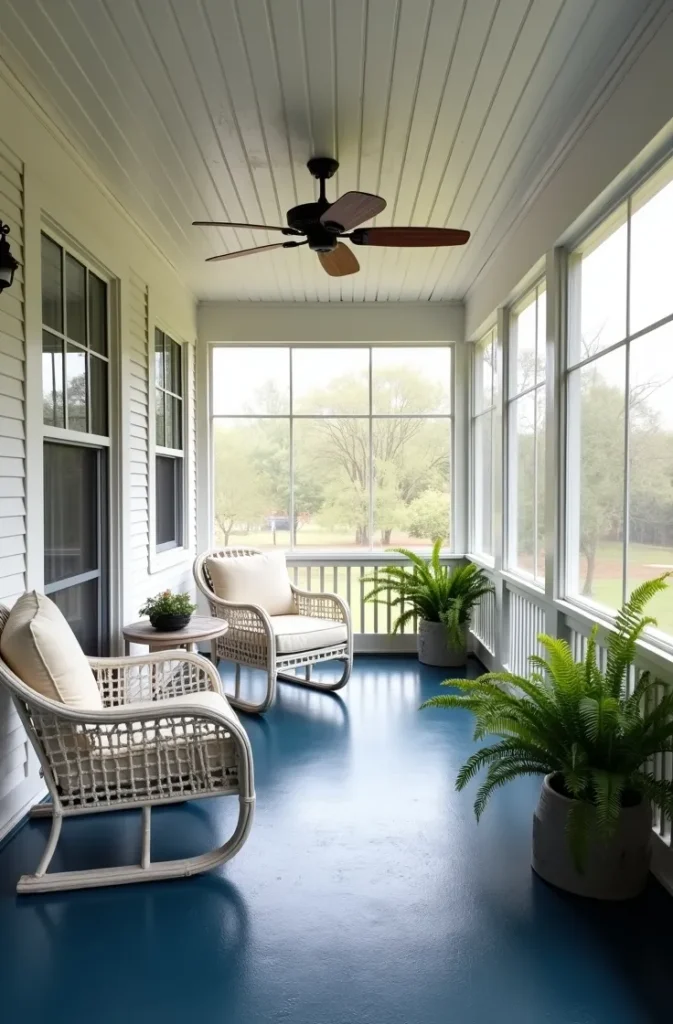
Pair with white or cream outdoor furniture and natural rope or rattan accents. The contrast pops without competing with landscaping. Avoid using navy on small patios that are fully exposed to the sun — the heat absorption will be a daily problem.
Choose a heat-reflective concrete paint if available in your region. Some exterior masonry paints now offer cool-surface technology that reduces heat absorption even in darker tones.
5. Faux Stone Painted Finish to Mimic Expensive Flagstone
Faux stone is one of the more advanced DIY concrete patio paint ideas, but it delivers one of the highest visual payoffs. With the right technique, painted concrete can convincingly resemble natural flagstone, bluestone, or slate — at a dramatically lower cost than actual stone installation.
The process involves a base coat in a mid-tone gray or tan, followed by layering two to three accent colors using a sea sponge or crumpled plastic to create organic stone texture. Then individual “stone” shapes are outlined with a small brush in a slightly darker shade, separated by thin grout-line gaps.
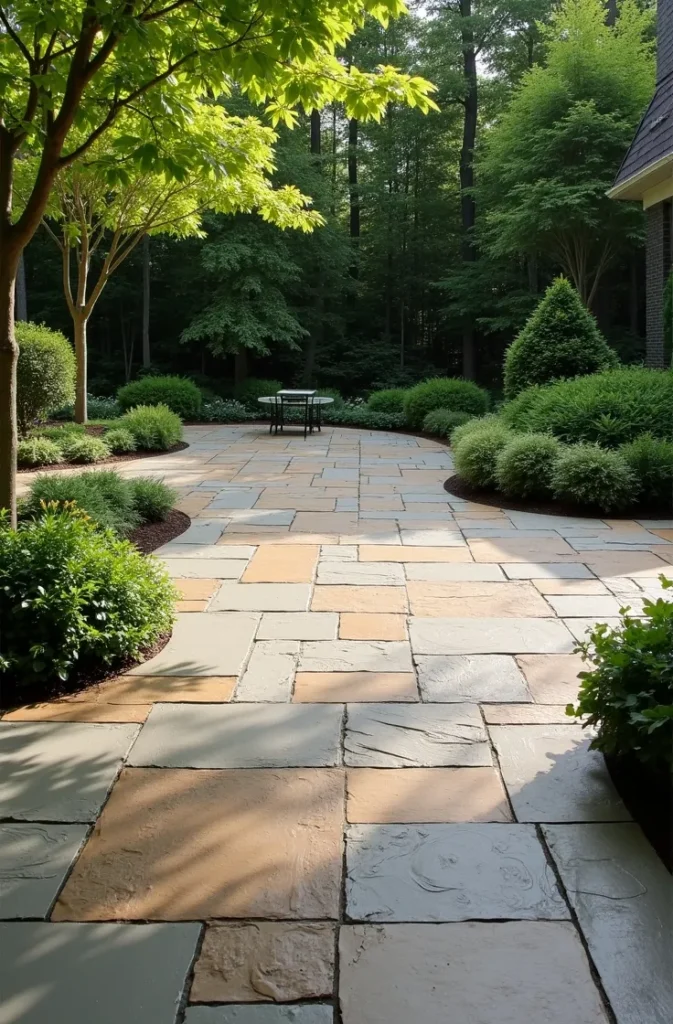
This technique requires patience and a steady hand for the grout lines. Use low-tack painter’s tape to define your stone shapes before painting in each section. Irregular shapes look more realistic than perfect rectangles.
Seal with a wet-look or matte concrete sealer once dry. This step both protects the finish and enhances the dimensional appearance of the faux stone texture.
6. Sage Green Patio Paint for a Garden-Integrated Outdoor Space
Sage green is having a significant moment in outdoor design, and it translates surprisingly well to concrete patio paint. It bridges the gap between the built surface and the surrounding garden, making the patio feel like an extension of the landscape rather than a hard break from it.
This works especially well on patios that are surrounded by flower beds, raised planters, or tree cover. The green tone pulls from the natural environment and creates visual cohesion. It is also a highly forgiving color that hides minor dirt and pollen better than light neutrals.
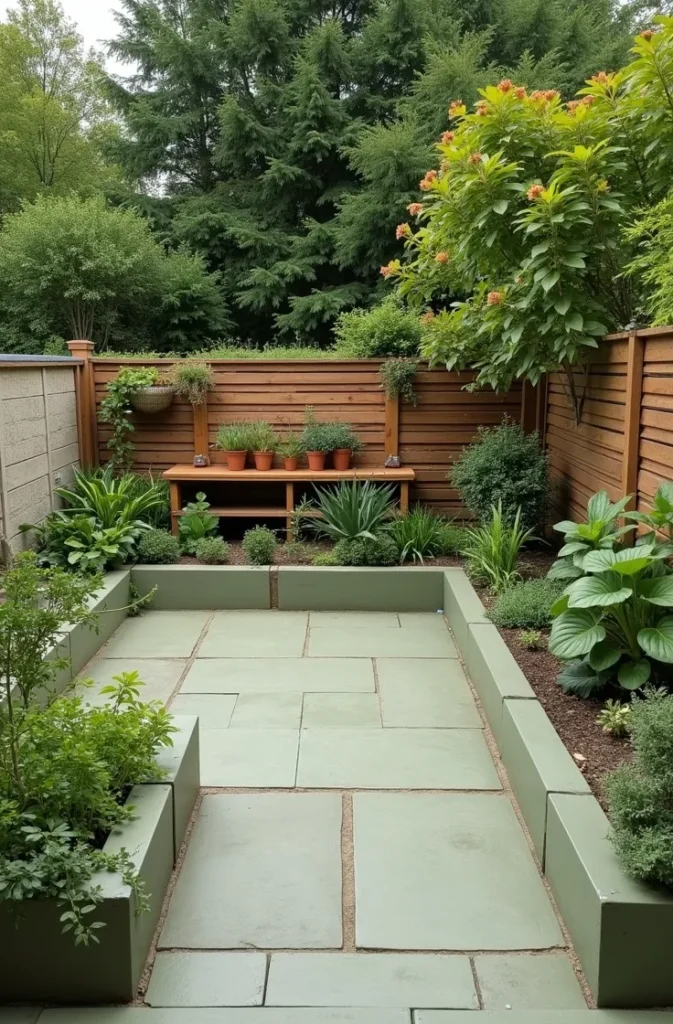
Choose a warm sage rather than a cool or gray-green for outdoor use. Warm sages read well in both sun and shade. Cool greens can shift toward olive or army green in different lighting conditions.
Apply a UV-stabilized acrylic paint to prevent the color from yellowing or fading. Sage can shift toward a muddy khaki if the paint formula is not UV-resistant.
7. Charcoal Concrete Patio Paint with a Stenciled Border Design
A solid charcoal base with a stenciled border creates a patio that looks custom-designed without requiring professional installation. The border acts as a visual frame, making the patio feel intentional and finished.
Use a geometric stencil — Moroccan tile, Greek key, or simple diamond repeat patterns work well at scale. Paint the border in white, cream, or a warm metallic for contrast against the charcoal base. The border should be 12 to 18 inches wide, running along the perimeter of the patio.
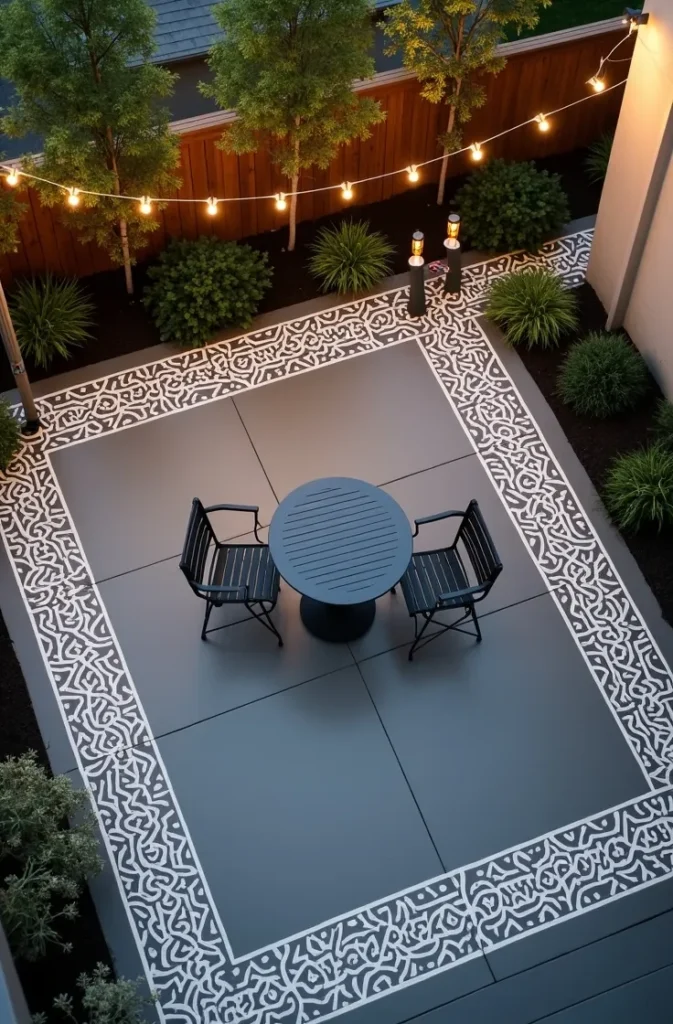
This approach works especially well on rectangular or square patios where the geometry is clear. Irregularly shaped patios benefit less from border stenciling because the perimeter lines become harder to follow.
Use a dense foam roller rather than a brush for stenciling on concrete. Brushes bleed under stencil edges. A foam roller with minimal paint loaded gives the cleanest result.
8. White Washed Concrete Paint Finish for Small or Shaded Patios
A whitewash or diluted white paint finish is one of the most practical DIY concrete patio paint ideas for small, dark, or shaded outdoor spaces. It dramatically brightens the surface without making it feel sterile or overly modern.
A true whitewash uses a diluted paint mixture — roughly 50/50 white paint and water — applied with a wide brush in long, overlapping strokes. This allows the concrete texture to show through, creating depth rather than a flat opaque coat. The result reads as bright but organic.
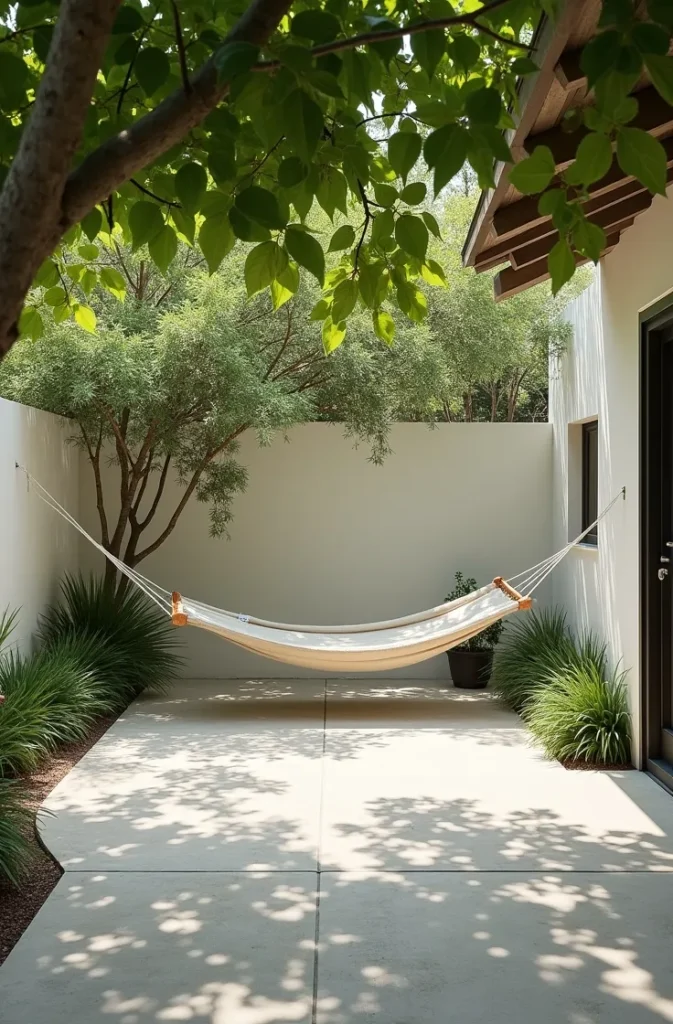
This is especially effective under tree cover where light is limited, or on north-facing patios that receive little direct sun. It also makes small urban patios feel larger by reflecting available light.
Do not use this technique on surfaces that get standing water or regular wet foot traffic. Diluted whitewash is less durable than full-strength paint and should always be sealed with a penetrating concrete sealer.
9. Rust Red and Charcoal Two-Tone Concrete Patio for Dramatic Contrast
Using two colors to divide a patio into zones is a smart design strategy that also makes maintenance easier — you can repaint one zone without touching the other. Rust red and charcoal are particularly effective together because they share warm undertones that keep the palette cohesive.
Define the zones by function: charcoal for the dining or seating area, rust red for a walkway strip or border. This creates visual traffic flow without physical barriers. It also solves a common problem on large, featureless concrete slabs that feel blank and undefined.
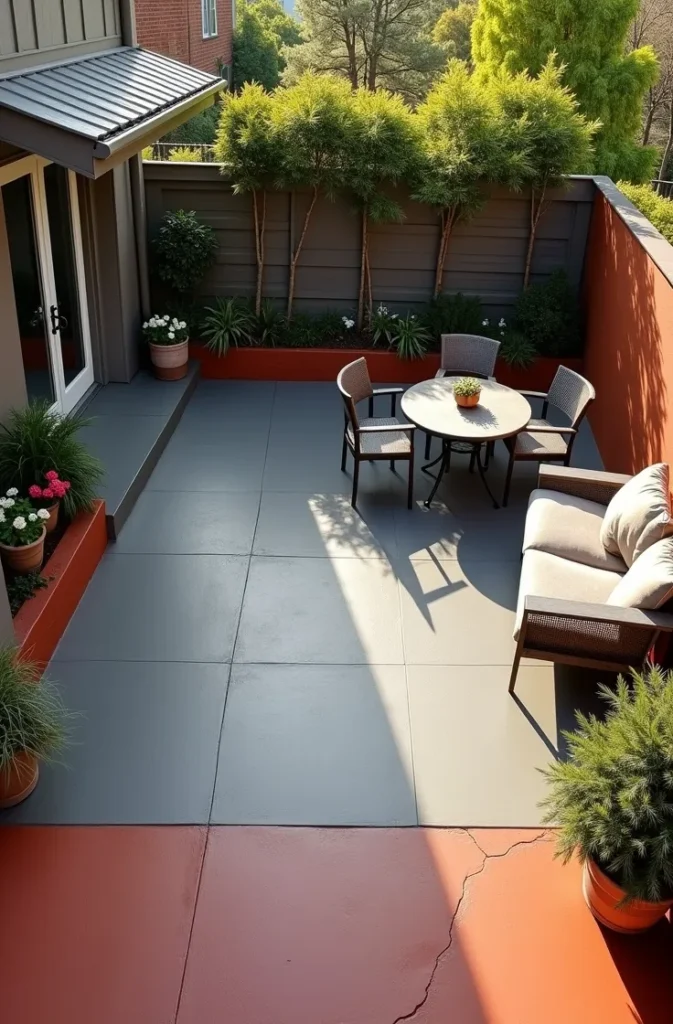
The dividing line between colors can be a straight tape line, a diagonal cut, or even a staggered brick-like pattern. Diagonal lines add energy to a static space. Straight lines feel more formal and structured.
Both colors must use the same paint base and finish for uniform durability. Mixing paint brands or finish types in a two-tone application leads to uneven wear over time.
10. Soft Blush Concrete Patio for a Feminine or Romantic Outdoor Space
Blush or dusty rose is a concrete patio paint color that is underrepresented in most idea guides but performs exceptionally well in the right setting. It brings warmth without the weight of terracotta, and it photographs beautifully in golden-hour light.
This works best for covered patios or screened porches where the color is somewhat protected from direct UV — blush tones fade faster than neutral or dark shades when fully exposed. In a shaded or semi-covered space, the color holds well for three to four seasons before needing a refresh.
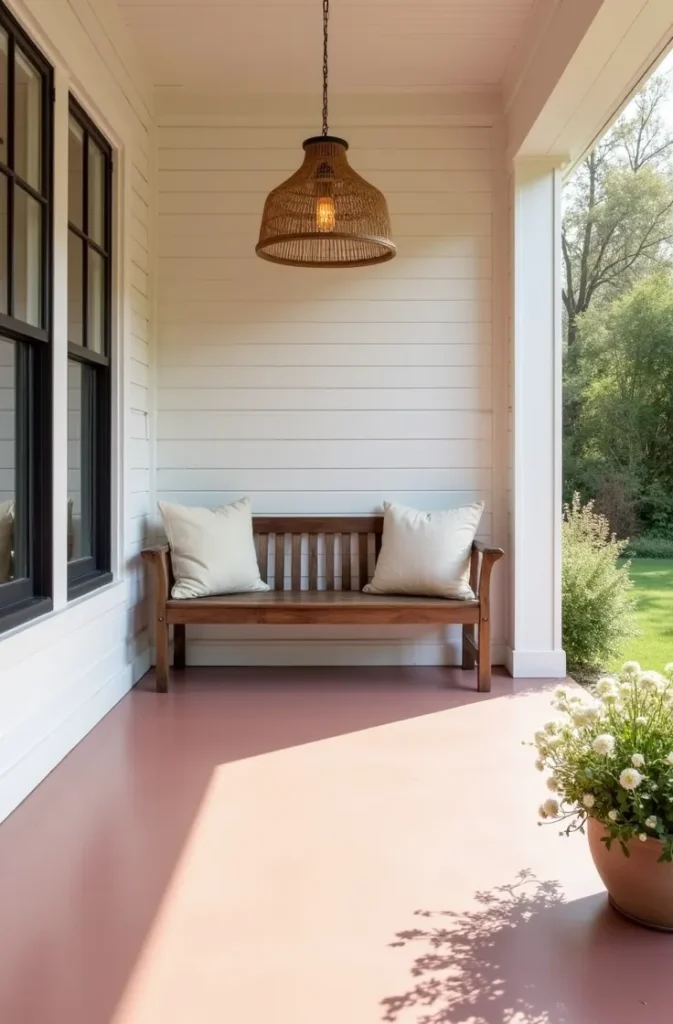
Pair with gold or brass metal accents and white or cream textiles. Avoid pairing blush concrete with cool grays or blues — the contrast becomes jarring. Stick to warm neutrals, natural rattan, and organic textures for cohesion.
Seal with a matte sealer to preserve the dusty, soft quality of the color. Glossy sealers shift blush toward a more saturated pink, which changes the mood entirely.
11. Concrete Stain Paint Hybrid for a Natural Mottled Finish
Concrete stain is technically different from paint — it chemically bonds with the surface rather than sitting on top — but many products now combine stain and acrylic paint properties for DIY use. The result is a mottled, variegated finish that looks like natural stone without any stenciling or texture work.
This approach is ideal for patios with minor surface imperfections, small pits, or uneven color from age. Rather than hiding these flaws, a stain-paint hybrid enhances them into a deliberate organic pattern.
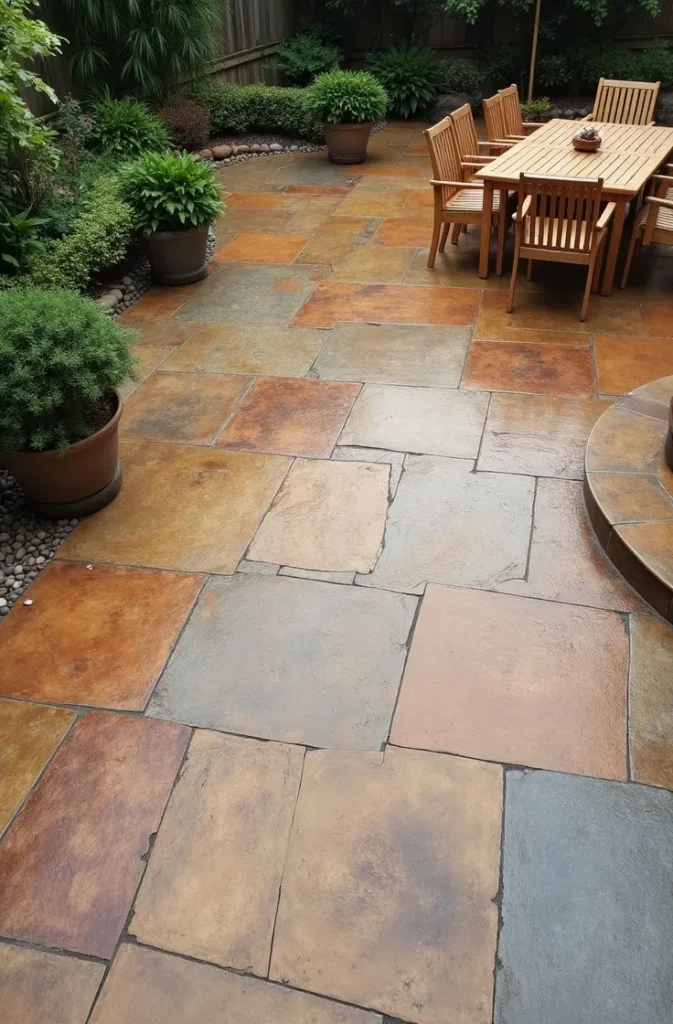
Application requires a pump sprayer or sponge rather than a roller. Work in sections to keep wet edges active and avoid lap marks. Multiple light coats build depth and complexity that single-coat applications cannot achieve.
This finish requires a penetrating sealer — not a film-forming sealer — to maintain the natural look. Film-forming sealers add a sheen that erases the organic mottled quality of the finish.
12. Slate Blue Painted Patio for a Relaxed Coastal Retreat
Slate blue sits between gray and blue in tone, which makes it one of the most versatile and mistake-proof concrete patio paint colors available. It reads calm, coordinates with almost any outdoor furniture style, and holds its color well across seasons.
This is a strong choice for patios near water — lakefront, coastal, or poolside settings where a relaxed, breezy palette fits the environment. It also works well in humid climates because the cool tone counteracts the visual heaviness of heat.
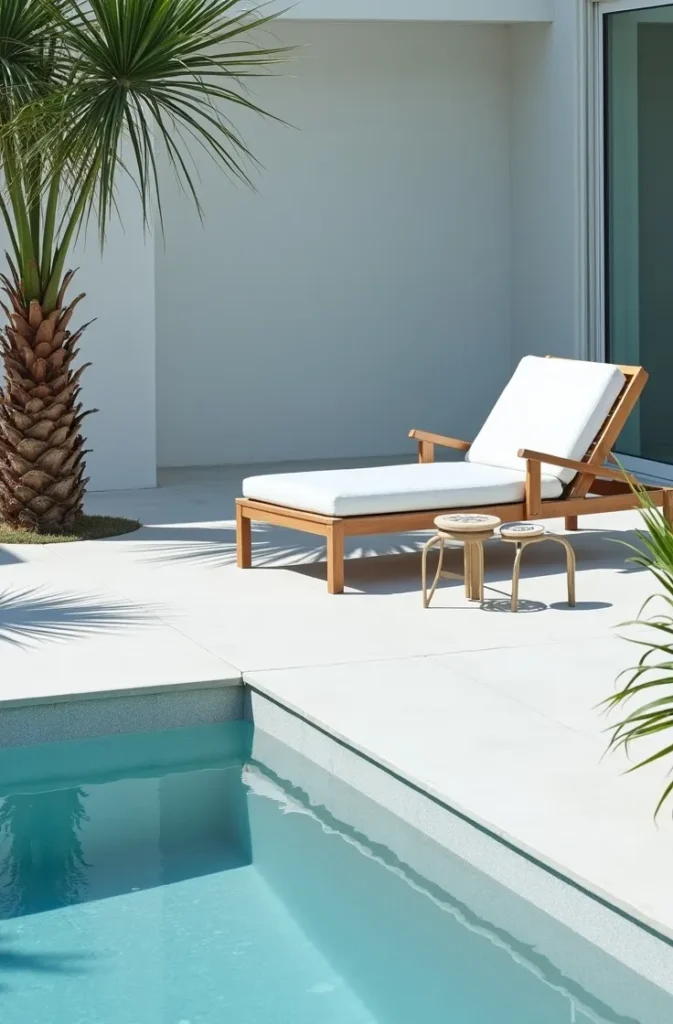
Pair with weathered white or natural teak furniture. Avoid warm terracotta or orange accents — the contrast is too sharp. Natural rope, jute, and linen textiles in cream and white complement slate blue without competing.
If your patio is adjacent to a pool, choose a pool-rated or waterproof concrete paint formula. Standard patio paint formulas are not designed for splash zones and will delaminate quickly under repeated water exposure.
13. Dark Walnut Brown Painted Patio to Mimic Wood Deck Look
Dark brown concrete paint that mimics a wood deck finish is one of the most practical substitutes for homeowners who want the look of a wood deck without the cost or maintenance. The right shade of warm brown makes concrete read as lumber from a normal viewing distance.
Use a medium to dark walnut tone rather than a cool chocolate. Warm browns with red or amber undertones read more convincingly as wood. Some specialty concrete paint products include a subtle grain texture additive that enhances the illusion further.
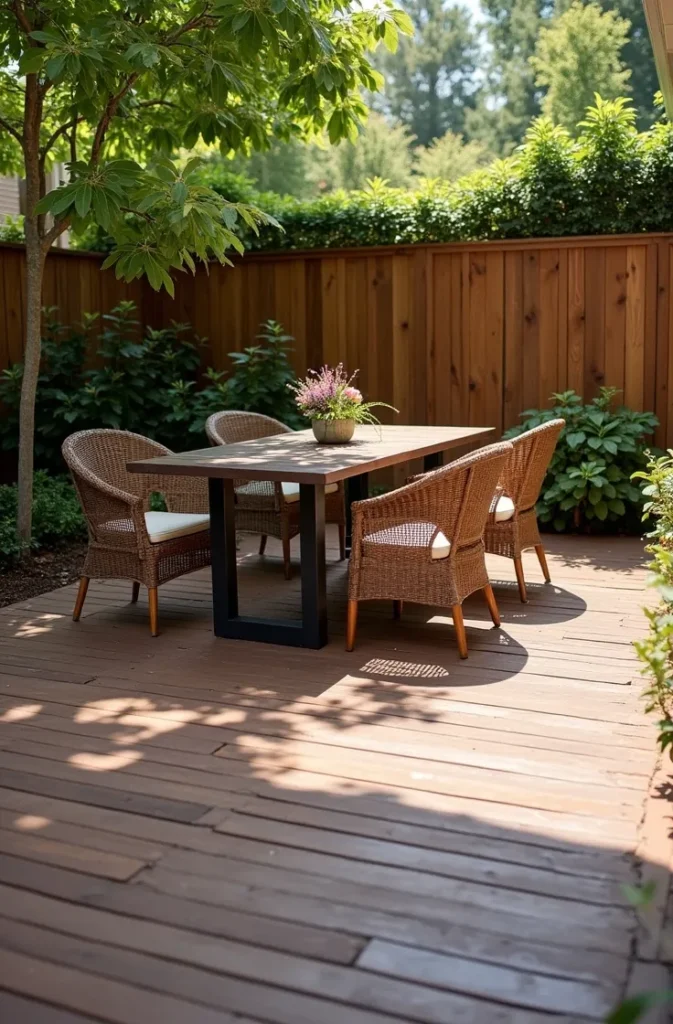
Apply with a long-bristle brush in parallel strokes rather than a roller. Brush strokes in one consistent direction reinforce the wood-grain visual. Follow up with a satin sealer — flat finishes look too chalky, and glossy finishes give away the concrete surface.
This color shows dog paw prints and leaf debris less than any other option, making it a smart practical choice for busy family patios.
14. Bright White High-Gloss Painted Patio for a Mediterranean Feel
A bright white, high-gloss patio finish is one of the most striking DIY concrete patio paint ideas — and one of the highest-commitment ones. When executed correctly, it transforms an ordinary backyard into a crisp Mediterranean or resort-style space.
High-gloss white reflects heat and light, which is a genuine advantage in hot climates. It also shows every footprint, dirt mark, and leaf stain with equal clarity. This finish makes sense only if you are committed to regular cleaning — at least once a week during heavy-use seasons.
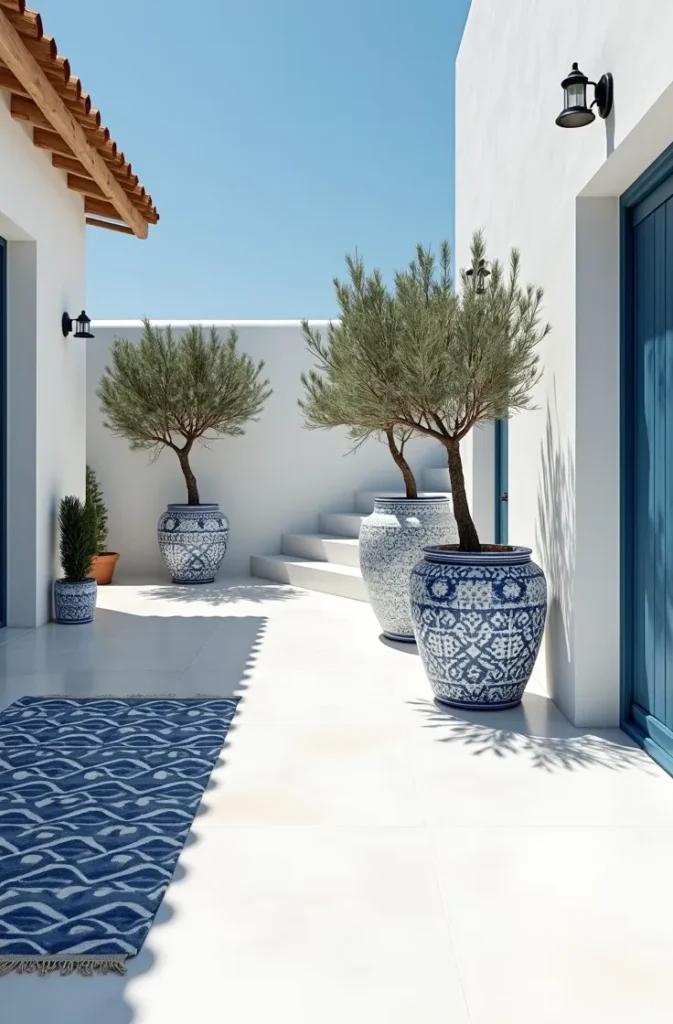
Surface preparation is critical for white. Every crack, patch, or discoloration will show through white paint more than any other color. Fill, grind, and prime thoroughly before applying. Use two to three coats of a high-adhesion floor paint in pure white.
Do not use this finish in damp, shaded environments. White concrete in humid or shaded conditions attracts mildew quickly, and dark spots on white paint are very difficult to remove.
15. Warm Cream Painted Concrete for a Subtle, Timeless Patio
Warm cream is the most underestimated concrete patio paint color. It is not as bold as terracotta, not as stark as white, and not as cold as gray — and that middle-ground quality is exactly what makes it so livable and versatile.
Cream works across every patio style: traditional, farmhouse, transitional, and even relaxed modern. It does not compete with colorful outdoor cushions, bold planters, or patterned rugs. It serves as a foundation that lets other elements lead.
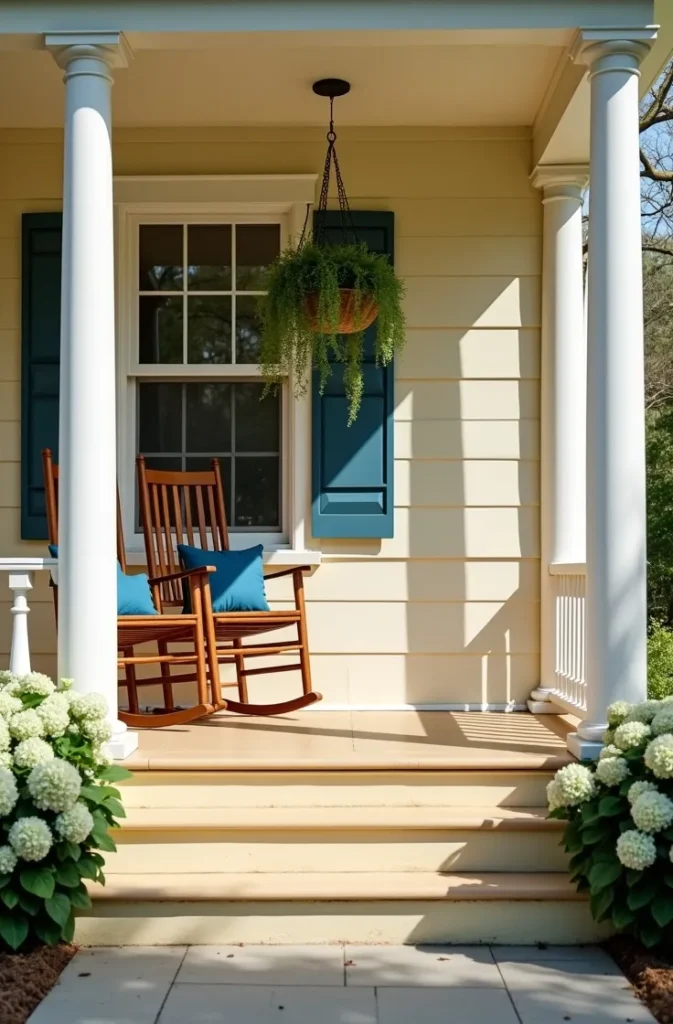
Choose a cream with a yellow or peach undertone rather than a green undertone. Green-toned creams shift to a faintly sickly tone in certain light conditions. Yellow or peach undertones stay warm and appealing across all times of day.
This shade is particularly well suited to front porch concrete, where a welcoming, neutral, and unpretentious tone is more appropriate than bold color.
16. Olive Green and Cream Diamond Stencil Patio Pattern
A diamond stencil pattern in olive green over a cream base is one of the more design-forward DIY concrete patio paint ideas — and it requires relatively modest skill to execute. The diamond repeat pattern adds geometry without the rigid structure of a checkerboard.
Set your base coat in cream and let it cure fully before stenciling. Use a pre-cut diamond stencil in an appropriate scale — 12-inch diamonds work well on mid-size patios, 18-inch on larger surfaces. Apply olive green with a dense foam pouncer rather than a brush for sharp, bleed-free edges.
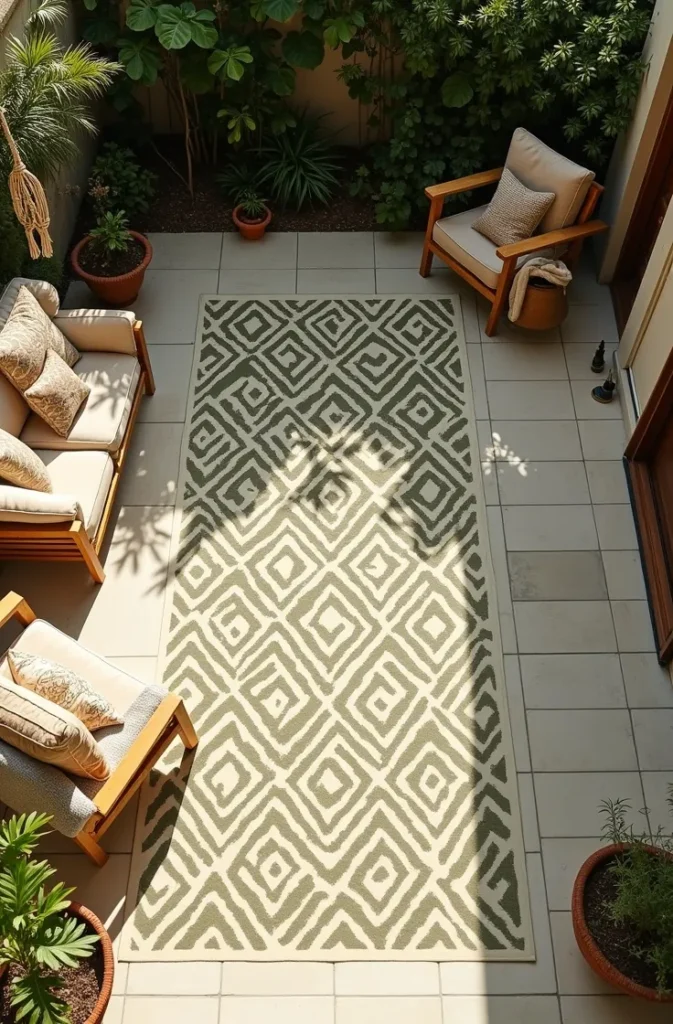
This pattern is directional, which means it has a strong visual axis. Orient the diamonds so the pattern guides the eye toward the main seating area or entry point. Avoid cutting diamonds near irregular edges — plan the layout so full diamonds appear in the most visible zones.
Seal with a matte sealer after full cure. Satin or gloss sealers make this pattern look painted-on rather than integrated into the surface.
17. Concrete Gray with Painted River Stone Border Accents
A solid gray field with a hand-painted river stone border is a detail-oriented DIY concrete patio paint technique that adds a high-end, custom feel without expensive installation. The border simulates a mosaic or inlay edge using only paint and patience.
Paint the main patio surface in medium gray first. Once cured, sketch river stone shapes along the perimeter using a white chalk pencil. Stones should vary in size — mix small ovals with larger rounded shapes for a natural look. Paint each shape in shades of warm gray, tan, and off-white using a fine artist’s brush.
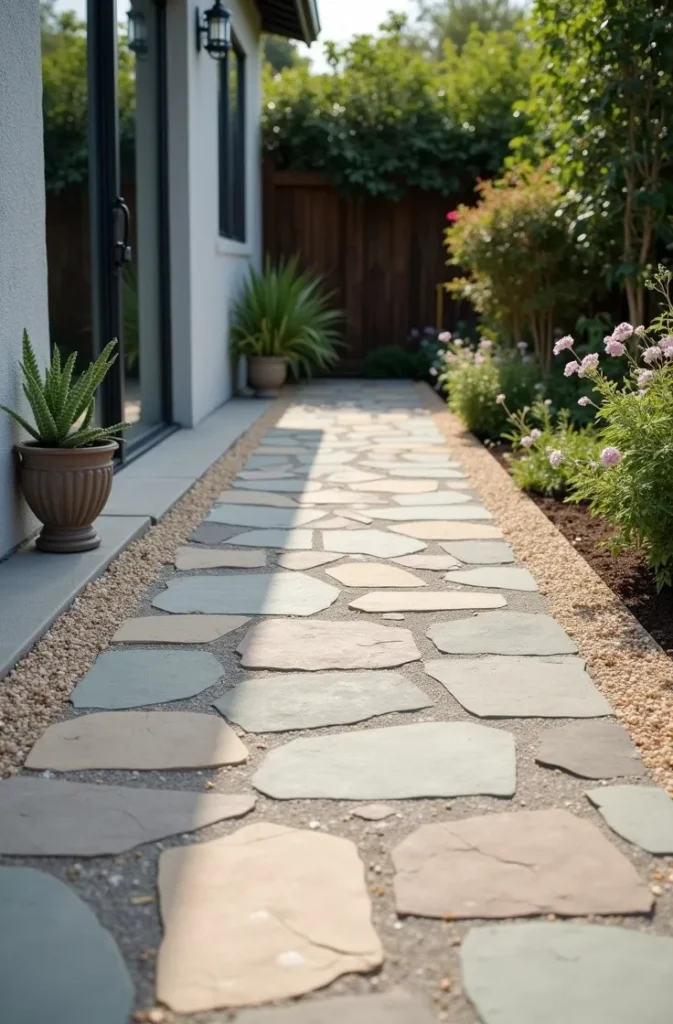
Add a thin shadow line along the lower edge of each stone in a slightly darker tone. This shadow creates the illusion of dimension and makes the stones appear raised from the surface.
This technique is best suited to smaller patios where you can invest the time per square foot. On very large patios, the border-to-field ratio is too small to have significant visual impact.
18. Deep Forest Green Painted Patio for a Moody Garden Retreat
Deep forest green is the most immersive color in the DIY concrete patio paint spectrum. It makes an outdoor space feel enclosed, intimate, and intentionally designed — like a private garden room rather than an open backyard slab.
This works best on patios that are already partially enclosed — surrounded by fences, hedges, walls, or overhead structures. In open, flat yards, dark green can feel isolating rather than cozy. Enclosure is what activates this color’s best qualities.
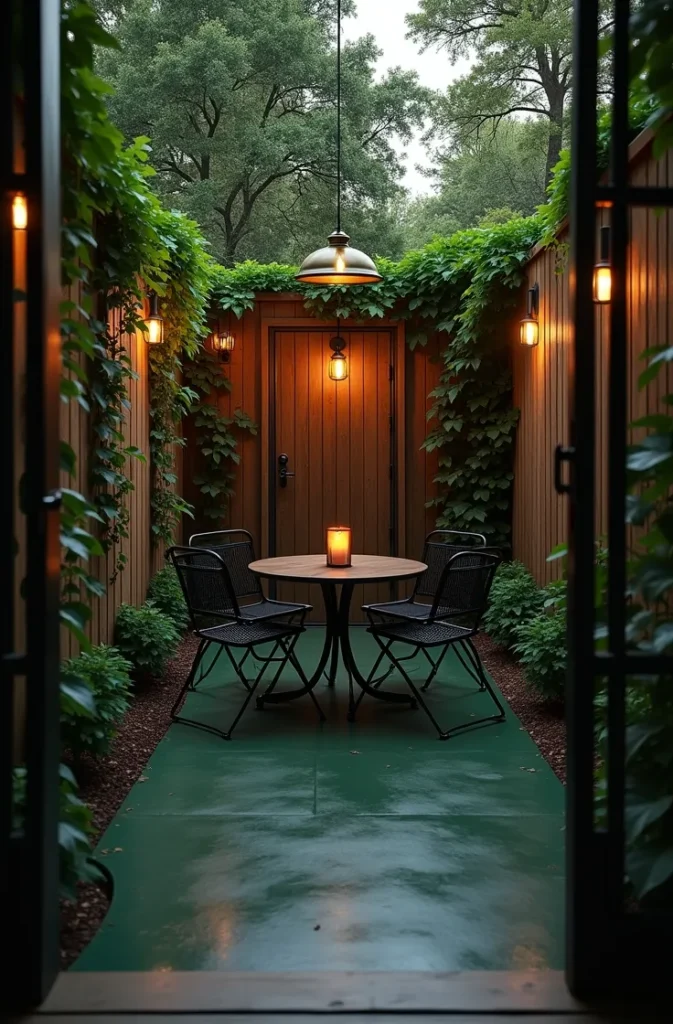
Pair with brass, copper, or antique bronze hardware and furniture legs. Natural materials — wood, stone, raw linen — balance the depth of the green without fighting it. Avoid bright, saturated accent colors. Forest green pairs best with muted, earthy companions.
Apply in two full coats with a bonding primer first. Green pigments, especially deep ones, tend to require more coats than neutral shades to achieve an even, opaque finish.
Final Thoughts
These 18 DIY concrete patio paint ideas cover a full range of styles, skill levels, and surface conditions — from simple single-color finishes to multi-step stencil and faux-stone techniques. The right choice depends on your patio size, sun exposure, existing architecture, and how much time you are willing to invest in the process.
If you are new to painting concrete, start with a solid single-color finish in a forgiving mid-tone like gray, sage, or slate blue. These are easier to apply evenly, easier to touch up, and more durable over time than complex multi-step techniques.
Save this post so you can come back to it when you are ready to start your project. Each idea here is designed to help you make a real decision — not just browse for inspiration. Explore more outdoor space ideas and functional patio design guides to keep your project moving forward.