
Planning a flower garden sounds simple until you are standing in your yard with no idea where to start, what to plant, or why last year’s beds looked nothing like the inspiration photos. These flower garden ideas 2026 are organized around real decisions — space size, sun exposure, color goals, and maintenance reality — so you can choose what works for your specific yard, not just what photographs well. Whether you have a narrow side yard, a shady corner, or an open suburban lot, this guide gives you a clear path forward.
1. Layered Perennial Borders That Fill Themselves In Over Time
A layered perennial border is the highest-return investment in residential flower gardening. Unlike annual beds that require replanting every spring, a well-structured perennial border grows denser and more established each year. The initial setup does the heavy lifting; maintenance after year two drops significantly.
The layering principle is simple: tall plants at the back, mid-height in the center, low spreaders at the front edge. What makes it work is choosing plants that bloom in sequence, not all at once. Early spring bulbs, late spring perennials, midsummer bloomers, and fall-flowering sedums give the border continuous visual interest from March through October across most USA hardiness zones.
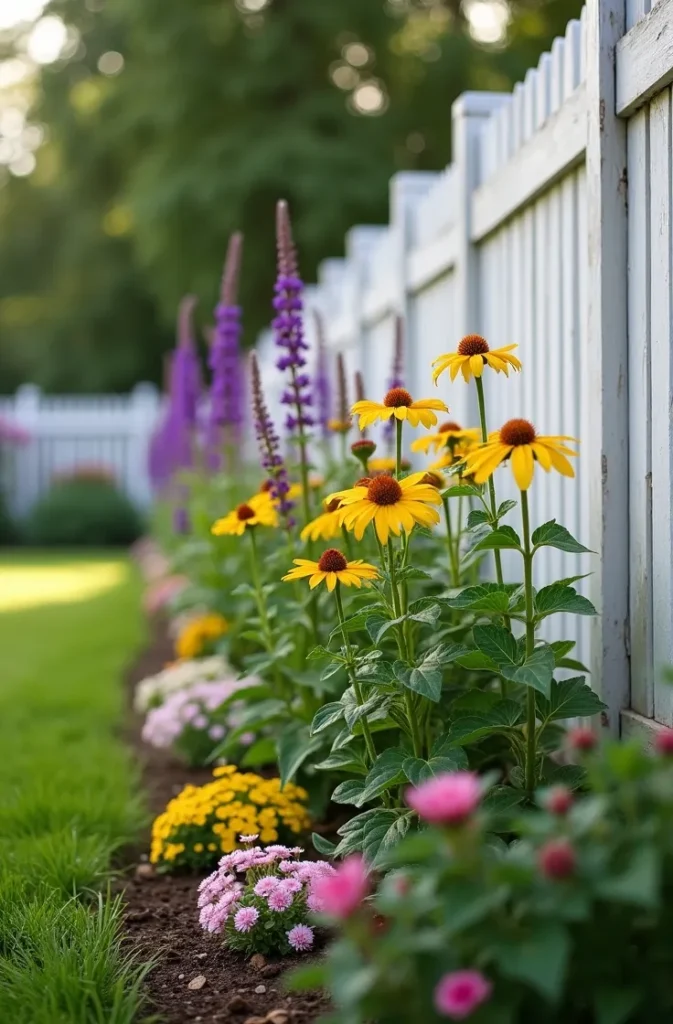

The mistake most gardeners make is spacing plants too close at planting, then crowding themselves out of future growth. Follow mature spread measurements, not nursery pot sizes. A plant that looks sparse at planting in year one will be exactly right by year three.
This approach suits any yard size from 4 feet wide to unlimited. In smaller yards, a single 8- to 12-foot border section along a fence or wall is enough to deliver a full seasonal display without overwhelming the space.
2. Raised Bed Flower Gardens for Yards With Poor Native Soil
Poor soil is one of the most common reasons flower gardens underperform in USA yards — particularly in newer construction neighborhoods where topsoil has been stripped during building. A raised bed removes the soil variable entirely. You build with the right growing medium from the start, and results in year one look like what most gardeners take five years to achieve in native ground.
Raised beds for flowers function best at 12 to 16 inches of depth. This gives most flowering perennials and annuals adequate root run without requiring the deeper build cost of vegetable beds. Cedar and composite lumber are the two most practical materials — cedar is more visually natural, composite requires no maintenance over time.
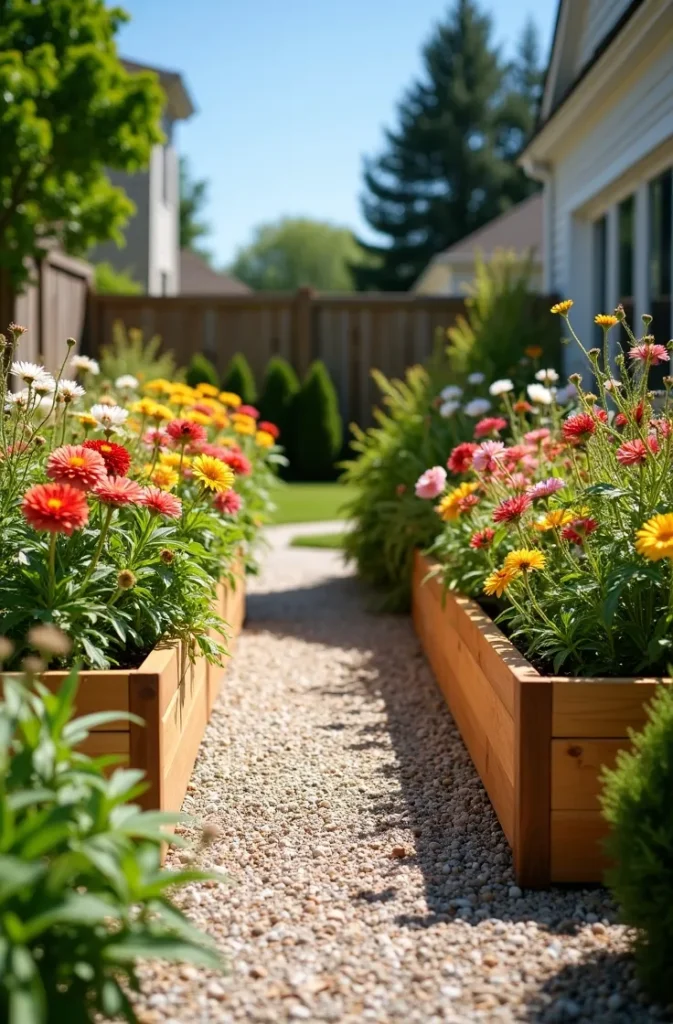
For flower garden planning in 2026, rectangular raised beds in a 4-by-8-foot footprint give you enough planting area for a genuinely impressive display while remaining reachable from both sides without stepping in. Two or three beds arranged in a grid with a simple gravel path between them creates a structured garden room that feels designed rather than improvised.
Avoid raised bed heights above 18 inches unless you have a specific accessibility need. Deeper builds dry out faster, require more fill material, and offer no additional benefit for ornamental flowering plants.
3. Cottage-Style Front Yard Flower Gardens That Replace Lawn Sections
Replacing a section of front lawn with a cottage-style flower garden is one of the most impactful changes a USA homeowner can make to curb appeal. A 6-by-10-foot planted area at the property edge or flanking the front walkway does more visual work than the same square footage of maintained turf, and requires far less water and mowing in most climates.
The cottage style works here specifically because it is forgiving. Plants are allowed to self-seed slightly, spill over edges, and overlap. This naturalistic quality reads as intentional abundance rather than disorder, provided it is contained by clean hard edges — a simple steel or aluminum border between the planting and remaining lawn keeps the composition crisp.
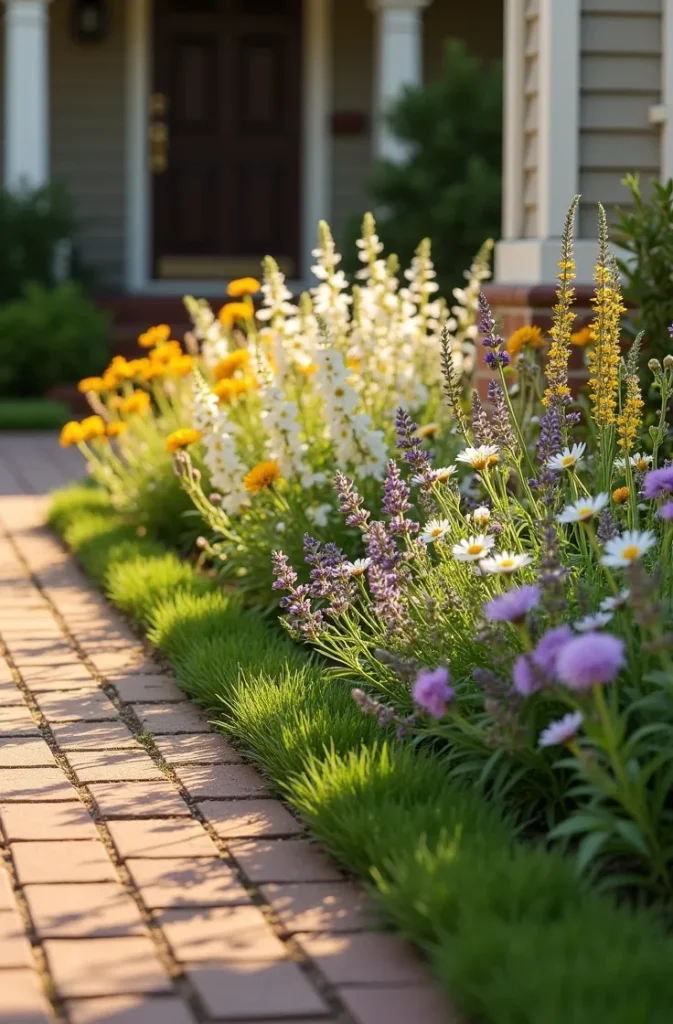
Choose a planting palette of no more than four flower species for a cottage front yard section. More than four tends toward visual noise rather than abundance. A strong combination for most USA zones is foxglove, shasta daisy, black-eyed susan, and salvia. These bloom in sequence, handle a range of conditions, and return reliably each year without replanting.
Avoid placing cottage plantings against homes with very modern or minimalist architecture. The informal style creates aesthetic tension with clean-lined facades. It reads best against craftsman, colonial, farmhouse, and traditional home styles.
4. Drought-Tolerant Flower Garden Designs for Dry Western Climates
Gardeners in California, Nevada, Arizona, Colorado, and other western USA states face a specific design problem: most conventional flower garden inspiration is built around plants that require regular irrigation. A drought-tolerant flower garden does not mean less color or visual impact — it means choosing differently from the start.
The foundation plants for a drought-tolerant flower bed in 2026 are native and adapted species: penstemon, desert marigold, agastache, echinacea, and California poppy. These plants evolved in low-water environments and bloom prolifically once established without supplemental irrigation beyond the first season. Their color range covers the full spectrum from deep purple through coral, orange, yellow, and white.
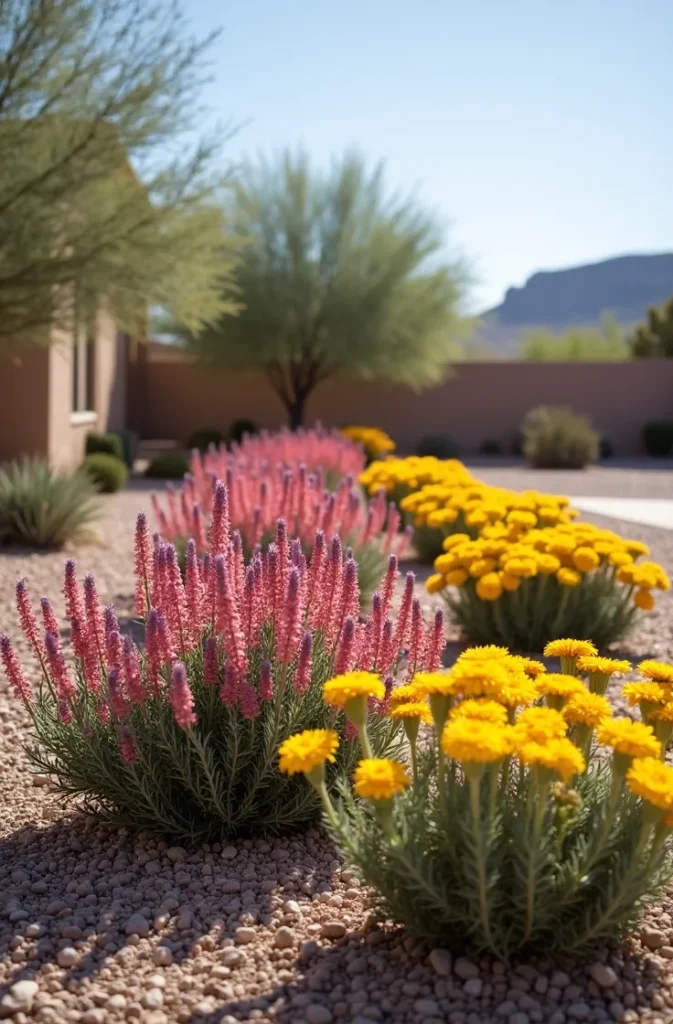
Mulch depth is one of the most important practical factors in drought-tolerant flower garden success. A 3-inch layer of coarse wood chip mulch across the entire bed surface reduces soil moisture evaporation by up to 70 percent, moderates soil temperature, and suppresses weeds that compete for available water. Without adequate mulch, even drought-adapted plants struggle in high-heat climates.
Design these beds with wider plant spacing than you would use in a conventional border. Drought-tolerant plants typically spread more at maturity, and crowded spacing in low-water conditions accelerates stress. Give each plant room to reach full size.
5. Shade Garden Flower Ideas That Actually Bloom Under Tree Canopy
Shade is one of the most frustrating conditions for flower gardeners because most commercially available plants are marketed for sun. But a properly planted shade garden can be just as visually rich as a sunny border — it simply requires a different plant list and a different color strategy.
Under deciduous tree canopy, the key is working with the light that changes through the season. In early spring before leaf-out, considerable light reaches the ground, which is when spring ephemeral flowers — hellebores, Virginia bluebells, trillium, and bleeding heart — do their best work. As the canopy fills in, these die back naturally and shade-adapted foliage plants carry the composition.
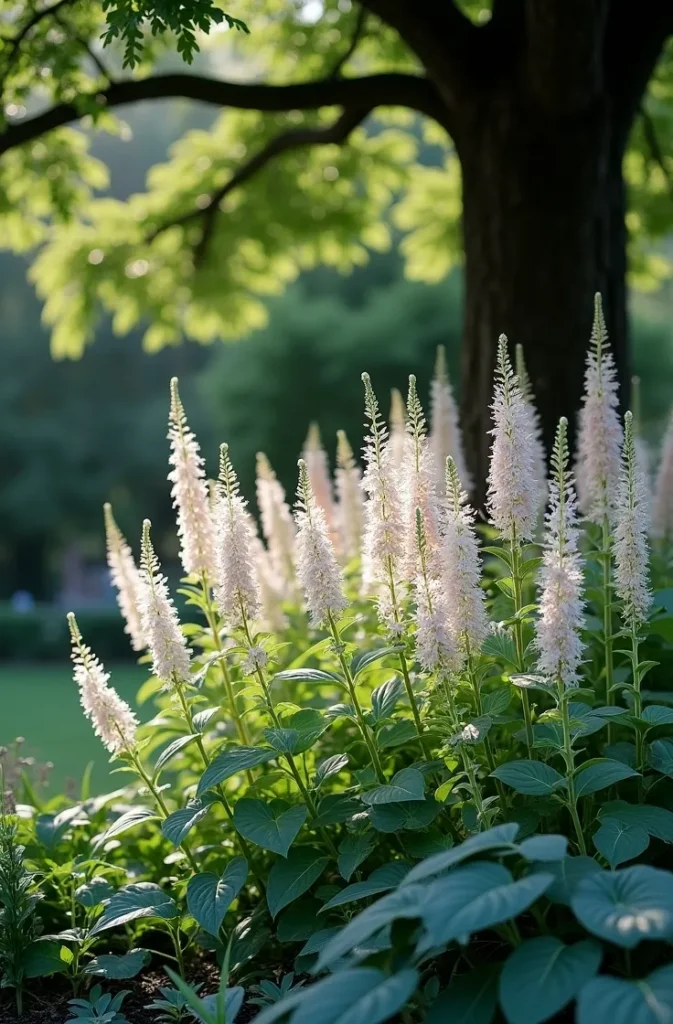
For continuous flower color in deep to partial shade, rely on astilbe, impatiens (in humid climates), coral bells for foliage contrast, and hostas for structure. Astilbe is particularly valuable because it blooms in midsummer when most shade plants are between cycles, producing feathery plumes in white, pink, and deep red that hold visual weight even in low-light conditions.
The color strategy in shade gardens should shift toward lighter tones — white, pale pink, lavender, and soft yellow. These reflect available light and appear to glow in dim conditions. Dark-flowered varieties that look rich in catalog photos disappear visually under tree canopy.
6. Vertical Flower Gardens for Fences, Walls, and Narrow Side Yards
A narrow side yard — typically 3 to 5 feet wide — is a space most homeowners abandon as unusable for ornamental planting. With a vertical approach, it becomes one of the most productive flower garden zones on the property. Climbing flowering plants trained against a fence or wall exploit vertical square footage rather than ground square footage, which sidesteps the width problem entirely.
The most effective climbing flowering plants for USA gardens are climbing roses, clematis, mandevilla (in USDA zones 9 to 11), and morning glory. Each has distinct light requirements: roses and clematis prefer full sun; mandevilla handles heat and humidity better than most; morning glory tolerates part shade and grows fast enough to cover a fence in a single season.
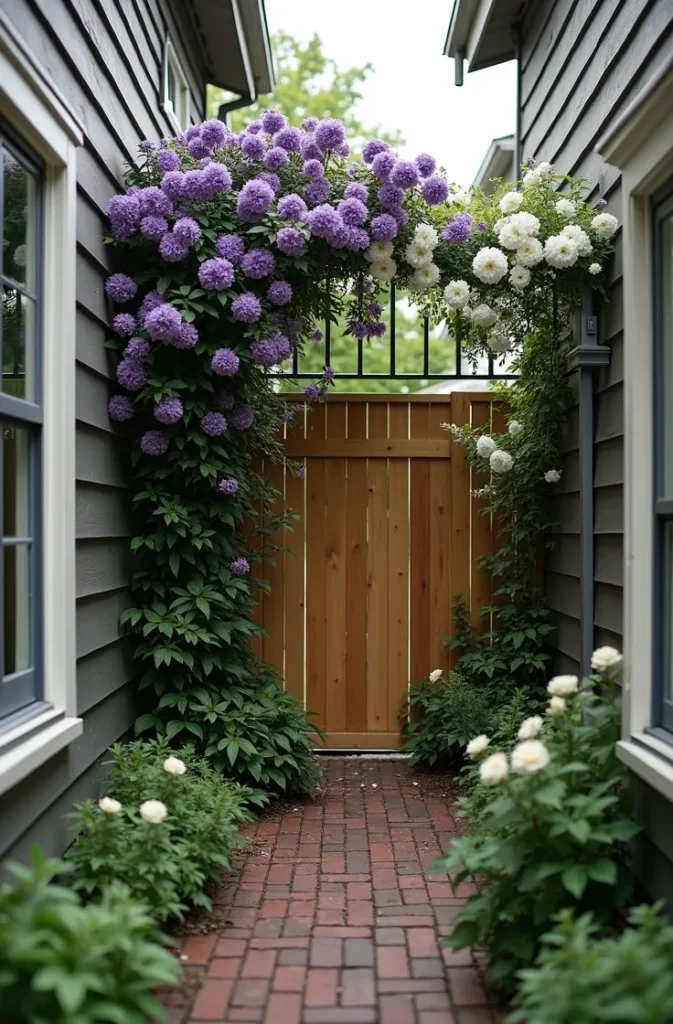
Install a simple trellis or tension wire system on the fence or wall before planting. Climbers need something to grab, and a fence surface alone does not provide enough purchase. Horizontal wires spaced 12 inches apart on a masonry wall, or a panel trellis attached 2 to 3 inches off a wood fence to allow air circulation, are the two most reliable supporting structures.
This is also one of the most cost-effective flower garden ideas for renters or gardeners in urban settings. A freestanding trellis panel in a container with a climbing annual planted at its base requires no ground installation, can be positioned anywhere, and removed without leaving a trace.
7. Pollinator-Focused Flower Garden Layouts That Support Bees and Butterflies
A pollinator garden is one of the strongest trends in residential flower gardening entering 2026, and for practical reasons beyond environmental benefit. Gardens designed around pollinator plants tend to be lower maintenance, more resistant to pests, and more visually dynamic than conventional ornamental beds because they prioritize flowering plants that evolved to produce abundantly over long seasons.
The foundational design principle is bloom time succession. A functional pollinator garden has something in flower from early spring through hard frost. This requires deliberate plant selection across three bloom windows: early (crocus, native violets, pulmonaria), mid-season (echinacea, lavender, bee balm, liatris), and late season (aster, goldenrod, rudbeckia, sedum). Each window serves a different pollinator need.
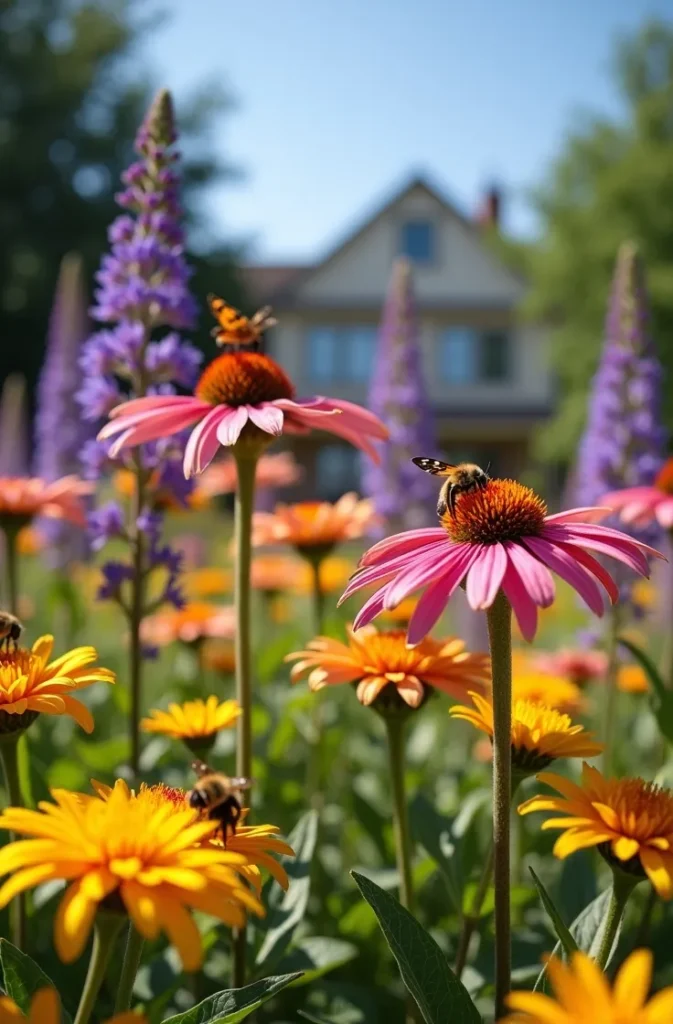
Avoid the mistake of planting a pollinator garden with only a few species in large masses. While monoculture planting looks bold in formal design, pollinator research consistently shows that diversity of plant species — aiming for 15 or more different species in a single bed — supports a broader range of insect species and creates more resilient ecological conditions.
Keep some bare soil patches at the bed edge. Ground-nesting native bees, which make up the majority of USA native bee species, require exposed mineral soil for nesting. A mulch-covered bed is attractive to gardeners but inhospitable to the insects the garden is meant to support.
8. Low-Maintenance Annual Flower Beds for Gardeners With Limited Time
Not every gardener has time for the seasonal management that perennials and cottage planting require. An annual flower bed designed for low maintenance delivers maximum color for the fewest intervention points — and when chosen well, annuals outperform perennials in raw flower production through the entire growing season.
The key is selecting self-maintaining annuals: varieties that deadhead themselves, resist disease without spraying, and do not require staking. Zinnias, marigolds, celosias, and globe amaranth are the four workhorses of a low-effort annual bed. All are heat-tolerant, deer-resistant, prolific bloomers, and require nothing beyond initial planting, occasional watering, and a midsummer slow-release fertilizer application.
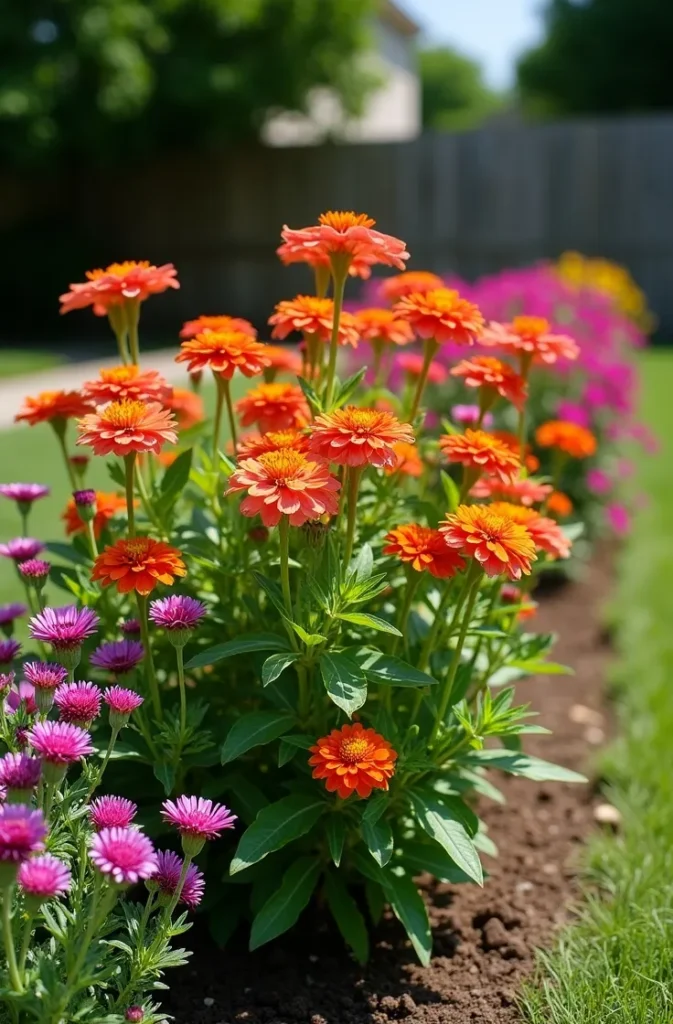
A 4-by-6-foot annual bed planted in late spring after last frost provides color from June through hard frost in most USA climate zones — roughly five to six months of continuous bloom from a single planting session. That is a favorable return on time for most gardeners.
The common error is overcomplicating the design. A simple three-color palette in a single-variety block planting reads bolder and cleaner than a complicated mix. Pick one tall variety for the center or back, one medium for the main body, and one low mounding variety for the front edge. Repeat that structure across the whole bed.
9. Container Flower Garden Arrangements for Patios and Small Urban Spaces
Container gardening is the most accessible entry point for flower garden ideas in 2026, and it is also the format that scales most successfully from a 4-by-4-foot apartment balcony to a large patio. The rules that govern successful container flower arrangements are consistent regardless of space size.
The most reliable design framework is the “thriller, filler, spiller” formula. One tall or bold centerpiece plant (the thriller), surrounded by medium mounding plants that fill the mid-zone (the fillers), and at least one trailing plant that spills over the pot edge (the spiller). This creates vertical dimension, volume, and a finished edge in a single container without any additional design work.
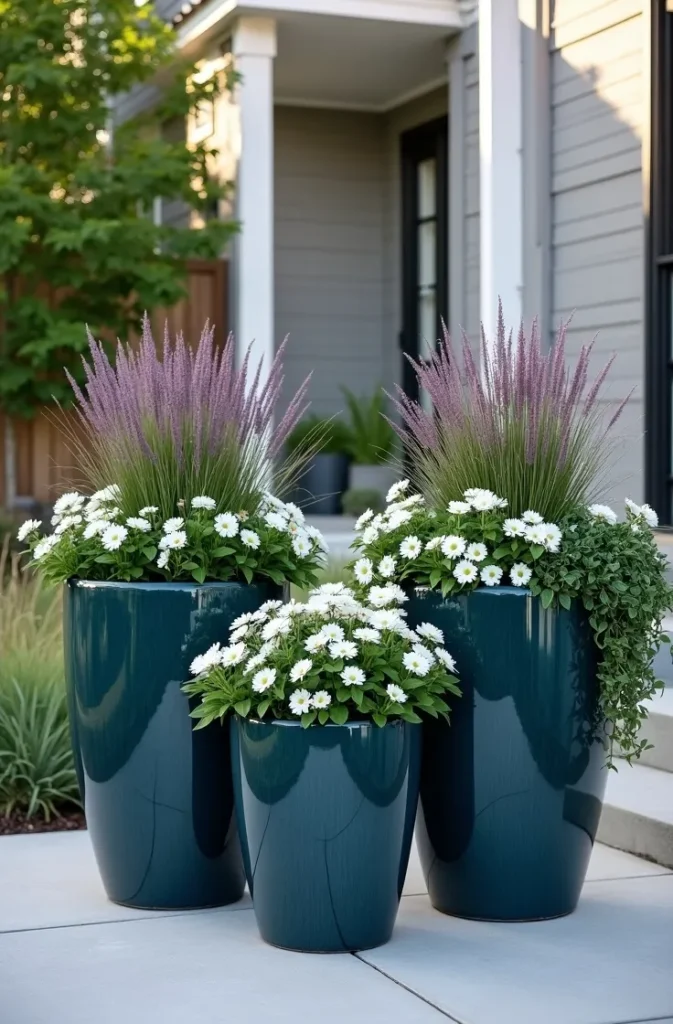
For USA summer conditions, container watering is the single biggest management challenge. Containers in full sun may need watering every day in July and August. Choosing pots with drainage holes, using a moisture-retaining potting mix rather than garden soil, and grouping containers close together to create a shared microclimate that slows moisture loss are the three most practical strategies for managing this.
Terracotta looks beautiful but dries out significantly faster than glazed ceramic or resin containers. In hot and dry USA climates — the southwest, southeast, and midwest summer heat — move to glazed or double-walled containers for anything you are not willing to water twice daily.
10. Moon Garden Flower Designs With White and Silver Planting Palettes
A moon garden is a planting scheme built entirely from white-flowering and silver-foliaged plants, designed to be most visually impactful in the evening hours. For households that spend outdoor time after work rather than during the day, a moon garden is a genuinely practical choice rather than a purely aesthetic one.
White flowers and silver-gray foliage reflect low ambient light — moonlight, patio lighting, or even distant streetlights — and appear to glow while darker-colored plantings become invisible after dusk. This makes the moon garden one of the few flower garden styles that performs better at 9 PM than at noon.
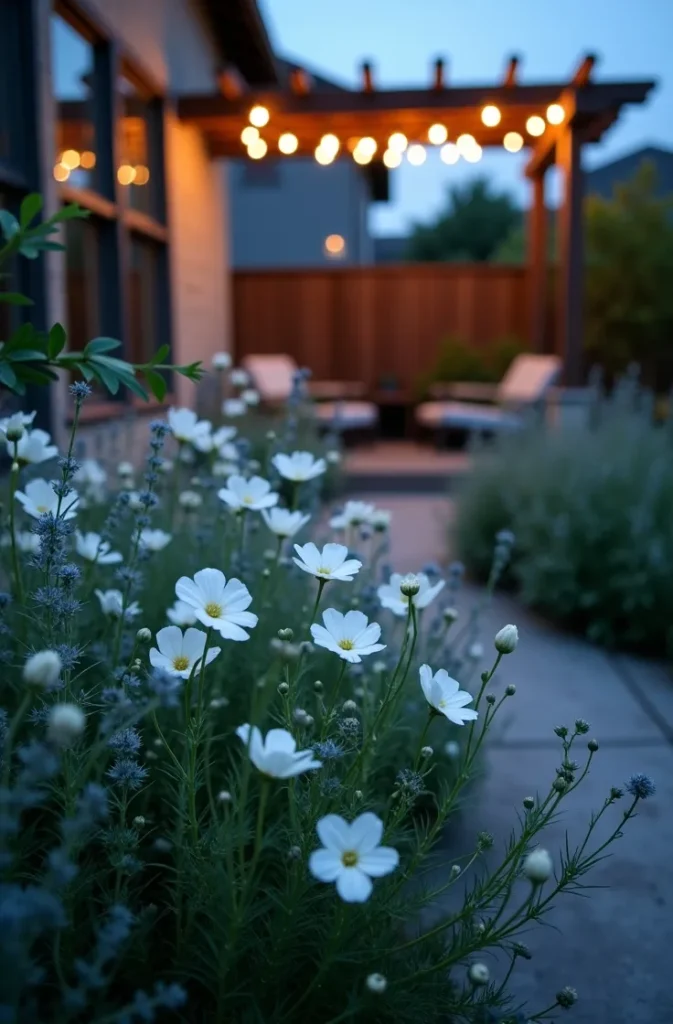
Strong plant choices for a USA moon garden include white phlox, white echinacea, white salvia, artemisia (for silver foliage), lamb’s ear, and white flowering nicotiana. Nicotiana is particularly valuable because it is fragrant in the evening, adding a sensory dimension that daytime gardens often lack.
Position a moon garden where it is visible from an outdoor seating area, a patio, or a kitchen or living room window that faces the yard. A garden you cannot easily see from a comfortable position loses most of its evening value. Orient the planting so it reads as a composition from your primary evening viewpoint rather than designing it to look good from all angles equally.
11. Cut Flower Garden Rows Designed for Regular Harvesting
A cut flower garden is a different design problem than an ornamental bed. It is not meant to look beautiful in the ground — it is meant to produce the maximum number of cuttable stems over the longest possible season. That goal changes every decision from layout to plant selection to spacing.
Row planting is the most efficient layout. Rather than the curved, layered borders used in ornamental design, a cut flower garden uses straight rows with enough space between them for easy access: 18 inches between rows minimum, 24 inches preferred. This allows you to reach into the center of each row without compacting surrounding soil and makes harvesting a quick task rather than an obstacle course.
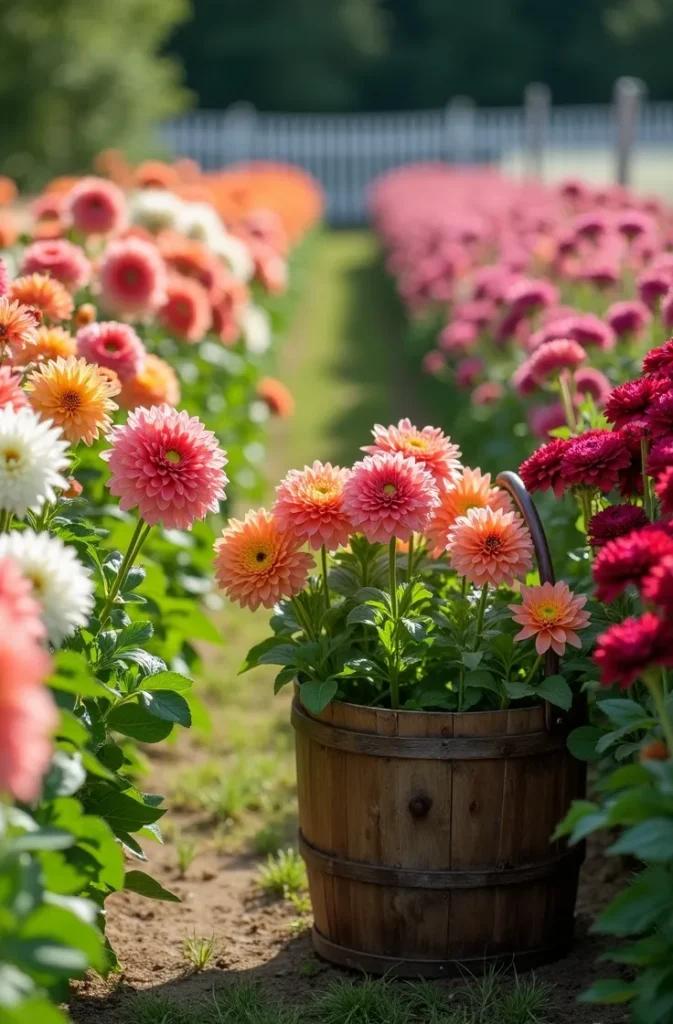
The most productive cut flower crops for USA home gardens are zinnias, sunflowers, lisianthus, dahlias, sweet peas, and ranunculus. These produce high stem counts per plant across a long season and hold well after cutting. Dahlias in particular are exceptional cut flower producers — a single plant can yield 30 or more stems from summer through first frost.
Regular harvesting is what drives continued production. A cut flower plant that is allowed to set seed stops producing. Harvest stems as soon as they reach the open-bud to half-open stage, cut early morning, place immediately in cool water, and strip foliage below the waterline. This simple post-harvest process doubles the vase life of most cut flowers.
12. Four-Season Flower Garden Plans That Look Good Year-Round in the USA
The hardest problem in residential flower gardening is maintaining visual interest across all four seasons — particularly from November through March when most ornamental plantings go completely dormant. A four-season garden plan layers plants specifically chosen for off-season contribution, so the garden is never completely empty.
Spring coverage comes from bulbs planted in fall: tulips, daffodils, alliums, and hyacinths. These are planted once and return reliably for three to seven years in most USA hardiness zones without replanting. They are also deer-resistant in most cases, which is a significant practical advantage in suburban and rural USA settings.
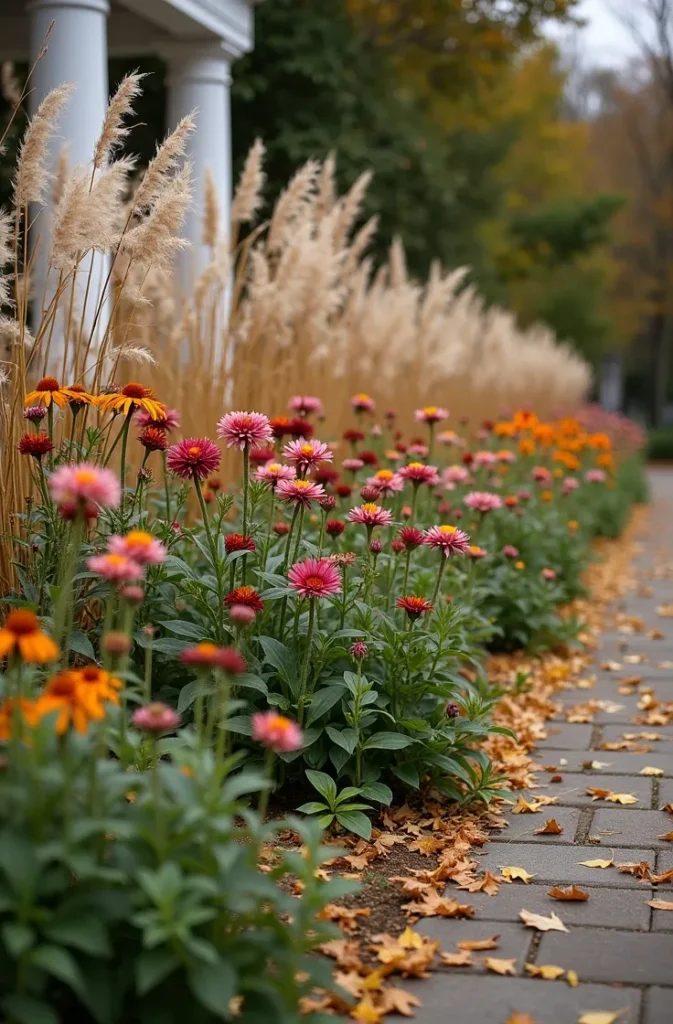
Summer and fall are covered by the perennial and annual selections already described. The winter season — the one most gardeners neglect — is addressed through plant selection that retains structural or visual interest after bloom: ornamental grasses that hold their plumes, echinacea seedheads that feed birds and hold form through frost, rudbeckia stems that persist as architectural winter elements, and evergreen groundcovers like liriope that remain green under snow.
For small yard flower garden planning, a four-season approach requires accepting that some plants are chosen not for summer bloom but for the three other seasons. That is a different mental model than buying plants for their current flower color at the nursery. Approach the plant list as a yearly calendar, and assign at least one specimen to each seasonal gap.
Save This and Come Back When You Are Ready to Plant
Flower garden planning works best when you move through it in stages — site assessment first, then plant selection, then layout decisions. Trying to do everything at once is what leads to the impulsive nursery purchases that do not work together and the beds that peak in June then go bare by August.
If any of these 12 approaches fit your yard conditions, save this post now and return to it when you are standing in front of your actual space. The best flower garden idea is the one that solves your specific problem, not the one that looks best on a screen.
For continued flower garden planning in 2026, explore related content on companion planting strategies, native plant garden design, and seasonal bulb planting guides for your hardiness zone.