
Choosing the right sofa is one of the most consequential decisions in any living room, and modern sofa ideas 2026 have shifted significantly toward smarter proportions, better materials, and layouts that serve real daily life. This post gives you 16 distinct sofa styles and configurations with clear guidance on what works, what room size each suits, and what mistakes to avoid before you buy.
1. Low-Profile Curved Sofa That Makes a Small Living Room Feel Larger
A low-profile curved sofa is one of the most effective tools for making a compact living room feel open and intentional. The curved silhouette softens hard architectural lines — particularly in boxy apartments or square rooms — and the low back height keeps sightlines clear, which makes the room read as larger than it actually is.
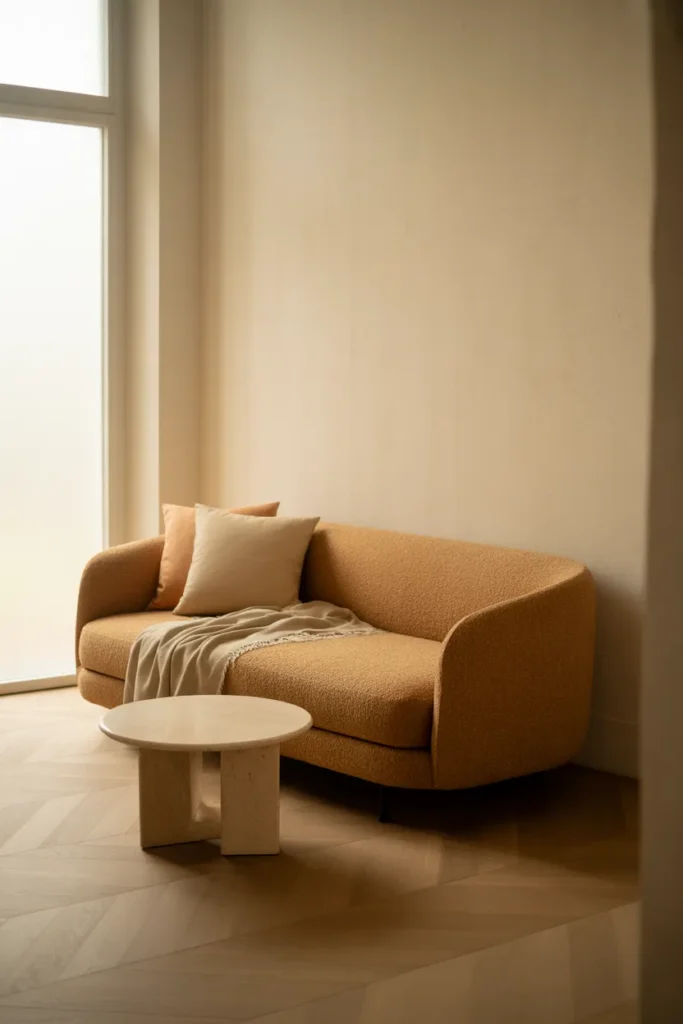
This style works best in rooms under 300 square feet where a traditional boxy sofa would dominate the space. Position the curved sofa facing the focal point of the room — a fireplace, TV console, or large window — and leave at least 18 inches of clearance between the sofa back and the nearest wall. Floating the sofa away from the wall is one of the single most impactful space planning decisions you can make in a small living room.

Avoid curved sofas with very deep seats in narrow rooms. Deep seats push the front of the sofa too far into the circulation path and make the room feel crowded rather than open. Look for curved silhouettes with a seat depth between 22 and 26 inches for the best balance of comfort and proportion.
2. Modular Sectional Sofa Configuration That Adapts to Open-Plan Living
Modular sectionals are the most practical modern sofa idea for open-plan living rooms because they can be reconfigured as your space and needs change. Unlike fixed L-shape sofas, modular systems allow you to add, remove, or rearrange individual pieces — which matters enormously in rental homes or spaces that serve multiple functions throughout the day.
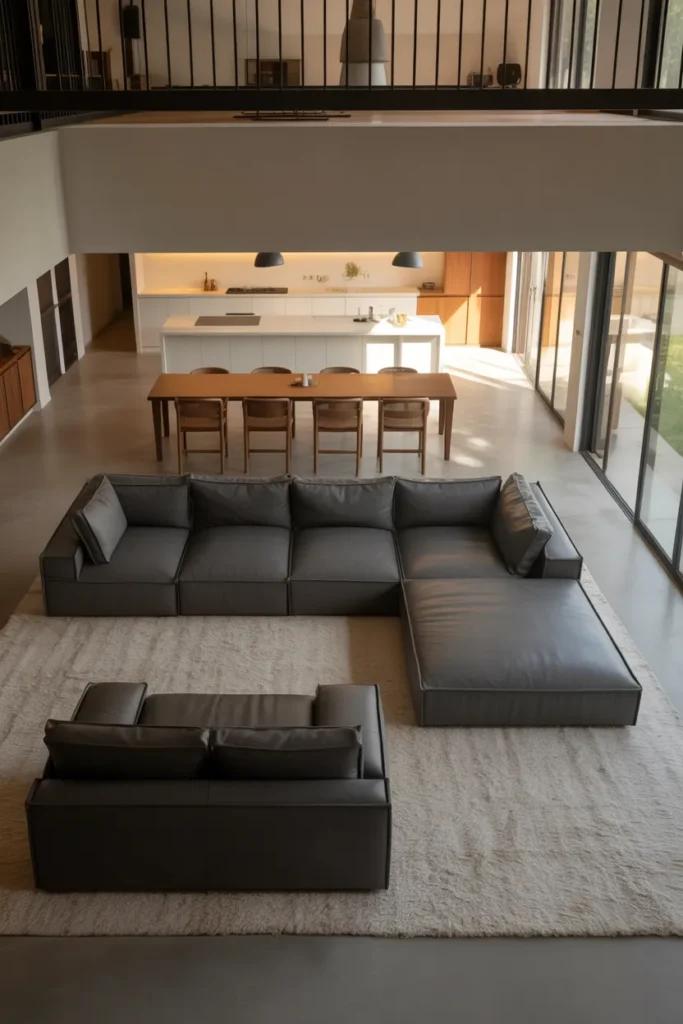
The key to making a modular sectional work in an open-plan layout is using it as a room divider. Position the sofa with its back facing the kitchen or dining zone and its seating facing the media or conversation area. This single decision creates visual separation between zones without requiring walls or partitions.
The most common mistake with modular sectionals is buying too many pieces for the available floor space. Measure your room carefully and allow a minimum of 30 inches between the sofa and any adjacent furniture. A smaller, well-proportioned modular configuration always looks more deliberate than an oversized one that crowds the room.
3. Tight-Back Linen Sofa for a Minimalist Living Room With Clean Lines
A tight-back sofa — one without loose cushions on the back — is the definitive choice for a minimalist living room in 2026. The structured silhouette requires no constant refluffing or straightening, it photographs cleanly, and it holds its shape over years of use better than loose-cushion alternatives. In linen fabric, the result is a sofa that looks effortless at 8 AM and still looks composed at 10 PM.
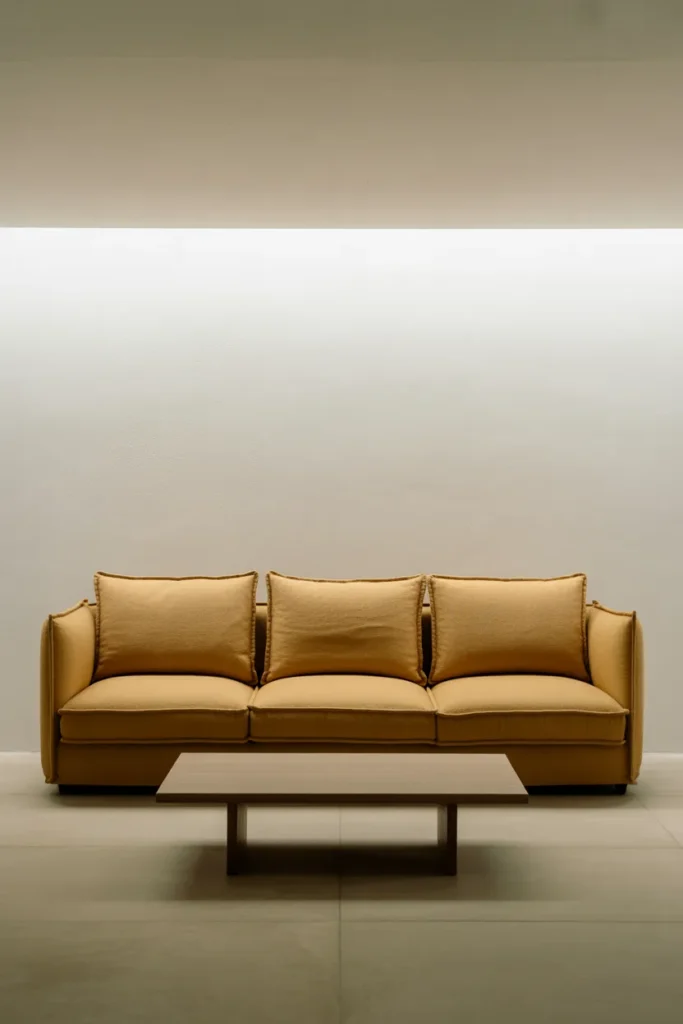
Tight-back sofas suit rooms where the design language is already disciplined — minimal artwork, low furniture profiles, neutral palettes. They work particularly well in city apartments where the living room doubles as a home office or guest space, since the structured look reads as intentional in multiple contexts rather than casually residential.
Avoid this style if your household includes young children or pets who will be on the sofa daily. Tight-back frames show wear and indentation more visibly than loose-cushion sofas because there are no separate cushions to rotate or replace. For active households, a removable-cushion sofa in a performance fabric is the more practical choice.
4. Deep-Seat Cloud Sofa for a Cozy Family Room That Gets Daily Use
The deep-seat cloud sofa — oversized, sink-in cushions, casual slipcover or performance fabric — is built for rooms that are genuinely lived in. Seat depths of 30 inches or more prioritize lounging comfort over posture, making this ideal for media rooms, family dens, or any space where people actually lie down, curl up, or use the sofa for hours at a stretch.
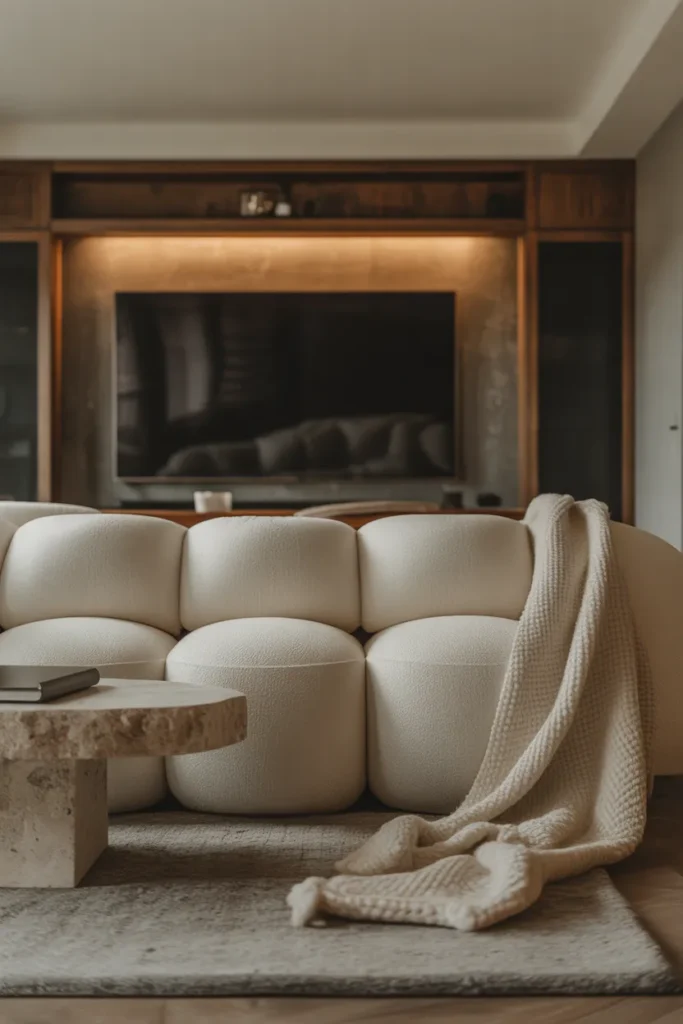
This style requires a room large enough to accommodate its footprint. A deep-seat sofa in a room under 250 square feet will dominate the space entirely. It performs best in rooms of 350 square feet or more, where the generous scale reads as intentional luxury rather than poor space planning. Pair it with a large, grounded coffee table — a heavy stone or solid wood piece — to visually anchor the soft bulk of the sofa.
The practical consideration most buyers overlook with deep-seat sofas is lumbar support. A 30-plus inch seat depth means your feet cannot comfortably touch the floor while sitting upright. Add a firm lumbar pillow at the back of each seat position or look for models with an adjustable headrest that compensates for the reclined sitting posture.
5. Velvet Jewel-Tone Sofa as the Anchor Piece in a Neutral Living Room
A single velvet sofa in a deep jewel tone — forest green, sapphire blue, or cognac — is one of the most cost-effective ways to add design impact to a neutral living room without touching the walls, flooring, or lighting. The sofa becomes the room’s focal point and makes every other neutral piece look more intentional by contrast.
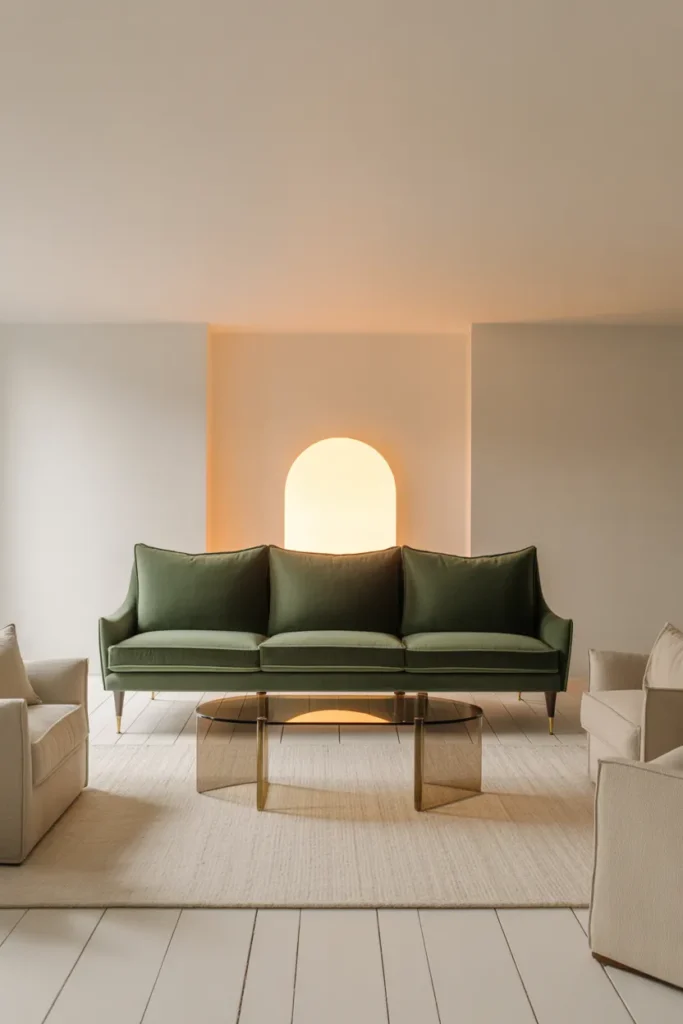
This works specifically in rooms where everything else is restrained: white walls, warm wood tones, simple lighting. The velvet color anchors the palette and gives the eye a place to land. Without that anchor, neutral living rooms often read as unfinished or generic. The sofa solves that problem in one decision.
Velvet requires more maintenance than woven or performance fabrics, particularly in high-traffic rooms or homes with pets. Velvet crushes in the direction of use, which creates visible wear patterns over time. If the living room is used daily by multiple people, choose a velvet with a tight weave and high rub count, or reserve this choice for a formal sitting room or low-traffic space where the fabric can be properly maintained.
6. Sleeper Sofa With a Clean Modern Profile for Studio Apartments
The sleeper sofa has historically been the compromise piece — functional but visually heavy or dated. Modern sofa ideas 2026 include sleeper configurations that look indistinguishable from standard sofas during the day, with mechanism improvements that make setup and takedown faster and quieter than older designs. For studio apartments and one-bedroom units that host guests regularly, this is the most space-efficient solution available.
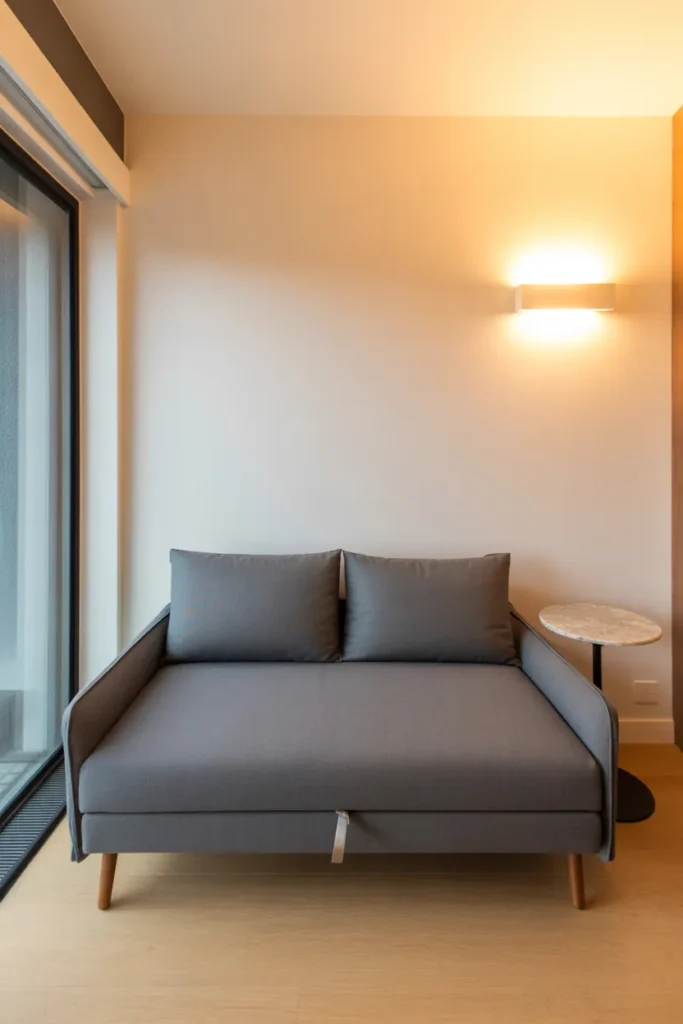
The most important consideration when choosing a modern sleeper sofa is the mattress type, not the fabric. Innerspring mechanisms are thinner and lighter but less comfortable for extended stays. Memory foam or pocket-coil options add depth to the closed sofa profile but offer significantly better sleep quality. Decide based on how frequently the sleeping function will actually be used.
Avoid positioning a sleeper sofa against a wall or in a tight corner. The mechanism requires clear floor space in front of the sofa to unfold — typically 60 to 75 inches of clearance depending on the mattress size. Plan the room layout with the open footprint in mind, not just the closed sofa position.
7. Camel Leather Sofa That Works in Both Traditional and Modern Rooms
A camel or cognac leather sofa is one of the most versatile investments in modern living room furniture because it reads differently depending on what surrounds it. In a room with warm wood tones, vintage rugs, and textured walls, it feels classic and grounded. In a room with white walls, minimal furniture, and clean lines, the same sofa reads as a bold modern statement. That contextual flexibility makes it one of the smartest single-piece purchases for any room that may evolve in style over time.
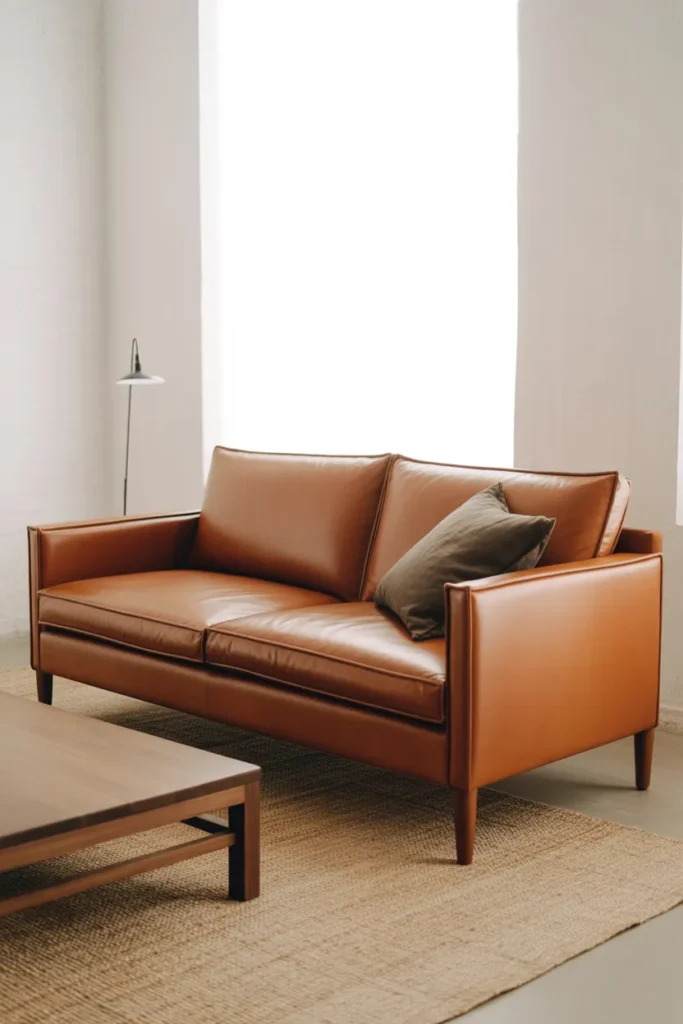
Full-grain or top-grain leather develops a patina with use that actually improves the look of the sofa over years. This is the opposite of most fabric sofas, which show wear as deterioration. For households where the sofa takes daily use, real leather often outperforms fabric on a lifespan basis despite the higher initial cost.
Avoid bonded or faux leather if longevity is the goal. Bonded leather — made from leather scraps and polyurethane — begins to peel and crack within three to five years of regular use. The visual result is impossible to repair and forces replacement. The camel leather sofa is only a long-term value proposition when the material is genuine.
8. Sage Green Sofa With Natural Wood Legs for an Earthy, Grounded Living Room
Sage green has moved beyond trend status into a reliable, long-lasting palette choice for living room sofas in 2026. Its muted, gray-green tone sits between cool and warm on the spectrum, which means it works with both warm wood tones and cooler stone or concrete finishes. Paired with natural wood legs — solid beech, oak, or walnut — the sofa anchors an earthy, organic living room without requiring extensive styling to look complete.
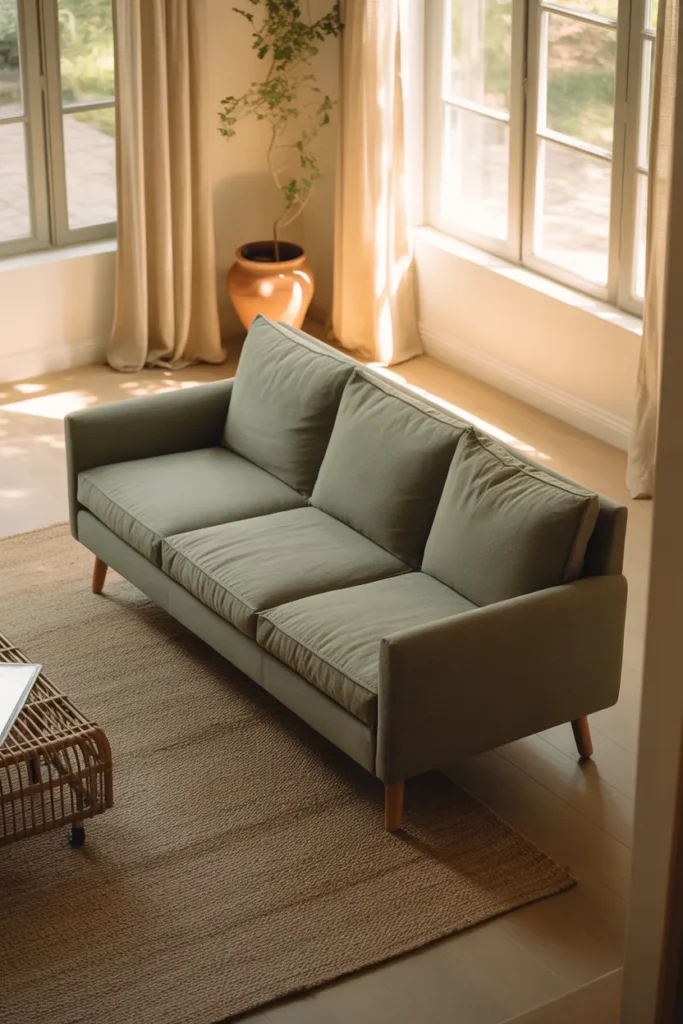
This is an excellent choice for living rooms in homes with significant natural light. Sage absorbs and reflects warm light beautifully, shifting slightly warmer in afternoon sun and cooler in morning shade — a quality that keeps the room feeling dynamic throughout the day. In rooms with little natural light, sage can look flat or dull, and a warmer alternative like terracotta or warm oat will perform better.
The practical styling note here is to keep surrounding textiles in the same organic register. Linen, cotton, jute, and wool all work with sage green because they share its natural, low-saturation quality. Avoid pairing sage with highly synthetic-looking fabrics like polyester velvet or faux fur, which create an incongruent texture contrast that disrupts the earthy mood.
9. Apartment-Scale Two-Seat Sofa That Does Not Overwhelm a Small Living Room
The two-seat sofa — also called a loveseat in traditional furniture retail — has been redefined in modern sofa ideas 2026 as a scaled-down version of full-size sofas rather than a separate furniture category. Modern two-seaters match the aesthetic profile of their larger counterparts but in a footprint that respects smaller rooms. For apartments under 600 square feet, a two-seat sofa often produces a better-looking and more functional room than a three-seat version that fits technically but crowds the circulation space.
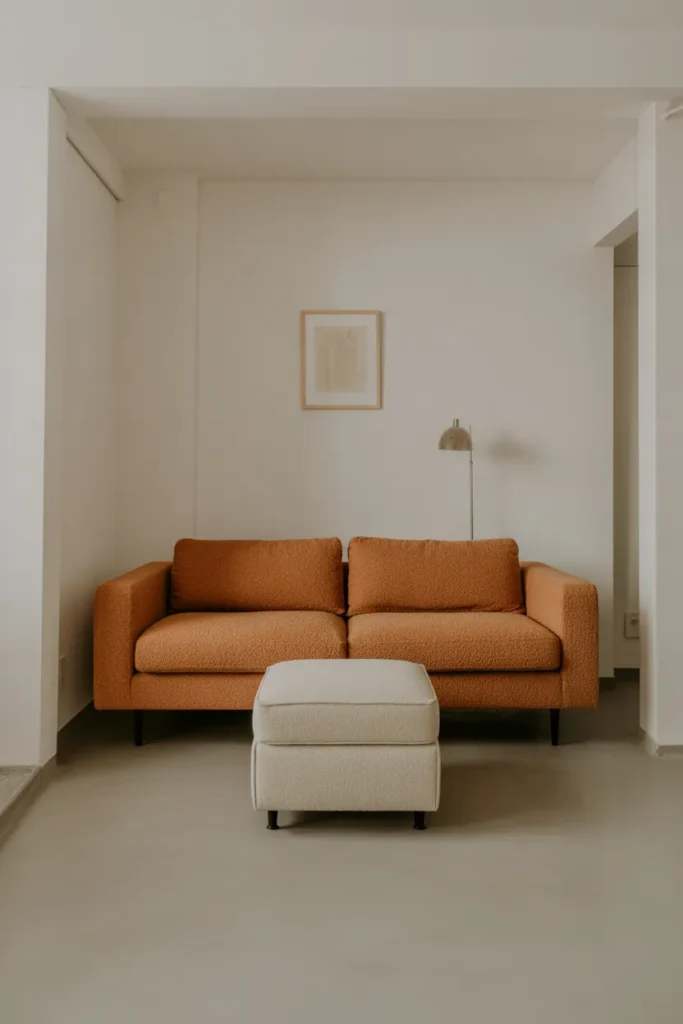
The defining proportional rule is that the sofa should take up no more than two-thirds of the wall it sits against. If a three-seat sofa would fill 90 percent of a wall, the room is communicating that the sofa is too large. A two-seat sofa at 60 to 65 inches wide typically satisfies both the comfort requirement and the proportional guideline in rooms under 200 square feet.
Pair a two-seat sofa with chairs or ottomans rather than a matching loveseat set. A single two-seat sofa plus two individual seating pieces creates a more dynamic and grown-up arrangement than a matched loveseat-and-sofa pair, which tends to read as a starter furniture set rather than a considered room design.
10. Chesterfield-Profile Sofa Reinterpreted in a Modern Muted Palette
The Chesterfield silhouette — deep button tufting, rolled arms, equal back and arm height — has been reinterpreted for modern living rooms by stripping away the dark jewel tones and heavy wood legs that defined it historically. In 2026, the same profile in a matte, muted fabric like fog gray, dusty blush, or warm putty reads as architectural and current rather than traditional.
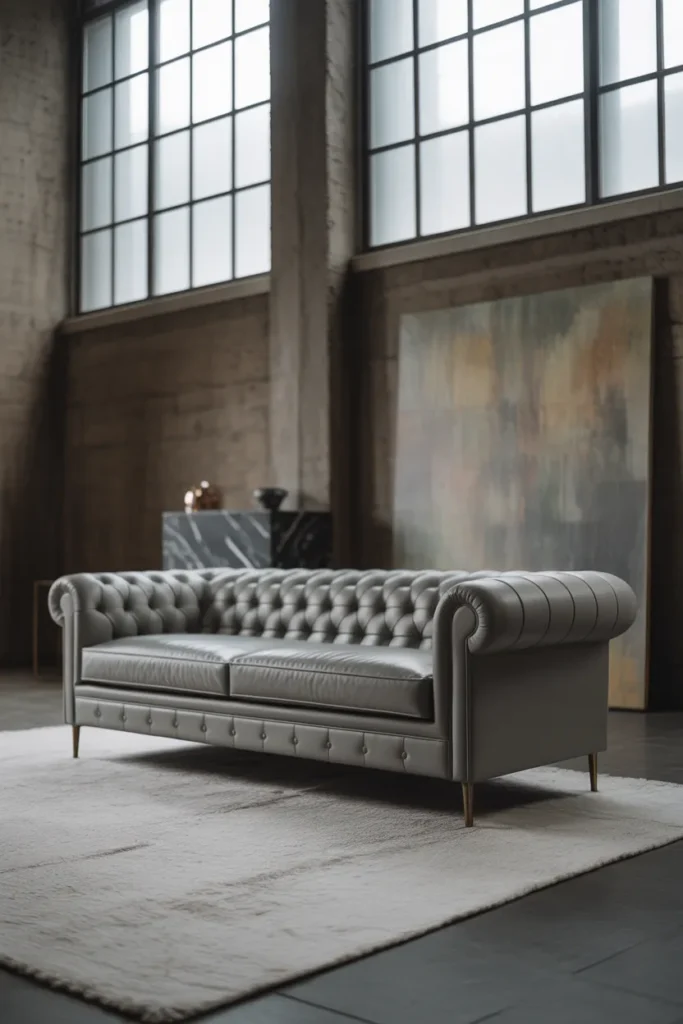
This modern reinterpretation works in living rooms that need visual weight and structure without additional furniture pieces. The Chesterfield’s tall, defined profile reads as a design statement on its own, which means the room around it can remain understated. It is particularly effective in high-ceilinged rooms or loft spaces where a low-profile sofa would get visually swallowed by the vertical scale.
The material decision is critical with this silhouette. Button tufting traps pet hair and crumbs in fabric versions and can be difficult to clean. For households with children or pets, a tightly tufted leather version is more practical than fabric. If fabric is preferred, a performance weave with a tight pile will hold up to cleaning better than an open-weave or nubby texture.
11. Performance Fabric Sofa in White or Off-White for a Bright, Airy Living Room
A white or off-white sofa is the design choice most people want but immediately dismiss as impractical. Performance fabric technology in 2026 has made this a genuinely viable option for active households. Fabrics rated for 100,000 double rubs or higher with stain-resistant and water-resistant coatings can handle everyday spills, pet activity, and repeated spot cleaning without permanent staining or visible wear.
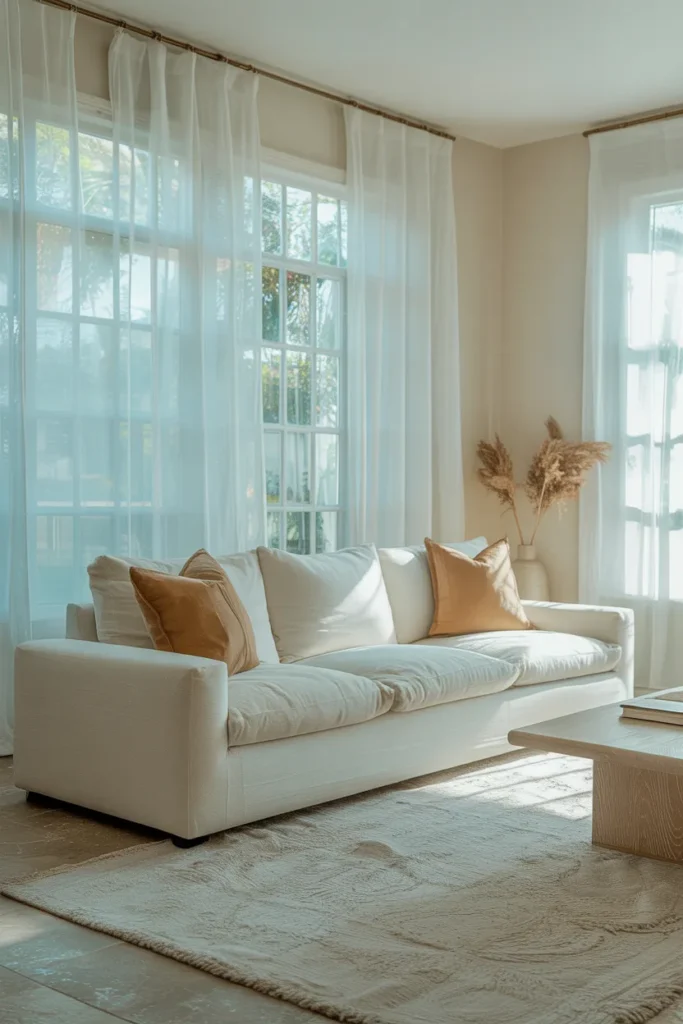
The practical case for a light sofa is that it reflects light and makes the room feel significantly brighter, particularly in north-facing rooms or apartments with limited window area. A dark sofa in a low-light room absorbs what little natural light exists and makes the space feel smaller and more closed-in. A white or warm white sofa reverses that effect.
The most important decision point with a light sofa is the cushion insert. Down-and-feather fills look beautiful initially but require daily fluffing and lose their shape over time. High-density foam with a fiber wrap holds its shape and its appearance far longer with no maintenance. For a sofa you want to look good in photographs and in daily life simultaneously, the foam-and-fiber insert is the right call.
12. Navy Blue Sofa That Anchors a Living Room With Mixed Metals and Warm Lighting
Navy blue is one of the most stable and long-lasting sofa color choices available in modern living room design. Unlike trend-driven colors that feel dated within a few years, navy’s deep, neutral quality allows it to anchor a room across multiple redecorating cycles. It pairs naturally with brass, bronze, and warm gold metal finishes, and it holds its visual weight under both warm artificial light and cool natural light.
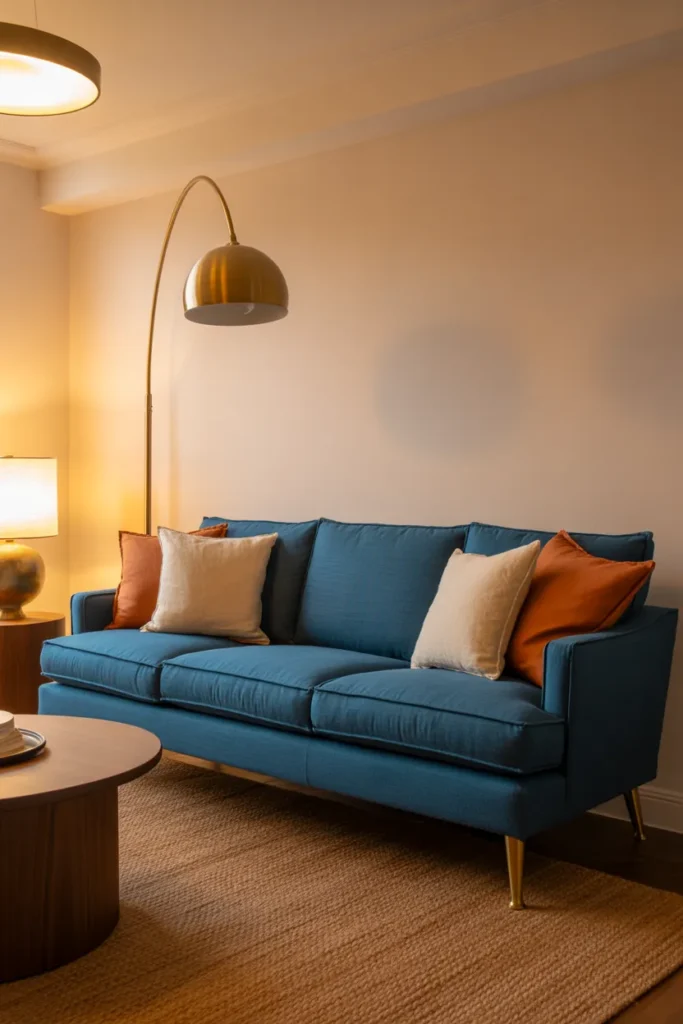
Position a navy sofa in a room where the surrounding palette is warm rather than cool. Navy with gray walls and chrome fixtures reads as corporate and cold. Navy with warm white walls, warm wood tones, and aged brass fixtures reads as sophisticated and residential. The metal choice is the critical variable — warm metals activate the blue’s depth, while cool metals flatten it.
In rooms with warm artificial lighting, navy fabric will read slightly warmer in the evening than it does during the day. This is a desirable quality in a living room that transitions between daytime and evening use. Test fabric samples under both natural and artificial light before committing, as the same navy fabric can look significantly different under different light sources.
13. Sofa and Chaise Configuration for a Single-Wall Living Room Layout
A sofa-and-chaise configuration — a standard sofa with an attached or separate chaise extension on one end — solves the lounging function that most standard sofas fail to provide without committing to the full bulk of a sectional. In single-wall living rooms, where all the seating furniture lines one wall or sits opposite it, the chaise extends into the room rather than along the wall, which draws the eye toward the center of the room and creates a more dynamic floor plan.
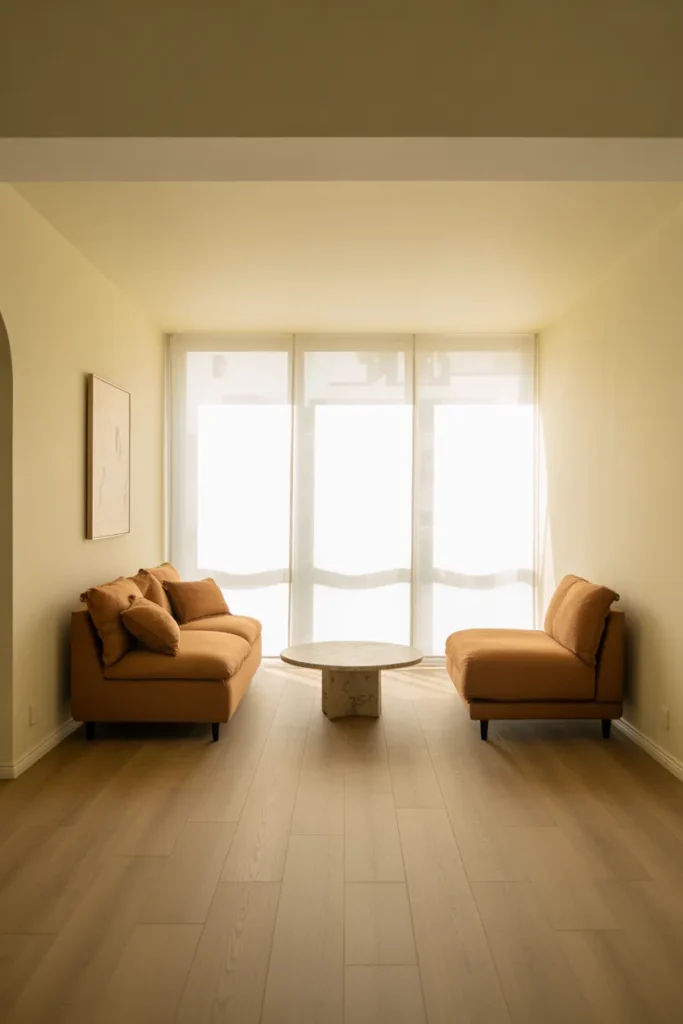
This configuration works best when the chaise faces toward the primary window or light source. Lounging on a chaise toward natural light is both the most comfortable position for reading or resting and the most visually effective arrangement from a room-design perspective.
The practical decision between an attached chaise and a separate ottoman-style chaise is worth considering carefully. An attached chaise is fixed — you cannot reposition it when you rearrange the room. A separate chaise or large ottoman offers the same function with more flexibility. For renters or anyone who moves frequently, the separate piece is almost always the smarter purchase.
14. Japandi-Influenced Low Sofa With a Platform Frame and Neutral Palette
Japandi interior design — a fusion of Japanese minimalism and Scandinavian functionality — continues to influence modern sofa design in 2026 through its emphasis on low furniture, natural materials, and restrained color. A platform-frame sofa in this aesthetic sits directly on a solid wood base rather than individual legs, which gives it a grounded, architectural quality that is distinct from both traditional and contemporary Western sofa profiles.
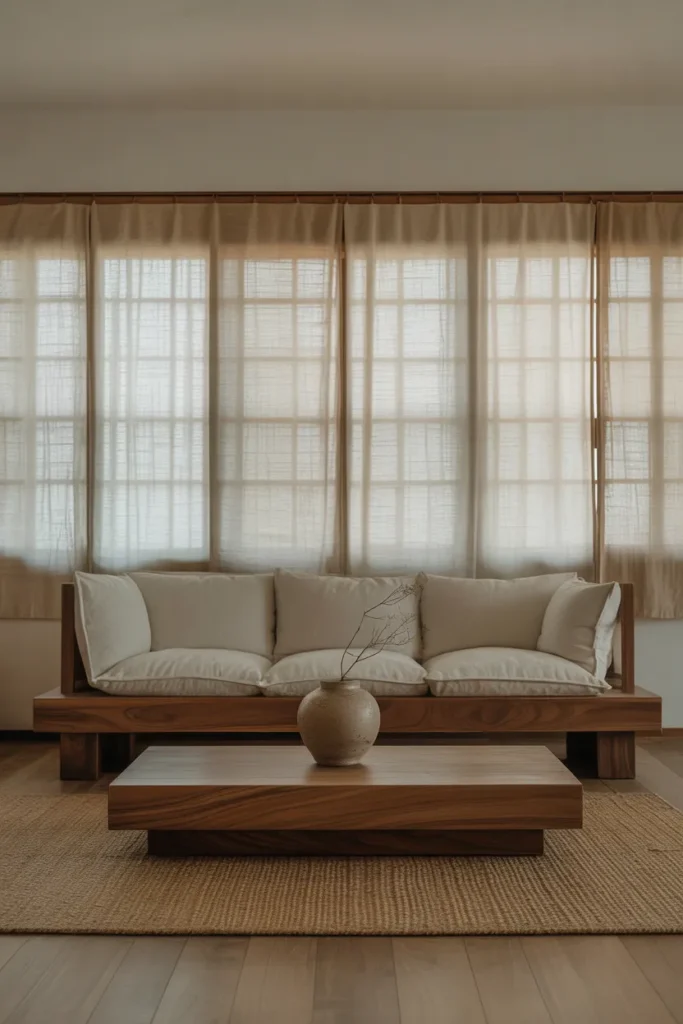
This sofa type performs exceptionally well in rooms with tatami-inspired design elements — woven mats, low tables, natural fiber rugs, paper or linen window coverings. It also works in rooms where the ceiling is lower than average, since the low sofa profile emphasizes horizontal lines and makes the ceiling feel relatively taller by contrast.
The most important practical note is seat height. Platform sofas typically sit between 14 and 16 inches from the floor, compared to the standard 18 to 19 inches of a Western sofa. For people over six feet tall or for anyone with limited knee mobility, a seat height this low can be uncomfortable for daily use. Sit in a representative piece before purchasing rather than ordering online without testing.
15. Statement Curved Sectional in a Circular Living Room Arrangement
The circular or conversation-pit-inspired living room arrangement — seating arranged in a full or near-full circle around a central coffee table — has re-emerged as one of the most notable modern sofa ideas 2026 has produced. A large curved sectional that bends around a generous central table creates a room that prioritizes conversation and connection over television-facing orientation, which reflects a broader shift in how living rooms are actually being used in American homes.
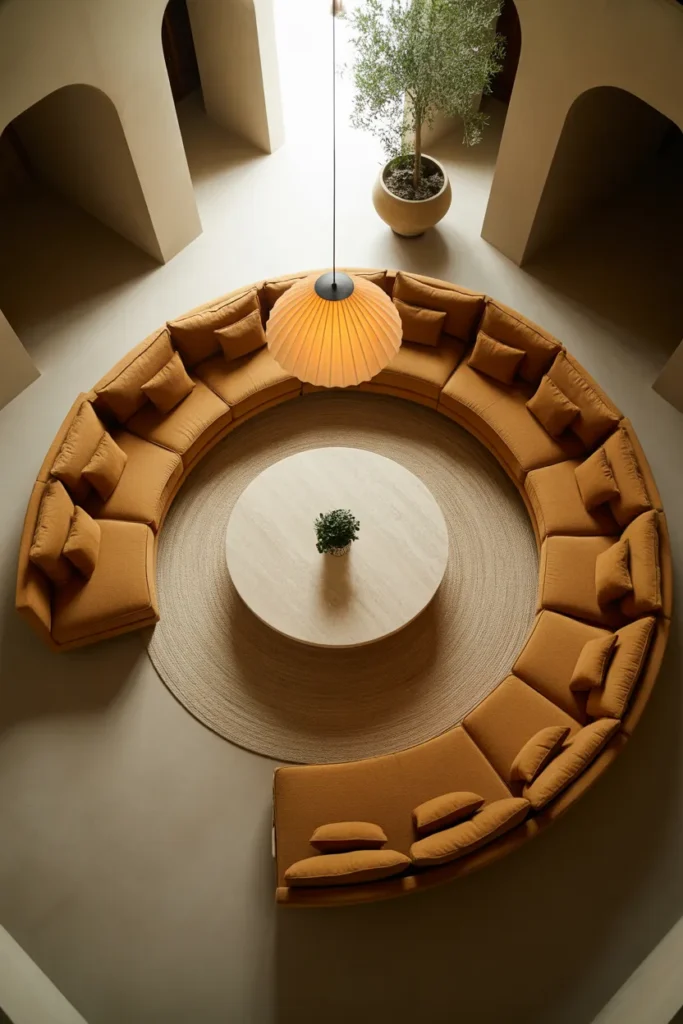
This arrangement requires a square or near-square room of at least 14 by 14 feet to work proportionally. In rectangular rooms, the circular arrangement loses its geometry and feels awkward. It also requires a round or oval coffee table of sufficient size — typically 48 to 60 inches in diameter — to maintain visual balance with the sofa’s curve.
The layout is not suited for rooms where the television is the primary focal point. Circular arrangements naturally deemphasize any single wall-mounted element and redirect attention toward the center of the seating group. If your living room functions primarily as a media room, a traditional facing arrangement will serve the actual use pattern better. Reserve the circular layout for rooms where conversation, reading, and gathering are the primary functions.
Final Thoughts
These 16 modern sofa ideas 2026 cover every major living room scenario — from compact studio apartments to large open-plan family rooms, from minimal Japandi aesthetics to bold jewel-tone statements. Each idea is grounded in real spatial logic and practical material knowledge, not just visual inspiration. Save this post now so you have it as a reference when you are ready to make your sofa decision. If you found this guide useful, explore more living room layout and furniture planning content to build a space that genuinely works for how you live.